Tag: smartphone

  • India Boosts Cybersecurity: Enforces New Compliance Rules on OTT Platforms and Smartphone Manufacturers

    India Boosts Cybersecurity: Enforces New Compliance Rules on OTT Platforms and Smartphone Manufacturers

    In a bid to enhance digital security due to increasing episodes of online fraud and mobile-related cybercrime, India has released two key directives. These new rules demand compliance from Over The Top (OTT) communication platforms and smartphone manufacturers.

    Ensuring Secure Communication

    The Department of Telecommunications (DoT) in India has instructed messaging platforms such as WhatsApp, Telegram, Snapchat, Signal, and Arattai to enable SIM binding within a 90-day timeframe. According to the Telecommunications (Telecom Cyber Security) Rules, 2024, these applications must remain connected to the mobile number and active SIM card of a user’s device. Moreover, web and desktop versions must log users out every six hours, requiring them to reauthenticate via QR code pairing. Non-compliance will result in penalties as stipulated by the Telecommunications Act.

    This decision has been made in response to the increasing number of cyber fraud cases involving OTT apps accessed without the corresponding SIM or from foreign locations. Such situations allow for identity spoofing and misuse. This order has been issued following nearly a year of discussions between government officials and OTT companies.

    Representatives of the industry have expressed concerns about the impacts on user experience and technical feasibility. They emphasized that not all platforms, particularly iOS, can consistently carry out SIM checks. They also warned about potential disruptions for legitimate uses, including eSIM and dual-SIM devices, international travel, small businesses relying on persistent desktop sessions, and elderly user accessibility. Companies are also unsure if SIM binding will effectively decrease fraud involving Indian SIM cards obtained through intermediaries.

    Demand for Preloaded Cyber Safety App

    On the same day, the telecom ministry of India issued another mandate for leading smartphone manufacturers including Apple, Samsung, Vivo, Oppo, and Xiaomi. They are required to preload the government’s Sanchar Saathi cyber safety app on all new devices sold in the country. Users will not have the option to delete or disable this app. Devices that are already in the supply chain must receive the app via software updates.

    Sanchar Saathi, launched in January, allows users to block and track lost or stolen phones, verify device authenticity, and detect fraudulent mobile connections. Government data reveals that the app has assisted in the recovery of over 700,000 phones, including 50,000 in October alone, and has facilitated the blocking of over 3.7 million lost or stolen devices. Additionally, more than 30 million fraudulent mobile connections have been disconnected using its systems.

    Questions & Answers

    What is the purpose of the new directives issued by India’s Department of Telecommunications (DoT)?
    The new directives aim to tighten digital security due to rising incidents of online fraud and cybercrime related to mobile devices. They introduce new compliance requirements for Over The Top (OTT) communication platforms and smartphone manufacturers.

    What measures are messaging platforms expected to implement under these directives?
    Messaging platforms such as WhatsApp, Telegram, Snapchat, Signal, and Arattai are required to implement SIM binding, which means these apps must remain linked to the user’s mobile number and active SIM card. Web and desktop versions of these apps must also log out users every six hours and require reauthentication through QR code pairing.

    What is the Sanchar Saathi app and why are smartphone manufacturers required to preload it on new devices?
    The Sanchar Saathi app is a cyber safety application launched by the Indian government. It allows users to block and track lost or stolen phones, check device authenticity, and identify fraudulent mobile connections. Smartphone manufacturers are required to preload this app on all new devices sold in India to enhance digital security.

  • iPhone 17 Pro: Price Tags Reveal 6 Work Days in Singapore, 60 in Hanoi

    iPhone 17 Pro: Price Tags Reveal 6 Work Days in Singapore, 60 in Hanoi

    An average worker in Singapore needs just six workdays to afford an iPhone 17 Pro, compared to a staggering 60 days in Hanoi, according to a recent study.

    Singapore tops a list of 11 Southeast Asian cities regarding the affordability of the iPhone 17 Pro, thanks to its high average income. The study, conducted by Seasia, combines insights from cost of living platform Numbeo and recruitment service Talentnet.

    A Closer Look at the Numbers

    Following Singapore is Brunei’s Bandar Seri Begawan, where it takes 13 workdays for locals to purchase the iPhone. In Malaysia’s Kuala Lumpur, workers need about 20 days, while those in Indonesia’s Jakarta require 30 days. The gap widens further in Thailand’s Bangkok at 32 days and the Philippines’ Manila at 50 days. Meanwhile, Hanoi finds itself among the bottom five, with workers needing two full months of their salaries to afford the iPhone 17 Pro, priced at approximately VND35 million (US$1,325).

    Vietnam’s Position in the Market

    In terms of pricing, Vietnam ranks as the 12th cheapest market for the iPhone 17 Pro globally, trailing the United States, Hong Kong, and Canada, which hold the top spots in affordability. In a striking display of enthusiasm, buyers in Hanoi camped out overnight on September 18 for the new releases, showcasing a particular craving for the ultra-premium Pro Max model, fetching up to VND64 million for the 2TB version. Talk about a case of retail therapy!

    The Broader Regional Context

    The affordability analysis also considers cities in Cambodia, Timor-Leste, Laos, and Myanmar, where the iPhone can cost workers between 63 and 111 days of their paychecks. It’s clear that the smartphone market varies widely across the region, reflecting differing economic landscapes and spending power among consumers.

    Questions & Answers

    What can buyers in Singapore expect when purchasing the iPhone 17 Pro?
    In Singapore, buyers can acquire an iPhone 17 Pro after just six days of work, making it the most accessible smartphone market in Southeast Asia.

    How does Hanoi compare in terms of consumer affordability for the iPhone?
    Hanoi stands out as one of the less affordable markets, with the average worker needing 60 days to buy the iPhone 17 Pro. This highlights significant economic differences within the region.

    What trends were observed during the iPhone launch in Hanoi?
    During the recent launch, several eager customers camped overnight to be among the first to buy the new iPhones, reflecting a robust demand, particularly for the pricier Pro Max model.

  • China’s Smartphone Market Sees Contraction; Huawei Reclaims Top Spot Amidst Decreased Shipments

    China’s Smartphone Market Sees Contraction; Huawei Reclaims Top Spot Amidst Decreased Shipments

    After six consecutive quarters of growth, China’s smartphone market showed signs of contraction during the second quarter of this year. The International Data Corporation (IDC) reported a decrease in shipments from the top four out of five brands, attributing this to a dip in consumer demand.

    Apple, which holds the fifth position in China’s smartphone market, experienced a 1.3% year-on-year decrease in shipments in the second quarter, equating to a shipment of 9.6 million units. While still marking a decline, this represents a notably smaller decrease than the 9% drop witnessed in the first quarter of the year. This is believed to be due in part to adjustments in the pricing of specific iPhone 16 and 16 Pro models, which are eligible for government subsidies.

    Despite this, Apple’s share of the market increased, growing from 13.7% in the March quarter to 13.9% in the June quarter. However, this still marks the eighth consecutive quarter in which Apple’s market share has declined.

    Huawei, the Shenzhen-based technological powerhouse, regained its position at the top of the market after more than four years, seizing an 18.1% market share. Huawei shipped approximately 12.5 million phones during the second quarter, a 3.4% year-on-year decrease.

    Xiaomi, holding the fourth position in the market, was the only smartphone manufacturer to record an increase in shipments during the last quarter. Vivo, standing at second place, witnessed the most significant decline in the top five brands, with shipments decreasing by 10.1%.

    Overall, China’s smartphone shipments fell by 4.0% year-on-year to 69 million units in the second quarter. This decline came as the momentum spurred by government subsidies began to falter amid more wide-ranging economic weaknesses.

    Senior research analyst at IDC, Arthur Guo, commented on the broader economic challenges faced by the industry, stating that consumer confidence remains low. Guo suggested that a significant boost in smartphone demand is unlikely in the near future and projected a more multifaceted landscape for the market in the second half of the year.

    Questions & Answers

    What was the rate of decline in China’s smartphone market during the second quarter?
    The rate of decline in China’s smartphone market during the second quarter was 4.0%.

    Which brand reclaimed the top spot in China’s smartphone market?
    Huawei regained the top position in China’s smartphone market after over four years.

    What was the only brand among the top five to record growth in shipments during the last quarter?
    Xiaomi was the only brand among the top five to record growth in shipments during the last quarter.

  • Major smartphone chipmaker says new Huawei OS could impact its sales

    Major smartphone chipmaker says new Huawei OS could impact its sales

    The company that manufacturers many of the chips used in smartphones, Taiwan Semiconductor Manufacturing Company (TSMC) is going to be impacted in the short term by the ban that prevents Huawei from sourcing parts and software in the U.S. The company previously had stated that Huawei’s placement on the Commerce Department’s Entity List would not affect it; the company has already announced that it would continue to manufacture chips for Huawei and its HiSilicon unit.

    It appears that TSMC has reevaluated the situation. TSMC Chairman Mark Liu, speaking to reporters today, said that sales of Huawei phones will slow down as consumers decide whether they can live with the phone manufacturer’s Android replacement. As a result, Huawei might need fewer chips to be assembled, which would affect TSMC’s revenue in the short term.

    “It certainly will have some impact in the short term. When there’s no Android system in a smartphone, many people might have doubts on whether the market will accept it.”-Mark Liu, chairman, TSMC

    Liu did add that demand for both 5G smartphones and newer handsets coming to market in the second half of this year will help TSMC stay on track for 2019. The executive says that his company’s outlook remains unchanged for the calendar year. Back in January, Liu said that TSMC’s 2019 revenue would grow 1% to 3% over last year’s figure of $1.03 trillion NT ($32.8 billion USD). Last year, the firm earned net profits of $351.13 billion NT ($11.4 billion USD).

    While Huawei’s in-house HiSilicon unit designs the chips used in Huawei’s high-end phones, the company has lost the support of U.K. chip designer ARM Holdings. This is a big blow to the company as it will need to search for an alternative architecture for its SoCs. Meanwhile, Huawei says that it has stockpiled a year’s worth of chip parts and components.

  • Honor’s upcoming flagship wants a seat at the champions table

    Honor’s upcoming flagship wants a seat at the champions table

    Although specs and price should be the deciding factor when purchasing a phone, “brand” is one of the most important aspects that convinces customers to buy certain products.

    To put it bluntly, Apple and Samsung have monopolized certain markets like the United States through the sheer power of their branding. But other companies are making products that are at least as good and are priced much lower.

    Honor is one of the brands that have been trying to enter the US market for years before Chinese companies have become undesirable in the country. The most recent Honor flagships offer good value for money, especially since they typically cost less than Samsung’s top-tier phones.

    The upcoming flagship to be released by Honor later this year definitely wants a seat at the champions table. The first details about the unannounced Honor Magic 8 Pro indicate that this will be a real beast.

    Honor’s flagship will be equipped with Qualcomm’s not-yet-release Snapdragon 8 Elite 2 processor. Also, reliable tipster Digital Chat Station claims the Magic 8 Pro boasts a very powerful triple camera system that includes 50-megapixel main, 50-megpaixel ultra-wide, and 200-megapixel periscope telephoto cameras.

    Yest, this is the same camera configuration as the Magic 7 Pro, except that the upcoming Magic 8 Pro will use the OmniVision OV50Q sensor to power its main snapper. On top of that, DCS says the camera system supports “smooth frame transition” and “super frame synthesis.”

    In addition, Honor managed to further improve focus speed and optimized high dynamic range. More importantly, the Magic 8 Pro camera is said to consume a lot less power than the Magic 7 Pro, another key aspect that Honor decided to fine-tune.

    These are all the details about the Magic 8 Pro that have been leaked so far, but it’s more than we expected considering that the phone isn’t expected to arrive until later this fall.

    Even though Honor hasn’t announced anything about the Magic 8 Pro, the Chinese company usually launches its second flagship for the year in Q3, so there’s still time to learn at lot more about the device.

  • Apple is expanding its presence in the Middle East

    Apple is expanding its presence in the Middle East

    So much is happening in the Middle East right now and the other thing is that Apple is expanding in Saudi Arabia.

    The Cupertino giant is set to launch its first online store in Saudi Arabia in summer 2025, followed by multiple flagship physical stores beginning in 2026. The expansion includes plans for a notable retail location in Diriyah, a UNESCO World Heritage site.

    Apple will also provide customer service and support in Arabic for the first time, offering its full product range through online and physical channels. CEO Tim Cook emphasized the compay’s commitment to supporting local customers, businesses, and innovators.

    This expansion builds on Apple’s existing investments in the country, particularly its Apple Developer Academy in Riyadh, which was established in 2021 through partnerships with local institutions. The all-women academy has trained nearly 2,000 students in programming, enabling them to publish apps on the App Store.

    Apple is also expanding its educational programs, having recently hosted the country’s first coed Apple Foundation Program. The monthlong course focused on coding and app development, with an emphasis on gaming. Future programs are planned for spring 2025.

    Apple says its investment has significantly impacted the local tech ecosystem. Saudi developer earnings have increased by over 1,750% since 2019. Apple has spent more than 10 billion SAR (over $2,6 bln) with local companies over the past five years and continues to support technological innovation.

    Additional technological integrations include Apple Pay’s expansion in Riyadh, where users can now use Express Mode to pay for metro and bus transit by simply holding an iPhone or Apple Watch near a reader. Since its 2019 launch, many Saudi customers have transitioned from traditional payment methods to Apple Pay, the US company notes.

  • Apple plans $1B manufacturing plant investment in Indonesia

    Apple plans $1B manufacturing plant investment in Indonesia

    Tech giant Apple plans to invest $1 billion in a manufacturing plant in Indonesia that produces components for smartphones and other products, Indonesia’s investment minister said on Thursday.

    In October, Indonesia banned sales of the iPhone 16 because it said Apple had not adhered to rules that require phones sold domestically to have at least 40% locally made parts. And this week, the government said it would increase the local content requirement.

    Investment minister Rosan Roeslani told reporters that details of the planned investment were still being ironed out, but when asked confirmed it was the expected $1 billion investment he had flagged earlier this week.

    “We will discuss with them some more … our hope is for everything to be announced in the next week after receiving a written commitment from them,” he said.

    Last week, the government had rejected a $100 million investment proposal from Apple to build an accessory and component plant as not enough to reverse the iPhone 16 ban.

    Apple did not immediately respond to a request for comment.

    Apple currently has no manufacturing facilities in Indonesia, a country of about 280 million people, but since 2018 it has set up application developer academies.

    Indonesia considers that strategy an attempt to meet local content requirements for the sale of older iPhone models.

    Companies typically increase the local composition through local partnerships or by sourcing parts domestically.

  • Vivo smartphone damaged ID card chip, users complain

    Vivo smartphone damaged ID card chip, users complain

    Some Vivo smartphone users have complained that the device damaged the chip on their ID cards after making near-field communications contact, an allegation the Chinese company is verifying.

    A Vivo-focused social media group with 33,000 members has been getting dozens of posts about users’ ID card being damaged digitally after making NFC contact with their phones. The complaints mostly involve high-end Vivo phones such as the X100 Pro, X100 Ultra and X100S Pro, which are not sold in Vietnam and are bought overseas.

    However, there are also some complaints about the X80 Pro, a model Vivo sells in the country.

    Vu Duy Tan of HCMC said after using a Vivo phone to connect with his ID card, the latter no longer connected with other smartphones.

    He got it replaced but found the same thing happening again.

    Dang Tien Dung of Can Tho City also discovered a similar problem with his Vivo X100 Pro.

    His ID card used to connect normally with an Oppo phone but stopped doing so after he once used the Vivo phone.

    After finding the card could not connect with any other phone, he suspected its chip was damaged.

    A Vivo Vietnam spokesperson said some users have reported the issue to the company. Vivo is now investigating the issue.

    NFC is a technology found in phones, cards and payment machines. Tech analyst Le Cong Minh Khoi said a card chip could be damaged if a smartphone’s NFC signals are too strong.

    A similar thing happens when people put their smartphones next to NFC cards such as hotel door keys for a long time, he added.

  • Phone users will be able to customize the color of each app icon in iOS 18

    Phone users will be able to customize the color of each app icon in iOS 18

    We are getting closer to the June 10th Keynote at WWDC 2024 during which Apple will preview its AI initiative. Today, Bloomberg’s Mark Gurman revealed some more details about what we should expect from Apple in his latest Power On newsletter. Gurman says that Apple is calling part of its new AI strategy Project Greymatter which encompasses AI tools that will be added to core system apps such as Notes, Photos, and Safari and also includes enhanced notifications.
    As previously discussed, Apple would prefer to have AI features run on-device for speedier results and to protect users’ privacy. More complex tasks will run through the cloud and get worked on by data center servers powered by the M2 Ultra chip. The goal here is to create AI features that will make life a little easier for iPhone users. One new feature in the works will allow a user’s iPhone to create custom emoji based on what the user is texting. This will allow the iPhone user to have a custom emoji ready at his fingertips for any situation in addition to the regular lineup of emojis.
    If that doesn’t excite you, perhaps this will. Apple will allow iPhone users to not only change the color of app icons but also (better be sitting down) put them wherever they want on the screen. You’ll be able to quickly find all your social media apps if you make them a certain color, find all of your health-related apps, which you can make another color, etc.
    Another cool AI feature, one that I’m looking forward to seeing, adds AI-created summaries of notifications, messages, websites, news articles, and more. Additionally, users will be able to have more natural-sounding conversations with Siri as the virtual digital assistant receives a long-needed upgrade. The version of Siri that lives on the Apple Watch will also be very much improved to handle tasks and queries while on the go.
    The soon-to-be-formed partnership between OpenAI and Apple, which will bring the ChatGPT generative AI chatbot to iOS 18, will also be acknowledged at WWDC as Apple doesn’t want to appear that it is out of the loop during the year of AI. Apple’s own in-house chatbot is said to fall short of ChatGPT and Google’s Gemini which is why the company has been meeting with OpenAI and Google. Even though the latest word is that Apple and OpenAI are close to a deal, Apple still plans on inking one with Google as well just in case OpenAI’s controversial CEO Sam Altman does something, well, controversial.
    Back in January, Gurman said that the iOS 18 update will be one of the biggest updates in iOS history. Now, we are approximately two weeks away from what could be quite an exciting day for iPhone users.
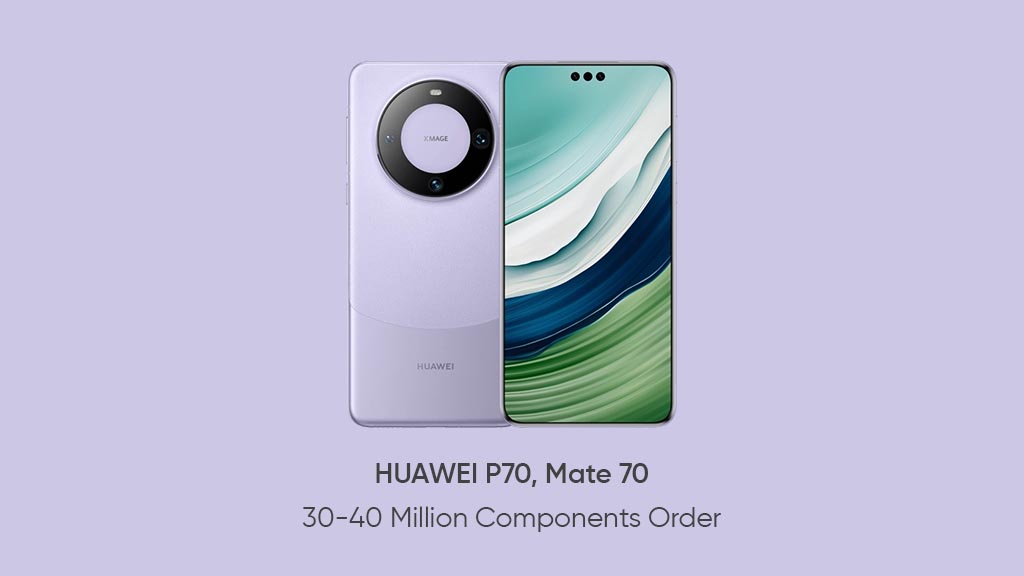
  • Huawei to take on iPhone 16 line in China with the Mate 70 series this coming September

    Huawei to take on iPhone 16 line in China with the Mate 70 series this coming September

    Huawei shocked everyone last August when it announced the Mate 60 series, powered by the first 5G Kirin chipset in over three years. The component was produced by China’s largest foundry, SMIC, using its dated 7nm process node. Chinese consumers took the announcement as a sign that somehow Huawei and SMIC were able to defeat the sanctions placed on Huawei by the U.S. and this nationalism helped Huawei sell 30 million units of the series.

    The Mate 70 series will be released next September, timed to go up head-to-head with the iPhone 16 line, at least in China. Back in October, the iPhone 15 Pro Max was the best-selling smartphone in China with a 5% share of the market compared with the 4% share earned by the Mate 60 Pro and the iPhone 15 Pro. For the entire fourth quarter of 2023, Apple owned a leading 20.2% of the Chinese smartphone market while Huawei was third at 15.2% following a 71.1% year-over-year hike thanks to the Mate 60 series.

    For the whole year, Apple led with 17.3% of smartphone sales in the world’s top smartphone-buying country. Former Huawei sub-brand Honor was second with a 17.1% share. Huawei was not in the top five. Weibo blogger @SmartPikachu says that the Mate 70 line could be the most powerful handset series in the market later this year. That seems impossible unless Huawei is able to get access to cutting-edge application processors built using a 3nm process node. Currently, SMIC isn’t able to produce chips with a node under 7nm.

    Lower process nodes mean smaller transistors, meaning more can fit inside a chip. The higher a chip’s transistor count, the more powerful and/or energy-efficient a chip is. We could see a new Kirin chip power the Mate 70 line, but with SMIC unable to buy an extreme ultraviolet lithography machine from ASML, breaking the 7nm barrier will be extremely difficult for SMIC and Huawei.

    The next flagship series due from Huawei is the photography-based P70 line. Huawei is also said to be working on the Pocket S2, the second-generation clamshell foldable from the company. As for the Mate 70, @SmartPikachu says that the Mate 70 could sport a quad-curved display. It could also debut 5.5G technology and include a 1-inch type camera sensor, and a display with thinner and more uniform bezels.

  • Huawei might introduce an asymmetrical foldable smartphone someday

    Huawei might introduce an asymmetrical foldable smartphone someday

    Foldable smartphones are becoming more popular with each new model introduced by different manufacturers. Samsung launched its Galaxy Z Fold 5 and Galaxy Z Flip 5 last month, Google unveiled its Pixel Fold back in May, and Huawei launched its Mate X3 internationally around the same time. Now, it looks like the latter is working on something a bit different when it comes to foldable smartphones.

    Blogger Jerrold_tech posted on Weibo what they say are pictures of patented designs for Huawei’s future folding phone. The images reveal an innovative type of foldable phone featuring asymmetrical halves, where the left side is taller than the right side.

    Unlike all other foldable smartphones currently available, this patent unveils a design in which the two halves are of different sizes when the phone is unfolded. This difference seems to come from the camera position, which is not in the usual spot at the back of the phone. When the phone is unfolded, the camera resides in the upper left corner, playing the role of a front-facing selfie camera. Once folded, the right panel aligns beneath this camera, enabling the latter to serve as the primary rear camera.
    One of the benefits of this foldable phone’s a bit strange design is that it can use just one camera setup, no matter if the device is folded or not. The patented design also shows that one of the cameras is a Time-of-Flight (ToF) lens, so it can be used for face recognition as well.

    The shared images don’t give away any more details about the patent, but if Huawei is indeed developing this new kind of foldable, it might add some variety to the foldable phone market. Since this info is all based on rumors and there’s been no official confirmation from Huawei, it’s best to take it with a pinch of skepticism. Still, it would be pretty cool to see this asymmetrical design actually come to life.

  • Apple may sell iPhone 15 in Vietnam next month

    Apple may sell iPhone 15 in Vietnam next month

    Apple may sell its new iPhone 15 in Vietnam in September, a month earlier than last year as the company considers adjusting the country’s “priority level” from 3 to 2.

    According to a local electronics retail chain, Apple is considering adjusting the priority level of the Vietnamese market from three to two.

    Priority level two means Vietnam retailers could be authorized to sell the new iPhone 15 in its second phase of release.

    Last year, iPhone 14 was launched on September 7 and sold from September 16 in markets with Apple Store shops. The second phase started on September 23 in 20 countries and territories. The product was officially distributed in Vietnam from October 14, the release’s third phase.

    “The final decision has not been made, but it is a remarkable signal that Apple is more interested in Vietnam and iPhone 15 may be sold a few weeks earlier than previous years,” said the chain’s manager.

    The launch date of the iPhone 15 is likely to be announced on September 13 and the new model will be on sale from September 22. These timelines are about one week later than the iPhone 14’s schedule last year, but the sale to second-tier priority markets could still be as early as September.

    Some electronics retail chains said that although Apple wants to raise the Vietnamese market’s priority level, thin iPhone 15 supplies could push the release of the model past its expected date in early October.

    Vietnam does not have an Apple Store like neighboring countries Singapore and Thailand. However, in recent years, the growth of the iPhone’s presence in Vietnam has been significantly faster than in some international markets.

    Vietnam was the sixth country in Southeast Asia to open an Apple Store Online in May, and just two months later became the third country in the region to have Apple Pay.

    According to analysts, Vietnam, Thailand, Indonesia and India are becoming more important to Apple as growth in other key regions is slowing.

    “Apple is further consolidating its presence in emerging markets,” Chiew Le Xuan, an analyst at Singapore-based technology market analyst firm Canalys, said when Apple opened its online store in Vietnam on May 18.

    “In recent months, Apple has also increased their distribution and network of Apple authorized resellers (AARs) in Southeast Asia,” he said.

    During the coming September launch ceremony, in addition to the iPhone 15 series with four models, the Watch Series 9 and Watch Ultra 2 models are likely to be released. New operating system versions such as iOS 17 and PadOS17 will also be officially released.

  • OPPO to exit France as distributor ceases operation

    OPPO to exit France as distributor ceases operation

    2023 has been a steep slalom for OPPO in Europe. In late March there were rumors that OPPO will leave four EU states, then the company denied this. Some four months later, OPPO might be leaving France for real.

    A report from SamMobile references an article from French outlet Frandroid: Yang Technology, the exclusive distributor of OPPO in France, announced that “it will cease its activities”.

    Earlier this year tipster Max Jambor tweeted that both OPPO and OnePlus are to withdraw from the following European countries: Netherlands, France, UK and Germany. An immediately issued statement by a OnePlus official refuted the tipster’s info and noted that “OPPO and OnePlus are committed to all the existing European markets”.

    Then came May, when it was reported that the German OPPO website was still live, but had turned into a ‘ghost town’ with no new posts, information or updates. That’s on par with the fact that the OnePlus 11 did not launch in Germany because of a patent dispute between Nokia and OnePlus.

    The beef between OPPO and Nokia was taken to court, where the Chinese brand actually won. A judge in the Paris Court of Justice has ruled that Nokia’s patents are considered “invalid” due to a “lack of novelty”. The trial at first instance has been won by OPPO, but most probably Nokia will appeal this Paris decision. Nevertheless, OPPO has decided to take a step back and apparently cut ties with France, while staying ‘on hold’ in Germany.

    It’s been awfully quiet on OPPO’s social media in France and their Instagram account. The brand used to share a minimum of three posts per week, but for the last 9 weeks, the sum is… zero. Social media activity is not a serious activity criterion, but it’s not to be underestimated in light of recent events

    This new state of affairs means that it will soon no longer be possible for people in France to buy OPPO smartphones straight from the official distributor, but instead will have to rely on resellers. However, there’s a statement from OPPO that their users in France will be able to access after-sales services and receive future OS updates.

  • China’s Xiaomi bets bigger on India retail stores amid Samsung rivalry

    China’s Xiaomi bets bigger on India retail stores amid Samsung rivalry

    China’s Xiaomi 1810.HK will focus on boosting its India sales from retail outlets after years of big bets on e-commerce, its India president said, as the company seeks to revive smartphone sales after falling behind South Korea’s Samsung 005930.KS.

    E-commerce sales in India via Amazon AMZN.O and Walmart’s WMT.N Flipkart have surged in recent years, helping Xiaomi and others expand in one of the world’s fastest-growing markets, with 600 million smartphone users.

    But while 44% of India’s smartphone sales are now online, the brick-and-mortar segment remains the bigger play and Xiaomi expects it to grow further.

    “Our market position in offline is substantially lower than what it is online,” Xiaomi’s India head, Muralikrishnan B., said in an interview on Friday. “Offline is where you have other competitors who have been executing fairly well and have a larger market share.”

    Just 34% of Xiaomi’s India unit sales this year have come from retail stores, with the rest through websites that have long been its dominant sales generator, data from Hong Kong-based Counterpoint Research shows. Samsung, in contrast, gets 57% of its sales from stores.

    Xiaomi plans to expand its store network beyond the current 18,000 and increasingly partner with phone vendors to offer other products, such as Xiaomi TVs or security cameras, where Muralikrishnan said competition is less intense.

    He said Xiaomi found some partner stores that put its bright orange branding outside shops were displaying rival brands more prominently inside, a marketing issue the company would address.

    Xiaomi’s offline push comes months after it lost its leadership position to Samsung, which had a much bigger portfolio of premium phones now in vogue. The South Korean giant has a 20% market share in India, while Xiaomi, which historically focussed on budget phones, has 16%.

    “Offline remains a key platform as India embraces the premiumization trend,” said Counterpoint analyst Tarun Pathak. “Consumers spending more would like to have the look and feel of the premium product.”

    Xiaomi plans to hire more store promoters – salespeople who lure, pitch and sell phones to prospective buyers inside outlets. It targets tripling the count to 12,000 promoters by the end of next year from early 2023 levels, Muralikrishnan said.

    Another significant India challenge for Xiaomi is a federal agency’s $673 million freeze on its bank assets since last year. The agency alleges Xiaomi made illegal remittances to foreign entities in the name of royalties. The company denies wrongdoing.

    “We’ll continue to be confident … that ultimately our position will be heard and validated,” Muralikrishnan said.

  • Android phones will soon try to entice users to install the latest update

    Android phones will soon try to entice users to install the latest update

    Google really wants you to install the latest Android update whenever it is released. While the company can’t twist your arm, Google is asking Android phone manufacturers to add a new feature called Android Upgrade Invite to their phones. Google says that the Android Upgrade Invitation is a “user flow that showcases the key new features included in the current available major Android OS upgrade.” It is “intended to help convince users to upgrade their device to the latest OS version.”

    As noted, the invitation can be tapped on by Android users to show them the new features and capabilities they will receive by upgrading to a new version of Android. The update can even be installed from the flow. The user flow is the path taken by an app user to complete a task such as the steps taken on an app to complete the purchase of a product. In this case, the task is to get an Android user to install the latest version of the platform.

    The invitation can be sent out automatically when a major update is detected (available on Android devices that use Google’s OTA ‘over the air’ update services and have Google Mobile Services). Or, the invitation can be sent out manually by the manufacturer. The manufacturers will have the ability to remove features from the user flow that are not offered on their Android skin, change the text if necessary, and modify the animations and colors to match their branding.
    We really can’t say how much the Android Upgrade Invite will change the fragmented world of Android updates. As of May 30th, the latest stable version of Android, Android 13, was on only 14.7% of active Android devices. But this low number has more to do with the various number of Android manufacturers and devices that can be purchased in the marketplace. On the other hand, by reminding some Android users who might not be as knowledgeable about the platform that an update is available, the feature could hike the percentage of users running the latest build.
    One thing that the Android Upgrade Invite will do is give more users a better idea of what they can expect when installing the update instead of trying to decipher a changelist provided by Google.