Retail News CRM

Tag: Smartphones

  • Viettel’s foreign market earnings up in Q3

    Viettel’s foreign market earnings up in Q3

    Viettel earned gross profits of $57.25 million from overseas markets in Q3, a year-on-year increase of 8 percent. Its overseas investment arm, Viettel Global, reaped net revenues of nearly VND4.43 billion ($188.71) in the third quarter, up 5 percent over the same period last year.

    Accumulated net revenues reached VND12.43 trillion ($529.7 million) between January and September.

    The revenues include nearly VND5.61 trillion ($238.94 million) from African countries, including Cameroon, Tanzania, Mozambique and Burudi, VND4.54 trillion ($193.68 million) from Southeast Asia countries, including Cambodia and East Timor, and VND1.69 trillion ($71.82 million) from Latin America.

    The company’s revenues from its three continents rose 3-11 percent, with Latin America registering the greatest increase.

    The increase is attributed to the company’s development of 4G services, digital wallet and other information technology projects serving overseas businesses and governments.

    Viettel Global is providing 4G services in 9 overseas markets, and digital wallet services in 8 markets.

    Also, Viettel Global’s sales expense and management costs reduced 4 percent and 12 percent respectively in the first 9 months of this year, compared to the same period last year.

    Viettel Global was established in 2006 to spread Viettel Group’s presence in foreign markets. Eight out of Viettel Global’s 10 overseas markets have begun earning profits. It has taken up the largest market share of the telecommunications sectors in Laos, Cambodia, and Timor Leste.

    It plans to expand its overseas operations in the Southeast Asian region and foreign markets that share similar population sizes as Vietnam this year. The company also aims to achieve a 10-15 percent year-on-year increase in terms of the number of subscribers by the end of 2018.

  • Vingroup acquires mobile phone retailer Vien Thong A

    Vingroup acquires mobile phone retailer Vien Thong A

    Vietnam’s biggest private conglomerate Vingroup has officially confirmed its acquisition of major tech products retailer Vien Thong A.

    In its financial statement for the third quarter of 2018, Vingroup lists Vien Thong A Import Export Trading Production Corporation as a fully-owned subsidiary.

    On September 14, Mai Thu Thuy, board member of the Vincom Retail Joint Stock Company and Chairwoman of the Vincom Mega Mall Royal City, was appointed legal representative of the acquired company.

    Established in November 1997 in Ho Chi Minh City, Vien Thong A is the oldest retail technology chain in Vietnam. It has nearly 200 stores, including independent shops and a “shop-in-shop” model in BigC supermarket, CoopMart, and 100 service centers.

    In early 2017, Vien Thong A CEO Hoang Ngoc Vy revealed plans to restructure the company and seek investors to expand its business.

    Last month, VinCommerce, a member of Vingroup, bought Fivimart from domestic company Nhat Nam JSC and Japanese retailer AEON, which held 70 percent and 30 percent stakes, respectively.

    In the first nine months of this year, retail sales of Vingroup reached VND12.89 trillion (nearly $555 million), a 41 percent year-on-year surge.

    Vingroup, Vietnam’s biggest property conglomerate, dominates the housing and property markets with Vinhomes.

    It has also entered the healthcare market with Vinmec, runs a chain of supermarkets called Vinmart, and entertains tourists at Vinpearl resorts.

  • Smartphone parts makers struggling

    Smartphone parts makers struggling

    Korea’s smartphone parts industry has been in decline. Squeezed by price-competitive Chinese producers and a saturated market, it is losing sales and workers. The difficulties faced by suppliers just add to Korea’s manufacturing concerns, as profits slump at automobile companies and as the semiconductor supercycle seems to be coming to an end.
    An analysis published on Nov. 4 based on responses from 42 locally-listed smartphone parts producers indicates over 3,700 jobs and 2.6 trillion won ($2.3 billion) in revenue have been lost in the business over the past five years. The analysis compared financial statements issued in the first half of 2013 with those from the first half of 2018 by producers of smartphone covers, cameras, circuit boards and touch screens.

    Combined revenue for the 42 firms in the first half in 2018 stood at 5.69 trillion won, down 31.4 percent over the past five years from 8.29 trillion won. Twenty-six of them, or 61.9 percent, reported a drop in revenue over that time. Combined operating profit at the 42 companies collapsed, falling from 497.8 trillion won five years ago to a loss of 6.3 trillion won in the first half of this year. Net margins for the group was negative 0.11 percent. Nineteen of the companies, or 45.2 percent, are reporting operating losses.

    The trend is in line with the results at major electronics companies. LG Electronics’ mobile communications division has been reporting operating losses for four consecutive years.

    Smartphone components producers have faced significant job losses, with total employment falling from 20,613 to 16,818. Only four companies, or 9.5 percent of those surveyed, reported a rise in revenue, operating profit and jobs over the five-year period.

    SMAC, a Kosdaq-listed supplier for Samsung Electronics of touchscreen modules for smartphones, recorded 26.5 billion won in revenue in the first half. That is about 10 percent of the revenue it posted in the first half of 2013. Operating loss for the first six months of this year was 5.8 trillion won.

    “Our earnings results were challenged as the average period in which people switch smartphones lengthened from two to three years and technological changes came quickly,” said an executive at the company.

    People & Telecommunication, another Kosdaq-listed manufacturer, was the victim of embezzlement by its majority shareholder of as much as 20 billion won last month. Once the country’s leading phone cover producer, it is now suspended from trading on the exchange.

    Experts say that local smartphone producers failed in solidifying their position as the market stagnated.

    According to Strategy Analytics, smartphones shipments will total 1.48 billion units this year globally, retreating for the first time since 2007, the year Apple introduced its first smartphone. Samsung is projected to ship 298.5 million smartphones this year, according to the market researcher, registering a figure below 300 million for the first time since 2013. LG Electronics is facing weakness except in North America.

    Rapidly advancing technologies are weighing on component producers. Smartphone used to have thin-film-transistor liquid-crystal display panels, but now, organic light-emitting diode panels are utilized.

    Even though smartphones are adding more cameras – two or three at least – smaller players in Korea are pressed to keep innovating.

    “Even before we have finished depreciating production facilities, we have to invest again in new facilities,” said an executive at a camera module producer. “Profitability is feared to be damaged.”

    Samsung Electronics is having Chinese manufacturers assemble its medium and low-cost models for the Chinese market, with the goal of maintaining its global smartphone market share of 20.2 percent.

    Samsung is scheduled to release Galaxy A6s this month in China, which has been developed and produced by Wintech, a Chinese company.

    “Even though Samsung said that the Chinese-manufactured models are only for the Chinese market, it means parts made by China will naturally increase,” said an executive at one of the parts producers.

    Smartphone parts makers are trying to find new business or diversify their supply channels. Kim Hak-kwon, CEO of Jaeyoung Solutec, a smartphone camera optical components maker, says he has pinned hopes on the resumption of operations at the Kaesong Industrial Complex. The components require sophisticated manual labor, and using skilled North Koreans is seen to improve the situation.

    Others are looking towards developments on the software side of the business.

    “Smartphone Cinderellas – software-based start-ups – are supposed to be a breath of fresh air for the industry,” said Sohn Dong-won, professor of business administration at Inha University.

  • Latest iPhone models sell well in first week out in Korea

    Latest iPhone models sell well in first week out in Korea

    After a week of presales, Apple’s new series of iPhones officially rolled out in the Korean market Friday. The response for the three phones – iPhone XS, XS Max, and the budget XR model – has been good.  According to local mobile carriers, the trio attracted the same number of or slightly more preorders than the previous iPhone generation: the iPhone X and the iPhone 8.

    “Overall, the new phones are generating more interest than the previous series,” a spokesperson from KT said. “Though the iPhone XS is getting more attention than the XR.”

    Presales data from Korea’s largest mobile carrier SK Telecom released Friday shows that 62 percent of the preorders were for iPhone XS, while 26 percent were for iPhone XS Max and 12 percent for the iPhone XR.

    The most popular color option was gold for iPhone XS and XS Max, followed by space gray and silver. For iPhone XR, black and white models led.

    The new phones are big with the young. About 30 percent of the early buyers were women in their 20s, according to SK Telecom. People in their 20s including men accounted for half of all customers making early reservations for the iPhones.

    “Younger people seem to be more interested in buying the new iPhones,” SK Telecom said in statement.

    As for storage, the 256 gigabyte (GB) option was the most popular for both iPhone XS and iPhone XS Max. Considering users have to pay over 1.8 million won ($1,611) for the 512GB option, many customers favored the slightly less pricey option. For iPhone XR, the mid-priced 128GB option was more popular than units with 64GB or 256GB of storage.

    It will take time to judge the true demand for the new phones from Apple, and questions are being raised as to whether the brand is up against the limits of efficiency gains and losing momentum.

    Apple posted $14.1 billion in net profit in the third quarter, up 32 percent year on year. Investors focused on weak unit sales and weaker-than-expected revenue guidance for the fourth quarter. Apple said it sold 46.89 million iPhones in the third quarter, a mere 0.4 percent increase year on year and below analyst expectations of 47.5 million unit sales. The revenue increase came from higher pricing.

    The U.S. phone maker also announced that starting next year it will not be reporting a breakdown of sales by product line. Luca Maestri, chief financial officer at Apple, said in a conference call Thursday that unit sales are no longer a good measure of the company’s performance.

    Apple stock fell by as much as 7.4 percent in aftermarket trading.

  • Half of smartphones sold in 2018 will have AI assistant

    Half of smartphones sold in 2018 will have AI assistant

    Half of smartphones sold globally this year will have an artificial intelligence (AI) assistant, a report by an industry consulting firm showed Sunday.

    According to Strategy Analytics (SA), 47.7 percent of smartphones sold on the global market in 2018 will be equipped with some kind of on-device AI assistant, up from 36.6 percent last year.

    The report further finds that on-device AI is growing fast among smartphone vendors and by 2023, 89.9 percent of smartphones will have a built-in AI assistant.

    In 2017, Google Assistant rose to be the top AI assistant with a 46.7 percent market share, followed by Apple’s Siri with 40.1 percent, it said.

    The report said the market share of Google’s AI assistant is expected to climb to 51.3 percent this year and 60.6 percent by 2023.

  • Honor going to ground to boost presence in Philippines

    Honor going to ground to boost presence in Philippines

    Chinese smartphone maker Honor said it plans to open brick-and-mortar stores in the Philippines in a bid to become one of the top three vendors in the nation.

    Honor entered the market last month, initially offering its flagship Honor 10 and other devices through online retailers. The Huawei sub-brand accounts for 10 per cent market share in China after just four years, says its country director for the Philippines, Wang Yang.

    “We believe the Philippine market is perfect for Honor brand because we see the brand as being for the young,” says Yang.

    Physical retail stores will open as early as next month, starting in the capital, with the possibility of opening regional outlets, he says.

    Honor entered the Philippines through Shopee on May 15 with 500 units being sold in an hour during a flash sale.

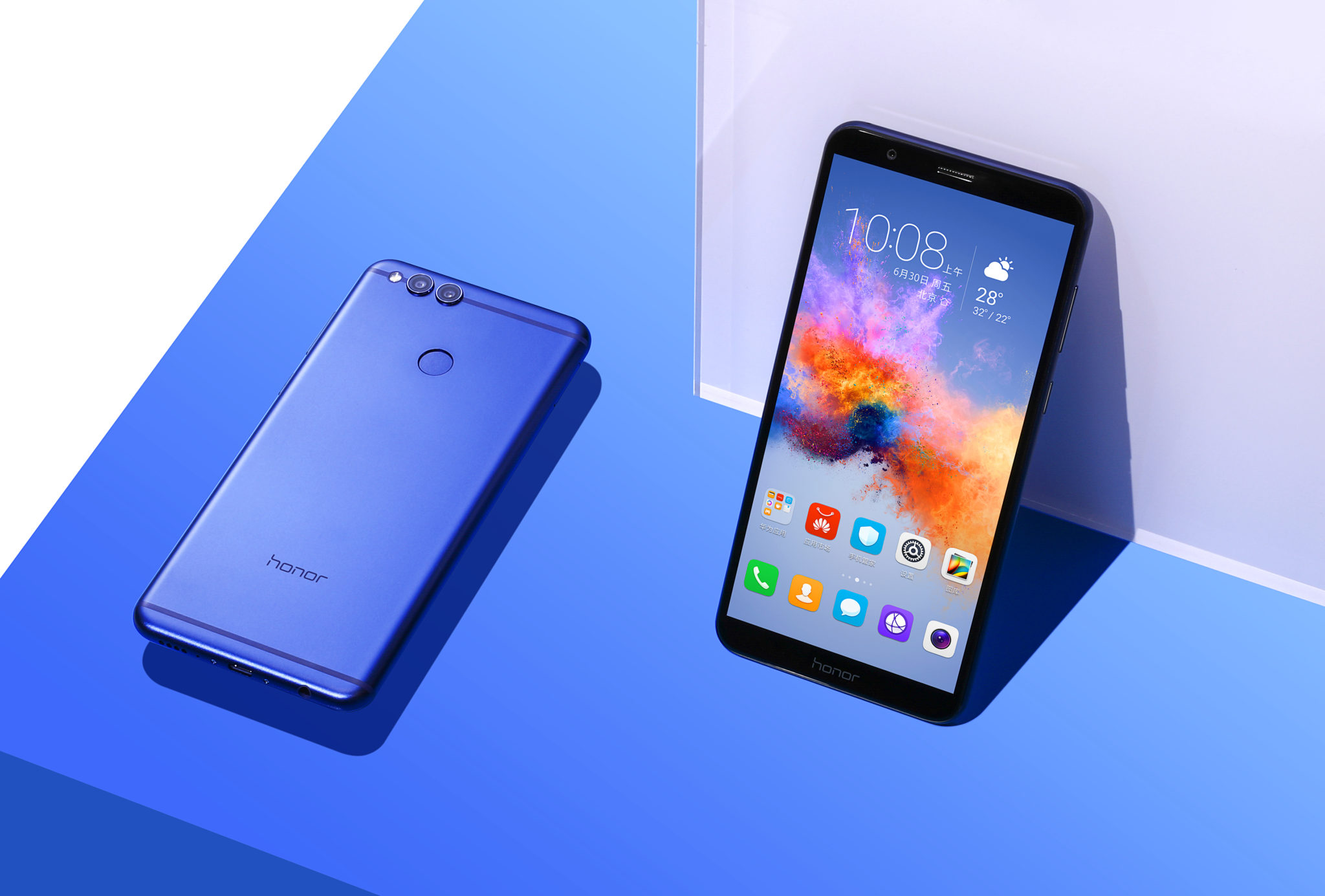
    Its flagship Honor 10 has AI-enhanced cameras, dual 24 + 16 megapixel lenses on the rear and 24 megapixels on the front. The in-house Kirin 970 processor helps the phone recognise about 500 scenarios in 22 categories.

    The Honor 10 has four gigabytes of RAM, 128 gigabytes of storage and a 3400 mAh battery that can recharge 50 per cent of power in 25 minutes.

    Yang says the handset’s biggest draw would be its iridescent paint job inspired by the Northern Lights. A fingerprint sensor is practically hidden on the phone’s chin, below the 5.84-inch full-HD screen.

  • Smartphone Sales Will Drop for Second Straight Year, IDC Predicts

    Smartphone Sales Will Drop for Second Straight Year, IDC Predicts

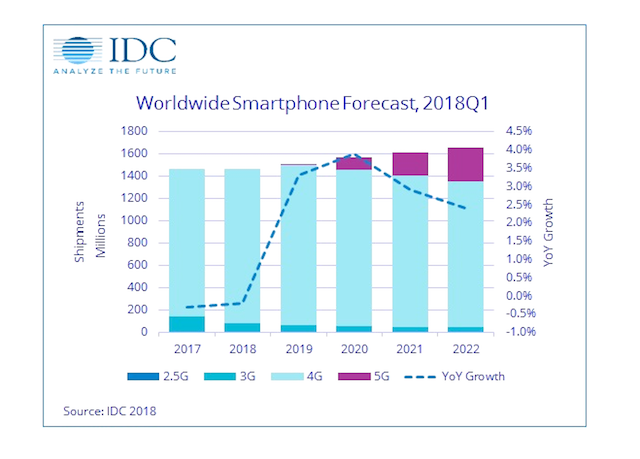
    Global smartphone sales are expected to fall for the second year running this year, before  returning to growth next year, according to analysis by the International Data Corporation (IDC).

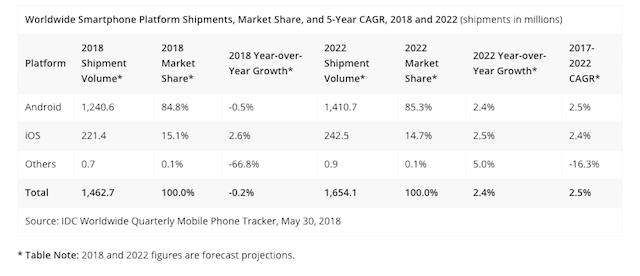
    In the research house’s Worldwide Quarterly Mobile Phone Tracker, smartphone shipments are forecast to drop 0.2 per cent this year to 1.462 billion units, after a 0.3 per cent decline last year. Looking further out, IDC expects the market is to grow roughly 3 per cent annually from next year onwards, with worldwide shipments reaching 1.654 billion in 2022 and a five-year compound annual growth rate (CAGR) of 2.5 per cent.

    The biggest driver of last year’s decline was China, where smartphone sales declined 4.9 per cent year-on-year. And the IDC expects sales in China to decline a further 7.1 per cent this year before flattening out next year.

    The biggest growth market in Asia Pacific continues to be India, with volumes expected to grow 14 per cent and 16 per cent this year and next.

    “Chinese OEMs will continue their strategy of selling large volumes of low-end devices by shifting their focus from China to India,” says IDC. “So far, most have been able to get around the recently introduced Indian import tariffs by doing final device assembly at local India manufacturing plants. As for components, almost everything is still being sourced from China.”

    “With 2017 now behind us a lot of interesting market dynamics are unfolding,” says Ryan Reith, program VP with IDC’s Worldwide Quarterly Mobile Device Trackers. “Even though it declined 5 per cent last year, China remains the focal point for many given that it consumes roughly 30 per cent of the world’s smartphones.

    “But plenty of pockets of growth can be found beyond China. India is now grabbing headlines and the market itself is going through some rapid transformation. Local Indian manufacturing continues to ramp up, despite still having a heavy dependence on China for components. The boom in India is likely to continue in the years to come, but the move toward building up local production has certainly caught the eye of many in the industry.”

    Outside of Asia Pacific, the biggest regions for growth will be the Middle East, Africa, and Latin America. All three regions have relatively low penetration rates and plenty of upsides, says IDC. Economic challenges have been the main inhibitor over the past two years, but IDC expects consumer spending to rise throughout the forecast and smartphones to be a big benefactor.

    5G opportunity

    The other catalyst to watch will be the introduction of 5G smartphones. IDC predicts the first commercially ready 5G smartphones will appear in the second half of next year with a ramp up across most regions happening in 2020. IDC projects 5G smartphone volumes to account for roughly 7 per cent of all global smartphone sales in 2020 or 212 million in total. The share of 5G devices should grow to 18 per cent of total volumes by 2022.

    “Although overall smartphone shipments will decline slightly this year, the average selling price (ASP) of a smartphone will reach US$345, up 10.3 per cent from the $313 of last year,” said Anthony Scarsella, research manager with IDC’s Worldwide Quarterly Mobile Phone Tracker.

    “This year will continue to focus on the ultra-high-end segment of the market as we expect a surge of premium flagship devices to launch in developed markets. Devices featuring large Amoled bezel-less displays, advanced camera functions, and an overall increase in speed and performance will be the driving factor in the increase of ASPs. Moving forward, we can expect this trend to continue as the ASP for a smartphone will continue to grow throughout the forecast period. In 2022, the final year of our forecast period, the average selling price for a smartphone will be $362, resulting in a five-year CAGR of 2.9 per cent.”

    Android vs Apple

    Android’s share of t sales is expected to remain relatively stable at 85 per cent of total global smartphone sales. Volumes are expected to grow at a five-year CAGR of 2.5 per cent, with shipments totaling 1.41 billion by 2022.

    “There is no question that Android is the OS of choice for the mass market and nothing leads us to believe this will change,” says IDC. “Given the large number of Chinese OEMs dependent on Google’s OS, as well as components from other US companies like Qualcomm, it will be interesting to see how things develop with all the discussion about a US-China trade war. Android OEMs continue to drive down the cost of new technology features at a rapid pace. IDC estimates that 98 per cent of Android phones will ship with screens larger than five inches by 2022, with 36 per cent being six inches or larger. While some of these will remain premium flagship models, the aggregate ASP of Android phones with a six-inch screen or greater by 2022 is projected to be $414.

    Meanwhile, iPhone volumes are expected to grow 2.6 per cent this year to 221 million. IDC is forecasting iPhones to grow at a five-year CAGR of 2.4 per cent, reaching volumes of 242 million by 2022. With rumors of some upcoming larger screen iOS smartphones, IDC has changed its screen size forecast for Apple by introducing volumes greater than six inches. Products are likely to begin shipping in the fourth quarter of 2018, with volumes ramping up and accounting for 36 per cent of all iPhones shipped by 2022.

  • CK Hutchison enters global alliance with Xiaomi

    CK Hutchison enters global alliance with Xiaomi

    Hong Kong conglomerate CK Hutchison has entered an agreement with Chinese smartphone maker Xiaomi covering distribution of Xiaomi smartphones.

    Under the agreement, CK Hutchison will bring Xiaomi smartphones, as well as IoT and lifestyle products, to its vast network of telecom and retail stores.

    CK Hutchison’s 3 Group and AS Watson brands will be able to broaden their product range, while Xiaomi will benefit from a wider international presence.

    The agreement will initially cover 3 Group’s stores in Hong Kong, Austria, Denmark, Ireland, Italy, Sweden in the UK and AS Watson stores in Hong Kong, Ireland, UK and the Netherlands.

    Xiaomi also plans to extend its collaboration with CK Hutchison’s operator channels in European markets.

    Recent research from Canalys estimates that Xiaomi had its strongest revenue growth in three years during the first quarter, with unit shipments growing 116% year-on-year to 28.1 million. More than half (nearly 57%) of these were shipped outside of China.

    “Xiaomi has done a great job recovering its position in its home market,” said Canalys Senior Director Nicole Peng. “While China has been a growth engine and profit driver for Xiaomi’s rising service revenue, overseas market expansion has helped it boost market share, both of which will be critical to the success of its IPO,” Canalys senior director Nicole Peng said.

    “It is important to note that Xiaomi’s rapid expansion will bring with it substantial overheads, which will make sustaining its original lightweight cost structure increasingly difficult.”

  • China smartphone sales fall sharply in Q1

    China smartphone sales fall sharply in Q1

    Chinese smartphone shipments suffered a steep decline in the first quarter, according to estimates from two separate research firms. Canalys estimates that shipments had their biggest ever decline during the quarter, falling more than 21% year-on-year to 91 million units – the lowest sales since the fourth quarter of 2013.

    Eight of the top 10 smartphone vendors recorded annual declines in shipments, with Gionee, Meizu and Samsung’s sales shrinking to less than half of their sales figures from the same quarter a year ago, the company said.

    Market leader Huawei recorded a modest growth rate of 2% to 24 million units, while second placed Oppo saw a decline of 10% to 18 million units and third ranked Vivo saw shipments decline 10% to 15 million units.

    But Xiaomi managed to buck the trend with a shipment growth of 37% to 12 million units, overtaking Apple to take fourth place. Canalys Research analyst Mo Jia said the results show that the Chinese smartphone market is increasingly becoming a four-horse race..

    “The level of competition has forced every vendor to imitate the others’ product portfolios and go-to-market strategies,” he said.

    “But the costs of marketing and channel management in a country as big as China are huge, and only vendors that have reached a certain size can cope. While Huawei, Oppo, Vivo and Xiaomi must contend with a shrinking Chinese market, they can take comfort from the fact that it will continue to consolidate, and that their size will help them last longer than other smaller players.”

    Counterpoint: Chinesee smartphone market faced its steepest ever decline during the quarter

    Meanwhile Counterpoint estimates that the Chinese smartphone market fell 8% year-on-year and 21% sequentially, with the top five brands capturing a record 82% of the market.

    The company predicts that Xiaomi recorded 51% growth and increased its market share to 13.1%, but still placed Apple ahead with a market share of 14.3%.

    The research firm’s top three rankings mirror that of Canalys, with Huawei on top with a market share of 21.6%, followed by Oppo at 17.6% and Vivo at 15.5%.

    Looking ahead, Canalys has predicted that the Chinese smartphone market will return to growth in the second quarter.

    “The inventory issues that Oppo and Vivo suffered in Q4 and Q1 are now behind them. New smartphones will definitely entice people to upgrade, but vendors are more careful of avoiding oversupply in the channel,” Jia said.

    “China’s smartphone market may see a short period of stagnancy as vendors refocus on research and development, relying on new use cases to excite refreshes rather than spending heavily on the channel and marketing.”

  • Hong Kong Customs Roll Up Counterfeit Phone Gangs

    Hong Kong Customs Roll Up Counterfeit Phone Gangs

    A territory-wide Hong Kong Customs raid has resulted in arrests and netted 100 smartphones suspected of being counterfeits.

    During the one-day Operation Snow Leopard, officers raided 12 shops and two storage places, seizing smartphones with suspected false trademarks or bearing possibly false trade descriptions. They also found about 3400 accessories also suspected of being fakes.

    Arrested were 18 men and a woman between 21 and 48 years old, including shop owners and salespersons, while the market value of the seized goods is estimated to be about HK$1.5 million.

    Customs had earlier received information alleging that some phone-repair shops sold suspected counterfeit smartphone accessories, and some shops were suspected to have engaged in unfair trade practices by selling old smartphones as new products, or selling parallel-imported smartphones as authorised products.

    After an in-depth investigation with the help of trademark owners, Customs took the enforcement action yesterday and raided 12 shops.

    Customs also cracked down on a syndicate in connection with export, supply and distribution of suspected counterfeit smartphones and accessories. A total of 64 suspected counterfeit smartphones and 330 suspect accessories were seized from the storage places in Sham Shui Po and Tsing Yi.

    A 32-year-old male head and 34-year-old female member of the syndicate were arrested. With the investigation ongoing, more arrests are possible.

    Intellectual Property Investigation Bureau chief Catherine Yip says the successful detection of the case was attributed to reporting by members of the public and the full help of trademark owners.
    She says Customs will step up inspection and enforcement with the approach of the Labour Day Golden Week.

    Customs says traders need to comply with the requirements of the Trade Description Ordinance (TDO) as the sale of counterfeit goods can lead to a fine of up to $500,000 and imprisonment for five years.

    Meanwhile, Customs has broadened reporting options by introducing a dedicated crime-reporting email account ([email protected]).

    Intelligence Bureau chief Kitty Poon says public reports received by Customs have risen progressively by 21 per cent, from 31,994 in 2015 to 38,819 last year. Of these, the proportion received via email has grown from 30 per cent in 2015 to almost 40 per cent last year.

  • 5G devices to save smartphone makers

    5G devices to save smartphone makers

    Global demand for smartphones will continue to be slow until 2022 when 2.02 billion phones are forecasts to be sold. The telecom industry is banking on 5G devices to reignite sales, but momentum will only begin from 2021. CCS Insight expects over 600 million 5G-enabled mobile phones will be sold in 2022.

    With new smartphones offering little more than an incremental update on previous models, the research firm fears that demand is unlikely to grow significantly for the next few years. Marina Koytcheva, CSS Insight VP adds, “Consumers in mature markets have been underwhelmed by the latest crop of flagship smartphones. Price hikes for top-end devices, with some of the latest and greatest devices hitting $1,000, have certainly not helped, and it’s little surprise more customers have decided they might as well stick with the device they already own.”

    Koytcheva notes that it’s not all doom and gloom [US and European markets]: “Although mature markets are suffering, there’s still growth potential in Africa, the emerging markets of Asia-Pacific, and India.

    CCS Insight believes the balance between developed and emerging markets will remain relatively stable, resulting in the global market for mobile phones edging up very slightly over the next five years, eventually delivering sales of more than 2 billion units in 2022.

    CCS Insight also believes that manufacturers are increasingly looking to 5G technology to reignite growth in mature markets. “The arrival of 5G handsets offers a glimmer of hope for embattled smartphone makers. They’re betting that this new, faster technology will give consumers a reason to upgrade their phones,” Koytcheva comments.

    She cautions, however, that phone-makers will have to be patient as they wait for this next wave of upgrade activity. “Although we expect the first 5G smartphones will hit the market in 2019, really significant demand won’t start until 2021, eventually having a positive impact in 2022, when we expect over 600 million 5G phones will be sold, accounting for 31% of the global market.”

    CCS Insight also notes that while advanced markets are focused on the transition to 5G, consumers in emerging markets are taking up smartphones more slowly than previously expected. Koytcheva comments, “The rising cost of components for entry-level smartphones and the arrival of affordable feature phones that support 4G networks mean that many people who otherwise might have bought their first smartphone are sticking with a feature phone for now”.

    CCS Insight’s research indicates that the trend is most prominent in India, but is also evident in other emerging markets. As a result, the research company believes smartphones will account for less than half of all mobile phones sold in India, emerging markets in Asia-Pacific and Africa in 2018.

    Koytcheva is optimistic: “Although the next couple of years are going to be tough, we’re certain that the shift to smartphones in emerging markets hasn’t evaporated — it’s merely been delayed. This year worldwide sales of smartphones will top 1.8 billion units by 2022.”

  • Philippines smartphone shipments fall for first time

    Philippines smartphone shipments fall for first time

    Smartphone shipments in the Philippines have declined 7% to approximately 15 million units in 2017, according to IDC.

    The research firm’s latest Asia/Pacific Quarterly Mobile Phone Tracker and Asia/Pacific Quarterly Personal Computing Device Tracker also revealed that tablet shipments fell 30% year-over-year (YoY) to just 1 million units.

    Smartphone shipments recorded the first decline since its introduction into the local market as intense competition from top brands – such as Samsung, OPPO, and vivo – resulted in some vendors being ousted from the market.

    Tablets continued to decline as their significance in the market waned due to the lack of practical use cases and cannibalization by smartphones with larger screen sizes.

    According to IDC, Philippine users are shifting to handsets with higher specs and better features, going against the traditional observation of device users in the Philippines being among the more price-sensitive in Asia-Pacific.

    Jensen Ooi, Senior Market Analyst, Client Devices, IDC ASEAN noted that while end users will continue to consider specs as one of the important factors when purchasing their next smartphone, the next “wow” factor they will be looking out for are the features that enhance their experience.

    “In the short term, they would also consider the latest appealing features with the most relevant use cases, namely multiple cameras that enhance the photography and 18:9 screens that give a better viewing experience. These features were only limited to high-end flagship phones in the past but have become more commonly available in reasonably priced midrange (US$200<US$400) handsets as well now,” he added.

    On-device AI remains at this point.

    Despite this, the average selling price of smartphones in 2017 grew to $134, a 13% YoY increase with ultra low-end smartphones (<$100) holding the lion’s share of the market, accounting for 59% of all smartphones in 2017 compared with 67% in 2016. Meanwhile the combined share of low-end ($100-$199) and midrange ($200-$399) smartphones grew to 35% from 28% in 2016.

    Samsung and Chinese brands such as OPPO and vivo were the key driving brands that led to the growth of the low-end and midrange segments in 2017. “Heavy marketing campaigns and lucrative sales promoter incentives enabled these brands to strengthen their mindshare in the local market, increase their shipments, and grow their respective market shares,” Ooi said.

    “The assault of these brands affected the sales of some of the players, resulting in them reducing their supplies, which ultimately impacted overall smartphone shipments.”

    From a screen size perspective, phablets (5.5”-6.9”) recorded significant growth in recent years, accounting for about a quarter of smartphone shipments in 2017. “As mobile content continues to grow, smartphones have become the primary device for basic productivity and everyday media consumption, and this fuels the need for larger screens and higher specs,” Ooi added.

    The loser in this trend are slate tablets (7”-10.9”) which are seeing declining says because they cannot offer the same level of practicality that phablets provide.

    Trending in 2018

    The smartphone market in the Philippines is expected to rebound in 2018 as competition between popular brands, which will continue to strengthen their positions, and local and minor brands, which will continue to struggle to stay relevant, intensifies. “We expect smartphone vendors to continue shipping in more phablets and equipping their new models with enticing features, such as dual cameras, thin bezels, and on-device artificial intelligence,” Ooi concluded.

  • Three reasons why we are addicted to smartphones

    Three reasons why we are addicted to smartphones

    Apple recently announced the launch of its iPhone 8 and iPhone X, which come with sleek, new features. Apple also hopes to start a new community around the iPhones. Ahead of the launch, Angela Ahrendts, head of retail at Apple, said their stores will be called “Town Squares,”and would double as public spaces, complete with outdoor plazas, indoor forums and boardrooms.

    The much-anticipated product launch was followed by millions who watched the event via livestream and on internet forums, blogs and in the news media.

    I, too, was among them.

    So, what draws people to these phones? Surely, it is not just the groundbreaking design or the connection with a community. As a minister, psychotherapist and scholar studying our relationship with hand-held devices, I believe there is much more going on.

    In fact, I’d argue, as I do in my book “Growing Down: Theology and Human Nature in the Virtual Age,” the phones tap into our basic yearnings as humans.

    Here are my three reasons why we love our phones.

    1. Part of an extended self

    Our sense of self is shaped while we are still in the womb. The development of the self, however, accelerates after birth. A newborn, first and foremost, attaches herself to the primary caregiver and later to things – acquiring what has been called an “extended self.”

    The leading 20th-century American psychologist William James was among the first to argue for an extended self. In his “Principles of Psychology,” James defined the self as “the sum total of all that a man can call his, not only his body and his psychic powers, but his clothes and his house, his wife and children.” Losing any of this extended self, which could include money or another prized object, as he explained, could lead to a sense of great loss. In early childhood, for example, babies and toddlers cry if they suddenly lose their pacifier or favorite soft toy, objects that become part of their extended selves.

    Phones, I argue, play a similar role. It is not uncommon for me to feel a sudden onset of anxiety should I drop my phone or am unable to find it. In my experience, many individuals feel the same way. It is also reflected in how often many of us check our devices.

    Psychologist Larry Rosen and his colleagues at California State University found that 51 percent of individuals born in the 1980s and 1990s experienced moderate to high levels of anxiety when they were kept from checking in with their devices for more than 15 minutes. Interestingly, the percentage drops slightly – to 42 percent – for those born between 1965 and 1979.

    This is primarily because they came into being during a time where hand-held technologies were only beginning to make their entry. For this group, phones became part of their extended self only as late teens or as young adults.

    2. Recalling caring relationships

    Not just extended selves, smartphones in particular, with their games, apps and notifications, have become an essential aspect of our sense of self.

    And here’s how:

    Drawing on psychodynamic theory, which holds that childhood experiences shape personality, I argue that our relationship with technology mirrors the environment our parents created in caring for us. This environment, as British psychiatrist Donald W. Winnicott writes, functions around touch, a keen awareness of what the infant needs, and establishing and maintaining eye contact.

    In the same way, we, as adults, reexperience touching and belonging through our phones. Technology affords a space where the self can be satisfied, play and feel alive – a space previously provided by caregivers.

    When we hold our phones, it reminds us of moments of intimacy – whether from our childhood or from our adult life. The brain chemical dopamine and love hormone oxytocin, which play a role in the addiction “high,” kick in. These chemicals also create a sense of belonging and attachment.

    Holding our phone has the same effect as when a parent looks lovingly at her child or when two lovers gaze into each other’s eyes. In the words of Apple executive Philip Schiller: The iPhone X “learns who you are.”

    Theological reflection also supports what we have learned about dopamine and oxytocin. The Judeo-Christian tradition, for example, identifies God as an intimate God who seeks face time and creates caring environments. In Bible, Numbers 6:24-26, we read:

    “The Lord bless you and protect you. The Lord make his face shine on you and be gracious to you. The Lord lift up his face to you and grant you peace.”

    3. Fulfills need to produce and reproduce

    Anthropologist Michael Taussig reminds us that it is in our “second nature to copy, imitate, make models, [and] explore difference” as we try to become a better or different self.

    Phones help us do that. We take pictures, manipulate images, join discussions, curate a selfie and reach out to others. By texting back and forth, we weave together a conversation. Through searching, we become knowledgeable (even if we lack wisdom). Thus, we join ancestors who painted on cave walls and told stories around fires.

    It should not come as a surprise then that smartphones currently account for 46 percent of all internet use. This is expected to grow to 75 percent by 2021. We are destined, it seems, to live with our phones in hand.

    Living with technology

    Having said this, sometimes, however, I would argue, we need to show up in person and make a difference.

    We can be disappointed if we limit our spaces and relationships to small screens or to “town squares.” We need intimate relationships where we give and receive touch, where we gaze into someone’s eyes. We also need spaces – some will be online – where deep connections can be made, where we can rest, play and discover.

    So, as some of us head over to the Town Square to purchase the latest iPhone or venture online, it would be best to remember the dictum of historian of technology Melvin Kranzberg:

    “Technology is neither good nor bad; nor is it neutral.”
  • Xiaomi will present its new flagship

    Xiaomi will present its new flagship

    Chinese company Xiaomi plans to unveil its new flagship Xiaomi Mi Note 3 at a special event on September 12. CEO of Xiaomi lei Jun has decided to stir interest in the upcoming event. On his page on the social network Weibo, he posted the picture taken by the camera of Mi Note 3.

    See also:  Became known the price of the flagship smartphone Xiaomi Mi6

    The photo was taken at the opening of a new retail store Mi Store in Hong Kong. That the image captured by smartphone Mi Note 3 found a Chinese blogger who has studied the EXIF data of the photo.

    In speed these data were removed, but the source managed to take a screenshot. Image resolution is 12 MP, the lens aperture equal to F/1.8.

  • Emerging Asia leads global smartphone sales growth

    Emerging Asia leads global smartphone sales growth

    Global smartphone demand increased 4% year-on-year during the second quarter to 347 million units, marking the strongest second quarter on record, according to GfK.

    Emerging Asia led the demand growth with a 13% year-on-year increase, followed by Central and Eastern Europe at 11% and Latin America at 10%, the market research company said. Market value grew 9% year-on-year, due to rising average sales price.

    “The record demand for smartphones in the second quarter this year shows that, despite saturation in some markets, the desire to own a smartphone is a worldwide phenomenon,” GfK global director of telecom research Arndt Polifke said.

    “How that manifests itself differs widely by region. Manufacturers are maximizing all their creativity to ensure their latest devices are irresistible – and to increase ASP as a result. Elsewhere, macroeconomic factors and consumer confidence are having an impact, but operators and retailers are employing localized tactics to ensure the smartphone remains the connected device of choice.”

    Yotaro Noguchi, product lead in GfK’s trends and forecasting division, added that “consumers are willing to pay more for their smartphone as they seek a better user experience. Despite the market reaching high penetration levels, GfK forecasts smartphone demand will continue to see year-on-year growth even in 2018, as innovation from smartphone vendors keeps replacement cycles from lengthening.”

    Mainland China: The market plateaus

    In mainland China, smartphone demand plateaued in 2Q17 at 110.1 million units, showing no change year-on-year. This moderation of growth in demand for smartphones was caused primarily by saturation in the market.

    But as in other regions, higher-priced new products are pushing up market value. GfK forecasts smartphone demand in mainland China to total 461 million units in 2017, an increase of 2% year-on-year. The growth in value terms (USD) is expected to be considerably higher, at 11% year-on-year.

    Developed Asia: South Korea drags down the region

    Overall smartphone demand in the region totaled 16.1 million units in 2Q17, down 3% year-on-year. Declining demand in South Korea, which saw impressive growth last year, offset the increased demand in both Japan (up 12% year-on-year) and Australia (up 9% year-on-year). GfK expects the region to experience a slight improvement in demand in the second half of 2017, finishing the full year down 1%. That will equate to 73.1 million units.

    Emerging Asia: Anticipating the strongest regional growth in 2017

    Smartphone demand in the region totaled 56.7 million units, up 13% year-on-year. Bangladesh and Malaysia powered most of this growth. In Bangladesh, smartphone demand grew by a strong 40% year-on-year. Malaysia is maintaining a steady recovery from its 2015 slump, and here demand in 2Q17 grew by 31% year-on-year.

    Smartphone demand in India also remained resilient in 2Q17, having leveled out slightly to 14% year-on-year. GfK expects the recently announced Goods and Services Tax (GST) will have no impact on smartphone demand in the country. GfK forecasts overall smartphone demand in the region will total 234 million units in 2017, an increase of 11% year-on-year. This represents the strongest growth across all regions for the year.