Retail News CRM

Tag: SoftBank

  • Qualcomm supports SoftBank’s fastest-ever 5G mmWave in Japan

    Qualcomm supports SoftBank’s fastest-ever 5G mmWave in Japan

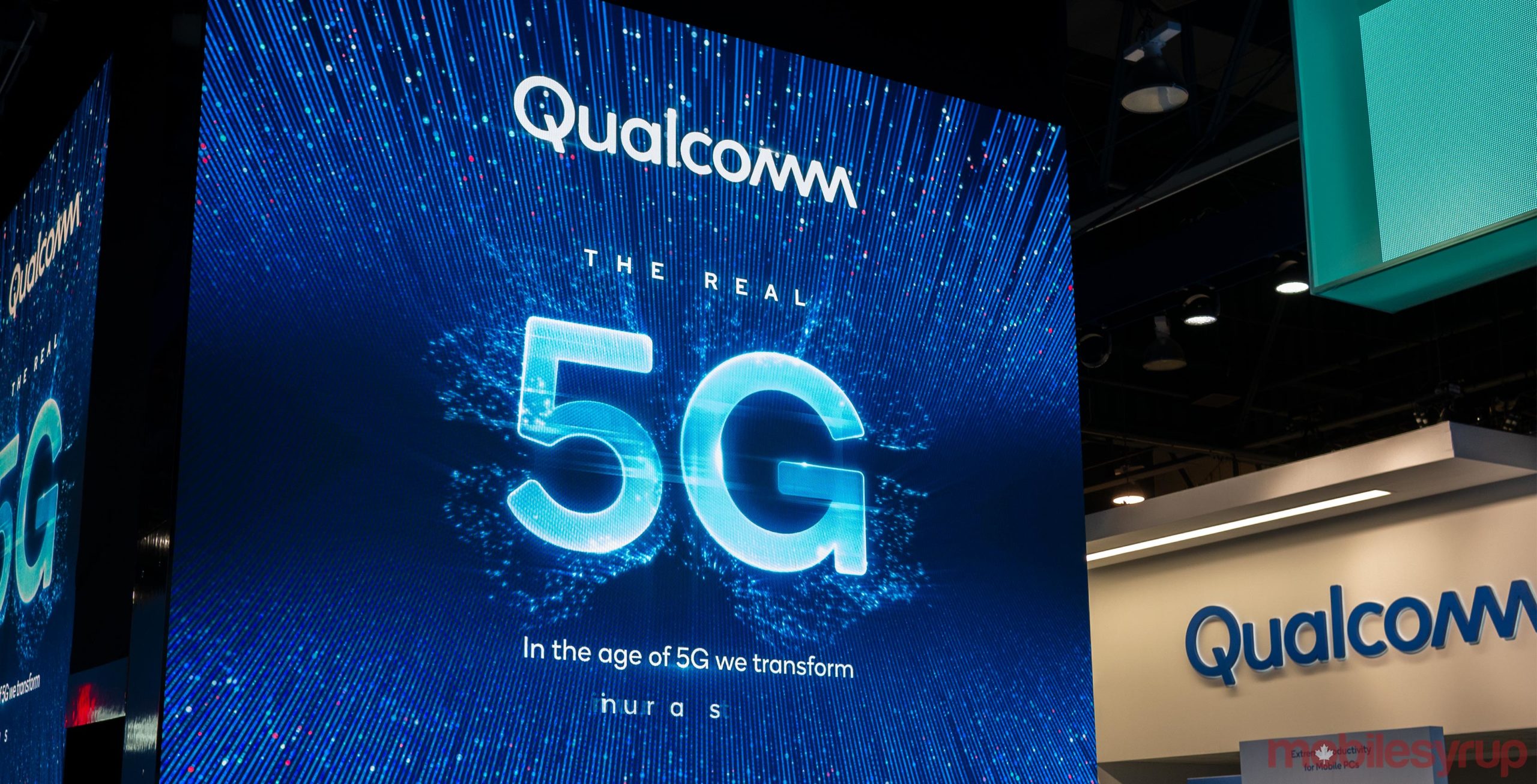
    Qualcomm Technologies, Inc. announced that SoftBank Corp. has launched its 5G millimeter (mmWave) service in Japan – using devices based on Qualcomm® Snapdragon™ 5G Mobile Platforms and Modem-RF Systems. 5G mmWave allows Japanese users to enjoy the fastest possible multi-Gigabit download speeds in the country. Along with the launch, SoftBank is making the “Pocket WiFi 5G A004ZT” 5G mmWave mobile hotspot available for sale. All initial 5G mmWave-compatible mobile devices in SoftBank’s portfolio, including soon-to-be announced 5G smartphones, are expected to be powered by Qualcomm Technologies’ 5G mmWave products.

    The deployment of 5G mmWave is critical to unleashing the full potential of 5G and addressing the massive increase in mobile data demand. 5G mmWave allows leading operators such as SoftBank to take advantage of the large amount of spectrum resources available in higher bands, enabling them to deliver the world’s fastest multi-gigabit cellular speeds and low latency connectivity.

    5G mmWave is also a cost-effective way for mobile operators to increase the network capacity needed to meet the increasing demand for data in dense urban, fixed wireless access and enterprise environments – with savings up to 35% in total cost of ownership compared to sole use of sub-6 GHz bands.

    “5G mmWave is critical for mobile operators to stay competitive and to realize the full potential of 5G to transform many industries,” said Francesco Grilli, vice president, product management, Qualcomm Technologies, Inc. “Japan is at the forefront in deploying the most advanced 5G technologies such as mmWave, and we are honored by working with SoftBank to bring the fastest mobile experiences to Japanese consumers and businesses.”

    “SoftBank is pleased to collaborate with Qualcomm Technologies and use its leading 5G mmWave technology to offer world-class 5G service to our subscribers,” said Keigo Sugano, senior vice president, head of product division, SoftBank Corp. “We look forward to continuing our long-standing collaboration with Qualcomm Technologies to support Japan’s growth and leadership using the most advanced wireless innovations.”

    This announcement follows SoftBank’s commercial launch of 5G Sub-6 GHz service with smartphones powered by Snapdragon 5G Mobile Platforms in March 2020. The commercial launch of 5G mmWave significantly strengthens SoftBank’s 5G network capabilities, with more mmWave capable mobile devices to be launched going forward.
  • SoftBank-backed Coupang raises $4.2 billion in US IPO

    SoftBank-backed Coupang raises $4.2 billion in US IPO

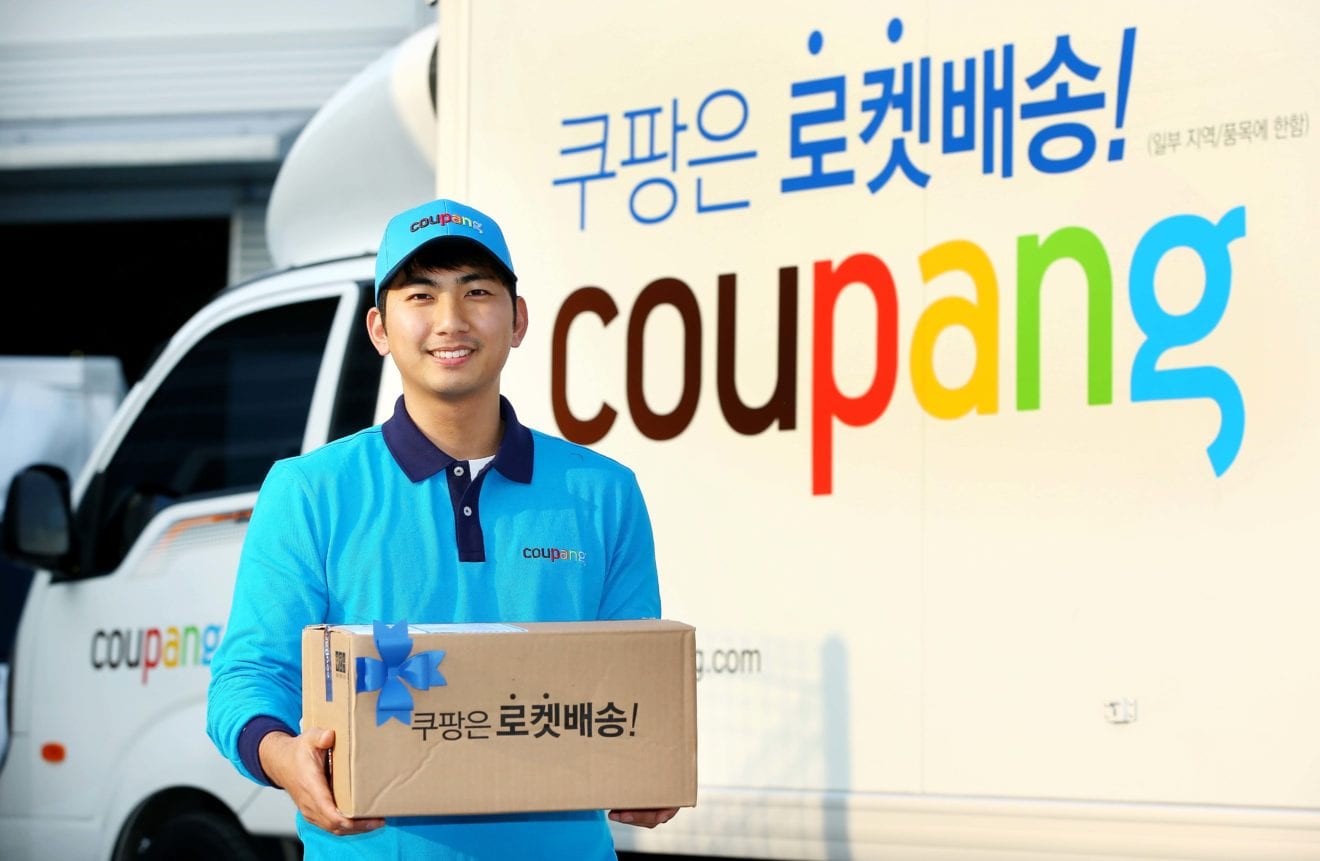
    Coupang LLC, South Korea’s largest e-commerce company, raised $4.2 billion in the biggest share offering in the United States this year after selling stocks in the IPO above its deal target range, people familiar with the matter said.

    The initial public offering price of $35 apiece, higher than the marketing range $32-$34 per share, gives Seoul-headquartered Coupang, which is backed by Japan’s SoftBank Group Corp, a market value of $60 billion.

    Coupang’s successful share offering comes as the U.S. IPO market is at its strongest in more than two decades and investors are flocking to buy shares in technology companies that have benefited during the COVID-19 pandemic.

    The IPO is the biggest in the United States this year, surpassing the $2.15 billion raised by dating app Bumble Inc. It also marks a jump in Coupang’s valuation, which was pegged at $9 billion in a fundraising round in 2018, according to Pitchbook.

    Analysts in South Korea said the strong response to Coupang’s offering was a result of its market-leader position in the country at a time when, like many other e-commerce firms, its sales have grown due to the COVID-19 pandemic.

    “Considering the high level of valuation inherent in the pricing, the market is giving a generous assessment of the company’s achieving the top spot in market share,” said Park Sang-joon, analyst at Kiwoom Securities.

    Coupang was the top-ranked South Korean e-commerce firm in 2020 with 19.2% market share, according to Euromonitor, compared to Naver Corp’s 13.6% and eBay Korea’s 12.8%. It was the 10th largest e-commerce firm in the world, based on retail value excluding sales tax.

    In 2020, Coupang’s net sales jumped 91% year-on-year to $11 billion. Net losses narrowed to $567.6 million from $770.2 million posted in the prior year.

    Founded in 2010 by Korean-American billionaire Bom Suk Kim, Coupang rose to prominence after launching its guaranteed same-day or next-day delivery service in the East Asian country. SoftBank’s $100 billion Vision Fund owns 35.1% of Coupang.

    Achieving a $60 billion valuation would add to good news for the Vision Fund, which is bouncing back from an annual loss in March. Last month, it announced record quarterly profit.

    The company’s shares will begin trading on the New York Stock Exchange on Thursday under the symbol “CPNG.”

    Goldman Sachs, Allen & Co, JPMorgan and Citigroup are the lead underwriters for the offering.

  • SoftBank-backed Coupang reveals revenue surge ahead of US IPO

    SoftBank-backed Coupang reveals revenue surge ahead of US IPO

    South Korean e-commerce giant Coupang, backed by Japan’s SoftBank Group Corp, on Friday filed to go public on the New York Stock Exchange, hoping to cash in on strong demand for high-growth tech stocks as it reported a near-doubling of annual revenue and narrowing losses.

    Coupang is aiming for a valuation of around $50 billion in its U.S. initial public offering (IPO), according to a person familiar with the matter.

    This would make it the largest IPO in New York by a company based outside the United States since Alibaba Group Holding in 2014, Dealogic data showed.

    Founded in 2010 by Harvard graduate Bom Kim, Coupang made a splash in Korea with its ‘Rocket Delivery’ service, which promised delivery within 24 hours, shaking family-owned retail conglomerates such as Shinsegae and Lotte.

    Coupang was valued at $9 billion in its last private fundraising round in 2018, according to data provider PitchBook.

    In a regulatory filing, Coupang said total revenue jumped 91% in 2020 to $11.97 billion, while net losses narrowed to $474.9 million from $698.8 million.

    The company, viewed as a rival in South Korea to e-commerce giant Amazon.com Inc, received $1 billion in funding from SoftBank in 2015 and $2 billion from its Vision Fund in 2018.

    Coupang’s other investors include BlackRock Inc, the world’s largest asset manager, venture capital firm Sequoia Capital and billionaire investor Bill Ackman.

    The U.S. IPO market is at its strongest in more than two decades, and investors are flocking to buy shares in technology companies that have benefited during the COVID-19 pandemic.

    Coupang plans to list under the symbol “CPNG”. It has yet to provide a target asking price for its shares.

    Goldman Sachs, Allen & Co, JP Morgan, BofA Securities and Citigroup are among the underwriters.

  • SoftBank sells T-Mobile shares at a 4 percent discount

    SoftBank sells T-Mobile shares at a 4 percent discount

    Back in July 2013, the battle between SoftBank and Dish Network over Sprint was won by SoftBank as the latter paid $21.6 billion for 78% of the company. Over time, SoftBank hiked its stake to 80% of Sprint and when T-Mobile closed on its purchase of Sprint on April 1st, SoftBank ended up with 304.6 million shares of T-Mobile.

    Perhaps at a different time, SoftBank might have held on to the 24.7% of T-Mobile’s stock that it received following the merger. But the company has been having difficulties; during its most recent fiscal year SoftBank was drowning in $13 billion worth of red ink. Positions it held in WeWork and Uber produced disastrous results and SoftBank had even considered selling as much as $11.5 billion of its stake in Chinese tech firm Alibaba.

    As part of the transaction, former Sprint CEO Marcelo Claure will purchase 5 million T-Mobile shares in a stock purchase that Claure will fund via a loan provided by SoftBank. Interestingly, Claure happens to be the current CEO of SoftBank Group International and is also a director on T-Mobile’s board. Not adding to its holdings in T-Mobile is Germany’s Deutsche Telekom. The latter owns a 43% stake in T-Mobile and some analysts expected it to add the additional 7% that would put it near the 50% mark. Instead, Deutsche Telekom has two options to purchase 101.5 million T-Mobile shares. If it exercises all of the options it has, the German telecom giant would own 51.8% of T-Mobile. Both options expire on June 22nd, 2024.

    SoftBank is selling as many as 198 million T-Mobile shares or 65% of its stake via the carrier. 133.5 million is going to the general investment public while the underwriters get a total of 10% to cover over-allotments. Existing T-Mobile holders get a crack at 19.75 million shares and 30 million more are being sold to a public trust. The transaction had an interesting effect on T-Mobile’s stock price over the last few days with increasing volatility. Today, with most shares getting hit by coronavirus fears in several states, the broad market was taking it on the chin. But after early weakness, T-Mobile moved ahead for the day and closed at $108.43 for a gain of $1.27.

    So what does the future hold for T-Mobile? With its cake-based 5G setup consisting of low-band 600MHz airwaves that travel great distances and penetrate buildings better than other signals; the 2.5GHz mid-band spectrum it acquired in the Sprint merger providing faster than expected 5G download speeds; and mmWave spectrum delivering zippy fast download data speeds, some believe that the carrier will end up as the fastest 5G wireless provider in the country. It is important to note that the number of T-Mobile shares outstanding will not increase due to the transaction which is actually positive for the carrier’s current stockholders.

    A week from today, on July 1st, Dish Network will close on its purchase of Boost Mobile and 14MHz of 800MHz spectrum for $6 billion. Dish will then sign a seven-year MVNO agreement with T-Mobile that will allow it to offer wireless service while it builds a standalone 5G wireless network. The goal is to make Boost the nation’s new fourth-largest wireless carrier replacing Sprint which was swallowed up by T-Mobile. The Justice Department was concerned that reducing the number of major carriers by 25% would lead to higher prices for consumers.

    The complex financial dealings happen to mark the end of the T-Mobile career of long time Chief Financial Officer Braxton Carter. The latter first became T-Mobile’s CFO back in 2005.

  • SoftBank Nears Deal To Invest In Didi’s Self-driving Unit

    SoftBank Nears Deal To Invest In Didi’s Self-driving Unit

    SoftBank Group Corp is close to finalizing a deal to lead a $300 million investment in the autonomous driving unit of Didi Chuxing, news website The Information reported on Monday, citing people with knowledge of the situation.

    Earlier on Monday, SoftBank said it plans to raise as much as $41 billion to buy back shares and reduce debt, in an unprecedented move to restore investor confidence as a financial market rout pummels its shares and its portfolio companies.

  • India’s Lenskart wins US$275 million in Softbank funding

    India’s Lenskart wins US$275 million in Softbank funding

    Indian omni-channel eyewear retailer Lenskart has raised an investment of US$275 million from SoftBank Vision Fund.

    Several of the firm’s existing investors sold their stake in the business during the latest Series-G financing round. The new funding has lifted the firm’s total investments to date to $456 million, leaving Lenskart with a valuation of more than $1.5 billion.

    The firm currently sells via more than 500 outlets throughout more than 100 Indian cities. The firm started as an online-only business, with 60 per cent of current sales still taking place online.

    “We are thrilled to have SoftBank Vision Fund with us in our journey,” said Lenskart founder and CEO Peyush Bansal in an interview with TechCrunch. “Their understanding of consumer and technology will help us build the next edition of Lenskart.”

    The firm’s latest inflow of capital will be used to improve its IT infrastructure and supply chain.

  • Softbank, Line merger foretells the birth of a new tech powerhouse

    Softbank, Line merger foretells the birth of a new tech powerhouse

    The alliance between the two Japanese companies is estimated to be worth $30 billion and is expected to be concluded by October next year. The merger’s combined revenue could see it totaling $11 billion, easily surpassing its domestic competitor Rakuten.

    Tech analysts have lauded the merger, stating that this agreement would give Z Holdings and Line the opportunity to extend their reach towards a larger consumer base and increased negotiating power with its advertisers. Softbank and Naver, which owns Line, will each control 50% of the share in Z holdings.

    “We were driven by a sense of crisis about global competition and the pace of change in AI,” said Takeshi Idezawa, co-Chief Executive at Line. “The timing arrived for us to move on to the next phase [with this merger].”

  • SoftBank Seeks $2.8 Billion From Japan Banks

    SoftBank Seeks $2.8 Billion From Japan Banks

    SoftBank Group is in talks to get as much as 300 billion yen ($2.76 billion) in financing from three banks.

    Mitsubishi UFJ Financial Group, Sumitomo Mitsui Financial Group and Mizuho Financial Group are currently in discussions with the investment company about its loans, various media reported.

    We are evaluating our options flexibly while considering cash on hand, said SoftBank spokeswoman Hiroe Kotera, who was quoted in «Bloomberg». Bank loans are one option, but nothing has been decided, she added.

    The loans are part of the company’s regular financing, said the newswire’s source, but Nikkei reported that SoftBank is raising money to pay for its $3 billion tender offer to WeWork shareholders.

    Last month, the investment firm agreed on a $9.5 billion rescue package for WeWork, in a deal that handed it 80 percent of the troubled co-working company. Masayoshi Son’s company reported an operating loss of close to $6.5 billion in the quarter, after writing down the value on a string of high-profile investments.

  • SoftBank Seeks $2.8 Billion From Japan Banks

    SoftBank Seeks $2.8 Billion From Japan Banks

    SoftBank Group is in talks to get as much as 300 billion yen ($2.76 billion) in financing from three banks.

    Mitsubishi UFJ Financial Group, Sumitomo Mitsui Financial Group and Mizuho Financial Group are currently in discussions with the investment company about its loans, various media reported.

    We are evaluating our options flexibly while considering cash on hand, said SoftBank spokeswoman Hiroe Kotera, who was quoted in «Bloomberg». Bank loans are one option, but nothing has been decided, she added.

    The loans are part of the company’s regular financing, said the newswire’s source, but Nikkei reported that SoftBank is raising money to pay for its $3 billion tender offer to WeWork shareholders.

    Last month, the investment firm agreed on a $9.5 billion rescue package for WeWork, in a deal that handed it 80 percent of the troubled co-working company. Masayoshi Son’s company reported an operating loss of close to $6.5 billion in the quarter, after writing down the value on a string of high-profile investments.

  • Softbank, Line merger foretells the birth of a new tech powerhouse

    Softbank, Line merger foretells the birth of a new tech powerhouse

    The alliance between the two Japanese companies is estimated to be worth $30 billion and is expected to be concluded by October next year. The merger’s combined revenue could see it totalling $11 billion, easily surpassing its domestic competitor Rakuten.

    Tech analysts have lauded the merger, stating that this agreement would give Z Holdings and Line the opportunity to extend their reach towards a larger consumer base and increased negotiating power with its advertisers. Softbank and Naver, which owns Line, will each control 50% of the share in Z holdings.

    “We were driven by a sense of crisis about global competition and the pace of change in AI,” said Takeshi Idezawa, co-Chief Executive at Line. “The timing arrived for us to move on to the next phase [with this merger].”

  • SoftBank turns to Nokia for commercial 5G offering

    SoftBank turns to Nokia for commercial 5G offering

    As an existing supplier of multiple technologies to SoftBank, Nokia’s selection for 5G Radio re-enforces the strong relationship between the two companies, as SoftBank turn to Nokia’s end to end portfolio for 5G.  Nokia’s 5G AirScale supports multiple frequencies, in both distributed and centralized architectures, giving SoftBank tremendous flexibility in its network evolution.

    Nokia’s 5G AirScale will be deployed across Japan, bringing 5G RAN to businesses and consumers alike. The 5G investment will benefit consumers by bringing them a 5G enhanced Mobile BroadBand (eMBB) service, with 5G Ultra-Reliable Low Latency Connectivity (URLLC) and enhanced Machine Type Communication (eMTC) enabling multiple new applications and services for industries in the 5G era.

    John Harrington, Head of Nokia Japan, said, “We are delighted to continue our long-term relationship with SoftBank and to be working with them as a trusted end to end partner at such an important milestone in the transformation to 5G. We are committed  helping SoftBank launch its commercial 5G network.”

    Nokia now has 38 5G commercial contracts, including 20 with named customers. These contracts well illustrate the vendor’s strong thought leadership in 5G. Nokia will continue to be one of the best partners for customers by providing an end-to-end solution and contribute to transform both networks and businesses.

  • Goldman Reducing Loan Exposure to Softbank Vision Fund

    Goldman Reducing Loan Exposure to Softbank Vision Fund

    Goldman Sachs Group aims to offload a portion of its stake in a $3.1 billion credit line to SoftBank Group Corp’s Vision Fund which it helped arrange.

    The U.S. lender has approached other financial institutions to take on some of its lending commitment to decrease its risk, quoting people with knowledge of the matter.

    The bridge facility involved, which Goldman and Mizuho International began arranging last year, enables the famous investment vehicle to quickly decide on transactions. The loan was syndicated to other banks including Standard Chartered, Citigroup, Barclays and Royal Bank of Canada, according to a SoftBank presentation in May.

    Goldman has been looking to cut its exposure to the facility for the last few months, one of the people said to the media outlet. Goldman is offering the debt at prices slightly below par, and also sell the credit line in pieces as small as $50 million, according to Bloomberg’s sources.

    In May, Goldman already reduced its exposure by bringing on board additional lenders. Now, the firm is looking beyond the existing group, and at least one of the original 10 lenders isn’t interested in boosting its exposure, one of the people said.

    Bad news has been plaguing SoftBank this week, from the stalled initial public offering of WeWork(one of its biggest bets) to doubts over the sale of its debt-laden Sprint. The cost to protect against nonpayment by SoftBank in the credit-default swaps market jumped on Wednesday, according to ICE Data Services.

    Goldman Sachs has deep ties to SoftBank, working with the company to raise a second Vision Fund and advising founder Masayoshi Son’s businesses on several deals in recent years. SoftBank’s first Vision Fund, which counts Saudi Arabia’s Public Investment Fund as its largest investor, has backed firms including messaging software company Slack, ride-hailing giant Uber and office-sharing startup WeWork.

  • SoftBank Doubles Stake in Brazilian Zero-Fee Digital Lender

    SoftBank Doubles Stake in Brazilian Zero-Fee Digital Lender

    SoftBank has reportedly agreed to double its stake in Brazilian online lender Banco Inter in the midst of the Japanese giant’s ongoing buying spree in Latin America.

    The deal will include acquiring stakes from controlling family members of the bank, unnamed sources said, adding that Banco Inter CEO Joao Vitor Menin, who owns 5.4 percent, isn’t among the sellers.

    In July, SoftBank bought an 8.1 percent stake in Banco Inter valued at around $186 million.

    Banco Inter aside, Tokyo-based SoftBank has been in the midst of an ongoing buying spree in Latin America with about 300 targets in the region. SoftBank launched a fund in March to back tech firms in the region and has already spent more than $1 billion of its $5 billion of capital.

  • SoftBank to Allow Setting of Cash Amount for IPO Subscription

    SoftBank to Allow Setting of Cash Amount for IPO Subscription

    SoftBank’s brokerage unit plans to do something that has never be done in Japan’s capital markets – allowing individuals to participate in initial public offerings by setting the amount they wish to pay, rather than by the number of shares.

    The investment giant plans to offer the shares of One Tap BUY, a smartphone-based brokerage controlled by its wireless unit, through this method as early as March 2020. Once it obtains the necessary regulatory approvals, this will mark the first time that investors can subscribe to an initial public offering (IPO) by a specified investment amount rather than a specified number of shares as done traditionally, said One Tap BUY chief executive Masaaki Uchiyama.

    Investors can participate in IPOs for as little as 1,000 yen ($9.39). When you buy food or fuel your car, it’s easier to specify the amount of money you want to spend rather than the volume. The only thing investors want to know is how much they can gain from $10, said Uchiyama, who was quoted in Bloomberg.

    SoftBank, along with Line and Rakuten are racing to onboard more customers via financial services. Line started an online brokerage with Japan’s biggest bank, Nomura Holdings whereas Rakuten last month announced it will start lending and issuing credit cards in the U.S. All three are expanding into new markets, targeting younger and less well-off investors.

    SoftBank owns 46 percent of One Tap BUY, while Mizuho Securities holds 13 percent. Uchiyama, who joined the smartphone-based brokerage in 2016 after stints at the predecessors of SMBC Nikko Securities and Accenture, became the CEO in July.

  • Vision Fund Makes $110 Million Bet On Renewable Energy Storage

    Vision Fund Makes $110 Million Bet On Renewable Energy Storage

    Softbank Group’s Vision Fund has made its first foray into energy storage technology with a $110 million investment in Switzerland-based Energy Vault.

    While many countries are keen to use renewable energy as part of efforts to cut carbon emissions in the fight against climate change, the challenge has been to find a way to store it for later use, particularly overnight or when demand surges.

    Inspired by the physics and mechanical engineering used in hydro plants, Energy Vault says its technology enables renewable energy to be stored in 35-ton bricks and delivered as baseload power for less than the cost of fossil fuels at any hour of the day.

    Most rival solutions focus on some form of battery storage, be it lithium ion, sodium-sulphur, lead-acid, among others. While costs have been falling – by nearly 40% since 2015 according to Wood Mackenzie – most degrade over time.

    “Energy Vault solves a long-standing and complex problem of how to store renewable energy at scale,” Akshay Naheta, managing partner at SoftBank Investment Advisers, said in a statement on Thursday, announcing Vision Fund’s $110 million investment. “Energy Vault is highly complementary to SoftBank’s existing energy portfolio and we are pleased to further the company’s global development.”

    Energy Vault launched in late 2018 and has already partnered with Mexican materials company CEMEX and India’s The Tata Power Company as it looks to complete a test phase and then build its first commercially functioning site.

    Despite normally investing at a later stage in a company’s development, Softbank believed Energy Vault could scale quickly and potentially not need to do a later funding round, hence the drive to take an early stake, Naheta said.

    The potential rewards are large. The global energy storage market is expected to reach 22.2 GW in 2023, from nearly 5 GW at the end of 2018, according to a report in May by data and analytics company GlobalData.

    Robert Piconi, chief executive and co-founder of Energy Vault, said despite planning to grow the business country by country, the scale of pent-up global demand for a scaleable solution convinced them to move faster.

    “The Vision Fund shares our passion to combat climate change through innovation in energy storage technologies and, with its support as a strategic partner, Energy Vault is well positioned to meet the large and currently unmet demand for sustainable and economical energy storage worldwide,” Piconi said.