Retail News CRM

Tag: SoftBank

  • Suzuki, Mazda, Subaru Join Toyota-Softbank Self-Drive Venture

    Suzuki, Mazda, Subaru Join Toyota-Softbank Self-Drive Venture

    Five Japanese automakers including Suzuki Motor Corp and Mazda Motor Corp said they would each invest 2 percent in the on-demand, self-driving car service venture set up by SoftBank Corp and Toyota Motor Corp. Suzuki, Mazda, Subaru Corp, Isuzu Motors Ltd and Toyota’s compact car unit Daihatsu will each invest 57.1 million yen ($530,620) in the venture – dubbed Monet – in return for a 2 percent stake, the companies said in a statement.

    SoftBank and Toyota will each retain their 35% stakes in the company, which is now capitalized at $26.6 million. The latest investors join Honda Motor Co Ltd and Hino Motors Ltd, Toyota’s truck-making operations, which each own 10 percent stakes. Launched in October, the venture plans to roll out on-demand bus and car services in Japan in the next year, and a services platform for electric vehicles in the country as early as 2023 based on Toyota’s boxy “e-palette” multi-purpose vehicle.

    Monet is building up members as it joins the ride-sharing sphere which is dominated by startups such as Uber Technologies Inc, Didi Chuxing and Lyft Inc, as traditional automakers band together to compete in an industry which is placing a growing emphasis on offering vehicle services rather than selling cars to individual drivers.

    Automakers are increasingly joining forces with technology companies as well as each other as they grapple with the massive investment and software expertise required to develop these new services for which demand has yet to be tested. The new investment will see Suzuki, Mazda and Subaru deepen their partnership with Toyota, as they have already agreed to tap the R&D firepower of Japan’s biggest automaker for electric cars and other future vehicle technologies.

  • SoftBank signs 5G deals with Ericsson, Nokia

    SoftBank signs 5G deals with Ericsson, Nokia

    Japan’s SoftBank has signed 5G deployment contracts with both Ericsson and Nokia as it prepares to launch services over its newly-granted 5G spectrum.

    Ericsson has announced it has been selected as a primary vendor for the deployment of a multi-band 5G network utilizing Softbank’s 3.9-GHz to 4-GHz and 29.1-GHz to 29.5-GHz spectrum bands.

    SoftBank will deploy radio access network equipment including products from the Ericsson Radio System portfolio to allow it to enhance its existing LTE network while optimizing its 5G network.

    SoftBank and Ericsson have been trialing 5G technologies since 2015, and have since expanded their collaboration to include 5G testing of multi-bands, including 28-GHz and 4.5-GHz.

    SoftBank and Ericsson have been partners since the 2G era and we are thrilled to support them on this latest part of their technology journey,” Ericsson SVP and head of North East Asia Chris Houghton said.

    “With the help of our advanced product portfolio, SoftBank can unlock the potential of 5G for Japanese society and we look forward to building on our long-standing partnership.”

    Meanwhile SoftBank will deploy Nokia’s 5G AirScale technology across Japan, enabling the delivery of 5G mobile broadband, ultra-reliable low latency connectivity (URLLC) and machine type communication (eMTC) services.

    SoftBank plans to launch 5G services with Nokia’s AirScale solution in both distributed and centralized RAN configurations, according to Nokia Japan head John Harrington.

    “We are delighted to continue our long-term relationship with SoftBank and to be working with them as a trusted end to end partner at such an important milestone in the transformation to 5G. We are committed to help SoftBank launch their commercial 5G network.”

  • Japan bans handset-mobile service bundles

    Japan bans handset-mobile service bundles

    The Japanese government has passed a new bill aimed at reducing mobile prices for consumers and stimulating competition in the mobile market. The new bill includes provisions banning operators from offering bundled device and mobile plans under a single price package.

    The new law, which is due to take effect as early as the third quarter, is aimed at addressing a practice that consumers and lawmakers have complained make it difficult to compare prices between operators.

    Incumbent operators NTT Docomo, SoftBank and KDDI have been under pressure to reduce their mobile charges to help alleviate the financial pressure on consumers. As part of its efforts, the government has been seeking to address the issue of mobile operators offering device subsidies in exchange for relatively high prices for mobile services.

    Responding to this pressure, Docomo last month introduced a simplified fee structure that it says will have the effect of reducing mobile rates by up to 40%, and its rivals are considering following suit.

    The amended legislation also introduces new penalties for companies using misleading sales tactics, as well as a new registration requirement for handset retailers for regulatory purposes.

  • SoftBank JV to invest $125m in Project Loon

    SoftBank JV to invest $125m in Project Loon

    Japan’s SoftBank has announced that its joint venture HAPSMobile will invest $125 million in Google’s Project Loon to advance the use of high-altitude vehicles to carry mobile base stations.

    HAPSMobile, the joint venture between SoftBank and US-based unmanned aerial vehicle systems company AeroVironment, was established in 2017 to conduct network equipment research and development for the high-altitude platform station (HAPS) business.

    Under the agreement with Google, Loon has been given the right to invest the same sum in HAPSMobile at a later date.

    The two companies have also agreed to actively explore commercial collaborations to accelerate the development of high altitude network connectivity solutions, such as the network of stratospheric balloons that Loon is trialling to deliver internet access to unserved areas of the world.

    Potential areas of collaboration being negotiated include enabling flight vehicles from each party to connect and share the same network connectivity in the air, as well as the establishment of a wholesale business that would allow HAPSMobile to utilize Loon’s vehicle and technology, and allow Loon to utilize HAPSMobile’s in-development unmanned aircraft.

    Other possibilities include a jointly developed communications payload that is adaptable to multiple flight vehicles, a common gateway or ground station that could be deployed globally and used by both companies to provide connectivity over their platforms, and adapting Loon’s fleet management system and temporospatial SDN for use by HAPSMobile.

    “Building a telecommunications network in the stratosphere, which has not been utilized by humankind so far, is uncharted territory and a major challenge for SoftBank,” SoftBank CTO Junichi Miyakawa said.

    “Working with Alphabet’s subsidiary Loon, I’m confident we can accelerate the path toward the realization of utilizing the stratosphere for global networks by pooling our technologies, insights and experience. Even in this current era of coming 5G services, we cannot ignore the reality that roughly half of the world’s population is without Internet access. Through HAPS, we aim to eliminate the digital divide and provide people around the world with the innovative network services that they need.”

    “We see joining forces as an opportunity to develop an entire industry, one which holds the promise to bring connectivity to parts of the world no one thought possible,” Loon CEO Alastair Westgarth added.

    “This is the beginning of a long-term relationship based on a shared vision for expanding connectivity to those who need it. We look forward to what the future holds.”

  • SoftBank may invest in Reliance Jio

    SoftBank may invest in Reliance Jio

    Japan’s SoftBank is reportedly in talks to invest up to $3 billion in fast-growing Indian operator Reliance Jio Infocomm.

    SoftBank’s Vision Fund is involved in due diligence on the prospect of the purchase of a stake in Jio  that could be worth $2 billion to $3 billion, unnamed sources told.

    The SoftBank Vision fund has raised $100 billion as part of plans to invest in fast-growing scalable technology companies with transformative potential. Former Deusche Bank executive Rajeev Misra has been appointed to lead the vision fund.

    Neither Softbank nor Jio would comment publicly for the report, so the potential for a deal remains unconfirmed for now.

  • Softbank To Buy Wirecard Shares

    Softbank To Buy Wirecard Shares

    Japan’s Softbank Group will purchase a 5.6 percent stake in German payments company Wirecard by acquiring convertible bonds worth about 900 million euros ($1 billion), Wirecard said in a statement on Wednesday.

    «As global innovators, we focus heavily on expanding our networks and creating opportunities for companies with groundbreaking ideas. In SoftBank, we have found a partner that shares both our passion for new technologies and drive to spearhead the latest innovations, all on a global scale,» said Markus Braun, CEO at Wirecard.

    The two companies said they had also signed a memorandum of understanding for a strategic tie-up in providing digital solutions. SoftBank will help Wirecard expand into Japan and South Korea, and provide collaboration opportunities in digital payments, data-analytics/AI and innovative digital financial services within the Japanese firm’s portfolio companies

    As part of the deal, Wirecard said it shall issue convertible bonds with a term of five years exclusively to an affiliate of SoftBank, convertible to 6,923,076 million ordinary shares at 130 euros per Wirecard share. The issuance of the convertible bonds is subject to shareholders’ approval at its annual general meeting on June 18, Wirecard said.

    The investment comes amidst the payment firm’s ongoing defense against Financial Times newspaper reports this year saying staff at its Asian operations had inflated reported revenue.

    Last month, Wirecard said an outside law firm investigating the matter found the local staff at its Singapore office may have committed crimes, but these were not material to the German payment company’s financial position.

    Credit Suisse is serving as financial adviser to SoftBank and Sullivan & Cromwell LLP as legal adviser. Noerr LLP and Gibson, Dunn & Crutcher LLP are serving as legal advisers to Wirecard.

  • Ebay Buying in India’s Paytm Mall

    Ebay Buying in India’s Paytm Mall

    International e-commerce platform Ebay is preparing to head a US$160–170 million investment in e-tailer Paytm Mall.

    In a report last Monday, the move was interpreted as a grab at O2O commerce and payments opportunities in India. It will be the third major e-commerce investment in the territory for the firm following its minors stakes in Flipkart and Snapdeal.

    Paytm Mall raised about US$215 million from Japan’s SoftBank and existing investor Alibaba mid last year, at a valuation of $1.6–2 billion. It has raised roughly $645 million in funding to date.

    The firm has a minority segment of the Indian market, which is largely dominated by its two biggest competitors Amazon and Flipkart.

  • Japanese telcos assigned 5G spectrum

    Japanese telcos assigned 5G spectrum

    Japan’s telecom ministry has allocated 5G mobile spectrum to incumbent operators NTT Docomo, KDDI, and Softbank, as well as local e-commerce giant Rakuten.

    The Ministry of Internal Affairs and Communications has approved the allocation of spectrum after determining that the companies’ applications met the conditions of the allocation.

    The four companies plan to invest heavily in 5G, spending a combined 1.6 trillion yen ($14.4 billion) over the next five years. Docomo is planning the largest spend, with goals to invest at least 795 billion yen in 5G over this time.

    The four plan to commence commercial 5G services in 2020, with KDDI and SoftBank planning to commence advertising for its services in March.

    Rakuten Mobile, Japan’s upcoming newest market entrant, meanwhile plans to commence 4G services in October 2019 and 5G services in June 2020.

    The conditions for the allocation of spectrum included commitments to commence services in every prefecture of the nation within two years, and set up 5G base stations in at least half the country within five years.

    According to the report, Docomo and KDDI are each targeting more than 90% 5G population coverage by the end of the five years, while SoftBank is targeting 64% coverage while Rakuten is aiming for 56%.

  • Softbank, Chunghwa Telecom partner on AI, IoT

    Softbank, Chunghwa Telecom partner on AI, IoT

    Taiwanese incumbent carrier Chunghwa Telecom has signed an MoU with Japan’s Softbank for collaboration on artificial intelligence (AI) and IoT.

    In a statement, the companies said the technological and commercial cooperation aims to develop use cases for future smart cities in Taiwan.

    It will also involve ST Solutions Taiwan Co. Ltd., a wholly owned subsidiary of SoftBank Corp.

    The pair said they plan to leverage their insights and experiences from the collaboration in AI, IoT and related fields.

    The collaboration will initially focus on such areas as global IoT platforms, smart infrastructure, smart agriculture as well as utilization of high-accuracy location data and big data.

    The partnership with Softbank is Chunghwa Telecom’s latest push in IoT.

    In February, the Taiwanese operator inked a deal with Ericsson to use the Swedish vendor’s IoT Accelerator platform to develop IoT services for its enterprise customers.

    Max Chen, president of mobile business group, at Chunghwa Telecom, was quoted as saying in the statement that the partnership with Ericsson will boost its capabilities in machine learning and IoT operations.

    “As Taiwan’s industry is mainly export-driven, Chunghwa Telecom’s IoT innovation drive will help local industries to expand their international IoT business horizon,” Chen said.

  • SoftBank deploying Cisco SRv6 network

    SoftBank deploying Cisco SRv6 network

    Cisco is collaborating with SoftBank on the world’s first Segment Routing IPv6 (SRv6) deployment. With the anticipation of the coming 5G era, Cisco has been assisting SoftBank to deploy an SRv6 network nationwide to build a future network architecture that is extremely scalable, with improved reliability, flexibility and agility, all while helping to reduce capex and opex.

    Current mobile networks are deployed as divided networks, with several layers and complicated control plane processing, which makes it difficult to respond to strict quality requirements like in the case of 5G. Deploying SRv6 in a 5G mobile network aims to simplify network layers and integrate user plane functions from end-to-end with only IPv6 protocol.

    “Converging 5G features into the end-to-end IPv6 layer with Segment Routing capabilities, is the key to embodying 5G in a simple, scalable architecture,” SoftBank CTO Junichi Miyakawa said.

    “With the depth of portfolio and strong network knowledge that Cisco brings to the table, we knew together we could bring our vision to life.”

    “SoftBank has kept an intense focus on improving service quality for its customers, which can be challenging when trying to reduce costs,” said Sumeet Arora, Senior Vice President of Service Provider Networks, Cisco. “With the launch of SRv6 network programming, it is pioneering the next phase of IP networking through automation, and championing the needs of its customers.”

    Cisco is leading the disruption in the industry with its technology innovations in routing, 5G, subscriber experience (mobile, cable, fixed), automation, optical and optics. Together with its Customer Experience team of experts, Cisco enables service providers, media and web companies to reduce cost and complexity, helps scale and secure their networks, and grow their revenue.

  • SoftBank Ventures invests in Trevari, a Korean book club

    SoftBank Ventures invests in Trevari, a Korean book club

    SoftBank Ventures announced Tuesday it invested 4.5 billion won ($4 million) in Trevari, a Korean book club operator. Fast Investment, another venture capitalist firm, invested an additional 500 million won in Trevari’s first publicly-announced funding round.

    “While adults today are reading less and less, the Trevari team has proven the success of its business model through quality book clubs,” said a spokesperson from SoftBank Ventures.

    Founded in 2015, Trevari operates paid membership-based book clubs. Members can sign up to join Trevari’s 300-plus book clubs located around Seoul and meet up with fellow members every month to discuss books on topics of their preference.

    Some of the book clubs are headed by special experts in the field, including former Naver CEO Kim Sang-hun.

    As of last August, over 13,600 individuals have participated in Trevari’s book clubs.

    A four-month membership costs between 190,000 won and 290,000 won.

  • Indonesia’s Tokopedia Secures $1.1b From Alibaba, SoftBank

    Indonesia’s Tokopedia Secures $1.1b From Alibaba, SoftBank

    Indonesian e-commerce company Tokopedia said on Wednesday that it had secured $1.1 billion in its latest funding round led by Chinese e-commerce giant Alibaba Group Holding and Japan’s SoftBank Group. This follows a similar investment in 2017, also led by Alibaba, which has been expanding rapidly into Southeast Asia amid slowing growth in China’s e-commerce market.

    Tokopedia said it planned to use the funds to invest in technology and infrastructure, adding that the firm would continue to focus on the Indonesian market and drive economic development and financial inclusion in the country.

    The investment would help “broaden Tokopedia’s scale and reach” besides improving its operational efficiency, chief executive and co-founder William Tanuwijaya said in a statement.

    Tokopedia did not confirm a valuation following the round. However, news website TechCrunch citing an unnamed source said the company was valued at around $7 billion.

    The latest funding boosts Alibaba’s share of the fast-growing Indonesian e-commerce market. The Chinese company is also the majority owner of Lazada, which is the Tokopedia’s top competitor in the market.

    Indonesia is also increasingly becoming a proxy battleground for Alibaba and JD.com, China’s second-largest e-commerce company, which has invested heavily in building a logistics network in the archipelago.

    Founded in 2009, Tokopedia is currently Indonesia’s largest online marketplace, drawing comparisons to Alibaba’s Taobao.

    The latest round includes investments from Softbank’s Vision Fund as well as Softbank Ventures Korea and Sequoia Capital.

    The company, which delivers to around 93 percent of Indonesian districts, says it has quadrupled its sales in the past year.

  • Coupang Korea to sack $2 billion funding

    Coupang Korea to sack $2 billion funding

    South Korea’s Coupan, the fast-growing e-commerce firm, will receive an investment of US$2 billion from the SoftBank Vision Fund. The funding follows SoftBank Group’s initial investment of $1 billion in June 2015. The new round of capital will enable Coupang to continue investing in consumer-first technologies.

    Lydia Jett, partner at SoftBank Investment Advisers and a Coupang board member, said the company Coupang wants to have “a revolutionary technology platform and uncompromising focus on customer delight”.

    “We believe the company is well-positioned to lead the Korean e-commerce market, with significant platform opportunities ahead given its data, payments and logistics advantage.”

    With revenue more than doubling in the last two years and approaching $5 billion this year, Coupang is Korea’s largest online retailer with more than 120 million items for sale and 4 million available for guaranteed one-day delivery.

    Millions of customers buy from Coupang more than 50 times per year, and one in every two Koreans has downloaded Coupang’s mobile application.

    Coupang CEO Bom Kim said: “At Coupang, we are obsessed with making customers’ lives easier.

    We’re excited to continue our partnership with SoftBank. We are confident this investment will allow us to leverage the platforms we have created in logistics, payments, and data to make e-commerce and other innovations even more indispensable to our customers.”

  • Baby apparel FirstCry in talks with Alibaba, SoftBank for funding

    Baby apparel FirstCry in talks with Alibaba, SoftBank for funding

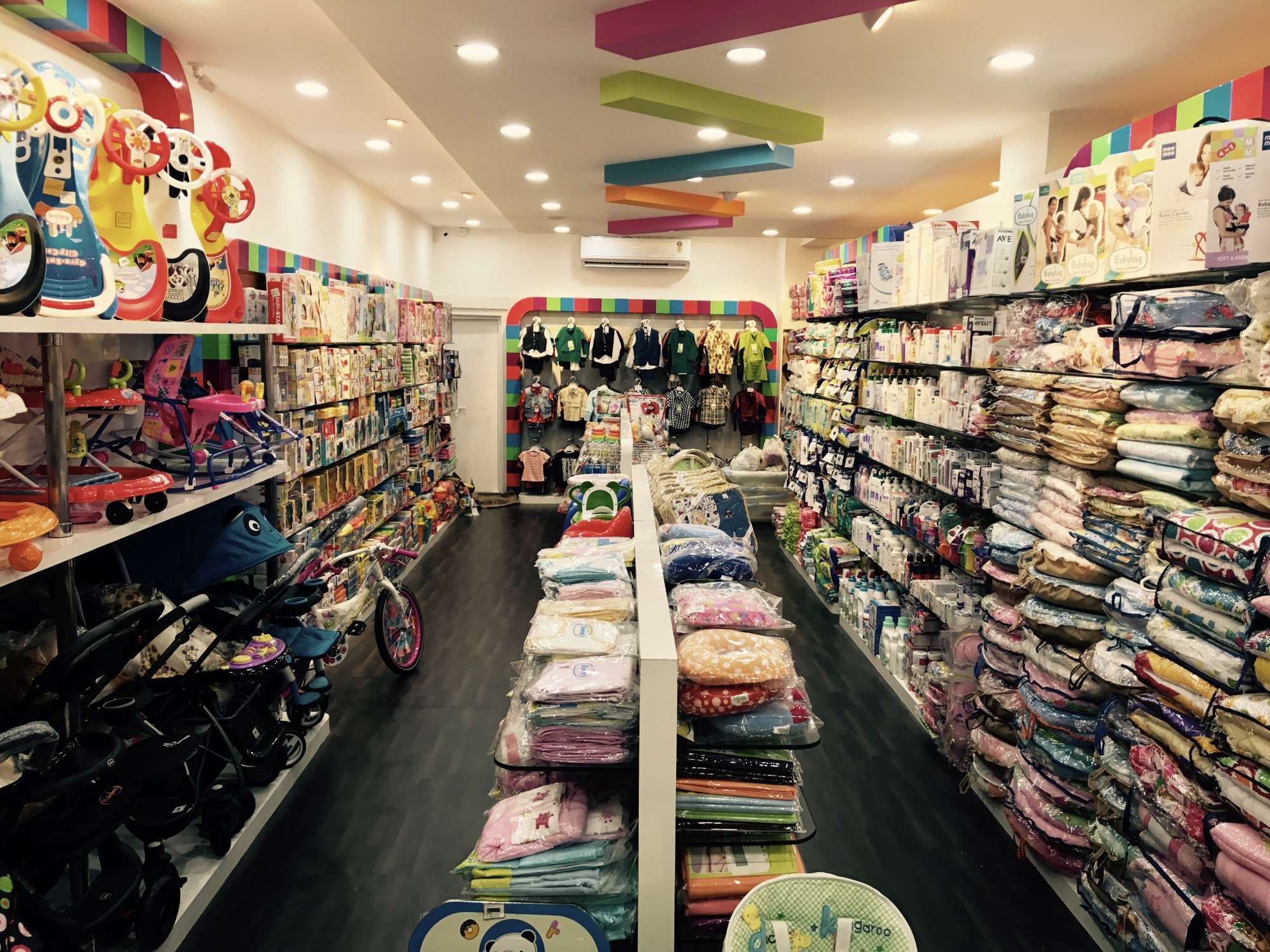
    Indian online baby product retailer FirstCry is in funding talks with Chinese e-commerce platform Alibaba and Japanese multinational conglomerate SoftBank Group. The firm is seeking at least US$100–$150 million in the deal in a move to put it at the forefront of the market, according to unverified reports. Both investing partners may participate in the funding if the deal goes ahead.

    While none of the parties have released statements on the proposal, previous reports have revealed FirstCry as seeking similar investment figures over the past year.

    FirstCry has raised more than $100 million since launching in 2010. The business derives the majority of revenue from a network of more than 300 stores despite the relatively small size of its offline business compared to its online presence.

  • Softbank, Toyota form JV for mobility services in Japan

    Softbank, Toyota form JV for mobility services in Japan

    Japan’s Softbank and automaker Toyota announced plans to form a joint venture by April 2019 to provide launch Mobility-as-a-Service (MaaS) in the country. The company, called Monet Technologies, will combine Toyota’s mobility services platform and information infrastructure for connected vehicles with Softbank’s Internet of Things platform, the companies said in a joint statement.

    Initially, Monet plans to roll out just-in-time vehicle dispatch services for Japanese public agencies and private companies to meet user demand. Those services include on-demand transportation service and corporate shuttles.

    By the second half of the 2020s, Monet intends to launch an autono-MaaS (autonomous mobility as a service) businesses, using Toyota’s e-Palette battery electric vehicles.

    These vehicles will deliver meals with food prepared in the vehicles, provide hospital shuttles where onboard medical examinations can be carried out onboard.  These vehicles can also serve as mobile offices, Softbank said.

    Softbank said Monet will roll out its mobility services in Japan before focusing on future expansion to the global market.

    The joint venture will have initial capital of 2 billion yen ($17.49 million), and this will be increased to 10 billion yen in future.

    Softbank will own 50.25% of the JV and Toyota take the remaining 49.75%.

    SoftBank Corp representative director and CTO Junichi Miyakawa will be president and CEO of the new joint venture.