Retail News CRM

Tag: spotify

  • Spotify brings its lightweight Stations app

    Spotify brings its lightweight Stations app

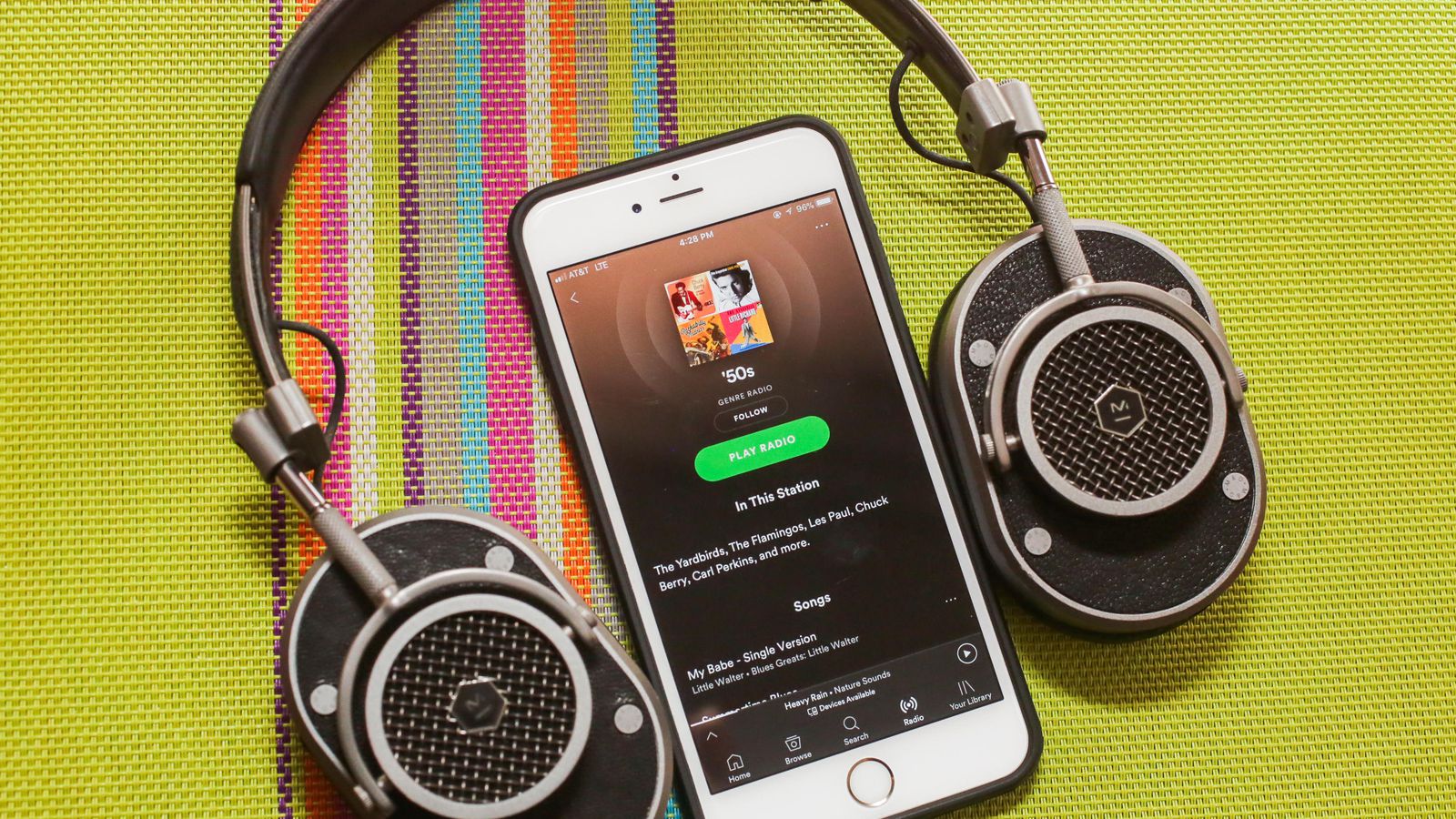
    Spotify users in the United States will have one more alternative app that will allow them to listen to their favorite radio station starting today. Suggestively named Stations, Spotify’s lightweight app was originally launched in Australia last year.

    Although it’s still considered an experiment, Stations is aimed at users to prefer a more streamlined music experience. It’s worth mentioning that while the app was initially available to Android users only, Spotify released an iOS version last month.

    Starting today, Stations is available in the United States on both Android and iOS platforms. If you’re not a premium Spotify customer, you’ll hear ads in Stations, but if you pay for the music streaming service, you’ll get special features and ad-free listening.

    Also, Stations allows users to filter music by genre, decade, activity and more, but the more the app is used, the more in-depth options users will have at their disposal. Of course, the option to customize your own playlists is available as well.

    If you’re living in the US and give the app a try, you can now download Spotify Stations for free via App Store and Google Play Store.

  • Spotify finally adds long-requested feature to its Android app

    Spotify finally adds long-requested feature to its Android app

    To fend off increasingly aggressive competition from the likes of Apple, Amazon, Google, and Deezer, the global leader of the music streaming industry is constantly trying new things, going so far as testing in-house hardware that could allow it to control and monitor your in-car listening patterns.

    It’s therefore pretty mind-blowing (and certainly not in a good way) that it’s taken Spotify this long to add an incredibly basic sleep timer feature to its Android app. After all, the platform has been around since 2008, and users haven’t exactly been shy in expressing their impatience and dissatisfaction with the lack of this handy functionality over the years.

    To get a sense of how badly people wanted to go to sleep while streaming their favorite tunes on Spotify, you only need to do a quick Google Play search. It will take you just a few seconds to discover that there are multiple third-party apps available through the search giant’s official Play Store with the sole purpose of enabling sleep timer capabilities for your favorite music streaming service. The aptly titled “Sleep Timer for Spotify, Music, and Video” has over 500,000 installs to its name, while another “Sleep Timer” app that works with YouTube, Google Play Music, TuneIn Radio and “many more” in addition to Spotify has even managed to break the 1 million download barrier.

    At long last, there’s no need to go through that trouble anymore. The native Spotify for Android sleep timer feature is as simple to use, straightforward, and convenient as you would expect.

    You should easily find it by tapping on the three-dot icon in your Now Playing screen (below the “share” option), with settings for different times when your phone can automatically stop your audio (ranging from 5 minutes to an hour), as well as an option to “go to sleep” after streaming a single track. If you can’t find the feature yet, you should just wait for a wider rollout of the latest Spotify version.

    It’s also worth pointing out that the app doesn’t technically support this functionality on iOS yet, but iPhones come with a Clock app pre-installed that can essentially and effortlessly do the same thing already.

  • Spotify unveils its first-ever hardware device

    Spotify unveils its first-ever hardware device

    Spotify has been the unrivaled champion of the thriving music streaming industry for a number of years now, but relying entirely on a service under siege by tech giants including Apple and Amazon seems like decidedly risky business. As such, it’s certainly not shocking to see the 2006-founded Swedish company dip its toes into the consumer hardware world with an aptly titled Car Thing device.

    This “thing” does pretty much what you expect, reportedly plugging into your car’s 12-volt power outlet/cigarette lighter to allow Spotify users to control their smartphone playlists and podcasts on the road in complete safety with voice commands only. The Car Thing is essentially a less versatile Anker Roav Bolt powered by an unnamed Google Assistant rival… that’s unlikely to ever see daylight on anything resembling a wide scale.

    That’s right, you can’t actually purchase Spotify’s first-ever piece of hardware, which will instead be offered for free to a “small group” of invited Premium subscribers to help the company “learn more about how people listen to music and podcasts.” While this is all explicitly and repeatedly billed as a test, set to be conducted in the US only in the near future, Spotify is leaving the door open to an eventual expansion of the limited experiment.

    For the time being, the focus is squarely on “becoming the world’s number one audio platform” rather than creating consumer-oriented hardware, but the way future experiences will be developed depends on the “learnings” from this test. In other words, if invited users declare themselves pleased with the Spotify Car Thing, you shouldn’t rule out it becoming a commercial… thing someday.

    Obviously, we don’t have a full spec sheet or list of features for the Car Thing, but we do know it comes with a circular screen, a number of physical buttons, and a “Hey, Spotify” wake word. Intriguingly, Spotify is also teasing upcoming “Voice Thing” and “Home Thing” tests purportedly designed to assess the living room listening habits of the platform’s Premium users.

  • New Spotify subscribers get 3 months of Premium Music for Less than a Dollar

    New Spotify subscribers get 3 months of Premium Music for Less than a Dollar

    With a whopping 100 million paying subscribers under its belt, Spotify is unlikely to be worried about rival music streaming platforms from Pandora or Amazon, which have been frequently treating new users to killer introductory deals of late to try to catch up to the global market leader. But you can never be too careful when it comes to the competition in such a crowded industry, especially given the impressive growth rate also reported by Apple Music in the past few years.

    Enter a top-notch new offer for Spotify Premium users who have never tried the service before, including all the usual perks and benefits at a highly unusual $0.99 price. That will cover a full three months of unlimited, on-demand music streaming with no ad interruptions, high-quality audio functionality, and offline listening support as long as you sign up by June 30.

    Once your promotional period is up, you will be charged the typical $9.99 a month to continue using the Premium service, although you can cancel your subscription at any time and go back to the free tier with shuffle play-only support or try out a different platform. The terms and conditions of the new deal are relatively straightforward, and if the whole thing sounds familiar, that’s probably because Spotify has been running similar sales before.

    Just like back then, the extended 90-day trial promotion excludes previous Unlimited subscribers, as well as folks who’ve already taken advantage of 30 or 60-day free trial offers.  Last but not least, students have until June 30 to claim three months of Spotify Premium, as well as Hulu and Showtime, at a measly $0.99 total, followed by the same amazing bundle available for $4.99 each month. Apple Music obviously can’t touch these deals.

  • New Apple Music subscribers can get free four-month Plans

    New Apple Music subscribers can get free four-month Plans

    While Spotify has managed to maintain its solid lead in the thriving music streaming industry thanks to frequent deals bundling the service with other popular apps or even free hardware, the steady growth of Apple Music has come largely in the absence of discounts and free trials.

    If you didn’t feel comfortable buying certain headphones or getting certain unlimited wireless plans just to receive gratis access to a library of over 50 million songs for anywhere between 3 and 6 months, Groupon is now offering a sweet and straightforward 4-month deal with absolutely no strings attached. The only condition you need to meet to qualify for this extended trial is to be a new Apple Music subscriber.

    Meanwhile, existing users get nothing, unlike those who subscribed in the past but ditched the platform in the meantime for some reason, which is eligible for a free month of premium music streaming.

    Arguably the best thing about this promotion is that you can choose either an individual subscription or a family plan for your free four-month Apple Music trial, the latter of which naturally offers the best value, supporting up to six members on six separate accounts, each with their own playlists, settings, and preferences. Just remember to cancel your subscription if you don’t want to extend it beyond the promotional period and pay $9.99 a month for an individual plan or $14.99 a month for your entire family.

    You can do that whenever you want, but first and foremost, it might be a good idea to hurry and claim the Groupon deal before it expires. By the time of this writing, more than 25,000 people have apparently already redeemed free family subscriptions, with an additional 10,000+ new users signing up for individual plans at no charge.

  • Spotify introduces Instagram-like Stories

    Spotify introduces Instagram-like Stories

    Back in 2016, Spotify teamed up with song lyrics database Genius to bring “Behind the lyrics” annotations to the Spotify app. They appeared as cards and displayed interesting tidbits about various songs, sourced from the Genius platform. Now, Spotify has decided to outright launch a dedicated “Storylines” feature that allows the artists themselves to share behind-the-scenes insights on their songs.

    Similar to Instagram Stories, Spotify’s implementation gives artists complete freedom to share interesting facts about the process of making songs. Storyline cards will appear peeking from the bottom of the Now Playing screen, allowing you to pull up on the card and read it while listening to the song. The card will disappear after some time, though you can stop it from going away by pressing and holding on the screen. Spotify Storylines may be made up of numerous cards containing text, lyrics highlights, and images. Tapping the right side of a card will move to the next part of the story while tapping the left will go back.

    Storylines are going live in the latest update for the Spotify app (version v8.5.5.853, to be exact). Seeing as how the feature is still in its infancy, not many artists seem to be using it. Give it a couple of weeks, though, and you’re sure to see those cards start popping up in songs all over the place.

  • YouTube Music reportedly exceeds 15 million subscribers Recently

    YouTube Music reportedly exceeds 15 million subscribers Recently

    We’ve received an official statement that disputes the reports coming from Bloomberg and Wall Street Journal claiming that Google is struggling to attract paying music subscribers. Here is what a Google spokeswoman had to say about these reports: “YouTube aggressively disputes the WSJ report stating YouTube Music subscription growth has plateaued, countering that healthy subscription growth continued through Q1 of this year.”

    Google’s music streaming service recently went through a rebranding process one year ago, as the search giant has decided to merge Play Music and YouTube Music into one product in order to avoid confusion among customers.

    We’re not sure whether or not the results met Google’s expectations, but Bloomberg reports the company’s paid music services have recently exceeded 15 million subscribers, at least according to two persons familiar with the matter.

    The number of subscribers mentioned includes both YouTube Music and Google Play Music services, as well as some consumers that are still using promotional trial accounts. If Google’s YouTube Music has just exceeded 15 million subscribers one year after its rebrand, it’s way behind Apple and Spotify.

    The former reached 50 million subscribers back in January, while Spotify announced late last month that it now has more than 100 million subscribers paying for its premium service.

    Although Google declined to comment on the numbers, it did say that the number of subscribers to YouTube Music grew 60% between March 2018 and March 2019, which is clearly good progress. It remains to be seen whether or not the company will be able to maintain the percentage with which it grew last year or even boost it a little.

  • Spotify starts testing voice ads on Android and iOS devices

    Spotify starts testing voice ads on Android and iOS devices

    Spotify has decided to be more aggressive with its ads and announced over the weekend that it will launch voice-enabled advertisements. They are meant to encourage customers to use verbal commands to take action on the ad’s content available through Spotify.

    TechCrunch reports the audio ads will initially redirect listeners to a branded Spotify playlist or a podcast. These voice ads will only be available to a limited number of Spotify’s free mobile listeners on both Android and iOS platforms, but they required users to have voice controls enabled.

    The good news is Spotify users can opt out of voice ads in the Settings menu by turning off the Voice-Enabled Ads option. Moreover, the app will also allow users to completely disable microphone access via the mobile device’s Settings.

    The voice ads will enable Spotify users to check out the content advertised by saying “Play Now.” If the user doesn’t say the voice command within the required amount of time or says something else, the mic will be turned off and the ad break will continue.

    The voice ads test is live in the United States for free users of the Spotify app and uses the company’s built-in house technology. It doesn’t have a pricing model yet since it’s too early at this time.

  • Spotify now has 100 million Premium Global Subscribers

    Spotify now has 100 million Premium Global Subscribers

    Twelve months after it first reached 75 million subscribers, Spotify has today announced that 100 million users now pay for its Premium service across the globe. The news represents year-on-year growth of 32% and has helped push Spotify’s revenue figures up an equally impressive 33% to €1.51 billion ($1.67 billion).

    Including users of Spotify’s ad-supported service, the streaming company now has a total of 217 million monthly active users. This figure is up 10 million from last quarter and 44 million when compared to twelve months ago.

    Once again, Europe continued to be Spotify’s most important market followed by North America and Latin America respectively. In North America especially, Premium subscriber growth was driven by Spotify’s continued partnerships with Samsung, Google, and Hulu.

    Specifically, Samsung agreed to pre-install the Spotify app on millions of its smartphones including the recently-released Galaxy S10, buyers of which receive six months of free Spotify Premium. Google, on the other hand, offered Spotify Family Plan users a free Google Home Mini, a promotion which has since been expanded to both the UK and France due to its popularity. Lastly, Hulu and Spotify recently lowered the price of their bundle offer which has boosted interest.

    By the end of this current quarter, Spotify expects to have between 222 and 228 million users, of which 107 to 110 million should be Premium subscribers. Driving this growth will continue to be promotional offers like the ones mentioned above and India, where Spotify registered 2 million users in the month following its launch.

  • The music streaming competition just got Started

    The music streaming competition just got Started

    There is no shortage of players in the music streaming space and the metrics used to determine success are also pretty complex, but from one metric Apple Music just passed Spotify, but it’s too early to say for sure what this means for either company. Even so, it appears to cement Apple Music as a major player in the music streaming space.

    Apparently, in the month of February, Apple Music passed Spotify in terms of paid U.S. users for the first time ever. Apple Music counted 28 million paid subscribers in the U.S. while Spotify had just 26 million, and Apple Music had a faster growth rate than Spotify. That seems good, but for full context there are a few things to keep in mind. First and foremost, Apple Music doesn’t even have a free tier for subscribers, so that 28 million is essentially the entire U.S. user base for Apple Music (not counting anyone on a free trial.) Spotify does have a free/ad-supported version and taking that into account, Spotify does have more users in the U.S. than Apple. The ad-supported tier doesn’t generate as much money for Spotify but it does add up.

    Beyond all that, we’re sorry to say but the U.S. is only one country in the world and Spotify has almost twice as many paid subscribers globally as Apple Music does (98 million to 50 million as of December). And, that gap gets considerably bigger once you include the ad-supported tier which bumps Spotify’s user base to more than 200 million.

    Of course, music streaming is Spotify’s entire business, whereas Apple Music is one service offered by the behemoth. Any paid subscribers Apple gets is just gravy, whereas that’s the lifeblood of Spotify. Still, it’s something to keep an eye on going forward.

  • Spotify and Apple Music were very important to the music industry Last Year

    Spotify and Apple Music were very important to the music industry Last Year

    It’s okay to dance now that the 2019 IFPI Global Music Report is out. The report from The International Federation of the Phonographic Industry shows that a 32.9% increase in paid streaming revenues helped drive a similar increase in total streaming revenue last year. Streaming now accounts for 46.9% of the music industry. Overall, the global music market increased its top line by 9.7% last year to $19.1 billion and revenue from streaming music came to $8.9 billion, up from $6.7 billion in 2017. Streaming was obviously very important to the music industry during 2018. That is especially true since last year music downloads and physical music sales declined 21.2% and 10.1%, respectively.

    As 2018 came to an end, there were 255 million people around the world paying monthly for streaming music. The leading provider globally was Spotify, with 87 million paying subscribers. Apple Music came in second. In the U.S., growth in streaming music revenue came to 33.4% last year, while sales of physical music (records, CDs) declined 22.1%. In the states, the fastest growth came from the paid streaming segment.

    “Streaming revenues, particularly from paid subscriptions, continued to grow in 2018, with all regions posting growth in this area. Overall, growth trends were more diverse across different markets.”-IFPI

    The top two music streamers in the world, Spotify and Apple, are at odds over the 30% that Apple charges Spotify subscribers who pay monthly through the App Store. As we told you last month, Spotify has filed a complaint with the European Commission over this so-called “Apple Tax.” This is why individual Spotify subscriptions cost $12.99 on the App Store as opposed to the usual $9.99 price. With Apple Music available from the iOS app storefront for only $9.99 a month, Spotify claims Apple is giving its own music streaming app a major advantage.

  • Spotify is going after couples with Duo plan

    Spotify is going after couples with Duo plan

    Spotify and Apple are engaged in a fierce battle over the domination of the thriving global music streaming market, with many other companies, including Google, Amazon, Pandora, Tidal, and Deezer fighting for scraps and trying to find ways to differentiate themselves in order to rise through the ranks. But at the end of the day, all of these services offer essentially the same features and capabilities with extremely similar pricing structures.

    One great way to stand out is to join forces with other tech giants on sweet bundle deals, either temporarily or indefinitely, thus providing more value than the competition for the user’s money. Or you can simply expand your plans to include something rivals haven’t thought of just yet. Enter Spotify Premium Duo, a new service tier currently available only in Colombia, Chile, Denmark, Ireland, and Poland, according to The Verge, which is likely to spread the love around the world soon if these regional “tests” are deemed successful.

    As the name suggests, Premium Duo mainly targets couples that want to save a few bucks compared to both the prices of two individual subscriptions and a family plan. A single Spotify Premium user can get an account at $9.99 a month in the US right now, while Premium for Family costs $14.99, allowing up to six people to stream music without limits, ads, or interruptions.

    Naturally, Spotify Premium Duo sits between the two globally available options, at a €12.49 monthly fee in Ireland that’s likely to equate to $12.49 stateside if this ever becomes a worldwide thing. Like family plans, Duo licenses will allow users on a shared account to keep their playlists separate, as well as get recommendations tailored to their individual tastes.

    Then again, if you’re one of those couples that likes to do everything together, a new Duo Mix playlist will be regularly updated with music you can both enjoy. Just keep in mind the Spotify Premium Duo plan requires two users to share a home address before gaining access, which the service will verify. That shouldn’t come as a big surprise, as Spotify doesn’t like family plan members to live at different addresses either.

  • Spotify says Apple Music has unfair advantages

    Spotify says Apple Music has unfair advantages

    The founder and CEO of Spotify, Daniel Ek, announced today in a blog post that Spotify has filed a complaint against Apple with the European Commission (EC). The executive says that when it comes to Apple Music and the App Store, the company gives itself an unfair advantage, violating EC antitrust regulations. Ek says that Apple does this through the “Apple Tax.” That is the 30% of monthly subscription fees that Apple takes on subscriptions made through its payment system.

    Ek says that because Spotify is forced to pay the “Apple Tax,” it has to raise its price in the App Store above that of Apple Music. Right now, both music streaming platforms have the same prices. That would be $9.99 a month for individuals, $14.99 a month for families with up to six members, and $4.99 a month for verified students. However, if you choose to pay your subscription fee through Apple (an in-app payment), Spotify charges $12.99 a month for individuals, $16.99 a month for families and $7.99 a month for verified students.

    Apple has released a statement criticizing Spotify for using the App Store to help it grow over the years without making any contributions to that marketplace.” The company refutes some of Spotify’s claims. For example, Apple says that it has allowed Spotify to update the app over 200 times. Apple says it rejected updates when Spotify didn’t follow the App Store rules. Apple also points out that 84% of the apps in the marketplace don’t pay it a dime, and accuses Spotify of wanting all the benefits of a free app without being free.”

    Additionally, the executive says that if it bypasses Apple’s payment system, Apple will limit Spotify’s communications with its subscribers. For example, Ek says that in some cases Apple won’t let it send emails to Spotify users who use the service on an Apple device. He states that “Apple also routinely blocks our experience-enhancing upgrades. Over time, this has included locking Spotify and other competitors out of Apple services such as Siri, HomePod, and Apple Watch.”

    “It’s why, after careful consideration, Spotify has filed a complaint against Apple with the European Commission (EC), the regulatory body responsible for keeping competition fair and nondiscriminatory. In recent years, Apple has introduced rules to the App Store that purposely limit choice and stifle innovation at the expense of the user experience—essentially acting as both a player and referee to deliberately disadvantage other app developers. After trying unsuccessfully to resolve the issues directly with Apple, we’re now requesting that the EC take action to ensure fair competition.”-Daniel Ek, founder, CEO, Spotify

    All Spotify wants, says its founder, is to be treated the same as apps that don’t pay the 30% tax such as Uber or Deliveroo. The executive says that all apps should be able to compete fairly, and Apple Music shouldn’t get an advantage because Apple owns the App Store. He adds that all App Store users should have a choice of payment systems, and not be locked into using Apple’s platform. And Ek says that all app stores should not be allowed to control communications, including marketing and promotions, between services like Spotify and its customers.

    If Apple is eventually found to have violated anti-trust regulations in the EU, it can be slapped with a fine and be forced to make some changes to the App Store.
  • Free Spotify premium service for Samsung Galaxy S10 buyers

    Free Spotify premium service for Samsung Galaxy S10 buyers

    With the Samsung Galaxy S10e, Galaxy S10 and Galaxy S10+ all officially launching today, music streamer Spotify has announced that its Android app will be pre-installed on all three models in the U.S. Additionally, the Spotify app will come loaded out of the box on the Samsung Galaxy Fold, and certain Galaxy A units in the states as well. The latter are mid-range phones offered by Sammy.

    Besides pre-installing the Spotify app on these Samsung Galaxy handsets, state-side users will receive a free six-month subscription to Spotify’s premium U.S. service as long as they are not a current subscriber to the music streamer. While Spotify does offer a free ad-supported tier of service, it does not come with certain features available to premium members. Those features include unlimited skips, and the ability to download music that can be played offline. Premium members can also play any track in Spotify’s library, and songs are streamed in High Quality.

    Spotify normally offers a free 30-day free trial to its premium tier, after which pricing is $9.99 per month. Families with up to six members can pay $14.99 monthly, and students with a verified .edu email address are charged only $4.99 a month.

    Last August, Samsung and Spotify teamed up to take on Apple Music. Spotify became Samsung’s new “go-to music service provider” as it tries to keep its lead over Apple Music world-wide. Launched in October 2008, Spotify has yet to turn a profit and has embarked on a campaign to transition subscribers from its free tier of service to a subscription plan.

  • Spotify to Offer Carrier Billing to Telkomsel, AIS and DTAC Subscribers via Fortumo’s Payments API

    Spotify to Offer Carrier Billing to Telkomsel, AIS and DTAC Subscribers via Fortumo’s Payments API

    Fortumo has expanded its partnership with Spotify in South-East Asia to offer an expanded carrier billing program specifically for Spotify users in Indonesia (Telkomsel) and Thailand (AIS and DTAC).

    In both Thailand and Indonesia, credit card ownership remains below 10% while more than 65% of the population already has smartphones. This means most consumers can access online entertainment but do not have a way to pay for premium content. Carrier billing solves this issue for digital service providers by giving any mobile phone owner the option to make online purchases and deduct the charges from their mobile account balance.

    Spotify launched direct carrier billing with the new telcos through Fortumo’s Payments API. Using Payments API gives Spotify full control of the checkout flow and access to advanced features of carrier billing such as token-based authentication, dynamic pricing and an automated refunding process.

    At the other end of the Payments API are Fortumo’s pre-integrated connections with telcos, which gives Spotify and other digital service providers a scalable way of rolling out carrier billing.