Retail News CRM

Tag: spotify

  • Spotify hit with $1.6 billion copyright lawsuit

    Spotify hit with $1.6 billion copyright lawsuit

    Music streaming company Spotify was sued by Wixen Music Publishing Inc last week for allegedly using thousands of songs, including those of Tom Petty, Neil Young and the Doors, without a license and compensation to the music publisher.

    Wixen, an exclusive licensee of songs such as “Free Fallin” by Tom Petty, “Light My Fire” by the Doors, (Girl We Got a) Good Thing by Weezer and works of singers such as Stevie Nicks, is seeking damages worth at least $1.6 billion along with injunctive relief.

    Spotify failed to get a direct or a compulsory license from Wixen that would allow it to reproduce and distribute the songs, Wixen said in the lawsuit, filed in a California federal court.

    Wixen also alleged that Spotify outsourced its work to a third party, licensing and royalty services provider the Harry Fox Agency, which was “ill-equipped to obtain all the necessary mechanical licenses”.

    Spotify declined to comment.

    In May, the Stockholm, Sweden-based company agreed to pay more than $43 million to settle a proposed class action alleging it failed to pay royalties for some of the songs it makes available to users.

    Spotify, which is planning a stock market listing this year, has grown around 20 percent in value to at least $19 billion in the past few months.

  • AirAsia and Spotify team up to find ASEAN’s most promising music acts

    AirAsia and Spotify team up to find ASEAN’s most promising music acts

    AirAsia and Spotify are teaming up for a new nine-week campaign titled Dreams Come True with AirAsia. The campaign will pit 20 bands against each other over the course of nine weeks. At the end of the campaign, a single act will be chosen to perform with the legendary David Foster at one of his concerts next year.

    Foster, who is an AirAsia ambassador is also one of the biggest names in music production and composition, having worked with artists such as Michael Jackson, Madonna, Whitney Houston and many more. Foster has won 16 Grammy Awards for his efforts.

    The winning act will be selected via the number of streams it has garnered on Spotify over the nine weeks alone. Previous streaming numbers will not be counted.

    The 20 acts that will be partaking in the campaign are IV of Spades, Abirama, Airliftz, Axel Brizzy, Banna Harbera, Battle Bloom, BECKA, Ben Sihombing, Bil Musa, Jean Tan Li Juan, JinHo Bae, Keiko Necesario, Kuizz, Miss Lou, Reality Club, Rob and the Hitmen, Semenjana, Talitha Tan, The Façade and VVYND.

    In a statement released by AirAsia Group CEO Tony Fernandes, the mogul said “Music, Asean and making dreams come true are three big themes in my life, and it gives me great pleasure to be able to bring them all together in this way. Through this campaign, we hope to discover, hone and promote Asean’s next big musical sensation and to make a difference in their lives. I can think of no better mentor for this task than my good friend David Foster, who knows a thing or two about making hits.”

  • Spotify builds streaming lead at 60 million subscribers

    Spotify builds streaming lead at 60 million subscribers

    The Swedish company has more than double the base of nearest competitor Apple Music.

    Spotify said Monday that it had 60 million paying subscribers, expanding its lead in the fast-growing world of music streaming.

    The Swedish company has more than double the base of nearest competitor Apple Music, which in early June said it had 27 million subscribers.

    Apple Music, however, achieved its growth rapidly as it was launched only two years ago by the tech giant.

    Spotify — started in 2008 and available in 60 countries — gave the figure in its first update since March, when it had announced that it had 50 million subscribers.

    The company said in June that it had more than 140 million overall users — meaning most people listen on its free, advertising-backed tier, which is controversial with many artists.

    The next competitor to Spotify is Paris-based Deezer, which is especially strong in continental Europe and said in January 2016 that it had six million paying subscribers.

    Other streaming sites include rap mogul Jay-Z’s Tidal, a service launched last year by retail giant Amazon and early streaming site Rhapsody, which has rebranded itself as Napster.

    Most music industry watchers expect streaming to keep growing sharply, with the subscriber numbers a small fraction of the potential global market.

    Streaming has helped the music business chart two years of bumper growth after long stagnation, although artists often question how much of the money comes back to them.

  • Spotify launches programmatic audio campaigns in APAC

    Spotify launches programmatic audio campaigns in APAC

    Spotify and Rubicon Project have launched programmatic audio advertising campaigns in APAC for the Australia, New Zealand, Hong Kong and Singapore markets following the music streaming service’s foray into global programmatic audio solution earlier this year. With the launch of the campaigns, brands will be able to target audiences based on Spotify “moments” such as commute, party and workout.

    Spotify users do not just browse for music by genres or artists, but also playlists that express the moods of those moments. Programmatic audio advertising allows buyers to target those moments based on users’ age and gender in real time. Its audio inventory is traded programmatically via private marketplaces on Rubicon Project’s platform.  In a statement, Joanna Wong, head of business marketing at Spotify for APAC, said the campaign presents advertisers with a new channel to reach consumers.

    “Since the launch of our programmatic audio campaign in August we have seen an incredible response in APAC,” said Wong. “Programmatic audio advertising means that buyers can reach individuals at scale based on not just the usual age, gender and geographical identifiers, but on a whole new data trove–their taste in music,” she added.  “Spotify’s programmatic audio proposition demonstrates the future of all media going programmatic.

    Our recent ventures into out of home, TV and now audio are all a part of this broader automation trend, and we look forward to continuing to collaborate with innovative partners like Spotify to offer buyers innovative ways to engage with consumers,” said Rick Mulia, managing director of JAPAC at Rubicon Project. A Tech Navio report mentioned that APAC will be the fastest-growing region in the music streaming market with around 21 percent compound annual growth rate by 2020.

    Widespread smartphone penetration and high speed data connectivity are expected to further augment the growth of the music streaming market in APAC over the next four years.

  • Globe Telecom offers new-gen Chromecast

    Globe Telecom offers new-gen Chromecast

    Globe Telecom in collaboration with Google now offers the new generation Chromecast, with the promise for a connected life for the home.

    Globe’s broadband subscribers can avail of the new and improved Chromecast for an add-on of only P99 (about $2) per month.

    The company said its customers today are no longer just tied in using their smartphones and PC’s at home for personal consumption, they also demand better content to share and experience on a bigger screen.

    The new Chromecast offers the solution to “cast” content from their personal device such as movies, shows, music, games to a bigger screen TV using their HDMI connection.

    The solution is now equipped with better connectivity with the latest 802.11ac dual band Wi-Fi and three antenna structure for a more faster, stable and less buffering streaming using the latest mobile devices.

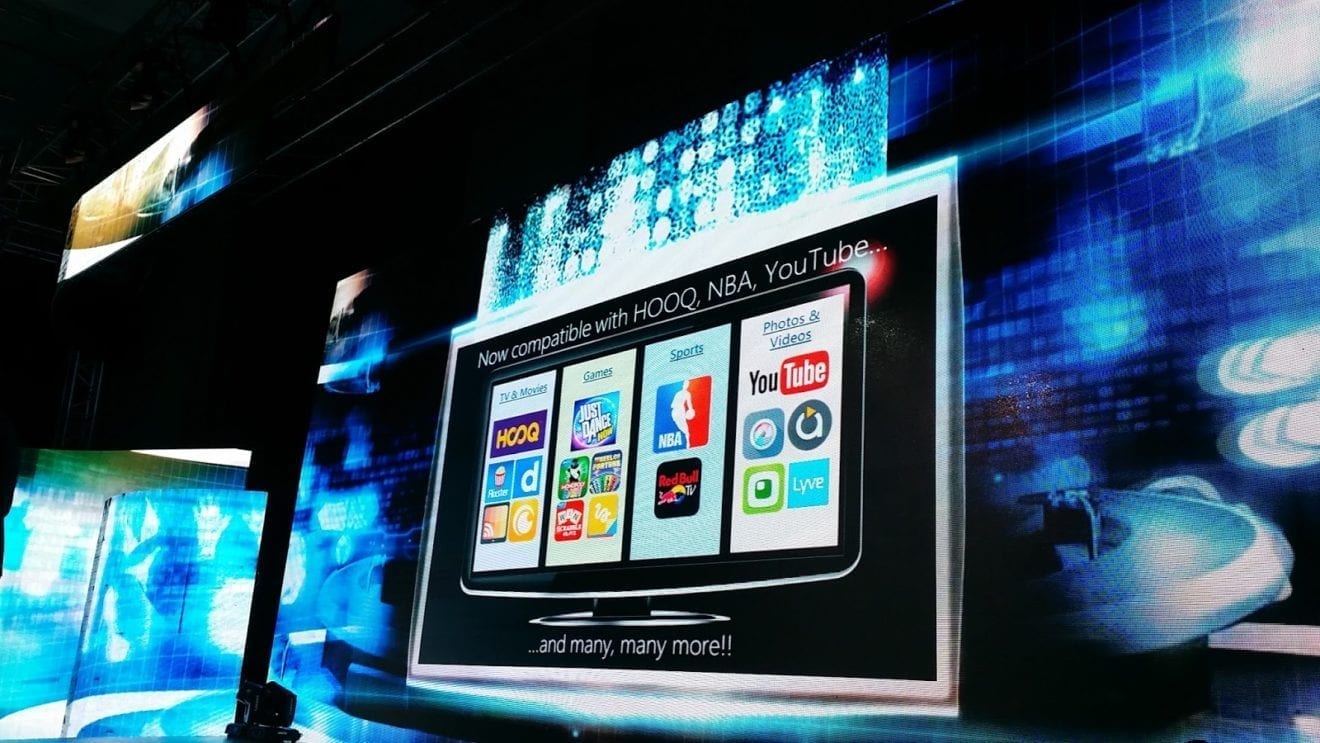
    Aside from being a better hardware, the new Chromecast is also fully compatible to cast with the latest entertainment apps including Globe exclusive digital content partners such as HOOQ, NBA and Spotify.

    “With our continuous partnership with Google, we stay true in providing new and meaningful innovations to fully maximize the digital lifestyle of our customers,” said Martha Sazon, Globe SVP for broadband business.

    “The latest installment in this is the new Chromecast, now with better features and compatibility to our content partners such as Spotify, HOOQ, NBA to a more immersive casting experience,” said Sazon.

  • Spotify Launched in Indonesia

    Spotify Launched in Indonesia

    Spotify is finally kicking back into expansion mode in Asia. Nearly two years after its last country launch in the region and close to four years after it first stepped into Asia, the music streaming service has confirmed plans to go live in Indonesia at the end of March.

    Indonesia could have serious potential for Spotify. The fourth most populous country on the planet, Indonesian smartphone sales are projected to grow by 20 percent this year as its population of 250 million becomes increasingly more affluent and connected to technology.

    Last October, we reported that Spotify was close to launch in Indonesia and Japan, too, and the company has been quietly upping its efforts in Tokyo, where it established an office some time ago. In one sign of its imminent arrival, Spotify inked a partnership with Japan’s top messaging app Line which, similar to its agreement with Facebook, lets users share Spotify tracks through the Line app.

    Beyond that deal, which is only available in markets where Spotify has launched (i.e. not Japan right now), and in another big hint at an impending launch, Spotify is currently hiring for 12 roles in Japan — including telling positions like head of consumer marketing, head of communications, social media marketing manager — while its central team tasked with market expansions has made trips to the Tokyo office.

    TechCrunch understands that, as was the case in October, the challenging landscape for music streaming services in Japan — where CDs still rule for music sales — has delayed Spotify’s Japan launch longer than the company would have liked. Already, though, Apple Music and a competing music service from Line (both a friend and rival, it seems) are among the services available in the country. Thus Spotify wants to act quickly and join them.

    Spotify declined to comment on its launch plans in Asia, Indonesia aside, when we asked. But we have come to learn from a source close to the company that it has begun to look at India.

    That interest is exploratory at this point, but Spotify would enter a challenging race were it to bring its service to India. Apple entered the country last summer when Apple Music launched globally, but local services like Tiger Global-backed Saavn and Times Internet’s Gaana lead the mobile music space. We haven’t heard much about how Apple Music is faring in India, but Spotify could be a better fit for the country since it offers a free version of its service and has a more robust Android app — both of which are essential in India.

    Asia marks a potentially important focus for Spotify, which recently hit the 30 million paying user milestone. Large swathes of the region are mobile-first or mobile-only, with many consumers reliant on their phone to provide all of their entertainment options. That opens an obvious window for mobile music services, but monetization is a huge challenge since Asia is less developed when it comes to paying for digital content and piracy reigns supreme.

    Spotify’s initial foray into Asia saw it land in small and fairly Western-influenced countries like Hong Kong and Singapore, markets where it was likely to see uptake, but now the Swedish company appears to have its sights set on larger challenges, starting with Indonesia.

  • Smartphones outpace tablets in Asian eCommerce

    Smartphones outpace tablets in Asian eCommerce

    For the first time, 34 per cent of browser-based online transactions globally are now made on a mobile device, compared to slightly more than 30 per cent last quarter.

    And smartphones are starting to outpace tablets.

    These were key findings of the fourth quarter edition of the Mobile Payments Index by Global payments technology company Adyen, which tracks mobile payment data from browser-based transactions across its client base and monitors Asian eCommerce shopping patterns.

    It also found that many consumers in Asia are increasingly using mobile devices to shop online. This is being driven particularly by such major payments methods as Alipay, JCB and UnionPay. JCB had the highest share (54 per cent) of mobile payments on the Adjen platform, up from 47 per cent the previous quarter. Alipay increased to 44 per cent (up from 35 per cent) while UnionPay reached 31 per cent (from 23 per cent).

    “The checkout stage of the shopper journey is not the end, but the beginning of an on-going relationship with the consumer,” says Adyen Asia Pacific president Warren Hayashi. “Merchants with a frictionless mobile checkout experience are driving repeat traffic, especially in Asia.”

    For the first time, the index shows that smartphones have overtaken tablets as the preferred device for online shopping – 17.5 per cent on smartphone against 16 per cent on tablet, compared to 14 per cent and 17 per cent respectively the previous quarter.

    When it comes to mobile payments globally, the trend to use smartphones rather than tablets continues for the 10th consecutive quarter. Last quarter this share was up 2 per cent to 68 per cent on smartphone versus 32 per cent on tablet.

    Smartphone use far outweighed tablet in Asia, with 29.5 per cent of online payments on a smartphone compared to 4.5 per cent on a tablet.

    In terms of average transaction value, iPad led the way for the first time at $107, edging out not just smartphones but also desktop/laptop, the traditional leader (at $106). Following were Android tablets at $86, iPhone at $83 then Android smartphones at $73.

    Adyen has been tracking the evolution of mobile payments since June 2013. The index is based on its global browser-based mobile payment transaction data. It does not track in-app mobile payments. With its headquarters in Amsterdam and San Francisco, Adyen serves more than 4500 businesses, customers including Airbnb, Booking.com, Crocs, Dropbox, Facebook, KLM, Mango, Netflix, Spotify and Yelp.

  • Warner Music Singapore to stop distributing CDs

    Warner Music Singapore to stop distributing CDs

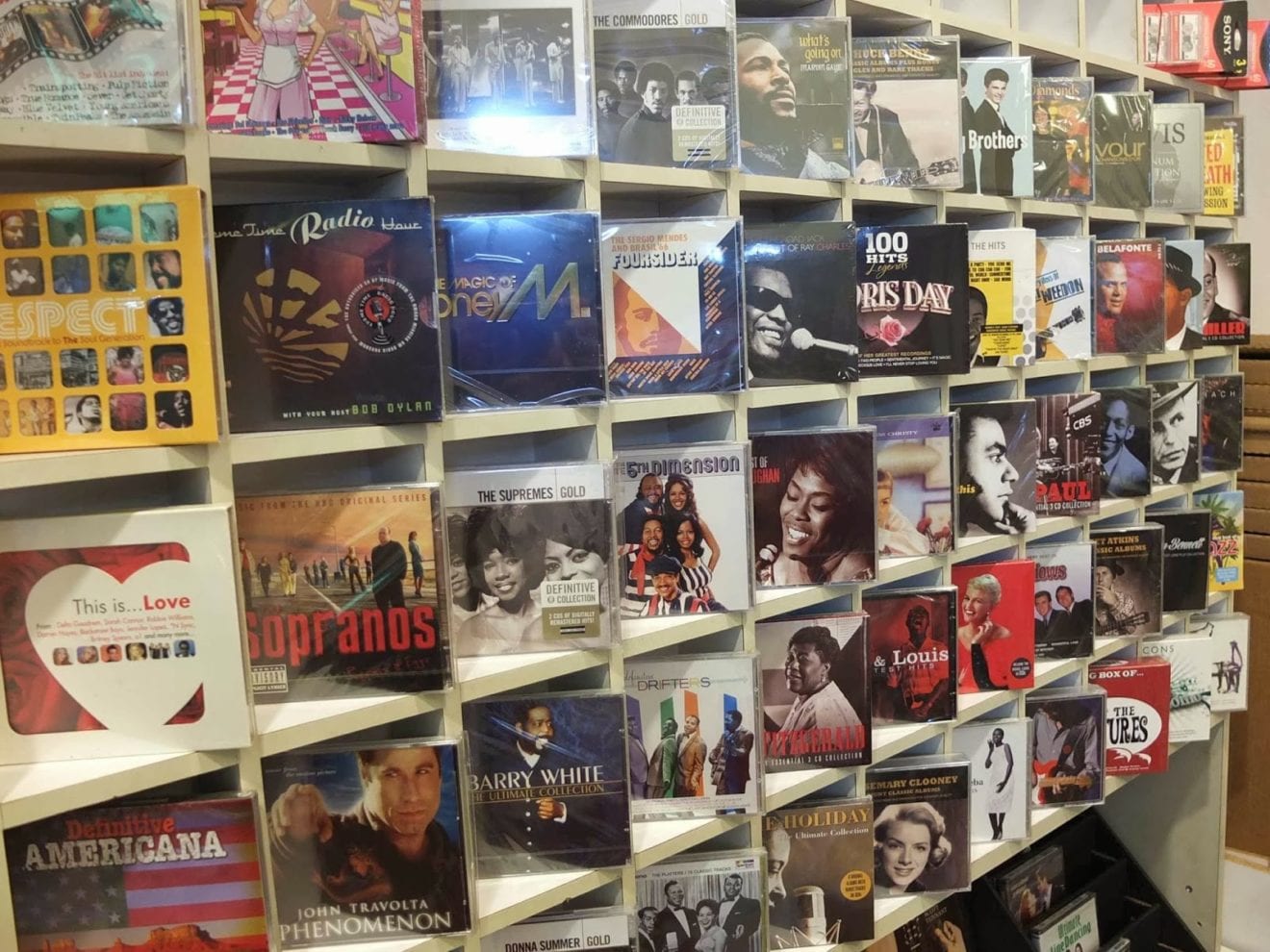
    The Singapore office of Warner Music – one of the major music labels along with Universal Music and Sony Music – is no longer bringing in CDs for sale and distribution here.

    This is what insiders in the local music industry – retailers and other labels – have heard.

    When contacted, Warner declined comment.

    In the last year, it released albums by Stevie Nicks, Ed Sheeran, Jolin Tsai and Singapore’s JJ Lin, according to its website. Other local musicians signed to it include Reuby and hip-hop duo SleeQ.

    While the other labels are still bringing in CDs, Life understands that Sony no longer handles the storage and distribution of these CDs to shops here. It has engaged another company for those functions.

    A veteran in the music industry, who declined to be named, said Warner’s decision was made in July. Retailers have also been informed of the move, and they say it is likely due to falling CD sales worldwide.

    A spokesman for HMV Singapore says it was notified of Warner’s move a couple of weeks ago, and of Sony’s move last year.

    Said the spokesman: “We will need to make slight changes by importing the CDs in the case of Warner.

    “For Sony, we can still get them locally supplied by MM2 (the company engaged by Sony). But some titles may be late, or on a rare occasion, not released.”

    Mr Ho Chan Sian, 60, owner of Memphis Music, a CD shop in Coleman Street, learnt about Warner’s move two weeks ago.

    He says: “It will be more inconvenient for us because we will not be able to draw stocks from Warner like before. We will have to turn to wholesalers to get CDs of artistes under the Warner label.”

    Consumers in the United States, the world’s largest music market, bought 257 million albums last year, a drop of 11 per cent from 2013.

    At Universal, sales of physical CDs in Singapore for the first half of this year have fallen 8 to 9 per cent, compared to the first half of last year.

    Says Ms Kim Lim, the head of marketing and sales for Malaysia and Singapore at Universal Music: “The market has evolved from physical sales towards digital distribution.

    “Digital is more affordable and easier to access. The consumer can also get it more quickly, instead of having to wait for CD stock to be ready in stores.

    “There are also very few stores nowadays as retail store rents are increasing year by year.”

    Says Mr Ngiam Kwang Hwa, 55, managing director of record label and concert organiser Rock Records: “I can totally understand Warner’s position. To bring in a CD, you have to pay for freight, GST, the warehouse to store the CDs, as well as distribution cost. If the sales volume is not high enough, it actually doesn’t make financial sense to do so.”

    Both Universal and Rock still bring in CDs for distribution.

    Ms Lim says: “We still believe some albums – that have nice packaging, exclusive content and limited edition packaging – are collectible items.”

    But Mr Ngiam expresses concern that Warner’s move is the beginning of an unhealthy outlook for the industry.

    He says: “My worry is that another one of the big labels will also stop bringing in CDs. Then the distribution system might change, and we might be forced to react.”

    When contacted, music fans were not surprised by Warner’s move.

    Public servant Tan Wei Ye, 28, has not bought a CD in more than 10 years: “Nowadays, I buy my music mainly from iTunes. I also use Spotify, Soundcloud and Bandcamp, and listen to music on YouTube sometimes.

    “You can just buy the individual songs you want, instead of having to commit to the full 10 or 12 songs on a physical CD. It doesn’t make sense to go to the physical CD shop anymore.”