Retail News CRM

Tag: startup

  • Tips on starting a business

    Tips on starting a business

    The fun really begins now, as there is so much to learn about starting a new business. There is a lot of preparation and risk involved in starting out in a new venture. There are a lot of options available for you to look into, as you start your venture as an entrepreneur. I must admit it takes a lot of courage and want, to succeed and to create a viable business. There is no point in creating a business if you are not prepared to give it your all. The risks involved are far too high, to take a step into a new business venture light heartedly. I’m not trying to scare you but merely emphasize, what to expect if you decide to take on the challenge.

    Create a Business Plan

    It is imperative that you create a business plan before you start your venture. A business plan is like a road map to your success. You will find that there are many different areas that you should have a firm understanding of. A few examples of this include a Marketing plan, Equipment list, suppliers list and a list of processes for your daily operations. These are just a few areas you should be looking into and there is a lot more preparation required for a successful business. There is a number of ways you can set out your business plan there issoftware and templates available. The main thing is that you have one!

    Don’t Over Capitalize

    The best way to start a business is to start out small and dip your toe in so to speak. The advantages to testing your market will ensure you do not end up in a hole, with nothing to show. There is a lot of successful businesses. Which have started out with a very minimal investment a great product and a great business strategy.

    Understand the Nature of What you are Selling

    It is a good idea to enter an area of business where you have experience. The obvious upside to entering a business that you know a lot about is the rate of failure will be lower. Imagine for a second that you have a great idea started investing your time and hard earned savings, to find that you had no idea what you were doing . You may not be able to sustain the business based on your turnover. A lot of your learning would be now coming from on the job learning, which can be quite costly.

    If you had experience already around certain areas of the business you were starting, you would eliminate a large part of the risk. So in basic terms the more you know in advance to your commencement, obviously the less risk involved. Business is all about eliminating the levels of risk associated with it. There will always be risk but you must manage it efficiently to succeed.

    Market your Business Effectively

    Your business obviously must be marketed to your audience. Now there is no point marketing to an audience that is not receptive to your product. For instances if your selling men’s business shoes, you want to market to business men. The chances of selling those men’s business shoes to truck drivers, will be quite minimal. I hope you understand the point I am trying to outline.

    Once you have indentified your market, then it’s time to test different ways of marketing. Most of the best entrepreneurs try small efforts, in different areas tweaking to maximize results. Marketing is a complete topic on its own and needs to be looked at very thoroughly if you are to succeed. In saying this there are some very cost effective ways, available to start marketing your business.

    Read as Much Literature as you Can

    If you are dedicated to your success and follow your dreams then you will succeed. We are in the information age and can access a great wealth of information from basically anywhere. The best part is a lot of this information is FREE. We must constantly learn from investing time, in advancing our knowledge to succeed. Remember that Rome wasn’t built in a day and that you don’t need to go it alone. Many people have already made the mistakes, you just need to learn from them and tailor it to your own situation.

  • Online booking platform Chope enters Indonesia with acquisition of MakanLuar

    Online booking platform Chope enters Indonesia with acquisition of MakanLuar

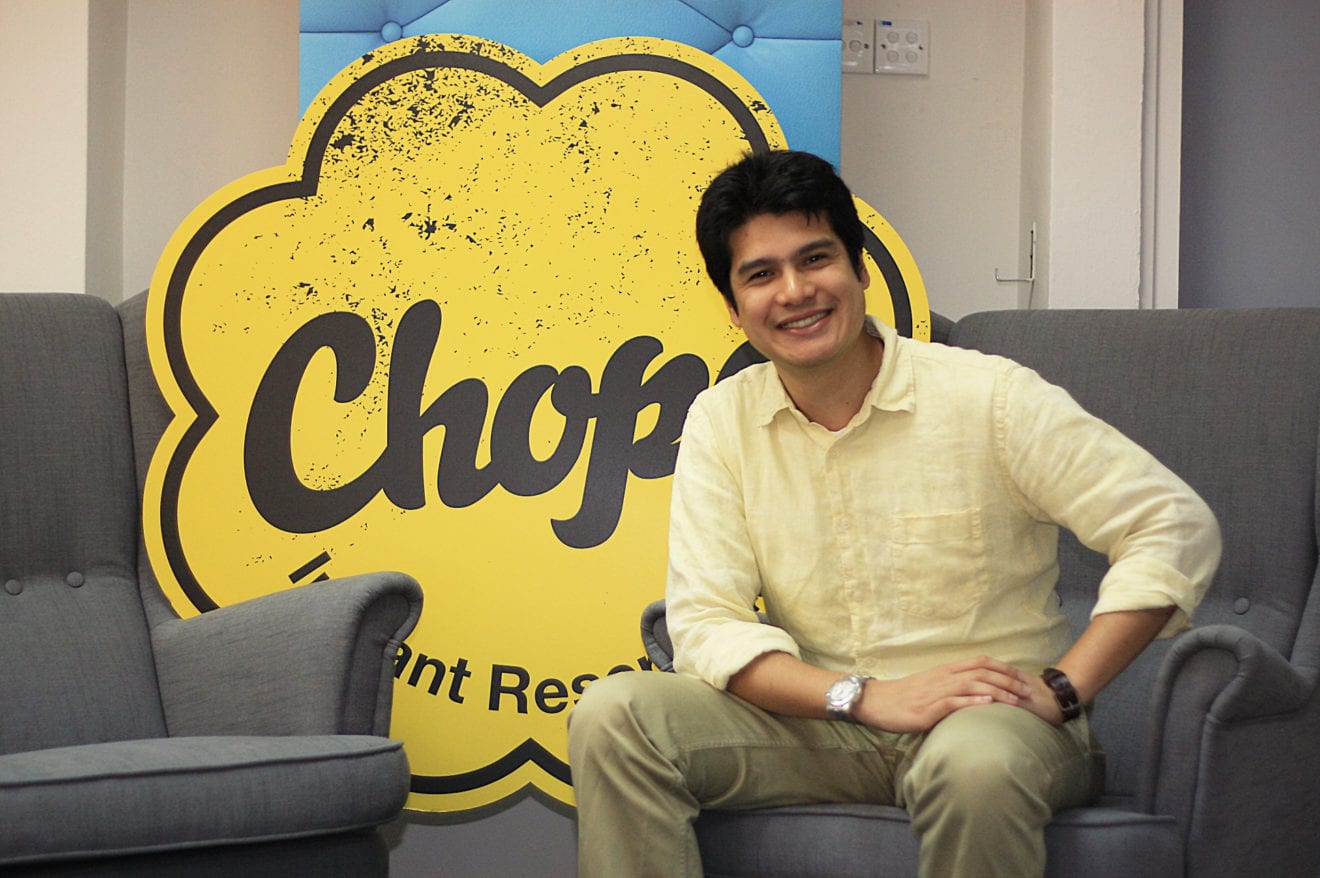
    Singapore-headquartered restaurant reservation startup Chope has acquired Indonesian counterpart MakanLuar, the company announced today. The value of the deal is undisclosed. The acquisition was made with a mix of cash and shares, although Chope co-founder and CEO Arrif Ziaudeen does not reveal the percentage of each.

    Through the deal, Chope adds Jakarta, Bandung, and Bali to its portfolio, bringing the cities it’s active in to eight. It’s been operating in Singapore, Bangkok, Hong Kong, Shanghai, and Beijing.

    Chope expanded in those territories organically, and every time it found it had to educate early adopters and find a product-market fit, Arrif says. “Jumping in at the stage MakanLuar is at, they’ve already crossed that threshold and are now in a position to hit the accelerator on sales and marketing, so we save valuable time,” he enthuses.

    MakanLuar’s founding team of Kunal Narang and Hiro Mohinani was also a major factor for Chope. “We were inspired by Kunal and Hiro’s drive, and with a proven track record we really feel confident in these safe pairs of hands,” Arrif explains.

    “Oddly enough, before we started MakanLuar, we spoke to Chope to seek ways to work together but we were too new at the time,” Kunal tells Tech in Asia. Once the team had some good traction in Indonesia, it made sense to get back in touch with Chope and become part of a bigger regional play, he adds

  • Lippo Group Launches Web-Based E-Procurement Service Mbiz.co.id

    Lippo Group Launches Web-Based E-Procurement Service Mbiz.co.id

    Mbiz.co.id offers an integrated and web-based e-commerce experience. It offers an electronic catalog of thousands of products in  various categories, ranging from IT products, stationary and industrial tools to groceries, provided by a number of certified vendors in Indonesia.

    “The value of sales from online retail in Indonesia is less than 1 percent of the total [bricks-and-mortar] retail sales,” said Andrew Mawikere, co-founder of Mbiz.co.id, describing the growth potential in the sector.

    Christopher Hartono, head of general services at Bank Nobu, a bank owned by the Lippo Group, said ever since the lender cooperated with Mbiz.co.id since October last year, the company was able to easily acquire any goods it needed.

    “Transactions became more transparent and convenient,” he said.

  • Everything you need to know about payments, ecommerce, and venture capital in Indonesia

    Everything you need to know about payments, ecommerce, and venture capital in Indonesia

    Macquarie’s annual conference in Jakarta on telecoms, technology, and ecommerce is one you shouldn’t miss. Last week, it brought together top decision makers in Indonesia’s digital economy.

    Macquarie Group’s corporate advisory branch Macquarie Capital gained relevance in Asia’s tech industry through advising startups and tech companies on capital raising, IPOs, as well as mergers and acquisitions. It’s, for example, responsible for advising aCommerce and PropertyGuru on their recent fundraises.

    Speakers at the event included Indonesia’s tech minister Rudiantara; executives of the three major telcos Telkom, Indosat, and XL; CEOs of retail giants; venture capitalists; and founders and CFOs of Indonesia’ most talked-about startups.

    Here are two days of back-to-back panels, distilled into digestible insights.

    1. A new ‘light touch’ approach to internet regulations

    Indonesia produced its share of confusing headlines about internet policies. Suddenly it wants to regulate everything: ecommerce, transportation, foreign investments.

    The new mantra is a “light touch approach” – allow change to happen and regulate where necessary.

    While opaque announcements caused concern, it’s obvious the current administration sees the digital economy as a key factor defining Indonesia’s future. It’s willing to go great lengths to support its growth.

    If you listen to tech minister Rudiantara or trade minister Thomas Lembong speak on the subject, you’ll hear their new mantra is a “light touch approach” – allow change to happen and regulate where necessary.

    It may still take some time for the administration to adopt the new mantra, but Rudiantara demonstrated he walks the talk when he refused transportation minister Jonan’s request to block access to app-based transportation services Grab and Uber. The Macquarie event coincided with a day of massive street protests organized by the taxi industry.

    Indonesia’s information and communications technology minister Rudiantara.

    Indonesia’s information and communications technology minister Rudiantara at a Tech in Asia event.

    2. Retail’s inevitable shift to ecommerce is on the way

    Similar to the changes in the transportation industry, a shift to ecommerce from offline retail is inevitable, Lippo Group director John Riady said. Consumers would eventually demand the higher convenience and product variety made possible by ecommerce.

    Lippo Group was an early mover last year when it launched its ecommerce endeavor Matahari Mall. This year, most of the big traditional retailers in the archipelago are getting on board with ecommerce plans of their own. Luxury brand retailer Mitra Adiperkasa is one of them, launching Map Emall in February.

    Lippo and Mitra Adiperkasa have taken different paths to achieving this shift to digital. Lippo’s strategy was to assemble a team of ecommerce professionals to start Matahari Mall from scratch as a separate corporation. Mitra Adiperkasa prefers to keep things close to home and manages its ecommerce site from within.

    Both John Riady and Ravi Kumar, COO at Mitra Adiperkasa, agreed that logistics and payments are still challenges to overcome. Indonesian shoppers lack trust in online payments.

    Facebook’s Head of ASEAN Kenneth Bishop offered advice on how to encourage customers to build trust: ecommerce applications should consider adding social features that let buyers ask questions before making a purchase.

    vp-sharma-map-emall-

    Mitra Adiperkasa’s VP Sharma launches Map Emall.

    3. A mobile world means engaging with customers around the clock

    The challenges of creating online services for a mobile-first market cropped up often in the discussions. Large parts of Indonesia’s young generation are coming online for the first time with smartphones, and don’t have access to desktop computers.

    Anthony Fung, the CEO of Zalora, and Fajrin Rasyid, CFO at Bukalapak, both observed that visits and transactions from mobile devices had overtaken those from desktop computers.

    Along with the shift to mobile comes a shift to new shopping behaviours. Whereas most online shopping used to occur during work hours, that pattern is starting to fade. Potential customers can now be engaged throughout the day, and even late in the evening.

    This requires brands to build even stronger emotional bonds with their customers. Zalora for example does this by focusing not only on selling products, but having a sense of fashion of its own. “If we want to be a fashion player, we need to be fashionable, know the trends, or even create them” said Anthony.

    4. More Youtube stars and on-demand video portals

    A more robust mobile infrastructure and Indonesia’s shift to 4G means streaming video on mobile devices is easier than ever.

    mobile-messaging-indonesia-BBM

    Mobile phones are part of everyone’s lives.

    This will likely lead to a digital video explosion this year. On one side that’s going to be user-generated content created by Indonesian millennials on platforms like YouTube, where social media stars like comedian Raditya Dika are already raking in millions of views on popular videos.

    There will be an explosion of digital video content this year.

    On the other are video streaming portals like iFlix, that offer quality international and regional video content for a subscription fee. iFlix will come to Indonesia in a tie-up with one of the local telcos, iFlix special advisor David Goldstein said at the Macquarie event.

    It must have learned from US-based competitor Netflix’ mistakes. Netflix got blocked by Indonesia’s state telco Telkom and its mobile operator subsidiary Telkomsel after it launched here last month.

    Video streaming is a sensitive issue in Indonesia for two reasons – first, content provided by on-demand portals will have to undergo the scrutiny of the local censorship body, and second, it eats up a lot of bandwidth, which is a challenge for the telcos.

    Regional players who understand Indonesia’s cultural sensitivities and partner with telcos could have the upper hand in the archipelago – that’s clearly the path Malaysia’s iFlix intends to take.

    5. Southeast Asia grows closer through startup mergers and acquisitions

    Tech startups growing into regional enterprises in Southeast Asia is an ongoing trend.

    Adrian Vanzyl, co-founder and CEO of Thailand-based Ardent Capital just went through a major merger with one of Ardent’s portfolio companies, Moxy. The women-focused ecommerce portal merged with Indonesia’s Bilna, forming Orami.

    “Mergers and acquisitions are a really good way to expand into markets with speed and efficiency,” Adrian said.

    After an initial phase of bringing together the teams and creating a new company culture, an effective merger or acquisition can be cost saving compared with trying to conquer a new market alone. “You’re in a new league of traction numbers and you can talk to a new league of investors,” Adrian explained, which is why he’s confident that we’ll see more merger and acquisitions in Southeast Asia’s tech sector this year.

    Orami-launch-event-team

    Moxy and Bilna rebrand as Orami after a completing one of the biggest ecommerce mergers Southeast Asia has seen so far.

    6. Profitability can wait

    The potential in Indonesia’s digital economy is so good that startups should focus on growth and brand building, not immediate profitability.

    Startups should focus on growth and brand building, not immediate profitability.

    Most of the players in Indonesia’s startup ecosystem, whether big ecommerce companies like Matahari Mall or on-demand services like Go-Jek, are not profitable yet.

    But that’s not the issue, John Riady said. “Focus on long-term value, not immediate profitability, make sure you can withstand trends and fluctuations,” he suggested.

    What’s necessary is a clear path toward profitability. Bukalapak’s Fajrin Rasyid said ideally, a startup should be able to switch between a profitability mode and growth mode at will. However, the panel agreed, there are also market forces at play which may force a startup to spend more to stay in the race.

    7. Waiting for a breakthrough in online payments

    What’s needed to catapult Indonesia’s digital economy to the next level is an online payments system that is widely accepted, works smoothly on mobile devices, and makes it easy and safe for customers to pay for things online.

    So far, there’s no such solution. Online payments are fragmented and complicated, which leads to many customers abandoning transactions.

    “Ecommerce payment methods have changed little in the past year,” said Chris Eyles from Fusion Payments who moderated the fintech panel at the Macquarie Event. “Over 50 percent of ecommerce transactions are still paid for via asynchronous offline payments such as cash on delivery and bank transfers which is limiting ecommerce growth and costing online retailers a lot of lost orders,” he added.

    startups-lending-money-poor-indonesia

    Payments are best done offline in Indonesia.

    One problem is that banks are still on the fence about their strategy in dealing with online transactions, which is holding back the entire ecosystem.

    Indonesian banks, for now, seem to prefer mobile wallet systems, but it has led to a situation where each bank offers its own ewallet version.

    Telcos also each have their own ewallets, but are planning closer collaboration in the future, which could possibly lead to the merger of the wallets of the three major telcos – a silver lining in Indonesia’s siloed payments landscape.

    Chris also observed that Indonesia’s fintech ecosystem lacks funding. “Why has Indonesia yet to see any major investments in the fintech space despite hundreds of millions being invested in the local ecommerce industry?” he asked.

    It could be due to unclear regulations, the dominance of banks, economic uncertainty, or a lack of suitable companies to invest in – most likely a mixture of all four factors.

    What became obvious is that Indonesia needs a breakthrough in online payments for its digital economy to make a leap. If there’s no local solution, it could fall into the hands of a global player to fill that gap.

    8. Investors continue to find value in Indonesia’s tech sector but are getting pickier

    Indonesia-landscape

    Anupam Garg, who leads Macquarie Capital’s telcos, media, and technology investments advisory in Asia, observed that the investing community still shows a great deal of optimism on the Indonesian technology space, despite there now being a higher focus on unit economics when assessing the value of individual businesses.

    “We expect tech fundraising to continue to thrive in Indonesia with some potential pickup in M&A activities,” he said.

    The general outlook was optimistic on a panel with VCs from some of the most active funds in Southeast Asia. The advice was to pick investments wisely, and to avoid certain verticals..

    Steven Venada form CyberAgent Ventures said that there already are three big winners in the ecommerce space: classified, retailers, marketplace. He doesn’t see many more opportunities for startups in this space, “unless you can outgrow them by 10x,” he warned.

    Better chances, according to him, are now in different verticals and niche markets.

    Stefan Jung from Venturra Capital explained his own caution about investing in fintech. “Should I wait until the regulation in this space becomes more clear?” he asked. “But then maybe I’m too late. Fintech is one of the most outstanding opportunities on a global level.”


  • Here’s why Samsung wants to act like a startup

    Here’s why Samsung wants to act like a startup

    Samsung Electronics, the world’s largest maker of phones, memory chips and television sets, plans to revamp its authoritarian, top-down corporate culture to become more like a lean startup as it copes with sluggish demand and growing competition.

    The company said Thursday its executives and workers pledged to reduce hierarchical practices, unnecessary meetings and excessive working hours in a “Startup Samsung” ceremony held Thursday at its headquarters in Suwon, South Korea.

    The first step in this new culture of flexibility? Requiring all its executives to sign a statement promising to scrap the company’s traditional authoritarian ways.

    Samsung is searching for new business strategies as a father-to-son leadership transition looms. Lee Jae-yong, 48, is expected to succeed his ailing father, Lee Kun-hee, at a time when Samsung’s mainstay semiconductor and phone businesses face intensifying competition from Chinese rivals. Samsung has its eye on expanding into health care and pharmaceuticals, but has responded slowly to hot Silicon Valley trends such as autonomous driving and artificial intelligence.

    The company says it will announce in June how it plans to reorganize its workers and eliminate red tape. It said new vacation systems would allow employees to spend more time with their families and take breaks for self-improvement.

    “By starting to reform the corporate culture, it means we will execute quickly, seek open communication culture and continue to innovate as a startup company,” Samsung said in a statement.

    Samsung says it has been trying to reform its very Korean corporate culture to suit its identity as a global company and to answer criticisms that it stifles creativity and grassroots input from workers. Like most Korean companies, its management tends to mirror the authoritarian ways of South Korea’s past, when a military dictator ruled the country.

    But analysts said Samsung faces a huge challenge in leveling a seniority-based corporate that is decades old. Some suggested the campaign also might be aimed at identifying underperforming workers and trimming the company’s managerial ranks to cut costs.

    Samsung’s regimented, authoritarian ways may have helped it quickly catch up with Sony and other Japanese manufacturers, but they also have hindered recruitment of top talent. That has been a liability as the company competes with Silicon Valley firms that allow workers more independence and flexibility.

    Last year, 26,000 Samsung employees participated in online debates, pitching in ideas. Some have been allowed to build products or launch services outside their original job descriptions at internal Samsung “startups.” The company also introduced flexible working hours last year though current employees said work hours are still too long.

  • Joyo Financial to Provide Retail Investors’ Access to IPO

    Joyo Financial to Provide Retail Investors’ Access to IPO

    The tech sector is always a main focal point for investors and consumers’ alike as it lays down the bench mark for what will be common place for most people whether it is in the home, places of business, or recreationally.

    In the bustling IPO market which covers a variety of numerous product sectors by some of the marketplaces more recognizable and also some not so well known companies, whose products are among the best innovative and pioneering ideas to date. These companies offer many different options to potential investors and have the retail, corporate and institutional clients as well as the management at Joyo Financial Ltd., drooling at the prospects.

    Joyo Financial Ltd., a Japanese brokerage company with an office in Hong Kong, has made all the right noises in relation to at least 2 impending IPO’s that they will be involved with this year.

    Charles Leung, Chief Investment Officer at Joyo Financial Ltd, attending the 23rd annual SXSW Interactive festival in Austin, Texas, USA had the following to say, “I love coming to these expos, the companies demonstrating their latest products and achievements are always insightful and never fail to provoke thought on what can and what almost definitely will be a standard in our ever evolving world.” The SXSW festival is an annual set of film, interactive media, and music festivals and conferences that take place in mid-March.

    When asked about Joyo Financials plans in the Tech sector this year he remarked, “I really would like to reveal more on 2 IPO projects in particular we’re involved with this year. I can say this, that one is in the tech sector and will be huge and the other is in the more conventional mining sector and will just as big, full details will be disclosed shortly.”

  • Indonesia’s Emtek, Murdoch invest in Malaysia’s

    Indonesia’s Emtek, Murdoch invest in Malaysia’s

    iFlix CEO Mark Britt shows his company’s streaming TV series and video service on a gadget. The Malaysia-based company has just received a capital injection from Indonesia’s Emtek and Rupert Murdoch’s Sky plc., the owner of national TV stations SCTV and Indosiar, has spread its wings by investing in Malaysia’s streaming movies and TV series provider iFlix.

    Along with European investor Sky plc, owned by mogul Rupert Murdoch, Emtek through PT Surya Citra Media has become a new investor in iFlix. Sky said it has injected $45 million into the company.

    “The investment will support our continuing commitment to providing our members with the best in entertainment,” said iFlix CEO and co-founder Mark Britt in Kuala Lumpur on Thursday.

    Providing a service similar to Netflix’s, iFlix is available in Malaysia, Thailand and the Philippines. Indonesia is likely to be the company’s next market for expansion.

    In April 2015, iFlix got a $30 million injection from Malaysia’s Catcha Group and Philippine Long Distance Telephone Company (PLDT). PLDT is owned by Indonesian tycoon Anthony Salim and his family through Hong Kong-based First Pacific Finance.

    Sariaatmadja family, who owns Emtek, is known to have tight business relations with the Salim family. It can be seen from the share ownership-swap deal between Sariaatmaja’s London Sumatera Plantations (Lonsum) and Salim’s Indosiar Visual Mandiri (Indosiar TV).

    Salim bought Lonsum from Sariaatmadja in 2007 through plantation company PT Salim Ivomas Pratama In 2011, Sariaatmadja bought Indosiar through PT Surya Citra Media.

    It strengthened both families in their core business. Salim is prominent in the consumer goods business, mainly with Indofood, while Sariaatmadja is strong in the media business.

  • Facebook Co-Founder Saverin Among Investors in Indonesia’s Orami

    Facebook Co-Founder Saverin Among Investors in Indonesia’s Orami

    Facebook Inc. co-founder Eduardo Saverin, who’s been stepping up his investments in Southeast Asian technology startups, joined a $15 million round of financing for Indonesian e-commerce startup Orami.

    Other investors included the technology-focused investment arm of Indonesia’s Sinar Mas Group, Shanghai-based Gobi Partners Inc., Velos Partners and Ardent Capital LLC, according to a statement Wednesday. Orami is the new brand for the female-focused business formed through the merger of Moxy and Bilna and is led by Chief Executive Officer Jeremy Fichet. It plans to expand to other countries in the region.

    “The Orami team is on top of its game with a laser focus on the intersection of social commerce, content and women,” Saverin said in the statement. “Between Thailand and Indonesia, where more than five million babies are born a year, women not only serve as the gate to the home but are the key drivers of rapidly growing economy and future generation.”

    Saverin’s recent investments include online news site Tech in Asia, car rental service Silvercar, and Hopscotch, a shopping site for Indian moms.

    Orami now has almost 500 employees in Indonesia and Thailand. Some 75 percent of its customers are women and the startup gets about three million visits a month.

  • Malaysia to Invest in Indonesian Startup Companies

    Malaysia to Invest in Indonesian Startup Companies

    Malaysia Venture Capital Management Berhad (MAVCAP) held a meeting with the Indonesian Chamber of Commerce and Industry to talk about e-commerce.  With the revision of negative investment list, it is expected to facilitate the state’s investment towards digital business in Indonesia.

    Communications and Informatics Minister Rudiantara appreciates this intention.  However, he asked that Malaysia not only invests in funding, but also request that the cooperation can simultaneously share knowledge.  “So its not just about money, but also on the know how,” he said in Jakarta on Tuesday, Feb 23.

    Rudiantara said that Malaysia’s intention to invest in the e-commerce sector is normal.  Especially when Indonesia is the largest digital economy in ASEAN.  In order to quickly achieve digital economy by 2020, Indonesia needs knowledge and experts.

    Deputy of Investment Implementation Control of the Indonesian Coordinating Investment Board (BKPM) Azhar Lubis says to build a startup company, this type of financing is actually required.  This is supported by the revision of DNI.

    The financing is a solution if a company wants to develop but has difficulties getting a bank loan, especially when bank loan requires collateral.  “Hopefully there will be many startup companies that can be aided,” said Azhar.

  • Indonesia’s Elevenia marketplace gets $50 million from existing investors

    Indonesia’s Elevenia marketplace gets $50 million from existing investors

    Elevenia just raised another $50 million from its existing investors. The ecommerce marketplace is a joint venture of South Korean company SK Planet and Indonesian telco XL Axiata.

    Elevenia launched in Indonesia in early 2014 with an initial capital of $18.3 million from each partner. It has since received multiple capital injections from its parents, bringing Elevenia’s total funds – including the latest round – to about $110 million.
    The company claims to have clocked $95 million in revenue in 2015. It also says it has about 20,000 daily transactions and four million products listed from 30,000 sellers, with 40 million visitors.

    That’s double the figures it released around its first anniversary in early 2015. At that time, Elevenia announced 20 million visitors a month, 18,000 sellers, and two million product listings. It did not release revenue figures for 2014.

    Elevenia has been a steady yet somewhat quiet presence in Indonesia’s crowded ecommerce landscape. It competes alongside companies like Lazada, Bukalapak, Tokopedia, Qoo10, Rakuten, Blanja, Blibli and MatahariMall.

    With fresh funds at hand, it plans to grow its team, increase its marketing efforts, improve its product and services, and move to a new office, the company said in a statement.

  • Lalamove delivers good luck during Chinese New Year

    Lalamove delivers good luck during Chinese New Year

    Hong Kong based logistics app provider, lalamove is going bananas over the Year of the Monkey with delivery discounts for new and existing customers in Thailand. The number eight symbolizes good luck and prosperity in Chinese culture and lalamove is bringing eight days of delivery discounts leading up to Chinese New Year.

    From today, Monday, February 1st until Monday, 8th February, 2016, inclusive, first-time lalamove customers are being gifted with a good-fortune THB 88 discount off their first delivery fee.

    To claim their Chinese New Year gift, newbie customers simply download the free android and iOS app and enter the promo code: CNY88 while making the booking.

    Loyalty is being rewarded by lalamove too, with free credit for lucky customers who already use the 24-7 delivery service. The first 100 lalamove customers who request eight deliveries in one day, during the promotion period, will be gifted with a THB 200 delivery credit for that day.

    2653554c-6a5b-4849-a5e2-727f2137dbe6

    The reliable Bangkok-wide express courier and delivery service is expecting greater demand over the Chinese festive period and its fleet is ready for a prosperous new year. Businesses and individuals find lalamove services an ideal way to send special gifts to corporate customers and partners, as well as good wishes, wealth and happiness for the future to family and friends during the week-long Chinese New Year celebrations.

  • German start-up Number26 launches pan-European mobile bank

    German start-up Number26 launches pan-European mobile bank

    Number26 is looking to succeed where traditional lenders have struggled, by relying on mobile phones to build a true pan-European bank.

    The German financial services start-up is expanding into six European markets, making it the first mobile phone bank to straddle the region’s borders, it said on Thursday.

    Number26 is entering France, Italy, Spain, Slovakia, Greece and Ireland, the latter being a test for moving into Britain, and eventually plans to develop a continent-wide bank.

    Founded by two Austrians and based in Berlin, the company revealed plans to offer a MasterCard and basic current accounts via a licence from its partner Wirecard Bank of Germany, which guarantees funds using the German Deposit Protection Fund. Its parent, Wirecard, also supplies Number26 with core banking software and transaction processing.

    Without branches, legacy computer infrastructure and by relying on selective outsourcing, mobile-first banks can compete with little up-front capital against big banks, all while promising lower lending rates and higher rates on savings.

    Number26 also has a jump on rival mobile-first banks including Atom Bank which took a UK bank licence in June and Tandem, which received a licence this week. Both plan to start operating in Britain next year. BBVA, Spain’s No. 2 bank, has taken a 29.5 per cent stake in Atom.

    “The model for these mobile start-ups is to compete on fees,” said Andrew Copeman, an analyst with financial research firm Aite Group. “Banks can’t afford to go after those rates because they are saddled with big overhead from branch networks and old systems.”

    Taken by surprise, banks have responded by ploughing more money into fixing creaky systems, rolling out mobile apps of their own and shuttering many branches. Worldwide, banks could cut half their jobs in 10 years as they fight to stay relevant, the former head of Barclays has said. “I don’t see banks at all as my competitors. They just can’t move fast enough,” Number26 chief executive Valentin Stalf, 30, said in an interview.

    The company, which launched this year in Germany and Austria, provides more than 80,000 customers with accounts for cash withdrawals, deposits and overdraft services up to ?2,000 via a slick smartphone app. “We see the current account as just a starting point,” said Maximilian Tayenthal, 35, Number26’s co-founder and chief financial officer. Credit, savings and insurance products will follow, he said.

    It recently began offering a retail checkout-based alternative to ATM machines for cash withdrawals and deposits in Germany.

    It now counts 6,000 cash outlets including supermarket chain Rewe, or more ATMs than Deutsche Bank and Commerzbank combined.

    The Number26 name refers to the optimal number of quarter turns it takes to solve a Rubik’s Cube puzzle and is a play on the most efficient route it can find to reinvent banking.

    Mobile phone-based banks aim to tear up the rule-book of an earlier generation of direct banks, which used online sites and telephone call centres to woo millions of customers away from bank branches starting in the 1990s.

    ING’s DiBa and others are now some of Europe’s biggest retail banks after being spun out of parent banks to offer a wide array of services created within those banks.

    By contrast, Number26 is looking to evolve rapidly into a full-service banking hub, providing not just services of its own but those from third parties. It is in talks to offer money transfers from TransferWise, loans from LendingClub and deposit comparison site SavingGlobal on its platform.

    The 75-employee company has raised ?12.5 million in venture funding. Backers include Peter Thiel, founder of PayPal and one of Silicon Valley’s top investors, Earlybird Venture Capital and Axel Springer Plug & Play, both of Germany, and Swiss-based Redalpine Venture Partners.

  • 500 TukTuks Is Even More Keen In Thai Startups Than Ever!

    500 TukTuks Is Even More Keen In Thai Startups Than Ever!

    A micro-fund focused on Thai startups reveals what has happened in the past three months of operation.

    500 Startups, one of the most active seed investors/accelerators in the world, made an announcement early this year about a $10 Million micro-fund focused on Thai promising startups — called 500 TukTuks. That announcement was such a thrill, as this definitely would make an impact to the Thailand’s startup ecosystem!

    Led by Krating Poonpol (Founder of Disrupt University) and Moo Natavudh (CEO of Ookbee), 500 TukTuks has been operating for about three months now. Today, they made an exciting announcement once again at Echelon Thailand 2015 about their fundraising and investment up to date.

    Krating stated “After the first batch of investments, 500TukTuks is more keen in Thailand’s startup ecosystem and gaining confidence from investors who believe in the potential of Thai tech startups, leading to more investment into 500 TukTuks. So we decided to increase the fund size to $12 M and will invest in 60-70 Thai startups over the next 3 years. This is a good sign for startup ecosystem and for the country as a whole because it shows that more people are willing to support Thai startup community.”

    Moo Natavudh also added “500 TukTuks is here not only to invest, but to provide Silicon Valley’s education, the access to talented mentors and other 2000+ founders in the 500 Startups network, and to grow #500Family together at the same time.”

    The highlight of the announcement was the 10 startup companies in Thailand that made it through the TukTuks’ first batch of investment.

  • Sequoia-backed marketplace wants to bring Thai retailers online

    Sequoia-backed marketplace wants to bring Thai retailers online

    When I first visited Thailand not too long ago, one of the first things that hit me were the numerous open-air markets – like the huge Chatuchak market in Bangkok. Shops and market stalls of all shapes and sizes peddled a huge variety of goods, from clothes to trinkets to household items.

    Thailand’s retail sector is expected to hit US$179.2 billion in 2016. Despite growing smartphone and credit card usage in the country, however, a lot of retailers haven’t jumped on the ecommerce bandwagon yet, leaving a lot of opportunity on the table.

    The founding duo of Thailand-based Zilingo, Ankiti Bose and Dhruv Kapoor, saw that opportunity for themselves when they visited the country on vacation. Ankiti is an ex-McKinsey consultant from Mumbai, India, who later worked for global venture capital firm Sequoia. Together with IIT (Indian Institute of Technology) graduate Dhruv, they decided to create a way for these retailers to find new customers online.

    Ankiti, the startup’s CEO, was always fascinated by the startup side of the VC business, she tells Tech in Asia. After that Thailand trip, she was convinced it was time to cross over to being an entrepreneur.

    Zilingo is a mobile-first online marketplace that allows merchants to list their inventory, set their prices, and fulfill online orders. Users can browse through available stores and products, then order and pay with their credit card.

    Zilingo screenshots

    Zilingo’s services include shipping, packaging, payment options, an analytics dashboard for mobile, order tracking, refund and cancellation options, and consultation on pricing strategy. The app also provides chat, through which a customer can get directly in touch with a merchant.

    The startup doesn’t charge merchants for listing, or any other fees, providing most of its services for free. It only takes a cut out of successful sales, wanting to encourage adoption and to “only charge for things that actually add value to the [merchants’] business.”

    Zilingo has only recently gone live, and is available to buyers and merchants across Thailand. Within November 2015, buyers from Singapore, Indonesia, and Hong Kong will also have access to the platform’s Thai sellers. Other Southeast Asian countries will follow, according to the startup. There are currently over 300 sellers on the site, Ankiti says.

    The company has already raised external funding, to the tune of US$1.88 million. The funding comes from Sequoia India, Teru Sato of Beenext, and Freecharge’s Kunal Shah and Sandeep Tandon.

    “We are delighted to back Ankiti and Dhruv, a highly talented and committed founding team, in their efforts to build a mobile-first marketplace for Thailand,” says Shailendra Singh, managing director at Sequoia India. “We liked the team and their mobile-first product so much, that we agreed to invest at the concept stage. It’s early days for the company, but we’re excited about the prospects for Zilingo.”

    Are you eager to shop from Thai retailers online? Do you think Zilingo has found a good way to digitize Thailand’s merchants?

  • China Apus to invest Rs 100 crore in Indian startups

    China Apus to invest Rs 100 crore in Indian startups

    China’s Apus group plans to invest an initial amount of Rs 100 crore in Indian startups as part of its aim to build a positive ecosystem for the ever growing startup community in the country.

    Apus group was founded in 2014 and is among the top 10 developers on Google Play. Apus Launcher is the group’s flagship app with more than 200 million downloads.

    “The group will offer support to these companies via programmes focussed on developing and building a positive ecosystem for their growth. These programmes will range from providing incubation to free Apus traffic,” the company said in a statement.

    The company will offer an open platform to all startups and will aim to deliver the right guidance and resources till the time they gain enough exposure in their targeted markets.

    “Startups shortlisted under this programme will also have access to tools and experts helping them to enhance decision making capabilities,” it said.

    The company said it has over 25 million users from India and targets 80 million users by 2016 by setting up a local operation centre and also by providing more localised service and experience to Indian users and augment India specific content.

    Founder and CEO of Apus Group Li Tao said as an emerging market, India’s market potential is great and it offers one of the greatest ecosystems for startups.

    “We had similar situation in China three to five years ago and India represents an important market for us. We are looking to further strengthen our presence as we evaluate more partnership opportunities with more firms as we look to strengthen our relationship with India,” Tao said.