Retail News CRM

Tag: startup

  • AS Watson to inject $70m in Canadian AI startup

    AS Watson to inject $70m in Canadian AI startup

    Hong Kong-based retailer A.S. Watson Group said on Thursday it will spend $70 million over the next three years in big data technologies, including investment in a Canadian artificial intelligence venture company.

    A.S. Watson will consolidate its customer data holdings into a big data analysis system for retailers developed by Rubikloud to optimize sales promotion activities and business operations.

    Rubikloud has an app designed to analyze customer characteristics and their purchase history using AI. The information will then be used for individual marketing and prediction of future sales.

    When A.S. Watson introduced the app at European stores on a trial basis starting in 2015, sales from personalized promotion activities increased by more than 8% over 10 months, hence the latest tie-up decision.

    “We are investing in big data amid global economic uncertainties because we believe that technology is a critical enabler for successful retailing in today’s world,” said Malina Ngai, chief operating officer of A.S. Watson Group, in a statement. Ngai added that Rubikloud’s technology will enable the company to “focus our resources, from back-end support to the shop floor, on building a better customer experience.”

    Kerry Liu, CEO of Rubikloud, said the company aims to enhance A.S. Watson’s capabilities to personalize customer offers through advanced targeting by “applying machine learning and flexible big data architectures in practical applications.”

    A.S. Watson is a subsidiary of conglomerate CK Hutchison Holdings, led by Li Ka-shing, a Hong Kong-based billionaire.

    A.S. Watson has more than 13,000 retail stores, including the company’s drugstore chain, in 25 countries and regions such as Asia and Europe. Li’s venture fund Horizons Ventures has also invested in Rubikloud.

  • Foreign funds pour money into Vietnamese startups

    Foreign funds pour money into Vietnamese startups

    John Wu has been the ‘technology pillar’ of Alibaba for almost 10 years. The former technology director and a leading group of investors have poured nearly $3 million into Vntrip.vn – a Vietnamese startup operating in online hotel reservations.

    Le Dac Lam, the founder and CEO of the startup, has confirmed the news.

    “The investment came after the first round of capital call from foreign investment funds, and John Wu has agreed to stand side by side with us,” Lam said.

    Established in late 2014, Vntrip.vn has established an online hotel network throughout Vietnam with cooperation of Booking.com, the world’s hotel reservation network belonging to the US Priceline Group with capitalization value of $65 billion.

    Wu’s F&H fund says the business is valued at VND300 billion.

    Vietnamese restaurant chain calls for $6.9 million

    Wrap & Roll has successfully called for $6.9 million from Mekong Enterprise Fund III (MEF III) managed by Mekong Capital.

    MEF III which was launched last June, with total investment capital of $112 million, is a private fund focusing on retailers, restaurants, consumer goods and consumer services in Vietnam.

    Wrap & Roll was the first investment deal made by MEF III.

    Established in 2006, Wrap & Roll has 10 restaurants in Hanoi, HCM City and four franchise shops in Singapore.

    3 more startups receive $75,000 

    1337 Ventures, a Malaysian fund, has announced investment in three Vietnamese startups, following Alpha Startups, a startup incubation program launched recently in HCM City.

    Each of the three businesses would receive $25,000 in capital and services and have the right to join the 3-month startup acceleration program to be run by 1337 Ventures.

    The three businesses include Saloneses, an app that books beauty services on smartphones, Perkfec, which allows business owners to keep watch over staff performance to reward them reasonably, and Navi which books venues and accommodations within hours.

    Bitexco acquires Huong Giang Tourism

    Huong Giang’s H1 Report shows that Bitexco, a major real estate developer, now holds 70.48 percent of the tourism company.

    On March 30, 2016, the Thua Thien-Hue provincial People’s Committee released a document on divestment of all the state’s stakes (12,572,200 shares) in Huong Giang. Bitexco has become the new shareholder in the tourism company.

    Tuong An Vegetable Oil

    Nguyen Manh Cuong, an individual shareholder, has announced the completion of the sale of 1.9 million TAC shares of Tuong An Vegetable Oil Company, equal to 10.4 percent of charter capital.

  • Startup pushes mobile, social selling concept in Southeast Asia

    Startup pushes mobile, social selling concept in Southeast Asia

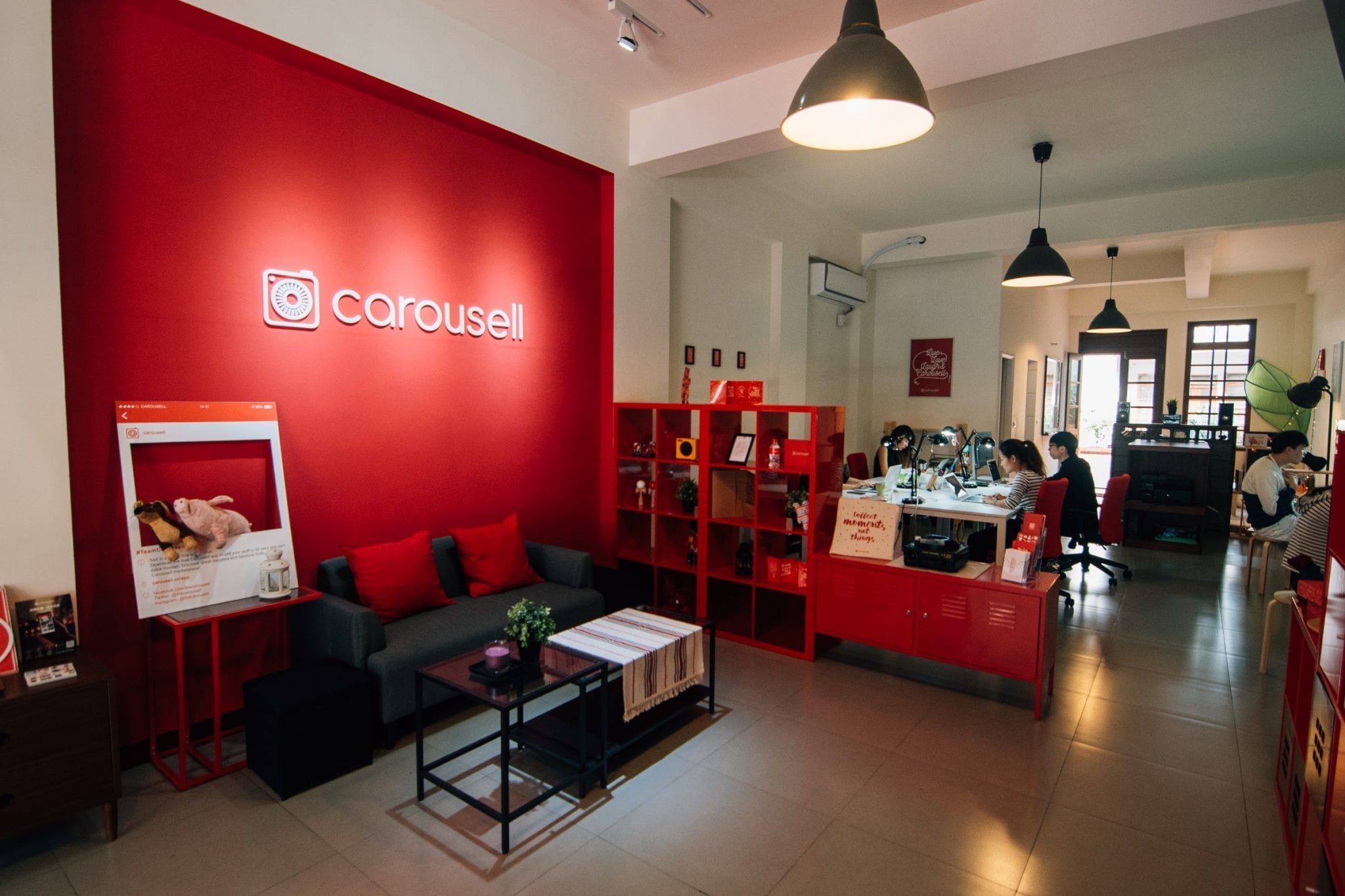
    Singapore-based mobile classifieds marketplace Carousell recently announced that it has acquired Duriana, a Malaysian-based mobile-first, fashion and lifestyle marketplace in Southeast Asia.

    It was the company’s third acquisition in less than six months, which is expected to boost its ambition to become a leading global mobile classifieds marketplace.

    Basically, Carousell offers a mobile marketplace for vendors to sell stuff – mostly used or ‘preloved’ items – using only an iPhone or an Android phone. It offers fast onboarding – its claim is 30 seconds to list an item for sale – and one can share the link on Facebook, Twitter, and Instagram.

    This aspect of social selling is bundled with a trusted user feedback that makes it easy for vendors to engage with customers. As simple as the concept sounds, it is fast catching on. ‘Snap to sell’ and ‘chat to buy’ resonates with a young and digital-savvy target market.

    Siu Rui Quek, CEO & Co-founder of Carousell, told in an email interview that the basis of the idea was that selling should be as simple as taking a photo, and buying as easy as chatting.

    “We felt that this was important, as we noticed more people like us using the smartphone as the main device to access the internet,” he said. “We aim to be more than just a transactional platform because we believe that buying and selling preloved goods is a more responsible way to consumption and that every interaction on our marketplace can help to inspire others to become more thoughtful consumers,” he said.

    The marketplace also has a feature called “Carousell Groups” which allows users of similar interests and hobbies to connect and make friends. “We have a vibrant community of Lego fans, Disney fans, sneakerheads, photography enthusiasts and many others,” he added.

    Launched in 2012 in Singapore, Carousell has since spread to 19 cities around the wold, including recent launches in Hong Kong, the Philippines, and Australia. It is backed by leading international Venture Capitalists Sequoia India, Rakuten Ventures, 500 Startups, Golden Gate Ventures, and QuestVC.

    Since its launch in Malaysia in 2014 and the Philippines in 2016, the classifieds marketplace has been growing rapidly in both countries. Carousell claims almost two million items sold in the fourth quarter of 2016, almost doubling within a quarter.

    Duriana, on the other hand, was founded in 2013 and has raised funding from investors like Alps Ventures and BEENOS.

    “It’s been an exciting three years with Duriana, and we’re proud to have brought the company to this stage,” said Saeed Gouda, Co-founder and CEO of Duriana. “We’re confident that Duriana users will enjoy buying, selling and connecting as part of the vibrant Carousell community.”

    The acquisition of Duriana is part of Carousell’s international expansion strategy, according to Quek.

    “Mobile classifieds operate best with a large community of buyers and sellers on one platform,” he said. “In Southeast Asia, where more people are experiencing the internet for the first time through their smartphones, we have the opportunity to reimagine the way they buy and sell online. There are over 600 million people, but almost 400 million are not connected to the internet yet. That’s a lot of potential. We’re reaching out to a generation of internet users who leapfrogged the desktop internet, creating an environment where we can take a mobile-first approach to solving unique local problems.”

    From startup to global player

    “If you’ve ever bought or sold something on a forum or classifieds website, you’ll remember how difficult and frustrating it could be to list an item or find something you wanted these sites on those forums. You often needed a pretty good idea of how the forums or online stores worked, as they were built for different purposes and not as a marketplace,” Rui explained.

    Thus, in March 2012, Quek and co-founders Marcus Tan and Lucas Ngoo participated in a Startup Startup Weekend Singapore and built the first Carousell prototype in 54 hours to solve this problem. They demonstrated the prototype and won the competition.

    “The basis of the idea was that selling should be as simple as taking a photo, and buying as easy as chatting. We felt that this was important, as we noticed more people like us using the smartphone as the main device to access the internet,” he said.

    The trio started working on Carousell full-time, and the first version was launched in the Singapore iTunes App Store in August 2012.

    Today, Carousell expects mobile commerce to be a significant contributor to the exponential growth in the region, as the web and mobile infrastructure improve, and as smartphones become more affordable and accessible.

    Retail e-commerce is poised to reach $4 trillion by 2020  globally, according to a report from eMarketer. APAC is expected to take a sizeable chunk of that pie in 2020 with US$2.7trillion, and Southeast Asia is poised to become one of the world’s fastest-growing regions for e-commerce revenues, exceeding $25 billion by 2020.

    “Across this region, governments are also making a greater push for companies and entrepreneurs to adopt new technology to keep up with consumer trends and demands. For example in Malaysia, the government has announced that 2017 will be the “Year of the Internet Economy”. The digital economy is already contributing 16% to the country’s GDP, and this figure will only go up,” he added.

    Global push

    By acquiring Duriana, which is a mobile-first, peer-to-peer, fashion and lifestyle marketplace in the region, the company expects to bring its users 600,000 users in Malaysia and the Philippines onto the Carousell platform.

    “We saw that Duriana users had similar demographics and interests in buying and selling fashion items, gadgets, and electronics as well as home furnishing,” Quek shared.

    With the speed with which it has expanded in the region in the last five years, the company also sees a global opportunity.

    “The problem we are solving is a global one, and we have a once in a lifetime opportunity to be the world’s largest classifieds marketplace because of the mobile phenomenon,” Quek said. “By 2020, more than six billion people around the world are expected to own mobile phones.”

  • Flappy Bird creator lends a wing to Vietnamese startups

    Flappy Bird creator lends a wing to Vietnamese startups

    ‘Just propose those projects to me, no matter how bad it is,’ Nguyen Ha Dong writes on Facebook. The overnight success of mobile game Flappy Bird has turned its creator Nguyen Ha Dong into a star of the local startup scene.

    The game, hailed by the industry as one of the milestones of Vietnam’s startup history, has brought Dong great fame and fortune, all within a short period of time.

    Now Dong is making a pledge to pay it forward and fund Vietnamese startups in the fields of robotics, artificial intelligence, social services, community development and education.

    “Just propose those projects to me, no matter how bad it is,” he wrote on his Facebook page.

    He did not give specific details about mentoring and funding.

    Flappy Bird was released in May 2013 with little fanfare. By February 2014, the sleeper hit topped the charts in more than 100 countries and had been downloaded more than 50 million times. Dong reportedly earned an estimated $50,000 a day.

    The Vietnamese government has seen successes like Flappy Bird as an encouraging sign. It is trying hard to cultivate a startup scene where tech entrepreneurs can create products and services that will go global.

    Unlike the well-developed startup ecosystem in most other countries, where there are venture capitalists and a strong network of entrepreneurs working together, the system in Vietnam is at a fledgling stage, with many funding difficulties.

  • Mobile fuelling growth in Asia’s startup scene

    Mobile fuelling growth in Asia’s startup scene

    Mobile connectivity is fueling growth in Asia’s startup scene, a survey from Telenor Group shows.

    The survey covered technology buffs to better understand key startup trends for 2017 and the challenges and views of entrepreneurs in Asia.

    The survey was conducted over Facebook and LinkedIn with 215 respondents aged 15 to over 55 years old from Bangladesh, India, Malaysia, Myanmar, Pakistan, Singapore, Thailand and other Asian countries.

    To gauge the interests and personalities of the survey respondents, each person was assigned the type of startup they were most likely to create in 2017, based on pattern of their responses. 38% of respondents were found to be the most likely to create an IoT startup in 2017, significantly outnumbering the number who would establish medtech startups (22%), on-demand startups (14%), enterprise startups (11%) and fintech startups (10%).

    With a potential market of 34 billion devices expected to be connected to the internet by 2020, and nearly US$6 trillion to be spent over the next five years, it appears Asia’s entrepreneurs are well aware of the potential opportunities offered by the Internet of Things.

    In addition to these 2017 startup trend insights, the survey findings also hint at what Asian entrepreneurs think it takes to succeed in the tough startup world. More than a third of respondents (36%) believe that cybersecurity and data privacy is their number one priority, and keeping their customers’ data safe and secure is the biggest challenge facing Asian startups.

    One in 4 also admitted that the lack of business management skills and experience is another major obstacle, and having access to expert guidance would be an important growth factor. Another 16% say they are hampered by public policy frameworks and environments that are not conducive to startups, while 14% say that sustained funding across all stages of startup development would be important. Fewer than 1 in 10 were seen as were concerned with the challenge of expanding into other markets in the region.

  • Indonesia introduces new regulations for fintech startups

    Indonesia introduces new regulations for fintech startups

    Indonesia’s financial services authority (OJK) has issued its first regulations relating to financial technology, or fintech, companies running peer to peer (P2P) lending services, Deal Street Asia has reported.06 Jan 2017

    The regulation lays out minimum capital requirements, interest rate provision and education and consumer protection rules.

    Every fintech P2P lending firm must now register and secure a business licence from the authority, the report said.

    A company must have Rp1 billion (£61,000) in capital to register, and a further Rp2.5 billion to apply for a business licence. These figures are approximately half those that had been proposed in draft regulations, the news site said.

    Foreign ownership is limited to 85%, Deal Street Asia said.

    No maximum interest rate has been set, which again contradicts previous drafts of the regulations which set a cap of seven times Bank Indonesia’s seven-day reverse purchase rate per annum, the news site said.

    Muliaman Hadad, chair of OJK, told that the regulation was only an initial step in the authorities’ efforts to regulate and supervise the business.

    “What’s important is they get onto our radar because we don’t want to regulate the prudential aspects hastily. We want to provide business transparency guidelines first,” Hadad said.

    The OJK also has implemented a regulatory sandbox for firms to test services for consumers, the newspaper said.

    Bryan Tan of Pinsent Masons MPillay, the Singapore joint venture partner of Pinsent Masons, the law firm behind Out-Law.com said: “The Indonesian fintech market is one which has huge potential for its large consumer base and the unbanked, which is different from the financial service hub role that Singapore, Hong Kong and London play.”

    “This means that fintech regulations on payments and digital banking would be more keenly looked at, as opposed to fund-raising type activity,” Tan said.

    “A large potential customer base that is largely unbanked is a huge attraction for banks looking to expand and technology may be an enabler to that. The Indonesian regulation is clearly an evolving one and picking a leaf from the markets around it,” he said.

    Bank Indonesia set up a dedicated office and regulatory sandbox in November 2016 to help fintech developers.

    It will also provide services to help developers to understand Indonesia’s regulatory policies on fintech, gather and disseminate information on developments, and hold regular meetings with authorities and international bodies interested in the use of technology in finance, Bank Indonesia said.

    Indonesia’s launch of a regulatory sandbox for fintech follows similar announcements from Singapore and Hong Kong, with both countries following the lead taken by the UK’s Financial Conduct Authority (FCA) in developing a regulatory sandbox initiative.

    Singapore launched a sandbox in June, and released updated guidelines for the service this month.

  • Forbes Japan names Auto-cybersecurity Start-Up Trillium the ‘RISING STAR’ Startup

    Forbes Japan names Auto-cybersecurity Start-Up Trillium the ‘RISING STAR’ Startup

    Forbes Japan, the Tokyo-based edition of Forbes, one of the world’s most authoritative business news medias, celebrated entrepreneurs and Start-ups today at the Annual “JAPAN’S STARTUP” Awards, and the winner of the ‘RISING STAR’ STARTUP OF THE YEAR 2017 Award – Trillium Inc, a Tokyo-based Start-up that has developed a robust, comprehensive cybersecurity solution for the automotive industry.

    The Awards promote start-ups ready to create a ‘New Japan’ – leading the Japanese economy into the next age through innovation and entrepreneurial efforts. Finalists for the ‘RISING STAR’ 2017 were selected by the Forbes Japan editorial team with input from online readers. The winning Start-ups will be featured in the magazine’s Jan 2017 edition, which will appear on Nov 25.

    David Uze, Trillium CEO, an American who has lived in Japan for over 25 years, hopes Trillium can make a valuable contribution to his adopted country. “As autos and electronics are the bedrock of Japan’s prosperity, we believe our cybersecurity solution can help ensure the nation’s economic future. And we are grateful to Forbes Japan for recognizing the importance of our work.”

    “This is another indication that Trillium is on track to emerge as that rarest of creatures, a ‘Made-in-Japan Innovator,’” said Uze. “For automakers, cybersecurity is a mission as urgent as ending hydrocarbon use. Plans for innovation across-the-board depend on digitizing tomorrow’s cars: in emissions, safety, autonomous drive, driving dynamics and infotainment. But until they find an adaptive, multi-layered solution to cyber threats, all plans could come screeching to a halt with one devastating hack. The industry doesn’t yet have a solution – but we do, and we’re ready to go.”

    Trillium’s ‘Made-in-Japan solution’ strongly secures all three key ‘cyber-threat domains’ in the car with a software-based approach that is compatible with any architecture or operating system. More than just robust and comprehensive, it can be implemented for as little as 1/20th the cost of competing solutions – most of which are still under development.

    “Meanwhile, our multi-layered solution is at an advanced stage,” Uze said. “We have moved into the real-world testing phase via partnerships with a legendary Japanese Super GT racing team and a leading maker of automotive semiconductors. And we are now in discussions with a wide range of automakers and tier-one component suppliers. We’re ready to implement whenever they are.”

    Trillium Inc. was founded in 2014 with a team of executives and engineers from Japan, Europe and the U.S. with extensive experience in relevant fields, backed by lead investment from Global Brain Corp, a Tokyo-based venture capitalist.

  • FinTech hub opens in Singapore

    FinTech hub opens in Singapore

    LATTICE80, a not-for-profit FinTech Hub, has opened an innovation facility in Singapore’s central business district.

    The new two level facility has been established with the aim of supporting FinTech firms with product development, testing and go-to-market strategies.

    LATTICE80 measures more than 30,000 square feet and features an open event space with the capacity to host 250 people, a private and public lounge, semi-open and open-plan offices, a cafe, boardrooms, meeting rooms, a podcast studio and a nursing room.

    To date, more than 20 foreign and local FinTech companies and associations at varying stages of growth have signed up to be based at the facility. Solution types being worked on by these firms include blockchain, robo-advisors, trading systems, online marketplaces, financial education, cognitive computing, big data analytics and fund management.

    LATTICE80 has partnered with key financial and technology players such as IBM, UOB, KPMG, MatchMove, EZ-Link, Singapore Fintech Consortium, Femtechleaders SG and Metropolitan Management Services to provide solutions and services like APIs, cloud technology and blockchain to support companies.

    Additionally, the National University of Singapore will work hand-in-hand with LATTICE80 to shape the curriculum for FinTech. It will also involve roll outs of training and capability development programmes particularly in the areas of cybersecurity, payment gateway and developing dynamic mobile applications.

    “We want to create a platform that can support the FinTech ecosystem in Asia and form bridges that link to global players. We’re serious about fostering connections with the technology and financial communities here in Singapore and globally,” LATTICE80 CEO Joe Seunghyun Cho said.

    “We’re co-creating the future of innovation, banking and finance in Singapore and considering the enthusiastic group of start-ups we have today, I’m very confident that we have the foundation to create a truly unique world-class community.”

    Companies onboard LATTICE80 include Spark Systems, which is building new generation trading platforms for hedge funds, banks, financial institutions and other high volume institutional participants in the foreign exchange market, and Percipient, a Singapore-based startup which has developed a customized digital solution for the State Bank of India.

  • AI, Gamification and Blockchain at DBS Hong Kong Accelerator

    AI, Gamification and Blockchain at DBS Hong Kong Accelerator

    Showcasing innovative fintech solutions that leverage artificial intelligence, blockchain technology, gamification and more, the founders of seven startups from Hong Kong and around the world met with hundreds of potential investors at DBS Accelerator Demo Day, the finale of the second DBS Accelerator programme in Hong Kong.

    Accelerators play a vital role in the Asian startup ecosystem and in supporting innovation. Providing vast resources, mentor support and dedicated work and office space, DBS Accelerator aims to create opportunities for innovators from across Asia and globally.

    Financial Innovation Evolving Rapidly

    The seven startups in this year’s programme are Flowcast, FOMO Pay, Hampen Technology, Mindlayer.io, NetGuardians, Playbasis and XinGuo Technology. They were selected from more than 150 applicants from around the world, including Hong Kong, Singapore, China, Thailand and the U.S.

    «We believe FinTech has the ability to go beyond mere disruption and make a tangible difference to the experiences customers have in using financial products and services,» said Lawrence Morgan, CEO of Nest.

  • Industry risks startup bubble

    Industry risks startup bubble

    Kaskus co-founder Ken Dean Lawadinata has broken his silence after marching out of one of Indonesia’s most prominent technology platforms, citing higher “risk” in the industry and even “a little bit of a bubble”.

    “I think right now the IT market is in a bit of a bubble in Indonesia, with everyone asking ridiculous valuations without any signs of profit in the near future,” local media quoted the 30-year-old, who brought Kaskus to fame in 2008 with his cousin Andrew Darwis.

    This — just days after Go-Jek co-founder Michaelangelo Moran also announced he had quit his popular company — has generated concerns over the state of Indonesia’s young and thriving startups, companies that have seen many investments flow in with little details and no guarantees about their revenues and profitability.

    “There is a marginal bubble forming because of the involvement of foreign investors, hence the global nature of the industry’s fears,” says Naveen Menon, head of communications, media and technology practice at A.T. Kearney.

    Foreign investors are flocking into startups operating in the country, with the biggest funding ever for a local startup rounded up by Go-Jek in August worth US$550 million from American private equity firms KKR and Warburg Pincus.

    “Indonesia’s startup scene is starting to look crowded, but compared to other markets such as India or the USA, it’s relatively small and still generating huge interest among investors,” he added.

    There are over 2,000 startups in Indonesia, most of which are valued at less than $10 million, according to a Google-Temasek report. The middle-income segment of the country is flourishing and internet users are expected to double by 2020 from over 100 million users at present, the world’s fifth largest figure.

    Even if startup investors are running higher risks, Naveen explained that it was very common for them to invest in unprofitable companies due to a scale effect, or a network effect.

    “Basically, investors in the startup system are giving up short-term gains for massive long-term gains. They just need one of their invested startups to become successful in order for them to say that they have succeeded,” he said.

    Startups and venture capitalists (VCs) have told that they see no bubble bursting in the near future as they are banking on the growth potential of the young industry.

    “I would see it not as a bubble, but more of a challenge of market and price adjustment,” said Sebastian Togelang, founding partner of Kejora, a local VC firm that focuses on building companies.

    The technology industry is well prepared to prevent bubbles from bursting because of lessons learned from the 2000 dotcom bubble burst, when tech firms in developed countries crashed and burned after going public based on unrealistic valuations, he said.

    “Everyone is being cautious and that’s a good thing for both parties,” Sebastian added.

    These days, fewer tech companies are going for initial public offerings (IPOs) and when they do, it takes more time and more maturity to do so, according to data from McKinsey Indonesia.

    Over 50 companies in the US are targeting IPOs in 2014, versus 371 in 1999, while median years to IPO stood at 11 years in 2014 from four years in 1999. In terms of networks, there are now 14 billion connected devices worldwide from half a billion in 1999.

    Metra Digital Innovation (MDI) Ventures CEO Nicko Widjaja said Indonesia was far from a bubble because many startups were funded by corporate ventures with big scales that had yet to reach their optimum levels.

    Local corporate ventures into the digital startup sector include those operated by Bank Mandiri and Bank Sinarmas, along with Telkom Indonesia’s Indigo Accelerator program, which Nicko and MDI are aligned with.

    The concerns over a bubble burst in the tech scene may have emerged in the first place because of a perceived “winter” for venture capital in Indonesia. For almost a year, fundraising has been more difficult due to a more cautious approach taken by both investors and startups in seeking profitability, VCs said.

    Startups admit that their focus is indeed on growth and eventual profitability, but the main aspect of their operations revolves around the effects of their business in changing the way people shop, travel, transact and use a wide range of services online.

    “From the start, one of our main focuses has always been on growth,” Go-Jek’s chief marketing officer Piotr Jakubowski said, admitting that satisfying investor returns on investment remained a “process”.

    “Our best takeaway is the fact that we continue to inspire new businesses and we are also innovating and growing in a way that’s beneficial for consumers.”

    E-commerce firm Blibli.com is of the view that the startup scene will continue to grow so long as enterprises serve to benefit the public.

    “In the end, it’s about educating the market, especially in e-commerce, which is something relatively new. It’s teaching people to try online shopping,” Blibli.com senior marketing manager Deny Agsana said.

  • T-Hub, Uber launch T-Bridge startup platform

    T-Hub, Uber launch T-Bridge startup platform

    Indian startup incubator T-Hub has joined hands with ride sharing pioneer Uber and TiE Silicon Valley to launch a program that will connect Indian startups with global market opportunities and help bring global new-age companies to the country.

    A press release issued by the startup incubator T-Bridge said that the program will enable startup communities in India and globally to cross-pollinate ideas, innovate and create channels for knowledge transfer. It will also create a network of mentors, VCs, incubators and accelerators that will support the Indian startup ecosystem.

    K T Rama Rao, Telangana Minister for IT on Saturday inaugurated T-Bridge at Uber’s headquarters in San Francisco.

    T-Bridge will provide a platform for such fast-track tech companies looking to tap into India’s huge consumer market for technology and help startups access UberExchange-Uber’s flagship startup mentorship program and TiE Silicon Valley’s mentor network.

    “We have a strong vision to make Hyderabad one of the top 10 startup cities in the world. T-Bridge is one such move towards opening a channel of investment from the world to the state of Telangana. I am proud to open our first outpost in the US in association with Uber and TiE Silicon Valley and believe that this association will forge new partnerships and spur investment and innovation between the two countries,” Rama Rao said at the launch.

    Rachel Whetstone, Uber’s senior vice president for policy and communications, said, Telangana is one of the most progressive states in India; and it has set up a culture of ‘regulatory incubation’ – allowing new ideas and business models to thrive.

    “Today more and more people around the world want to build something themselves. Through initiatives like UberExchange, our mentorship program for Indian startups, we hope to spur entrepreneurship. Creative partnerships like T-Bridge will continue to strengthen ties between India and the global startup scene,” Whetstone said.

  • Creative Industries Contribute to Economic Growth

    Creative Industries Contribute to Economic Growth

    Indonesia`s creative industry is considered to have the potentials to contribute to national economic growth, according to  Head of Research and Industry Development of Industry Ministry Haris Munandar.

    “Currently, the contribution of t creative industries is still relatively small, which is 7 percent of the national industrial growth of 18-20 per cent, but they have great potentials,” Haris said in Jakarta, Friday, October 14, 2016.

    Haris added that the potential can be seen from the various opportunities to develop creative industries in Indonesia, among them an increasing number of middle class Indonesia as potential consumers of creative products.

    “In recent years, the middle class is growing rapidly. This becomes a great opportunity,” said Haris.

    In addition, socio-cultural diversity and natural resources of Indonesia can inspire creative industries to continue to innovate.

  • Lalamove Satisfies City’s Hunger for Food Delivery

    Lalamove Satisfies City’s Hunger for Food Delivery

    Hong Kong based on-demand delivery app Lalamove is moving into restaurant and food delivery across Bangkok to feed the growing appetite for appetizing restaurant dishes and produce to be brought straight to customers’ doors.

    Restaurants and food producers invited to use Lalamove’s 24/7 dedicated courier service receive a stamp of approval with a ‘Lala Recommended’ graphic featured on Lalamove social media. Invitees are selected for their high quality cuisine, outstanding reputation and popularity amongst customers.

    Alongside this insignia, dishes and produce are promoted on Lalamove’s Facebook and Instagram pages, giving businesses a real boost and satisfying demand for reliable delivery for hungry customers too.

    In return, ‘Lala Recommended’ restaurants and food companies are promoting Lalamove services via their own social media too; reminding customers that Lalamove is the go-to app for all delivery needs in the city, from important documents via motorcycle courier to large items of furniture via pickup truck, and everything in between.

    The food delivery scheme which began recently already offers a wide array of  tempting ‘Lala Recommended’ cuisine, from high-class dinners to nourishing comfort foods and lunches for health-conscious workers across the city. This includes fresh seafood from Lobster Gangster and The Cooking Crab, Japanese dishes with Taka Sashimi Express, plus juices and wheatgrass shots with Own Your Own Fresh, plus much more.  

  • India is world’s third biggest startup hub

    India is world’s third biggest startup hub

    India is the third biggest home to tech startups, following the US and the UK, a study indicates.

    The study, conducted by Assocham in association with Thought Arbitrage Research Institute, also indicates that Bengaluru hosts the largest share of technology startups in the country, followed by Delhi NCR and Mumbai. Hyderabad and Chennai are also popular destinations for prospective tech entrepreneurs.

    “In the technology driven startups, India has moved up to third position with the US occupying the top position with more than 47,000 and the UK with over 4,500. India’s tech startups were to the tune of 4,200 up to 2015,” the report states.

    India also figured among the top 5 largest hosts in the world, along with China (10,000 each) in terms of the total number of startups, comprising both tech and non-tech areas. US leads with 83,000 startups.

    IT hub Bengaluru is host to 26% of domestic tech startups, followed by Delhi NCR (23%) and Mumbai (17%). In the ‘catching up’ category were Hyderabad (8%), Chennai and Pune (6%).

    “The disruptive innovation in technology and process is creating newer Indian startups and foreign investors, including some of the well-known venture capital funds, are showing immense interest in these startups,” Sunil Kanoria, President, Assocham said.

    The awareness that a startup is a vehicle of rapid growth through technological disruption and innovation, has to spread across the economy, the report said. Otherwise, if any small traditional business is treated as a startup, then the ecosystem will never develop properly, it added.

    The study recommended that aligning ‘Startup India’ with ‘Make in India’ and ‘Digital India’ campaigns had the potential to expand the domestic ecosystem for new entrepreneurs.

    It also suggested tax exemption for research and experimentation to encourage fresh ideas without fear of failure. Recommending a Stanford University model in various Indian universities, the Assocham-Thought Arbitrage paper said courses on creation of small businesses should be encouraged in campuses.

  • Large customer base benefits RI start-ups

    Large customer base benefits RI start-ups

    Indonesia’s mushrooming start-up companies have the potential to boost the country’s economy, thanks to their large customer base.

    According to Sillicon Valley-based Fenox Venture Capital, the movement could drive the Indonesian economy to expand faster than its Southeast Asian neighbors.

    “Indonesian start-ups are very powerful, in the sense that Indonesia has a very big consumer base. There are actually a lot of customers who can give feedback,” president and CEO Anis Uzzaman said on Friday.

    He said they had the advantage of endorsement from President Joko “Jokowi” Widodo’s administration, resulting in supportive regulations.

    Indonesia’s current rules are quite liberal in terms of supporting start-ups, compared to several other countries, particularly in the field of financing. For instance, Indonesia allows venture capital firms to invest with convertible notes, which are banned in many countries, said Uzzaman.

    A convertible note is a short-term debt that converts into equity. Under the scheme, investors can lend money to a start-up during the first round of funding and receive shares of preferred stock, rather than getting a payback loan plus interest rates.

    “Regulation issues are a common problem across the world, but the current Indonesian government is willing to make changes. It is a good thing,” he said.

    The Jokowi administration expressed its seriousness in expanding into the digital economy when the President visited Silicon Valley, the world’s center of technological innovation, during a working visit to the US in February.

    Envisioning the birth of 1,000 technopreneurs in the country, the administration allows foreign e-commerce players valued over Rp 100 billion (US$7.62 million) to open businesses and team up with financial authorities to support funding for IT companies and small and medium enterprises (SMEs).

    Several start-ups in Indonesia have gained prominence, such as Go-Jek, a motorcycle taxi service application.

    However, Uzzaman claimed that Indonesia often thwarted the efforts of venture capitalists and investors to reach out to start-ups in regions beyond Java.

    In an effort to provide business opportunities for start-ups across the country, Fenox Venture Capital, a Silicon Valley-based venture capital firm, plans to hold a global contest called the Startup World Cup 2017, in partnership with the government’s Creative Economy Agency (Bekraf).

    The event will comprise a start-up conference and competition with participants coming from 15 countries, including Indonesia.

    The countries will hold their own regional qualifications to select the top 10 participants to present their ideas in front of international judges, as well as world investors and tech company CEOs.

    The regional winners will compete to win a $1 million prize in the grand finale, which will be held in Silicon Valley on March 24 next year. Part of the prize will take the form of investments in the winning start-up.

    Fenox expects to see at least 750 startup entrepreneurs from the ASEAN region apply for the competition.

    In Indonesia, the company is conducting road shows in six cities to ensure that start-ups in the region take part in the event.

    “The start-ups should be a PT and we prefer those that already obtained financing, whether from institutional or individual investors,” said Aldi Adrian Hartanto, an associate member at the firm’s Jakarta branch office.