Retail News CRM

Tag: startup

  • China’s online retail market to reach $1.1tn soon

    China’s online retail market to reach $1.1tn soon

    China’s online retail market will hit $1 trillion this year, a year ahead of predictions, according to Forrester.

    The Forrester report revealed the growth in mobile shopping and consumer spending in categories like fashion and grocery would see China’s retail sales reach $1.1tn in 2018.

    Chinese online shoppers will continue to grow by 4.6% annually to reach 631 million by 2022, up from the current 502 million.

    The report, which provides online retail forecasts for Asia Pacific, found China remains the largest market accounting for close to 83% of all retail sales across the region.

    Japan is the second largest with $97bn, followed by South Korea with $69bn, Australia with $31bn and India with $27bn. India continues to be the region’s fastest growing market and is expected overtake Australia in 2019.

    One-fourth of all retail sales in APAC will occur online by 2022, led by China and South Korea.

    Online retail via mobile devices continues to accelerate across the region and is expected to grow 17.64% annually to reach $1.7tn in 2022, up from $735bn in 2017. Mobile sales will account for 80% of online retail sales in 2022.

  • Retail News Asia Honoured with the “Best Global Retail News Platform 2018” Award

    Retail News Asia Honoured with the “Best Global Retail News Platform 2018” Award

    Retail News announced today that it has been named the Best Global Retail News Platform 2018 in the AI Business Excellence Awards. Hailed as the “Internet’s highest honor” by KPMG, EY, PwC and Deloitte, The Business Excellence Awards, is the leading international awards organization honoring excellence on the Internet. The judging panel is compromised of the three directors here at AI Global, they have a combined total of 40 years of work within this industry and know it very well.

    The reason why AI uses an in-house judging panel is because they fully understand the process and also know what our standards are in terms of award winners.  They have been judging the award programs for the past 8 years. AI’s judging panel works very closely with a research team which is comprised of 4 researchers who are in charge of gathering information for each case study and presenting each case file to the judges. This is the 6th year of the Business Excellence Awards, hosted by Acquisition International, and you can view all the details of last year’s awards on their homepage.

    Launched over 8 years ago, AI has rapidly risen to and now has a circulation of 108,000 people in over 170 countries and regularly attracts editorial submissions from some of the biggest players on the global corporate landscape.

    AI is a monthly magazine that seeks to inform, entertain, influence, and shape the global corporate conversation through a combination of high quality editorial, rigorous research and an experienced and dedicated worldwide network of advisors, experts and contributors.

    Alongside the monthly issue AI hosts annual award programs which aim to highlight and provide recognition to the companies and individuals who have worked hard to get where they are today. The AI awards are only given 100% based on merit and not based on the judgment of a number of votes received.

    RetailNews is committed to providing both local and global retailers with the latest breaking retail news throughout the Asian market. This on a daily base. We have resources for everyone from the independently owned business owners, online-only retailers, and major chains expanding their reach throughout the Asian market, says Sven – founder of Retail News.

    We Are Stronger Together

    You can quickly and easily search for the latest breaking retail news by country, or come here to keep an eye on the latest local, global and seasonal trends.

    On Retail News you can network, engage, and share invaluable information with other retailers. Our retailers come from a wide range of industries and expertise, meaning that whatever the question may be—we have you covered!

    We are extremely honored with this recognition and my team has been working extremely hard the last 3 years to bring us to a level where we are operating now, Sven added. With nearly 8 million visitors a month, 23 daily retail updates, Retail News is believed to be the Retail industry leader.

  • New mattress and bedding start up from San Francisco launches in Hong Kong

    New mattress and bedding start up from San Francisco launches in Hong Kong

    US start-up Hush Home has opened an office in Hong Kong as a regional base to market its mattresses, pillows and other bedding products.

    Hush Home designs and tests its products in San Francisco, and the company’s mission is to offer bedding at affordable prices to hotels and individual customers through its online platform.

    The company also promotes its products through partners such as a new hotel in Osaka which has more than 700 guests daily, many from Hong Kong. This helped Hush Home discover that Hong Kong travellers generally prefer firmer mattresses and supportive memory-foam pillows, and the company has tailored its products accordingly.

    Hush Home founder/head of operations Rick Chen says the company is attracted by Hong Kong’s prime location, as well as its duty- and VAT-free advantage.

    “We plan to develop the Hong Kong market this year, then extend our product offering to other Asian markets using Hong Kong as a base.”

    The company has been helped with its set-up by Invest Hong Kong.

  • Retail News Asia makes it to Final with a Selection in the Top Asia Pacific Best News Websites

    Retail News Asia makes it to Final with a Selection in the Top Asia Pacific Best News Websites

    Retail News Asia is selected as one of the winners of the Top Asia-Pacific News websites list! This is the most comprehensive list of best Asia-Pacific News websites on the internet and we’re honoured to be there! Retail News Asia is the leading Retail News portal in Asia Pacific since many years and we show deep respect and bow for being selected as one of the most influencing medias in Asia Pacific.

    RetailNews.asia has always been committed to providing both local and global retailers with the latest breaking retail news throughout the Asian market on a daily base since many years. With over 20 post per day with relevant Retail News, we can proudly say that we’re the leading media in the Retail industry.

    We have resources for everyone from the independently owned business owners, online-only retailers, and major chains expanding their reach throughout the Asian market.

    We Are Stronger Together

    You can quickly and easily search for the latest breaking retail news by country, or come here to keep an eye on the latest local, global and seasonal trends on our portal, watch video’s and/or follow uw with both local and international Retail Events.

    You can network, engage, and share invaluable information with other retailers. Our retailers come from a wide range of industries and expertise, meaning that whatever the question may be—we have you covered!

    We keep you apprised of the upcoming retail events, and even provide coverage and updates during many retail events.

    Thank You

    Retail News Asia wishes to congratulate all the team members, editorial and advertising departments for all hard work, overtime and sweat. We did it together says Sven, Founder of Retail News Asia

  • Calling Thailand’s brightest start-ups: entries open for Visa’s Everywhere Initiative

    Calling Thailand’s brightest start-ups: entries open for Visa’s Everywhere Initiative

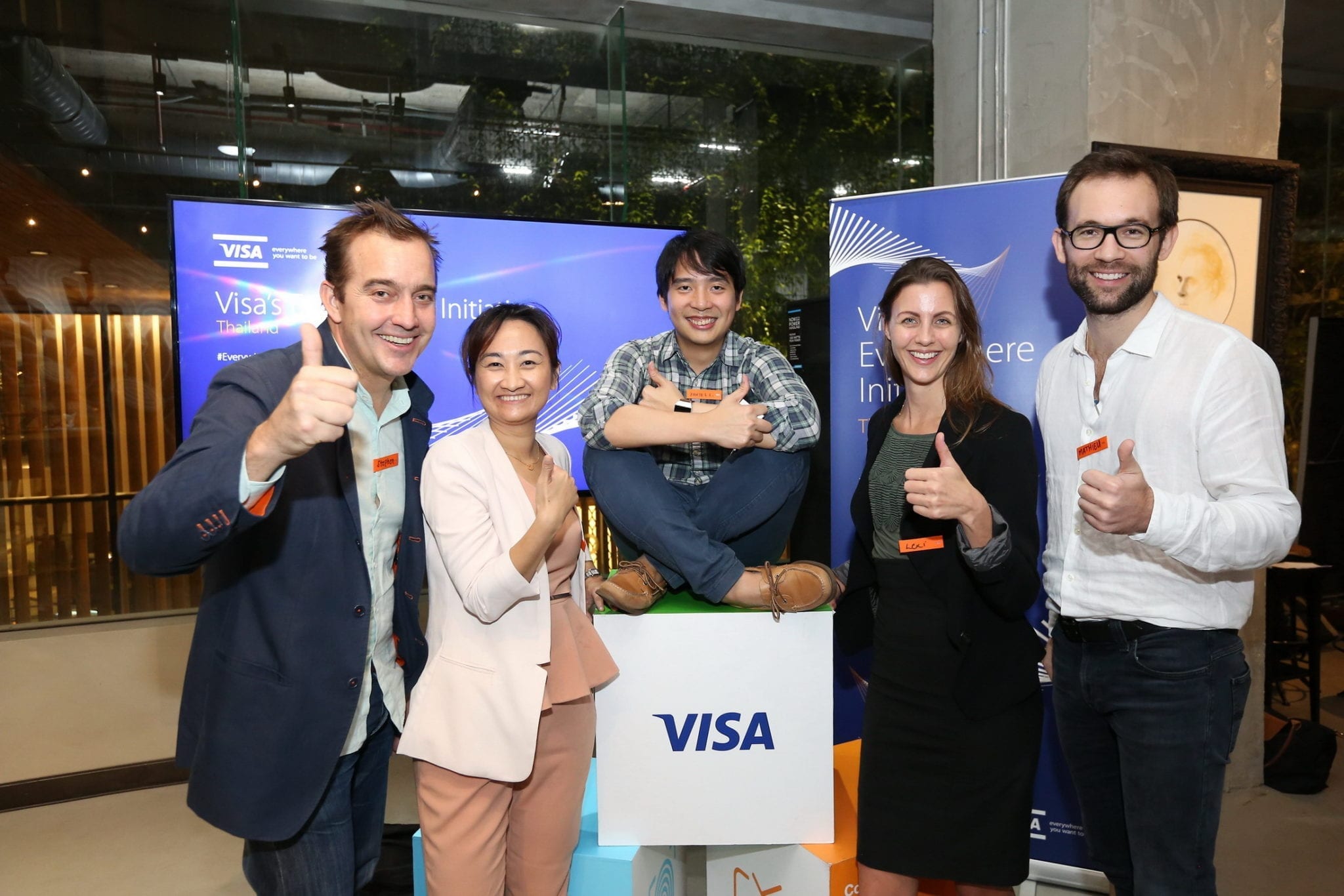
    Visa, the world’s leader in digital payments, has today launched the inaugural Visa’s Everywhere Initiative in Thailand, aiming to attract Thailand-based start-ups who are tackling some of the toughest payment-related problems in the commerce industry.

    Visa’s Everywhere Initiative is a global innovation program that challenges start-ups to build the next big thing in payments and accelerate the future of commerce, leveraging Visa’s world-class network. The 2018 global program kicks off with the Thailand competition.

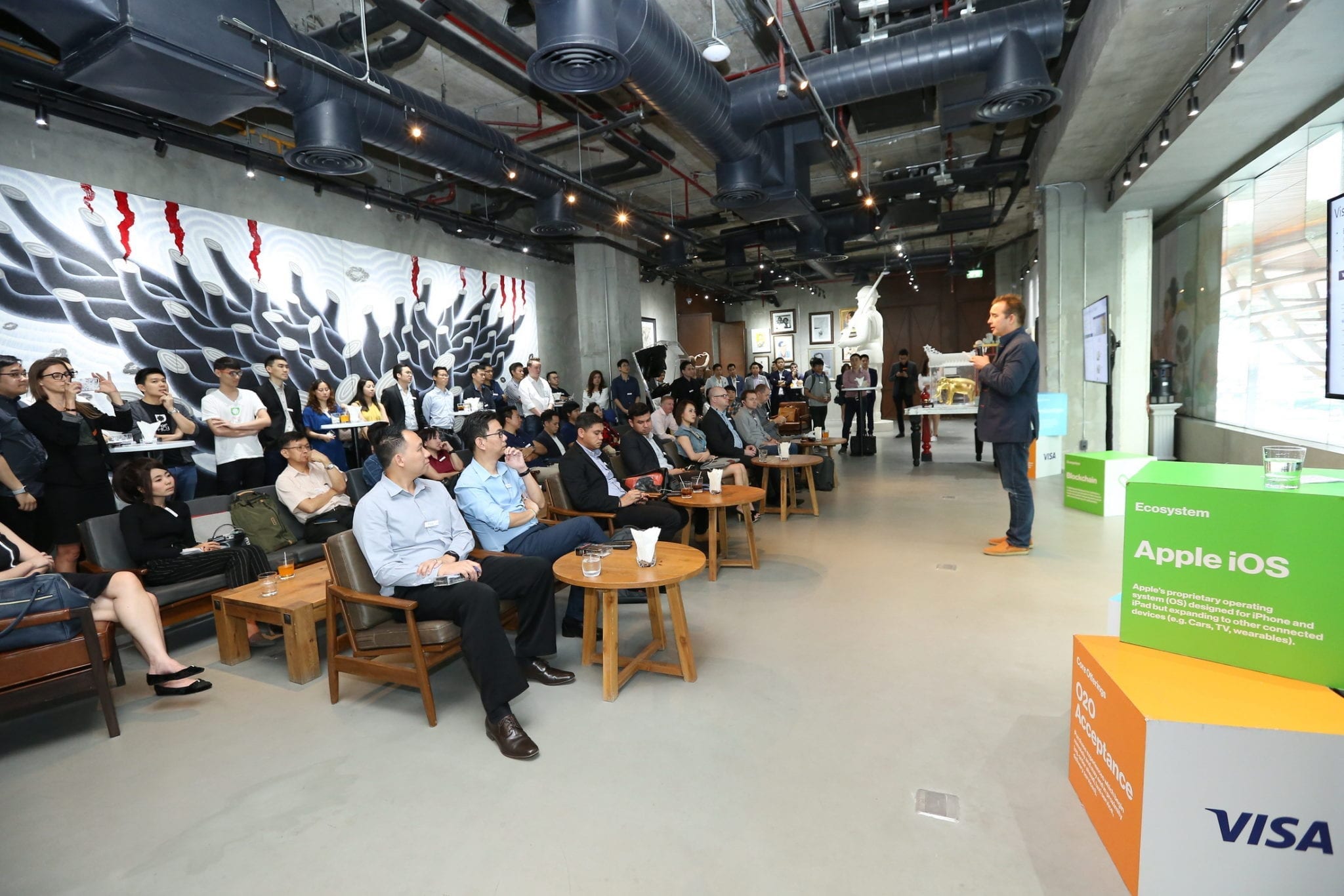
    Suripong Tantiyanon, Country Manager, Visa Thailand announced the program’s three challenges to the start-up community at Visa’s Everywhere Initiative Open House in Thailand. The winner of this challenge will receive THB 1 million in funding as well as mentorship, exposure to Visa’s partners, as well as access to facilities and experts at Visa’s Innovation Center in Singapore.

    The competition is open for entries from yesterday to February 9. To enter, start-ups must submit a solution for one of the three challenge briefs incorporating Visa APIs, a suite of Application Program Interface available through Visa Developer Platform.

    Suripong Tantiyanon, Country Manager, Visa Thailand said: “The goal of Visa’s Everywhere Initiative is to accelerate the digital economy by providing Visa capabilities to enterprising innovators in Thailand. Using Visa Developer Platform, Visa wants to enable co-creations among many of our banking and technology partners. We look forward to seeing many creative solutions in this year’s competition.”

    The program received great interest from the startup community, with many signing up for the Visa’s Everywhere Initiative Open House.

    The program’s challenges are:

    • How can start-ups innovate to create relevant and rewarding digital payment experiences for international tourists visiting Thailand?
    • How can start-ups leverage social media platforms to accelerate commerce and scale access to financial services?
    • How can start-ups innovate to make digital payments easy to access and capable of adding value for merchants?

    The finalists will be invited to pitch their solutions to a panel of industry leaders, including Visa executives, on March 9 in Bangkok. The grand prize includes THB 1 million in funding, mentorship, exposure to Visa partners and access to facilities and experts at Visa’s Innovation Center in Singapore.

    Jessada Sookdhis, President of Thai Fintech Association, said: “We are delighted to support Visa’s Everywhere Initiative, which will help enrich the burgeoning fintech ecosystem in Thailand, bringing solutions to the greater population by solving real needs, and driving wider adoption of electronic payments.”

    Visa’s Everywhere Initiative was created in 2015 to harness the creativity and talent within the startup community worldwide. To date, nearly 2,100 startups have participated, and have collectively raised over $2 billion in funding. The program has selected more than 131 finalists and 36 overall winners. More than 40 countries and regions that have hosted Visa’s Everywhere Initiative including the US, China, Australia, New Zealand, Europe, the Middle East, and Latin America.

  • L’Oreal adds Paris to digital start-ups

    L’Oreal adds Paris to digital start-ups

    L’Oreal, the world’s biggest cosmetics company wants to see more beauty tech like sensory hair brushes that tell you how to care for your hair, and skin patches that let you know how much sun you are getting.

    So, it plans to launch a program of start-up collaborations in Paris as it ramps up digital investments and seeks out new beauty products like its “smart” hairbrushes.

    L’Oreal makes an ever greater slice of sales online and has rolled out services and items for tech-savvy consumers, such as a phone app for virtual make-up tests.

    The French group says it is looking to develop more inventions at a site for start-up companies in Paris, where 10 to 12 firms will work on projects with L’Oreal every year.

    “The world of beauty has already become very digitalised…this will allow us go even further than what we do today,” L’Oreal chairman and chief executive Jean-Paul Agon said, at a reconverted 1920s railway depot in Paris that now houses a start-up campus.

    Known as “Station F” and launched by billionaire businessman Xavier Niel, it will now have a L’Oreal workshop.

    Agon did not say how much L’Oreal had invested so far in start-up ventures and online development, but did say the group’s budget for all things digital was growing fast.

    L’Oreal now spends 35 per cent of its media budget on digital campaigns and had recruited 1,700 people to work in this area, he said. Five years ago staffing in this section was closer to 150.

    L’Oreal derives about seven per cent of its revenues – which totalled 13.4 billion euros ($A20.2 billion) in the first half of the year – from online sales, up from just over five per cent in 2015. It has not disclosed online growth targets.

    The company has already invested in London’s Founders Factory, a so-called start-up incubator, in 2016, and it has its own innovation program in San Francisco.

    Products developed there include an electronic UV skin patch that measures exposure to the sun.

    Aside from seeking new technology, such as developments in artificial intelligence or voice recognition software, L’Oreal will also work with start-ups developing new beauty products, be it creams or make-up, the company said.

    L’Oreal’s push comes as Paris seeks to overtake London as a leading European tech centre for investors and inventors, in a “start-up nation” championed by France’s pro-business President Emmanuel Macron.

    “We’re also happy to be contributing to that project,” Agon said. L’Oreal is France’s fourth-largest listed company.

  • “Startup” Zone a hotbed for inventors to showcase innovations

    “Startup” Zone a hotbed for inventors to showcase innovations

    Electronics pioneers in Hong Kong’s flourishing startup ecosystem will be the focus of a dedicated zone at next month’s Hong Kong Electronics Fair (Autumn Edition).

    Organiser HKTDC has launched the Startup Zone providing around 100 startups from around the world an opportunity to showcase their innovative products in categories such as smart home, wearable electronics, 3D printing, IoT devices and e-health and fitness.

    A series of events including pitching, mentoring, sharing sessions and product launches over the four-day event will connect startups with prospective partners, investors and customers from all over the world.

    Anyone can attend the Startup Zone, and – if you register through this link – you can save $100 as a reader of Inside Retail Hong Kong.

    At an earlier edition of the Hong Kong Electronics Fair, the zone received high praise from participants.

    “We brought together over 20 angel investors here to listen to presentations by various startups at pitching session,” explained Dr Samson Tam, chairman of the Hong Kong Business Angel Network. “The session drew some strong responses. The Startup zone is getting more exciting with a lot of activities coming into play to gain exposure.”

    Steven Kayalicos, director of The Product Group from Australia, said he was impressed by the zone’s broad offer of new technologies, ideas and products.

    “It is likely that I’ll co-operate with two to three startups that I met at the pitching event,” he said.

    The HKTDC Hong Kong Electronics Fair (Autumn Edition) 2017 will be held from October 13-16 at the Hong Kong Convention and Exhibition Centre.

  • Piquadro launches Mystartup Funding Program

    Piquadro launches Mystartup Funding Program

    Piquadro is ready to promote innovation and young entrepreneurship, supporting the best business idea in the technology area applied to the luggage field and fashion accessories.

    The prizes are up to € 100K and a period of acceleration program in Silicon Valley to train and help the business development.

    Piquadro has been incorporating innovative technologies in its products: for example, for the Bagmotic capsule collection.

    The collection includes a computer backpack able to communicate with smartphones thanks to a powerbank wireless, that allows to recharge devices and to connect them with the Connequ app, created by Piquadro.

    This app manages a lot of functions, and it can be used for different purposes. It alerts in the case of theft, or loss of the luggage. It can weigh the baggage, for instance, among many other features.

    Furthermore, a lot of products present a socket integrated to the bags that allow recharging all the devices.

    Last but not least, recently a smart-lock easy to manage from smartphones has been developed.

    The aim of the Funding Program is to find innovative and exciting ideas grown outside Piquadro, to create stimulating activities in different fields.

    The contest will end with an event, in which Startups will pitch their ideas to a judging board including some internal advisors and some investors.

    Prizes for € 100.000 have been allocated for the winners, to allow a capital increase in return of percentage of shares from the company’s capital.

    Through Piquadro investment company, named PIQUBO, Piquadro has gained experience in the startup field, and it will be used to evaluate all the applications received considering the fit they may have to Piquadro company’s values.

    Piquadro is open and willing to invest in other categories but fashion and travel accessories is priority.

    Further than the investment part, Piquadro will support the winning team widely, to help with some assets and company know-how. That could go from hosting the startup in the headquarters in Italy to supporting it within the company’s network.

  • Myanmar’s startups map past, shape future with virtual reality

    Myanmar’s startups map past, shape future with virtual reality

    Few countries in the world have experienced such rapid discovery of technology than Myanmar.  Gasps echo across the hall as the Myanmar school kids trial virtual reality goggles, marveling at a device that allows some of Asia’s poorest people to walk on the moon or dive beneath the waves.

    “In Myanmar we can’t afford much to bring students to the real world experience,” beamed Hla Hla Win, a teacher and tech entrepreneur taking virtual reality into the classroom.

    “If they’re learning about animals we can’t take them to the zoo… 99 percent of parents don’t have time, don’t have money, don’t have the means,” she added.

    Few countries in the world have experienced such rapid discovery of technology than Myanmar which has leapfrogged from the analogue to the digital era in just a few years.

    During the decades of outright junta rule, which ended in 2011, it was one of the world’s most isolated nations, a place where a mobile phone sim card could cost up to $3,000.

    For half a century its paranoid generals cut off the country, restricting sales of computers, heavily censoring the Internet and blocking access to foreign media reports.

    But today phone towers are springing up around the country and almost 80 percent of the population have access to the Internet through smartphones, according to telecoms giant Telenor.

    Budding startups

    Tech startups are emerging around the commercial capital Yangon, many seeking to improve the lives of rural people, most of whom still live without paved roads or electricity.

    “The increase in activity from last year till now — new startups, more people determined to become entrepreneurs and working in the tech sector in general — is significant,” said Jes Kaliebe Peterson, CEO of community hub Phandeeyar.

    Virtual reality is the latest advance to cause a stir, with a handful of entrepreneurs embracing tech for projects including preserving ancient temple sites to shaping young minds of the future.

    The Phandeeyar incubator works with more than 140 startups. Among them Hla Hla Win’s virtual reality social enterprise 360ed which is using affordable cardboard VR goggles attached to smartphones to break down barriers in Myanmar’s classrooms.

    She founded the non-profit last year after 17 years working in the woefully underfunded education system in a bid to bring learning to life.

    “I see it as an empathy machine where we can teleport ourselves to another place right away,” she told.

    And it’s not just school children who benefit from stepping into places they could only ever dream of visiting.

    360ed has used virtual reality to help Myanmar teachers attend training courses in Japan and Finland and is working on setting up deals with schools in India, Pakistan, China and Bangladesh.

    “With VR there’s no divider, there’s no distance,” Hla Hla Win said.

  • Singapore logistics startup Yojee raised another S$3mn

    Singapore logistics startup Yojee raised another S$3mn

    Yojee is a Singapore publicly listed technology company which introduced the new ways of communication and collaboration across the entire supply chain. Raised over 10 million up to date with the last funding round of 3 million came in on the 8th of August via share placement. The company will use the proceedings to further funding long term technology, sales and marketing plan leveraging existing customers and expanding further.

    The company offers everyone an opportunity to join the ‘world’s first’ collaborative cross border logistics network which connects shippers, carriers and freight forwarders in seconds, with already tens of thousands of kilograms of freight moving through the network. For shippers and carriers, the route optimisation algorithms with machine learning capabilities suggest the best asset for each delivery job using both current and historical data, based on more than 30 criteria.

    SmartAssign
    Revolutionary Yojee SmartAssign allows companies to make smart job assignment decisions without touching a button. Fully powered by Yojee Ai (Artificial Intelligence) this mode dynamically determines and passes the job to the most suitable driver for each job based on many different criteria including proximity, available vehicle capacity, driver capacity, road conditions, and many others.

    Yojee aims for a 70% reduction in the headcount required in operations and customer service to manage a logistics business, creating substantial operational savings alongside freight efficiencies by introducing more features promoting autonomous operations.

    In addition to Yojee SmartAssign, Yojee Broadcasts (uberfied mode) can be chosen, this adds a third option for companies’ operational modes, Yojee AI pushes jobs to a number of most suitable drivers and allows them to accept or reject the job, broadcast options are fully configurable including number of drivers per broadcast, time interval before re-broadcasting, which will give additional opportunities to optimise the operations.

    Big data analytics dashboard
    Big data and predictive analytics gives logistics companies the extra edge they need to optimise and manage their operations giving managers the aggregated bird’s eye view to the top data points. Analytics dashboard with customisable display allows real time visualisations of key operational and financial metrics which in addition to seamless dispatch work helps automated systems to function through intelligently routing many different data sets and data streams.

    Control tower enhancement
    Enhancement of Control Tower – users of the Yojee platform software now able to move jobs across companies. fully connected, seamless transfer, networked ecosystem

  • Logistics startup aCommerce seeking further funding

    Logistics startup aCommerce seeking further funding

    Thailand-based end-to-end logistics startup aCommerce is seeking to raise more than US$30 million in a series-B funding round.

    Insiders say the company is in discussions with global and local private equity groups to raise funding before the last quarter of this year.

    Founded in June 2013, aCommerce is a regional full-service e-commerce software provider, delivering tailored product to global brands and retailers including Hewlett-Packard, Lazada, Line, L’Oreal, Matahari Mall, Nestle, Philips, Samsung and Unilever.

    In July last year the company raised a $10 million strategic venture round led by MDI Ventures, Telkom Indonesia’s corporate venture capital arm, making it one of the largest series-A rounds for a tech startup in Southeast Asia. Also in the round were Australian firm Blue Sky and Swiss-based services provider DKSH, which had invested in aCommerce previously.

    aCommerce, which has a presence in Indonesia, Malaysia, Singapore, Thailand and the Philippines, plans to expand to Vietnam by the end of this year. It is also expecting its Indonesia business to turn profitable in the same time frame.

    Proceeds from the latest funding round will be used to strengthen its position in Indonesia, Singapore, Thailand and the Philippines, as well as expand in Malaysia and Vietnam. Its services include marketing, fulfilment, store development, delivery, brand commerce and customer care. It launched a 7000 sqm warehouse in Cawang, Indonesia, last year and three months ago opened hubs in Bandung and Surabaya.

  • Tourism market offers opportunities for start-up businesses

    Tourism market offers opportunities for start-up businesses

    Vietnam’s tourism market offers huge opportunities for start-up companies if they promptly seize technological trends to create special and unique tourism products, heard a workshop in Ho Chi Minh City on July 20.

    A report delivered at the workshop, jointly organised by the Saigon Innovate Hub (SiHub) and the Start-up Vietnam Foundation (SVF), showed that tourism has been identified as a spearhead economic sector in the near future, with the target of luring 17-20 million international tourists and serving 82 domestic holidaymakers by 2020.

    Nguyen Quoc Ky, Director General of the Vietravel Company, underlined the need for research and development of start-up companies in tourism to secure domestic market share.

    Participants stressed that amid the technological boom, start-up companies need to grasp the market’s trends and continuously innovate to offer highly competitive products, otherwise they will be merged or closed.

    Sharing the view, SVF Managing Director Pham Duy Hieu said start-up companies should enable staff members to show their creativeness, thus offering products that can satisfy, even surprise customers.

    At the workshop, delegates discussed measures to develop Vietnam’s tourism, including incentives to lure tourists and investment in infrastructure, building overseas tourism promotion offices and promoting regional connection.

    In 2016, Vietnam’s tourism sector welcomed 10 million foreign arrivals and served 62 million domestic holidaymakers, representing 4.3-fold and 5.3-fold increases from the figures in 2001, respectively.

  • GM joins other carmakers investing in self-driving startup Nauto

    GM joins other carmakers investing in self-driving startup Nauto

    General and Japan’s Softbank Group Corp are among the latest investors in Nauto, a Silicon Valley startup developing software for self-driving vehicles.

    Nauto, based in Palo Alto, said on Tuesday it closed a $159 million Series B funding round, led by Softbank and venture capital firm Greylock Partners. Previous investors included German automaker BMW and Japanese automaker Toyota, as well as German insurance firm Allianz.

    Nauto is unusual in attracting money from big-name automakers, and also in its focus on software and data, which cost less to develop than hardware or entire vehicles.

    “Any (vehicle) manufacturer is better than any startup at building cars,” said Stefan Heck, founder and chief executive officer of two-year-old Nauto. “Our aim is to provide the data, intelligence and a cloud platform” to automakers that plan to begin putting self-driving cars on the road from 2020.

    The amount of GM’s investment in Nauto was not disclosed. The Detroit automaker bought Silicon Valley startup Cruise Automation in early 2016 for more than $500 million.

    Heck declined to specify the company’s post-funding valuation. He did say it was shy of $1 billion, “unicorn” status in Silicon Valley shorthand.

    “But we’re getting there,” he said.

    To develop its technology, Nauto is retrofitting windshields of commercial trucks from North America to Europe and Japan with dual cameras: one aimed at the road and the other at the driver. The goal is to gather data on driver distraction and on the environment around vehicles and speed development of self-driving technology.

    Using such techniques as computer vision and deep learning, a form of artificial intelligence, the company is analyzing video feeds and data from the retrofit devices to improve driver performance and safety. Learning more about how humans drivers behave is critical, Heck said, because self-driving cars must share the roads with those vehicles for at least the next 20 to 30 years.

    “During that transition period, we need autonomous vehicles that are not just smart, but are able to collaborate with humans,” Heck said in an interview.

    Nauto is working with investors and other companies “to learn from human drivers, the best and the worst, to inform” the development of self-driving vehicles.

    Heck declined to say how many vehicles are using Nauto’s cameras and software, but said the company expects to accumulate more than one billion miles of real-world data within the next year.

  • Korea needs to draw long-term growth plan for startups

    Korea needs to draw long-term growth plan for startups

    Korea has leaped into being one of Asia’s leading economic powerhouses in less than a century after the post-war devastation back in the early 1950s.

    Many attribute the rapid growth to the nation’s tough working culture — represented by an obsession to generate short-term, outstanding outcomes mainly in the business circle.

    This has brought about such homegrown hardware titans as Samsung and LG whose history falls short of their overseas counterparts, but have become top-tier players.

    The hardware-driven growth, however, is still holding back the development of the local software industry, with the government putting little attention on the non-manufacturing yet crucial growth area.

    “Not a single Korean software company has achieved global success, compared with the hardware or manufacturing industry players,” Tiger Company CEO Kim Beom-jin said in an interview Sunday. The software startup — established in 2011 — is an enterprise-level social networking system provider here.

    He said the nation’s software market is not huge enough to grow into a sizable shape due to the small market size and weak infrastructure, so the government needs to implement specific measures for its long-term growth both in quality and quantity. The software market in the United States and China is 20 to 30 times bigger than that of Korea, he said.

    “It is also tough for us to tap directly into overseas markets, as we are no match for industry leaders there in terms of factors such as capital, workforce and marketing,” he said.

    Kim urged the government to support local software startups in particularly overseas networking and marketing activities.

    “Small startups with weak capital cannot have enough chances to contact overseas clients and promote products by participating in global exhibitions,” the chief executive said.

    The government has in recent years pushed for the development of the local software industry. For example, the Ministry of Science, ICT and Future Planning unveiled a plan last year to name and support 20 software-oriented universities by 2019.

    The move comes amid growing calls that the country should make more effort in software education to build an infrastructure for its long-term growth.

    This reflects that global information and communication giants such as Google and Facebook generate billions of dollars in profit with their software infrastructure. But even if the global tech paradigm has shifted into the software sector, the government has made little effort to catch up with the trend.

    “The small software market size is also blocking the government from making enough investments in software industry players,” he said. “Most state-run bodies have invested mainly in hardware and online to offline industry players here, paying little attention to their software counterparts.”

    “Local venture firms or small- and medium-sized firms can receive state-run research and development funding projects for as long as three years,” he said. “But the government needs to draw up concrete funding policies from a longer-term perspective, from product development to global expansion.”

  • The next Silicon Valley? Where to place Vietnam on the global startup map

    The next Silicon Valley? Where to place Vietnam on the global startup map

    Vietnam is trying hard to become a startup nation. The country kicked off its own “Silicon Valley” with the hope of transforming from a software outsourcing haven to a major tech hub last year. This complex, with total investment of $21.5 million, is aimed at nurturing tech-incentive startups.

    However, when asked if Saigon could become the next Silicon Valley, entrepreneur Anh-Minh Do from the Singapore-based Vertex Venture, smiled and answered without hesitation: “I don’t think it will ever happen.”

    In the Global Startup Ecosystem Report 2017 released by U.S. research organization Genome, Saigon was not mentioned in its top 20.

    Meanwhile, Southeast Asian neighbor Singapore shocked the world by outperforming Silicon Valley as the world’s number one for tech talents, and was ranked 12th overall.

    Saigon became known to the global tech market nearly two decades ago as an outsourcing haven, together with Bangalore in India, which did secure a place in the top 20.

    When it comes to other up-and-coming tech hubs in Southeast Asia, Kuala Lumpur also has its name on the map.

    In another report released this month by consultancy firm A.T. Kearney, Saigon stood in 74th out of the 128 most innovative cities worldwide.

    Those rankings cast doubt on Saigon’s Silicon Valley dream. People are getting more realistic, saying it may be out of reach.

    People have been wondering where the second Silicon Valley will emerge, but even Singapore is not a safe bet, according to some investors. Singapore may have overtaken the California-based tech hub in some respects, but is still a long way from becoming a major rival.

    For some entrepreneurs, investors and developers, the term “Saigon Silicon Valley” comes as a surprise.

    “What do you mean Saigon Silicon Valley?” astonished Tuan Anh, a former Google intern in the U.S., asked with wide-open eyes at an Internet of Things conference held last month in Hanoi. He had no idea that Vietnam is constructing its own Silicon Valley, covering an area of over 11,000 square meters. “I am sorry, I didn’t know about the project. But considering the situation in Vietnam now, I think Silicon Valley is just a name reflecting a government dream.”

    It seems the Vietnamese government is obsessed with the term “Silicon Valley”. Nearly five years ago, the government also sponsored an accelerator based in Hanoi called Vietnam Silicon Valley, hosting bootcamps aimed at mentoring young startups and giving direction to the fragmented venture capital market.

    Tech talents

    Many investors agree that Vietnam is a great breeding ground for IT workers, and tech companies are constantly hunting for talented candidates.

    Domestic demand for techies has doubled over the past five years, according to a report by human resources firm VietnamWorks.

    Vietnam is recognized as one of the world’s top software outsourcing hubs. The appeal is bolstered by its tech-savvy workforce, which is cheaper than China’s and more productive than other countries in the ASEAN Economic Community.

    “But when it comes to sophisticated projects that require the ability to appreciate good and user-focused design and critical thinking, Vietnamese developers seem to be struggling,” Pham Quoc Dat, founder & CEO of Hatch Ventures Vietnam.

    “Vietnamese IT workers are just above average,” Dat added. “On a scale of 1 to 10, they score 7 to 8 in comparison to their Southeast Asian peers, but just 5 to 6 compared to the real Silicon Valley in the U.S.”

    Clearly, outsourcing is not enough for Vietnamese developers to make their Silicon Valley dream come true – it’s the matter of creating new things.

    “The world is now focused on artificial intelligence and automation, but Vietnam has virtually no home-grown talents in this field, only those who were educated overseas,” said Anh-Minh. “That means Vietnam is being left behind when it comes to education, which is a key component to keep up in this fast-paced world.”

    On the other hand, Vietnamese high school students have long been known for their excellent performances at math and science competitions, outscoring their U.S. and U.K. counterparts. It is this foundation for computer science that could give Vietnam an edge.

    “Vietnam has hidden tech potential, but it could take another five years to create massive companies that have global influence,” Anh-Minh added.

    The country is looking at ways to transform from an electronic component producer to a center for research, innovation and development.

    In early 2014, the world became addicted to mobile game Flappy Bird, developed by Vietnamese programmer Nguyen Ha Dong. He was said to have pocketed an estimated $50,000 a day thanks to the bird. Not even Mark Zuckerberg became rich that fast.

    Dong’s story is an encouraging example for his peers, but it seems that “Flappmania” was just a one-night hit for him. No more spotlight for descendents of this bird.

    Since then, no Vietnamese techies have been able to recreate that, not even Dong himself.

    When entrepreneurial spirit is not enough

    Setting up your own business is part of Vietnamese culture. Seven in 10 startups are family-run businesses, according to the “Vietnam –Promised Land for Entrepreneurship” report, conducted by USAID and the Vietnam Chamber of Commerce and Industry. They start small but hope to grow bigger.

    The average age of startup founders in Vietnam was 30, said the report, just slightly older than the 28 years reported in Singapore, the world’s youngest base.

    “Most young Vietnamese people want to be entrepreneurs,” said Chris Zobrist, an American entrepreneur and advisor on the Silicon Valley Project. “A lot of their parents started businesses that did really well, and that created an image in young people’s minds that being an entrepreneur is a real path to success in life.”

    Geektime, one of the biggest tech blogs focusing on global innovation, estimated the number of tech startups in Vietnam stood between 1,400 and 3,000 in 2016, making the country the third largest ecosystem in Southeast Asia, only behind Singapore and Indonesia. However, around 95 percent of startups die within 3-5 years.

    Vietnamese people are focusing more on commercial startups like coffee shops rather than doing something tech-related and revolutionary, said Truong Gia Binh, chairman of technology giant FPT Corporation. Binh said he would wholeheartedly support any projects that could make a breakthrough in the tech world. Startups that could go global should have technology as their foundation, he added.

    The startup trend has fired up in Vietnam for three years.

    The government has set a target of reaching one million newly established firms by 2020, but quantity should go together with quality.

    To become the “next” anything, the country needs bigger bets from founders, investors and regulators.

    Vietnamese startups enjoy significant government subsidies and the country’s strategists are working to establish local tech startups that can make it big on a global scale.

    “The law needs to regulate the money better. The government needs to be more supportive; there needs to be more interaction from Vietnamese-Americans, specifically Vietnamese-Californians because of the ‘Valley’ connection,” Anh-Minh said.

    Vietnamese startups struggle to succeed because they don’t have access to experienced professionals. In Silicon Valley, founders and entrepreneurs have a lot of people who have successfully started companies to go to for advice. Here in Vietnam, a relatively young market, it is not easy to find that depth of experience.

    Vietnam is a small country with big ambitions.

    Dat from Hatch Ventures said: “As the first entrepreneurial hub in Vietnam, Saigon is the first choice for investors looking for potential deals.”

    “If any city in Vietnam has the potential to become the next big tech hub, it’s Saigon,” Dat said.