Tag: startup

  • KITA opens office in Dubai to assist Korean start-ups

    KITA opens office in Dubai to assist Korean start-ups

    The Korea International Trade Association (KITA) said Tuesday it has set up an office in Dubai to help local start-ups advance into the Middle Eastern market. Under an agreement with Dubai Future Foundation, the Korea Office will be set up at Emirates Towers in one of the key cities of the United Arab Emirates (UAE). The office will provide working space for local start-ups and assist entrepreneurs in establishing their businesses in the burgeoning Middle Eastern market, KITA said.

    “It will be a great opportunity for local start-ups as Dubai institutions are pushing forward various projects under the support and attention of the prince of Dubai,” Kim Ki-hyeon, a KITA official, said.

    Dubai Future Foundation was set up with an aim to shape the future of the strategic sectors in cooperation with the government and private sectors.

  • Vietnamese logistics startup raises $5.5 mln in latest funding round

    Vietnamese logistics startup raises $5.5 mln in latest funding round

    Logivan, a web platform that helps trucks connect with potential customers, said it has raised $5.5 million in the latest funding round. The investment comes from two Asian angel investors and Indonesian venture capitalist Alpha JWC Ventures. One of the angel investors is David Su, a founding managing partner at private equity firm Matrix Partners China, who invested through his family office.

    He said: “Vietnam is the next rising star in the growing Southeast Asia region and it is well poised to experience a similar growth trajectory as we witnessed over the past years in China.

    “Vietnam’s logistics industry is highly fragmented, logistics costs make up 23 per cent of Vietnam’s GDP, with 90 per cent of trucks in Vietnam being owned by individuals. Given the success of Manbang (a Chinese truck-hailing firm), we believe that Logivan has the potential to emulate its success.”

    According to e27, an online Tech media platform for Asia, Logivan will be investing in data analysis to optimize user experience, artificial intelligence, truck-matching, and pricing algorithms to minimize empty trips and in human resources.

    Last year, Logivan raised $600,000 in April from Singapore-based Insignia Ventures Partners and $1.75 million in August from Singaporean private equity firms Ethos Partners and Insignia and Vietnamese investment fund VinaCapital Ventures.

    It has raised a total of $7.9 million to date.

    Founded in 2017 by Cambridge graduate Pham Khanh Linh, the company offers a logistics service which optimizes trucks’ routes and minimizes empty return trips.

    She came up with the idea after observing that 60-70 percent of trucks in Vietnam returned empty after dropping off their loads because they could not connect with potential customers.

    In 2018 Logivan claims to have connected more than 22,000 transportation partners with every major commercial truck type. It also has 10,000 shipping companies registered on its system.

  • Vietnamese startup launches platform for hiring blockchain talents

    Vietnamese startup launches platform for hiring blockchain talents

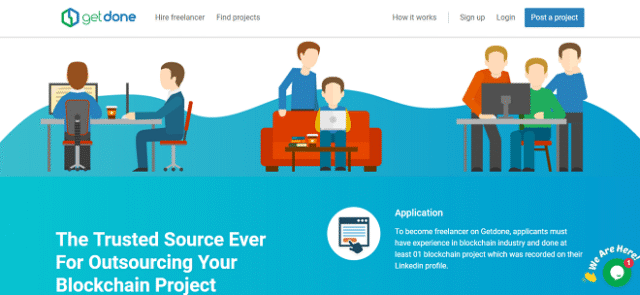
    Getdone is a platform that connects blockchain talents, who can work as full-time employees or freelancers, to global clients in blockchain industry. This platform is the universal version of freelancerviet.vn, a leading freelancer platform in Vietnam. It lists 300,000 freelancers in various categories, with a focus on blockchain and AI technology. Getdone provides innovative solutions based on a combination of the two emerging technologies to improve security and payment speed, transaction fees and reliability of talent profiles and overcome the language barrier.

    In Vietnam, the number of job searches related to cryptocurrency and blockchain doubled in 2018. However, blockchain engineers and developers currently account for only 2-5 percent of the IT workforce, according to TopDev’s annual report last August.

    Upwork’s newest quarterly index of the hottest skills in the U.S. freelance job market ranks blockchain first out of 20.

    For this reason, Getdone entered the market with the mission to be a part of the solution of hiring blockchain talent including engineers, developers, and others.The shortage of blockchain developers continued in the fourth quarter of last year even as blockchain products doubled. The demand for employees in blockchain is so high that employers and clients need to find ways to work around a shortage.

    The smart contract on the Getdone platform cuts off third parties’ intermediary role to reduce commissions and ensure security and quick payment.

    Besides, AI technology with self-recommendation function based on automatic data analysis will help connect clients and qualified job seekers.

    AI also proposes an average budget for a project to help clients understand reference budgets when they need to hire blockchain talents, and an average rate per hour of work based on a candidate’s profile.

    It will create a standard framework for the freelance job market, avoid devaluation and protect the benefits of both blockchain talents and clients.

    The new-user-support tool will help new applicants find jobs more easily through the test system. A new talent who joins the site and gets a high-test score will still get a job despite having no previous work history on Getdone.

    Getdone will provide a live language translation tool to break the language barrier and help talents work across the world. Getdone accepts payments in more than 20 cryptocurrencies and foreign currencies.

    A hedging mechanism helps stabilize the value of cryptocurrencies used at Getdone. When choosing a talent, the company deposits a sum of money with the crypto token by the time talents complete their work within a few days to several months.

    In 2018 freelancerviet won Ho Chi Minh City’s Best Innovation Project award and the Asian Rice Bowl Startup Award in the Best AI and Machine Learning Application category from NEF (New Enterprises Foundation) and MaGIC (Malaysian Global Innovation & Creativity Center).

    Getdone is also one of three Vietnamese representatives to beat thousands of competitors from across the world to qualify for the Elevator Pitch Competition, a global contest organized by the Hongkong Science and Technology Center.

  • The We Company Debuts Made by We

    The We Company Debuts Made by We

    Co-working firm The We Company (previously WeWork) has opened a retail venture and public workspace in New York. The Made by We retail space, cafe and workplace can be used by anyone without the need for a membership, with workstations and meeting rooms available for rent by the minute. The work space features products made by current WeWork member companies available for sale, from apparel to snacks to audiotech gear. It also houses a Bluestone Lane cafe.

    While headquartered in New York City, The We Company has WeWork shared office spaces in major cities across Mainland China, Japan and India, as well as in Ho Chi Minh City, Singapore, Jakarta, Kuala Lumpur, Manila, Busan, Seoul and Bangkok.

    “Made by We was launched with a vision to connect the We community with the rest of the world, and provide people with the best on-demand workspace, services and products, no membership required”, said company partner Julie Rice.

    “Everything we do at The We Company, from the spaces we curate to the service offerings we provide, is intended to create meaningful human connections.”

    View the gallery below for pictures (7 images) :


  • Vietnam fintech startup raises $1 million from foreign venture capitalists

    Vietnam fintech startup raises $1 million from foreign venture capitalists

    Vietnamese fintech firm Finhay has raised $1 million in seed funding from Singapore’s Insignia Ventures Partners and other foreign investors. “Finhay will use the $1 million investment to expand its user base 10-fold to 100,000,” said founder and director of Finhay Nghiem Xuan Huy. Finhay was established in 2017 with capital of $100,000 as a micro-investment platform targeted at millennials. It allows customers to invest as little as VND50,000 ($2.17) in mutual funds from Finhay’s investment portfolio.

    Huy said the business model is very popular abroad, citing examples such as U.S. micro-investing apps Acorns and Stash.

    The application automatically analyzes the user’s risk appetite and suggests appropriate investment options and provides information to help improve users’ personal financial management.

    It has over 13,000 users and over VND7 billion ($303,590) worth of pooled capital.

    Insignia Ventures Partners, a venture fund which has already invested in popular transport apps Go-Jek and Traveloka of Indonesia, hopes “…[Finhay] will gradually layer on more products and services to become the Amazon of financial services in Vietnam.”

    Finhay also received seed capital from funds in Hong Kong and the U.S.

  • Milkbasket India launches operations in Bengaluru

    Milkbasket India launches operations in Bengaluru

    Milk delivery startup Milkbasket Wednesday said it plans to hire 2,500 people over the next two years and announced the launch of its services in Bengaluru. According to a report, the company said it will hire people to support the operations and growth in Bengaluru. “Within next two years, we hope to have the largest operations in Bengaluru and will be creating employment for over 2,500 people in the process,” Anant Goel, Co-founder and CEO, Milkbasket was quoted by PTI as saying.

    Hiring will be made for ground operations as well as the corporate office, the company said. The startup has 1,500 employees in Delhi-NCR and Bengaluru.

    It has raised close to US$ 16 million from Mayfield Advisors, Beenext, Kalaari Capital, Unilever Ventures, Lenovo and Blume Ventures.

  • Natural food startup Jus’ Amazin launched in India

    Natural food startup Jus’ Amazin launched in India

    Eyeing the burgeoning US$ 100 billion global natural foods and drinks industry, Jitin Munjal, former Global Director for Sales and Marketing at DuPont has announced his natural nutrition food and beverage venture, Jus’ Amazin Foods and Beverages Pvt. Ltd. Co-founded with his wife, Shilpa Mogilishetty, Jus’ Amazin started in the kitchen, as the couple were developing nutritiously rich natural food products that are delicious, for their son, who is allergic to dairy and soy products. After a lot of R&D, the kitchen experiment has now grown (over the last few months), to be present in 75 retail stores, and 20 e-commerce sites, pan-India.

    Speaking on the venture, Jitin Munjal, Co-founder and CEO of Jus’ Amazin said, “Most packaged food is highly processed, packed with chemicals and low in nutrition, and as consumer awareness about the ill-effects of chemicals in food is growing, they are demanding foods that are natural, nutritious and delicious. While trying to find dairy and soy free foods for our son, we realized how underserved the natural and nutritious food market is in India. Jus Amazin caters to the health and nutrition conscious consumer with natural wholesome foods, which are both delicious and nutritious.”

    Jitin Munjal is a seasoned professional and entrepreneur with more than 20 years of rich experience in Business Management, Marketing, Sales & Distribution, Product Development and in leading global and regional teams. Jitin has received his education from premier institutes such as Indian Institute of Technology Delhi, Indian Institute of Management Ahmedabad, London School of Economics and Political Science, and has worked with blue chip companies such as P&G, Tata Group (as part of the prestigious TAS), Castrol & DuPont. In his last corporate role, Jitin was heading global marketing and sales excellence at DuPont, a leading multinational corporation with interested in varied industries. Shilpa Mogilishetty holds a Masters in Anthropology from the University of Sussex and has worked across the corporate and social sectors, in the areas of Market Research, Media Planning and Change Management.

    Jus’ Amazin’s current product range includes 100 percent natural, gluten free, soy free, dairy free and plant based foods such as nut and seed butters/ spreads (almond butter, organic peanut butter, seed butter and cashew butter). The products are currently available both online at leading e-commerce websites and also in retail stores in Bangalore, Delhi NCR, Mumbai, Pune, Chennai, Hyderabad and Goa. Leading brands such as Foodhall, Spar, BigBasket, Namdhari’s, Modern Bazaar, Loyal World, Amazon, HealthifyMe, FirstCry, HealthKart, Qtrove, The Gourmet Box, among others have partnered with the company.

  • Investment in Vietnamese startups triples in 2018

    Investment in Vietnamese startups rose to $889 million in 2018, three times that of 2017. According to a report recently released by Topica Founder Institute (TFI), a startup accelerator program in Vietnam and Thailand run by Hanoi-headquartered multinational educational technology company Topica, 92 investment deals totalling $889 million were struck in 2018.

    Domestic funds invested over $500 million, over half of total investments in startups, director of TFI Mai Duy Quang said. “This means that domestic funds are paying more attention [to Vietnamese startups], and that there is an abundance of domestic capital available for startups right now.”

    Of these, the top 10 investments alone totaled $734 million, accounting for 83 percent of the total value of all investments in startups. The three biggest deals were made by Vietnamese multichannel media giant Yeah1 ($100 million), e-commerce company Sendo ($51 million) and tech education company Topica ($50 million).

    The five most profitable fields for startups were fintech, e-commerce, traveltech, logistics and edtech. Fintech returned to the top spot in investment volume in 2018 with 8 deals totaling $117 million.

    In second place was e-commerce, which saw just 5 deals worth around $104 million, down from 21 deals in 2017. Traveltech (technology services related to tourism) was an unexpected third, with 8 deals worth $64 million by online hotel booking service Vntrip, homestay platform Luxstay, cheap flight booker Atadi, and business to business travel network Vleisure.

    Logistics and edtech fields respectively attracted 3 and 4 deals worth a combined $50 million.

    “Vietnam is a vibrant startup market full of potential for breakthroughs if proper investments are made,” said Yinglan Tan, founder of Insignia Venture Partners.

    According to the TFI report, startups struck 92 investment deals in 2017, too, but the total investment capital was just $291 million.

  • Startups blooms in Vietnam, liked by youngster

    Startups blooms in Vietnam, liked by youngster

    An increasing number of young Vietnamese are taking the startup route, willing to take risks and wait for rewards. Pham Khanh Linh seemed to be all set on a rewarding career, finding a job at global financial firm Goldman Sachs after graduating from the Cambridge University. But she quit the job in less than a year. Instead of pursuing a corporate employee path, the 25-year-old decided to return to Vietnam and start her own business, which she did last year.

    She said her ambition is to make a difference in her country.

    “I didn’t feel like I could make a difference with a corporate job. I wanted to influence more people,” she said.

    Linh is the founder and CEO of Logivan, a logistics service which optimizes trucks’ routes and reduces their empty load return rates. She came up with the idea after observing that about 60-70 percent of truck drivers in Vietnam go back to their base with empty trunks, because they cannot be connected with potential customers.

    “I saw a big problem for the logistics sector in Vietnam, but also an opportunity to make an impact.”

    Linh is one among an increasing number of aspiring entrepreneurs in Vietnam who are seeking to make a difference with startups in a country that is encouraging young people to start their own businesses.

    Le Anh Tien is another. While many of Tien’s friends at the University of Science and Technology in the central city of Da Nang began a quest for a stable corporate career immediately after graduation, he demurred.

    Tien joined with two other partners to found Chatbot Vietnam last year, a startup which provides solutions for businesses on Facebook Messenger to answer customers’ questions and help them order a product without the need for a customer service officer.

    With 13 employees, the 28-year-old plans to expand the service to Indonesia and the Philippines next year. “There are investors who are interested, but I haven’t said yes to them. I’m waiting for someone who could offer me a million-dollar investment.”

    About 75 percent of fresh graduates in Vietnam are interested in starting their own business, according to a recent survey by Navigos Search, a leading provider of executive search services in Vietnam.

    Fifty-two percent of them have never attempted a startup before but want to in the near future, while 22 percent of them have attempted at least once, said the survey, which polled 1,600 graduates with less than two years working experience.

    Nguyen Phuong Mai, managing director of Navigos Search, said that Vietnam is seeing a young generation of entrepreneurs who are determined to pursue the startup path.

    “These young people have a strong entrepreneurship spirit. We can observe this spirit in large companies, and even in our own,” she said.

    Supporting environment

    What motivates these people to start up is the support from the government and local companies in recent years, Mai added.

    At the Youth Startups Forum 2018 in Hanoi last November, Prime Minister Nguyen Xuan Phuc said that the Vietnamese government is willing to make changes in regulations to facilitate timely funding for startups.

    “We need a breakthrough innovation in policies from government bodies to help startups succeed with their ideas,” he told the forum, which attracted 300 entrepreneurs from across the country.

    Investment funds are also ready to pour cash and back aspiring young entrepreneurs. In August, Linh’s Logivan, dubbed “Uber for trucks,” received an investment from the Vietnamese fund VinaCapital Ventures, which has set aside $100 million to invest in technology startups.

    Singapore-based Ethos Partners and Singapore-based Insignia Venture Partners have also invested in the startup, bringing the total investment that Logivan has raised in the second round to $1.75 million, after raising $600,000 for the first round in March.

    In early December, Logivan became one of four winners of Pitch@Palace Global 3.0, a platform hosted by the Duke of York to accelerate the work of international entrepreneurs.

    Linh became the only Vietnamese representative to win the Entrepreneur of the Year title in a competition of 23 entrepreneurs from countries like Australia, China, Hungary and Singapore and the U.K.

    Tien’s startup, Chatbot Vietnam, also received financial support of $30,000 last year from Amazon and Facebook in the FbStart program, which is designed to assist mobile startups in their early stage.

    Another reason why more young people, aging from 26 to 35 years old, want to open startups is a desire to make an impact in their own country, said Mai of Navigos Search.

    Although there are a high number of young people who found a startup because they want to be successful and rich, Navigos surveys show that other popular reasons are “wanting to be a boss” and “wanting to have a personal value on the market,” she said.

    Inevitable failures

    The number of Vietnamese startups successful in attracting investment has been increasing in recent years, reaching 92 in 2017, a 45 percent increase over 2016, according to the Topica Founder Institute, which organizes an annual program that trains and connects startups with potential investors.

    The total value of the deals was $291 million in 2017, up 42 percent from 2016, the institute said.

    However, challenges are unavoidable for the new companies. Mai said that with a large number of people attempting startups, venture funds can only select a small number, leaving the rest to their own devices.

    The lack of funds is a vital challenge to startups. “80-90 percent of startups fail in the early stages because they don’t have enough funding to move on to the expansion stage,” Phan Hoang Lan, head of the Financial Planning Division under the Ministry of Science and Technology’s Market Development Department, said at a forum earlier.

    Mai added that most startups also fail because young leaders, no matter how passionate, lack the skills to manage a new company as well as the capability to create a complete product that is well-received by the market.

    Tien’s knows this struggle too well. His previous startup, a service which connects laborers with potential workplaces, could not continue due to a lack of funds. Other projects have also failed because the team members weren’t on the same page.

    But the failures are not in vain.

    Tien’s goal to pursue his own dream seems to have been partly achieved when Chatbot Vietnam became one of the top five companies in the Startup Viet 2018 competition in November. It also received a prize from Grab Venture, an innovation arm of ride-hailing firm aimed at supporting Southeast Asia’s startups.

    “Every time my startup fails, I learn something which I could never have known without the failures. Starting a business helps me become more versatile and complete.”

    “If this startup fails, I’ll do another. I still have a couple of ideas left,” he said.
  • Most Vietnamese graduates interested in startups: survey

    Most Vietnamese graduates interested in startups: survey

    About 75 percent of Vietnamese graduates have either started their own business or are interested in opening one. A survey released Tuesday by Navigos, a leading provider of executive search services in Vietnam, also found hat 52 percent of fresh graduates want to attempt a startup in the near future.

    One in five respondents, or 22 percent, said they have attempted a startup at least once before. Only 26 percent said that they have no plans for a start-up. The survey polled over 1,600 fresh graduates with less than two years of working experience.

    It found that a high number of fresh graduates are not satisfied with their current salaries, incentives and promotion opportunities.

    On a scale of five, they rated their satisfaction with salary at 2.95, and incentives at 2.99. Long-term development opportunities scored lowest at 2.88.

    Salaries and incentives are important factors for graduates in choosing their first jobs. Seventy percent of respondents selected “income and welfare policies” as one of the top criteria for job selection.

    Compatibility with personal strengths came second at 55 percent, while career prospects and opportunities for development come third and fourth at 53 percent and 52 percent respectively.

    The majority of fresh graduates, 34 percent, make VND5-7 million ($215-300) a month. Twenty-nine percent said their monthly salaries were VND7-10 million ($300-430). Only 12 percent made VND10 million ($430) or higher.

    The survey also found that candidates who are proficient in foreign languages have higher salaries. Only five percent of those whose jobs don’t require foreign language skills earn VND10 million ($430) or higher, while this figure is 37 percent among candidates who can speak another language.

    Young employees changed jobs more frequently, posing a retention challenge for employers. Eighty-one percent of the respondents said that “jumping jobs” helps them avoid wasting time on unsuitable or unsatisfactory positions.

    Forty-three percent claimed that switching jobs helped them gain diverse working experience and expand networks.

    Although young candidates value high salaries and benefit packages when choosing jobs, 57 percent said higher earnings was not the motivation for jumping jobs.

    Of the respondents who’d quit their jobs, 45 percent said the reason was personal plans like education or family issues.

    Four out of ten graduates said that they quit because they didn’t like their daily tasks, while almost one in four said they could not fit in with the corporate culture.

  • Vietnamese government will share risks with startups, PM assures

    Vietnamese government will share risks with startups, PM assures

    The Vietnamese government is willing to make changes in regulations to facilitate timely funding of startups, Prime Minister Nguyen Xuan Phuc said. Addressing at the Youth Startups Forum 2018 in Hanoi on Thursday, he acknowledged the challenges that Vietnamese startups have highlighted, saying that it is the task of authorities to find a breakthrough solution for creative entrepreneurs to start and run a business.

    He asked the Ministry of Planning and Investment, the Ministry of Science and Technology, the Ministry of Finance and the State Bank of Vietnam to create more favorable conditions for startups by making changes in the legal framework.

    “We need a breakthrough innovation in policies from government bodies to help startups succeed with their ideas,” he told the forum, which attracted 300 entrepreneurs from across the country.

    The government is willing to share a part of the risks with startups, the PM added.

    He asked relevant ministries and other agencies to report in detail next month on the solutions they have identified for the problems that industry insiders have highlighted.

    Vietnam has seen an increasing number of startups in recent years. The country’s speed of startup development ranks third among ASEAN members. But regulatory obstructions are hindering their ability to attract funds they need to establish themselves and thrive in the market, entrepreneurs said at the forum.

    Thach Le Anh, founder of Vietnam Silicon Valley, a government-backed organization aiming to stimulate the growth of startups, said that angel investors are reluctant to invest due to a lack of incentives in tax and policies. Angel investors are people who inject money into a new business in the early stage.

    The early financial support is crucial for a startup to succeed, Anh said.

    Nguyen Manh Dung, a representative of the investment fund CyberAgent Veuntures in Vietnam, also said that many investors want to invest in Vietnam’s startups, as larger markets like the U.S., Japan and China require bigger capital and fewer opportunities.

    Investors are also reluctant about later stage investments, when profits can be extracted, because of slow administration procedures, he said.

    Disbursement procedures in Vietnam could take from six months to a year while the very nature of startups is that they need to act fast, he added.

    Dung also said that divestment was one the main concerns that investors have.

    “These challenges take opportunities away from startups,” he said.

    Dam Quang Thang, CEO of AgriTech Village, a company which assists local startups in agriculture, said that although startups often use new technological solutions, they have to go through a traditional testing method, which is more time consuming than it should be.

    A representative of Vietinbank, Vietnam’s fourth-biggest listed bank by market capitalization, said tight bidding procedures and long financial checks were preventing the bank from investing in a tech startup.

    “Startups struggle to sell their products to investors as they have to go through the traditional process. There must be a better way for them to sell their new solutions,” the representative said.

    Last year, Vietnamese startups received $300 million in investments in 92 different deals, according to startup accelerator program Topica Founder Institute (TFI).

  • ‘In startup world, being seen as crazy is normal’: Grab co-founder

    ‘In startup world, being seen as crazy is normal’: Grab co-founder

    Startup entrepreneurs need passion and should take risks and make sacrifices to succeed, says Tan Hooi Ling, co-founder of Grab. She said passion and commitment, not money making, should drive a startup, and that it was okay to be considered crazy. The co-founder of Grab was speaking at the closing ceremony of the 2018 Startup Vietnam contest in Ho Chi Minh City on November 15,

    She traced Grab’s journey to becoming one of the major ride-sharing services in the world. It all started seven years ago when she and co-founder Anthony Tan spoke about deploying a mobile call service. But no one could imagine what the application would be like and some even called the idea crazy.

    The skepticism and protestations did not dissuade the Grab team, which continued to plow ahead on its difficult journey.”When we shared our idea, they raised their eyebrows and asked, ‘What? What exactly do you want to do? How does this work?’”

    One of the big difficulties she and her colleagues faced frequently was finding partners and building a team with a vision and belief in the future of the startup.

    “At first, not many people understood our model, so we had to look around the world for engineers, scientists.”

    Grab is now present in 235 cities in eight Southeast Asian countries. Its application has been downloaded 125 million times, meaning every fourth smartphone user is a Grab user. Its annual revenue now tops a billion dollars.

    “It was the result of a grueling seven-year journey where we tried, failed, and stood up again so many times. This is an experience most startups would encounter.”

    A new idea could be considered crazy today, but make a tremendous impact on the world tomorrow; that is the key to innovation, Tan Hooi Ling said.

    She said another lesson to be learned from Grab is to know how to stop and ask questions whenever there is trouble or a stumble, instead of continuing with the same strategy.

    After each spill, the startup needs to calmly reflect on what has happened, why the failure, what is not going in the right direction, and how to change, she said.

    After drawing lessons, the entrepreneurs must pull themselves up and continue with their journey, she said. But that perseverance should be accompanied by a passion and the courage to take risks and sacrifice time, effort, money, and energy to realize the dream.

    “Do not start a business just because you want to make more money or you will lose a lot before seeing the light. Do it when and only when your heart races every day and when you think you have to achieve it completely and at any cost.”

    “If someone says you are crazy, let it go and move on. In startup world, being seen as crazy is normal.”

  • 8 Easy Startup Ideas For Asia

    8 Easy Startup Ideas For Asia

    We live in the times of so many possibilities. Therefore starting a new business to earn some extra money could be very easy and done very quickly wherever you are – it could even be Asia. People are really into new technologies there at the moment, especially mobile payments through various apps, so you could use the benefits of  this trend for your business idea.

    If you love the idea of making some money on your own, here you’ll find some original ideas you could use for your startup and maybe even start today.

    Specialist Of Education Progress Tracking

    Every parent wants their kid to do well at school and gain the best education possible. That’s why there are so many freelance tutors that help kids and students learn the subjects that they are failing at.

    An education progress tracking will help you reach the best result possible. This is done by tracking the progress of your child and comparing it to other students who are moving up to a similar goal. For example, the same degree in business management or biotechnology. Many criteria need to be evaluated and compared, like grades, honors, certificates, additional skills, and so much more.

    Develop An App For Coworking

    Coworking apps are in demand both for teams in creative and non-creative agencies and also for study groups. Therefore if you are not completely new to coding, you could build an entire network where people could work together on a digital platform. Surely there are already some apps that allow you to share, comment files, and work on projects together, but you can always research your competitors and make an even better product. Simply detect what’s lacking in these apps.

    Print On Demand Business

    Print on demand businesses are getting really popular lately. That is because it doesn’t require any investments and therefore is a perfect startup idea for young people like students. The best part is that you don’t need to be responsible for keeping items in stock, producing it or putting logos on it.

    One of the most popular forms of print on demand business is selling t-shirts. All you’ll need to do is come up with the design. If you want to learn more about how to sell t shirts online – there are POD platforms like Printify that are very easy to use and offer you articles that help improve your business.

    App For Acting

    This could be a similar idea to SnapChat or Instagram Stories, but with a completely different concept. Friends would be able to create short videos with specific timing, for example, 20 seconds. And other friends would have to continue the story. After finishing a story, you could watch it as a single movie clip. To access a group, you should have a special code, link or different kind of key to access. Some groups could be open to everyone thought.

    Job Interviews On Video

    Image credit: Seth Doyle

    Wasting time always means wasting money. Companies and their hiring specialist waste tons of time trying to find the best candidates for one or another job position. It’s hard to imagine, how many time has been wasted on candidates that weren’t a good fit for the company.

    And you could be the one to offer these companies a solution and create a platform with already prepared video interviews. They would be short and very specific – candidates would be asked a few questions and answer it on camera. This could be a really good filter for the hiring specialists.

    Local Social Media Network

    Social media is extremely popular nowadays. But what if you were to create a new platform that would be based only on location? You would be capable of connecting with people, see events and other information related only to the place you are currently in. This would filter out a lot of unnecessary information that we see on our Facebook every day.

    Create An App For Recycling

    Image credit: Paula Brustur

    A lot of people today care about nature and recycling, but really lack knowledge about ecology and how it works. It’s hard to determine what is truly toxic for us and our environment and sometimes we just don’t know how to properly utilize specific products.

    If you were to create a recycling app, it could help people understand recycling more, especially with all the pollution is Asia. For example, if someone would be thinking how to recycle one or another item the right way, they could type the product in your apps search and quickly find an answer.

    Sell Your Own Crafts

    If you have some skills for crafting, you should know that it’s a very trendy thing to do at the moment. Especially things like handmade jewelry and gifts. You could sell your crafts on Etsy, but you can also create your own e-store. All you need is to buy a domain, choose the design and add all needed forms for orders and contacting.

    To save some money, don’t pay the programmers for creating the forms for you, simply use CaptainForm wordpress form plugin that will offer you all the forms your website might need.


  • Vietnam leads Southeast Asia in digital economy development

    Vietnam leads Southeast Asia in digital economy development

    Vietnam’s internet economy is the largest relative to GDP in terms of gross merchandise volume in Southeast Asia this year. A study by Google and Temasek, a Singaporean holding company owned by the Government of Singapore, said gross merchandise volume (GMV) traded over the Internet in Vietnam was 4 percent of GDP. The study encompasses ride-hailing, e-commerce, online travel and online media.

    In second place was Singapore with 3.2 percent, according to the study which covered Indonesia, Malaysia, the Philippines, Singapore, Thailand, and Vietnam. Indonesia’s digital economy had the fastest absolute growth and looks set to reach $100 billion in 2025.

    In the last few years online businesses have been booming in Vietnam, with last year the digital economy growing by more than 25 percent, a rate that can be sustained for the next two or three years, according to the Vietnam E-Commerce Association.

    It said online sales are set to hit $10 billion by 2020, accounting for 5 percent of total retail sales.

    A Financial Times report last April cited Bain, a U.S.-based global management consulting firm, as estimating that Southeast Asia had 200 million digital consumers, or people who bought goods or services online, out of an adult population of 405 million. Vietnam, with a population of 93.7 million, accounted for 35 million.

    Vietnam’s youthful population is among the keenest users of mobile devices in the region, while the country’s consumers spend more time online than most of their neighbors, several studies have found.

    Research firm Nikkei estimated Vietnamese spend nearly 25 hours online per week, on a par with or just behind Singapore and the Philippines.

    In the ride-hailing sector, many players are expanding investments. Vietnam recently saw new entrants such as local firm FastGo, GoViet, a subsidiary of Indonesia’s Go-Jek, and Aber.

    Current market leader Grab has expanded to offer GrabFood and GrabCar Business, the latter targeting the corporate sector.

    But experts say Vietnam and many other countries in the world face a slew of challenges in the digital economy such as upgrading the skills of the workforce and adapting to rapidly changing technologies.

  • Start-ups in Korea challenged by overregulation and lack of exits

    Start-ups in Korea challenged by overregulation and lack of exits

    Park Jong-hwan is a Korean start-up success story. Twenty years ago, he was living in a basement room with a friend. In 2015, he became a legendary figure after selling his Kim Gisa navigation service to Kakao for 62.6 billion won ($56.0 million).

    The co-CEO of Kim Gisa Company, who now also runs co-working space company Work&All and a start-up accelerator, met with JoongAng Ilbo on Nov. 2 to discuss the challenges faced by start-ups in Korea.

    During the interview, he expressed the need for a change in government regulations.

    “It is difficult for a second Kim Gisa to emerge in this regulatory environment,” said Park. “When I meet start-ups these days, they don’t have the confidence to start new things but instead worry about facing legal or social problems.”

    “In an environment that first regards new ideas or businesses as illegal, start-ups lose confidence and creativity,” complained the Kim Gisa Company founder.

    Park has struggled with regulations and a negative attitude towards the industry since his early start-up years. When nominated for an award, it was almost rescinded as his service didn’t provide location services inside buildings. When Kakao tried to implement Kim Gisa’s technology to match rides, it was met with government opposition. The government’s strong stance against the growing carpool and ridesharing industries is an issue that particularly frustrates the start-up pioneer.

    Park, whose father is a veteran taxi driver of 40 years, said he understands the opposition from the taxi industry but explained that the carsharing service provides a better alternative for taxi drivers.

    “If a company-owned taxi driver opts to operate on a car-sharing platform, the driver will pay two to three percent in fees instead of the payment to the taxi company, leading to increased income,” said Park. “If we set aside a partial fee for every service and provide it to the taxi industry, as it is done in Australia, private taxi drivers will be less opposed.”

    “The government should be a mediator in the changing times,” he added. Park also argued that Korea’s business environment, which make start-ups mergers and acquisitions (M&A) difficult, pose as an unseen stumbling block for tech-based start-ups.

    A positive cycle of investment, growth, profit return and reinvestment can only occur when there are numerous success stories of start-up exits. But complex tax-related regulations, difficult conditions for initial public offerings and a negative attitude toward start-up exits all prevent M&A from taking place, said Park.

    “If start-ups grow and are bought out by large corporations, they then fall under new regulations as they are considered an affiliate company of a large corporation, even if they maintain the same workforce and business structure,” explained Park. “M&A can only be undertaken by large corporations with enough cash, but the reality is that it’s difficult because of such regulations.”

    The start-up founder lamented the lack of successful exits since Kim Gisa, “There hasn’t been a large-scale M&A in the three years since Kim Gisa,” he notes. “Promising local start-ups are leaving to countries abroad.”

    Park’s co-working sharing company aims to ease some of the burdens faced by start-ups and provide an accommodating environment in the country’s tech hub in Pangyo, Gyeonggi. While tech giants such as NHN, Nexon and AhnLab are able to afford the high rent in Pangyo, it is difficult for start-ups.

    Park argues that acquisition of start-ups by tech giants will become more common if start-ups settle down in Pangyo and create an environment similar to Silicon Valley.

    “I would like to provide a mentoring space to help others reduce the time spent on trial and error,” said Park. “I am looking at two to three start-ups in which to make investments.”

    The start-up mentor said that updating regulations that stand in the way of start-up development could help create new jobs – one of the main promises of the government.

    “When the number of start-ups increases and their businesses grow, there will naturally be more recruitment. The quality of jobs will increase as the number of them rises.”