Retail News CRM

Tag: Startups

  • Vietnamese delivery app on the brink of turning profitable

    Vietnamese delivery app on the brink of turning profitable

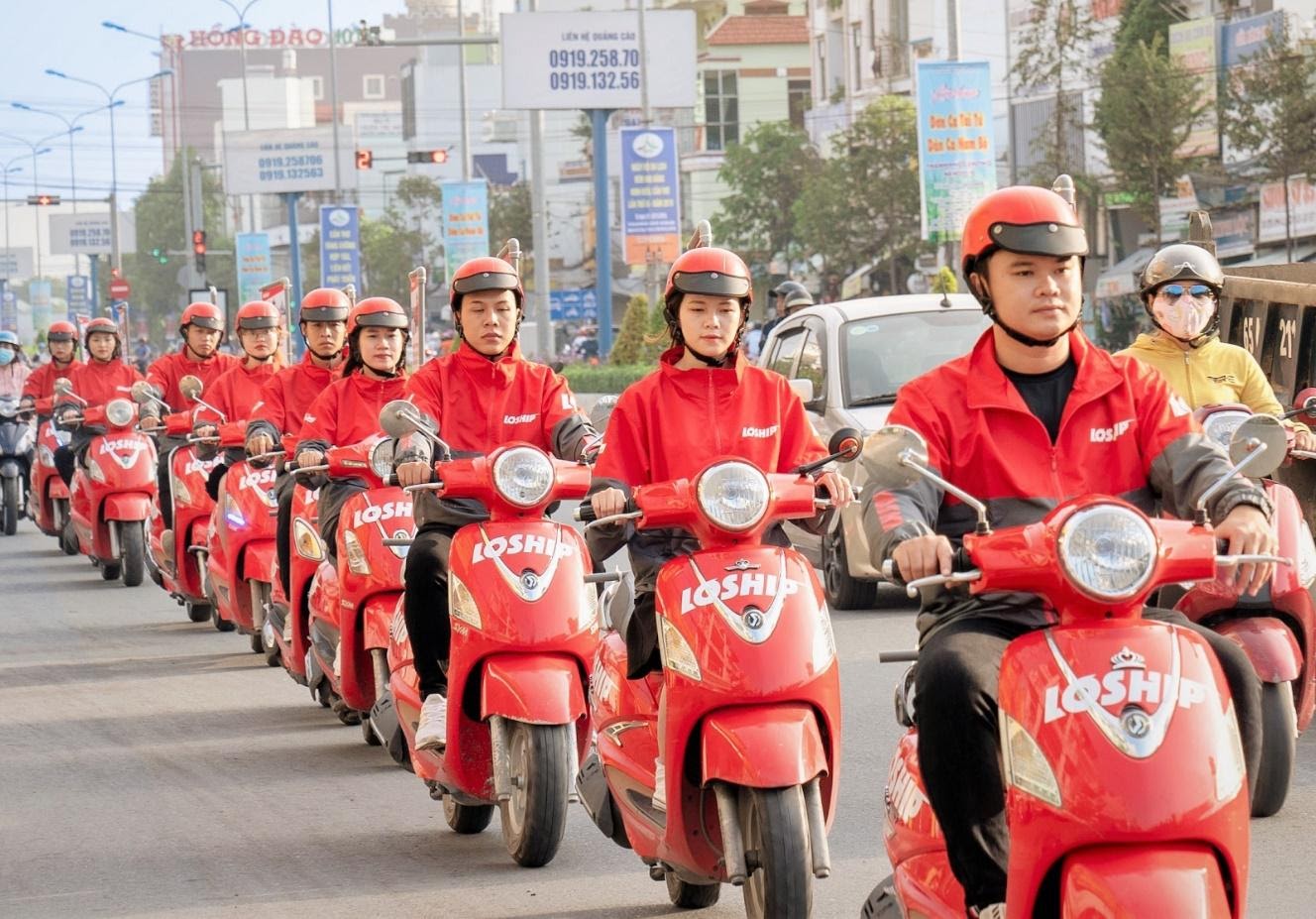
    Delivery startup Loship is confident it will make profits this year, something most of its competitors have yet to achieve.

    Nguyen Hoang Trung, CEO of one of only two delivery startups in Vietnam said that Loship suffers “very little” loss.

    Last year its revenues increased by 500% thanks to business optimization with 250,000 locations and more than five million customers.

    It expects to turn profitable this year.

    Losing money is the norm in the food delivery and ride-hailing industry.

    As of 2021, Grab Vietnam had chalked up cumulative losses of VND4.365 trillion (US$186 million). Gojek is also VND4 trillion in the red.

    Both incur huge selling expenses running ino trillions of dong.

    Trung said all other apps are also affected by Regarding the increase in gasoline price, this but “honestly not too much”. When the Russia-Ukraine war took place, it was a nightmare in the beginning. But so far, the gas price has not changed too much and it’s even cheaper than at the beginning of the crisis. It shows that gas price will continue to increase and then decrease. In the short term, this affects the income of shippers, but not in the long term.

    He said gasoline price increases have a knock-on effect on all prices, including restaurants’. But when they go down, other prices do not follow suit and remain high, and this causes people to gradually stop ordering food, which affects shippers, he said.

    Over time many shippers decide to stop working for apps, as is happening in places like China, Europe, the U.S., and India.

    In 2021 and 2022 Loship spent a lot of money on acquiring new customers, and so marketing costs accounted for over 60% of its expenses. This led to some differences of Loship from others in the market that weren’t “properly recognized” by the customers. One of these differences is that Loship offers free delivery within a certain distance.

    Trung and his team wondered if Loship would be any different from its competitors if they continued to do this. Existing users are still Loship users but they can also be using other apps. Realizing the problem, Loship began to cut its promotions, reducing costs.

    Trung explained: “No matter how big you are, there is always a limit. Money doesn’t fall from the sky.

    “Each company has a long-term strategy for the amount of money it has. The better their strategy, the more money in in their account. Then, even during difficult times they can afford to be generous to their customers.”

    To achieve the goal of breaking even this year Loship is prioritizing cash flows. Last year the company cut 50% of its payroll. Besides, from the second quarter all marketing activities essential ones were frozen.

    Trung thinks the reason Loship is approaching breakeven is that it has found the balance between customers, shippers and restaurant partners, something he admitted was not easy to achieve. Any increase in price could drive customers into the arms of another platform, and any cut in payments to shippers could cause them to take out their frustration on customers, he pointed out.

    In the next three years food delivery and supermarkets would still be the markets that have great competition. Apps would also offer additional services like their own e-wallets to increase convenience for users, he said.

    But he made it clear Loship has no intention of entering the fintech industry since that would require a big investment. Instead, they want to exploit the number of restaurant partners for raw materials supply.

    A recent report by iPOS, a platform that provides sales, operations, and human resource solutions for more than 100,000 restaurants and coffee shops, shows that the food delivery market in Vietnam grew three-fold since the Covid outbreak to VND29.9 trillion last year.

    More than 12 million people ordered food delivery through online platforms, with the number growing annually at 17.5%.

    But the market is dominated by foreign enterprises with 58% of consumers choosing to order on ShopeeFood. It was followed by GrabFood, Baemin and Gojek.

    The only two homegrown players in the market, Loship and beFood, accounted for around 7%. The market still has a lot of room for competition when most of the big applications on the market recorded a reduction in percentage of users.
  • Deliveroo Partners with “A Plastic Ocean Foundation” to Tackle Environmental Pollution in Hong Kong

    Deliveroo Partners with “A Plastic Ocean Foundation” to Tackle Environmental Pollution in Hong Kong

    Deliveroo today announces its partnership with A Plastic Ocean Foundation (APOF), a local charitable organisation dedicated to stopping plastic pollution and initiating ocean recovery from human impacts, to safeguard and preserve Hong Kong’s precious wetland region, Ha Pak Lai, from plastic pollution and soil erosion through beach clean-ups and planting local bamboo trees. The company has committed to a series of clean-up operations in the wetland from this month through the end of 2023 as part of APOF’s #OneTonneLess programme.

    Rallying the Deliveroo Community for Coastal Cleanups

    As one of Hong Kong’s richest biodiverse areas, Ha Pak Lai is home to many rare species. The commitment from Deliveroo will see over 250 of the company’s staff, riders, and their families participating in beach clean-ups at Ha Pak Lai to protect the beachfront from plastic waste. As a result, at least one tonne of ocean garbage is projected to be collected by the end of 2023. The initiative also strives to raise public awareness of environmental preservation while teaching the next generation about the necessity of sustainability.

    Protecting Hong Kong’s Endangered Species from Habitat Destruction

    As Ha Pak Lai is one of the most important habitats for horseshoe crabs, an endangered species under the IUCN Red List of Endangered Species in Hong Kong, it is crucial to prevent habitat destruction. In recent years, onshore human activities have created water pollution and soil contamination, accounting for up to 70% of the loss of young horseshoe crabs. In addition, abandoned farm activities cause severe soil erosion, which washes contaminated soil into streams and the sea. Deliveroo intends to help to restore the ecosystem at Ha Pak Lai by planting new bamboo plants and using the plant’s characteristics. With fresh bamboo grown under this initiative, over 2,500kg of CO2 will be absorbed by the bamboo stems. Additionally, the initiative will see that elemental pollutants are eliminated by phytoremediation, and prevent habitat loss as the new bamboo plants will establish a natural barrier to prevent land-based plastic garbage from being washed into the sea by rainwater and wind.

    Andrew Hui, General Manager of Deliveroo Hong Kong, said, “Deliveroo is committed to being a part of the communities by taking steps to drive sustainability. With this collaboration initiative, we hope to stimulate and accelerate new eco-friendly behaviours that will contribute to long-term, sustainable change across generations. We believe that the solution to climate change is a communal effort, and so we’re excited to collaborate with APOF to take another step toward environmental preservation by contributing to ocean conservation, repairing the local ecology, and developing sustainable economies that benefit everyone. In addition, we’re excited to work with like-minded riders and their families to promote environmental conservation, resulting in a cleaner, more sustainable environment for everybody.”

    Willy Kwong, Director of A Plastic Ocean Foundation, said, “We’re delighted to have Deliveroo come on board and join us for this important initiative. Hong Kong lies on the eastern edge of the Pearl River Estuary surrounded by the South China Sea, the healthiness of the sea has a direct impact on everyone’s living quality. We are obligated to do everything we can to protect and preserve it for the wildlife that calls it home, and of course, for the people of the city too. Together we aim to collect over one tonne of pollutants, and I am confident that with more companies like Deliveroo by our side, we can achieve our goal in creating a necessary momentum in advancing towards a healthier, more beautiful and sustainable ocean.”

    Mr Tsui, a Deliveroo Rider who attended the session with his wife and son, said,“I’m grateful to be a part of this important endeavour alongside my family. Giving back to the environment that makes Hong Kong such a wonderful place to live is always a satisfying feeling for me, because I firmly believe that we can all make a difference, no matter how small our efforts appear to be. Today, all three of us learned a lot, and thanks to Deliveroo and A Plastic Ocean Foundation, our family understands the importance of environmental protection. I look forward to taking part in future sustainability-driven Deliveroo programmes with my family and giving back to our city’s beaches and trails, and after today, I wouldn’t hesitate to recommend these initiatives to my   rider peers as well!”

    The partnership with APOF comes as Deliveroo pledged in 2020 to make imperative sustainable development goals. In early March, Deliveroo announced a major sustainability partnership programme with zero-waste packaging company, Sustainabl., which enables Deliveroo’s restaurant partners to adopt sustainable food containers at an affordable price under Deliveroo’s HK$2 million restaurant subsidy scheme. This programme aims to incentivise restaurant partners to go green in their delivery operations. The latest CSR effort with APOF, is among the many unique initiatives created by Deliveroo to support the community. Last year, two impactful initiatives were run to create compostable, eco-friendly food wrap packing for World Food Day with Cali-Mex, offering collection sites for Hong Kongers to drop off their mooncake boxes to be recycled – which saw over 500kg of packaging donated. The company has also launched cutlery opt-out globally since 2018.

  • Missfresh summonsed by Beijing consumer rights group after complaints

    Missfresh summonsed by Beijing consumer rights group after complaints

    A Beijing consumer rights group said on Tuesday it had asked Missfresh to work on plans to refund its customers and explain how it will rectify its business after receiving a number of complaints, adding to pressures facing the Tencent Holdings and Tiger Global-backed grocery startup.

    The government-backed Beijing Consumer Association said in a statement on its website on Tuesday that a large number of Missfresh customers had complained about the platform’s “abnormal operations”.

    Missfresh did not immediately respond to a request for comment.

    The grocery delivery firm’s troubles come as China’s tech sector grapples with slowing growth amid COVID-19 lockdowns and tightening regulatory oversight.

    The company pioneered one-hour fresh food delivery services in China, a model that is extremely popular with consumers but is labour and capital intensive. It listed on the Nasdaq in June last year, raising $273 million.

    However, the company’s stock has lost 98% of its valuation since and in late July local media reported that it had abruptly laid off hundreds of employees and had not paid salaries, triggering labour arbitration complaints.

    Missfresh has cancelled its one-hour delivery service, changing it to a next-day model, and told local media that it had conducted layoffs due to business restructuring.

  • 7 days left to register for Startup Viet 2022

    7 days left to register for Startup Viet 2022

    Startup Viet 2022, an annual event hosted by VnExpress to promote entrepreneurship, closes registration in seven days.

    The sixth edition of the competition, themed “the New Era of Innovation,” has received dozens of registrations since it opened June 13.

    The startups are from various sectors including e-commerce, logistics, fashion, manufacturing, agriculture, customer service, business management and software development.

    The contestants will be evaluated based on revenue growth, organization, sustainability and international prospects by startup experts, investors, venture fund representatives and other successful businesspeople.

    To register, click the link below:

    Startup Viet 2022 Registration

  • Financial startup Anfin raises $4.8 mln

    Financial startup Anfin raises $4.8 mln

    Financial startup Anfin, which seeks to make stock investment easy for any user, has raised funding of $4.8 million in a Pre-Series A round from a consortium of investors.

    It was led by angel investor Clement Benoit and U.S.-based startup accelerator Y Combinator. The money will be used to improve its app by building a social network in it so users can share their investment knowledge.

    Anfin was launched in October last year and has raised around $7 million to date.

    Its app allows users to invest as little as VND10,000.

    Its CEO, Phuoc Tran, said the app has over 100,000 active accounts with a total transaction value of $10 million.

    Benoit said creating a product that serves many groups of people in society is the right move in a big market such as Asia.

    He hoped the company would branch out to other countries and succeed in its social investing business model.

    Interest in stocks remains sky-high in Vietnam, with 476,300 new accounts opened in May, a new record.

    Phuoc said despite the volatility in the market, stocks remain an asset class with great prospects.

    Data from investment fund Dragon Capital Vietnam shows that in the last five years, stocks have given investors an average return of 16 percent a year, higher than real estate, bonds or gold.

  • Startups pin high hopes on blockchain, NFT technologies

    Startups pin high hopes on blockchain, NFT technologies

    Vietnamese startups have great expectations of the blockchain technology, envisaging practical e-commerce and entertainment impacts as the country pursues digital transformation.

    “We dream of becoming a billion-dollar company,” said Nguyen Tuan Quynh, chairman of book distributor Saigon Books, as he talked about a new project which uses blockchain in podcast and audiobook production.

    He said he wanted to create a blockchain-based platform for users, including celebrities, to produce audio content and make money. The audios will be distributed as non-fungible tokens (NFT), which are digital assets that represent objects like art, music, in-game items and videos, and have unique identifying codes. They are bought and sold online, frequently with cryptocurrency.

    “It will be a long run but we have taken the first steps. We also aim to have foreign-language to take this platform overseas,” Quynh said.

    Nguyen Tran Phi Yen, communications director of online event hosting platform Fan8.Club, is working on a project in collaboration with a hospitality partner that will create one million booking NFTs at premium hotels in Vietnam.

    “Blockchain is no longer something of the future. It has real products now.”

    Vietnamese startups have made headlines since last year with their use of the blockchain technology. Blockchain games like Axie Infinity and finance apps like Coin98 Finance have raised millions of dollars.

    Vietnam’s blockchain market is set to enjoy double-digit growth in the 2023-2027 period as 5G development across the country facilitates the formation of smart cities, according to a report by TechSci Research.

    Nguyen Thanh Nam, chairman of blockchain solutions provider OneBlock Labs, said that the technology could be used to trace origins of agriculture products, develop web browsers with better privacy protection and facilitate e-governance.

    “The government has made many efforts to create a national database using technology. With blockchain, more potentials can be reached,” he said.

    In 2020, the Vietnamese government listed blockchain a top tech research priority for application in the Fourth Industrial Revolution era.

    The Ministry of Science and Technology plans to let some blockchain companies to use the technology to try out some of their ideas for social benefits this year. Startups say they are aware of the challenges in developing the blockchain technology, high programmer salaries being one of them.

    “Hiring programmers to build a blockchain app costs four to five times that of a normal app,” said Quynh of Saigon Books said.

    Finding a team of experienced blockchain techies who understand the market is very difficult, said Nam of OneBlock Labs.

    “It is therefore crucial to start developing blockchain human resources.”

    Yen of Fan8.Club said that the world will soon have pre-established blockchain platforms for businesses to use and create their own products, and Vietnamese firms can take advantage of these instead of building everything from scratch.

    Some industry insiders have also warned about the potential to misuse blockchain.

    Pham Phuoc Nguyen, digital operations head at Coin98 Finance, said: “Not everything needs blockchain. Some can be done the traditional way.”

  • Foodpanda Hong Kong donates HKD3m to Covid-19 community support

    Foodpanda Hong Kong donates HKD3m to Covid-19 community support

    While we all wait for the rollout of the city’s anti-pandemic fund to support residents and businesses affected by the ongoing public health crisis, some of Hong Kong’s biggest companies have also stepped up to help. In a recent announcement, foodpanda, the largest food and grocery delivery platform in Asia, is also rising up to assist those that have been affected by the pandemic.

    Foodpanda is launching a series of support measures, amounting to a total of $3 million, including a donation of 12 thousand food vouchers ($1 million worth) for people in need and investment on initiatives for their restaurant partners, shop vendors, and foodpanda fleet.

    By mid-March, foodpanda food vouchers will be donated to 15 local charities, including Food Angel, Foodlink Foundation, ImpactHK, Hong Chi Association, Concern for Grassroots Livelihood Alliance, Tuen Mun District Women’s Association, Hong Kong Single Parents Association, Hong Kong Women Worker’s Association, Hong Kong Community Network, Chain of Charity Movement, Social Development Practice and Research Centre – Family Mutual Hub, among others. These vouchers may be redeemed on the foodpanda platform for food delivery or pick-up.

    Foodpanda restaurant partners will get a waived monthly listing fee until March 31 and 50 percent discount off paper bags and foodpanda sustainable packaging. Meanwhile, their shop partners will get up to 28 percent reduced commission rate for new small-medium sized local vendors that sell locally produced fresh produce and food ingredients. New vendors to foodpanda mall will get an expedited onboarding process of seven to ten days. The company’s delivery fleet will get free access to 7,000 rapid COVID-19 rapid antigen test kits, an extension of Covid-19 insurance plan coverage, as well as free face masks, hand sanitisers, and durable medical-grade self-sanitising photocatalyst coating for couriers’ thermal bags. The platform is also setting up a dedicated express registration link for F&B staff hard hit by the pandemic who want to apply and join the foodpanda fleet as couriers to gain extra income.

    “As members of the Hong Kong community ourselves, our entire team is dedicated to rallying together to find ways to give back to the local public and support our stakeholders, providing temporary relief measures for some,” shares foodpanda Hong Kong’s managing director Ryan Lai. “Apart from providing additional support through various initiatives, we hope that we can also encourage others within the industry to roll out support measures too, as we all fight to overcome the pandemic together,” he adds.

  • Vietnam set to become Asia startup hub

    Vietnam set to become Asia startup hub

    Vietnam could be Asia’s next startup hub after local companies saw a funding surge over 40 times in the last five years, a venture capitalist said.

    Venture funding for startups in Vietnam reached $2.1 billion last year, up from just $48 million in 2017, Binh Tran, co-founder of Ascend Vietnam Ventures said.

    The sector is now attracting top-tier Silicon Valley venture capitalists, including Goodwater Capital LLC, Accel Partners LP and Altos Ventures Management Inc, he added.

    “Vietnam saw a tremendous amount of maturity and growth early on, which will help it become a very important hub for the region,” he said.

    The country is forecast to have the second-largest digital economy in Southeast Asia by 2030, according to a report by Google, Temasek Holdings Pte and Bain & Co.

  • One Mount develops comprehensive technology ecosystem

    One Mount develops comprehensive technology ecosystem

    One Mount provides solutions covering the entire financial services, distribution, real estate, and retail-sector value chain.

    Approved in June 2020, the National Digital Transformation Program aims to turn Vietnam into a country with digital technology competitiveness comparable to those of developed nations. This sets favorable conditions for Vietnam to actively capitalize on opportunities brought on by today’s technological revolution.

    According to experts, Vietnam has unlocked great potential for digital enterprises to thrive across the country. Technology has been the key factor leading to the explosion of innovative startups in the field of information technology.

    One Mount, with its comprehensive technology capabilities, was named at the Top 10 Vietnam ICT Companies 2021 event as a great example of the new breed of companies providing a suite of technological solutions and offerings for businesses and consumers across multiple life stages.

    Launched in the fall of 2019, One Mount had to navigate a global pandemic in its first two years of operation. This has brought it both challenges and opportunities as it sought to affirm the value of its technology business, which has contributed to the country’s technology and economic goals, even during this challenging period.

    After two years, One Mount has pioneered the deployment of technology solutions that help businesses digitalize their operations and solve bottlenecks in many traditional sectors.

    Leveraging its multi-faceted and modern technology offerings, One Mount is focused on optimizing benefits for value chains across a spectrum of industries and audiences including small to medium enterprises, end-consumers across distribution, retail and real estate, to name a few.

    In the distribution sector, VinShop has established itself as one of the country’s largest consumer goods distributors, which has helped to digitalize more than 80,000 small groceries. Taking advantage of technological advancements to provide maximum support for users, One Mount has connected businesses, manufacturers, and consumers within its ecosystem, allowing goods to reach customers quickly while ensuring stable prices.

    Besides improving the income of thousands of small groceries, VinShop also helps ensure the supply of essential goods while helping consumers feel confident about the quality of products.

    One Mount has developed a lifestyle super app with VinID, a loyalty platform serving millions of users on a monthly basis. VinID recently refined its point tiering system and is rolling out a more dedicated personalization engine, bringing users a more curated experience for their favorite products and brands.

    Meanwhile, OneHousing and OneHousing Pro Agent has established itself as the number one distributor and supplier of Masterise Homes projects in Hanoi. In addition to its premium services, the myHome application integrated with VinID has attracted ten thousand of homeowners and households during its beta launch.

    With more products and premium services on the horizon, OneHousing is expected to transform the real estate landscape in Vietnam by providing a complete one-stop shop experience for home buying, selling and living.

    To realize this early success and fulfill its grand vision, One Mount has formed landmark strategic partnerships with reputable industry leaders like TechcomBank and Google.

    The former has bolstered the vision of bringing financial solutions to more people and underserved areas across Vietnam while the latter helped develop powerful technology infrastructure and AI capabilities via Google Cloud offerings.

    One Mount commits to supporting Vietnam’s digital transformation strategy.

    Recently, One Mount’s potential was affirmed by VINASA when the latter included it among its Top 10 Vietnam ICT Companies 2021. One Mount nabbed a spot in three different categories: Top 10 Companies Providing Digital Transformation Platforms, Top 10 Fintech Companies, and Top 10 Logistics and E-Commerce Companies.

    One Mount was selected by HR Asia Magazine as one of its Best Companies to Work For in Asia 2021 in recognition of its outstanding HR practices, attractive benefits, policies, and engaging work environment.

    With a large technological ecosystem, One Mount provides solutions and services along the entire value chain in the financial services, distribution, real estate, and retail sectors through its three core business units: VinShop, VinID, OneHousing.

  • StanChart Exec Joins Blockchain Startup

    StanChart Exec Joins Blockchain Startup

    Taipei-headquartered XREX has named a managing director in Singapore as it sets its sights on expanding its platform in the region.

    Taipei-headquartered XREX has appointed Christopher Chye as managing director of XREX Singapore and director of product. In this dual role, he will oversee XREX’s businesses and operations in Singapore and play an instrumental role in bringing new value propositions to XREX’s clients, the startup said on Tuesday.

    Chye joins from Standard Chartered Bank, where he held roles in commercial banking, consumer banking, wealth management, and financial crime compliance. He was also a pioneer of Standard Chartered’s digital bank venture in Singapore, where he led the bancassurance, rewards, and loyalty, and brand and marketing pillars, and was executive director at its regional CEO office. He was previously a  management consultant with KPMG.

    In a separate announcement, XREX said it raised $17 million in pre-Series A funding led by CDIB Capital Group. The funds will be used to apply for financial licenses in Singapore, Hong Kong, and South Africa, and partner with banks and financial institutions, like payment gateways.

    Many of our team members are from or have lived in the markets where we serve. We keenly understand the struggles faced by many cross-border merchants who lack safe access to US dollar liquidity,» XREX CEO and cofounder Wayne Huang, said.

    XREX was launched in 2018 to drive financial inclusion in emerging markets by leveraging blockchain technology.

    The company uses blockchain technology to solve dollar liquidity shortage issues in emerging markets and has products like a payment escrow service and crypto-fiat exchange platform.

  • Online market places for neighborhoods in Hanoi become popular

    Online market places for neighborhoods in Hanoi become popular

    With shops closed and delivery services facing restrictions due to the Covid-19 outbreak in Hanoi, apartment dwellers have stepped infill the supply gap by selling online.

    Thu, a clerk at a media company, who is working from home amid the social distancing, said: “I orders goods online for home delivery and pay through bank transfer. The goods are hung on my apartment door.”

    The online market, which serves Thu’s apartment block and others nearby, has over 2,000 members who buy and sell items like fish sauce, salt, cooking oil, rice, vegetables, fruits, meat, eggs, and processed foodstuffs, she said.

    Prices are slightly higher than at traditional markets, but people like Thu accept that because “we don’t have to go outside, minimizing contact and the risk of contracting the disease.”

    In the beginning many sold goods online for a little bit of extra income and even just for fun, but later, when their jobs were severely affected by the pandemic, it became their main source of income.

    “I order fresh pork from my hometown in the countryside, pack and deliver the meat to people in my residential area,” she said.Thai, a kindergarten teacher in Hanoi’s Ha Dong District, started selling foodstuff on an online market for residents of her apartment block when her kindergarten closed down.

    “Within 30 minutes of advertising pork online I often get orders for 50 kilograms.”

    Quang, an administrator of an online market of an apartment block in Cau Giay District, said the market sells essential goods with clear regulations on product quality and non-cash payment, and so has recently become busier, especially amid the Covid outbreak.

    Hanoi has gone over a month under a citywide social distancing order starting July 24, the longest such period since the novel coronavirus first appeared in the country. It has extended its social distancing order until September 6 as the novel coronavirus threat persists.

    The capital has recorded 2,909 local Covid-19 cases since the fourth coronavirus wave hit the country late April.

  • India’s Zomato raises US$1.26 billion in IPO

    India’s Zomato raises US$1.26 billion in IPO

    Indian food delivery startup Zomato Ltd ` will raise US$1.26 billion by pricing its shares at 76 rupees each in its initial public offering, according to two sources with direct knowledge of the matter.

    The sources could not be named as the information has not yet been made public.

    Zomato did not immediately respond to a request for comment.

    The company, which is backed by Ant Group, will be valued at up to US$8 billion following the IPO which is the first for a food delivery group in India.

    The pricing is set at the top of the flagged range of 72 rupees (US$0.9649) to 76 rupees each at the start of the booking building process.

    Zomato, launched in 2008, collates restaurant reviews and offers home delivery of food, making it a competitor to the Swiggy and Amazon.com’s food delivery service.

    Swiggy was reported had raised US$1.25 billion in a private funding round from the likes of SoftBank’s Vision Fund 2 and Prosus.

    Zomato’s IPO was strongly backed by investors attracting bids worth US$46.3 billion as it was more than 38 times oversubscribed when the books closed on Friday, signalling confidence about the fast-growing sector.

  • Indonesia’s Bukalapak aiming for up to $800 million in IPO

    Indonesia’s Bukalapak aiming for up to $800 million in IPO

    Indonesian e-commerce firm Bukalapak is keen to raise as much as US$800 million in an initial public offering (IPO) in August, two people with knowledge of the matter said, the first of two big tech listings in Jakarta this year that will add long-sought luster to the local bourse.

    A mid-year debut could see it become Indonesia’s biggest listing in 10 years and the largest ever for the country by a startup. But those milestones will likely later be overtaken by the planned listing of GoTo – a new company to be formed by the merger of e-commerce rival Tokopedia and ride-hailing and payments firm Gojek.

    Tapping a sharp pick-up in investor interest in Southeast Asia’s rapidly expanding technology sector, Bukalapak, the country’s No 4 e-commerce firm, is aiming to sell 10 to 15 percent of the company and wants a valuation of between US$4-5 billion, the people said.

    A confidential listing prospectus has been submitted to the Indonesia stock exchange, one of the sources said.

    Proceeds from the offering could range between US$500 million and US$800 million depending on investor demand and market conditions, said the sources who were not authorized to speak on the matter and declined to be identified.

    Bukalapak, which said in 2019 it was valued at more than US$2.5 billion, declined to comment.

    The 11-year-old startup which claims to have more than 100 million users has a plethora of big-name investors backing it including Microsoft, Singapore sovereign wealth fund GIC, local media conglomerate Emtek, the investment arm of Standard Chartered, and South Korean web portal Naver Corp.

    Bukalapak was originally aiming to raise US$300 million from its domestic listing before looking to merge with a special purpose acquisition company (SPAC) in the United States, but it is now focusing solely on its IPO, one of the sources said.

    The listing, which sources say is set to take place mid-August, is a victory for Indonesia’s bourse which has been conducting an extensive charm offensive to convince the country’s thriving startups to list locally instead of heading to the US.

    Stagnant for many years, Indonesia’s total IPO deal value took a further hit during the coronavirus pandemic, more than halving in 2020 to US$470 million, Refinitiv data showed. So far this year, 15 companies have raised a combined US$125 million via IPOs.

  • New fund to support startups in Vietnam

    New fund to support startups in Vietnam

    Two partners at U.S. venture capital fund 500 Startups have founded Ascend Vietnam Ventures with plans to invest in 25 local companies.

    Their early-stage investments will range from $500,000 to $2 million and be in tech startups in areas like finance, education, healthcare, productivity, and future of work, according to a statement.

    Around a third of the startups will receive follow-up investments of $4 million, it added.

    The fund was set up by Binh Tran and Eddie Thai, general partners at 500 Startups Vietnam, which was launched in 2016 by the Silicon Valley startup accelerator and VC fund to capitalize on Vietnam’s growing market.

    500 Startups Vietnam raised $14 million in 2018, which has been fully invested in more than 70 companies.

    Some of its notable investments have been in language learning app ELSA, Base.vn, which was acquired by IT giant FPT Corporation, and Axie Infinity, whose latest round includes Mark Cuban as an investor.

    Investment in startups in Vietnam jumped by 34 percent year-on-year in the first quarter to $100 million, according to a report by South Korean venture fund Nextrans.

  • Gojek and Tokopedia formally announce merger

    Gojek and Tokopedia formally announce merger

    Indonesian ride-hailing and payments firm Gojek and e-commerce leader Tokopedia formally announced their merger today in a transaction that will create a technology powerhouse in the country’s largest deal.

    Sources familiar with the situation had earlier said the companies were seeking a $18 billion merger. Neither firm confirmed a valuation for the merged group, named GoTo.

    The deal comes as Gojek and Tokopedia seek to boost profitability some 10 years after they were founded by offering a bouquet of services under a single platform, extending a regional trend.

    Alibaba Group Holding and SoftBank Group Corp are among Tokopedia’s investors, while Gojek’s include Warburg Pincus and Tencent Holdings.

    Last month, Southeast Asia’s biggest ride-hailing and food delivery firm, Grab, clinched a $40 billion merger with a special purpose acquisition company. Meanwhile Singapore-based regional internet firm Sea Ltd, which operates e-commerce platform Shopee, is also muscling into food delivery and financial services.