Retail News CRM

Tag: stock market

  • Vietnam’s Stock Market Blazes into 2026: Skyrockets to Historical Highs in Opening Sessions

    Vietnam’s Stock Market Blazes into 2026: Skyrockets to Historical Highs in Opening Sessions

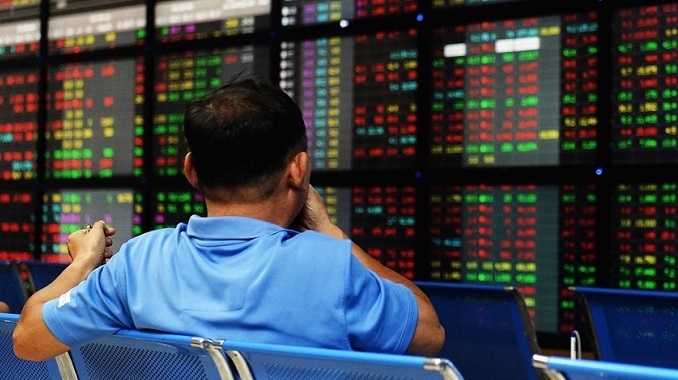
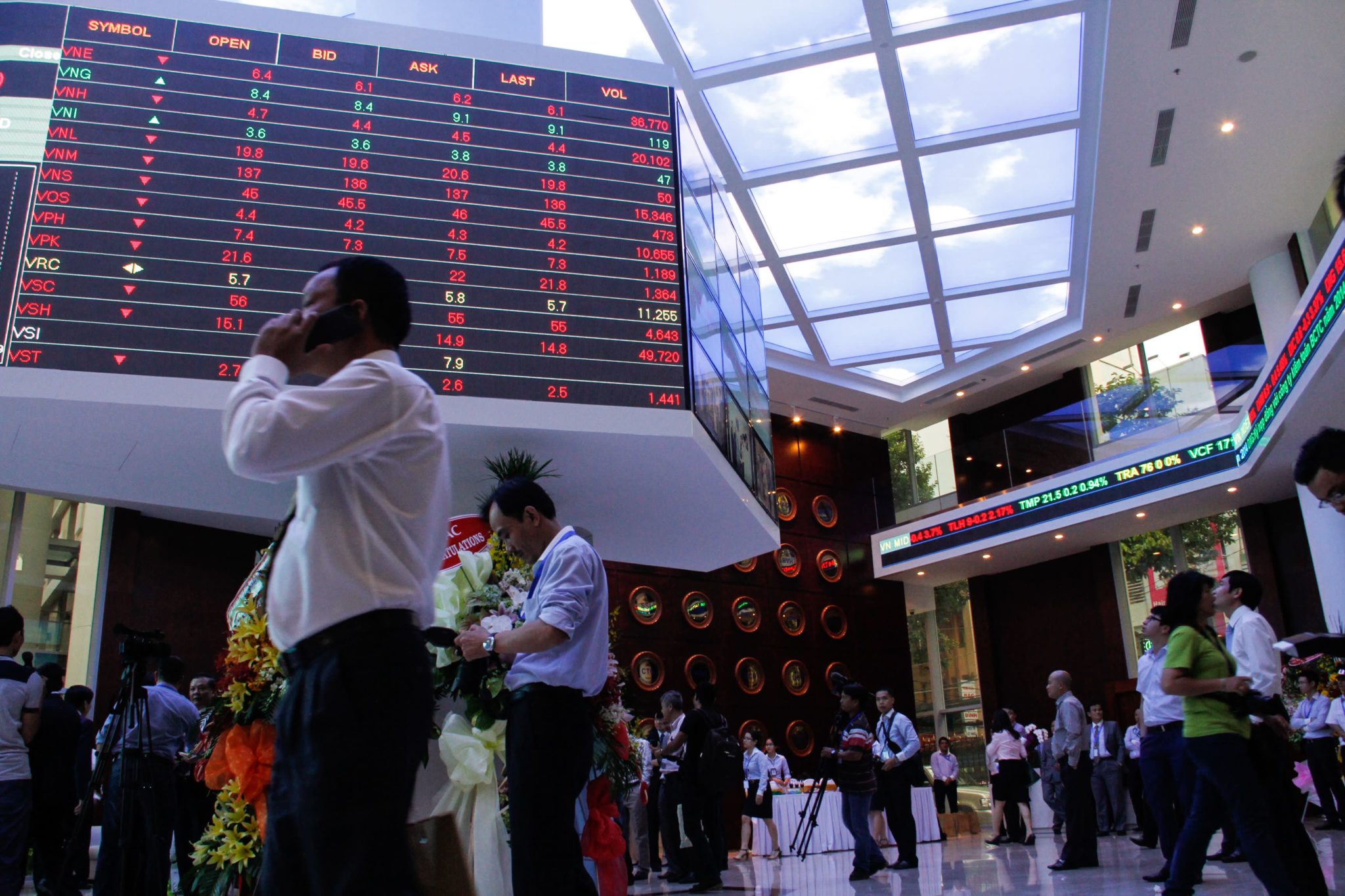
    The Vietnam stock market began the year on a high note, setting two new historic peaks within the first two trading sessions. The VN-Index, Vietnam’s benchmark stock index, closed at a record-breaking 1,788 points on Monday and escalated a further 1.56% to a fresh peak of 1,816 points on Tuesday. After closing the previous year 40% higher, it now ranks as the tenth best-performing stock index globally.

    The Ho Chi Minh Stock Exchange, the basis for the VN-Index, experienced a 6% gain in trading on Tuesday, reaching VND27.45 trillion (US$1.04 billion).

    On the other hand, the VN30 basket, which consists of the thirty largest capped stocks, saw 23 stock tickers rising. Leading the way was GAS, a state-owned Petrovietnam Gas, with a 7% increase, closely followed by property titan Vinhomes’ VHM, which climbed 6.9%.

    Fuel distributor Petrolimex’s PLX finished 6.7% higher, while MB’s MBB, a lending company, rose by 5.1%.

    However, two prominent stocks experienced a decline. Duc Giang Chemicals Group’s DGC dropped 3.8%, while Sacombank’s STB, a lender based in Ho Chi Minh City, fell by 2.1%.

    Foreign investors mainly sold off stocks of the private conglomerate Vingroup’s VIC and VHM, resulting in net sales of approximately VND387 billion.

    Meanwhile, the HNX-Index for stocks on the Hanoi Stock Exchange, which primarily consists of mid and small-cap stocks, fell by 0.09%. The UPCoM-Index for Unlisted Public Companies Market also experienced a drop, declining by 0.39%.

    Questions & Answers

    What were the new historic peaks for the Vietnam stock market at the beginning of the year?

    The VN-Index, Vietnam’s benchmark stock index, closed at a record-breaking 1,788 points on Monday and escalated a further 1.56% to a new peak of 1,816 points on Tuesday.

    Which were the top-performing stocks in the VN30 basket?

    Leading the way was GAS of state-owned Petrovietnam Gas with a 7% increase, followed closely by property giant Vinhomes’ VHM, which climbed 6.9%.

    Which stocks did foreign investors predominantly sell off?

    Foreign investors mainly sold off stocks of the private conglomerate, Vingroup’s VIC and VHM, resulting in net sales of approximately VND387 billion.
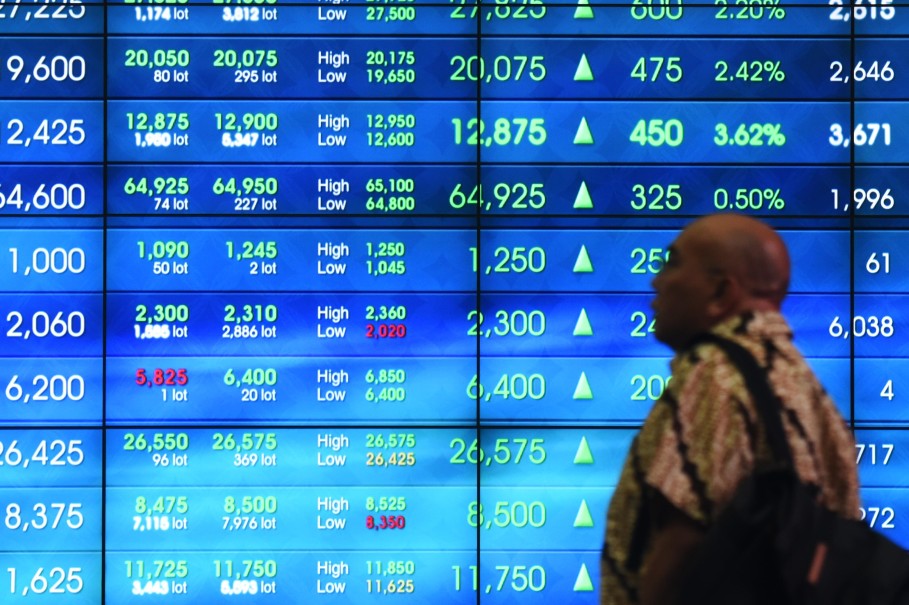
  • Vietnam Stocks Plunge to Three-Week Low: VN-Index Slips Amid Massive Selloff

    Vietnam Stocks Plunge to Three-Week Low: VN-Index Slips Amid Massive Selloff

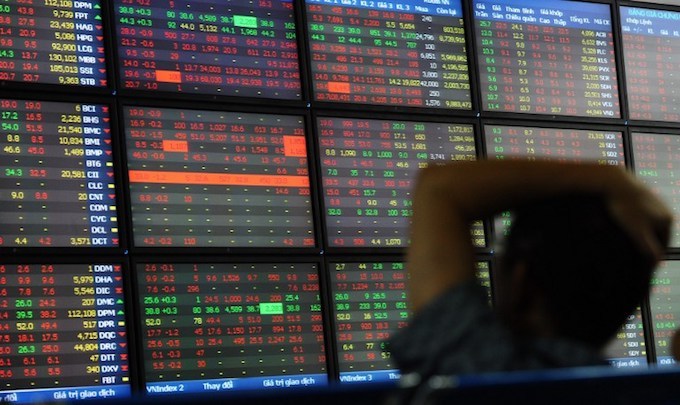
    On Friday, Vietnam’s key VN-Index experienced a significant drop of 3.06%, settling at 1,656.89 points, the lowest it’s seen since November 19. This marked the fourth consecutive session that the index has ended in negative territory.

    Trade Volume Soars on Ho Chi Minh Stock Exchange

    Trading on the Ho Chi Minh Stock Exchange, which forms the basis for the VN-Index, saw a significant increase in activity. The volume of trades surged by 52%, amounting to a total of VND24.7 trillion (US$938 million).

    Most Large Cap Stocks Experience Decline

    In the VN30 group, which encompasses the 30 largest capped stocks, 29 saw a decrease. Notably, Vinhomes, a real estate heavyweight, and Vincom Retail, a retail real estate subsidiary, experienced a substantial decline of 6.9%.

    Other major companies also experienced losses, including private lender VPBank, which saw a drop of 5.7%, and Vietnam Rubber Group, which fell by 5.1%.

    In contrast, Becamex Investment and Industrial Development was the only blue-chip stock that managed to stay in positive territory, albeit with a slight gain of 0.2%.

    Foreign Investors Continue Selling Trend

    Foreign investors continued their selling streak for the sixth session in a row, leading to a net sale of VND571 billion. The most significant sales were from private conglomerate Vingroup and state-owned lender Vietcombank.

    Other Indices Also See Decrease

    Other indices also experienced a decrease. The HNX-Index, which lists stocks on the Hanoi Stock Exchange, primarily those of mid and small-cap companies, decreased by 2.26%. Meanwhile, the UPCoM-Index for Unlisted Public Companies Market fell slightly by 0.61%.

    Questions & Answers

    What is the VN-Index?
    The VN-Index is a capitalization-weighted index of all the companies listed on the Ho Chi Minh Stock Exchange.

    What was the significant trade on Friday?
    On Friday, trading on the Ho Chi Minh Stock Exchange surged by 52%, reaching a total of VND24.7 trillion (US$938 million).

    Which stock experienced the greatest loss on Friday?
    Real estate giant Vinhomes and retail real estate arm Vincom Retail saw the most significant losses, both dipping by 6.9%.

  • Stock market plunges

    Stock market plunges

    Vietnam’s benchmark VN-Index dropped 2.15% to 1,065.84 points Tuesday.

    The index closed 23.45 points lower after gaining 12.14 points on Monday.

    Trading on the Ho Chi Minh Stock Exchange (HoSE) increased by 26.65% to VND12.17 trillion ($515.35 million).

    The VN-30 basket, comprising the 30 largest capped stocks, saw 24 tickers dropped.

    PDR of Phat Dat Real Estate Development hit the floor with a 6.9% fall.

    HPG of steelmaker Hoa Phat Group fell 6.6% and NVL of property developer Novaland Group lost 5.2%.

    GVR of Vietnam Rubber Group went down 5.1% and SSI of leading brokerage SSI Securities Corporation declined by 4.7%.

    Five blue chips bucked the trend.

    TPB of private TPBank went up 1.2% and PLX of fuel distributor Petrolimex gained 0.5%.

    Foreign investors were net buyers to the tune of VND37.26 billion, mainly buying STB of Ho Chi Minh City-based lender Sacombank and CTG of state-owned lender VietinBank.

    The HNX-Index at the Hanoi Stock Exchange, where mid and small caps list, was down 2.08% while the UPCoM-Index at the Unlisted Public Companies Market was down by 0.55%.

  • Vietnam stock market becomes world’s worst performer

    Vietnam stock market becomes world’s worst performer

    Vietnam’s stock market was the world’s worst performer this week with an 8.5% decline.

    It was followed by Russia, down 4.8%, and Venezuela, down 1.87%, according to market data provider StockQ.

    Over the last four weeks Vietnam has been the world’s second worst performer behind Russia, with the VN-Index falling by 16.67%.

    The VN30 basket, comprising the 30 largest capped stocks, declined by 18.51% in the period.

    Some of the worst performers were private lenders Techcombank and VPBank and electronics retail chain Mobile World.

    The State Bank of Vietnam raised its policy rates last month to control inflation.

    The dollar has been rising to new peaks against the dong as well as most other currencies amid rising interest rates in the U.S. and geopolitical tensions.

    “Margin call pressure forced investors to sell off recently and the panic among investors has not subsided yet,” Phung Trung Kien, founder of asset management firm Vietnam Holdings said.

    “Cash flow to the market is quite limited these days as most of the important rates such as interbank interest rates have been increasing a lot.”

    Nguyen Anh Duc, head of institutional sales at SSI Securities Corp, said retail investors are “extremely panicky and they are taking flight without regard for which stocks they are selling.”

    But some investment funds, such as Coeli Asset Management SA and Asia Frontier Capital are looking to buy more of Vietnam stocks given the country’s long-term economic prospects.

  • Stocks plunge to 11-week low

    Stocks plunge to 11-week low

    Vietnam’s benchmark VN-Index started off the week in the red with a 1.25 percent drop to 1,440.23 points Monday morning, the lowest in 11 weeks.

    The index fell by 17 points as of 11:06 a.m. after ending in the red in four out of the last six sessions.

    The main bourse Ho Chi Minh Stock Exchange (HoSE) saw 361 tickers in the red and 107 in the green.

    Brokerages have forecast earlier that the market would drop in the short term.

    The VN30 basket, comprising the 30 largest capped stocks, saw 15 tickers in the red, with SSI of leading brokerage SSI Securities Corporation falling 4.5 percent to the lowest since August last year.

    VHM of real estate giant Vinhomes dropped 3.4 percent, the lowest in over a year.

    Other losers included CTG of state-owned lender VietinBank, down 3.5 percent, MBB of lender MB, down 2.7 percent, and VIC of biggest private conglomerate Vingroup, down 2.9 percent. Fourteen blue chips bucked the trend, with PNJ of Phu Nhuan Jewelry rising 3.2 percent and FPT of IT giant FPT Corporation gaining 2.2 percent. Both were at new peaks.

    They were followed by SAB of brewer Sabeco, up 2 percent, and TPB of private TPBank, up 1.6 percent.

    Foreign investors are buying the dips with a VND88 billion net purchase, focusing on DPM of Petrovietnam Fertilizer & Chemicals Corporation and NLG of real estate developer Nam Long Investment Corp.

    The HNX-Index for stocks on the Hanoi Stock Exchange, home to mid and small caps, was losing 2.51 percent, while the UPCoM-Index for the Unlisted Public Companies Market was losing 1.5 percent.

  • Vietnam stock market makes bright start after Tet holidays

    Vietnam stock market makes bright start after Tet holidays

    The VN-Index began the new lunar year with a 1.5-percent jump Monday morning, led by aviation and energy stocks. It gained 22 points to 1,503 points at 11.20 as the market reopened after the nine-day Tet break, reaching a near four-week high. It represents a 4.1-percent recovery from the bottom of 1,439 points reached on January 18 as investors booked profit before the holidays.

    Most brokerages expect the index to rise this week since no negative news came out during the holidays. Analysts at ASEAN Securities and BIDV Securities said the VN-Index is set to stay in the 1,500 levels this week. It closed in the green on an opening day on five of the last six years since 2016, only dipping in 2020 when Covid-19 first hit Vietnam.

    The VN30 basket, comprising the 30 largest capped stocks, saw 24 of them gain Monday, led by VJC of budget airline Vietjet, which rose by 6.6 percent as investors expect a recovery by the aviation industry after the government announced plans to revive international tourism by March-end.

    Vietnam Airlines (HVN) gained 7 percent to the ceiling and its highest in over three months.

    Airports Corporation of Vietnam (ACV) rose by 7.4 percent with volumes reaching 321 percent of the average of the last 10 sessions.

    Energy stocks also rose, with PLX of fuel distributor Petrolimex climbing by 6 percent and GAS of state-owned Petrovietnam Gas gaining 6.2 percent. POW of electricity producer Petrovietnam Power Corporation was up 6.5 percent. Companies expected to benefit from rising consumer demand, such as VRE of real estate retail firm Vincom Retail and MSN of conglomerate Masan Group were the other gainers.

    The HNX-Index on the Hanoi Stock Exchange, home to mid-and small-cap companies, was up 1.2 percent, and the UPCoM-Index on the Unlisted Public Companies Market had gained 1 percent at the time of publishing.

  • Vietnam stock market 7th biggest gainer globally

    Vietnam stock market 7th biggest gainer globally

    Vietnam’s stock market was the seventh biggest gainer last year at 35.7 percent, outperforming regional peers, as new retail investors rushed to a new asset for profit.

    With the benchmark VN-Index rising 394 points to close the year at 1,498 points, Vietnam listed among the top 10 gaining stock markets in the world with Abu Dhabi, Argentina, and Iceland in the top 3.

    In Asia, Vietnam outperformed major markets like Taiwan (24 percent), Thailand (14 percent), and Indonesia (10 percent).

    Some markets like Malaysia and Hong Kong posted a decline.

    2021 was the third year in a row the VN-Index went up. Growth was 7.6 percent and 14.7 percent in the previous years.

    Growth exceeded forecasts of several brokerages at around 1,300 or 1,400 points.

    Several analysts said with a price-to-earnings ratio of 17.47, the Vietnam market is still “cheaper” than others in the region.

    The main bourse, Ho Chi Minh Stock Exchange (HoSE), closed the year with a market cap of VND5,830 trillion ($256.21 billion).

    Brokerage VNDirect has forecast the VN-Index could reach 1,700 points this year.

  • Over 130,000 investors enter stock market

    Over 130,000 investors enter stock market

    More than 130,000 new investors opened stock trading accounts in October, including 129,750 local investors, according to the Vietnam Securities Depository.

    129,200 of the local investors were retail ones.

    At the end of October there were over 3.86 million accounts. The number increased for a third straight month amid news of government economic stimulus of around VND800 trillion ($34.78 billion).

    The benchmark VN-Index rose to a new peak of 1,456.51 points on Friday, led by energy stocks, though trading on the Ho Chi Minh Stock Exchange dipped slightly to VND26.14 trillion.

    The government targets having 3 percent of the population participating in equity markets by the end of this year and 5 percent by 2025 under its Scheme for Restructuring Securities and Insurance Markets, which it finalized in early 2019.

  • Newbies continue to flock to stock market

    Newbies continue to flock to stock market

    The number of new stock trading accounts opened by retail investors in May topped 113,670, a new monthly record, according to the Vietnam Securities Depository.

    May was the third month in a row in which more than 100,000 accounts were opened. There were 3.2 million retail accounts and nearly 12,000 belonging to organizations.

    The invasion of the market by new investors took the total trading value on the Ho Chi Minh Stock Exchange (HoSE), Hanoi Stock Exchange, and Unlisted Public Companies Market to over VND531 trillion ($23 billion) in May.

    HoSE accounted for VND448.5 trillion, a 19 percent increase from the previous month.

    The boom has created pressure on the HoSE trading board, which had to shut down for the first time ever on Tuesday after the morning session as a surge in transactions threatened to overwhelm it.

  • Vietnam stock market daily trading value closes in on Singapore

    Vietnam stock market daily trading value closes in on Singapore

    The average daily securities trading value surged 5.6 times year-on-year in April to $725 million, nearly equivalent to that of Singapore, according to HSBC.

    The lender said in a recent report that the figure, which far exceeds those of Malaysia and Indonesia, was due to the increase in new investors and recovery of the economy.

    In March, the number of new trading accounts hit a record 113,900, taking the total to over 3.02 million.

    The economic recovery is underpinned by strong FDI flows, improvements in the manufacturing segment, and increased consumption, the report said.

    The benchmark VN-Index has risen 12.9 percent in the year-to-date compared to 4.2 percent for Asia ex-Japan.

    The index has repeatedly scaled new peaks this year after surpassing the psychological barrier of 1,204 points first reached in 2018.

    HSBC expected the market to continue to rise in the absence of alternative asset classes and bank deposit rates in decline.

    Though foreign investors have been pulling out of the stock market, HSBC said they would not be able to ignore Vietnam for much longer since it has proved to be one of the most resilient growth economies and 24 out of the 30 blue chips have still not reached the foreign cap.

    Besides, despite rising to record levels, the VN-Index remains 5 percent lower than its five-year average level with a price-to-earnings ratio of 15.1.

  • Stock market raises standard trading lot to 100 to cope with overload

    Stock market raises standard trading lot to 100 to cope with overload

    The Ho Chi Minh Stock Exchange is set to raise the minimum number of shares that can be transacted in order from 50 to 100.

    It had planned to effect the change on January 18, but after testing and interaction with securities companies it has decided to advance it by two weeks to January 4 “if everything goes smoothly,” a bourse spokesperson said.

    Currently investors wanting to trade odd lots of 1-49 shares have to transact with securities companies instead of on the exchange.

    HoSE executives said securities companies are keen to make the switch and willing to speed it up.

    A standard lot of 100 is the norm in many countries in the neighborhood such as SET (Thailand), BM (Malaysia), and SGX (Singapore) consistent with international practices and reasonable given the current market conditions, HoSE said.

    The larger lot size is expected to reduce the load on the system at a time when market liquidity is at historic highs. Between December 17-28, the exchange had to halt trading completely for short periods of time as volumes approached VND14 trillion ($606.14 million).

    Le Hai Tra, head of its board of directors, said at a press conference last week that the exchange was receiving 3-12 times higher volume of orders than before.

    Although the system has backup capacity, it cannot cope with this sudden surge immediately, he explained.

    Before Covid-19 caused other asset classes such as property to lose their charm and redirected cash into securities, HoSE saw average daily trading of VND3-5 trillion.

    But in the last two months, it has surged to VND12-14 trillion as the benchmark VN-Index kept rising and approached the 1,000-point mark, a threshold it struggled to cross in the last two years.

    The VN-Index on Wednesday shed 0.18 percent to close at 1,097.54 points. Trading was worth VND13.5 trillion.

  • Singapore Exchange Makes Sustainability Push

    Singapore Exchange Makes Sustainability Push

    Singapore Exchange (SGX) is growing its sustainability capabilities and initiatives with a $20 million ($15 million) plan. SGX is allocating half of the budget towards new ESG-focused products, services and platforms, while the other half will be used for capacity building for the financial ecosystem, strengthening internal capabilities and increasing CSR commitments, the bourse announced in a statement on Tuesday.

    We want to and can push the sustainability agenda further. As a market operator and regulator, we can influence and drive greater commitment to sustainability and greener financial markets, Loh Boon Chye, CEO of SGX, said.

    All sustainability initiatives, which span across asset classes including fixed income, equities, commodities and indices, will be housed under SGX FIRST (Future in Reshaping Sustainability Together) – a multi-partner, multi-asset exchange-led sustainability platform.

    The platform also aims to equip investors and issuers in this region with greater ESG knowledge and provide them with better access to a wider range of ESG-related information

    Given its role in regional capital and financial markets, SGX can help facilitate collaboration within the ecosystem to catalyze change, SGX said in the statement.

    For fixed income, SGX is currently working with Nasdaq on the Sustainable Bond Network Initiative. While it currently covers more than 4,500 bonds, largely from the U.S. and Europe, SGX plans to enhance data access and transparency of sustainable bonds in Asia Pacific by bringing regional issuers onto the network.

    In terms of equities, more ESG-focused investment and risk management products will be rolled out in the next three years.

    SGX has expanded its existing indexing partnership with FTSE Russell, Morningstar Sustainalytics and MSCI to provide ESG ratings on companies listed on SGX. Over 30 of the most recognizable SGX-listed companies are initially covered, with plans to expand coverage in 2021. SGX is also expected to launch four futures contracts in partnership with FTSE Russell in January 2021, based on the FTSE Emerging Markets, FTSE Asia ex-Japan, FTSE Emerging Markets Asia and FTSE Blossom Japan ESG-themed indices.

    New sustainability benchmarks and ESG-related indices will also be layered alongside existing flagship multi-factor indices offered by SGX, including Scientific Beta and Index Edge products.  Scientific Beta will develop new solutions for institutional investors in the next 12 month for responsible investing that aligns to Paris agreement climate change goals.

  • New StanChart FX Engine Delivers Significant Trade Latency Gains

    New StanChart FX Engine Delivers Significant Trade Latency Gains

    Standard Chartered’s newly set up electronic pricing engine for global currencies completed its first-ever trade with promising improvements to efficiency.

    The trade was executed earlier this week with counterparty UOB and resulted in a reduction in trade latency of over 80 percent. Improved efficiency resulted in better volumes which would have generated an estimated 30 percent increase in profits, according to a statement from the bank.

    In June last year, Standard Chartered announced plans to launch the electronic FX pricing engine in the first quarter of 2020, with support from the Monetary Authority of Singapore, to enhance efficient access to liquidity in the city-state. The bank’s e-channels already experienced a 30 percent increase in spot trading volumes in 2019 and it expects the trend for greater adoption to continue.

    As one of the major FX participants in Singapore, we remain committed to leveraging this new solution to effectively serve our clients’ currency and commodities needs by offering them a seamless and consistent pricing experience for their hedging requirements,» said Michele Wee, head of financial markets, Singapore, at Standard Chartered Bank. «With the enhanced efficiency proven by this trade using the new e-trading and pricing engine, we expect this positive trajectory to continue.

    The new engine provides e-trading capability for 130 currencies and over 5,000 currency pairs in spot, forwards, swaps, non-deliverable forwards (NDFs) and options alongside commodities e-trading for precious and base metals. The launch complements the bank’s three other existing e-trading engines in London, New York and Tokyo.

  • Tokyo stocks close lower after Indian air strike reports

    Tokyo stocks close lower after Indian air strike reports

    Tokyo stocks closed lower on Tuesday following media reports saying Indian warplanes crossed into Pakistani airspace over the ceasefire line in Kashmir and dropped payloads. The benchmark Nikkei 225 index, which opened higher, lost 0.37%, or 78.84 points, to end at 21,449.39 while the broader Topix index was down 0.23%, or 3.67 points, to 1,617.20.

  • Wall St rises after Trump stirs China trade hopes again

    Wall St rises after Trump stirs China trade hopes again

    Wall Street’s three major indexes ended higher on Monday but well below the session’s highs after President Donald Trump said he would delay a planned hike in tariffs on Chinese imports. Postponement of the tariff deadline was seen as the clearest sign yet the two countries were closing in on an agreement to end their prolonged trade spat, which has slowed global growth and disrupted markets.

    But gains were capped after weeks of advances for the S&P 500, the Dow Jones Industrial Average and the Nasdaq, partly due to trade optimism and dovish signals from the Federal Reserve.

    “A lot of the good news related to trade is priced in at this point,“ said R.J. Grant, head of trading at Keefe, Bruyette & Woods in New York.

    “There’s only so much we can rally when somebody says we’re making progress … The trade stuff is a little bit of a sideshow. If you get back to looking at economic growth, it’s clearly slowing.”

    The S&P 500 index ended 4.9% below its late September record closing high after narrowing the gap to 4.3% earlier in the session.

    Investors were also looking ahead to an appearance by Fed Chairman Jerome Powell before a US Senate committee on Tuesday.

    “In the short term trade got taken off the table today so next up on the calendar is Powell speaking to Congress. It’s possible investors are starting to clam up a bit because of what they think Powell may say,“ said Michael Cuggino, portfolio manager at Permanent Portfolio Funds in San Francisco.

    The Dow Jones Industrial Average rose 60.14 points, or 0.23%, to 26,091.95, the S&P 500 gained 3.44 points, or 0.12%, to 2,796.11 and the Nasdaq Composite added 26.92 points, or 0.36%, to 7,554.46.

    Investors were also wary of weakening estimates for current quarter earnings, with Wall Street on Monday expecting a 0.9% decline in S&P first-quarter earnings per share compared with expectations for 5.3% growth on Jan. 1, according to IBES data from Refinitiv.

    “It’s hard to get valuations to continue to rise in the face of falling earnings estimates,” said Jeffrey Kleintop, chief global investment strategist at Charles Schwab in Boston.

    Of the S&P’s 11 major sectors, 7 ended the day with gains.

    After advancing as much as 1.4%, the financials index lost ground late in the day to close up 0.4%.

    The S&P technology index rose 0.5%. The Philadelphia semiconductor index climbed 0.8% as chip companies have a big exposure to China.

    The industrials sector rose 0.4%, getting its biggest boost from General Electric Co, which gained 10.8% after announcing a sale of its biopharma business to Danaher Corp for $21.4 billion. Danaher shares rose 8.2%.

    A flurry of M&A activity also helped the risk-on sentiment.

    The Nasdaq Biotechnology Index rose 2%, its biggest boost coming from shares in Spark Therapeutics Inc, which soared 120% after Swiss drugmaker Roche Holding AG agreed to buy it for $4.3 billion.

    The biggest laggards were the S&P’s defensive sectors – consumer staples, utilities and real estate. The consumer discretionary sector also ended down 0.3%, with the biggest drag from Home Depot, down 1.3%, on concerns about a soft housing market ahead of its quarterly results.

    Advancing issues outnumbered declining ones on the NYSE by a 1.14-to-1 ratio; on Nasdaq, a 1.05-to-1 ratio favoured advancers.

    The S&P 500 posted 58 new 52-week highs and 2 new lows; the Nasdaq Composite recorded 128 new highs and 14 new lows.

    Volume on U.S. exchanges was 7.36 billion shares, compared with the 7.32 billion average for the last 20 trading days.