Retail News CRM

Tag: stock market

  • China’s stock market is a clown show

    China’s stock market is a clown show

    Just as “bad cases make bad law,” to cite the ancient legal adage, bad stock markets make for bad investment decisions. China’s stock market, with its repeated crashes, has the entire world in a tizzy.

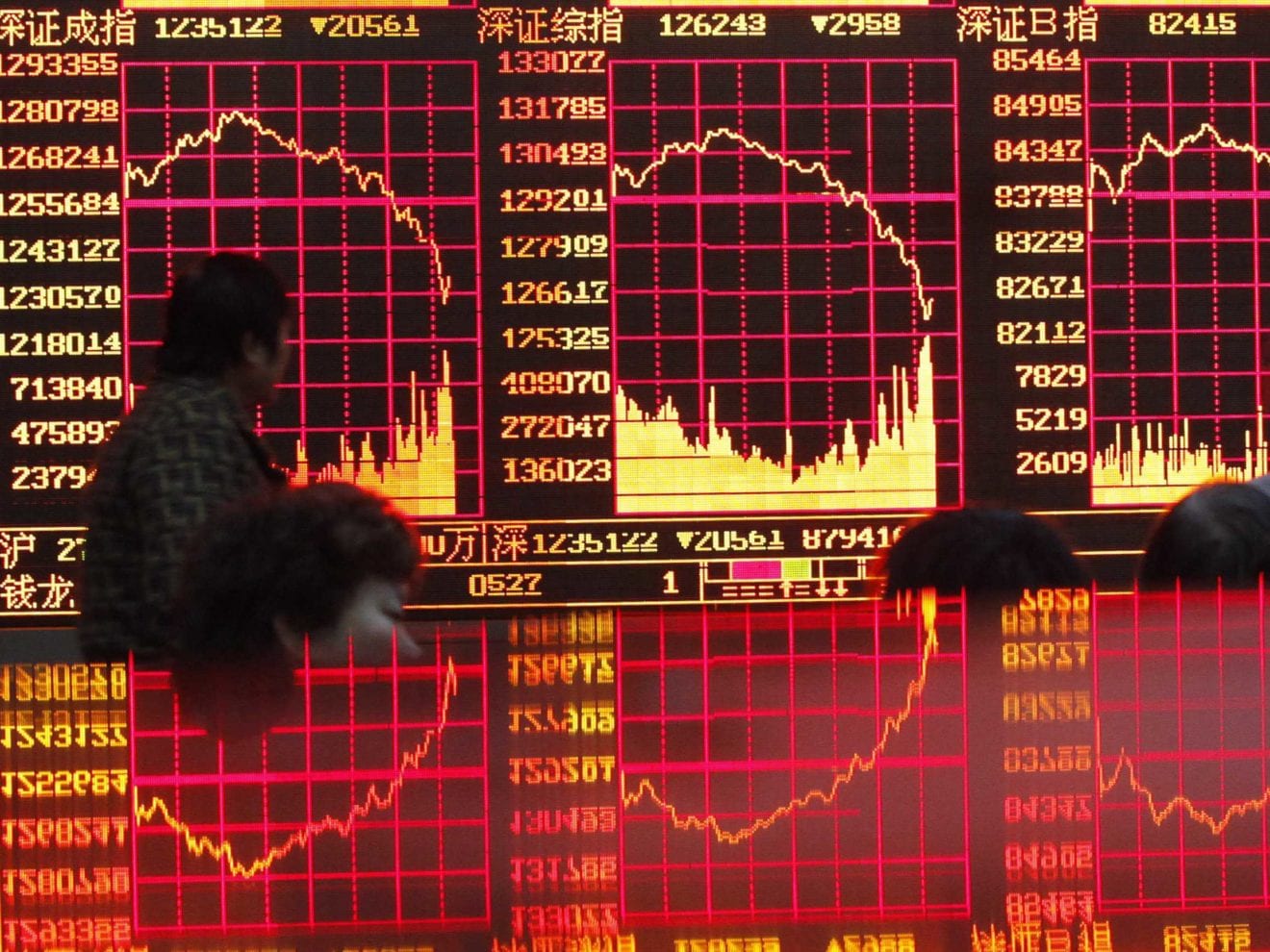
    The Shanghai stock exchange experienced its shortest trading day ever on Wednesday, as circuit breakers designed to end trading if the market slid 7% kicked in after only 14 minutes of active trading. As reported, the Shanghai Composite has dropped about 12% this year, and the Shenzhen composite has fallen more than 15%.

    Investors in the U.S. have taken the opportunity to sell. As of Thursday’s close, the Standard & Poor’s 500 index is down 4.67% from the opening bell for 2016 trading Monday, theNasdaq has lost 4.29%, and the Dow Jones Industrials have shed 5.12%. European stocks have marched over the cliff in tandem.in the U.S. took the opportunity to sell. As of Thursday’s close, the Standard & Poor’s 500 index is down 4.67% from the opening bell for 2016 trading Monday, the Nasdaq has lost 4.29%, and the Dow Jones Industrials have shed 5.12%. European stocks have marched over the cliff in tandem.

    The world should take a deep breath. The China stock market meets the definition of a bad stock market.

    The market is the target of relentless intervention by the Chinese government, which has been setting investment rules and tweaking them without any evident understanding of how open markets work. Adding to the chaos, the market was inflated by an inflow of small investors buying on huge margins — a notoriously skittish class of investors buying under conditions that made them especially vulnerable to the market’s volatile swings.

    Last April, as Evan Osnos of the New Yorker reported, the official organ of the Chinese Communist Party exhorted citizens to plunge into the market. An upsurge of more than 80% in four months was “merely the start of a bull market.” Investors should take heart from the government’s determination to keep Chinese companies strong.

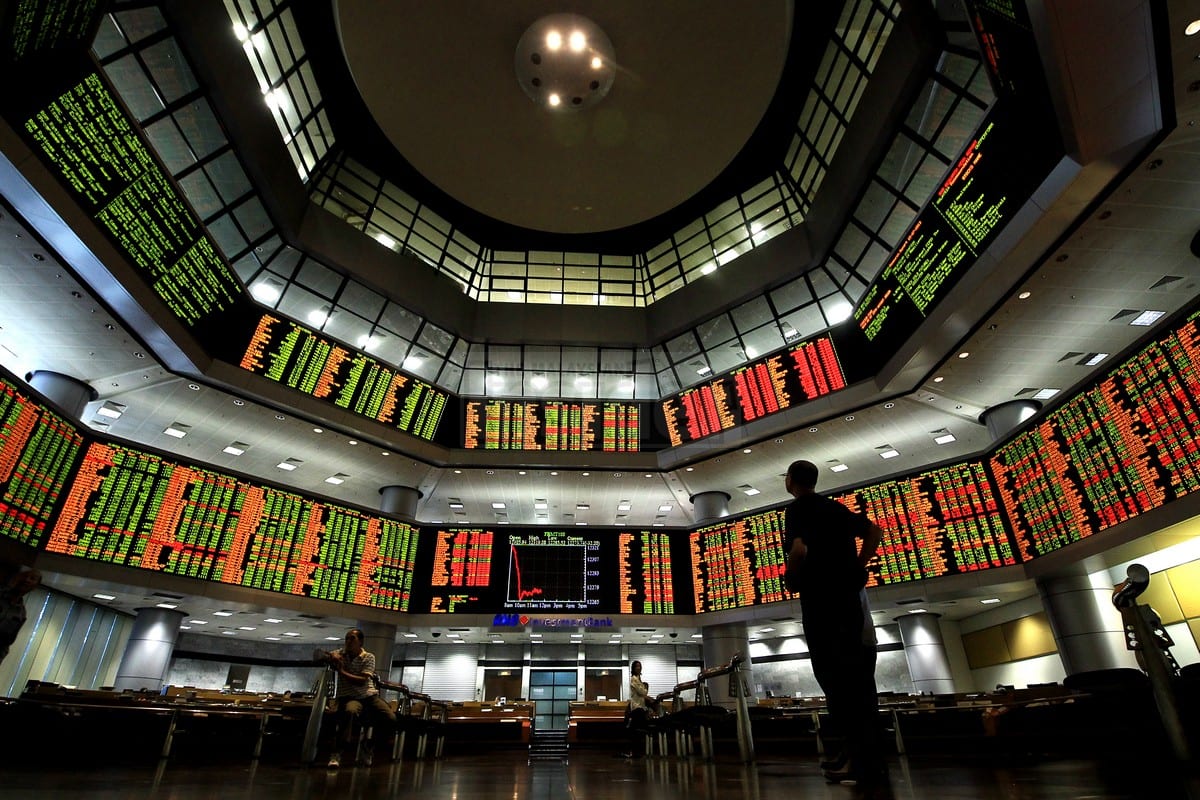
    “Over the next two and a half months, investors opened thirty-eight million new stock accounts, more than quadruple the number of accounts opened in all of 2014,” Osnos wrote. “Retail exchanges, equipped with audience seating, attracted retirees and other small-time investors who spent hours scanning the digital displays, like visitors to the dog track.”

    This was a bubble primed for pricking. But that wasn’t all. On July 8, during a major market crash, Chinese regulators imposed a lockup on shareholders owning 5% or more of their companies, prohibiting them from selling for six months.

    The effect of lockups is well understood in mature stock markets; they tend to create latent bearish pressures as the expiration approaches. That expiration was due for Friday, Jan. 8, plainly creating some of the downdraft witnessed this week.

    The circuit breakers are another source of trouble. Introduced Jan. 4, the rules halt trading for 15 minutes after a 5% drop in the benchmark CSI 300 index, and stop trading for the rest of the day when the index falls 7%. They were triggered on day one, and again on Wednesday.

    Circuit breakers exist in U.S. markets, but critics say they’re cinched too tight in China, where 5% swings have been far more common. In the U.S., trading is shut down only if the Standard & Poor’s 500 benchmark falls 20% in a day.

    Adding to the confusion is that Chinese authorities lack the courage of their own convictions. On Wednesday, regulators tried to keep the bear caged by extending the stock lockup for three more months, albeit in modified form–big shareholders could sell, but only up to 1% of their companies’ shares. And following the circuit-breaker meltdowns of Monday and Wednesday, they scrapped the circuit-breakers themselves, a clear indication that they were not implemented properly in the first place.

    Among other signs of the immaturity of the markets and their regulators are stiff limits on short-selling–after a market crash this summer, the Shanghai and Shenzhen exchanges banned one-day short sales, in which traders place short orders and cover them on the same day. Mature exchanges understand that short selling is an indispensable relief valve for overheated bull markets.

    All these features, artifacts of the government’s inclination toward intervention in the stock market on the bull side, make the market an unreliable gauge of economic trends, many critics say. (Though they’re not unanimous — last February, economists at MIT and New York University argued that the market had matured to the point that it was providing reasonably accurate signals about future corporate earnings. “China’s stock market no longer deserves its reputation as a casino,” they wrote.)

    None of this means that there’s not cause to be concerned about the Chinese economy and its effect on world markets. Underlying the Chinese market plunge are signs that the world’s second-largest economy is slowing down, and that government economic officials aren’t fully up to the task of managing it.

    They’ve been frantically depreciating the Chinese yuan, which will put pressure on the nation’s trading partners by making Chinese exports more competitive and imports more expensive. The rapid depreciation sends a signal, moreover, that policymakers are getting to the end of their stimulative arsenal.

    Adding to uneasiness about government policy, no one has ever been entirely certain about the pace of China’s economic growth because its official figures are untrustworthy. Gross domestic product may have been overstated as much as three-fold, some observers believe.

    There’s no question that cracks in the Chinese economy are worrisome, but the wild swings of the stock market may be exaggerating the mood of panic. It makes sense for investors worldwide to keep their eye on the economy, but the stock exchanges? Just watch the ride.
     

  • European Stocks Fall on North Korea Bomb Test

    European Stocks Fall on North Korea Bomb Test

    European shares fell on Wednesday as a self-professed bout of nuclear testing by North Korea and a falling renminbi rattled investors.

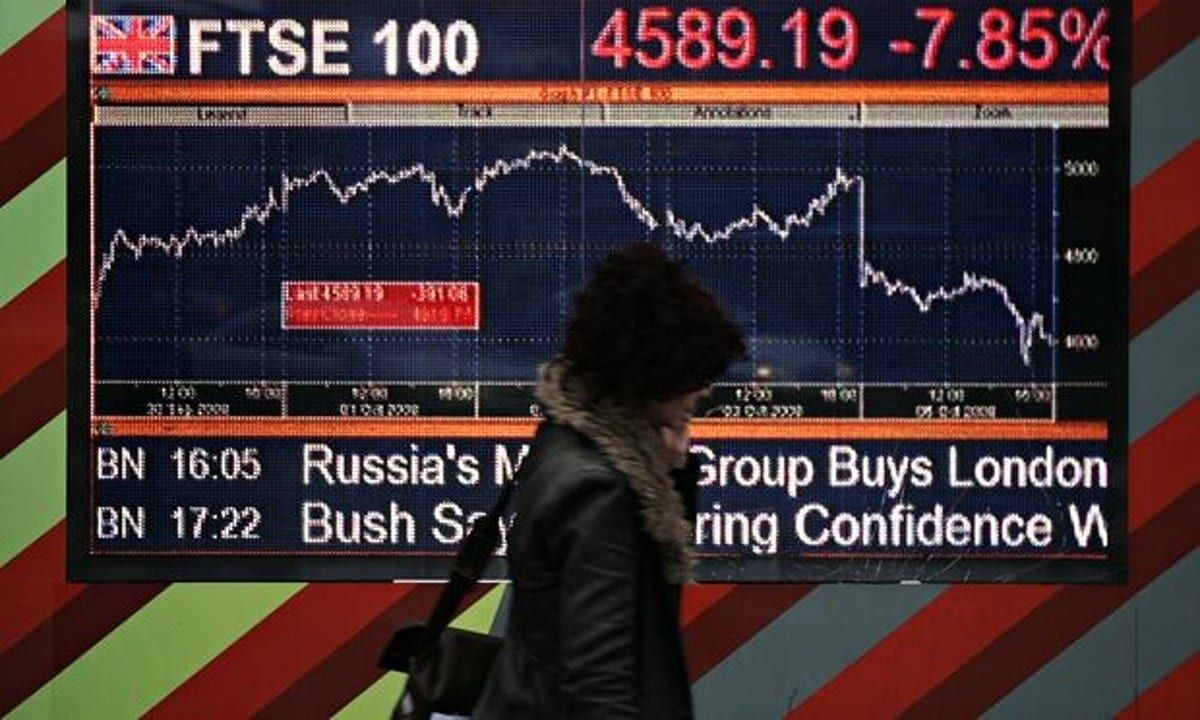
    By late morning in London, the FTSE 100 was down 1.33% at 6,055.53. Mining stocks, as leaders BHP Billiton (BHP) and Rio Tinto (RIO) led the benchmark lower.

    In Frankfurt, the DAX was down 1.31% at 10,175.31 and in Paris the CAC 40 was down 1.36% at 4,475.91. Volkswagen (VLKAY)  extended Tuesday’s losses in Frankfurt amid fears of hefty legal costs in the U.S. over emissions-tests rigging.

    After the Chinese central bank set the renminbi reference point at a weaker-than-expected level, the currency fell to a five-year low against the dollar. Meanwhile, North Korea claimed to have tested an underground hydrogen bomb, although some international observers were skeptical.

    Final eurozone purchasing managers’ data from Markit Economics came in better than expected in December, with the composite index, which melds the service sector with factory output, unexpectedly rising to 54.3, taking it further above the 50 threshold which separates economic expansion from contraction. Initial December data had pointed to a reading of 54.0. However, weak European Union producer price data for November later took the sheen off those Markit figures.

    Construction and engineering company Costain was up almost 2% in London after it reported record orders worth £3.9 billion ($5.7 billion) in 2015, including £2.8 billion-worth of revenue that Costain will accrue in 2017 and beyond. It will release its full 2015 results on March 2.

    Retailer Topps Tiles was up about 1.3% after reporting same-store sales growth of 4.4% in its first quarter.

    Another retailer, Card Factory, was up 1.8% as it announced that Christmas trading had met its expectations. It said CEO Richard Hayes would retire and be replaced by Karen Hubbard, the chief operating officer of discounter B&M European Value Retail.

    Insurer NN (NNGPF) was up almost 3% at €32.10 in Amsterdam after ING cut its stake to 16.2% from 25.8%. ING sold the shares at €31 in an accelerated book build, raising €1 billion ($1.1 billion). NN itself bought 8 million of the 33 million shares on offer.

    Many Asian indices fell as the renminbi and emerging-market currencies retreated.

    In Seoul, stocks were mixed, with the main index closing up 0.47% at 687.27 after the North Korea H-bomb claim. But Chinese stocks recovered after a state media outlet reported that Chinese securities regulators would extend a six-month ban on share selling by major investors until permanent rules were put in place. The ban would otherwise have expired on Friday. The Shanghai Composite closed up 2.25% at 3,361.84 and the Shenzhen Component index gained 2.24% to close at 11,724.88.

    In Hong Kong, the Hang Seng closed down 0.98% at 20,980.81.

    Shares of New World China Land closed up almost 21% in Hong Kong at HK$7.49 per share after majority shareholder New World Development offered HK$7.80 per share to take the company private after a previous attempt failed to garner sufficient shareholder approval in June 2014. The new offer values the stock at HK$67.8 billion ($8.7 billion).

    In Tokyo, the Nikkei 225 closed down 0.99% at 18,191.32 and the Topix fell 1.05% to close at 1,488.84.

    In Sydney, the S&P/ASX 200 closed down 1.18% at 5,123.13.

  • China stocks plunge 7%, activate circuit breaker for the second time

    China stocks plunge 7%, activate circuit breaker for the second time

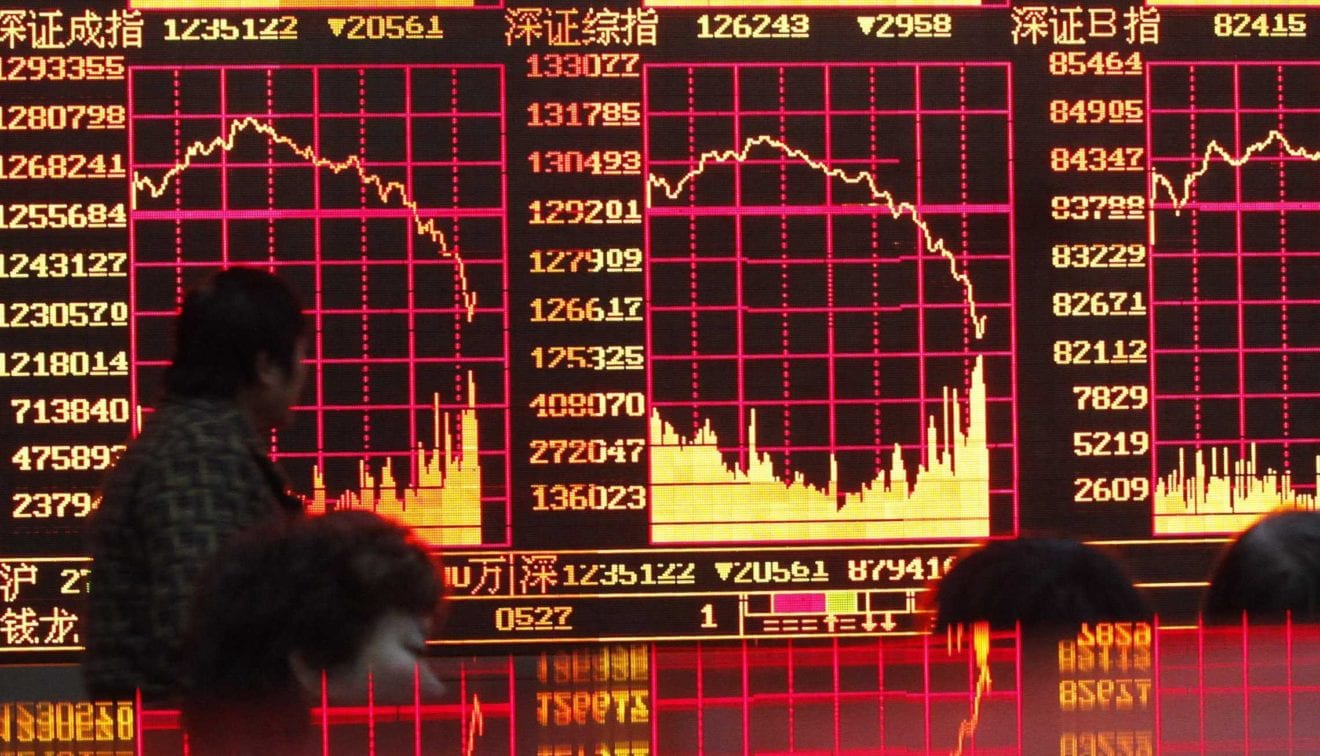
    Trading in China’s stock markets has been halted for the rest of the day, after a 7 per cent plunge in the blue-chip CSI300 index in the afternoon trading session triggered a circuit breaker mechanism which came into effect on Monday (Jan 4).

    Earlier in the session, trading in both the country’s equity indexes and equity index futures had been halted for a brief 15 minutes, following a 5 per cent decline in the benchmark index.

    The rapid activation of the second trading halt just after 1.30 pm local time indicated “a rise in market volatility” following the first trade suspension.

    “There was uncertainty in the markets. Investors were worried that maybe they might not be able to sell stocks after markets were halted,” Jackson Wong, associate director at Huarong international Securities, said in a telephone interview. “So when markets resumed trade, we saw an acceleration in selling.”

    The fact that retail investors account for nearly 70 per cent of China’s stock-market trading volume also contributed to the rapid selloff.

    “Retail investors are by nature more risk averse than institutional investors.. It isn’t hard to understand why markets legged down hard to the 7 per cent final breaker limit when markets reopened after the first circuit breaker was triggered and halted the market for 15 minutes, as this 15 minutes give a big window of opportunity for investors, mostly retail, to get new sell orders queued into the market,” Gavin Parry, managing director of Hong Kong-based Parry International Trading, said in an email interview.

    For most of Monday’s session, Chinese shares were on the back foot, following a dismal reading from the latest Caixin manufacturing purchasing mangers’ index (PMI) and ahead of the imminent expiration of a share sales ban on listed companies’ major shareholders, according to IG’s market strategist Bernard Aw.

    In addition, the move by authorities to cut the yuan’s value against the greenback on Monday, making it weaker than 6.5 for the first time in more than four-and-a-half years, added to the risk-off sentiment.

    The Shanghai Composite ended down 6.9 per cent, while the smaller Shenzhen Composite nosedived 8.2 per cent. In Hong Kong, the benchmark Hang Seng index was pulled down nearly 3 per cent.

    Mr Aw expects China’s stock markets to remain on a downward spiral on Tuesday. “I’m quite sure that there will be downward pressure tomorrow,” he said. “Circuit breakers only help to stall the pace of declines, but they do not stop the direction of movements.”

    For CMB International’s Strategist Daniel So, China’s A-shares will likely see downward pressure in early trading on Tuesday, but may “turn north by (the) market close” on the back of support from some investors who believe that now is “a good opportunity for bottom fishing amidst panic selling”.

    CIRCUIT BREAKER: BOON OR BANE?

    The idea of a circuit breaker mechanism was first raised by the Shanghai Stock Exchange last September and officially confirmed on Dec 4, 2015.

    Under the mechanism, a move of 5 per cent in either direction from the CSI300 index’s previous close will trigger a 15-minute trade suspension across the country’s stock indexes if the move occurs before 2.45 pm local time. After that, a 5 per cent move will prompt a trade suspension until the market closes at 3.00 pm.

    Moves of 7 per cent in the index will spark a trading halt for the rest of the day.

    The introduction of a circuit breaker seems to have sparked more unease among Chinese investors, despite its good intentions of limiting market volatility, according to Huarong’s Mr Wong.

    “Investors are just getting used to the new mechanism. After they get used to the idea, it may not be as bad,” the Hong Kong-based analyst said. “But to be honest, 5 to 7 per cent swings is very normal for China’s markets so while the stock market circuit breaker is introduced with good intentions, it might not be a good idea given the experiences of Chinese investors.”

    On the other hand, IG’s Mr Aw believes that investors should look beyond the short-term repercussions as the new mechanism will bring China’s markets more in line with international standards.

    The circuit breaker system will also “complement” the current 10 per cent daily limit rule which is usually limited to only “a handful of stocks”, he noted.

    Under current rules, individual stocks and index futures in China are allowed to rise or fall a daily maximum of 10 per cent from the previous closing level. Trading of a stock stops when it hits the daily maximum allowable limit.

  • Kalyan Jewellers plans IPO

    Kalyan Jewellers plans IPO

    Indian retailer Kalyan Jewellers is planning an IPO to raise capital for expansion internationally.

    The company has plans for six stores in Qatar and an undisclosed number in Singapore, Malaysia and Sri Lanka.

    Chairman and MD T S Kalyanaraman has not revealed the timeframe for the IPO, but the move comes a year after high-profile private equity investor Warburg Pincus took a cornerstone stake in the business, effectively giving it an international scale credibility.

    Kalyan has 85 premium stores across India and in the Middle East and has a further 15 in planning. More significant is its second tier of concessions and ‘service centre’ stores branded ‘My Kalyan’ – a network currently numbering 650, with another 350 planned by March next year.

    “We had opened two [Kalyan] stores in Chennai – at Chromepet and Adayar – a couple of days ago,” said Kalyanaraman.

    “Going at this pace, we will be touching the 100-store mark towards the end of financial year 2016,” he said.

    Kalyanaraman sees huge potential in the ‘affordable diamond’ segment of the market, which it plans to service through the My Kalyan network.

  • Implications of China’s Stock Market Crash

    Using extreme measures, the Chinese regime eventually managed to stabilize the stock market crash that started in mid-June, during which both the Shanghai and Shenzhen stock market indices fell more than 30 percent in three weeks.

    While many retail investors have begun to show signs of relief, even expressing gratitude to the government for “saving” the stock market and their investments, the episode has a very different meaning to foreign governments and investors alike.

    Most importantly, it reveals that China’s stock market is still at a very premature stage, and the Chinese authorities’ inclination to exercise control is overwhelmingly strong. Many analysts and international media are beginning to cast doubts on the future direction of China’s economic and financial reforms.

    In recent years, China has made great efforts to liberalize its stock market. Reform measures have been implemented, such as the gradual introduction of Renminbi Qualified Foreign Institutional Investors (RQFII) to participate in the A share market, as well as the launch of the Shanghai-Hong Kong Stock Connect last November that allows investors in each market to trade shares on the other market.

    China has never shied away from its aspiration to transform Shanghai into a regional or even international financial center.

    However, the meltdown of the stock market and the regime’s drastic responses—which include banning any new IPOs, prohibiting major shareholders to dispose of their shares within a 6-month period, and allowing listed companies to suspend trading without any valid reasons—have undoubtedly damaged the confidence of international investors.

    Unlike the more mature stock markets, China’s stock market is dominated by retail investors who have little investment knowledge and experience.

    Increasing the participation of institutional investors, particularly from the West, will be an important step for the market’s further growth and development. The pace of such reforms will definitely be stalled in the aftermath of the stock market crash.

    Another of China’s important financial goals is the internationalization of the yuan. According to the International Monetary Fund (IMF), the opening of its capital account might help Beijing meet IMF’s criteria to join its Special Drawing Rights currency basket, which would greatly enhance the yuan’s popularity and status.

    Yet again, one possible consequence of the stock market turmoil is that China’s chance of success in this endeavor might be compromised.

    What lessons the Chinese authorities have learned and what direction they choose will be the focus of international attention.

  • China’s stock market takes a dive Friday

    China’s stock market takes a dive Friday

    Chinese investors watched in distress as stocks sank by more than seven percent in trading Friday, marking the biggest drop in five months and stoking fears of a peaked market, according to Bloomberg.

    For weeks, investors have worried about a looming end to China’s longest ever bull run, a market characterized by strong investor confidence, a sustained uptick in stock prices, and the expectation that the rise will continue. The country’s economic boom so far has lasted 935 days, Bloomberg reported Friday.

    The benchmark Shanghai Composite index dropped by 7.4 percent to 4,192.87, a 19 percent descent from this year’s June 12 peak, according to the Wall Street Journal.

    The dismal performance followed the Chinese markets’ worst weekly performance since 2008 a week ago, according to the BBC. The Shanghai Composite fell by 6.4 percent, and overall took a 13 percent drop during the week.

    “The concern is that a stock market collapse this year, as the rest of the Chinese economy is struggling to recover, might damage Chinese consumers’ confidence, their willingness to buy other things,” said Reuters Shanghai correspondent Pete Sweeney.

    In addition to affecting trade with foreign companies, losing consumer confidence could lead to sweeping consequences for China’s retail-dominated economy, according to analysts.

    Hans Goetti, Head of Investment in Asia at Banque Internationale A Luxembourg, told the Economic Times:

    The Chinese market has rallied tremendously this year but we have to remember one thing. It is a market that is dominated by retail investors. In fact, 80 percent of investments in China are done by retail investors and, accordingly, margin debt has gone to the stratosphere. This has led to some worries by the securities regulators to reduce margin debt, hopefully, without crashing the market. Now that is a tall order.

    Michala Marcussen, global head of economics at Société Générale, told Bloomberg that it was important to keep Friday’s events in perspective. “To my mind, what’s happening now is probably not a bad thing from a long-term perspective,” she said, citing the spike in China’s equity prices this year by almost 30 percent. “A bit of a healthy adjustment.”

    Ultimately, the “tremendous transitions” in the Chinese economy will continue to be a fundamental of the market going forward, Ms. Marcussen said.

    Reuters reports that the triggers for Friday’s tumble are far ranging, from “tighter cash supply” to “anxiety about policy direction.” Another concern: China’s initial public offerings (IPO) frenzy, which can perhaps best be evidenced by the jaw-dropping bids received by China National Nuclear Power Co., the country’s second-largest atomic power operator. The company, which had asked for $2 billion, raked in bids of $273 billion, according to Bloomberg. Reuters reports it eventually raised $2.1 billion — the country’s largest IPO since 2011.

    “The IPO boom in the Chinese market is such that more than 50 IPOs listed or were approved by the CSRC (China Securities Regulatory Commission) over the past two weeks,” reported the Economic Times.

    Going forward, “the big question for the Chinese authorities is whether they’re going to prop up the market,” said CNBC’s Sri Jegarajah. “There could be a 50-50 chance of some kind of intervention in the market, either directly or through policy support to shore up confidence.”