Tag: stock market

  • Vietnam stock market hits new low, could go lower

    Vietnam stock market hits new low, could go lower

    Vietnam’s stock market fell 4.11 percent on Tuesday afternoon, hitting its lowest point this year, following a dramatic plunge in the second quarter.

    The country’s benchmark stock index, VN-Index, fell 39 points to 908.26 by 2:25 p.m. Tuesday, while the VN30-Index, representing a group of 30 largest capitalization stocks in the country, also fell by 3.7 percent to 895.86.

    The smaller HNX-Index on the Hanoi Stock Exchange and the UPCoM-Index for unlisted companies also dipped 3.7 percent and more than two percent, respectively.

    Shares of banks, including Vietcombank and ACB, plunged 4-5 percent.

    Meanwhile, blue chip stocks like Vinhomes JSC (VHM), Vingroup JSC (VIC), and steelmaker Hoa Sen Group (HSG) were being sold en masse, driving down the entire market.

    This marks a further drop in Vietnam’s stock market after it plunged 18.19 percent in the second quarter this year, making it the worst-performing market in the world.

    Local stock companies have anticipated that the VN-Index could fall to 900 points and even further.

    Vietnam’s stock market had experienced its heyday since last year, when it hit a 10-year high and reached 984.24 points in the last trading session of 2017. It had not broken the 800-point barrier since 2008.

    Continuing its good run, the VN-Index grew 19.33 percent in the first three months of this year, becoming the best-performing market in the world.

    It passed the 1,200-point level on April 9, and has hovered at above 900 since then.

  • Most Southeast Asian markets fall as trade tensions escalate

    Most Southeast Asian markets fall as trade tensions escalate

    Most Southeast Asian stock markets declined on Tuesday, in line with broader Asia, as U.S. President Donald Trump threatened new tariffs on Chinese goods in an escalating trade war between the world’s top two economies.

    Trump warned on Monday that Washington would impose a further 10 percent tariff on $200 billion of Chinese goods after Beijing’s decision to raise tariffs on $50 billion in U.S. goods, which was in retaliation for U.S. tariffs announced on Friday.

    Trump said if China increases its tariffs again in response to the latest U.S. move, “we will meet that action by pursuing additional tariffs on another $200 billion of goods.”

    “This is causing a little bit of uncertainty in the market. It is very worrisome for investors and they are staying on the sidelines and avoiding risky assets such as equities,” said Lexter Azurin, a senior equity analyst at Manila-based AB Capital Securities.

    MSCI’s broadest index of Asia-Pacific shares outside Japan hit its lowest since February as safe-haven assets such as gold and the Japanese yen gained.

    Philippine shares fell as much as 2.2 percent to their lowest since March 27, 2017, weighed down by industrials and financials. SM Investments Corp declined 3.2 percent, while BDO Unibank Inc shed 2.9 percent.

    A slim majority of economists believe the Philippine central bank will raise interest rates on Wednesday, but opinions are sharply divided, with the weak peso likely to be the factor that will tilt the scale.

    Thai shares fell nearly 1 percent to their lowest since Sept. 28, 2017 and were on track for a fifth straight session of decline.

    On Wednesday, the central bank is expected to leave its policy interest rate near a record low to encourage more broadly-based economic growth at a time when inflation remains low, according to all 21 economists surveyed in a Reuters Poll.

    Vietnam shares fell 2.8 percent to their lowest in nearly three weeks, with Petrovietnam Gas Joint Stock Corp declining to its lowest in six months, while Vietnam Technological and Commercial Joint Stock Bank dropped 6.8 percent.

    Malaysian shares were down for a seventh straight session, while Singapore shares rose on the back of gains in financials.

    Indonesian financial markets are closed through Tuesday for Eid Al-Fitr.

  • Most SE Asian stocks gain; Singapore, Indonesia up nearly 1 percent

    Most SE Asian stocks gain; Singapore, Indonesia up nearly 1 percent

    Most Southeast Asian stock markets rose on Monday, with Singapore gaining nearly 1 percent as upbeat sentiment following positive U.S. jobs data pushed global equities higher.

    Asia ex-Japan shares rose 1 percent to their highest level since May 17.

    Data on Friday showed that U.S. job growth accelerated in May and unemployment rate dropped to an 18-year low.

    “We are following the bullish sentiment on Friday on U.S. after job data,” said Linus Loo, Head of research at Lim & Tan Securities.

    “Because we (South-east Asia) are export-driven, especially Singapore, we tend to track the U.S.,” he added.

    Singapore shares rose 0.9 percent in early trade. Financials drove gains, as heavyweights DBS Group Holdings and Oversea-Chinese Banking Corp gained 1.2 percent each.

    Indonesian shares rose 0.8 percent led by financials and telecommunication stocks.

    Indonesia’s annual inflation rate in May was 3.41 percent, slightly below the median forecast of 3.28 percent in a Reuters poll, data from the statistics bureau showed on Monday.

    An index of the country’s 45 most liquid stocks rose about 1.3 percent.

    Vietnam stocks rose as much as 0.9 percent, as materials and industrials extended gains from last week. Vietjet Aviation climbed nearly 7 percent while Vietcombank rose as much as 2.5 percent.

    Meanwhile, Philippine shares fell 0.9 percent, dragged lower by industrial on caution ahead of inflation data due on Tuesday.

    Philippine inflation likely accelerated for the fifth straight month in May, a Reuterspoll showed, but analysts were divided over when the central bank will again raise interest rates.

    Aboitiz Equity Ventures slumped 3.8 percent while SM Investments Corp fell 2.7 percent.

    Malaysian and Thai shares were largely unchanged in early trade.

  • Most SE Asian markets fall; Malaysia down for 5th session in six

    Most SE Asian markets fall; Malaysia down for 5th session in six

    Most Southeast Asian stock markets fell on Monday, with Malaysia declining for a fifth session in six, while Indonesia extended gains on the back of financial and infrastructure stocks.

    “There are lots of pitfalls that could sideswipe the markets,” said Stephen Innes, head of trading APAC at Oanda, referring to the U.S.-China trade issues, N.Korea-U.S. summit and strong U.S. dollar.

    U.S. oil futures hit six-week lows on expectations major producers may ease output curbs, while Asian stocks and U.S. share futures gained on signs the United States and North Korea were still working towards holding a summit.

    In Malaysia, trading services firms including IHH Healthcare and Sime Darby were among the top losers. IHH Healthcare fell as much as 4.8 percent and Sime Darby plunged 9 percent on disappointing quarterly results.

    Vietnam shares fell as much as 2.9 percent to a more than five-month low. Vinhomes JSC declined 5.5 percent and Vietnam Prosperity Joint Stock Commercial Bank fell 5 percent.

    Indonesian shares climbed as much as 1.4 percent and were headed for a fifth straight session of gains. Bank Mandiri (Persero) Tbk PT rose 5 percent and Bank Central Asia Tbk PT climbed 1.1 percent.

    The central bank said on Friday that it would hold an additional meeting of its board of governors on Wednesday to discuss economic and monetary conditions.

    “We suspect that the persistent selloff in the rupiah and upward pressures on local government bond yields (despite the recent 25bps rate hike) may prompt further action,” DBS said in a note.

    “Further BI rate hikes may be needed, with the next one possibly as early as this week.”

  • Most Southeast Asia stocks end lower; Indonesia posts 11-month closing low

    Most Southeast Asia stocks end lower; Indonesia posts 11-month closing low

    Most Southeast Asian stock markets reversed early gains to end lower on Monday with Indonesia marking its lowest close in more than 11 months while Vietnam shed 2.5 percent.

    Jakarta’s main index closed at its lowest since June 2017, with banking stocks bearing the brunt.

    Bank Rakyat Indonesia ended 6.1 percent lower, while Bank Negara Indonesia lost 3.6 percent.

    Bank Indonesia said it would conduct three foreign exchange swap auctions this week to ensure there is enough currency liquidity in the market after it hiked its benchmark interest rate last week to support the rupiah and plug capital outflows.

    “As the U.S. continuously raises interest rates, it’s impacting a lot of emerging markets, such as Indonesia. Hence, the central bank has to raise interest rates to stamp out capital outflows,” said Joel Ng, analyst at KGI Securities.

    The index of the country’s most liquid stocks shed 1.3 percent.

    Vietnam ended 2.5 percent lower, with real estate and financials leading the fall. Vingroup Joint Stock was the biggest drag on the index, closing 7 percent lower.

    “Foreign selling recently has hit Vietnam harder. We went up a lot in the first quarter, so the impact of profit-taking is greater now,” said Fiachra Mac Cana, head of research at Ho Chi Minh Securities.

    Singapore nudged up 0.54 percent to end at a one-week high, while Thai stocks gained for a third straight session.

    Petroleum explorer PTT Exploration and Production closed 3.4 percent higher, while Kasikornbank gained 2.4 percent.

    Thailand saw its fastest economic growth in five years in the first quarter, boosted by strong exports and tourism, plus a slight firming in private consumption.

  • Bursa Malaysia to trade firmer this week

    Bursa Malaysia to trade firmer this week

    Bursa Malaysia is expected to trade firmer next week, taking cue from the encouraging 2017 gross domestic product (GDP) data released on Wednesday.

    Affin Hwang Investment Bank Vice-President/Head of Retail Research, Datuk Dr Nazri Khan Adam Khan said the 5.9% GDP growth, deemed as positive and taking on the good momentum from last year, would improve investors’ appetite on the local bourse.

    “We can see that the volume has gone up too, which means we have the momentum to trend higher next week.

    “The benchmark FTSE Bursa Malaysia KLCI (FBM KLCI) is also likely to touch the 1,860 points level next week,” he said.

    Bank Negara Malaysia in a statement said Malaysia’s GDP expanded 5.9% in the fourth quarter of 2017 from a year earlier, driven mainly by private sector demand, with support from the external sector, while the 2017 full-year GDP grew 5.9% against the 4.2% expansion in 2016.

    The central bank said the outlook for 2018 remained favourable, supported by domestic demand.

    Nazri said that the ringgit is also expected to be higher next week amid a stronger current-account surplus of RM12.9 billion in the fourth quarter last year.

    “The rebound in the ringgit to currently quote at 3.8-level, recovery in oil prices as well as positive sentiment on global equity markets, will boost the FBM KLCI’s performance and increase investors’ confidence,” he added.

    Meanwhile, Maybank Investment Bank in a note said in the first half of 2018 (1H2018) Market Outlook session, it expects fiscal stimulus pre-GE14 (General Election-14) and Bank Negara’s overnight policy rate (OPR) hike to be the two main thematics driving investment.

    “But for the longer term play, the focus is on multi-year orderbook replenishment in infrastructure construction, tourism and Look East Malaysia.

    “Fiscal stimulus in the lead up to the general election will be those in the consumer sector as a boost to disposal income is expected to continue and will be front loaded in 1H2018.

    ‘While for the OPR, it will benefit banks and it is believed, contractors will have the highest potential of winning jobs for the upcoming megaworks,” it added.

    On a Thursday-to-Friday basis, the benchmark FTSE Bursa Malaysia KLCI (FBM KLCI) finished 18.46 points higher at 1,838.28.

    The FBM Emas Index jumped 142.43 points to 13,117.49, the FBMT100 Index appreciated 127.74 points to 12,829.58 and the FBM Emas Syariah Index fell 132.54 points to 13,145.10.

    On a sectoral basis, the Plantation Index gained 50.94 points to 7,996.97, the Industrial Index declined 18.70 points to 3,202.66, while the Finance Index increased 137.94 points to 17,594.41.

    Weekly turnover went down to 6.46 billion units worth RM7.76 billion from 15.68 billion units valued at RM16.43 billion.

    Main market volume fell to 4.08 billion shares valued at 7.30 billion from 10.01 billion units worth RM15.42 billion.

    Warrant turnover decreased to 1.24 billion units worth RM242.26 million from 2.79 billion units valued at RM566.26 million last week.

    The ACE market slipped to 1.10 billion shares worth RM205.73 million from 2.83 billion units worth RM432.96 million previously.

    The local market was closed on Friday for the Chinese New Year celebration.

    The gold futures contract on Bursa Malaysia Derivatives is likely to extend gains next week as investors remain cautious on global equity markets and a weaker US dollar, said an analyst.

    OANDA Corp Head of Trading for Asia Pacific, Stephen Innes said higher US inflation combined with the US dollar exhibiting zero correlation to higher interest rates amidst burdening dual deficits, should play out favourably for the gold markets.

    “Gold is in a perfect spot to extend gains. Higher US inflation as expressed through the higher consumer price index data is positive. We could see a more significant move into gold if equity prices start to lose traction,” he said.

    Another dealer said Bursa gold futures market might track closely the movement of COMEX gold’s Friday close to get direction of the week.

    The local gold market traded higher throughout the holiday shortened week in line with COMEX gold.

    The market was traded half-day on Thursday and closed on Friday for the Chinese New Year celebration.

    On a Thursday-to-Friday basis, February 2018 increased 46 ticks to RM169.40 a gramme, March 2018 rose 37 ticks to RM169.65 a grame, April 2018 jumped 49 ticks to RM170.45 a gramme and May 2018 went up 37 ticks to RM170.20 a gramme respectively.

    Weekly turnover eased to 15 lots worth RM286,365 from last week’s 26 lots valued at RM436,615, while open interest eased slightly to 72 contracts from 75 contracts.
  • Asian markets plunge as Wall Street rout spreads

    Asian markets plunge as Wall Street rout spreads

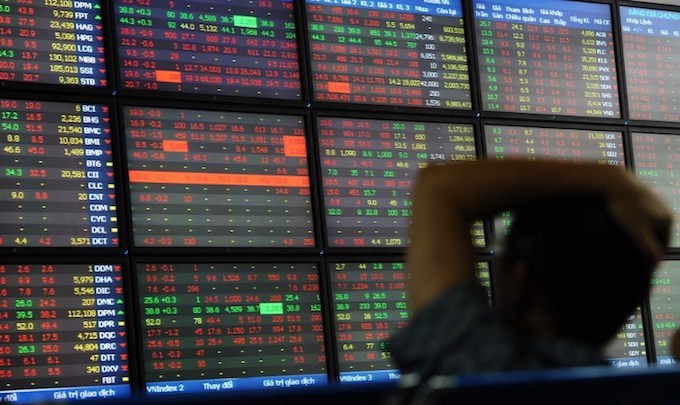
    Asian stocks plunged Tuesday after a record-breaking loss on Wall Street, extending a global rout as panicked investors fret over rising US borrowing costs and cash in profits after months of market euphoria.

    Tokyo led a collapse throughout the region in early trade, diving more than five percent, while Hong Kong was down almost four percent at one point and Sydney sank three percent.

    Dealers tracked their colleagues in New York, where the Dow suffered its worst points fall in history, wiping out all its 2018 gains, while the S&P 500 also took a beating to sit down for the year.

    The heavy selling comes after months of surges fuelled by optimism over the US economy, corporate earnings and the global outlook.

    While traders have been piling into equities, pushing many global indexes to record or multi-year highs, there has been growing concern on trading floors about elevated US Treasury bond yields — at four-year highs — and the likelihood of fresh Federal Reserve interest rate hikes.

    The so-called Vix “fear” index more than doubled in US trade on Monday.

    Among other Asian markets Singapore was 2.3% off, Seoul dived three percent, Taipei lost 3.7%, Manila plunged 2.7% and Shanghai gave up 2.1%.

  • Little movement forecast for Vietnamese stocks

    Little movement forecast for Vietnamese stocks

    Vietnamese shares are forecast to move marginally this week as investors could realise their earnings after having priced in the growth prospects of both the market and local stocks.

    The benchmark VN Index on the HCM Stock Exchange gained 1.13 per cent to close at 1,062.07 points. After the last two sessions, it has almost regained a loss of 2.66 per cent on Wednesday.

    The minor HNX Index on the Ha Noi Stock Exchange edged up 0.41 per cent to end at 122.39 points. The northern market index has increased a total 1.6 per cent in the last two days.

    Both stock indices posted weekly growth this week with the VN Index rising 1.1 per cent after the last five trading sessions. The figure for the HNX Index is 1.3 per cent.

    More than 387.4 million shares were traded in each session last week, worth VNĐ9.44 trillion (US$420 million).

    The trading figures fell 4.5 per cent in volume but increased by 1.9 per cent in value compared to the previous week.

    The stock market indices increased on a weekly basis as investors were optimistic about the companies’ quarterly and yearly earnings reports and the market outlook this year.

    Strong confidence kept market trading liquidity high as investors continued to look for opportunities in stocks that declined on Wednesday.

    According to analysts and securities firms, the stock market will continue to grow in the coming week but the growth will be narrow as investors try to lock in gains after the indices performed well in recent weeks.

    The benchmark VN Index has moved up a total 7.9 per cent since the beginning of the year and the HNX Index has increased by 4.7 per cent.

    Investors have made big profits as they purchased stocks when the benchmark index was rising in the first two weeks. “They tended to lock in profits when bad news appeared and threatened their profitability,” Ngô Thế Hiển, a lead analyst at Sài Gòn-Hà Nội Securities Company (SHS) said.

    Nguyễn Hồng Khanh, head of market analysis at Sacombank Securities Company (SBS) said investors had priced in local stocks on expectations that both the market and corporations would perform well.

    However, they remained defensive and were willing to offload their portfolios if they saw any news that could hurt the market, Khanh said.

    “It’s a normal market sentiment at the moment, especially when the stock market is recording strong gains recently,” he said.

    The stock market would need to settle at the range of 1,020-1,070 points before making a further improvement, Hiển at SHS said.

    “The benchmark VN Index is accumulating at the range of 1,020 and 1,070 points, which were also the lowest and highest levels of the benchmark last week,” he said.

    A positive signal for investors was high trading liquidity, which proved investors were still attracted to the prospects of the market and stocks and they were willing to bottom-fish stocks that decline, Hiển said.

    However, he warned that investors should stay calm and avoid making new investment decisions as the stock indices were near their resistant levels and the market would become volatile in the near future.

    Khanh at SBS said the growth momentum of the market had mainly come from investors’ confidence in corporate earnings and such expectations had priced in stocks.

    “When the companies are about to release their earnings reports, stocks will be mixed and the market will grow slowly,” he said.


  • Bursa Malaysia to continue upward momentum next week

    Bursa Malaysia to continue upward momentum next week

    Bursa Malaysia is expected to continue its positive momentum next week, driven by a stronger ringgit, firmer oil price, strong global economic outlook, and better corporate earnings, a dealer said.

    Affin Hwang Investment Bank Vice-President/Head of Retail Research Datuk Dr Nazri Khan Adam Khan said the global economic outlook is looking good so far this year, triggered by buying interest among local and foreign investors.

    “It has been a good start (for FBM KLCI) this year, with positive outlook on the local and global economy. The local benchmark index has experienced the highest fund inflows in three years, signalling investors’ confident towards our market,” he said.

    For next week, he said that the FBM KLCI would likely move between 1,800 and 1,850 points.

    “The strong oil prices have so far lent support to our market, of which about 30 per cent of companies in Bursa Malaysia are directly and indirectly involved in the oil and gas industry,” he said.

    He said that the benchmark index would also be affected by US President Donald Trump’s tax reform plan.

    As the week ended, the market was traded mostly higher, benefitting from gains in the Wall Street, as well as positive economic data from China.

    However, the European Union’s (EU) approval of draft measures to back a ban on the use of palm oil in biofuels from 2021 on Thursday has hurt the plantation and palm oil related counters as the commodity is a major export from Southeast Asia to the EU.

    On a Friday-to-Friday comparison, the FBM KLCI performed better, gaining 6.16 points to end the week at 1,828.83.

    On the scoreboard, the FBM Emas Index slipped 26.78 points to 13,195.82, the FBMT 100 Index decreased 2.06 points to 12,860.60, the FBM Emas Syariah Index dipped 79.87 points to 13,627.46, the FBM 70 shed 154.79 points to 16,472.37, and the FBM Ace fell 192.66 points to 6,713.12.

    On a sectoral basis, the Finance Index surged 26.07 points to 17,236.98, the Plantation Index fell 99.45 points to 8,037.87 and the Industrial Index erased 31.52 points to 3,368.02.

    Total turnover slipped to 25.35 billion units valued at RM15.97 billion from 27.14 billion units valued at RM19.11 billion in the previous week.

    Main Market volume decreased to 17.14 billion shares worth RM14.73 billion from the previous Friday’s 17.88 billion shares worth RM17.59 billion.

    Warrants turnover declined to 2.64 billion units worth RM448 million from 3.46 billion units worth at RM479.51 million previously.

    The ACE Market narrowed to 5.51 billion shares valued at RM778.77 million against the previous week’s 5.74 billion shares valued at RM1.02 billion.

  • Bursa Malaysia rebounds to open higher

    Bursa Malaysia rebounds to open higher

    Bursa Malaysia rebounded from yesterday’s losses to open slightly higher today on renewed buying interest in selected heavyweights, amid a mixed start on regional markets, dealers said.

    At 9.10am, the benchmark FTSE Bursa Malaysia KLCI (FBM KLCI) stood at 1,824.10, up 2.50 points, from yesterday’s close of 1,821.60.It opened 1.79 points higher at 1,823.39.

    Overall market breadth was slightly positive with gainers leading losers 142 to 121, while 211 counters were unchanged, 1,386 untraded and 33 others suspended.

    Turnover stood at 190.75 million shares worth RM86.95 million.

    Kenanga Research expected the benchmark index to move towards the resistance level of 1,840 points and 1,866 points, while any near-term weakness is likely to be short-term in nature.

    “Immediate support is seen at the psychological level of 1,800 points and 1,793 points next, where investors can look forward to buying on dips,” it said in a research note today.

    Among heavyweights, Maybank was flat at RM9.86, Public Bank slipped two sen to RM20.86, while TNB rose 12 sen to RM15.72, with Petronas Chemicals and CIMB Bank up two sen each to RM8.19 and RM6.82, respectively.

    Of the actives, Sumatec earned half-a-sen to 10 sen, UMW O&G and Perisai Petroleum were flat at 34.5 sen and 6.5 sen, while Sino Hua-An fell one sen to 46 sen.

    The FBM Emas Index was 10.95 points higher at 13,151.05, the FBMT 100 Index rose 10.64 points to 12,815.42, but the FBM 70 shed 9.87 points to 16,374.26.

    The FBM Emas Syariah Index went up 23.80 points to 13,591.17, but the FBM Ace eased 0.95 of-a-point to 6,682.31.

    Sector-wise, the Finance Index improved 5.53 points to 17,195.59 and the Plantation Index declined 10.76 points to 8,058.29, while the Industrial Index advanced 15.03 points to 3,327.68.

    The physical price of gold as at 9.30am stood at RM162.85 per gramme, down 0.61 sen from RM163.46 at 5pm yesterday.

  • Bullish investors can bring Vietnam’s stock market to record high in 2018

    Bullish investors can bring Vietnam’s stock market to record high in 2018

    Vietnam’s stock market is expected to keep its upbeat sentiment of 2017 and drive the benchmark VN-Index to an all-time high at year end, analysts said.

    The Vietnam Stock Index (VN-Index), a capitalization-weighted index of all the companies listed on the Ho Chi Minh City Stock Exchange, already reached 1,000 points on Wednesday, the highest since the global financial crisis in 2007.

    It closed at 984.24 on the last working day of 2017, wrapping a bullish week and setting a 10-year high.

    Analysts believe the momentum will continue and bring the index to surpass the record 1,178 points in 2007.

    The market is seeing very low risks, and high confidence for growth, they said.

    RongViet Securities Corporation in Saigon said in a report that VN-Index will increase at least 17 percent this year or even 67 percent in its best scenario, meaning it could end the year somewhere between 1,170 and 1,640.

    Nguyen The Minh, a senior analyst at Saigon Securities Incorporation, was more specific.

    “VN-Index can reach 1,050 points in the short term and 1,300 at year end,” he said.

    Minh said stocks that have not received much attention last year should create big potentials now.

    The market in 2017 was driven by consumer goods stocks, but banking and energy will take the lead this year, he said.

    Minh said the market will be boosted by interest from the foreign sector. Foreign investors made more than $1 billion of net purchase last year, the biggest in five years, and they will continue to stick around for more privatization at public giants.

    Bloomberg called Vietnam a “frontier market” in Asia last year, as it was the biggest gainer in percentage terms: a 47 percent gain in the VN-Index. The market capitalization increased almost double to nearly $150 billion, fueled by state-owned company sales and listings, it said.

    Vietnam’s economy grew 6.8 percent in 2017, breaking its own 6.7 percent target which both government officials and economists had considered ambitious.

    The country remains one of the fastest growing economies in the world and has set the goal to expand another 6.7 percent this year.

  • Bursa Malaysia to push retail participation to 25%

    Bursa Malaysia to push retail participation to 25%

    Bursa Malaysia aims to boost retail investors’ participation to 25 per cent in the near term from the current 23.3 per cent with 80 programmes underway to increase financial literacy.

    Bursa Malaysia chief executive officer Datuk Seri Tajuddin Atan said only four percent out of the 853 respondents had chosen to invest in shares while the rest opted for less traditional investment tools.

    “The public should consider share investment as part of their investment portfolio and change the perception that share investments are too risky.

    “Investment in shares will help diversify portfolio with the opportunity to get higher returns compared to fixed deposit, current and savings account,” he said after launching the “What’s Your Goal” campaign to raise awareness on share investment opportunities today.

    “Besides shares, there are also other investmeny products on Bursa Malaysia like Exchange Trade Funds (ETFs), structured warrants and real estate investment trusts, which are attractive and can meet different risk appetite of investors,” he added.

    Tajuddin said ETFs did not have sales charge and have significantly lower management fee compared to other managed unit trust funds.

    “Stamp duty exemptions announced in Budget 2018 will further enhance the attractiveness of ETFs as a low cost investment product,” he added.

    As of September 27 this year, the trading average daily volume currently stands at RM572 million, 16 per cent higher that RM385 million last year.

    The campaign will run for three months from November 21 to February 2018.

  • Big money flowing into Vietnam stock market

    Big money flowing into Vietnam stock market

    The liquidity has improved considerably with trading value of VND4.5 trillion in each trading session. One month ago, Nguyen Huu, an investor, decided to buy Sacombank shares (STB). “If I make a bank deposit, I would get an interest rate of a maximum 7 percent for six months. Meanwhile, with the investment in STB, I expect profit at 15-20 percent at minimum,” he said.

    Huu bought STB when the share price was at VND9,500 per share. And if he had sold the shares some days later, he would have made a profit of 10 percent.

    According to Nguyen Duc Hung Linh from the Saigon Securities Incorporated (SSI), the cash flow to the stock market mostly comed from big investors who prepare in financial capability and have big targets.

    The VN Index has for the first time in the last nine years has regained the 700 point threshold, while the trading value has reached VND4.5 trillion per daily trading session and foreign investors’ portfolio value has reached the highest peak.

    On May 15 morning, the stock market witnessed a record morning trading session with VND3.1 trillion worth of shares were traded. Investors were excited when seeing 56 shares hitting the ceiling price level.

    On May 16, the trading volume increased to VND3.659 trillion, an increase of 18 percent, the highest trading volume in the history of the Vietnamese market.

    “There is so much money from new sources and new investors who are more hot-headed than old investors,” the representative of a closed-end fund said.

    Nguyen Tri Hieu, a renowned banking expert, at a workshop on the stock market held some days ago, commented that this was good news for Vietnam, but investors have been advised to be cautious.

    “The index has been escalating rapidly. If the trend continues, I think the VN Index would reach the 740 point threshold or even higher,” Hieu said.

    Tong Minh Tuan from VCB Securities commented that the most important thing is that the stock market has more good commodities this year to offer.

    “Foreign funds are very excited and they have taken action. I think the market would be even more busy towards the end of the year,” Tuan said.

    Other analysts also commented that they were optimistic about the market in 2017-2018, because there would be more good shares on the market once the state divests from several profitable companies.

  • Asian stocks mostly up despite weak economic news from China

    Asian stocks mostly up despite weak economic news from China

    Asian shares traded in positive territory Tuesday as gains in commodity stocks helped offset weakness overnight in U.S. markets.

    The Nikkei Stock Average NIK, +0.69% rose 0.2% with the S&P/ASX 200 XJO, +0.27% up 0.2% and Korea’s Kospi SEU, +0.62% up 0.3%. Hong Kong’s Hang Seng Index HSI,-0.28% was down 0.1% while the Shanghai Composite SHCOMP, +0.65% was flat.

    Traders sent U.S. oil prices up 2.9% to $43.02 a barrel following news that the Organization of the Petroleum Exporting Countries planned to hold informal talks in September that could lead to production cuts.

  • Bursa Malaysia opens slightly higher

    Bursa Malaysia opens slightly higher

    Bursa Malaysia opened slightly higher on Tuesday, extending yesterday’s gains but mild profit-taking in selected heavyweights limited the gains, dealers said.

    At 9.10am, the benchmark FTSE Bursa Malaysia KLCI (FBM KLCI) was 0.40 point better at 1,673.08, after opening 1.84 points higher at 1,674.49.

    Gainers outpaced decliners 148 to 64, while 193 counters were unchanged, 1,281 untraded and 26 others suspended.

    Turnover stood at 119.87 million shares worth RM45.70 million.

    In a research note today, RHB Retail Research maintained its bearish short-term outlook for the index, saying buying interest was still weak.

    “The index has not climbed above the recent high of the 1,675.50-point resistance mentioned since two weeks ago.

    “On a technical basis, as long as the bearishness of July 21’s ‘Tower Top’ pattern is not negated, we believe that the sellers still have control of the market,” it said.

    The FBM Emas Index rose 4.97 points to 11,741.69 and the FBMT 100 Index was up 3.61 points at 11,440.04.

    The FBM Emas Syariah Index increased 17.87 points to 12,373.70, the FBM 70 rose 7.46 points to 13,466.39 but the FBM Ace slipped 14.89 points to 5,469.39.

    Sector-wise, the Industrial Index gained 10.13 points to 3,160.24, the Plantation Index rose 6.63 points to 7,680.66 but the Finance Index was 11.95 points lower at 14,335.64.

    Among heavyweights, TNB, Maybank and IHH Healthcare were flat at RM14.58, RM7.98 and RM6.59 respectively, while Public Bank shed two sen to RM19.62.

    Of the actives, MBSB and PDZ Holdings advanced one sen each to 93 sen and 9.5 sen respectively, Konsortium Transnasional went up two sen to 18 sen while Vivocom Intl was flat at 29 sen.

    The physical price of gold as at 9.30am stood at RM167.34 per gramme, up 21 sen from RM167.13 at 5pm yesterday.