Tag: stock market

  • Implications of China’s Stock Market Crash

    Using extreme measures, the Chinese regime eventually managed to stabilize the stock market crash that started in mid-June, during which both the Shanghai and Shenzhen stock market indices fell more than 30 percent in three weeks.

    While many retail investors have begun to show signs of relief, even expressing gratitude to the government for “saving” the stock market and their investments, the episode has a very different meaning to foreign governments and investors alike.

    Most importantly, it reveals that China’s stock market is still at a very premature stage, and the Chinese authorities’ inclination to exercise control is overwhelmingly strong. Many analysts and international media are beginning to cast doubts on the future direction of China’s economic and financial reforms.

    In recent years, China has made great efforts to liberalize its stock market. Reform measures have been implemented, such as the gradual introduction of Renminbi Qualified Foreign Institutional Investors (RQFII) to participate in the A share market, as well as the launch of the Shanghai-Hong Kong Stock Connect last November that allows investors in each market to trade shares on the other market.

    China has never shied away from its aspiration to transform Shanghai into a regional or even international financial center.

    However, the meltdown of the stock market and the regime’s drastic responses—which include banning any new IPOs, prohibiting major shareholders to dispose of their shares within a 6-month period, and allowing listed companies to suspend trading without any valid reasons—have undoubtedly damaged the confidence of international investors.

    Unlike the more mature stock markets, China’s stock market is dominated by retail investors who have little investment knowledge and experience.

    Increasing the participation of institutional investors, particularly from the West, will be an important step for the market’s further growth and development. The pace of such reforms will definitely be stalled in the aftermath of the stock market crash.

    Another of China’s important financial goals is the internationalization of the yuan. According to the International Monetary Fund (IMF), the opening of its capital account might help Beijing meet IMF’s criteria to join its Special Drawing Rights currency basket, which would greatly enhance the yuan’s popularity and status.

    Yet again, one possible consequence of the stock market turmoil is that China’s chance of success in this endeavor might be compromised.

    What lessons the Chinese authorities have learned and what direction they choose will be the focus of international attention.
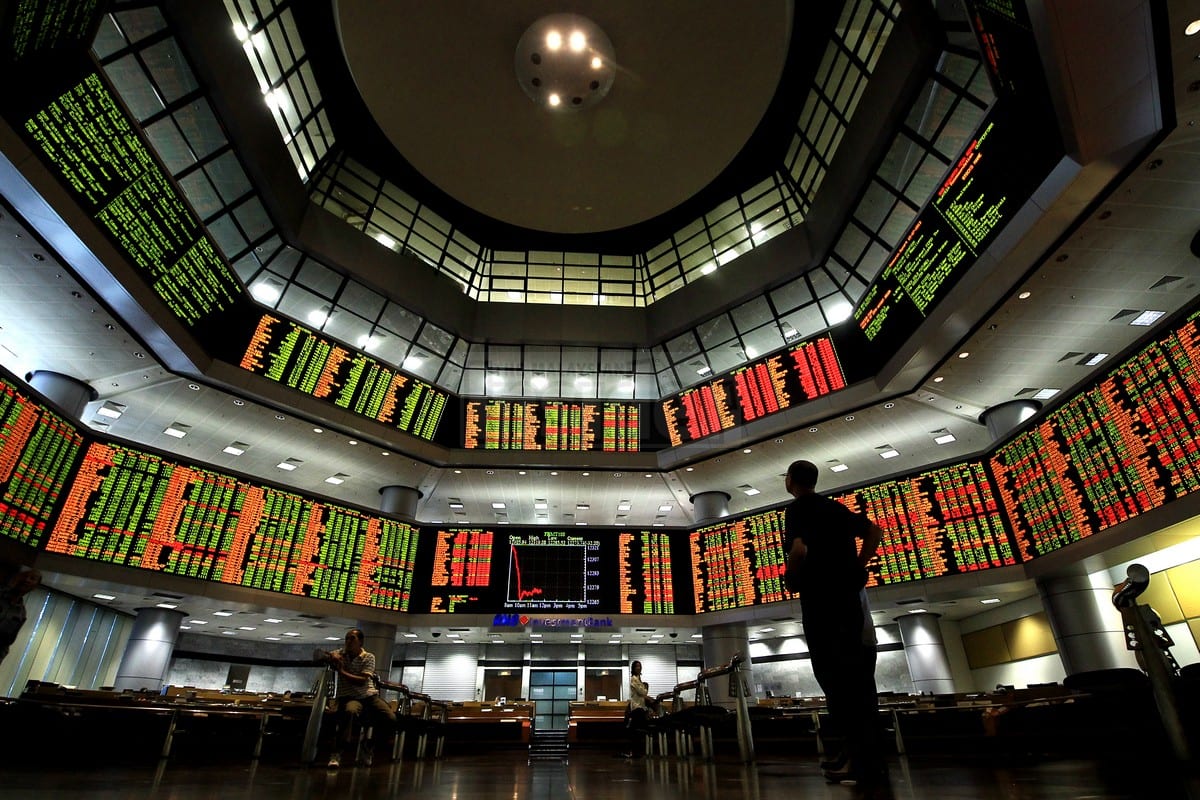
  • China’s stock market takes a dive Friday

    China’s stock market takes a dive Friday

    Chinese investors watched in distress as stocks sank by more than seven percent in trading Friday, marking the biggest drop in five months and stoking fears of a peaked market, according to Bloomberg.

    For weeks, investors have worried about a looming end to China’s longest ever bull run, a market characterized by strong investor confidence, a sustained uptick in stock prices, and the expectation that the rise will continue. The country’s economic boom so far has lasted 935 days, Bloomberg reported Friday.

    The benchmark Shanghai Composite index dropped by 7.4 percent to 4,192.87, a 19 percent descent from this year’s June 12 peak, according to the Wall Street Journal.

    The dismal performance followed the Chinese markets’ worst weekly performance since 2008 a week ago, according to the BBC. The Shanghai Composite fell by 6.4 percent, and overall took a 13 percent drop during the week.

    “The concern is that a stock market collapse this year, as the rest of the Chinese economy is struggling to recover, might damage Chinese consumers’ confidence, their willingness to buy other things,” said Reuters Shanghai correspondent Pete Sweeney.

    In addition to affecting trade with foreign companies, losing consumer confidence could lead to sweeping consequences for China’s retail-dominated economy, according to analysts.

    Hans Goetti, Head of Investment in Asia at Banque Internationale A Luxembourg, told the Economic Times:

    The Chinese market has rallied tremendously this year but we have to remember one thing. It is a market that is dominated by retail investors. In fact, 80 percent of investments in China are done by retail investors and, accordingly, margin debt has gone to the stratosphere. This has led to some worries by the securities regulators to reduce margin debt, hopefully, without crashing the market. Now that is a tall order.

    Michala Marcussen, global head of economics at Société Générale, told Bloomberg that it was important to keep Friday’s events in perspective. “To my mind, what’s happening now is probably not a bad thing from a long-term perspective,” she said, citing the spike in China’s equity prices this year by almost 30 percent. “A bit of a healthy adjustment.”

    Ultimately, the “tremendous transitions” in the Chinese economy will continue to be a fundamental of the market going forward, Ms. Marcussen said.

    Reuters reports that the triggers for Friday’s tumble are far ranging, from “tighter cash supply” to “anxiety about policy direction.” Another concern: China’s initial public offerings (IPO) frenzy, which can perhaps best be evidenced by the jaw-dropping bids received by China National Nuclear Power Co., the country’s second-largest atomic power operator. The company, which had asked for $2 billion, raked in bids of $273 billion, according to Bloomberg. Reuters reports it eventually raised $2.1 billion — the country’s largest IPO since 2011.

    “The IPO boom in the Chinese market is such that more than 50 IPOs listed or were approved by the CSRC (China Securities Regulatory Commission) over the past two weeks,” reported the Economic Times.

    Going forward, “the big question for the Chinese authorities is whether they’re going to prop up the market,” said CNBC’s Sri Jegarajah. “There could be a 50-50 chance of some kind of intervention in the market, either directly or through policy support to shore up confidence.”