Tag: streaming

  • YouTube will now show you the number of views and likes a video has in real-time

    YouTube will now show you the number of views and likes a video has in real-time

    Google is changing the “likes” and “views” counters on YouTube to refresh automatically when a video is viewed. Currently, if you’re watching a video on the platform, the number of likes and views won’t change while viewing the clip. But with this update, those two metrics will rise and show a cool animation of a rolling number counter whether the video is being played or is paused. And the animation will be played even if you switch to another app and return to YouTube.

    Android Police came across this new behavior on YouTube. They couldn’t find any reference to it except for a post on Reddit from back in October from user nonotan who wrote, “I’m watching a video, and I keep getting distracted by an animation where the view counter is rolling over to a new number as if it were a physical click counter. I have not seen this behavior before today, and I’d like to disable it.”

    The same Redditor was so bothered by the effect that he added the following line to his filters, which stopped the animation and the count from advancing in real-time: https://www.youtube.com/youtubei/v1/updated_metadata*.

    Others also had similar posts about the feature, such as Reddit user Reyh, who said, “Distracting indeed and IMHO not beneficial at all. I saw it on Tuesday for the first time, using Firefox. The first few times I only noticed some movement at the bottom left of the videos. I wondered if it was in the video itself. Then I observed the area for a while and saw the new counter animation.”

    It seems that this feature is being tested with the help of a minimal number of YouTube users globally. Those who see the feature will notice the number of views and the number of likes rolling up on the screen to a higher number while they are viewing the video. Google calls this progress and for some of you, it may be.

  • Spotify launches pilot Voice Translation for podcasts

    Spotify launches pilot Voice Translation for podcasts

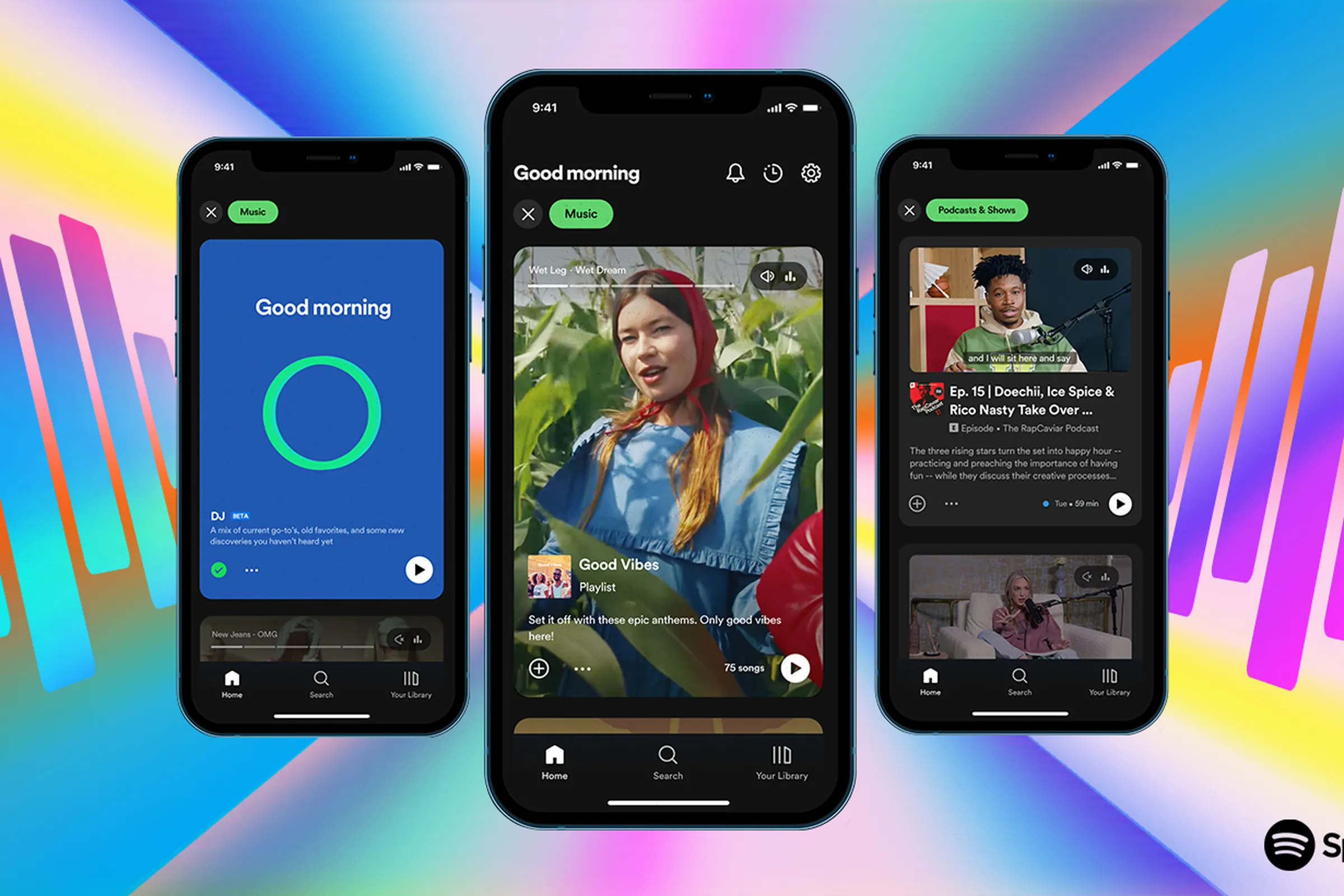
    While everyone is anxious to learn more about Spotify’s HiFi tier, the streaming company announced the launch of a much smaller new feature: Voice Translation for podcasts.

    The pilot Voice Translation for podcasts is a new feature powered by AI, which does exactly what the name suggests: it translates podcasts into additional languages in podcaster’s voice.

    Developed in partnership with OpenAI, Voice Translation will match the original speaker’s voice for a more authentic listening experience. Thanks to the new feature, a podcast episode originally recorded in English will be available in other languages while keeping the speaker’s speech characteristics.

    In the same piece of news, Spotify announced that it has worked with popular podcasters such as Dax Shepard, Monica Padman, Lex Fridman, Bill Simmons, and Steven Bartlett as part of the pilot.

    According to Spotify, the first voice-translated episodes from pilot creators will be available worldwide to Premium and free users. However, the initial bundle of translated episodes will only be available in Spanish, with French and German rolling out in the coming days and weeks.

    Starting today, the following podcast episodes will be rolled out to users on the respective Now Playing View:

    • Lex Fridman Podcast – “Interview with Yuval Noah Harari”
    • Armchair Expert – “Kristen Bell, by the grace of god, returns”
    • The Diary of a CEO with Steven Bartlett – “Interview with Dr. Mindy Pelz”

    In other news, Spotify revealed that more than 100 million people regularly listen to podcasts on its streaming platform, which shows that there’s a huge audience for those willing to create this type of content.

  • Google makes a small change to the Android version of the YouTube app

    Google makes a small change to the Android version of the YouTube app

    Google likes to fool around with YouTube like a person who can’t stop scratching an itch. Unlike changes made to Google Maps that are helpful, some of the changes made to YouTube appear to be done for no real reason. Recently, the web version of the video stream moved from square corners to rounded corners on the thumbnails and the video player, and the feedback from YouTube users was not exactly favorable.

    Now it appears that YouTube is making the same change to videos on the YouTube Android app. The result is a more blinding white light in the background which might lead some users to turn on Dark theme. Open the YouTube app on Android and tap the profile picture in the upper right corner. Next, tap on Settings > General > Appearance. A popup box will ask you to choose from using the device theme, Light theme, or Dark theme. Make your choice.

    Since the rounded corners extend to the video player on the web and not just the thumbnails, we can assume that this will be the case for the Android app as well. Right now, the new look hasn’t been pushed out to many Android devices and it has yet to appear on my Pixel 6 Pro using Android 14 Beta 5.3.

    On the YouTube website, the rounded corners do not appear when you are watching a video in full screen or in Theater mode. But once you return to Default view, they do return. Now we don’t know exactly when Google plans to roll this out more widely to Android users and whether it will follow through by rounding the corners on the iOS YouTube app.

  • WhatsApp HD video support starts rolling out to everyone

    WhatsApp HD video support starts rolling out to everyone

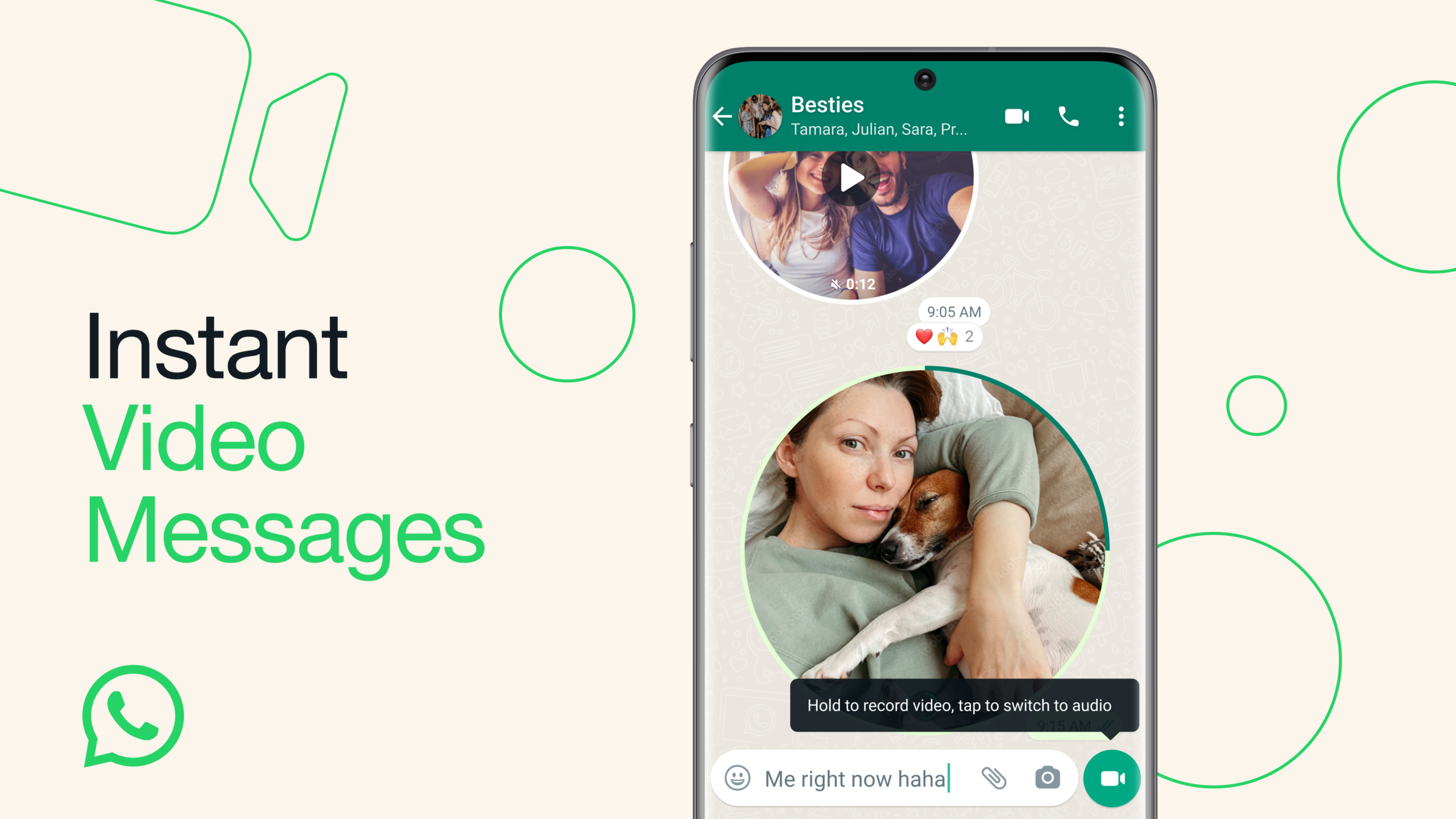
    Meta’s Mark Zuckerberg teased last month the imminent arrival of one of WhatsApp’s most requested features, the ability to share HD videos. Although some Android and iOS users got the feature last month, the global rollout has only just begun.

    Today, WhatsApp officially confirmed that it had started to roll out HD video support on its messaging app. With this addition, WhatsApp users can finally send both photos and videos in high-definition format, although the feature needs some refinement.

    For example, no toggle would allow you to set WhatsApp to send all pictures and videos you want to share in HD format by default. You have to select this option every time you share a media file with one of your contacts, which is a bit annoying, but it’s better than not having the feature at all.

    If you’ve been sharing videos until now, you’ll notice that the resolution has been upgraded from 476 x 848 to 718 x 1280 pixels. Yes, you still can’t share videos in their original resolution, which more often than not is higher than 720p. Still, this is a considerable upgrade over the previous quality, especially since the size of an HD video is almost doubled.

    Meanwhile, WhatsApp is currently testing multi-account support, but we won’t know when it drops until it’s already here. However, if you’re running a beta version of the app, you’re probably already using it on your Android phone.

  • YouTube now gives its creators a way to wipe content violation warnings from their channel

    YouTube now gives its creators a way to wipe content violation warnings from their channel

    In a surprising move this morning, YouTube published a change to the Community Guidelines that govern what content creators can and cannot do on the platform. Under this new rule, creators that —knowingly or unknowingly— violate any of these guidelines will now get a chance to right their wrong and lift the warning from their channel.
    The announcement was made via a video posted to the official YouTube Creators channel and the YouTube Official Blog which included detailed instructions on what to expect and what creators should do in case of a violation warning. Under these revised guidelines, creators who receive a warning for policy violations now have an intriguing option at their disposal — an educational training course.
    Here’s the great part: once the creator successfully completes the course, YouTube will remove the warning from their channel, just as long as they don’t violate the same policy for the next 90 days. It’s like a friendly handshake agreement to play by the rules. However, should the creator fail to follow through, the video in question will be removed and a strike will be applied to the channel.

    If the creator violates the same policy again, but after the 90 period, the video in question will be removed and the creator will be issued another warning. However – and surprisingly – another chance will be given to take another training course and once again wipe the warning from the channel.

    This change represents a significant shift in how YouTube deals with policy violations. In the past, YouTube would move to immediately remove the video in question and apply a lifetime warning to the channel. Now, it’s all about education and second chances.
    It is clear that monetization is a big motive for the policy change. Previously, policy warnings were more general and affected the entire channel, whereas with the new policy, warnings are more specific on what was breached. Giving creators a chance to fix warnings before they become strikes will allow for more content to stay up on YouTube and avoid the 3-strike rule that has been known to get channels terminated from the platform.
  • Spotify added new ones for Android

    Spotify added new ones for Android

    Alright, let’s hear it. “Widgets suck!”, “they are archaic!” and “nobody uses them!”. Did I get that right? Well, mister-sir, if that was the case, then would one of the biggest streaming platforms — Spotify, which we all got installed on some of the best phones available today — update its widget selection for Android?

    “Ah, but manufacturers and developers are so outdated with people’s needs” you say? Well, then let me raise you this: what is one of the most used features on Spotify? Discover weekly, which allows you to find new artists and jams to rock out to.

    Now, can you guess what these new widgets are adding? That’s right: recommendations based on your listening habits, which is pretty much like an instant-discovery queue. But before I defend the concept of widgets further, let’s explain these new ones from Spotify.

    It took two years for Spotify to update its selection, so I don’t know how archaic the concept is, but I can certainly back up the statement that it is stagnant at times. Anyway, the new widgets total out at two types with both seeming really intuitive.

    First off we’ve got the new generic widget, which shows you what you are listening to, the song’s cover artwork — and now that’s what you call a complete package! — and, of course, media controls such as play, pause, next, etc.

    But then we’ve got the new widget, which incorporates all of the above, but also expands on the concept. It can go from a 3×2 size up to a 5×2, which allows for up to five personalized suggestions to show up beneath what is currently playing.

    And, yes, those can be anything from songs and albums to podcasts and audiobooks (where applicable). This new widget was announced last month in July, but it rolled out with version 8.8.50, which means that you may have a Spotify update pending right now.

    But beyond that, my last argument regarding widgets is this: imagine that you have a household tablet that you use for smart home and media controls. Now, wouldn’t having all necessary controls in a sleek and clean manner directly on your home screen just make sense?

    Hence, widgets can really be cool. Are they cool enough to make the transition from this theoretical tablet to your phone? That, in my opinion, depends on style. But it’s absolutely better that we have them still be a thing in 2023.

  • Netflix continues to add subscribers in the U.S. after cracking down on password sharing

    Netflix continues to add subscribers in the U.S. after cracking down on password sharing

    Once Netflix started its plan to crack down on password-sharing in May, the video streamer started to add new subscribers. A report in BroadbandTV News cited stats from Antenna which revealed that after a 12.9% decline in the number of gross additions to its U.S. subscriber list in April, Netflix saw that figure rise 27.8% in May and an incredible 128.9% in June. July showed a 25.7% drop off in U.S. gross additions.
    Still, the company did manage to add 2.6 million U.S. subscribers in July after signing up 3.5 million in June. Since the beginning of the crackdown in May, Netflix has added 7.5 million U.S. subscribers which seems to indicate that the company has done a good job in convincing password borrowers that they still want to watch the platform’s content even if they have to pay for it with their own money.
    Netflix no longer offers the basic ad-free service in the U.S. which means that besides the ad-supported tier, U.S. Netflix subscribers can choose between Standard and Premium. Priced at $15.49 monthly, Standard includes unlimited ad-free movies, TV shows, and mobile games and can be used by two supported devices at a time. Content is streamed in Full HD and one person who doesn’t live with the subscriber can be added for $7.99 per month.
    The Premium service, which costs $19.99 per month, includes unlimited ad-free movies, TV shows, and mobile games and four supported devices can use the service at a time. Content is streamed in Ultra HD, Netflix spatial audio is included, and six supported devices can download content for offline viewing. Up to two extra members who don’t live with the subscriber can be added for $7.99 per month per subscriber.
    Discussing the elimination of its old Basic package, Netflix wrote, “We’ll be interested to see how this impacts the composition of Netflix subscriptions and sign-ups overall in the coming months.” For the quarter that ended June 30, Netflix doubled projections by adding 5.9 million subscribers worldwide bringing its total globally to 238.3 million.
    Meanwhile, some of the new content on Netflix includes PainKiller, a series about the Sackler family and how it pushed doctors to prescribe its Oxycontin painkiller. The second season of Heartstopper also recently dropped on the platform.
  • Spotify enables patron-exclusive podcasts via new Patreon integration

    Spotify enables patron-exclusive podcasts via new Patreon integration

    Spotify is the most recent company starting to offer content creators financial incentives. The music streaming service announced this week that it has added Patreon integration to allow creators to monetize their content via exclusive podcasts.

    Patreon, a membership platform that offers the business tools for content creators to run a subscription service, was in the middle of a controversy early this month when major technical issues led to paused payouts and canceled subscriptions.

    Thankfully for the millions of creators using the platform, these issues have been solved (at least for many of them), so the company can now go live with the announcement.

    Starting today, connecting Spotify and Patreon accounts to access patron-exclusive podcasts direction from the music streaming service’s app is possible. This is a follow-up of Spotify’s March announcement that it’s teaming up with Patreon to allow creators to publish their subscriber feeds to Spotify via its API.

    “Many podcasters use Patreon to connect with their fans, and for the first time ever, they can link their accounts so fans can access and listen to these shows on Spotify. This partnership gives podcasters a new opportunity to reach Spotify’s global audience, over 551M users, to increase their income and grow their show,” said Gustav Söderström, Co-President and Chief Product and Technology Officer at Spotify.

    Patreon integration has been in testing for months at Spotify, as select creators have been enrolled in a beta program that helped them promote and gain new members to their Patreon through Spotify.

    Thanks to the new feature, Spotify users will be able to listen to all their favorite content in one place, while Patreon podcasters tap into new audiences on Spotify. The new partnership feels like a win-win situation, at least on paper.

  • Netflix is making rating shows and movies on mobile much easier

    Netflix is making rating shows and movies on mobile much easier

    Many of us, including myself, often forget to rate a show or movie after watching it. While not necessary, it can help improve your suggestion list. Now, Netflix is simplifying the process for users to rate movies and shows on mobile devices.

    Netflix has updated the rating feature on its mobile app, enabling you to rate a show while still watching it. Instead of returning to a show or movie page to give a thumbs-up or thumbs-down, you can now tap the screen while watching, whether it’s in the middle or at the end. You can click the thumbs buttons at the top and keep watching.

    The new update will probably encourage more users to use the feature, which will help Netflix suggest more personalized recommendations based on users’ watch history and what they have liked or disliked. Or, to put it in a few words, you are helping Netflix’s algorithm understand you better by rating what you are watching.

    The system that suggests new movies and shows on Netflix uses two different data sets to make personalized recommendations for what you might want to watch. The first data comes from what you’ve watched before and the kinds of genres you prefer, while the second is based on your ratings.

    On the mobile app, you can rate using three reaction buttons: a thumbs up, a thumbs down, and a double thumbs up button. The latter was introduced last year to teach Netflix’s algorithm not only which movies or shows you like or don’t like but also which you love.

    Based on which movies and shows received your double thumbs-up reaction, Netflix’s algorithms will better recommend similar ones. With the improved rating feature, now more user-friendly on mobile devices, starting to use it could lead to receiving more accurate and tailored suggestions.

  • Spotify announces price hikes in over 50 countries, including the US and UK

    Spotify announces price hikes in over 50 countries, including the US and UK

    It looks like last week’s report regarding Spotify Premium’s price adjustments was accurate. As expected, Spotify announced today it will increase the prices of its Premium plan in over 50 countries, not just in the United States as the report claimed.

    The number one music streaming service in the US confirmed it has more than 200 million Premium subscribers worldwide, so in order to keep innovating it must adjust prices of the Premium plan. If you’re living in the United States, the new prices of the Premium plans are as follows:

    • Premium Single: $10.99
    • Premium Duo: $14.99
    • Premium Family: $16.99
    • Premium Student: $5.99

    These price adjustments are taking effect today, so if you’re an existing customer you’ll receive an email explaining what it means for your account. In addition to the price changes in the United States, Spotify announced that it’s changing Premium prices across a number of markets around the world.

    If you live in one of these countries, expect your Spotify Premium price to increase very soon: Andorra, Albania, Argentina, Austria, Australia, Bosnia and Herzegovina, Belgium, Bulgaria, Brazil, Canada, Chile, Colombia, Costa Rica, Cyprus, Denmark, Ecuador, Estonia, Spain, Finland, France, United Kingdom, Greece, Guatemala, Hong Kong, Croatia, Indonesia, Ireland, Israel, Iceland, Italy, Lithuania, Luxembourg, Latvia, Monaco, Montenegro, North Macedonia, Malta, Mexico, Netherlands, Norway, New Zealand, Peru, Portugal, Serbia, Sweden, Singapore, Slovenia, Slovakia, San Marino, Thailand, Türkiye, and Kosovo.

    The price changes in the countries listed above might be different than the price hikes in the US. But just for the sake of comparison, the Premium Single, Family and Student plans are going up by $1, while the Premium Duo plan price has been increased by $2. In any case, if you’re already subscribed, then Spotify should send you an email about the price increase, so you’ll know what to expect starting next month.
  • Netflix adds new feature to iOS, Android to help you quickly find content to watch

    Netflix adds new feature to iOS, Android to help you quickly find content to watch

    Netflix announced today that it is adding a new feature to its popular mobile phone app. Called My Netflix, this is a one-stop shop for both iOS and Android users that features shortcuts to help you find something to stream on the platform. The new My Netflix Hub will show you the content you recently downloaded, the movies and television shows you gave a thumbs up to, shows and movies you’ve saved to My List, trailers that you’ve viewed, what content you’re in the middle of watching, content you’ve recently viewed and more.

    With the My Netflix Hub, you can check it out wherever you are to get ideas of what to watch next including shows and movies that you’re in the middle of watching, or content that you’ve downloaded to view at any time. Even with the capabilities of the My Netflix Hub, you can always visit your Home tab or other parts of the app to see the entire Netflix library.

    The My Netflix Hub learns more about you the more you use it. So if you save more medical dramas or give a thumbs up to every episode of Grey’s Anatomy, you’re apt to find more medical dramas in the My Netflix Hub. The Hub is rolling out today to iOS users and will be available on Android devices early next month. Check to see if the My Netflix Hub has arrived by opening the app and looking for the tab on the bottom right corner of the display.
    If the My Netflix Hub hasn’t been added to your iOS Netflix app, you can try to manually update the app by opening the App Store and tapping on the profile picture in the upper right corner. You’ll see a list of apps that are in a queue to be updated. Scroll down until you see “Netflix” (that is, if it appears on the list) and tap on “Update.” Wait for the app to be updated before you open the Netflix app to check whether the My Netflix Hub has arrived on your iPhone. I can tell you that the update has hit the Netflix app on my iPhone 11 Pro Max running iOS 16.6.
  • TikTok launches text posts in an attempt to take on X

    TikTok launches text posts in an attempt to take on X

    Despite the social network bleeding users, Twitter’s owner, Elon Musk, took some questionable decisions over the weekend. After rebranding Twitter’s logo to “X” and promising to bring a bunch of new features that no one asked for, Musk’s is now facing another big problem: the stiff competition.

    Meta’s attempt to take on Twitter hasn’t been entirely successful, as Threads still needs a lot of features to offer a similar users experience. But another contender to take Twitter’s place has just made its first step toward fulfilling its plans.

    TikTok has just announced text posts, a new feature that offers users a Twitter-like experience. This will allow creators to share their stories and other types of content in a different, simpler way. The new feature is available starting today and doesn’t involve too many clicks to make it work.

    When you access the Camera page, you can now choose from three options: photo, video, and text. Tapping on the text option will direct users to the text creation page where they can type out the content of their post. It’s not as fast and smooth as tweeting a message but considering that TikTok is a video-first platform, this will have to do for now.

    In addition to creating posts, TikTok users can also customize their content by including Sound, tagging a location, enabling comments, and allowing Duets. It will enrich the text posts and make them more dynamic beyond what Twitter offers currently.

    For example, TikTok users can add stickers to their text posts, tags and hashtags, as well as background colors and sounds. On top of that, it’s also possible to save drafts and store them with other unpublished posts for later editing or discard them if you’re not content with how they end up.

    It’s a neat new feature that will probably not attract many of Twitter’s users, since Musk’s social platform caters to a different type of audience, but you might as well try in out before the ship sinks to have some alternatives to retreat to.

  • Spotify to raise prices of its Premium plan in the US

    Spotify to raise prices of its Premium plan in the US

    Spotify will no longer remain one of the few music streaming services in the US not to increase its subscription prices. Just about every other player in the market raised prices in the last year or so, while Spotify benefited from influx of customers that decided to switch services. Unfortunately, that didn’t last long, as Spotify is about to raise prices too.

    Spotify plans to raise the monthly subscription prices in the US by $1. That means that the price of the ad-free $9.99 plan will become $10.99 per month in the United States. Spotify is reportedly expected to announce as early as next week, but only for the US market.

    The bad news is price hikes will be announced for many other markets too in the following weeks, although it’s unclear where and when these changes will be introduced. Spotify has been keeping the price of its premium plan stuck on the $9.99 psychological threshold for quite some time, but that’s about to change for customers in the US.

    Currently, Spotify offers a free, ad-supported plan that provides access to over 80 million songs, podcasts and audiobooks, downloadable podcasts, the ability to take the music with your when traveling abroad (for 14 days only), and the option to pick and play any track on mobile (select playlists only).

    The Premium plan still costs $9.99 and doesn’t have the limitations that the free plan has. On top of that, it allows subscribers to download music and podcasts, play songs in any order, and listen to the highest music quality. Of course, there will be no ads running while listening to Spotify if you’re subscribed to the Premium plan.

    Students get 50% off Premium for up to 4 years, while Premium Duo offers two people living together the option to get their own Premium account for 1 discount price. Also, the Premium Family covers up to 6 people living together each getting their own Premium account for 1 discount price. The Family plan comes with Spotify Kids and explicit filter.

  • Netflix starts restricting account sharing in more than 100 countries

    Netflix starts restricting account sharing in more than 100 countries

    Netflix had a lot of info to share with investors this week. We’ve already reported that the streaming service decided to axe its Basic plan in the UK and US, but it looks like there’s even more interesting information that Netflix revealed in its recent letter to shareholders.

    After banning account sharing in the United States back in May, Netflix revealed this week plans to expand the ban to more than 100 countries. It appears that the US was just a test field for the company’s new strategy, which proved quite efficient.

    Even with the crackdown on password sharing, Netflix added about 6 million paying subscribers during Q2 2023, which shows that more people are willing to pay extra to be allowed to share their accounts rather than dropping their subscription due to the changes.

    That said, Netflix has taken the decision to restrict account sharing in the rest of the countries where this is still possible. Customers in more than 100 countries now have the option to add an extra member to their account for a certain monthly fee. However, some countries will not get this option because Netflix feels like it dropped the price of the monthly subscription too low already

    If you don’t see the option to add an extra member to your Netflix account in the following days, it means that you’re living in one of the countries that won’t be getting that feature.

  • Netflix discontinues the Basic plan in the US and UK

    Netflix discontinues the Basic plan in the US and UK

    Netflix is going ahead with its strategy to completely remove the Basic plan to force customers into choosing more expensive plans or ads. Back in June, Netflix quietly removed the Basic tier in Canada, a move that was expected to extend to other regions in the coming months.

    Earlier today, Cord Busters noticed that that the Basic plan has been discontinued in the UK and US. New customers in these two countries will no longer be able to choose the cheapest Netflix plan starting today, although Basic tier subscribers get to keep their plan until they change to another tier.

    The information has been confirmed by Netflix on its support page: “the Basic plan is no longer available for new or rejoining members. If you are currently on the Basic plan, you can remain on this plan until you change plans or cancel your account.”

    Netflix launched its ad-supported tier in late 2022 as “Basic with Ads” for £4.99 / $6.99 per month, but its name was changed a few months ago when it received a few upgrades like video quality from 720p to 1080p and two simultaneous streams.

    The renamed Standard with Ads plan offered almost the same perks as the Basic plan, but with one big difference: it forced subscribers to watch several minutes of ads per hour. Other differences between the two plans are the number of simultaneous streams and the video quality.

    With the removal of the Basic tier, customers in the UK and US will now have to pay at least £10.99 or $15.49 per month if they want Netflix in their homes or on the go without having to watch ads. It’s pretty clear that Netflix wants more customers to choose its Standard with Ads tier rather than a plan that doesn’t run ads, unless it’s one that’s priced a lot higher.