Tag: telco

  • China Now Has More Than 1.85 Million 5G Base Stations

    China Now Has More Than 1.85 Million 5G Base Stations

    China’s Ministry of Industry and Information Technology said that the country has now deployed more than 1.85 million 5G base stations nationwide as it pushes for its target of a total of 3.64 million by the end of 2025.

    According to the government website, fixed asset investment in the telecommunications industry has also increased by almost 25% year-on-year, now reaching 189.4 billion yuan during the first six months of the year.

    Data from the industry regulator shows that as of June, the country has deployed more than 1.85 million 5G base stations, and the number of 5G mobile users was at 455 million.

    The spokesman and chief engineer of the Ministry of Industry and Information Technology, Tian Yulong, stressed that initiatives should be undertaken to immediately begin a series of crucial projects in 5G, gigabit optical networks, the industrial internet and other new information infrastructure to both broaden investment and boost consumption.

    Officials also said that China is seeking to add 600,000 5G base stations this year and speed up their upgrade of the industrial internet.

  • Asia Pacific Spotlights on 5G for Growth

    Asia Pacific Spotlights on 5G for Growth

    As a region, Asia Pacific is poised to become the fast-growing in terms of 5G adoption. Representing two-thirds of the global population, GSMA reports that 5G mobile connections will grow by about 150 million to reach 1,789 million subscribers in 2025. Of which, South Asia will account for the largest growth.

    During this time, GSMA reports that 4G will remain the dominant technology in the region, while 5G takes off, propelled by national digital strategies that have identified digital transformation as a key pillar for economic growth. For instance, Indonesia has launched the Indonesia Digital Roadmap for 2021 to 2024.

    In the region, 14 markets have already launched 5G commercial services, namely Australia, Bhutan, Guam, Indonesia, Japan, Laos, Malaysia, Maldives, New Zealand, North Mariana Islands, Philippines, Singapore, South Korea and Thailand. On the other hand, 5G is still undergoing planning for countries including Nepal, Bangladesh, Brunei, Cambodia, Myanmar, Vietnam, Sri Lanka, Samoa, Pakistan and India. South Korea takes the lead in terms of average and peak 5G download speeds according to market research firm Statista.

    The Bangladesh Telecommunication Regulatory Commission (BTRC) for instance, is preparing to launch 5G after holding its auction for licenses in 2.3 GHz and 2.6 GHz bands in April 2022. In India, spectrum auctions will be held in late July, with spectrum to be allocated not only for telecom operators Reliance Jio, Airtel and Vodafone Idea, but also for private networks to enable enterprise 5G to address demands in Industry 4.0 applications.

    Also gearing up for 5G momentum after months of tussle, six of Malaysia’s telecom operators have finally reached a consensus with stated-owed Digital Nasional Bhd (DNB) to collectively own a 70% equity stake in the country’s 5G network infrastructure. As part of the nation’s digital ambitions, Malaysia plans to extend 5G nationwide to 80% in populated precincts by 2024. In Thailand, the Digital Economy Promotion Agency (DEPA) has recently established the Thailand 5G Alliance to promote commercial 5G use and grow the country’s 5G ecosystem, aimed to elevate Thailand to become a digital hub for ASEAN.

    Growing 5G Revenue with More Commercially Viable Solutions

    According to Frost & Sullivan, 5G revenue in the region is expected to grow from $2.13 billion in 2020 to $23.89 billion in 2025, representing a 62.2% CAGR, attributed by accelerated 5G connectivity. Network slicing will play a big part in growing 5G capabilities and delivering 5G services for enterprises.

    A notable trend is the rise of 5G private networks to ensure enhanced security and control, especially critical in growing smart factories and furthering Industry 4.0. In Southeast Asia, 5G private networks are expected to grow from $83.35 million in 2021 to $1,93 billion by 2030, at a CAGR of 41.9%, based on an analysis by Allied Market Research. In the region, mobile operators have embarked on commercial 5G private networks to capture new market opportunities created by growing demands for low latency, high-speed connectivity, as well as increased usage of artificial intelligence and other smart connected devices. In 2020, Indonesia contributed the highest market share in terms of revenue, accounting for 40% of Southeast Asia’s private 5G market. Being the fast-growing digital economy, Indonesia is projected to maintain its lead in the private 5G market until 2030, with Malaysia forecasted to report the largest CAGR of 48.6% during this period.

    In Malaysia, for instance, Cisco will be partnering with Telekom Malaysia to build a 5G-as-a-service center to springboard 5G adoption and develop proof of concepts for enterprises and vertical industries to help them gain strategic and competitive advantages. This is in line with the country’s digital goals to grow 5G adoption among Malaysia’s SMEs to positively impact the digital landscape.

    Offloading Towers to Grow High-Cost 5G

    A growing trend in the past couple of years, some operators are offloading towers to raise capital for high-cost 5G investments. For instance, PLDT in the Philippines has received six bids to sell off half of its mobile towers, amounting to 6,000 towers. In Singapore, Singtel sold off 70% sale of Australia Tower Network, a wholly-owned subsidiary that operates Optus, to raise funds for 5G rollout and growth. Elsewhere, New Zealand’s Spark finalized a deal to sell 70% stakes in its tower business to raise $900 million.

    In Australia, Telstra and TPG have struck a network sharing deal over 10 years to share RAN for both 4G and 5G services. This has since been hotly contested by Optus, as well as Commpete, a telco industry alliance that advocates greater industry competition, with claims by Commpete that the agreement can be perceived to be a merger of sort. As of the end of June 2022, Telstra is Australia’s incumbent with a 5G network that covers about 80% of Australia’s population.

    Regarding the adoption of 5G mobile services, Moodys’ revealed in a report that its adoption will be uneven across the region, with 5G frontrunners including China, South Korea, Australia and Japan forging ahead in their 5G pursuits, and pioneer 5G markets able to boost revenue with the launch of 5G services. In China, the country’s fourth carrier, China Broadnet debuted 5G mobile services in June 2022 after being granted a 5G commercial license by the Ministry of Industry and Information Technology.

    Moving forward, mobile operators will stay focused on growing 5G capabilities and services to monetize and ensure competitiveness.


  • Infovista, PCTEL Joint Solutions Focus on 5G Network Testing

    Infovista, PCTEL Joint Solutions Focus on 5G Network Testing

    Infovista and PCTEL, global leaders in network lifecycle automation (NLA) and wireless connectivity, announced a strategic collaboration to co-develop joint 5G network testing use cases for mobile operators and industry regulators.

    The joint use cases will bring together PCTEL’s 5G scanning receivers, including its flagship Gflex® and Infovista’s market-leading TEMS software to create differentiated and simplified solutions that address specific customer needs and requirements. The initial set of use cases covers 5G C-Band interference monitoring, autonomous testing, beamforming configuration validation, automatic site location detection and automated interference detection.

    Faiq Khan, President of Global Networks of Infovista said, “Mobile operators and regulators are facing new and specific challenges as 5G spectrum is licensed and networks rolled out. Their complexity requires new approaches to network testing, using the latest in AI, automation and cloud-native technologies to reduce the time and cost of network testing and monitoring while also being more accurate and valuable to the business.”

    One of the first joint solutions sees Infovista and PCTEL combining to deliver automated interference source detection and location. Leveraging Infovista’s NLA cloud platform for automated cross-domain troubleshooting, the solution uses network and service performance data from Infovista Ativa™ and its AI/ML analytics engine to rapidly identify and geo-locate cells affected by interference. With the approximate area of the interference identified, Infovista’s precision drive testing algorithms determine an optimal drive route and diagnostics workflow. After which, a tester is dispatched with a PCTEL scanner and guided workflow to quickly find the source of the interference.

    Arnt Arvik, Vice President and Chief Sales Officer of PCTEL said, “Today, effective network testing and monitoring requires purpose-built scanning receivers to measure hundreds of channels across a broad spectrum including 5GNR and mmWave. Testing needs to be fast and accurate, conducted in multiple environments, and it needs to be capable of simultaneously testing multiple technologies and operator networks.”

    Together, Infovista and PCTEL will bring the power of two customer-focused teams to co-develop joint 5G testing use cases and solve tangible challenges their customers face, both today and in the future.

  • Huawei Joins Sisvel Wi-Fi 6 Patent Pool as Founding Member

    Huawei Joins Sisvel Wi-Fi 6 Patent Pool as Founding Member

    Huawei has joined Sisvel Wi-Fi 6 patent pool as one of its founding members. This new patent pool provides an avenue for Wi-Fi 6 standard essential patents of Huawei and other innovators to be shared. Huawei has also concurrently become a licensee of the pool.

    “Huawei is excited to share our innovative Wi-Fi technologies with the industry,” said Alan Fan, Head of Huawei’s Intellectual Property Rights Department. “Wi-Fi technologies are widely used in fields like consumer electronics, smart homes and industrial enterprises. The patent pool will increase the transparency of patent licensing and reduce licensing disputes. Implementers can obtain a license under all patents in the pool at one time, which increases licensing efficiency and reduces licensing costs.”

    Fan added that Huawei has long advocated for innovations to be properly rewarded. Patent pools can help companies, especially SMEs, license their patents and invest licensing revenue into more innovation activities. Huawei hopes the successful operation of this patent pool will encourage more companies to invest in the next-generation Wi-Fi technologies.

    Mattia Fogliacco, President of Sisvel International, commented, “We are thrilled to welcome Huawei among the patent owners of our new pool. During the past two years of facilitation, we have created a framework that we feel will benefit the markets for technology as a whole, removing friction and aligning interests of innovators and implementers: Huawei accepting to become a founding member and a licensee/licensor offers a strong validation for this approach. We trust that this, together with the quality of the IP contributed by Huawei and the other participating patent owners, will quickly attract additional licensees and possibly additional patent owners.”

    Huawei remains open to entering direct licenses with other companies through bilateral discussions, thus giving implementers the choice of obtaining the license of Huawei’s Wi-Fi 6 patents through either the Sisvel Wi-Fi 6 patent pool or a direct license with Huawei.

  • DHL teams up with Coldplay to make their tour as sustainable as possible

    DHL teams up with Coldplay to make their tour as sustainable as possible

    DHL, a pioneer in the field of sustainable transport and logistics, has announced that it will support Coldplay’s efforts to reduce CO2 emissions by more than 50% during its Music of the Spheres concert tour.

    While every global music tour requires intensive preparation and complex logistics, Coldplay has added to this complexity by setting an ambitious goal to make the tour as sustainable as possible, with the support of DHL’s extensive expertise in the field.

    “As leaders in our industries, it is our responsibility to lead the change but also inspire and facilitate sustainable solutions for other businesses and brands. We feel honored and proud that Coldplay has selected DHL to embark on this journey for change,” commented Monika Schaller, Executive Vice President of Corporate Communications, Sustainability & Brand, Deutsche Post DHL Group.

    Coldplay selected DHL as its logistics partner due to the company’s extensive expertise in sustainable logistics solutions. As the world’s leading logistics provider, DHL will support Coldplay’s efforts, especially in the field of sustainable transportation, by offering multi-faceted approach to lowering CO2 emissions.

    With its GoGreen Plus Service, DHL’s customers are offered a suite of solutions for minimizing logistics-related emissions and other environmental impacts along the entire supply chain. Ocean and air freight emissions are reduced by the use of advanced biofuels. For land transportation, DHL is able to call upon an extensive fleet of electric vehicles and trucks fueled with Bio-LNG (liquified natural gas made from organic waste). The remaining part of the supply chain is made climate neutral by full lifecycle emission compensation – drawing down and offsetting any residual carbon emissions. DHL can ensure the lower CO2 emissions of their services are transparently passed onto its customers.

    DHL and Coldplay’s shared hope is that the Music of the Spheres Tour will provide lessons and best practices for other artists to build on and push the live music industry towards an ultra-low-carbon and sustainable future.

    Coldplay’s co-manager Phil Harvey stated: “When we announced this tour, we pledged to reduce primary carbon emissions by more than 50% compared to the last tour.   This can only happen with tour partners who share this vision and are willing to invest the necessary resources to make it happen.   We’re grateful to DHL for their help in minimizing our tour’s freight emissions through their expertise and investment in sustainable logistics.”

    In line with the company’s sustainability strategy to achieve net-zero emissions by 2050 (“Mission 2050”), DHL is committed to sustainable logistics solutions that will decarbonise the entire logistics sector. As part of Deutsche Post DHL Group’s mid-term sustainability roadmap for 2030, the group strives to achieve the sub-target of having at least 30 percent of fuel requirements covered by sustainable fuels. To reduce CO2 emissions in line with the Paris Climate Agreement, the Group will spend €7 billion on sustainable fuel and clean technologies by 2030.

  • China Now Has More Than 1.85 Million 5G Base Stations

    China Now Has More Than 1.85 Million 5G Base Stations

    China’s Ministry of Industry and Information Technology said that the country has now deployed more than 1.85 million 5G base stations nationwide as it pushes for its target of a total of 3.64 million by the end of 2025.

    According to the government website, fixed asset investment in the telecommunications industry has also increased by almost 25% year-on-year, now reaching 189.4 billion yuan during the first six months of the year.

    Data from the industry regulator shows that as of June, the country has deployed more than 1.85 million 5G base stations, and the number of 5G mobile users was at 455 million.

    The spokesman and chief engineer of the Ministry of Industry and Information Technology, Tian Yulong, stressed that initiatives should be undertaken to immediately begin a series of crucial projects in 5G, gigabit optical networks, the industrial internet and other new information infrastructure to both broaden investment and boost consumption.

    Officials also said that China is seeking to add 600,000 5G base stations this year and speed up their upgrade of the industrial internet.

  • 5G Connections In APAC To Reach 400 Million In 2025

    5G Connections In APAC To Reach 400 Million In 2025

    A study published by a global organization of telecom operators suggests that in the next three years, 5G connections in Asia Pacific will soar to 400 million, four times higher than this year’s level.

    In its “Mobile Economy Asia Pacific 2022”, GSMA also indicated that the regional mobile network coverage today has reached 96% of the population. Of this, 1.2 billion users now have access to mobile internet services. This shows a penetration rate of just below 45% of the population. And among the reasons for this usage gap are the digital divide, the income gap and online safety issues.

    It meanwhile predicts a continuous acceleration of 5G’s momentum across the region as commercial 5G services are now accessible across 14 markets. This is due to the economic improvement following pandemic lows, as well as the increasing sales in 5G handsets and overall marketing efforts. Commercial 5G services are also expected to expand to other markets, including India and Vietnam in the coming years.

    The study also shows that the mobile ecosystem continues to propel the regional economy, as technologies and services brought in 5% of GDP, which is tantamount to 770 billion dollars of economic value added. The industry also supported nearly 8.8 million jobs in 2021, and enabled financial contributions to the public sector.

    According to the study, “The mobile industry continues to deliver social impact across Asia Pacific, primarily by providing the connectivity that enables the growth of small businesses and digital transformation of enterprises, and granting access to life-enhancing services and tools for citizens.”

    And amid the continuous deployments of 5G networks, the technology’s ability to empower next-generation offerings—cloud services, artificial intelligence, internet of things and edge computing—will boost digital economic development and innovation.

  • Iridium Is Here for a Long Haul, Says EVP Bryan Hartin

    Iridium Is Here for a Long Haul, Says EVP Bryan Hartin

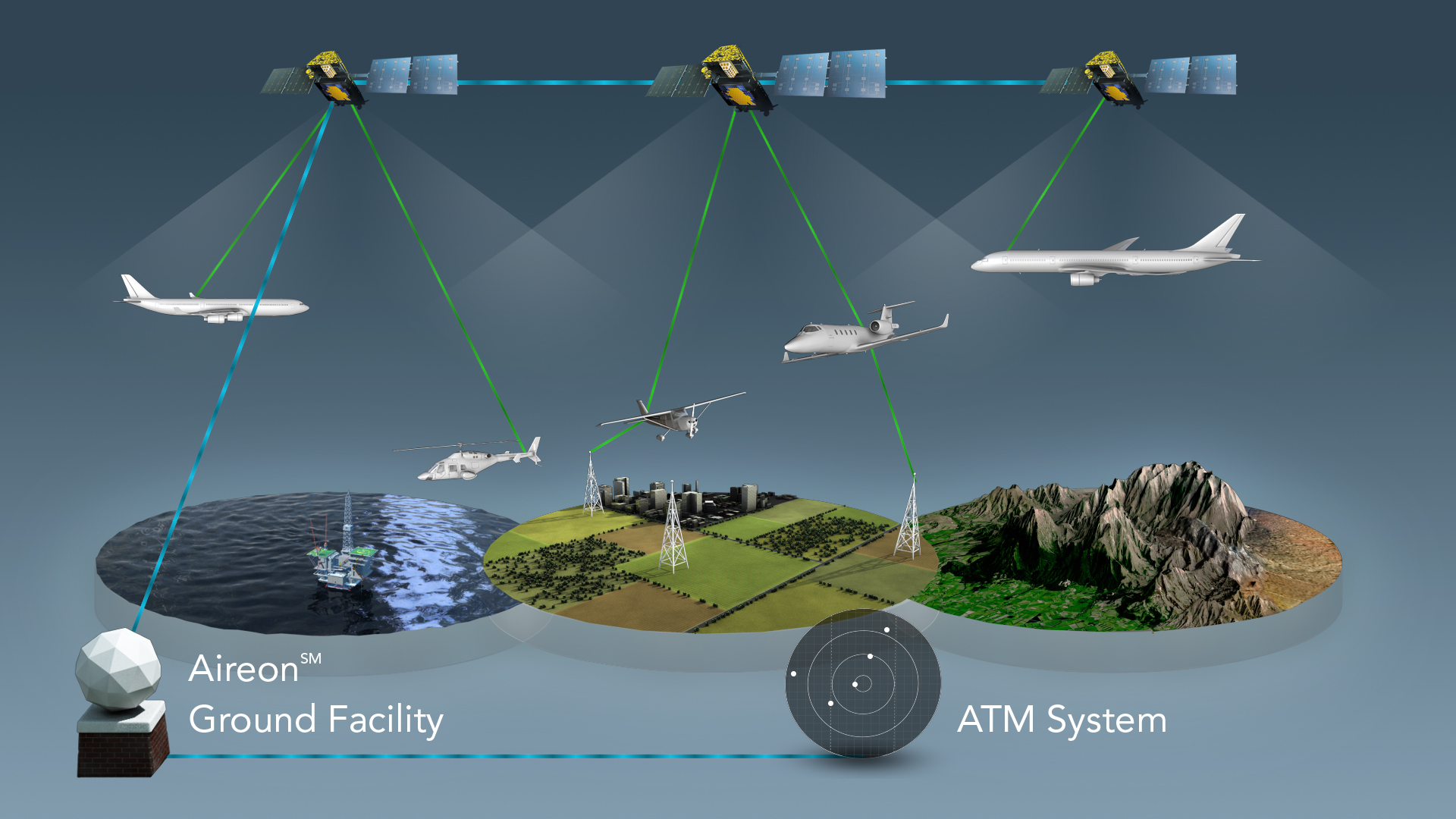
    With a cross-linked constellation of 66 satellites, Iridium’s global network connects people and things in the world’s most inaccessible locations. We spoke to Bryan Hartin, Executive Vice President, Sales and Marketing, Iridium, to know more about the company’s offerings, market competition, and growth plans.

    Growth in IoT is driving increased connectivity worldwide. Can you tell us about Iridium’s growth in the past year?In 2021, Iridium had the best subscriber growth in the company’s history, with total billable subscribers growing 17% year-over-year, driven by growth in IoT. We rely on the success of our ecosystem of partners to develop, sell, design, and market Iridium-based solutions, while we focus on what we do well. Our constellation is one of the youngest L-band networks worldwide. Presence in low earth orbit gives us the unique advantage in IoT as our satellites are closer to earth, and can hence offer solutions for devices that are a lot smaller. They are also very efficient, lighter and faster than our competition.

    In addition, we provide our ecosystem of partners with enabling technology through modules that provide Iridium-based connectivity. Our partners leverage this enabling technology for IoT products and solutions. Some of our IoT solutions are used by heavy equipment OEM companies such as Caterpillar, Komatsu, Hitachi and Doosan, for telematics mainly, and to track their assets worldwide. For some of these OEMs, more money is derived from maintenance parts sales and services, compared to sales of the equipment. Globally, we also have partners who tap on Iridium’s enabling technology to perform vessel monitoring for fishing regulations or research into climate change.

    One of the uses in IoT or personal communications is enabling technology that can fit in small devices – with personal communications as an area that is quickly gaining traction. An example of this is Garmin, which uses Iridium enabling technology in small devices to track locations and send SOS messages during an emergency.

    Another product is the Iridium Edge Solar, which offers real-time GPS tracking and local wireless sensor and communication capabilities over Bluetooth. It can be placed on a container to track its position, monitor the temperature of the container, or determine if the doors are open or shut.

    Essentially, our target is not replacing cellular technology, but complementing it so that connectivity can be maintained even outside terrestrial coverage. We are uniquely qualified to do so because of Iridium’s truly global network, comprised of 66 crosslinked satellites in space with 9 spares on-orbit and another 6 on the ground.

    Can you share with us more on Iridium’s award-winning Iridium Certus and how it is designed to match customer needs?

    To give you a background, we started as a legacy narrowband company that subsequently added broadband capabilities to our offerings. When we first developed the new network, one of our design criteria was to support broadband.

    As L-band is very reliable and resilient, we arrived at the name Iridium Certus as “Certus” is Latin for “certain” and “reliable”. Demonstrating this, our products and services can work under any weather conditions, and is in fact, more resilient than some VSAT providers.

    So we ventured into broadband products and then pivoted back to cover the gap between narrowband and broadband to support midband. Our broadband speed ranges up to 704 kilobits per second, which is on the higher end of the speed capability for the L-band. We also rely on 3 world-class value-added manufacturers (VAMs) to build the products – namely Cobham Satcom, Thales and Intellian – that sell our products to service providers, and in turn, take these products and services to all kinds of ships worldwide.

    Clearly, maritime shipping is one of the largest markets that uses Certus’ broadband products. Fishing and leisure are also big markets for us. We are also into unmanned surface vessels (USVs) – an area where we are starting to see a lot of interest. Because Iridium operates globally, we are able to provide constant connectivity to support autonomous vessels. We are also well-positioned to provide aviation safety services, primarily in cockpits, as well as land products that ensure vehicles stay connected. For instance, ministries of defense and governments use Certus land products for deployed operations.

    How do you expect satcoms to evolve in the foreseeable future?

    Currently, we are seeing a lot of new entrants in the market, which bodes well for the satellite business. However, some of these new players are focused on higher-speed services and would be competing with companies to offer residential broadband. While we see opportunities to work with some of these new entrants, we are mostly focused on staying in our lane and growing that lane a bit wider – especially in IoT.

    Moving forward, a gamechanger for the satellite industry is enabling technologies for smartphones – an emerging area that we are uniquely qualified to support. With more than 25 years of experience, we have provided consistent and meaningful growth for our shareholders and we are committed to continuing with that.

    The Asia Pacific, being a region where Iridium is doing very well, will continue to be a market where we will grow and expand into new areas. For instance, many fishing companies in Asia require reliable satellite communications. And Singapore, being a major port city, is an important market for Iridium as ships arrive from all over the world. Finally, in Asia, aviation is another important market as OEMs with facilities in the region, such as the likes of Boeing and Airbus, rely on Iridium to operate efficiently across the globe.

  • China’s Telecom Sector Logs Stable Growth In First Five Months Of 2022

    China’s Telecom Sector Logs Stable Growth In First Five Months Of 2022

    According to government information, the strength of its growth was seen in emerging businesses and 5G services.

    The Ministry of Industry and Information Technology reported that the telecommunications sector earned a total revenue of 665 billion yuan during that period, indicating an 8.5% jump compared to the same period last year.

    The ministry also noted in the statement that emerging businesses, such as those in the big data, cloud computing, internet data center and IoT sectors saw a continuous rise during that period.

    The collective earnings of these emerging businesses of the country’s three leading telecom players, namely China Telecom, China Mobile and China Unicom, also shot up to 128.3 billion yuan. This represents a 34.3% year-on-year increase, and accounts for 19.3% of the sectors’ overall revenue.

    As of May, there were already 1.7 million 5G base stations, which account for 16.7% of China’s mobile network base station total. Of these, about 275,000 5G base stations were installed from January to May of this year.

    The Ministry’s data also suggests that during this same period, there were 428 million 5G mobile phone users on these three major telecom networks, making up 25.8% of the country’s total mobile phone users.

  • Globe Backs Digitalization Plans Of New Philippine Government

    Globe Backs Digitalization Plans Of New Philippine Government

    Globe Telecom has announced that it supports the digitalization plans of the Philippines’ new administration.

    One of the leading digital solutions providers, Globe stated that it is ready to collaborate with the government to provide its industry leading product line and services to improve digitalization in public offices and agencies, as well as deliver speedier and more reliable transactions to the public.

    Globe’s CEO, Ernest Cu, said in a statement, “We welcome the new administration’s goal of increasing digitalization in government for streamlined processes. This will ultimately redound to improved public service– an aspiration that Globe deeply shares with the government as we serve a customer base of 92 million people.”

    He added, “Our network and infrastructure are ready to support the government and we look forward to working closely with the new administration to achieve this shared goal.”

    Globe has so far installed 234 additional cell sites across the country as of the first quarter of 2022, pursuant to its goals of 1,700 new sites this year. And it has put up 91 new tower companies, each on air since the beginning of this year.

    The company also upgraded more than 3,500 mobile sites, and accelerated its 5G coverage by installing 380 new 5G sites, all by the end of the first quarter of this year.

  • Telenor Group aims to build new tech firm for stronger growth

    Telenor Group aims to build new tech firm for stronger growth

    Telenor Group’s CEO, Sigve Brekke, stressed that they are aiming to deliver a new technology firm in Thailand’s telecom sector by collaborating with other international companies.

    This comes after Telenor and Axiata were granted regulatory approval in Malaysia to proceed to the Celcom-Digi merger.

    In his statement, Brekke said, “What Telenor is trying to build in Thailand is not a telco company. We are trying to build a new technology company that will enable Thailand to take advantage of the perfect storm of technologies and deliver new products and services for Thailand. We can only do so if we have scale to partner these global companies. A small local telco will not be of interest to these global companies who are going after scale.”

    Jørgen Rostrup, EVP and Head of Telenor Asia meanwhile said, “We believe the amalgamation of dtac and True will create a strong company who can invest and contribute to future digital and technology development in Thailand. This is an opportunity for Thailand to be propelled into growth 2.0 and put the country in the forefront. Thailand needs two strong market players, not one strong and two weak.”

    The company also stressed that Thailand now enjoys 86% mobile access, or about 98.5 million mobile connections from 20 years ago.

    Brekke added that for the next two decades, Telenor’s development in the local market is seen to be different, wherein the industry will be facing what he calls a “perfect storm of new technologies”. These include the integration of artificial intelligence, Internet of Things and 5G.

    He also predicts a data explosion and AI will be necessary to justify of the huge amounts of data generated, as well as the need for 5G speed for a much wider connection.

  • China Broadnet Launches 5G Services

    China Broadnet Launches 5G Services

    China Broadnet has officially launched its services, joining China Mobile, China Telecom and China Unicom to become the country’s fourth mobile operator.

    The state-owned telecom operator launched its official website to debut 5G mobile phone services on 27 June 2022. Integrating local radio and TV carriers across China, this service brings new developments to the integration of national cable TV networks and 5G.

    In 2019, China Broadnet obtained its 5G commercial license from the Ministry of Industry and Information Technology. It has been assigned the 700 MHz band to cater for wireless network developments nationwide. China Broadnet has also entered into an agreement with China Mobile to share its network.

    According to China’s Ministry of Industry and Information Technology (MIIT), the total number of mobile phone users reached 1.66 billion as of end of May. Of which, 428 million were 5G users, up 73.34 million from the previous year.

  • Thai PM Announced Thailand 5G Alliance

    Thai PM Announced Thailand 5G Alliance

    At the Thailand 5G Summit 2022, Thailand’s Digital Economy Promotion Agency (DEPA) announced the establishment of the Thailand 5G Alliance with the support of Thai Prime Minister H.E. General Prayut Chan-o-cha. The summit was co-hosted by Thailand’s Ministry of Digital Economy and Society (MDES), DEPA, GSMA APAC 5G Industry Community, and Huawei.

    Over 1,000 government officials attended the event’s opening ceremony, including researchers, partners, and journalists who came to experience and explore the possibilities of 5G-powered digital transformation created by the alliance’s partners like Huawei. Participants focused on the business potential and application cases of 5G and the efforts that have already been made to promote commercial 5G use and benefit the 5G business ecosystem in Thailand.

    During his “5G Leader in the Region” keynote at the event, the Prime Minister explained the alliance would be to help Thailand become a digital center for the entire ASEAN region. He said, “The government has assigned MDES to lay down the policy framework and action plans to promote applications of 5G technology and manage the telecommunication infrastructure that supports 5G technology. This framework will also encourage new product and services development based on 5G infrastructure and will promote continuing usage and a digital industry ecosystem from infrastructure deployment. Additionally, it will also promote collaboration between the public and private sector, through companies such as Huawei, to commercially drive Thailand’s 5G technology development in every industry and elevate Thailand’s competitive advantages towards the Thailand 4.0 era.”

    The alliance will include DEPA, and representatives from multiple Thai government agencies, the private sector, as well as industry associations such as the Office of the Digital Economy and Society Commission (ONDE), the Office of The National Broadcasting and Telecommunications Commission (NBTC), the Federation of Thai Industries, Advanced Info Service plc (AIS), True Corporation plc (True), the Thai IoT Association and the Telecommunications Association of Thailand Under the Royal Patronage. As a founding member, Huawei will also play an important role. The Thailand 5G Alliance’s main goal will be to increase the country’s economic value by promoting the use of industrial 5G applications to achieve service system upgrades in public health, security, education, transportation, factory management and modern agriculture. Ultimately, these advancements will elevate quality of life, equally, and economic efficiency in Thailand.

    The Prime Minister continued on saying, “The Thailand 5G Summit 2022 will be the starting point for domestic and international collaboration. It also showcases the telecommunication infrastructure that supports 5G technology in Thailand, which contributes to the development of digital startups and a digital workforce. This collaboration will expand technology and digital innovation, drive economic competitiveness and the digital economy, which will promote Thailand as an investment hub, and the 5G technology leader in the region – with telecommunication infrastructure that supports 5G applications.”

    Chaiwut Thanakmanusorn, Minister of Digital Economy and Society, also spoke at the event on the broader benefit industry collaboration in this field, “Technology development and digital innovation play a pivotal role in increasing digital applications in various sectors. 5G technology is a key infrastructure component for the country’s future economic and social transformation. The Ministry of Digital Economy and Society, through DEPA, is happy to be joining forces with partners like Huawei to organize events like this Thailand 5G Summit 2022.”

    Nuttapon Nimmanphatcharin, DEPA President and CEO, continued, “5G technology is an important digital infrastructure component. DEPA predicts that the Thailand 5G Summit 2022 will create up to 5 billion baht in economic value. It is an important collaboration between the public and private sector, including private supply chains and more than 60 domestic and international investors to help support the country’s development. This summit will coordinate between the government, the private sector, and educational institutions to set regulations for 5G applications and support the country’s development.”

    Simon Lin, President of Huawei Asia Pacific, praised this newest announcement, saying, “We are truly inspired by how Thailand has rapidly emerged as a 5G leader in the ASEAN region… 5G technology is a critical element in digital transformation, but it’s not a full solution in and of itself. So, beyond connectivity, Huawei will work with the industry to build a range of capabilities in areas like industry application, end-to-end system integration and innovation ecosystem.”

    Julian Gorman, Head of GSMA, Asia-Pacific Region, also noted that, “The establishment of the 5G Alliance is a significant milestone for Thailand as it is the first alliance to develop a 5G ecosystem in Southeast Asia. The GSMA APAC 5G Industry Community is pleased to collaborate with Huawei, the leading global ICT company, to drive applications of 5G technology in the Thai industrial sector to the maximum potential.”

  • ZTE Lands Largest Share of China Mobile 10G GPON ONT Tender

    ZTE Lands Largest Share of China Mobile 10G GPON ONT Tender

    Bandwidth-intensive 4K video, gaming and IPTV applications, coupled with emerging 5G and IoT services, spur unprecedented demand for higher bandwidth.

    According to the Global System for Mobile Communications Association (GSMA), the number of IoT connections will reach close to 25 billion by 2025. In addition, a surge in connected devices in homes and across industries makes it pressing for operators to evolve toward gigabit broadband, through the adoption of passive optical networking (PON) technology, to deliver gigabit experiences.Data from the consultancy Global Market Insights shows that global shipments of GPON products crossed 250 million units in 2021. The GPON market is forecasted to grow at a compound annual growth rate (CAGR) of over 10% from 2022 to 2028. A market segment that contributes to significant GPON growth is fiber-to-the-home (FTTH), which is essential for the implementation of smart home applications like home automation and home security.

    Large-scale deployment of newer services requires the evolution of GPON to 10G GPON. Many operators across the globe are deploying 10G GPON to provide higher bandwidth and lower latency. In China, which is a frontrunner in gigabit construction, the three major operators have been accelerating 10G GPON deployment in recent years.

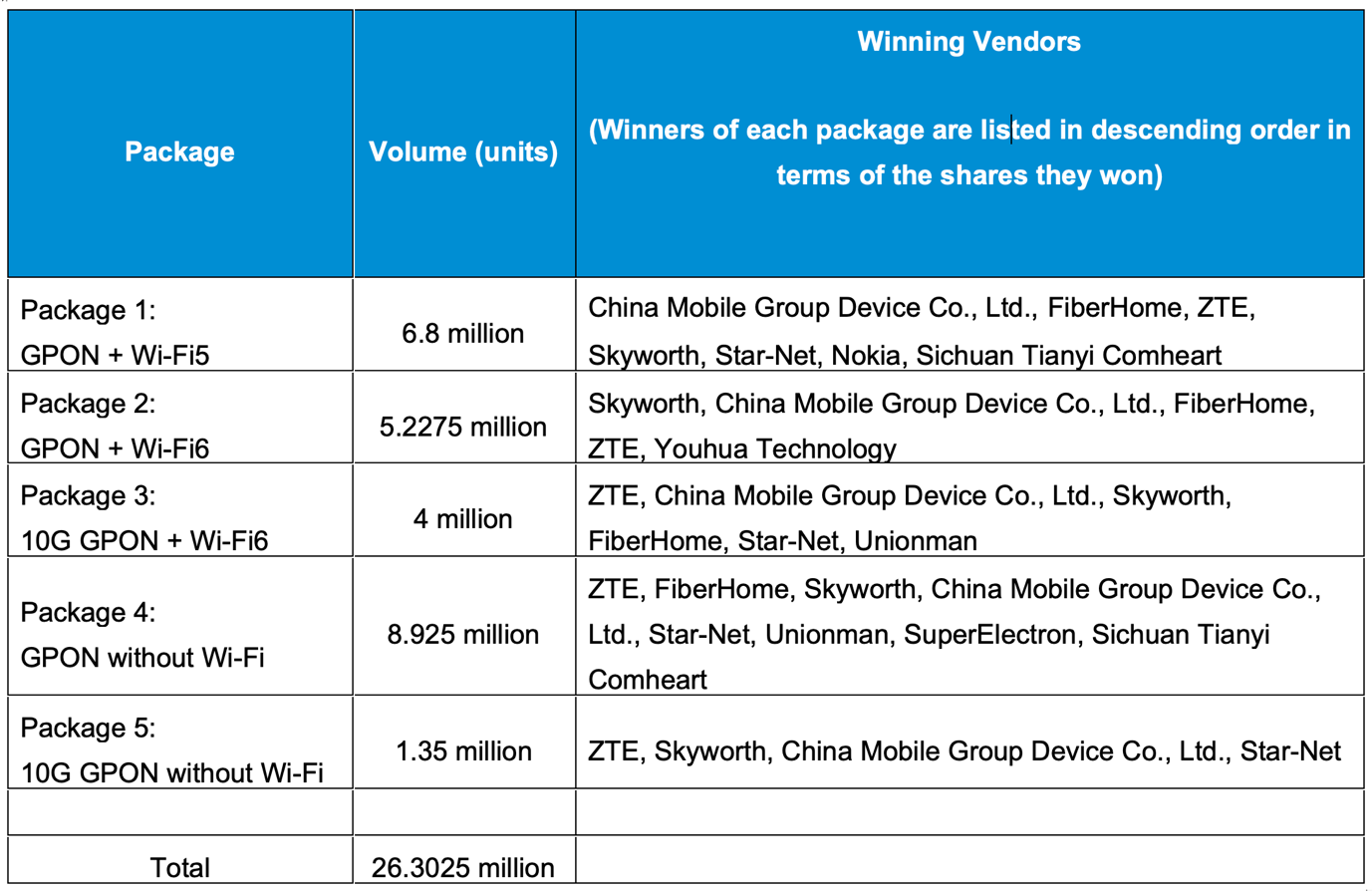
    In May 2022, China Mobile announced the results of its optical network terminal (ONT) tender for 2022-2023. With a total volume of 26.3025 million units, the tender represented the largest centralized procurement of ONTs by any operator in the Chinese market this year, drawing participation from numerous vendors.

    Based on the tender results, ZTE clinched a portion of all the five bidding packages and was the top winner in three of them. In the two packages for 10G GPON with Wi-Fi 6 and 10G GPON without Wi-Fi, ZTE landed the largest share, which testifies to its leadership in the commercial deployment of 10G GPON technology.

    ZTE ranked first for shipments of PON ONT devices with a 33% share of the global market in 2021, according to research firm Dell’Oro Group.