Retail News CRM

Tag: tencent

  • Paipai.com axed to fight counterfeiting

    Paipai.com axed to fight counterfeiting

    China’s number 2 eCommerce player JD.com has axed its consumer to consumer online storePaipai.com in a bid, it says, to cut sales of counterfeit goods.

    The store will be closed by December 31 and after a transitional period of three months, the company will completely close down the website of Paipai.com.

    “The shutdown of the C2C platform is in line with the company’s policy to combat the marketing and sale of counterfeit products and the company will make persistent efforts to protect the interests of consumers and brands,” JD.com said in a statement.

    Paipai.com, along with another site Wanggou, were acquired from WeChat parent Tencent in March 2014. The combined businesses have a goodwill and intangible asset value of US$400 million, making it a very expensive gesture in the war against counterfeit goods in Mainland China.

    The company says it has yet to calculate the book value of the loss given the two websites are accounted for in the books as a combined entity and Wanggou will continue to operate.

    While JD.com is amputating a limb, Alibaba is undergoing a high profile battle in the US courts with French luxury brand owner Kering which alleges Alibaba has failed to take sufficient steps to counter the trading of counterfeit goods on its various websites, as reported by Inside Retail Asia last week.

  • Tie-up between Alibaba and Tencent a wake-up call for ‘bricks and mortar’ retailers

    Tie-up between Alibaba and Tencent a wake-up call for ‘bricks and mortar’ retailers

    Last week’s proposed merger between two of China’s leading consumer lifestyle sites was a wake-up call for firms that have yet to start an e-commerce platform in an economy where online transactions are tipped to total half of all consumer sales within seven years , experts say.

    Consolidation is raising barriers to entry in China’s highly competitive and rapidly growing online-to-offline (O2O) sector, where cab-hailing mobile application Uber and other firms try to draw customers to physical services via the internet. That means new entrants better have deep pockets and a smart business plan.

    Unless you have something special to offer, “a bricks and mortar strategy is basically dead in China”, said Shaun Rein, the Shanghai-based founder of China Market Research Group. And even then, O2O companies were still in cash-burning mode, “building market share but not generating revenues”, by subsidising services like a restaurant meal or cinema ticket to attract hits, Rein said.

    Last Thursday’s deal was a case in point. Valued at US$15 billion or more, the tie-up unites Alibaba-backed Meituan.com with Tencent-funded Dianping.com to create a dominant O2O player in services such as finding online deals, as well as in the group buying of coupons and accessing of ratings.

    The combined firm will now overshadow the sector’s third major player, the Baidu-owned Nuomi, which itself only recently unveiled plans to invest US$3.2 billion over the next three years, as it bids for a slice of an e-commerce market expected to grow from US$672 billion this year to US$1.97 trillion by 2019, according to eMarketer.

    Unfavourable demographics and competition from e-commerce create worse than expected headwinds to conventional consumer bands/products and distribution channels

    Jefferies analysts

    The speed at which China’s e-commerce market has grown has not surprised onlookers who say consumers savour the convenience of online shopping and home delivery rather than having to deal with gridlocked streets and polluted air.

    Chinese consumers bought 12.4 per cent of their retail products online last year. That number should rise to 33.6 per cent in 2019, forecasts eMarketer, and Rein predicts it may hit 50 per cent by 2022. By comparison, online retails sales in the United States, where retail space per capita is four times higher than in China, are expected to total just 9.8 per cent of total sales by 2019, barely budging from 6.5 per cent last year, eMarketer data shows.

    Those numbers are translating into a lot of deal making. There have been US$58.4 billion of internet deals involving Chinese companies this year, already almost double the amount for the whole of last year, Bloomberg data shows.

    China’s offline retailers have “to embrace e-commerce or fade away”, said Duncan Clark, chairman of BDA, a Beijing-based tech sector consultancy, while adding that managers must be mindful of the costs involved.

    Referencing the recent tie-up, Clark said: “Alibaba and Tencent are pragmatic when it comes to combining their proxies if it means ending ‘subsidy wars’ which get out of control. Its okay to toss in a few tens of millions of dollars into supporting a proxy, perhaps even a few hundred million, but beyond that logic kicks in and the temptation of combining forces to create a dominant player is too hard to resist.”

    The competition would only increase, Clark said, given improvement in logistics allowing same-day delivery of even refrigerated items.

    The lack of an e-commerce strategy is already weighing on investor sentiment, with a recent Chinese consumer report by investment bank Jefferies ranking a swathe of retailer and department store stocks “neutral” in part because of competition from online platforms.

    “Unfavourable demographics and competition from e-commerce create worse than expected headwinds to conventional consumer bands/products and distribution channels,” Jefferies analysts wrote.

    Challenges still exist for established retailers wanting to make the switch.

    “A lot of executives used to bricks and mortar can’t make the transition,” Rein said.

    Understanding the product range and service level expected by digital consumers was tough for people used to doing business in a different way, he said.

    “The competition is fierce and a lot will go out of business,” Rein said.

  • China luxury spend offshore will double

    China luxury spend offshore will double

    The Chinese already account for 27 per cent of the world’s total luxury spending – and a staggering 80 per cent of that is spent outside the Mainland.

    China luxury spending outside China will double by 202 according to a report by China Luxury Advisors, presented to last week’s Luxury Retail Summit: Holiday Focus 2015.

    “What we’re really seeing is that [the Chinese slowdown is] just really not changing the amount of travel, it’s just changing the nature of it,” said Avery Booker, partner at China Luxury Advisors in a presentation reported in detail here by Luxury Daily.

    “We’re seeing fewer long haul trips among the middle class, and more people going to places like Japan and Korea to do shopping,” he said. “The purse shopper spending will remain strong even though average spend is going to decrease, and of course that’s just a volume issue.”

    Booker said the devaluation of the Chinese currency was so far having no perceptible effect.

    Chinese shoppers spend US$229 billion a year outside the mainland – which China Luxury Advisors predicts will double by 2020, based on the theory the $8000 per year per capita GDP is “the tipping point” at which outbound tourism booms. China has just reached that level.

    The Luxury Retail Summit was organised by Luxury Daily.

    In reaching its estimates China Luxury Advisors surveyed 1000 Chinese consumers 18 years and older, with a variety of incomes.

    Their most common destination outside the mainland is still Hong Kong, mainly due to its nearness and visa-free travel.

    China Luxury Advisors urged retailers to make their stores “Chinese consumer-friendly” to make the most of the booming trend. Mandarin speaking associates, Chinese dining options and accepting Alipay, Tencent or China Union Pay can make them feel at ease.

  • Apple to launch online payment in China

    Apple to launch online payment in China

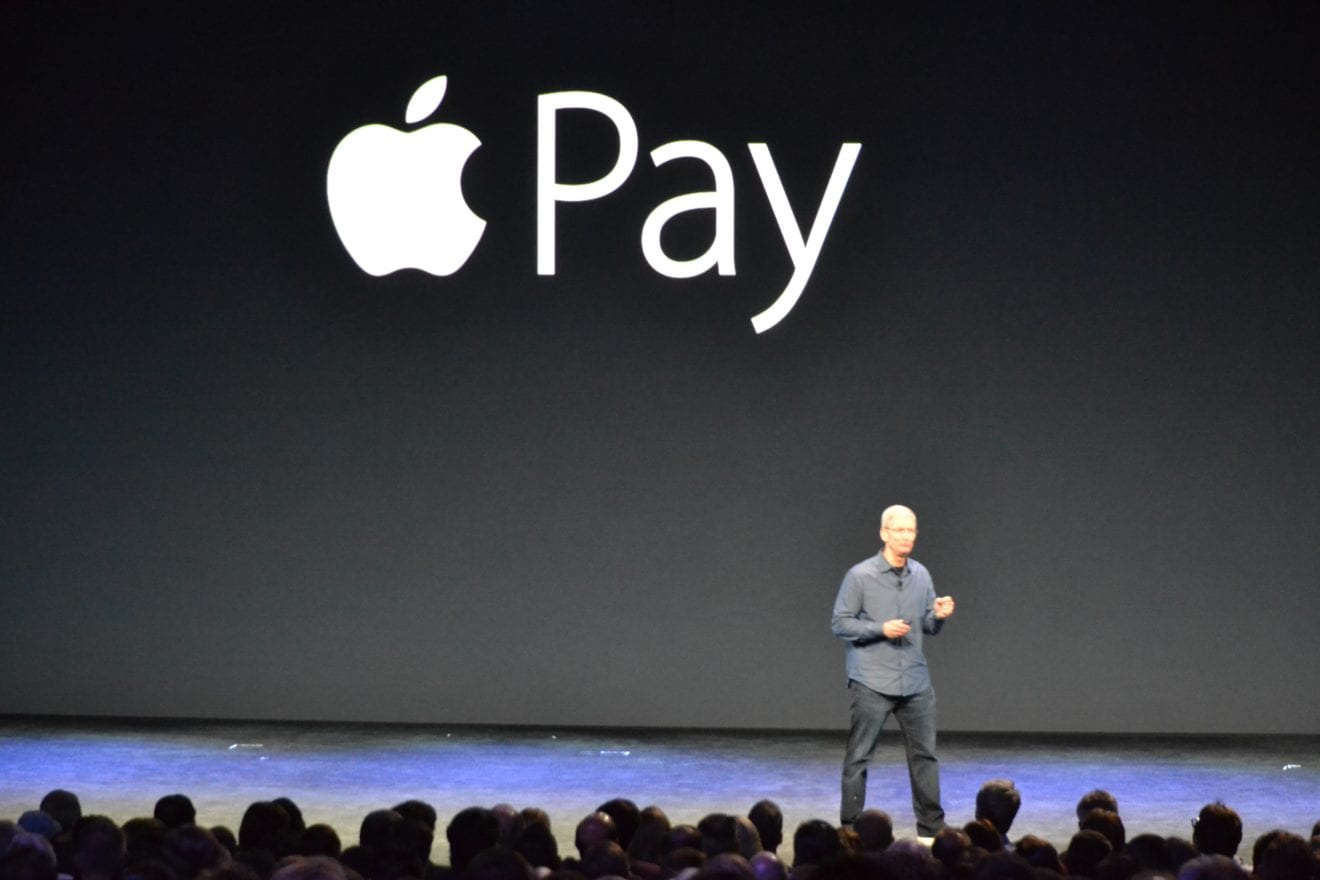
    Apple will launch an online payment service in China, as the tech giant seeks to expand in its largest market outside of the US despite fierce competition from local rivals.

    An Apple Company offering online payment has launched in the Shanghai Free Trade Zone (FTZ), an area set up as a testbed for financial reforms, China News Service reported late Thursday.

    Apple didn’t give a date for the launch, but the company told AFP that CEO Tim Cook hopes to set-up Apple Pay in China “as quickly as possible”.

    Cook previously said that he expects China one day to surpass the United States to become Apple’s largest market.

    But China’s e-commerce giant Alibaba dominates the country’s online payment sector, with the Paypal-like Alipay taking around 80 percent of the market.

    Internet firm Tencent is also catching up with a similar service provided via its popular messaging application WeChat.

  • Ffan: Wanda’s online store goes live

    Ffan: Wanda’s online store goes live

    Nearly a year after three giant Chinese companies teamed up to take on Alibaba, the newly-mintedeCommerce store finally and quietly launched this week.

    The site, Ffan, is the result of a billion-dollar joint venture between Tencent, Baidu, and Wanda Group, a conglomerate best known for its chain of movie theatres and malls.

    The joint venture started with US$814 million in its pocket in August 2014, with Wanda holding a 70 per cent stake, and Tencent and Baidu splitting the remainder evenly. In January, it secured venture capital funding to the tune of US$161 million.

    Local commerce

    The new estore is designed to take on Alibaba’s eCommerce dominance, with a focus on helping people buy local products and services. That’s why visitors to Ffan can choose their city to see local deals.

    Baidu declined to comment on today’s launch and Tencent has yet to reply to Tech in Asia’s inquiry.

    At first glance, Ffan looks odd and rather bare. The only two product categories on the top navigation bar are “food” and “movie tickets.” Browsing through the city-specific food section reveals that most of the products are from retailers at Wanda’s shopping malls across the country. Indeed, users can browse through the Ffan site or accompanying mobile app according to their nearest mall.

    Wanda – a private company which boasted assets of RMB 534.1 billion yuan (US$85.6 billion) in 2014 – has reportedly been plotting a leap from offline retail to ecommerce for several years, but today’s launch doesn’t reveal much that should worry Alibaba or arch-rival JD right now. It’s not a general ecommerce store like Alibaba’s Tmall or JD, and the offerings are slim.

    Sill, Wanda has the reach – across malls, cinemas, hotels, resorts, theme parks, and several other areas – to challenge Alibaba in terms of the fast-growing interest on the web for local, on-demand products and services.

  • Using WeChat to Grow Your Business in China

    Using WeChat to Grow Your Business in China

    In the world of mobile commerce, all eyes are on China.

    Even as China’s economy and overall retail sales growth drops, business-to-consumer (B2C) online sales are growing by 25 per cent each year. Data gathered from iResearch in a March 2015 report states that China’s gross merchandise volume (GMV) of the mobile shopping market reached 929.71 billion RMB in 2014, increasing by 239.3 per cent from the previous year.

    The growth was significantly larger than that of the overall GMV of the online shopping market. China has the world’s largest digital marketplace, and is predicted to grow three times faster than overall retail. The industry is primed for growth not only in the first-tier cities, but also in the third-tier and lower cities with an estimated half of total online sales coming from the lower tier cities by 2018.

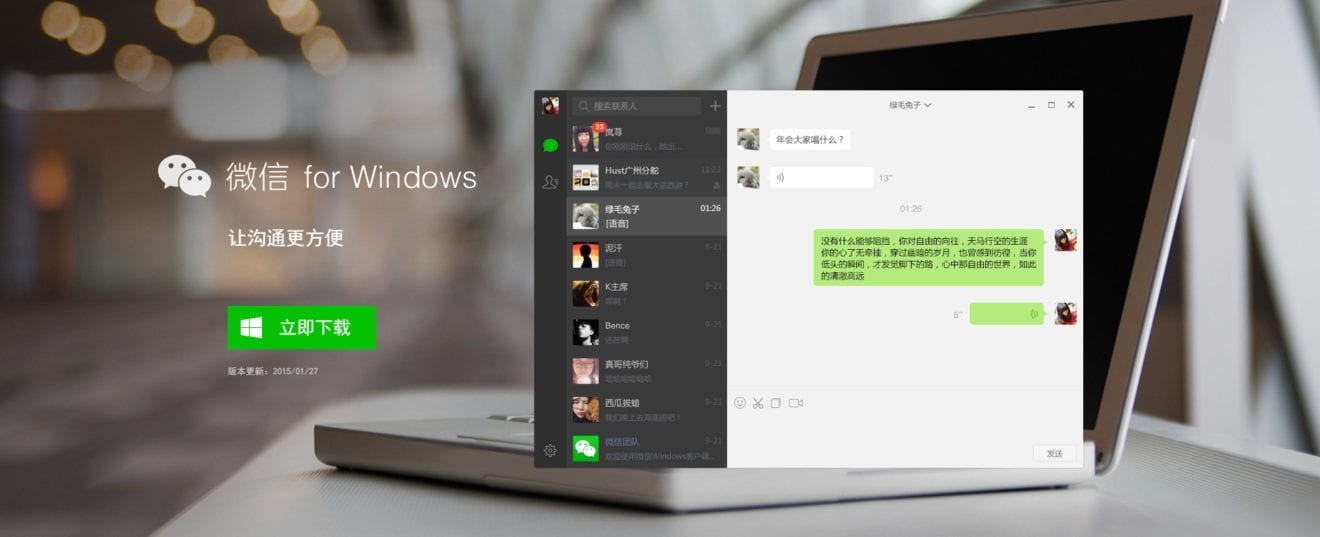
    When considering the mobile commerce industry in China, one name stands out: Tencent’s WeChat has long been impacting the lives of Chinese consumers, and with its move to digital payment systems it now has the ability to revolutionise the mobile commerce industry in China.

    WeChat has a massive scale, with over 468 million monthly active global users and 25 per cent of users checking WeChat over 30 times a day. Last year, users spent US$15.3 billion on mobile data using WeChat.  As the fastest growing social media platform in the world, and the primary source of interaction between brands and Chinese consumers, foreign investors looking to be successful in China should take note. Chinese consumers actively embrace mobile commerce due to its easy to use, cost-effective payment and delivery system.

    There is huge potential for foreign investors to take advantage of WeChat payment systems for their Chinese consumers and to maximise their profits. WeChat allows foreign investors to interact with their consumers in a way that has not reached the same scale in the Western world.

    Fewer than 20 per cent of internet users in the US have used their mobile phones to pay for services and goods while more than half of users in China have done so. Multiple incentives exist for Chinese consumers to make their purchases through WeChat; enabling businesses to use these schemes to generate profit. Loyalty cards, membership schemes and discounts for paying online all compel cost-effective shoppers to make a purchase.

    In addition to this, due to the convenience of paying through WeChat, there is a higher chance of impulse purchases. However, this ease does not simply apply to the consumer. Brands are able to bridge the gap between attracting new consumers and engaging with paying consumers, which has already begun to change the face of shopping and retailing worldwide. Businesses utilising WeChat payment systems are already experiencing huge profits, and Tencent has stated that several official accounts are now making over US$1 million.

    Not only can consumers purchase items, but can also purchase services inside WeChat. Businesses with service accounts can take advantage of WeChat’s online-to-offline (O2O) business model. Both online and offline purchases are available to consumers. Customers can either pay for services or items by scanning the QR codes of products provided by offline retailers, or pay on web pages inside the app.

    All vendors, from big name brands to small and medium-sized enterprises are able to create service accounts in WeChat. Big name companies like McDonalds, Starbucks, Xiaomi, Watsons, and Pacific Coffee have all created service accounts. WeChat allows all vendors the potential for success and the ability for SMEs to create accounts is an important aspect for foreign investors to capitalise on.

    Certain industries, such as food, beverage and retail, tend to generate more profit as they are more primed for mobile commerce. That being said, taxi companies, airlines, newspapers, government organisations, and pharmaceutical companies are all using WeChat payments to their advantage.

    Tencent has now enabled users to pay their utility bills through WeChat, and more and more businesses are finding a way to use WeChat mobile payments to grow their business and attain a competitive advantage.

    It is crucial for foreign businesses entering a new market to take advantage of domestic trends in order to be competitive in that marketplace. Mobile commerce in China is constantly evolving and businesses like WeChat are revolutionising how business is conducted. WeChat allows both big name brands and SMEs to compete in the same market space which has the ability to change the entire industry. Entering the Chinese market has its difficulties, but applications like WeChat make it easier for foreign investors to communicate effectively with their Chinese consumers.

  • China Jo-Jo WeChat retailer opens

    China Jo-Jo WeChat retailer opens

    China Jo-Jo Drugstores has opened a retailer on Tencent’s WeChat social media platform. The China Jo-Jo WeChat foray might be carried out by way of its subsidiary Hangzhou Jiuzhou Grand Pharmacy Chain. It’s the first Hangzhou based mostly pharmacy to launch shops on WeChat, which has greater than 500 million lively customers.

    China Jo-Jo says the transfer, following partnerships with Alipay and Ali-Well being, is a part of a broader technique to construct its personal On-line-to-Offline (O2O) ecosystem for its pharmaceutical and healthcare merchandise.

    In late 2014, Tencent unveiled its on-line service provider shops for small to medium measurement companies based mostly on its common WeChat platform, and it has shortly developed into an all-in-one cellular advertising service. WMS permits retailers the alternatives to interact with their clients in real-time and collect knowledge based mostly on shopper profiles and spending behaviors. Retailers may also use WMS to replace product info and handle stock and merchandising course of. WMS permits clients to pay by WeChat Pay, a handy cost technique just like Alipay. “As a well known cost technique that clients already belief, WeChat Pay can drastically improve on-line transaction movement for WeChat Retailers. By opening our pharmacy on WMS platform, China Jo-Jo hopes to draw a a lot bigger and constant shopper base by implementing higher knowledge mining, goal advertising and gross sales promotions corresponding to group-buy, present certificates, flash sale, coupons and loyalty program,” the corporate stated in a statemet.

    By integrating our in-store IT system with WMS’s highly effective cost, O2O and repair spine platform, we intend to rework our brick and mortar shops into “Clever Pharmacies”.

    China Jo-Jo President, Li Qi, added: “In a standard drugstore, there’s solely one-way interplay between the shop and its clients. Now in our O2O drugstores, we and our clients can simply talk with one another via WeChat platform anytime and anyplace. Shoppers can now take pleasure in customised service and acquired extra focused advantages reminiscent of coupons and member reductions. For us, we will now construct, monitor and analyse quite a few knowledge on buyer spending sample, which can be used to enhance the on-line buying expertise as an entire. O2O enterprise options will stay an integral a part of China Jo-Jo’s technique sooner or later.”

  • Sa Sa to simply accept WeChat funds instore

    Sa Sa to simply accept WeChat funds instore

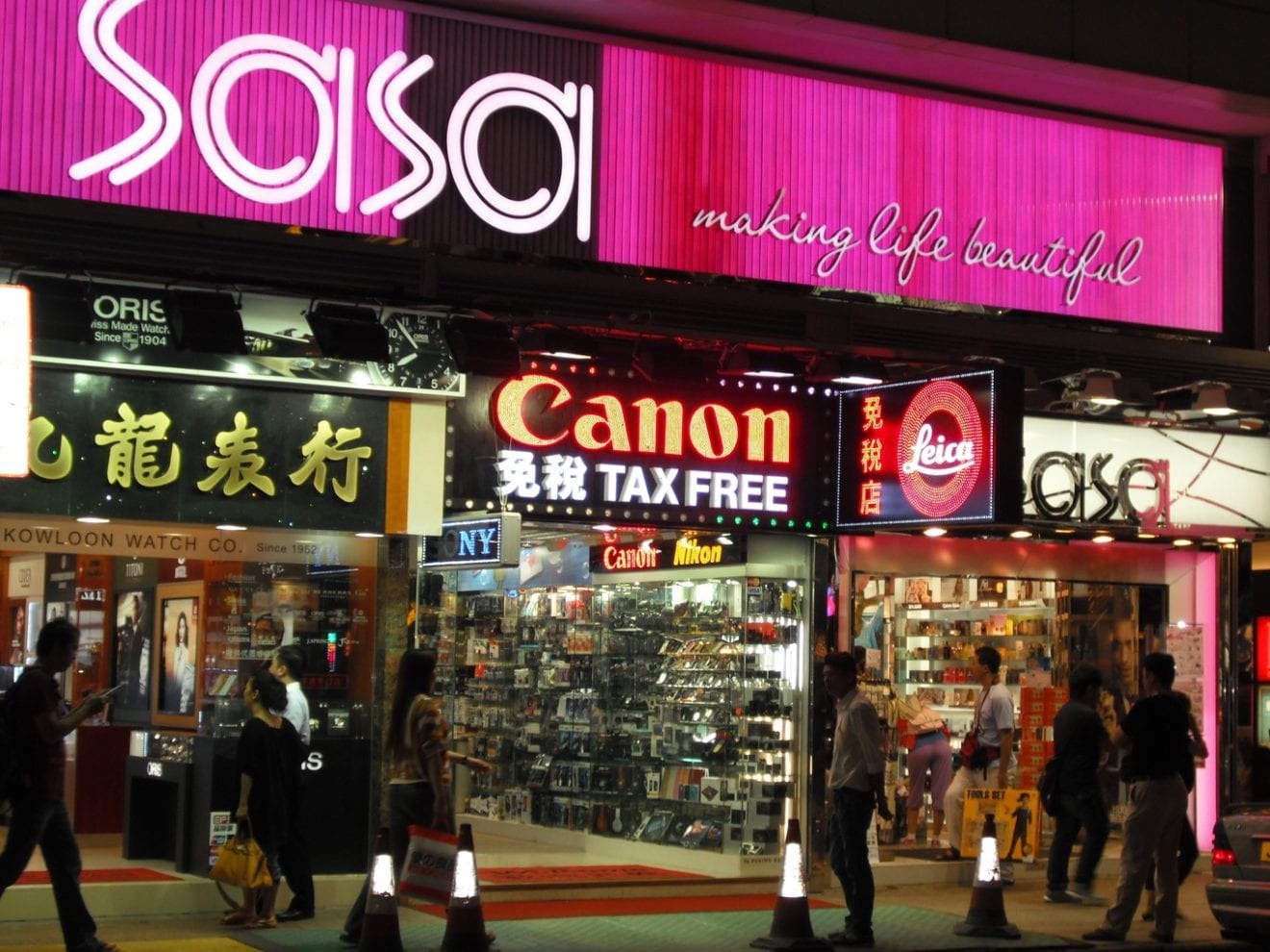
    Magnificence merchandise retailer Sa Sa is to simply accept Tencent’s WeChat funds in 100 Hong Kong shops.

    Sa Sa thus turns into the primary international retail companion of tencent’s new offline WeChat-based cross-border cost service, TenPay.

    WeChat’s Tenpay permits account holders, principally Chinese language mainlanders, to scan the QR Code on their cell phone utilizing the WeChat app, and shortly make a cost on-line. Now the service is being rolled out offline permitting funds to be made in bodily shops, by comparable means. Each WeChat account holder has a singular QR code inside the app – which may also be used to scan different QR codes to entry web pages, particular presents and an entire vary of different providers and knowledge.

    Sa Sa says the transfer to simply accept TenPay demonstrates its dedication to exploring on-line to offline (O2O) enterprise alternatives.

    “The pioneering act is predicted to show over a brand new leaf within the improvement of offline cellular cost,” Sa Sa stated in a press release.

    “The group has been dedicated to selling O2O enterprise within the final yr, with the purpose of offering clients with a extra complete buying expertise involving a number of channels and touchpoints. The launch of cross-border offline WeChat Cost doesn’t solely show the group’s dedication in enhancing the usual of its providers, but in addition lays a key milestone within the improvement of the group’s O2O enterprise. The group will proceed to introduce new O2O experiences which are handy to clients in order that the group will be capable of seize alternatives and increase its enterprise underneath progressive deployment of various O2O purchasing experiences,” stated Sa Sa.

    “We hope to offer mainland customers of WeChat with a extra handy cost technique for purchasing in Hong Kong by means of our partnership with Sa Sa. In the meantime, Sa Sa’s in depth retail community all through Hong Kong in addition to its numerous buyer base will allow us to successfully promote WeChat Cost, with the goal of extending such revolutionary cellular cost to different retailers and ultimately gaining reputation in Hong Kong. The appliance of WeChat Cost shall be expanded to the remainder of the world following the footprint of Chinese language vacationers. ”

    A Tencent spokesman stated the transfer would supply added comfort for mainland WeChat customers.  “In the meantime, Sa Sa’s in depth retail community all through Hong Kong in addition to its numerous buyer base will allow us to successfully promote WeChat Cost, with the goal of extending such revolutionary cellular cost to different retailers and ultimately gaining reputation in Hong Kong. The appliance of WeChat Cost shall be expanded to the remainder of the world following the footprint of Chinese language vacationers. ”

    Sa Sa launches its WeChat Cost acceptance by giving clients a WeChat Pink Envelope of RMB10 upon a purchase order of HK$100 settled by WeChat Cost on smartphones throughout a promotion interval.

    Stated Dr Man Look, CFO and government director of Sa Sa: “Making good use of know-how is the important thing for native retailers to successfully improve providers and meet the purchasing wants of consumers underneath the ever-changing development of Web and cellular communications know-how. As Tencent’s first companion in introducing cross-border offline WeChat Cost, we consider that extra clients will undertake this progressive cellular cost upon full launch of such service. Clients can take pleasure in a extra handy and nice purchasing expertise with out the necessity to carry money or bank cards.”

  • Alibaba, Tencent spend billions in race to be China’s one-stop online shop

    Alibaba, Tencent spend billions in race to be China’s one-stop online shop

    Alibaba and Tencent spent more than USD8 billion last year alone backing often strikingly similar ventures, as the Chinese Internet giants race to create online one-stop-shops to win the digital loyalty of a tenth of the world’s population.

    Before China became the biggest smartphone market, there was little overlap between the businesses of e-commerce leader Alibaba Group Holding Ltd, social networking firm Tencent Holdings Ltd and search engine provider Baidu Inc.

    Now, as more and more Chinese use their phones for everything from shopping to booking restaurants, the three companies are increasingly stepping over each other – and investing in the same services – to attract the same users.