Tag: tencent

  • Carrefour opens ‘smart store’ in Shanghai

    Carrefour opens ‘smart store’ in Shanghai

    Carrefour China has opened its first-ever ‘smart supermarket’ in Shanghai in partnership with Tencent, four months after the parent company of the WeChat app bought a stake in the French retailer.

    Covering 4000sqm over two levels in Changning district, the new Le Marche store is connected to the Beixinjing metro station. It offers more than 25,000 product types, mostly food, and customers can pay with their WeChat accounts by scanning a QR code and using facial-recognition technology.

    A feature of the supermarket is on-screen entertainment, including reality TV show Produce 101, owned by Tencent’s video arm.

  • Ride-Hailing Firm Go-Jek to Expand Abroad

    Ride-Hailing Firm Go-Jek to Expand Abroad

    Indonesian ride-hailing and online payment firm Go-Jek on Thursday said it would enter Vietnam, Thailand, Singapore and the Philippines in the next few months, investing $500 million in its international push.

    The move will start with ride-hailing services before expanding to other sectors, Go-Jek said in a statement.

    “People in Vietnam, Thailand, Singapore and the Philippines don’t feel that they’re getting enough [choice] when it comes to ride-hailing,” chief executive Nadiem Makarim said in the statement.

    The announcement comes after Uber Technologies Inc sold its Southeast Asian operations to local competitor Grab.

    Go-Jek said it was working with regulators and other stakeholders across the region to prepare for the new operations.

    The expansion follows Go-Jek’s latest round of fundraising, which brought investment from companies including Astra International, JD.COM, Tencent and Temasek.

  • Tencent Beats Forecasts as Revenue Surges 48% in First Quarter

    Tencent Beats Forecasts as Revenue Surges 48% in First Quarter

    WeChat parent Tencent Holdings has achieved a 48 per cent increase in revenue during the first quarter of this year.

    Revenue from Smartphone games, payment-related services, digital-content subscriptions and sales, and social advertising were key contributors overall growth in the three months to March 31.

    Operating profit grew by 59 per cent and operating margin was 42 per cent, up three percentage points year-on-year, while profit attributable to shareholders increased by 61 per cent.

    Tencent says the number of monthly active users (MAU) on smart devices was up by 2.4 per cent year-on-year to 694.1 million and smart-device MAU for users aged 21 years or below also increased year-on-year as it enriched chat features and entertainment-driven content appealing to young consumers.

    Tencent’s online advertising business achieved 55 per cent revenue growth.

    “For media advertising, revenues grew by 31 per cent year on year. Within that, video ad revenues increased 64 per cent due to more pre-roll ads benefiting from the growth in video views, and our enhanced capability to develop creative ad formats within original productions.”

    Other businesses grew revenues by 111 per cent, driven by its payment-solutions business and related financial services, as well as cloud services.

    “The growth in our payment solution business was mainly contributed by the rapidly increasing offline commercial transaction volumes and consumer cash withdrawal fees.”

    Digital content viewers grow

    Total fee-based value-added services subscriptions grew by 24 per cent to 147 million, primarily driven by video- and music-streaming services.

    “We strengthened user engagement of our video platform, where the number of daily active users and per-user time spent on mobile grew rapidly. Mobile daily video views increased by more than 60 per cent, driven by the premium-quality content from our self-commissioned and licensed productions. Total video revenues were up 75 per cent year on year.”

    Tencent said its investment in self-commissioned content enhanced Tencent Video’s user engagement, helping increase conversion-to-subscription rates and subscriber-retention rates. Video subscription revenues grew by 85 per cent year on year.

  • Tencent decides to launch its first Asean data center in Cyberjaya

    Tencent decides to launch its first Asean data center in Cyberjaya

    Tencent Holdings Limited, a China based investment holding firm, and Tourism Malaysia are planning to jointly set up a data center in Cyberjaya, Malaysia. Sources claim that the strategic move is a part of the Smart Tourism 4.0 program launched recently in Malaysia. Under the new project, Tencent is expected to use the reproduction of its earlier digital ecosystem model.

    Datuk Siew Ka Wei, the chairman of Tourism Malaysia, has stated that the group has decided to establish an incubation unit in Cyberjaya in association with the regional partner. He further added that the initiative will include not only retail firms but also airliners and myriad other players across the transport sector.

    Experts are of the opinion that this smart tourism initiative will make notable contributions towards the economic growth of Malaysia considering that 8 million tourist arrivals are expected in Malaysia from China over the next two years. As per a key official of Tourism Malaysia, startups with innovative, fresh ideas will benefit commendably from the smart tourism initiative.

    If reports are to be believed, the initiative is forecast to be live in the second half of this year. The program will help the Malaysian Tourism Promotion Board to promote the growth of tourism industry in the country.

    Malaysia Smart Tourism 4.0 program encompasses the development of approximately 40 videos, each spanning over five minutes. These videos display exceptional holiday experiences in the country, including resorts, gastronomy, heritage, beaches, soft adventure tourism, history, and culture. It is likely that Tencent will declare the establishment of the data center in Cyberjaya by the end of the month, thereby becoming the first organization to provide services for the entire Asian region.

    It has been speculated that the Chinese retail conglomerate will support the expansion of Malaysian businesses across the China market by providing them with new technology. In return, Tourism Malaysia will offer substantial facilities to Tencent for its business growth across the country.

  • Asian markets tumble with Wall St as Facebook breach hits tech

    Asian markets tumble with Wall St as Facebook breach hits tech

    Asian markets sank on Tuesday following sharp losses in New York as a massive data breach at Facebook fuelled fears of a regulatory crackdown on the technology sector.

    The scandal at the social media giant come as investors fret over a possible increase in the rate of US interest rate hikes and Donald Trump steps up his protectionist rhetoric that has sparked talk of a global trade war.

    Reports said Cambridge Analytica, the analysis firm hired by Donald Trump’s 2016 presidential campaign, stole data from 50 million Facebook user profiles to help design software to predict and influence voters’ choices.

    Stephen Innes, head of Asia-Pacific trading at OANDA, warned: “This security breach could end up being a significant turning point for the social media and network portal.”

    The news hammered tech giants with Facebook plunging 6.8 percent, while other household names were also hit — including Apple, Google-parent Alphabet and Netflix — by regulatory concerns.

    “The adults are starting to realise that the altruistic kids who started some of these tech behemoths are either unwilling or unable to deal with the fact that the companies they wrought and thought were a force for good can be manipulated by those who seek to do ill,” said Greg McKenna, chief market strategist at AxiTrader.

    The US losses filtered through to Asia, with Hong Kong-listed internet giant Tencent and AAC Technologies sharply lower. Samsung retreated in Seoul, while Sony was one percent lower in Tokyo.

    On broader markets Japan’s Nikkei went into the break more than one percent lower, while Hong Kong shed 0.6 percent and Sydney was off 0.5 percent.

    Shanghai dropped 0.3 percent, Singapore gave up 0.2 percent and Seoul retreated 0.4 percent, with Wellington, Manila, Taipei and Jakarta all sharply down.

    Investors are keeping a close watch on the Federal Reserve’s policy meeting this week looking for clues about its timetable for tightening monetary policy. Opinion is split on the number of rate hikes it will likely announce this year, with some forecasting three and others saying four.

    Market-watchers warn a G20 meeting of finance ministers in Argentina could also revive tensions on international trade after Trump unveiled his controversial tariffs this month.

    On currency markets the pound extended gains against the dollar after Britain and European Union leaders agreed a post-Brexit transition deal that will buy businesses and citizens time to adjust to life after the divorce.

  • Tencent and JD.com each take minority stakes in Chinese retail group Better Life

    Tencent Holdings and JD.com are buying minority stakes in Chinese retailer Better Life Commercial Chain Share.

    A Tencent subsidiary is paying RMB886.9 million (US$140 million) for a 6 per cent shareholding, while a JD.com subsidiary is paying RMB739.1 million for a 5 per cent stake, according to a Better Life filing with the Shenzhen stock exchange.

    Also known as Bubugao, Hunan-based Better Life announced a strategic collaboration agreement with Tencent at the beginning of this month, Reuters reports. The three companies and shareholders agreed to the transactions on February 14, according to the filing.

  • Alibaba, Tencent rally troops amid $10 billion retail battle

    Alibaba, Tencent rally troops amid $10 billion retail battle

    China’s tech giants Alibaba Group Holding Ltd and Tencent Holdings Ltd, worth a combined $1 trillion, are on a retail investment binge, forcing merchants to choose sides amid a battle for shoppers’ digital wallets.

    Since the start of last year, the two companies have between them spent more than $10 billion on retail-focused deals, boosting their reach online and in brick-and-mortar stores.

    The aggressive drive, supported by large cash piles and soaring share prices, is part of a battle to win over consumers and store operators to the two firms’ competing payment, logistics, social media and big data services.

    The result: fewer and fewer retailers left without allegiance to either Tencent or Alibaba.

    “All of the retailers in the brick-and-mortar world are very worried. They have to take a side,” said Jason Yu, Shanghai-based General Manager of market research firm Kantar Worldpanel.

    “Otherwise they are afraid they will be eaten alive in the future.”

    Alibaba is China’s top e-commerce player and its affiliate Ant Financial leads in mobile payments. Tencent’s strengths lie in social media, digital payment and gaming. It also has a major stake in the second-largest online retailer, JD.Com.

    Tencent and JD.com have a growing range of allies, including French grocer Carrefour SA, which has announced a potential investment from Tencent, and U.S. retail giant Walmart, which has a stake in JD.com.

    Tencent also bought a stake in Yonghui Superstores Co Ltd, apparel retailers Vipshop Holdings Ltd and Heilan Home, mall operator Wanda Commercial, and this month snagged a strategic tie-up with grocer Bubugao.

    In the other corner is Alibaba, which has invested even more heavily in Suning.com>, Intime Retail, Sanjiang Shopping Club, Lianhua Supermarket, Wanda Film and IKEA-like home
    improvement store Easyhome.

    Key to the battle is China’s nearly $13 trillion mobile payment market, where Alibaba and Tencent are going head-to-head. Alibaba took a 33 percent stake in its payment affiliate Ant Financial this month ahead of an expected mega IPO.

    Ant operates China’s top mobile payment platform, Alipay, while Tencent’s payment system on its hugely popular Weixin chat app is catching up fast. Both firms are also making a big push in cloud computing and data.

    “I think for payment (the retail push) is a very critical part because it’s almost a gateway,” said Yu. Brick-and-mortar stores in China account for about 85 percent of retail sales, creating a huge lure for tech giants.

    “That’s the pot that Alibaba, JD.com and even Tencent want a slice of,” Yu added. “That’s the majority of the business where they can actually look for future growth.”

    In return, the physical stores get access to payment systems, logistics networks and other services – not to mention the reams of data on consumers that the tech firms control.

    Alibaba invested $486 million this month in a retail-focused big data firm, saying the deal meant it could better “help brick-and-mortar retailers succeed in the digital age.”

  • China’s e-commerce giants to buy Dalian Wanda malls

    China’s e-commerce giants to buy Dalian Wanda malls

    Three Chinese e-commerce giants led by Tencent are buying into shopping centres as part of an alliance that will help fund property magnate Wang Jianlin’s HK$30 billion (US$3.8 billion) plan to take his Dalian Wanda Group private.

    Jianlin describes it as the world’s biggest single alliance between the new economy and bricks-and-mortar businesses as he vows to turn his flagship commercial property unit into an online-to-offline service provider.

    After shedding properties in Australia, China and the UK to help reduce debt, he is now selling off nearly 14 per cent of Dalian Wanda Commercial Properties to some of the mainland’s biggest internet and retail players.

    An investor group led by Tencent, along with e-commerce heavyweight JD.com, electronics retailer Suning and Wanda partner Sunac China Holdings, the stake is being sold for RMB34 billion (US$4.36 billion).

    On its website, Wanda presents the share sale as part of a transformation of the company from a real-estate developer with nearly 240 shopping centres across China into a commercial management company focused on integrating online and offline consumption.

    As part of the deal, Dalian Wanda Commercial Properties will be renamed Wanda Commercial Management Group.

    However, the new partners may lead the financing of new malls, with the website statement noting “Tencent, Suning and other investors will use their financial prowess to continuously support Wanda Commercial to speed up its growth, helping the company to achieve its goal of 1000 Wanda Plazas in China as early as possible”.in

    Wanda says the partners are keen to relist the commercial real-estate unit, still privately held after a 2016 buyout led by Wang, “at the earliest opportunity”.

    Also, the new group will use the online resources of Tencent, Suning and JD.com as well as its own offline commercial assets to “carry out various collaborations, jointly building a new consumption model in China that will integrate both online and offline services”.

    Wanda Commercial’s total debt at the end of June was RMB279 billion, according to ratings agency S&P.

    Tencent’s investment of RMB10 billion gives it a 4.12 per cent stake, while Suning and Sunac’s twin outlays of RMB9.5 billion will them a 3.91 per cent stake each, and JD.com’s RMB5 billion yields a 2 per cent stake.

    Meanwhile, WeChat owner Tencent last week said it might buy into French retailer Carrefour’s China business, along with local retailer Yonghui Superstores. This follows Amazon’s acquisition of Whole Foods for US$13.7 billion.

  • Tencent expands WeChat Pay to HK residents

    Tencent expands WeChat Pay to HK residents

    Tencent has expanded its WeChat Pay user base to Hong Kong residents, who now will not need to have a Chinese bank account or credit card to take advantage of the Mainland’s popular cashless payment system.

    With the announcement, Hong Kong residents can now bind and activate their WeChat Pay accounts with any international credit cards, including MasterCard, Visa and JCB.

    They can activate WeChat Pay in two ways:

    • Bind any Mastercard, Visa and JCB credit cards for online payments such as online shopping, taxi hailing, ticket purchasing, bike-shares, food delivery and hotel booking.
    • Bind any credit cards or bank cards issued by 71 banks in China, together with proof of a valid passport, China Resident Identity Card, a Mainland Travel Permit for Hong Kong and Macau Residents or a Mainland Travel Permit for Taiwan Residents, to pay for all online and offline payments. Users with these bank cards can also activate their QQ Wallet.

    Besides Hong Kong residents, Tencent opens WeChat to expatriates living in China as well as to Macau and Taiwan residents.

    According to the 2017 WeChat Data Report that tracked consumption habits of foreign residents in China, over 64% of expatriates use Weixin Pay for their daily needs, especially for splitting bills, food delivery, transportation, dining, as well as shopping in stores, supermarkets and online.

    With the introduction of using credit card accounts, this number is expected to grow as the payment system will be simpler and more convenient to use for citizens outside of China.

    In China, WeChat is being used by a group of friends to split a restaurant bill, check into or out of a hotel, board a bus or train, hail a car service or hop on a bike. WeChat provides access to China’s car hailing service Didi Chuxing and bicycle-sharing system Mobike.

  • Carrefour steps up e-commerce push, chases Tencent deal in China

    Carrefour steps up e-commerce push, chases Tencent deal in China

    Carrefour is to cut jobs, boost ecommerce investment and seek a partnership in China with Tencent in the face of competition from Amazon, sending its shares higher on Tuesday.

    Alexandre Bompard, who took over as CEO in July, is trying to overhaul Carrefour’s French hypermarket business as well as expand online retail. Amazon’s purchase of Whole Foods in the United States last year has prompted speculation that the tech company could be targeting food retail in Europe next.

    Bompard plans to invest 2.8 billion euros ($3.4 billion) in digital commerce by 2022, six times its current investment, as Carrefour plays catch-up in online food retail.

    “Carrefour has reached a turning point in its history. We have a huge ambition and I am well aware of the magnitude of this challenge,” Bompard told a news conference.

    Under pressure to increase profits, Bompard also announced cost savings of 2 billion euros by 2020, including a voluntary redundancy plan for 2,400 employees at its French head office and plans to sell or close 273 underperforming stores Carrefour bought from Spanish retailer Dia in 2014.

    Carrefour shares rose around 6 percent, their biggest one-day gain since October 2015.

    “Consumer trends are changing, and Carrefour is adapting accordingly,” said Benoit de Broissia, analyst at Paris-based investment firm Keren Finance, which owns Carrefour shares.

    The group, the world’s second largest retailer with more than 380,000 employees, is targeting 5 billion euros in sales in food e-commerce by 2022 – an amount that would be six times greater than at present, which would represent a 20 percent market share in France.

    Carrefour’s online sales accounted for just 1.7 percent of its total French food sales in 2016, while more digital-savvy rival Leclerc managed 8 percent, according to analysts at brokerage Bernstein.

    Carrefour has struggled for years to reduce its reliance on hypermarkets, particularly in France, where it makes 47 percent of its sales.

    Bompard, previously CEO of electronics retailer Fnac Darty, ruled out closing any of the 247 French hypermarkets, proposing instead to reduce selling space whenever it was relevant and to transfer five hypermarkets to lease management contracts.

    In China, Carrefour remains loss-making amid fierce competition from local players and a buoyant online market.

    A partnership between rival French retailer Auchan AUCH.UL and Alibaba has also increased the pressure on Carrefour’s China business.

    In response, Bompard announced a potential deal with Tencent and local retailer Yonghu to take a stake in Carrefour China. Carrefour would still be the largest shareholder.

    UNION ACTION

    Bompard’s plan to shed 2,400 jobs out of a total French HQ workforce of 10,500 could set the chief executive on a collision course with France’s trade unions, including Force Ouvriere, which has already called for a walkout on Feb. 8.

    Carrefour is the largest private sector employer in France, which accounts for 44 percent of its operating profits.

    Bompard also said if the Dia stores did not find buyers and had to be closed there could be more redundancies.

    “This is a plan destined to please shareholders. We remain vigilant and still fear as many as 4,500 jobs could go,” Dejan Terglav, secretary general at the Force Ouvriere (FO) trade union said.

    French Economy Minister Bruno Le Maire also said the government would be “very vigilant” on the staff cut plans.

    Other big European retailers are also cutting jobs. Britain’s supermarket group Tesco said on Monday it would cut a net 800 jobs from its UK business to simplify operations and cut costs.

    Bompard also outlined plans to accelerate growth in supermarkets and convenience stores globally, especially in Brazil in where it wants to open 20 new Atacadao cash and carry per year.

    His plans followed Carrefour’s warning last week that its 2017 operating profit could fall by 15 percent amid weak sales, marking its second profit warning in six months.

     

  • WeChat launches first pop-up store in Shanghai

    WeChat launches first pop-up store in Shanghai

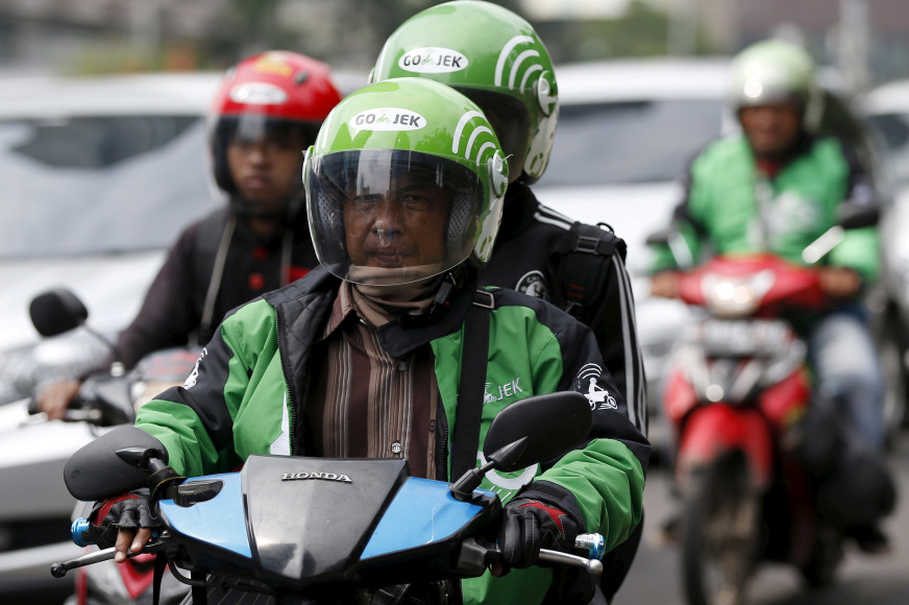
    Chinese messaging app WeChat has launched its first cashierless pop-up store in Shanghai.

    The Tencent company has teamed with more than 300 merchants, including EasyGo and Elle, as well as shopping mall The Mixc to build up its first “flash retailing” pop-up store.

    By scanning a QR code via WeChat, customers can enter the store. The system verifies the customer’s identification and gains access to their digital wallet WeChat Pay. All products have RFID tags to identify them and their price. Buyers can easily check the bill by scanning codes.

    The Bai Zhenjie company, which applies WeChat Pay to the retail industry, says the concept of flash retailing is constantly being polished. Face-recognition technology and a credit-evaluation system are expected to also be applied to the stores.

  • Bestseller’s smart stores to arrive in China

    Bestseller’s smart stores to arrive in China

    Danish fashion retailer Bestseller has opened smart stores in Shenzhen and Guangzhou for its Jack & Jones and Vero Moda brands.

    Facial-recognition technology from Tencent’s Youtu Lab is used to register shoppers in store, enrolling them in WeChat Pay’s AI Club. This means they can pay without the need for wallets or phones.

    And the automated systems are not only replacing cashiers – sales assistants are also redundant as store visitors receive customised recommendations for Bestseller clothes and accessories they might want to try on virtually.

    Bestseller says the first day the tech was used, the gross revenue from customers who paid via facial recognition accounted for more than 80 per cent of turnover. The total store income that day improved by 40 per cent.

    It is a new approach for the fashion industry, which is following in steps of smart supermarkets and other stores from companies such as Alibaba, Amazon and JD.com.

    Tencent also has its eye on other retail segments. At its global partner conference in November, COO Ren Yuxin said the company aims to provide smart retail services like big data, cloud computing and AI to brands and offline retailers to help brick-and-mortar stores transform into smart, digital ones that can “really think”.

    Bestseller head of digital sales Liu Dongyue says customers expect a “more personalised, more entertaining and more convenient” experience when buying in the store, which is why fashion brands need help from big data.” So it is not so much about automated payment as about user data.

    Vqudo, a WeChat marketing software provider, says facial recognition enables stores to match customers with their WeChat ID, which contains information about their buying habits as well as social data.

  • Toymaker Lego teams up with Chinese internet giant Tencent

    Toymaker Lego teams up with Chinese internet giant Tencent

    Danish toymaker Lego is teaming up with Chinese internet giant Tencent Holdings to jointly develop online games and potentially a social network aimed at Chinese children.

    Privately-owned Lego has seen a slowdown in sales growth in recent years, but the Chinese market has been a bright spot with sales growing 25-30% in 2016.

    It is competing with Barbie maker Mattel and Hasbro, the firm behind My Little Pony, for a slice of the $31 billion toys and games market in China.

    Lego said on Monday the partnership with Tencent, China’s biggest social network and gaming company, aimed to create a safe online environment covering content, platforms, and experiences tailored for Chinese children.

    “What we are looking for now with Tencent is just to find more creative ways of reaching children, and creating bespoke content with Tencent, in this case, video games,” Jacob Kragh, head of Lego in China, told Reuters on Monday at joint event with Tencent in Beijing.

    It also includes LEGO BOOST — a building and coding set that lets children turn their brick creations into moving objects — and will explore developing a joint social network for children in China.

    Tencent is Asia’s most valuable company with a market capitalisation of $537 billion.

    Last year, Mattel struck deals with Chinese e-commerce giant Alibaba Group Holding and online content developer BabyTree to sell interactive learning products based on its Fisher-Price toys.

    Lego has about a 3% market share in China, followed by Mattel and Hasbro with around 2% and 1%, respectively, according to Euromonitor International.

    In November 2016, Lego opened a factory in Jiaxing, China, which it expects to produce 70-80% of all Lego products sold in Asia.

  • JD.Com, Online Fashion Retailer Meili Ally to Develop ‘No Boundary Retail’

    JD.Com, Online Fashion Retailer Meili Ally to Develop ‘No Boundary Retail’

    JD.com plans to form a JV with online fashion retailer Meili to build and run a commerce platform on Chinese voice-messaging service Weixin.

    Merchants who sell through the new platform, expected to launch before the Lunar New Year next month, will gain access to JD’s logistics network.

    The move follows the joint introduction of “no-boundary” retail by JD.com and Tencent in October, a concept that aims to create online communities of consumers with similar buying preferences, fusing e-commerce with social life.

    Meili founder/CEO Chen Qi, who will also be the JV’s chairman, says the platform will draw on Meili’s ability to reach female shoppers, particularly in lower-tier cities in China.

    Established in 2016, Meili has several platforms including Meilishuo and Mogu Street, and more than 15 million active daily users. It not only provides online retail, but also society and fashion information.

  • WeChat and Guangzhou government to introduce WeChat ID

    WeChat and Guangzhou government to introduce WeChat ID

    WeChat may soon become an indispensable part of the Chinese citizens after a report emerged claiming that the Tencent-owned messaging app will be used to officially ID people.

    The Guangzhou government has reportedly initiated a pilot program which creates a virtual ID card through WeChat account of registered users. This Virtual ID card has the same purpose as that of a normal state-issued ID card.

    The South China Morning Post claims that according to Xinhua, the service will soon be introduced in the rest of the country as well.

    WeChat is currently the largest social media platform in China and also has additional features such as payments and money transfers. The program, called the WeChat ID, was co-developed by the Ministry of Public Security and the WeChat team said the report.

    The WeChat ID can be used as an official ID to register in hotels or applying for government jobs without bringing in the state issued ID.

    A similar kind of electronic ID system was earlier implemented in the city of Wuhan, where the branch of the Public Security Bureau partnered up with Alipay to launch an electronic ID card service as reported.