Tag: tencent

  • Tencent closed to buy sports firm Amer

    Tencent closed to buy sports firm Amer

    Social media conglomerate Tencent Holdings is believed to be close to joining a Chinese investment group bidding to acquire Finnish sports goods firm Amer. The consortium, spearheaded by Anta Sports Products, would see Tencent participating as one of a few minority investors under the proposal. Its involvement would serve to boost considerably Amer’s brands in the Chinese market.

    In a statement made two months ago, Anta spoke of joining with local buyout company FountainVest Partners to offer a potential €40 (US$45.60) per share for Amer, a target value of around €4.7 billion ($5.3 billion). The consortium has sought at least €3.5 billion ($3.99 billion) in loans. Anta has a market value of about $11.6 billion.

    The acquisition agreement could potentially be complete within several weeks.

  • Tencent finished Q3 with strong result despite regulation

    Tencent finished Q3 with strong result despite regulation

    Gaming and chat specialist Tencent has reported a strong third-quarter profit despite ongoing issues with Mainland China regulatory authorities over its gaming software. Tencent’s share price has fallen by about one third this year, shedding US$165 billion off its value, although last year its share price doubled. In September the company announced a restructuring program aimed at lessening its reliance on games and expanding its interests into areas such as cloud and industrial services in the transport, fintech and healthcare sectors.

    Tencent profit in the September quarter rose 30 per cent to RMB23.3 billion (US$3.36 billion) which exceeded analysts’ forecasts. This was partly due to fair-value gains from the IPO of food delivery service Meituan Dianping.

    Growth in its gaming division was ahead of expectation, but the company was unable to update shareholders on the status of its negotiations with mainland government officials over a regulatory block which has frozen new game approvals. The government has yet to decide on whether or not to allow Tencent to begin charging for features of its popular PUBG Mobile game. Chinese authorities are concerned that many Chinese are becoming addicted to mobile games.

    Those roadblocks were cited as the reason Tencent’s growth rate – a respectable 24 per cent, nonetheless, to US$11.6 billion – was its slowest quarter in more than three years.

    Sales of smartphone games grew 7 per cent year on year and 11 per cent quarter on quarter, while advertising sales, the company’s single largest revenue source, rose 47 per cent

    Revenue from cloud and payment services (WeChat Pay) helped fuel a 69 per cent increase in Tencent’s “other” revenue category.

  • What is the hot new “Boundaryless Retail” trend?

    What is the hot new “Boundaryless Retail” trend?

    Chinese consumers are quickly adapting to buying groceries online for immediate delivery from local offline stores, according to a new joint study conducted by JD, Walmart, Tencent and JD Daojia. In China, where over 15% of consumption takes place online, compared to just 9% in the US, consumers have been faster to embrace online grocery shopping.

    Over 67% of Chinese consumers actively use services like JD Daojia, which can deliver goods from local offline shops, including Walmart, to customers in under an hour.

    An increasing number of online shoppers in China view a guarantee of product authenticity as the most important factor when buying goods, with price often viewed as secondary in importance to considerations like product variety, speed of delivery and after-sales service.

    Consumers carefully consider purchases that can improve their lifestyle, reflect their individuality and be delivered in a convenient way that fits in with their busy modern lives.

    Omnichannel integration in the Chinese supermarket industry is expected to be a major trend going forward, as online and offline players in the industry are increasingly combining resources to meet the diverse needs of modern-day shoppers: bringing together the convenience and diversity of online shopping with offline retail’s immediacy of service and superior user experience.

    Boundaryless Retail is a reality gaining in popularity as “The increasingly diverse needs of consumers require a correspondingly dynamic approach” said Kenny Li, VP of JD.com.

  • Yonghui, Parknshop and Tencent to jointly establish JV

    Yonghui, Parknshop and Tencent to jointly establish JV

    Tencent has teamed up with ParknShop and Yonghui Superstores to create a new combined grocery chain ParknShop Yonghui. The joint venture, valued at US$170 million, aims to help Shanghai-listed Yonghui expand its business outside of the southern province of Guangdong, as well as consolidating Yonghui and ParknShop’s businesses in the province.

    Yonghui gains half of the joint venture with $89.6 million while ParknShop will hold a 40 per cent stake with cash and equity contributions amounting to $72 million, and Tencent will pay $18 million yuan for a 10 per cent stake.

    Tencent spent $750 million to buy a 5 per cent stake in Yonghui last December, with ambitions to shake up the bricks-and-mortar shopping market and compete with rival Alibaba Group.

    Yonghui operates more than 830 supermarkets in 24 provinces, 21 of them in Guangdong.

    ParknShop, a member of the AS Watson Group, has more than 50 shops in the southern province.
    This is the first time companies within the group have formed a joint venture with mainland Chinese firms.

  • JD.com expands logistics services to include parcel delivery

    JD.com expands logistics services to include parcel delivery

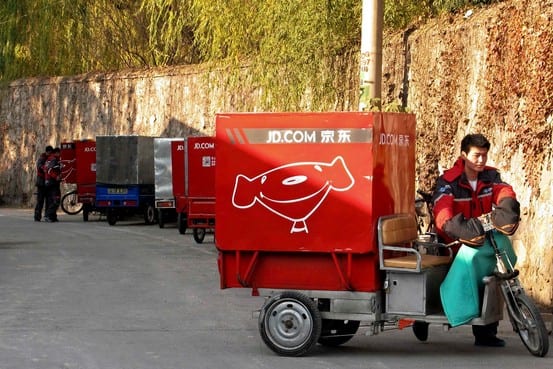
    Chinese e-commerce company JD is opening its logistics network up to consumers to send parcels around the country, marking the first entry by an e-commerce company into the parcel delivery business. The new JD parcel delivery service announced enables users of the company’s app in Beijing, Shanghai and Guangzhou to send items intra-city and throughout Mainland China, using the same fast and reliable delivery service JD offers with online purchases. The company, which will expand the program to include high-value items like luxury products and high-end consumer electronics, as well as more diverse options based on delivery timing, aims to eventually make residential and business deliveries for shippers from anywhere to anywhere within Mainland China in the future.

    JD is the only large-scale e-commerce company in the world to operate a nationwide in-house logistics network, down to the last mile. The company says its network, powered by its proprietary supply chain management technology, is able to deliver more than 90 per cent of orders same- or next-day, and reaches 99 per cent of China’s population.

    The new JD parcel delivery service includes a range of competitively priced options, including same-day delivery between different cities; same-day intra-city delivery; standard next-day or two-day delivery and next-day delivery between cities.

    “Depending on the delivery option chosen, packages may be sent by high-speed rail or air,” the company said in a statement. “Individual shippers can use the same JD app they use for shopping to schedule a pickup by one of JD’s full-time logistics staff, and have a parcel delivered thousands of miles away at the speed they choose. They will even be able to select JD’s luxury ‘white glove’ delivery service if they want to make the delivery extra special.”

    Zhenhui Wang, CEO of JD Logistics says the JD parcel delivery service marks the next step in leveraging the nationwide logistics network that JD has built over the past decade, to expand the range of services offered to its customers.

    “JD is known throughout China for the fastest and most reliable delivery, and we are confident that users will appreciate the convenience of this new service.”

    The program has already begun user trials with multiple ways for customers to request pickups. In addition to the JD app, shippers can request pickups on a JD Delivery mini program in WeChat, China’s largest social network operated by JD’s partner Tencent, and a JD “Delivery Team” WeChat account.

    JD unveiled the parcel delivery service at its 2018 Global Smart Supply Chain Summit held in Beijing today. Other initiatives announced at the summit – part of JD’s Global Smart Supply Chain Network Strategy – include JD’s smart warehouse management system initiative, an expansion of the company’s green initiatives, and the formation of a new energy union with 20 industry partners.

  • Restructuring for Tencent as challenges rise

    Restructuring for Tencent as challenges rise

    Facing increased challenges from tighter government regulations, the Chinese internet giant, Tencent Holdings, announced last week its first restructuring in six years.

    The reshuffle comes as Tencent Holdings, which has seen a hefty fall in market value this year, is facing fresh criticism from analysts and investors unnerved by regulatory roadblocks, a fuzzy overseas strategy and growing debt.

    The gaming and social media firm is one of a number of Chinese internet companies whose prospects are in question after years of spectacular growth.

    The Shenzhen-based and Hong Kong-listed company said in Sunday’s statement that it will consolidate three content business groups to one unit and create a new group for cloud and smart industries.

    The move is seen at improving cloud-based data offering services for corporate clients, which rival Alibaba Group dominates in China, and boosting its content offering capabilities for a wide range of services such as WeChat, music, games and other entertainments.

    Tencent commented and said it will “further explore the integration of social, content and technology that is more suitable for future trends, and promote the upgrade from consumer internet to industrial internet.”

    The company said it will also set up a technology committee to help strengthen its research and development and promote collaboration and innovation.

    Founded in 1998, Tencent enjoyed uninterrupted growth from when it went public in 2004 until this year. Its shares surged more than 88 times after its IPO, and its market value hit a peak of US$578 billion in January this year.

    On Friday, Tencent shares in Hong Kong closed at HKUS$323.20, compared with HKUS$406 at the end of 2017.

    The company’s biggest money-maker is gaming. However, its most popular game this year is PlayerUnknown’s Battlegrounds Mobile (PUBG Mobile), and Chinese authorities have yet to approve the in-game purchases that allow Tencent to make money.

    Hit by China’s intensified crackdown on online gaming, Tencent has reported its first quarterly profit fall in nearly 13 years.

    The main business of Tencent is video games but the company also runs China’s dominant social network, WeChat, with more than 1 billion users.

  • Tencent, Hillhouse back MINISO

    Tencent, Hillhouse back MINISO

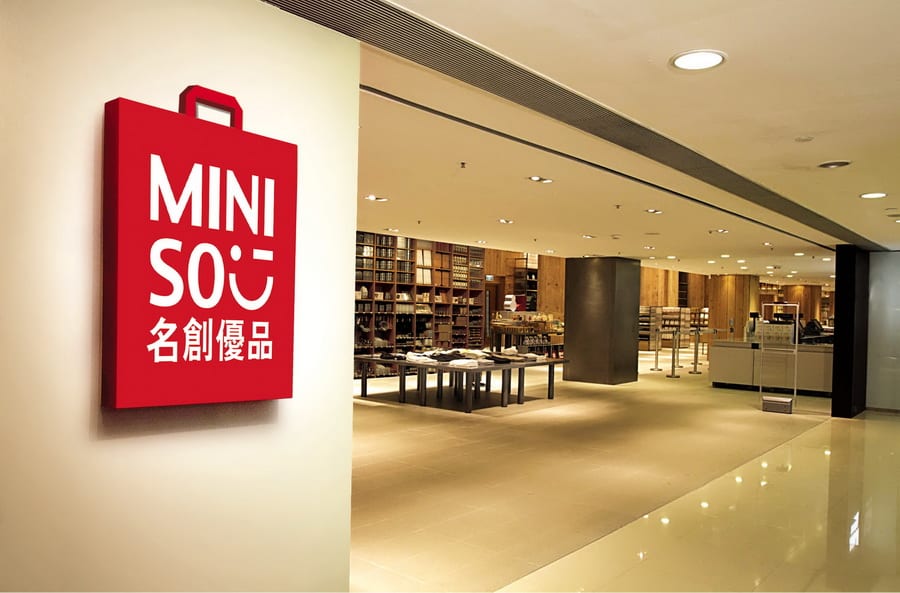
    Tencent and Hillhouse Capital have invested RMB1 billion (US$146 million) into fast-growing Chinese discount retailer Miniso.

    Founded just five years ago, Miniso has already grown to more than 3000 stores worldwide using what it describes as a “high quality, low price” philosophy.

    Three years ago, the China-headquartered retailer which pretends to be Japanese in its brand positioning and marketing, made its first foray abroad. One in three of its stores are now in overseas cities in 70 countries and markets, including Hong Kong, Singapore, Japan, Vietnam, Taiwan, Macau, India, South Korea, North Korea, Indonesia, Malaysia and the Philippines.

    In a statement, Miniso said the strategic investment from Tencent and Hillhouse Capital will enhance cooperation in big data analysis, smart outlets, intelligent retail and digital operations, among other areas.

    “The investment of Tencent and Hillhouse Capital will help the future development of Miniso by improving its ability in terms of information technology, capital operation, corporate governance, etc. The investment will also expand its layout in the field of intelligent retail and accelerate overseas market expansion, so as to help Miniso achieve its medium-term strategic goals.”

    That goal is to have 10,000 stores trading in 100 countries with RMB 100 billion in sales by 2022.

  • Meituan Dianping to set Hong Kong IPO valuation at up to $55 billion

    Meituan Dianping to set Hong Kong IPO valuation at up to $55 billion

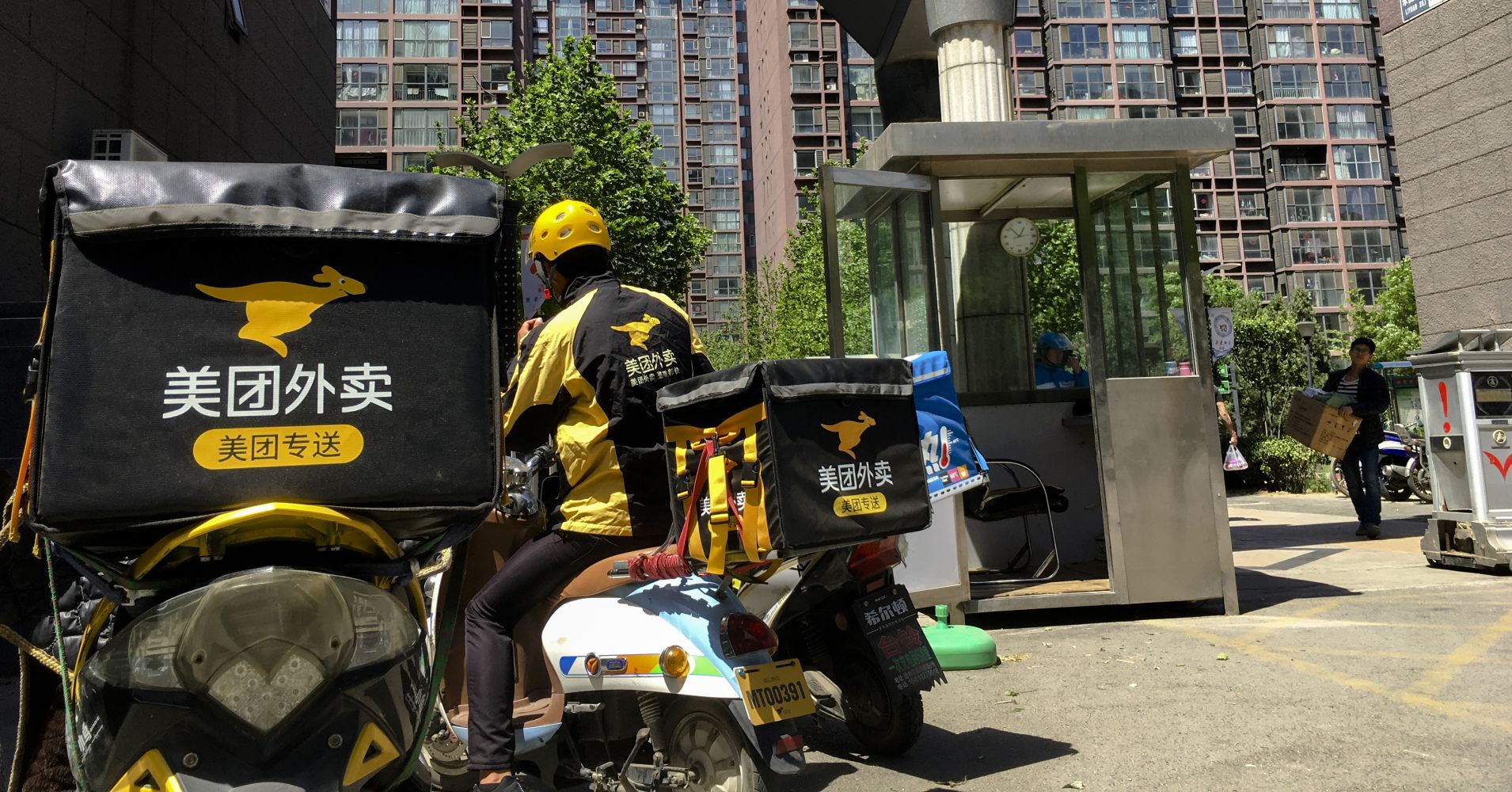
    China’s Meituan Dianping, an online food delivery-to-ticketing services platform, has set an indicative price range of HK$60 to HK$72 ($7.64-$9.17) per share for its initial public offering (IPO) in Hong Kong, valuing itself at up to $55 billion, four people with direct knowledge of the matter said.

    Meituan, already one of China’s most valuable internet firms, could raise as much as $4 billion before the exercise of a “greenshoe” or over-allotment option, whereby additional shares are sold depending on demand.

    The company is discussing a valuation of $46 billion to $55 billion and planning to secure a total of $1.5 billion from five cornerstone investors, including its main backer gaming and social media company Tencent Holdings, and global asset manager OppenheimerFunds, the people said.

    Oppenheimer will commit $500 million and Tencent $400 million, they said.

    Other cornerstone investors include U.K.-based hedge fund Lansdowne Partners ($300 million), U.S. hedge fund Darsana Master Fund ($200 million) and Chinese state-owned conglomerate China Chengtong Holdings ($100 million).

    The five cornerstone investors did not immediately respond to requests for comment. Calls to Darsana went unanswered.

    The Beijing-based firm filed plans for the city’s second multibillion-dollar tech float this year after smartphone maker Xiaomi’s blockbuster IPO of nearly $5 billion.

    It plans to use the process to upgrade its technology, develop new services and products and pursue acquisitions among other things, according to its IPO filing.

    Meituan is also – after Xiaomi – the latest company with a dual-class share structure to file for a Hong Kong listing, under the city’s new rules designed to attract tech companies.

    However, in late July Hong Kong Exchanges and Clearing (HKEX), the operator of Hong Kong exchange, said it would delay changes that would allow companies to hold shares with more voting rights, as more time was needed for investors to become accustomed to recent rule changes.

    Meituan was valued at around $30 billion in a fundraising round late last year.

    Xiaomi started trading in July after a closely watched but disappointing initial public offering that valued it at almost half the $100 billion that industry analysts had initially estimated.

    Meituan has been likened to U.S. discounting platform Groupon.

    Founded in 2010 by serial entrepreneur Wang Xing, it completed a $15 billion merger with Dianping in 2015, akin to U.S. online review firm Yelp Inc. It offers a broad range of services including movie ticketing, food delivery, hotel and travel booking as well as ride-hailing.

    Competitors include food-delivery platform Ele.me, backed by e-commerce firm Alibaba Group Holding, and leading ride-hailing firm Didi Chuxing, backed by Japan’s SoftBank Group.

    Bank of America Merrill Lynch, Goldman Sachs Group and Morgan Stanley are sponsors of Meituan’s IPO.

    China Renaissance is the financial advisor.

  • Negative impact from regulation on Tencent Holdings growth

    Negative impact from regulation on Tencent Holdings growth

    Tencent Holdings has recorded its first quarterly fall in profits in 13 years, hampered by government delays in approving new online games.

    Second-quarter profit fell 2 per cent to RMB 17.9 billion (US$2.6 billion) on sales totalling RMB 73.7 billion ($10.65 billion).

    The company’s mobile games business revenue fell 19 per cent quarter-on-quarter to RMB 17.6 billion due to delays in the launch of new games and failure to gain approval for charging fees on popular tactical tournament games.

    “This is the worst result in recent memory from Tencent, with the first quarter-on-quarter fall in profits in 13 years and major disappointment on mobile gaming revenue and margins,” said Douglas Morton, the head of research in Asia at Northern Trust Capital Markets in an investor note.

    “The miss, however, was driven purely by regulatory delays to game approvals, meaning the long-term story for Tencent may well remain intact.”

    Another analyst, He Saiyu, from Huatai Financial Holdings, wrote that gaming revenue growth should remain positive later in the year due to increased monetisation of existing games.

    “Mini programs should help to boost Tencent’s cloud, advertising and online payments business grow.”

    He said user traffic and engagement levels across all its major platforms, including WeChat and QQ are all growing at a healthy pace.

  • Airwallex rings up US$80 million from Tencent and Sequoia

    Airwallex rings up US$80 million from Tencent and Sequoia

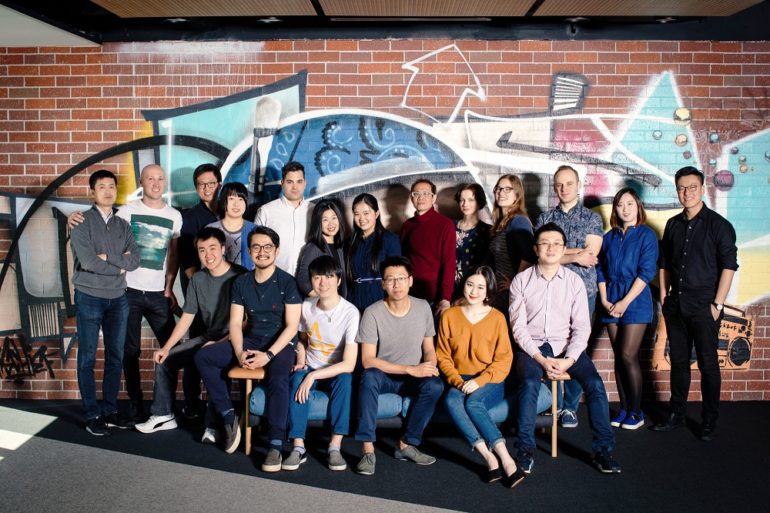
    The Melbourne-based startup announced today a US$80 million series B led by Tencent and Sequoia China and joined by Asia-Pacific investors Hillhouse Capital, Horizons Ventures, Central Capital Ventura, and Square Peg Capital.

    The deal is believed to be the second largest in the country, and is the largest raised by a startup in Australia this year.

    Airwallex provides cross-border transactions and money transfers.

    It will use the funding to expand in Southeast Asia, starting out with Singapore and Hong Kong.

    Airwallex co-founder and chief operating officer Lucy Liu said that some banks had technology that constrained their ability to deal with new payments possibilities, and that it therefore needed to have funds to build its own solutions in some cases.

    “The user interface and user experience will only get us far, so with this round we’ll be looking for more licences in key banking areas, either via acquisition or applying for our own,” Ms Liu said.

    “The regulatory deposits required for this are one of the reasons we’ve raised so much.”

    For instance, Ms Liu said Airwallex would consider a virtual banking licence in Hong Kong, with “financial inclusion” of small-to-medium enterprises throughout the region an aim.

    “So many SMEs, including in Australia, are trying to grow internationally but are hit by barriers around payments and foreign exchange,” she said.

  • Chinese’s Pinduoduo seeks US$1 billion

    Chinese’s Pinduoduo seeks US$1 billion

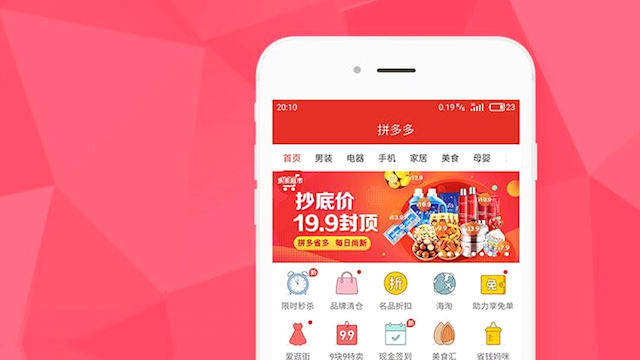
    Chinese e-commerce startup Pinduoduo is seeking US$1 billion in a US IPO, going head to head with industry giants such as Alibaba.

    The company’s business model, in which users recruit friends via social media to enjoy group-discount offers direct from manufacturers, has seen its transaction volumes reach 141.2 billion yuan (US$21.3 billion) in 2017, tripling the company’s revenue. It was founded by ex-Google engineer Colin Huang and is backed by Tencent and Sequoia Capital, among others.

    Pinduoduo raised more than US$1 billion in its last fundraising round in April, against a valuation of around US$15 billion. Its sales have been strongly supported by its large user base in lower-tier Chinese cities. The site’s daily active users reached 55.9 million last month, more than 20 million more than the popular JD e-commerce platform.

  • Lippo Invests Rp 628b in Chinese Internet Giant Tencent

    Lippo Invests Rp 628b in Chinese Internet Giant Tencent

    Indonesian diversified conglomerate Lippo Group has invested Rp 628 billion ($45 million), or 350 million Hong Kong dollars, in Chinese internet giant Tencent, the world’s eighth most valuable listed company and owner of leading internet services including WeChat, Snapchat and Spotify, and technology companies such as Tesla.

    The investment highlights Lippo’s continued digital transformation and investment into the fourth industrial revolution, the group said in a statement on Monday (25/06).

    Lippo, a pan-Asian group with strategic investments and operations across eight markets globally, is the largest integrated services group in Indonesia, serving more than 60 million unique customers across its real estate, malls, department stores, hospitals, telecommunications, media and financial services businesses.

    Lippo’s 350 million Hong Kong dollars investment into Tencent comprised of new Tencent shares and equity-linked notes (ELNs). The investment is made by Lippo’s Hong Kong investment subsidiary.

    Tencent’s market capitalization passed $500 billion last November, making it the first listed Chinese firm to do so and briefly overtaking Facebook as the world’s fifth biggest firm.

    Co-founder Ma Huateng, nicknamed Pony Ma, is the 17th richest person in the world, with a fortune of $45.3 billion — four places behind Google co-founder Sergey Brin, according to the latest Forbes rich list.

    Tencent’s core business is built on messaging app WeChat, the world’s largest mobile gaming franchises, and an ecosystem of services (for its 1 billion users) usually offered by Silicon Valley firms that have no foothold in China.

    Tencent Video, a streaming service much like Netflix, is the biggest of its kind in China and carries exclusive content including HBO series “Game of Thrones”. The service more than doubled in size in 2017, drawing more than 40 million paying subscribers.

    In Indonesia, Lippo’s nine unique sectors are all pushing to digitalize. In addition, it has established a digital investment group to lay strong foundations for the fourth industrial revolution. This includes Venturra Capital having invested in 24 start-ups in the last 2 years, mataharimall.com, and OVO — Indonesia’s leading payment and marketing platform.

  • These Chinese giants make Facebook and Google look tame

    These Chinese giants make Facebook and Google look tame

    The technology world’s most bruising battle for supremacy is taking place in China. And it could point to Big Tech’s future everywhere else, too.

    Tencent Holdings and the Alibaba Group are ratcheting up their no-holds-barred contest to dominate the ways 770 million internet users communicate, shop, get around, entertain themselves and even invest their savings and visit the doctor.

    The two titans long ago branched out from their core businesses — games and social media for Tencent, e-commerce for Alibaba — to duke it out in ever more realms of Chinese life. They have competed in messaging, microblogging and delivering takeaway food. They go head-to-head in video streaming and cloud computing.

    Today, their fiercest fight is over digital money kept on smartphones. Mobile payments have transformed the Chinese economy. Both giants, plus Ant Financial, an Alibaba sister firm, are spending big to gobble up pieces of the action.

    China’s internet powerhouses stand at the forefront of the nation’s galloping high-tech progress — a surge that has been brought into sharp focus by the Trump administration’s efforts to counter it. On one hand, the standoff over the Chinese telecom equipment-maker ZTE has exposed, to many in China, the degree to which the country still lags in core technologies such as microchips.

    But in the internet realm, China still offers a spooky potential vision of the future, one in which online behemoths like Tencent and Alibaba become the gatekeepers to the entire economy, wielding immense power over traditional industries and becoming very, very rich in the process.

    At a conference in December in the Chinese city of Guangzhou, Tencent’s chief executive Pony Ma said he felt the two companies were competing in “too many” areas.

    “Sometimes I think, ‘Ah, we’re competing in this now, too? All right then,’” Ma said, chuckling. “It’s a little frustrating.”

    A duopoly this broad could not be easily replicated in other countries,  for example the United States. Entrenched competitors and the threat of government intervention generally keep the likes of Apple, Amazon, Google and Facebook from expanding pell-mell into adjacent businesses. All of them have sprawled and overlapped mightily, but Amazon, with its forays into groceries, pharmacies, health care and more, might be the furthest along towards creating an inescapable commercial universe.

    Still, with the European Union enacting tough new privacy laws, and some in the United States eager to follow, Google and Facebook could soon be forced to find ways to make money beyond selling users’ personal information to advertisers, said Raj Rajgopal, president of digital business strategy at Virtusa Corp, a consulting firm.

    “As profitability reduces, they’ll say, ‘Now I need to monetise my customer base,’” Rajgopal said. “The innovation we’re seeing in China could be seen in the US in the next three to five years,” he added. “Customers are demanding that.”

    China’s internet titans have a powerful ally found nowhere else, though: the Chinese government. Tencent and Alibaba have avoided anti-monopoly clampdowns by staying in Beijing’s good graces, said Hu Wenyou, a partner at the Beijing law firm Yingke. Their sheer size also makes them easier for authorities to control. They simply have too much to lose.

    “If you can become so big, and so successful in so many areas, this in itself shows that you must have maintained very good, very friendly relations with the government,” Hu said.

    Neither giant is done getting bigger.

    Each has a market capitalisation of close to $US500 billion ($663 billion), making them among the most highly valued technology firms on the planet. Google and Facebook still claim more users, but the Chinese heavyweights arguably do more — and more, and more — for theirs.

    The latest battleground? Brick-and-mortar stores. Alibaba has spent great sums — $US2.9 billion on a supermarket chain, $US2.6 billion on a department store and mall operator — to conquer the real world. Tencent has followed suit with its own retail partnerships and investments.

    Once the companies have locked people into their payment systems, they can become the enablers of commerce and financial services of even more kinds. In a sign of investors’ excitement about the possibilities, Ant Financial is making plans to go public, in a blockbuster stock offering that could give the company a market value larger than Goldman Sachs.

    China has become a model for tech’s world-swallowing tendencies partly out of circumstance.

    With the country’s high-speed churn of well-funded startups, planting flags on new turf is often the only way for large players not to be constantly losing ground.

    Also, both Alibaba and Tencent have struggled to make much money outside their home market. That means their surest way to keep growing is to get more deeply involved in more areas of their Chinese users’ lives.

    Those lives are riper for tech disruption than lives in the West. In China, small stores dominate retail. Hospitals are crowded and doctors overworked. Most people do not have credit cards. These are easier business opportunities for Alibaba and Tencent than they would be for Amazon or Facebook.

    In a report this week, Morgan Stanley predicted that by 2027, the total market in China in which Alibaba could be making money will be worth $US19 trillion — more than Amazon’s potential market worldwide.

  • Wanda and Tencent join forces for omnichannel retail

    Wanda and Tencent join forces for omnichannel retail

    Dalian Wanda Group and Tencent Holdings Ltd will join forces to set up an internet technology firm, strengthening their position in retail.

    Dalian Wanda, which Is the largest property developer in China, will own 51% of the venture and Tencent 42.48%, with the remaining 6.52% going to Gaopeng, a joint venture between Groupon and Tencent.

    The project combines technology and brick-and-mortar retail and it is hoped that developing an omnichannel offering will help the businesses compete in New Retail, a space in which Alibaba is currently the world leader.

  • Mobile payment firms struggle to dethrone cash in Southeast Asia

    Mobile payment firms struggle to dethrone cash in Southeast Asia

    Bui Mai Phuong is an avid online shopper, ordering anything from clothing to personal-care products from her smartphone. But she prefers to pay with cash.

    She is among hundreds of millions of people whom firms such as Softbank Group-backed Grab and China’s Tencent want to win over as they try to tap into Southeast Asia’s burgeoning internet sector.

    More than 70 percent of the region’s 600 million-plus people do not use banks – higher than the global average of about 30 percent – and e-commerce is projected to hit $88 billion by 2025.

    But convincing consumers like Phuong, who lives in Hanoi, could be tricky.

    “I have never tried using mobile payments because I don’t know how to use it and it seems a bit complicated to use,” said Phuong, 36, a manager at a construction material supplier in Vietnam.

    Mobile payments are ubiquitous in China; a consumer can spend a day without using cash at all in Beijing or Shanghai, and even some beggars accept mobile payments. But cash remains king in Southeast Asia.

    Hard currency, paid on delivery, accounted for 44 percent of total e-commerce transactions last year and is likely to remain the most popular payment option for at least the next three years, according to data by research firm IDC.

    “The biggest challenge for users and merchants to adopt cashless is the fact that cash remains ubiquitous, easy to use and inexpensive,” said ride-hailing firm Grab, which has ventured into e-wallets.

    And the mobile payment marketplace in Southeast Asia remains wide open, with no dominant players.

    Indonesia’s ride-hailing firm Go-Jek’s Go-Pay, Singapore-based Grab’s GrabPay, Japan’s messaging app Line’s Line Pay, Momo e-wallet owner M_Service in Vietnam and Voyager Innovations, which operates Paymaya in the Philippines, have all entered the fray. The gaming company Razer Inc has also indicated it is eager to play a role.

    Cash on delivery costs e-commerce businesses more than other payment methods, said Alibaba Group Holding-backed e-retailer Lazada Group.

    For example, sometimes a customer does not have enough cash on hand, or is not home to pay for the delivery. In those cases, the product must be sent back to the seller, adding logistical costs, Lazada said.

    Mobile payments address some of those problems. They can also benefit buyers by keeping payment in escrow and releasing it only on delivery.

    But it can be difficult to persuade users to switch from cash when they earn about $200 on average a month in economies like Vietnam and Indonesia, according to economic data provider CEIC.

    “To break habits of using cash, Grab is creating more daily use cases for cashless payment – commuting, food delivery, paying at food and retail stalls – to drive more usage of the GrabPay e-wallet,” Grab said in an email.

    Mobile payment companies bet they can transform their platforms into financial supermarkets, offering everything from loans to insurance on top of payment options.

    Slow going

    At the moment, usage is spotty. E-wallets will account for 16 percent of total e-commerce transactions in Southeast Asia by 2021, up from last year’s 9 percent, according to IDC.

    In countries like Vietnam, where the informal economy has long been a key part of the social fabric, many consumers do not bother to get a bank account.

    Some want to stay under the taxman’s radar or, like Quang Thi Si, simply do not see the need for a bank.

    Si, a 48-year-old scrap collector near Ho Chi Minh City, said her business is all cash.

    “Sometimes I need to send money to my relatives at home, and I often send in cash through my friends,” she said. “I don’t think I will have a bank account in the future because I don’t think I need it.”

    But Si does have a smartphone. More than 90 percent of Southeast Asia’s internet access comes through mobile devices, according to a Google-Temasek study.

    Even so, in countries like the Philippines, which is known for having some of the slowest Internet speeds in Asia-Pacific, connectivity is a major hurdle for digital payments to clear.

    ‘Late to the party’ 

    Such challenges are likely to pose a setback to Ant Financial and Tencent, which are looking outside China for growth.

    Ant, which has 600 million customers and aims to reach 2 billion worldwide in the next decade, has stepped up investments in the region, including a stake in Thai financial technology firm Ascend Money.

    But its services are largely limited to Chinese tourists.

    “Most of our customers are from China and they are usually very happy to know that we accept AliPay and WeChat Pay. This makes them more willing to spend money too,” said Daphne Tan, a staff member at a shop selling durian-flavored coffee and snacks in Singapore’s Chinatown.

    Tencent plans to make its first foray outside China with an e-payment license in Malaysia for local transactions.

    The Chinese players are “kind of late to the party,” said Michael Yeo, research manager for IDC.

    “By the time they come in with a local version, if they do, the local players will have a significant advantage,” said Yeo.

    Razer, which said last month it would buy the remaining stake in payments processor MOL Global that it did not already own, also signed a deal with Singtel to link its e-payments network with that of the telco.

    Other recent deals in the sector include Go-Jek’s acquisition of three financial technology businesses, while Grab’s purchase of a handful of companies as well.

    “It’s a highly fragmented market. Later on, there will be acquisitions, there will be shutdowns, there will be mergers,” IDC’s Yeo said. “The market will consolidate.”