Tag: tencent

  • Tencent buys minority stake in Yonghui Stores

    Tencent buys minority stake in Yonghui Stores

    China’s Tencent plans to acquire a minority stake – some 5% — in offline Chinese retailer Yonghui Stores, as the tech giant looks to explore a physical retail presence in the domestic market.

    Yonghui said in a filing to the Shanghai stock exchange that the share transfer agreement would be made with Linzhi Tencent, a Tencent affiliate. Tencent will also take a 15 per cent stake in Yonghui supply chain and logistics subsidiary Yonghui Yunchuang Technology following further discussions.  The purchasing price was not revealed.

    Yonghui, a department store retailer, operates hundreds of stores in mainland China. The acquisition comes at a time when Chinese tech firms are ramping up investments in physical stores.

    Rival Alibaba last month took a $2.9 billion stake in leading Chinese grocery chain Sun Art Retail Group Ltd. The move also sees Tencent follow in the likes of JD.com, who is already a stakeholder in Yonghui Stores.

    In China, 85 percent of retail sales are still made offline, reported Reuters.

    Trading in Yonghui’s stock will remain suspended after being halted when the firm’s shares jumped the daily limit of 10 percent on media reports of Tencent’s investment.

    Founded in 2001, Yonghui plans to close some 00 supermarkets in around 20 provinces in China. The firm’s major investors include Dairy Farm Group, part of conglomerate Jardine Matheson Group.

    Last month, Tencent reported a 57 per cent year-on-year jump in third-quarter operating profit to Rmb22.75bn ($3.43bn), while revenues were up 61 per cent year on year at Rmb65.2bn.

  • E-commerce trend as highlight at Luxury China report

    E-commerce trend as highlight at Luxury China report

    Luxury brands have started embracing e-commerce in China, says the Luxury China report released by digital marketing company L2.

    It says 91 per cent of luxury brands in China had gone online by June last year, more than double the 43 per cent using e-commerce 12 months earlier.

    This comes as Chinese millennials and generation Z are set to become the dominant driver of luxury consumption over the next decade, according to the 2017 Chinese Luxury E-Commerce Whitebook report from high-end e-commerce platform Secoo and data company Tencent.

    The average age of the online shopper of luxury goods in China is now 25, 15 years younger than the average age of European luxury consumers, and 20 years younger than those in the US. These young consumers are stepping up their buying of minority brands – as opposed to high-profile labels – in a quest for more personalised and less mainstream experiences. For example, the streetwear trend has gradually become more mainstream, leading to more young people embracing such brands as Supreme and Vetements.

    “Consumers are no longer too loyal to one specific brand, but want luxury brands that speak for themselves,” says a Deloitte global luxury consumption survey about millennium consumers. “They are more willing to pay attention to trendy brands with stories.”

    Secoo has announced partnerships with niche brands including Corto Moltedo, Maison Kistune and Mr&Mrs Italy, which has been popularised by a South Korean TV series. Corto Moltedo is known for its entirely handmade bags.

    Corto Moltedo and Mr&Mrs Italy have signed exclusive co-operation agreements with Secoo, and all their collections are sold simultaneously across the world at the same prices.

  • China’s Tencent surpasses Facebook in valuation a day

    China’s Tencent surpasses Facebook in valuation a day

    Chinese internet giant Tencent has surpassed Facebook in terms of market value just a day after it became the first Asian technology firm to reach the $500 billion valuation mark.

    Tencent shares hit a record high of 439.6 Hong Kong dollars during Asian trading hours on Tuesday 21 November 2017, giving it a market capitalization of 4.17 trillion Hong Kong dollars ($534.5 billion).

    The Chinese firm’s value overtook Facebook’s $519.4 billion market capitalization, which was hit at the close of the U.S. markets on Monday 20 November 2017.

    Also Monday 20 November 2017, Tencent beat Alibaba to become the first Chinese technology company to hit the $500 billion market capitalization mark. Tencent is also within touching distance of Amazon’s $542.7 billion valuation.

    Tencent went public in Hong Kong in 2004 at 3.70 Hong Kong dollars per share. Since then, it has rallied over 11,000 percent. Tencent’s stock this year alone is up 126.69 percent.

    Still, the company is not well-known outside of China, but owns the country’s most popular messaging service, WeChat, which has close to 1 billion users. Tencent is a sprawling business that spans gaming, social media, news and content.

    Online and mobile games are a key part of the business — the division brought in over $4 billion in revenue last quarter. In 2016, Tencent acquired a majority stake in Finnish smartphone maker Supercell, the company behind the popular “Clash of Clans” mobile game.

    Tencent has also been trying to move outside of China, but not necessarily through the expansion of its own products. Instead, it has been making investments across the U.S. and Asia. It has acquired stakes in both Tesla and Snap, and invested in numerous start-ups in Asia, including India’s Uber rival Ola.

    Analysts were positive on Tencent’s stock after it smashed past market expectations when it reported third quarter earnings earlier this month. Barclays raised its price target for Tencent from $49 to $59, and upped its revenue forecasts for 2018 and 2019.

    “We mainly attribute accelerating revenue growth to the continued monetization improvement across multiple key business segments, such as gaming, video, and payment services, and note that user growth is still strong,” Barclays said.

  • It Is All About Tencent In China

    It Is All About Tencent In China

    Asia has been the best performing region globally this year as China 2.0 kicked in as a theme with China (at the MSCI level) being the best performing market and tech being the best performing sector. As Mark Tinker, responsable de AXA IM Framlington Equities Asia, comments: “In Hong Kong the story has all been about Tencent, while in Korea it has been about Samsung.”

    In fact, in Hong Kong in particular the impact of Tencent has been extra-ordinary as the largest stock in the market with a current weighting of almost 12% has effectively doubled over the last 12 months, while the second biggest, HSBC, is up a mere 17% – albeit with a significant dividend to yield a total return of 23%. In South Korea, where Samsung Electronics is more than 20% of the index, it has risen by 83%. Probably not since Apple became the biggest stock in the US market back in 2011/2 and then doubled has the index effect had such a big impact on so many active institutional investors.

    “Of course the argument threatens to become circular” says Tinker.  Therefore, he wonders if Tencent or Samsung are up so much because people are buying the index or vice versa?

    For Tencent there may well be some influence from the fact that mainland Chinese investors can buy it through the Southbound Stock Connect, which continues to expand its influence on Hong Kong markets. Tencent is affecting the real economy in China as well as here in Hong Kong.

    As previously noted by Will Chuang in Hong Kong, “it is not only possible but actually significantly easier to spend a weekend in Shanghai without using either cash or a credit card, simply using WeChat pay by Tencent. Tinker adds that “all you have to do is click on your phone to call up a quick response (QR) code that the merchant scans and you are done.”

    It is now said that you can always spot the tourists in Shanghai as they are the ones using credit cards, or if they are really old fashioned, cash.The fact that the largest note in China is RMB100, which is the equivalent of around EUR15 is probably a factor in using WePay to replace cash, but even here in Hong Kong it is increasingly being used.

    Tencent is mainly Chinese but it is also having something of a wealth effect here in Hong Kong as the number of people trading the stock and several of the connected spin-offs that have recently IPO’d here are clearly celebrating their ‘success’ in the bars and restaurants in Central. The expert of AXA IM in Asia explains:

    The retail offering of Tencent spin-off China Literature for example was 625 times oversubscribed and effectively doubled on opening, having caused a huge spike in interbank rates as money was locked up in anticipation.

    Former Hong Kong Chief Executive Chun-ying Leung used to refer to Hong Kong as “where the rest of the country meets the rest of the world” and as well as offering an outbound conduit for mainland investors through its H share listing, the company itself is, like a number of others, investing overseas, most notably when it picked up around 12% of SNAP as that particular stock continued to slide. Many have noticed the contrast between the performance of US tech IPOs and their Chinese equivalents.

  • JD.com surprises with first profitable quarter

    JD.com surprises with first profitable quarter

    JD.com profit soared 50 per cent after a 39 per cent increase in sales during the Chinese online retailer’s latest quarter.

    Its unaudited results for the three months to the end of September show revenue of RMB83.7 billion (US$12.6 billion), with a record 50.3 per cent surge in gross profit to RMB13 billion. Non-GAAP gross profit was RMB12.8 billion, up 51.9 per cent.

    Active customer accounts increased by 34 per cent to 266.3 million in the 12 months to September 30.

    Chairman/CEO Richard Lio says the company is building robust product content and enhancing user engagement with innovative tools that enable brands to launch highly targeted online marketing programs.

    “The scale economies of our model are becoming clearer with every quarter,” says CFO Sidney Huang. “Looking ahead, we will continue to prioritise investments in technology and leading R&D talent as we execute on our vision to revolutionise China’s retail industry.”

    While releasing its third-quarter figures, JD.com also listed its latest business developments…

    In October, JD and Tencent expanded their partnership with the launch of a marketing initiative that integrates insights on consumer behaviour from Tencent’s social-media platforms with online and offline shopping data from JD and its brand partners. As well as enabling more precise target marketing, the move benefits consumers by offering them wider access to sales promotions and preferred discounts.

    Strategic partnerships

    During the past three months, JD.com also formed strategic partnerships with Baidu, iQIYI, NetEase, Sogou and Qihoo 360 with their big-data resources, massive user bases and AI algorithm technologies.

    JD also continued to strengthen its position among top-tier international brands, expanding its partnership with high-fashion brand Armani with the opening of official online stores for Armani Exchange and Emporio Armani.

    JD Worldwide also launched flagship stores for such companies as Reckitt Benckiser, Spectrum Brands and Tiger, while its new Toplife platform attracted marquee brands like Dyson, La Perla, Rimowa (LVMH) and Trussardi.

    During the quarter, JD Logistics test-launched an unmanned sorting centre, the first of its kind in the logistics industry. JD also signed agreements to lay the groundwork for the rollout of China’s largest drone network.

    In September, JD Logistics expanded its environmentally friendly logistics and packaging campaign, working with brands including  Johnson & Johnson, Kimberly-Clark, Lego, L’Oreal, P&G, Nestle, Unilever, Watsons and Wrigley. The aim is to minimise environmental impact by cutting back on packaging materials.

    Customer demand

    JD also enhanced its fresh product offerings during the quarter to meet customer demand. In July, it launched the Canadian Fresh Food Pavilion, the first country pavilion for fresh products on the JD.com platform. Live lobsters from Canada can now be delivered to customers’ doorsteps in China in as little as 48 hours. During JD’s Super Canadian Day, 140,000 lobsters were sold within 24 hours.

    In September, JD.com, JD Finance, Central Group and Provident Capital announced agreements to establish two JVs in Thailand covering e-commerce and fintech services, with an aggregate investment of $500 million. JD.com is providing its expertise in technology, e-commerce and logistics while Central Group is drawing on its retail store network, brand and merchant relationships, and retail behaviour insights from its loyalty program.

    In October, JD and Sam’s Club launched a promotion offering customers discounted bundled memberships for Sam’s Club and the JD Plus paid-for membership service.

    By the end of October, JD.com JV New Dada had partnered with 146 Walmart stores and 301 Yonghui stores, as well as many other supermarkets and grocery stores, to provide online fresh grocery shopping with one-hour home delivery.

    At the end of September, JD.com had 405 warehouses and provided scheduled delivery services in 250 Chinese cities. It had about 160,000 merchants on its online marketplace, and 137,975 full-time employees.

  • Record quarterly profit for WeChat parent Tencent Holdings

    Record quarterly profit for WeChat parent Tencent Holdings

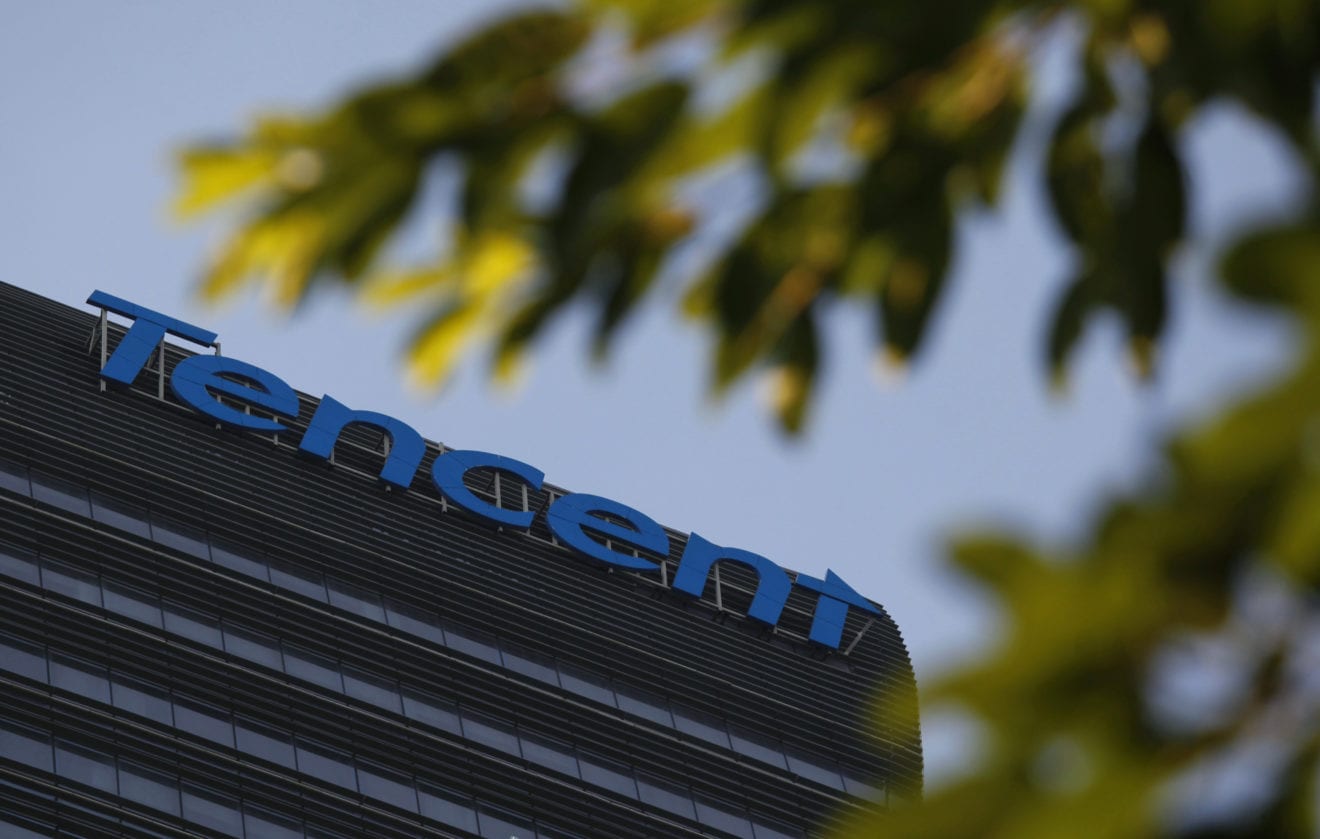
    Marrying social media with mobile gaming has helped Chinese internet giant Tencent Holdings post its fastest revenue growth in seven years for a record profit.

    It tapped the spending power of about 200 million players, including a solid female representation, of Honour of Kings and other games, boosting mobile-game revenue past that of desktops for the first time.

    Its flagship game, Honour of Kings allows WeChat users to discuss strategy as well as co-opt friends to join their team. Tencent is reportedly taking the game to new markets.

    Games distributed to more than a billion users on QQ and WeChat combined fueled a 54 per cent surge in mobile gaming revenue in Tencent’s latest quarter. It had a 70 per cent leap in net income to a record RMB18.2 billion (US$2.7 billion) for the three months to the end of June. Sales soared 59 per cent to RMB56.6 billion yuan.

    Tencent’s payments and cloud businesses both grew by triple digits in the quarter, says president Martin Lau.

    Revenue from value-added services, including games and messaging, rose 43 per cent to RMB36.8 billion. Online advertising sales increased 55 per cent to RMB10.1 billion yuan.

  • Tencent Holdings targets Malaysia for local payments

    Tencent Holdings targets Malaysia for local payments

    Tencent Holdings has applied for a licence in Malaysia to offer local payment services via its WeChat Pay, in what would be a first for the platform beyond Mainland China and Hong Kong.

    If approved, users in Malaysia will be able to link their bank accounts to the service and pay for goods and services in ringgit.

    Tencent has chosen Malaysia as a test bed because of its large Chinese community, says WeChat Pay global director Grace Yin.

    The company has more than 600 million monthly users of its QQ Wallet and WeChat Pay, which is embedded in social-media app WeChat, which has 938 million active users. Rival Alipay says it has more than 450 million active users.

    WeChat Pay and Alipay dominate China’s mobile banking market, which had RMB18.8 trillion (US$2.76 trillion) worth of transactions in the first three months of this year, according to consultancy Analysys.

    Silicon Valley startup Stripe this week said it has partnered with the two companies to allow its merchants worldwide to accept payments from Chinese consumers.

    WeChat Pay can be used at more than 130,000 shops in 13 foreign markets, including Japan, and supports 10 currencies. Yin says to expand overseas, WeChat Pay needs extra layers of regulatory approval, as well as having to explain the system to local businesses.

    Mandarin advertisements

    Meanwhile, seeing Thailand as central to its expansion across Southeast Asia, Tencent is putting an early focus on advertising Thai brands to Chinese tourists in Mandarin.

    Tencent Thailand MD Krittee Manoleehagul says Thailand is the third market to offer service this after Hong Kong and Italy.

  • India’s Flipkart closes $1 billion funding round

    India’s Flipkart closes $1 billion funding round

    Indian e-commerce giant Flipkart has closed a US$1 billion funding round, with plans to raise an equal amount over the next few months.

    Investors who have contributed to this round include eBay, Microsoft and Tencent Holdings, Bloomberg reports.
    The funding comes at a valuation of $10 billion, up from $5.39 billion when its minority investor and the mutual fund managed by Morgan Stanley slashed Flipkart valuation by 3 per cent last month. Its peak valuation was $15.5 billion in 2015.

    Launched in 2007, Flipkart was one of the first Indian tech companies to enter the global Unicorn startups club. It had an invincible run until Amazon entered India in 2012.

    In 2014, Flipkart raised $1 billion, a record amount for an Indian company, from investors including Accel Partners, Russia-based DST Global and Tiger Global, whose former MD Kalyan Krishnamurthy has joined Flipkart as CEO.

  • Tencent Holdings revenues soar 48 per cent

    Tencent Holdings revenues soar 48 per cent

    Revenues for Chinese internet value-added services provider Tencent Holdings grew by 48 per cent last year.

    Total revenues reached RMB151.94 billion (US$21.9 billion), its audited consolidated results show.

    Tencent’s operating profit was RMB56.117 billion, up 38 per cent over 2015, while its operating margin decreased from 39 to 37 per cent.

    Profit for the year was RMB41.447 billion, an increase of 42 per cent, while net margin eased to 27 per cent from 28 per cent the previous year.

    Its unaudited results for the fourth quarter show total revenues grew 44 per cent to RMB43.864 billion. Operating profit was RMB13.9 billion, up 28 per cent, while the operating margin fell from 36 to 32 per cent.

    “During the year, Tencent achieved significant progress in a number of strategic initiatives to further strengthen our leadership, enrich our ecosystem and enhance our competitiveness,” says chairman/CEO Ma Huateng.

    “We substantially increased the market share and daily transactions of our mobile payment services, and achieved rapid growth in commercial payment transactions.”

    Technology investment

    Looking ahead, he says the company will further implement its “Connection” strategy and also invest heavily in cutting-edge technologies such as security, cloud, big data and AI “so as to position us for the next wave of growth”.

    Tencent surpassed 600 million mobile payment monthly active user accounts and average daily payment transactions in December.

    “Our payment-related services provide a fast and seamless experience for a widening range of offline scenarios such as taxi booking, convenience stores, restaurants and supermarkets,” says Huateng.

    “We drove merchant adoption by working with acquiring agencies and simplifying on-boarding procedures.”

    He says the group’s fast-growing commercial payment transaction volume is diversifying from large online merchants to a broad range of offline merchants.

    “Our robust payment infrastructure, which made continuous improvements in payment security, service reliability and transaction speed, enabled us to process peak volume of 760,000 red packets a second during the Lunar New Year.”

  • Tencent brand is still China’s most valuable

    Tencent brand is still China’s most valuable

    Chinese technology giant Tencent remains China’s most valuable brand, growing its worth 29 per cent to US$106 billion, according to the BrandZ top 100 most valuable Chinese brands report.

    It shows that technology brands continued to lead the way, with the Tencent brand strengthening its hold on the top spot thanks to the popularity of its social-media platform WeChat. Tencent was also one of three technology brands in the top 20 “risers” listing.

    With Tencent on the top 100 list are NetEase (31) and Sina (61). Making its debut in the 40th spot is e-commerce brand VIP.com.

    Web portal Sina’s initiatives in live video and self-broadcasting through its Weibo platform helped build its following among young people and attract advertising revenue, driving a 43 per cent rise in brand value to $900 million.

    NetEase, which makes online and mobile games and offers an e-mail service, grew 36 per cent to $2.6 billion.

    Sectors still dependent on the traditional economy, such as banks, insurance, and oil and gas, have declined 6 per cent in value. The exceptions are alcohol, and food and dairy.

    Several brands of baijiu, China’s traditional rice wine, have expanded distribution and adjusted pricing and marketing to reach a broader audience. This allowed them to make up for a decline in sales after government measures to limit extravagance at official events reduced demand for alcohol, especially premium brands. Moutai increased 41 per cent in value, entering the top 10 for the first time in ninth position.

    Some entrepreneurial Chinese brands are looking for overseas success before returning attention to their home market, such as digital brands Anker, DJI, Elex and Ninebot.

    Millennials are playing an increasing role in commercial and brand success in China, says the report. They tend to favour brands that are famous or trendy, and the research reveals the brand most successful at increasing millennial loyalty is mobile phone Oppo, up 157 per cent since 2014.

    “Chinese brands are taking the leap and going global on the back of three key factors: the country’s rising international stature, pressure to find alternative sources of growth as the domestic market slows, and increasing overseas consumer receptivity to Chinese brands,” says BrandZ global head Doreen Wang.

  • Tencent Offers Integrated Solutions to Help  eCommerce Companies Win in the China Market

    Tencent Offers Integrated Solutions to Help eCommerce Companies Win in the China Market

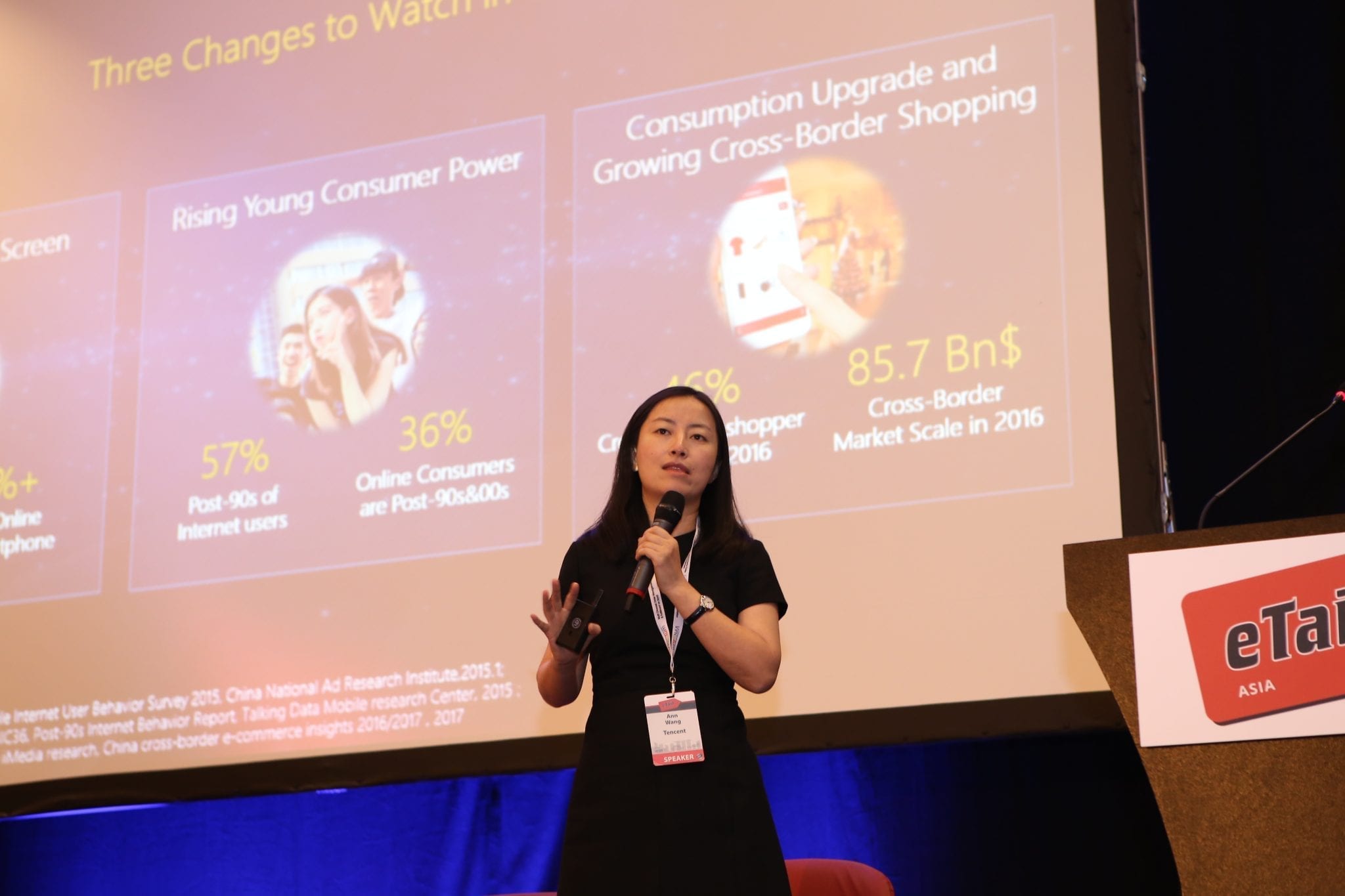
    Speaking today at eTail Asia 2017, a leading platform to help online retailers in Asia build a successful ecommerce business, Ann Wang, General Manager of Performance Advertising Solution, Online Media Group, Tencent, shared insights into China’s unique Internet market environment and consumer behaviors. Wang revealed the Tencent platform’s strength and offered three pieces of advice to help ecommerce companies win in China as the country shifts toward a consumption upgrade.

    In China, 90% of Internet users access the Internet via smartphone, and more than 75% shop online via smartphone. The ongoing consumption upgrade is further stimulating the development of China’s ecommerce market, particularly overseas online shopping. According to statistics, the total volume of cross-border online shopping in China reached US$85.7 billion in 2016, while the number of cross-border online shoppers grew 46% in the same year. The growth of ecommerce in the post-1990s and early 2000s is the main force behind the huge rise in overseas online shopping.

    According to Mary Meeker’s Internet Trends 2016, Chinese mobile users spend more than 55% of their online time on Tencent platforms, including QQ, Qzone, WeChat, v.qq.com and Tencent News. With its focus on social interactions and content, Tencent has built a self-sustained ecosystem, powerful data capabilities and holistic scenarios for quality communications among its users.

    According to Wang, Tencent provides more open, connected data, which links ad exposure to brand attitudes, consumer behavior and sales. Tencent’s algorithms also help marketers engage consumers across scenarios, and elevate pertinence by dynamic and contextual messages, allowing them to reach the broadest coverage of Chinese netizens.

    In her speech, Wang offered three valuable tips for marketers, which she believes can help global brands build a successful business in the increasingly dynamic China market:

    • Build a mobile-first ecosystem: Use all the tools available, including online ecommerce platform solutions, payment services and customer management to set up a mobile-oriented business ecosystem.
    • Go with an integrated marketing approach. Wang suggests marketers partner with a fully integrated platform to get the best of both brand advertising and performance advertising. One good example is Tencent’s co-creation of blockbuster IP with a popular cosmetics brand. The brand’s target audience loves to watch super-realism dramas and movies, worships movie stars, and are willing to consume and spend. Partnering with Penguin Pictures’ self-produced series “Revive,” the cosmetics brand made the leading actress its endorser and incorporated the brand appeal where appropriate. At the same time, it encouraged fans to try out its product used by celebs in the series. What’s more, it hosted offline celebrity meet-up sessions, thus winning the hearts of many fans. After only seven episodes, its Tmall store’s daily sales volume increased 400%.
    • Use the power of online marketing to boost traffic in offline stores. When a luxury automotive brand opened new stores in Hangzhou, it launched geo-targeted ads through WeChat Moment. Both the number of customer information acquisitions and store visits increased significantly as a result of the campaign.

    eTail Asia is the region’s premier event for senior eCommerce and Multichannel Directors of leading retailers. Each year, Asia’s biggest names attend to network and get a 360° perspective on the most pressing challenges and opportunities in digital retail. Also speaking at the event this year were representatives from Google, L’Oreal, Adidas, and Philips, to name just a few.

  • Chinese government clamping down on app stores

    Chinese government clamping down on app stores

    China’s government has issued an order for all app stores on the mainland to be registered.

    In a notice on its website, the Cyberspace Administration of China says its offices should ensure that records are kept on the country’s many app stores.

    “Many apps have been found to spread illegal information, violate user rights or contain security risks,” says the post.

    Unlike in the west, China’s app store market is very fragmented with as many as 150 vying for customers, including market leaders Google Play and Apple’s App Store.

    Registration is necessary, it says, to ensure it is clear who takes responsibility if apps, or app stores, are found to engage in illegal practices.

    Three weeks ago, Apple removed the English- and Chinese-language news apps of The New York Times from its China app store. The US tech giant says the government had told it the apps violated local regulations.

    Google’s store for apps using its Android operating system is blocked in China, with third-party stores taking its place. Most of China’s biggest app stores are controlled by internet and smartphone companies such as Alibaba, Baidu, Qihoo 360, Tencent and Xiaomi, as reported.

    It says Chinese laws are often intentionally broad and open-ended to allow regulators discretion in enforcing them. Concrete steps like the new order for registrations can indicate how laws will be carried out in practice.

  • Tencent Singapore office targets tourists

    Tencent Singapore office targets tourists

    Chinese-based online social media platform parent Tencent has opened a Singapore office to help drive Asian brands improve their reach to Chinese consumers.

    Tencent, which owns the WeChat messaging and browsing platform, has created an International Business Group charged with raising awareness of the opportunities offered by WeChat, especially targeting people who live outside China.

    While WeChat is as mainstream in the mainland as facebook is outside China, its takeup across the rest of Asia is limited.  The new Tencent Singapore team believes there are huge opportunities marketing to Chinese when they are travelling outside their home country.

    A growing number of luxury brands are establishing a presence on Wechat – Gucci even sells handbags worth several thousand US dollars on the platform, and BMW reaches out to prospective customers. Other consumer retailers like Hong Kong’s Sa Sa have developed extensive interactive eCommerce platforms which work across channel and drive customers in-store.

    Benny Ho, senior director of business development at Tencent, told The Drum that inbound marketing is a big opportunity in Singapore, especially.

    “These tourists are setting their own itinerary and they know precisely what store to buy from and in what colour before they arrive; they come to buy, not to shop. This means you need to build all the brand consideration and purchase intent way before they arrive and that is part of the core service we are trying to offer,” he said.

    WeChat alone has just over 800 million monthly active users.

    “That’s a huge number,” said Ho. “Every market we go to, we educate the market and tell them the numbers and it’s mind blowing. Our role is to make something that big [more] understandable.”

  • Tencent China streams reality show thru LiveU

    Tencent China streams reality show thru LiveU

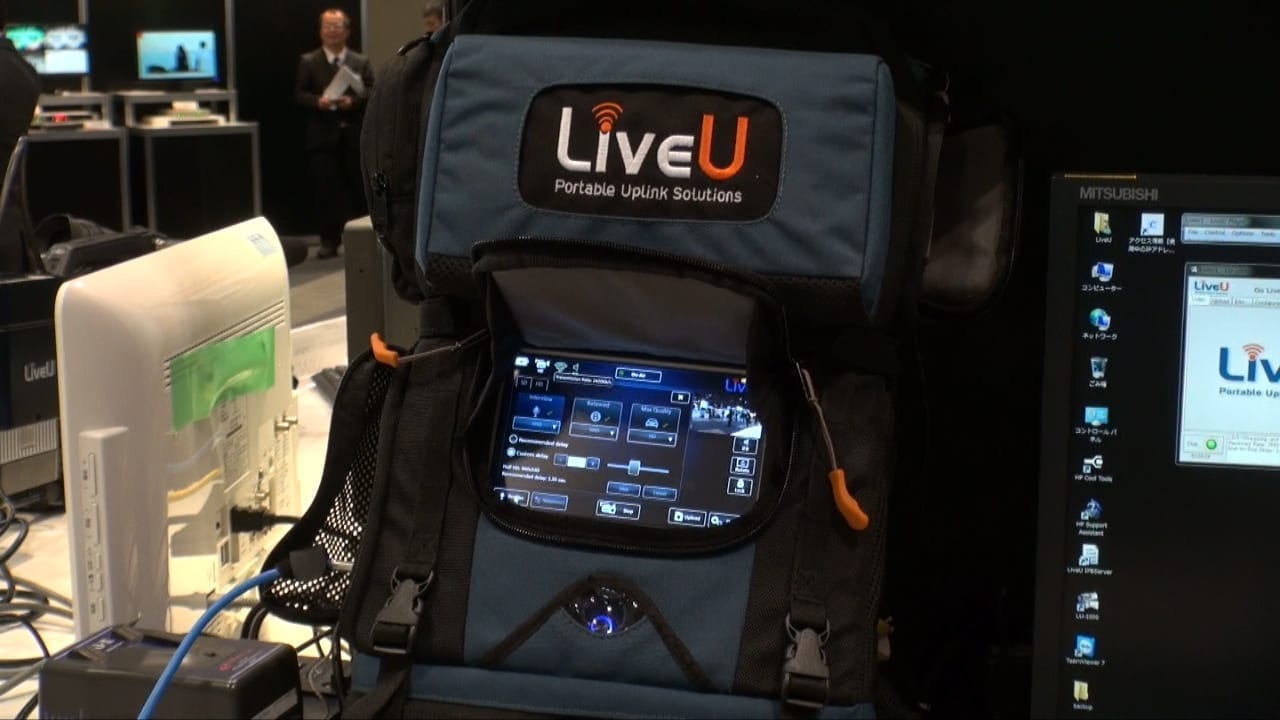
    Tencent is using LiveU’s portable transmission technology to stream live its new reality series called “See where you are going.”

    The live online program follows Olympic champions, movie stars and random guests in six cities around China (Suzhou, Hangzhou, Beijing, Tianjin, Qingdao and Shenzhen) as they perform various tasks.

    Tencent has deployed 10 LU200s, LiveU’s ultra-small transmission units, for the live production. Separate camera crews live stream the different stars in the different locations and viewers can choose one of six different video rooms to watch the video live on any device. At the end of each program, Tencent posts an edited version combining all the different clips online.

    The LiveU units and support are provided by LiveU’s local partner Guanhua Glory with additional support provided by Oneband Systems, an additional LiveU partner.

    Zhao Dongwei, Tencent transmission technology head, said that with the multi-camera chasing of stars, and multi-screen viewing, the show represents a new type of program in China.

    “Involving 6-10 hours per day of live streaming, it was important for us to choose a small, lightweight unit, which could deliver high quality and reliable live video over a long time in multiple locations,” said Zhao. “The LU200 surpassed our expectations, offering a highly cost-effective live transmission solution.”

  • Starbucks, Tencent debut social gifting on WeChat

    Starbucks, Tencent debut social gifting on WeChat

    Starbucks Coffee Company and Tencent Holdings have entered an alliance to co-create a new social gifting feature on WeChat.

    The new service, which will be rolled out early next year, will make it easy for Starbucks China customers to gift items to a friend or a family member.

    Customers will be able to select from Starbucks-branded gifts and products and add a personalized message. Recipients of these personal gifts and messages can save their gifts and memories on their WeChat accounts and redeem their gift at Starbucks stores across China.

    Users can use WeChat Pay to pay for their goods and services from their mobile devices at Starbucks retails stores. In China, more than 300 million users (as of March 2016) have linked their bank cards with WeChat or QQ, another flagship service of Tencent.

    “Just as Starbucks cards are among the most gifted around the globe, we aspire to also become the most gifted brand digitally in China,” said Belinda Wong, Starbucks China’s newly appointed CEO.

    The online social gifting platform is part of the company’s growing digital presence focused on connecting with customers through digital channels, including the Starbucks Mobile App, the My Starbucks Rewards program and social media.

    The announcement also builds on Starbucks rapidly expanding the portfolio of digital innovations in the country, which integrates the in-store experience with the digital “Fourth Place” experience.

    Earlier this year, Starbucks also launched a mobile payment system in China aimed at providing My Starbucks Rewards (MSR) members access to a fast, seamless and convenient way to pay for purchases, using their pre-loaded Starbucks Gift Card on their mobile devices.

    Wong, who was appointed from president to CEO of Starbucks China in October, has been instrumental in Starbucks unprecedented growth in country – from 400 stores in 2011 to over 2,300 stores today.

    The company said in a news release when her appointment was announced that she will oversee Starbucks plans to double its scale to operate 5,000 stores in China by 2021.

    Aside from focusing on the company’s overall long-term growth strategy, she will be responsible for key areas, including the vast digital and e-commerce opportunities across the market.