Retail News CRM

Tag: tesco

  • Tesco growing fast as Aldi and Lidl slow

    Tesco growing fast as Aldi and Lidl slow

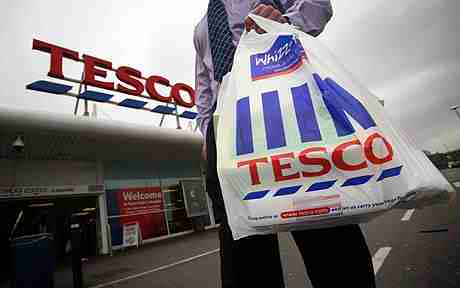
    Tesco’s turnaround appears to have been sealed with the supermarket giant recording its fastest sales growth in three years, industry data has shown.

    The UK’s biggest supermarket, which has been gradually returning to health since boss Dave Lewis took the reins in September 2014, grew sales by 2.2pc in the 12 weeks to November 6, according to Kantar Worldpanel’s closely watched snapshot of the grocery sector. The company’s market share rose to 28.2pc, from 27.9pc in the same period a year ago.

    Tesco’s own-label lines, including its Finest range, helped entice shoppers, Kantar analyst Fraser McKevitt said. “Much of Tesco’s growth has come from more affluent shoppers returning to the store, and average spend per trip is up by 2.1pc to £20.69,” he added.

    The large supermarkets have been hurt in recent years by the rampant growth of the German discounters Aldi and Lidl, which have been opening new stores at a furious pace. However Kantar’s data indicated that these chains were now growing at their slowest rate since 2011. Aldi’s sales rose 10.2pc to a 6.1pc market share, while Lidl was up by 6.1pc to a 4.6pc share.

    Of the remaining “big four” supermarkets, Sainsbury’s recorded a 0.7pc sales fall, while Morrisons and Asda were down 2.4pc and 5pc respectively. Morrisons’ figures are skewed by the fact it has closed loss-making stores in the last year, and sold off its M Local convenience store chain, meaning its overall sales will be lower because it has fewer shops.

    The grocery market as a whole chalked up 0.8pc growth in the 12 weeks. The sector has been hit by deflation, with prices falling consistently for more than two years as the major stores compete with each other to lure in shoppers. Grocery prices fell 0.5pc during the period, although this was a “significant reduction” on deflation in the summer, Mr McKevitt said. Analysts are predicting that inflation will start to return; the latest figures from the Official for National Statistics put inflation at 0.9pc in October.

    “We’re likely to see prices starting to creep up again in December, unless retailers choose Christmas to unleash a new round of price cuts,” Mr McKevitt added. “Although it’s tempting to link any potential price increases to Brexit and the devaluation of sterling, it’s worth remembering that deflation has been easing since December last year, well before the referendum.”

    Separate numbers from Nielsen appeared to confirm a slowdown in growth for the discount stores. Mike Watkins, Nielsen’s UK head of retailer and business insight, suggested price cuts at the larger grocers were helping them compete with the discounters.

    “Shoppers are still spending freely and we’ve seen a return of sustainable growth in the volume of items people are buying, helped by industry-wide price cuts, so one of the discounters’ USPs is less pronounced in shoppers’ minds,” he said.

    David McCarthy, an analyst at HSBC, said Tesco’s sales growth in the last quarter was “impressive”, especially since its share of retail space was declining. “Tesco’s growth is at the expense of key competitors who all lost market share. Tesco is well positioned for Christmas, and has entered the season with growing momentum,” he said.

    Clive Black, of Shore Capital, hailed a “quiet revolution” at Tesco. “We have been arguing for some time that we see improved market dynamics for British supermarkets; volume growth and potentially an easing of deflation,” he said.

    Tesco’s shares jumped 3.7pc to £2.13 in morning trade. Sainsbury’s climbed by 2pc and Morrisons rose by 3.8pc.
  • Tesco Malaysia partners with HappyFresh

    Tesco Malaysia partners with HappyFresh

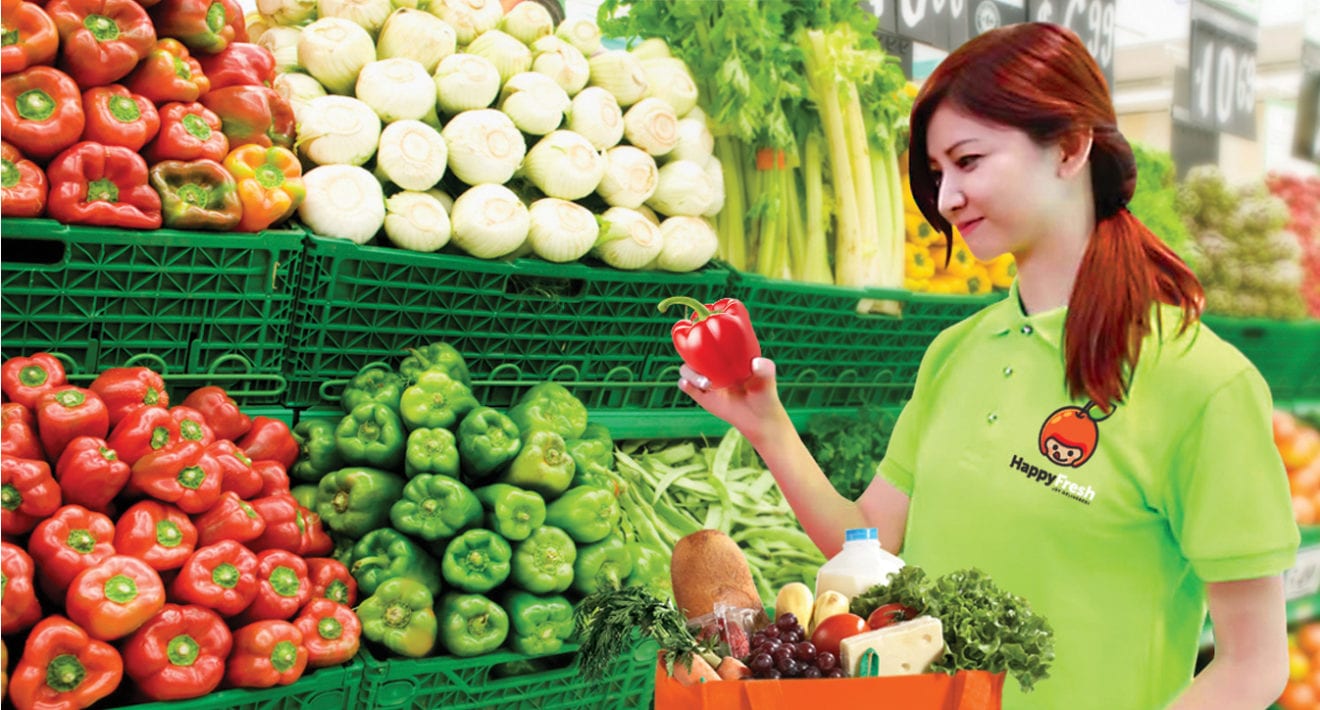
    Tesco Malaysia has partnered with online grocery platform HappyFresh to expand its capacity and capability to fulfill online orders.

    Shoppers are offered more than 12,000 products, including the grocery group’s private labels, while fresh produce is selected by HappyFresh’s concierge shoppers in Tesco Malaysia hypermarkets.

    All products sold via HappyFresh are offered at the same price as the products in store, including discounted items. Shoppers will receive their delivery within one hour after placing their order, or during a one-hour time slot they specify.

    Tesco Malaysia tapped into online shopping about three years ago with its home-delivery services, discovering a gap in the market where time-pressed online shoppers want to receive their goods at a specified time.

    Following a six-month trial with HappyFresh and five Tesco hypermarkets, fulfilling orders from 2500 HappyFresh users, the retailer is rolling out the service in Klang Valley.

    “Most consumers today do not have the time to drive out to a store and buy their groceries weekly,” says Tesco Malaysia CEO Paul Ritchie. “The internet lets them do all of that with a click of a button.

    “By expanding our multi-channel reach through HappyFresh, we continue to serve our customers’ online and on-demand shopping experience by making it even more seamless.”

  • Tesco faces legal claims over worker conditions at Thai clothing factory

    Tesco faces legal claims over worker conditions at Thai clothing factory

    A group of 130 former employees at VK Garment Factory in Thailand are suing the supermarket and auditing specialists Intertek.

    The workers, represented by law firm Leigh Day in the UK, claimed that they were paid up to £4 a day, working seven days a week, and “trapped in a cycle of forced labour and debt bondage”.

    VK Garment Factory, which is located in Mae Sot, employs a workforce of predominantly Burmese migrant workers.

    The legal claim said that the unlawful practices were not identified, despite both Tesco and Intertek carrying out audits at the factory.

    Tesco conducted operations in Thailand from 1998 to 2020 but sold its Thai and Malaysia interests for £8bn at the end of 2020.

    A Tesco spokeswoman said: “Protecting the rights of everyone working in our supply chain is absolutely essential to how we do business. In order to uphold our stringent human rights standards, we have a robust auditing process in place across our supply chain and the communities where we operate.

    “Any risk of human rights abuses is completely unacceptable, but on the very rare occasions where they are identified, we take great care to ensure they are dealt with appropriately, and that workers have their human rights and freedoms respected.

    “The allegations highlighted in this report are incredibly serious, and had we identified issues like this at the time they took place, we would have ended our relationship with this supplier immediately. We understand the Thai labour court has awarded compensation to those involved, and we would continue to urge the supplier to reimburse employees for any wages they’re owed.”

  • Tesco Mobile introduces roaming charges for EU travel

    Tesco Mobile introduces roaming charges for EU travel

    After Brexit became a reality, UK mobile operators were quick to promise that roaming charges for calls and data from within EU countries will not make a return. But, after the EU Trade Deal was finalized in 2021, it seems things changed.

    EE was first to cave and reintroduced EU roaming charges for its customers. Three, Vodafone, and Sky followed suit. Now, Tesco joins in.

    No announcement, no fanfare, Tesco changed its Terms & Conditions to include this change. Come January of 2023, any customers that have signed a new contract with the provider after June 6th 2022 (including) will need to pay for their mobile usage from within EU countries as follows — 10p per MB of data, 20p per SMS (no MMS while roaming), 55p per minute of regular voice calling.

    If you have entered a contract with Tesco before the aforementioned date, you will not be affected by the roaming charges until you renew or upgrade your service.

    Frequent travellers will be able to make use of various roaming bundles that Tesco will have on offer, making it cheaper for those that find themselves abroad more often.
    Out of all major carriers in the UK, Virgin Media and O2 have yet to introduce roaming fees for EU countries. In fact, so much so that you may be feeling tempted to check out some phone deals on Virgin or phone deals on O2. Vodafone’s Xtra plans can also include no-fee roaming for the EU and other countries abroad, so it’s great if you can find your favorite phone bundled with the right plan (Vodafone refreshes its phone deals once per month or so).
    By this point, EU roaming fees for all UK residents seem like an inevitability, with the only question being “when” the last operators will cave.


  • Tesco opens checkout-free store in London

    Tesco opens checkout-free store in London

    Tesco has become the latest retailer to open a checkout-free store in the UK. Replacing traditional tills with high-tech cameras, weight sensors, and a mobile app, the supermarket giant is launching its first high street store trial, called GetGo, in London on Tuesday.

    Tesco said it was aiming to “improve the shopping experience” and save customers’ time.

    The firm – which is one of the UK’s largest employers – stressed that the move away from cashiers will not reduce the number of staff in stores, with the High Holborn site continuing to employ 22 workers, which it said is in line with other convenience stores.

    It comes after Aldi opened its own till-free shop last month in Greenwich, with Amazon having launched its first Amazon Go grocery shop seven months prior in Ealing, before expanding to five more sites in the capital.

    Morrisons, Lidl, and the Co-op have also trialed checkout-free technology in their stores.

    Sainsbury’s, however, became the first UK supermarket to open a checkout-free store in April 2019, also in Holborn. But it abandoned the project five months later, saying: “Take-up was not as we had expected and it’s clear that not all our customers are ready for a totally till-free store.”

    Tesco is reported to have been testing its “frictionless” technology at a trial site within the supermarket group’s headquarters in Welwyn Garden City since 2019.

    The retailer said the technology had now been lifted from the trial site after a lengthy period of testing and improvements.

    To shop in the new store, shoppers will need to use the Tesco app, which will be scanned as they enter the building. They will then pick up the items they wish to buy and walk straight out of the store, receiving a receipt and being charged for the products once they have left.

  • Tesco Asia sale to be settled before Christmas

    Tesco Asia sale to be settled before Christmas

    Tesco announced it has met all conditions for the £8bn ($10.8bn) sale of its businesses in Thailand and Malaysia, which means its shareholders can soon expect a £5bn payout.

    Selling around 2,000 stores in Thailand and 74 in Malaysia to Thai conglomerate CP Group is the last stage of the supermarket giant’s exit from Asia.

    “Tesco is pleased to confirm that CP Group has now reviewed and is satisfied with the formal notice of approval” from the Thai Competition Commission, it said in a statement.

    This, along with the approval it received from the Ministry of Domestic Trade and Consumer Affairs in Malaysia last month, “means there are no further conditions outstanding and the disposal is expected to complete on or around 18 December.”

    Tesco had earlier said it intends to return £5bn of the net proceeds from the sale to shareholders via a special dividend, together with a share consolidation, and plans to make a pension contribution of £2.5bn to the Tesco Pension Scheme once the sale is complete.

    Tesco Group CEO, Ken Murphy, said “I’m confident that the agreement with CP Group will ensure that they are well setup for continued success. This sale allows us to focus on our businesses across Europe and to continue delivering for customers, make a significant contribution to our pension deficit and return value to shareholders.”

    Back in the UK, Tesco announced earlier this month it will repay the government £585m it saved under a business rate holiday for retailers during the pandemic.

    But it also mounted a staunch defence of its decision to take the handout, calling it a “game-changer” and saying “every penny” had been spent responding to the pandemic

  • Tesco Thailand takeover gets regulatory nod

    Tesco Thailand takeover gets regulatory nod

    Thailand’s competition regulator has given the nod for British retail giant Tesco to sell its supermarket businesses to the Charoen Pokphand Group, despite monopoly concerns.

    The $10.6 billion sale to Thailand’s biggest conglomerate was first flagged in March and also covers Tesco’s operations in Malaysia.
    “The majority of commissioners agreed that the merger of those businesses (could create) market dominance… but it’s not a monopoly,” Thailand’s Office of Trade Competition Commission said in a statement on Friday.

    The regulator said CP Group is not allowed to pursue other retail merger deals during the next three years.

    Thai Retailers and Wholesalers Association president Somchai Pornrattanacharoen, who was on the regulator’s vetting committee, last month publicly expressed concerns that the deal would grant CP Group a monopoly, according to local media.

    It is a boomerang sale of sorts — Tesco has nearly 2,000 grocery stores across Thailand which it bought from CP Group during the Asian financial crisis in 1997-1998.

  • Tesco, Tata invest US$9 million in Indian JV

    Tesco, Tata invest US$9 million in Indian JV

    British grocery retailer Tesco and Indian conglomerate Tata have invested another US$8.9 million into their joint venture Trent Hypermarket.

    The move marks the first major capital investment in the business by the partners in two years, and comes on the heels of the appointment of new CEO Martin Bailie.

    While revenues expanded 22.5 percent to $164 million in the previous financial year, the business’s losses have also grown. According to IGD Retail Analysis head of insight – Asia Pacific Nick Miles, Tata has been in talks with Walmart for renewed investment, following concerns over Trent’s relatively modest expansion in the territory.

    “The renewed investment from both parties should put talks on any new investors on hold for a while,” said Miles.

    “Having exited – or in the process of selling its operations in – China, Thailand, Malaysia and Poland in the past 12 months, perhaps Tata was nervous of Tesco’s commitment to the market. However, the investment signals that it remains committed to the JV.”

  • Tesco’s Asian business returns massive profit numbers

    Tesco’s Asian business returns massive profit numbers

    Tesco’s Asian business achieved a 33.5-per-cent increase in operating profit last year, the last full trading year before it is sold to Thailand’s Charoen Pokphand group. In results released overnight, Tesco reported a profit of £426 million, and a margin of 8.2 percent in Asia, on sales of £5.2 billion, up 6.7 percent on actual currency rates, or by 0.1 percent on a constant-currency basis.

    Tesco’s overall result was a pre-tax profit of £1.315 billion, up 18.7 percent year on year, on sales of £56.5 billion, up by 1 percent on a constant-currency basis.

    Outgoing CEO Dave Lewis said the performance of the company in the UK and Asia demonstrated the success of the company’s turnaround plan.

    “Over the last five years we have focused on serving customers better, re-engaging our colleagues, completely resetting our relationships with our suppliers and as a result we have been able to add value for our shareholders,” he said.

    “These endeavors put us in a strong operational and financial position to deal with the challenges of Covid-19.”

    But Lewis warned the impact of the coronavirus on the business could be significant and the company would not issue earnings guidance for the current year.

    “Covid-19 is having a material impact on the operations of our business and we are incurring significant additional costs, particularly in payroll as we recruit additional colleagues to meet demand and cover the work of those colleagues who are absent and being paid,” he said.

    The company has carried out calculations based on various scenarios, which show a negative impact ranging between £650 million and £925 million, including significant cost increases in payroll, distribution and store expenses.

    Lewis said Tesco’s Asian business had increased market share in Malaysia, opening two new small stores following favorable legislative changes, and the company plans a further four openings in the current financial year.

    In Thailand, Tesco’s new Express proposition roll out and large store re-invention program are both progressing well and the company is testing two ‘ultra-convenient’ E-Pop stores in Bangkok.

    “We have simplified our fresh-food offer, with more competitive prices and our ‘Food Love Stories’ campaign has further improved customer quality perceptions.”

    A simplification of Tesco’s general merchandise ranges impacted headline sales by about 1 percent during the year.

    He said the company had also built trust with customers throughout the region due to a focus on reducing food waste and plastic usage.

    The sale of Tesco’s Asian business is expected to be completed in the second half of this year, subject to regulatory approvals.

  • CP Group wins Tesco Asia business

    CP Group wins Tesco Asia business

    Tesco has accepted a US$10.6 billion bid for its Asian businesses from a consortium of companies controlled by Thai billionaire Dhanin Chearavanont.

    The deal, which remains subject to regulatory approval and Tesco Group shareholder approval, will be completed in the second half of this year.

    The price represents an earnings multiple of 12.5 times and marks a significant premium on analysts’ estimates of the business being worth about $9 billion.

    The CP Group entities which will buy the assets – Tesco Lotus in Thailand and a joint venture with Sime Darby in Malaysia – are CP Retail Development Company, Charoen Pokphand Holding Co, CP All Public and CP Merchandising Co. CP All runs the vast network of 7-Eleven stores across Thailand.

    Assuming shareholder approval for the deal, Tesco plans to return around £5 billion (US$6.59 billion) to shareholders via a special dividend.

    “This sale releases material value and allows us to further simplify and focus the business, as well as to return significant value to shareholders,” said outgoing Tesco CEO Dave Lewis.

    In a statement, Tesco said the disposal will “further de-risk the Tesco business by reducing indebtedness through a £2.5 billion pension contribution (in the UK) that, along with other measures, is expected to eliminate the current funding deficit and significantly reduce the prospect of having to make further pension deficit contributions in the future”.

    The deal announced today effectively sees CP Group buy back the Lotus operations in Thailand, which it sold to Tesco in 1997 to raise cash during the Asian Financial Crisis.

    CP also owns the Sam Makro grocery warehouse business with 130 stores, along with more than 11,000 7-Eleven stores.

    In winning the Tesco business, CP Group beat rival local bidders Central Group and TCC Group. The decision was reached quickly by the Tesco board given final binding bids closed on February 29.

  • Tesco executives mull final bids for Thai, Malaysian businesses

    Tesco executives mull final bids for Thai, Malaysian businesses

    Tesco executives and advisors will this week start evaluating offers for its Thai and Malaysian businesses following Friday’s deadline for binding offers.

    However, with the asset valued somewhere in the region of US$9 billion, there is no certainty any of the bids will be accepted. A decision is expected this month.

    Tesco has yet to confirm how many bids were received, but analysts expect a three-way battle between some of Thailand’s largest companies: CP Group, controlled by Dhanin Chearavanont, Central Group, controlled by the  Chirathivat family, and TCC Group, controlled by property and beer magnate Charoen Sirivadhanabhakdi. Another potential bidder is petroleum group PTT which is expanding its Cafe Amazon network regionally and has an interest in diversifying from its core petrol-retailing business.

    Tesco operates about 2000 supermarkets and convenience stores in Thailand and a further 74 in a Malaysian joint venture with Sime Darby Group.

    For Central Group, which last month raised US$2.5 billion in an IPO of its retail business, the Tesco operation would have substantial synergies with its supermarkets and convenience-store business.

    CP Group, meanwhile, has an interest in effectively buying back the Thailand operations, which evolved from the supermarket business it sold to Tesco in 1997 to raise cash during the Asian Financial Crisis. CP owns the Sam Makro grocery warehouse business with 130 stores along with the Thai 7-Eleven franchise which now numbers more than 11,000 stores.

    In the half-year to August 24, the Tesco businesses in Thailand and Malaysia achieved sales of $3.3 billion and an operating profit of $219 million.

    Exiting the Southeast Asian business may come with complications. Thailand’s government has already flagged its interest in a sale to existing local entities, commenting that the deal must not violate anti-monopoly laws.

  • Tesco to stop Chinese investment

    Tesco to stop Chinese investment

    British multinational groceries and general merchandise retailer Tesco has sold its shares in a Chinese joint venture, ending its operations in the country.

    According to Retail Gazette, the firm’s 20-per-cent shareholding in the Gain Land business has now been sold to a unit of its regional partner, Chinese state-owned conglomerate China Resources Holdings (CRH). The shares were sold for £275 million (US$356.6 million).

    The share transfer, set to take effect on Friday, completes Tesco’s six-year exit strategy from China, which began when the firm merged its 131 branded stores in the country with CRH’s Vanguard outlets. CRH operates close to 3000 Vanguard locations.

    Following the retreat, Tesco will focus on its core business, using the funds from the share sale for general business purposes. The firm has also announced a review of its operations in Malaysia and Thailand.

  • Thai oil company PTT joins race for Tesco

    Thai oil company PTT joins race for Tesco

    Thai oil company PTT is said to be preparing to make a bid for the Tesco Asia businesses in Malaysia and Thailand.

    The firm’s retail unit, which also owns the rapidly growing Cafe Amazon chain, will join local retailer Central Group and conglomerate Charoen Pokphand in first-round bids.

    At the beginning of this month, Bloomberg sources were tipping the Tesco Asia business could fetch as much as US$7 billion. But this week, Reuters sources are estimating the deal to be worth as much as US$9 billion. If one of the Thai suitors is successful, the deal could potentially be the second-largest acquisition ever by a Thai company.

    Tesco currently operates about 2000 outlets in Thailand, and another 74 in Malaysia in a local partnership with Sime Darby Group.

    Tesco announced in December it was reviewing the future of the business after receiving expressions of interest. As Inside Retail Asia reported earlier this month, Thai billionaire Dhanin Chearavanont, who owns the Charoen Pokphand Group, and the Chirathivat family-controlled Central Group are among a group of potential investors in discussions with Tesco.

    Meanwhile, Reuters has reported that Thailand’s Office of Trade Competition Commission has issued a rare warning under the country’s anti-monopoly laws, saying it will closely monitor any deal.

    Thai oil company PTT is actively pursuing business expansion outside its core fuel-retailing business. The company is rolling out Amazon Cafe outlets across Southeast Asia, with the latest markets including Singapore and Vietnam.

    In late 2018, the company said it planned to open 20,000 cafes globally, nearly 10 times its then the network of 2300 outlets in Thailand, the Philippines, Laos, Cambodia, Myanmar, and Japan.

  • Thai conglomerates in race to buy Tesco Asia

    Thai conglomerates in race to buy Tesco Asia

    Two Thai billionaires are reportedly preparing bids for the Asian operations of UK grocery giant Tesco.

    Citing “people with knowledge of the matter”, Bloomberg has reported that Charoen Pokphand Group, owned by Dhanin Chearavanont, and the Chirathivat family-controlled Central Group are among a group of potential investors in discussions with Tesco over a potential buyout.

    The UK company announced early last month that it was conducting a review of the future of its Asian business after receiving ‘inbound interest’.

    Tesco operates 74 stores in Malaysia and about 2000 in Thailand under Tesco Lotus brand. The combined stores generated £286 million (US$375.8 million) operating profit in the year to last February.

    Bloomberg reports that Tesco will invite formal bids for the business next month and suggests it may fetch as much as US$7 billion.

    The Malaysian and Thai Tesco operations are separate businesses, with Sime Darby holding a 30-per-cent stake in the former.

    The solicitation of bids may not necessarily lead to a sale of the business.

    Retail analytical consultancy GlobalData is among those suggesting a sale would not be in the best long-term interests of Tesco UK, which in recent years has sold or closed all its other off-shore businesses to focus on the UK market, and the Tesco Asia business.

    Hakan Demirci, consumer analyst at GlobalData, says the sale of the Tesco Asia business by its UK parent would prioritise shareholders over sound long-term economic strategy,

    “Tesco’s Malaysian and Thai sectors have been constant sources of sustained success, with profit margins the highest at 6 per cent compared to the UK business’s margins of 3 per cent.

    “Selling its Asian business would be welcomed by Tesco’s shareholders, who would be granted higher returns on their investments if it were to go through. However, these markets were relatively developed and consolidated, with little room for growth in the retail sector.

    He said the Malaysian food and grocery market is set to grow from now through 2022 with a compound annual growth rate (CAGR) of 9.9 per cent. Likewise, the Thai food and grocery market will grow at a smaller, yet still significant CAGR of 4.5 per cent over the same period – representing a significant opportunity for Tesco to expand its business.

    “If these markets were to be sold, Tesco would be left with operations in the UK, Ireland and Central Europe. This would leave the group vulnerable as it loses its benefit of regional diversification, resulting in a less dynamic and flexible company.”

  • Major Thai retailers stop giving out plastic bags

    Major Thai retailers stop giving out plastic bags

    Thai Retailers Association members have stopped providing customers with plastic bags as a ban took effect on January 1.

    A campaign titled Every Day Say No to Plastic Bags run by Thai Retailer Association will stop its 75 member chains from giving away plastic bags through 24,500 outlets, aiming to cut 13.5 billion plastic bags used in Thailand annually – about 30 per cent of the total.

    According to the Department of Pollution Control, 18 billion plastic bags (40 per cent) come from the fresh markets each year, while another 30 per cent or 13.5 billion bags come from local grocery stores. In Bangkok, each person uses eight plastic bags on average per day, creating around 80 million pieces of plastic waste daily.

    “Thailand was ranked sixth among the world’s top countries that dumps waste into the sea,” said Varawut Silpa-Archa, minister of natural resources and environment. “During the past five months, we were down to 10th … thanks to the cooperation of the Thai people.”

    The country reduced the use of plastic bags by 2 billion last year, in the first phase of a campaign to encourage consumers’ voluntary refusal of plastic bags from stores. Many department stores and supermarkets in Thailand already have their own programmes to cut down on plastic bags.