Retail News CRM

Tag: tesco

  • Tesco Asia sale plan comes under fire

    Tesco Asia sale plan comes under fire

    A sale of the Tesco Asia business by its UK parent would prioritize shareholders over sound long-term economic strategy, says GlobalData.

    Over the weekend, Tesco announced it had received an expression of interest from an unnamed party to acquire the Tesco business in Malaysia and the Tesco Lotus operation in Thailand. The company has subsequently launched a review of options for the Tesco Asia operations.

    Hakan Demirci, a consumer analyst at GlobalData, described a sale as outgoing CEO Dave Lewis’s plan to appease shareholders with a reported valuation of £7.1 billion for the 2000 stores.

    However, he said this would neglect the long-term importance of Asia to Tesco.

    “Selling its Asian business would be welcomed by Tesco’s shareholders, who would be granted higher returns on their investments if it were to go through. Tesco has done this before, having sold its Chinese and Japanese stores in 2013 and most recently it’s South Korean business in 2015. However, these markets were relatively developed and consolidated, with little room for growth in the retail sector.

    “Tesco’s Malaysian and Thai sectors have been constant sources of sustained success, with profit margins the highest at 6 percent compared to the UK business’s margins of 3 percent.”

    He said the Malaysian food and grocery market is set to grow from now through 2022 with a compound annual growth rate (CAGR) of 9.9 percent. Likewise, the Thai food and grocery market will grow at a smaller, yet still significant CAGR of 4.5 percent over the same period – representing a significant opportunity for Tesco to expand its business.

    “If these markets were to be sold, Tesco would be left with operations in the UK, Ireland, and Central Europe. This would leave the group vulnerable as it loses its benefit of the regional diversification, resulting in a less dynamic and flexible company.

    “This vulnerability would leave the group exposed, as it continues to lose share against the meteoric rise of discounters in both the UK and Ireland such as Lidl and Aldi, which GlobalData expects will continue to gain market share throughout 2020,” he said.

    “Finally, Tesco’s operations in Malaysia and Thailand could serve as a springboard for emerging regional neighbors, namely Indonesia, the Philippines and the rest of south-east Asia. These markets offer Tesco the ability to become a truly global player outside of their strongholds in the British Isles and Central Europe.”
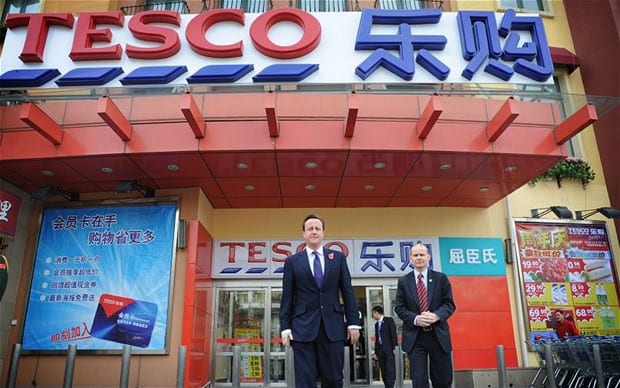
  • Tesco mulls exiting Thailand and Malaysia

    Tesco mulls exiting Thailand and Malaysia

    British grocer Tesco is considering exiting Asia with a shock sale of its operations in Thailand and Malaysia.

    Tesco has confirmed that following an inbound interest, it has “commenced a review of the strategic options for its businesses in Thailand and Malaysia, including an evaluation of a possible sale of these businesses”.

    “The evaluation of strategic options is at an early stage, no decisions concerning the future of Tesco Thailand or Malaysia have been taken, and there can be no assurance that any transaction will be concluded,” the company said.

    “A further announcement will be made if and when appropriate,” it added.

    Dow Jones, citing people familiar with the plan, reported that the sale could fetch up to US$9 billion.

    Tesco operates 74 stores in Malaysia and 1967 in Thailand under Tesco Lotus brand. The combined stores generated £286 million (US$375.8 million) operating profit in the year to February.

    Tesco previously sold businesses in South Korea and Singapore during a period of restructuring following an accounting scandal. But the company said it believed in the long-term potential of the remaining operations in Thailand and Malaysia.

    Tesco did not identify where the approach had come from, but it is likely to be from a private equity company, or possibly Japanese retailer Aeon seeking to boost its expansion in the region. Aeon already has stores in both markets.

  • Tesco Malaysia marks 60-store milestone in country

    Tesco Malaysia marks 60-store milestone in country

    Tesco Malaysia has opened its 60th store. The more-than 2000sqft store at Wangsa Walk is the retailer’s largest in the country, with recent changes in regulations reducing costs for an operation of this size and opening the path for similar formats going forward.

    “In providing a 2000sqft superstore with a targeted range of our famous value for money pricing, we are providing convenience and value for money to the customers in this area who were not able to enjoy all these before,” said Tesco Malaysia CEO Paul Ritchie as reported in the New Straits Times.

    “Going forward, we plan to keep expanding in Malaysia within this format as it believes that there is still a lot of growth opportunities in this country.”

    Tesco Malaysia has been operating for 17 years.

  • Profit soars for Tesco in Asia

    Profit soars for Tesco in Asia

    Tesco in Asia has reported a 54.1-per-cent boost in operating profit to £171 million as the company accelerated its cost-saving initiatives in Thailand.

    Those reforms include distribution efficiency improvements and more focused, effective marketing activity.

    Tesco in Asia sales during the 26 weeks to August 24 grew 8.4 per cent year on year to £2.556 billion, although on constant exchange rates that growth was pared back to just 1 per cent. Like-for-like store sales fell by 1.3 per cent largely due to reduced sales of general merchandise.

    “We are focusing on differentiating our customer proposition in Thailand, across both large and small stores,” said CEO Dave Lewis in a review of the results. “We opened our first urban supermarket in June and our large store re-invention trial stores have been well received by customers, generating a sales uplift of 4.8 per cent.”

    He said trials of Tesco in Asia’s Express proposition in Thailand also proved successful.

    “We plan to roll out the enhanced offer to all Express stores. We have introduced 300 products in smaller pack sizes, added 100 products to our ‘ready to eat’ range and extended our ‘food to go’ drinks offer, in addition to maintaining our focus on fresh evening meal solutions.”

    “Own brand expertise and price investment on key fresh food products” led to positive sales growth in Malaysia, he said.

    Global group sales were flat at £28.3 billion during the first half, with operating profit up 25.4 per cent to £1.406 billion.

    Succession plan announced for CEO

    Declaring Tesco group’s turnaround program complete, chairman John Allan revealed Lewis will step down as CEO in the northern hemisphere summer next year.

    He will be replaced by Ken Murphy, who is currently chief commercial officer and president of global brands at Walgreens Boots Alliance.

    “Today’s results confirm that the Tesco turnaround has been delivered,” said Allan. “Under Dave’s leadership Tesco has transformed customer satisfaction and rebuilt the business. We can now move forward with renewed confidence. We have an exceptional leadership team, a very clear strategy, a re-invigorated brand and financial strength.”

    Lewis said his decision to step down was a personal one.

    “I believe that the tenure of the CEO should be a finite one and that now is the right time to pass the baton. Our turnaround is complete, we have delivered all the metrics we set for ourselves. The leadership team is very strong, our strategy is clear and it is delivering. The Tesco brand is stronger and customer satisfaction is the highest it has been for many years. Colleagues are doing an extraordinary job and their expertise shows in every store and channel every day.

    “With these firm foundations and a competitive, sustainable growth strategy in place, I have no doubt that Tesco will kick on again under new leadership next year.

    “When that time comes, I will watch progress from outside with interest, deep affection and pride. In the meantime, you can be sure that I will give the job everything I have until my very last day.”

  • Tesco Thailand Planning to Open 750 new Stores

    Tesco Thailand Planning to Open 750 new Stores

    Tesco Thailand is evaluating opening as many as 750 more convenience stores, which would expand its overall network by about 50 per cent.

    No timeline was revealed for the move, which is one of several strategic growth options being considered by the British-headquartered grocery retailer. Another is the development of a premium supermarket offer in the UK.

    Tesco currently operates 1583 stores in Thailand, a mixture of large-format hypermarkets and a growing network of small compact stores for local communities.

    In light of the company’s success in Thailand and neighbouring Malaysia, the company is reportedly considering options for expansion in other Asian markets including South Korea and China. A move into South Korea would be surprising given the company sold its Homeplus-bannered hypermarket operations there in 2015.

    Developing a stronger convenience-store network in Thailand – and potentially Malaysia – would make a lot of sense given consumers across the region are losing interest in hypermarkets as a format in favour of more frequent visits to smaller shops, as well as buying goods online.

    Tesco has told its investors that Thais are migrating from traditional markets to hypermarkets, supermarkets and convenience stores as the country develops.

    The potential store expansion was outlined at a Capital Markets Day presentation to analysts and investors on the company’s future direction.

  • Tesco Asia sales fall after restructuring

    Tesco Asia sales fall after restructuring

    Tesco Asia like-for-like sales fell 6.2 per cent last year, but the decline eased to 3 per cent in the fourth quarter as restructuring of the Thai business took effect.

    UK-headquartered grocery retailer Tesco Group included the results of its Tesco Asia operations in its annual results filing released yesterday.

    Tesco Asia’s operating profit for the year was £286 million (US$374.9 million), down 4.3 per cent. But the company commented that supplier negotiations have concluded and the significant restructuring is now complete, paving the way for improved results in the year ahead.

    “In the first half, profit was impacted by the combined effect of sales deleverage, price investment and repositioning of promotional investment in Thailand,” the company said. “Performance improved significantly during the second half as we successfully concluded renegotiations with our suppliers and accelerated plans to restructure our store and office operations in Thailand. As a result, we have been able to recover our operating margin more fully and quickly than we had anticipated at the half-year stage.”

    Total sales in Asia – where it operates Tesco Lotus in Thailand and Tesco hypermarkets in Malaysia, were down 1.6 per cent, after excluding sales taxes and fuel. The company achieved £4.055 billion in sales in Thailand and £818 million in Malaysia.

    Tesco Asia opened two stores in Malaysia and 70 in Thailand during the year. It closed one in Malaysia and 56 in Thailand, leaving a net total of 73 and 1965 respectively, which accounts for almost a third of Tesco Group’s global network of 6270 stores.

    Globally, Tesco Group achieved a 28.8 per cent increase in pre-tax profit to £1.67 billion, which GlobalData retail analyst Thomas Brereton said was evidence of the success of CEO David Lewis’ turnaround plan, now four years in.

    ‘‘Tesco’s strong full-year announcement today produced a flurry of appealing results,” said Brereton.

    “Shareholders … should be feeling extremely confident that Tesco will be one of the better-performing supermarkets for the rest of this year.”

    He said Lewis has lived up to his nickname of ‘Drastic Dave’ at Tesco, “mercilessly streamlining the business over the past four years, ditching divisions that obstruct the group from reaching the promised operating margin level”.

    But Brereton said Lewis now faced a challenge of what to do next, having almost achieved every single five-year target set four years ago when he took control of the then-struggling business.

    “Tesco now needs to set itself some new objectives.”

  • Tesco Asia sales slip further, but profit up

    Tesco Asia sales slip further, but profit up

    Tesco Asia like-for-like sales continue to decline while the UK-headquartered company repositions its offer – masking a stronger underlying performance for the business.

    “We have made good progress in our discussions with suppliers towards a new commercial approach,” explained Tesco CEO Dave Lewis in a quarterly update.

    “We also accelerated planned changes to our operating model in Thailand, helping to reduce costs and underpinning our profit recovery.”

    Lewis said that despite minor changes to the government-issued welfare cards scheme during the third quarter, Tesco Thailand sales fell by about 1 per cent for the 19-weeks including the key Christmas trading period.

    Restructured Thailand store operations have led to reduced costs, underpinning profit recovery at the expense of sales.

    Referring to Tesco’s global operations, Lewis added: “We have more to do everywhere but remain bang on track to deliver our plans for the year and as we enter our centenary we are in a strong position.”

    The December quarter represented the 12th consecutive quarter of like-for-like sales growth for Tesco globally, with sales up 2.6 per cent.

  • Tesco to build simpler, more sustainable business; axe 9,000 jobs

    Tesco to build simpler, more sustainable business; axe 9,000 jobs

    Tesco has recently announced that the brand is making some strategic changes to further simplify the business and this might affect jobs of 9,000 employees. “Since we launched our turnaround four years ago, we have built a stronger business focused on serving our customers. Whilst this turnaround continues, it does so in a competitive and challenging market. We’ve briefed our colleagues on some changes we’re making to our stores and offices to further simplify our business, so that we can continue to invest in serving our customers,” Tesco said in a statement.

    Jason Tarry, CEO, UK & ROI said: “In our four years of turnaround we’ve made good progress, but the market is challenging and we need to continually adapt to remain competitive and respond to how customers want to shop. We’re making changes to our UK stores and head office to simplify what we do and how we do it, so we’re better able to meet the needs of our customers. This will impact some of our colleagues and our commitment is to minimise this as much as possible and support our colleagues throughout.”

    Changes include the following:

    Counters simplification

    Over recent years, convenience and online businesses have continued to grow, as the brand has core grocery and fresh departments in large stores. Not only are customers shopping in different ways, but they have less time available to shop too – which means they are using counters less frequently. The brand will be making changes to the counters in large stores to ensure that they have the right offer for customers. It is expected that around 90 stores will close their counters, with the remaining 700 trading with either a full or flexible counter offer for customers.

    Stock control simplification

    As business changes, the brand is also changing the way they manage their stock. After a number of trials, they have found a simpler way to conduct store routines and will be rolling this out to all of the stores. These changes mean a significantly reduced workload, with fewer hours needed to complete the routines.

    Merchandising simplification

    The brand wants to make shopping with them even easier, and they are aware that when they move products around this can prove frustrating for customers. The in-store employees have expressed to the brand that they want to spend more time with  customers, rather than moving products around the store. They have been working to reduce the amount of layout changes they make, so it’s easier for customers, and less work for in-store employees meaning fewer merchandising hours are needed.

    Colleague rooms

    Currently only one third of stores provide a hot food service and, over recent years, there has been reduced demand for this. Over the last three years the brand has been rolling out new self-service colleague kitchen areas in a number of stores, and they are now extending this to all remaining stores with a hot food service. This change will impact the people working in colleague rooms, who are employed by third party caterers, and the brand is working with them to provide as much support as they can.

    Head office

    The brand has completed a detailed review and this week they are talking to employees about changes in some of their head office teams, moving to a simpler and leaner structure, which will allow them to focus on supporting customers.

    In-store bakeries

    Contrary to media reports over the weekend, the brand has no plans to make any significant changes to bakeries this year.

    “Overall, we estimate that up to 9,000 Tesco colleague roles could be impacted, however, our expectation is that up to half of these colleagues could be redeployed to other customer-facing roles. We are working with our third party providers to understand the impact on their staff in our colleague hot food service,” Tesco said in a statement.

  • Tesco Asia sales continue dropping despite growth in profit

    Tesco Asia sales continue dropping despite growth in profit

    Tesco Asia like-for-like sales continue to decline while the UK-headquartered company repositions its offer – masking a stronger underlying performance for the business. “We have made good progress in our discussions with suppliers towards a new commercial approach,” explained Tesco CEO Dave Lewis in a quarterly update. “We also accelerated planned changes to our operating model in Thailand, helping to reduce costs and underpinning our profit recovery.”

    Lewis said that despite minor changes to the government-issued welfare cards scheme during the third quarter, Tesco Thailand sales fell by about 1 per cent for the 19-weeks including the key Christmas trading period.

    Restructured Thailand store operations have led to reduced costs, underpinning profit recovery at the expense of sales.

    Referring to Tesco’s global operations, Lewis added: “We have more to do everywhere but remain bang on track to deliver our plans for the year and as we enter our centenary we are in a strong position.”

    The December quarter represented the 12th consecutive quarter of like-for-like sales growth for Tesco globally, with sales up 2.6 per cent.

  • Tesco signs up Jamie Oliver for healthier eating drive

    Tesco signs up Jamie Oliver for healthier eating drive

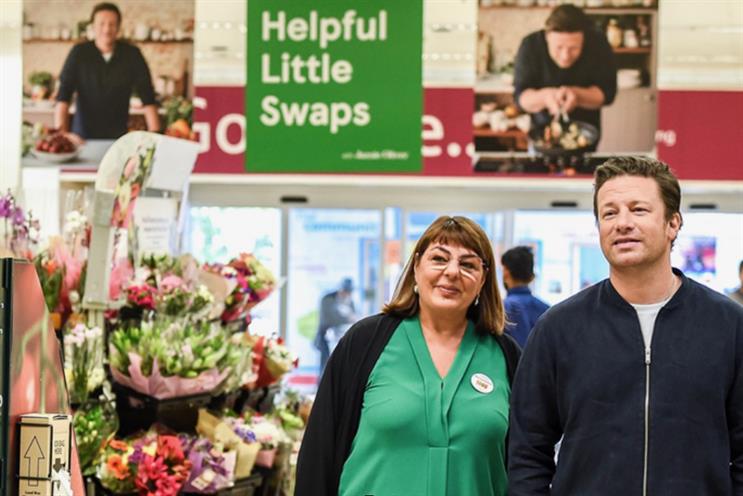
    Tesco and Jamie Oliver have joined up to “help make healthier choices a little easier for customers”.

    In his first act for the UK retailer, the celebrity chef and restaurateur will front Tesco’s ‘helpful little swaps’ in store, where healthier alternatives offer reduced levels of sugar, salt and fat, as well as being cheaper for customers. A basket of ‘helpful little swaps’ will cost 12 per cent less than a regular basket.

    The Tesco and Jamie Oliver partnership has been forged in the wake of research by the grocer showing seven in 10 families want supermarkets to help them lead healthier lives and make healthier choices more affordable.

    Oliver said the survey results back up what he hears from his audience every single day: “Britain wants to know how to enjoy more of the good stuff, in easy fun and delicious ways. This makes this partnership one of the most exciting opportunities to actually get Britain eating and celebrating more of their five fruit and veges a day.

    “I’m going to work really hard to respond to the different seasons and what the customer is asking for, by creating exciting meals, shortcuts and tips that get people really fired up to cook. Tesco’s part is to make it easier and more affordable.”

    Alessandra Bellini, chief customer officer at Tesco, said: “Jamie’s passion and skill to inspire a nation to cook, coupled with our experience and reach in providing millions of customers and colleagues with healthy, quality, affordable ingredients will be a great combination to help people take simple steps to leading healthier lives. This is a natural step in our ongoing work to make healthier eating a little easier.”

    As part of the partnership, a series of healthier recipes and tips will be in store and online created for Tesco by Oliver. Many of the ingredients from the recipes will be reduced in price and placed together for convenience for customers – with a focus on British fruit and vegetables.

    Oliver said that during the past few years, under its new leadership, Tesco has consistently raised the bar when it comes to so many important initiatives: from food waste, to leading on industry reformulation and helping kids eat more fruit with its brilliant Free Fruit for Kids in-store program.

  • Tesco transform recycled plastic into a car park

    Tesco transform recycled plastic into a car park

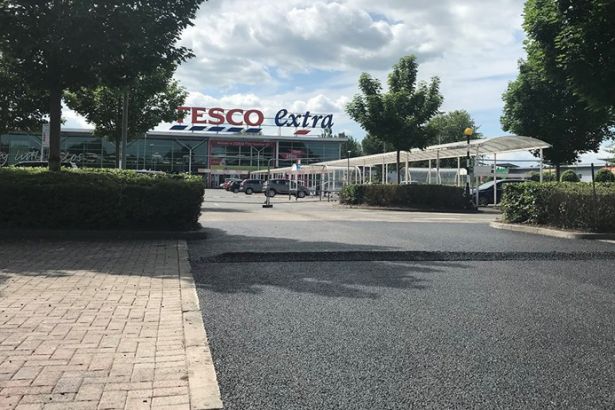
    Tesco Extra has resurfaced a store car park using the equivalent weight of 225,000 plastic carry bags, saving 900kg of plastics going to landfill.

    The partnership with plastic road company MacRebur, is part of a broader Tesco initiative to improve its sustainability record, including looking for ways to reuse waste plastic, reduce carbon and promote a sustainable closed-loop system. More than 84 per cent of the packaging on the grocer’s own-brand products is recyclable, depending on local authorities collecting it.

    MacRebur carefully selected plastics, taken from old rubbish, which it adds to road paving to improve strength and durability, whilst reducing the quantity of the oil-based bitumen used in traditional road mix.

    The Tesco Extra Cuckoo Bridge car park was resurfaced using waste plastics that would have been destined for landfill or incineration. These are added into an asphalt mix without the need to alter the existing equipment used to make and install the asphalt.

    Tesco will be testing this new road surface out at the Cuckoo Bridge store through the winter and hopes to work with MacRebur on future projects to help reuse waste plastic.

    MacRebur is based in Dumfries & Galloway, Scotland. For every 10 tonnes of asphalt made with their additives included, they use the equivalent of 71,432 plastic bottles or 435,592 single-use plastic bags, or 32,399 used nappies. Ten tonnes of asphalt would surface about 90sqm.

  • Tesco set to open new discount Jack’s store to rival Lidl and Aldi

    Tesco set to open new discount Jack’s store to rival Lidl and Aldi

    British supermarket operator Tesco is set to unveil a new network of Jack’s stores: a budget grocery concept it hopes will take the fight directly to German discounters Aldi and Lidl.

    While the company has not made an official announcement, sources are reporting details leaked from multiple sources.

    In the first phase of a roll-out program, Tesco plans to open 60 Jack’s stores, initially in main cities. A Liverpool outlet will reportedly open its doors within five weeks and staff are being recruited for at least another three stores, suggesting an opening is imminent.

    A source revealed the chain will be called Jack’s and advertisements for staff refer to small teams in a new company that is operationally independent of Tesco.

    Analysts suggest Tesco will be able to use its recently acquired wholesaler Booker to help supply stores and Jack’s limited range and compact footprint would differentiate it from full-service Tesco stores with large product ranges and Booker’s cash-and-carry model which primarily targets business and the foodservice sector, selling in bulk.

    Some media have quoted inside sources saying the designs of Jack’s stores show “striking similarities” with Belgian chain Colruyt.

    Tesco trialled a discount format called Victor Value in the 1908s, but scrapped the concept after four years, fearing it would cannibalise sales of its main network. But in today’s UK grocery market with Aldi and Lidl already accounting for 13 per cent of the British grocery market and achieving year-on-year sales growth around 8 per cent, cannibalisation is less of a concern than losing sales to rival chains.

  • Supermarket chains Tesco, Carrefour form strategic alliance

    Supermarket chains Tesco, Carrefour form strategic alliance

    Britain’s largest grocery chain Tesco and French grocery giant Carrefour have joined forces on how they source and buy from suppliers in a bid to cut prices.

    The long-term deal, which was struck amid mounting competition from Amazon and other rivals, allows the supermarket giants to jointly source certain products to lower prices and offer a wide range of product offerings to customers.

    According to Tesco, the alliance will be governed by a three-year operational framework and will enable both companies to improve the quality and choice of products available to their customers at even lower prices.

    Both companies will continue to work with supplier partners at a local and national level.

    “By working together and making the most of our collective product expertise and sourcing capability, we will be able to serve our customers even better, further improving choice, quality and value,” said Dave Lewis, Tesco Group chief executive.

    Alexandre Bompard, chairman and CEO of Carrefour, said the strategic alliance between the two grocery giants is a major agreement that combines the purchasing expertise “of two world leaders, complementary in geographies with common strategies.”

    The alliance will be formally agreed within the next two months, Tesco said in a statement.

    The British retailer has trialled a few days ago a new “shop and go” technology that allows Tesco customers to pay for their groceries without visiting a till, just through a smartphone.

    The retailer has given 100 company employees smartphones and use them to shop at its headquarters to trial the service. They use the phones to scan barcodes and pay for their shopping.

    The experiment is similar to the technology Amazon has already adapted in its grocery store in Seattle.

  • Tesco profits ups as turnaround kicks in

    Tesco profits ups as turnaround kicks in

    UK supermarket Tesco has managed to turnaround several years of lacklustre results, booking a pre-tax profit of £1.3 billion (AUD$2.38bn) for the year ended 24 February, up 795 per cent.

    The grocery giant’s shares jumped almost 6 per cent in the UK overnight on the figures, which included a 2.2 per cent increase in like-for-like sales in its home market and a 29.6 per cent reduction in net debt.

    “This has been another year of strong progress, with the ninth consecutive quarter of growth. More people are choosing to shop at Tesco and our brand is stronger, as customers recognise improvements in both quality and value,” Tesco chief executive Dave Lewis, who was appointed in 2014 to turnaround the business, said.

    “We have further improved profitability, with Group operating margin reaching 3.0% in the second half.  We are generating significant levels of cash and net debt is down by almost £6bn over the last three years.  All of this puts us firmly on track to deliver our medium-term ambitions and create long-term value for every stakeholder in Tesco.”

    There are now 260,000 more people shopping at Tesco, driving group revenue up by 2.3 per cent to £51 billion (AUD$93.18bn).

    Sales increases were booked in all Tesco’s operating region’s bar Asia, where LFL sales worsened over the year, decreasing by 14 per cent in the fourth quarter.

    The business has now completed its £3.7 billion (AUD$6.76bn) acquisition of wholesaler Booker and has begun improving its top line growth, leaving it on track to deliver at least £200 million (AUD$365m) in pre-tax synergies.

    “I am delighted to have completed our merger with Booker, and we are moving quickly to deliver synergies and access new growth, making the most of the complementary skills in our combined business,” Lewis said.

    Tesco reiterated its commitments set out in October 2016 to reduce costs by £1.5 billion (AUD$2.74bn) and generate an additional £6.3 billion (AUD$11.51bn) in retail cash from operations while also improving margins between 3.5 per cent and 4 per cent by 2019/20.

    Tesco’s operating margins increased by 57 basis points year-on-year to the year ended February 24 to 2.9 per cent.

  • Tesco UK to tackle food waste with new Colleague Shops

    Tesco UK to tackle food waste with new Colleague Shops

    Grocery and general merchandise retailer Tesco is set to introduce ‘Colleague Shops’ in all its UK stores to give employees the opportunity to take food approaching its expiry date, as part of its wider work to prevent good food from going to waste.

    Dedicated storage areas and fridges will be set up in back-of-store employee rooms to safely store quality food on its use by or best before date, and has the added benefit of helping to reduce food waste.

    The company said the move is part of Tesco’s on-going drive to ensure that no food safe for human consumption will go to waste in its UK retail operations by the end of 2017/18. Colleague Shops will form an additional part of Tesco’s established approach to managing stock in store which includes using sophisticated systems to predict and order the amount of food that customers are expected to buy in stores.

    Additionally, the price of products are ‘reduced-to-clear’ as they approach their expiry date to minimise surplus. If food cannot be sold, it’s offered to local charities and community food groups via Tesco’s surplus food redistribution initiative, Community Food Connection. However, charities don’t always need everything offered to them, so any food left over will now be made available to Tesco staff.

    Tesco’s head of food waste reduction Mark Little said: “We want to do everything we can to make sure perfectly good food doesn’t go to waste. Our Colleague Shops are a win-win, providing an additional step to support our efforts to tackle food waste in our own operations and offer colleagues an extra little help at the end of their shift.”

    Colleague Shops will be introduced to Tesco stores by the end of February. The surplus food will initially be made available for 1p before becoming free of charge in a few months’ time.