Tag: tesla

  • Delaware Judge Says Tesla Board Must Face Trial Over Musk’s Mega-Pay Package

    Delaware Judge Says Tesla Board Must Face Trial Over Musk’s Mega-Pay Package

    A Delaware judge ruled on Friday that Tesla Inc’s board of directors must defend at a trial Chief Executive Elon Musk’s multibillion dollar pay package, which a shareholder lawsuit said unjustly enriched the head of the electric vehicle company.Tesla estimated the 2018 compensation package was worth $2.6 billion (£2.08 billion) when it received stockholder approval in March 2018, although stock analysts at the time said it could be worth up to $70 billion (£56.04 billion) if the company – which has yet to post an annual profit – grew quickly.

    The compensation award includes no salary or cash bonus for the Silicon Valley billionaire Musk, but sets rewards based on Tesla’s market value rising to as much as $650 billion over the next decade.

    On Friday, Vice Chancellor Joseph Slights of the Delaware Court of Chancery ruled against Tesla’s request to dismiss the lawsuit by shareholder Richard Tornetta at an initial phase in the litigation because of the way the board approved the package.

    As a result, the board must now defend against allegations that it breached its fiduciary duty in approving the package, and that the package unfairly enriches Tesla’s CEO. The ruling opens the way for additional discovery into the decision-making process.

    Tornetta had asked that the pay package be rescinded and the board of Tesla be overhauled to better protect investors.The ruling turned on Tesla’s compensation committee, which the company conceded was not independent of Musk, according to Slight’s opinion. Had the package been negotiated by truly independent directors and approved by a majority of shareholders who were unaffiliated with Musk, Slights said he would have dismissed the lawsuit.

    “Plaintiff has well pled, however, that the board level review was not divorced from Musk’s influence,” Slights wrote.

    Musk’s compensation package passed shareholder approval with about 73 percent of votes cast, excluding votes by Musk and his brother Kimbal. The vote result indicated some, but not all, big investors were prepared to support a large payout at the founder-led company, which has struggled to produce its electric vehicles efficiently and profitably.

    At the time, proxy advisory firm Institutional Shareholder Services recommended voting against the compensation, noting that if achieved Musk’s award would surpass anything previously granted to top U.S. executives.

    Under the award, which involves stock options that vest in 12 tranches, Tesla’s market value must increase to $100 billion for the first tranche to vest and rise in additional $50 billion increments for the remainder. The package does not require Tesla to hit profitability metrics.

    Musk does not hold a majority of the Tesla’s stock, but in a separate case, Slights determined that Musk’s sway over Tesla made him in effect a controller from a legal standpoint. As a controller, the board is subject to a higher standard of legal oversight for decisions it makes regarding its relationship with Musk.The judge did dismiss Tornetta’s claim that the package amounted to a waste of corporate assets.
  • Tesla Takes On Porsche With Battle On Germany’s Toughest Circuit

    Tesla Takes On Porsche With Battle On Germany’s Toughest Circuit

    Germany’s Auto Motor und Sport this week published photographs of a Tesla with “100D+” markings on the track where according to the magazine, it clocked an unofficial time of 7 minutes and 23 seconds, beating the recently launched electric Porsche Taycan’s lap time of 7 minutes 42 seconds.

    Tesla wants to steal Porsche’s bragging rights by testing its Model S on the northern loop of Germany’s Nuerburgring circuit, using a marketing tool that German carmakers have long used to tout the superiority of their products.

    Germany’s Auto Motor und Sport this week published photographs of a Tesla with “100D+” markings on the track where according to the magazine, it clocked an unofficial time of 7 minutes and 23 seconds, beating the recently launched electric Porsche Taycan’s lap time of 7 minutes 42 seconds.

    A formally timed record attempt was due to take place on Wednesday, with another attempt scheduled for Saturday, Auto Motor und Sport said.

    Tesla is using the Nordschleife, as the track is known, to market its “Plaid” mode on a 7-seater Tesla Model S, CEO Elon Musk confirmed on Twitter.

    “We expect these track times to be beaten by the actual production 7 seat Model S Plaid variant that goes into production around Oct/Nov next year,” Musk said on Tuesday.

    Setting a new record time for four-door electric cars would give the U.S.-based manufacturer’s ageing Model S a new lease of life just as Audi, Mercedes-Benz, BMW and Porsche prepare to launch electric cars.

    The Nordschleife is one of the world’s most treacherous thanks to its length of just over 20 km (12.5 miles), slanted cambers and an altitude difference of 300 meters (yards) between its highest and lowest point.

    Porsche says its 919 Evo hybrid racecar currently holds the record with a lap time of 5 minutes 19 seconds, set in 2018 by keeping up an average speed of 234 km (146.3 miles) an hour, despite blind corners, narrow bends and limited safety run-off zones.

    Porsche, BMW, Mitsubishi, Nissan, Cadillac and Aston Martin have used the racetrack as a boot camp to hone reliability and handling and to benchmark their vehicles against top competitors.

    “If you take the same corner, on the same road, at the same speed, in two different cars, you can see how your car measures up to the competition,” said driver Dirk Schoysman, who set a Nordschleife lap record in 1996 in a Nissan Skyline with a time of 7 minutes 59 seconds.

    For Nissan, the new record underscored the Skyline R33 GT-R’s global status as a serious sportscar, proving that Japanese brands could be as competitive as vehicles made by Germany’s finest manufacturers.

    The circuit opened in June 1927 to become an important battleground where legendary drivers like Tazio Nuvolari and Juan Manuel Fangio drove some of their most memorable races.

    In 1935 senior Nazi officials gathered at the German Grand Prix ready to cheer the home team, only to see Italy’s Nuvolari beat the Mercedes-Benz W25 and the Auto Union Typ B in an Alfa Romeo Tipo B P3.

    The track remained a venue for Grand Prix races until 1976 when a horrendous crash almost killed driving ace Niki Lauda, leading to the opening of a shorter, wider Nuerburgring track with improved facilities in May 1984.

    But carmakers have continued to use the older circuit’s 40 right-hand and 33 left-hand turns through the Eifel region’s forested hills to develop their regular vehicles.

    “Cars cannot keep secrets here, mistakes and problems will eventually rise to the surface,” Schoysman said.

    At the Hatzenbach corner, cars enter a dip forcing them over a series of undulations with their suspension compressed, testing the chassis to the limit.

    “If the car changes its line in that corner it may be a tire flexing, the suspension bushes that have gone through their stroke, or a problem with the stiffness of the car body, or its electronic stability program,” Schoysman explained.

    These development tweaks continue to be relevant for electric cars as well as for marketing purposes.

    Understanding the circumstances of the test lap will be crucial for evaluating Tesla’s achievement, Schoysman said.

    “Getting a new lap record shows the know-how of the company but there are always questions: Are the cars realistic copies of what the customer finds in a showroom? Or were they modified?”

  • Tesla Raises Prices For Some Vehicles In China

    Tesla Raises Prices For Some Vehicles In China

    U.S. electric vehicles maker Tesla Inc said on Friday it had raised prices for some vehicles in China, a decision that comes as the Chinese yuan trades at its weakest levels in more than 10 years.

    The starting price for the Model X sport utility vehicle (SUV) was now 809,900 yuan ($114,186) compared with 790,900 yuan previously, Tesla said on its China website. Its long-range dual-motor variants of mass-market Model 3 vehicles were now priced at 439,900 yuan, up from 429,900 yuan previously.

    People familiar with the matter told Reuters earlier this week that Tesla would hike prices on Friday and could do so again in December should Chinese tariffs on U.S.-made cars take effect.

  • Jaguar And Audi Are Having A Really Hard Time Beating Tesla In The US

    Jaguar And Audi Are Having A Really Hard Time Beating Tesla In The US

    It’s a trope that’s been around roughly as long as Elon Musk has been in the car business: When a new electric vehicle is unveiled, it’s dubbed a potential “Tesla killer.”

    But from the flaming-out of Fisker to present day, Tesla has largely dominated the American electric-vehicle market. Musk has even managed to expand the company’s preeminence over the still small segment despite two new battery-powered luxury SUVs arriving in U.S. showrooms the last 10 months: Jaguar’s I-Pace and Audi’s e-tron.

    Their starts are the latest indications that legacy automakers aren’t assured instant success when they roll out new plug-in models. Tesla’s Model S and X have largely held its own against the two crossovers that offer a shorter range and less plentiful public charging infrastructure. Jaguar and Audi also lack the cool factor Musk has cultivated for the Tesla brand by taking an aggressive approach to autonomy and using over-the-air software updates to add games and entertainment features.

    “If a customer is choosing the I-Pace over the comparable Tesla, they are making the conscious decision: I don’t want the Tesla,” said Ed Kim, an analyst at the car-market research and consulting firm AutoPacific. “You really have to be someone who doesn’t like Tesla, who doesn’t want the Tesla product, in order to go for this.”

    Tesla’s Model X and Model S each boast more than 300 miles of range, and the cheaper Model 3 travels 240 miles between charges. Jaguar’s $69,500 I-Pace is rated at 234 miles, and Audi’s $74,800 e-tron registers 204 miles.

    Jaguar’s marketing team spent years laying the groundwork to introduce the I-Pace. In 2016, the brand joined Formula E, an open-wheeled, electric-powered race circuit similar to Formula One.

    “We had an electric car in our development plan – the I-Pace – at the time,” said James Barclay, Jaguar’s racing director. “We had to create awareness about the fact that we had an electric car coming to market, firstly, and to showcase why you’d buy a Jaguar electric vehicle over something else.”

    Porsche and Mercedes-Benz are also joining Formula E for the 2019-2020 season to help generate buzz for the new all-electric models they have coming out. The circuit makes stops in cities including New York, Hong Kong and London, which the brands are banking on as major markets for plug-in cars.

    “City centers are where there’s going to be a really good application for electric vehicles,” said Kim McCullough, Jaguar Land Rover’s vice president of marketing for North America. “So having them be able to see something firsthand – it starts the education process.”

    But while Formula E is drawing crowds of urban dwellers and a substantial audience on social media, all that buzz may not necessarily translate into showroom traffic.

    “Auto racing really comes as one of the last influencers, in terms of influencing people to buy whatever car they’re looking at,” according to AutoPacific’s Kim. If Jaguar is doing well in Formula E, it couldn’t hurt the I-Pace, he said. “But I don’t think it would have a huge positive impact on awareness of the vehicle.”

    Jaguar has sold an average of about 190 I-Pace crossovers a month since U.S. sales began. Tesla, by comparison, was delivering Model Xs at a clip of about 550 a month in its first year on the market, beginning in 2015, according to InsideEVs.com estimates.

    The Audi e-tron has been on the market in the U.S. for only four months, but during that time, it has averaged sales of about 745 units, InsideEVs estimates. In July, 3.5% of Audi’s U.S. sales were all-electric, and the company expects that number to climb to 30% by 2025.

    “We are confident that we are and will continue to deliver an offering that customers will want to be part of,” Cian O’Brien, the interim president, and chief operating officer of Audi of America, said in an email.

    After initial efforts to nab electric-car buyers proved challenging, Jaguar has decided to attack Tesla head-on.

    The brand is offering Tesla owners a $3,000 discount on the I-Pace for the next month and a half. “This is all about capturing a share of voice,” Stuart Schorr, a Jaguar Land Rover spokesman, said in an email. “The EV market is just at its infancy.”

    “Consumers, as a result of seeing our race program, do consider us to be a car brand they would consider for their electric car purchase,” said Barclay, the racing director. “Rome wasn’t built in a day, and for a premium automotive manufacturer with their first electric vehicle, it takes time in the market.”

  • EESL Partners With Apollo Hospitals To Install Public Charging Stations

    EESL Partners With Apollo Hospitals To Install Public Charging Stations

    Energy Efficiency Services Limited (EESL), a joint venture of PSUs under the Ministry of Power has announced its first partnership with the private sector. The world’s largest public energy services company (ESCO) has signed a 10-year Memorandum of Understanding (MoU) with Apollo Hospitals to install public charging stations across its hospitals in India. The aim is to boost e-mobility across the country and the tie-up will help set-up the charging infrastructure for electric vehicles. Under the MoU, EESL will make the entire upfront investment on specified services and deploy the manpower required for the operation and maintenance of the public charging infrastructure. Meanwhile, Apollo Hospitals will provide the requisite space and power connections for the charging network to EESL.

    Commenting on the announcement, Venkatesh Dwivedi, Director – Projects, EESL said, “Developing a strong supporting infrastructure is vital to build consumer confidence in electric vehicles. Our MoU with Apollo Hospitals reinforces the role of the private sector in achieving the goal of National Electric Mobility Programme. Electric mobility is vital to reducing airborne emissions and enhancing air quality, a cause the healthcare sector can resonate with. We look forward to more such multi-sectoral partnerships to accelerate the adoption of EVs across the country.”

    The move is part of the government’s National Electric Mobility Programme. EESL has commissioned 300 AC and 170 DC chargers across India and has established 55 public operational charging points in Delhi-NCR. The company has also partnered with Urban Local bodies in Hyderabad, Noida, Ahmedabad, Jaipur, Chennai, among other locations, to further penetrate the charging infrastructure.

    EESL procures the electric vehicles and chargers in bulk, which allows the company to source them at significantly discounted rates, lower than the actual market value. This allows the company to carry out operations at competitive project costs, which it says has helped the firm establish a sustainable business model that is affordable for the end consumer.

    With the government aggressive towards the adoption of electric vehicles in India, the charging infrastructure that remains nascent at present has always been a concern. Initiatives like these though will certainly help create enough charging locations to support electric mobility that is just gaining traction in the country.

  • Tesla Electric Car Catches Fire After Hitting Tow Truck In Moscow

    Tesla Electric Car Catches Fire After Hitting Tow Truck In Moscow

    A Tesla Model 3 electric car caught fire after crashing into a parked tow truck on a Moscow motorway late on Saturday, with the Tesla driver saying he had failed to see the vehicle with which he collided.

    Asked in a video published on REN TV website if he was using an Autopilot self-driving system, driver Alexei Tretyakov said he was in a drive assistance mode in which he was still holding the steering wheel.

    Tesla has stood by safety claims for its Model 3 in the face of regulatory scrutiny, while documents showed the top U.S. automotive safety watchdog issued at least five subpoenas since last year seeking information about crashes involving the company’s vehicles.

    Tretyakov said was driving at around 100 km (62 miles) per hour – the speed limit – when the car crashed on its left side into the stationary tow truck that he had not noticed.

    Footage of the incident on state TV channel Rossiya 24 showed the car by the side of the road engulfed in flames and thick black smoke. Two small explosions occurred within a few seconds of each other and the metal frame of the vehicle was all that remained after the fire, TV footage showed.

    Russia’s RIA state news agency website posted a video showing the car driving in the left-hand lane of Moscow’s ring road, known as the MKAD, before crashing into a tow truck parked by a safety fence that separates the carriageway from oncoming traffic.

    Tretyakov, a financial market expert and the head of Arikapital investment company, said he broke his leg in the incident, while his two children suffered only bruises. They all escaped from the vehicle.

  • Tesla Reintroduces Unlimited Free Supercharging On Model S And Model X

    Tesla Reintroduces Unlimited Free Supercharging On Model S And Model X

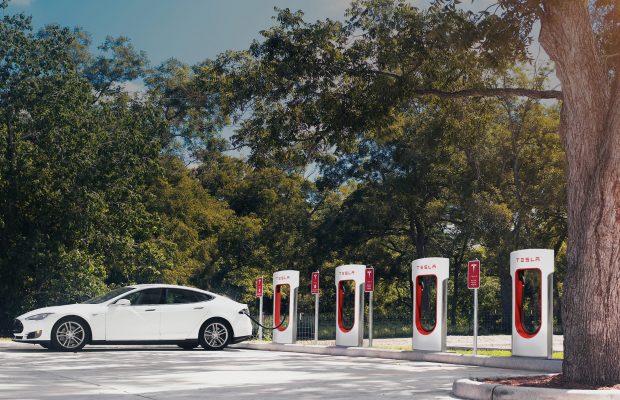
    Superchargers have had an important role in making Teslas popular simply because they help customers deal with the issue of range anxiety which is the biggest problem an electric car owner has to face. A Tesla Model S powered by a 85 kWh battery pack takes 20 minutes for a 50 percent charge, 40 minutes for 80 percent charge and 75 minutes for 100 percent charge using a supercharger. The duration for a similar spec Model X stands at par as well. There was a time when Tesla used to give this service for free to Model S customers when the company was quite new in the business, however, customers were soon charged to avail the service.

    The California based carmaker in a tweet has confirmed reintroducing the unlimited free charging scheme on the Model S and Model X. At present, Tesla owners in the US need to pay $ 0.28 (28 cents) per kWh or $ 0.13 (13 cents) to $ 0.26 (26 cents) per minute for using a supercharger. This means a full charge on a Tesla Model S through a supercharger would cost $ 19.5 which is over ₹ 1300 in Indian currency. The free charging service is available to Model S and Model X owners only while Model 3 owners will need to pay for the service.

    The offer will help Tesla to sustain sales of both models alongside the Model 3 which is much more affordable. The Model S and Model X were also given an under the skin (mechanical) upgrade to boost its drive range and both models are now compatible with Tesla’s V2 superchargers which have a power range of 200 kWh.

  • Tesla To Soon Get Netflix, YouTube Streaming Support

    Tesla To Soon Get Netflix, YouTube Streaming Support

    Tesla CEO Elon Musk has confirmed that people would be soon able to stream videos on digital platforms like Netflix and YouTube in parked Tesla electric vehicles. “Ability to stream YouTube and Netflix when car is stopped coming to your Tesla soon! Has an amazingly immersive, cinematic feel due to the comfy seats & surround sound audio,” Musk wrote on his Twitter handle.

    “When full self-driving is approved by regulators, we will enable video while moving,” he added.

    The desire to allow drivers and passengers to watch video is not a total surprise – Musk noted at E3 that the ability to watch YouTube was coming, The Verge said.

    Tesla has already unveiled games that drivers can play on the displays in their cars. The games also only work when the car is stationary so that the player can use the steering wheel as a controller.

    On Friday, the company announced that chess game is also coming to the Tesla Arcade.

    But there are huge concerns that come along with such features.

    Test vehicles are required to have a driver behind the wheel to take over in case something goes wrong, and even as self-driving technology improves, it’s hard to imagine that going away completely, the report said.

    In March 2017, an Uber self-driving car crashed into pedestrian in Arizona as the driver was watching The Voice on content streaming platform Hulu and lost track of the road.

  • Tesla Cuts Price Of Model 3

    Tesla Cuts Price Of Model 3

    U.S. electric vehicle maker Tesla has lowered the price of its mass-market Model 3 and raised the prices of its premium Model X and S cars.

    The starting price of the Model 3 is now $30,315, from $32,225, Tesla’s website showed on Tuesday. The top-of-the-range Model X now begins at $75,315, rather than $71,325, while the Model S rises to $70,115 from $65,125.

    The prices include potential incentives and petrol savings of $9,875, Tesla said on its website.

    Earlier this month, Tesla said deliveries of all three of its models in the second quarter of this year rose 51% from the previous quarter to a record 95,200 vehicles. The Model 3 accounted for about 80% of the total, underscoring the vehicle’s role as the linchpin of Tesla’s growth strategy.

    The automaker said it expected production and deliveries to continue growing in Q3.

    On Tuesday, Tesla also changed its prices in China, the world’s largest market for electric vehicles.

    Its website showed the Model 3 starting price is now 355,900 yuan ($51,780), down from 421,000 yuan. It lifted the Model X to 790,900 yuan and Model S to 776,900.

    Tesla is building a factory in Shanghai. In May it said it will set a starting price of 328,000 yuan for Model 3 vehicles built at the new factory.

  • Tesla Model 3 Is Norway’s Top Selling EV Last Month

    Tesla Model 3 Is Norway’s Top Selling EV Last Month

    Almost half of new cars sold in Norway in the first six months of 2019 were powered by fully electric engines, up from just over a quarter in the same period last year, ensuring the Nordic nation retains its top global ranking in electric vehicle sales. Tesla’s Model 3 was Norway’s top-selling vehicle, the Norwegian Road Federation said when announcing the latest sales data on Monday.

    In total, 48.4% of all new cars sold from January to June were electric, surpassing the 31.2% seen for the full year 2018, and making oil-producing Norway the global leader in per-capita electric car sales by a wide margin.

    Seeking to end the sale of diesel and petrol engines by the middle of the next decade, Norway exempts battery-driven cars from the heavy taxes imposed on vehicles powered by fossil fuel. It also offers benefits such as discounts on road tolls. The policy has boosted brands such as Tesla, Nissan, Hyundai and BMW, which all offer fully electric vehicles, rather than hybrids that use electric motors to drive the car but also have a combustion engine

    Brands without fully electric offerings, such as Ford and Daimler’s Mercedes-Benz, have seen sales drop, although Ford and Mercedes are among several automakers that have promised to offer electric cars in Norway from 2020. California-based Tesla sold 3,760 vehicles in Norway in June, for a 24.5% share of all cars during the month, and was also the top-selling brand for the first six months.

    Most of its sales were of the mid-sized Model 3, while the bigger Model S and Model X have seen lower year-on-year volumes.

    The International Energy Agency, which includes the more widely-sold plug-in hybrids when counting electric cars, measured Norway’s share at 39% of sales in 2017, far ahead of second-placed Iceland on 12% and Sweden on 6%

  • Tesla Promotes Lower Priced China-Made Model 3

    Tesla Promotes Lower Priced China-Made Model 3

    U.S. electric vehicle (EV) maker Tesla Inc said on Friday it would price its China-made Model 3 vehicles from 328,000 yuan ($47,529), 13% cheaper than those it currently imports as it pushes sales in the fast-growing market.

    The carmaker has been building a factory in China since January where its initial output will be Model 3 cars. Pre-orders for the vehicles will also start on Friday, the company said on its website.

    The “standard range plus Model 3” is 49,000 yuan cheaper than China’s current cheapest version, also standard range plus, even though it remains unclear whether the carmaker will qualify for China’s subsidies for new energy vehicles.

    The starting prices for five different versions of China-made Model 3s range from 328,000 to 522,000 yuan. Customers can expect to receive the car in 6-10 months, the company said in a press release.

    It also said buyers will only need to put down a deposit of 20,000 yuan and that financing options on offer meant that monthly payment installments will start from 1,100 yuan.

    “The price drop is to make Tesla more accessible,” it said.

    The higher-end version of the Model 3 will still be imported from the United States.

    Investors are focused on whether the gross profit margin on the Model 3 will remain around 20% in China.

    Doubts about the Model 3’s production rate and sales performance have hit Tesla’s share price in recent months.

    Producing cars locally is likely to help Tesla minimize the impact of Sino-U.S. tit-for-tat import tariffs, which has forced the EV maker to adjust the prices of its U.S.-made cars in China.

    Keeping prices in check will also help Tesla fend off competition from a swathe of domestic EV startups such as Nio Inc, Weltmeister and XPeng Motors, as well as established carmakers including Volkswagen AG and General Motors Co.

    Tesla’s so-called Gigafactory is China’s first wholly foreign-owned car plant and is seen as a reflection of the country’s broader shift to open up its car market.

    Pictures of the Shanghai plant posted on Tesla’s social-media account showed the construction of its main section was nearly done. The company also held a recruitment event this week for car manufacturing and logistics workers.

    Tesla forecast its deliveries in 2019 would reach 360,000 to 400,000 vehicles and said it may produce as many as 500,000 vehicles if its China factory reaches volume production in the fourth quarter.

  • Some Tesla Supercharger Stations To Limit Charging To 80 Per Cent

    Some Tesla Supercharger Stations To Limit Charging To 80 Per Cent

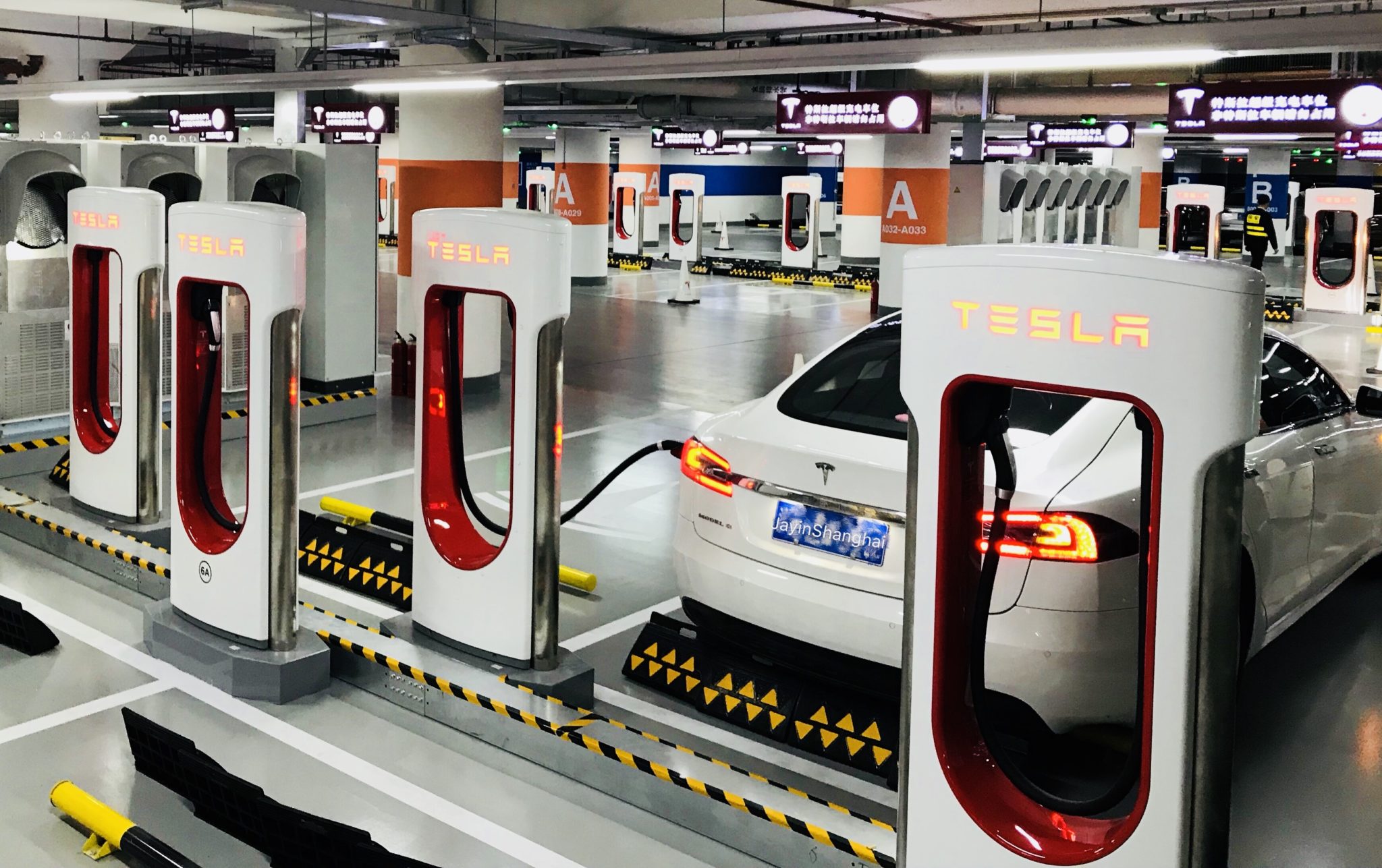
    Electric vehicle-maker Tesla is updating some of its supercharger stations to limit the top state of charge (SoC) to 80 percent at busy stations to reduce wait times. “The limit will be enforced at 8 percent of the stations 24/7, while the rest will be affected by the limitation at peak hours. Tesla says owners that stop by at an affected station will receive a notification,” the Engadget reported on Saturday.

    The EV-maker claimed the new feature, combined with other recent updates to its supercharger network, may cause a 34 percent improvement in throughput at the charging stations.

    “When combined with the recently-released On-Route Battery Warmup feature and V2 supercharger upgrades (to 150 kW), we expect 80 percent SoC limit enforcement to result in a 34 percent improvement in throughput at our busiest supercharging locations — creating a better, more efficient supercharging experience for owners,” the Electric quoted the company as saying.

    Few supercharger stations have been reported to get very busy during holidays, causing long wait times.

  • Tesla Reduces Prices On Model S and X Amid Stock Slump

    Tesla Reduces Prices On Model S and X Amid Stock Slump

    Faced with a slumping stock price and questions about demand for its vehicles, Tesla has lowered the U.S. base prices of its two most expensive models. The company on Monday cut $3,000 from the price of the Model S sedan and $2,000 from the Model X SUV. Tesla said in a statement that it periodically adjusts prices and available options like other car companies. The decreases offset price increases from a month ago when Tesla offered longer battery range and added a new drive system and suspension. The statement didn’t say if slowing sales influenced the decision.

    The Model S now starts at $71,250 while the X starts at $71,950. Both prices don’t include federal and state tax credits.

    The moves come as Tesla’s stock is under pressure and has at times dropped below $200 per share. Several analysts have questioned whether the company can sell enough cars to cover its expenses without dipping into cash reserves.

    Shares traded Tuesday afternoon at $205.62, up slightly from Monday’s closing price. They are down more than 38 percent so far this year, cutting the company’s market value more than $20 billion to $36.5 billion. On Monday the shares hit their lowest point since late 2016.

    Tesla said in a statement that the reductions are about 2% to 3% on the S and X. The company last week raised the price of its top-selling Model 3 by $400, pushing the base price to $35,400. “By any reasonable standard, these small changes are not newsworthy,” the company said in a statement.

    On Monday Wedbush analyst Daniel Ives wrote in a client note that he has concerns about Tesla’s growth prospects and underlying demand for the Model 3 during the coming quarters.

    Ives called Tesla a “code red” situation. “We have continued concerns around Tesla’s ability to balance this ‘perfect storm’ of softer demand and profitability concerns, which will weigh on shares until Musk & Co. prove otherwise in terms of delivering solid results over the coming quarters,” Ives wrote, referring to CEO Elon Musk.

    Palo Alto, California-based Tesla said last month it lost $702.1 million in the first quarter, among its worst quarters in two years. Sales tumbled 31% in the period. Musk predicted another loss in the second quarter but said Tesla would be profitable again by the third quarter.

    In January, the automaker cut its prices by $2,000 per vehicle, acknowledging that the pending expiration of a $7,500 federal tax credit for its electric cars will hurt sales. The credit is gradually being phased out for Tesla by the end of the year.

  • Elon Musk Owes $507 Million To Banks Helping Tesla Raise Capital

    Elon Musk Owes $507 Million To Banks Helping Tesla Raise Capital

    Tesla Chief Executive Elon Musk personally owes $507 million to Wall Street banks involved in Tesla’s stock and debt sale, backed by his stake in the electric car maker, a company filing showed on Thursday.

    The lending was disclosed in Tesla’s prospectus on Thursday to raise up to $2.3 billion with new shares and convertible debt, and it was $117 million less than the personal loans to Musk disclosed in Tesla’s previous prospectus in 2017.

    Still, Tesla said that if the price of its stock falls and the banks force Musk to sell some of his shares, that could create additional pressure on the stock.

    Tesla jumped over 4% after Tesla disclosed capital raising plans, which soothed investors’ recent concerns about the Palo Alto, California company and pulled its stock up from two-year lows.

    Musk, who owns 20% of Tesla, has taken personal loans from Wall Street banks for years. A Tesla 2017 prospectus showed $624 million in loans to Musk.

    The filing on Thursday showed Musk owed money to three banks working on the capital increase.

    Goldman Sachs Group Inc has $213 million in loans outstanding to Musk, while he owes Morgan Stanley $209 million, and another $85 million to Bank of America Corp . Goldman was not mentioned as a personal lender to Musk in the 2017 filing.

    Those loans are backed by Musk’s shares in Tesla, currently worth a total of around $8 billion. If Tesla’s stock declines, then Musk could be forced to sell some of those shares under terms of the loan, according to the Tesla filing.

    Mark Williams, a professor of finance at Boston University, said that investment banks can run into conflicts of interest with their deals with companies, their founders and CEOs, testing their rules to keep different businesses separate.

    “This is particularly true in the case of Tesla where you have an aggressive and vocal CEO who is prone to pushing the legal limits and gain terms that might run counter to Goldman’s conflict of interest policies,” Williams said.

    Goldman and Citigroup Inc, the top-line book runners in Thursday’s capital raise, both have “sell” ratings on Tesla’s stock, which is unusual but not exceptional on Wall Street.

    At the end of 2018, Musk and his trust had 13.4 million Tesla shares pledged as collateral for personal debts, according to another filing. That is down from 13.8 million shares at the end of 2017.

    Tesla, Morgan Stanley and Goldman Sachs declined to talk about the loans. Tesla has a policy that caps executives’ borrowings at a quarter of the value of the shares pledged as collateral.

    With Tesla repeatedly pushing back forecasts for turning a profit, its stock has dropped 27% year to date.

    Musk plans to buy another $10 million worth of shares as part of the sale announced on Thursday.

  • Google Maps adds real-time info for EV charging stations

    Google Maps adds real-time info for EV charging stations

    There are so many reasons to love Google Maps right now, some of which have very little to do with the core functionality of the world’s most popular web mapping service or the numerous handy navigation features borrowed from Waze over the past few months.

    One extremely convenient thing you’ve been able to do since last fall with Google Maps is easily find electric vehicle (EV) charging stations around the world, and now the feature is further improved to save you some hassle and avoid wasting your time. In addition to just showing you nearby charging stations and helping you reach them by taking the fastest route, the wildly successful app can also provide real-time information on the availability of actual charging ports.

    No more waiting in line for “anywhere between minutes to hours”… unless, of course, you don’t mind taking your chance or don’t have much of a choice of EV charging stations in your area. But if you do, Google Maps will display exactly how many ports are actually available at any given time in stations from Chargemaster, EVgo, and SemaConnect networks. Keep in mind that the expanded functionality is only supported in the US and UK at the moment, with Chargepoint slated to join the aforementioned list of partners “soon.”

    As you can imagine, it’s incredibly easy to locate the closest electric vehicle charging station. You simply enter “ev charging” or “ev charging stations” in the app’s search box, which will bring up a list of relevant places from where you can access the number of available ports, their types and charging speeds, as well as other driver-provided info about a specific station, like photos, ratings, reviews, and questions.

    Don’t forget to update Google Maps on your Android handset or iPhone to the latest version published to Google’s Play Store or Apple’s App Store. The new feature should already be live for users of both mobile operating systems.