Tag: tesla

  • Tesla Shares Close Lower After 3-1 Stock Split

    Tesla Shares Close Lower After 3-1 Stock Split

    Tesla’s shares closed 2% lower on Thursday as a three-for-one stock split announced by the world’s most valuable automaker to woo retail investors came into effect.

    The stock opened at $302 and closed at $296.07 as the split allowed investors to get two additional shares for each they owned as of Aug. 17. It had closed at $891.29 before the split on Wednesday.

    This is the second stock split by Tesla in as many years and follows similar moves by high-growth companies such as Amazon.com and Google-parent Alphabet to address the growing need to diversify investor base.

    Stock splits “certainly have a higher appeal to retail investors and makes their options more affordable as well,” said Art Hogan, chief market strategist at B. Riley.

    “Retail investors are a very important cohort for Tesla and today’s stock split is an acknowledgment of that fact.”

    Austin-based Tesla debuted in 2010 at $17 and in a decade surged to a peak price of $2,000, becoming one of the highest priced shares on Wall Street and making it difficult for small investors to bet on the high-growth stock.

    The company decided to split its stock on a five-for-one basis in August 2020 and breached $1 trillion in market capitalization in 2021.

    The EV maker is the sixth company in the S&P 500 index to split its shares this year, according to Howard Silverblatt, senior index analyst for S&P and Dow Jones indices.

    Tesla’s ticker was trending on social media stocktwits.com, indicating increased chatter among individual investors. The shares have lost about 11% of their value since March when the company announced plans to increase its number of shares.

    “In typical buy-the-rumor, sell-the-news style, investors tend to drastically scale back purchases of splitting stocks in the weeks ensuing the effective split date, causing price momentum to slow,” analysts at Vanda Research said in a note.

    A stock split does not affect the fundamentals of a company, but makes it easier for individual investors to do small trades. The benefits of such splits, however, are becoming less clear as brokerages let customers buy parts of a company’s share.

    Tesla’s shares have fallen about 16% so far this year amid a selloff in high-growth stocks due to worries over aggressive interest rate hikes and geopolitical uncertainties.

  • Tesla Braces For Earnings Hit, But EV Delivery Outlook Is Key

    Tesla Braces For Earnings Hit, But EV Delivery Outlook Is Key

    Tesla Inc’s second-quarter results on Wednesday are expected to show the strains of China’s COVID-19 lockdown and protracted startups of new factories. Investors want to know if the end of the year will be much better.

    Tesla has started layoffs, following through on a plan by Chief Executive Elon Musk, who said he had “a super bad feeling about the economy” in June. He also has said Tesla’s new factories in Austin, Texas, and Berlin are “gigantic money furnaces” which are losing billions of dollars.

    Add to that concerns about growing competition from electric vehicle makers and COVID-19 in Shanghai, home of Tesla’s China factory and its suppliers.

    “The expectations are very low for the quarter. The key to this is what they’re going to say going forward because expectations for the second half of this year are very strong for this company,” Curzio Research CEO Frank Curzio said.

    Analysts expect the electric vehicle market leader to report second-quarter revenue of $17.23 billion, an 8% decline from a record high achieved the previous quarter. Analysts also expect an adjusted profit of $1.86 per share, a 42% slump from a quarter ago, according to Refinitiv data.

    Musk in April said Tesla could raise deliveries 60% this year, which would translate into nearly 1.5 million vehicles, although Wedbush analyst Daniel Ives said many analysts expect closer to 1.4 million deliveries and will want to hear whether Musk is still bullish about demand amid recession fears.

    Tesla delivered 564,743 vehicles in the first half. It delivered 17.9% fewer EVs in the second quarter from the previous quarter as China’s COVID 19-related shutdown hit its factory and supply chain.

    Tesla navigated supply-chain challenges better than rivals early in the pandemic, and Deutsche Bank analyst Emmanuel Rosner said high prices and cost-cutting could help Tesla pleasantly surprise investors.

    The price of Tesla’s Model Y long-range version, now $65,990, has risen more than 30% since the start of 2021.

    The production outlook for the second half will depend much on the factory in Shanghai, which has just emerged from a two-month lockdown and is again scrambling to contain a resurgence of COVID-19.

    The competitive landscape is also heating up.

    Volkswagen AG’s CEO, Herbert Diess, sees a strong second half of 2022 and expects progress in catching up with Tesla due to easing chip shortages. Meanwhile, Musk tweeted in June that “Hyundai is doing pretty well,” referring to the South Korean automaker that has been gaining U.S. market share.

    Musk may also need to talk about issues beyond production and demand, including his effort to escape from a deal to buy Twitter Inc. Other issues include progress on Tesla’s plan to achieve full self-driving following the resignation of a high-profile executive, and progress on Tesla’s new batteries needed to boost production at its Texas factory.

    The value of Tesla’s bitcoin holdings has declined and will lead to impairment charges of hundreds of millions of dollars, according analysts’ estimates.

  • Tesla Worker Rejects $15 Million Payout In Race Bias Lawsuit

    Tesla Worker Rejects $15 Million Payout In Race Bias Lawsuit

    A Black former elevator operator at Tesla Inc’s flagship California assembly plant on Tuesday rejected a $15 million award in his lawsuit alleging racial abuse by coworkers, opening the door for a new trial after a judge slashed a $137 million jury verdict. Lawyers for Owen Diaz, who had sued Tesla in 2017, turned down the judge’s award in a brief filing in federal court in San Francisco.

    They said in a statement that the award was unjust and would not deter future misconduct by Tesla. “In rejecting the court’s excessive reduction by asking for a new trial, Mr. Diaz is again asking a jury of his peers to evaluate what Tesla did to him and to provide just compensation for the torrent of racist slurs that was directed at him,” his lawyers said.

    Tesla did not immediately respond to a request for comment.

    U.S. District Judge William Orrick lowered the jury award, which was one of the largest of its kind in a discrimination lawsuit, to $15 million in April. He had also denied Tesla’s motion for a new trial, conditioned on Diaz’s acceptance of the lower award.

    Earlier this month the judge denied Diaz’s motion for permission to appeal that ruling and gave him two weeks to accept the lower award or agree to a new trial.

    Recently, Tesla shareholder filed a lawsuit accusing the company’s chief executive, Elon Musk, and board of directors of neglecting worker complaints and fostering a toxic workplace culture

    Tesla is facing a series of lawsuits involving alleged widespread race discrimination and sexual harassment at its Fremont, California factory, including one by a California civil rights agency.

    Last week, a Tesla shareholder filed a lawsuit accusing the company’s chief executive, Elon Musk, and board of directors of neglecting worker complaints and fostering a toxic workplace culture.

    Tesla has denied wrongdoing and says it has policies in place to prevent and address workplace misconduct.

    Diaz alleged that his colleagues and a supervisor subjected him to a hostile work environment that included slurs, caricatures and swastikas in his nine months working at the Fremont plant in 2015 and 2016.

    A jury had awarded Diaz $6.9 million of compensatory damages and $130 million of punitive damages last October, but Orrick in April said those numbers were excessive.

    Diaz’s lawyers in their statement on Tuesday said Orrick’s decision highlighted systemic bias that federal judges have against juries, which in turn violates the constitutional rights plaintiffs have to a trial by jury.

  • Tesla Sued By Former Employees Over ‘Mass Layoff’

    Tesla Sued By Former Employees Over ‘Mass Layoff’

    Former Tesla Inc employees have filed a lawsuit against the U.S. electric car company alleging its decision to carry out a “mass layoff” violated federal law as the company did not provide advance notice of the job cuts.

    The lawsuit was filed late Sunday in Texas by two workers who said they were terminated from Tesla’s gigafactory plant in Sparks, Nevada in June. According to the suit, more than 500 employees were terminated at the Nevada factory.

    The workers allege the company failed to adhere to federal laws on mass layoffs that require a 60-day notification period under the Worker Adjustment and Retraining Notification Act, according to the lawsuit.

    They are seeking class action status for all former Tesla employees throughout the United States who were laid off in May or June without advance notice.

    “Tesla has simply notified the employees that their terminations would be effective immediately,” the complaint said.

    Tesla, which has not commented on numbers of layoffs, did not immediately respond to requests for comment about the lawsuit.

    Musk, the world’s richest person, said earlier this month he had a “super bad feeling” about the economy and that Tesla needed to cut staff by about 10%.

    More than 20 people identifying themselves as Tesla employees said they were laid off, let go or had positions terminated this month, according to online postings and interviews with Reuters.

    The action filed by John Lynch and Daxton Hartsfield, who were fired on June 10 and June 15 respectively, seeks pay and benefits for the 60-day notification period.

    “It’s pretty shocking that Tesla would just blatantly violate federal labor law by laying off so many workers without providing the required notice,” Shannon Liss-Riordan, an attorney representing the workers told Reuters.

    She said Tesla is offering some employees only one week of severance, adding that she is preparing an emergency motion with a court to try to block Tesla from trying to get releases from employees in exchange for just one week of severance.

    The suit was filed in the U.S. District Court, Western District of Texas.

  • Tesla Sold 32,165 China-Made Vehicles In May

    Tesla Sold 32,165 China-Made Vehicles In May

    U.S. electric vehicle maker Tesla sold 32,165 China-made vehicles in May, including 22,340 for export, the China Passenger Car Association (CPCA) said on Thursday.

    That compares with 1,152 vehicles sold and none exported in April. The Tesla factory halted work for 22 days beginning late March to comply with a city-wide lockdown in Shanghai.

    The plant, which manufactures Model 3s and Model Ys, reopened on April 19 and resumed exports on May 11 but has struggled to get production back to pre-lockdown levels.

    Tesla’s Shanghai factory produced 33,544 vehicles in May, up 212% from April, the association added.

    China’s BYD delivered 114,183 cars in May. Electric vehicle maker Li Auto delivered 11,496 and Xpeng Inc 10,125.

    CPCA also said passenger car sales in May in China had totalled 1.37 million, down 17.3% from a year earlier.

    June sales should be 10% to 20% higher than a year earlier, CPCA secretary general Cui Dongshu told reporters. Demand from earlier months, suppressed by lockdowns that have now eased, would support June sales, Cui said.

    The world’s biggest auto market is recovering from its worst monthly drop since March 2020 after China’s efforts to stamp out COVID-19 outbreaks across multiple cities disrupted supply chains and dampened demand.

  • Tesla Leads In Driver-Assisted Technology Crashes

    Tesla Leads In Driver-Assisted Technology Crashes

    Tesla Inc reported 273 vehicle crashes since July involving advanced driving assistance systems, more than any other automaker, according to data U.S. auto safety regulators released on Wednesday.

    Automakers and tech companies reported more than 500 crashes since June 2021, when the National Highway Traffic Safety Administration (NHTSA) issued an order requiring the information. Two U.S. Senators called for a deeper probe of the “out-of-control industry,” and a U.S. safety board said the data was not standardized so it was hard to evaluate performance of each carmaker’s system.

    Car companies are rushing to add driver assistance systems, saying these improve safety by handling some maneuvers. U.S. regulators are trying to understand the practical effect of the changes. But automakers collect and report data in different ways, making it difficult to evaluate systems performance.

    Democratic Senators Ed Markey and Richard Blumenthal told NHTSA in a letter that “publicizing the data alone is not enough. We urge NHTSA to … shed needed light on this out-of-control industry and impose guardrails to prevent more deadly crashes.”

    The current report contains “a ‘fruit bowl’ of data with a lot of caveats, making it difficult” to understand, National Transportation Safety Board (NTSB) Chair Jennifer Homendy said in a statement. “Tesla collects a huge amount of high-quality data, which may mean they’re overrepresented in NHTSA’s release.”

    Tesla’s advanced driver assistant software dubbed “Full Self Driving” has also created confusion about vehicle capabilities.

    The senators raised alarm about the high number of Tesla crashes. “We worry that some drivers today are using the technology as a convenience feature and are placing themselves and other road users in danger,” Markey and Blumenthal wrote.

    NHTSA ordered companies to quickly report all crashes involving advanced driver assistance systems (ADAS) and vehicles equipped with automated driving systems being tested on public roads.

    Of the 392 such crashes reported by a dozen automakers since July, six deaths were reported and five serious injuries. Honda Motor identified 90 crashes.

    Companies also reported 130 crashes involving prototype automated driving systems, while 108 involved no injuries and one was a serious injury crash.

    NHTSA said Alphabet Inc’s self-driving car unit Waymo reported 62 crashes involving automated driving systems, while General Motors’ Cruise had 23.

    Waymo said its crashes were not high severity and one-third were in manual mode. Airbags deployed in only two crashes.

    Cruise said it “has logged millions of miles in one of the most complex urban driving environments because saving lives is our chief aim.”

    The NTSB reiterated a five-year-old recommendation that NHTSA require automakers to provide standardized crash and usage data. It made the recommendation after the a 2016 crash killed a Tesla driver using the company’s Autopilot system, which the company website says “enables your car to steer, accelerate and brake automatically within its lane” but still requires the driver’s attention.

    NHTSA said the first batch of data has already been used to trigger investigations and recalls and helped inform existing defect probes.

    The data “will help our investigators quickly identify potential defect trends,” NHTSA Administrator Steven Cliff said, cautioning the raw number of incidents reported per manufacturer “is by itself inadequate to draw conclusions.”

    The agency emphasized crashes are tracked by individual automakers in different ways and discouraged comparisons in part because there are no comprehensive metrics on how widely each system is used.

    Tesla did not respond to requests for comment.

    Honda told Reuters it had found no defects in the systems and its crash reports were based on unverified customer statements “to comply with NHTSA’s 24-hour reporting deadline.”

    No other automaker reported more than 10 ADAS crashes during the period.

    Despite the limitations, NHTSA said the data was essential to quickly spot potential defects or safety trends. Incidents that occur when an advanced system was engaged within 30 seconds of a crash must be reported within 24 hours to NHTSA.

    The agency plans to release new data monthly.

    NHTSA has been scrutinizing Autopilot and said last week it was upgrading its probe into 830,000 Tesla vehicles with the system, a required step before it could seek a recall. The regulator had opened a preliminary evaluation to assess the performance of Autopilot after about a dozen crashes in which Tesla vehicles struck stopped emergency vehicles.

    Separately, NHTSA has opened 35 special crash investigations involving Tesla vehicles in which ADAS was suspected of being used. A total of 14 crash deaths have been reported in those Tesla investigations, including a May California crash that killed three people.

  • U.S. Agency Asks Tesla For Information On Canadian Fire Incident

    U.S. Agency Asks Tesla For Information On Canadian Fire Incident

    The National Highway Traffic Safety Administration said on Thursday it has asked Tesla Inc for information about a recent 2021 Tesla Model Y fire in Vancouver, British Columbia, in which a driver reported struggling to exit.

    The NHTSA told Reuters the agency “is aware of the incident and has reached out to the manufacturer for information.”

    Electrek posted a video of the incident in which the owner said he received an error notification and then saw smoke. The driver said that to get out he “had to smash the window. … I kicked through the window because everything stops. The power didn’t work. The door didn’t open. The windows didn’t go down.”

  • Tesla Delays Deliveries Of Long-Range Models In U.S.

    Tesla Delays Deliveries Of Long-Range Models In U.S.

    Tesla Inc is delaying U.S. deliveries of certain long-range models by up to a month, its website showed on Wednesday, as the electric-car maker tries to steer itself through supply-chain issues and disruptions in China operations.

    New orders for Model Y will be delivered between December and March, Model 3 between September and December, and Model X between February and May next year, according to the updated dates on the company’s website.

    It is likely that delays in production and shipment of components are slowing things down for Tesla, analysts have said.
  • Elon Musk Says Tesla AI Day Pushed To September 30

    Elon Musk Says Tesla AI Day Pushed To September 30

    “Tesla AI Day pushed to Sept 30, as we may have an Optimus prototype working by then,” he wrote on Twitter, almost two weeks after he announced the date of Aug. 19.

    Optimus is a humanoid robot that Tesla is working on priority. Musk has previously said that it could be launched next year.

    “Optimus could eventually address global shortages of labor, and in the short term might be able to carry items around a factory,” Musk had said in January.

    This is Tesla’s second AI (artifical intelligence) Day, the first happened on Aug. 19, 2021.

    Musk, in one of his tweets in May, also said that the purpose of the AI day is to convince great AI/software/chip talent to join Tesla.

  • Tesla Could Adopt Apple’s AirPlay To Improve In-Car Audio

    Tesla Could Adopt Apple’s AirPlay To Improve In-Car Audio

    Tesla has often bashed Apple with Elon Musk claiming that the Cupertino-based tech giant is a graveyard of ex-Tesla engineers. Tesla has also famously not adopted Apple’s phone streaming technology called CarPlay, but Elon Musk could be warming up to the idea of Apple’s Airplay audio streaming technology which works over Wi-Fi for gadgets like the Apple TV and HomePod.

    Tesla’s audio system has often been well received by car enthusiasts and reviewers alike. Musk himself has claimed that many of the audio engineers at the company come from the iconic Danish audio company Bang & Olufsen (B&O) and said that sound systems have been engineered in such a way that they cost a fraction of what an actual B&O system would cost.

    When a Twitter user asked the world’s wealthiest human if Tesla would consider adopting Apple’s AirPlay protocol which streams audio via Wi-Fi rather than Bluetooth opening avenues for high-resolution audio as the protocol has more bandwidth, Musk seemed open to the idea.

    “Tesla audio engineers come from B&O & many other companies. They literally rock. Our system is highly programmable, so we keep improving it via OTA codec updates,” he said.

    “Will discuss this and other improvements with Tesla audio engineering. The new Model S and X sound system is incredible,” he added.

    Apple only recently opened up AirPlay for third party devices as now it doesn’t only have Apple Music as an audio streaming service, but it has a video service called Apple TV+ which works on Android TVs by brands like Samsung and Sony.

    Tesla was also rumoured to be building a native app for Apple Music in 2021 but that never surfaced. Automakers have been often cagey about adopting platforms by tech majors as they feel the data they will share will eventually enable those majors to enter the auto industry as a rival as cars become more like computers with the advent of electrification, autonomy and connected car trends.

  • U.S. Agency Asks Tesla For Information On Canadian Fire Incident

    U.S. Agency Asks Tesla For Information On Canadian Fire Incident

    The National Highway Traffic Safety Administration said on Thursday it has asked Tesla for information about a recent 2021 Tesla Model Y fire in Vancouver, British Columbia, in which a driver reported struggling to exit.

    The NHTSA told Reuters the agency “is aware of the incident and has reached out to the manufacturer for information.”

    Electrek posted a video of the incident in which the owner said he received an error notification and then saw smoke. The driver said that to get out he “had to smash the window. … I kicked through the window because everything stops. The power didn’t work. The door didn’t open. The windows didn’t go down.”

    Tesla did not immediately respond to a request for comment.
  • Tesla Cut From S&P 500 ESG Index, And Elon Musk Tweets His Fury

    Tesla Cut From S&P 500 ESG Index, And Elon Musk Tweets His Fury

    An S&P Dow Jones Indices executive told Reuters on Wednesday it has removed electric carmaker Tesla Inc from the widely followed S&P 500 ESG Index because of issues including claims of racial discrimination and crashes linked to its autopilot vehicles, and Tesla CEO Elon Musk responded with harsh tweets including that “ESG is a scam”.

    In it changes, effective May 2, the sustainability index also added soon-to-be-Musk-controlled Twitter Inc and oil refiner Phillips 66 while dropping Delta Air Lines and Chevron Corp, according to an announcement.

    The back-and-forth over the index changes reflects a wider debate about the metrics used to judge corporate performance on environmental, social and governance (ESG) issues, a growing area of investing.

    Tesla has become the most valuable auto industry company by pioneering EVs and expanding into battery storage for electric grids and solar-power systems.

    Factors contributing to its departure from the index included Tesla’s lack of published details related to its low carbon strategy or business conduct codes, said Margaret Dorn, S&P Dow Jones Indices’ head of ESG indices for North America, in an interview.

    Even though Tesla’s products help cut planet-warming emissions, Dorn said, its other issues and lack of disclosures relative to industry peers should raise concerns for investors looking to judge the company across environmental, social and governance (ESG) criteria.

    “You can’t just take a company’s mission statement at face value, you have to look at their practices across all those key dimensions,” she said.

    Tesla representatives did not immediately respond to questions. The company has previously called ESG methodologies “fundamentally flawed.”

    Musk tweeted that “Exxon is rated top ten best in world for the environment, social & governance (ESG) by S&P 500, while Tesla didn’t make the list! ESG is a scam. It has been weaponized by phony social justice warriors.”

    Asked about the tweet, a representative for the index provider said Musk may have been referring to a list on a company blog post of the largest 10 constituents by market cap of the S&P 500 ESG Index after the removal of Tesla and others. The list is “not a ranking of best companies by ESG score,” the representative said.

    GROWING CONCERNS

    Investors concerned about issues like diversity and climate change have poured billions of dollars into funds using ESG criteria to pick stocks, prompting debate about how effectively the funds promote change or whether they push companies too much on issues that should be settled by government policy.

    S&P Dow Jones Indices is majority-owned by S&P Global Inc. Musk and others have complained the firm and its rivals conflate too many issues by bundling ESG concerns into one total score.

    For instance a fund based on the S&P 500 ESG Index, the SPDR S&P 500 ESG ETF, received the low rating “D” by climate activist research group As You Sow, which noted despite its title and sustainability mandate, fossil fuel stocks make up 6.5% of fund assets.

    In the company blog post reviewing changes from April 22, S&P’s Dorn said the index aims to keep industries weighted the same as they are in the regular S&P 500 index “while enhancing the overall sustainability profile of the index.” In practice that means it can keep oil companies while leaving out big players like Facebook parent Meta Platforms and Wells Fargo & Co.

    Dorn said Tesla’s ESG score had declined slightly from the “22” it received last year. At the same time the average score among other automakers improved, pushing Tesla out of the ESG index because of a rule against including lowest-quartile performers.

    Dorn and others did not immediately describe other details such as the reasons Twitter or Phillips 66 were added or other companies dropped.

    Among other big ESG ratings agencies, MSCI Inc gives Tesla an “average” ESG rating, while the Sustainalytics unit of Morningstar Inc gives Tesla a “medium risk” rating, according to the firms’ websites.

    On Wednesday a U.S. safety regulator opened a special crash investigation into a Tesla crash this month in California, among more than 30 crashes under investigation involving advanced driver assistance systems.

    In February, a California state agency sued Tesla over allegations by Black workers that the company tolerated racial discrimination at an assembly plant, adding to claims made in several other lawsuits.

  • Tesla To Host Second Artificial Intelligence Day In August

    Tesla To Host Second Artificial Intelligence Day In August

    Tesla Inc top boss Elon Musk said on Tuesday the electric-car maker will host its second artificial intelligence day on Aug. 19, with the company likely to expand on plans to fine-tune its self-driving technology.

    “The purpose of AI Day is to convince great AI/software/chip talent to join Tesla,” the billionaire said in a tweet.

    The use of AI in self-driven cars has stirred up debate around safety issues, but Musk has often contended that such vehicles are far safer than those driven by humans.

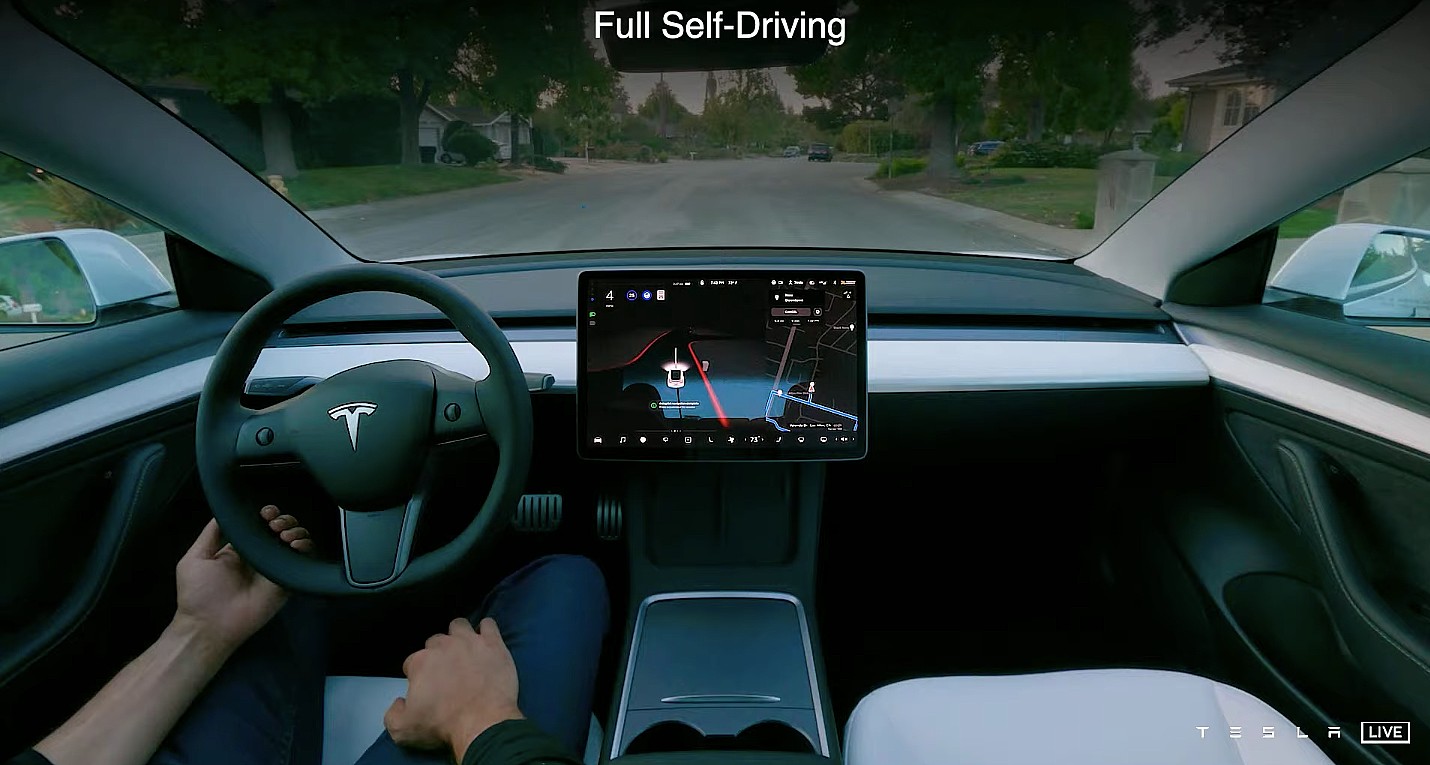
    Tesla is developing software for its cars to drive without human intervention or oversight, but its full self-driving (FSD) system currently requires human monitoring and is not intended to work without a driver behind the wheel.

    The company held its first AI day in August last year and a Battery Day in September 2020, where it talked about the future of battery technology.

    “Tesla AI Day #2 on Aug 19. So many cool updates!,” Musk said in a tweet.

    Investors and analysts closely watch tech-focused events where companies dive deeper into their projects and usually provide concrete updates on targets and timelines of rollouts.

  • Tesla Halts Production At Shanghai Plant Due To Supply Issues – Report

    Tesla Halts Production At Shanghai Plant Due To Supply Issues – Report

    Tesla Inc halted production at its Shanghai plant on Monday due to issues with securing parts for its electric vehicles, two people familiar with the matter said, the latest in a series of difficulties for the factory.

    Shanghai is in its sixth week of an intensifying COVID-19 lockdown that has tested the ability of manufacturers to operate amid hard restrictions on the movement of people and materials.

    Tesla had planned as late as last week to increase output to pre-lockdown levels by next week.

    It was not immediately clear when the current supply issues can be resolved and when Tesla would be able to resume production, said the people, who asked not to be identified because the production plans are private.

    Tesla did not immediately respond to a query for comment.

    China Passenger Car Association is scheduled to release April sales for Tesla, China’s second-largest EV maker behind BYD, on Tuesday.

    Another auto association said last week it estimated overall auto sales in China dropped 48% in April as zero-COVID lockdowns shut factories, limited traffic to showrooms and put the brakes on spending.

    Aptiv, Tesla’s main supplier of wire harnesses, stopped shipping from a Shanghai plant that supplies Tesla and General Motors Co after COVID-19 infections were found among its workers, two people familiar with the matter told Reuters on Monday.

    Tesla’s Shanghai plant, also known as the Gigafactory 3, produces the Model 3 sedan and Model Y crossover for the China market and for export.

    Tesla partially resumed production at the Shanghai plant on April 19 following a 22-day closure caused by the city’s COVID-19 lockdown.

    Tesla had been aiming to increase output at its Shanghai plant to 2,600 cars a day from May 16, Reuters reported previously.

    Shanghai authorities have tightened a city-wide lockdown imposed more than a month ago on the commercial hub with a population of 25 million, a move that could extend curbs on movement through the month.

  • Elon Musk Weighs in on Active Investing

    Elon Musk Weighs in on Active Investing

    The Tesla CEO is using his newly acquired toy, Twitter, to criticize passive investing.

    Elon Musk joined a conversation on Twitter, which he recently acquired for $44 billion, initiated by venture capitalist Maro Andreessen. On the thread, the latter posited that firms like BlackRock have too much influence over companies given their outsized holdings in passive funds tracking indexes, on Thursday.

    Passive investing has «gone too far», Musk said on the Twitter thread, where he was joined by Ark Investment Management founder Cathie Wood. Those investing in index funds that tracked the S&P 500, for example, would have missed out on the big gains in Tesla before it was included as a component of the index, Wood said.

    Wood made the point that history will deem the accelerated shift toward passive funds during the last 20 years as a massive misallocation of capital.

    Those supporting index funds, however, say that active funds charge high fees and often fail to beat indexes against which they are benchmarked. For their part, the active managers highlight their role in creating efficient markets and their potential to harness higher gains.