Tag: tesla

  • Tesla Q3 2021 Results Out; Meets Expectations After Sublime Quarter

    Tesla Q3 2021 Results Out; Meets Expectations After Sublime Quarter

    Tesla has delivered the goods in its Q3 2021 earning report with it reporting revenues of $13.76 billion which is slightly below the lofty expectations of the analysts at Wall Street which expected revenues of $14 billion.

    “The third quarter of 2021 was a record quarter in many respects. We achieved our best-ever net income, operating profit, and gross profit. Additionally, we reached an operating margin of 14.6%, exceeding our medium-term guidance of “operating margin in low-teens,” said the electric car maker in its announcement.

    Notably, Tesla’s automotive gross margins improved by 30 percent in this quarter despite cost pressure from the supply chain as the world continues to suffer from a global semiconductor crisis. Tesla’s engineers were swift to rewrite code for new parts which helped the company navigate the crisis well.

    But despite these improving margins, Tesla’s cash in hand actually went down due to debt repayment.

    “Quarter-end cash and cash equivalents decreased to $16.1B in Q3, driven mainly by net debt and finance lease repayments of $1.5B, partially offset by the free cash flow of $1.3B. Our total debt excluding vehicle and energy product financing has fallen to just $2.1B at the end of Q3,” said the company in its shareholder letter.

    This quarter Tesla has started sales of the Model S Plaid which has been a success, apart from it opening its Berlin Gigafactory which has started rolling out Tesla Model Y units. Earlier in the year, the Model 3 became the best-selling executive sedan in the world, but Tesla estimates, the Model Y will overtake its sales at some point.

  • Tesla Vehicle Deliveries Hit Another Record In Q3

    Tesla Vehicle Deliveries Hit Another Record In Q3

    Tesla Inc said on Saturday it had delivered a record electric cars in the third quarter, beating Wall Street estimates after Chief Executive Elon Musk asked staff to “go super hardcore” to make a quarter-end delivery push.

    Tesla has weathered the chip crisis better than rivals, with its overall deliveries surging 20% in the July to September period from its previous record in the second quarter, marking the sixth consecutive quarter-on-quarter gains.

    In China, rising exports to Europe and the introduction of a cheaper Model Y helped boost Tesla’s production, analysts said.

    Musk said Tesla suffered an extremely severe parts shortage earlier in the third quarter and had urged employees to make quarter-end delivery push, Reuters reported last month, citing an internal company email.

    “The end-of-quarter delivery wave is unusually high this time,” he said in the email.

    Tesla delivered 241,300 vehicles globally in the July to September quarter, up 73% from a year earlier. Analysts had expected the electric-car maker to deliver 229,242 vehicles, according to Refinitiv data.

    General Motors, Honda and some of its bigger rivals posted declines in U.S. sales in the third quarter, hit by a prolonged chip shortage. GM’s third-quarter U.S. sales fell nearly 33% to its lowest level in more than a decade.

    Tesla said it delivered 232,025 of its Model 3 compact cars and Model Y sport-utility vehicles and 9,275 of its flagship Model S and Model X cars to customers in the quarter.

    Total production in the third quarter rose over 15% to 237,823 vehicles from the prior quarter.

    Gary Black, portfolio manager at the Future Fund and a Tesla bull, said that Tesla’s deliveries were driven by record deliveries in China, which was “putting to rest any notion China demand is slowing.”

    Tesla faces scrutiny from both regulators and the public and growing competition from local rivals.

    Tesla has not released its September China sales yet, and in August, its Shanghai factory exported more than two thirds of its vehicles to Europe and Asian countries.

  • Tesla Shanghai’s Jan-Sept 2021 Production To Reach 300,000 Units Despite Chip Shortage

    Tesla Shanghai’s Jan-Sept 2021 Production To Reach 300,000 Units Despite Chip Shortage

    Tesla’s Shanghai factory is expected to produce 300,000 cars in the first nine months of the year, capped by a delivery rush in the end of the July-September quarter, despite a global semiconductor shortage, two sources said. The factory makes the electric Model 3 sedans and Model Y sport-utility vehicles for domestic and international markets, including Germany and Japan.

    Around 240,000 vehicles were shipped from the factory in the first eight months, including many for export, according to data from the China Passenger Car Association. Tesla has not announced details on the factory’s production.An official in the area where Tesla’s factory is located said it is expected to produce 450,000 vehicles this year, including 66,100 for export.

    The sources requested anonymity, as they were not allowed to speak to media. Tesla did not immediately respond to a request for comment.

    In August, an official in the area where Tesla’s factory is located said it is expected to produce 450,000 vehicles this year, including 66,100 for export.

    Tesla is hiring managers for legal and external relations teams in China as it faces public scrutiny in the country over data security and customer service complaints.

  • Tesla Rolls Out FSD Beta V10 To Early Access Fleet

    Tesla Rolls Out FSD Beta V10 To Early Access Fleet

    Predictably, and for once on time, Tesla has rolled out the v10 of the full self-driving beta software which Elon Musk described as mind-blowing just a few weeks ago. Perhaps, as most have noticed, the most mind-blowing thing is that Tesla and Musk delivered.

    The software enables the self-driving capability for Tesla’s EVs that have the full self-driving package, but this capability is still adorned with astrix of level 2 autonomous capability, not level 4 which is the bare minimum number for self-driving cars that can operate in a hands-free manner.

    Elon Musk had indicated earlier that the full self-driving software will be deployed soon when it hits v10 which now it has at least for the early access fleet, but soon if it is bug-ridden, it could be deployed to a wider audience. Many users have started reporting that they have received the update and posted screenshots of the same on Twitter.

    One of the more notable changes is that the driver visualizations have been updated with a more modern and minimal look. Elon Musk has promised that it could be there for many other users by the end of the month with a download button in the offing but Musk has flattered to deceive not once but on numerous occasions.

    Tesla announced earlier in the year that will stop using radars on its cars and will have a vision-based self-driving system that will use algorithms trained on its Dojo supercomputer which are processed on the device on the FSD computer on the vehicle itself. This has led some authorities to downgrade the safety rating of Tesla vehicles.

  • German Decision On Tesla Subsidies Expected By End Of Year

    German Decision On Tesla Subsidies Expected By End Of Year

    Germany will probably decide by the end of the year how much state aid U.S. electric vehicle maker Tesla will receive for its planned battery cell factory near Berlin, an economy ministry spokesperson said on Sunday. The European Union in January approved a plan that includes giving state aid to Tesla, BMW and others to support the production of electric vehicle batteries and help the bloc to reduce imports from industry leader China.

    The EU’s approval of the 2.9 billion euro ($3.45 billion) European Battery Innovation project, which includes more than 40 companies, follows the launch in 2017 of the European Battery Alliance to support the industry during the shift away from fossil fuels.

    The European Union in January approved a plan that includes giving state aid to Tesla, BMW and others to support the production of electric vehicle batteries.

    Tesla plans to invest 5 billion euros in its battery cell factory at Gruenheide near Berlin to complement its nearly finished electric car factory at the same location, according to estimates from the German economy ministry.

    The unusually high investment volume means that the U.S. car manufacturer can count on German state subsidies of 1.14 billion euros, Tagesspiegel newspaper reported on Sunday.

    This chimes with a February report by Business Insider, which said Tesla stands to receive at least 1 billion euros in public funding from Germany for setting up its battery cell factory near Berlin.

    The economy ministry spokesperson said there was no final sum yet because talks with the carmaker and the European Commission are ongoing, adding that a final decision is likely before the end of the year.

    Tesla Chief Executive Elon Musk last month said he hoped the first cars at its planned gigafactory in Gruenheide could be built in October or soon afterward.

    Tesla CEO Elon Musk last month said he hoped the first cars at its planned gigafactory in Gruenheide could be built in October or soon afterward.

    Tesla has pushed back the expected opening of the gigafactory to late 2021, blaming German bureaucratic hurdles. The plant has also faced local resistance because of environmental concerns.

    Economy Minister Peter Altmaer last Thursday said that carmaker Opel will receive a 437 million euro government grant for its battery cell factory in Kaiserslautern as part of the wider European initiative to create a homegrown battery industry.

  • Tesla’s China Output Was Halted For Days In August Due To Chip Shortage

    Tesla’s China Output Was Halted For Days In August Due To Chip Shortage

    Tesla temporarily halted some operations at its Shanghai factory last month as the global shortage of semiconductors hit the electric car maker, Bloomberg News reported on Thursday, citing people familiar with the matter.

    Part of a production line at the China plant was halted for about four days in August because of a lack of key chips, the report said.

    Shortages with the availability of electronic control units caused output delays mainly for Tesla’s Model Y sports utility vehicle crossover, according to the report.

    Production at the Chinese factory is now back to normal.

    Tesla did not immediately respond to a query on the report.

    Last month, world’s largest automaker Toyota Motor Corp said it would slash global production for September by 40% from its previous plan following car makers worldwide in cutting production due to the months-long chip shortage.

  • Tesla Updates Mobile App With New User Interface & Features

    Tesla Updates Mobile App With New User Interface & Features

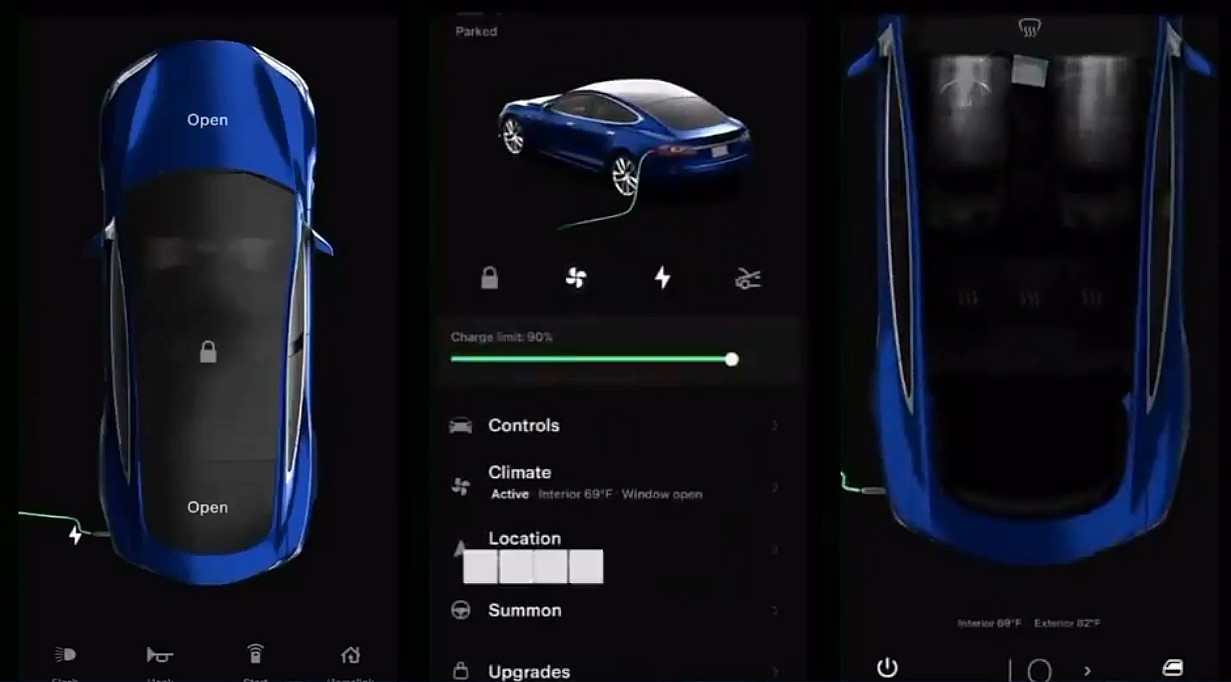
    Tesla has released version 4 of its mobile app which receives a massive overhaul of the user interface and adds a ton of new features. Users can unlock their vehicles using the app and remotely also manage the climate control system of the car apart from many other connected car functions. Version 4 is clearly the most comprehensive update to the app.

    Via the app users can also access the after-sales experience and book the car for servicing and repairs. It also lets users know the charge levels of the car remotely which is quite critical.

    Here are the new features that Tesla lists in its official release notes:

    — Refreshed vehicle and energy homepage
    — Streamlined Summon experience
    — Enhanced phone key support – vehicle no longer needs to be selected
    — Send commands to vehicle immediately upon opening app
    — Use Go Off-Grid to seamlessly disconnect your home from the Grid with Powerwall
    — Shop the Tesla catalog and view and manage your orders (available in select countries)
    — View Supercharging history and ability to pay outstanding Supercharging or service balance (available in select countries)

    Tesla is one of the first automotive companies to push over the air updates and has its own app.

    Tesla has also added support for widgets on iOS which was introduced in iOS 14 last year. Tesla has also added the supercharger billing experience in the app which comes at a time when the manufacturer is opening up the network to third-party vehicles.

    This update comes at a time when Elon Musk has said that it is close to rolling out its full self-driving software to users who opted for the package. Musk estimates after the release of the next beta, in 4 weeks the software update should be rolled out to users.

  • Tesla Plans To Deploy FSD Software To Public In Four Weeks

    Tesla Plans To Deploy FSD Software To Public In Four Weeks

    Tesla has said that it plans of releasing the final version of its full self-driving software to the public in a month’s time. As of now it is still in a beta stage being tested by internal Tesla employees and members of the beta program. This program has been ongoing for almost a year now. This software is different from AutoPilot as it allows the car to drive by itself using computer vision on highways and city streets. This, however, is still considered to be level 2 autonomous system.

    Recently, Tesla’s CEO revealed that the current beta build of the FSD software 9.2 isn’t great but he has noticed great improvements in the 9.3 software which is he already using. Elon Musk had stated that the program will come out of beta once it hits version 10. The FSD software has been promised to users who have opted for the FSD package. This release has been in limbo for a while.

    Now, Musk has announced plans to accelerate the release stating that v10 of the software will be pushed to early access members in a beta stage next week. Musk expects testing for the v10 build to last 4 weeks before a wider release.

    “We should be there with Beta 10, which goes out a week from Friday (no point release this week). It will have a completely retrained NN, so will need another few weeks after that for tuning & bug fixes. Best guess is a public beta button in less than 4 weeks,” he said.

    This release is going to be an over-the-air update for the folks who have purchased the FSD package and will be downloadable by a push of a button. Tesla has moved to a full vision-based system for its autonomous technology using cameras on its cars that ping back some data to its Dojo supercomputer which trains algorithms using a neural network. Tesla’s process the information based on these algorithms in real-time using a the FSD chip that’s present on many of its vehicles.

    Tesla will deploy the next generation of its FSD hardware next year with a new chip and camera system that Musk says will debut with the Cybertruck.

  • India Considers Sharp Import Tax Cuts On EVs After Tesla Lobbying

    India Considers Sharp Import Tax Cuts On EVs After Tesla Lobbying

    India is considering slashing import duties on electric cars to as low as 40%, two senior government officials told Reuters, days after Tesla Inc’s appeals for a cut polarised the country’s auto industry. For imported electric vehicles (EVs) with a value of less than $40,000 – including the car’s cost, insurance and freight – the government is discussing slashing the tax rate to 40% from 60% presently, the officials told Reuters. For EVs valued at more than $40,000, it is looking at cutting the rate to 60% from 100%, they said.

    “We haven’t firmed up the reduction in duties yet, but there are discussions that are ongoing,” one of the officials said. India is the world’s fifth-largest car market with annual sales of about 3 million vehicles but the majority of cars sold are priced below $20,000. EVs make up a fraction of the total and luxury EV sales are negligible, according to industry estimates.

    Tesla, in its pitch to the government – first reported by Reuters in July, argued that lowering import duties on EVs to 40% would make them more affordable and boost sales. This triggered a rare public debate among automakers over whether such a move would contradict India’s push to increase domestic manufacturing. Even so, the government is in favour of a cut if it can see companies such as Tesla providing some benefit to the domestic economy – manufacture locally, for example, or give a firm timeline on when it would be able to, one of the officials said. “Reducing import duties is not a problem as not many EVs are imported in the country. But we need some economic gain out of that. We also have to balance the concerns of the domestic players,” the official said.

    Tesla CEO Elon Musk said on Twitter last month that a local factory in India was “quite likely” if the company was successful with vehicle imports but taxes on them are high. The second official said that since the duty cut is being considered only for EVs and not other categories of imported cars, it should not be a concern for domestic automakers – that mainly manufacture affordable gasoline-powered cars.

    India’s finance and commerce ministries, as well as its federal think tank Niti Aayog, chaired by Prime Minister Narendra Modi, are discussing the proposal and all stakeholders will be consulted, the person added. Both sources did not want to be identified as the discussions are still private. India’s commerce and finance ministries as well as Niti Aayog did not immediately provide comment.

    Automakers including Daimler’s Mercedes-Benz and Audi have for years lobbied for lower import duties on luxury cars but faced strong resistance mainly from domestic companies. As a result, India’s luxury car market has remained small with average sales of around 35,000 vehicles a year.

    Tesla’s demands have found support from Mercedes as well as South Korean automaker Hyundai Motor, which has around an 18% share of India’s car market.

    Tesla’s cars would fall into the high-end EV category, which are mainly imported into India and account for a much smaller percentage of sales. Mercedes, Jaguar Land Rover and Audi sell imported luxury EVs in the country.

    This time Tesla’s demands have found support from Mercedes as well as South Korean automaker Hyundai Motor, which has around an 18% share of India’s car market.

    Opposing the proposed cut are Tata Motors, which produces affordable electric cars in the country, and Softbank Group-backed Ola, which is making electric scooters in India.

    A third source familiar with the government’s thinking said there was awareness that a brand such as Tesla can make electric cars more penetrable in India, which is lagging other major auto markets in EV sales.

    The government is thinking about the best way to approach this and they want to see some benefit even if that only means Tesla pledges to source parts domestically, the person said.
  • Tesla AutoPilot Stops Car After Driver Passes Out At The Wheel

    Tesla AutoPilot Stops Car After Driver Passes Out At The Wheel

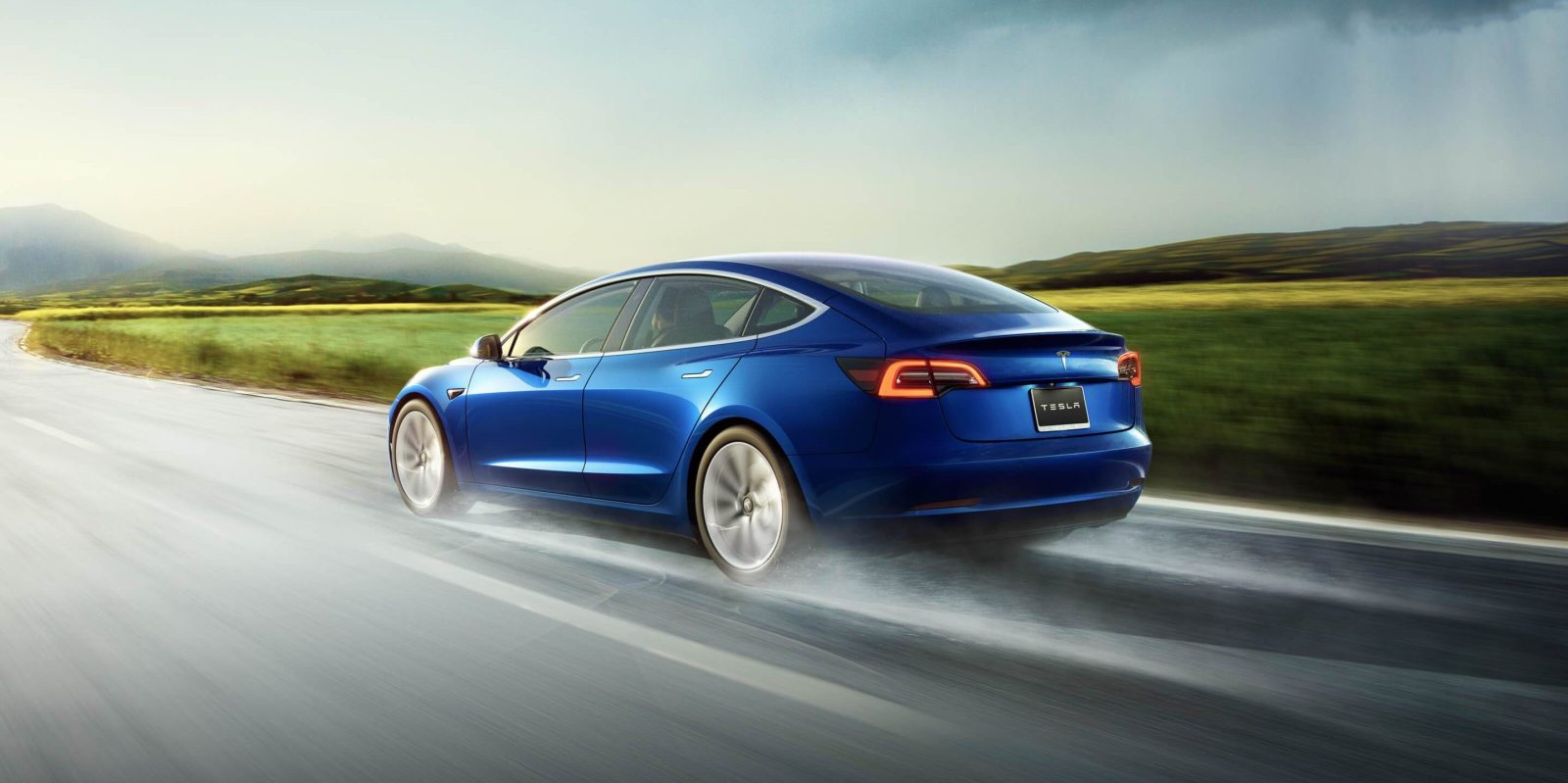
    Tesla has been talking about its AutoPilot level 2 autonomous driving technology for years. It is also transitioning to Tesla Vision which will just use cameras and its computer vision algorithms. Now, its driver-assist system has done it again – this time around stopped the car after a drunk driver in Norway passed out on the wheel. The incident happened on July 30. Many motorists passed the Tesla Model S which was on the road when the driver was unconscious on the wheel. The car was followed and filmed while he had his head down for over a minute before AutoPilot kicked in and stopped the car itself. Many motorists stopped by the car who tried to wake up the driver but he was still unconscious.

    Then the police came to the scene and found that the 24-year-old driver was unconscious because he was drunk. The police also revealed that the driver denied driving.

    “At 0540; a Tesla stops in the tunnel. It turns out to be a man 24 years old who has fallen asleep behind the wheel. He is also drunk but stubbornly denies driving. Although there is a video of him from the car … Necessary samples have been taken,” the police said in a statement. Many times before drunk drivers have used AutoPilot as an excuse to avoid drunken driving charges by claiming the system was driving the car not them. Tesla needs the driver’s hands to be on the steering wheel to make sure they are conscious of the wheel.

    It has also cameras inside the car to make sure that the driver is paying attention to the road. It also sends out alerts to the driver and if the vehicle detects torque isn’t being applied to the wheel – but when alerts are repeatedly ignored it slows down the car makes it stop at the side of the road.

  • Tesla Hikes Electric Car Prices In U.S.

    Tesla Hikes Electric Car Prices In U.S.

    Tesla Inc showed signs of divergent strategies in the world’s two biggest automotive markets, raising prices to boost profit margins in the United States while keeping prices steady in China and hoping to grow sales there. Tesla raised prices for the most affordable versions of Model 3 and Model Y about a dozen times this year in the United States, according to data tracked by Reuters. At the same time, Tesla recently introduced an affordable Model Y version in China, where it refrained from price hikes. Tesla posted record vehicle deliveries in the second quarter, and the price increases in North America boosted quarterly profits to a record.

    But in China, the world’s biggest electric vehicle (EV) market, Tesla faces competition from local rivals and problems that include product recalls, high-profile protests by consumers and pressure from regulators. Bernstein analyst Toni Sacconaghi said introduction of the lower-priced Model Y in China “may make sustained margin improvement difficult” for Tesla and raises questions about “the health of Chinese demand.” A study by Bernstein analysts found Tesla owners in China were less enthusiastic and had lower repurchase intentions than owners in the United States and Europe.

    Tesla raised prices for Model Y Long Range at least six times in the United States this year, bumping by $5,500 to $53,990. In China, the world’s most valuable carmaker raised prices of the Model Y SUV and Model 3 sedan only once this year. The Model Y version has a price tag of 276,000 yuan ($42,394). The company also has launched promotional campaigns in China such as loan offers.

    “I think Tesla is looking to be as competitive as it can be in China. Lower prices will be a part of that aggressive market positioning,” Roth Capital Partners analyst Craig Irwin said. “There is a very large difference in battery prices in the U.S. and China, as well as local vehicle manufacturing costs.”

    Tesla started production at its Shanghai factory in late 2019. It has boosted sourcing of cheaper local components, including batteries from China’s CATL and LG’s Chinese factory. “It wasn’t so long ago that the group was trimming prices in the U.S. to gain scale and maximize profitability, and it feels like we’re now seeing that in China too,” Hargreaves Lansdown analyst Nicholas Hyett said. The low cost of producing local EVs in China would have a lasting effect for Tesla, said Gene Munster at Loup Ventures.

    “Teslas are on average 3x the cost of a typical EV made in China so they have to be priced less than the U.S. to compete,” Munster said. “Prices of Teslas in China will be below (the) rest of the world for the next decade.” Tesla also cut costs and boosted margins in the U.S. market by getting rid of some parts like a radar sensor and lumbar support. Tesla shares closed up 0.3% on Wednesday after falling the previous session.

    In China, Tesla’s share slipped to 11% in the battery electric vehicle market, which excludes plug-in hybrid cars, in the second quarter from 18% a year earlier, according to GLJ research. But data from Morgan Stanley showed Tesla still held a U.S. battery-electric market share of nearly 70% as of February, although that was down from 81% a year earlier.

    China accounts for 44% of the global EV market, a much bigger share than the 17% held by the United States.

    In China, Tesla faces competition from electric vehicle makers like Nio Inc and Xpeng Inc. In the United States, Tesla’s brand is stronger and its main rivals are legacy automakers like Ford and General Motors, which generate only a fraction of their sales from EVs.

    Tesla CEO Elon Musk has reiterated that the company’s mission is to make electric cars affordable and has blamed vehicle price increases on a shortage of chips and raw materials.

    Tesla is coping with the chip shortage by using alternative chips and rewriting software, Musk said.

    He provided a cautious outlook for chip shortage. “It does seem like it’s getting better,” he said on the second-quarter earnings call, but added: “it’s hard to predict.”

  • Tesla Launches Subscription Service For Advanced Driver Assistance Software

    Tesla Launches Subscription Service For Advanced Driver Assistance Software

    Tesla Inc said on Saturday it has introduced an option for some customers to subscribe to its advanced driver assistance software, dubbed “Full Self-Driving capability”, for $199 per month, instead of paying $10,000 upfront. Tesla has previously said its subscription service would generate recurring revenue and expand the customer base for pricy features including lane changing on highways and parking assistance.

    But the U.S. electric carmaker reiterated on Saturday that the current features “do not make the vehicle autonomous,” adding they “require a fully attentive driver, who has their hands on the wheel.””FSD capability subscriptions are currently available to eligible vehicles in the United States. Check your Tesla app for updates on availability in other regions,” Tesla said on its website.

    Tesla’s CFO Zachary Kirkhorn said in April that its planned subscription service would generate recurring revenue for the company, although “there could be a period of time in which cash reduces in the near term.”

    “If … you look at the number of customers who did not purchase FSD upfront or on a lease and maybe want to experiment with FSD, this is a great option for them,” he said during an earnings call in April.

    Tesla said the subscription service is available in vehicles equipped with Full Self-Driving computer 3.0 or above. It told customers that upgrading to the new hardware will cost $1,500.

    Tesla Chief Executive Elon Musk forecast in 2019 that robotaxis with no human drivers would be available in some U.S. markets in 2020. In March, Tesla told a California regulator that it may not achieve full self-driving technology by the end of this year.

    Tesla has been testing its new semi-autonomous driving software for city streets and last week released “FSD Beta v9” to a limited number of customers.

  • Tesla Propels 95 Per Cent Increase In EV Sales In The US

    Tesla Propels 95 Per Cent Increase In EV Sales In The US

    Tesla is the world’s largest EV maker and it is also the largest EV player in the US, considering the states are its home turf. So it shouldn’t come as a surprise that Tesla has propelled 95 percent of the increase in EV sales in the US as per a report by Experian.

    While this is true, its market share is coming down as traditional automakers start to deploy their EV solutions which are increasingly becoming competitive with Tesla. In 2020, Tesla accounted for 79 percent of all the electric vehicles registered in the states. But in 2020, the US was hit hard by the pandemic and it only managed an 11 percent increase in EV adoption in the US. That’s changed dramatically in 2021 and we have barely crossed the halfway mark for the year.

    Tesla’s market share has dropped to 71 percent thanks to the introduction of new EVs like the Ford Mustang Mach-E, the Audi E-Tron and the Porsche Taycan. Some older EVs like the Hyundai Kona, Nissan Leaf, and Chevrolet Bolt EV are also seeing increased traction which is why Tesla’s market share has dipped, but overall, the sale of its Model Y and Model 3 is booming.

    Likely, with new avatars of the Model S and Model X just launched they will also see more traction. The top-selling EVs list is restricted to data from between January to April 2021.

    1. Tesla Model Y: 53,102
    2. Tesla Model 3: 35,468
    3. Chevrolet Bolt EV: 13,611
    4. Ford Mustang Mach-E: 6,104
    5. Nissan Leaf: 5,023
    6. Audi e-Tron: 4,321
    7. Porsche Taycan: 3,002
    8. Hyundai Kona: 2,192
    9. Tesla Model X: 1,730
    10. Tesla Model S: 1,633

  • Tesla Sold 33,155 China-Made Vehicles In June

    Tesla Sold 33,155 China-Made Vehicles In June

    U.S. electric vehicle maker Tesla Inc sold 33,155 China-made vehicles, including those for export, in June, China Passenger Car Association (CPCA) said on Thursday.

    Tesla, which is making Model 3 sedans and Model Y sport-utility vehicles in Shanghai, sold 28,138 China-made cars in China and exported 5,017 cars in June.

    In May, Tesla sold 33,463 China-made cars.

    On Thursday, Tesla launched Model Y cars with a standard driving range in China, lowering the starting price for the vehicle to 276,000 yuan ($42,588) in the world’s biggest auto market.

    BYD sold 40,532 so-called new energy vehicles, which include battery-electric and plug-in hybrid vehicles, last month in China. General Motors Co’s venture with SAIC Motor sold 30,479 such cars.

    CPCA also said China sold 1.6 million passenger cars in June, down 5.3% from a year earlier.

  • Tesla Owner Gets Ticket For Parking At GM Plant

    Tesla Owner Gets Ticket For Parking At GM Plant

    In a crazy incident, a Tesla owner was fined with a parking ticket at a GM plant in Wentzville in the US. Apparently, the parking ticket was issued as the attendant thought the vehicle was not an American car. In many American factories, they have dedicated parking lots for brand-owned vehicles, foreign vehicles and made-in-America vehicles. In the case of this parking lot, it was just meant for American vehicles but the attendant didn’t realise the Model 3 in question was as American as a car gets.

    The car was parked in the lot which was meant for non-GM vehicles, so the mistake was quite clear, but regardless the news of this ticket was quite surprising. GM even bothered to comment on the situation.

    “Wentzville, like many of our manufacturing sites, has a parking policy and designated parking locations for GM vehicles, non-GM domestic vehicles and foreign nameplates. Plant security inadvertently thought the Tesla was a foreign car and wrote a ticket accordingly,” the Detroit based automaker revealed.

    The Model 3 is the best-selling electric car in the world. It is also the best-selling executive sedan in the world. It was also voted most American-made vehicle by cars.com’s American-made index just last week.

    In fact, the Model 3 has more American DNA than even GM’s vehicles including the Chevrolet Colorado and GMC Canyon which are manufactured at the Wentzville assembly plat. This ticket was revealed on a Facebook group called Useless, Unsuccessful and/or unpopular signage and has gone viral since.