Tag: tesla

  • Tesla Drives On Autopilot Through A Regulatory Grey Zone

    Tesla Drives On Autopilot Through A Regulatory Grey Zone

    The fatal crash of a Tesla with no one apparently behind the wheel has cast a new light on the safety of semi-autonomous vehicles and the nebulous U.S. regulatory terrain they navigate. Police in Harris County, Texas, said a Tesla Model S smashed into a tree on Saturday at high speed after failing to negotiate a bend and burst into flames, killing one occupant found in the front passenger seat and the owner in the back seat.

    Tesla Chief Executive Elon Musk tweeted on Monday that preliminary data downloaded by Tesla indicate the vehicle was not operating on Autopilot, and was not part of the automaker’s “Full Self-Driving” (FSD) system.

    U.S. federal road safety authority has yet to issue specific regulations or performance standards for semi-autonomous systems such as Autopilot, or fully autonomous vehicles (AVs).

    Tesla’s Autopilot and FSD, as well as the growing number of similar semi-autonomous driving functions in cars made by other automakers, present a challenge to officials responsible for motor vehicle and highway safety.

    U.S. federal road safety authority, the National Highway Traffic Safety Administration (NHTSA), has yet to issue specific regulations or performance standards for semi-autonomous systems such as Autopilot, or fully autonomous vehicles (AVs).

    There are no NHTSA rules requiring carmakers to ensure systems are used as intended or to stop drivers misusing them. The only significant federal limitation is that vehicles have steering wheels and human controls required under federal rules.

    With no performance or technical standards, systems such as Autopilot inhabit a regulatory grey area.

    The Texas crash follows a string of crashes involving Tesla cars being driven on Autopilot, its partially automated driving system which performs a range of functions such as helping drivers stay in lanes and steer on highways.

    Tesla has also rolled out what it describes as a “beta” version of its FSD system to about 2,000 customers since October, effectively allowing them to test how well it works on public roads.

    Harris County police are now seeking a search warrant for the Tesla data and said witnesses told them the victims intended to test the car’s automated driving.

    Adding to the regulatory confusion is that traditionally NHTSA regulates vehicle safety while departments of motor vehicles (DMVs) in individual states oversee drivers.

    When it comes to semi-autonomous functions, it may not be apparent whether the onboard computer or the driver are controlling the car, or if the supervision is shared, says the U.S. National Transportation Safety Board (NTSB).

    California has introduced AV regulations but they only apply to cars equipped with technology that can perform the dynamic driving task without the active physical control or monitoring of a human operator, the state’s DMV told Reuters.

    It said Tesla’s full self-driving system does not yet meet those standards and is considered a type of Advance Driver Assistance System that it does not regulate.

    That leaves Tesla’s Autopilot and its FSD system operating in regulatory limbo in California as the automaker rolls out new versions of the systems for its customers to test.

    NHTSA, the federal body responsible for vehicle safety, said this week it has opened 28 investigations into crashes of Tesla vehicles, 24 of which remain active, and at least four, including the fatal Texas accident, occurred since March.

    NHTSA has repeatedly argued that its broad authority to demand automakers recall any vehicle that poses an unreasonable safety risk is sufficient to address driver assistance systems.

    So far, NHTSA has not taken any enforcement action against Tesla’s advanced driving systems.

    White House spokeswoman Jen Psaki said NHTSA is “actively engaged with Tesla and local law enforcement” on the Texas crash.

    The NTSB, a U.S. government agency charged with investigating road accidents, has criticized NHTSA’s hands-off approach to regulating cars with self-driving features and AVs.

    “NHTSA refuses to take action for vehicles termed as having partial, or lower level, automation, and continues to wait for higher levels of automation before requiring that AV systems meet minimum national standards,” NTSB Chairman Robert Sumwalt wrote in a Feb. 1 letter to NHTSA.

    “Because NHTSA has put in place no requirements, manufacturers can operate and test vehicles virtually anywhere, even if the location exceeds the AV control systems limitations,” the letter said.

    REVIEWING REGULATIONS

    NHTSA told Reuters that with a new administration in place, it was reviewing regulations around AVs and welcomed the NTSB’s input as it advanced policies on automated driving systems.

    It said the most advanced vehicle technologies on sale required a fully attentive human driver at all times.

    “Abusing these technologies is, at a minimum, distracted driving. Every State in the nation holds the driver responsible for the safe operation of the vehicle,” NHTSA told Reuters.

    NTSB also says NHTSA does not have any method to verify whether carmakers have adopted system safeguards. For example, there are no federal regulations requiring drivers to touch the steering wheel within a specific time frame.

    “NHTSA is drafting rules on autonomous vehicles, but it has been slow to regulate semi-autonomous vehicles,” said Bryant Walker Smith, a law professor at the University of South Carolina. “There is a growing awareness that they deserve more scrutiny priority and regulatory action.”

    New York has a law requiring drivers to keep at least one hand on the wheel at all times but no other states have legislation that could prevent the use of semi-autonomous cars.

    When it comes to AVs, 35 states have enacted legislation or state governors have signed executive orders covering AVs, according to the National Conference of State Legislatures.

    Such rules allow companies such as Alphabet’s Google and General Motors, among others, to test their Waymo and Cruise vehicles on public roads.

    But regulations differ by state.

    AV regulations in Texas state that vehicles must comply with NHTSA processes, though there are no such federal regulations. The Texas Department of Public Safety, the regulator charged with overseeing AVs, did not respond to a request for comment.

    Arizona’s transport department requires companies to submit regular filings to verify, among other things, that vehicles can operate safely if the autonomous technology fails.

    While most automakers offer vehicles with various forms of assisted driving, there are no fully autonomous vehicles for sale to customers in the United States.

    RED FLAGS

    Concerns about the safety of autonomous driving technology, however, have been mounting in recent years and Tesla has warned about its limitations.

    In February 2020, Tesla’s director of autonomous driving technology, Andrej Karpathy, identified a challenge for its Autopilot system: how to recognize when a parked police car’s emergency flashing lights are turned on.

    “This is an example of a new task we would like to know about,” Karpathy said at a conference during a talk about Tesla’s effort to deliver FSD technology.

    In just over a year since then, Tesla vehicles crashed into police cars parked on roads on four separate occasions and since 2016 at least three Tesla vehicles operating on Autopilot have been in fatal crashes.

    Tesla says it has used 1 million cars on the road to collect image data and improve Autopilot, using machine learning and artificial intelligence.

    U.S. safety regulators, police and local government have investigated all four incidents, officials told Reuters.

    At least three of the cars were on Autopilot, police said. In one of the cases, a doctor was watching a movie on a phone when his vehicle rammed into a police trooper in North Carolina.

    Tesla did not immediately respond to a request for comment.

    Accidents and investigations have not slowed Musk’s drive to promote Tesla cars as capable of driving themselves.

    In a recent Tweet, Musk said Tesla is “almost ready with FSD Beta V9.0. Step change improvement is massive, especially for weird corner cases & bad weather. Pure vision, no radar.”

    Tesla also says it has used 1 million cars on the road to collect image data and improve Autopilot, using machine learning and artificial intelligence.

    Tesla’s Karpathy said he has ridden in his Tesla for 20 minutes to get coffee in Palo Alto with no intervention.

    “It is not a perfect system but it is getting there,” he said in a “Robot Brains” podcast in March. “I definitely keep my hands on the wheel.”
  • Tesla Scouts For Showroom Space In India, Hires Executive For Lobbying

    Tesla Scouts For Showroom Space In India, Hires Executive For Lobbying

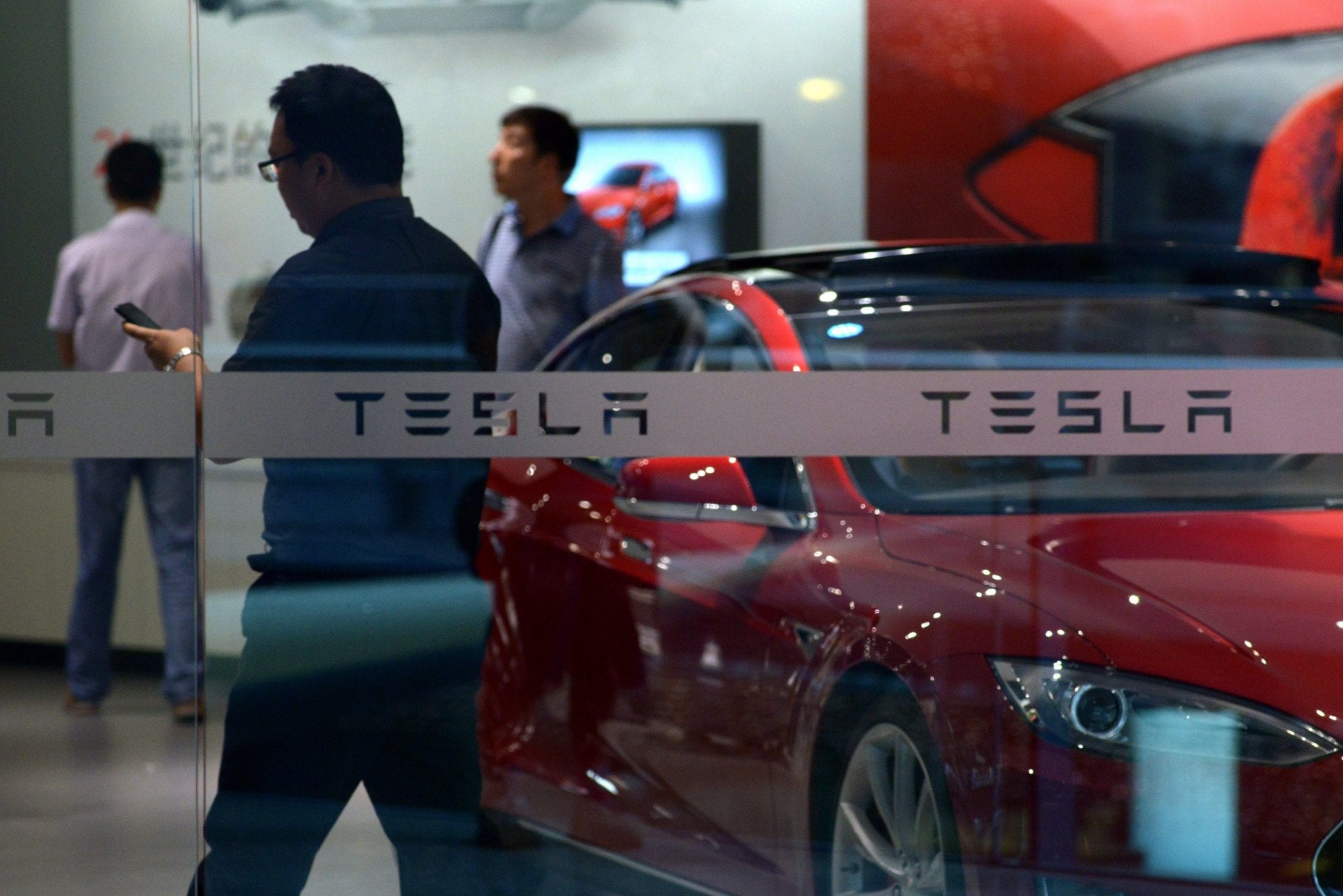
    Tesla in January registered a local subsidiary in India, which is expected to import and sell the Model 3 sedan by as early as mid-2021. Tesla has recruited Manuj Khurana, a former executive of India’s investment promotion body Invest India.

    Tesla Inc is scouting for locations to open showrooms in three Indian cities and has hired an executive to lead its lobbying and business efforts ahead of its planned entry into the country, sources familiar with the discussions told Reuters. The electric-car maker in January registered a local company in India, where it is expected to import and sell the Model 3 sedan by as early as mid-2021, seeking to target rich customers in a niche market.

    The world’s most valuable automaker by market capitalization is looking for commercial properties as large as 20,000-30,000 square feet each to open showrooms and service centers in the capital New Delhi, financial hub Mumbai in the west and tech city Bengaluru in the south, three sources said.

    Separately, Tesla has recruited Manuj Khurana, a former executive of India’s investment promotion body Invest India, in the first major hire to lead its policy and business development efforts in the country, two other sources said. Tesla did not respond to a request for comment, while Khurana declined to comment.

    In October, Tesla CEO Elon Musk said on Twitter the company will enter India in 2021 “for sure”, though the billionaire had issued similar tweets in the past. The search for showroom space and Khurana’s appointment signal Tesla is moving faster.

    Global property consultant CBRE Group Inc – hired for the showroom searches by Tesla – has been surveying places for several weeks and is focussing on locations that will give the company easier access to affluent customers, sources said.

    Some luxury car showrooms in upmarket areas of metro cities are typically between 8,000-10,000 square feet, but most showrooms are far smaller in India where high-end real estate space is usually in short supply and property prices in New Delhi and Mumbai are among the highest in the world.

    “If you look at Tesla’s showrooms globally, they are like experience centers. It would look at replicating that with some modifications for the Indian market,” said one of the sources, all of whom declined to be identified as the talks are private.

    CBRE said it does not comment “on work we may be doing on behalf of our clients”.

    Khurana has previously been on a government panel on the future of transportation led by Prime Minister Narendra Modi’s top scientific adviser. In his new role, he is also handling Tesla’s market-entry process in India, two sources said.

    But India isn’t likely to be an easy market to crack for Tesla. The country has negligible charging infrastructure and high taxes on imported cars, as well as low adoption of electric vehicles (EVs). India recorded just 5,000 EV sales out of the total 2.4 million cars sold last year, while in China new energy vehicle sales touched 1.25 million.

    However, analysts say India’s rising number of affluent consumers makes it a market the automaker can’t ignore as the government increases its focus on promoting clean cars.

    While Tesla plans to import cars at first, India’s road minister told Reuters last month that the government is ready to offer incentives to ensure the carmaker’s production cost would be less than in China if it commits to local manufacturing.

  • Tesla Tells China Car Cameras Not Activated Outside North America

    Tesla Tells China Car Cameras Not Activated Outside North America

    Cameras in Tesla cars are not activated outside of North America, the U.S. automaker said on its Chinese social media page on Wednesday, seeking to assuage security concerns in the world’s biggest car market.

    Tesla faces scrutiny in China where the military in March banned Tesla cars from entering its complexes, citing security concerns over cameras in its vehicles, sources told Reuters.

    “Even in the United States, car owners can freely choose whether to turn on its (the camera system’s) use. Tesla is equipped with a network security system with world-leading security levels to ensure user privacy protection,” the electric carmaker wrote on Weibo, China’s Twitter-like social media site.

    At a virtual forum in Beijing in March, held not long after reports of the ban surfaced, Tesla founder Elon Musk emphasized the company’s business motivations for protecting user privacy.

    “There’s a very strong incentive for us to be very confidential with any information,” Musk said.

    “If Tesla used cars to spy in China or anywhere, we will get shut down.”

    China is a key battleground for electric vehicles. In 2020 Tesla sold 30% of its global total in the country.

  • Volkswagen To Buy Credits From Tesla In China To Comply With Environmental Rules

    Volkswagen To Buy Credits From Tesla In China To Comply With Environmental Rules

    A Volkswagen joint venture in China has agreed to buy green car credits from Tesla to help meet local environmental rules, three people briefed on the matter told Reuters. The deal, the first of its kind to be reported between the two companies in China, highlights the scale of the task Volkswagen faces in transforming its huge petrol carmaking business into a leader in electric vehicles to rival Tesla. Shares in Volkswagen, the world’s second-biggest automaker, have soared this year as investors warm to its plans to go electric. But in China, and elsewhere, the German company is still heavily reliant on traditional combustion-engine vehicles.

    China, the world’s biggest auto market where over 25 million vehicles were sold last year, runs a credit system that encourages automakers to work towards a cleaner future by, for example, improving fuel efficiency or making more electric cars. Manufacturers are awarded green credits that can be offset against negative credits for producing more polluting vehicles. They can also buy green credits to ensure compliance with overall targets, though trade is usually between affiliated companies that share a major stakeholder.

    To help meet increasingly tough targets, Volkswagen’s joint venture with state-owned Chinese automaker FAW, or FAW-Volkswagen, has agreed to buy credits from Tesla, the sources said, declining to be named as the talks were private. Volkswagen declined to comment on the deal. It said in a statement it was “strategically targeting to be self-compliant” with rules in China, but that if required it would buy credits. Tesla did not respond to requests for comment.

    FAW-Volkswagen sold 2.16 million cars last year. The business and another Volkswagen venture in China – with SAIC Motor – were among the most negative credit-generating automakers in the country in 2019, according to data from China’s Ministry of Industry and Information Technology. The ventures’ gasoline sedans and SUVs have so far proved far more popular in China than their electric vehicles. It is unclear how many green credits FAW-Volkswagen will buy from Tesla, but FAW-Volkswagen’s offer was around 3,000 yuan per credit, higher than prices in previous years, the sources said.

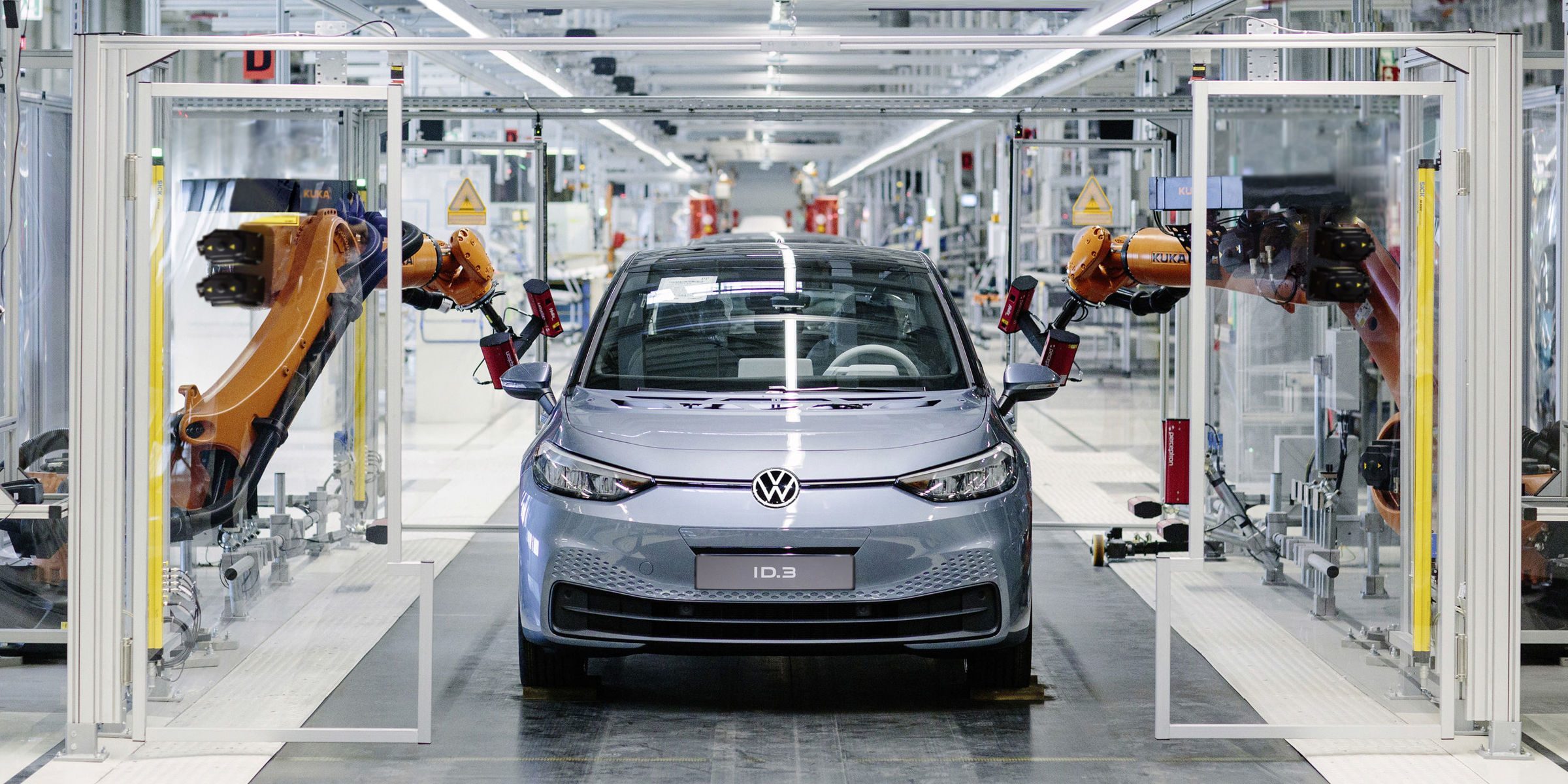
    The deal effectively sees Volkswagen, the biggest foreign carmaker in China, subsidising a rival while the German group ramps up production of electric vehicles. Its ventures in China plan to roll out five electric ID series models this year.

    In the United States, where regulators also set environmental requirements, Tesla has sold regulatory credits to rivals such as Fiat Chrysler, now part of Stellantis, but it has not so far reported any deals in China, where it started making cars in late 2019. Tesla’s revenue from selling regulatory credits totalled $1.58 billion in 2020, according to a regulatory filing.

  • Tesla’s In-Car Cameras Raise Privacy Concerns: Report

    Tesla’s In-Car Cameras Raise Privacy Concerns: Report

    Tesla’s use of in-car cameras to record and transmit video footage of passengers to develop self-driving technology raises privacy concerns, influential U.S. magazine Consumer Reports said on Tuesday.

    Consumer Reports said the usage potentially undermines the safety benefits of driver monitoring, which is to alert drivers when they are not paying attention to the road.

    “If Tesla has the ability to determine if the driver isn’t paying attention, it needs to warn the driver in the moment, like other automakers already do,” said Jake Fisher, senior director of Consumer Reports’ auto test center.

    Tesla Inc’s use of in-car cameras to record and transmit video footage of passengers to develop self-driving technology raises privacy concerns

    Automakers such as Ford Motor and General Motors, whose monitoring systems do not record or transmit data or video, use infrared technology to identify drivers’ eye movements or head position to warn them if they are exhibiting signs of impairment or distraction, the magazine said.

    Tesla did not immediately respond to a Reuters request for comment.

    The Palo Alto, California-based carmaker’s internal cameras are also a point of contention in China, where the military banned Tesla cars from entering its complexes, citing security concerns.

    Tesla Chief Executive Officer Elon Musk said last week his company would be shut down if its cars were used to spy.

  • Volkswagen Takes Aim At Tesla With Own European Gigafactories

    Volkswagen Takes Aim At Tesla With Own European Gigafactories

    Volkswagen plans to build half a dozen battery cell plants in Europe and expand infrastructure for charging electric vehicles globally, accelerating efforts to overtake Tesla and speed up mass adoption of battery-powered cars. The world’s No. 2 carmaker, which is in the midst of a major shift towards battery-powered cars, said on Monday it wants to have six battery cell factories operating in Europe by 2030, which it will build alone or with partners.

    “Our transformation will be fast, it will be unprecedented,” Chief Executive Herbert Diess told Volkswagen’s Power Day, which also featured the CEOs of BP, Enel and Iberdrola in an effort to match some of the buzz of Tesla’s Battery Day last September.

    “E-mobility has become core business for us,” he added.

    Volkswagen, whose shares rose as much as 3.8%, did not specifically say how much the plan will cost. It said in December that it planned to spend 35 billion euros ($41.7 billion) on e-mobility as a whole by 2025.

    The group had been laggard on electrification until it admitted in 2015 to cheating on U.S. diesel emissions tests and had to deal with new Chinese quotas for electric vehicles. It now has one of the most ambitious programs in the industry.

    Volkswagen said the European factories will have a joint production capacity of up to 240 gigawatt hours (GWh) a year, adding the first 40 GWh would come from Sweden’s Northvolt, with production starting in 2023.

    As part of the deal, Volkswagen will raise its 20% stake in Northvolt and also take over the Swedish firm’s stake in a planned battery cell venture in the German city of Salzgitter, which will form the second factory from 2025.

    This will be followed by a factory in Spain, France or Portugal in 2026 and a site in Poland, Slovakia or the Czech Republic by 2027. Two more plants will be set up by 2030.

    While the first two factories are already reflected in Volkswagen’s financial planning, the group is currently in “deep discussions” about how the subsequent plants fitted with financial targets, board member Thomas Schmall said.

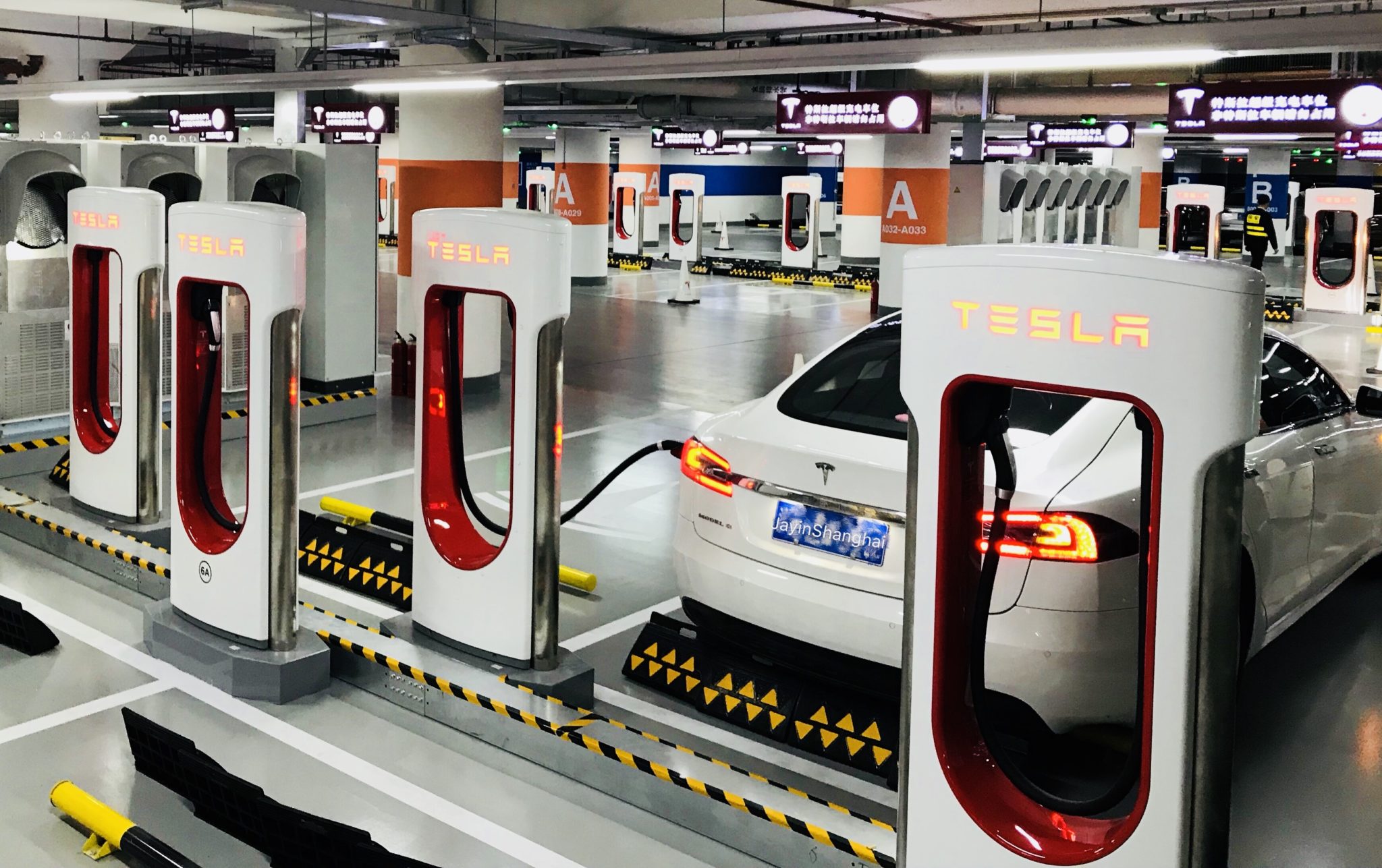
    Volkswagen is also working on a major expansion of charging infrastructure, a lack of which is still seen as a big barrier to the mass adoption of battery-powered cars. Via existing efforts and partnerships with oil major BP as well as top European utilities Enel and Iberdrola, Volkswagen aims to operate about 18,000 public fast-charging points in Europe by 2025.

    This represents a five-fold expansion of the existing fast-charging network, Volkswagen said, adding it would invest 400 million euros in the initiative.

    In North America, Volkswagen targets 3,500 fast-charging points by the end of 2021 via its Electrify America unit, while in China, the world’s largest car market, the group aims for 17,000 by 2025.

    In China, where Volkswagen last year acquired 26.5 percent of battery maker Guoxuan High-tech Co Ltd, the carmaker now aims to sell more than 2 million electric vehicles a year by the end of the decade.

    Shifting to design, Volkswagen unveiled plans to have a new unified prismatic battery cell from 2023, which will support cost cuts generated by the higher level of in-house cell production and could impact its current suppliers.

    South Korean battery makers’ shares, including in LG Chem, whose unit LG Energy Solution makes batteries for Volkswagen, and SK Innovation, fell as much as 5.8% and 5.3% respectively on Tuesday after the news.

    Electric vehicle makers, including Tesla, are using cylindrical battery cells, which resemble flashlight batteries and are relatively inexpensive and easy to manufacture.

    Prismatic cells, which resemble a thin hardcover book, are housed in a rectangular metal case and are more expensive. Pouch cells, another alternative, are thinner and lighter, and resemble a flexible metal mailing envelope.

    “On average, we will drive down the cost of battery systems to significantly below 100 euros ($119) per kilowatt hour,” Schmall said. “This will finally make e-mobility affordable and the dominant drive technology.”

  • Tesla Cuts Prices Of Base Variants Of Model 3, Model Y On Its Website

    Tesla Cuts Prices Of Base Variants Of Model 3, Model Y On Its Website

    Tesla Inc has reduced the price of its cheaper variants of the Model 3 sedan and the Model Y sports utility vehicle (SUV), while raising prices for their performance variants, the electric-car maker’s website showed. The price of its Model 3 Standard Range Plus has been lowered to $36,990 from $37,990, while the Model Y Standard Range’s price came down to $39,990 from $41,990, according to the website.

    The carmaker has been making various models in its lineup more affordable at a time when legacy automakers are trying to make inroads in the electric vehicle market.

    The standard range of the Model Y was launched in January, bringing its SUV’s price closer to that of the Model 3 sedan, the electric-car maker’s least expensive car.

    The prices for the Performance variant of the Model 3 rose to $55,990 from $54,990 and Model Y to $60,990 from $59,990, the website showed.

    The price cuts come as Tesla looks to ramp up its deliveries. Overall, the company delivered 499,550 vehicles during 2020, above Wall Street estimates of 481,261 vehicles.

  • Chinese Regulators Call In Tesla Over Customer Complaints

    Chinese Regulators Call In Tesla Over Customer Complaints

    Chinese government officials have met representatives from U.S. electric carmaker Tesla Inc over reports from consumers about battery fires, unexpected acceleration, and failures in over-the-air software updates, a regulator said on Monday. China’s State Administration for Market Regulation said in a social media post its officials, along with those from the Ministry of Industry and Information Technology, Ministry of Emergency Management, Cyberspace Administration and Ministry of Transportation had met Tesla “recently”, without giving a date.

    The officials urged Tesla to operate according to China’s laws and protect customer rights, the regulator said. In response, Tesla said it would thoroughly investigate the problems reported by consumers and step up inspections.

    “We will strictly abide by Chinese laws and regulations and always respect consumer rights,” a company representative said in a text message, adding that Tesla accepted the guidance of the Chinese government departments.

    China is pushing the industry to make more electric vehicles as it tries to reduce air pollution.

    Tesla is building Model 3 electric sedans and Model Y sport-utility vehicles at its Shanghai factory. It sold 15,484 China-made vehicles in January.

    The industry ministry in May urged Tesla to ensure consistency in its China-made vehicles after some Chinese customers complained about less advanced computer chips in their cars.

    China, the world’s biggest auto market, is pushing the industry to make more electric vehicles as it tries to reduce air pollution.

    Sales of electric, plug-in hybrid and hydrogen-powered vehicles in China are forecast to rise to 20% of all new car sales by 2025 from just 5% now, the State Council said last year.

  • Tesla To Recall 135,000 U.S. Vehicles Under Pressure From Auto Safety Regulators

    Tesla To Recall 135,000 U.S. Vehicles Under Pressure From Auto Safety Regulators

    Tesla Inc has agreed to recall 134,951 Model S and Model X vehicles with touchscreen displays that could fail and raise the risk of a crash after U.S. auto safety regulators sought the recall last month, according to a recall posted on a government website Tuesday.

    The National Highway Traffic Safety Administration (NHTSA) made the unusual recall request in a formal Jan. 13 letter to Tesla, saying it had tentatively concluded the 2012-2018 Model S and 2016-2018 Model X vehicles pose a safety issue. Automakers usually agree to voluntary fixes before the auto safety agency formally seeks a recall.

    The agency said touchscreen failures posed significant safety issues, including the loss of rearview or backup camera images, exterior turn-signal lighting, and windshield defogging and defrosting systems that “may decrease the driver’s visibility in inclement weather.”

    Tesla said in its filing with NHTSA that “in the interest of bringing administrative closure to the investigation and to ensure the best ownership experience for our customers” it agreed to a voluntary recall.

    NHTSA opened a probe in June 2020 into complaints that media control unit (MCU) failures led to touchscreen displays not working.

    The agency said other automakers issued numerous recalls for similar safety issues stemming from the touchscreen failure.

    NHTSA said in November when it upgraded its probe that it reviewed 12,523 claims and complaints about the issue.

    NHTSA said last month that “during our review of the data, Tesla provided confirmation that all units will inevitably fail given the memory device’s finite storage capacity.”

  • Tesla Asks U.S. Safety Agency To Declare Speed Display Issue Inconsequential

    Tesla Asks U.S. Safety Agency To Declare Speed Display Issue Inconsequential

    Tesla Inc filed a petition with U.S. auto safety regulators saying that 612,000 vehicles produced since 2012 do not fully comply with federal safety standards because displays can be switched from miles per hour to only metric measurements, documents released on Friday show.

    The automaker asked the National Highway Traffic Safety Administration (NHTSA) to declare the noncompliance issue inconsequential to safety, according to the agency’s filing.

    Tesla said it corrected the issue in production in September and that more than 75% percent of the affected U.S. vehicles have accepted the firmware update released in September.

    Tesla said if vehicles are set to only display to kilometers, all functions tied to speed limits like Traffic-Aware Cruise Control and Speed Assist will “convert mapped data from mph to km/h, resulting in the vehicle speed automatically matching the appropriate speed limit.”

    Tesla added that vehicle operators can change the display back to miles per hour, saying the option is “easily located in the display menu and is not buried in sub-menus.”

    Tesla said it has not received any reports of crashes related to this issue and noted that NHTSA granted two petitions for inconsequential treatment involving speedometer unit display noncompliance to Volkswagen AG in July and BMW in 2015.

  • Tesla To Set-up Operations In Bengaluru, Registers Indian Subsidiary

    Tesla To Set-up Operations In Bengaluru, Registers Indian Subsidiary

    The wait is nearly over as American electric carmaker Tesla is all set to set-up operations in India and zeroed down on Karnataka, as its preferred state to set-up its headquarters. The electric auto giant has registered its Indian subsidiary under the name ‘Tesla India Motors and Energy Private Ltd’, which was incorporated in Bengaluru on January 8, 2021. The company is expected to commence operations by June this year and the first product to be made available will be the Model 3 sedan, according to reports.

    According to the document filed with the Ministry of Corporate Affairs, Vaibhav Taneja, Venkatrangam Sreeram, and David Jon Feinstein have been named as directors. The company has been registered as a private unlisted company with an authorized capital of ₹ 15,00,000 and a paid-up capital of ₹ 100,000. The document also reiterates Tesla co-founder and CEO, Elon Musk’s tweet last year that said the automaker would enter India “next year for sure.

    India has been on Tesla’s radar since 2016 but plans did not materialize despite a number of speculations. It was also reported recently that state governments including Maharashtra, Andhra Pradesh, Tamil Nadu, and Karnataka had talks with the automaker to set-up operations in their region, while the company is also considering local partnerships. Reportedly, the Karnataka government has already offered a land parcel to Tesla in Tumkur, on the outskirts of Bengaluru, to set-up a manufacturing facility.

  • Tesla Hunts For Design Chief To Create Cars For China

    Tesla Hunts For Design Chief To Create Cars For China

    Tesla Inc is searching for a design director in China, part of efforts to open a “full-function” studio in Shanghai or Beijing and design electric cars tailored to Chinese consumer tastes, according to three people with knowledge of the matter.

    The U.S. carmaker’s human resources managers, as well as several headhunters, have been trawling the industry over the past four months, the sources said.

    They are looking for “bi-cultural” candidates with 20 or more years of experience who are familiar with Chinese tastes and can bridge the gaps between China and the United States, they added.

    Some candidates have been interviewed by Tesla’s global design chief Franz von Holzhausen, according to the people, though it was not clear how many potential candidates had been approached by the company and recruiters.

    Tesla is also planning to set up a design studio in China but will likely wait for more clarity on strained U.S.-China relations under a new U.S. president

    China is the world’s biggest auto market, plus the largest for all-electric vehicles with sales volumes expected to reach roughly 1.5 million vehicles there this year, according to consultancy LMC Automotive. It is also Tesla’s No.2 market after the United States.

    The carmaker’s plans for the design studio are not fully developed, and the sources believe Tesla will likely wait for more clarity on strained U.S.-China relations under a new U.S. president before making a final decision on the move and all its details.

    The talent search, which the sources said was mainly focused within China, fits with comments from Tesla boss Elon Musk early last year.

    “I think something that would be super cool would be … to create a China design and engineering centre to actually design an original car in China for worldwide consumption. I think this would be very exciting,” he said at a media event in Shanghai.

    Musk’s interest in developing cars in China is part of a broader push by Tesla to boost the company’s global sales volume well past the 500,000-vehicle-a-year mark, which it came just 450 short of hitting in 2020.

    All three sources said Tesla’s search for a China studio director began around September, and that there was a flurry of activity as recently as December when a number of headhunters used LinkedIn and other means to approach candidates.

    One of the sources, who has knowledge of Tesla’s headhunting activities in China, said that once a design director was hired, Tesla would recruit the director’s team which would likely be around 20-strong and include designers plus modelers who help turn design renderings into clay models.

    All the sources said the planned center aimed to be a comprehensive design outfit, with one describing it as a “full-function studio”, which would not only help conceptualize the design of a car but also come up with the final shape – digital three-dimensional data – of a model.

    The data could then be handed over to Tesla’s vehicle engineers, who are mostly based in northern California.

    Two of the sources said Tesla’s China studio would likely also carry out research on Chinese consumer tastes, as well as work for cars expected to be produced at Tesla’s vehicle assembly plant in Shanghai, where designs are tweaked to make sure specific components fit within engineers’ specifications.

    “They want to give vehicle design a lot more bias toward China; they have already done a lot here, setting up a major manufacturing site and having sold a ton of EVs, but it seems Tesla’s ready to put roots down,” said one of the sources.

    This push might lead to a more independent Tesla China, added the person, who has spent more than a decade in the country working at design centres run by global automakers, among other places.

    Chinese consumers bought around 145,000 Tesla vehicles last year, accounting for roughly a third of the company’s overall global volumes, LMC said.

    Two of the sources said one likely “China-specific” model was a lower-cost volume generator such as a $25,000 electric car that Musk referred to at a Battery Day event in September, which he said Tesla might aim to bring to market in about three years.

    Musk said Tesla was confident it would be able to hit the market with “a very compelling $25,000 electric vehicle that’s also fully autonomous”.

    At that price, according to two of the sources as well as industry experts, it was likely to be a compact car, smaller than Tesla’s Model 3, which would be as affordable as some mainstream gasoline-fueled vehicles.

    Compact cars are not big sellers in the United States where bigger, taller vehicles such as Ford’s F-150 pickup truck and SUVs, as well as midsize sedans, rule the road.

    They account for about 10% of America’s overall vehicle market. By contrast, compacts make up 25% of sales in China, or around 5-6 million cars a year, according to consultancy LMC Automotive.

    That’s why the planned $25,000 car Musk has discussed would be better suited to the China marketplace, according to the two sources and industry experts.

    “A compact Tesla car would do well in China, as well as the rest of Asia and Europe,” said Yale Zhang, head of Shanghai-based consultancy Automotive Foresight. “It could potentially put a serious dent in sales of cars like Toyota’s Corolla and the Volkswagen Golf.”

  • Tesla Shares Set To Start 2021 At Record High

    Tesla Shares Set To Start 2021 At Record High

    Tesla Inc shares were set to open at a record high on Monday after the electric-car maker reported better-than-expected vehicle deliveries in 2020, extending a meteoric rally that has seen the stock surge more than 700%.

    It delivered 499,550 vehicles last year, above Wall Street estimates of 481,261 vehicles, according to Refinitiv data, but 450 units short of Chief Executive Officer Elon Musk’s target.

    “We are raising our forecasts to reflect higher 4Q deliveries and reports of strong demand for the Model Y in China, which is also suggestive of higher future deliveries,” J.P. Morgan analysts said in a client note.

    Tesla has reported profit in five straight quarters, defying last year’s auto industry trends of slumping sales, quarterly losses and global supply chain disruptions.

    Shares of the company, which joined the benchmark S&P 500 index in December, were up 3% in premarket trading.

  • Tesla’s 4680 Battery Cells Are Manufactured By Panasonic

    Tesla’s 4680 Battery Cells Are Manufactured By Panasonic

    Tesla has confirmed that its new tab-less 4680 battery cells are going to be produced by Panasonic which already has a dedicated facility at the Gigafactory in Nevada. This report comes via Nikkei Asia which states,  “Panasonic will set up a prototype production line at existing facilities. The cost of the project is expected to run into the tens of millions of dollars.”

    Tesla has been working on its own battery cell chemistry for years, but it has also maintained deep ties with traditional battery cell makers as it is more focused towards the module and the pack itself.

    For years, Panasonic has been Tesla’s go-to partner but in recent times it has also started working with LG Chem and CATL. These new tab-less batteries were unveiled in September at its “Battery Day” event.

    For these batteries, the company said that it will produce them itself with production machinery designed in-house. However, Elon Musk has stated that it will continue to work with external parties and acquire as much battery supply it can so that it can fuel its ambitious growth.

    Recently, there were reports which claimed that even LG Chem was manufacturing batteries similar to Tesla’s tab-less batteries. It could be that Tesla is tapping into both Panasonic and LG Chem for the same while also doing its own thing as it scales its business to new markets. Recent reports suggest that Tesla is also planning to enter a major market like India which from a long-term point of view could be strategic for the company even if it doesn’t have the scale in the short term.

    Currently, the new 4680 batteries are only being manufactured in the Fremont facility though Panasonic has a huge facility inside the main Gigafactory in Nevada and Tesla could even scale this model to its new GigaFactory in Berlin and other locations.

  • Tesla Working On Amazon And Apple Music Integration

    Tesla Working On Amazon And Apple Music Integration

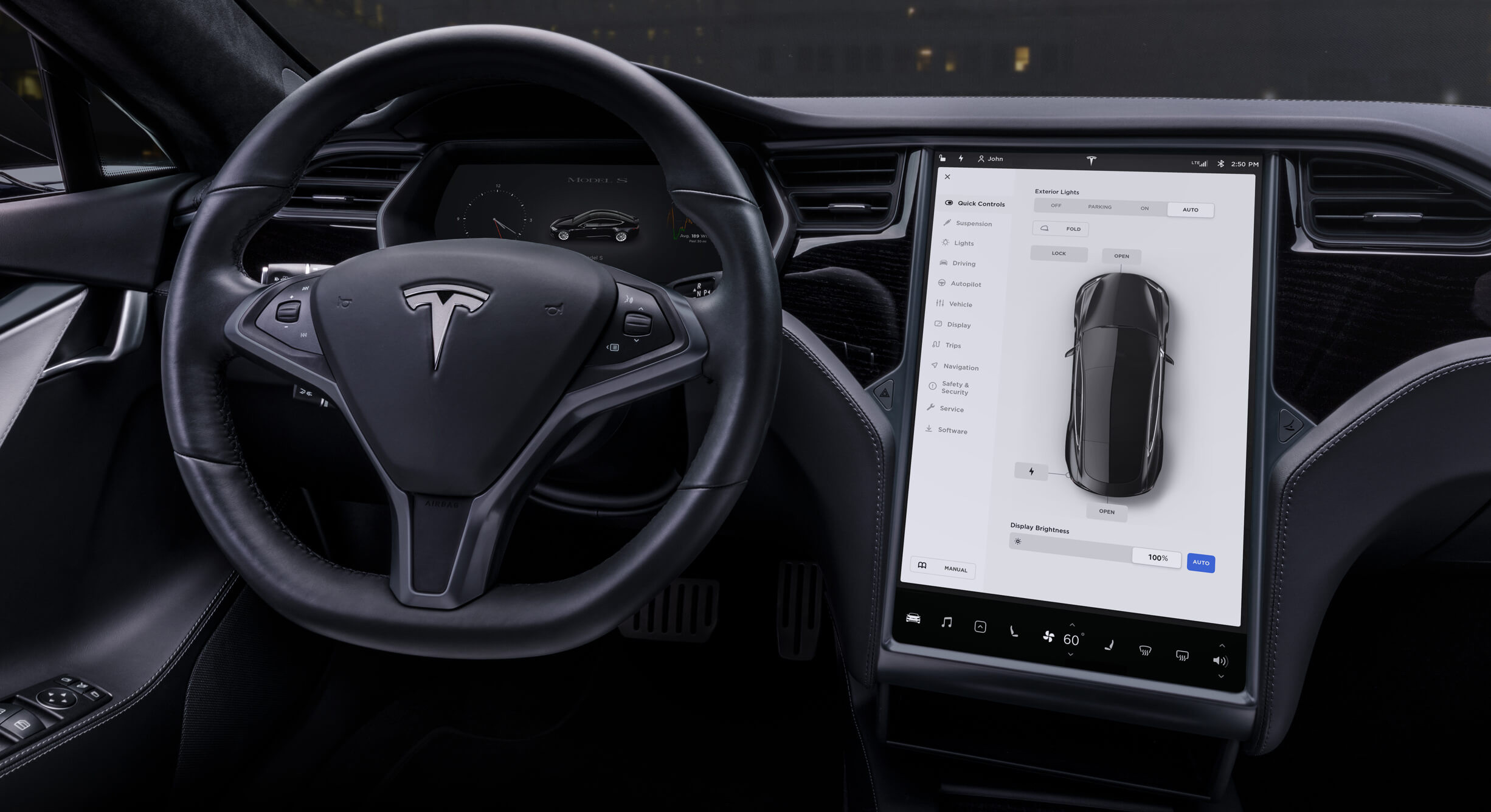
    One of the biggest influences for the massive in-dash display for the Tesla Model S was the iPad. But even though Teslas have offered this sophisticated in-car infotainment experience, what’s strange is that lack of native Apple Music and Amazon Music integration. Instead, Tesla’s offer native Spotify integration. But this is set to change.

    Tesla notably doesn’t support phone mirroring options like Apple’s CarPlay and Android Auto so if you use Apple Music or Amazon Music as your streaming service of choice you can only play music via Bluetooth but not enjoy the advances of a deep user interface integration.

    Elon Musk has already stated that Tidal, lossless high fidelity audio streaming service will be integrated into the dashboard experience of the Teslas. However, now Electrek is reporting that the world’s largest automaker is also integrating Apple Music and Amazon music into the dashboard.

    The Electrek report cites a hacker called “green” who has spotted early versions of the integration in Tesla’s UI which he has also shared in a post on Twitter. He noticed this update in a recent software update which has enabled Tidal, Pandora, SiriusXM, and Audible. TuneIn Radio, Amazon and Apple Music remain disabled. But they should be coming soon as Audible is also owned by Amazon.

    There is no timeline as to when this will become official but considering Tidal is already active, it seems to be the furthest along in development. Apple Music and Amazon Music will almost certainly have a more delayed official release.