Retail News CRM

Tag: Textile

  • Vietnam’s Textile Exports Soar to $22.2B in H1: Embracing Sustainability and Tech for Future Growth

    Vietnam’s Textile Exports Soar to $22.2B in H1: Embracing Sustainability and Tech for Future Growth

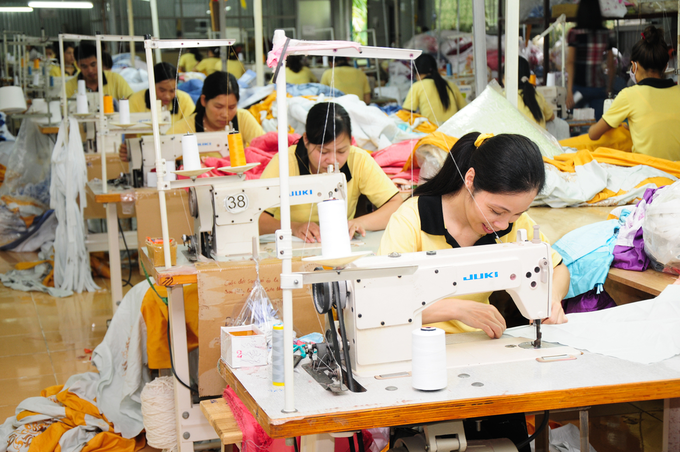
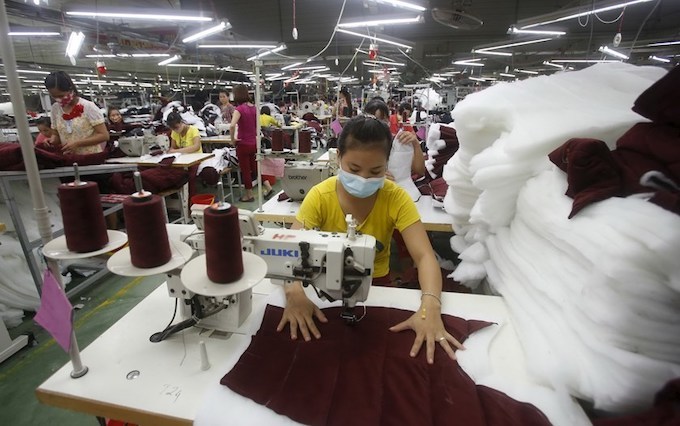
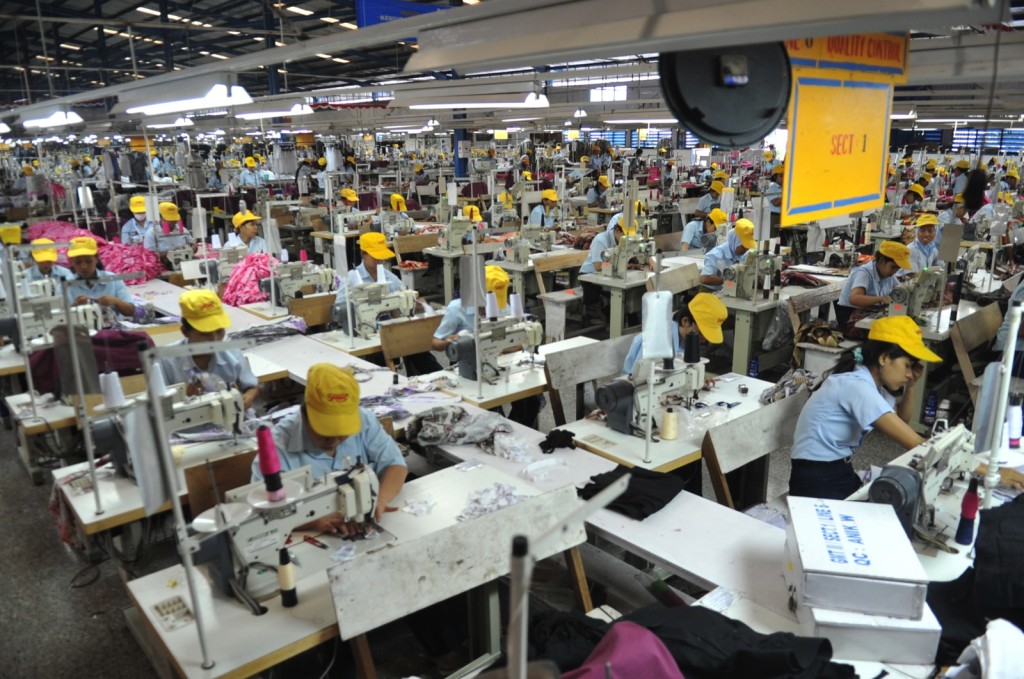
    Vietnam’s textile and garment industry saw a slight increase in exports for the first half of the year, reaching an estimated $22.2 billion, marking a 1.7% rise compared to the same period in the previous year. This information was released by the Vietnam Textile and Apparel Association (VITAS), which also noted that certain areas of the industry, including fibre, fabric, accessory, and nonwoven material exports, experienced a more substantial growth, with rates between 5.6% and 10.6%. However, the garment sector experienced a slight downturn, with exports decreasing by 0.4% due to weakened consumer demand in key markets.

    Export Markets and Trade Surplus

    In the first five months of the year, the U.S. continued to be the largest export market for Vietnam, with shipments amounting to $6.81 billion. This was a 1.3% increase, and represented approximately 45% of total exports. The E.U. market showed the strongest growth, with an increase of 8.8%, equating to $1.94 billion, whereas exports to Japan and the Republic of Korea dropped by 6.2% and 8.9% respectively. The industry was able to maintain a trade surplus of nearly $10 billion in the first half of the year.

    Challenges remain for the industry, despite the overall positive performance. VITAS outlined these obstacles, which include weak demand in key markets, high price competition, a heavy reliance on imported raw materials, increasing costs related to environmental, social and governance (ESG) standards and product traceability, and a growing uncertainty surrounding global trade policies.

    Future Focus and Strategy

    VITAS Chairman Vu Duc Giang spoke about the industry’s limited scope for expansion through solely increasing production volume. He expressed that the future growth of the industry hinges on enhancing productivity and creating higher-value products. This will be achieved by developing domestic sources of raw materials, diversifying export markets, and speeding up the digital and green transformations.

    To facilitate this shift, VITAS has given the green light for the establishment of four specialised committees during the 2025–2030 term. These committees will focus on fashion and domestic market development, international business and supply chains, sustainable development, and technology, innovation, and digital transformation. The committees are expected to commence their pilot operations in the third quarter of 2026.

    As the industry’s exports reached $22.2 billion in the first half of the year, the goal is to sustain an average monthly export revenue exceeding $4 billion in the remaining months. This will help to achieve the full-year target of roughly $48 billion. The industry’s key priorities in this endeavor include adapting to new purchasing strategies of global brands, expanding domestic supplies of raw materials, diversifying markets and products, preparing for potential legal and trade risks, and increasing investment in technology, automation, and digital transformation.

    Questions & Answers

    What growth did Vietnam’s textile and garment exports experience in the first half of the year?
    They experienced a slight increase of 1.7%, reaching an estimated $22.2 billion.

    What are the major challenges faced by Vietnam’s textile and garment industry?
    Major challenges include weakened demand in key markets, high price competition, reliance on imported raw materials, rising costs related to ESG standards and product traceability, and growing uncertainty regarding global trade policies.

    What strategies does the industry plan to implement for future growth?
    Strategies include enhancing productivity, creating high-value products, developing domestic raw material sources, diversifying export markets, and accelerating the digital and green transformations.

  • Vietnam’s Textile Industry Set to Innovate with First-Ever Steam-Generating Heat Pump Pilot Project

    Vietnam’s Textile Industry Set to Innovate with First-Ever Steam-Generating Heat Pump Pilot Project

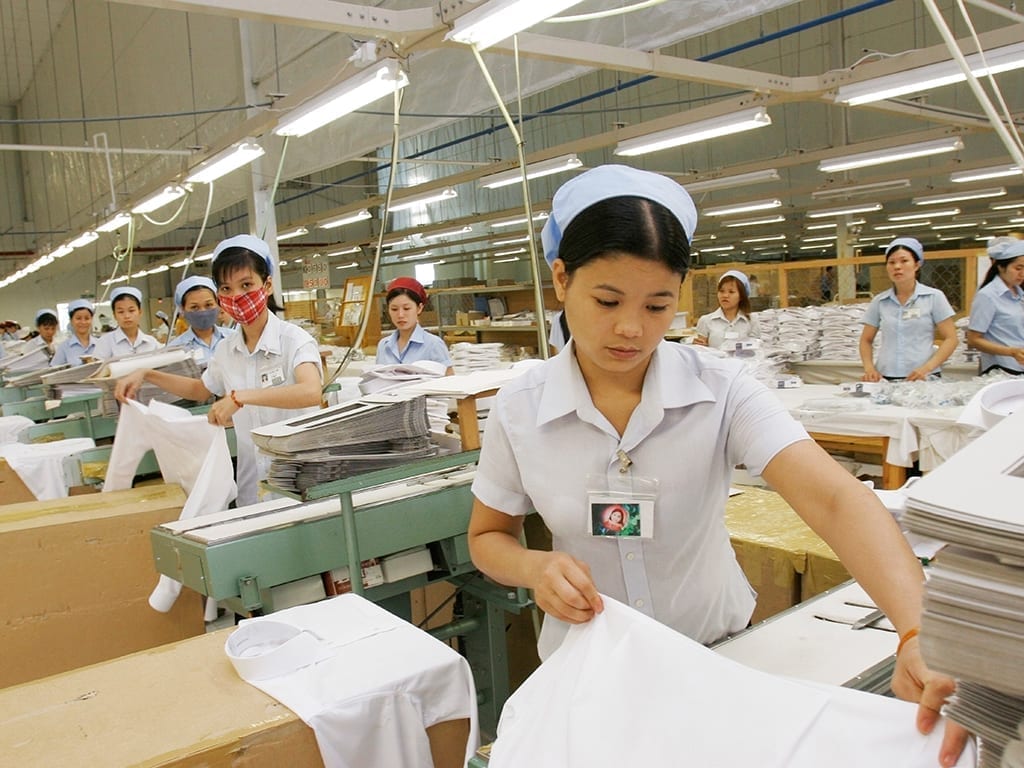
    H&M Group is amongst the partners in the project. Vietnam’s textile and apparel industry is set to take a significant leap towards sustainability with the introduction of electric thermal technology later this year. The first steam-generating heat pump will be installed at a garment factory near Hanoi, marking a transformative moment in the sector.

    This ambitious initiative brings together the expertise of the Apparel Impact Institute (Aii), WWF, H&M Group, and Bangjie, a notable textile manufacturer whose Hung Yen facility is a key supplier for the Swedish fashion powerhouse. This pilot project is the first electrification effort within Vietnam’s textile industry, which plays a crucial role in the national economy but also contributes significantly to its carbon emissions. The electric heat pump will replace traditional coal-fired boilers, meeting the facility’s full steam and heat requirements while providing a cleaner, more efficient solution.

    This project aligns seamlessly with H&M Group’s commitment to reducing supply chain emissions by 56% by 2030, showcasing their drive towards a more sustainable future. Given that thermal energy accounts for more than half of the energy demand in textile manufacturing, the need for innovative solutions is pressing. Processes like dyeing, washing, bleaching, and drying all rely on steam and hot water, making the shift to electric systems even more vital.

    The new heat pump system will not only harness waste heat from factory operations for dyeing, drying, and setting but also enhance indoor working conditions by improving air cooling. This multifaceted approach underscores a commitment to both productivity and employee well-being.

    This initiative is part of Aii’s Low Carbon Thermal Energy Roadmap, which targets early-stage electrification pilots to drive costs down and foster broader adoption within the industry. It’s a promising step towards a more sustainable textile sector in Vietnam.

    And who knows—this shift to electrification might just spark a fashion revolution, where eco-friendliness becomes the new chic!

    Questions & Answers

    What is the significance of the electric heat pump project in Vietnam?
    The project represents Vietnam’s first major step towards electrifying the textile industry, replacing coal-fired boilers with cleaner, more efficient electric systems.

    Which organizations are involved in this initiative?
    The collaboration includes the Apparel Impact Institute (Aii), WWF, H&M Group, and Bangjie, the textile manufacturer behind the pilot project.

    What are the expected benefits of the new system besides reducing emissions?
    Beyond cutting emissions, the new system will improve operational efficiency, enhance indoor working conditions, and significantly reduce reliance on thermal energy sourced from coal.

  • 7-Eleven upcycles uniforms in textile waste initiative

    7-Eleven upcycles uniforms in textile waste initiative

    7-Eleven Australia’s latest initiative to reduce textile waste going to landfill focuses on recycling old uniforms.

    The convenience chain is working with Loop Upcycling (Loop) to turn textiles into stretch fabric beanies.

    Julie Laycock, general manager – customer at 7-Eleven, said “Having identified old uniforms and other textiles, and learning from Loop Upcycling what the fabrics could be turned into, we collaborated with our community partners The Salvation Army and AMES Australia to determine what would be most useful for their clients.”

    The beanies were donated to people experiencing homelessness, winter power bill challenges, as well as new migrants and refugees facing a cold Melbourne winter.

    This collaboration has saved more than 143kg of clothing from landfill.

    Franco Randazzo, Loop Upcycling CEO, said “Many of the participants who produced the beanies have themselves been supported by organisations like The Salvation Army or AMES Australia.

    “For them to have the chance to work on a project that not only benefits the environment and helps them learn new skills, but also provides them the chance to give back to organisations who have been there for them in times of struggle has been really extraordinary.”

    Laycock said 7-Eleven Australia continues to seek opportunities for waste reduction.

    “Being able to support those in need and redirect waste from landfill is something we are trying to do more of. Loop, in addition to recycling textiles, provides workplace and skills training for vulnerable people.

    “This project has created some extraordinary moments for connection and caring in our communities and we are looking forward to continuing to trial ways to reduce waste across our business,” she said.

  • Textile and garment firms fear drop in profit as orders slow down

    Textile and garment firms fear drop in profit as orders slow down

    Most garment and textile enterprises have received orders for production until the third quarter or October, according to the Ministry of Industry and Trade.

    However, the industry’s growth momentum showed signs of slowing down from the middle of the second quarter when major export markets such as the U.S. and EU fell into an inflationary spiral.

    As a result, new orders have decreased and customers have shortened the order period from 6 months to 3 months.

    A company specializing in the production of children’s fashion clothes in Dong Nai used to get new orders of 80,000 – 100,000 garments every month from US partners.

    The company’s manager, Thai Minh, said that over the past two months, the number of new orders has fallen by 20-30 percent.

    Minh said the situation will not improve in the short term if the inflation issue in the U.S. remains serious, forcing people to tighten spending on non-essential goods.

    “We are promoting our products to Canada and Mexico that have many similar consumption characteristics. We hope to get a few new contracts for the year-end season,” she said.

    The decrease in textile and garment orders was mainly due to the slow consumption in large markets, especially the U.S. and EU, the increase in inventories of importers and high inflation pressures in the second half of 2022 and early 2023.

    “At the beginning of the year, after the pandemic situation was under control, countries reopened and our partners urged us to deliver goods quickly, but now they are very indifferent,” Minh said.

    The Vietnam Textile and Garment Group (Vinatex) and Rong Viet Securities Company (VDSC) have forecast that the demand for textiles and garments in the second half of the year will decrease due to “overbuying” and inflation that prompts belt-tightening for non-essential products like fashion.

    In addition, the double impact of post-pandemic supply chain disruptions and the Russia-Ukraine conflict have pushed the price of raw materials for the garment industry, especially fabric and cotton, up by about 7-10 percent compared to the same period in 2021.

    Post-pandemic labor shortage, increasing transportation charges and labor costs triggered by fuel price hike have negatively affected the entire textile and garment supply chain from manufacturers to retailers, industry insiders said.

    “Increasing fuel, freight and logistics prices will greatly affect business performance in the last six months of 2022 and possibly until 2023,” said Duc Viet, CEO of leading garment firm May 10.

    Textiles are also indirectly affected when the euro depreciates against the USD. The EUR dropped to the lowest in 20 years last week at roughly the same as USD, with the greenback surging this year amid global economic uncertainties.

    Vinatex general director Cao Huu Hieu said that a weakening euro will reduce the profit margin of buyers in EU countries.

    VDSC forecasts that the profits of Vietnamese textile and garment companies will be hit hard in the second half of the year as new orders decrease.

    Some leading garment firms have adjusted this year’s business performance targets.

    The Song Hong Garment Jsc estimates its pre-tax profits at VND500 billion ($20.83 million) down 8 percent from a year ago.

    Nguyen Van Thoi, Chairman of TNG Investment and Trading Joint Stock Company, said that the impacts will be uneven among enterprises in the same industry.

    He said the industry can recover if inflation is brought under control and consumer purchasing power increases.

    According to data from the Ministry of Industry and Trade, textile and garment exports hit $22.3 billion in the first six months of the year, an increase of over 20 percent year-on-year.

  • Garment export won’t decline next year

    Garment export won’t decline next year

    Vietnam’s garment and textile exports next year is set to remain the same as this year even in the worst-case scenario where the Covid-19 pandemic prolongs, an association forecasts.

    Vietnam Textile and Apparel Association (VITAS) anticipates export would reach $39 billion next year, the same as this year, if pandemic impacts are major and linger until the end of the year.

    In the more optimistic scenarios that the pandemic is controlled by the second quarter, export could reach $41 billion, and by the first quarter, $43.5 billion, it stated.

    The association made its forecast as export this year expanded 12 percent from last year and 0.3 percent from 2019, indicating a recovery to pre-pandemic level.

    “This could be considered a great effort of Vietnam’s garment industry amid signs of slower global economic growth,” VITAS chairman Vu Duc Giang told a recent meeting.

    Truong Van Cam, deputy chairman of the association, said one positive sign is that major markets like the U.S., E.U. and Japan have reopened.

    Another supporting factor is that Vietnam has changed its Covid-19 fight policy from “zero Covid-19” to living with it, he added.

    In order to achieve the mentioned figures, vaccination is key, Cam said.

    Two doses of a Covid-19 vaccine should be the minimum requirement for staff to return to work, while third dose vaccinations for workers should begin, he urged.

    Fiscal and monetary policies should be more accessible and be effective for two or three years, he added.

    “Garment and textile needs an overall strategy so Vietnamese companies can export products under their own brands,” he said, adding that a plan should be made for development until 2030.

    Vu Thanh Tu Anh, dean of Fulbright School of Public Policy and Management in Ho Chi Minh City, said digital transformation has now become a must for sector survival as the Covid-19 pandemic has forced global corporations to increase the flexibility of their supply chains.

  • Garment exports hit hard by labor shortage

    Garment exports hit hard by labor shortage

    Garment and textile firms face labor shortages and broken supply chains, and find it hard to fulfill their export orders, the Vietnam Textile & Apparel Association has said.

    The fourth and most intense wave of Covid-19, which caused many textile companies to close down or operate at partial capacity between July and September, remains a severe problem in many cities and provinces, especially in the south, and so migrant workers are making an exodus to their hometowns.

    Some one million workers in the sector, or one third the total number employed, have quit their jobs or are staying away from work with or without pay, VITAS estimated.

    Meanwhile, supply chains continue to be broken as a number of foreign clients shift their orders to other countries.

    Many companies in the south have adopted the stay-at-work and commute-to-work models, but managed to get only 10-30 percent of their employees, meaning they have found it hard to maintain production and ensure timely delivery of goods, VITAS said.

    Garment and textile exports fell 9 percent month-on-month in September to $3 billion. The figure for the year-to-date was $29 billion.

    VITAS has three different export scenarios depending on how the Covid situation pans out: it expects shipments of $33.5-34 billion this year if the pandemic continues until early December, $36-36.5 billion if until November and $37.5-38 billion if it is controlled by October.

    “It is very difficult for the sector to realize the export target of $39 billion set for this year,” Vitas vice chairman Truong Van Cam said.

  • Covid causes first monthly loss for garment giant Thanh Cong

    Covid causes first monthly loss for garment giant Thanh Cong

    Major garment company Thanh Cong has reported its first monthly loss this year in August as housing workers at its plants as a precaution against Covid-19 spread increased costs.

    The company, formally known as Thanh Cong Textile Garment Investment, also saw revenues plummet by 26 percent year-on-year to $10 million, and, together with the ballooning expenses, this caused a loss of $282,000 for the month.

    The company said production fell due to a shortage of workers amid the tightened social distancing requirements in HCMC despite having many of them stay on-site.

    Its monthly net profit has not dipped below $600,000 this year. Its year-to-date profit is $5.48 million, only 44 percent of the full-year target.

    Thanh Cong’s biggest export markets are the U.S., South Korea, Japan, and China.

    It is looking for new buyers in Europe and countries that have signed the Comprehensive and Progressive Agreement for Trans-Pacific Partnership.

    It is also pushing head with e-commerce sales after tying up with U.S. e-commerce giant Amazon last year.

  • Garment production may slow down over Covid-19

    Garment production may slow down over Covid-19

    The textiles and garment sector is likely to be impacted by the Covid-19 situation getting more complicated across Vietnam. Industry insiders say the pandemic situation in HCMC, in particular, will drag the sector down in the remaining months of the year.

    The pandemic has already penetrated some industrial parks in HCMC, so if the staff of garment and textile firms get infected, work would stop and fulfillment of orders would slow down, said Pham Xuan Hong, head of HCMC Association of Garment, Textile, Embroidery, and Knitting (AGTEK).

    Garment and textile firms are labor-intensive affairs with many workers concentrating in certain places, so the risk of Covid-19 breaking out in factories is very high, said Le Tien Truong, chairman of Vietnam National Textile and Garment Group (Vinatex), adding that the production chain is likely to be broken amid the outbreak.

    Vinatex has 150,000 workers nationwide, with most of its affiliates having an average workforce of 2,000 each.

    In the first three waves of Covid-19, no Vinatex affiliates reported any Covid-19 infection. In the ongoing fourth wave, some enterprises in the northern province of Bac Ninh and the central city of Da Nang have reported infected workers.

    “This is the first time in 18 months of Covid outbreaks that workers in Vinatex affiliates have been infected with the disease, forcing them to stop production and face considerable losses,” the Vinatex chairman said.

    If production comes to a halt due to Covid-19, goods delivery will be delayed, causing losses for producers and exporters, he said.

    Affected enterprises will have to shift to transporting goods by air, instead of by sea to ensure timely shipment. This would make the shipment prohibitively expensive, Truong noted.

    Vinatex and AGTEK have proposed the government prioritizes vaccination against Covid-19 for garment and textile workers. Most garment and textile firms have said they are willing to cover all vaccination costs.

    Vietnam’s textiles and garment export turnover reached $5.8 billion in the first five months, a year-on-year rise of 4.8 percent.

  • Amazon’s Vietnamese partner reports surge in profit

    Amazon’s Vietnamese partner reports surge in profit

    Textile company Gilimex said its net profits almost doubled in 2020 thanks to a number of high-value contracts with international retailers.

    It reported record revenues of VND3.45 trillion ($150 million), up 36 percent from 2019, and net profits of VND308 billion for the year.

    Gilimex’s main products are handbags and backpacks.

    It tied up with Amazon, the world’s largest online retailer, in 2016 and seen average revenues grow at 20 percent a year since then.

    Its other large foreign partner is Swedish furniture retail giant IKEA with whom it has eight long-term contracts worth $16.2 million.

    The firm also develops new products for Dutch baby products maker Bugaboo and Puma, the German multinational that manufactures athletic and casual footwear, apparel and accessories.

  • Fabric origin a problem for textile firms seeking to benefit from EU trade deal

    Fabric origin a problem for textile firms seeking to benefit from EU trade deal

    With Vietnam not producing enough or competitively priced raw materials for the textile industry, its companies are struggling to fully benefit from the EVFTA. The lack of fabric production in the country means businesses are unable to meet origin requirements to enjoy tax incentives, SSI Securities Corporation said. To do so, they need to use domestically produced fabrics or imports from countries that have free trade deals with the E.U., it added.

    But Vietnam depends on China for 60-70 percent of its textile feedstock, and fabrics imported from South Korea account for only 15 percent of the total requirement.

    The E.U.-Vietnam Free Trade Agreement, which took effect on August 1, has strict rules of origin for goods exported to the bloc.

    Under its provisions, 77.3 percent of Vietnam’s textile exports it will enjoy zero percent tax within the first five years while the rest follow a seven-year roadmap.

    The EVFTA is the E.U.’s second trade deal with an ASEAN member country after one with Singapore, and one of the few with a developing country.

    It will see Vietnam eliminate 99 percent of its import duties over 10 years and the E.U. doing the same over seven.

    Before the deal was signed, Vietnam’s garment and footwear exports to Europe were given preferential treatment under the Generalized System of Preferences (GSP) program, with a 9.6 percent tariff on the former.

    For the first two years enterprises can choose to continue to be taxed under the GSP program or EVFTA. From the third year, if a company does not meet the rules of origin as stipulated in the deal, the tariff rate will increase to 12 percent.

    The Vietnam National Textile and Garment Group (Vinatex) said the tax incentives under EVFTA are not attractive enough for businesses to switch from Chinese to Vietnamese fabrics since the former are 10-40 percent cheaper and delivered faster due to the scale of production.

    China’s textile and dyeing industry has a capacity of 80 billion meters of fabric a year while Vietnam’s is 2.5 billion meters against a demand of eight billion meters.

    But SSI believed that in the long run Vietnam needs to develop its own industry and ensure sufficient scale to compete on cost with China.

    There are around 6,800 textile and garment businesses in the country and their exports were worth $32.85 billion last year.

  • H&M recycles old garments into new clothes

    H&M recycles old garments into new clothes

    Fast fashion chain H&M wants to turn discarded clothes into something new to wear again — within five hours. The Sweden-based retailer is about to start giving consumers at its Stockholm store the option to turn in used garments that it will then transform into one of three different clothing items.

    Once the program begins Monday, customers will be able to bring in a garment they don’t want, which will be cleaned and put into a machine called Looop. The machine will disassemble it, shredding it into fibers that are then used to create new clothing. The effort comes amid a rising volume of global clothing waste and growing concern over fast fashion’s contribution to it.

    H&M is unveiling a garment-to-garment recycling system called Looop at its store in Stockholm. The company said the recycling process, which can handle more than one garment at a time, doesn’t use water or chemicals and sometimes might need “sustainably sourced” raw materials added in, but it hopes to make “this share as small as possible.”

    The entire process takes about five hours and is visible to shoppers. For now, customers can choose one of three items to be made — a sweater, a baby blanket or a scarf for a fee of $11 to $16.

    “We are looking to expand the range available as we get to know Looop better,” the company said in an email.

    The Looop machine dissembles old clothing, shreds it, turns it into yarn, which then is used to make new clothing. H&M said the system is currently only available in Sweden, where H&M is based. It declined to reveal what future plans it may have to expand Looop, if any. While the Looop system could help spread awareness about clothing waste and recycling, for now, it lacks the scale to make any widespread impact on the volume of clothing waste generated annually.

    According to the Environmental Protection Agency’s website, 16.9 million tons of textile waste was generated in the United States in 2017, the latest data available. The recycling rate was just 15.2 percent, with 2.6 million tons recycled.

    “Fast fashion has had an impact on this because so much of the clothing is not well constructed or made with synthetic materials that can’t be easily recycled,” said Jackie King, executive director of the Secondary Materials and Recycled Textiles Association, a trade group for the textile recycling industry.

    H&M and other fast fashion sellers like Zara have taken some steps to curtail textile waste.

    In 2013, H&M launched a global garment collecting program in all of its stores and has set a goal of having all clothing sold in its stores be made from recycled or sustainably sourced materials by 2030. That figure currently stands at 57%, according to the company.

    Similarly, customers can drop off used clothing, footwear and accessories in more than 1,300 Zara stores. Last year, Zara announced that all of the cotton, linen and polyester used by the company will be organic, sustainably sourced or recycled by 2025.

    “One of the biggest drivers of clothing overconsumption are fast-fashion sellers,” said Deborah Drew, analyst and social impact lead with the global research non-profit World Resources Institute. “Large companies like H&M and Zara can have a really big, transformational impact on the industry and on consumers if they lead the way in facilitating change.”

  • Textile firms survive on weekly export orders

    Textile firms survive on weekly export orders

    The textile and garment industry continues to be hurt by the Covid-19 pandemic with only weekly orders coming in due to uncertain demand. Shipments of textile and garment, Vietnam’s third-largest export earner, fell 11.6 percent year-on-year in the first eight months to $19.6 billion because of the pandemic, the Ministry of Industry and Trade said in a recent report.

    Producers receive orders by the month or even week because of the plunging global demand due to Covid-19, whereas in previous years by this time they would have received orders for the first half of the following year, the report said.

    Some producers have seen September orders drop by 40-50 percent, while orders have not been confirmed for the rest of the year and 2021, it added.

    Global demand for textile and garment products in the third quarter has not shown signs of reviving, as consumer confidence remains low in the U.S., the E.U. and Japan, three of Vietnam’s largest buyers.

    This has affected producers like Vietnam National Textile and Garment Group (Vinatex). Cao Huu Hieu, its deputy CEO, said the company forecasts a 20 percent fall in revenues this year.

    “We have barely received orders for the last quarter, which is a major challenge for our production plans. Prices of masks have dropped to just enough to cover costs.”

    Companies are doing all they can to survive. Garment 10 Corporation Jsc (Garco10) is working to get long-term orders to ensure cash flows and retain jobs, while Vinatex seeks to boost domestic sales.

    Truong Van Cam, deputy chairman of the Vietnam Textile and Apparel Association (VITAS), said the domestic market is promising amid the pandemic though revenues from it would not be high since consumers are also trying to cut down spending.

    Companies want the government to delay loan repayments to banks.

    There are around 6,800 textile and garment businesses in the country. Last year their exports were worth $32.85 billion, increasing 7.8 percent year-on-year.

  • Textiles firms launch emergency production of antibacterial masks

    Textiles firms launch emergency production of antibacterial masks

    Textiles businesses, including several with no prior experience, have begun producing antibacterial masks after authorities announced a daily need of 10 million.

    At the beginning of last week, Toan, an employee of the Dong Xuan Knitting Company in the northern province of Hung Yen, was transferred to an antibacterial cloth production line. His company had begun making this new product following the novel coronavirus (2019-nCoV) outbreak.

    Toan and her colleagues now try to use their afternoon break to produce more masks in order to meet the amount needed each day as well as earn some overtime income.

    “Most of us are doing an extra half-shift of overtime every day. Because we make more money, everyone is happy and trying to take advantage of the situation,” he said.

    The Dong Xuan company has set up a similar antibacterial cloth production line in one of its factories in Hanoi. Its director Tran Viet said although the company has not worked in medical supplies before, it was applying Japanese technology to produce antibacterial fabric given the current scarcity of masks.

    Viet estimated that the company now produces 7-8 tons of anti-bacterial fabric every day, enough for Dong Xuan and its partners to produce up to 300,000 masks each day.

    “We are working every hour to improve productivity, so after it stabilizes, we will see if we can serve orders in other epidemic affected areas if needed,” Viet said.

    Le Tien Luong, general director of The Vietnam National Textile and Garment Group (Vinatex), one of the largest textile makers in Vietnam, said the company needed about three to four days to rearrange production lines, train workers in new technology, as well as transfer designs from affiliate companies to make masks, which was a new product to the group.

    TNG, a company based in northern Thai Nguyen Province specializing in producing garments and fashion for export, has also joined the emergency production of masks, using nano- fabric.

    The company was able to kick off production of antibacterial nano masks just three days after it submitted designs and standards for approval from the Ministry of Health, said TNG chairman Nguyen Van Hoi. Currently, the enterprise has increased working hours and allocated as many workers as possible to ensure it rolls out 20,000 masks a day. TNG said it will also work with the Thai Nguyen Department of Health to give out one million free masks to people.”Raw materials used to produce clothes and production lines are now prioritized for making masks. Soon 2 million masks will be completed and released to the market to help ease shortages, and soon after, TNG will be able to mass produce them,” Hoi said.

    Bui The Kich, general director of the Dong Nai Garment Corporation, said his enterprise has also been producing anti-bacterial fabric at maximum capacity. The company now produces around 10-15 tons of the fabric every day, and one kilogram of it is used to make approximately 300 disposable antibacterial masks.

    Truong Thanh Hoai, head of the Department of Industry under the Ministry of Industry and Trade, said producing 10 million antibacterial masks every day, as requested by the Ministry of Health’s request, required 400 tons of antibacterial fabric and enterprises working at full capacity.

    However, he pointed out that the Health Ministry has not issued standards and regulations for the antibacterial cloth masks. It needs to do so as soon as possible so that “users can trust the products,” Hoai said.

    Vietnam officially declared the nCoV outbreak an epidemic on February 1. Out of the 14 confirmed infection cases so far, three have been discharged from hospitals: a Nha Trang hotel receptionist, a Chinese man from Wuhan, and one of the workers who returned from Wuhan.

    The global death toll of the epidemic has reached 910– one each in the Philippines and Hong Kong, and the remaining in mainland China.

  • Vietnam textile industry orders hit by African competition

    Vietnam textile industry orders hit by African competition

    Vietnamese textile manufacturers are seeing orders decline with buyers moving to others, cheaper developing countries.

    Normally, by the end of a year they would have enough orders for the whole of the following year, Nguyen Van Thoi, chairman of TNG Investment and Trading JSC, which makes garments, said.

    But this year many businesses have said they do not have enough orders for 2020, with some reporting a 20 percent drop in orders from last year. Besides, many have not signed long-term contracts for products, only monthly or quarterly, he said.

    A Vietnam Textile and Apparel Association (VITAS) official, who wished not to be named, said many orders have shifted to emerging countries in Africa, while competition with textiles superpowers like China, India and Bangladesh is becoming increasingly fierce.

    “Even China’s orders are being transferred to countries with preferential tariff rates such as Bangladesh and Cambodia.”

    Not only Vietnamese textile and garment producers, but also its fiber industry is facing increasing competition from foreign businesses and rivals in countries such as India, Thailand and Indonesia, he added.

    Experts had forecast at the beginning of the year that the U.S.-China Trade war and new free trade agreements (FTAs) signed by Vietnam would help it increase textile exports, but had done a U-turn by mid-year to say there would be a lack of orders, VITAS said.

    This is due to a slowdown in the global economy, affecting consumer demand, and failure by Vietnamese enterprises to adopt radical solutions to comply with FTAs’ rules of origin, VITAS explained.

    In June Vietnam signed the Vietnam-EU Trade Agreement (EVFTA), which has strict rules of origin like requiring domestic value to account for at least 42.5 percent of the ex-works price of a final textile product.

    If this condition is met, goods exported from Vietnam to the EU would be tax-free once the EVFTA comes into effect whereas the average tariff levied by the bloc now is 9.6 percent.

    Some 70 percent of the fabric used to produce garments in Vietnam is imported from mainland China or Taiwan, VITAS chairman Vu Duc Giang said.

    Other difficulties being faced by Vietnam’s textile industry include rising costs of raw materials from China and lower prices demanded by foreign buyers.

    Vietnam is losing its low labor cost edge over other countries even as its use of technology in production remains limited, leading to reduced competitiveness, VITAS said.

    Garment exports in the first 11 months of this year were up nearly 8 percent year-on-year to $30 billion, according to figures from the Ministry of Industry and Trade.

  • Vietnam textile industry orders hit by African competition

    Vietnam textile industry orders hit by African competition

    Vietnamese textile manufacturers are seeing orders decline with buyers moving to others, cheaper developing countries.

    Normally, by the end of a year they would have enough orders for the whole of the following year, Nguyen Van Thoi, chairman of TNG Investment and Trading JSC, which makes garments, said. But this year many businesses have said they do not have enough orders for 2020, with some reporting a 20 percent drop in orders from last year.

    Besides, many have not signed long-term contracts for products, only monthly or quarterly, Thoi said.

    A Vietnam Textile and Apparel Association (VITAS) official, who did not wish to be named, said many orders have shifted to emerging countries in Africa, while competition with textiles superpowers like China, India and Bangladesh is becoming increasingly fierce.

    “Even China’s orders are being transferred to countries with preferential tariff rates such as Bangladesh and Cambodia.”

    Not only Vietnamese textile and garment producers, but also its fiber industry is facing increasing competition from foreign businesses and rivals in countries such as India, Thailand and Indonesia, he added.

    Experts had forecast at the beginning of the year that the U.S.-China Trade war and new free trade agreements (FTAs) signed by Vietnam would help it increase textile exports, but had done a U-turn by mid-year to say there would be a lack of orders, VITAS said.

    This is due to a slowdown in the global economy, affecting consumer demand, and failure by Vietnamese enterprises to adopt radical solutions to comply with FTAs’ rules of origin, VITAS explained.

    In June Vietnam signed the Vietnam-EU Trade Agreement (EVFTA), which has strict rules of origin like requiring domestic value to account for at least 42.5 percent of the ex-works price of a final textile product.

    If this condition is met, goods exported from Vietnam to the EU would be tax-free once the EVFTA comes into effect whereas the average tariff levied by the bloc now is 9.6 percent.

    Some 70 percent of the fabric used to produce garments in Vietnam is imported from mainland China or Taiwan, VITAS chairman Vu Duc Giang said.

    Other difficulties being faced by Vietnam’s textile industry include rising costs of raw materials from China and lower prices demanded by foreign buyers.

    Vietnam is losing its low labor cost edge over other countries even as its use of technology in production remains limited, leading to reduced competitiveness, VITAS said.

    Garment exports in the first 11 months of this year were up nearly 8 percent year-on-year to $30 billion, according to figures from the Ministry of Industry and Trade.