Retail News CRM

Tag: Textile

  • Textile sector stuck at bottom of value chain

    Textile sector stuck at bottom of value chain

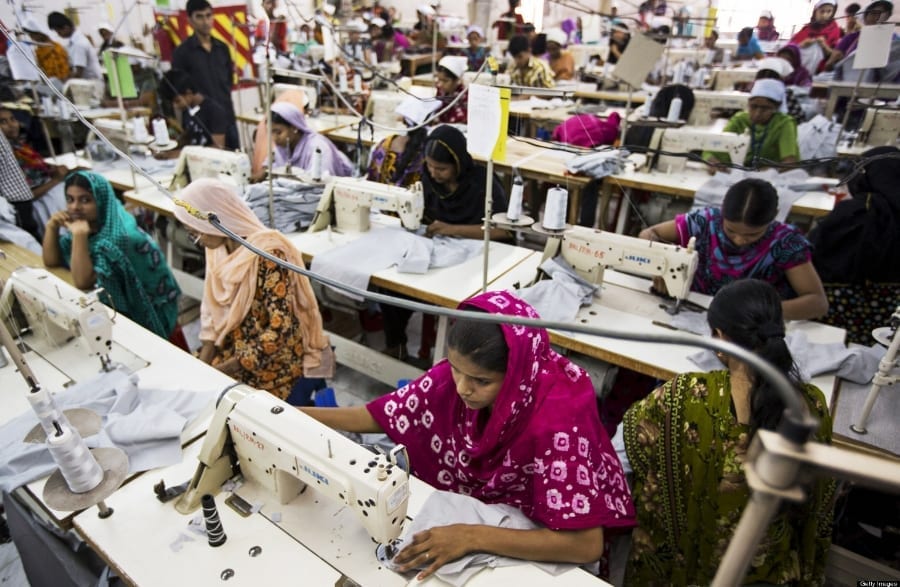
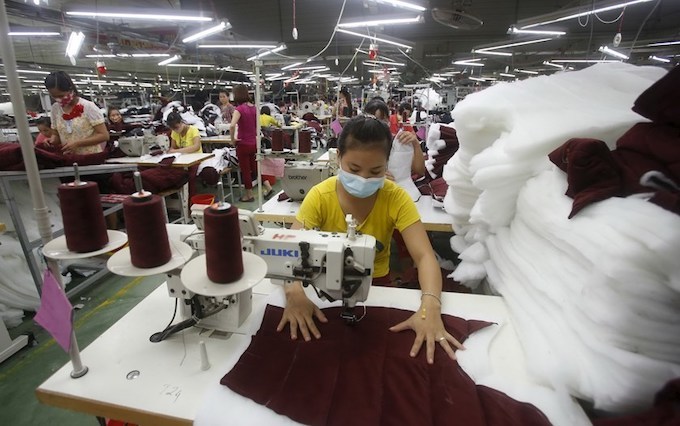
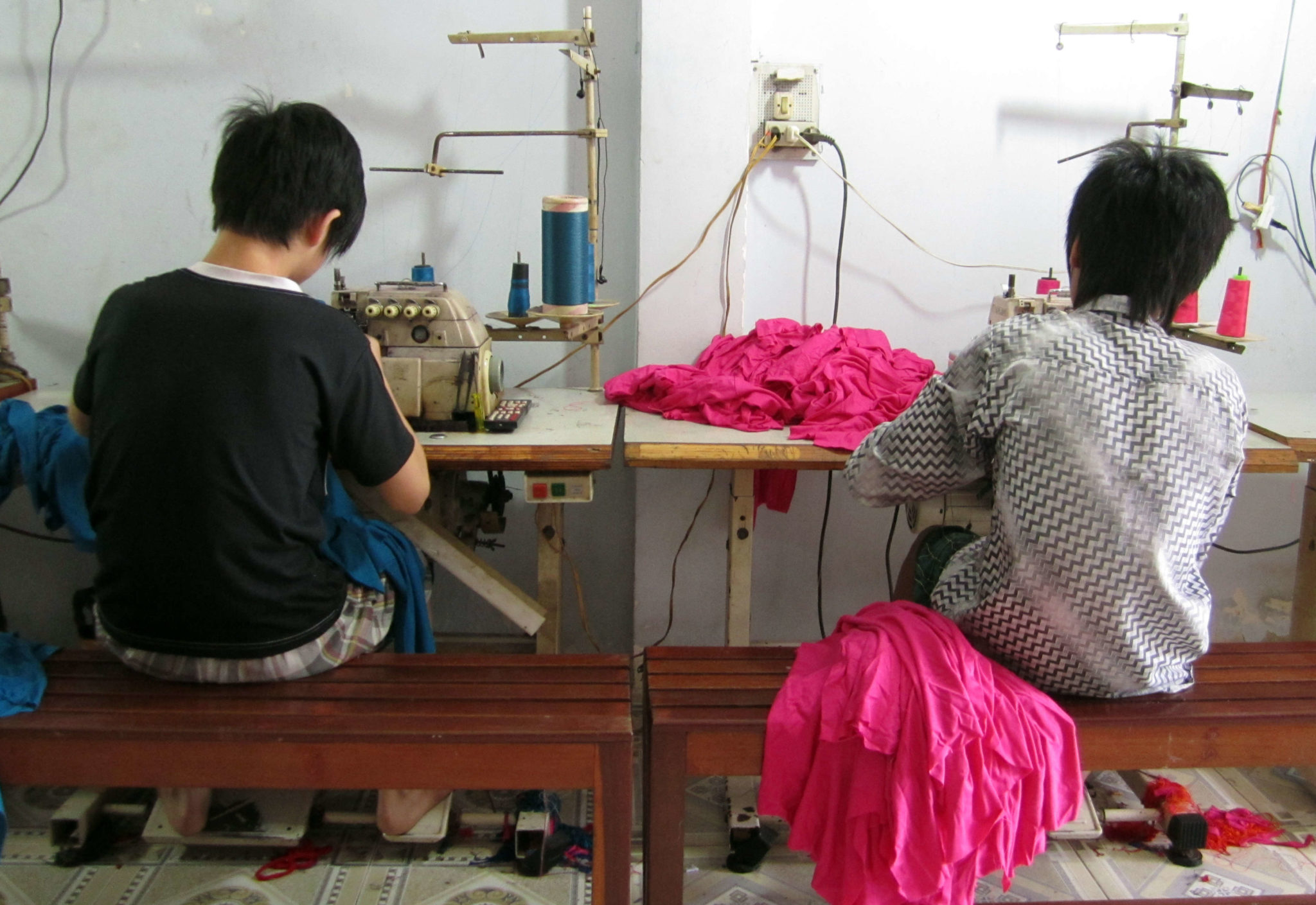
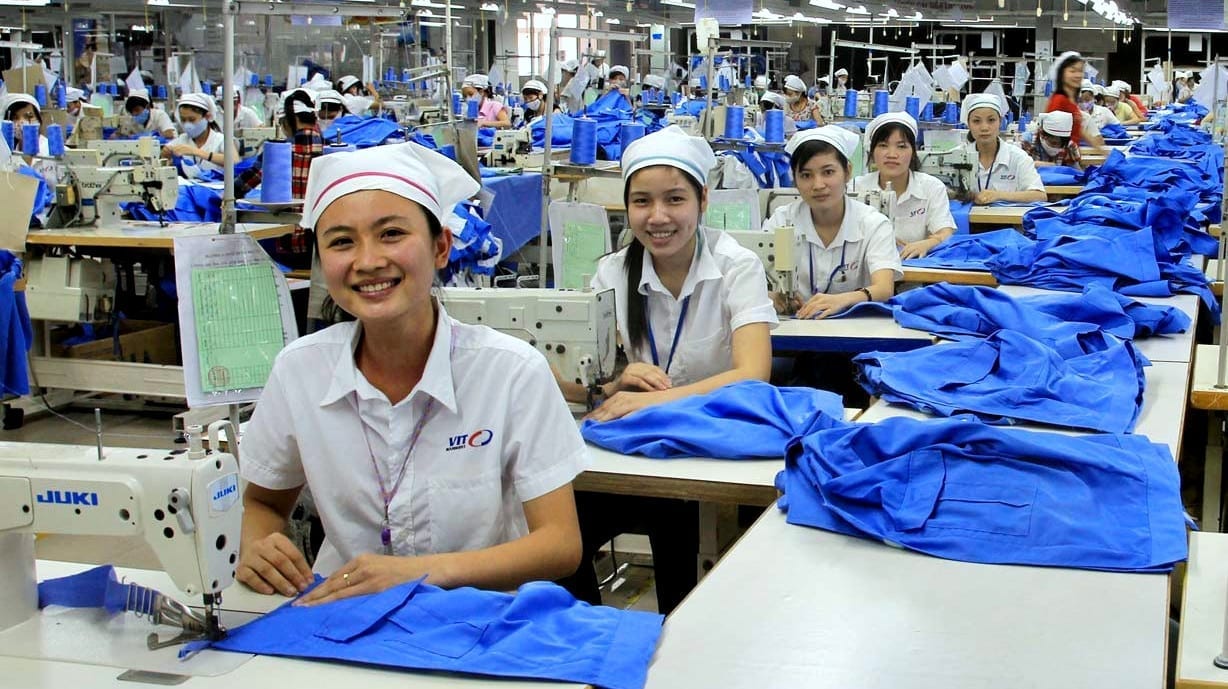
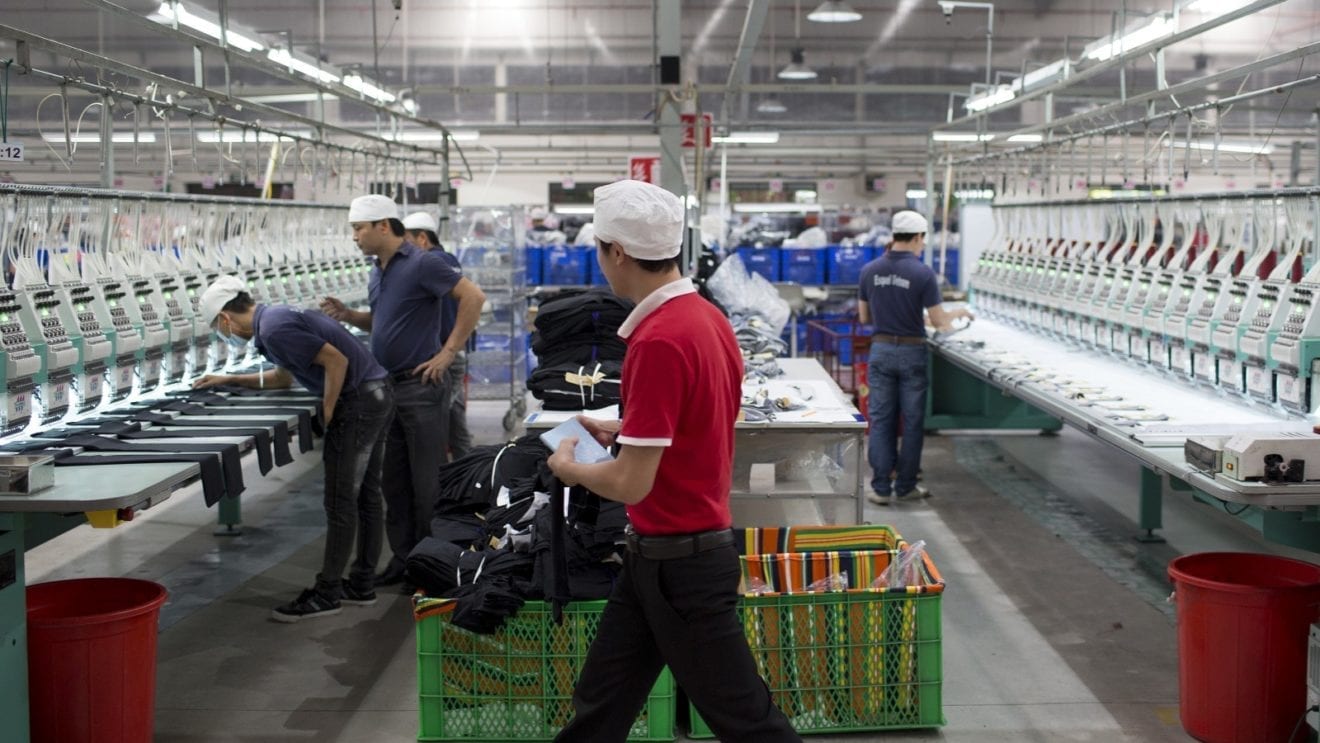
    The textile industry, Vietnam’s key exporter, faces hurdles to further development since it is stuck in the low-value segment of the supply chain.

    Nguyen Thi Xuan Thuy, director of the Ministry of Industry and Trade’s Centre for Supporting Industrial Development, said at a recent forum that Vietnam’s textile industry is still dependent on import of production inputs.

    The country plans to have 30,000-76,000 hectares under cotton crops in the 2015-2020 period but had only 1,000 ha in 2017, and cotton production that year was only 1,000 tons against a target of 20,000-60,000 tons, she said.

    The country targets annual fabric production of one billion meters but there is no allocation of funds for it, and so most material has to be imported for production, Thuy noted.

    Vietnam imports half the raw material for production from China, and this means its textile products would not enjoy zero import tariffs under the trade pacts it has signed, she added.

    But local feedstock producers struggle to sell domestically. Vu Huy Dong, CEO of thread producer Dam San, said 90 percent of his output is exported to China.

    “Chinese importers buy the threads, dye them and sell them back to Vietnam at higher prices.”

    Textile firms are concerned that Vietnam’s environmental protection regulations create challenges for businesses.

    Pham Xuan Trinh, CEO of HCMC-based textile firm Phong Phu Corp, said some localities only provide 700 cubic meters of water a day to his company while the need is three or four times that.

    Government officials admitted that local authorities are reluctant to license textile production, especially dyeing, due to fear of pollution.

    Thuy said that Vietnam’s environment criteria for the textile industry are now even higher than Japan’s.

    Whether Vietnam continues to keep them to ensure clean manufacturing or lowers them to boost production of textile feedstock, there needs to be an orientation for development, she added.

    Vietnam exported $30.4 billion worth of textile products last year, up 16.6. percent from 2017, according to the General Statistics Office. It imported $12.9 billion worth of fabrics, up 13.5 percent.

  • Shandong Ruyi buys Invista’s global Lycra business

    Shandong Ruyi buys Invista’s global Lycra business

    Chinese textile and retail investment company Shandong Ruyi has bought the US-based Lycra business for an undisclosed sum. Shandong Ruyi, whose retail investments include Aquascutum and SMCP (Sandro, Maje, and Claudie Pierlot), will take over the world-famous lycra brand, all assets and contracts relating to Lycra from current owner Invista and rename the business The Lycra Company.

    Lycra’s CEO Dave Trerotola said in a statement the company was fortunate to have been acquired by Shandong Ruyi.

    “[The] company shares our vision and our commitment to delivering high-quality products, technical expertise, and unmatched marketing support to our valued customers,” he said.

    The new company will operate as an independent subsidiary, and will continue to manufacture advanced fibre and technology solutions for the apparel and hygiene industries. The Lycra Company also owns a raft of consumer and trade brand names, including Lycra HyFit, Lycra T400, L by Lycra, Coolmax, Thermolite, Elaspan, Supplex, Tactel, and Terathane.

    “With the continued investment of Ruyi, we look forward to working with our customers to bring exciting innovations to market. Our new shareholder’s textile and retail experience will be a tremendous asset as we develop differentiated fibres that deliver the lasting performance benefits consumers have come to know and expect from our brands,” said Trerotola.

    The acquisition includes eight manufacturing facilities, four research and development labs, 17 offices located in 14 countries, and about 3000 employees. Current management and employees will continue in their roles.

    Yafu Qiu, chairman of the board of Shandong Ruyi, promised his company would continue to invest in The Lycra Company’s innovation pipeline and brands in order to grow the business.

    “As a spandex producer ourselves, we have admired the iconic Lycra brand for years, and we see the value The Lycra Company adds to our business. We believe its assets and capabilities are a perfect complement to our own and will help strengthen our position as a world-class, fully integrated textile company.”

    The Lycra Company’s legacy stretches back to 1958 with the invention of the original spandex yarn, Lycra fibre.

    Shandong Ruyi Investment Holding is the largest textile and apparel company in China, and ranks among the Top 100 Chinese multinational enterprises. It is headquartered in Jining, Shandong and operates 13 domestic industrial parks.

  • Strong sales growth for India’s textile manufacturing sector in Q2

    Strong sales growth for India’s textile manufacturing sector in Q2

    The manufacturing sector, particularly textile and iron and steel segments, maintained its pace of sales growth in the second quarter of 2018-19 as compared to the year-ago period, the RBI said on Wednesday. Demand condition in the manufacturing sector “maintained its pace in the September quarter 2018-19 as reflected in strong sales growth (year-on-year)”, as per the RBI analysis of 2,700 listed private sector non-financial companies.

    “The manufacturing sector sales growth was mainly supported by robust demand conditions in chemical and chemical products, iron and steel, and petroleum products industries coupled with significant improvement recorded by textile industry,” the RBI said.

    The central bank said heavy moderation was seen in the sales growth of motor vehicles and other transport equipment, driven in part by a large adverse base effect, and pharmaceutical and medicine industries.

    The information technology (IT) sector also recorded further improvement in sales growth over the year-ago period.

    The manufacturing sector continued to record strong growth in net profits, which received support from other income.

    The RBI said companies in manufacturing sector posted a net profit of Rs 47,100 crore in the reported quarter, up 29.4 per cent from the same period last year. The data is based on abridged financial results of 1,734 companies in the manufacturing sector.

    “Despite continuous contraction in the telecommunication, the services (non-IT) sector posted a turnaround riding on the support from wholesale and retail trade,” the RBI said.

    The profit of IT sector, based on data of 172 firms, was Rs 17,700 crore in the second quarter, up 5.8 per cent over the July-September period of 2017-18.

    As per the RBI, the combined sales of 2,700 companies was Rs 9,81,800 crore in the September quarter, up 18.2 per cent from the year-ago period.

    Their net profit was Rs 71,900 crore, an increase of 41.7 per cent year-on-year.

    On expenditure front, manufacturing companies continued to face rising input cost (cost of raw materials, staff cost) pressures. In case of IT sector, staff costs accelerated in tandem with the improvement in sales growth, the RBI said.

  • Securing Raw Materials Key to Competitiveness of Indonesia’s Textile Industry

    Securing Raw Materials Key to Competitiveness of Indonesia’s Textile Industry

    Indonesia is set to become one of the top five textile and textile product producers in the world by 2030, and the Ministry of Trade is forging ahead with its Making Indonesia 4.0 roadmap, which prioritizes the development of a number of industries, including the textile sector.

    Muhdori, the trade ministry’s director tasked with the textile, leather, footwear and various other industries, said the implementation of the roadmap would strengthen the textile sector’s global competitiveness, as it improves efficiencies and product quality.

    “Being highly integrated from upstream to downstream, this sector is competitive and is supported by a large amount of human resources for its production activities,” he said.

    The challenge for the textile industry was to become more efficient, while continuing to improve human resource competencies, in accordance with technological development, he said.

    “Being both an export-oriented and labor-intensive sector, the textile industry has thus far contributed significantly to Indonesia’s economic growth,” Muhdori said.

    According to the Ministry of Industry, textile and textile product exports have continued to increase in recent years. The textile and textile product sector’s contribution to Indonesia’s gross domestic product amounted to a record $10.46 billion last year, while exports were valued at $12.58 billion, up 6 percent from 2016.

    Increased Exports

    The Ministry of Industry pegged textile exports at $13.5 billion this year, along with the creation of 2.95 million new jobs in the industry, while exports are projected to increase further to $15 billion next year, with the creation of up to 3.11 million jobs. This will increase the sector’s share of Indonesia’s total exports to 1.6 percent.

    The ministry is optimistic that this year’s growth target of between 4 percent and 6 percent can be achieved. The textile industry grew 3.45 percent last year, having nearly doubled from 2016.

    However, this growth target also calls for an increased supply of raw materials, which currently consist of 51 percent synthetic fiber, such as polyester and nylon, 37 percent cotton fiber, and 12 percent rayon.

    But the industry still faces obstacles in reaching its full competitive potential, as nearly all cotton must be imported. In contrast, 80 percent of synthetic fiber and 85 percent of rayon are domestically produced, with these numbers expected to increase further.

    Rayon is a cellulose material extracted from soluble wood pulp. It offers better absorption and breathability than cotton. Rayon fiber has various uses, including in clothing, bedding, towels, baby wipes, masks and personal hygiene products.

    According to Redma Gita Wirawasta, secretary general of the Indonesian Synthetic Fiber Producers Association (APSyFI), rayon is most in demand in the fashion industry due to several advantages, such as comfort and disposability, which make it environmentally friendly.

    “Indonesia has the potential to become one of the largest rayon industry players in the world, supported by extensive land availability and a suitable climate. This makes Indonesia comparatively superior to other rayon-producing countries,” he said.

    Raw Materials

    Redma Gita said the growth of the rayon fiber industry requires sustainable raw material supply through industrial plantations.

    “Rayon plants supported by industrial plants not only strengthen the structure of the textile industry, but also reduce its dependence on imported raw materials, which has been an issue for national textile competitiveness,” he said.

    “This upstream industry could even generate foreign exchange as some of its production is exported,” he added.

    The Ministry of Industry noted that the production capacity of the rayon fiber industry has risen substantially over the past three years. Production is expected to increase to about 700,000 metric tons this year, compared with 565,000 tons last year and 470,000 tons in 2016.

    Production capacity growth is expected to continue until 2021, when it is expected to reach 1.2 million tons.

    However, the industry faces challenges from environmental activists. Redma Gita refuted allegations from Canopy, an international nonprofit focused on forest conservation, which stated that raw materials for rayon fiber comes from ancient and endangered forests in Sumatra and Kalimantan.

    “Those accusations are baseless. They have provided no proof of this whatsoever,” he said. He also highlighted the importance of the government in supporting the development of the national textile industry.

    Machmud Thohari, a forestry expert, meanwhile also questioned the Canopy report’s use of terms such as ‘ancient’ and ‘endangered’ to categorize forests.

    “As far as I know, the terms ‘ancient’ and ‘endangered’ aren’t commonly used in the scientific classification of forests,” he said.

    Thohari said the term ‘ancient forest’ may have been used to refer to an old-age forest or one that is many, many years (i.e.: centuries) old.

    On a similar note, Riau Governor Wan Thamrin Hasyim also condemned the Canopy allegations, as he sought to highlight the strategic industrial potential of the province.

    “The accusation must be clarified, as it can deter investors and [negatively impact] Riau’s economic growth,” he said.
  • Vietnam textile firm bets on eco-friendly products

    Vietnam textile firm bets on eco-friendly products

    For price conscious Vietnamese consumers, an organic product more expensive than its normal version is not an attractive option, but one firm has decided to be persistent.

    The Phong Phu Textile and Garment Company introduced its made-in-Vietnam eco-friendly towel brand last December, attracting media attention as one of the first firms in the country to produce an organic textile product.

    The Mollis Organic towels are made from 100 percent organic cotton. No genetically modified organism, chemical fertilizer or pesticides are used in the making of this product, the company asserts.

    The company would strive to bring organic products to its customers although their production costs are high and profits uncertain, Pham Xuan Trinh, CEO of the Phong Phu Textile and Garment Company said.

    The company prices its organic towels from VND60,000-250,000 ($2.62-$10.91) depending on the size, about 20 percent higher than conventional products, while made-in-China towels are sold for just VND15,000 ($0.65).

    Since awareness of the importance and advantages of organic products is relatively low among a majority of Vietnamese consumers, Phong Phu is struggling to sell its organic towels to local customers.

    “We’ll continue to invest in organic products despite low profits with the hope that one day Vietnamese customers will see the true value of organic products,” he said.

    The company spent VND4 billion ($174,600) last year on research and development for its organic products.

    As Vietnam’s conditions are not currently suitable for growing organic cotton, the company imports its material from Bangladesh, India and Israel. The processing and manufacturing processes happen in Vietnam.

    The company has so far exported its organic towels to Japan and South Korea, aiming at the high-income customers in these countries.

    Phong Phu recorded a profit of VND149 billion ($6.5 million) in the first half this year, a growth of 7 percent from the same time last year, but most of it came from conventional non-organic products, including towels and denim jeans.

  • Mercury Home Textile Sews Up Deal with Manhattan Associates

    Mercury Home Textile Sews Up Deal with Manhattan Associates

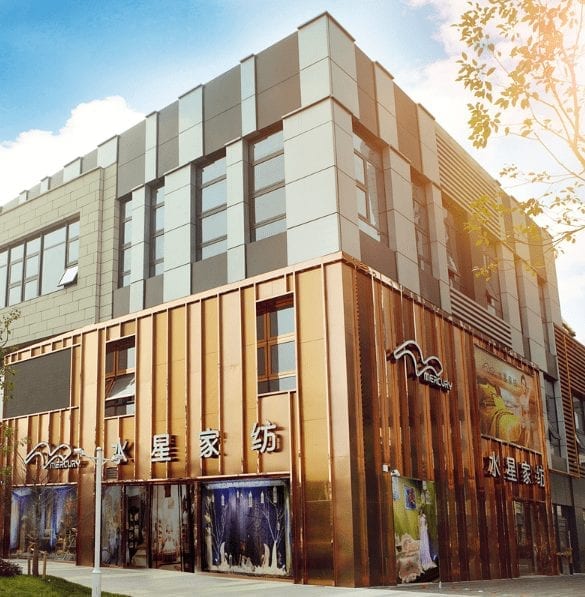
    Mercury Home Textile has selected Manhattan Associates, to optimise order fulfilment across its international, multi-channel retail operation and to serve as a foundation for its transition to an omnichannel business model with Manhattan’s Warehouse Management Solution (WMS).

    With more than 2,600 franchised stores in China and hundreds of partner stores across Europe, the Middle East, North America and Southeast Asia, Mercury Home Textile’s store network is complemented by a fast-expanding ecommerce operation which contributed almost half of the company’s revenue in 2017 and earned it the “Sales Champion” accolade for the home textile category on Alibaba’s Tmall.com marketplace during the most recent Double 11 shopping festival.

    Mercury Home Textile selected Manhattan based on the company’s track record of working with many of the world’s leading brands, its omnichannel commerce vision and the ability of its solutions to drive margin enhancement. Manhattan’s solutions will replace Mercury Home Textile’s legacy supply chain technologies and will fully integrate with the company’s other enterprise systems.

    Meng Yuanyuan, CIO at Mercury Home Textile, said, “The Manhattan solution will provide us with a common, scalable platform to underpin our domestic and international growth as we transition to an omnichannel model. It will improve visibility of inventory and data, increase product availability and drive operational efficiency improvements across our global supply network. With a more flexible fulfilment approach and improved service levels, we will be able to drive customer loyalty, revenue and profitability.”

    Stone Chen, General Manager of Manhattan Associates, Greater China said: “Our platform will create exceptional value for Mercury Home Textile. As its footprint expands, Mercury Home Textile can be confident in its ability to organise and optimise operations, speed the flow of goods and information, and enjoy flawless execution across inventory, labour and space.”


  • Australian brands named and shamed

    Australian brands named and shamed

    A host of non-governmental organisations and unions have accused prominent Australian retailers of refusing to sign an updated version of the 2013 Rana Plaza accord on the eve of the fifth anniversary of the Bangladesh building collapse.

    Oxfam Australia, Baptist World Aid, the Australian Council of Trade Unions and others are urging Australian brands to sign the 2018 version of the safety accord before the original 2013 agreement expires next month.

    The 2013 document, struck in partnership with more than 200 brands in the wake of the Rana Plaza Building collapse, which killed more than 1100 workers in Bangladesh, outlines standards and commitments to improving conditions for garment factory workers.

    The group said 2013 signatories such as Noni-B, Workwear Group and Licensing Essentials were “dragging their feet” and had not yet signed the new agreement, while those who had not signed the 2013 accord, such as Myer, Just Group, Best and Less and Country Road, had not yet committed to the updated agreement either.

    “Signing the Accord is about ensuring the absolute basics in the rights of more than two million garment workers – more than 70 per cent of whom are women – in Bangladesh,” Oxfam Austraia’s chief executive Helen Szoke said.

    A variety of retailers have already signed the updated agreement, including Kmart, Big W, Cotton On, Specialty Fashion Group and APG and Co.

    Globally Swedish fashion giant H&M, PVH Brands, Arcadia Group and Aldi are all already signatories.

    The new agreement maintains key features of the 2013 accord, such as independent safety inspections and the institution of remediation programs for workers, while extending safety committee and training initiatives to all factories covered.

    There are also new provisions in the legally binding accord related to freedom of association rights.

    Rob Wayss, executive director and acting chief safety inspector of the accord said that the agreement builds on the fundamental elements outlined in the 2013 accord.

    “The new agreement demonstrates that international brands and global trade unions recognise the positive impact of the Accord and the need for the Accord to continue its work in Bangladesh to ensure that factories are made safe and stay safe,” he said.

    Aussie brands failing the grade

    Last week Baptist World Aid released its annual ethical fashion report, which found that only a small minority of Australian retailers are making the ethical grade when it comes to their supply chains.

    Some brands, such as Decjuba have opted not to participate and were given F scores.

    Decjuba has been the subject of an email blast by Baptist World Aid in the days following the release on the report, but the brand has defended its ethical veracity, saying that BWA’s report reflects its own philosophy.

    “We appreciate the intentions of the Baptist World Aid Guide, but also recognise it as an unregulated survey driven by the Baptist World Aid Organisation’s own set of beliefs,” the company said last week.

    Others such as A scorer Cotton On Group have embraced the report and have worked towards improving their score.

    “We know that our responsibility goes far beyond selling clothes and we endeavour to use our size and scale of operations to have a positive impact on people, communities and the planet,” Cotton On Group’s risk and sustainability general manager James Hubbard said.

  • India to double apparel, textile market by 2025

    India to double apparel, textile market by 2025

    The textile and apparel industry in India is worth some $110 billion, and is the nation’s second largest employer, after agriculture, providing direct employment to more than 45 million people and indirect employment to another 60 million.

    All this is set to soar by 2025, according to Indian Prime Minister Modi, who addressed attendees this week at the Textiles India 2017, a three-day event, which saw the PM map out a series of targets for India’s textile industry.

    Modi said that the domestic market for apparel and lifestyle products is worth $85 billion and is expected to grow to $160 billion by 2025, boasted by increased spending from wealthier Indians.

    “This growth will be driven by the rising middle class,” he said.

    Modi also hailed his nation’s liberated direct investment policies, allowing international firms to inject money into the burgeoning sector.

    “We have one of the most liberal investment policies for foreign investment in the textile and apparel sector,” said Modi.

    “We allow 100% foreign direct investment through automatic route in the textile and apparel sector. I think the time has now come for us to concentrate on textile exports in a big way,” he added.

    Moreover, the textile industry is expected to create about 35 million more jobs by 2024-25, with exports rising from $39 billion to $300 billion by that time, said Modi.

    India is the world’s second-largest exporter of textiles, after China. Apparel exports accounted for an estimated $17 billion, making India the sixth-largest exporter of garments in the world.

  • Textile and garment industry undergoes restructuring

    Textile and garment industry undergoes restructuring

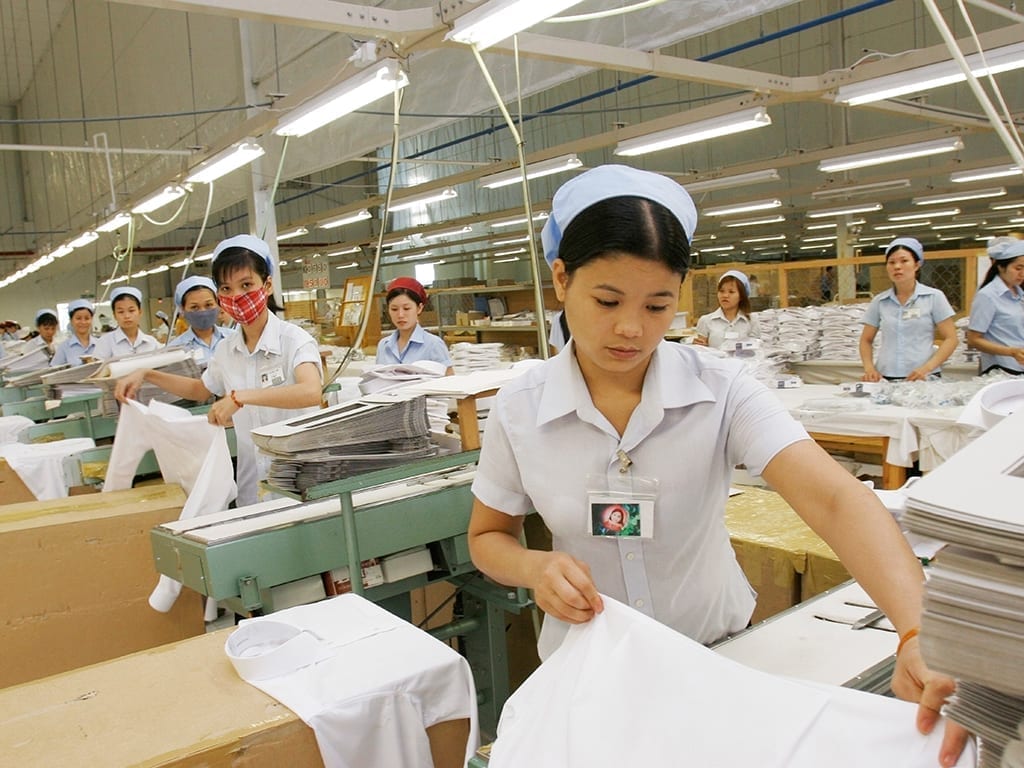
    Restructuring the textile and garment industry involves drawing up a new development strategy, using new technologies, and closing fiber and textile factories that use outdated technologies.

    The Nam Dinh Textile & Garment JSC has undergone ‘major surgery’. The number of workers has been cut from 18,000 to 4,000. However, the remaining workers’ output equals that of 18,000 workers in the past.

    The textile & garment industry has been improving satisfy the requirements of global value chains. The productivity has improved thanks to renovation of machines and equipment and the removal of factories with outdated technologies. However, many things still need to be done.

    MOIT is going to submit to the government a plan to restructure industry in general in 2016-2020, which includes the textile & garment industry.

    Commenting about the plan, Le Tien Truong, deputy chair of the Vietnam Textile & Apparel Association (Vinatas) said the figures shown in the plan were not reliable.

    The plan, for instance, says that productivity is VND35-40 million a year, while Truong believes the figure is inaccurate and it is lower than the real figure.

    If noting that Vietnam exported $28 million worth of textiles & garments in 2016 and imported $17 billion worth of input materials, the average productivity would be VND140 million per worker.

    The plan shows several targets such as repositioning enterprises geographically and shutting down factories with outdated technologies, but it does not include implementation measures.

    There are three ways to improve productivity in the textile & garment industry, according to Truong.

    First, using few workers and high-productivity machines. Second, shutting down unprofitable enterprises and reducing the number of enterprises consuming a lot of power. Third, adjusting the product structure to choose enterprises with higher added value.

    Truong Duy Hung, director of MOIT’s planning department, the compiler of the plan, believes the weak point of textile industry is the lack of input materials.

    Analysts say that if Vietnamese enterprises make input materials, their products would be able to replace Chinese products and can compete with Chinese products in price.

    In current conditions, however, it is easier and faster to seek input materials from China than domestic sources. This is because China organizes large-scale production and  always has large stocks, while Vietnam only makes products to order.

    Vietnam earned $6.84 billion from garment and textile exports in the first quarter of this year, 11.2 percent more than in the same period last year, according to Vinatas.

  • Indonesia`s exports of textile  and textile products growing

    Indonesia`s exports of textile and textile products growing

    Indonesias exports of textile and textile products (TPT) were valued at US$2 billion in the first two months of this year or 3 percent higher than in the same period last year.

    “TPT industry is a labor industry providing jobs for around 3 million people that it could serve as a social safety net,” Industry Minister Airlangga Hartarto said in a statement received here on Monday.

    Airlangga said in 2016 investment in TPT industry was worth Rp7.54 trillion with exports valued at US$11.87 billion employing 17.03 percent of workers in the manufacturing sector.

    The minister said he was optimistic the countrys TPT industry could compete well globally especially as the industry has been integrated from upstream to downstream sectors.

    The minister, however, said the industry needs revitalization as the majority of factories now use old machines especially weaving and knitting factories. The machines need replacement as they are no longer efficient .

    “Revitalization, we have begun by using new machines and equipment has shown positive result , but the program has to be continued,” he said.

    In addition, economic policy packages already issued by the government should be utilized by TPT industrialists by increasing investment, otherwise, in five years, the countrys TPT industry would find it more difficult to face competition such as from India, China, Vietnam and Bangladesh, he said.

    He said currently the Industry Ministry is preparing a special regulation on fiscal incentive in the form of fiscal allowance for export oriented labor intensive industry. Industrialists will have income tax discount to be used for business expansion, he added.

    He said the Industry Ministry is seeking comprehensive cooperation agreement with Europe and the United States in the hope of benefit in the form of better tax facility.

    He said small industries would also be facilitated to boost exports.

    Director General of Chemical, Textile and Multifarious Industries Achmad Sigit Dwiwahjono said imports of cloth are also a challenge hampering investment in TPT industry. The Industry Ministry, therefore, is teaming up with the trade Ministry to curb textile imports to protect the country TPT industry.

    In addition, the Industry Ministry encourages investment in the upstream sector to back up the domestic textile industry, Sigit said.

  • Vinatex and Itochu sign strategic co-operation agreement

    Vinatex and Itochu sign strategic co-operation agreement

    Viet Nam Textile and Garment Group (Vinatex) on Monday signed a strategic co-operation agreement with Japanese firm Itochu, witnessed by PM Nguyen Xuan Phuc and his Japanese counterpart Shinzo Abe in Ha Noi.

    Itochu is expected to help Vinatex make a change in textiles and garment production and business method from Cut—Make—Trim to Free on Board, developing a sustainable retail distribution network to enjoy long-term benefits.

    Under the agreement, trading firm Itochu will assume the role of a consulting partner for Vinatex and its member companies in developing the textiles and garment supply chain from fibre to thread, fabric and sewing, retail distribution, co-operation and introducing domestic and foreign partners.

    Shuichi Koseki, senior managing executive officer, manager of CP·CITIC Strategy Office, president of Textile Company and representative director, said Viet Nam’s textiles and garment were an important part of Itochu, therefore it wanted to develop this area with Viet Nam, so that Vinatex could become its number one partner.

    In the near future, he said Itochu would boost co-operation between the two sides to develop textiles and garment products and supply them globally.

    Speaking at the signing ceremony, Le Tien Truong, general director of Vinatex, said the two sides would discuss in detail the co-operation plan and implement actions immediately to make a change in Vinatex’s textiles and garment production and business method from Cut—Make—Trim to Free on Board, developing a sustainable retail distribution network to enjoy long-term benefits.

    Itochu signed a framework agreement to support several projects in dyeing and materials production in Viet Nam, training in the country’s dyeing sector and utilising the capacity of Vinatex’s dyeing factories in the central region in 2015.

    At that time, Itochu owned five per cent stake in Vinatex through a subsidiary company.

    Itochu, one of the leading economic groups in Japan operating in various areas, including textiles and garment, has co-operated with some 100 textiles and garment companies of Viet Nam.

  • Vietnam’s textile exports fray to 10-year slump in 2016

    Vietnam’s textile exports fray to 10-year slump in 2016

    A strong Vietnamese dong and sluggish demand from key markets have dragged on textile exports this year. Vietnam’s exports of textiles and garments are projected to increase by 7 percent this year to $29 billion, according to Vinatex, the country’s top textiles manufacturer, far below the trade ministry’s previously-targeted $31 billion and the lowest growth in the last decade.

    Customs statistics show that Vietnamese textiles and garment exports hit about $21.56 billion from January to November, up 4.6 percent from the same period last year.

    Vietnam, the world’s fifth largest garment exporter, has maintained double-digit growth, ranging on average from 10 percent to 36 percent, since 2001 when the country earned $2.2 billion from exporting textiles and garments.

    The investment ministry, in a recent report, attributed the downturn to sluggish demand from key markets, including the U.S., the European Union and Japan.

    Customs figures show that from January to November this year, Vietnam’s textiles and garment shipments to the U.S., which accounted for 47.9 percent of the total during the period, edged up 4.7 percent from a year ago to about $10.33 billion.

    Besides, the State Bank of Vietnam has so far this year managed to keep the dong from weakening against other major currencies, said clothing exporters, adding that a stronger dong was the final straw that broke the camel’s back for their businesses.

    Garment exporters are also faced with increasingly intense competition from outsourcing hubs Cambodia and Bangladesh, which are currently subject to import tariff breaks in the U.S. market. Market access for Vietnam’s clothing in the U.S. is limited by an average tariff of about 11.1 percent, with tariffs on some textile and apparel products nearing 30 percent.

    About 85 percent of Vietnamese enterprises in the textile industry are focused on labor-intensive cutting and sewing, making the country an outsourcing hub for foreign fashion companies, said Le Tien Truong, chief executive of Vinatex.

    However, foreign investors are eying emerging hubs such as Myanmar, Bangladesh and Sri Lanka where labor costs are lower than in Vietnam.

    Vietnam has four regional minimum wage brackets currently ranging from VND2.4 million to 3.5 million (from $105 to $154). The regional minimum wage has increased by about 12-15 percent on a yearly basis between 2014 and 2016, and is forecast to go up by 7.3 percent next year.

    Vietnam’s exports rose an estimated 6.7 percent on-year in the first nine months to $128 billion, well below the 10 percent growth target set by the government.

    The economy, widely seen as among the most resilient in a turbulent Asia, expanded by 5.92 percent from January to September, much lower than 6.53 percent a year ago, said the General Statistics Office.

    The annual growth forecast for this year has been lowered to between 6.2 and 6.5 percent from the 6.7 percent previously targeted, according to Prime Minister Nguyen Xuan Phuc.

  • Vietnam textile firms need to up ties

    Vietnam textile firms need to up ties

    Domestic textile enterprises and logistics service providers should work together to reduce costs and improve their competitiveness, according to experts.

    Nguyễn Tường, Vice Chairman of the Việt Nam Logistics Association, said the textile industry needs to import raw materials from abroad and export products to foreign markets.

    Working together, many enterprises could purchase raw materials by combining their orders to create a large shipment, which will help significantly reduce transportation costs, he said.

    The costs of logistics currently account for nearly one-third of the costs of each textile product exported, so the Vietnamese garment sector could save more than US$1 billion per year by reducing this cost.

    Additionally, Trương Văn Cầm, Vice Chairman of the Việt Nam Textile and Apparel Association, said most textile companies currently perform outsourcing jobs, causing them to depend on the supply of raw materials and transportation services of providers assigned by their partners.

    Most of these providers are foreign companies, thus the market share for local logistics companies has been narrowed, Cầm said.

    Further, high transportation costs are undermining the competitiveness of Vietnamese goods in international markets, he added.

    Director of the Nam Việt Co Ltd, Nguyễn Đức Chương, said that during peak seasons, textile firms have to pay the container imbalance charge (CIC) – a kind of sea freight charge which a carrier requires to offset costs arising from the transfer of a large amount of empty containers from one place to another.

    This charge is only affordable to enterprises with large-scale import-export orders, such as Nhà Bè Corporation or Việt Tiến Garment Joint Stock Corporation, but is a heavy burden on small and medium-sized textile firms.

    Meanwhile, there is a lack of confidence between the owners of goods and Vietnamese logistics service providers due to low-quality and high prices, said representative of the Đam San joint stock company, which specialises in producing fibers.

    Located in the northern province of Thái Bình, the firm has to spend $3 billion to $4 billion every year on logistics costs.

    Self-services

    To improve the quality of the supply chain and reduce logistics costs, many textile enterprises have turned towards “self-service”.

    A representative of the Nhà Bè Corporation said the corporation has established the NBC logistics company to carry and load goods, and to export and import procedures for its shipments.

    To facilitate the transaction, NBC logistics firms also opened a representative office in China’s Shanghai, and many textile enterprises are seeking to hire it to perform export and import services.

    So far, conducting self-logistics services for approximately 70 per cent of their goods has helped the corporation save $2 billion per year. Previously, it had to pay $6 billion for import-export of goods annually.

    However, self-service is still not a solution for small and medium-sized firms.

    Therefore, business leaders in the two sectors agreed that it was necessary for the Ministry of Industry and Trade and the Ministry of Transport to assist the coordination and connection between shippers and the owners of goods.

  • H&M stages Myanmar textile conference

    H&M stages Myanmar textile conference

    More than 100 textile industry stakeholders, among them apparel brands, NGOs, trade union representatives and suppliers, recently attended H&M’s Fair and Equal conference in Yangon, Myanmar. Key note speeches from the ILO’s development partner relations coordinator Peter Rademaker, Impact’s founder and director Rosey Hurst and H&M Group’s head of sustainability Anna Gedda, were followed by a panel discussion and several break-out sessions about social topics such as fair living wages.

  • Government to take firm action against illegal textile imports

    Government to take firm action against illegal textile imports

    The government plans to take firm action against illegal imports of textile and textile products as these have been hindering business and impacting ind ustrial growth in the manufacturing sector.

    “We will take firm action against importers who have so far misused facilities to avoid official levies by the government,” Finance Minister Sri Mulyani said at a press conference here on Thursday.

    She stated that strengthening the textile industry and the textile products sector was very important as this sector has been asked to increase production to boost national exports.

    Smuggling of used clothes into several regions of the country to meet the increasing demand for cheap clothes has been disrupting growth of textile and textile products sector.

    Certain people were illegally importing products. These people held import licenses to transfer goods to other parties. Businessmen dealing in textile and textile products exploited these licensed importers.

    “We will enforce the law. We have invited police officers to a meeting attended by the chief of the crime investigation department to take a stronger and more consistent action against illegal imports,” she assured.

    Sri Mulyani informed that she would also invite other ministries to review regulations relating to textile and textile products imports. Some of these regulations overlap and run against the needs of the public, trade and industry.

    The TPT (textile and textile products) is a labor intensive industry that can absorb a lot of workers and even create new jobs in the distribution and trade sectors, she added.

    In 2016, Indonesias TPT exports contributed 9.61 percent to the total non-oil and gas exports, which is the second highest after palm oil exports, recorded at 10.3 percent.

    Based on national law enforcement data in 2015, 162 cases of smuggling were aborted by the Directorate of Customs and Excise of the Ministry of Finance. Until October this year, 151 cases of TPT smuggling cases had come to light.

    The Directorate of Customs and Excise would tighten coordination and supervision in cooperation with the Corruption Eradication Commission, the Indonesia Police, the Ministry of Trade as well as the Ministry of Industry to solve the TPT import problem.

    With improved TPT import policies and their implementation, the national manufacturing industry is expected to grow while domestic prices of TPT would be more stable and state revenues more optimal.