Tag: Thailand

  • Central Group to buy Zalora’s businesses in Thailand and Vietnam

    Central Group to buy Zalora’s businesses in Thailand and Vietnam

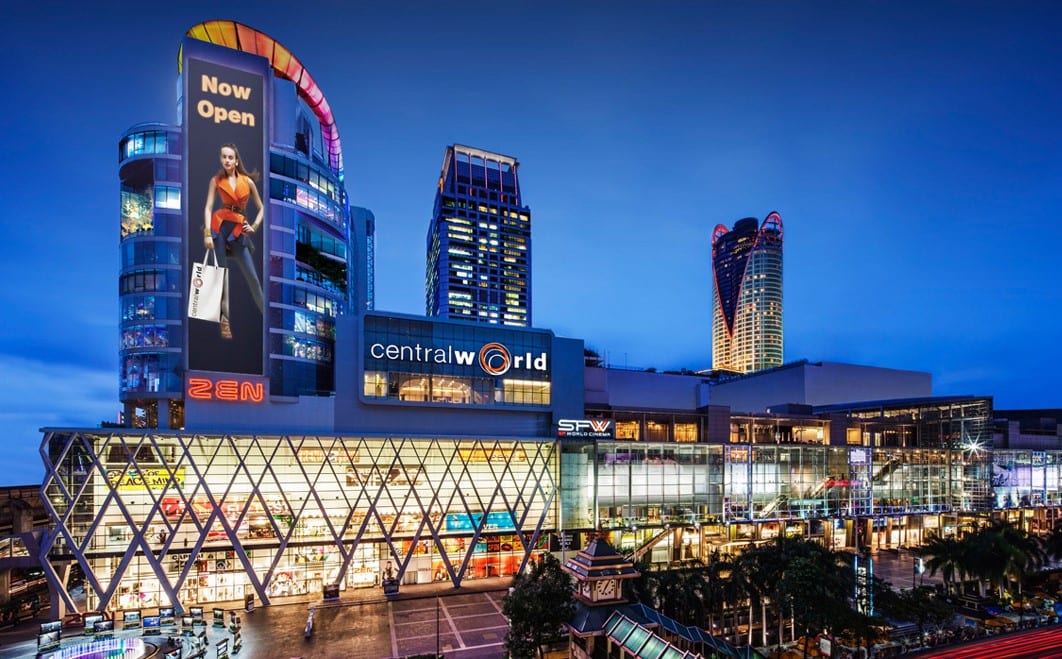
    Central Group is set to buy Zalora’s businesses in Thailand and Vietnam, according to reports.

    Zalora is a fashion-focused e-commerce site.

    Central Group’s assets, which include multiple shopping malls and national department store chains, are worth close to $10 billion and it employs some 70,000 people.

    The deal to buy the country businesses from Zalora will cost Central Group around $10 million each, reported TechCrunch.

    Sources close to Zalora suggest that the company is selling the businesses in an effort to streamline its costs and move towards becoming profitable.

    Even though Zalora was only started four years ago, the company claims 10 million people have downloaded its mobile apps and the company makes 1.4 million transactions per year across 10 countries in Asia-Pacific.

  • Tesco Lotus speeds expansion

    Tesco Lotus speeds expansion

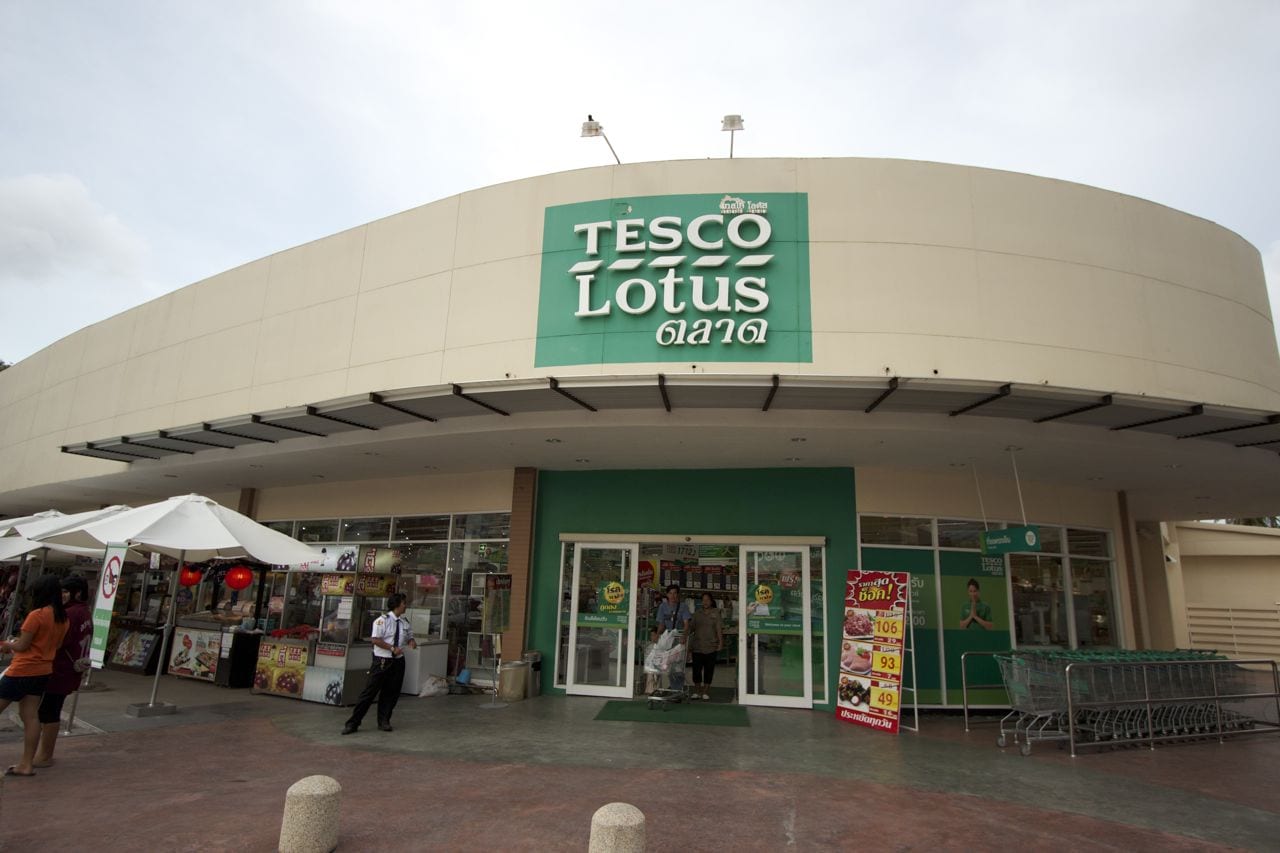
    Thai retail chain Tesco Lotus plans to continue expanding with at least 65 new stores this year, despite the market being sluggish.

    “We saw a small improvement in the market in terms of local consumption, but we are optimistic the Thai market is still promising as it is the second-largest unit outside the UK,” CEO John Christie said in an interview with The Nation.

    He says the company will also work on enhancing the customer shopping experience and improving online outlets.

    Tesco Lotus opened 65 stores last year, and is looking for opportunity in medium-size provinces new to the brand. Smaller stores will be opened in Bangkok, while large ones will be opened in the provinces, and the company aims to employ at least 3000 more staff.

    Eighteen stores will be renovated, aiming to enhance the shopping experience particularly for children and family groups. The company hopes it will have more visitors than last year’s 15 million, which was 2 million more than the previous year.

    Also, Tesco Lotus plans to continue developing its online shopping platform with its partners this year.

    “We are now offering more than 8000 non-food products via Lazada,” said Christie. These include electronic devices, and beauty and healthcare products.

    And in co-operation with government agencies and local communities, the company plans to launch 22 Pracha Rath projects across Thailand so it can buy more farm products. It is planning 150,000 tonnes in purchases this year, up from 100,000 tonnes last year.

    There are 12 communities in the Pracha Rath scheme, which aims to promote the development of innovative products, human resources, and research and development in 10 business sectors, including logistics, food processing and innovative agriculture.

  • AEON partners with Major Cineplex Group  to Enjoy Favorite Flicks and Free Snack

    AEON partners with Major Cineplex Group to Enjoy Favorite Flicks and Free Snack

    Mrs. Waraporn Nilpanich (Left), Assistant Vice President – Credit Card at AEON Thana Sinsap (Thailand) Public Company Limited and Mr. Niti Pattanapakdee (Right), Chief Media Officer of Major Cineplex Group Public Co., Ltd., announced the special joint promotion exclusively for AEON Royal Orchid Plus Platinum, AEON Gold and AEON Classic credit cardholders. With every movie tickets purchased, members can enjoy   a free Small Combo Set (22 Oz. drink and 46 Oz. popcorn) for the first 100 members per branch. The promotion is exclusive to Quatier Cineart and all Major Cineplex theaters on April 30th only.

    For more information about AEON activities, please visit www.aeon.co.th


  • Thai Kasikornbank to cut retail and overdraft lending rates

    Thai Kasikornbank to cut retail and overdraft lending rates

    Kasikornbank Pcl, Thailand’s fourth-largest lender, will cut its minimum retail and minimum overdraft rates by 25 basis points (bps) on April 25, it said in a statement.

    The cut, which follows similar move by Bangkok Bank on Thursday, is aimed at helping the bank’s small and medium-sized (SME) business and retail customers who have been hit by the slowing economy, the bank said.

    Kasikornbank is among the top four lenders that cut their minimum lending rate (MLR) by 25 bps on April 5.


  • Thai government leans on AIS to surrender 8m users to True

    Thai government leans on AIS to surrender 8m users to True

    A newspaper report has accused deputy prime Minister Wissanu Krea-ngam, NBTC Secretary-General Takorn Tantasit and ICT Minister Uttama Savanayana of trying to strongarm AIS into handing over 8 million 2G customers to TrueMove in a meeting last week.

    In a report, Thai-language newspaper Manager said that the three – along with ICT Permanent Secretary Songporn Komolsuradej, AIS CEO Somchai Lertsutiwong and True CEO Supachai Chearavanont – recently held a meeting in which Takorn had drafted an MOU for the participants to sign.

    The MOU would force AIS to sign a new roaming agreement with True and scrap its current 2G roaming agreement with Dtac. Another key point was that it would also give the NBTC oversight and jurisdiction in number portability from AIS to TrueMove. The MOU allegedly stipulated that the NBTC’s judgement in this matter would be final and there would no appeal.

    The report said that Takorn kept trying to coerce the AIS CEO into signing the MOU but Somchai refused, saying he had to consult with his board first and that besides there was no need as of yet as AIS was going to bid for the 900-MHz spectrum and even if that failed, they had the 2G roaming agreement with Dtac.

    Manager quoted the MICT source as saying the NBTC-drafted MOU clearly was illegal not just under NBTC’s own laws, but under Thailand’s WTO obligations.

    Manager quoted another anonymous source in the NBTC saying that the meeting was called under the orders of the “big boss” who wants the matter to be done and dusted as soon as possible. The source also highlighted conflict of interest pointing out that Deputy Prime Minister Wissanu’s son was now working at one of AIS’ competitors.

    Wissanu’s son, Dr Witchaya Krea-ngam, is currently a specialist for government relations at True Corporation.

    The draft MOU has also been leaked online by someone calling themselves @NBTCnews on Twitter.

    Earlier the issue of number portability had descended into a fierce war with True launching an aggressive campaign and paperless MNP request system that Dtac and AIS refused to acknowledge as legally binding. The NBTC ordered Dtac and AIS to accept the paperless porting requests, to which the two telcos stood their ground saying they would obey the law.

  • Ninja Van gets $30m capital boost

    Ninja Van gets $30m capital boost

    Dubai-based Abraaj Group has led a US$30-million Series B round of fundraising for Singapore’s Ninja Logistics (Ninja Van), a technology-enabled last-mile logistics provider with a presence in Indonesia, Malaysia and Singapore, and just lately Vietnam.

    Ninja Van plans to use the fresh capital to roll out in the Philippines and Thailand this year, and to also upgrade its systems and triple its customer service headcount.

    Others in the funding round were existing investor Monk’s Hill Ventures joined by B Capital Group and YJ Capital. In its Series A in March last year, the startup raised US$2.5 million. This latest transaction is subject to customary closing conditions and is expected to wrap by the end of the month, according to Abraaj.

    Ninja Van uses algorithms to solve complex logistics issues and optimise delivery routes. It also forges partnerships with complementary transport fleets through a capacity-sharing model.

    While starting out as a logistics provider for eCommerce businesses, Ninja Van now supports more than 3000 clients across a range of industries, delivering about 15,000 parcels a day.

    “This vote of confidence from Abraaj and our other new investors will allow us to expand beyond tier-one cities in Southeast Asia,” says Ninja Van cofounder/CEO Lai Chang Wen.

    Abraaj is an investment firm specialising in private-equity investments in the Middle East, North Africa and South Asia. This is its 28th investment into Southeast Asia.

  • Dtac won’t participate in 900-MHz re-auction

    Dtac won’t participate in 900-MHz re-auction

    Thailand’s Dtac has decided not to participate in the upcoming re-auction of 900-MHz spectrum due primarily to the high reserve price.

    The operator has informed regulator NBTC that it does not plan to bid in the auction

    Dtac will instead rely on its 20 MHz of 1800-MHz bandwidth held under a concession agreement due to expire in 2018. The operator also has 15 MHz on the 2100-MHz band under a 3G licensing agreement.

    But Dtac CEO Lars Norling has urged the regulator to bring the 1800-MHz spectrum up for auction before its concession expires.

    Rival operators AIS and True Move have both expressed a strong interest in securing the spectrum, and have both picked up bid documents for the June auction, the report states.

    This is despite the military government’s decision to set the reserve price at the 75.65 billion baht ($2.16 billion) bid by Jas Mobile Broadband before it defaulted on its first instalment payment, triggering the need to reallocate the spectrum.

  • Thai telecoms regulator weakened in new frequency act

    Thai telecoms regulator weakened in new frequency act

    Thailand’s military cabinet has approved a new frequency act that puts the formerly independent regulator under the control of the new digital economy commission while the selection process now goes through the executive branch.

    The new National Broadcasting and Telecommunications Act calls for a single seven-member board (down from two five-member boards and one chair, one for broadcasting and one for telecommunications).

    Selection will be through a committee consisting of the president of the constitutional court, the president of the supreme court, the president of the administrative court, chairman of the national anti-corruption commission, the auditor-general, the chairman of the national human rights commission and the governor of the Bank of Thailand. The committee will select 14 individuals which are passed to new Digital Economy Ministry (previously the ICT Ministry) which will forward them to the senate for selection which will forward the final selection to the Prime Minister.

    The new NBTC act stipulates that the NBTC will have to follow the policy of the Digital Economy Commission and abide by the government policy statement. The new DE Commission is chaired by the Prime Minister.

    The DE Commission will have the final say if there is dispute whether the NBTC is complying with government policy or not.

    Matters of satellite and orbital slots are no longer a matter for the NBTC.

    Spectrum allocation for telecommunications will be by auction except for certain designated uses.

    In an earlier draft it was understood that the DE Commission could allocate spectrum for good causes and only let the NBTC handle commercial spectrum.

    Another key change is in the NBTC budget which must be efficient and economical and the NBTC must obey any orders given by the auditor-general.

    In the transition period, the existing NBTC will continue until their term is over in September 2017 unless there are less than four NBTC board members remaining in which case the entire NBTC board will be considered expired.

    Meanwhile the new computer misuse act was also approved and will be put to the military-appointed legislature later this week. Leaked drafts show the bill to be draconian with the Digital Economy Ministry having immense power.

    The DE Ministry will have the power in censoring websites without the need for judicial review. It can arrest and fine hackers without any recourse for appeal or review in a court of law.

    Elsewhere Deputy Junta leader and defence minister General Pravit Wongsuwan has ordered police to closely monitor social media and to report any political activities to the military’s cyber warfare division over the course of the next five years.

    Junta leader and prime minister General Prayuth Chanocha last Friday announced a five year transitional period to democracy.

  • Alibaba entry stirs up Thai e-commerce

    The recent acquisition of Lazada Group by Chinese e-commerce giant Alibaba Group poses a challenge to local online product manufacturers and retailers who anticipate a potential flood of Chinese-made products.

    The move by Alibaba is expected to shake up Thailand’s e-commerce market. It’s also putting more pressure on other e-commerce companies.

    “The number of business-to-consumer e-commerce companies is likely to fall to only two to three over the next three years, down from five, because of fierce competition,” said Punnamas Vichitkulwongsa, chief executive of Ascend Group, a subsidiary of CP Group that operates the iTruemart and weloveshopping websites.

    “But the entry of Alibaba will spur competition in the local e-commerce market, which is likely to benefit Thai consumers and the industry,” he said.

    There are usually two dominant e-commerce players in a country, said Ms Punnamas.

    Pawoot Pongvitayapanu, president of the Thai E-Commerce Association and founder of Tarad.com, said if Alibaba continued using Lazada’s subsidised promotion strategy, the Chinese firm could become a dominant player in Thailand’s e-commerce ecosystem as it has its own payment and logistics systems for websites.

    However, local online product manufacturers, especially those that make IT accessories, consumer electronics and fashion items, will face a greater challenge from cheap Chinese products.

    Paul Srivorakul, group chief executive of aCommerce, believes Alibaba’s entry will create an innovative e-commerce market in Thailand, attracting more foreign investors.

    He expects more mergers and acquisitions in the local e-commerce industry next year as a result.

    Santit Jirawongkraisorn, co-founder of Lalamove Thailand, a Hong Kong-based on-demand delivery app provider, said existing e-commerce companies in Thailand would face intense competition from Alibaba’s presence. But the increased competition can drive consumer gains and promote the overall e-commerce market, he said.

    Alessandro Piscini, chief executive of Lazada Thailand, said Alibaba’s investment reflected the huge potential it saw in e-commerce for the region and the role it expected Lazada to play in the local markets.

    The partnership will bring significant synergies that enhance the online experience for both buyers and sellers in Thailand, he said.

    In a related development, PwC Thailand released its latest report on Global Total Retail 2016: They say they want a revolution which polled some 23,000 online shoppers in 25 countries to track retail consumer trends, including mobile shopping and social media influence.

    The report revealed that 51% of online shoppers in Thailand said they purchase goods directly via a social media channel, outpacing India (32%), Malaysia (31%), and China (27%).

    Fifty-three percent of Thai online shoppers said that customer reviews influenced their buying behaviour.

    The survey also showed that social media influenced 78% of shoppers globally, up from 68% in a similar study last year, with 92% of emerging market shoppers buying products based on social media recommendations.

  • More Thai Men Shopping for Women’s Underwear Online

    More Thai Men Shopping for Women’s Underwear Online

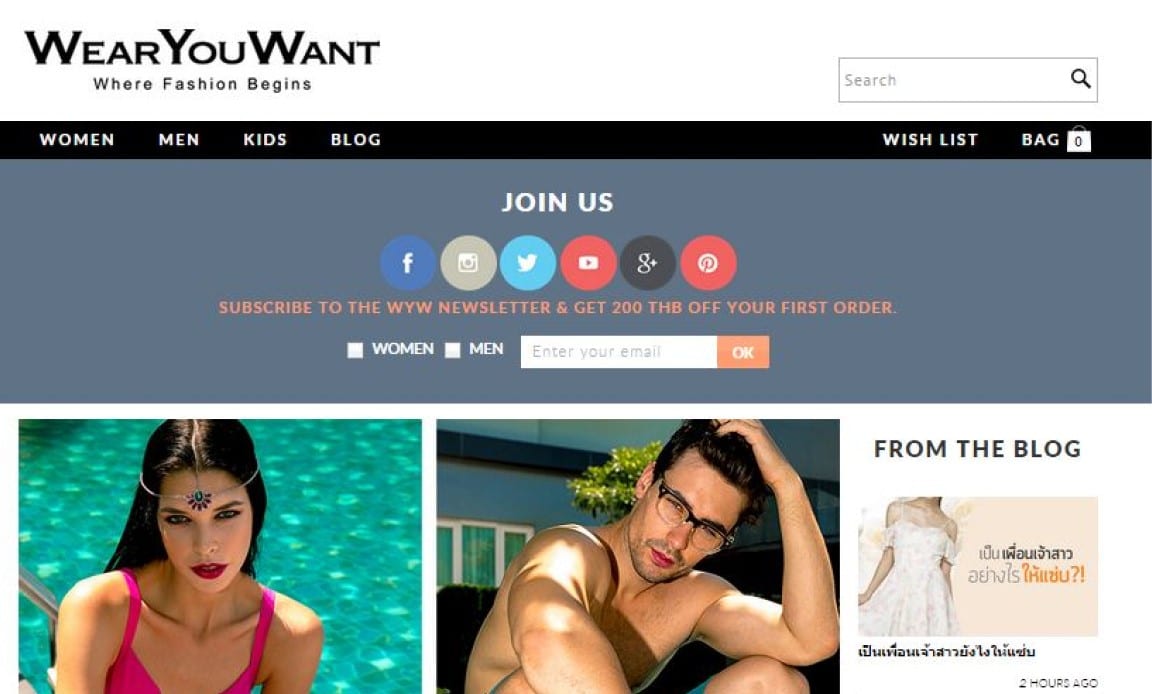
    WearYouWant, Thailand’s leading online fashion and beauty marketplace, is praising the romantic generosity of its male customers in Thailand. Since the start of 2016, there has been a steady rise in men buying underwear online at WearYouWant for that special woman in their life.

    According to WearYouWant, in the last six months, underwear purchases by men on their online shopping platform have increased by 22%, with the first half of April seeing record highs. Approximately 56% of underwear sales are to men in Bangkok who seem to know exactly what women in Thailand want!

    It could be the summer sun turning up the heat on underwear purchases by men or perhaps the Thai New Year Songkran festival spirit has meant more men showering women with gifts. With a few clicks, shy men can easily shop for lingerie online for their loved one.

    Of course, WearYouWant stocks much more than lingerie, retailing over 17,000 different fashion and beauty items, including shoes, dresses and men’s clothing too.

    Julien Chalté, Co-Founder & Co-CEO of WearYouWant.com welcomes the sales, even if they are a little unexpected. “On WearYouWant, it’s always been women who have bought their own underwear traditionally, so it is surprising to see that in 2016, that trend is shifting. Perhaps it is that more men are in touch with their feminine side and keen on using women’s underwear,” he adds with a smile, “or maybe it is just more men are shopping online for underwear as presents for women.”

    It is not just men who like their loved ones to be well-dressed when they are undressed either. Women in Thailand also enjoy shopping for boxer shorts and briefs for their male partners too. Some 19% of all men’s underwear bought online at WearYouWant in February 2016 was purchased by female customers.

  • Honda eyes efficiency with new assembly line format in Thailand

    Honda eyes efficiency with new assembly line format in Thailand

    Honda Motor has installed a new type of production line that is about 10% more efficient at an automobile plant in Thailand, the company said Thursday.

    Until now, each worker was typically responsible for adding one type of part to a vehicle, and had to walk between the conveyor and the parts shelf whenever work on one vehicle was completed. With the new system, four workers ride a unit that moves on a conveyor, with boxes of parts at the ready, allowing them to continuously install multiple parts. This reduces walking to get parts.

    Known as an ARC line, the new format was introduced at a plant in the eastern Thai province of Prachinburi that began turning out finished autos in March and makes some 60,000 Civic sedans annually. It is being applied to about 20% of total assembly procedures, including the attaching of wiring and interior parts after the body has been painted.
    Layout changes for conventional production lines required considerable time and investment, whereas with the new method the conveyor that moves the line can be flexibly lengthened or shortened as needed. Production is easily raised or lowered by adjusting the number of units, and a smaller investment is required when adding vehicle models or changing production volumes.
    After monitoring performance under the new approach, Honda will consider expanding its use.
  • TOT to take charge of Thai rural broadband project

    TOT to take charge of Thai rural broadband project

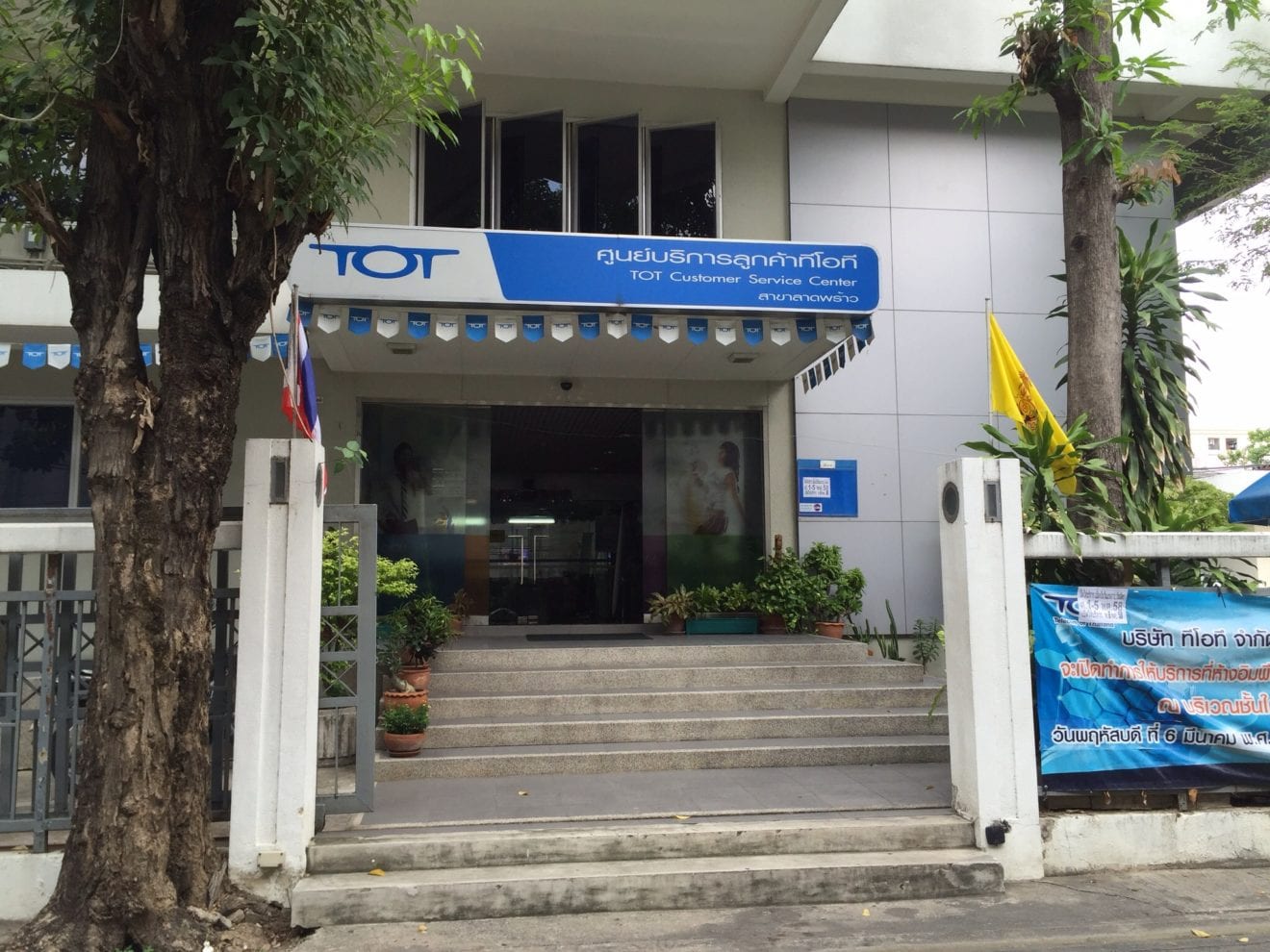
    Thai state-owned operator TOT has been instructed to go it alone in a project to build a national broadband network connecting 30,000 villages across the nation.

    TOT will take sole responsibility the project to bring broadband to the majority of Thailand’s villages that currently lack broadband connectivity.

    Initially the government had planned to have TOT and CAT Telecom jointly oversee the 15 billion baht ($427.5 million) project, but the ICT ministry decided that given TOT should take control of the project due to its existing extensive infrastructure.

    CAT has been told to focus on further investment in international internet gateway infrastructure to support the government’s policy of promoting Thailand as a digital hub for the Asean region.

    Construction of the network is expected to be complete by May 2017. The state will use the network to provide free broadband connectivity in public places in all villages, while TOT plans to offer at least 20Mbps plans with affordable tariffs.

    The national broadband project is expected to be partly funded from private sector investments. It forms part of the government’s five year master plan that aims to improve Thailand’s telecom infrastructure to lift the minimum standard for broadband speed across the nation.

  • Belgian jewellery firm looks to Thai hub for Asian expansion

    Belgian jewellery firm looks to Thai hub for Asian expansion

    Thailand would be a hub to support and facilitate the growth of Roos’s business in Asia.

    “We’re originally from Holland. My great-great-grandfather founded the company in 1835, or about 181 years ago. I’m the sixth generation of the family. We [currently operate] more than 200 jewellery shops in Belgium and Holland,” said Rien Rozendaal, founder of and designer for Roos & Nijs.

    “We started selling our Roos jewellery ornaments last week in China through Derier’s retail network with 80 stores in major cities, including Shenzhen, Guangzhou, Chengdu and Ningbo. [By] coincidence, we also started last week in Thailand as well with the appointment of Market Access Co Ltd as our master distributor covering Thailand and all [of the] Asia region,” he said. “We’re from the original Dutch company and we didn’t find any necessity to expand further in my home market as well as in Europe as we’re at the high level already. I believe in Asia as a promising region to grow our jewellery business.”

    Rozendaal said starting to do business in China and Thailand arose from coincidences. In China for example, he was introduced by a Chinese friend in New York to the owner of Derier.

    “It is not that I’m looking for distributors. Finding the right people who will be my partners is not easy. We have to share the same way of thinking, the same vision and passion, and common interests,” he said.

    “They [distributors] should understand the European way of distributing the brand. In my way, doing business is not the first thing. My first thing is to get the same vision of how to market the brand.”

    Rozendaal said his business approach was quite different from setting up business targets and growth.

    “I like to design nice and beautiful jewellery. I have my target group in designing, that is my wife, not for the market. I design jewellery for the one I love, and appreciate that many women love this design too,” he said.

    Chanokphol Chaisuparakul, co-founder and director of Market Access, said Roos was not something people saw every day, because of its unique designs and long heritage of 181 years. The brand is also high-end jewellery that people can wear every day.

    “In five years, we think Roos could be a brand for sophisticated people who seek perfection in luxury jewellery. We aim to expand in Southeast Asia starting from Thailand, especially in Bangkok and big cities such as Chiang Mai, Pattaya and Phuket,” he said.

    He added that in the first year, the company would open one flagship store for Roos jewellery as well as one dealership in Bangkok.

    “We will start expanding Roos jewellery to some parts of CLMV next year,” said Chanokphol, referring to Cambodia, Laos, Myanmar and Vietnam.

    He added that the CLMV markets had a lot of potential, with people who are highly into networking, are well educated and have high spending power, and are fashion-oriented.

    Somkiat Chaisuparakul, chief executive officer of Market Access, said Thailand’s gem and jewellery market had high growth potential. The market value in 2015, especially diamonds, was about Bt78 billion, with imports accounting for Bt19 billion and domestic production the remaining Bt59 billion. With the economic situation getting better, entrepreneurs are more confident that the market will rebound.

    “This is a great opportunity for us to join forces with Roos in expanding their market from Europe to Asia,” he said.

    “Using Thailand as a hub to support the liberalisation of the AEC [Asean Economic Community] market, we will market Roos diamond jewellery to customers in Thailand and [elsewhere in] Asia. We aim to become the top jewellery brand in Thailand by 2017 with annual sales of Bt200 million.

    “We will expand Roos diamond jewellery to cover all potential markets in Asia, starting from CLMV, in the future,” he said.
  • Why the Boots Alliance merger is a success

    Why the Boots Alliance merger is a success

    With a strong international business, a focus on driving productivity and investment in omnichannel, the Boots Alliance Walgreens business is on track to long-term success.

    The inclusion of Boots Alliance’s sales for the full quarter provided a fillip to revenue growth which was up by almost 14 per cent. Underlying sales, while up at headline level, were somewhat more subdued – especially within the US retail pharmacy division.

    The warmer weather in the US, especially during the early part of the quarter, was unhelpful – it meant the traditional cold and flu season did not strike with its usual vengeance. This, in turn, suppressed sales of key seasonal lines like flu, cold and cough medicines. This was noticeable in the front of store retail sales decline of 0.3 per cent on a comparable basis; something only offset by a strong prescription performance which pushed the retail pharmacy division’s overall performance into positive territory.

    Although cold remedies pulled down front of store sales, Walgreens is making encouraging progress in other parts of its retail offer. As a local retailer with a solid network of well frequented stores, Walgreens has a major opportunity to sell more product to existing customers, as well as drawing in a wider audience for products outside of the pharmacy and wellness space.

    Accomplishing this task requires a reinvigoration of the front of store proposition, especially in areas like beauty where Walgreens aim should be to be seen as much as a destination for higher end, more premium brands as it is for essentials and everyday beauty. This transformation has started, especially with the success of the group’s own brands like No. 7 cosmetics, and in the gifting category – which was an area of focus over the holiday period.

    In reshaping the front of store offering, Walgreens is ahead of its main rival CVS which has a lot more work to do in order to shift perceptions. Walgreens, of course, has an advantage as it is able to learn from Boots in the UK, which has, for a long time, been successful at selling both premium beauty and many other non-beauty categories. While Walgreens should not aim to simply replicate Boots, there are elements of the proposition – including the focus on lunchtime snacks and takeaway food – that can be adopted and adapted to the US market.

    Looking internationally, Boots in the UK had a successful quarter helped by a focus on Christmas gifting and also the strong performance of the ‘order online and collect from store’ service. Similar to Walgreens in the US, Boots in the UK has an extensive and localised store network which makes it a convenient option when it comes to picking up products purchased online. This, again, is something that the US operation can learn from and develop as the group looks to grow its omnichannel capabilities.

    Being part of a much bigger group isn’t only creating opportunities for the sharing of brands and ideas, it is also – as the Walgreens always planned – delivering savings. This quarter, synergies saved around US$329 million, and the group remains on target for $1 billion of savings across this quarter. This target is attainable and should help to provide an underlying boost to earnings moving into the second half.

    The successful integration of Boots Alliance and Walgreens has likely given the group confidence to pursue Rite Aid – the proposed acquisition of which was announced last October and approved by Rite Aid’s stockholders in early February. All being well, this transaction should close during the second half of this fiscal year.

    The deal makes sense on a number of levels – not least because Rite Aid has struggled to keep pace with its two rivals and we believe that Walgreens will be able to quickly make the chain more productive.

    Rite Aid has started this work with its Genuine Wellbeing format refresh, which creates a more engaging and enticing shopping experience with enhanced levels of customer service. This is something that Walgreens will be able to bolster, especially through its strong stable of own brands including Boots No 7 cosmetics.

    The potential synergy savings that will accrue from the merger are also attractive. These are estimated at $1 billion which, given the complementary nature of both businesses, are conceivable and go some way to offset the premium that Walgreens offered for Rite Aid.

    With a strong international business, a focus on driving productivity within the US, investment in omnichannel, and the boost from another acquisition, this looks to be a year of progress and change at Walgreens. While all of this activity may cause some short term fluctuations in earnings and sales, it will successfully position the group for longer term success.

  • FPT Vietnam to sell stake

    FPT Vietnam to sell stake

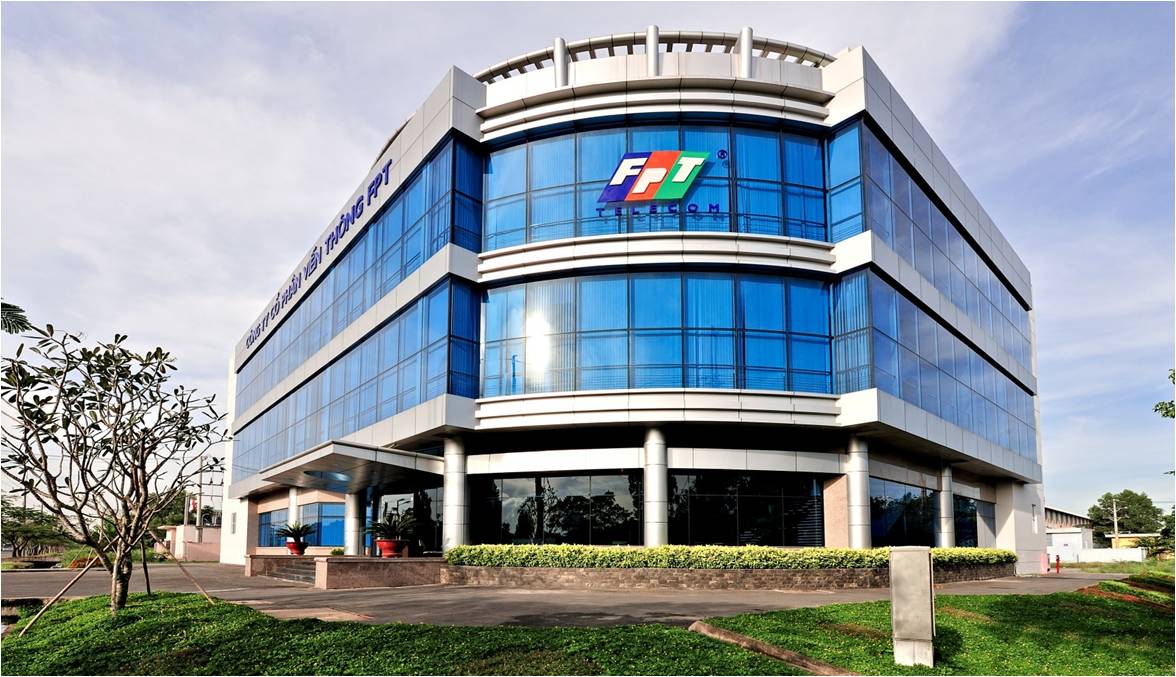
    One of Vietnam’s largest private tech firms, FPT Corporation is planning to sell a large stake in its retail and distribution units, providing an opportunity for regional players to buy into the fast-growing Vietnamese market.

    Funds from the sale will be used to help with mergers and acquisitions (M&A) in the information technology area.

    At a shareholder meeting, the company said it will reduce its holdings in FPT Shop, a mobile device retailer, and FPT Trading, which makes, imports and sells telecommunications and electronic products.

    FPT Shop has reached its target of having 250 outlets by this year, and the distribution arm’s profit margins are steady 46 per cent, the meeting was told. FPT still expects the major part of its revenue to come from retail and distribution, estimated at VND28.58 trillion (US$1.27 billion) – about 63 per cent of turnover.

    “The IT industry has a lot of potentials, and the opportunities are universal,” says deputy-CEO Nguyen The Phuong.

    He says some of the money raised will be used to increase the company’s stake in FPT Telecom.

    FPT chairman Truong Gia Binh last year unveiled his goal to invest US$50 million through M&A every year, in both local and international companies. The targeted markets include the US, Japan, Singapore and Europe. Two years ago, the company acquired RWE IT Slovakia for an undisclosed amount and rebranded it to FPT Slovakia.

    One of the main competitors of FPT Shop, Mobile World, has expressed an interest in buying the retail unit. Another candidate could be Thailand’s Central Group, which bought 49 per cent of Vietnamese electronics retailer Nguyen Kim early last year and reportedly wants to also acquire Pico, another local electronics store.

    FPT Vietnam has retained VietCapital Securities and Japan’s Nomura Securities for advisory services on the sale.