Tag: Thailand

  • Thai junta takes control of 900-MHz re-auction

    Thai junta takes control of 900-MHz re-auction

    Thailand’s military junta has overruled the telecoms regulator for the 900-MHz auction, bringing it up one month to May 27, curtailing public debate on and possibly allowing TrueMove in for another chance to claim the entire 900-MHz band. The opening bid will be Jasmine’s winning bid of $2.1 billion (75.65 billion Baht). Jasmine failed to secure payment and defaulted, giving rise to the need for a new auction.

    The junta, formally known as the National Council for Peace and Order, issued its 16th decree under article 44 of the interim constitution, commonly referred to as the absolute power clause. This means that the order is final and cannot be appealed in any court. The order was signed by Prime Minister General Prayut Chanocha in his capacity as NCPO chairman.

    Earlier reports suggested that moving the auction up a month would mean there would be little or no public consultation as is required under the frequency act, though this was not made explicit in the order.

    The NCPO also ordered the National Broadcasting and Telecommunications Commission to amend the auction rules in order to ensure value for the country and healthy competition. Any changes will have to be agreed to by the NCPO. This puts the NCPO in direct control of the auction.

    While again this was not explicit in the wording of the order, earlier reports suggested that the junta was keen to allow TrueMove to participate in the auction, despite an NBTC ruling to exclude TrueMove from the new auction by imposing a spectrum cap as it had already won half the 900-MHz band in the December auction.

    The deadline for applying for the auction is May 18.

    The NCPO also ordered TrueMove’s 900-MHz licence to be extended to match the new expiry date of the new licence.

    The NCPO order allows AIS to continue using the 900-MHz spectrum for its 2G customers until June 30 or until the NBTC issues a new licence for the auction winner. AIS’ 900-MHz was originally scheduled to be turned off in a couple of days on April 14.

    AIS CEO Somchai Lertsutiwong thanked the NCPO for decisively using article 44 to settle the matter and to prevent 2G AIS customers from losing connectivity over the long weekend that is the Thai new year.

    “The NCPO has truly returned happiness to the people. I want to shout at the top of my voice, ‘The government is acting in the best interests for the people’”, he said.

    The AIS CEO said that the situation had changed and that the regulator has now made it clear that there would be no more cheap spectrum available, hence the starting price for the new bid is reasonable.

  • Zalora Thailand and Vietnam to be offloaded

    Zalora Thailand and Vietnam to be offloaded

    Rocket Internet is selling its Zalora Thailand and Vietnam eCommerce fashion sites.

    This follows the Alibaba Group investing in Rocket Internet’s Lazada, valued at US$1.5 billion. Zalora, which raised more than $250 million, was once on an equal footing with Lazada, according toTechCrunch.

    Southeast Asia did not have service from Amazon or eBay when Rocket started Lazada and Zalora in 2012, but the two outlets have posted heavy losses and experienced slow market growth.

    Zalora, part of the Global Fashion Group (GFG), covers 11 countries across Asia Pacific, including Australia, Indonesia and Taiwan. While its revenue rose 78 per cent to US$234 million last year, its net loss blew out 36 per cent to $105 million.

    Meanwhile, Rocket has announced a new strategy that takes it back to its roots, launching early-stage startups. It sold India-based Fab Furnish this month and Foodpanda Vietnam last year, and is said to be seeking buyers for Foodpanda India and eCommerce site Jabong.

  • The Queen of Siam: Chadatip Chutrakul Aims To Energize A District In Bangkok

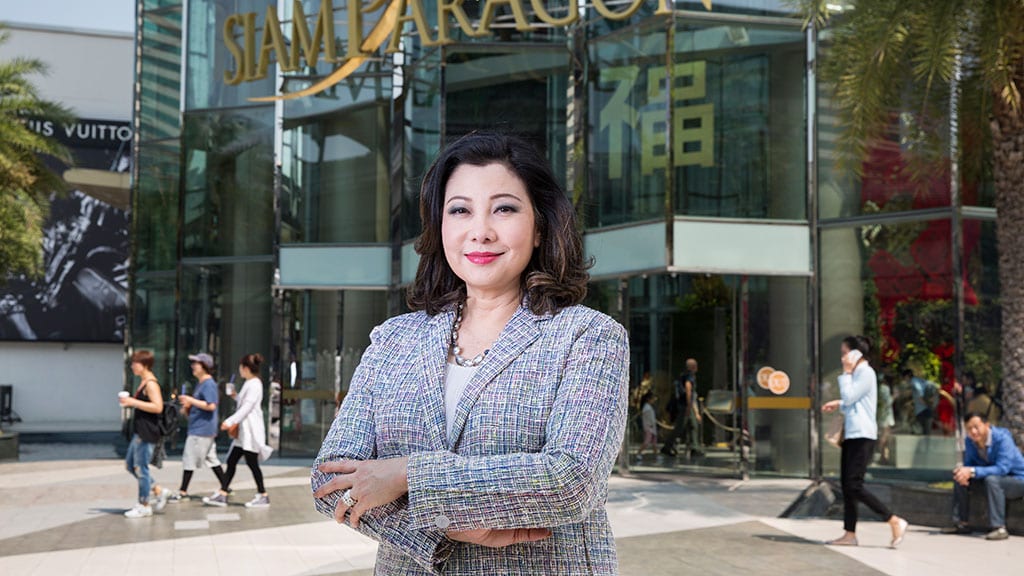
    The Queen of Siam: Chadatip Chutrakul Aims To Energize A District In Bangkok

    A lot of people thought we dreamed the impossible dream,” chuckles Chadatip Chutrakul, recalling initial reaction to her newest–and biggest–project, Icon Siam. The 55-year-old CEO of Siam Piwat is best known as first lady of Siam Paragon, her signature mall. Much more than a Bangkok institution, it’s a global sensation, one of the world’s most posted sites on Instagram, alongside Disneyland and the Eiffel Tower.

    Siam Piwat has evolved over nearly six decades from a hotel and shopping center built by Chadatip’s father into a complex of flashy malls in a central Bangkok district so dominated by this family-run firm it’s also called Siam. As rivals in Thailand’s hypercompetitive retail industry have expanded to the suburbs, around the country, even overseas, Siam Piwat has stayed put, remodeling regularly, staking its fame and bottom line on Paragon and its adjacent shopping plazas, Siam Discovery and Siam Center.

    So Icon is a quantum leap, from the comfort zone of Siam across the Chao Phraya River, to the no-man’s-land of Thonburi. Centuries ago Thonburi predated Bangkok as Thailand’s capital, but development long ago flowed across the river to the Bangkok side, then uptown to Sathorn and Sukhumvit. A run-down area of concrete shop houses, it hardly seems a likely launching pad for an upscale shopping mecca.

    Yet this Bangkok native has grand plans to revive the River of Kings, as Chao Phraya translates into English. At $1.57 billion, Chadatip says Icon is the largest privately funded project in Thai history. Besides 5.5 million square feet of retail space, the site will include two high-rise residential towers, a museum, a half-kilometer-long river walk, extensive art, theater and conference facilities, plus docks for river cruisers and private yachts.

    Bangkok plans several new bridges and subway lines across the river, and Icon will link to them by a new monorail, dubbed the Gold line. Siam Piwat will bankroll the $62 million cost, the first time a company has paid for a subway line and donated it to Bangkok.

    Siam Piwat lacks experience in residential development, so has teamed with high-end property specialist Magnolia Quality Development, securing the blue-chip backing of Charoen Pokphand Group. CP is Thailand’s biggest company, run by Dhanin Chearavanont, who tops the FORBES ASIA Thai rich list. His daughter Tipaporn Chearavanont runs Magnolia. CP and Magnolia each have a 25% stake in Icon, leaving Siam Piwat with 50%.

    While it was still only a dirt lot in 2014, Icon sold all 379 units in one residential tower at prices equal to those of top-tier downtown properties, according to local real estate firms. “The launch of the condos did very well and helped put the project on the map,” notes Simon Landy, Thailand chairman of Colliers International.

    Chadatip says of the scheme: “This is not only about Icon, it’s about the future of the river. It’s about how we elevate the importance of the river in every aspect, meaning the historical places, culture, the art, the festivals–all the values on the river have to be integrated.”

    Since Siam Piwat announced its plan for the 20-acre site in 2014, there have been signs of a Thonburi revival. Nearby, at the Jam Factory, hip architect Duangrit Bunnag has converted old warehouses into chic restaurants, shops and an art gallery. “The river is happening,” he says.

    Still, it’s a high-stakes gamble, even for a risky investor–something Siam Piwat has never been–in an especially precarious time for Thailand. The past decade has been marked by political strife and a series of coups. Pitched street battles in 2010 claimed an estimated 100 lives; Central World, a shopping center near Siam, was razed. When massive street protests crippled Bangkok in 2014, the military mounted another coup, promising a quick return to democracy. Two years on, the junta remains entrenched. The economy trails regional growth, and some say it’s teetering on recession.

    “We’ve gone through lots of cycles,” Chadatip concedes, but she notes that revenue has recovered since the protests and coup of 2014. Even after a devastating bombing in the capital last August, Siam Piwat’s sales for 2015 were up 10% from 2014 and grew 18% from 2013. And Chadatip says there are waiting lists of years for space in malls, a figure confirmed by retailers and local analysts.

    “This is exactly the kind of project Thailand needs now,” says Chadatip, noting that Siam Piwat isn’t a stranger to making tough investments in critical times. She recalls that soon after Siam Discovery was launched, the country plunged into the 1997 Asian Financial Crisis. That was under the watch of her father, Chalermchai Charuvastr, a former military general who served in the 1950s on the staff of Field Marshal Sarit Thanarat, who led a coup and became prime minister in 1957.

    Chalermchai was governor of the Tourism Authority of Thailand and pioneered aviation agreements that helped usher in the era of international travel in Southeast Asia. Tourism remains a major bright light for Thailand, with 29 million visitors last year, providing 10% of gross domestic product, according to official statistics.

    In 1959, when tourists numbered under 100,000 a year and airlines were pushing for proper lodging for crews and passengers, Chalermchai brokered a lease for 29 acres of royal parkland around the Sra Pathum Palace, then founded Bangkok Inter-Continental Hotels, which built Siam Intercontinental Hotel.

    According to Chadatip, the government put up 20% of Bangkok Inter-Continental Hotels, InterContinental Hotels Group added 30%, and the rest came from local banks and about 500 private shareholders. The company was renamed Siam Piwat in 2003 but remains unlisted and doesn’t release earnings numbers. However, one local businessman calls Siam Piwat “a mint. They are printing money there.” How much flows to the family, Chadatip won’t say. “My family has some shares,” she says, “but a very, very small amount.”

    Chadatip says her father had a vision “to build a city of the future, not just one project. What he saw was that he would build the hotel and the first shopping mall and office building, the first high-rise in Thailand–30 stories–in 1965,” all on the same site where Paragon and other Siam Piwat malls now stand. Where once “this was nothing. It was orchards,” Chadatip says, now there are fountains, a towering LED screen and 250,000 visitors a day.

    Chalermchai ran the company until his death in 2009. Although Chadatip is the youngest of three children, he groomed her to take over, and she has spent virtually her entire career as first lady of Siam. Two older brothers, Charnchai and Charlie Charuvastr, have held posts with the company but largely made their marks outside. Charnchai served as CEO of telecom company Samart and prior to that was general manager of IBM Thailand. He was also chairman of Siam Paragon until he died in 2011. Charlie is a corporate relations advisor for Siam Piwat, having previously worked for PTT Exploration & Production, one of Thailand’s biggest energy companies.

    Born in 1961, Chadatip attended prestigious Chulalongkorn University in Bangkok, graduating in 1982 with a B.A. in banking and finance. She spent the next few years with a pair of British insurance firms, Sedgwick Offshore Resources and Willis Faber & Dumas, before coming back to Thailand, managing energy insurance services for domestic firm Dhipaya Insurance.

    She has been with Siam Piwat since 1986, starting in accounting, then sales and promotion. An admitted workaholic, she is often the last to leave the office, arriving home long after dark to more e-mails and work calls. Her husband, Apichart Chutrakul, understands the pace; he is founder and CEO of luxury property developer Sansiri. They have one grown daughter.

    Colleagues describe Chadatip as a human dynamo with boundless energy. “She’s really a superwoman. She works 24/7,” says one of her closest co-workers, who, like others at Siam Piwat, requested anonymity. “We get e-mails from her at all hours,” she says, adding, “She’s intensely involved in everything. Siam is her life, and it’s her passion.”

    Thailand’s other major shopping firms are also run by women. “I think it’s the nature of the business,” Chadatip says, noting that women have a keen eye for detail (Siam Piwat jointly owns Siam Paragon 51%-49% with Thailand’s Mall Group, also run by a woman, Supaluck Umpujh (see profile, p. 58).

    Chadatip doesn’t believe gender plays a big role in Thailand. “In this country we have the freedom to go as high as we want,” she says. “We’ve had a lady prime minister, we’ve had many lady ministers.” In Thai culture women have equality, she says. “There is no ceiling.”

  • Aeon Mall plans ASEAN expansion

    Aeon Mall plans ASEAN expansion

    Japan’s Aeon Mall plans more shopping centres in Indonesia and Vietnam, and is also looking at possibilities in Laos, Myanmar and Thailand.

    Under its 2020 strategy, it is planning five more outlets for Jakarta, after entering the 250-million-strong market with its first Aeon Mall in Indonesia last year, and will also add three more branches in Ho Chi Minh City and another in Hanoi.

    Aeon Mall’s ASEAN division director and executive GM Mitsugu Tamai says the company is also studying the feasibility of business development in Thailand, Laos, Myanmar and Thailand.

    He says the aim is to have its first Aeon Mall in Thailand by 2020, probably on the outskirts of Bangkok. The project would be undertaken either through its own investment or via a joint venture.

    As well as Aeon Mall BSD City in Indonesia, the group has 24 locations in Malaysia and another mall in Phnom Penh, with another on the books for the Cambodian capital. For this, the Japanese retailer will continue its collaboration with Bangkok-based Major Cineplex Group with a Major Cineplex at the mall.

    Major Cineplex chairman Vicha Poolvaraluk says his company is investing about Bt200 million (US$6.5 million) on a 10-screen theatre, including an IMAX laser theatre, as well as 20 bowling lanes.

    Other Thai companies, including Black Canyon Coffee, Fuji Restaurant, Jaspal and S&P, are also interested in opening branches at the mall, which will cover 100,000 sqm in Pong Peay district, and is scheduled to open in the first half of 2018.

    Aeon Mall is also looking at China as a key destination for overseas expansion. It already has 11 malls there, and by 2020 hopes to have more than 10 per cent of its revenue contributed by overseas business, up from 2 to 3 per cent now.

    “With aggressive outlet expansion, the company aims to see a 120 per cent year-on-year increase in terms of revenue from overseas markets,” says Tamai.

  • Thailand unveils Digital Thailand plan

    Thailand unveils Digital Thailand plan

    Thailand’s Cabinet has approved a 20-year Digital Thailand development program that seeks to transform the nation into a global digital leader.

    Government spokesperson Major-General Sansern Kaewkamnerd said that the first phase of the plan would focus on six areas – infrastructure, economy, society, government, human resource development and trust.

    The first 18 months will be of digital foundation followed by digital inclusion and full transformation.

    Major General Sansern said that in ten years, thanks to this plan, Thailand will be a developed country and a global digital leader.

    Elsewhere Thailand’s National Reform Committee has recommended that police be given full powers to censor and shut down websites without a court order as part of its reform of online media to ensure all media is legal and moral.

    Other key recommendations include using big data analytics to identify networks of perpetrators on social media networks and centralization of power with the Police Technology Crime Suppression Division instead of the ICT Ministry.

    The NRC also recommended that computer crimes be divided into crimes on computers and data, and crimes using computers.

  • eCommerce won’t dent Asian retail real estate demand

    eCommerce won’t dent Asian retail real estate demand

    Growing online sales will not undermine demand for Asian retail real estate, according to the last CBRE study of major international brands.

    For the seventh edition of How Active Are Retailers Globally?, the real-estate company looked at more than 150 major international brands based in Americas, Asia Pacific and EMEA (Europe, the Middle East and Africa) countries.

    China is the top target market in the Asia Pacific (APAC) and fourth-ranked globally, with 27 per cent of retailers looking to expand there. Hong Kong follows in sixth position (24 per cent), Japan in seventh (22 per cent) and Singapore in ninth (21 per cent). The top three globally were Germany (35 per cent), France (33 per cent) and the UK (29 per cent).

    China and Hong Kong maintained their placings, while Japan, Singapore and Australia (11th) all rose higher in the ranking, up from 13th, 18th and 15th positions respectively.

    “Hong Kong will remain a desirable market for retailers, particularly as it continues to serve as a popular shopping destination for mainland Chinese tourists,” says CBRE Hong Kong executive director for retail services Joe Lin.

    “The main difference is a shift from luxury to mid-range brands. This is forcing luxury retailers to consolidate their footprint, leading to a drop in rental cost in prime locations and therefore opportunities for non-luxury retail brands.”

    Most APAC markets saw increased interest for this year, with the exception of China and South Korea. Malaysia (10 per cent), Indonesia (9 per cent), Thailand, Vietnam and The Philippines (all 8 per cent) received more than double the interest they saw last year, when all markets secured between 1 and 3 per cent.

    Asked about the risk factors for the coming year, brands indicated that real-estate cost escalation (56 per cent) and unclear economic prospects (42 per cent) continue to be at the forefront of their minds.

    “We’re seeing more of a challenging economic environment, and concerns such as high operating costs and a lack of quality space means retailers are somewhat more wary this year,” says CBRE head of Asia Pacific research Dr Henry Chin. “However, even as markets such as China and Hong Kong are experiencing a slowdown, we see increasing numbers of opportunistic retailers looking to enter markets like Hong Kong, supported by strong underlying consumer demand.

    “Japan and Australia remain attractive, while Southeast Asia showed strong growth because of opportunities for retailers around an expanding middle class and stronger economic growth.” CBRE senior director and head of retailer representation for Asia Joel Stephen says there are still opportunities for retailers to grow their business in Asia, underscored by the region having four of the 10 most popular destinations. “The goal now for all brick-and-mortar retailers is to build an engaging offer that encourages people to stay longer and spend more.”

    The survey shows that 83 per cent of brands suggest their physical store expansion plans for this year will not be affected by the growth of eCommerce. From a retailer perspective, only 22 per cent of the brands see stiff competition from online retailing as a threat to their business.

    At the same time, retailers are cautiously optimistic on physical expansion. Of those canvassed, 17 per cent have large-scale ambitions, many of them looking to open more than 40 stores this year (up from 9 per cent last year), while 67 per cent plan to open up to 20 stores.

    “A physical store presence in key locations is still critical to the strength of a brand’s image,” says Stephen. “Customers still feel a need to go into stores, to physically touch a product and enjoy the feel-good factor associated with a particular brand experience. The store is integral to the shopping journey and can be used in different ways, such as to click and collect, research of the product or brand, or to test the product. It isn’t solely about the transactional side.”

    A new trend is brands looking to expand into travel hubs, such as airports and train stations, giving them access to high footfall in busy locations. But for APAC retailers, shopping malls are still the preferred destination by far, at close to 90 per cent.

    While globally the key concern for brands in negotiations for premises is lease length, APAC retailers are most concerned with turnover rent clauses (GP). They are also particularly concerned about changing consumer behaviour (40 per cent), which is higher than the global average (31 per cent).

  • Indonesia is ASEAN eCommerce sleeping giant

    Indonesia is ASEAN eCommerce sleeping giant

    Indonesia is the most-promising ASEAN eCommerce market, according to Hong Kong-based consultant Paul McKenzie.

    He told a seminar in Bangkok, organised by brokerage and investment group CLSA, that Indonesia has the greatest potential because of its developing infrastructure and private equity advantage.

    Thailand is a little behind, he said, with the eCommerce landscape growing but not to the same scale as Indonesia.

    “It’s simply too early right now for The Philippines – there are not enough big and efficient companies in the market, and Malaysia’s market is just too small,” said McKenzie. However, Malaysia had less of a potential void for eCommerce as offline retail penetration was even higher than China.

    His talk focused on the “e-liftoff”’ of ASEAN countries, corresponding with a CLSA report published last year, and he predicted that the ASEAN eCommerce market would grow in terms of IPO, which would make it more appealing for investors.

    He also spoke about the Line app being essential to eCommerce in the ASEAN region. “More than 60 per cent of Thais 14 years and older are on Line, and mobile is the future of online shopping.”

    He predicted that within the next few years, mobile will be even more important in ASEAN than it now is in China. He said a third of online transactions were made on mobile, and 50 per cent of online browsing was done on mobile, lagging behind China by only a year.

    He said further progress was being hindered by slow data speeds, with users complaining about transactions being dropped and pages not loading. Another problem was that most shoppers in the region did not have credit cards.

    McKenzie said ASEAN countries had being doing well with delivery in the main centres, which meant there was a market for more warehouses or logistical services.

    Meanwhile, 1200 retailers, eCommerce and fulfilment company representatives gathered at the two-day Last Mile Fulfilment Asia conference in Singapore. Speakers included CEO Paul Srivorakul and CLO Mitch Bittermann from the Thai eCommerce solutions provider aCommerce Group, which has started expanding in Indonesia.

    “The changes in the Indonesian market are happening much faster when compared to other regions in Southeast Asia,” Srivorakul says on a company blog. “A lot of investment is taking place in Indonesia’s eCommerce infrastructure, cash-on-delivery networks and third-party logistics (3PL) systems.”

    The company has a presence in four countries in Southeast Asia: its home market as well as Indonesia, The Philippines and Singapore. Of its 200 clients, 120 are in Indonesia. Major clients include BerryBenka, Blibli.com, Elevenia, Mitra Adi Perkasa and L’Oreal. The company has about 500 employees in Indonesia, and runs two multi-client fulfilment centres as well as a 5000 sqm fulfilment centre for Lippo Group’s eCommerce arm MatahariMall.

    The company is also preparing to launch a four-level fulfilment centre in the next two months, which will increase the country’s warehouse capacity by 17,000 sqm, bringing the total to 32,000 sqm.

  • Iconsiam adds retail area for keen investors

    Iconsiam adds retail area for keen investors

    Iconsiam Co has increased its investment by another 4 billion baht for more retail space in response to the long waiting list of foreign investors wanting to expand their businesses at its shopping project.

    Director Chadatip Chutrakul said the company recently secured a 30-year lease for an additional five-rai plot on Charoen Nakhon Road, opposite the current construction site of Iconsiam.

    The total land area for Iconsiam will reach 55 rai with an investment budget rising to 54 billion baht. The total gross floor area will reach 525,000 square metres.

    “More than 100 foreign companies including restaurants, entertainment and fashion firms want to invest in our project. This shows their confidence in the Thai retail market,” she said.

    The company is studying the development of a new retail phase, which will start construction by the end of this year and be completed in 2017, simultaneously with the overall project.

    Construction of Iconsiam is about 20% complete. Iconsiam plans to target Thais for 65-70% of its customers.

    The project will offer a complete range of products and services from more than 500 retailers from around the world. Several of the restaurant brands will be new to the country, including a three-Michelin-star eatery.

    Also planned is a rooftop garden with open-air eateries overlooking the Chao Phraya; an 8,000 sq m area dedicated to food, fashion and handicraft specialities from all corners of Thailand; a multipurpose auditorium for meetings, concerts and shows with 3,000 seats; Thailand’s first world-class museum complex; a 400-million-baht water-fire-sound-and-light feature; and a riverside park and event plaza covering 10,000 sq m.

    It also comprises two luxury waterfront residential condominium buildings of 70 and 50 floors, one of which carries the Mandarin Oriental Residences brand and Iconluxe, providing luxury brands for fashion, jewellery and watch-making over 25,000 sq m.

    The company will open booking for its retail space soon. Iconsiam expects to draw 250,000 visitors a day.

    The Bangkok Metropolitan Administration said Iconsiam has allocated 2 billion baht to support the construction of the first phase of the new skytrain Golden Line, linking Saphan Taksin station to Charoen Nakhon Road near Taksin Hospital.

    Iconsiam is a joint venture between Siam Piwat Co, the owner and operator of Siam Center, Siam Paragon, and Siam Discovery; Magnolia Quality Development Corporation, the owner and developer of luxury quality residential and mixed-use projects; and multi-national conglomerate Charoen Pokphand Group.

  • Thai 4G: Deputy PM tightens reauction timeline

    Thai 4G: Deputy PM tightens reauction timeline

    Deputy Prime Minister Wissanu Krueangam who has stepped into the mess left after Jas Mobile Broadband walked away without paying for its 900-MHz licence. He has stated that there would be no need to invoke the junta’s absolute power clause in the interim constitution just yet – though he did give the telecom regulator strict marching orders.

    He said the NBTC must successfully auction off the spectrum at a price that is not less than what Jas bid and must do so within one year. It it fails then Jasmine must be held responsible for any shortfall.

    Earlier NBTC Takorn Tantasit had put a timeframe of 4 months for an auction with the starting price of Jas’ winning bid and a second auction one year after that if it fails to go.

    Takorn said the starting price might be lowered to Dtac’s last bid of $1.98 billion (70.18 billion baht)  instead of Jas Mobile’s winning bid of $2.14 billion (75.65 billion baht) or even a round figure of 70 billion baht.

    The auction guarantee would rise to between 10 to 30% of the revised opening bid (previously it was 5% of 12.88 billion baht opening bid)

    Takorn said the draft auction rules would be finished by April 12 which would then be put out for public comment between April 18 to May 23 and should be formalised in the Royal Gazette by 31 May. The auction will be held by June 20 at the latest.

    Takorn said that Dtac had protested TrueMove’s inclusion in the auction given that they already had won half the 900-MHz spectrum. However, Takorn said the NBTC insists that True will be eligible to take part.

  • Thailand’s most illustrious real estate event returns for the 11th year

    Thailand’s most illustrious real estate event returns for the 11th year

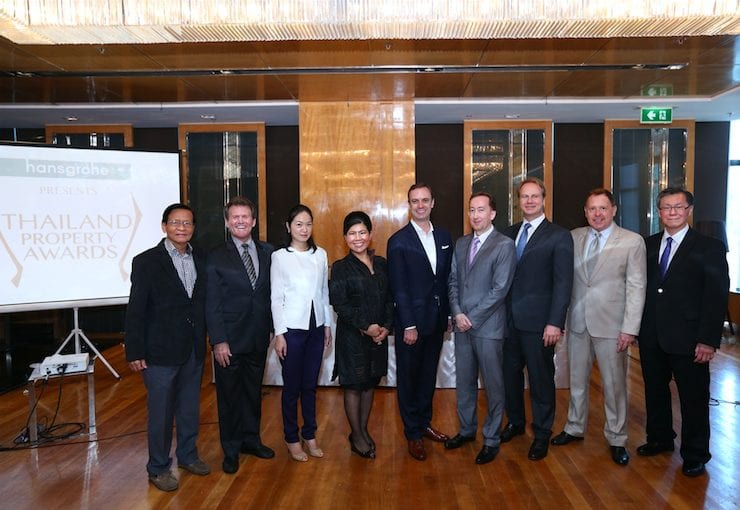
    The Thailand Property Awards presented by Hansgrohe returns for a successful 11th edition to reward the finest developers and current developments in the country’s resilient real estate sector. The annual event, which is attended by some 600 C-level executives, industry leaders and innovators annually, was officially launched to the media on 29 March 2016 at the Renaissance Bangkok Ratchaphrasong Hotel.

    Building on the monumental success of last year’s 10th anniversary event, which saw SC Asset Corporation PLC claim the biggest award for Best Developer, the kingdom’s biggest and most respected industry awards programme will champion the leading industry players in Bangkok and Phuket, which continue to evolve alongside the secondary markets of Hua Hin, Chiang Mai, Khao Yai, Samui and the Eastern Seaboard.

    “The tourism sector is playing an increasingly important role in driving the country’s economic growth,” Suphin Mechuchep, managing director of JLL Thailand and newly elected chairperson of the central panel of judges, said.

    “A decent chunk of tourist spending goes to retailers in various retail formats from street-side retail strips to modern shopping centres,” she added. “Retail markets in key tourist destinations such as Bangkok, Pattaya, Phuket, Krabi, Koh Samui, and Chiang Mai will benefit most from this trend.”

    This economic boost, as well the recently reported strong year-end finish to 2015 following the implementation of the government-led boosting measures and incentives, will be discussed by the industry’s leading experts, developers and innovators at the high-level forum that takes place before the awards gala – the Property Report Congress Thailand. The whole day conference on Thursday, 22 September from 09:00 to 15:00, and will be held at the Plaza Athenee Bangkok, a Royal Meridien hotel, the official venue of the Thailand Property Awards.

    On the panel: Srikorn Techarattanaptasert, consultant of title sponsor Hansgrohe; central panel of judges chairman Suphin Mechuchep, JLL Thailand; Terry Blackburn, founder of the Asia Property Awards and managing director of PropertyGuru International; returning judge Professor Dr Manop Bongsadadt, 2016 president of judges panel; and Alexander Kunz, Asia regional director of sponsor Kuppersbusch by Teka
    On the panel: Srikorn Techarattanaptasert, consultant of title sponsor Hansgrohe; central panel of judges chairman Suphin Mechuchep, JLL Thailand; Terry Blackburn, founder of the Asia Property Awards and managing director of PropertyGuru International; returning judge Professor Dr Manop Bongsadadt, 2016 president of judges panel; and Alexander Kunz, Asia regional director of sponsor Kuppersbusch by Teka

    An internationally recognised celebration of the country’s real estate achievements, the Thailand Property Awards 2016 have already begun accepting nominations from developers and the general public starting in late February. The nomination period will close on 8 July, with the official shortlist revealed to the world in the third week of August.

    Entry is free. All successful entries will be supervised by BDO, one of the world’s largest accounting and auditing firms, and the trusted awards supervisor of the Asia Property Awards, which, in its 11th year, is widely recognised for its fairness and transparency.

    This year’s awards programme will be boosted by the support of title sponsor Hansgrohe, a leading global manufacturer of innovative and designer bathroom products, official media partner Property Report, as well as the large network of awards organiser PropertyGuru, Asia’s largest online property portal group.

    “We’re excited to be working with PropertyGuru Group as the Asia Property Awards programme continues to expand in ASEAN in its second decade,” said Terry Blackburn, founder and managing director of the Asia Property Awards. “In trying times like these, Thailand can always depend on exceptional projects that boost investor confidence and elevate market standards. We’re delighted to reward their hard work at the Thailand Property Awards.”

    Suphin will be joined on the esteemed judging panel, which is presided by Dr Manop Bongsadadt, renowned professor of architecture at Bangkok’s Chulalongkorn University, by some of the best-known names in the industry. Aside from the central panel of judges, each region will have its own panel comprising local experts to ensure credibility of the Awards.

    A total of 31 trophies will be presented in 2016, with award categories covering the condominium, housing/villa, hotel, office, and retail segments. A special recognition for Thailand’s Real Estate Personality of Year, whose influence and achievements resonate across the kingdom, will be named by the editors of Property Report prior to the gala night.

  • Jucker votes for Big C buy

    Berli Jucker shareholders have voted in favour of the US$6.2 billion acquisition of a majority stake in Big C Thailand.

    The vote – virtually unanimous – followed news the listed company had secured funding for the purchase from a syndicate of 15 banks and means the deal is now all but complete. Settlement is expected late this month.

    But while the future of Big C Thailand now appears to be resolved, negotiations continue over the fate of Big C Vietnam, a smaller, less profitable business controlled by France-based Casino Group, which is shedding overseas assets to reduce its debt exposure.

    Casino has a 58.6 per cent controlling interest in Big C Thailand, which Berli Jucker will now acquire.

    In Vietnam, Thai tycoon Charoan Sirivadhanabhakdi, through another business, has recently purchased the Metro hypermarket business from Metro AG of Germany, to bolt on to Berli Jucker’s B’Smart convenience store network.

    Charoan was thus a favourite to acquire the Big C Vietnam operations to build even greater critical mass, and lodged a bid prior to the first round deadline with his soon to be Big C Thailand partner, Central Group.

    But sources within Asia’s business community are now confident Korea’s Lotte and Japan’s Aeon are frontrunners. Lotte runs the market leading Lotte Mart hypermarket business in Vietnam and would gain a significant foothold in the nation if it could secure Big C as well.

    Aeon, which is building shopping centres in Vietnam main cities, reportedly submitted an offer that valued the business at more than US$800 million according to sources quoted in Vietnam media.

    Lotte also submitted a bid prior to the first round deadline.

    Casino has declined comment on the Vietnam sale other than to say it was “progressing well” when it reacted to ratings agency Standard & Poor’s decision to cut its credit rating to junk status  on Monday

  • HSBC sets sights on Vietnam

    HSBC sets sights on Vietnam

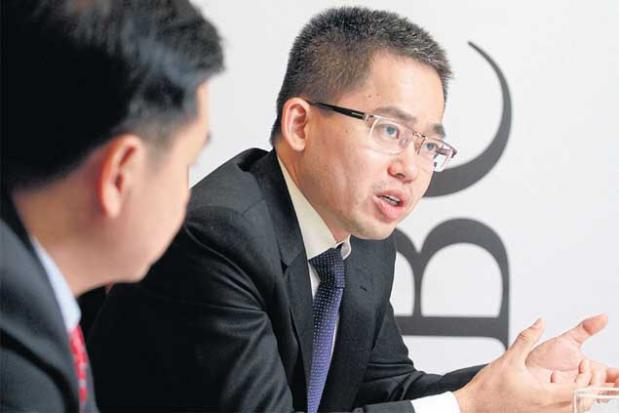
    HSBC Bank (Vietnam) chief executive Pham Hong Hai (right) and Kelvin Tan, chief executive of HSBC Thailand, say HSBC aims to capitalise on its presence in seven of the 10 Asean countries.

    HSBC seeks to offer a better integrated regional service with the increase of cross-border investment following the formation of the  Asean Economic Community (AEC).

    The bank in particular is looking at Vietnam, where investment is set to surge under government policies to attract foreign investment.

    Kelvin Tan, chief executive of HSBC Thailand, said the company aimed to capitalise on its presence in seven of the 10 Asean member countries. Only Myanmar, Cambodia and Laos do not have branches of HSBC.

    “We made it very clear to our investors since last year that Asean will be one of our main focuses to help HSBC’s future growth,” said Mr Tan.

    HSBC will also focus on the Pearl River Delta, which consists of Hong Kong and Guangzhou, China.

    Mr Tan said the company will enhance the connectivity between its subsidiaries in each country to serve customers better and expand business.

    “We add value to our services by offering well-connected financial services in this region.”

    When a Thai customer expresses an interest in investing in another country in which HSBC operates, the bank will refer the customer to the office in that country, which can provide local information for doing business.

    Many HSBC customers have already expanded their businesses in other countries, especially Vietnam, to tap into a bigger market as well as take advantage of low labour costs, he said. Thai investors should benefit from the cheaper labour by setting up production bases there and using Thailand as their regional headquarters, which is the policy that the Thai government is promoting.

    “Thailand is in a very strategic location for logistics and air transport so pushing the RHQ concept is a step in the right direction, but the government will also have to include stakeholders as part for this development,” said Mr Tan.

    Pham Hong Hai, chief executive of HSBC Bank (Vietnam), said Vietnam had attracted heavy investment from Asean countries over the past few years as well as from other Asian countries such as South Korea, Japan, Taiwan and China.

    Vietnam’s low labour costs and political stability are the major draws that attract a huge amount of foreign direct investment, he said. Given the low wage rate for unskilled labour, the country has attracted a lot of labour-intensive industries.

    “Cambodia, Laos and Myanmar also have cheap labour, but Vietnam has the added positive factors of political stability and good infrastructure,” said Mr Pham.

    He said the low wage rate would last for about five years.

    However, one problem that has emerged in Vietnam is a shortage of workers at management level. Mr Pham said he expected the AEC integration to attract more white-collar workers to the country.

    He said Vietnam’s ruling party just elected a new central committee, which is expected to maintain the current policies to strengthen the country’s economy.

    The policies that will be continued include privatisation of state enterprises, modernising the banking sector, enhancing the effectiveness of fiscal policy and improving the business environment, he added.

    Vietnam’s state enterprises contribute 35% of GDP. The government is due to allow private firms to gradually own bigger stakes in the enterprises in order to enhance their effectiveness.

    The government is improving Vietnam’s business environment by passing new laws that will shorten the time required to start a new business and also to obtain a licence, Mr Pham said. There there are a lot of opportunities in businesses such as logistics, retail and manufacturing, which are growing quickly.

    “When the manufacturing sector grows it is always followed by logistics services to support the industries,” he said. “We also see that the retail sector’s growing fast with Thai companies such as Central and TCC Group investing in Vietnam.”

    He said with a population of 90 million, with young people forming a large proportion, Vietnam’s demographic make-up offers great opportunities for retail businesses to benefit from their purchasing power, which will grow significantly.

  • Robinson Department Store plans growth

    Robinson Department Store plans growth

    Thailand’s Robinson Department Store aims to invest about 16.8 billion baht (US$479 million) on opening stores over the next five years with the aim of boosting average sales growth by 5 to 7 per cent a year.

    Majority-owned by Central Group, Thailand’s largest retail conglomerate, Robinson plans to boost store numbers to 56 by 2020 from 42 now, pinning its hopes on government economic-stimulus measures, says president Alan Thomson.

    That growth would equate to an average of 2.8 new stores a year, but the store’s rate of expansion has slowed with it dropping to two new stores this year, whereas it had four last year and five two years earlier. Thomson says this reflects Thailand’s current economic weakness.

    Its two new branches this year will cost it 1.6 billion baht, but it is hoped sales overall will rise 7 per cent from last year’s 25 billion baht, reaching 35 billion baht by 2020.

    Thomson says Robinson also plans to outlay 2.5 billion baht on renovating 20 outlets.

    Robinson also has two stores in Vietnam, and aims to double that by 2020. “We are trying to identify challenges before we expand in Vietnam,” says Thomson, indicating the company may invest more in Thailand’s neighbour next year.

    Meanwhile, the company’s same-store sales rose 3.1 per cent in the fourth quarter of 2015, versus a drop of 2.1 per cent for the full year.

  • Microsoft Store opens in Lazada Thailand

    Microsoft Store opens in Lazada Thailand

    Microsoft Thailand recently announced the official launch of its Microsoft Online Store on Lazada Thailand.

    The store is envisioned to be a one-stop shop for Microsoft’s products and a destination for exclusive offers and deals, giving Thai consumers access to the full lineup of devices, software, and services, including Surface, Lumia smartphones, Windows 10-powered laptops, tablets, and 2-in-1 devices, various hardware accessories, and the Office productivity suite.

    Following a similar partnership between Microsoft and Lazada in Malaysia last year, Thailand becomes the second country in the region to welcome the Microsoft Online Store on the Lazada platform.

    “The launch of the Microsoft Online Store on Lazada is an important milestone for Microsoft Thailand as the explosion of social and mobile technology has enabled the era of online shopping in Thailand,” said Orapong Thien-Ngern, General Manager, Microsoft Thailand. “Partnering with Lazada gives Microsoft an opportunity to build on our customer-centric approach and deliver our products and services to Thai customers via a platform that is already familiar to them.”

    The Microsoft Online Store opening comes just days before Lazada celebrated its fourth anniversary in Thailand. Lazada has seen rapid growth in the country since its launch in March 2012.

    “We are delighted that Microsoft is launching its online store with Lazada. Together with Microsoft, we are making exciting, aspirational innovative products accessible to more consumers in Thailand,” said Tarin Thaniyavarn, Chief Commercial Officer, Lazada Thailand.

  • UnionPay now in Thailand

    UnionPay now in Thailand

    While the company’s success up to now has relied on the huge domestic home market in China – which accounts for 99 per cent of all UP credit cards issued – this could be about to change. UnionPay is setting its sights on global expansion and intriguingly Thailand is the catalyst which will help make this happen. Over the past few years several landmark decisions about ATM/debit cards have been made by the Bank of Thailand (BOT) and the Thai Bankers’ Association (TBA), and these are beginning to be implemented this year.

    To combat the growing incidence of ATM and debit-card fraud, the BOT decided that all new ATM/debit cards in Thailand must carry secure embedded chips, a mandate which comes into force this May. Significantly, the BOT and TBA adopted UnionPay’s chip technology as the standard for all of Thailand’s debit cards, the first country outside of China to do so.

    This will mean a mass transformation of Thailand’s 50-million strong debit-card market, as currently few debit cards have embedded chips and they are mainly used as ATM cards and not for retail transactions. Most cards will, therefore, need to be replaced and to support this UnionPay has joined with Bangkok Bank to establish the Thai Payment Network (TPN). Other leading Thai banks are also expected to become shareholders in this joint venture company.

    Thai banks and other financial service providers will produce the new cards under the TPN and TPN-UnionPay brands, which will be locally issued and processed in line with BOT policy.

    China UnionPay chairman Ge Huayong said that the launch of TPN in Thailand has great significance and he cited four major reasons for this. It is a new breakthrough in the development of technical standards in China’s financial sector, it represents a model for China’s policy of Going Global, it lays a solid foundation for large-scale acceptance and issuance of UnionPay cards in other local markets, and it will help UnionPay develop a business-expansion model which can be replicated which will accelerate the roll-out of its global business.

    Ge Huayong also added that it ties in with China’s “One Belt, One Road” international expansion strategy as UP plans to develop similar payment infrastructure in other countries along the Belt and Road.

    Meanwhile, in another major development China UnionPay last month signed a memorandum of understanding with Visa to collaborate on payments security, innovation and financial inclusion.

    Visa CEO Charlie Scharf said the two card giants would work together to develop innovations in digital payments and broaden the access of financial services to a wider population.

    All these developments fit well with the Thai government’s digital payments strategy and should ensure that Thailand is at the forefront of using new technology in the payments industry.

    The benefits include helping our businesses keep up-to-date with modern technology while ensuring the public has easy and convenient access to financial services.