Tag: Thailand

  • Siri House opens in Singapore with new concept

    Siri House opens in Singapore with new concept

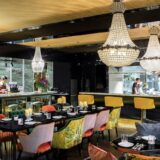
    Hybrid showroom, restobar, retail space and gallery Siri House has opened in Dempsey Hill as a taste test for a planned flagship in Thailand.

    The venue combines multiple concepts into a single interconnected area, including mock interiors for Bangkok apartments, display spaces for Thai artists, and discrete retail corners focusing on Thai culture and designer items, with jewellery, apparel, accessories and various collectibles available for purchase.

    The store is currently trading seven labels, ranging from homeware and souvenirs to crafts and ceramics. Most products on sale have a quirky or artistic vibe.

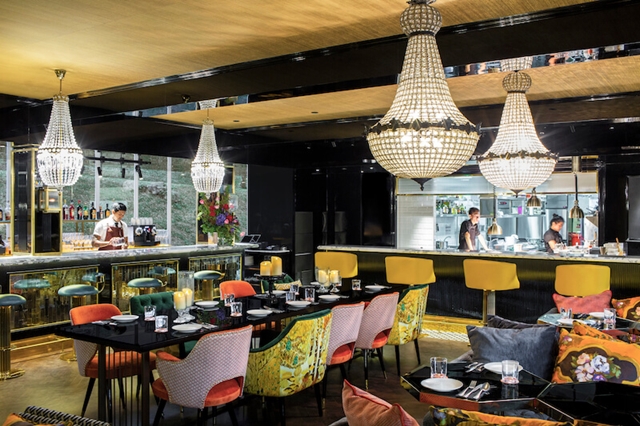
    The venue also houses a 48-seat restaurant with art deco stylings, serving a colourful Asian-influenced menu alongside a selection of wines and cocktails.

    The Siri House flagship is scheduled to open in Bangkok by March.

    View gallery below for images of the store :

  • Amorepacific’s eSpoir sets foot in Thailand

    Amorepacific’s eSpoir sets foot in Thailand

    Amorepacific-owned makeup brand eSpoir has launched in Thailand via cosmetics retailer chain Eveandboy. Nearly 130 eSpoir products are available at Eveandboy stores at Siam Square One shopping mall and at Terminal 21 near Asoke Station. The highest-profile eSpoir products include Dewy Face Glow moisturiser with hyaluronic acid, No Wear Lipstick, and Pro Tailor Foundation Be Silk / Be Glow.

    The South Korean brand will launch in eight more Eveandboy stores and an online mall to build a strong presence in the Thailand beauty market and expand channels.

    Amorepacific says it plans further expansion into other Asean countries.

    “We are pleased to be able to bring Korea’s representative makeup brand, eSpoir, to Thailand, the largest beauty market in the Asean region. The launch of eSpoir will surely strengthen our brand portfolio in Thailand and drive further growth,” said Choi Woong, Amorepacific Thailand GM.

    The group will diversify its brand portfolio spanning skincare and makeup for its sustainable growth in Thailand.

    Other brands available in Thailand including Sulwhasoo, Laneige, Mamonde, Innisfree and Etude House.
    Founded in 1945, Amorepacific sells more than 20 cosmetics, personal care, and health care brands in Asia, North America, and Europe.

  • Restaurant company expands into Thailand with local Myanmar cuisine

    Restaurant company expands into Thailand with local Myanmar cuisine

    Myanmar restaurant chain Feel International is set to open in Thailand. Opening in the popular Bangkok tourist area of Pratunam on Thursday (January 24), the group intends to introduce Myanmar cuisine to Thai consumers and foreigners. “At present, many restaurants are attempting to cater to the needs of tourists from China, however there are eight flights to Bangkok from Yangon every day, and there are tens of thousands of Myanmar citizens working and studying there, so there is a potential market for Myanmar cuisine”, said Feel International operations director Ko Johnny.

    “This is the very first Myanmar restaurant opened in a foreign capital city. Bangkok is one of the biggest restaurant markets in the world. It offers a wide variety of cuisine, even something as exotic in Asia as Ethiopian. Bangkok is the first step for Myanmar traditional food to penetrate the international markets”, he said.

    The restaurant intends to serve lunch boxes with Myanmar favourites for Myanmar people working in companies and offices around the area.

    Discussions are being held to open further restaurants in Chiang Mai and Mesauk.

  • Central Retail to double online after Shopee acquisition

    Central Retail to double online after Shopee acquisition

    Central Retail Corporation has announced plans to to double its online sales to THB10 billion (US$315.76 million) this year. Central’s CEO Nicolo Galante said the firm intends to lead in the omni-channel e-commerce business, overtaking Shopee. “Non-food businesses globally have been disrupted by digital transformation and are struggling against the likes of Amazon and Alibaba. As the biggest non-food player in Thailand, Central Retail pledges to move aggressively this year to tap into digital transformation,” said Galante in an interview.

    “We can be for Thailand what Amazon is in Western countries and Alibaba is in China. Everywhere in the world, the No.1 player in e-commerce and digital is always a new-economy company, but in Thailand it could be a company that is 71 years old.”

    In this regard, Central intends to launch an omnichannel platform of services distinctive from those of Lazada, Alibaba and Shopee, whereby the company will retail products and services both at physical stores and online. Central will assist partner brands who lack the resources to build their presence in the marketplace.

    It will launch the first such marketplaces for Central Department Store, PowerBuy and SuperSports within the next six months.

    “We will launch our omnichannel marketplaces for our retail business,” said Galante. “If there are some problems with the products, the customer can return the products to the store, get advice and other services at the store.”

    For apparel, Central will launch launch a “Reserve and Collect” service that allows buyers to reserve two or more sizes or colours of products online and choose which to buy after trying them in-store.

    The move is part of the firm’s considerable investment in technology, teams and new services in the hopes of taking the lead in the e-commerce business by 2021.

  • Jaspal unveils collection joined by Lynnie Z

    Jaspal unveils collection joined by Lynnie Z

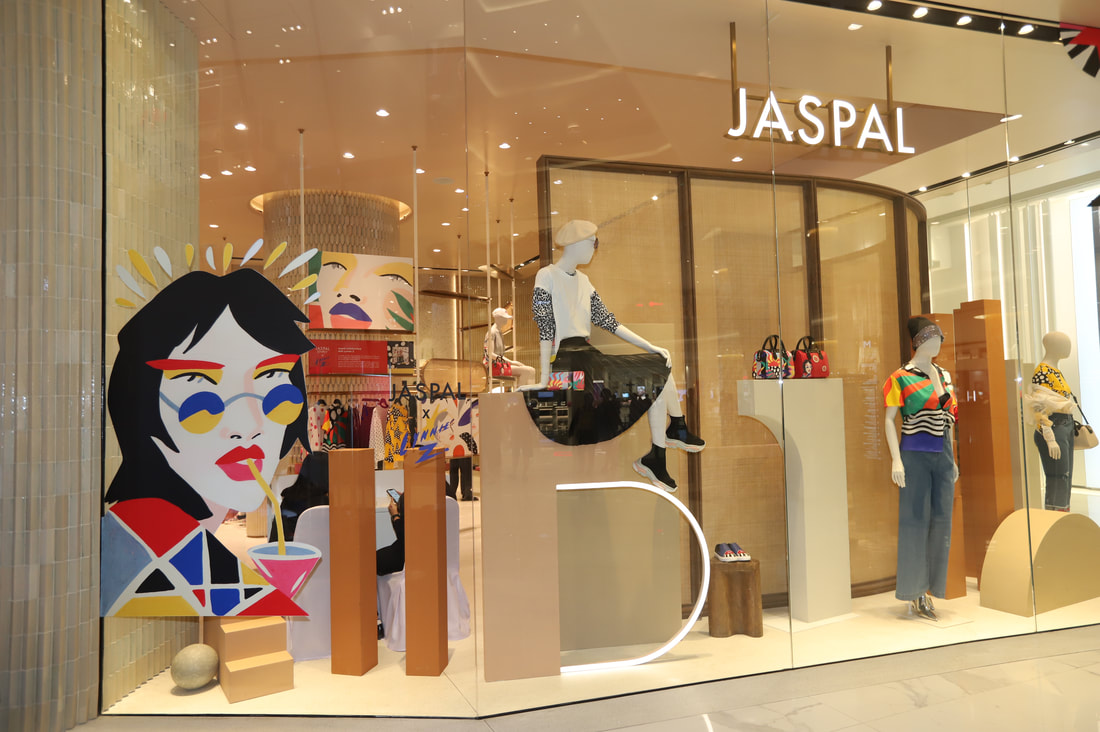
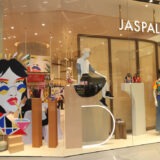
    Thai fashion brand Jaspal has opened a new flagship store featuring its limited edition collaboration with London-based artist Lynnie Z. The partnership with Jaspal’s Hi Life collection marks the opening of the brand’s new IconSiam flagship. It is one of a series of partnerships between Jaspal and global artists to ensure that unique styles emerge each season.

    The Hi Life collection for men and women features stars, hearts, lips and faces as motifs with strong colour themes referencing Africa.

    “I was so honoured to be a part of such a wonderful project,” said Z. “Thailand has an outstanding heritage and Thai people love art and fashion, which is the reason why I decided to come on board. Also, I think Jaspal and I share the same artistic soul, and, more importantly, the brand fully understands the story relayed behind my works,” she said.

    “To me, this project was really wonderful, allowing me to create a masterpiece collection with a famous local brand, and communicate my inspiration, passion, and uniqueness through the collection. This is one of the best works I’ve ever created. As for the process in making this collection, for the most part, I came up with ideas and colours from my sketchbook. These are organic and abrupt but they reflect a liveliness that I wanted to communicate through the collection.”

    View the images of the collection below (6 images) :

  • CIMB Thai’s FY18 net profit drops on higher tax expenses

    CIMB Thai’s FY18 net profit drops on higher tax expenses

    CIMB Thai Bank PCL’s unaudited con-solidated net profit for the year ended Dec 31, 2018 (FY18) fell 98.2% year on year to 6.9 million baht (RM883,732), dragged down mainly by higher income tax expenses. Profit before tax decreased 44.5% to 271.2 million baht year on year, mainly due to a 9.6% increase in operating expenses and lower net fee and service income and other income of 7.0% and 2.6% respectively. This was offset by a 5.3% growth in net interest income and a 2.6% decline in provisions.

    President and CEO Kittiphun Anutarasoti said CIMB Thai group’s consolidated operating income, on a year-on-year basis, increased 2.9% from 2017 to 13.54 billion baht from higher net interest income of 5.3% on the back of loan expansion and higher interest income on investments.

    Net interest margin over earning assets stood at 3.71% in 2018, compared with 3.89% in 2017 as a result of lower yield on earning asset.

    As at Dec 31, 2018, CIMB Thai’s total gross loans stood at 227.8 billion baht, making an increase of 6.9% from Dec 31, 2017.

    Deposits stood at 234.3 billion baht, an increase of 6.5% from at the end of December 2017. CIMB Thai said the modified loan-to-deposit ratio was higher at 97.2% against 96.8% as at Dec 31, 2017.

    The gross non-performing loan (NPL) stood at 9.9 billion baht, with a lower gross NPL ratio of 4.3% compared with 4.8% as at Dec 31, 2017. The lower NPL ratio was due to more efficient risk management policies, improved asset quality management and loan collection processes as well as the sale of some NPLs in 2018.

  • Uniqlo sales performs well globally, not in hometown

    Uniqlo sales performs well globally, not in hometown

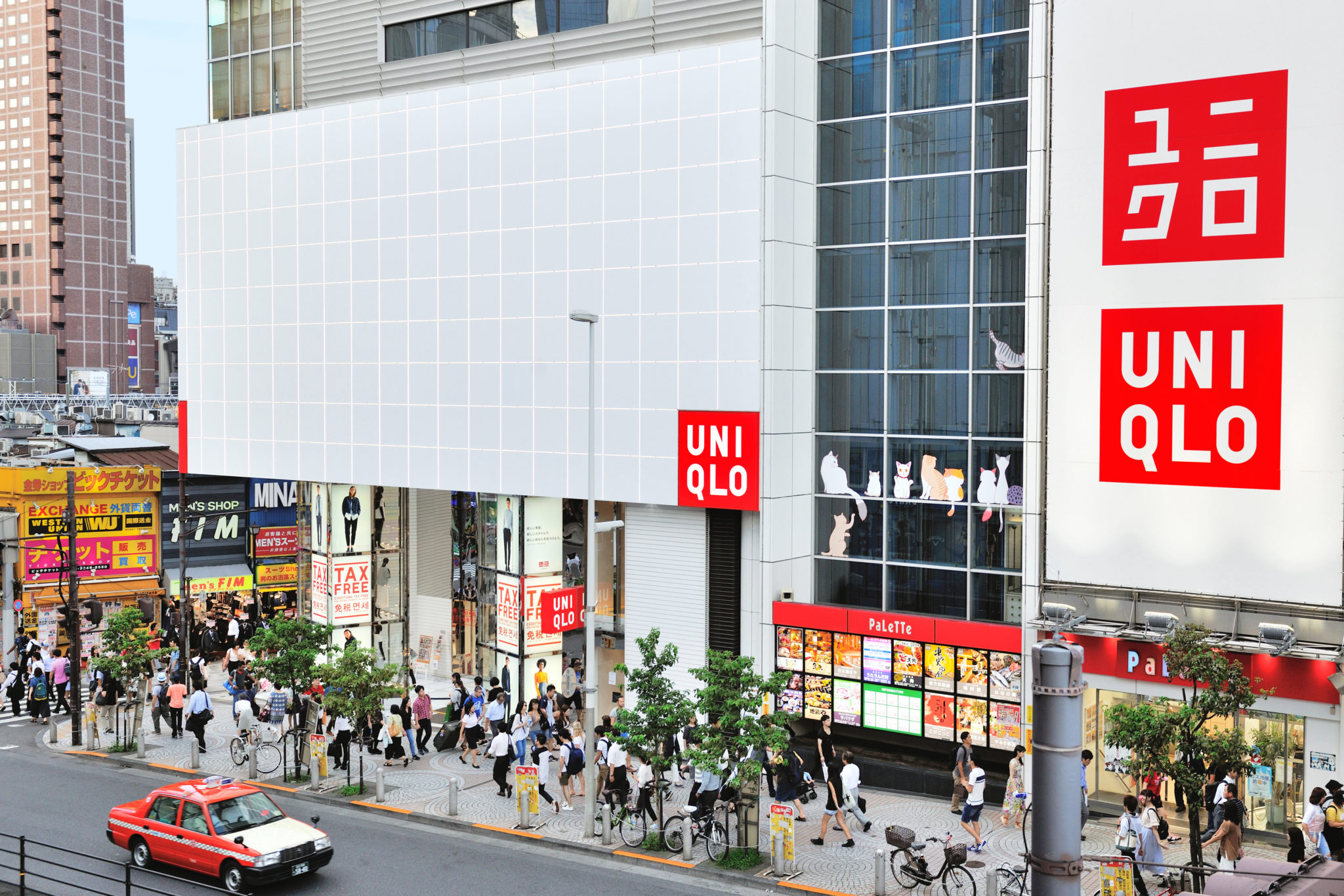
    Fast Retailing Group has reported a decline in revenues for Uniqlo Japan against broader successes internationally in its first quarter. A sharp profit decline on sluggish sales of seasonal ranges during a warm winter in Japan has given rise to disappointing results in the Uniqlo brand’s home territory. Uniqlo Japan posted revenues of ¥246.1 billion (US$2.27 billion), a decrease of 4.3 per cent year on year, with first-quarter profit before taxes of ¥111 billion ($1.03 billion), down 5.7 per cent; and profit attributable to owners of the parent firm of ¥73.4 billion ($678.4 million), down 6.4 per cent. Online sales expanded favourably in the market, however, showing an increase of 30.9 per cent.

    Uniqlo International saw an operating profit far exceeding that of Uniqlo Japan, with revenues at ¥291.3 billion (2.69 billion) up 12.8 per cent. Uniqlo Greater China and Uniqlo South Korea both reported higher sales and profits despite the dampening effect of the warm winter. Uniqlo Southeast Asia & Oceania continued to report significant revenue and profit gains.

    The report said Fast Retailing’s consolidated business estimates for the financial year ending August 31 remain unchanged from the initial forecasts released last October, predicting an 8 per cent expansion in revenue and 14.3 per cent increase in operating profits.

  • Watsons Vietnam opens first store this month

    Watsons Vietnam opens first store this month

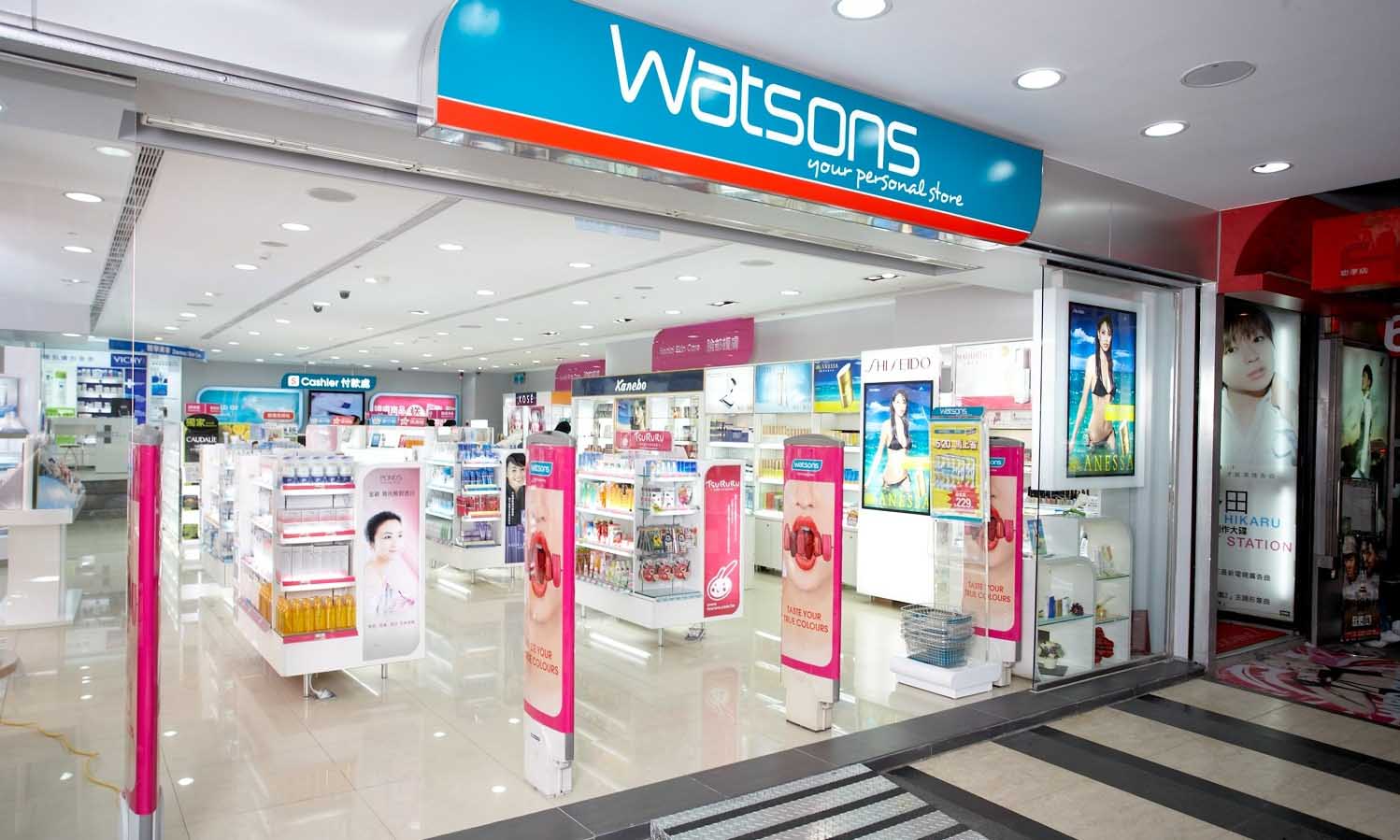
    Hong Kong-headquartered healthcare and beauty retailer Watsons is to launch in Vietnam. The first Watsons Vietnam store will open on January 17, in the lower floors of the high-profile Bitexco tower in downtown Ho Chi Minh City. The store will take up at least one floor of a two-storey space recently vacated by Topshop. Teasing the launch, a huge backdrop with the slogan “Look good, Feel great” has been built outside the space, attracting many Vietnamese youngsters to take selfies and check in on social media.

    On its LinkedIn page, Watsons Vietnam has been recruiting staff for the store and featuring the same artwork as on the Bitexco backdrop.

    Watsons Vietnam will compete with rival Hong Kong healthcare and beauty chain Guardian, owned by Dairy Farm International, which launched in Ho Chi Minh City in 2011 and now claims to have more than 60 stores in four cities.

    Watsons is operated by AS Watson, a subsidiary of retail and telecommunications giant CK Hutchison which is quarter-owned by Singapore sovereign investment fund Temasek Holdings. AS Watson has some 6800 Watsons health and beauty stores in 12 markets in Asia and Europe, including Hong Kong, Mainland China, Taiwan, Macau, Thailand, Singapore, Malaysia, the Philippines and Indonesia. The broader AS Watson group has 14,500 stores, including electrical retailers and grocery stores.

    Watsons has just celebrated the opening of its 500th store in Bangkok, Thailand. The store photo accompanying this story is of Watson’s new-generation store at IconSiam in Bangkok.

  • Chinese Smartphone Realme Eyes to Expand Southeast Asia

    Chinese Smartphone Realme Eyes to Expand Southeast Asia

    BBK Electronics’ budget smartphone brand Realme is eyeing expansion into Southeast Asia, Africa and Europe. The company’s online distribution strategy has brought it success in the Indian market and makes broader expansion possible, according to Realme global CEO Sky Li Bingzhong. “The company’s asset-light operations and focus on online sales allow it to keep costs low. That way, more young consumers can afford its products, which makes the brand more competitive in the market,” said Li.

    Realme launched in India in May last year with handsets priced at INR8,990 (US$129) – becoming the second top-selling smartphone brand during the Diwali festival season from October to November. The brand has joined a number of Chinese phone manufacturers seeking to build strength in the Indian market as they challenge more established international competitors in more saturated markets.

    BBK also owns the Oppo, Vivo and OnePlus brands, selling mid- to high-end models. Independent Realme runs its own R&D operations, but partners with Oppo in smartphone production. Its expansion moves are indicative of Chinese phone manufacturers’ larger strategy to deploy varying brands that each target specific markets globally.

  • AEON Thailand and Mastercard celebrate new year with promotion

    AEON Thailand and Mastercard celebrate new year with promotion

    Mr.Nuntawat Chotvijit (2nd from left), Executive Director of AEON Thana Sinsap (Thailand) Public Limited Company together with Mr.Donald Ong (2nd from right), Country Manager Thailand and Myanmar, Mastercard joined hands to give away a special year-end promotion for AEON Mastercard credit cardholders. With every spending of 1,000 Baht, customers will be entered win a 3 days 2 nights Singapore travel package that includes an Economy Class roundtrip to Singapore, by Singapore Airlines” accommodation at the Resorts World™ Sentosa Universal Studios Singapore™, along withfun-filled experience at world-class theme parks such as Universal Studios Singapore and S.E.A. Aquarium™ A total of 10 prizes will be up for grabs (2 people/prize) worth a combined value of 700,000 baht.


  • China Slowdown, Trade Disputes Weigh on Asia Factory Activity

    China Slowdown, Trade Disputes Weigh on Asia Factory Activity

    Factory activity weakened across Asia in December as the Sino-US trade war and a slowdown in Chinese demand hit production in most economies, strengthening the case for a pause in interest rate hikes in the region in 2019. A series of purchasing managers’ indexes (PMI) for December released on Wednesday mostly showed declines or slowdowns in manufacturing factory activity across the region. In China, the Caixin/Markit PMI slipped into contraction territory for the first time in 19 months, broadly tracking an official survey released on Monday.

    China’s weakness spilled over to other Asian economies, with Malaysia’s manufacturing activity shrinking to its weakest pace of expansion since it launched the survey in 2012 and Taiwan contracting to its lowest since September 2015.

    Meanwhile, official economic data out of Singapore showed its gross domestic product grew more slowly than forecast in the fourth quarter as the city-state’s manufacturing sector contracted on a quarterly basis.

    In other regions, the eurozone was expected to post steady manufacturing activity growth, while US activity was seen a tad slower, but firmly in expansion territory, in a sign that so far China has suffered more bruises from its trade frictions than the United States.

    With growth slowing and inflation below or barely within the target in most countries, Asian central banks are unlikely to continue their tightening cycle this year, barring any shocks in currency markets.

    “We are really seeing a global slowdown into this year, and in Asia, particularly export-oriented countries are hurting,” said Irene Cheung, Asia strategist at ANZ.

    “Our expectation for central banks is that most of them won’t change policy in 2019 and these numbers coming out on the weak side won’t change that outlook.”

    The world’s two largest economies agreed at the start of December to a 90-day truce following tit-for-tat tariffs that have disrupted the flow of hundreds of billions of dollars of goods between the two countries.

    The two sides have pledged to hold frequent talks in the next two months, but uncertainty over whether they can bridge massive differences over commercial practices and intellectual property rights remains very high, despite US President Donald Trump noting “big progress” in a tweet.

    Tariffs are not the only drag on China’s economy. Beijing’s sustained drive to reduce debt risks in the economy has cooled the property market and curbed credit flows to the private sector. Meanwhile, the government’s intensified crackdown on pollution has dented industrial activity.

    In a key annual conference last month, China’s top leaders said they will boost support for the economy in 2019 by cutting taxes and keeping liquidity ample while promising to continue negotiations with Washington.

    “The People’s Bank of China may have to ease further to offset the impact of tariffs,” said Robert Michele, chief investment officer and head of fixed income, J.P. Morgan Asset Management.

    China’s economic growth slowed to 6.5 percent in the third quarter of last year, the weakest since the global financial crisis. As reported, government advisers had recommended a growth target of 6.0-6.5 percent for this year at the annual meeting, though the final figure won’t be made public until the annual parliament meeting in early March.

    Oil Drive

    A sharp drop in the crude price at the end of last year has helped sentiment in Asia’s oil-importing economies, where trade deficits are a key vulnerability.

    Indonesia’s PMI index, although still weak historically, rose to 51.2 from November’s 50.4, a four-month high. India’s declined to 53.2 from 54.0 but capped the strongest quarter for the country’s manufacturing sector since late 2012. Philippines PMI was also 53.2.

    But Malaysia, which relies heavily on oil revenues, saw its weakest reading ever at 46.8.

    Taiwan and South Korea, which are heavily focused on tech production, also saw their activity shrink. The US-China trade war affects chip orders and coincides with a slowdown in demand for smartphones globally.

    The contraction in South Korean manufacturing activity continued last month albeit at a slower pace, its PMI showed, with new export orders declining for a fifth consecutive month. Taiwan’s PMI, meanwhile, fell to its lowest since September 2015. Japan publishes PMIs on Jan. 4.

    Vietnam’s PMI fell to 53.8 from November’s 56.5, but the index’s 2018 average was the highest since the survey’s debut in 2011.

    The Southeast Asian economy is widely seen as benefiting from the US-China trade war as companies look to establish operations in the country to avoid the tariff crossfire.

  • Supermarket retailer Big C opens 147th hypermarket

    Supermarket retailer Big C opens 147th hypermarket

    Supermarket retailer Big C has launched its 147th hypermarket at Nakhon Si Thammarat. Big C Supercenter CEO Aswin Techajareonvikul said Big C’s business has continued to expand this year. “We are recruiting new employees to drive our promising business providing the best shopping experience to our customers. “In Nakhon Si Thammarat, we are offering the new shop-in-shop concept serving the variety of customers. We also focus on home appliance and electronic products responding to trend and consumers’ interests in electronics and IT products.”

    The new centre will employ more than 1000 workers and joins the firm’s network of hypermarkets, 60 markets, 671 Mini Big Cs, and 138 Pure Pharmacies, as well as e-commerce channel Big C Shopping.

  • Thailand’s Supersports stores rebranded as fashion shops

    Thailand’s Supersports stores rebranded as fashion shops

    Thailand’s CRC Sports has rebranded its Supersports business as a sports fashion store in a move targeting millennials. Last month’s rebranding modernises the business’s image and transforms the performance store model into the fashion world. The logo has also been revised with green motifs to suggest environmental awareness.

    Three Supersports stores have already been updated with the new look, including the CentralWorld location, with 50 stores scheduled to follow early next year.

    President Tony Morton said: “Our new motto is ‘The new Supersports, where Sport is fashion’, in response to the trend of millennials being fashion-conscious, cool, healthy and cheerful.”

    The firm will also expand its online sales efforts in the coming year, with the total market size for sporting goods in Thailand expected to be worth THB30 billion (US$916.3 million) by the end of this year.

    Supersports drew in THB300 million ($9.163 million) in online sales last year – 3.5 per cent of Supersports’ THB8.5 billion ($259.78 million) total revenue – and expects online sales to reach THB500 million ($15.28 million) next year.

  • Miu Miu Siam Paragon boutique reopened

    Miu Miu Siam Paragon boutique reopened

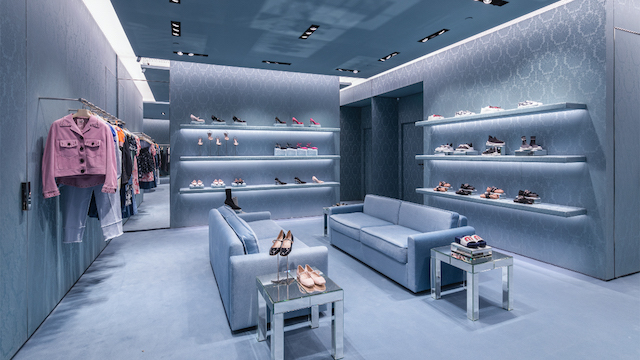
    Italian fashion brand Miu Miu is reopening its Siam Paragon boutique as the first Thai location to introduce its new concept store. The new 140sqm outlet strengthens the brand’s presence in Bangkok with a refreshed interior design and new collections of its signature accessories, bag, shoe and ready-to-wear collections.

    Among Miu Miu’s current offerings are evening dresses enhanced by Swarovski crystals and garments featuring 60’s-inspired elements.

  • FamilyMart expands Bangkok delivery service with Kerry

    FamilyMart expands Bangkok delivery service with Kerry

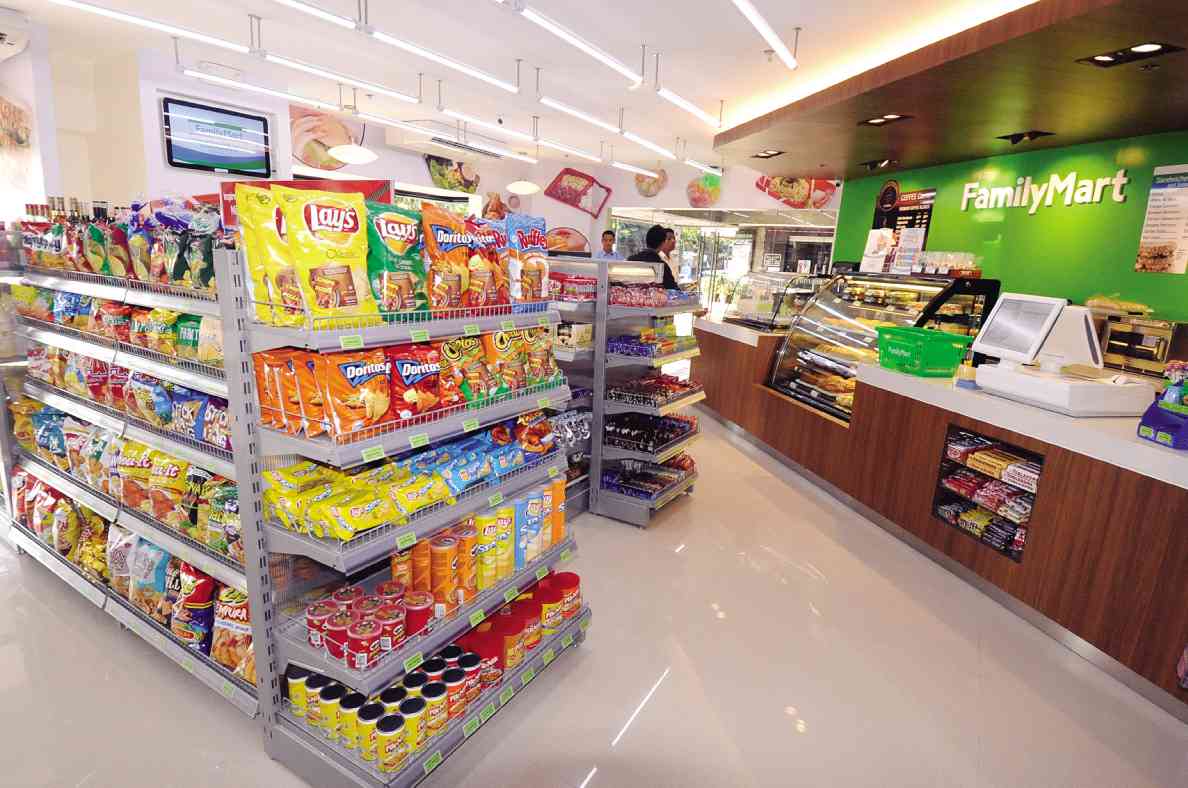
    Convenience store chain FamilyMart has partnered with logistics operator Kerry Express to expand its Bangkok delivery service. “Today, the e-commerce market has grown continuously for more than 20 per cent annually, and individual consumers have also had a greater demand for express delivery over the past three to five years,” said Central FamilyMart president Chiranun Poopat.

    “We have introduced Kerry Express, an express delivery service, available 24 hours a day at our FamilyMart stores in Bangkok and surrounding locations. The door-to-door express delivery will be provided to our individual customers so that they will be able to send their parcels to any locations throughout the Kingdom with fast and high-standard delivery process.”

    The new service is being promoted with a free limited-edition parcel delivery box available to customers during the Christmas period. The box will be provided to customer spending more than THB79 (US$2.42) via its express delivery service.