Tag: Thailand

  • Bangkok Bank provides Bt2-bn funding for VPI particle board plant

    Bangkok Bank provides Bt2-bn funding for VPI particle board plant

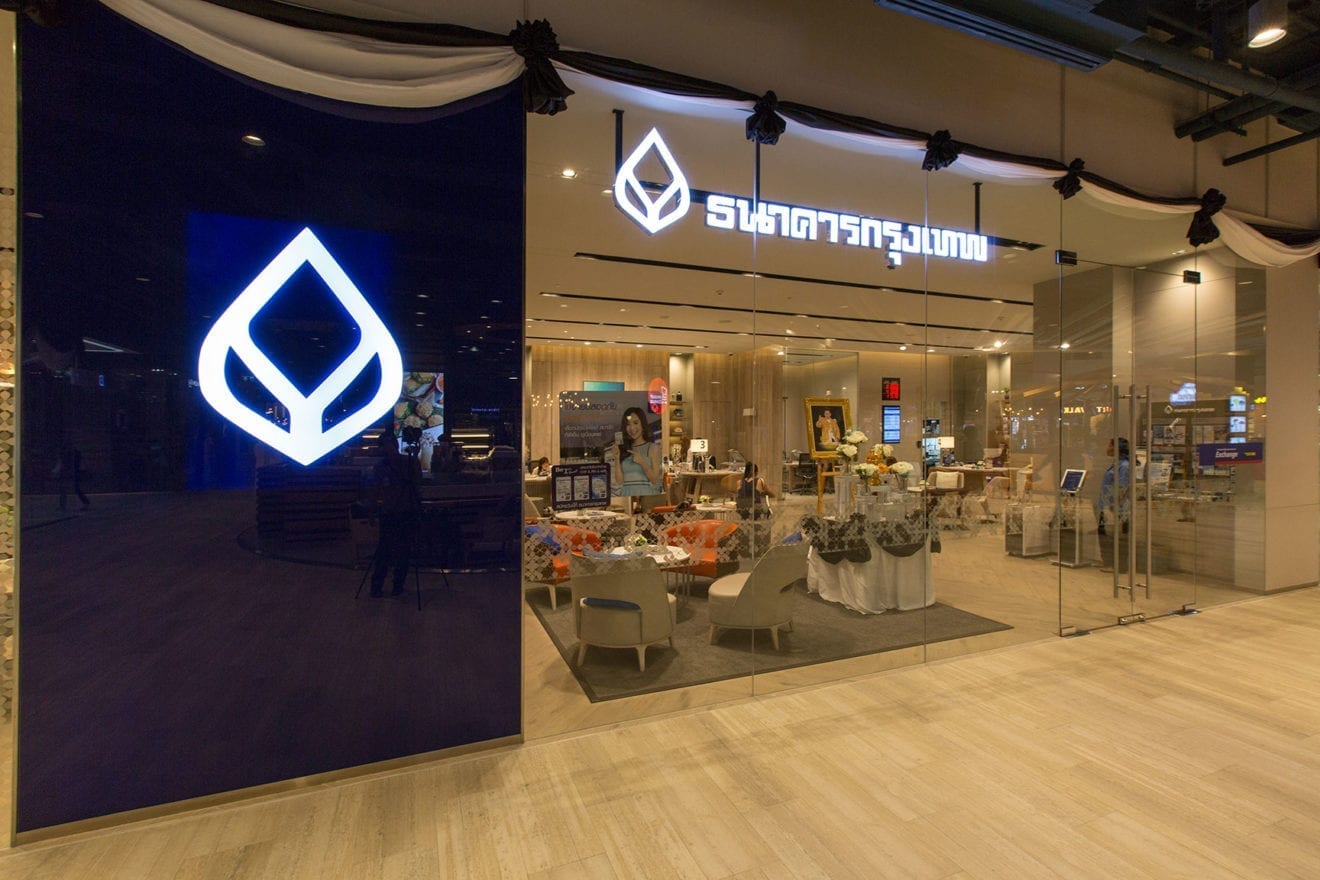
    Bangkok Bank has approved a credit line of Bt2 billion to Vanachai Panel Industries (VPI) for construction of a particle-board factory in Surat Thani, known as the PB-3 project.

    VPI needs the new plant in order to increase its capacity to produce high-quality and environmentally-friendly board that meets the needs of customers in its major markets in East Asia and Asean.

    Bangkok Bank senior executive vice president Chansak Fuangfu on Tuesday said the bank was pleased to support the success of Vanachai Group (VNG), a leader in the production and distribution of environmentally friendly panels, with a credit line of Bt2 billion to its subsidiary VPI for construction of the PB-3 factory.

    The funds will be used to increase annual production capacity by 450,000 cubic metres to meet demand from East Asia and Asean.

    Given the good growth of the company, its stable financial status, and long partnership with Bangkok Bank, the bank is ready to fully support VNG in its international expansion, Chansak said.

    VPI managing director Wanthana Jaroennawarat said that with the new Bt2-billion investment, the company aimed to complete construction of the PB-3 project and commence commercial production in the second quarter of 2019.

    The investment will enable the company to double its annual particle-board production capacity to 900,000 cubic metres using an efficient and environmentally friendly production process, he added.

  • True Shopping to set partnership with 11street

    True Shopping to set partnership with 11street

    Thai home-shopping retailer True Shopping has launched an online store on marketplace 11street.

    To mark its sixth anniversary, True Shopping and 11street are running a promotion this month with discounts and bonus coupons.

    “One of our key strategies for next year is to win new customer groups,” says CEO Ongard Prapakamol of True Shopping owner True GS. “That’s why we think 11street is a strong partner to allow us to gain a strong foothold in e-commerce.”

    Selling on 11street on a trial basis since October, True Shopping has had great feedback, says Prapakamol. “We found that our buyers from 11street are totally different from our home-shopping buyers: they are younger, have a taste for trendier products and are price sensitive.”

    “We are delighted True Shopping trusts us to be another channel for its products,” says 11street Thailand CEO Hong Cheol Jeon. “True Shopping’s wealth of low-priced products and services, more than 400 SKUs, will help increase our product portfolio to meet the demands of our more than 700,000 shoppers.”

    The anniversary promotion runs until December 24.

  • AEON Scholarship Ceremony 2017

    AEON Scholarship Ceremony 2017

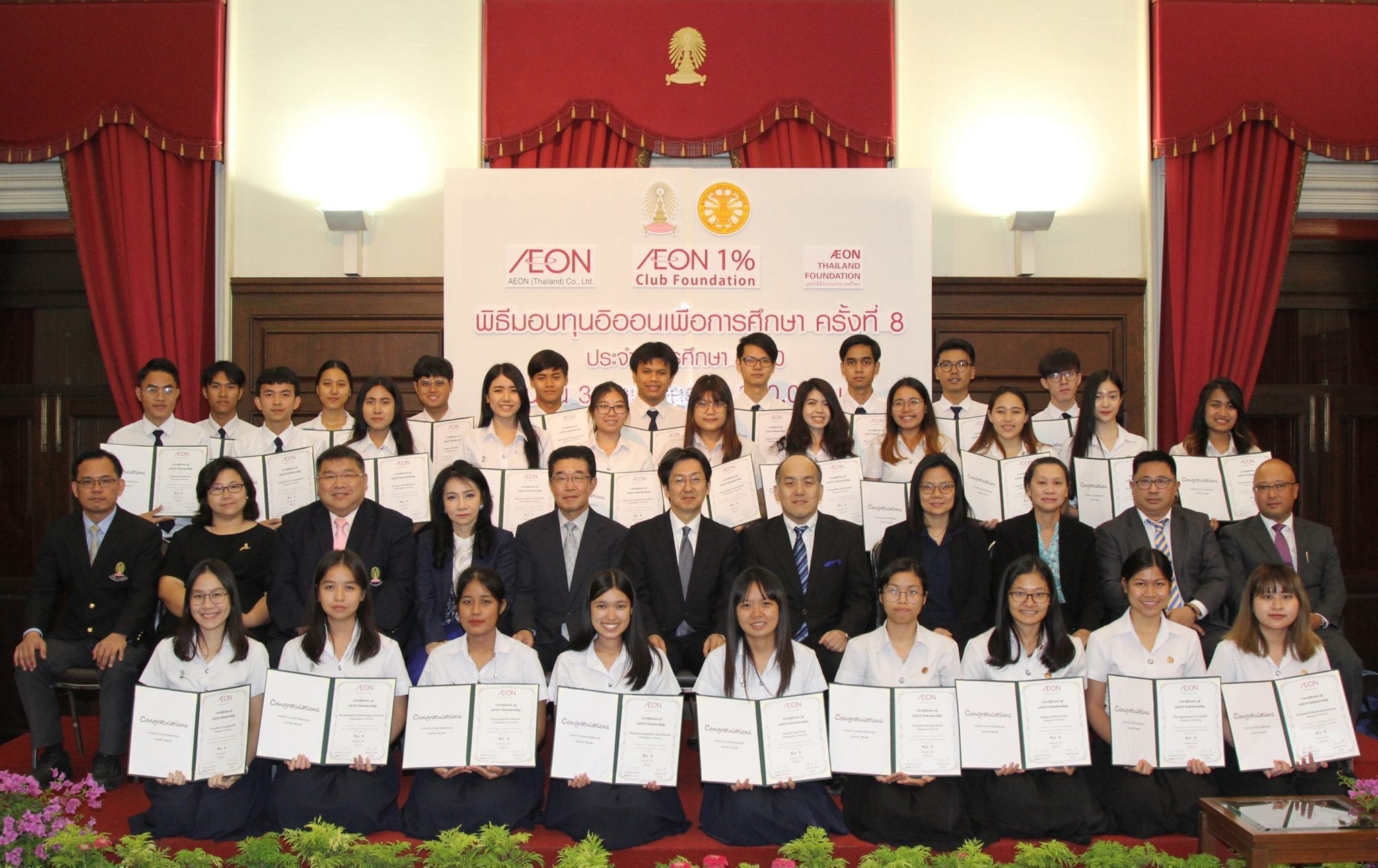
    Mr. Kiyoyasu Asanuma, Chairman of AEON Thailand Foundation, and Ms. Suporn Wattanavekin, Vice Chairman of AEON Thailand Foundation together with Mr. Yohsei Honda, Secretary General of AEON 1% Club Foundation and Mr. Manabu Boike, Managing Director of AEON (Thailand) Co., Ltd. arranged AEON Scholarship Ceremony 2017 to grant 32 scholarships in amount of THB 2,240,000 to student of Chulalongkorn University and student of Thammasat University at Chulalongkorn University.


  • Shopee giant leaps on its second year

    Shopee giant leaps on its second year

    Fast-growing e-commerce platform Shopee has released impressive statistics in marking just its second birthday.

    Combined annualised GMV from Taiwan and the six Southeast Asian markets where it operates has reached US$5 billion. It has more than 180 million active listings by more than 4 millions sellers, including 5000 leading brands and distributors. Its app has been downloaded more than 80 million time.

    In Singapore alone, where it has its own mall portal, the app has had more than 1 million downloads and features more than 70,000 sellers and brands.

    “Shopee has undergone tremendous transformation since we first launched, and while we are proud of all that we have achieved, this is only the beginning,” said Zhou Junjie, chief commercial officer of Shopee.

    “Shopee has always been committed to listening to the needs and preferences of our users, and has worked to create a platform that is tailored to exactly that. Whether it is providing a fuss-free and convenient shopping experience for buyers, or offering a reliable and secure platform for brands and budding entrepreneurs to expand their online presence, Shopee strives to continue improving the lives of the region’s consumers and businesses with technology,” said Zhou.

    “This year has been a great one for Shopee and we would like to thank our customers, sellers, and partners for their continuous support. Moving forward, we will continue to focus on improving our platform and diversifying our product assortment. We remain committed to helping brands and local entrepreneurs grow and continuously strive to push the boundaries of e-commerce to become the leading online shopping destination of choice in the region.”

    As part of its birthday celebration, Shopee Singapore will be holding a 10-day birthday sale until December 13, featuring promotions across over 10,000 items.

  • Safilo signs distribution deal for Thailand and Cambodia

    Safilo signs distribution deal for Thailand and Cambodia

    Safilo continues to expand internationally, boosting its presence in Asia.

    The Italian eyewear manufacturer has signed an exclusive distribution agreement for Thailandand Cambodia, adding to its international distribution network, now extending to 42 countries.

    Safilo, which is controlled by Dutch investment fund Hal, issued a press release announcing the signing of the deal with Supreme Eyewear, a major local distributor with a 40-year presence in the business. The term of the agreement was not indicated.

    “The distribution agreement for Thailand and Cambodia marks a further step in the development of the Asia Pacific region. It supports the acceleration in the growth of Safilo’s Emerging Markets unit, as per Safilo’s 2020 Strategy,” wrote the group, which hopes as a result to earn “significant market share in highly interesting countries.”

    Supreme Eyewear will distribute all of the brands featured in Safilo’s portfolio – more than 30 labels – from the most accessible ones, like Polaroid and Havaianas, to premium names such as Elie Saab, Dior, Fendi, Jimmy Choo, Givenchy and soon also Moschino.

    Through this geographic redeployment, Safilo is seeking to compensate for the loss of the Gucci license, which still weighs heavily on its financial performance, as shown by the third quarter 2017 , which recorded a revenue of €245.1 million, equivalent to a 14.9% shortfall (-12.3% at constant exchange rates) compared to the same period a year earlier.

  • SUPERNAP International Celebrates Grand Opening of The Most Advanced Data Center In The ASEAN Region

    SUPERNAP International Celebrates Grand Opening of The Most Advanced Data Center In The ASEAN Region

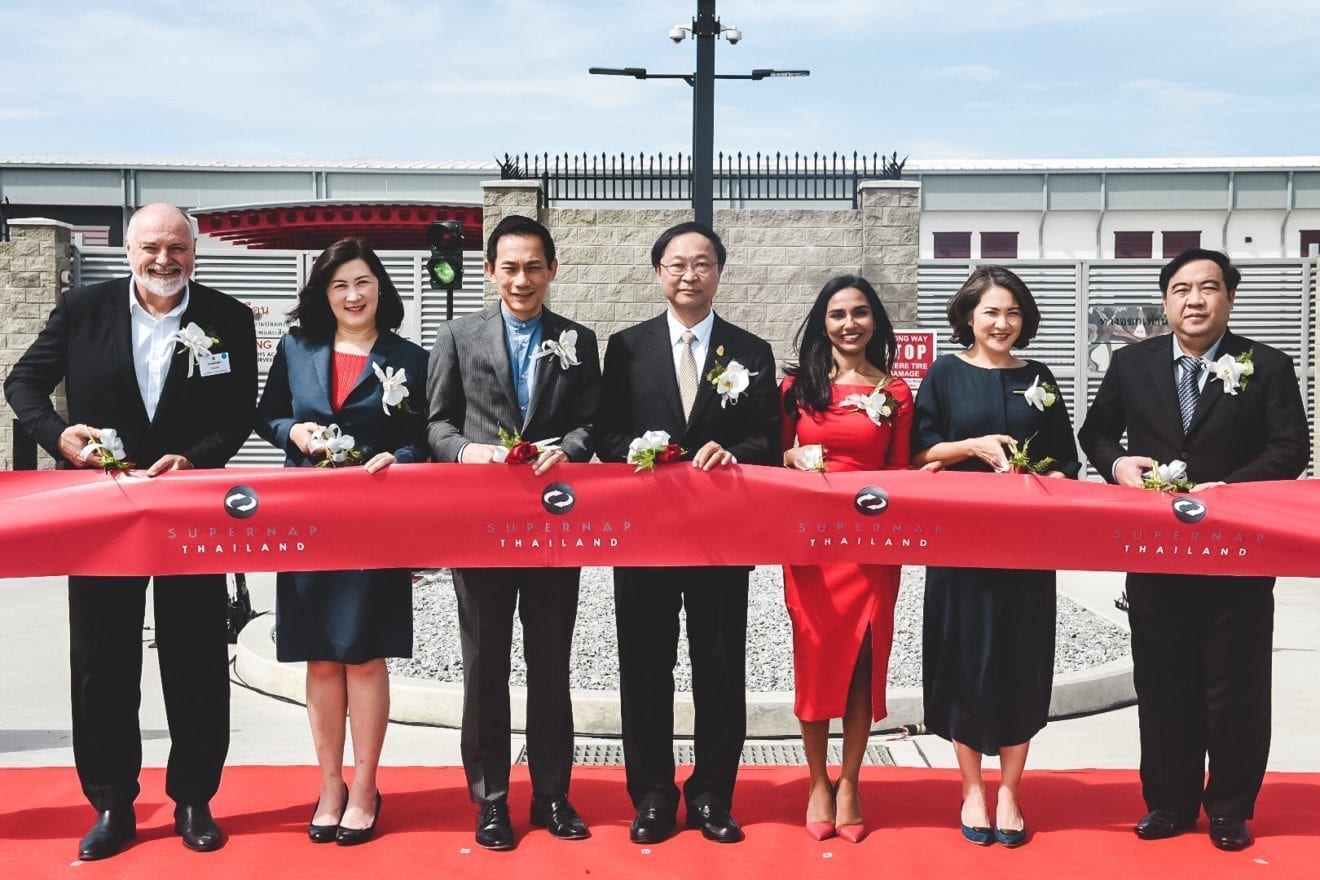
    SUPERNAP Thailand celebrated the grand opening of one of the most advanced data center in ASEAN region, the Bangkok Campus located at the Hemaraj Industrial Estate 2, in Chonburi.  The event was marked with a formal ribbon-cutting ceremony attended by several government dignitaries as well as business and community leaders.

    The SUPERNAP Thailand data center is designed and built to the specifications of the industry-renowned, Tier IV Gold-rated Switch LAS VEGAS multi-tenant/colocation data centers in the United States. Its advanced design and diverse connectivity options are expected to enable clients to respond to rapid market growth and connect to global economies, while helping the Thai government to transform the country into a high-value based digital economy.

    SUPERNAP Thailand Managing Director Sunita Bottse kicked off the ceremony, featuring board members, executives from the government sector and key vendors, by talking about the impact the project will have on the Thailand 4.0 economy.

    “Thailand is moving towards the “Thailand 4.0” era, when industries will rely on digital innovations and online connections,” Sunita Bottse said.   “This new carrier-neutral data center facility, plays an important role in the region as the critical infrastructure that powers the ability of businesses to succeed in the growing Internet of Things, Cloud and Artificial Intelligence markets. Our capability serve the huge scale of the digital world in an efficient and sustainable manner.

    SUPERNAP data center is expected to be a catalyst for attracting more investment to the region and is poised to become the data center hub for Asia Pacific and to accelerate the digital economy growth in the Eastern Economic Corridor (EEC).    

    “Under Thailand 4.0, digital transformation will be instrumental in the realization of this exciting journey. SUPERNAP data center is the digital backbone that will enhance big data and cloud computing that are increasingly essential for the development of EEC and Thailand.”  said Dr. Pichet  Durongkaveroj, Minister of Digital Economy and Society.

    The world-class SUPERNAP Thailand data center is located 110 meters above sea level outside of the flood zone, and 27 kilometers away from the international submarine cable landing station, which links to national and international telecommunication and internet gateway carriers.

    “At SUPERNAP, we have ensured that our data center is up for the challenges as Thailand moves toward being a leader in the digital economy,” said SUPERNAP Senior Sales Engineer Kasem Nincharoen. “The SUPERNAP Thailand growth model is driven by the country’s need for a purpose-built data center facility bringing assured reliability, availability, security, scaleability and disaster risk mitigation supported by the latest proven and industry leading designs.”

    Currently, the SUPERNAP Thailand data center in Chonburi is expected to include:-

    • 21,000 square meters of data center space with two data halls.
    • 20 megawatts of power distribution.
    • Proprietary tri-redundant UPS power system.
    • Up to 33 kilowatts of power per cabinet.
    • Multi-carrier fiber couples with separate paths.
    • Patented Switch SHIELD: dual independent roof 100% penetration –free decks rated to withstand 322 kph winds.
    • 24x7x365 on-site network operations center (NOC), fire, safety and security.
    • On-site, on-net member resources including conference spaces.
  • JD Sports Fashion moves to influence marketing as strategy

    JD Sports Fashion moves to influence marketing as strategy

    UK company JD Sports Fashion has engaged influencer marketing firm Rocketfuel Entertainment to help develop digital content for its brand in Malaysia.

    JD carries brands such as Adidas, New Balance and Nike as well as in-house labels Brookhaven, Pink Soda, Sonneti, and Supply and Demand.

    A JD spokesperson says it is eyeing growth in markets such as Singapore and Thailand, and aims to open 25 outlets by end of next year.

    Its senior brand marketing manager Jaclyn Tan says the biggest draw for its customers is the “extensive range of sneakers from multiple brands, including Western Europe exclusives available only in our stores”.

    CEO Justin Lim says the content will enable JD Sports Fashion to engage with its audience on its social platforms.

    Rocketfuel claims to have a social-media reach of more than 36 million in the region with influential personalities in beauty, fashion, lifestyle, automotive and parenting.

    The sports lifestyle retailer launched a flagship store for Asia last year at Pavilion Elite Kuala Lumpur, and this week opened a store at Putrajaya’s IOI City Mall. It also has outlets at Aeon Mall Tebrau City (Johor Bahru), Mid Valley Megamall, Sunway Pyramid and Sunway Velocity Mall, with another five stores to follow “very soon”.

  • Lalamove Adds Delivery Toppings to Burger King Online Orders

    Lalamove Adds Delivery Toppings to Burger King Online Orders

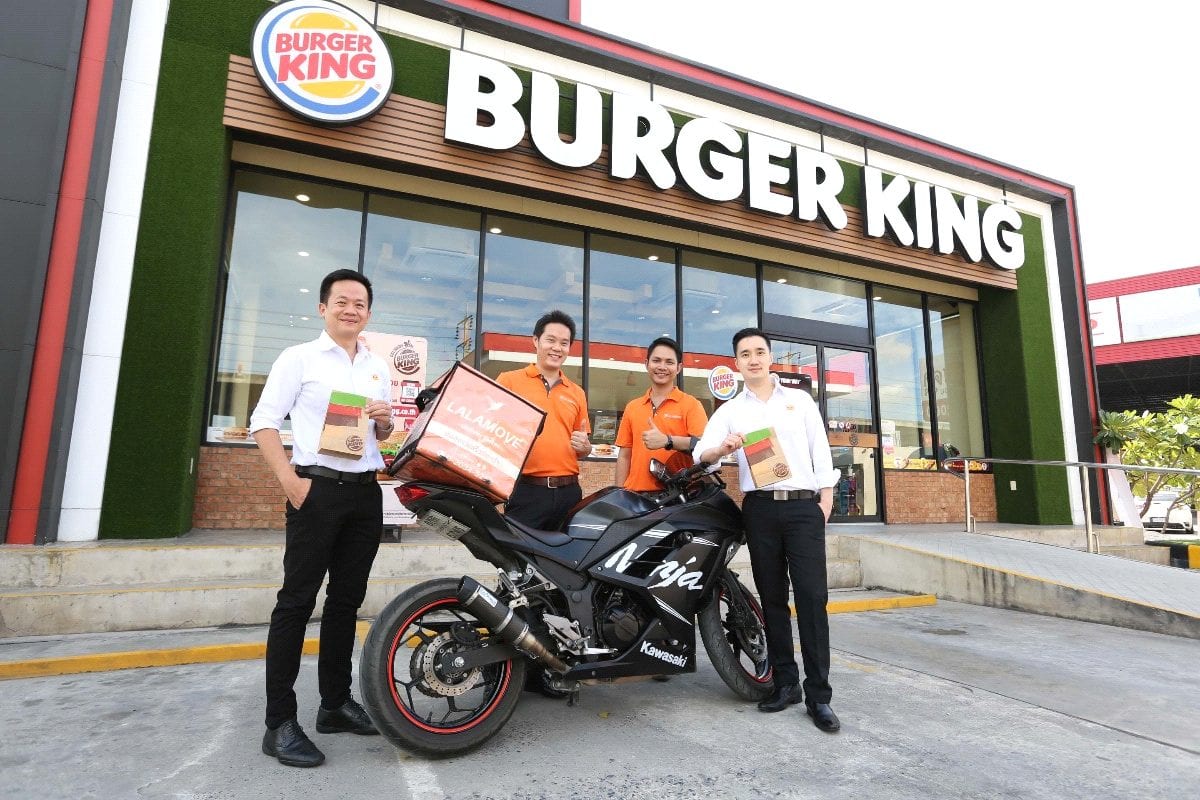
    US global fast-food chain BURGER KING has teamed up with Hong Kong-based on-demand delivery app and Thailand’s top food delivery platform, Lalamove, to launch its new partnership in November 2017 that will ensure better delivery of perfectly flame-grilled burgers to online customers all over Thailand.

    Burger King is the first fast-food burger restaurant chain to be added to the Lalamove delivery service and according to Chanon Klahan, Managing Director of Lalamove Thailand, this represents the delivery app’s reputation and focus on expansion. “To be chosen to join forces with such a successful household name as Burger King is a true sign of confidence in what we can deliver business-wise and of course burger-wise! It also shows Lalamove’s focus on building

    strong partnerships as we grow. With our food-delivery network of drivers, we can definitely help stimulate demand as Burger King continues to expand into new delivery locations.”

    In October 2017, Lalamove announced its own plans for global expansion too, by setting its sights on a presence in more than 100 cities across Asia after securing USD100M Series C funding.

    Prapat ‘Patrick’ Siangjan, General Manager at Burger (Thailand) Limited says, “Burger King has seen an opportunity to grow its customer base substantially. With the addition of an online food ordering channel, which is very popular today, Burger King can greatly expand its delivery zones.”

    “Thanks to Lalamove, which is Thailand’s leading same-day delivery and logistics provider, this collaboration will enable us to meet the needs of our customers better than ever before. By steadily launching new menu items to satisfy the appetites of our increasingly sophisticated customers, Burger King has seen the burger market continuously grow and receive consumer good response, especially in Q1 and Q3 of this year.”

    “In 2018, we plan to increase the number of branches by another 15-20 more new outlets, each with an average investment of 25 million Baht, in Greater Bangkok and strategic provinces nationwide. BURGER KING’s strong selling points will continue to be its focus on sourcing fresh, quality ingredients and creating unique menu offerings that will tantalize consumer taste buds, alongside our famous flame-grilled Australian beef for great-tasting deals at unbeatable prices.”

    With 16 branches already opened this year which brings the company to 89 outlets in total, (84 in Thailand and another 5 overseas), the Burger King brand is firmly established in this country. Consistently rolling out new restaurants in high potential locations enhances the brand and enables Burger King to extend its online delivery service zones to better meet growing consumer demand throughout Thailand. This is why Burger King chose to partner with the new Lalamove online delivery service as a part of its ongoing process to improve its online business as a whole.

    To celebrate this new partnership with Lalamove, Burger King is currently running a promotion offering free delivery with orders of 500 Baht or more from December 1st – 29th  2017.

  • More discount from Don Don Donki for Singaporean

    More discount from Don Don Donki for Singaporean

    Japanese discount store Don Don Donki opens its first Southeast Asian outlet at Orchard Central today, to be followed by a second outlet at the 100 AM mall in Tanjong Pagar in June.

    The aim is to have at least 10 stores in Singapore within the next four or five years.

    Over two storeys, the Orchard Central megastore will be open 24/7 and also feature a “night market” concept featuring eight dining outlets in partnership with food manufacturer Hokkaido Marche. This section will launch next month and be open only during dinner hours.

    Don Don Donki’s product range of about 30,000 items was curated for Singapore and spans fresh and processed foods, vegetables, meat, sushi, groceries, beverages, costumes, clothing, cosmetics, novelty goods and household items. A third of the product selection is from Hokkaido.

    Covering 1400sqm, Don Don Donki will also offer products from its in-house brand Jonetsu Kakaku as well as a Hokkaido-themed retail space.

    The brand is known for its wide range of made-and-designed-in-Japan products – from toilet paper to second-hand Rolex watches.

    Better known as Donki, the store was founded by Japanese businessman Takao Yasuda in 1978 and is owned by the Don Quijote Group. Its stores in Singapore will be run by Pan Pacific International Holdings, its holding company for overseas business.

    Name change

    While the stores in Japan are called Don Quijote, its Singapore branch name has been changed to avoid confusion with a local Spanish restaurant of the same name. The term “Don Don Donki” was taken from the store’s theme song.

    “The idea to have Don Don Donki in Singapore was suggested by Hokkaido Marche,” said Yasuda, 68, who “semi-retired” a couple of years ago and moved to Singapore. “When I came here, I realised products in Singapore are very expensive, and in Japan I’m known as the king of discounts.

    “What costs one dollar in Japan is sometimes two or three dollars here.”

    So when he was approached by Hokkaido Marche to partner and open its concepts in Singapore, he agreed immediately.

    Pan Pacific International Holdings director Hideki Okada says the Singapore store is a pioneer for the rest of Southeast Asia. It will be followed by a branch in Thailand next November.

    With 368 stores in Japan, Hawaii and the US, the brand earned nearly ¥828.8 billion (US$7.3 billion) in annual sales for the fiscal year to June 30.

  • Bangkok could gain THB 126 billion of economic benefits by going cashless

    Bangkok could gain THB 126 billion of economic benefits by going cashless

    Residents, businesses and government of Bangkok could realize THB 126 billion-worth of economic benefits by transitioning from physical money to digital payments, according to an independent study conducted by Roubini ThoughtLab and commissioned by Visa.

    The results examine the economic impact of increasing the use of digital payments in major cities around the world. As a “digitally transitioning” city, Bangkok is among the six global metropolises selected for the study, representing one of the five different stages of digital payment maturity.

    “As more people move from rural to urban areas, cities become the nexus for the adoption of electronic payments. This study is unique in that for the first time it looks at the net benefits associated with adopting digital payments at a city-level. The research shows that a shift to electronic payments will benefit people, businesses and government not just in big cities like Bangkok, but other urban centers such as Phuket and Khon Khaen as well,” said Suripong Tantiyanon, Country Manager, Visa Thailand.

    For Bangkok, widespread usage of electronic payments could generate an estimated increase of THB126 billion to the city’s economy – with consumers, businesses and government to realize net benefits of THB 3 billion, THB 73 billion, and THB 50 billion, respectively.

    Estimated net benefits are derived from factors including time savings while conducting and processing banking, retail and transit transactions; increased sales revenues from extended customer base both online and in-store; increased tax revenues and economic growth; cost savings; and reduced cash-related crime, among others.

    “There are many existing and emerging technologies in payment that will drive wider adoption of electronic payments. In cities like Bangkok, we will see new payments form factors such as standardized QR Code go beyond being just a money transfer tool and mainstream method such as debit chip card becoming widely used and accepted, giving consumers and businesses the choices on how to pay and get paid,” said Mr. Suripong.

    About the Cashless Cities Report

    Cashless Cities: Realizing the Benefits of Digital Payments”, is a unique study that quantifies the potential net benefits experienced by cities which move to an “achievable level of cashlessness”—defined as the entire population of a city moving to digital payment usage equal to the top 10% of users in that city today.  The study does not look at eliminating cash.  Rather, it seeks to quantify the potential benefits and costs of significantly increasing the use of digital payments.

    By reducing reliance on cash, the study estimates the immediate and long-term benefits for three main groups—consumers, businesses and governments. According to the study, these benefits could add up to combined direct net benefits of approximately U.S. $470 billion or equivalent to 3 percent of the average GDP of the 100 cities that were analyzed:

    • Consumers across the 100 cities could achieve nearly $28 billion per year in estimated direct net benefits. This impact would be derived from factors including up to 3.2 billion hours in time savings conducting banking, retail and transit transactions, in addition to a reduction in cash-related crime.
    • Businesses across the 100 cities could achieve more than $312 billion per year in estimated direct benefits. This impact would derived from factors including up to 3.1 billion hours in time savings processing incoming and outgoing payments and increased sales revenues stemming from extended online and in-store customer bases. The study also found that accepting cash and checks costs businesses 7.1 cents of every dollar received compared to 5 cents of every dollar collected from digital sources.
    • Governments across the 100 cities could achieve nearly $130 billion per year in estimated direct benefits. This impact would be derived from factors including increased tax revenues, increased economic growth, cost savings from administrative efficiencies and lower criminal justice costs due to reduced cash-related crime.

    “This study demonstrates the substantial upside for consumers, businesses and governments as cities move toward greater adoption of digital payments,” said Ellen Richey, Visa’s vice chairman and chief risk officer. “Societies that substitute digital payments for cash see benefits from greater economic growth, less crime, more jobs, higher wages, and increased worker productivity.”

    As cities increase use of digital payments, the positive impacts can extend beyond financial benefits to consumers, businesses, and government. The shift to digital payments also may have a catalytic effect on the city’s overall economic performance, including GDP, employment, wage, and productivity growth.

    “The use of digital technologies—from smart phones and wearables to artificial intelligence and driverless cars—is rapidly transforming how city dwellers shop, travel, and live,” said Lou Celi, Head of Roubini ThoughtLab. “Without a firm foundation in electronic payments, cities will not be able to fully capture their digital future, according to our analysis.”

    “Cashless Cities: Realizing the Benefits of Digital Payments” offers 61 recommendations for policymakers to help their cities become more efficient through greater adoption of digital payments. Recommendations include undertaking financial literacy programs to help move the unbanked into the banking system, implementing incentives to stimulate innovation focused on scaling new payment technologies, implementing secure open-loop payment systems across all transportation networks and more.

    Visa and Roubini Thoughtlab created an online data visualization tool as a companion to “Cashless Cities: Realizing the Benefits of Digital Payments.” Using the data visualization tool, individuals can increase or decrease the level of digital usage in each of the 100 cities included in the study to better explore the benefits of a world, less dependent on cash.  

    Methodology

    Roubini Thoughtlab, a leading economics and evidence-based research firm, surveyed 3,000 consumers and 900 businesses in 2016 across six cities (Tokyo, Chicago, Stockholm, Sao Paolo, Bangkok and Lagos) that represent different levels of digital payments maturity. These surveys examined the use, acceptance, and cost-benefit impact of physical and digital money. Researchers then extrapolated these survey results based on specific demographic and economic data to another 94 cities around the world to determine the net impact of moving toward a cashless economy on consumers and businesses in each location. Through other sources, the research was also able to identify expected impacts on government. Researchers used World Bank, Organisation for Economic Co-operation and Development, and other well-respected secondary data sources to augment the survey results and build the overall findings. An econometric model used by various central banks and other institutions – the National Institute Global Econometric Model (NiGEM) – was used to estimate the “catalytic” impacts (economic growth, productivity, employment and wages) that a move toward digital payments would have on each of the 100 cities analyzed. Visa commissioned the study.  Roubini Thoughtlab independently conducted the surveys, managed the research and developed the analysis.

  • Thai Listed Property Developer Sansiri Invests $80m In Six Global Startups

    Thai Listed Property Developer Sansiri Invests $80m In Six Global Startups

    Thai listed property developer Sansiri Pcl announced an investment of $80 million across six global technology and lifestyle companies as part of a bid to expand beyond real estate development and into the global market.

    Of this, Sansiri will invest about $58 million in US-based boutique hotel chain Standard International and its mobile booking application, One Night. The Thai firm will hold a 35 per cent stake in the hospitality firm.  

    The remaining include a $3.1-million stake in Tyler Brûlé’s lifestyle magazine Monocle; $6.6 million in London’s Airbnb management firm Hostmaker; $12 million in Southeast Asia’s co-working space JustCo; and $300,000 in a smart indoor farm technology firm Farmshelf, according to a Financial Times report.

    Srettha Thavisin, president of Sansiri Pcl, said that the company’s investments will focus on three key activities, which include strategic investment in global lifestyle brands; developing property technologies in partnership with industry disruptors; and enhancing influence and audience through premium lifestyle media.

    Kang Wan Sing, Founder and CEO of JustCo, said that the partnership with Sansiri will support JustCo to launch four co-working spaces in Bangkok. “We expect to have 20 co-working spaces across Asia-Pacific by 2018, giving Sansiri access to our 12,000 members,” he added.

  • Danone-Lazada plans its strategic partnership

    Danone-Lazada plans its strategic partnership

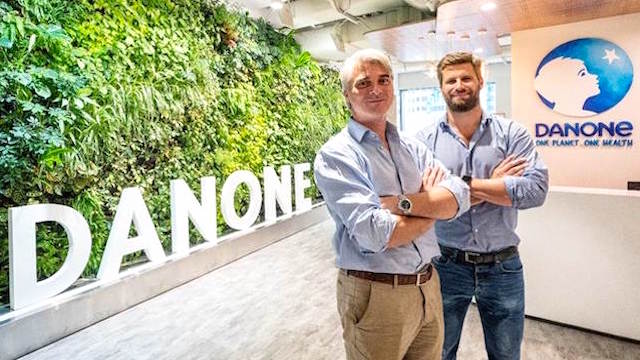
    French FMCG company Danone has teamed with Lazada Group to create a series of online stores for Southeast Asia, starting with Thailand in December.

    The Danone-Lazada strategic regional partnership covers Thailand, Indonesia, Malaysia and Singapore. The two companies say they will create “a superior online shopping experience for key product categories, combining their expertise on shopper needs and behaviours, and bringing convenience and compelling content to the ever-growing number of online consumers across the region”.

    The alliance will begin with Danone’s Early Life Nutrition category, which features a portfolio of brands for families with young children. Danone’s Early Life businesses are already working together in Indonesia, Thailand and Singapore – participating in Lazada mega-campaigns such as Online Revolution on 11.11 and 12.12.

    The joint venture will stretch beyond simple e-commerce by offering parents advice and information on the growth, development and nutritional needs of children. Lazada’s digital platforms will provide convenient ordering solutions, personalised service and exclusive content and events developed with Danone.

    “We have been working with Lazada for more than a year, and accelerating our partnership in the last six months,” says Eric van der Hoeven, VP of growth through engagement at Danone Early Life Nutrition. “We want to support all parents in their journey, and wherever we can, to help them make well-informed feeding decisions for their children at the critical moments in their growth and development. I am very pleased that our constructive collaboration so far will now be taken further in this strategic regional partnership.”

    Lazada CEO Max Bittner says young parents live increasingly busy lives and are often confronted with information overload.

    “Teaming up with a trusted brand like Danone reinforces Lazada’s position as a source of quality products and enables us to serve the best, most relevant content, service and support for parents on their journey.”

    The partnership will come into force by end of November, beginning with workshops bringing together the Danone and Lazada teams in the local countries in sharing insights and planning. The first visible consumer features jointly developed will be implemented on the Lazada websites in Thailand in December.

  • Stelux Holdings slows down the bad trend

    Stelux Holdings slows down the bad trend

    While turnover and gross profit margin slid for watch/optical company Stelux Holdings International for its first half, it managed to cut back on its net loss.

    Group turnover was down by 6.9 per cent (6.3 per cent foreign-exchange neural) to HK$1.3 billion (US$166.4 million) and gross profit margin fell from 59.6 to 58.1 per cent. Group net loss reduced by 15.2 per cent to $62 million.

    Given the fragile retail environment, the group says it continued with consolidation measures to improve shop productivity. While group turnover fell by 6.9 per cent, largely because of an 11.3 per cent drop in shop number, same-store sales improved, particularly in Mainland China. Sales also stabilised in Hong Kong and Southeast Asia. Gross profit margin remained under pressure at 58.1 per cent, compared to 59.6 per cent in the same period last year.

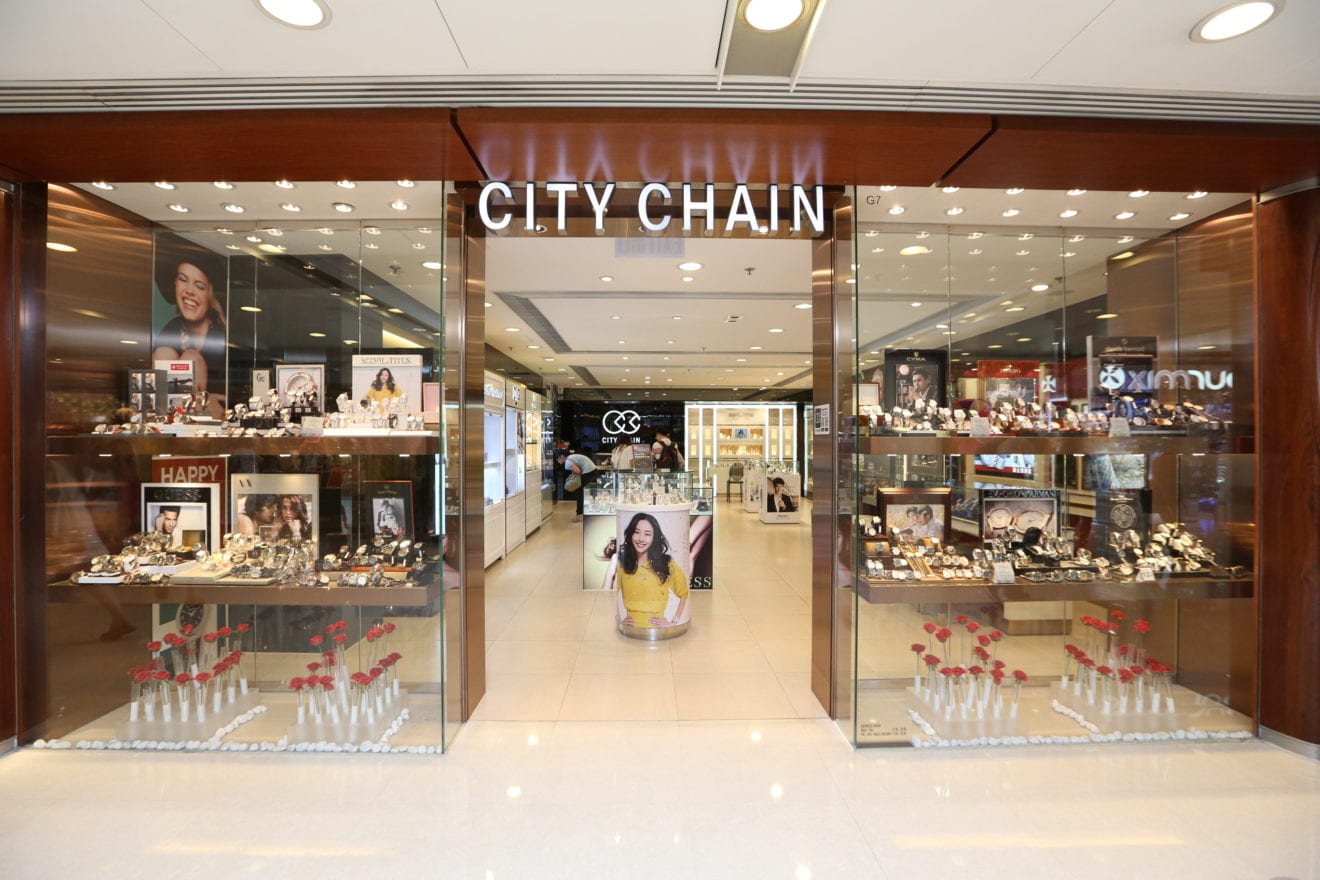
    City Chain Group

    Turnover fell 11.1 per cent for the City Chain Group, with a loss before interest and tax (LBIT) of $37.7 million from $49.4 million. The group has about 260 stores in Hong Kong, Macau, Mainland China, Malaysia, Singapore and Thailand together with three online stores.

    The drop in turnover from $668.5 million to $594.4 million was because of a 17.9 per cent decrease in shop numbers.

    In response, the chain is undergoing a major transformation to attract both a younger and local clientele. New store layouts have been introduced in Hong Kong, Guangdong, and Thailand.

    Turnover for the chain in greater China fell by 12.5 per cent to $439.8 million while LBIT was down 11 per cent to $34.8 million.

    Same-store sales growth has also resumed in Hong Kong and Macau since August with a freshed store image and enriched brand portfolio. The closure of loss-making shops and the positive impact from the expiry of high rental leases contributed to a 19 per cent fall in operating costs. City Chain tapped into the e-commerce business in Mainland China a few years ago, with the turnover of its watch e-commerce business increasing by more than 60 per cent compared to the corresponding period last year.

    With store consolidation in Southeast Asia, turnover fell 7 per cent to $154.5 million. There was a 16.5 per cent drop in shop numbers. Nonetheless, LBIT narrowed significantly to $2.9 million from $10.3 million.

    EBIT for Malaysian stores more than tripled while LBIT in Singapore fell by 79 per cent. With sustained recovery in Thailand, both turnover and same-store sales growth were “satisfactory”.

    Optical 88 Group

    Optical 88 Group turnover decreased by 2.9 per cent with EBIT rising to $32 million from $15.2 million. The group has 194 shops throughout Hong Kong, Macau, Mainland China, Malaysia,  Singapore and Thailand delivering professional eyecare/eyewear products and services, as well as hearing products and services.

    Turnover eased by 2.9 per cent to $504 million with 7.6 per cent fewer shops. EBIT more than doubled from $15.2 million to $32 million.

    In greater China, Optical 88 had a marginal 0.7 per cent decline in turnover to $414.2 million, with 4.1 per cent fewer shops. EBIT rose by 16.8 per cent to $38.2 million.

    Southeast Asia business had a 11.7 per cent drop in turnover to $89.8 million with 10.2 per cent fewer outlets delivering a narrowed LBIT of $6.2 million.

    Turnover rose 13.5 per cent of Egg Optical Boutique with LBIT widening from $7.1 million to $13.6 million. There are more than 80 stores in Hong Kong, Mainland China and Southeast Asia
    together with an online store.

  • Tokyo Milk Cheese Factory says Hello to Bangkok

    Tokyo Milk Cheese Factory says Hello to Bangkok

    Japanese bakery chain Tokyo Milk Cheese Factory is about to take a bow in Thailand with a store at Siam Paragon in Bangkok.

    Famed for its soft milk cheesecake made from French cream cheese and Hokkaido cream, the brand also offers cheese and milk mousses wrapped in crepes, Salt & Camembert Cookies Camembert Cheesecake with a chocolate filling. There is also a Honey and Gorgonzola Cookie flavoured with Spanish rosemary and featuring a chocolate filling.

    Its arrival in Thailand is thanks to Dolnapa Thammawatana and Khanchai Ongkamongkol, who were impressed by the brand’s flavours when visiting Japan.

    Thammawatana says their shop will also introduce Cow Cow Ice, a soft ice cream in a cheesy cone, as found in the brand’s shop in Shinjuku, Tokyo.

  • New Thai Vietjet route launches to bring more passenger traffic

    New Thai Vietjet route launches to bring more passenger traffic

    New route launches by Thai Vietjet is expected to bring significant increases in passenger traffic between Thailand and Vietnam starting next month. This follows the official announcement that Thai Vietjet has just received the recertified AOC (Air Operator Certificate) from the Civil Aviation Authority of Thailand (CAAT).

    The new certificate, bestowed to the airline by Transport Minister Arkhom Termpittayapaisit, is in line with ICAO (International Civil Aviation Organization) standards. It was presented to Vietjet during a special ceremony with the theme “Let’s Enjoy A New Journey” on November 8.

    The airline also announced a new international route from Bangkok to Dalat – known as the ‘City of Flowers’ and a much-loved mountainous retreat for local and international travelers, particularly from Thailand. Earlier, Thai Vietjet announced that it will introduce two new international routes connecting Phuket and Chiang Mai with Vietnam’s largest tourism and economic hub of Ho Chi Minh City.

    “We believe that the recertification will further reassure the confidence of travelers across the globe in our services and the Thai airline industry as well,” said Ms. Nguyen Thi Thuy Binh, Thai Vietjet’s management representative. “To further deliver our promise to contribute to the growth of Thai tourism, today I am also pleased to announce the opening of Thai Vietjet’s new international route from Bangkok to Dalat in the Central Highlands of Vietnam. The new flight will be launched just before the International Flower Festival of Dalat, which is held in December this year. I am delighted that people from these two countries can now enjoy their neighboring country even more through our expanding flight network.”

    The Transport Minister of Thailand, Mr. Arkhom Termpittayapaisit, said: “Thai Vietjet is the 12th carrier to pass the recertification process since CAAT started to recertify the AOC for airlines. I have witnessed the airline’s dedication on preparing and improving itself to successfully pass the overall operational standards of ICAO. And the new AOC, bestowed to Thai Vietjet today, is a remarkable milestone for the carrier to further prove its safety and services as it spreads its wings and continues to fly further and higher on this journey of sustainable development.”

    Commencing 18 December, 2017, the new Bangkok – Dalat route will be operated by an Airbus A320 with four return flights per week, flying every Monday, Wednesday, Friday and Sunday. The flight departs at 10:45am from Bangkok and returns at 12:45pm from Dalat with a flight time of one hour 45 minutes. One-way fares start from only THB 99 (HKD $23.33) (excluding tax and charges).

    Dalat is the capital city of Lam Dong province, located in the Lang Biang highlands – part of the Central Highlands region of Vietnam – 1,500 meters above sea level. Boasting thick pine forests and verdant valleys of postcard beauty as well charming old French villas, beautiful waterfalls and gorgeous lakes, the city of Dalat has become one of the most favorite destinations in the country and the region, particularly when it comes to winter where flowers blossom in full colors all over the city. Therefore, the city is known to Vietnamese by many lovely names such as Little Paris, the City of Love, the City of Poetry, the Green City.

    Following the newly-launched route to Dalat in December 2017, Thai Vietjet and Vietjet Group will operate a total of six direct routes between Thailand and Vietnam, including Bangkok to Hanoi/ Hai Phong/ Ho Chi Minh City and Dalat and Phuket/Chiang Mai to Ho Chi Minh City.