Tag: Thailand

  • Japanese baby products firm Ficelle makes full-scale Thai debut

    Japanese baby products firm Ficelle makes full-scale Thai debut

    Japanese baby products retailer Ficelle has launched its first outlet in Thailand.

    In partnership with distributor K-AG Kin All Gen, it has opened a store in Bangkok’s Central Embassy shopping mall. This follows a six-month trial of online sales in Thailand last year, which raked in THB5 million (US$155,000).

    Ficelle offers a range of brands, including Japan’s 10mois, with such items as baby and maternity clothes, sleeping vests, bibs and portable chairs.

    K-AG Kin All Gen executive director Lukkana Jaovisidha says the luxury goods market in Thailand, particularly babycare products, is expected to grow. The trend of having fewer children means parents are likely to spend more on infant apparel and baby accessories per child.

    Nearly a third of customers are expected to be expatriates in Thailand.

    Two more stores are planned for Bangkok this year, including a flagship in a Takashimaya department store. The partners hope to have five shops in Thailand by 2020.

    Ficelle has also just opened an outlet in Singapore following product launches in Hong Kong, South Korea and Taiwan.

  • Siam Commercial Bank and Prudential Thailand announce unit-linked bancassurance partnership

    Siam Commercial Bank and Prudential Thailand announce unit-linked bancassurance partnership

    10 January 2018- Siam Commercial Bank Public Company Limited (“SCB”), a leading bank in Thailand, and Prudential Life Assurance (Thailand) Public Company Limited (“Prudential Thailand”), a subsidiary of UK-based Prudential plc, have agreed to establish a bancassurance partnership to jointly develop and provide insurance solutions for SCB’s wealth segment customers.

    Both companies have a long history of providing Thai people with innovative financial products that meet their evolving needs. The partnership, which will be effective from 1 February 2018, will provide SCB’s customers with access to Prudential Thailand’s world class range of unit-linked products through the bank’s licensed financial advisers.

    SCB and Prudential Thailand will initially offer three-unit linked products with both Regular and Single Premium options1, to serve the protection, savings and investment needs of the Bank’s wealth segment customers.

    Ms. Salisa Hanpanich, Executive Vice President of First Division and Segment Management Division for Siam Commercial Bank, said “The alliance with Prudential Thailand supports our strategy to provide our customers with best-in-class unit-linked life insurance products, which are perfectly fit to serve the financial and investment needs of customers in the fast-growing wealth segment, as customers in this segment are looking for investment products that provide them with an opportunity to get higher returns than deposit ones, and at the same time get protection for the peace of mind of their families. We expect that, through Prudential’s unit-linked products combined with strong team of sales, training and customer service support, we can achieve our ambition.” Aman Chowla, Chief Executive officer of Prudential Thailand, said, “We are proud to partner with Siam Commercial Bank, the longest established bank and one of the most successful banks in Thailand. Bancassurance is an integral part of our multi-distribution strategy to reach and serve Thai customers. This partnership with SCB enables us to leverage our expertise in unit-linked products to provide innovative and need-based solutions to SCB’s wealth segment customers. Thailand is one of the largest insurance markets in South East Asia with low insurance penetration, a growing and increasingly prosperous population with significant insurance and savings needs. This partnership will give us further opportunity to reduce the insurance gap in what is an important market for Prudential in Asia.”


  • Central Group to add its online presence with JD.com

    Central Group to add its online presence with JD.com

    After forming an e-commerce partnership with China’s JD.com, Thai retail giant Central Group expects online sales to account for as much as 15 per cent of its revenue in five years’ time, from 2 per cent now.

    CEO Tos Chirathivat says the $500 million JV, announced in September, will help it compete in Southeast Asia’s booming e-commerce market and also open up businesses opportunities in China.

    Tos estimates online retail in Thailand could rise fivefold to 10 per cent of the market as web access spreads via smartphones.

    While Central Group is a privately held investment arm of the Chirathivat family, it controls a range of publicly traded businesses – Central Pattana is a mall developer, Central Plaza Hotel runs resorts and restaurants, Robinson is a chain of department stores and COL is an office supplies company. Central Pattana turnover surged 50 per cent last year, Central Plaza 47 per cent and COL more than doubled.

    Outside of Thailand, Central Group owns Italian luxury department store La Rinascente, Danish retailer Illum and the Big C hypermarket chain in Vietnam, along with interested in retail chains including Nguyen Kim (Vietnam) and B2S (Thailand).

    Central Group is targeting annual revenue growth of 13 per cent this year, says Tos. Local sentiment is helping the company, with consumer spending in Thailand picking up after the October cremation of King Bhumibol Adulyadej ended the nation’s year-long mourning period.

  • Centara Signs Private Partnership Agreement for Centra by Centara Government Complex

    Centara Signs Private Partnership Agreement for Centra by Centara Government Complex

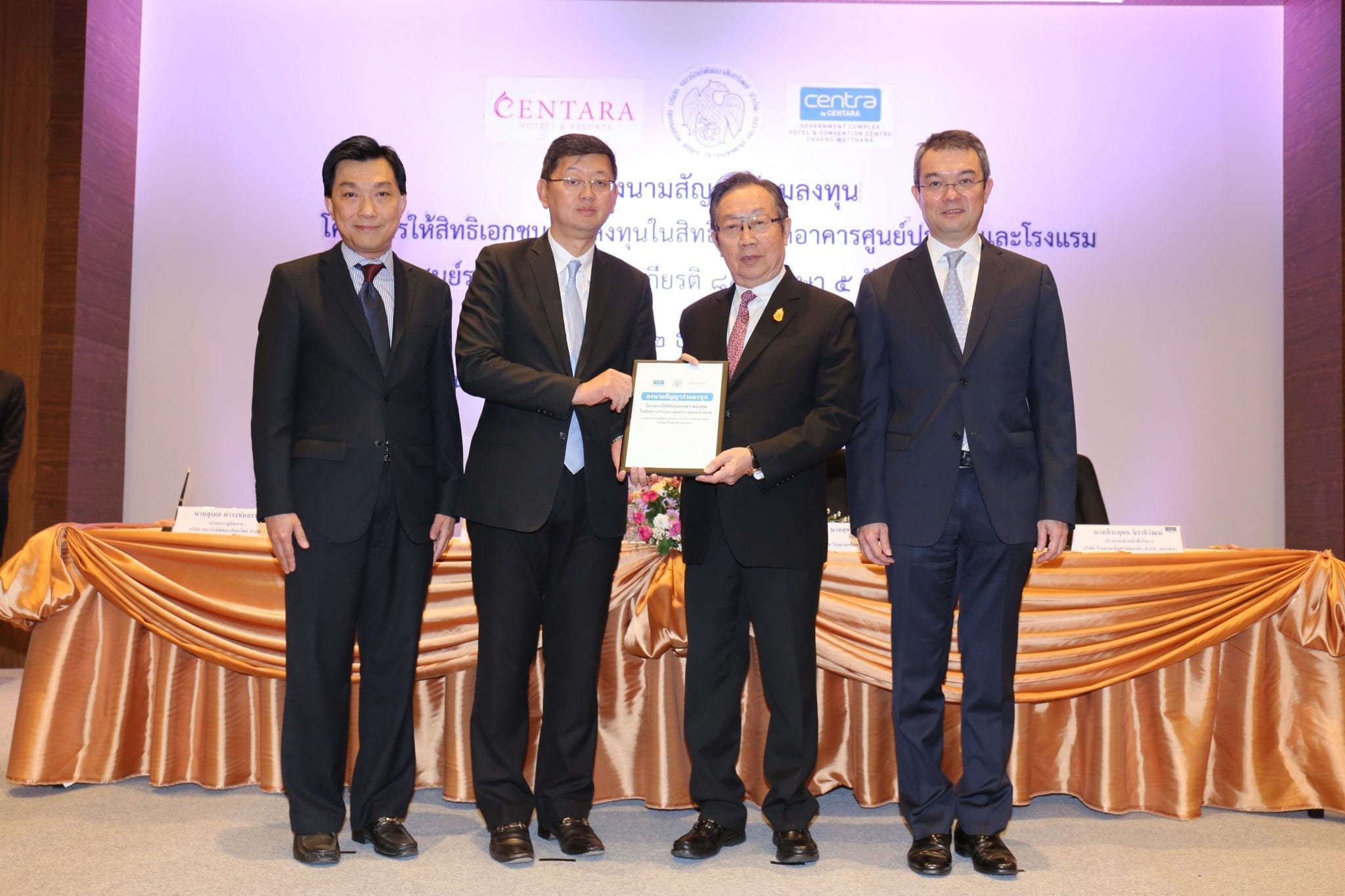
    Centara Hotels & Resorts, Thailand’s leading hotel operator, announced a long-term lease agreement for Centra by Centara Government Complex Hotel & Convention Centre Chaeng Watthana.  Centara’s Chairman of the Board Suthikiati Chirativat signed the agreement for the 204-room hotel and conference property in the Thai government community 10 minutes from Bangkok’s Don Mueang International Airport. Centara had managed the property for its owner, Dhanarak Asset Development Company Ltd., since 2011. The 20-year, around 1.2 Billion Baht lease deal with Dhanarak effectively turns ownership over to Centara.

    “Centra by Centara Government Complex continues to play a vital role in the facilitating of official and government business in Thailand. Having managed this successful hotel and convention centre for 6 years the investment in a long term lease in this property was a logical step and supports our strategic plan to double Centara’s size within the next five years,” said Centara’s Chairman of the Board Suthikiati Chirathivat.

    Centra by Centara is one of the hospitality group’s six hotel brands. The Centra by Centara Hotel and Convention Centre at the Government Complex offers ideal accommodations and meeting facilities for businesspeople, delegates and officials. Its 24 meeting rooms, including the large Vayupak Grand Ballroom, can host a variety of large and small conferences and events simultaneously. Hotel and conference facilities are integrated so that guests can easily walk between meeting and event venues, restaurants, and their hotel rooms. The Centra by Centara property also hosts weddings and concerts.

    The Government Complex in which the property is located is home to over 30 official departments and agencies. It functions like a small town, including banks, retail shops, restaurants, clinics and other amenities. There is parking for over 2,000 vehicles.

    Dhanarak Asset Development Company Ltd., the property’s original owner, was established by the Thai Ministry of Finance to build and manage the Government Complex. Centara has ambitious plans to eventually renovate both the hotel and its attached convention centre.

    Over the next five years, Centara Hotels & Resorts aims to double its size with additional properties in Thailand and its new international markets, while spreading its footprint into new continents and market niches. Its flagship properties in Bangkok, Centara Grand & Bangkok Convention Centre at CentralWorld, and Centara Grand at Central Plaza Ladprao, have established the company’s reputation as the leading meeting, conference, and large event host in Thailand.

  • Centara appoints new Business Development VP to support expansion

    Centara appoints new Business Development VP to support expansion

    Centara Hotels & Resorts, Thailand’s leading hotel operator, announced the appointment of Allen Thomas as Vice President Business Development, effective January 1st. Thomas has 28 years of experience developing hotel and resort businesses, a career that includes positions with HPL and Como Hotels and most recently Resorts Holdings International. His appointment marks another significant Centara move in their five year plan to double the company’s size and become a major regional hospitality brand.

    Mr. Thomas will report to Centara’s Deputy CEO Markland Blaiklock. He will be responsible for executing the company’s plan to grow from 58 to 134 hotels over the next five years. Mr. Blaiklock himself was brought on board in October to lead the expansion strategy. In the weeks since then, Centara has already launched its new affordable lifestyle hotel brand COSI; signed a joint venture to take ownership of Centra by Centara Government Complex Hotel & Convention Centre Cheang Watthana; announced a significant upgrade of its technology infrastructure in partnership with Oracle and IDeaS; and finalised an agreement with Nakheel to develop a family lifestyle resort in Dubai.

    Centara’s CEO, Mr. Thirayuth Chirativat commented, “Allen is a tenured industry expert with an impressive track record of growing the brand footprint of hotel and resort businesses in Asia and beyond. We are confident of meeting our expansion targets with a professional of Allen’s calibre leading our Business Development division”.

    With this latest appointment, Centara’s management team is almost complete following its recent reorganisation. The company is building a diverse and experienced leadership structure to set it up for continued future success.

  • New digital marketplaces seek to reshape economy

    New digital marketplaces seek to reshape economy

    The age of digital transformation is dawning on Thailand’s economy and society as evidenced by crucial developments in banking, retail and other sectors.

    The Bank of Thailand reported that commercial banks had shut down nearly 300 bank branches in the country in 2017 as customers moved towards Internet and mobile banking services, ushering in a new era of digital banking.

    In the meantime, Siam Commercial Bank (SCB) is leading the pack by launching its “SCB Express” concept – fully-automated banking centres in various Bangkok locations.

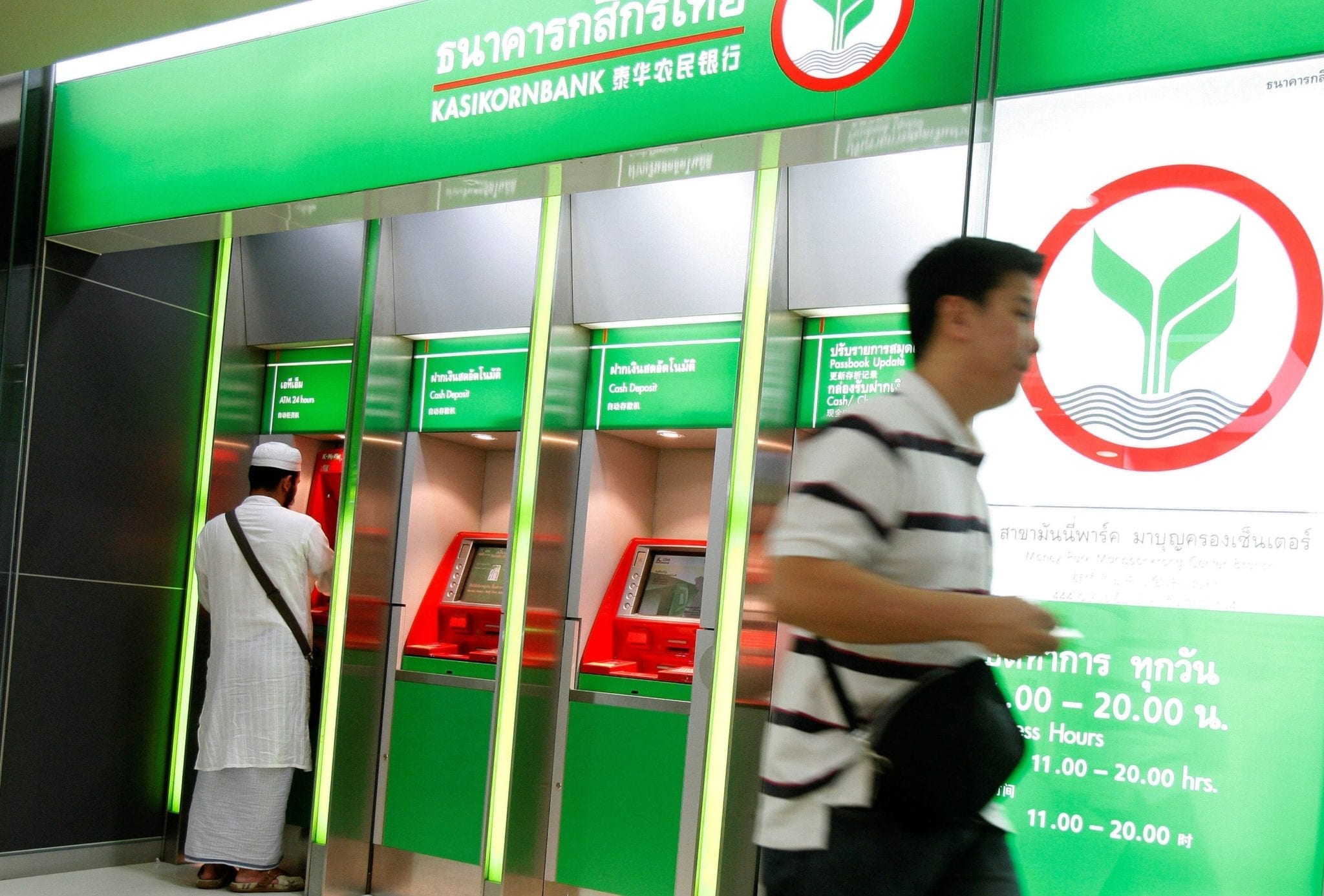
    SCB and Kasikorn Bank are seeking regulatory approval to operate e-commerce platforms to link millions of mobile customers with vendors of various goods and services, especially small and medium-sized enterprises (SMEs). In the retail sector, SCB is working with The Mall group, one of Thailand’s biggest retail and shopping centre chains, to introduce an automated cashier-less supermarket service at selected locations.

    Central department store group has joined forces with China’s No 2 e-commerce giant, JD.com, to create an “online marketplace”, and the country’s top e-commerce sites, led by Lazada (part of the Alibaba group), 11 Street and Shoppe, have been challenging traditional retail models with disruptive technologies.

    With many payments now possible through the ease of touching a mobile-phone screen or waving a card, consumers are expecting more from goods and service providers.

    E-commerce, mobile payments using QR Codes, digital banking on the go, cashier-less grocery shopping and other innovations will start to become the norm this year as traditional business models merge with digital technology to stay relevant. Artificial intelligence (AI) is becoming the new tool for banks, retail chains and other service providers to stay ahead of their consumers’ expectations.

    Since machine-learning technology is now cheaper and easier to manage, it is likely that predictive analytics that capitalise on the abundance of consumer and other data will be more widely used by Thai businesses and industries.

    AI will soon usher in a new term, “machine commerce”, in which transactions are automatically generated by computer software using the huge amount of available data in real time.

    This will happen this year if the major commercial banks get approval from the Bank of Thailand to launch e-commerce platforms that automatically match millions of bank customers with SMEs and other vendors.

    Kasikorn Bank has said it has about 7 million mobile customers and is enlisting SMEs to join its proposed e-commerce platform pending regulatory approval, while SCB has about 6 million mobile customers and is planning a similar marketplace platform.

    AI and machine learning will become more commonplace in other sectors, especially in logistics and warehouse management as well as in food, beverage and other manufacturing sectors in which the use of robots and automation systems is rapidly replacing human workers.

    To facilitate the advent of a digital economy and society, government and private sector organisations have joined forces to launch the National Digital ID programme to provide reliable online confirmation of personal identities for various activities, including online government services and financial transactions. For example, a person may open a bank account online using the government’s demographic database to verify his or her identity based on the 13-digit ID number assigned to each person.

    Such a use will be sanctioned by law to ensure that this and other online activities are legally binding in the digital age.

  • Retailers take omnichannel path in preparation for Thailand 4.0

    Retailers take omnichannel path in preparation for Thailand 4.0

    Supaluck Umpujh, chairwoman of The Mall Group, said that Thailand 4.0 is an economic model to promote and transform Thailand into a digital economy.

    Digital economy refers to the widespread use of digital technologies, which are rapidly transforming business practices and social interactions.

    According to the Thai Board of Industries, the strategic framework for digital economy promotion consists of four areas: digital commerce, digital entrepreneurship, digital innovation, and digital content.

    In pushing forward this forward-looking agenda, the Ministry of Digital Economy and Society will promote a new generation of entrepreneurs, as well as commercial and industrial innovations. At the same time, it will assist investors in developing new markets for digital content. Entrepreneurs will be aware of the importance of using ICT in enhancing efficiency and reducing production costs. Implementation of the digital economy plan will need the support and involvement of all stakeholders in achieving its stipulated goals.

    “We realised that retail business played a crucial role in Thailand’s economy, and we are also trendsetters in shopping. The first mission that we seek for our customers is to add some online shopping experience into our stores. But we also offer the experience that customers cannot find through digital channels. Currently, we are working on many digital platforms for instance e-commerce, mobile application, Radio Frequency Identification, Near Field Communication and many more,” she said.

    Nicolo Galante, chief operating officer of Central Group, said the group had integrated omnichannels to improve the customer experience. “We [Central Group] expect to move each of its online business units and will launch major e-commerce initiatives such as major partnerships and joint-ventures,” he said, adding that the e-commerce market will have a significant impact on retailers.

    Galante said the Central Group aimed |to be number one in terms of sales across channels. Central Group has stores, customer data and customer knowledge across many different stores, locations and categories.

    Salinla Seehaphan, corporate affairs director of Tesco Lotus, said the Thailand 4.0 economic model stressed on the importance of adding value to traditional products and services using innovation and digital transformation.

    “In our own business, Tesco Lotus has adopted innovation and digital transformation to improve our product and service offerings, as well as our customers’ shopping experience, for example by allowing customers to be able to trace where their fruits and vegetables come from via QR codes. As our core business revolves around fresh food, we have an opportunity to work directly with farmers across the country and help them to become farmers 4.0 in line with the government’s goal for Thai farmers to transform from being simply growers of food to smart farmers who use effective crop management and a market-led approach to farming,” she said.

    We also focus on equipping them with the knowhow that will help them thrive in Thailand 4.0,” she said.

    Punyapon Tepprasit, chief executive of MVP Consultant and lecturer at Sripatum University’s International Trade Department, said the main idea of the Thailand 4.0 economic model focuses on innovation creativity and sustainability. Thai retailers will change definitely in keeping with consumer behaviour. “I have four suggestions for Thai retailers. First of all, retailers must combine the online and offline channel strategy for creating an omnichannel that can help a business generate brand awareness, market share, and sales growth with big data analysis. Online enjoys competitive advantages as it is the fastest, can be available for 24 hours, has low advertising cost, and can track consumer behaviour. Also, businesses can reduce the cost per acquisition for one customer or groups of target customer,” he said.

    “Second, businesses have to build a talent team to create a new creativity strategy. Their new strategy must attract the attention of customers through newness of products and service innovation, or marketing communication via online and offline channel such as the augmented reality technology with an application on smartphone that can boost the emotional connection by experience and relationship creation with customers or target groups. The winner will be the one who can impress the brand on customers’ minds,” added Punyapon.

    “Third is business transformation. Businesses must reshape their organisations into lean entities to minimise wastage in the working process, as well as total cost and lead time. If companies can adjust agilely, they will have a competitive advantage in the volatile environment, because companies have the ability to address the changes in market demand.

    “The fourth is to become a data driven organisation. Businesses have to undertake market research to know the depth of consumer behaviour. Big data is very important, but the tools and data analysis are more important,” he said.

  • Nationwide e-payments to push cashless society goal

    Nationwide e-payments to push cashless society goal

    As part of Thailand’s aspiration to become a cashless society, the country will soon adopt a new nationwide e-payment method using the so-called QR Code familiar to social media users.

    The Bank of Thailand has approved plans by five commercial banks to introduce the QR Code e-payment service – Kasikornbank, Siam Commercial Bank, Bangkok Bank, Krungthai Bank and Government Savings Bank.

    The addition of the service is expected to help reduce dependence on cash transactions as more businesses are set to accept the new e-payment method.

    During a recent experiment in using the service at Bangkok’s Chatuchak Sunday market, more than 1,000 small vendors as well as service providers including motorcycle taxis accepted payment from customers using their mobile phones to transfer money via the QR Code.

    The method is convenient and carries no additional transaction costs for either sellers or service providers.

    The QR Code e-payment platform was pioneered by China’s e-commerce and social media giants, Alibaba and Wechat, which operate the Alipay and Wechat Pay apps respectively.

    Its popularity makes it possible to live in China today without having to use cash for most goods and services.

    China is now the world’s leader for QR Code e-payments, which has disrupted more traditional payment services such as debit and credit cards.

    The huge number of Chinese tourists in Thailand, totalling nearly 10 million per year, has also prompted the early adoption of the e-payment method among Thai convenience stores and retail operators.

    Earlier, the Thai government launched the PromptPay e-payment service for domestic use, making free of charge small-value money transfers via bank accounts.

    The PromptPay popularity is expected to further grow when the QR Code system is added to the e-payment platform.

    To facilitate nationwide adoption of the new platform, the central bank has taken steps to endorse a single Thai QR Code standard in accordance with the international system for mobile applications.

    In practice, consumers after downloading an app for the service that matches their bank accounts could turn their smartphones or other compatible devices into electronic purses by scanning a seller’s QR code to pay for purchases at various goods and services outlets.

    The money would then be automatically transferred from the buyer’s bank account into the seller’s account based on a similar arrangement with their participating bank.

    The central bank has said that in a future stage it would expand the e-payment platform to cover holders of credit cards so as to make it more versatile.

    Overall, the platform is a crucial element of Thailand’s emerging digital economy and society in which the lifestyle of consumers increasingly is closely tied to mobile phones and other smart devices.

    For the government, any form of electronic payment is useful since it creates electronic records on transactions that make tax collection more efficient. In addition, the economy will benefit from more electronic transactions by increasing efficiency – cash transactions are more expensive due to higher costs.

    For vendors, there is no additional transaction cost since banks are keen to provide the service free of charge at this stage, with some banks even offering additional financial incentives to early adopters without conditions requiring minimum payment per transaction.

    The new service will help banks stay close to both consumers and businesses, big and small. This would allow banks to make use of the huge amount of data generated by both buyers and sellers in multiple ways.

    While electronic transactions offer definite convenience advantages for consumers, experts warn that they should ensure that their personal devices are fully secured.

  • Huawei aims to ride tech wave to N° 1 brand status in Thailand

    Huawei aims to ride tech wave to N° 1 brand status in Thailand

    Richard Yu, chief executive officer of Huawei Consumer Business Group, said that the firm provides Huawei smartphones as a premium brand to cover mid-tier and the high-end global market. The firm’s new intelligence phone will bring together artificial intelligence (AI), Augmented Reality (AR), Mixed Reality (MR), and Virtual Reality (VR). With the AR technology, the future phone will be paired with an AI processor, an AI camera and an AI operating system. The new intelligence phone will have long battery life and super-fast charging ability.

    “My plan for the next five years: With AI, AR, VR and MR, we will have an intelligent phone. We want to provide the future and next-generation phone. In addition, we will try to improve our marketing, branding, retail and services. Every year, we continue to improve our marketing, branding, retail and services in the Thai market and worldwide. We aim to be the leader in artificial intelligence, VR and MR,” said Yu.

    He said the firm next year would launch its new flagship smartphone with new technology such as improved camera and super-fast charging features.

    The firm now provides smartphone with two brands: Huawei for the mid-tier and high-end market, and Honor for young people, e-commerce, mass market, low-end and mid-tier market. The Honor smartphone is available only in China.

    “We want to enhance our technology and innovation and improve the users’ experience,” said the CEO.

    He said the firm in 2017 gained market share in China, totalling 23.8 per cent. It also became number one in Italy, Spain, and Poland.

    In China, it aims for market share of more than 40 per cent in the next three years. Therefore, the firm wants to build its marketing, enhance branding, build better ecosystem and retail system in the Chinese market.

    He added that Thailand is still a growing market, especially in the premium segment. The overall Thai market is growing. The current market share is around 10 per cent. It aims to be No 1 in market share in Thailand for mid-range and high-end smartphones in the next three years with market share of more than 30 per cent.

    He said the firm plans to invest in Thailand in |marketing, branding, premium stores and shops and services.

    “We have committed to the Thai market for the long term. We want to be the leader as a brand and in market share within three years,” said Yu.

    The firm this year expects 30 per cent revenue growth year on year and expects the trend to continue next year. The firm is targeting 1,000 per cent growth in the global market over the next decade. The firm sees high potential in China, Europe and Japan.

    Regarding upcoming smartphone trends, he said next year consumers will buy smart phones with high storage capacity and memory to support more applications, bigger screen, better camera and processor to support customers who love game. He said AI would become more popular. He said battery life would also become more important for consumers. The firm will come out with smartphone with a battery life improvement of around 20 per cent with super-fast charging and digital single-lens reflex (DSLR) camera features.

    He also said that the smart phone manufacturers would have to consolidate in the future in order to survive.

    The firm continues to cooperate with its business partners to improve its smartphone features and productivity such as Microsoft, Porsche and Leica.

    Last year, the firm invested US$11 billion in research and development.

  • Thai AirAsia CEO buys back 36.3% of share in Thai Airways

    Thai AirAsia CEO buys back 36.3% of share in Thai Airways

    Thai AirAsia CEO Tassapon Bijleveld has bought back 36.3% of shares in Asia Aviation, a 55% shareholder of Thai AirAsia, at THB4.70 (USD0.14)/share, covering the purchase of around 1.761 billion shares from King Power Group chairman Vichai Srivaddhanaprabha and his family. The size of the transaction was around THB8.279 billion (USD252.3 million). Mr Srivaddhanaprabha and his family bought their stake in 2016 in a THB7.9 billion (at the time around USD225 million) transaction.

    Mr Tassapon, who previously held a 5% stake in AAV and has increased his stake after the transaction to 41.3%, said that he bought back the shares from the Srivaddhanaprabha family because of his love for the airline, which he has managed since its inception. He said the acquisition will allow him to better realise the airline’s vision and direction. “I assure all that the management team who has been running the airline from the very first day will continue to play a critical role in driving Thai AirAsia forward, along with the staff that have always been so dedicated in helping the airline becoming Thailand’s number one airline, which is reflected in our leading market share”, he said.

    He added: “Thai AirAsia will continue to invest in 2018 as planned, which will include amongst other things, the acquisition of seven aircraft. We estimate the number of passengers in 2018 to be around 22 million and we can achieve this by penetrating new markets in ASEAN, India and the People’s Republic of China”. In line with local stock exchange regulations, Mr Tassapon will submit a Mandatory Tender Offer on 08-Jan-2018 to purchase the remaining shares in the market (approximately 58.7%) at THB4.70/share.

  • Pandora opens in Chiang Mai, Thailand

    Pandora opens in Chiang Mai, Thailand

    Spread across 70 square metres, this is the brand’s 28th shop in Thailand and is decked out to resemble an art gallery. The display counters resemble picture frames, with white and pastel pink as the main colours hinting at femininity.

    Pandora encourages women to choose their own accessories to match their lifestyle and individuality. The Facets of Winter series, inspired by stars and snowflakes with colours like sapphire blue, ruby red and emerald green, invites wearers can mix and match the items to create their own style or give them to loved ones to mark any special occasion.

    Pandora also launches a Happy New Year collection to celebrate the Year of Dog. Intricately crafted charms and beautiful tokens of luck are given and received as we say goodbye to the old and welcome the new. Among this year’s novelties is the festive Fortune & Lucky dangle. Inspired by the God of Wealth, it features a man dressed in a traditional outfit holding two 14k gold ingots. Gorgeous on bracelets and necklaces, the dangle brings good fortune to its wearer.

  • Bangkok’s second IKEA branch opens

    Bangkok’s second IKEA branch opens

    No more taking the expressway across town to shop for affordable furniture at IKEA. The Swedish furniture and home accessories purveyor is opening its second branch in Bangkok in March 2018 in Bangyai, next to gigantic shopping center, Central Plaza WestGate.

    Encompassing more than 50,000 square meters of showroom and retail space, this branch promises to spoil shoppers with endless choices of sofas, chairs, tables and those pretty little things you don’t actually need but are too cute to resist. IKEA Bangyai is the first retail store in Thailand to receive the LEED Green Building certification. Plus, the canteen will offer menu items that are exclusive to this branch.

  • E-commerce players feel the heat as bargain hunters call shots

    E-commerce players feel the heat as bargain hunters call shots

    Buyers have become more price sensitive and less loyal to the online platforms in a trend that has prompted an intense “pricing game”, the event heard. Consumers are switching over to the e-commerce operators that offer better promotions and prices.

    The seminar also heard that so-called social commerce (s-commerce) has become another competitor, under a model where sellers and buyers can make shopping transactions directly.

    Pawoot Pongvitayapanu, founder and managing director of Tarad.com, said the platform was launched about 10 years ago as the first e-marketplace in Thailand.

    “Today, we are adjusting the positioning of Tarad.com to cope with more intense competition in the e-marketplace model. Without the new positioning, we would not be able to compete against other marketplaces,” he said.

    Speaking at the e-marketplace forum held on Sunday at Thailand e-Commerce Week 2017, Pawoot said that nowadays competition in the e-marketplace has become more of a pricing game. Consumers have become more price sensitive and have less loyalty as they follow the bargains.

    “Today, the actual competitors in the e-marketplaces are not other e-marketplace players, but s-commerce operators, such as Facebook and Instagram, where sellers and buyers can make their own transactions directly,” said Pawoot.

    Thanida Suiwatana, chief financial officer – Thailand, Lazada Group, said that that Thai consumers have become more confident about online purchases.

    “We spent a lot of money in doing marketing campaigns. both offline and online, to generate traffic,” said Thanida, adding that Lazada is now a top 10 e-marketplace in Thailand in terms of traffic.

    “Having good traffic is one of the most important factors for both bricks and mortar stores and online marketplaces. Any online platforms that can generate good traffic will have more chances to sell products.”

    Nuttawit Pholwattanasuk, managing director and co-founder of LnwShop, said that the platform serves individual vendors, enabling them to have their own website and space. It is similar to the idea of a developer of a market or shophouse allowing individual merchants or retailers to do business within their own retail space.

    Eric Bui, head of operation, Shopee Thailand, said that online marketplaces now go beyond the transactional, with a focus on the engagement between buyers and sellers as part of an ongoing relationship.

    “The way we do our listings and provide services to the sellers, everything is free, with no commissions or listing fees,” he said. “The shipping fee has been subsidised by Shopee. There is no reason why the listings on Shopee should not be the cheapest in the country.”

    Haejin Pyun, general manager, marketing strategy, 11street Thailand, said the company started the Thai operation in February.

    “We consider sellers and buyers alike to be very important. While other e-commerce players care about the buyers only, we care about the sellers sometimes more than the buyers,” said Pyun.

    “In Thailand, more than 50 per cent of the transactions come cash on delivery. At 11street, more than 70 per cent of the transactions come from credit cards. We see a big potential to grow in the Thai e-commerce.

    “However, to grow the e-commerce business in Thailand, the payment method is very important. In South Korea, credit card penetration is more than 90 per cent, compared to only 10 per cent in Thailand. Even though they have credit cards, Thai shoppers are still hesitant to put their credit card numbers on an e-commerce site.”

    Thananan Arunragtichai, assistant director of Ascend Commerce, said that the company has operated the weloveshopping.com for 15 years as a store front. For its website, the e-marketplace model was introduced three to four years ago.

    “Today, Thai consumers have greater expectation for marketplace services, such as cheap prices and high quality, as well as good after-sales service. As an e-marketplace operator, we need to manage their expectations properly,” he said.


  • Thailand Tobacco cries foul on excises

    Thailand Tobacco cries foul on excises

    The overhaul in the excises, implemented in September, had put Thailand Tobacco at disadvantage, as its tax burden had risen disproportionately to that of the foreign producers, Daonoi Suttiniphapunt, Tobacco Monopoly’s managing director, told a press conference yesterday.

    She said the company had to increase its product prices while the big importers had even lowered their prices on some lines.

    She urged the Finance Ministry, which oversees the Excise Development, to review its law enforcement in the sector.

    “The problem concerns two areas – the loophole in related regulations issued by Finance Ministry and the biased law enforcement under the Excise Development,” she said.

    The new taxing structure is based on the suggested retail price of a product, instead of the ex- factory or CIF prices for the local producer and the foreign brands, respectively, that applied previously.

    The rate is 20 per cent for a cigarette pack worth no more than Bt60 and 40 per cent for higher priced packs. They also have to pay Bt 1.20 per each cigarette stick.

    The Excise Department earlier sought to reassure the industry that the new tax system would be fairer for everyone. Moreover, if any company sold cigarettes at cheaper prices to the previous level, without good reason, they would be subject to scrutiny. The department could force them to accept the suggested retail prices, which would result in higher tax payments.

    Daonoi complained that while TTM had followed the rules strictly, some of the biggest brands had failed to do so. They had taken advantage of the loopholes in the system and the lack of law enforcement to ramp up the presence of their products in the Thai market, she said.

    Within a month of the new taxing structure going into force in September, the market share of the Thailand Tobacco had dropped sharply from 80 per cent to 65.9 per cent, she said. The share held by the foreign brands rose to 32.5 per cent, at the expense of Thailand Tobacco, she said.

    Daonoi warned that TTM had started to lose money and it could lead to transfers to government coffers drying up next year. The government may lose revenue of Bt 8 billion for that year, she said.

    The company contributed Bt8.8 billion to the government this year. It also paid Bt68.6 billion in excises.

    The projected reduction in contributions would have a knock-on effect in diminished support for causes such as the Thai Health Promotion Foundation, Thai PBS television and a fund for the elderly, Daonoi warned.

    Looking ahead, the future of the company is bleak as the tax rate will go up to 40 per cent in the next two years.

    “To introduce new products to the market is not easy due to the strict laws and consumers may not welcome them, so the TTM would find it very hard to play the pricing game,” Daonoi said.

    “If the Finance Ministry and Excise Department do not thing, the company will go bankrupt,” she added.

    TTM is a state enterprise under the Finance Ministry’s supervision.

  • Chateraise plans to open 200 shops in Thailand

    Chateraise plans to open 200 shops in Thailand

    Japanese patisserie Chateraise, which is known for having its main factory in the middle of a forest, plans to open 200 shops in Thailand and boost overseas sales to 50 per cent of its total revenue in the next 10 years.

    With more than 500 outlets mainly in Japan, it has just opened its second shop in Bangkok, at Gateway Ekamai Shopping Mall, and is seeking franchisees to accelerate store expansion in Southeast Asia’s second-largest economy.

    Its debut shop for Thailand opened in Isetan Bangkok department store in July. Both Bangkok outlets are under franchise.

    In the past two years, Chateraise has moved into eight markets across Asia, opening more than 30 shops. The company sees Thailand as a promising market where sweets consumption is expected to be driven by economic growth coupled with a youthful population, says senior managing director Takako Saito of parent company Chateraise Holdings.

    Based in Yamanashi prefecture, the company produces cakes, pastry, confectionery and beverages at six factories across Japan. It procures raw materials directly from contracted farmers and sells through branded shops.

    Almost all products for Thailand are shipped from Japan, with plans to add ice cream to the lineup. Chateraise plans a third Bangkok shop for next year

    The brand’s first overseas expansion was to Singapore in 2015, and it has since opened stores in Dubai, Hong Kong, Indonesia, Malaysia, South Korea and Taiwan, and plans to head to Hanoi and Manila next year.