Tag: Thailand

  • AMD Ryzen processor box art revealed by Thai retailer

    AMD Ryzen processor box art revealed by Thai retailer

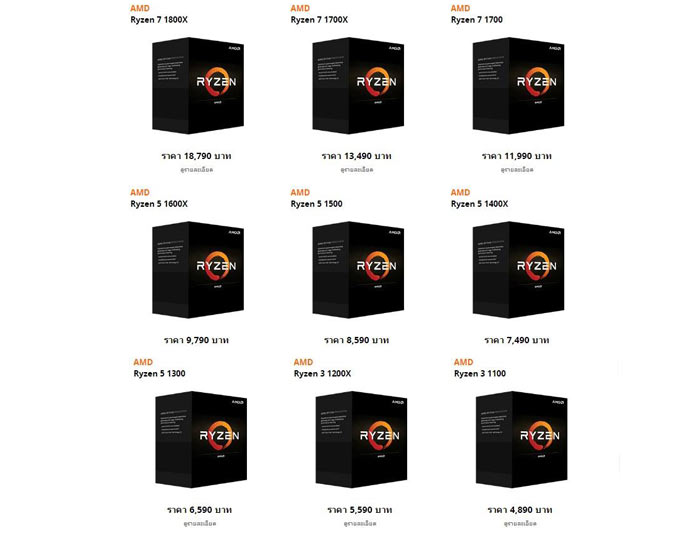
    Another day, another AMD Ryzen leak / rumour / news morsel… or two. Particularly interesting today we see what is claimed to be an AMD Ryzen box art matrix from Thailand. The web images don’t only show the products which will be soon on sale but the prices, in Thai Baht naturally. In a similar vein a Belgian online retailer has let slip its prices for the AMD Ryzen 7 range of CPUs.

    Looking at the single box art close-up we have available, above, via WCCFTech, the box design is rather simple and mainly black. Just because these have appeared on a Thai retailer site doesn’t mean they are representative of what AMD will ship either. It’s hard to know if the retailer images are overcompressed or just shoddily put together as placeholders, maybe by the retailer itself.

    Perhaps more important than the box images, if they are genuine, is another price indication at this time. Looking over the nine CPUs and prices in Thai Baht we see a price range from the Ryzen 7 1800X at 18,790 Baht (£430), down to the Ryzen 3 110 at 4,890 Baht (£112). Its possible to click through the above image matrix on the Thai retail site and get more details. You can find a full set of these pictures in the source article, one is included below for reference.

  • Krungsri gears up for return of investors from Japan

    Krungsri gears up for return of investors from Japan

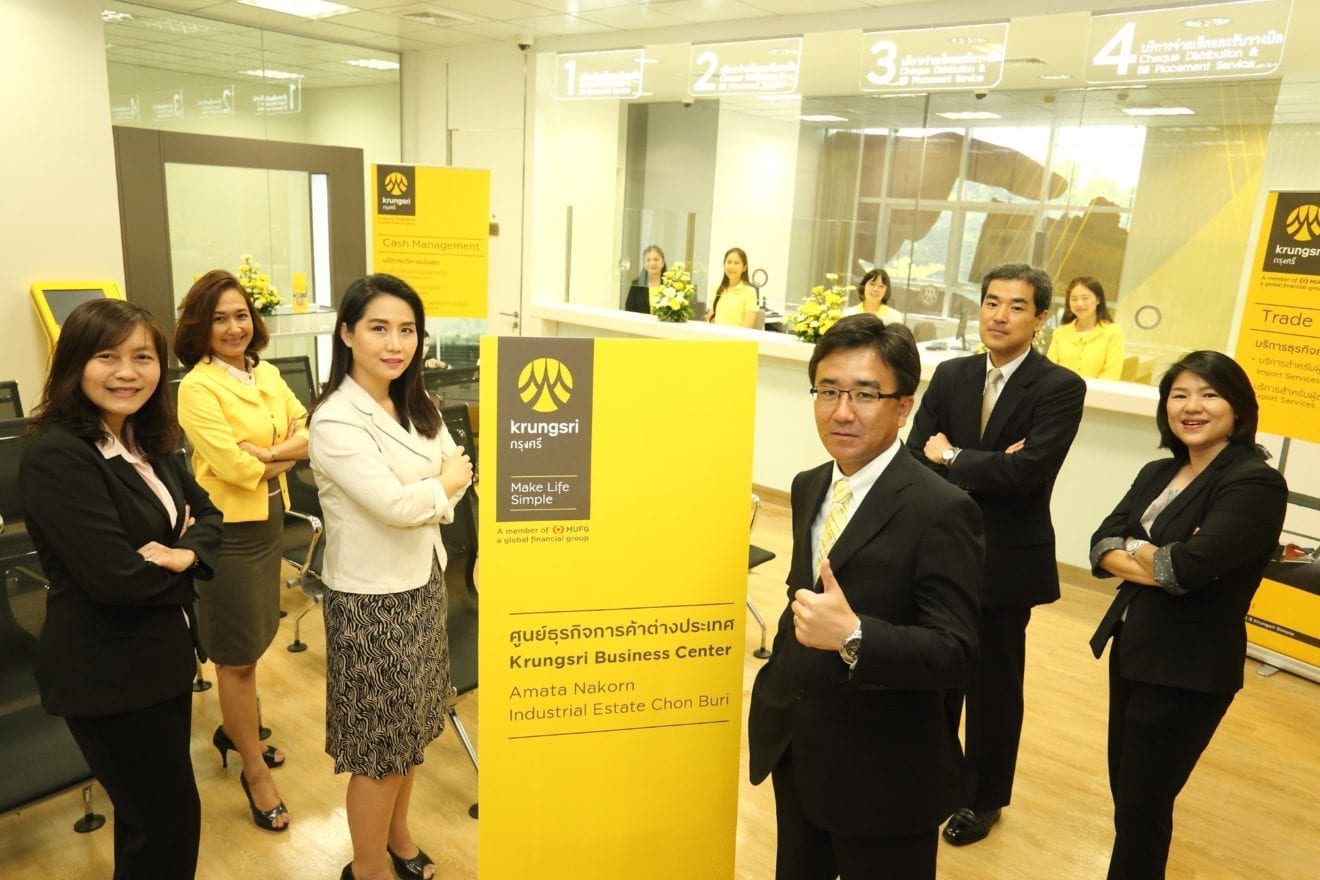
    Bank of Ayudhya, commonly known as Krungsri, is reinforcing its commercial banking after seeing a return by Japanese companies considering investment in the Kingdom in light of the government’s “Thailand 4.0” industrial goals.

    Pornsanong Tuchinda, head of commercial banking, said yesterday that healthcare and wellness and real estate were currently the priority focus of Japanese businesses looking to invest in Thailand again since the government announced the Thailand 4.0 industrial-development policy.

    The actual level of new Japanese investment will be seen when these companies have a clear picture of development plans under the policy, he added.

    Japanese companies invested in Thailand have been a crucial part of the customer base for Krungsri’s commercial-banking operations since 2015, reflecting the successful integration between the Thai bank and BTMU (Bank of Tokyo-Mitsubishi UFJ) Bangkok Branch, which is part of Japan’s MUFG (Mitsubishi UFJ Financial Group), he said.

    Pornsanong said Japanese investors were currently eyeing healthcare and wellness business in Thailand because of this country’s increasingly “greying” population.

    Japan has expertise in healthcare and wellness in light of its own ageing population, while real estate is another business that investors are keen on because of its being tourism-related.

    The bank will offer investors total financial solutions, catering to corporate customers that may not only require financing but also financial advice and business-matching services, he said, adding that Krungsri would therefore focus more on how to deliver a package of solutions to such clients.

    A number of medium-sized Thai hospitals also are interested in expanding their healthcare and wellness business, presenting a further opportunity for the bank’s commercial-banking arm, he said.

    Last year, the unit enjoyed loan growth of 11 per cent, with outstanding lending rising to Bt642 billion thanks to the financing of major deals involving Siam City Cement, which acquired a cement business in Sri Lanka; Central Group, which purchased a retail business in Vietnam; and Thai Union Group, which acquired a business in the European Union, Pornsanong said.

    Excluding those large deals, loan growth was 7-8 per cent.

    This year, while the bank’s commercial-banking arm targets 5-per-cent growth due to fewer big deals on the horizon, it should still outpace its peers thanks to the recovering Thai economy and Thailand 4.0-related business activity, he predicted.

    Moreover, with the unit’s customer base sufficiently large for the provision of improved total solutions, it wants to give more importance to the quality of customers and offer value-added solutions to its current clients, he explained.

    Commercial banking at Krungsri covers corporate customers with annual sales revenue of more than Bt1 billion, and small and medium-sized enterprises with annual revenue below that level.

    Based on the loan-growth target of 5 per cent, most lending this year will be contributed by medium-sized enterprises, a segment in which the bank has witnessed lending demand, he said.

    “These firms [mid-sized enterprises] are more confident in the Thai economy, and many of them are in retail, where there is purchasing power but consumer sentiment |has not yet returned. If sentiment improves, purchasing power will be released and SMEs will benefit.

    “On the other hand, most corporate customers are not requiring new lending at present, as they first want to see how the global trade situation settles,” the commercial-banking head said.

  • Thailand’s first 5G demo achieved 5.7Gbps speeds

    Thailand’s first 5G demo achieved 5.7Gbps speeds

    The first live 5G end-to-end demonstration in Thailand using Ericsson’s 5G test bed and 5G-ready core achieved 5.7Gbps throughput and 3 milliseconds latency.

    The three-day showcase was held in late January, and Ericsson said the demonstration marks a step towards realizing the Thai government’s vision of a Digital Thailand.

    “We expect to have broadband connectivity everywhere in Thailand, both big cities and over 75,000 villages nationwide by 2018,” commented Takorn Tantasith, secretary general of regulator NBTC.

    “Along with the fixed internet deployment, we plan to release more spectrum bandwidth of 380 MHz by 2020, which will add to the existing 420 MHz already allocated to the telecommunications industry.”

    Nadine Allen, Head of Ericsson Thailand, disclosed that according to Ericsson’s Digital Thailand report, Thai consumers are ahead of, or on par with, global peers when it comes to embracing ICT and they are ready for the Internet of Things.

    She said the multi-gigabit speeds afforded by 5G will ensure that the technology is a viable and cost-effective alternative to residential fiber connections.

    Other technology innovations presented in the showcase include advancements in Radio Network Evolution, Industrialized Cloud, Connected Industries, and Digital Business Solutions.

  • Thai start-up sector tipped to double in value as support grows

    Thai start-up sector tipped to double in value as support grows

    The size of the Thai start-up sector is expected to double this year, with especially high growth potential seen in the areas of fintech (financial technology) and tech for the healthcare, logistics and retail industries.

    Meanwhile, US tech giant Cisco is investing more than US$100 million (Bt3.5 billion) to support start-ups in Asia-Pacific.

    The Thailand Tech Start-up Association (TTSA) has predicted that the overall value of the start-up market in the Kingdom will double to more than Bt20 billion, with over 600 start-ups by the year’s end.

    The main factors driving this growth are people’s increasing access to information technology, government support for innovation and start-ups, and a rise in venture capital and private-sector support.

    Oranuch Lerdsuwankij, chief executive officer of start-up website Techsauce, said the sector would expand strongly this year due to collaboration and support from the private sector and government bodies such as the Bank of Thailand (BOT).

    The central bank has issued a consultation paper on “FinTech Regulatory Sandbox Guidelines”, with the purpose of the regulatory sandbox being to allow business operators to test their financial products or services in a live but limited environment, without being fully subject to all the requirements that are normally applicable.

    Through the sandbox, the BOT aims to facilitate new financial innovation while still ensuring consumer protection and financial-system stability.

    The central bank’s regulatory sandbox can offer its fintech products or services to consumers within the limited scope as approved by the BOT under somewhat lenient rules, as specified by the bank on a case-by-case basis.

    Start-up contests and events will also play an important role in driving the growth of start-ups as a whole, Oranuch said.

    Moreover, the banking industry this year will provide much more direct investment or create limited partnerships in fintech start-ups, she said, adding that the arrival of Alibaba in Thailand is another important factor that will benefit small local fintech developers.

    Corporate businesses such as banks and other financial institutions will increasingly develop accelerate programmes to support start-ups, and work with fintech start-ups to seek ways to provide better financial services to support their customers’ lifestyles and behaviour, the CEO said.

    The TTSA will also ask the government to support start-ups in terms of a capital-gains tax exemption to drive the growing sector as a whole.

    Vatsun Thirapatarapong, managing director of Cisco Systems (Thailand), said Cisco was investing over $100 million in Asia-Pacific start-ups with good potential via a venture-capital operation named Monk’s Hill Ventures (MHV).

    Besides investing in countries such as China, Singapore and Malaysia, MHV has invested in two Thai start-ups, one in the field of logistics and the other in gaming.

    The company will utilise a start-up’s solution and product, as well as bundled start-up services, application and platform, with Cisco’s own products to expand the business both locally and on the international market, the MD explained, adding that Cisco had started to invest in Thai start-up businesses a couple of years ago.

    Acting as an enabler

    “We want to see start-ups that utilise information technology to support disruptive business, such as in the logistics area by developing an application to support logistics optimisation. We are an enabler to support start-ups in terms of training and consulting, and as a marketing arm,” Vatsun said.

    Wiwat Wongwarawipat, president of InStep group – a product development services firm – said there was high growth opportunity for start-ups in Thailand catering to the financial, healthcare and retail industries, since user behaviour was rapidly changing in terms of people accessing new technology to support and improve their quality of life.

    Wiwat has personally invested in four Thai start-ups in the fintech and health tech areas.

    Moreover, his company is planning to set up a venture-capital operation to support local start-ups in in high-potential areas, including fintech, health tech and innovative tech for the logistics and retail industries.

  • Thai airports feel impact of reduced ‘illegal’ Chinese tours

    Thai airports feel impact of reduced ‘illegal’ Chinese tours

    According to the Airports of Thailand (AOT) the country’s aviation industry performance only improved ‘slightly’ between October-December 2016 (Q1 FY2017), due to a reduced number of Chinese tourists visiting through ‘illegal tours’.

    During the period, concession revenue grew by just +2.68% year-on-year to Baht 3,302.71m (US$94m).

    “After the repressive measures against illegal tours by the cooperation between the Thai government and the Chinese government, Chinese tourists reduced consequently,” said the airports operator.

    “Therefore, tourism industry didn’t grow as fast this quarter because the Chinese are the largest group of foreign tourists visiting Thailand.”

    GROWTH OF MIDDLE-INCOME PASSENGERS

    However, ‘a more stable domestic political situation’, the government’s domestic and international tourism stimulus policies, and the rapid expansion of low cost airlines, increased new demand for air travel for middle-income groups, says AOT.


    The effects of the aforementioned ‘repressive measures’ were also compensated by increases in other foreign travellers, especially Russian and European passengers.

    “The consequence of the repressive measures against illegal tours by the government is expected to affect the volume of Chinese tourists for a short period of time,” adds AOT.

    The total number of passengers served by Thai airports reached 30.69m in the October-December 2016 period; a 6.11% increase compared to the same period last year. International traffic made up the majority of total traffic at 16.52m international passengers.

    Net profit for the three-month period ended 31 December, 2016 reached Baht 5,084.22m (US$145m), up +9.91% compared to the same period last year.

    INCREASE SALES OR SERVICES REVENUES

    Revenues from sales or services increased by Baht 798.77m or 6.76% as a result of an increase in aeronautical revenue of Baht 254.32m or 3.72% and non-aeronautical revenue of Baht 544.45m or 10.93% because of an increased number of flights and passengers.

    Non-aeronautical revenue of Baht 5,526.73m increased by Baht 544.45m or 10.93% comparing to the same period last year due to an increase in service revenues of 31.02% attributed to advance check in costs to passengers.

    “This was because AOT installed Advance Passenger Processing System (APPS)on 1 December, 2015.

  • Soo Kee Group forming JV in Thailand

    Soo Kee Group forming JV in Thailand

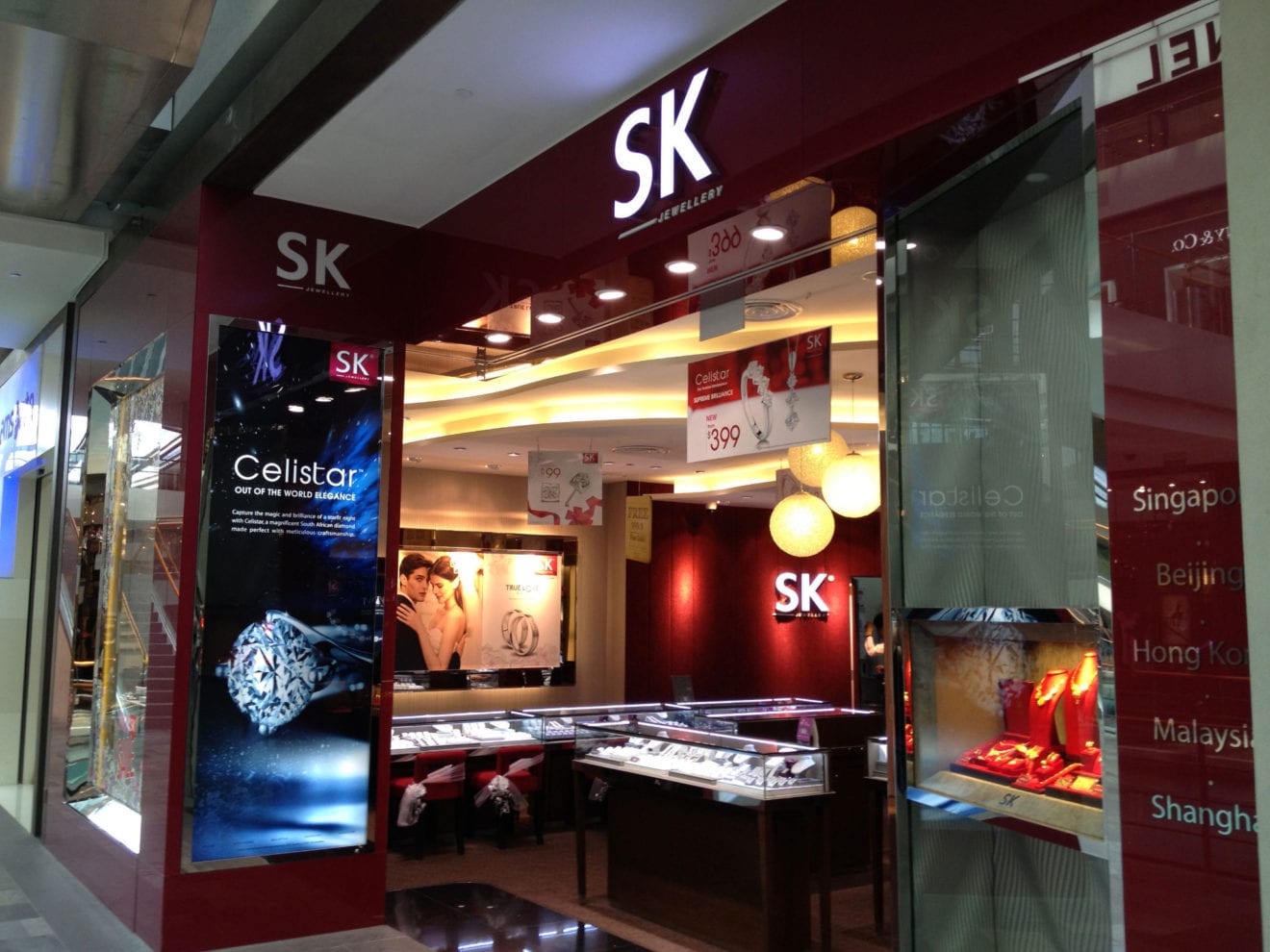
    Soo Kee Group has sealed a deal to form a company with Thai jeweller Aurora Design.

    With an initial paid-up capital of S$1.2 million (US$845,000), the JV will be set up in Thailand. Soo Kee will hold a 40 per cent stake in the company with Aurora holding the balance. The move will help Soo Kee launch its bespoke bridal jewellery brand, Love & Co, on the Thailand market. It is also in line with the group’s growth strategy to widen business networks and strengthen its market position in the region.

    Under the agreement, the JV will sell gold and diamond products under the Love & Co brand while Soo Kee will license and supply intellectual property rights, products and support to the company.

    “Thailand’s huge population and growing upper and middle classes provide a large target market for luxury spending,” says Soo Kee Group CEO Daniel Lim. “We believe the sheer size of the country also presents many untapped opportunities for the group.”

    Meanwhile, the group has entered the bullion business as part of its product diversification plan. It acquired a 70 per cent stake in DK Bullion for S$800,000 this month.

    Soo Kee, founded in 1991, has more than 60 retail stores across Singapore and Malaysia.

  • How Thai e-wallet startup T2P is going to help Myanmar go cashless

    How Thai e-wallet startup T2P is going to help Myanmar go cashless

    It’s a little hard to believe, but, four years ago, sim cards in Myanmar used to cost around US$500. If that price is considered exorbitant for even a first world nation, think about how out-of-reach it would be for the working class Burmese, whose minimum wage is only US$87.

    But that all changed thanks to the entrance of two foreign telecoms in 2013, Qatar’s Telenor and Norway’s Ooredoo, which saw sim card prices slashed to about US$1.50. Since then, the mobile penetration in Myanmar has skyrocketed to 90 per cent, up from 7 per cent in 2012, according to government figures. And of that, more than 80 per cent use smartphones; as a result, Burmese are hooking up to the internet more than ever.

    Now, Thailand-based fintech company T2P wants to help Burmese catch up to a tech product already prevalent in many other markets — mobile payments.

    Earlier this week, T2P signed a joint venture deal with City Mart Holdings Co.,Ltd, a leading Myanmar retail chain with over 200 outlets across the nation, which includes fast food restaurants, bookstores and supermarkets.

    The signing was held during a Myanmar-Thailand Business Cooperation event presided over by Myanmar State Counseller Aung San Suu Kyi and Deputy Prime Minister of Thailand Dr. Somkid Jatusripitak.

    The joint venture will see T2P integrate its suite of fintech offerings including its payment platform, loyalty and e-gift platforms, as well as e-wallets to cater to Myanmar’s burgeoning smartphone user demographics.

    According to an official press release, T2P’s overarching goal is to democratise financial services to the country’s large unbanked population.

    “At a company level, we are not only bringing our technology platform to help accelerate technology deployment for our partner, but also indirectly drawing attentions from our investors and other potential investors to take a deeper look at opportunities in Myanmar. When more of this happen[s], I’m sure there will be more parties to help accelerate the growth of startup ecosystem in Myanmar,” said T2P’s CEO Taweechai Pureetip, in an interview.

    He added that through regional events such as Mekong Investment Forum, Thai entrepreneurs are raising awareness about the great potential of tech innovations, as well as enabling other entrepreneurs by sharing their experiences and lessons.

    But like any emerging economy, Myanmar’s tech ecosystem still have many obstacles to overcome. Basic infrastructure is still dysfunctional in certain parts, especially rural areas. And although foreign investments are on the rise in Myanmar, the law regarding such investments in the country’s newly-minted stock exchange is still restrictive.

    Pureetip is aware of such challenges, having faced similar problems in his home market.

    “Since the beginning of our company, we aimed to help improve financial access to those unbanked in Thailand.  We have to take into accounts technology literacy of our customers, access to services, and connectivity issues that may arise in some areas.  These are similar issues but may be more common in Myanmar,” said Pureetip.

    “Aside from technology, both Burmese and Thais are cash base society. Changing cash into electronic money will be our big challenge for us but we also see great opportunities there. We will be working closely with CityMart in adapting our service offerings to encourage them to use more electronic money,” he added.

    Founded in late 2011 by MIT Alumni Pureetip, Natwut Amornvivat and Charatpong Chotigavanich, Panop Kasemsarn, T2P has been providing white label cash and reward card solutions to national retailers in Thailand since 2013. It currently process over 1.5 million card holders,

    In 2016, it raised its first outside financing round in 2016 from 500 Startups, 500 Tuk Tuk and a strategic partner Benchachinda Holding.

  • Apple’s In-Store Story, Android Pay Goes Wearable And Samsung Open For Business In Thailand

    Apple’s In-Store Story, Android Pay Goes Wearable And Samsung Open For Business In Thailand

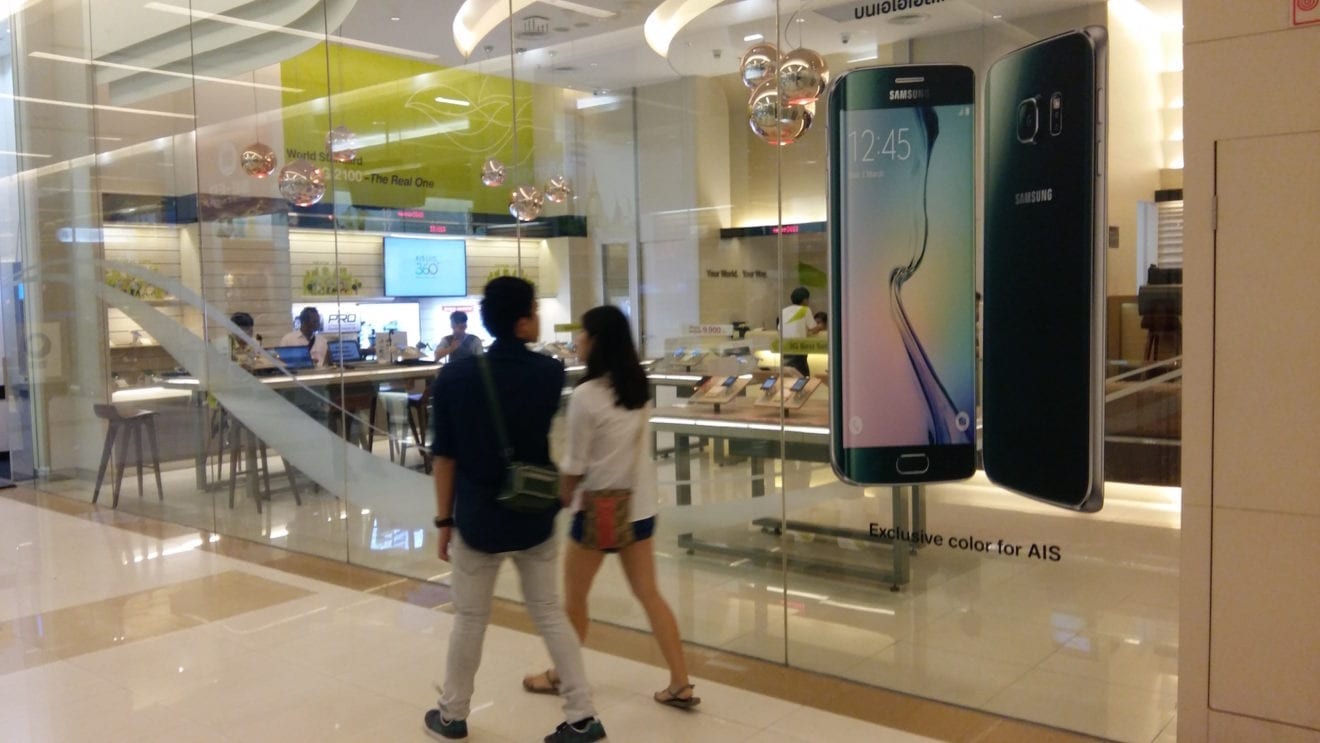
    Samsung’s global march added another stopping point this week, as Thailand became the latest nation to come online for Samsung Pay. That announcement comes as most of the global payments-watching community was watching Samsung Pay’s imminent foray into India.

    Speaking of watching — and watches

    After four months of waiting, Android Pay has finally made the leap onto an Android Wear-powered smartwatch — thanks to a bit of as assist from LG. It’s not Android Pay’s first foray onto a wearable, but it is the first time Android Pay will be open for business on a smartwatch not made by Samsung.

    Apple’s move this week is about merchants. New research suggests that Apple Pay has gone from being accepted at 16 percent of U.S. merchants to 36 percent of U.S. merchants — which said report notes is good enough to make it the most favored form of in-store mobile payment among American merchants.

    So how’d all the territory grabbing come out this week – and who gained the most ground? Well…

    Samsung Pay In Thailand

    Samsung Pay is not entirely new to Thailand — the service has been rolling out slowly under the radar since a November soft launch with about 100 retail partners — but as of Tuesday, Samsung Pay was out in full for any Thai customer interested in taking it for a smartphone spin.

    And, it should be noted, Samsung has great expectations for the Thai market and has set a goal of attracting 1 million users to the platform by the end of the year.

    “Thailand is the ninth country in 10 markets globally with which we have established our mobile payment presence, and the third country in Asia-Pacific apart from Singapore and Australia,” said Elle Kim, vice-president for the payment business group at Samsung Electronics.

    Kim noted that Thailand presents a natural opportunity for a mobile payments platform — given the government’s national e-payment scheme and the widespread use of smartphones and e-commerce.

    At launch, to use the service, customers must use a Visa or Mastercard issued by one of the nation’s six largest banks: Bangkok Bank, KTC Credit Card, Citibank, Siam Commercial Bank, Kasikornbank and Krungsri Consumer.

    Those six collectively cover about 70 percent of the cards issued in Thailand — Samsung has confirmed that by the end of the year it hopes to have upped that to covering 90 percent of the nation’s card holders.

    And it is a 90 percent that Samsung will compete for unopposed, since neither Apple nor Android Pay have any immediate plans to take on the Thai market. As of right now, mobile payment transaction value in Thailand is estimated to reach US$4 million in 2017. That figure is forecast to reach $36 million by 2021.

    Samsung is also widely expected to announce an expansion into India for Samsung Pay by the end of the quarter — with more international expansion slated for 2017.

    Android Pay And Android Wear – Better Together?

    After a very public announcement of Wear 2.0 last October that included Android Pay — the updated and enhanced version of Android OS for wearables — the world sort of had to wait a while to see it in action, since there was no wearable on the market sporting the feature.

    That changed this week with a pair of new watches from LG that marked a collaborative design effort with Google: the Watch Sport and the Watch Style.

    The big change involves making the watch a device capable of standing apart from a smartphone — a true computer for the wrist.

    And while that extends to many of the Wear’s various features, it is drawing praise particularly in relationship to the Android Pay support now available on the wearable.

    Unique to this version of wearable-based payment, however, is its level of independence. Android Pay runs as a standalone app on the watch — a connected smartphone is not necessary to pay for stuff (though a phone pairing is necessary to set up Android Pay on the watch for the first time). Android Pay on a watch does not actually even need an internet connection for a limited number of transactions (though to fully complete the transaction the watch must eventually go online).

    Android Pay is not entirely new to wristbased devices — Samsung’s smartwatches support it — but as of this week, Android Pay supported by Android’s wearable OS is now on the market for the first time — though not the last.

    Google has announced that many more Wear 2.0 watches will be out in the market by the end of the year — presumably to satisfy a consumer demand that will make itself apparent any day now.

    Apple’s Adding Merchants

    According to new published data from Boston Retail Partners, Apple Pay has garnered the largest percentage of U.S. merchants supporting mobile in-store payments, with 36 percent of said merchants accepting the 2.5 year old mobile payments app. The study further suggested that an additional 22 percent of retailers will accept Apple Pay in the next 12 months and 11 percent on top of that plan to do so within the next one to three years.

    Apple’s lead is notable — but also highly explainable by time. Apple Pay is the granddaddy of in-store mobile payments apps, so it’s had more time to add merchants to its roster. But as we’ve noted, being present at the POS is only half the battle for Apple Pay — consumers still have to chose to use it. So far, by our numbers here at PYMNTS, they aren’t — at least 19 out of every 20 who can.

    Which, as it turns out, maybe the lesson this week. More is good — more devices, more ground and more merchants — but only if at the end those things net more customers — and more transactions.

    We’ll keep you posted on how more turns into market share for transactions. By the way, we’ll be releasing totally new data on mobile payments adoption – based on what consumers actually do at the point of sale when they are paying for what they bought – at Innovation Project 2017. This new study will measure adoption for the major in-store “Pays” – Apple, Android, Samsung, and Walmart (at Walmart only, of course).

  • Soo Kee to add shine to Thai market in $1.2m joint venture

    Soo Kee to add shine to Thai market in $1.2m joint venture

    Home-grown jeweller Soo Kee Group is setting up a joint venture in Thailand. The collaboration is with leading Thai jeweller Aurora Design and will be set up with an initial paid-up capital of 30 million baht (S$1.2 million). Soo Kee will hold a 40 per cent stake and Aurora a 60 per cent stake, according to a memorandum of understanding signed yesterday.

    The joint venture firm will sell gold and diamond products under Soo Kee’s Love & Co brand, which was set up in 2007 to focus on bespoke engagement rings and wedding bands.

    Soo Kee will also license and supply intellectual property rights, products and support. Group chief executive Daniel Lim said after the signing ceremony at Soo Kee’s Changi Business Park headquarters that the plan is to take the bridal jewellery concept to Thailand, where there is a gap in the market.

    “Thailand is a huge market for jewellery. It’s also highly fragmented as far as diamond consumption is concerned,” he noted.

    “There are no decent business concepts yet to capture the diamond market, which is similar to what it was like in Singapore 20 to 30 years ago when people traditionally bought gold and the diamond market was underdeveloped.”

    He noted that last year, the Thai jewellery market, mostly consisting of diamond and gold, was worth more than 76 billion baht.

    Soo Kee started talks with Aurora, which has more than 170 stores across Thailand, last year as part of regional expansion efforts.

    Mr Lim said the initial plan is to have 20 retail points in Thailand in the first five years. Soo Kee expects to break even after the first year.

    Mr Lim added: “We will target key cities and strategic locations as part of the first phase.

    “We’re looking at concept stores and depending on the location, there are also opportunities in high-end department stores, where we can possibly open boutiques within them to exploit their traffic flow and footfall.”

    Aurora chief executive Aniwat Srirungthum said the firms are looking at cities such as Bangkok and tourist hot spots such as Phuket and Pattaya.

    Mr Aniwat said: “We are confident of Love & Co’s market potential, and this will widen our product offering and strengthen our capability to grow our customer base.”

    Soo Kee also said yesterday that it will be the first Asian partner of The International Institute of Diamond Grading & Research, part of diamond giant De Beers.

    Soo Kee, whose other brands are Soo Kee Jewellery, SK Jewellery and SK Bullion, is keen on growing in the region.

    Mr Lim said: “Thailand is important to us, but we will not stop here. Thailand is also recognised as the most important bullion market in the region.

    “Be it in the form of gold jewellery or bullion, we see other possible opportunities in Thailand. We are definitely interested in the regional markets and are constantly looking out for new opportunities.”

  • Samsung Pay Service Comes To Thailand

    Samsung Pay Service Comes To Thailand

    Similar to Android Pay from Google and Apple Pay from Apple, Samsung Pay works like other mobile payment platform by using NFC. Samsung Pay, which was made to build brand loyalty from consumers allows users to pay for things online with their smartphone or smartwatch.

    Samsung has fully unveiled the Samsung Pay in the Thailand. The company aims to entice at least one million users within this year. The mobile payment platform was already made available in Malaysia, Singapore and China a while ago. Samsung apparently already boasts a network of 100 retail partners found in Thailand following a soft launch just in November of 2016. Thailand has been working to adopt a more cashless society much like other Western countries.

    “Samsung is the first phone maker jumping into the mobile payment fray in Thailand,” said the Thai corporate Vice President for IT and Electronics of Samsung Electronics, Wichai Pornpratang. The company is expecting to bring in one million customers using Samsung’s Pay service by the end of the year.

    Consumers can use the Samsung Pay by just tapping their compatible Samsung smartphone on near field communication (NFC) or magnetic security transmission (MST). Doing this will allow them to proceed to making payments in stores.

    Samsung Pay is considered as one of the best mobile payment solutions but it can only be supported on the Galaxy S7 family, Galaxy S6 family, Galaxy Note 5, Galaxy A5 and Galaxy A7. Samsung Pay Mini, however, was reportedly just launched and what’s nice about the service is that it is not limited to just Galaxy smartphones. With an Android smartphone that has a 1280 x720 pixel resolution or higher than Android 5.0 Lollipop, the Mini version will function well. An offline payment option feature, however, that can be found on the Samsung Pay is nonexistent on the Samsung Pay Mini.

  • CIR finds growth in Chinese travel to Japan and Thailand

    CIR finds growth in Chinese travel to Japan and Thailand

    Chinese outbound travel tilted in favour of destinations in Japan and Thailand in the 12 months to October 2016, according to CiR Business Lounge – creating more sales opportunities for duty-free and travel retailers in key airport locations in these markets.

    New research on the Chinese passenger by duty-free and travel-retail analyst and researcher, Counter Intelligence Retail, pointed to booming growth at Tokyo Haneda airport (HND) of +140% and +96% at Bangkok’s Don Mueang airport (DMK)) – both secondary airports to the two capital cities’ main hubs.

    Haneda’s triple-digit growth enabled the airport to break the one million barrier for international Chinese arrivals, while Don Mueang reached 1.18 million.

    The main hubs of Tokyo Narita (NRT) and Bangkok Suvarnabhumi (BKK) saw respective growth of +1.6% and +17.9%. While their growth was of a lesser scale, these bigger airports handled more absolute numbers of Chinese passengers than their smaller counterparts.

    Other strong airports for Chinese travel among the top 10 destinations were Japan’s Osaka (KIX) at +18.7%, while traffic to Singapore Changi (+17%) and Seoul Incheon in South Korea at (+16.2%) saw a return to growth. South Korea, traditionally strong market for Chinese visitors, suffered dramatically after the MERS virus outbreak in May 2015 but traffic to Incheon has recovered.

    There was less favourable news for duty-free and travel retailers in Taiwan and Hong Kong. Taipei’s Taoyuan International airport saw its Chinese traffic decline by -0.8% to 2.7 million international passengers in the 12 months to October 2016, while Hong Kong – the biggest hub for Chinese travel – was sluggish at +2.3% to 4.5 million.

    CIR president Garry Stasiulevicuis said: “From our CIR Business Lounge data it is clear that Japan and Thailand are the clear winners in the drive for Chinese passengers. The more settled political situation in Thailand has seen Chinese passengers return to the country in droves while Japan’s relaxation of visa regulations (in January 2015) has benefited Chinese travel to Japan.”

    Tokyo Haneda’s astonishing growth can be specifically attributed to the commencement of flights from three new routes out of China, coupled with huge uplifts in seat capacities by airlines already operating flights on this route.

    “It is worth noting that HND’s Chinese traffic boom has come despite the Japanese yen’s strong gains against the Chinese yuan from August 2015 to October 2016,” adds Stasiulevicuis. “Since November, however, the yen has fallen back somewhat which may open the door to even more Chinese travel to Japan.”

    The report is part of a new series from CiR on Chinese passenger shopper behaviours and traffic trends, including forecasts, which complements the newly available Chinese Shopper Tracker.

  • AEON cooperates with Thai Airways to organize “Journey of Happiness with Thai Airways 2017”

    AEON cooperates with Thai Airways to organize “Journey of Happiness with Thai Airways 2017”

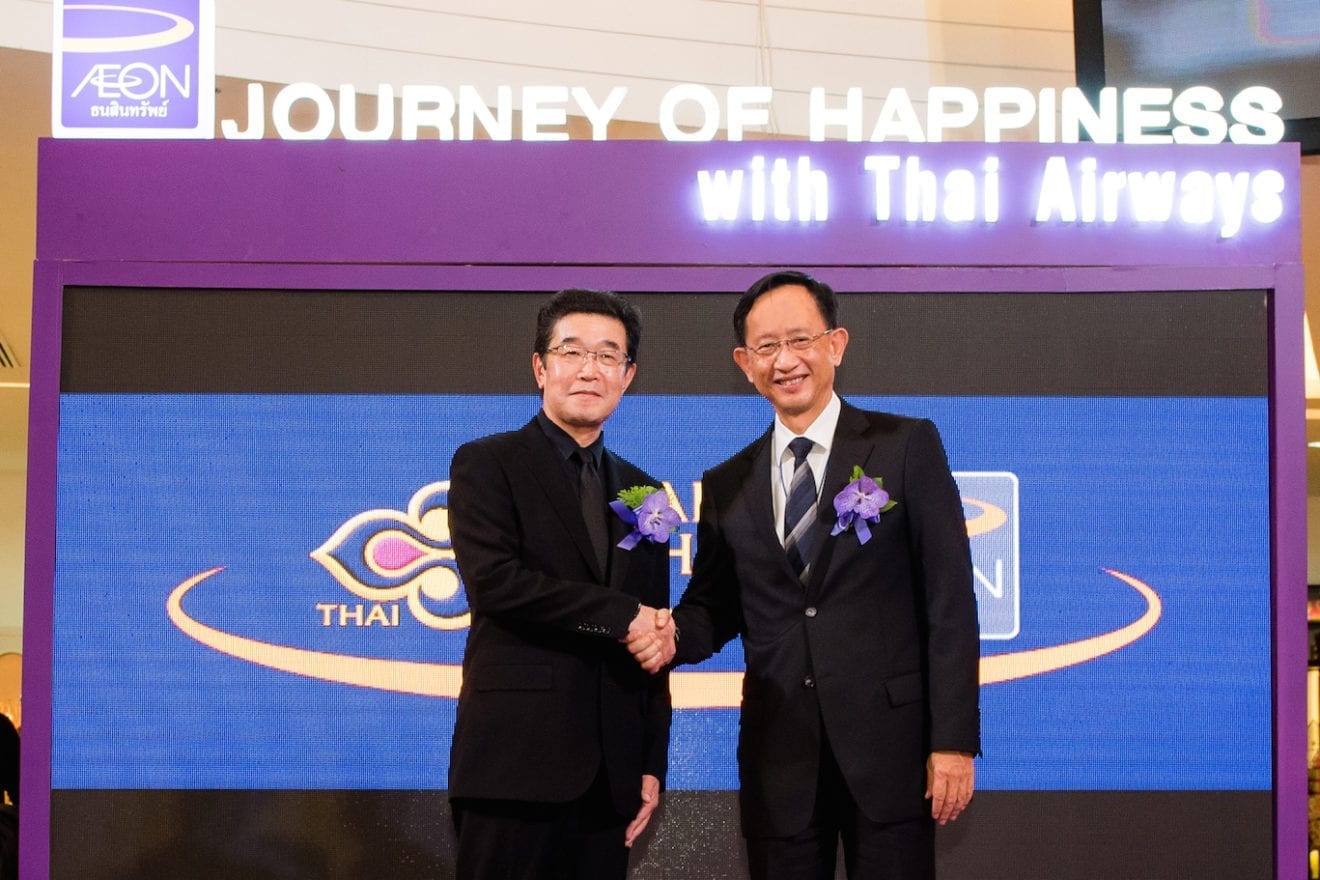
    Kiyoyasu Asanuma (left), Managing Director of AEON Thana Sinsap (Thailand) Public Company Limited together with Teerapol Chotichanapibal, Executive Vice-President Commercial of Thai Airways International Public Company Limited joined the recent launch of “Journey of Happiness with Thai Airways 2017” campaign at Fashion Hall, Siam Paragon. The campaign offers privileges to AEON credit cardholders from AEON, Thai Airways, H.I.S, and JCB partners.


  • Hooters of Singapore leads Asia expansion

    Hooters of Singapore leads Asia expansion

    Hooters of Singapore – Marina Bay has opened in Marina Boulevard, led by franchisee Destination Properties Group.

    Hooters Marina Bay - Singapore 3

    Covering 2336 sqft (217 sqm) and close to Marina Bay Sands and Marina Bay Financial Center, the restaurant features more than 22 large-screen televisions. The US chain is known for its hostesses, wings and live televised sports.

    “The growth of Hooters locations in Asia is continuing its momentum,” says Destination Properties Group CEO Gary Murray.

    Hooters Marina Bay - Singapore 4

    Hooters Marina Bay - Singapore 5

    Hooters Marina Bay - Singapore 6

    Hooters Marina Bay - Singapore 7


    Hooters Marina Bay - Singapore 9

    Hooters Marina Bay - Singapore 8

    The new venue is part of a 35-location Southeast Asia development agreement between Hooters and the Singapore-based international franchisee. There are now 24 outlets in Asia, with plans to open more this year in Phnom Penh, Samui, Jakarta, Singapore (Fusionopolis), Taipei and multiple locations in Manila.

    Meanwhile, the brand is seeking further restaurant sites in Bali, Bangkok, Ho Chi Minh City, Hong Kong and Kowloon, Jakarta, Krabi, Kuala Lumpur, Macau, Manila, Cebu and Davao, Siem Reap, Singapore, Taipei and Yangon.

    Hooters plans to open more than 30 restaurants globally this year.

    Hooters Marina Bay - Singapore 1

  • KBank unveils capital branch

    KBank unveils capital branch

    Kasikornbank (KBank), one of the largest banks in Thailand, officially unveiled its first branch in Phnom Penh with the aim of offering financial services to local businesses as well as corporate and retail customers.

    KBank entered the Cambodian financial market in November and initially, the branch’s objective was to facilitate Thai businesses in Cambodia in the area of corporate finance and fund mobilization for investment in infrastructure projects towards the production of garments and processed food.

    KBank services are available in Thai baht, US dollars and Cambodian riel for bilateral trade activities and other transaction services.

    KBank president Predee Daochai said the bank’s first injection of investment capital into Cambodia was $50 million and it will increase, based on bank performance and demand.

    Mr. Predee said recently that KBank’s loan portfolio was $2 million with a small amount of deposits. However, the bank expects to expand its loan portfolio to about 1.5 billion baht ($43 million) to corporate customers, local businesses and retail customers, both Thai and Cambodian, in the next three to five years.

    “We have to grow in terms of loans and deposits. Our loan portfolio is $2 million, but we have targeted that within the next three to five years, it should rise to two billion baht [$57 million] and we aim to have 800 million baht [$22.8 million] in deposits,” he said.

    “We can grow faster than that because there are many big Thai customers here since they came here many years ago. Most of them use our services in Bangkok so they are pleased to use our services here.”

    Mr. Predee said that KBank is not only looking to serve the financial sector in Cambodia, but also wants to help boost investment and trade between Cambodia and Thailand.

    He said if the first branch performs well, the bank will look to open a second branch in the country.

    Nattavudh Photisaro, Thai ambassador to Cambodia, said that KBank opened its representative office in Cambodia in February 2015, and had a soft opening of its Phnom Penh branch in November.

    He added that although KBank just officially unveiled its branch, it was no stranger to the Thai embassy in Phnom Penh as the bank had worked closely and has strong ties with the Thai diplomatic staff in Cambodia for the past couple years.

    “With KBank, Thailand has a total of four banks in Cambodia including Bangkok Bank, Krungthai Bank and Cambodian Commercial Bank. Now KBank has brought another Thai business to Cambodia,” he said.

    Mr. Nattavudh added that bilateral trade between Thailand and Cambodia reached $5.6 billion last year. He said several Thai companies have expanded their operations in Cambodia and more will follow.

    “I have always encouraged Thai businesses here to operate on three principles: mutual trust, mutual respect and mutual benefit. I think that Kasikornbank has taken these principles to implement here,” he said.

  • Thailand invests $7.7 billion in Vietnam

    Thailand invests $7.7 billion in Vietnam

    According to the Ministry of Planning and Investment’s Foreign Investment Agency (FIA), Thailand has invested US$7.7 billion in 440 projects in Viet Nam to become the country’s tenth largest investor.

    Amata industrial zone in Dong Nai Province, where Thailand has invested in infrastructure. Foreign investment in Viet Nam grew in January.

    So far, Viet Nam has attracted foreign direct investment from 112 countries and territories, the agency says.

    Thai businesses began investing right after Viet Nam introduced policies to attract foreign investment, it says. From 2006 to 2008, Viet Nam wooed the largest investment capital from Thailand amounting to $5 billion, accounting for 21.4 per cent of the total investment from ASEAN to Viet Nam worth $23.3 billion. Investments from Thailand have focussed on processing and manufacturing industries.

    At present, Thai investors have assured investments of $7.04 billion in 205 projects in the processing and manufacturing industries, accounting for 87.2 per cent of total registered invested capital. The largest project in those industries is the Southern petrochemical complex with a total investment of $3.77 billion.

    The agency says Thai investors are now turning their attention to industrial infrastructure and retail sectors. These include a joint venture project between Amata VNPCL of Thailand and Sonadezi Bien Hoa in the infrastructure sector and a project of MM Mega Market Co, Ltd in HCM City, with a capital of $36 million, reports vneconomy.vn.

    Viet Nam is considered an important investment destination in the region in line with Thailand’s policies on promoting investment in foreign countries. This is big opportunity for Viet Nam to attract investment capital from this country, FIA says.

    Thailand is near Viet Nam on the map and the two countries have cultural similarities. They signed an agreement on encouraging and protecting investments in 1992 and to create favourable conditions for investment co-operation. Therefore, Thai investors have not faced many difficulties while investing in Viet Nam. Meanwhile, the Thailand government has also encouraged and supported Thai investors already in Viet Nam.