Tag: tiktok

  • Trump gives Microsoft the green light to bid for TikTok

    Trump gives Microsoft the green light to bid for TikTok

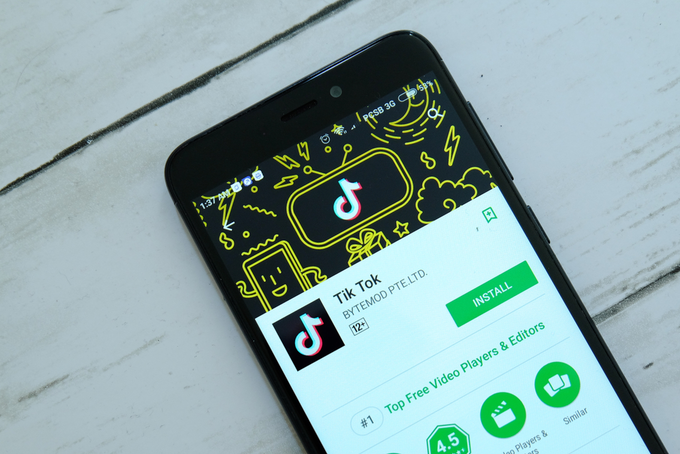
    No, we don’t think that the TikTok story is the only game in town. However, it isn’t every day when an app with over two billion installations becomes the subject of a takeover battle involving a huge U.S. company and the President of the United States. This afternoon, Microsoft’s official blog reported that following a conversation between Microsoft CEO Satya Nadella and President Donald Trump, Microsoft has decided to continue talks with TikTok’s corporate parent ByteDance in an attempt to purchase the short-form video app. Microsoft says that it would like to complete discussions with ByteDance by September 15, 2020.

    There are several possible reasons why the Trump administration has been seeking to ban TikTok in the U.S. In the states, several Chinese companies are considered national security threats with fears that they will collect personal data and send it to Beijing. Earlier this month Secretary of State Mike Pompeo compared the attempt to ban TikTok with other bans placed against Chinese manufacturers Huawei and ZTE. “Whether it was the problems of having Huawei technology in your infrastructure we’ve gone all over the world and we’re making real progress getting that out. We declared ZTE a danger to American national security. With respect to Chinese apps on peoples’ cellphones, the United States will get this one right too.”

    Microsoft said on Sunday that it “fully appreciates the importance of addressing the President’s concerns. It is committed to acquiring TikTok subject to a complete security review and providing proper economic benefits to the United States, including the United States Treasury.” Some of those economic benefits include the addition of 10,000 new jobs that TikTok intends to bring into the U.S. over the next three years, according to a TikTok video posted on the app this morning by U.S. General Manager Vanessa Pappas.

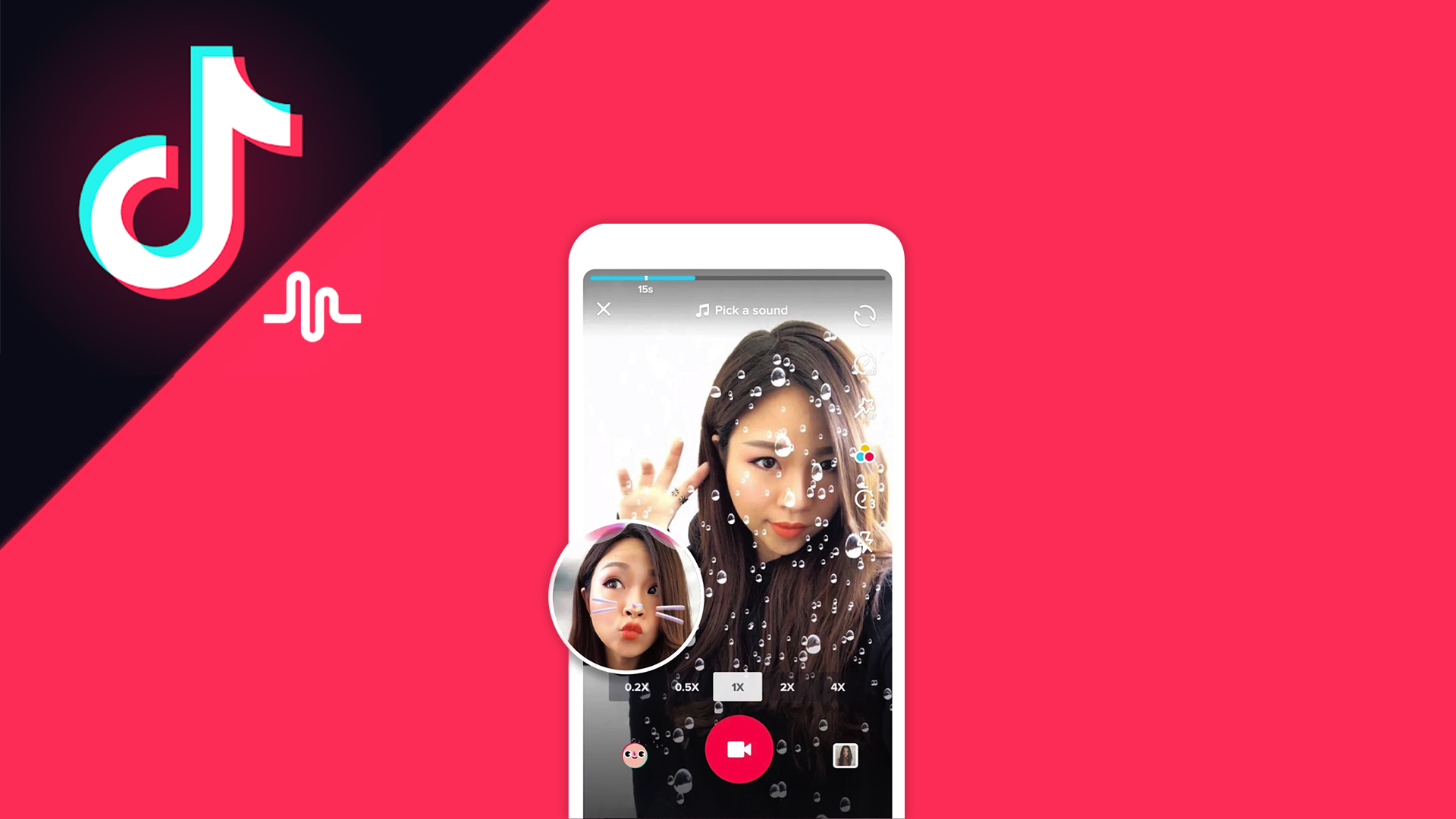
    TikTok allows users to create 15-second or 60-second videos with comedic content, singing, dancing, and protesting. It is used by teens, pre-teens, and yes, even older folk. With many people stuck inside during the pandemic, TikTok became a popular app for those seeking a way to pass the time of day. If the deal is allowed, Microsoft will own and operate TikTok in the United States, Canada, Australia, and New Zealand. The software giant could also ask some other firms to be minority investors. Microsoft also said, “This new structure would build on the experience TikTok users currently love while adding world-class security, privacy, and digital safety protections. The operating model for the service would be built to ensure transparency to users as well as appropriate security oversight by governments in these countries.”

    Microsoft said that it would make sure that any American TikTok user’s personal data would remain in the U.S. Any data backed up or stored on servers outside of the states would be deleted by Microsoft. The software giant also made sure to let the president know how much it appreciated his efforts in allowing the company to make a bid for TikTok. The company wrote, “Microsoft appreciates the U.S. Government’s and President Trump’s personal involvement as it continues to develop strong security protections for the country.”

    There is no guarantee that a deal will be completed. Microsoft says that it does not plan to comment further on a possible deal with ByteDance for TikTok until a definitive agreement has been made. While it is in negotiations with TikTok parent ByteDance, Microsoft says that “during this process, Microsoft looks forward to continuing dialogue with the United States Government, including with the President.”

    TikTok is estimated to be valued at $50 billion-$100 billion. Microsoft’s market capitalization is approximately $1.55 trillion.<
  • Here’s how you can win over 83 years of free Netflix service

    Here’s how you can win over 83 years of free Netflix service

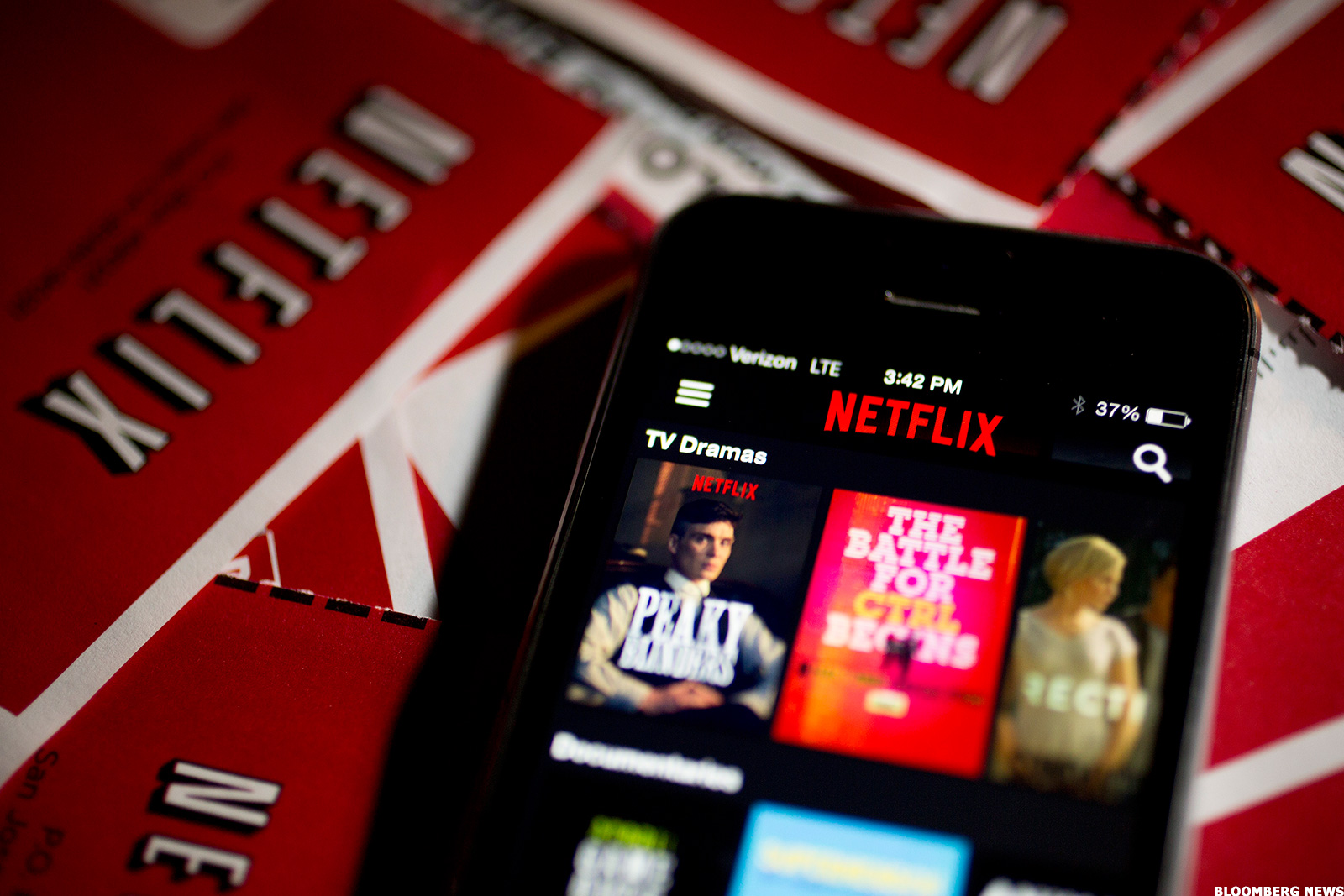
    This year, thanks to the global pandemic, Netflix has proven to be a much-needed distraction for those stuck inside. During the second quarter, the company added more than 10 million new subscribers worldwide. And now one lucky person could end up winning 1,000 free months of Netflix service. That works out to more than 83 years of service. You read that right. Who knows? COVID-19  might be eradicated by then. Netflix calls it the “immortal account.”

    To win the contest, you need to play a Netflix original game based on its new action film “The Old Guard.” This is the motion picture version of a graphic novel written by Greg Rucka. Starring Charlize Theron, the film is about a team of “noble mercenaries” who just cannot die. And this immortality is the reason why Netflix is giving away 83 years of service. As the streamer asks, “But how long is immortality, really? Netflix can’t promise a truly eternal subscription to its service, but it can offer the closest alternative: 1,000 months of service, which comes out to a bit over 83 years.”

    The grand prize winner must ring up the highest score while playing Netflix’s “The Old Guard” video game. You must be at least 18 years of age and reside in one of the 50 U.S. states or the District of Columbia. The contest ends at 8 am PT on July 20th which means that time is a-wastin’. You can play the game as often as you’d like until the contest ends, and the top 10 scores will be posted on a leaderboard.

    The grand prize winner will receive a special code good for 1,000 months of free Netflix service covering two screens. The person who achieves the second-highest score wins the second prize consisting of a code good for one year of free Netflix service for two screens. And the entrant who manages to get the third-highest score playing the game wins a code that can be used to obtain six free months of Netflix for a pair of screens. The codes must be redeemed within one month of their activation which is expected to take place on July 20th. The ARV (Approximate Retail Value) of all of the prizes adds up to $10,169.82.

    “The Old Guard” video game mirrors the events of the movie and in the game, you play the lead character looking to fight off your enemies using a one-handed Labrys. The latter is a giant, double-bladed ax. Netflix hints that getting killed in the game slows you down, so to ring up a high score, you need to defeat enemies quickly, without getting hit.

    While Netflix is the most popular subscription streamer in the world, the company’s estimate for new subscribers during the current quarter was 2.5 million. That is less than half the 5.27 million expected on Wall Street and the company is blaming the shortfall on short-form video app TikTok. Netflix told stockholders that “TikTok’s growth is astounding, showing the fluidity of internet entertainment. Instead of worrying about all these competitors, we continue to stick to our strategy of trying to improve our service and content every quarter faster than our peers. Our continued strong growth is a testament to this approach and the size of the entertainment market.”

    If the U.S. government gets its way, TikTok will be banned in the states because it is owned by Chinese firm ByteDancer. The U.S. is concerned, as it is with all apps and products owned by a Chinese company, that ByteDancer is secretly collecting information that it sends to a server in Beijing. The company has denied this and no evidence to support the allegations has ever surfaced.

    Besides TikTok, a number of new streamers could prove to be competition for Netflix. Disney+, launched last November, is off to a strong start. HBOMax and NBCUniversal’s Peacock are also available to iOS and Android users.

  • U.S. is considering a ban on popular short-form video app TikTok

    U.S. is considering a ban on popular short-form video app TikTok

    Tick tock, tick-tock. That’s the sound of a clock ticking off the time that popular short-form video app TikTok might have left in the U.S. On Monday Secretary of State Mike Pompeo said that the U.S. government was looking at banning the Chinese-owned app along with Chinese-based tech firms. Rising tension between the United States and China is the reason why the current administration is looking to kick TikTok out of the U.S. as it did with Huawei. The latter is currently the largest smartphone manufacturer in the world and also is the global leader in supplying networking equipment to carriers.

    Speaking with Fox News, Secretary Pompeo said about the ban, “We are taking this very seriously. We are certainly looking at it. We have worked on this very issue for a long time.” He added, “Whether it was the problems of having Huawei technology in your infrastructure we’ve gone all over the world and we’re making real progress getting that out. We declared ZTE a danger to American national security. With respect to Chinese apps on peoples’ cellphones, the United States will get this one right too.”

    TikTok has been one of the most popular apps in the U.S. always among the most installed apps on iOS and Android every month. The app has more than 2 billion installations globally. The pandemic has caused it to become even more popular as kids stuck at home looking for things to do create short videos using the app. If TikTok does get banned from the U.S., Wall Street has already selected the domestic social-media app that it believes will replace TikTok in popularity.

    Shares of Snap, parent company of Snapchat, rose 8% on Tuesday after word spread about Pompeo’s comments. On Tuesday morning, the sales team belonging to securities house Morgan Stanley said that if TikTok is forced to shut down, both Snapchat and Facebook will benefit.

    TikTok has been trying to stay distant from its Chinese parent ByteDance. Like Huawei and ZTE before it, TikTok has caught the attention of U.S. agencies concerned that it is spying on Americans and sending personal data to Beijing. Earlier this year TikTok hired former Disney executive Kevin Mayer to be CEO in an attempt to cover itself with the American flag.

  • Short-form video app TikTok reaches an impressive milestone

    Short-form video app TikTok reaches an impressive milestone

    Short-form video creation app TikTok has reached an impressive milestone. The app has now been installed on over 1 billion Android devices. It has consistently appeared in charts listing the top free apps for both the App Store and Google Play Store; at the end of February, TikTok was the third most installed free app in the Google Play Store rising to second last month. TikTok allows users to create lip-syncing videos ranging in length from 3 to 15 seconds, and short looping videos lasting from 3 seconds to as long as 60 seconds.

    It was about a year ago when we told you that TikTok was a “Huawei-sized” problem. Like the phone and networking equipment manufacturer, there is a concern on the part of the U.S. government that TikTok collects data (location and biometric data in this case) and sends that information to Beijing. Because the app is popular with U.S. military personnel, U.S. lawmakers are alarmed. ByteDance, the Chinese company that created the app, is forced to share data with the Chinese government under the China Internet Security Law. And if that isn’t enough to get the attention of the U.S. government, ByteDance founder and CEO Zhang Yiming wrote a letter in 2018 in which he promised to “further deepen cooperation” with the Communist Chinese government and help promote it.

    Last November, we told you that ByteDance was being investigated by the Committee on Foreign Investment in the United States (CFIUS) over its purchase of Musical.ly. The latter was a similar app to TikTok and was merged into it once the deal closed in 2017. But ByteDance never got clearance from CFIUS to complete the transaction; the agency is supposed to vet the foreign purchase of any U.S. company (Musical.ly had an office in Santa Monica). As a result, Senators Chuck Schumer (D-NY) and Tom Cotton (R-AR) sent a letter requesting that TikTok be the subject of a national security investigation. Schumer and Cotton said that China could be censoring images on TikTok meant for U.S. viewers, and both were concerned that the app could be used by foreign governments looking to influence Americans.

    Despite all of this, TikTok continues to find new users, many of whom are looking from something to help them pass the time while stuck at home during the coronavirus outbreak. If you need something new to do, you can find the app in the Apple App Store for iOS users and in the Google Play Store for Android users. Keep in mind that to prevent internet traffic from overwhelming the system while everyone is at home, TikTok users in Europe will not be able to view content in HD for 30 days. However, content creators will be able to upload their TikTok creations in full quality.

  • TikTok opens doors of LA facility to show transparency in privacy policies

    TikTok opens doors of LA facility to show transparency in privacy policies

    The Trump administration, as we are all well aware, has recently been suspecting China-owned companies, such as Huawei or ZTE, of espionage and unlawful conduct. Some US officials are also having a problem with the popular video-sharing platform TikTok and its Chinese owner company, ByteDance, and have therefore accused it of being a national security threat. The mentioned above actions resulted in some governmental entities banning the use of TikTok by their staff.

    In response to all the critics and accusations, TikTok is preparing to open the doors of a new LA facility to outside visitors, in particular lawmakers and industry experts, The Wall Street Journal reports. Invited people can visit TikTok’s LA facility in order to observe how platform moderators work, how user-reported content is handled, and review the company’s privacy and security practices.

    The facility is called the “transparency center” and is scheduled to open its doors in May. Additionally, it is said that the building will have different levels of authorization access.

    TikTok has been working hard to address the government officials’ concerns for quite some time already, expressing the fact that the company would never share its users’ information to the Chinese government, nor has it done so before. TikTok has even hired an executive from the US as a cybersecurity officer.

    “Our landscape and industry is rapidly evolving, and we are aware that our systems, policies and practices are not flawless, which is why we are committed to constant improvement,” a TikTok representative stated.

  • The TSA bans use of TikTok over national security threat allegations

    The TSA bans use of TikTok over national security threat allegations

    The United States Senator for New York Charles E. Schumer has been concerned about national security risks posed by China-owned social media platform TikTok and other similar platforms operating in the US since October last year. He has now reached out to the Transport Security Administration’s (the TSA) Administrator David Pekoske, expressing his concern over the use of the platform by the agency.

    In consequence, the TSA has banned the use of TikTok by its employees. The agency has stopped allowing its employees to use the platform on Sunday. National security experts have been concerned about TikTok’s collection and handling of user data and personal information. Additionally, concerns regarding the fact that Chinese companies have to work in accordance with the Chinese Communist Party’s demands have also been raised. According to Schumer’s press release, those companies do not possess means to decline requests made by the Chinese government.

    Since October 2019, multiple governmental organizations, including the US Army, the Marines, the Navy, as well as the Air Force and the Coast Guard, have banned or imposed hard limitations on the usage of the app. They are also encouraging personnel to avoid the app even in regard to personal use.

    Although TikTok’s parent company ByteDance has not specifically commented on those issues, it maintains the position that it is a trusted and responsible corporate citizen of the US.

  • A TikTok smartphone is reportedly being developed

    A TikTok smartphone is reportedly being developed

    Amazon created the Fire Phone to promote its services and Facebook partnered with HTC on a dedicated smartphone. Both products turned out to be complete failures, but that isn’t stopping the developers of viral app TikTok from creating their own device.

    Industry sources have claimed TikTok’s owner, ByteDance, is currently developing its own smartphone that’ll arrive pre-installed with the company’s range of apps which also include content aggregation platform TopBuzz and news platform News Republic.

    The smartphone will apparently be created by talent ByteDance acquired earlier this year from Chinese smartphone brand Smartisan. Details about the design and specs haven’t yet been revealed, but the device will most likely focus on the budget segment and teenage users. After all, TikTok is most popular in markets such as India and China, where cheaper devices are the best-sellers.

    It’s unclear at this stage if ByteDance will try to tackle the European and US markets, but if it does so the device could be met with a lukewarm reception just like Amazon and Facebook’s offerings from years ago. After all, why bother buying a TikTok smartphone when you can simply download the app on any other phone?

  • Telenor Myanmar signs partnership with TikTok

    Telenor Myanmar signs partnership with TikTok

    Telenor Myanmar has become the market’s first official partner for short-form video sharing platform TikTok, and introduced a new mobile data plan to support the partnership.

    The operator has introduced the new Sate Kyite Kyi plan, which will offer mobile video content from TikTok and Myanmar’s other most popular video apps – including YouTube, Viu and MyanFlix – at a rate of 1 kyat ($0.00065) per megabyte.

    Users will be able to subscribe to the plan over SMS, via the MyTelenor app or WowBox content platform with subscription fees of 499 kyats per week. The plan will not be auto-renewed and must be resubscribed to at the end of each week of service.

    “We are very excited to become the first official local partner of TikTok in Myanmar. Sate Kyite Kyi is the very first result of the agreement between us and the top video apps and we are delighted to add TikTok to our partners’ list for this innovative data plan,” Telenor Myanmar head of digital services Chan May Ling said.

    “It will be the one of a kind data plans in Myanmar, providing users with a one-stop shop solution where they can enjoy all of their favorite videos. As you all know, Telenor Myanmar has been offering the best and most affordable products and services since its inception in Myanmar to ease users’ daily lives and we promise that we will come up with many more innovative services from this partnership.”

  • TikTok partners Malaysian handicraft organisations to promote local art

    TikTok partners Malaysian handicraft organisations to promote local art

    TikTok has paired up with the Malaysian Handicraft Development Corporation (Kraftangan Malaysia) and the National Craft Institute (NCI) to launch its #ilovearts campaign, in conjunction with National Craft Day 2019.

    The campaign is in line with the 17th annual National Craft Day event organised by Kraftangan Malaysia under the theme “Culturising Craft in Lifestyle”, and aims to encourage the usage of local craft products in today’s lifestyle. The campaign also invites crafters to share their artistic talent and craftwork on TikTok, to further promote Malaysia’s unique craftsmanship to a global audience online.

    The partnership also saw TikTok conducting a recent workshop at NCI on ways to leverage its platform for students to amplify their talent. The workshop focused on short video-creations and encouraged digital adoption to amplify Malaysian arts. The #ilovearts campaign runs until 11 March and participants stand a chance to win prizes worth RM6,500.

    Donny Eryastha, TikTok’s head of public policy, Indonesia, Malaysia and the Philippines, said that the campaign resonates with its mission of capturing and presenting the world’s creativity, knowledge, and moments that matter by enabling everyone to be a creator.

    “We are honoured to be collaborating with NCI and Kraftangan Malaysia through this initiative that aims to bring Malaysian art, heritage and tradition to the rest of the world,” Eryastha added.

    NCI senior director Zainal Abidin Bin Che Pa said the industry recognises the role of technology in its effort to promote Malaysian’s unique craftsmanship globally.

    “By partnering with a digital platform like TikTok, our crafters are able to share their expertise and talent with others from all over the world. We are hopeful that partnerships like this would open new opportunities for our crafters to go beyond our shores and obtain international exposure, resulting in a greater appreciation for Malaysian arts,” he added.

    Recently, TikTok agreed to pay US$5.7 million to settle US Federal Trade Commission allegations that it illegally collected personal information from children. The violations were committed by the newly defunct Musical.ly app, which was folded under TikTok after it was was acquired by Chinese media firm ByteDance for around US$1 billion in 2017.

  • TikTok plans to expand in Vietnam

    TikTok plans to expand in Vietnam

    Short-form video hosting service TikTok is planning to step up its Vietnam operations, targeting a wider Vietnamese customer base. TikTok, a product of Bytedance, a Chinese software company headquartered in the U.S., offers a short video sharing application, 15 seconds per video for basic accounts. It’s initial content is primarily lip syncing, dancing, or recording with fancy stickers and other effects.

    The TikTok app has quickly attracted the attention of many young people, particularly at school age, but is yet to appeal to older adults.

    Diep Que Anh, national director of communications for TikTok Vietnam and other emerging markets, said that the application is trying to “age” its content to widen its user coverage.

    It has to do this before it can become an advertising platform that can satisfy the demands of its client brands, some experts and industry insiders have said.

    Not revealing specific numbers, Que Anh estimated that Vietnamese users spend an average of 28 minutes per day on TikTok. Its prime time, when the app sees the highest traffic in the country, is 6 p.m.-8 p.m. every Friday and Saturday.

    The platform is still in its ad-free phase. “There have been brands who have approached us regarding advertising, but we do not intend to monetize our service at the present time,” Que Anh said, adding that they were waiting for the market to mature.

    TikTok has opened its first representative office in Ho Chi Minh City with around 70 employees. Que Anh said this number will continue to grow to several hundred employees.

    “After just one year, Vietnam has become our biggest market in Southeast Asia,” she said.

    According to Que Anh, TikTok now covers Singapore, Thailand, Indonesia, Malaysia and the Philippines.

    The Telegraph reported that in October, after receiving an additional $3 billion in capital from firms led by Softbank, KKR & Co and General Atlantic, Bytedance boosted its valuation to $75 billion, officially surpassing Uber to become the most valuable technology startup in the world.

    The Telegraph and many other newspapers call Bytedance a Chinese tech firm, although Que Anh noted TikTok’s headquarters is in Los Angeles, the U.S., and that its products are already in 150 markets.

    TikTok’s strength in the global advertising market is growing rapidly. According to Google’s ‘Best of 2018’ list, TikTok is the only social networking application named in User’s Choice Awards App of the year, while Facebook, Instagram or Youtube are no longer in the list.

    Some reports estimate that the global audience for this app this year is about 500 million.

    In Vietnam, the most successful content trend of the year – the 2018 AFF Cup, resulted in more than 120,000 videos released on the event, which attracted 54.8 million views.