Retail News CRM

Tag: tiktok

  • Spotify is testing a TikTok-like video feed

    Spotify is testing a TikTok-like video feed

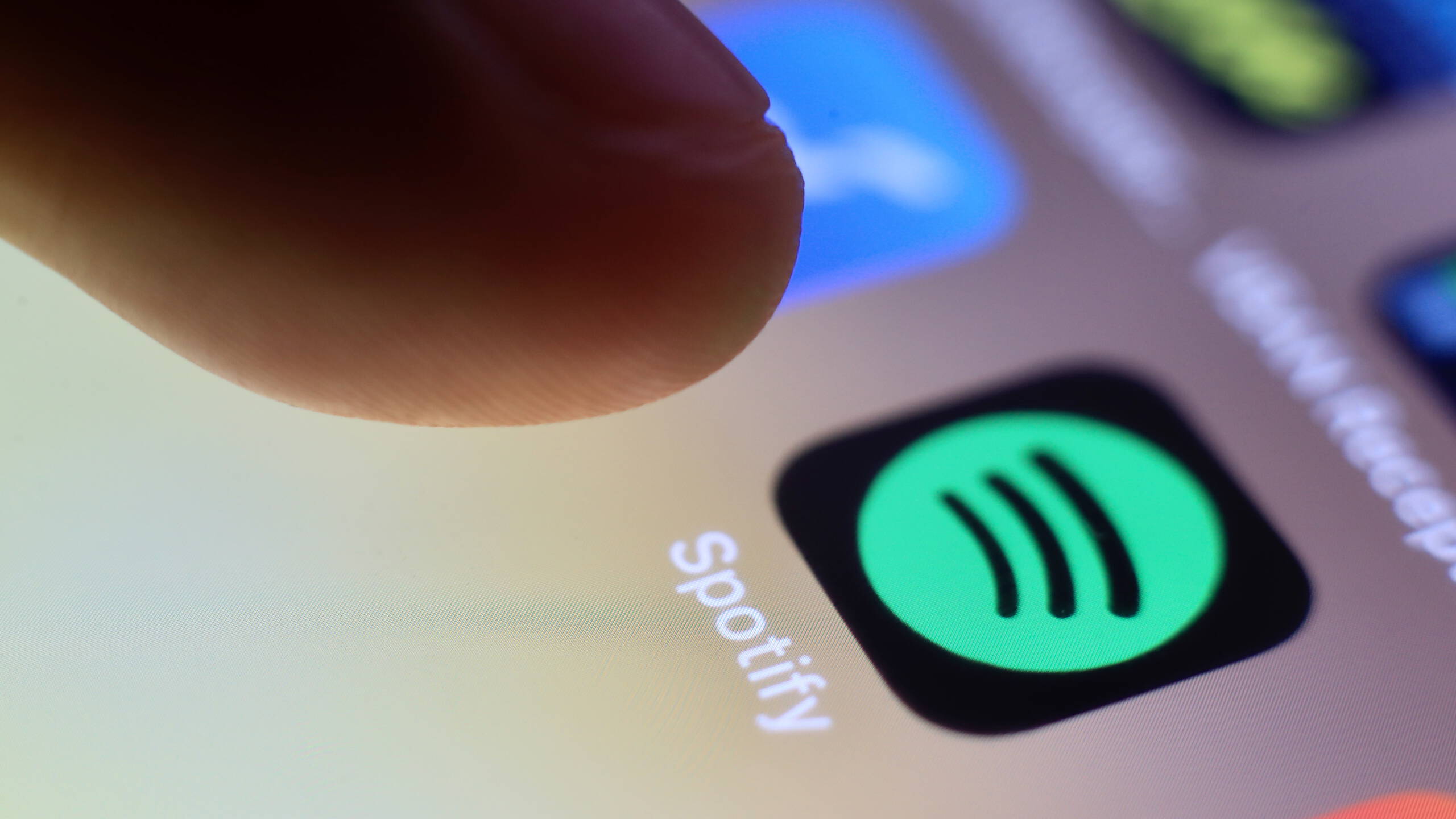
    Spotify wants to become more TikTok-like… sort of. Apparently, the music streaming service is testing a new feature called Discover for its app. The feature will allow artists to post vertical videos to their songs and allow listeners to discover new songs more easily.

    The new Spotify Discover feature was spotted by Chris Messina in the music app’s latest iOS TestFlight beta version. The new Discover button is located between the Home and Search buttons. When you Discover, you are presented with a TikTok-style video feed of artists and their songs. You can like the song by tapping on the heart icon or hitting the three-dot button for more information.

    Spotify declined to comment on whether the new feature will make it into the official version of the app or if it will be ditched entirely. A spokesman for the streaming service gave the following statement:“At Spotify, we routinely conduct a number of tests in an effort to improve our user experience. Some of those tests end up paving the way for our broader user experience and others serve only as an important learning. We don’t have any further news to share at this time.” – Spotify spokesperson.

    The new Discover feature could prove very useful for artists as it will allow them to add a visualization to their songs without the need for an expensive music video. The feature will also allow Spotify to differentiate itself more from its biggest competitor, Apple Music, as the latter doesn’t have a video feed section.

    A couple of artists have already made vertical music videos in the past. For example, back in February and April of 2019, British singer MARINA published vertical videos for her songs Handmade Heaven and Orange Trees, which ere posted on all social media, taking advantage of the smartphone form factor. Later, Billie Eilish jumped on the new trend as well. The American music artist posted a vertical video of her hit song Bad Guy in August of 2019.

    If Spotify indeed adds the new Discover section to its app, vertical music videos could become mainstream. If that happens, Apple will probably add a similar feature to its music streaming service too.

    Spotify isn’t the first popular app to work on a TikTok-like video feed. Instagram introduced a very similar feature in its app called Instagram Reels. YouTube also introduced its own version of a vertical video feed called YouTube Shorts.

    Both Reels and Shorts proved to be quite successful, and it isn’t surprising that other big companies want to add similar features to their apps. Netflix also recently introduced a video feed to its app containing comedy content. The new Netflix feature is called Fast Laughs.
  • Twitter makes it easier to search through subscribers’ tweets on iOS

    Twitter makes it easier to search through subscribers’ tweets on iOS

    A new search icon has been discovered by XDA on the iOS version of the Twitter app. Tapping the magnifying glass icon at the top right corner of a subscriber’s Twitter page will search through the tweets posted by this person or account. It also can be used to go through your own tweets.

    Using the new feature is a snap. Tap on the magnifying glass to reveal the search bar, and simply type in the terms of the search. In the example that we did below, our search term was TikTok.

    That brought up a tweet that we posted late Friday night related to a story about a 16-year-old girl who used a hand gesture that she learned from watching TikTok. The gesture alerted someone in an automobile behind the one that the girl was a prisoner in, that something was not right and that the teen was in distress. Thanks to the hand gesture, the cops were alerted and used a traffic stop to arrest the 61-year-old driver.

    The new feature is actually a shortcut for a feature that Twitter users running the iOS app can already do. By tapping the search icon at the bottom of the screen and typing in From:Username Term (which in the above example is PhoneArena TikTok), you’ll get the same results as if you had used the new tool.

  • TikTok is now the world’s most downloaded app

    TikTok is now the world’s most downloaded app

    According to a global analysis compiled by Nikkei, TikTok has officially overtaken Facebook, Instagram, WhatsApp, and every other messaging platform to become the most downloaded social media app in the world.

    Until 2021, Facebook had held that title—unsurprisingly, as it has somehow managed to keep growing over the years up to a current accumulated net worth of over one thousand billion. TikTok has proven to be something of a dark horse behind the scenes, however, growing around the world at an unprecedented rate until it’s taken over social media—and most of Gen Z’s free time.

    While YouTube has also been changing the video scene over time, with the most popular videos currently stretching around ten minutes—miles shorter than traditional TV or video entertainment—TikTok has been paving the way for something completely new: very quick, snappy videos averaging between nine to fifteen seconds.

    In the beginning, most TikToks were quick, funny clips aimed at making you smile or laugh, something akin to Vine when it peaked in 2014 before it passed into oblivion. TikTok isn’t showing signs of dying anytime soon, though, and its style has expanded to include educational clips, life hacks, mini cooking tutorials, and much more.

    The possibilities have become endless, and thousands of businesses have taken advantage to advertise their products or services as well as provide entertainment.

    TikTok has even been inspiring other platforms to mimic its style, after seeing its popularity boom—such as Instagram Reels, or YouTube Shorts. Both of these have been pushed as additional short-video platforms alongside the main platform, which provide a refreshing alternative to the regular content most established influencers or YouTubers are used to posting and consuming.

    Instagram Reels is different from Instagram Stories, shown in their very own niche corner in the app, and YouTube Shorts can be found on the Shorts Shelf right near the top of the home page.

    For a while last year, we didn’t really think TikTok was going to make it in the US, after Trump had threatened to eradicate the app from the United States due to a claimed national security risk. Things didn’t quite work out the way Trump had hoped, though, and although new app downloads were banned for a while, Biden signed an executive order this year revoking all bans on both Tiktok and WeChat (another Chinese messaging app targeted by Trump).

    The pandemic served to provide a massive boost to TikTok’s popularity, as not only were most people stuck at home with limited means of entertainment, but also because many famous artists were forced to cancel shows and tours, and decided to take to this platform (and others) instead.

    I enjoy videos by artists who aren’t performing live anymore because of the pandemic. —Nina, 37, from Portland

    Interestingly, TikTok has never touted any particular safety features, and many still harbor concerns that their data may be compromised. However, that doesn’t seem to have impacted the app’s fame in the least, in spite of other apps like WhatsApp working hard to stay above competing platforms in terms of maximal data encryption and privacy. Apparently, if an app is entertaining enough, privacy concerns take a back seat for many users.

  • TikTok is now working on an Instagram-Story-like feature

    TikTok is now working on an Instagram-Story-like feature

    TikTok was an exception to the fact all social media platforms have been getting some sort of an Instagram-Story-like feature, but this is no longer the case. TikTok will now be getting a Story-like feature too.

    Matt Navarra was the first one to reveal the company was working on a Stories feature earlier on Twitter. Currently, all the mainstream social media platforms have a form of Stories – a disappearing post that stays up for 24 hours on your account.

    The fact TikTok is developing the popular feature has been confirmed now by a representative of the company, stated The Verge. The feature will be simply called “TikTok Stories” and will work similarly to the Stories on Facebook, Instagram, or Snapchat.

    The published Stories will be visible in a newly-added slide-over sidebar in the TikTok app, and you will be able to see Stories by the accounts you follow on TikTok for 24 hours before they automatically disappear. Of course, reactions and comments to Stories will also be present. And, just like Instagram, tapping on a user’s profile picture on TikTok will load a Story if they currently have one active.

    This will be a new way you can interact with your fans, claims TikTok. You will be able to create a new Story by a “create” button that will be available on the sidebar, and as usual, you will be able to write captions, put music and text on. Quite understandably, Stories on TikTok will need to be videos and not a still image.

    At the moment, there’s no clear indication when the new feature will be released to the general public.

  • TikTok is testing a custom paid video format called Shoutouts

    TikTok is testing a custom paid video format called Shoutouts

    TikTok creators are about to get another tool to help them make money. The top-grossing app in H1 2021 is apparently testing a Cameo-like feature called Shoutouts.

    The new format will allow TikTok users to request custom videos from their favorite creators and pay for them with in-app currency.

    The new feature is available for some creators in Turkey and Dubai but there’s no information on when Shoutouts will arrive in other countries.

    You pay upfront when you submit a request and then wait for up to three days for your creator to accept. Then, in a week or so, you should receive your custom video in your direct messages (after it’s been reviewed and approved by TikTok – this isn’t OnlyFans, guys).

    Earlier this month, TikTok announced that it will be introducing longer videos (already rolling out), allowing users to upload up to three minutes’ worth of content.

    Shoutouts is the last addition to a slew of new TikTok features, including the recently introduced TikTok Jump – mini-widgets that creators can link to within their videos.

  • Apple blocks TikTok’s attempt to track iPhone users

    Apple blocks TikTok’s attempt to track iPhone users

    Ever wonder how you could look up a product online and all of a suddenly targeted ads for that product pop up on your phone and other connected devices? This, not witchcraft, readers. Third-party apps and websites track your travels across the internet and also know which apps you’ve been viewing. When Apple released iOS 14.5 in May, it gave iOS users the opportunity to opt-out of getting tracked with the App Tracking Transparency (ATT) feature.
    This feature gives iPhone users the ability to decide for themselves whether they want to be tracked by third-party apps and websites for the purpose of receiving online ads. More importantly, the ATT feature allows users to opt-out of being tracked which is the option that the vast majority of iOS users have selected. Facebook CEO Mark Zuckerberg was not pleased that Apple was giving users a way out of being tracked, but that isn’t surprising since the social media giant took in over $84 billion in ad revenue last year and 96% of iOS users had decided to opt-out of tracking in the early going.
    Another company decimated by ATT is TikTok and the popular short-form video app attempted a workaround to get around App Tracking Transparency called device fingerprinting. The latter can collect user data through the use of an algorithm and the entire workaround is called CAID for short.
    The Financial Times said that Apple was left with certain options: it could decide to look the other way and allow CAID to be used by app developers to obtain personal data, or it could block apps like TikTok from the App Store as long as the workaround continued to be employed. The latter is what Apple decided to do as it rejected TikTok updates that contained the CAID build.
    Alex Bauer, head of product marketing at adtech group Branch, told the Times that “The Chinese app ecosystem was collectively baiting the bull with CAID, under the theory that Apple couldn’t afford to ban every major app in the market. Apple called their bluff, and seems to have reasserted control over the situation by aggressively rapping knuckles on early adopters before the consortium gained any real momentum.”
    While TikTok tried to use a back door to get past Apple’s ATT, the tech giant was able to slam that door shut. The company remains serious about promoting privacy on the iPhone and its other devices.
  • Instagram is trying its best to keep up with TikTok

    Instagram is trying its best to keep up with TikTok

    After TikTok shook the social media market and fundamentally changed the name of the game, western companies quickly rushed in to grab a piece of the pie. As per usual, Instagram was quick to follow up with a similar feature with the release of Reels in 2020.

    On June 30, the head of Instagram shared a video on his Twitter page about upcoming changes in the social media platform. In his post, he mentions the addition of fullscreen mobile-first video to the app.

    We’re also going to be experimenting with how do we embrace video more broadly — full screen, immersive, entertaining, mobile-first video.

    These videos will appear in your feed in the form of recommendations, even if you don’t follow the account that’s posted them. Adam Mosseri explained the need for such changes by addressing the increasingly competitive environment in which Instagram finds itself.

    Let’s be honest, there’s some really serious competition right now. TikTok is huge, YouTube is even bigger, and there are lots of other upstarts as well.

    The days when the app was primarily photo-centric are long gone. It used to be a place where people would casually share photos of their everyday life with their friends and family. It then became a creative place for professional artists to showcase their work and promote it to a wider audience. Some would say that was the golden age of Instagram.

    In the last couple of years, however, Instagram evolved into a platform that also focuses on retail, instant entertainment, and product advertising. “We’re no longer a photo-sharing app or a square photo-sharing app,” said Mosseri. He then cemented his message, saying that “people are looking to Instagram to be entertained, there’s stiff competition and there’s more to do. We have to embrace that, and that means change.”

  • Tesla Crash Victim Lauded ‘Full Self-Driving’ In Videos On Tiktok

    Tesla Crash Victim Lauded ‘Full Self-Driving’ In Videos On Tiktok

    A Tesla car driver killed in a recent accident in California praised the automaker’s “full self-driving” features, and posted videos on his apparent Tiktok account, in which he appeared to drive with his hands off the wheel. On May 5, a Tesla Model 3 crashed into an overturned truck on a highway in Fontana, killing the Tesla driver and injuring the truck driver and a motorist who had stopped to help him.

    The Associated Press news agency cited police as saying a preliminary investigation had determined the Tesla’s driver assistant system Autopilot was engaged prior to the crash.

    But in a correction issued late on Friday, police said, “There has not been a final determination made as to what driving mode the Tesla was in.”

    Since 2016 at least three Tesla vehicles operating on Autopilot have been in fatal crashes, two involving a Tesla car driving beneath a semi-truck in Florida.

    Two videos of a man driving with his hands off the wheel were posted on the alleged Tiktok account of the victim, 35-year-old Steven Hendrickson of Running Springs in California.

    “What would do I do without my full self-driving Tesla after a long day at work,” said a message on one. “Coming home from LA after work, thank god, self-drive,” said a comment on another video, adding, “Best car ever!”

    Tesla dubbed its driver assistant features “Autopilot” or “Full Self-driving,” which experts say could mislead consumers into believing the car can drive by itself.

    On its website, Tesla said its Autopilot feature does not make the vehicle autonomous, however.

    On his Facebook account, Hendrickson was shooting a video while driving on autopilot, saying, “Don’t worry. I am on autopilot.”

    Family members were not available for comment and Tesla, which has disbanded its public relations teams, was not immediately available for comment.

    Tesla Club-SoCal, a group of Tesla owners in Southern California, said on social media that he was an active member who “loved his Tesla.” He is survived by his wife and two children, it added.

    The National Highway Traffic Safety Administration has been investigating more than two dozen crashes of Tesla vehicles, including the Fontana crash and a high-profile one in Texas last month that killed two men.

    Since 2016 at least three Tesla vehicles operating on Autopilot have been in fatal crashes, two involving a Tesla car driving beneath a semi-truck in Florida.

    The U.S. transport safety board said Tesla’s autopilot system failed to properly detect a truck as it crossed the car’s path, contributing to the accidents also caused

  • TikTok, seeking advertisers, reveals info about its subscribers and how they use the app

    TikTok, seeking advertisers, reveals info about its subscribers and how they use the app

    TikTok has been seeking more advertisers for the global and U.S. versions of the short-form video app. As a result, the company has been meeting with potential advertising partners while carrying a B2B pitch book for its TikTok for Business unit. As you might imagine, the pitch deck reveals information about TikTok designed to show off the large number of TikTok users that could be mined by advertisers.

    The pitch deck has leaked online revealing plenty of information about TikTok’s audience. As of October, TikTok’s own numbers show that it’s monthly active users (MAUs) worldwide amount to 732 million. In the U.S., the MAU figure is over 100 million.

    When you consider that those figures are six months old, the numbers are much higher-perhaps tens of millions higher globally. Thanks to a lawsuit filed against the government last year, we know that from the end of July 2020 to October 2020, the app gained approximately 14.3 million monthly active worldwide users each month. If this growth continues over the next 13 months, by May 2022 the app will have over one billion monthly active users globally.

    Some of the data that TikTok is pitching to advertisers should be able to convince them to put some money in TikTok’s till. 47% of users said that they have purchased something that they saw on TikTok in the past while 67% said that TikTok gave them the inspiration to go shopping even if they weren’t planning to do so.

    The pitch deck also revealed the app’s attractive demographics with 42% of active users between 18 and 24 years old. 17% are between 13 and 17 with 22% aged between 25 and 34, 12% between 34 and 44 and only 7% over the age of 45. TikTok users continually return to the app as the average user opens TikTok 19 times a day although it isn’t clear whether this number reflects the actions of global or U.S. users.

    And as of this past January, the average TikTok user views the app 89 minutes a day. 80% of users call TikTok “the most entertaining platform.” The pitch deck is supposed to make TikTok sound like the perfect place for advertisers to spend their money and based on the numbers, many of them will do so on the app.

  • TikTok parent settles lawsuit over its collection of minors’ personal data

    TikTok parent settles lawsuit over its collection of minors’ personal data

    TikTok parent ByteDance has agreed to settle a class action suit for $92 million. The popular short-form video app allows users to take 15-second or one minute videos (by stringing together four 15-second clips). Popular with teens, content usually includes pranks, lip syncing, dancing, and more. According to the lawsuit, TikTok “infiltrates its users’ devices and extracts a broad array of private data including biometric data and content that defendants use to track and profile TikTok users for the purpose of, among other things, ad targeting and profit.” In other words, the court documents accuse ByteDance of using TikTok to collect user data from its teenage users.

    The settlement still requires approval from the court. In a statement, TikTok said, “While we disagree with the assertions, rather than go through lengthy litigation, we’d like to focus our efforts on building a safe and joyful experience for the TikTok community.” The settlement was reached after “an expert-led inside look at TikTok’s source code” according to the motion presented to the court in an attempt to get the settlement approved. The settlement of the class-action suit, filed in the U.S. District Court for the Northern District of Illinois, could end arguments over whether the app illegally collected personal data from minors including facial scans. The suit was a collection of 21 separate class-action suits that were filed for teen TikTok users and those even younger. The youngest plaintiff was 8 years old.

    The plaintiff’s attorneys argued that by collecting personal data, ByteDance was able to collect biometric data allowing it to deliver more precisely targeted ads and content recommendations. In the state of Illinois, collecting this data without consent could expose ByteDance to serious punishment. As an example, last year Facebook settled a case under the same Illinois’ biometric privacy law for $650 million. The plaintiffs also charged ByteDance with storing personal data in China which might have allowed the Communist Chinese government to view it.

    Last year, the Trump administration tried to force ByteDance to sell part of TikTok to U.S. companies such as Microsoft, Twitter, Walmart, and Oracle. The plan called for the creation of a new American company that would be owned by ByteDance and some U.S. firms. Among those stateside companies that showed an interest in TikTok were Microsoft, Twitter, Walmart, and Oracle. When Joe Biden won the presidential election on November 3rd, former President Donald Trump seemed to give up interest in going after TikTok. On November 12th, the U.S. Commerce Department said it would no longer enforce its order that would have forced TikTok to shut down in the states by banning American companies from hosting the site and delivering content to the app. The anti-TikTok hysteria started last summer when then Secretary of State Mike Pompeo first mentioned a possible U.S. ban to the media.

    As of the first week of this month, TikTok is estimated to have 80 million monthly users in the United States according to Wallaroo. 60% are female, 40% are male. Those age 16 through 24 make up 60% of stateside TikTok users while 26% are 25 through 44 years old. 80% of users fit in the range of 16 to 34 in age while 60% of American TikTok users are Gen Zers. The app reportedly grossed $500 million from the U.S. alone last year.

    Globally, an estimated 1.1 billion people use TikTok each month. Sensor Tower states that the number of downloads of the TikTok app world wide is 2.6 billion. Last month, the app generated 62 million installs globally; just a year earlier, TikTok set a record for an app during a quarter with 315 million downloads. Allegedly, the app has been paying influencers $500 to open an account.

    With a new administration in place, things look rosier for TikTok in the states even though President Biden has not commented on whether he will continue to treat Chinese tech firms as national security threats.

  • US President Joe Biden temporarily lifts ban on TikTok and WeChat

    US President Joe Biden temporarily lifts ban on TikTok and WeChat

    What could come as a big relief to Chinese tech companies banned in the US, newly elected President Joe Biden has temporarily halted legal action against Chinese social media apps TikTok and WeChat, which could have been banned in the United States.

    Outgoing president Donald Trump had sought to ban both apps, claiming they were a national security threat. However, the courts had temporarily blocked the White House’s attempted ban, and the presidential election had put the issue in the back burner.

    Both companies had taken legal action against the proposed bans.

    The new administration has now asked for an “abeyance” – or suspension – of proceedings while it revisits whether the apps really pose a threat.

    What the delay means is that both apps can continue to operate in the US while new staff at government agencies “become familiar with the issues in this case”,  according to the legal documents.

    Trump had claimed that the spread in the US of mobile apps developed and owned by Chinese firms threatened “the national security, foreign policy, and economy of the United States”.

    Messaging app WeChat has more than one billion users worldwide but says the US only accounts for 2% of its revenue. Video sharing app TikTok has about 800 million users worldwide, of which 100 million are in the US.

    The app’s owner, ByteDance, has been in talks with software company Oracle and supermarket giant Walmart to finalize a deal that would see TikTok’s US assets shifted into a new entity, to avoid a ban in the country.

    An earlier court filing had said the US Commerce Department was reviewing whether Trump’s claims about TikTok’s threat to national security justified the attempts to ban it from smartphone app stores and deny it vital technical services.

    The US Commerce Department had blacklisted over 70 Chinese tech companies, preventing them from buying US-made chips and components. The companies including Chinese telecom giant Huawei, were added to the United States’ “entity list”  due to national security concerns.

  • Instagram working on TikTok-like vertical Stories feed

    Instagram working on TikTok-like vertical Stories feed

    Instagram borrowed the short-form video format from TikTok and rebranded it as Reels. Now, the Facebook-owned platform is looking to clone another one of TikTok’s ideas.

    The social media giant has announced that it’s in the process of testing a TikTok-like vertical feed for Instagram Stories, a feature that was rather ironically borrowed from rival Snapchat.

    Alessandro Paluzzi was the first to spot the new feature and his screenshots reveal a fairly simple UI that informs users about the new ability to scroll vertically to view Stories.

    Instagram, which confirmed the feature’s development to TechCrunch, is probably planning to prioritize videos over photos moving forward, hence the updated Stories feed.

    Adam Mosseri, the Head of Instagram, recently implied that Reels and IGTV videos could be merged into a single content format alongside regular videos. After all, most users likely don’t know the difference. This would leave Instagram with a much cleaner and, more importantly, clearer UI for users to navigate.

  • TikTok could be forced to stop operating in the U.S. following a hearing scheduled for next month

    TikTok could be forced to stop operating in the U.S. following a hearing scheduled for next month

    a U.S. judge said today that he will hold a hearing on November 4th-the day after election day-to decide whether the U.S. government can ban transactions with TikTok. The popular short-form video app is owned by ByteDance, a Chinese manufacturer that the Trump administration fears is passing on personal and corporate data to Beijing. An executive order signed by the president in August ordered ByteDance to divest itself of TikTok’s U.S. operations or have it removed from app stores in the states.

    At first, the president gave a thumbs up to a deal that would create a new company called TikTok Global that would be 80% owned by ByteDance and 20% owned by U.S. firms Oracle and Walmart. The plan was for TikTok Global to go public via an IPO. Since the president had earlier mused about the U.S. Treasury getting paid for the country’s participation in a TikTok deal, we wonder how the distribution of the shares would be handled with millions of dollars of possible profits at stake. Talks between all of the parties involved continuing.

    Meanwhile, a preliminary injunction issued by U.S. District Judge Carl Nichols on September 27th prevented the U.S. government from forcing the Apple App Store and Google Play Store from removing their listings for TikTok. The latter is not even close to being out of the woods in the states. First of all, the current injunction is temporary and another Trump-signed executive order against TikTok and ByteDance takes effect on November 12th. This order will shut down TikTok in the U.S. if there is no deal to divest the popular app by then. According to a schedule released by the court, no ruling on any legal matter before the court in relation to TikTok will be issued until late next month at the earliest.

    What’s holding up the deal are questions about majority ownership of the new company; additionally, China needs to approve the transaction and the country now bans the export of Chinese-made algorithms to other countries. TikTok uses such an algorithm to determine what video subscribers can see. This technology reportedly would not be included in any deal between ByteDance, Oracle, and Walmart.

    TikTok is beloved by many teens who use the app to create 15-second and 60-second videos of lip-synchs, dances, pranks, and more. During the pandemic, teens stuck inside their homes turned to the app to give them something to do. In the states, TikTok has 50 million active daily users and 100 million active monthly users; the latest data from app analytical firm Sensor Tower reveals that TikTok was the top-grossing app worldwide during the third quarter. It also was the most downloaded app on iOS and Android during the three months that ended in September. Consumer spending on the app rose 800% on an annual basis from July through September.

    As with most Chinese tech firms that operate some sort of business in the states, the U.S. government considers TikTok and it’s parent company to be national security threats because of their perceived close ties with the Communist Chinese government. There never has been any proof that these firms (such as Huawei and ZTE) have backdoors built into their products in order to obtain personal data. In the case of TikTok specifically, the fear is that 100 million Americans could be at risk of having this information sent to a server owned by the Communist Chinese government.

  • TikTok asks judge to block a ban against U.S. downloads of the app

    TikTok asks judge to block a ban against U.S. downloads of the app

    Starting this Sunday, TikTok will be removed from the Apple App Store and the Google Play Store based on an order from the Trump Administration. On Wednesday, TikTok asked a U.S. judge to block the administration’s order similar to the way a federal judge on Saturday issued a preliminary injunction that prevents the U.S. government from banning downloads of WeChat in the states.

    TikTok is a short-form video app with over 50 million daily active users in the U.S. Extremely popular with teens, subscribers can create 15-second and 60-second videos. Much of the content includes lip-synchs, dances, comedy bits, and pranks. During the pandemic, TikTok became even more popular as it gave those stuck at home something to do. TikTok owner ByteDance is a Chinese company and the U.S. government fears that it is able to steal the personal data belonging to 100 million American subscribers and send it to Beijing. Thus, the Trump administration has called TikTok a threat to national security.

    Downloads of TikTok were supposed to be banned in the U.S. starting this past Monday. But talks between Oracle, Walmart, and Byte Dance over a plan that would give Oracle 12.5% and Walmart 7.5% of a new company called TikTok Global was considered a step in the right direction. Thus, the Commerce Department decided to give TikTok an additional week to get the deal done. TikTok Global would be an American company 80% owned by ByteDance, and President Donald Trump has already given his blessing to this arrangement.

    In the papers that were filed in court on Wednesday, TikTok said that it is not a national security threat. In fact, TikTok said that the restrictions that the Trump administration want to be placed against it “were not motivated by a genuine national security concern, but rather by political considerations relating to the upcoming general election.” If the order against it isn’t blocked by the court, TikTok says, “hundreds of millions of Americans who have not yet downloaded TikTok will be shut out of this large and diverse online community – six weeks before a national election.”

    Chinese State media is not happy about the deal between Oracle, Walmart, and Byte Dance. China Daily and the Global Times said yesterday that there was no reason for a deal to be signed. The papers said that the transaction being discussed is based on bullying and extortion by the U.S. Chinese state news agency Xinhua said on Wednesday that the national security concerns that the U.S. consistently brings up are bogus. The papers wrote, “It is time that other countries saw through the outrageous farce of the TikTok drama, knew what is really at stake, and joined hands to oppose such blatant robberies and maintain a fair global business environment.”

    ByteDance has also applied for a tech export license. The application was made through Beijing’s municipal commerce bureau and ByteDance is awaiting a decision. Last month, for the first time in 12 years, the Chinese government updated the list of technologies that it can ban from export. On that list is the algorithm used by TikTok that determines which videos users get to see. Developed in China, the algorithm cannot be exported out of China which gives the Communist Chinese government some control over the deal that is being worked out between ByteDance, Oracle, and Walmart. There have been some conflicting statements between the companies over the terms of the deal they each reached with the White House which means that we could remain extremely far away from a deal being announced. But again, there is the deadline to think about and once again those in the states who want to download TikTok on their mobile devices might have only a few days to do so. In November, U.S. subscribers might be forced to give up the app forever.

  • Trump claims to have a deal in concept with Oracle, Walmart, and TikTok

    Trump claims to have a deal in concept with Oracle, Walmart, and TikTok

    U.S. President Donald Trump told reporters gathering to see him off to a campaign rally, that he has approved “in concept” Oracle’s bid for the U.S. operations of TikTok. The short-form video app, owned by China’s ByteDance, has been accused by the Trump administration of being a national security threat because it could pass along personal data from U.S. customers to the Communist Chinese government in Beijing. Trump signed an executive order that forced ByteDance to divest itself of TikTok’s U.S. operations this coming Monday, September 21st

    Last week, after several U.S. companies had expressed interest in TikTok such as Microsoft, Oracle, and Walmart, Oracle’s plan was given the nod by ByteDance. However, the administration felt that the plan didn’t go far enough to protect them better than 50 million active U.S. TikTok users. As a result, the U.S. said that it would ban downloads of TikTok in the states starting on Monday morning. Those who have already downloaded the app before Monday would be allowed to continue using it until November 12th unless a deal was approved by the U.S. But everything might have changed following this afternoon’s announcement. What isn’t clear at this point is what the president means when he says that a deal has been approved “in concept.”

    While things are still up in the air at this hour, Trump says that the deal will also include Walmart and hinted that TikTok would be “totally controlled” by Oracle and Walmart, something that he repeated several times this afternoon. “I have given the deal my blessing,” the president said. “If they get it done, that’s great. If they don’t, that’s okay, too.” Previously, the president wanted the companies involved in acquiring TikTok’s U.S. operations to make a payment to the U.S. Treasury. But such a deal would be illegal, something that Trump was not aware of. Still, the president spoke with Oracle Chairman Larry Ellison and Walmart Inc. Chief Executive Officer Doug McMillon on Friday, telling both executives that he still wanted a cash payout for the U.S. government.

    A new company called TikTok Global will be created, according to those in the know, and it will help create a $5 billion fund for U.S. education. Discussing this contribution, Trump stated that “They’re going to be setting up a very large fund. That’s their contribution that I’ve been asking for.” The new TikTok Global will probably be headquartered in Texas and 25,000 people will be hired according to the president. But that figure could not be independently verified. Facebook had 45,000 employees last year while Twitter had 4,900 employees. There is speculation that TikTok Global will hold an IPO and go public within the next year. The president said about TikTok Global, “It will have nothing to do with China, it’ll be totally secure, that’ll be part of the deal. All of the control is WalMart and Oracle, two great American companies.”

    ByteDance will retain TikTok’s algorithm which is used to decide which videos are available to certain TikTok users. China recently announced a regulation that prevents other countries from using any algorithm created in the country. Oracle will get full access to review TikTok’s source code and any updates to make sure that there are no backdoors involved that could be used to steal U.S. subscribers’ personal data.

    TikTok has been a popular destination for teens and others looking to pass time during the pandemic. Users can create 15 or 60-second videos showing lip-synching, dancing, pranks, protests, and more. The app has been installed over two billion times from the App Store and the Google Play Store.