Tag: Tommy Hilfiger

  • Tommy Hilfiger backs up BLM statement with US$15m plan to disrupt the fashion industry

    Tommy Hilfiger backs up BLM statement with US$15m plan to disrupt the fashion industry

    Global fashion brand Tommy Hilfiger has unveiled a comprehensive plan to address racial inequality within its own organization and the fashion industry more broadly. On Monday, the PVH-owned brand announced the launch of the People’s Place Program, a new initiative that aims to increase the representation of minority communities in fashion in three ways: partnerships, career support, and industry leadership.

    Going forward, Tommy Hilfiger has said it will focus on “purpose-led collaborations” and partnerships with organizations and creative peers working to advance the representation of Black, Indigenous and people of color (BIPOC) in the fashion industry.

    It has also committed to providing to information, physical materials, specialist advice, industry introductions, and other actions to increase access to fashion and creative career opportunities for minority communities.

    And it will support independent, industry-wide analyses of diversity, equity, and inclusion and develop and share a concrete action plan to create long-term change.

    The People’s Place Program will be funded with US$5 million annually for the next three years as an initial minimum commitment.

    The name is based on designer Tommy Hilfiger’s first store, the People’s Place, which opened in 1969 and was meant to be a space for people from all walks of life to come together to enjoy art, music, fashion and pop culture.

    The initiative follows a statement made by the brand’s namesake founder in response to the death of George Floyd in police custody in the US in May.

    “What is happening to Black communities in the US and around the world has no place in our society,” Hilfiger said. “The fact that it has continued to exist in our industry – overtly and systemically – is unacceptable.”

    “We are far behind where we should be in achieving diverse representation. It shouldn’t have taken us this long to acknowledge that, but we are determined and committed to changing it going forward,” he added.

    Many brands and businesses issued similar statements condemning racism as Black Lives Matter protests gained traction around the world throughout June. Many of those statements, however, were quickly criticized as virtue signaling, or cynical attempts to benefit from consumers’ desire to support the movement.

    But according to Tommy Hilfiger, the People’s Place Program is not just about good PR, as demonstrated by the governance structure the brand is building to oversee the program and ensure its success.

    This includes appointing senior leadership to direct the program
    and accelerate its growth internally and externally, and conducting regular reporting on its progress and impact to maintain transparency.

    It also helps that the brand has a long history of supporting diversity.

    Tommy Hilfiger claims to be the first fashion brand to collaborate with hip-hop artists in the 1990s, and in recent years, the brand launched an adaptive range, catering to people with special needs.

    Martijn Hagman, chief executive of Tommy Hilfiger’s global business and PVH Europe, said the company acknowledges that it hasn’t done enough, but it is determined to do better.

    “We are taking immediate action to ensure that BIPOC communities in the fashion industry feel represented, heard and equally welcome to their seat
    at the table,” he said in a statement.

    “The People’s Place journey starts now with a dedicated internal governance structure that will drive and report regularly on the long-term objectives of the platform. This is a firm commitment and first step in a long journey for what the People’s Place Program can achieve.”

    Through its foundation, PVH has donated US$100,000 to The NAACP Legal Defense and Education Fund, which supports racial justice through
    advocacy, impact litigation, and education, and The National Urban League, a historic civil rights organization dedicated to economic empowerment, equality and social justice.

    During the month of June, it also matched 100 percent of charitable donations made by the company’s associates globally to organizations supporting racial justice.

    PVH’s brand portfolio includes Tommy Hilfiger, Calvin Klein, Izod, Van Heusen, Arrow, Warner’s, Olga and Geoffrey Beene. It employs more than 40,000 associates in over 40 countries and has US$9.9 billion in annual revenues.
  • Tommy Hilfiger watch store opens in Manila

    Tommy Hilfiger watch store opens in Manila

    The Philippines’ official Tommy Hilfiger distributor Take Wizer Industries has launched the world’s first Tommy Hilfiger watch store in Quezon City.

    The store opened on January 23 at the Upper Ground Floor (UGF), City Center, SM North Edsa, featuring an interactive photo booth for customers to try on the watches for sharing on social media.

    “It’s a great venue to showcase how Tommy’s reputation for fashionably chic iconic apparel translates into the watch design,” said Wizer Industries VP marketing Rainier Jacinto. “The boutique’s design is minimalist but retains a sense of Americana, taking after its parent brand’s h

    “Its pristine look and clean lines give customers the opportunity to focus their attention and appreciation on the workmanship of the timepieces. We’d like to showcase how dynamic a store concept can be by rolling out something really fresh for the Philippine market.”

    “Manila is the perfect market for modern fashion accessories which Tommy Hilfiger watches are known for,” he added.

  • Tommy Hilfiger engages in 3D design technology

    Tommy Hilfiger engages in 3D design technology

    PVH Group’s Tommy Hilfiger brand will incorporate 3D design technology into all global apparel design teams at its Amsterdam headquarters.

    Its Spring 2022 apparel collections will be the first to be fully designed using Tommy Hilfiger’s 3D design technology platform, building on the company’s target to digitise its end-to-end value chain.

    “The potential of 3D design technology is limitless, allowing us to meet consumer needs faster and in a more sustainable way,” said Tommy Hilfiger Global and PVH Europe CEO Daniel Grieder.

    “The technology has become a fundamental tool in our collection design and has the potential to significantly accelerate our speed to market and replace traditional product photography entirely. For our Fall 2020 season, our men’s dress shirts will be 100 percent 3D designed and require no sample production; the difference will be almost indistinguishable from styles designed and presented historically. This is the future.”

    In order to realize its 3D design goal, Tommy Hilfiger has founded a tech incubator called Stitch, dedicated to digitizing the company’s design practices. Since 2017, teams of software engineers, 3D design technology experts, and transformation specialists have developed an ecosystem of proprietary tools that enable a fully digital design workflow. This includes a digital fabric, pattern and color asset library; digital 3D presentation tools and rendering technology. Transforming traditional design and sample production steps into virtual processes allows for faster timelines and seamless integration into digital showrooms.

    Scaling 3D design technology across Tommy Hilfiger’s apparel collections follows two years of targeted pilots that have connected the design platform to the brand’s digital showroom. In autumn next year, Tommy Hilfiger will launch a capsule collection designed, developed and sold digitally, including products modeled on virtual avatars. The initiative is the next step in uncovering the full potential of sample reduction, time savings, cost savings and sustainability by leveraging 3D design.

    Associates in more than 50 percent of the apparel divisions located at Tommy Hilfiger’s global headquarters have been trained and educated in 3D design technology through the Stitch Academy, with the technology active in 20 product groups and counting. Moving forward, all Tommy Hilfiger product teams will receive 3D design training and upskilling as standard, including designers, patternmakers, fit technicians, product developers, and merchandisers.

  • Calvin Klein and Tommy Hilfiger about to open first standalone stores in NZ

    Calvin Klein and Tommy Hilfiger about to open first standalone stores in NZ

    A mixture of international and local fashion and beauty retailers will be opening new stores in Commercial Bay when it opens next year.

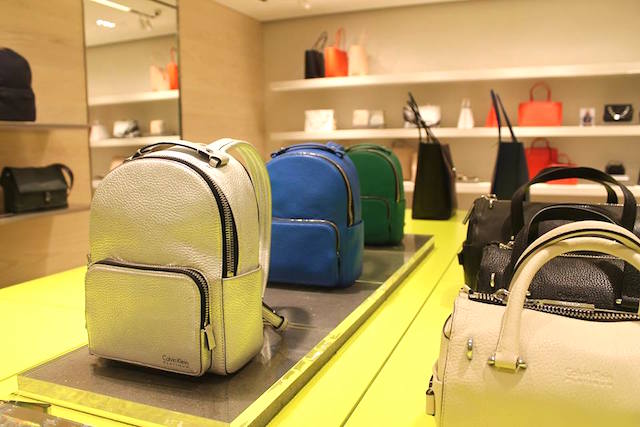
    American clothing brands Calvin Klein and Tommy Hilfiger, and Dutch fashion retailer Scotch & Soda, will open their first New Zealand standalone retail stores at the centre. Both Calvin Klein and Tommy Hilfiger will be offering a combination of apparel, fragrance, accessories and homewares.

    The Australian brand R.M. Williams, surf apparel Rip Curl and sportswear retailer Asics have also signed up to open flagship stores at the centre.

    Womenswear brand Kookai and local fashion brand Twenty-seven Names will be joining other local brands at the centre alongside outdoor retailer Icebreaker and local brand Storm.

    According to Precinct Properties, the city centre specialists behind the Commercial Bay development, the recent update takes the leasing of Commercial Bay to 95 per cent.

    “We’ve given a lot of thought to curating an outstanding retail offering in the heart of the city,” said Scott Pritchard, Precinct Properties CEO.

    Pritchard said each retailer has been closely considered to ensure Commercial Bay provides the ultimate shopping experience for Aucklanders, visitors from around New Zealand and international guests to the city.

    “Commercial Bay will be a welcoming place with something for everyone,” he said. “I’m confident our retail mix, combined with a truly world-class food and beverage offering will be a great draw card.”

    Precinct Properties said Whitcoulls bookstore and a handful of beauty and wellness brands have also given the nod to launch stores at the centre. The beauty and wellness retailers include nail salon Art of Nails, haircare store Shampoo and Things, men’s barber Gentry and skincare salon Skintopia.

    Lovely by Skin Institute will open its fifth retail store in the country in Commercial Bay, its first store in central Auckland, along with New Zealand natural wellness brand Harker Herbals.

    According to Precinct Properties, the overall development will feature a mix of more than 100 retailers from fashion to food and beverage to beauty and specialty retail.

    The newly announced stores will be joining the previously mentioned ones Sandro, Maje, Kate Spade, Furla, Federation, Superette and Rodd & Gunn, among others.

    The $690 million development, which is being built by Fletcher Properties, has revised the opening date of the retail centre from September of this year to March 2020, and the opening date of the PwC office tower from December of this year to April 2020.

    Precinct Properties originally expected the retail centre to be done in October 2018 and the office tower in mid-2019, but it has continued to push back the opening dates due to “slippage” in the construction of the project.

  • Australian brand house Gazal bought by PVH

    Australian brand house Gazal bought by PVH

    PVH has finalised the acquisition of Gazal Corporation, the Calvin Klein and Tommy Hilfiger-owner’s long-term partner in Australia, showing an increased commitment to the region.

    The acquisition gives PVH ownership of the Calvin Klein, Van Heusen, Nancy Ganz, Pierre Cardin, Fred Bracks, and Paramount brands in the region, and supports the group’s strategy to have a more direct hand in the direction of its brands in the Asia-pacific region – having recently re-purchased the licence in Hong Kong, Macau, Singapore, Malaysia and Taiwan.

    “Our decision to acquire Gazal is aligned with PVH’s strategic priority to expand our worldwide reach by assuming more direct control over our brands’ regional licensed businesses,” PVH chairman and chief executive Emanual Chirico said in a statement.

    “By joining forces now, we believe we’re well positioned to capture the significant growth in the Australia and New Zealand markets.

    “We are pleased to welcome Gazal into our PVH family and continue driving our business forward together.”

    As part of the acquisition, four key members of Gazal’s executive team are expected to remain in their respective roles for at least two years, having entered new employment agreements.

    According to Tommy Hilfiger global chief executive Daniel Grieder, this strategy will allow the brand to introduce a wider range of product lines, as well as offer an elevated and more immersive brand experience.

    “Building on our strong existing regional foundation, we plan to accelerate the growth of the Tommy Hilfiger business and invest further in driving the expansion of the brand,” Grieder previously said.

    Calvin Klein has also been expanding its focus in Australia, opening its first multi-brand store in Queensland’s Sunshine Plaza – the brand’s 32nd in Australia – as well as a more directed digital strategy.

    Steven Shiffman, chief executive officer at Calvin Klein, recently unveiled a number of initiatives meant to push the brand forward, while tailoring it to changing consumer wants and needs.

    One of these initiatives is a dedicated, regional e-commerce strategy, as well as the potential for as many as 100 stores opened across Australia and New Zealand.

    This decision was made in order to minimise the brands’ reliance on the Australian department store sector.

  • PVH to buy back Tommy Hilfiger licence in five major Asian markets

    PVH to buy back Tommy Hilfiger licence in five major Asian markets

    The US-listed fashion brand owner has entered into a definitive agreement to reacquire the license from Dickson Concepts, along with some related leases and retail assets. Terms of the transaction were not disclosed, but the deal is expected to be settled in the second quarter of this year.

    PVH Corp, which also counts Calvin Klein, Van Heusen, Izod, Arrow, Warner’s, Olga and Geoffrey Beene in its portfolio, said the deal is in line with the company’s strategy of gaining more direct control over its brands, including through the acquisition of licensed businesses. The transaction is intended to allow the company to capitalise on the significant growth opportunity in the region.

    “This transaction demonstrates our commitment to making strategic investments to support the long term growth of PVH and our Tommy Hilfiger business, while leveraging our well-established infrastructure, our leadership expertise and strong brand momentum across both our Tommy Hilfiger and Calvin Klein businesses in the region,” said Emanuel Chirico, PVH Corp’s chairman and CEO.

    Daniel Grieder, Tommy Hilfiger Global CEO, said after taking back the Tommy Hilfiger licence, the company will execute “a more fully integrated strategy for the Greater China market in coordination with our directly operated Mainland China business”.

    “This transaction should allow us to further realise the growth opportunities that exist for the Tommy Hilfiger brand by enabling the introduction of a wider range of product lines, and offering consumers a more immersive and elevated brand experience. Building on our strong existing regional foundation, we plan to accelerate the growth of the Tommy Hilfiger business and invest further in driving the expansion of the brand.”

  • Tommy Hilfiger in social entrepreneurs shout out

    Tommy Hilfiger in social entrepreneurs shout out

    Fashion brand Tommy Hilfiger is seeking applications from social entrepreneurs for the second year of its Fashion Frontier Challenge.

    Tommy Hilfiger’s global program aims to support entrepreneurial start-up and scale-up stage businesses developing solutions that promote inclusive and positive change in fashion.

    “The first chapter of this global initiative was an inspiring journey that put a spotlight on incredible ideas that could change the lives of people through a more positive and inclusive fashion landscape,” said Tommy Hilfiger.

    “Through the Tommy Hilfiger Fashion Frontier Challenge, we continue to mentor and support social entrepreneurs who are putting their heart and soul into addressing issues they strongly believe in. This celebrates the entrepreneurial spirit and determined optimism at the heart of our brand DNA.”

    Interested businesses are invited to submit project proposals that focus on inclusive fashion. Over a multi-stage four-month process, applicants will be narrowed down to six finalists, who will be invited to develop their project plans with the support of a team of dedicated Tommy Hilfiger subject-matter experts at the Campus of the Future in Amsterdam, the Netherlands.

  • PVH opens third Tommy Hilfiger store

    PVH opens third Tommy Hilfiger store

    US-based PVH Corporation opened its 13th full-price Tommy Hilfiger store in Australia on Friday, just days after the fashion brand held its Tommy Now runway event in Paris, featuring a collection designed in partnership with American actress and brand ambassador, Zendaya.

    The new store, located in Sydney’s Mosman suburb, showcases the TommyXZendaya collection and the brand’s Spring 2019 collection, in keeping with Tommy Hilfiger’s early adoption of the ‘see now, buy  now’ runway trend. Customers can also shop the brand’s denim collection and newly launched men’s and women’s sportswear collections.

    The store, which opened on International Women’s Day, also offers the brand’s IWD capsule collection, which features t-shirts and sweaters with inspirational slogans, such as: “Be the change” and “Powerful”. The brand is donating $1 from every style sold to the International Women’s Development Agency, a non-profit that works to advance women’s rights and gender equality in Asia Pacific.

    Spanning 130sqm, the store design reflects Tommy Hilfiger’s new global retail concept, which fuses the brand’s American heritage with clean, modern finishes and a bright, airy aesthetic. A high-resolution digital screen showcases the brand’s latest global campaigns for an immersive brand experience.

    The Mosman store is the third Tommy Hilfiger store to open in the past eight months in Australia, reflecting the parent company’s efforts to minimise its exposure to Myer and other struggling department stores by increasing its retail presence. The brand opened a store in Burwood, NSW, in June 2018 and in Perth, WA, in October. The brand also launched an online presence in Australia in September.

    In a presentation to investors in May 2018, PVH Brands Australia, a 50-50 joint venture between PVH and local apparel retailer Gazal Corporation, which held the licences for  Tommy Hilfiger, Calvin Klein and Van Heusen in the local market, said it would open 34 stores across the brands in the coming years.

    Since then, PVH has announced an agreement to acquire Gazal. The closing, which is subject to shareholder, court and regulatory approvals, is expected to occur in the second quarter of 2019.

    Tommy Hilfiger operates 1800 stores in over 100 countries around the world.

  • Avery Baker resigns from Tommy Hilfiger

    Avery Baker resigns from Tommy Hilfiger

    Tommy Hilfiger will jettison the chief brand officer role following the departure of incumbent Avery Baker in June, the fashion label has confirmed. Baker has announced plans to step down from the job in June. The marketer will then rejoin the company on a consulting basis, primarily as part of a new brand advisory board staffed by external advisors and chief executive officer Daniel Grieder.

    Baker’s C-suite brand responsibilities will be divided among other senior members of staff. She is currently responsible for global marketing, communications, brand strategy, creative direction for product design, global licensing and creative services.

    The marketer joined the PVH-owned company in 1998. She landed the chief marketing officer title in 2011 after a stint as executive vice-president of global communications and marketing.

    She was named chief brand officer in 2014.

  • ‘The store of the future’ by Tommy Hilfiger opens in Amsterdam

    ‘The store of the future’ by Tommy Hilfiger opens in Amsterdam

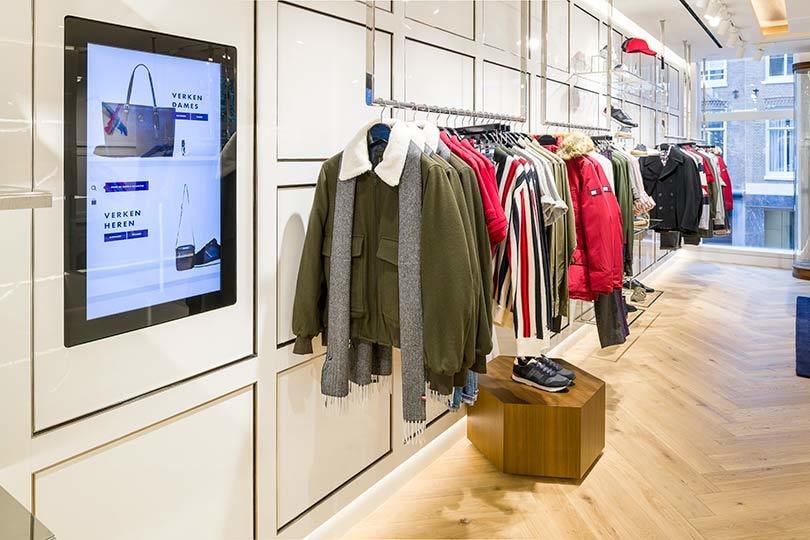
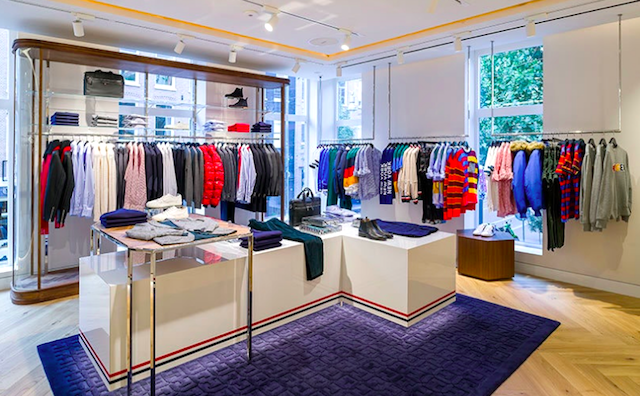
    A new generation Tommy Hilfiger store of the future has opened in Amsterdam. The store emerges from the firm’s evolving omnichannel strategy and features floor-to-ceiling interactive mirrors, personalised embroidery stations and a cafe with digital screens built into the tables. The more than 300sqm interior has been described in a CPP Luxury report as boasting “modern finishes and a bright, airy aesthetic, taking cue from the nautical lifestyle – one of Tommy Hilfiger’s long standing sources of inspiration.

    Tommy Hilfiger CEO Daniel Grieder said: “You can’t just expect shoppers to come into the store when you do nothing, you have to excite them. You have to give customers a reason to come into the store.”

    View the gallery below (7 images) :

    The Tommy Hilfiger store of the future features large monitor screens which serve as “digital endless aisles” that allow customers to browse the brand’s complete online catalogue, facilitating home-delivered or store-delivered orders. Customers can also identify items from different looks featured online.

    Store manager Mark commented: “It’s about bridging that gap between online and offline, and making the shopping experience as easy as possible … People still want to be able to feel the material and see the products in person. That’s always important, so where we can we always want to encourage customers to come into the store.

    “For example with suits, we’ll offer an appointment for the customer to come in and try it on. We’ll make sure the dressing room is prepared for them with fitting shoes and a shirt. So for us it’s really about taking that extra step and building on the customer relationship.”

  • Esprit appointed new chief product and brand officer

    Esprit appointed new chief product and brand officer

    Struggling fashion retailer Esprit has tapped a former Burberry and Tommy Hilfiger executive to become its chief product and brand officer. Mia Ouakim will take up the new role – a crucial post in the brand’s turnaround plan – in February, reporting to the group CEO.  She will be responsible for managing the product creation and design of all product divisions, as well as the consistent execution of the brand strategy across all product divisions and consumer touch points, according to Esprit in a stock exchange filing.

    Ouakim’s experience spans corporate strategy, product design, merchandising, planning and development, brand and communication, and distribution gained from luxury and premium fashion brands. Her most recent role was senior VP of Tommy Hilfiger menswear and tailored, overseeing the brand’s menswear division globally. Prior to that, she served as VP at Tommy Jeans, formerly known as Hilfiger Denim (Women & Men) between 2014 and

    2017 where she had full business responsibility of the denim division globally.

    Before joining Tommy Hilfiger, Ouakim held various roles with Burberry, working in product, merchandising and design roles for childrenswear between 2006 and 2014. Before that, she was with Children Worldwide Fashion in the UK, responsible for brand, communication and public relations of various luxury and premium brands, including Burberry, Timberland, Kenzo, Nike, Elle and DKNY childrenswear.

  • Tommy Hilfiger opens first Indian store

    Tommy Hilfiger opens first Indian store

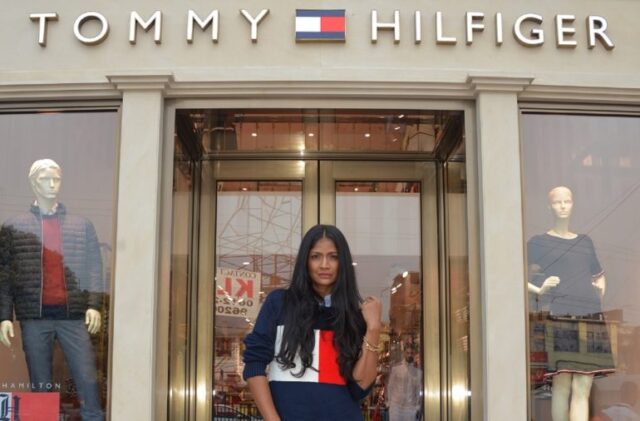
    Last week, Tommy Hilfiger has opened its first exclusive Tommy Hilfiger store in Patna, India. Actress Radhika Apte made the launch of the event wearing the brand’s clothes. “I’m excited to be in Patna to celebrate the opening of the first exclusive TOMMY HILFIGER store in the city,” she said.

    During the event, key influencers such as Ira Dubey, Carol Gracias, Neelaksh Apte, Kanishtha Dhankar and Arya Bhat, and VIPs browsed and shopped the Fall 2018 collections that celebrate American Icons while putting a modern twist on timeless classics to meet the needs of the now.

    Spanning over 125 square meters, the store’s design reflects Tommy Hilfiger’s new global retail concept, which fuses the brand’s American heritage with clean and bright aesthetic.

    The interior takes cue from the nautical lifestyle – one of Tommy Hilfiger’s longstanding sources of inspiration.

    Technology being at the center of retail today, a high-resolution digital screen
    showcases the brand’s latest global campaigns for an immersive brand experience.

  • More brands join anti-fur movement

    More brands join anti-fur movement

    Among the investors who snapped up shares in luxury e-commerce marketplace Farfetch after its September IPO was one buyer with little interest in operating profits or projected revenue. People for the Ethical Treatment of Animals pounced on shares in the newly public company so it could make its case directly to ban fur sales on the platform. They needn’t have bothered.

    Farfetch quietly committed to going fur free in May, inserting a promise in the terms and conditions section of its website to stop selling items made with fur by the end of next year.

    Farfetch joins a growing list of luxury brands and retailers turning their backs on animal fur.

    Within the past 18 months, Yoox Net-a-Porter, GucciMichael Kors, Versace, Furla, Burberry and DVF have all announced anti-fur policies, while this year’s September London Fashion Week became the first of the major fashion weeks not to show any fur on the catwalk.

    Within the luxury space, the balance has tilted against fur.

    In the 1980s, fur was synonymous with luxury, representing a status symbol for many women.

    The global fur trade is valued at $40 billion, but today fur is central to the image — and revenue — of only a handful of major brands.

    Meanwhile, anti-fur messaging is being amplified by social media and a millennial customer base that is paying closer attention to the values represented by the products they buy.

    For brands like Gucci, the goodwill generated by banning fur outweighs the sacrifice of a few million dollars in sales of fur-trimmed loafers.

    “[It’s about] being more modern in our thinking and our approach to business and how we talk and engage with our consumer and our community of women,” Sandra Campos, chief executive at DVF, said of the decision earlier this month to stop using fur, exotic skins, mohair and angora in upcoming collections.

    “No one really wanted to associate the brand with [fur]. We don’t need real fur to have a status symbol anymore.”

    The anti-fur movement has ebbed and flowed for decades.

    Calvin Klein stopped using fur in 1994, the same year Peta ran a campaign featuring supermodels including Naomi Campbell and Christy Turlington, who claimed they would “rather go naked than wear fur.”

    Ralph LaurenTommy Hilfiger and Selfridges barred fur in the mid-2000s.

    More recently, Hugo Boss joined the no-fur list in 2015, followed by Armani the following year.

    Gucci kicked off the latest wave of brands announcing fur bans in October 2017.

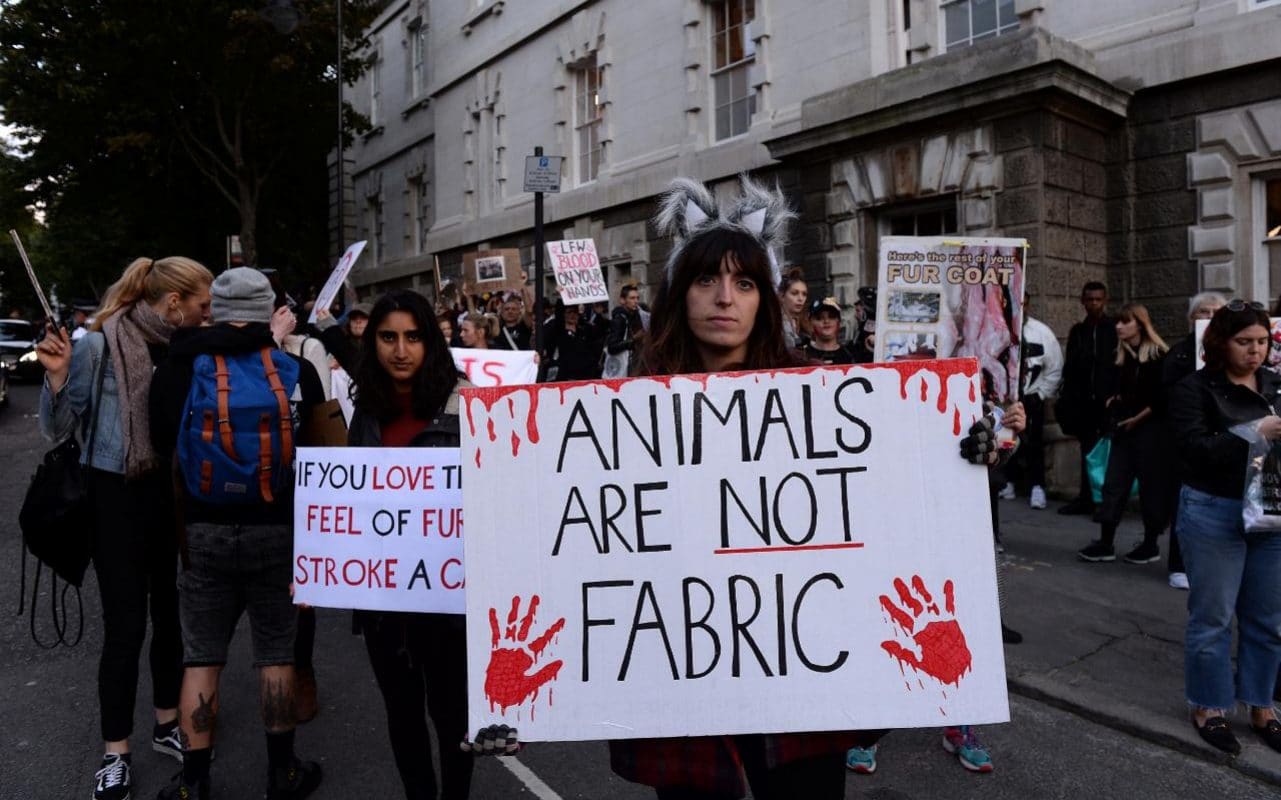
    Winning over luxury’s hottest brand was a coup for animal-rights activists who had been targeting specific companies for almost a decade via a mix of behind-the-scenes talk and public protest.

    In July 2017, more than 20 animal rights activists heckled Michael Kors during a speech, while in September 2017, Burberry’s London Fashion Week show was disrupted by about 250 anti-fur protesters.

    Michael Kors agreed to ban fur in December, Burberry last month.

    The rise of social media has provided the general public with a direct line of communication to companies and a platform for opinions and protest, making it harder for brands to ignore targeted activism.

    It’s also given animal rights organisations a platform for mobilising consumers into action.

    The global fur industry is fighting back, launching its own campaign making the case for fur as a natural, sustainable product that is better for the environment than alternatives, which are often made from plastic.

    One recent campaign featured Fendi and Oscar de la Renta, among other brands.

    “Brands are under huge pressure to respond to social media and avoid any controversy,” says Mark Oaten, chief executive of the IFF.

    “Even in a five year period that has changed … the fear of reputational damage is increased at the moment.”

    Studies show activism is impacting purchasing decisions.

    Prior to announcing its fur-free policy last June, Yoox Net-a-Porter surveyed 24,000 customers: 72 percent said social or environmental considerations drove their purchasing decisions at least some of the time, while 58 percent said having more information about the ethics and sustainability of a product would influence their shopping choices.

    Indeed, the idea of what luxury means to consumers today has evolved.

    “It’s become synonymous with social responsibility and innovation,” said PJ Smith, fashion director at the Humane Society US.

    “Companies that want to position themselves as corporate social responsibility leaders are seeing the marketing potential of going fur free, especially with new luxury consumers.”

    For a brand like Michael Kors or Burberry, going fur free won’t have much impact on the bottom line, while providing a marketing boost.

    For DVF, fur was “a very minimal percentage” of the overall business, said Campos.

    “It wasn’t something we relied on heavily at all,” she said. “It made sense for us to walk away from it in total.”

    Similarly, Gucci’s decision to bet on animal rights activism wasn’t much of a trade-off, as the brand sold only €10 million ($12 million) in fur products last year, less than 0.2 percent of revenue.

    Gucci’s Instagram post announcing the news was among the brand’s top performing posts at the time of the announcement, amassing 179,524 likes.

    Even brands that still use fur are acknowledging shifting attitudes.

    Fendi, which started as a furrier in 1925, rebranded its Couture Week show this past July as haute couture, rather than the haute fourrure description it used in recent seasons.

    And while fur was still present in the label’s Spring 2019 collection, it was less prominent than in past seasons.

    Prada, too, has been decreasing its use of fur.

    Recently the brand has come under pressure as a result of a targeted campaign spearheaded by the Fur Free Alliance, a coalition of 40 animal rights groups.

    According to the company, thousands of e-mails demanding it bans animal fur have been sent to the Prada Group and personal addresses of employees.

    However, the company has not announced plans to stop using fur.

    “We believe it is important to stress that all the advertising campaigns of the Group’s brands, together with the fashion shows and displays in the shop windows, have not been presenting these products for some time, in order to discourage demand from consumers,” the Italian house said in a statement.

  • Asia boosts Calvin Klein sales growth

    Asia boosts Calvin Klein sales growth

    Global apparel company PVH Corp has reported an increase in revenues boosted by performance in Asia and Europe.

    Revenue for the first six months of this year increased 15 per cent to US$4.6 billion compared to the prior year period. The revenue rise was largely due to a global 18 per cent increase in business for its Calvin Klein and Tommy Hilfiger brands, with the Calvin Klein brand delivering its strongest performance in Asia and Europe.

    Earnings before interest and taxes for the first six months of the year increased to $476 million. The firm’s total gross profits for the period were $2.588 billion, up from $2.288 billion last year. Net income attributable to the firm was $344.6 million over $190.1 million last year.

    Chairman and CEO Emanuel Chirico said: “Our better-than-expected second quarter revenue and earnings reflected continued broad-based strength across our businesses and further underscored the momentum in our global designer lifestyle brands, Calvin Klein and Tommy Hilfiger, and the power of our diversified business model.
    “We are increasing our revenue and earnings guidance for the year, while continuing to take a prudent approach to planning our business in the second half of the year, as we experience increasing macroeconomic and geopolitical volatility around the world.”

  • Tommy Hilfiger launches a smart clothing collection

    Tommy Hilfiger launches a smart clothing collection

    Luxury-apparel retailer Tommy Hilfiger has released a “smart clothing” collection equipped with Bluetooth.

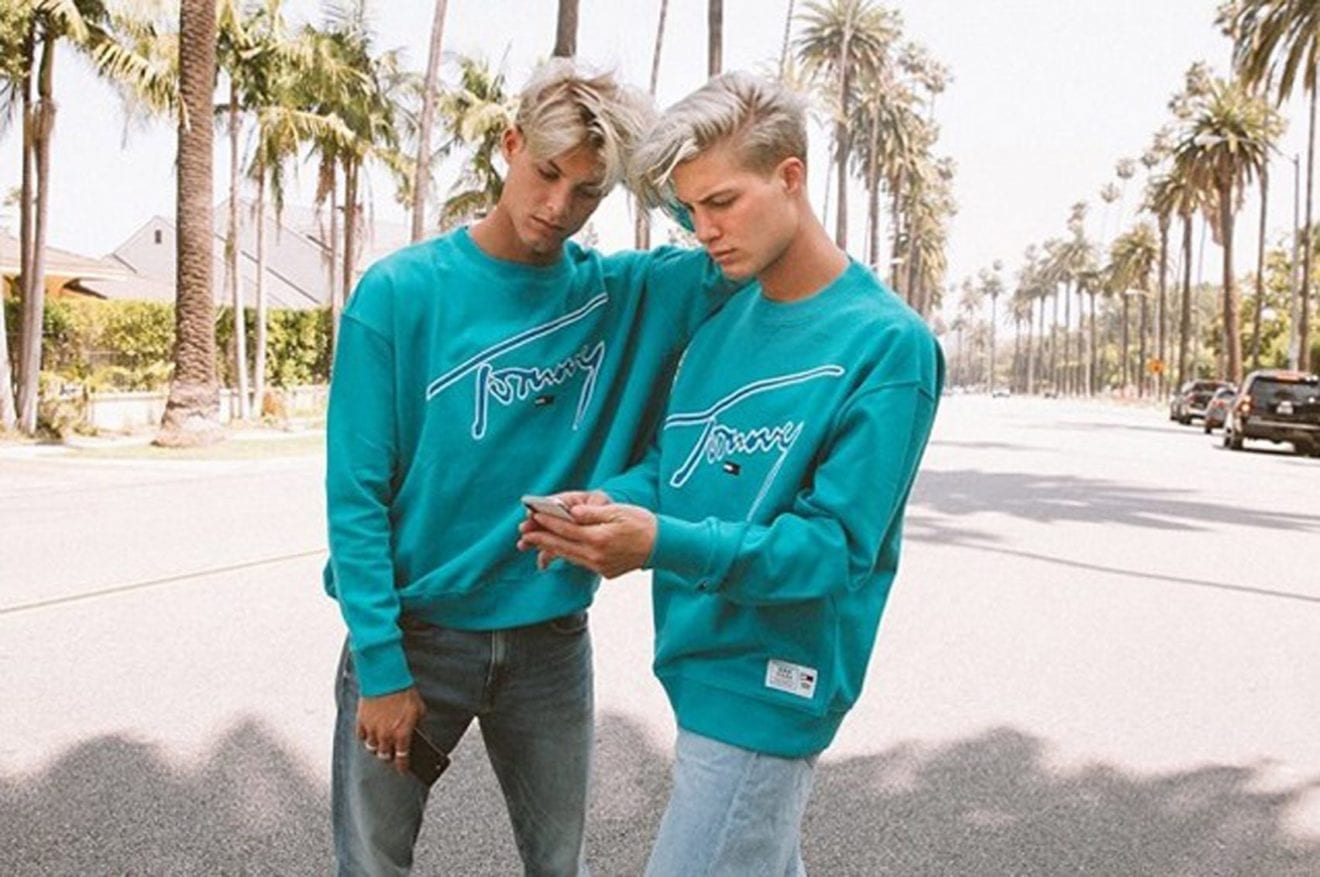
    The new Tommy Jeans Xplore smart-clothing range has Bluetooth chips embedded in the fabric, allowing the garment’s movements to be tracked by an app and wearers to be rewarded for having them on while physically visiting locations marked by branded icons on a map. Points earned in the game can be exchanged for gift cards, signed merchandise, runway shows and concert tickets, product discounts, and charity donations.

    A statement released by the brand read: “We’ve always been at the forefront of digital innovation, using technology to deliver what our customers are looking for – unique experiences and instant gratification… Tommy Jeans Xplore is the next evolution of our vision, reaching consumers where they are and inviting them to be a part of the brand experience.”

    Liron Slonimsky, CEO of technology at Awear Solutions (which developed the Bluetooth technology in the items) added: “Never before has a brand been able to understand how the consumer truly uses the product after it leaves the store. Tommy Hilfiger’s innovative history has shown that they understand what consumer engagement truly is and we knew they would be the perfect partner to launch Awear Solutions to the market.”

    Not all reviews of the new clothing concept are positive, with various articles dubbing the product line “creepy” and “ridiculous”. A Techradar.com review observed “The Tommy Hilfiger brand is usually quick to embrace new technology, but this isn’t exactly a big innovation. It’s essentially just a tracker to keep an eye on how often you wear the clothes, making it a glorified loyalty scheme.

    “Perhaps the even bigger question is how much data Tommy Hilfiger will be recording from those who are wearing the clothes and how will that be used?”