Retail News CRM

Tag: Tommy Hilfiger

  • Vincom Centre Landmark 81 launched

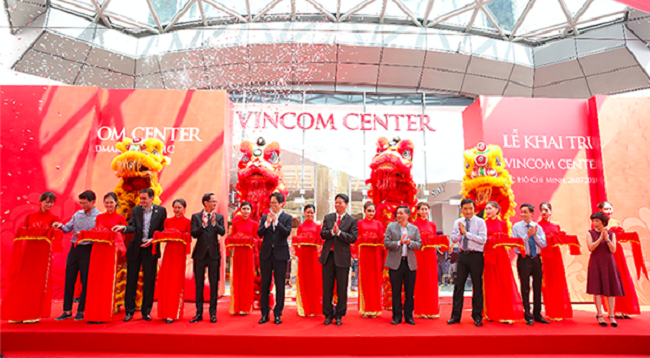
    Vincom Centre Landmark 81 launched

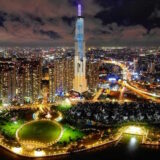
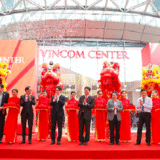
    Vingroup has opened its 55th shopping centre, The Vincom Center Landmark 81 mall, in Ho Chi Minh City’s Binh Thanh district.

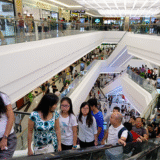
    The 50,000sqm shopping centre occupies six of the skyscraper’s 81 storeys, housing 100 domestic and international brands in cosmetics, fashion, F&B, and entertainment.

    Fashion brands include Versace Jeans, Calvin Klein, Adidas, Tommy Hilfiger, Lacoste, French Connection, Kimmay, Superdry, H:Connect; Cole Haan, Ecco, Dune London, Parfois, Aldo, Pandora, Longines, OWL and Nike.

    The 7000sqm food and beverage area features 30 restaurants, including China’s Peach Garden, Japan’s Dozo Sushi, Vietnamese restaurants Delights, Di Mai, and coffee shops including Starbucks’ largest Vietnam outlet and Highlands Coffee.

    In the entertainment area, there is a 2000sqm Vincom Ice Rink, Vietnam’s largest, and a CGV cinema complex including an Imax screen, as well as a tiNiWorld entertainment complex and an indoor games centre.

    Vingroup’s food arm VinMart operates a supermarket there.

  • Global Brands to Sell US Licensing Businesses to Differential Brands

    Global Brands to Sell US Licensing Businesses to Differential Brands

    The move, announced at the release of its annual results yesterday, will allow it to cut debt, pay a modest special dividend to shareholders and free capital to grow “a more focused business”, the company said. It will also result in about half of its 7000 staff leaving the company.

    Global Brands Group is currently carrying about $1.1 billion of debt, much of it related to its 2014 spin-off from Li & Fung and subsequent listing.

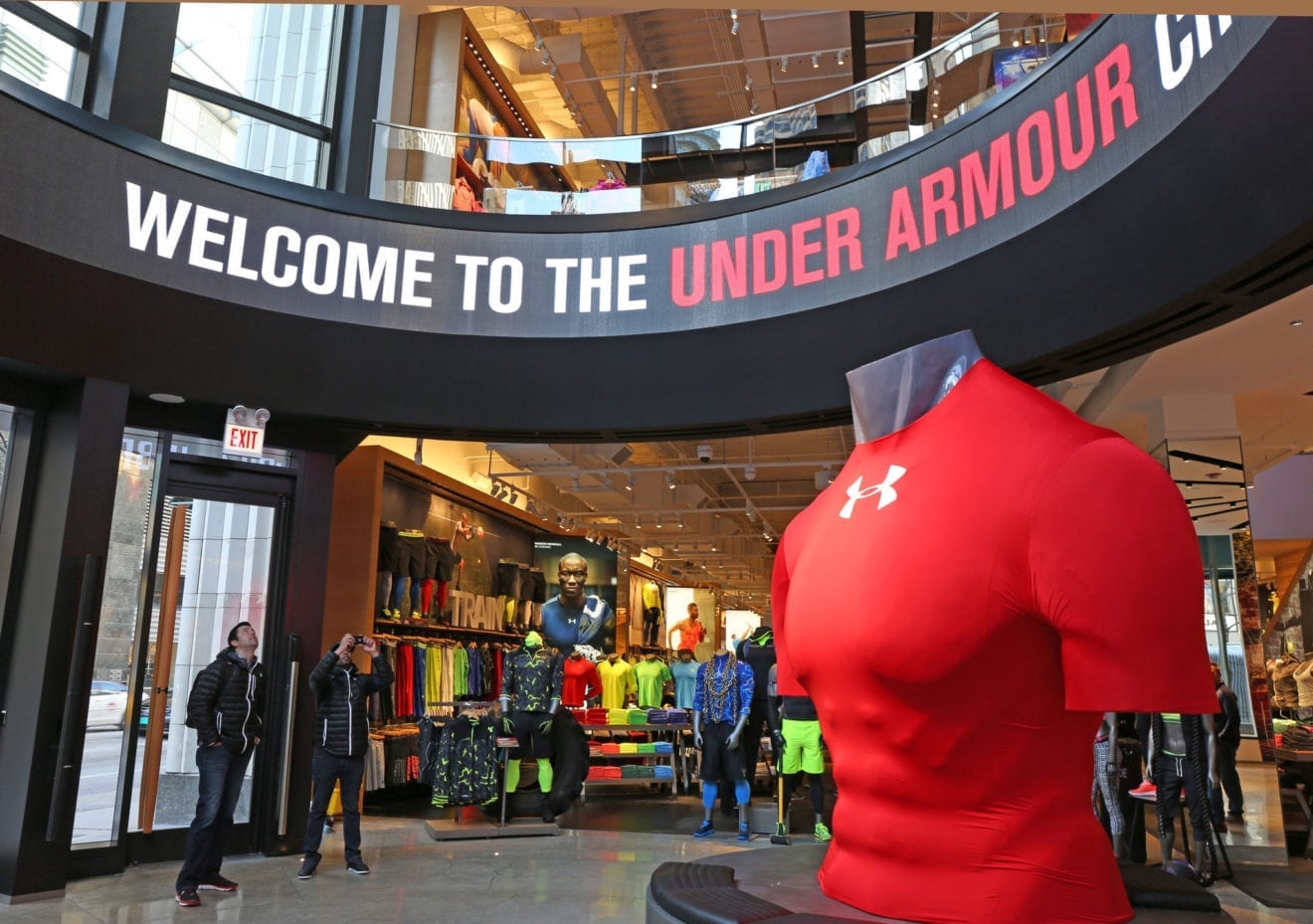
    The assets to be transferred include licences for Disney, Star Wars, Calvin Klein, Under Armour, Tommy Hilfiger, Bebe, Joe’s, Buffalo David Bitton, Frye, Michael Kors, Cole Haan, Kenneth Cole and the BCBG Max Azria label which it bought last year for $27.4 million after the company filed for bankruptcy.

    CEO Bruce Rockowitz said the sale was the outcome of a strategic review of the business.

    “We concluded that divesting the portion of our business that has a high present-day value, was the way to move forward. With this transaction, the group will be able to improve our balance sheet significantly and simplify our organisation, while focusing on the less established lines of business where we see high growth potential going forward.”

    Subject to shareholder approval, the deal will see Global Brands Group become “simpler, flatter and more nimble”.

    The company said that on the branded product side, the group’s European and Asian businesses will remain as before, while its US business will now focus on footwear and its remaining fashion business. Brand Management will continue to be managed on a global basis.

    “Looking ahead, we will continue to attract new licenses to our portfolio with a tighter and deeper focus on our businesses,” said Rockowitz. “At the same time, we will continue to improve the efficiency of our existing businesses, delivering synergies across our platforms. In addition, we have embarked on a significant cost reduction program across the organisation and we are committed to improving our cash flow via a combination of tighter working capital management, and even stronger cost discipline.”

    Revenue up but write-downs cost

    For the year to March 31, Global Brands Group increased its revenue by 3.4 per cent to $4.023 billion.

    However sales were impacted by Coach taking its footwear business in-house after their licence expired in June last year, and the cessation of the Quiksilver kids fashion licence when the company declared bankruptcy.

    Total margin increased from 28.5 per cent to 31.2 per cent, however operating costs increased by 37.3 per cent to $1.254 billion, driven largely by transition costs for new licenses in men’s and women’s fashion and additional operation expenses for running the new brands.

    The group also made one-off, non-cash adjustments in relation to impairments from the write-off of a receivable arising from a loan made by the company, and various intangible assets, which totalled $94 million.

    “In addition, taking into account this strategic divestment, the external market condition and business performance, the group performed an impairment test and recognised a non-cash goodwill impairment of $1.05 billion during the financial year,” the company said. That resulted in a net loss of $887 million for the year, however earnings before interest, taxes, depreciation and amortisation was steady at $379 million.

  • TommyXGigi Barbie Doll launches

    TommyXGigi Barbie Doll launches

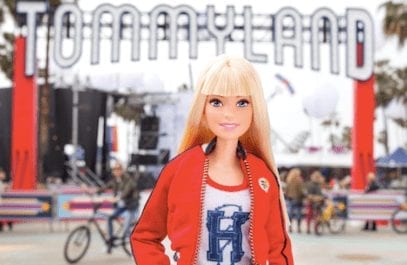
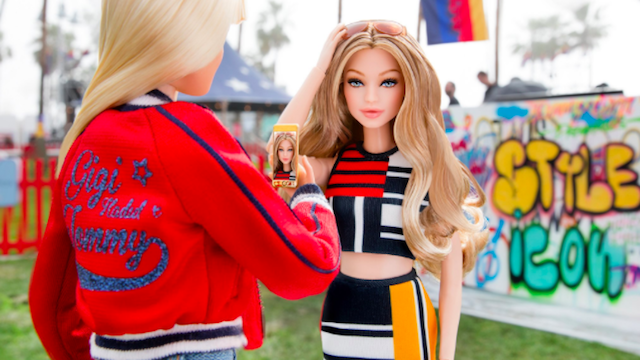
    Barbie has launched a doll depicting supermodel Gigi Hadid, the global brand ambassador for Tommy Hilfiger womenswear.

    Designed in collaboration with the Tommy Hilfiger lifestyle brand owned by PVH Corp, the special-edition TommyXGigi Barbie is available on Barbie.com and Tommy.com as well as at select retailers. Celebrating the runway event where Tommy Hilfiger introduced Hadid as global brand ambassador, the doll is styled in a navy hoodie, white shorts with red trim and brand logo, and white slip-on sneakers. It matches Hadid’s closing look for an experiential runway event at which the first TommyXGigi capsule collection was introduced.

    Tommy Hilfiger - Barbie Gigi 1

    With a suggested retail price of US$50, the doll comes with a stand and certificate of authenticity.

    “Seeing the doll for the first time was surreal,” says Hadid.

    Tommy Hilfiger - Gigi

    The doll joins more than 80 designers and fashion influencers who have been honoured by the brand, owned by US toy company Mattel.

  • More Dickson Concepts stores in Taiwan

    More Dickson Concepts stores in Taiwan

    Hong Kong fashion and watch retailer Dickson Concepts has opened three new stores in Taiwan this year as it continues its regional expansion.

    Dickson Concepts operates retail stores under brands including Tommy Hilfiger, JT Dupont, Bertolucci, Roger Vivier, Tod’s and Harvey Nichols.

    At the end of September, the retailer had 111 stores: 25 in Hong Kong, 58 in Taiwan, 15 in Mainland China, five in each of Singapore and Malaysia and three in Macau. However, Hong Kong accounted for 75.6 per cent of its sales in the first half of this financial year, with Taiwan’s share just 18.4 per cent, despite the higher store count. Mainland China and the rest of Asia accounted for just 6 per cent of sales.

    Dickson Concepts reported total sales of HK$1.576 billion for the first half, an increase of 11.7 per cent. Same-store sales increased by 12.4 per cent. It posted a net profit attributable to shareholders of HK$8.1 million.

    The company said it expects the retail climate in Hong Kong, China and Southeast Asia to “remain volatile” in the foreseeable future.

    “The performance of the group in the Hong Kong retail market has improved slightly, but remains inconsistent,” said the company in its half-year profit announcement.

    “The Taiwan retail market has remained weak due to continued reduction in tourist arrivals from China, primarily caused by poor political relationship between Mainland China and Taiwan. In China, consumer demand continues to be affected by reduced spending on gift-giving.

    “Given these difficult conditions, the group will continue to rigorously control costs and expenses at all levels of operation and adopt a very cautious approach to its further expansion and development strategies.”

  • Dutch chain Topshelf to close down

    Dutch chain Topshelf to close down

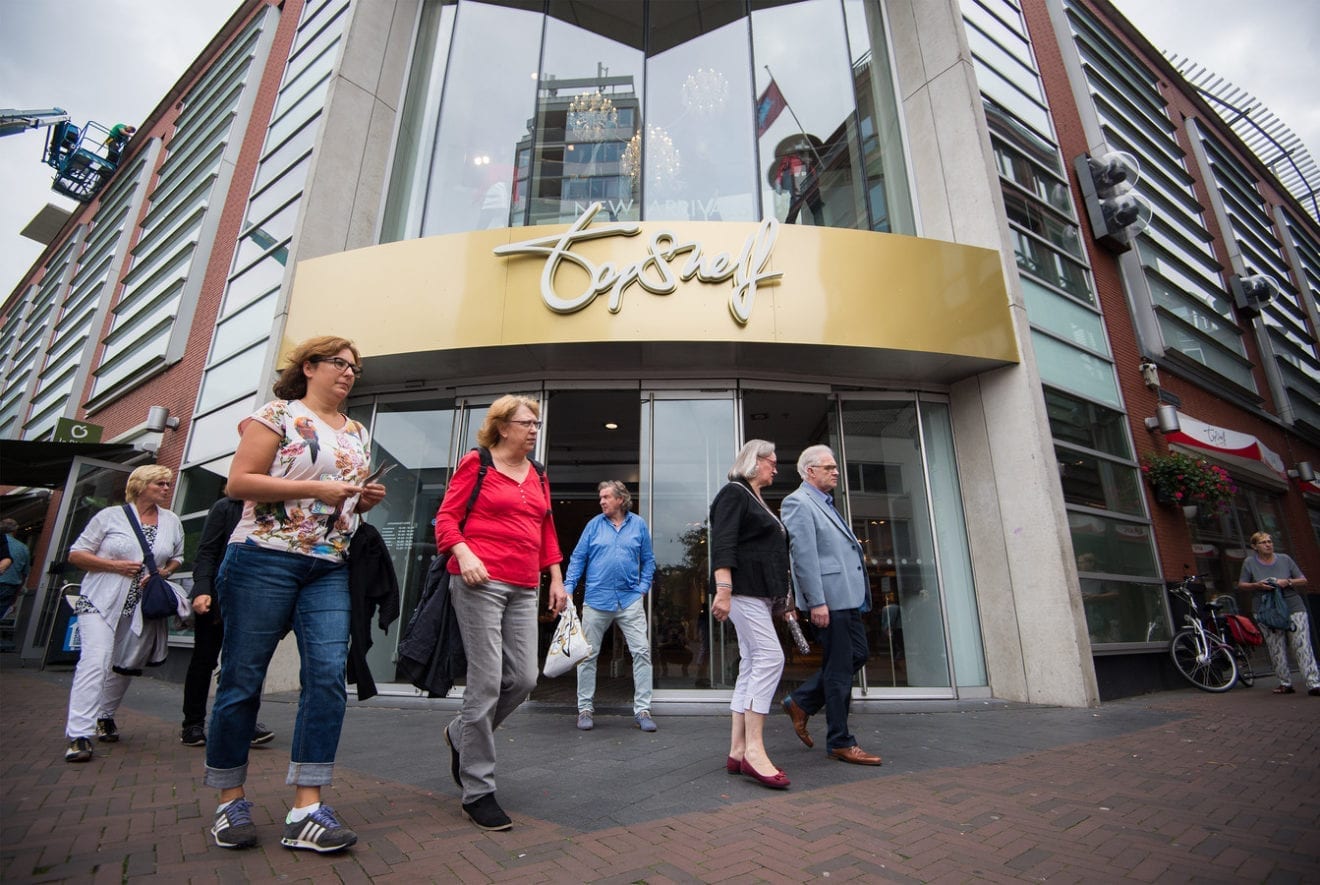
    Dutch department store operator Topshelf appears to be closing down.

    The company has announced its last store in Alkmaar will close in mid-January, following the shuttering of stores in Arnhem, Nijmegen and Groningen.

    The company has not filed for bankruptcy and it says it will continue to employ existing staff as it quits remaining stock. Disappointing sales were cited as the reason for the closure.

    Topshelf – no relation to the UK-headquartered Topshop and Topman retail brands – was launched in 1995 as a megastore, focusing on sports and outdoors wear, called Sportsworld. At the end of 2015, it opened stores in premises occupied by collapsed department store chain V&D, expanding further in April last year into Arnhem and Nijmegen en Groningen.

    With sales remaining weak last December, the company decided to convert the city stores – Arnhem, Nijmegen, Groningen and Alkmaar – to Topshelf, continuing to operate other branches in Beuningen, Leerdam and Cruquius, outside the city, as Sportsworld.

    The Topshelf stores stocked luxury gifts, fashion and homewares and ranged products from brands including Versace, Guess, McGregor, Superdry, Lacoste, Tommy Hilfiger, Speedo, Calvin Klein, Ray Ban, O’Neill and Atomic.

  • Tommy Hilfiger taps Hong Kong actor Shawn Yue

    Tommy Hilfiger taps Hong Kong actor Shawn Yue

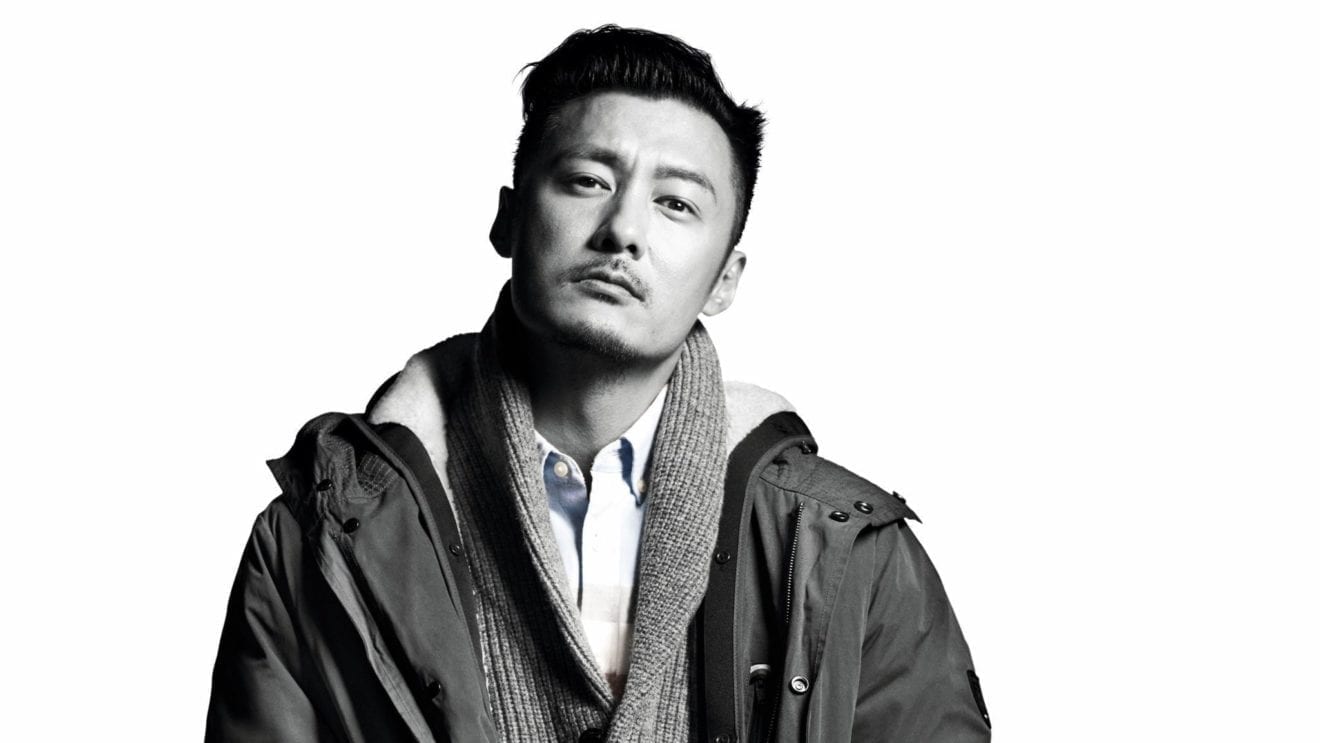
    Tommy Hilfiger has tapped Hong Kong actor Shawn Yue as its first Asian brand ambassador for its menswear range.

    Yue, 35, a former model and star of Internal Affairs II, among other movies, will represent the brand in marketing across the mainland, Hong Kong, Macau and Taiwan.

    China is a key driver of Tommy Hilfiger’s increasing sales globally after parent PVH bought back a 55 per cent controlling interest from its Chinese JV distribution partner in April last year. While the company did not reveal specific Chinese market data in its latest earnings report, it said China and Europe drove a 6 per cent improvement in the brand’s worldwide revenue, despite  North American sales sliding 5 per cent. It is targeting 405 stores in China by the end of this year.

    Fashion industry commentators says Yue’s appointment illustrates Tommy Hilfiger’s increasing commitment to Asian consumers.

    The first advertisements featuring Yue were due to appear today, (September 1). He features on a series of videos and in print commercials.

    Yue has 3 million followers on Instagram in China and 13 million on Weibo.

  • Tommy Hilfiger opens new store at Westfield Parramatta

    Tommy Hilfiger opens new store at Westfield Parramatta

    PVH Corp-owned fashion chain, Tommy Hilfiger, has opened its 10th full price store in Australia at Westfield Parramatta yesterday.

    Set over 145 square meters, the store design reflects the brand’s global retail concept, which is based on the brand’s heritage and takes cues from a ‘nautical lifestyle’ – one of Tommy Hilfiger’s longstanding sources of inspiration.

    The store has launched with the brand’s Spring fashion collections across men’s, women’s sportswear and accessories.

    There are over 1,800 Tommy Hilfiger stores in over 100 countries worldwide including global flagships in five locations: Fifth Avenue, New York; Brompton Road, London; Omotesando, Tokyo; Regent Street, London; and Schadowstraße, Düsseldorf.

    In its second quarter results for FY17, the Tommy Hilfiger brand saw its revenue increase 4 per cent (year on year) to hit $892 million, while PVH was up 7 per cent to $2.1 billion.

    Recently, Gazal Corporation– which jointly owns and manages PVH Brands Australia, a joint venture company in partnership with PVH Corp – confirmed it has acquired a 7.35 per cent shareholding in struggling luxury handbag retailer, Oroton, at $1.00 per share.

  • Solid growth for Calvin Klein and Tommy Hilfiger in China

    Solid growth for Calvin Klein and Tommy Hilfiger in China

    Strong performances by Calvin Klein and Tommy Hilfiger in China helped propel solid half-year and second-quarter sales and profit growth for parent PVH Corporation.

    Chairman and CEO Emanuel Chirico said “better than expected” second-quarter results reflect the continued momentum and ongoing operating efficiencies across the company’s diversified business model.

    “Our results reflect a planned increase of approximately $25 million of marketing compared to the prior year related to Calvin Klein and Tommy Hilfiger, which we believe will continue to drive market share gains and allow us to capitalise on the brands’ significant international expansion opportunities over the next several years.”

    Global revenue from the Calvin Klein business for the second quarter increased 8 per cent year-on-year to $786 million. But Calvin Klein’s non-US sales soared 20 per cent thanks to an “outstanding performance” in the wholesale business in Europe and China, and solid growth in the retail business, the latter due to a 6 per cent increase in international comparable-store sales and square footage expansion in company-operated stores.

    Calvin Klein North America revenue decreased 1 per cent.

    Tommy Hilfiger revenue rose 4 per cent to $892 million, with international revenue up 9 per cent to $492 million, again driven by strong performances in Europe and Asia. But Tommy Hilfiger North America revenue was down 2 per cent to $400 million compared to the prior year period.

    Consolidated group revenue was $2.1 billion, up 7 per cent year-on-year.

    For the first half year, Calvin Klein sales rose 6 per cent, Tommy Hilfiger by 5 per cent and total group revenue by 5 per cent  to $4.1 billion.

    Earnings before interest and taxes for the first six months of 2017 was $392 million, inclusive of a $17 million negative impact due to foreign currency exchange rates, compared to $371 million in the prior year period.

  • Fashion house Calvin Klein rebranding

    Fashion house Calvin Klein rebranding

    Fashion house Calvin Klein, a wholly owned subsidiary of PVH, plans to rebrand its men’s and women’s contemporary apparel and accessories business.

    It is changing from Calvin Klein Platinum to CK Calvin Klein, with a global roll-out of the new branding to start this month.

    In Asia and Japan, in coordination with licensing partners Club21 and Onward Kashiyama respectively, the CK Calvin Klein rebranding will be introduced with this year’s spring season. Freestanding stores opening this year in Asia will feature the new branding, while existing stores will be transitioned on a rolling basis.

    Founded in the US in 1968 by Calvin Klein and his business partner Barry Schwartz, the company had global retail sales exceeding US$8 billion in 2015 with distribution in more than 110 countries. Calvin Klein employs more than 10,000 people globally, and was acquired by PVH in 2003.

    With a history of more than 130 years, PVH is an apparel company with a presence in more than 40 countries and more than $8 billion in revenues. As well as Calvin Klein it owns the Arrow, Izod, Olga, Speedo, Tommy Hilfiger, Van Heusen and Warner’s brands.

  • Closing shop on China’s e-commerce platforms

    Closing shop on China’s e-commerce platforms

    The closures of a number of retail and luxury brand giants on China’s e-commerce platforms indicate that retail competition is no less fierce online than offline.

    It is old news that the Chinese market is highly competitive and unlike any other market in the world. What may sell on the high street in London is not guaranteed to sell in China. The rainbow-lensed promises of e-commerce seem to be an easy way to access China’s 770.4 million working population, 0.2 per cent or over 1.5 million of which have an average income of US$500,000.

    Political concerns and falling sales: Lotte

    In 2015, Lotte Group Retail opened a Tmall store, hoping to widen its reach in China, where over 60 per cent of its overseas stores are located. The large South Korean multinational conglomerate has had a presence in China for over 20 years, with 115 supermarkets and five shopping malls.

    But on January 12 this year, Lotte closed its Tmall store – along with three brick-and-mortar stores in Beijing – after rising political tension between China and South Korea. In December, Lotte’s China headquarters admitted that the company was facing investigations for tax, fire control and safety issues. However, the closure of its Tmall store seems to have stemmed also from the fact that China is Lotte’s only international market where growth is stymying. Sales fell during the last three months of 2016, year-on-year.

    While Lotte remains in the market through its physical shopping malls and supermarkets, and on the JD.com website, the company has not announced whether it will be reopening its Tmall store at any future date.

    Heavy local competition: Asos

    Asos, the UK’s largest online fashion retailer, entered China in 2013 with high expectations. The company announced it was investing RMB 100 million (US$14.5 million) towards the market, importing British styles and developing a sales force. Its business model relied exclusively on e-commerce, with its own website, as well as a Tmall store.

    However, Asos failed to attract enough customers and was running a loss of GBP 4 million (US$5 million) by April of 2016, when it announced that it was shutting down its China operations.

    Asos faced a number of problems in the Chinese market, from operations to marketing. When it first started, the company encountered issues with shipping though China Post, with customers paying import taxes on clothes. Eventually, Asos obtained a local warehouse, but then it encountered complex clothing trade regulations in China, particularly in regards to correct labelling. As a result, Asos had to spend additional funds on restitching to comply with local code, contributing to higher than expected start-up costs.

    Effective marketing was also a major issue for Asos, with the company failing to distinguish itself from local, more affordable brands. While it may be a major player in the US and Europe, Asos was relatively unknown to Chinese millennials, its target consumer base.

    Tmall concerns for luxury brands: Coach

    Coach was one of the first US luxury handbag brands to launch a Tmall store, creating a pop-up store from December 2011 to January 2012, and then an official one in 2015. However, citing a shifting operational strategy, Coach announced that it was leaving the platform just one year later in September 2016.

    China is a critical market for luxury goods, as sales in the US and Europe steadily decline. Many brands see e-commerce as a way to directly access customers and receive greater exposure, which is why many have moved onto online platforms en masse. Despite this, online platforms have always been a concern for luxury brands, who fear appearing too mass market. Moreover, Alibaba has been criticised by brands for not doing enough to remove fake goods, despite a counterfeit removal program. In 2016, Gucci and Michael Kors quit the anti-counterfeit coalition as protest against the program’s inefficacy.

    Coach still remains in the Chinese market through its WeChat account, an avenue that is growing in popularity amongst luxury brands. Cartier, Longchamp, and Montblanc all have WeChat shops with WePay functions. Some companies believe that WeChat offers a more personalised shopping experience, as well as greater control over its brand.

    For many luxury brands, online platforms are more for marketing and building brand image, rather than sales. However, official Tmall flagship stores do not receive priority listing on searches. In fact, according to a 2016 study by L2, only 12 per cent of first page Tmall search results were through the official Coach shop. The only luxury brands that controlled more than 80 per cent of first page search results were Ports 1961, Burberry, Tommy Hilfiger, Calvin Klein, and Tumi.

    Key Takeaways

    E-commerce is a high-growth sector, with online retail sales totaling US$581.61 billion in 2015, and it is estimated to grow 20 per cent annually by 2020. China is now the biggest online retail market in the world, and Chinese consumers make up almost half of all online sales globally.

    Companies looking to take advantage of China’s market size and sell to Chinese consumers often mistakenly believe that e-commerce offers a shortcut to success. While a misconception, this idea is understandable. There are fewer licensing requirements to operate through e-commerce, and customs clearance is faster.

    However, as has been demonstrated through high-profile store closures in 2016, e-commerce requires extensive pre-entry knowledge of current regulations, a realistic logistics plan, and a local marketing strategy. Those who enter the market blindly do so at the risk of expensive learning curves and wasted efforts.

    • This article was first published on dezshira.com.  Since its establishment in 1992, Dezan Shira & Associates has been guiding foreign clients through Asia’s complex regulatory environment and assisting them with all aspects of legal, accounting, tax, internal control, HR, payroll, and audit matters. For inquiries, email [email protected].
  • Hyundai buying SK Networks’ fashion sector

    Hyundai buying SK Networks’ fashion sector

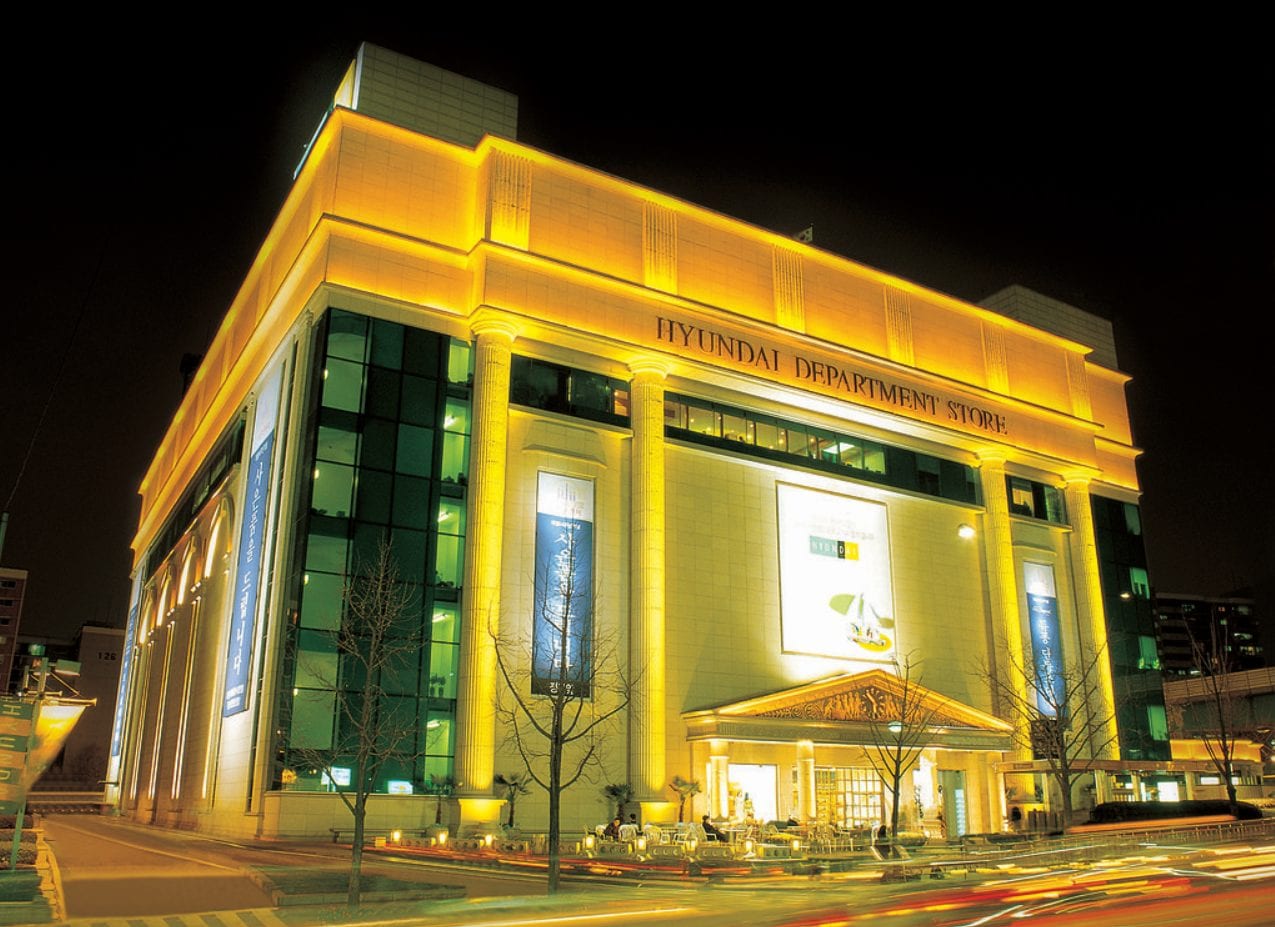
    South Korea’s Hyundai Department Store is buying trading company SK Networks’ fashion business for KRW326.1 billion (US$284 million).

    When the purchase is complete, probably by February, SK Networks (SKN) will no longer have interests in the fashion industry.

    The two companies have signed a deal to merge SKN’s 12 fashion brands into Hyundai’s Handsome fashion unit, which has annual sales of KRW750 billion. With SKN’s KRW600 billion added in, the merged group becomes the fourth-largest fashion company in South Korea behind E-Land, Samsung C&T and LF.

    Hyundai says it will retain SKN’s 400 designers, merchandisers, marketers and production staff, guaranteeing their jobs for five years.

    Analysts say the two businesses are a good fit and are unlikely to cannibalise each other’s trade as Handsome is known largely for its local womenswear brands while SKN is a major importer of global labels such as American Eagle, Club Monaco, DKNY and Tommy Hilfiger.

    Its house brands  include Obzee, O’2nd and Rouge & Lounge.

  • Calvin Klein Hong Kong opens first accessories store

    Calvin Klein Hong Kong opens first accessories store

    Calvin Klein, Inc, a wholly owned subsidiary of PVH Corp, has opened the first Calvin Klein accessories store in Hong Kong, at IFC Mall.

    Located on level one of the mall, the store offers both men’s and women’s Calvin Klein Platinum accessories and leather goods. Its interior features simple geometric forms as a framework for product display, contrasted with oiled wood, rose-toned metal, honed stone and concrete.

    CK Hong Kong accessories store-Matthew Ng

    Product lines under various Calvin Klein brands include women’s dresses and suits, men’s clothing, sportswear, golf apparel, jeanswear, underwear, fragrances, eyewear, hosiery, socks, footwear, swimwear, jewellery, watches, outerwear, handbags, small leather goods and home furnishings (including furniture).

    CK Hong Kong accessories store-Matthew Ng 4


    For more than 130 years, PVH Corp. has been growing US brands and businesses, becoming one of the largest apparel companies in the world. It has more than 30,000 associates in 40-plus countries, with more than US$8 billion in revenues last year. As well as Calvin Klein, PVH owns such brands as Arrow, Speedo, Tommy Hilfiger, Van Heusen and Warner’s.

    CK Hong Kong accessories store-Matthew Ng 3

  • PVH takes control of Tommy Hilfiger China

    PVH takes control of Tommy Hilfiger China

    PVH Corp, the parent of the Tommy Hilfiger brand, is to take full control of its China business.

    PVH, together with funds advised by Apax Partners, will acquire the 55 per cent interest in TH Asia Ltd, their joint venture for Tommy Hilfiger China, which PVH does not already own.

    The purchase price for the transaction is about US$172 million, net of cash of approximately $100 million, subject to adjustment.

    The closing, which is subject to customary closing conditions and regulatory approvals, is expected to occur early in the second quarter of 2016.

    “Today’s announcement represents a significant development for our company as we continue to execute against our key strategic priorities and demonstrates our commitment to making strategic investments to support the long term growth of PVH and our Tommy Hilfiger business,” said Emanuel Chirico, chairman and CEO of PVH.

    “This transaction enables the Tommy Hilfiger business to directly operate its fastest growing market, while leveraging our well-established infrastructure in Asia, our regional leadership expertise and strong brand momentum across both our Tommy Hilfiger and Calvin Klein businesses in the region.”

    This transaction has been envisioned since PVH and the funds advised by Apax Partners established the Tommy Hilfiger China joint venture in connection with the Tommy Hilfiger acquisition in 2010.

    Since 2012, the first full year of operations after the joint venture acquired the Tommy Hilfiger China business from the former licensee, the Tommy Hilfiger business in China has doubled from approximately $70 million in revenue to a projected $140 million in 2015, with over 350 stores, of which 65 are directly operated.

    Daniel Grieder, CEO of Tommy Hilfiger, commented: “We are looking forward to executing a more fully integrated strategy for China that takes advantage of our current momentum in the region. This will allow us to further realise the growth opportunities that exist for the brand by offering consumers a greater breadth of Tommy Hilfiger product lines and a more elevated brand presentation. Building on our strong existing regional foundation, we plan to accelerate the growth of the Tommy Hilfiger business by increasing our brand marketing in China and capitalising on our strong market positioning and price, value proposition. We plan to invest further in driving the expansion of the brand through new store openings (both company-operated and franchised stores) and improved productivity in existing stores, while rapidly expanding our traditional and digital marketing initiatives to further reinforce the brand in this exciting market.”

    PVH Corp owns and markets Calvin Klein and Tommy Hilfiger brands worldwide. It is the world’s largest shirt and neckwear company and markets a variety of goods under its own brands, Van Heusen, Calvin Klein, Tommy Hilfiger, Izod, Arrow, Warner’s and Olga, and its licensed brands, including Speedo, Geoffrey Beene, Kenneth Cole New York, Kenneth Cole Reaction, Michael Michael Kors, Sean John and Chaps.

    The other shareholders in the China joint venture include an affiliate of Silas Chou and, indirectly through an investment vehicle controlled by funds advised by Apax Partners, members of Tommy Hilfiger management at the time of the acquisition in 2010, such as Fred Gehring (former CEO and executive chairman, Tommy Hilfiger and current vice chairman of PVH), Daniel Grieder (CEO, Tommy Hilfiger), and Tommy Hilfiger himself.

  • China’s Top Boutique Openings in 2015

    China’s Top Boutique Openings in 2015

    IMG_2022

    Last year is yet another in a line of several that proved tough for the luxury retail industry in China. The anti-graft campaign has continued in full force, causing some shoppers to steer clear of flashy, high-cost purchases, while online shopping has driven many malls around the country to close. Still, 2015 was a big year for several international high-end labels, independent boutiques, and department stores that entered China for the first time or were revamped to give consumers an updated look. Here are six brands that made headlines in the style sector this year.

    Fei Space

    _DSC0251

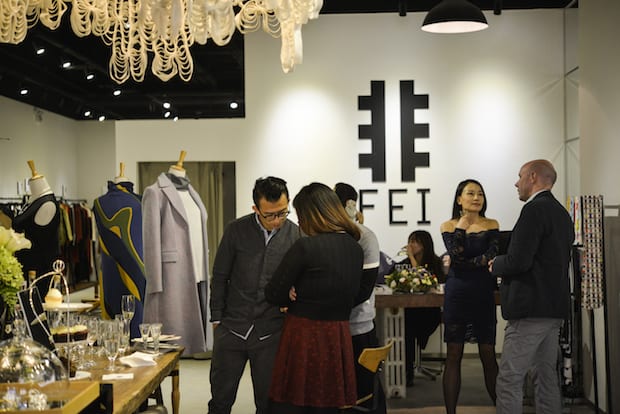
    Formerly located in 798 Art District, Fei Space is a culmination of local designers and stylish brands from around the world. Shoppers may also recognize the boutique for its pop-up store in Beijing’s U-Town mall that featured past-season collections from Topshop and Topman. Now that the official Topshop has opened in Galeries Lafayette (see below), the new Fei Space now is primarily focused on Chinese independent designers and some casualwear, such as Beijing-based American workwear brand Taciturnli and Shenzhen designer VMajor. It’s located in the Grand Summit mall, an evolving shopping center in the capital’s embassy district that includes a multitude of high-end Chinese boutiques and local health food chains aimed at the discerning shopper.

    Triple Major Beijing

    triple_major

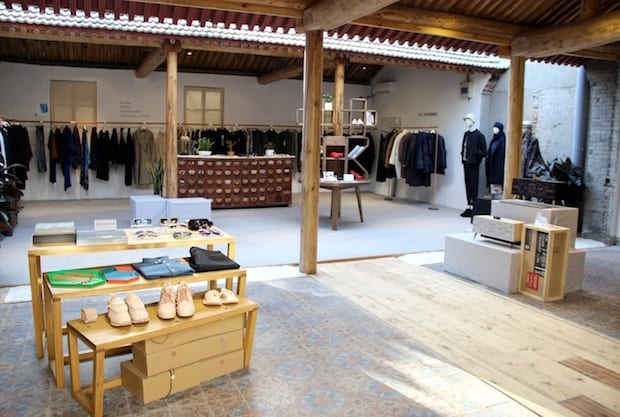
    The year was off to a good start as far as openings go—Triple Major wowed media with its expansive new store in Beijing’s developing Dashilar district, which was designed in part to reflect the building’s former use: a Chinese pharmacy. Owner Ritchie Chan moved the concept store featuring both international and local brands from its home in Beijing’s central hutongs to an area that’s quickly transforming into a hub for young creatives with no shortage of locally-owned third-wave coffee shops, art galleries, and small, artisan boutiques.

    Topshop at Galeries Lafayette

    The new Topshop location at Galeries Lafayette in Beijing. (China Daily)

    The new Topshop location at Galeries Lafayette in Beijing. (China Daily)

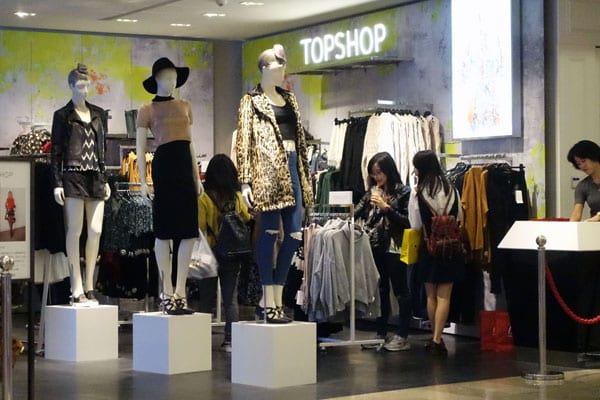
    Topshop has been open in Hong Kong for a few years, but only this year has the brand decided to put roots in the mainland, namely in the French department store Galeries Lafayette, a mall that has been struggling to attract shoppers in Beijing’s Xidan area. This version is tiny compared to its flagship and blends in on a floor mainly reserved for Asian independent labels.

    Tommy Hilfiger

    Tommy Hilfiger (L) with socialite Olivia Palermo (R) at the brand's new store opening in Beijing. (Tommy Hilfiger/Facebook)

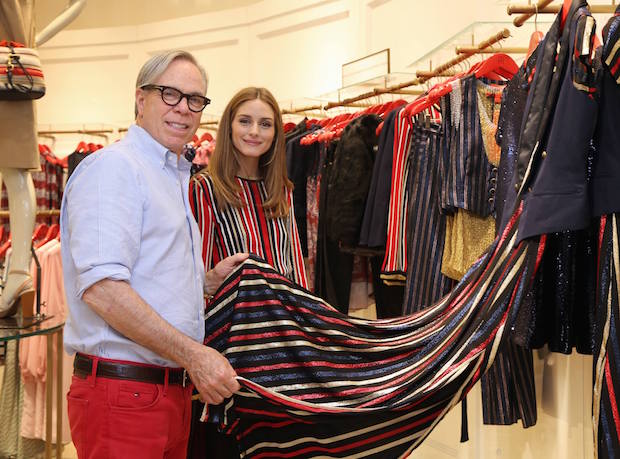
    Tommy Hilfiger (L) with socialite Olivia Palermo (R) at the brand’s new store opening in Beijing. (Tommy Hilfiger/Facebook)

    Tommy Hilfiger kicked off opening its largest store in Beijing’s In88 shopping center with a football-themed runway show in the spring, hoping to gain Chinese fans by pushing an all-American aesthetic.

    JNBY Concept Store

    A look from JNBY's latest collection. (Courtesy Photo)

    A look from JNBY’s latest collection. (Courtesy Photo)

    The JNBY Concept Store is nothing new outside of China, but Beijing gained its first in the new Grand Summit mall this year along with an art exhibit in cooperation with Beijing’s UCCA to kick things off. Fans of the international, Hangzhou-born brand that’s known for supporting independent Chinese designers with high-end clothing for adults and children also get a selection of contemporary jewelry and handbags and artisan chocolate.

    Macy’s (Tmall)

    Macys

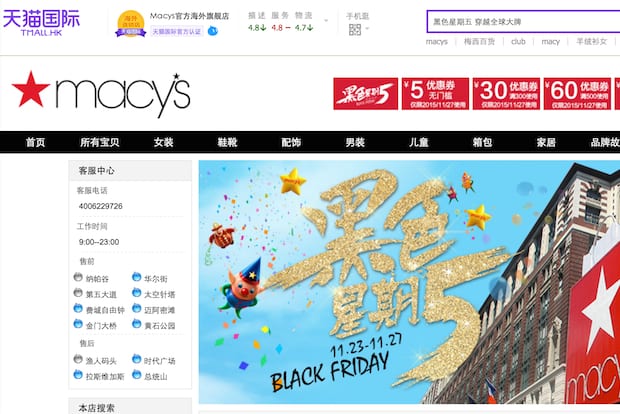
    Macy’s entered China this year on more official terms when it opened its shop on Alibaba Group’s Tmall, becoming the first U.S. department store to do so. It steered away from opening a brick-and-mortar shop, unlike its competitors who have done so and struggled, like the UK brand Marks & Spencer. M&S closed a chunk of its stores in Shanghai and instead opened a brand new space in Beijing’s business district shopping center, The Place.

    Michael Kors

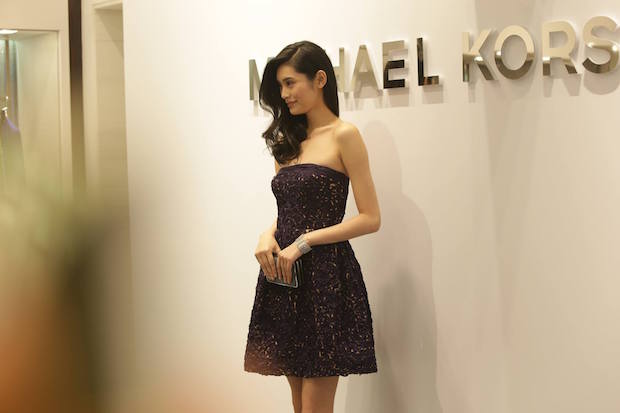
    Model Ming Xi makes an appearance at the Michael Kors opening in Beijing. (Michael Kors/Facebook)

    Model Ming Xi makes an appearance at the Michael Kors opening in Beijing. (Michael Kors/Facebook)

    Huamao Shopping Center in Beijing acquired a 9,000-square-foot Michael Kors flagship store last month, which was celebrated with a photo exhibition done in collaboration with Vogue China. The new shop is now the largest in Asia, followed by the Shanghai flagship that opened last year alongside a high-profile campaign to attract jet-set Chinese consumers.

  • What should British retailers consider before expanding into China?

    What should British retailers consider before expanding into China?

    A Chinese delegation headed by president Xi Jinping is nearing the end of its four-day state visit to the UK, in a bid to improve business ties between the two countries. Despite the headlines of a slowdown in China, the country’s retail market remains one of the world’s largest – and as recent ventures into the country by Sainsbury’s and Mountain Warehouse suggest, it is too significant to ignore.

    Tapping into the Chinese market remains merely on the wish list for many retailers, but there are a number of important factors they should consider in order to realise their dreams of making it in China.

    Know your customer

    A recent report from Goldman Sachs declared that there is no such thing as the “average Chinese consumer”, and identified four key tiers.

    First, the crème de la crème. There are around 1.4 million movers and shakers with an annual income per capita of around $500,000 (£323,535).

    Second, the urban, ‘narrow’ class, with a population of 146 million people with an annual income of around $11,000 (£7,118).

    Next, the urban mass, which consists of 236 million people with an annual income per capita of just over $5,500 (£3,559), followed by the 387 million rural workers who earn just over $2,000 (£1,294).

    Retailers should also be aware of the differences and sensitivities between age groups. Those in their fifties and forties are likely to have experienced poverty and austerity. Those in their thirties and the millennials may not have experienced hardship and could be ‘second-generation rich’.

    Social media

    There is no Google, Facebook, YouTube, Twitter or WhatsApp in China. Instead, it has Baidu, Renren, Youku, Weibo and WeChat.

    Tommy Hilfiger and Burberry are just some of the retailers that have used Chinese social media channels to secure hundreds of thousands of followers and fans – and ultimately boost sales.

    Physical vs online

    To take advantage of China’s online grocery market, which IGD estimates will be worth more than $180bn by 2020, Sainsbury’s recently launched on Alibaba’s Tmall site.

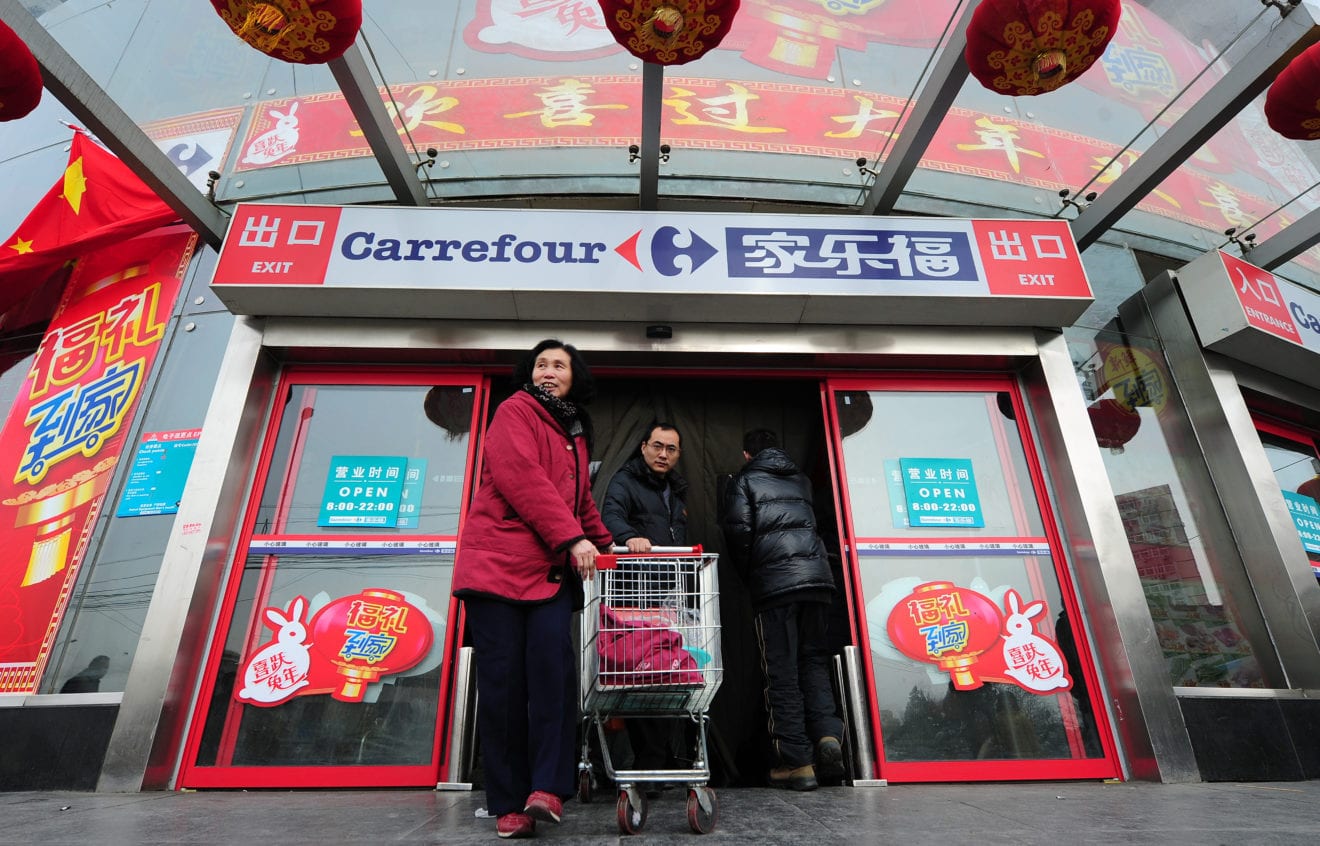
    Grocery chains with physical stores such as Walmart and Carrefour have observed a change in tastes and trends, along with an increase in online competition.

    Following a spate of high-profile food scandals, Chinese consumers are placing greater emphasis on food provenance. These are all key considerations for retailers looking to expand to China.

    Retail technology

    Slowly, but surely, an increasing number of retailers in China have started to introduce free in-store wifi.

    With the consent of the shopper, wifi can provide retailers with valuable insight to identify popular offers, trends and deliver advertising or even exclusive “wifi only” promotions and discounts.

    Chinese shoppers love showrooming. Research from McKinsey found that only 16% of consumers who did their research on a mobile actually bought the product at the store. Yes, that is a threat. But forward-looking retailers need to see this as an opportunity to provide Chinese shoppers with an immersive retail experience.

    New retail technologies such as beacons can provide an engaging shopping experience – and are delivering results. Chinese jewellery retail outfit Chow Tai Fook used beacon-supported location and proximity marketing with WeChat to generate sales of more than $15m (£9.7m). Other technologies that could bring the retail experience to life include augmented reality, self-service apps, in-store navigation and automated kiosks.

    Information silk road

    Turn back the clock two millennia and the ancient world of commerce depended on a thriving Silk Road. Then – just like now – traders built strategic alliances to gain a competitive edge.

    Fast-forward to today and it is an Information Silk Road. Chinese consumers – like their Western counterparts – are discerning and have little patience for downtime. New retail technologies can be dazzling and futuristic – but, ultimately, they are only as good as the networks they run on.