Retail News CRM

Tag: Topshop

  • Myer walks away from Topshop concessions

    Myer walks away from Topshop concessions

    At the time of writing, the company still lists the concessions on its website, but local reports said that there is little sign the brand had ever been there inside the 17 Myer stores that carried the women’s and men’s brands.

    The news comes just a few days after it emerged that the Australian Topshop/Topman administrators are closing as many as five of its standalone stores, including the first location the brands opened in the country. Only Emporium Melbourne, Gowings Sydney, Bondi Junction and Brisbane will continue.

    Arcadia has been talking to administrator Ferrier Hodgson since debts of A$35 million led to franchisee Austradia collapsing in May. Myer had bought a 25% stake in the business during 2015, four years after the brands’ Australian debut, and this was diluted to a still-substantial 20% holding last year. In its latest half-year results, Myer had written-down its A$9.2 million stake to A$7.2 million and the firm is also believed to be a major unsecured creditor of the failed business.

    It has also emerged that Austradia’s major shareholder Hilton Seskin had been holding talks with Arcadia about a restructure for some time before the collapse. While he said little at the time of the collapse, he has more recently been quoted criticising Arcadia’s Australian operating model saying the supply chain was too complex and the product made available in Australia, which was controlled by the UK business, was not strong enough.

    Arcadia is still expected to take direct control of the Australian business and reports have said it had been keen to retain the Myer link.

    The administrator has made little comment on the issues surrounding the Topshop and Topman brands but said its priority is still to find an “appropriate operating model and structure” to continue the brands in Australia.

  • Topshop Australia closes five stores

    Topshop Australia closes five stores

    Topshop Australia has bid adieu to five of its stores in the past two weeks as administrators start to tie up lose ends, in a bid to save the UK fast-fashion retailer in Australia.

    Topshop stores at Chatswood and Miranda shopping centres in Sydney, Highpoint in Melbourne, and Perth have all closed in recent days. And another store closure is due to happen, this time in South Yarra, on Melbourne’s iconic Chapel Street.

    The Chapel Street store was Topshop’s debut Australia store, but since opening, the flagship has failed to garner traction with locals, due to fierce competition from other shopping strips, the CBD and online.

    Topshop Australia has also ceased its Australian e-commerce store.

    The closures are result of the Australian franchise of Topshop being entered into administration on May 25 With debts totalling A$35 million, Topshop Australia was forced to appointed Ferrier Hodgson as administrators, in a bid to rescue the business.

    Experts have blamed the retailer’s illogical supply chain, poor quality product, and delayed entry into the local e-commerce market, for its Australian demise.

    Talks to try to save the business continue between its Australian owners and the UK owners of the business, including Sir Philip Green.

    With the recent store shutters, Topshop Australia has four stores remaining.

    Topshop was launched in Australia by a company trading as Austradia in 2011.

  • Australia Topshop franchisee in administration, but says it’s business as usual

    Australia Topshop franchisee in administration, but says it’s business as usual

    The franchisee for Arcadia’s Topshop and Topman said Wednesday that it has filed for voluntary administration. Austradia Pty Ltd has named Ferrier Hodgson partners James Stewart, Jim Sarantinos, and Ryan Eagle as its administrators.

    But Stewart said in a regulatory announcement that it will be “business as usual”  as the administration team “works closely with Arcadia Group on supporting and right-sizing the Australian business to a sustainable platform going forward.”

    Stewart said that the 760 employees will continue to be paid by the administrators and normal customer policies such as gift cards and product returns will continue during the administration period.

    It seems clear that the Topshop and Topman names will survive in the Australian market with a clear demand there for its particular brand of trend-focused fast fashion. Topshop/Topman has been operating nine standalone stores, 17 Myer concessions and an online business in Australia and has enjoyed annual sales of around A$90m.

    The separately owned and operated Australian franchise opened locally in 2011 and Myer owns around one-fifth of the operation. Earlier this year Myer said that losses at the Topshop operation grew to A$0.6m in H1 from A$0.1m a year earlier.

    Its administration filing is further evidence that times are as tough for fashion retailers in the country as they are in many other countries around the world, even for some of the biggest names in affordable fashion.

    The arrival of more global chains in the local market and an increasing move by consumers towards e-sales have added to the competitive pressures at a time when shoppers are also re-assessing where and how they spend their discretionary cash. And the arrival of Amazon this year will not make the retail environment any easier with local chains that have been battling sluggish sales likely to see even more market share seeping away.

    Myer has itself seen challenges on the sales front with the company reporting a 3.3% sales drop for Q3.

  • Topshop launches e-commerce platform for Australia

    Topshop launches e-commerce platform for Australia

    British fashion retailer Topshop has officially launched an Australian-dedicated online store, meaning local shoppers can bypass the generic Topshop international site.

    The new Topshop Australia platform allows Australians to browse and shop prices in Australian dollars and pass for free shipping when the total purchase is over AU$75.

    When shopping via the international store, prices are in British pounds and pricey international postage costs are incurred.

    Another feature for Australians is Topshop’s click-and-collect services, next-business-day express shipping and easy postal returns.

    The move sees Topshop’s retail reach extend beyond major capital cities and into remote areas where customers don’t have access to one of the fast-fashion retailer’s physical stores.

    Topshop has also tapped payment service Afterpay for its online store, allowing shoppers to buy now and pay later for purchases. Topshop Australia has offered Afterpay for several months in store.

    Topshop opened its first Australia store in 2011 in Melbourne. Topman went on to open a flagship store in Sydney’s Pitt Street Mall. Today it boasts 57 points of sale across Australia in cities Brisbane, Perth, Adelaide, Sydney and Melbourne, among others.

    It also has concession corners in department store Myer.

    Topshop is part of Sir Philip Green and his Arcadia Group, which also owns Burtons, Dorothy Perkins and Miss Selfredges.

  • When Forever 21 join India’s Jabong

    When Forever 21 join India’s Jabong

    Indian fashion portal Jabong has added American fashion brand Forever 21 to its product portfolio. It definitely will give another option for India’s shopper to check the collections of Forever 21.

    A selection of goods including play-in tops, dresses, t-shirts, cosmetics, intimates and shoes will go online on Jabong, priced from Rs.499 to Rs.2400 (US$7.50 to $37).

    Jabong has introduced 20 new fashion brands this month and says it will add a further 15 before March 31. These include New Era Caps, WROGN, Mothercare, Roadster, Cover Story, AAY, Zivame and Mast and Harbor. Jabong now has approximately 2000 brands in its product portfolio, out of which 50 brands have been launched in 2017 alone. Its portfolio also includes Topshop, Topman, Dorothy Perkins, Missguided and Next.

    “At Jabong, we continuously strive to offer the best of global fashion brands to our shoppers. Forever 21 is a pioneer and global leader in the fast fashion category and its addition will strengthen the comprehensive line of finely curated international portfolio on Jabong,” said Gunjan Soni, head of Jabong.

    Abhinav Zutshi, India business head of Forever 21, said the combined strengths of Jabong and Myntra will give the brand exposure to a major share of India’s online fashion retail market.

    “This complements our aggressive offline strategy and we are excited to herald a long association with Jabong,” he said.

    Jabong is a multi-brand fashion e-store offering some 350,000 products across footwear, apparel, jewellery and accessories.

  • Retail woes a boost for Hong Kong indie fashion

    Retail woes a boost for Hong Kong indie fashion

    High-end international brands have long held court alongside local Hong Kong indie fashion designers – who are now enjoying greater visibility in the city’s vibrant retail market.

    The city’s deep-rooted love of luxury has seen names like Gucci and Hermes open multiple stores in the city – stores that have co-existed with a stable of local apparel brands, such as Giordano, Baleno, Bossini and Esprit.

    By 2014, consumers’ tastes had diversified and fast-fashion overseas brands began descending on Hong Kong. The arrival of names like Topshop, American Eagle, H&M, Zara and Mango added yet more to the mix in Asia’s favourite shopping destination. Now that shop rents are finally becoming more affordable, independent fashion retailers are increasingly making their presence felt.

    Structural change

    In a report by commercial real estate firm CBRE, Joe Lin, executive director, retail services at CBRE Hong Kong, said that the city is undergoing a period of structural change.

    “Over the previous decade, high-street shop landlords have reaped the benefits of strong demand from luxury retailers and massive rental growth.”

    Lin noted that in the past 12 months, luxury retailers have adjusted their leasing strategies to save costs. “Landlords have become more realistic on rental negotiations, enabling more mid-range brands to tap into prime locations at relatively affordable rental levels.”

    The trend has opened the door for mid-market brands to expand, and for the rise of independent labels.

    “More independent stores are coming back to the market, streets, malls, and even some up-and-coming revitalised buildings in the traditional industrial districts, such as Lai Chi Kok and Kwun Tong,” said Lin. “They modernise the decoration and with the decent F&B outlets that draw good foot-traffic to these areas, independent retailers also benefit from this new trend.”

    Refined taste

    British fashion designer Elizabeth Lau established The Refinery in 2014 after moving to Hong Kong with her husband. Lau said she saw an opportunity to “curate for individuals” in Hong Kong by introducing unique fashion, accessories and lifestyle brands from around the world.

    Her first store, at the creative and design hub PMQ in Central, found a steady following, and in January 2016, The Refinery opened a second retail outlet in Tai Koo.

    Fashion edit

    Partners in fashion Genevieve Chew and Jacqueline Chak, an accountant and architect respectively, launched Edit in Central in 2012 as a concept store stocking emerging brands. They later created their own in-house label, which is described as “one part eclectic femininity and the other relaxed ease.” Their collections are worn by fashion personalities such as Yasmin Sewell, Margaret Zhang and Amanda Strang. The partners have also designed uniforms for Hong Kong’s new boutique Tribute Hotel in Kowloon.

    Fé Valvekens is another career-change entrepreneur who found her fashion foothold in Hong Kong. German-born Valvekens is a qualified engineer who founded fashion label A Day with Fé, blending daywear with yoga wear. Her PMQ store in Central also holds yoga and fashion styling workshops

    Quality indie labels

    Building on her established career in fashion, US expat Jamie Dredge co-founded Polkadot Boutique on Hollywood Road, Central, in 2011. After moving to Hong Kong two years earlier, Dredge spotted a gap between high-end luxury designers and mass-market clothing in Hong Kong.

    Her idea was to offer quality, well-designed womenswear and accessories from indie labels in the US, as well as supporting upcoming local designers.

    “We still have our local-based designers, but are also working with hot new labels out of Los Angeles and New York,” she said. Examples include Yumi Kim and Blank NYC Denim from New York, Veronica M from Los Angeles, and Hong Kong’s What the Frock?!.

    Being an independent retailer in Hong Kong has its challenges, said Dredge. Rents remain high, especially for smaller operators who don’t have the negotiating leverage of a famous brand. The demise of free print lifestyle magazine HK Magazine, which folded last year after 25 years, closed one door for independents to build a profile – and paid advertising is expensive.

    “We now have to work harder on our social media channels – and be more creative in our promotions,” Dredge said.

    On the other hand, word-of-mouth networking is an advantage in a city as close knit as Hong Kong.

    Pop-ups and collaborations

    One of Polkadot’s strategies is to host events where customers can meet the designers for a social night out, which might involve hair and makeup as well as fashion. One of the “biggest perks of Hong Kong” is the willingness of businesses to collaborate with each other, Dredge said.

    “Hong Kong is great for doing pop-up events and collaborations, which get the customers involved,” she said.

    It also illustrates how a physical boutique can still be successful, despite the challenges of online shopping.

    “People still like to feel the clothes, to try them on, to talk to the designer,” she said.

    “A lot of our garments are unique, and many of them exclusive. Our customers aren’t walking around seeing other people dressed the same, and that’s why they come to us.”

    -HKTDC
  • Topshop plans expansion in China

    Topshop plans expansion in China

    UK fashion chain Topshop is the latest British retail company attempting to tap into China’s market by opening its first standalone store in 2018.

    The British high-street retailer has agreed a deal with Chinese partner and online fashion retailer Shangpin.com. The e-commerce business had already started to push Topshop into the Chinese mainland by selling the brand on Shangpin.com two years ago.

    Arcadia Group, Topshop’s owner company, said the first shop will open in top tier cities in the spring or summer of 2018 which could be either Beijing or Shanghai.

    Media reports said if the move was successful, as many as 80 outlets could be opened. Arcadia Group would not comment on the plans for 80 stores. Currently Topshop’s only presence in China is a small concession in the Galeries Lafayette department store in Beijing and a handful of shops in Hong Kong.

    Shangpin.com is a members-only website with 30 million registered subscribers, founder and chief executive David Zhao said: “It is gratifying to be trusted by such a world-renowned fashion brand to take them further in China.”

    Topshop is part of retail tycoon Sir Philip Green’s Arcadia Group fashion empire and he described the deal as “the start of a unique, exciting and exclusive partnership that will cement Topshop and Topman’s mission of becoming truly global businesses”.

    Green added:”For the first time, both brands will deliver high fashion to the shop floor and beyond by opening full-scale stores in China – host to the world’s fastest-growing retail economy.”

    The businessman was embroiled in the controversial sale and subsequent collapse of the long-establish UK department store BHS earlier this year. The high-street chain went into administration in April, less than a year after Green sold it for one pound to a consortium.

    The collapse led to the loss of 11,000 jobs and a 571 million pound pensions black hole.

    According to analysts, Topshop is by far the most valuable part of Arcadia Group. Sir Philip owns a 75 percent stake in Topshop after selling 25 percent to US private equity firm Leonard Green in 2012

  • Arcadia to launch first stores in mainland China

    Arcadia to launch first stores in mainland China

    A deal struck with local retailer ShangPin will see five stores open in the country, with a further 75 in the pipeline if the venture is a success. Topshop opened its first store in Hong Kong in 2013 and Green has been eying further expansion for a number of years.

    The Arcadia Group chairman said the deal would “cement Topshop and Topman’s mission of becoming truly global businesses.”

    He added: “For the first time both brands will deliver high fashion to the shop floor and beyond by opening full scale stores in China – host to the world’s largest growing retail economy.”

    Department store House of Fraser is also poised to open its first Chinese store in Nanjing at the end of this month.

  • Topshop to open 80 stores in mainland China

    Topshop has signed a deal with a Chinese partner that could lead to up to 80 stores being opened in mainland China with the first opening in spring/summer 2017.

    The British high street retailer has agreed a deal with Shangpin, which already sells the Topshop brand on Shangpin.com. It is anticipated that the first store will be opened in either Beijing or Shanghai in the spring or summer of next year.

    In a statement Topshop owner Sir Philip Green said: “For the first time both brands will deliver high fashion to the shop floor and beyond by opening full-scale stores in China — host to the world’s fastest-growing retail economy.”

    Green owns a 75% stake in Topshop having sold 25% to US private equity firm Leonard Green & Partners in 2012. The brand, which is the jewel in the crown of Green’s Arcadia Group, has 300 stores in the UK and 140 in international territories including 10 in the US.

  • US investor buys into Mitra Adiperkasa

    US investor buys into Mitra Adiperkasa

    US private-equity company General Atlantic has made its first investment in Indonesia by buying into lifestyle retailer Mitra Adiperkasa (Map).

    It has subscribed for Rp1.08 trillion (US$80.5 million) in bonds issued by Map which are convertible into shares in its F&B subsidiary Map Boga Adiperkasa (MBA), which runs Cold Stone Creamery, Godiva, Krispy Kreme, Pizza Express and Starbucks in Indonesia. It has more than 300 stores across 24 cities, and has more than doubled its store count over the past five years.

    Map runs multi-channel retail concepts in Indonesia across a diversified portfolio of department stores, sportswear, specialty fashion, F&B, and lifestyle products. It has nearly 2000 retail stores.

    “We believe the rapid rise in Indonesia’s middle and young working classes, the increase in this population’s disposable income, and the continued rural-to-urban migration represents an opportunity for us to strengthen our international food brands and cement our leadership position in the F&B market,” says Map CEO V.P.

    Sharma. A portion of the investment money will be used to accelerate the F&B division’s network expansion.
    “Indonesia’s domestic consumption comprises more than half of gross domestic product, and consumption patterns are increasingly shifting toward modern and aspirational lifestyle brands,” says General Atlantic Southeast Asia head Wai hoong Fock. “These secular trends position MBA’s food & beverage portfolio well for further expansion.”

    Regional commitment

    The partnership, General Atlantic’s first investment in Indonesia, indicates its commitment to long-term market prospects in South-east Asia,” says Fock, who joined General Atlantic from CVC Capital Partners last year to lead its South-east Asia investing program. He is based in the firm’s Singapore office.
    General Atlantic has 18 investment professionals in Asia, based in offices in Beijing, Hong Kong, Mumbai and Singapore. The firm opened its Singapore office in 2011, investing three years later in Singapore-based online mobile entertainment/communication Garena platform. It has also supported the growth of retail and F&B companies including lifestyle brand Tory Burch, luxury fashion brand Zimmermann, restaurant group Barteca Holdings, urban juice-bar concept Joe & The Juice, community accommodation marketplace AirBNB and transportation network company Uber.

    Map has 1921 retail outlets in 68 cities throughout Indonesia. Its retail concepts include department stores (Debenhams, Galeries Lafayette, Seibu and Sogo), fashion and lifestyle (Crabtree & Evelyn, Kipling, Lacoste, Marks & Spencer, Massimo Dutti, Nautica, Sephora, Swarovski, Topman, Topshop and Zara), sports (Converse, Golf House, Oakley, Payless ShoeSource, Reebok, Rockport, Skechers, The Athlete’s Foot and The Sports Warehouse), F&B (Burger King, Cold Stone Creamery, Domino’s Pizza, Godiva, Krispy Kreme and Starbucks), kids (Kidz Station and Oshkosh B’Gosh) and bookstore Kinokuniya.

  • Carolina Herrera Vietnam flagship opens

    Carolina Herrera Vietnam flagship opens

    Carolina Herrera has opened a flagship store at Saigon Centre shopping mall.

    The first Carolina Herrera Vietnam store, it is located on Level 1, facing Le Loi St – one of the most visible spots in the city’s centre.

    Carolina Herrera Vietnam 1

    At the grand opening, CH introduced its latest Fall-Winter collection to customers, with the demonstration of models and Vietnamese Beauty Pageants.

    Founded in 1981 in New York by the “Fashion’s First Lady”Carolina Herrera, CH currently has 129 freestanding stores and more than 220 shops-in-shops in Europe, Asia, Africa, Middle East and America.

    Carolina Herrera Vietnam 2


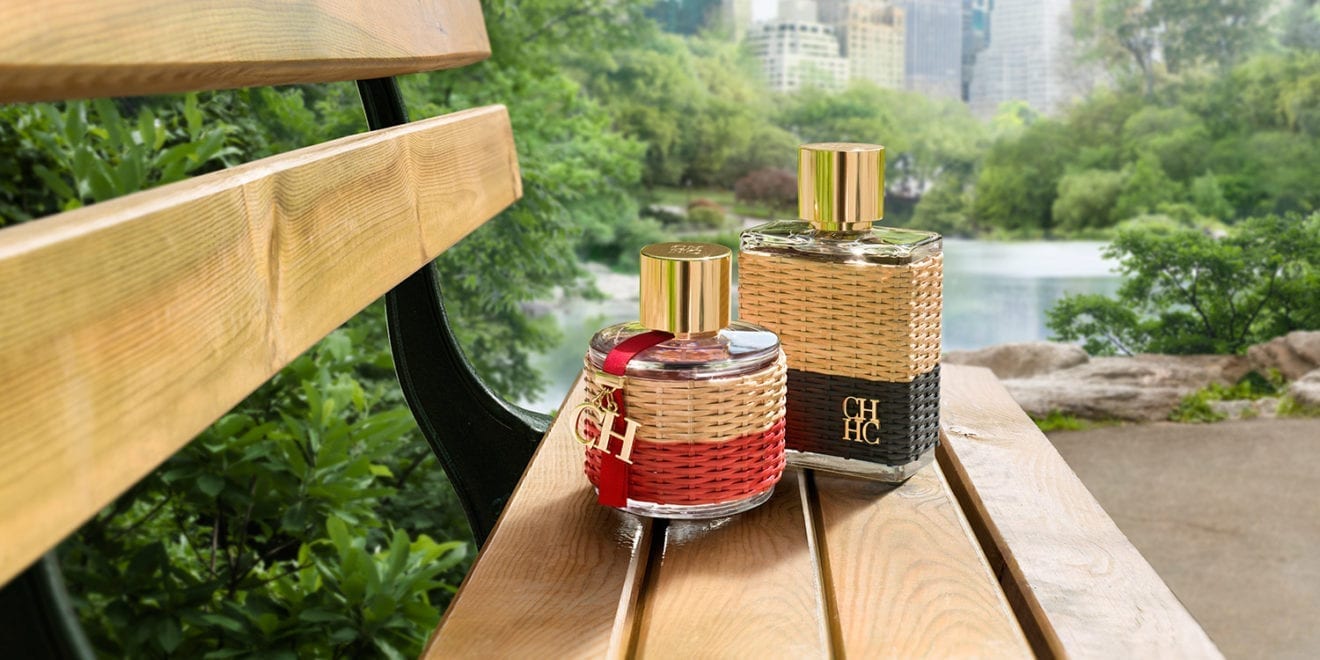
    Carolina Herrera represents elegant lifestyles for men and women through fashion, fragrance, and bridal collections.

    The brand comes to Vietnam under the management of Maison, a local Vietnam fashion distributor which represents 21 international brands including Christian Louboutin, Jimmy Choo, Mango, and Topshop.

  • Việt Nam retail market attracts international investors

    Việt Nam retail market attracts international investors

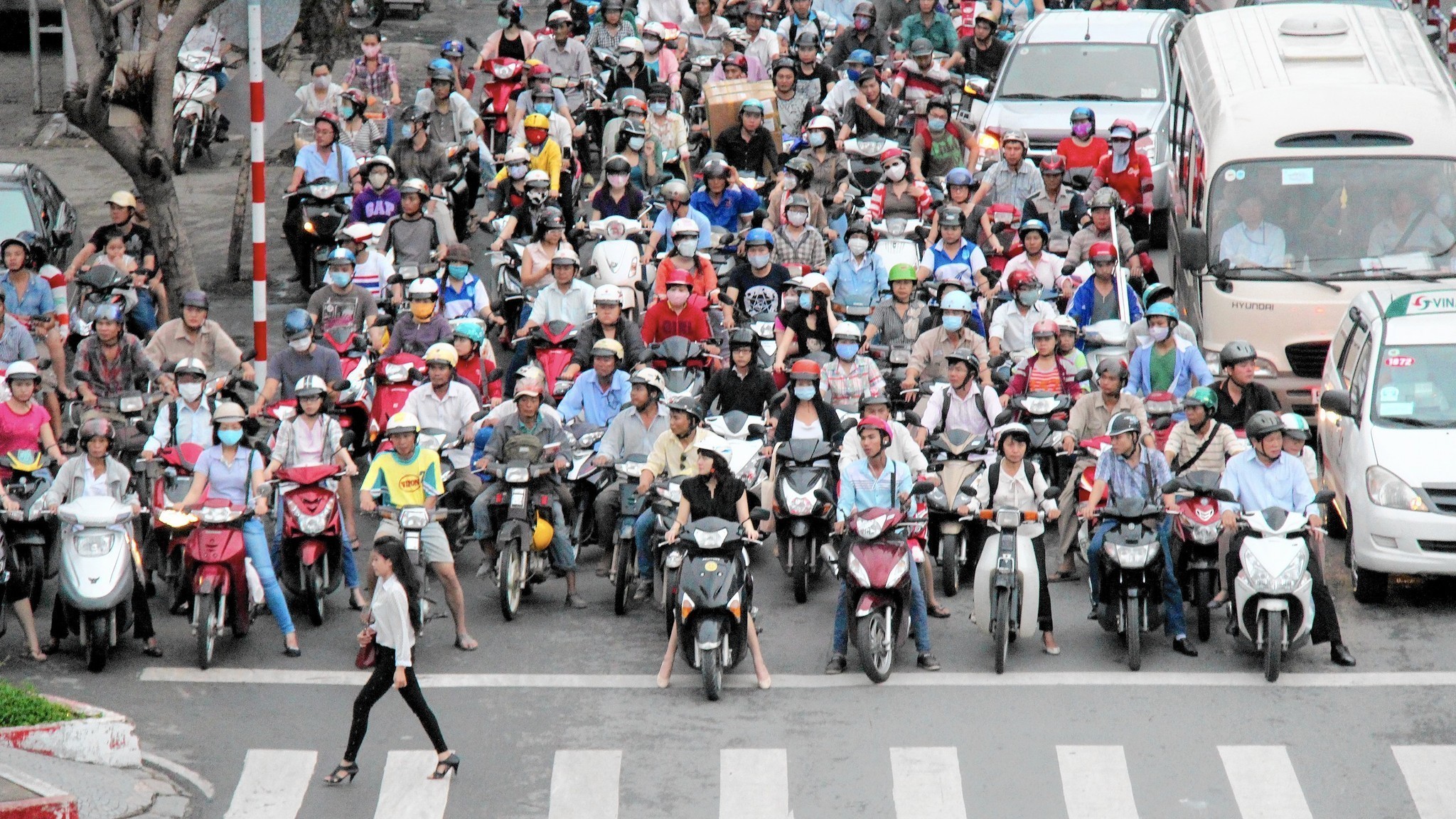
    Việt Nam’s growing retail market has attracted the attention of foreign retailers. A series of famous retailers from Japan, Thailand, South Korea and France have flocked to the country, hoping to penetrate the market, a recent JLL Việt Nam report said.

    As penetration of foreign retailers into the country has increased, fierce competition in the retail space has become more intense. This will put the retail market to the test and only retailers with the right positioning to meet market demand will gain market share.

    In 2014, the Berli Jucker acquisition of Metro Cash & Carry Việt Nam for an enterprise value of 655 million euro (US$700 million) – the largest-ever Merger & Acquisition deal in Việt Nam at that point – signalled entry of the Thailand retailer into the country.

    Later, another Thailand giant, Central Group, acquired Nguyễn Kim Trading – Việt Nam’s top electronics retailer, and BigC Việt Nam- the second largest supermarket chain in terms of store number in the nation.

    In October 2015, Emart – the leading South Korean retailer – officially marked its entrance with a US$60 million shopping centre in north HCM City. Also from South Korea, Lotte Mart is quite successful with 11 supermarkets, a number expected to increase to 60 stores by 2020.

    Most Japanese investors consider the success of Aeon in Việt Nam a praiseworthy case in overseas investment. Aeon has four malls and expects to reach 20 malls before 2020. Also from Japan, Takashimaya arrived in July 2016 as anchor tenant of downtown HCM City’s Saigon Centre retail mall.

    Adding to three Simply Mart stores in HCM City, AuchanSuper, a major retail brand from France, is planning to open another 17 supermarkets by end-2017 in the city and 20 stores by 2020 in northern Việt Nam.

    Thanks to increasing disposable incomes, big fashion brands such as Gap, Mango and Topshop have become the top choice of many young Vietnamese. In September 2015, Zara opened its first flagship store in HCM City. H&M will reportedly enter Việt Nam early next year.

    With 90 million people, Việt Nam has attracted retailers with its relatively young population – 70 per cent are aged between 15 and 64 years – who promise to be a key driver of robust market growth. Việt Nam’s urban population is expected to grow 2.6 per cent annually from 2015 to 2020, the highest rate among regional peers.

    “Increasing disposable incomes, rapid urbanisation and rising living standards make Việt Nam one of the most dynamic emerging economies in South East Asia,” says Bùi Trang, Commercial Leasing Director at JLL Việt Nam.

    According to the Boston Consulting Group, Việt Nam has the fastest growing middle and affluent class (MAC) in the region, which will double in size between 2012 and 2020, from 12 million to 33 million. MAC consumers, whose income is VNĐ15 million (US$700) or more a month, will be a key group of potential customers for retailers.

    Việt Nam e-commerce is set for strong growth thanks to its growing consumer and online population. According to the Nielsen’s report, nine out of ten consumers in Việt Nam (91 per cent) own smartphones, compared to 82 per cent in 2014, and the rapid up-take of connected devices, especially smartphones and tablets are instrumental in media consumption shifting.

    “Significantly increasing the amount of the credit card holders has also had an impact on the change in consuming behaviour. It is observed that people now are more willing to spend as they can afford more with credit and it tends to make shoppers less canny,” she said.

    Additionally, increasing international arrivals and continuously improving infrastructure are also factors that make Việt Nam an alluring market for retailers.

  • Singapore Golden Week targets shoppers

    Singapore Golden Week targets shoppers

    Singapore Retailers Association (SRA) is launching the inaugural Singapore Golden Week (SGW), a lifestyle event to be held over three weekends from September 30  to October 16.

    Its aim is to heighten Singapore’s appeal as a lifestyle destination with a suite a retail privileges, shopping reward and pampering experiences as enticement.

    Global payment network UnionPay is the official card for the event, with special privileges for cardholders across more than participating outlets including retail, F&B, beauty and wellness, and hotels and attractions.

    As well as exclusive discounts, cardholders are offered gifts when making purchases at participating merchants using their cards. The merchants involved include department stores Isetan Scotts, Metro and Robinsons, clothing labels Dockers, Dorothy Perkins, Karen Millen, Levi’s, TM Lewin, Topman, Topshop and Warehouse; and attractions such as the Alive Museum.

    There is also a game in which cardholders can win shopping vouchers and prizes worth more than S$10,000 (US$7388) in all, based at Ion Orchard.

    Visitors – not just cardholders – are also welcome at the UnionPay Golden Pampering Lounge in Ion Orchard’s atrium, which offers gourmet coffee and free-flow gourmet cookies.

    Cardholders can access the VIP area, which has massage chairs plus gourmet coffee sprinkled with edible gold dust.

  • Zara Vietnam flagship opens in HCMC

    Zara Vietnam flagship opens in HCMC

    Covering 2400 sqm over two levels, the first Zara Vietnam flagship store has opened at Vincom Centerin Ho Chi Minh City.

    Zara Vincom Vietnam

    Customers have views of the main street, Dong Khoi, from its windows, while on the racks are collections including women’s and men’s styles as well as Zara Kids, Zara Basic, TRF and the latest fall/winter styles.

    Zara Vincom Vietnam. 1

    Following the opening of the store, the Zara Vietnam website went live.

    Customers say they are impressed with the prices, noting they are cheaper than in Singapore and Thailand. When the Spanish fast-fashion line announced its plan to expand to Vietnam, there were concerns its prices would be higher than overseas, as had been the case with other international brands such as Topshop.

    Owned by Inditex, the Vietnam store adds to Zara’s 50 outlets throughout Indonesia, Malaysia, Singapore and Thailand.

    zara-vincom-vietnam

  • Ted Baker Vietnam makes debut

    Ted Baker Vietnam makes debut

    Unconventional British fashion brand Ted Baker has opened its first store in Vietnam.

    Ted Baker Vietnam joins other luxury brands at the revamped Saigon Center in Ho Chi Minh City, with its re-opening celebrated at an event featuring Vietnamese entertainers. Guests included representatives from the UK Consulate General.

    Brought to Vietnam by retail management company Maison, Ted Baker was described at the event by British Business Group Vietnam (BBGV) director Peter Rimmer as “the most outstanding luxury fashion brand in the UK” and an inspiration for people seeking an individual style.

    Ted Baker introduced its latest collection with a mini-catwalk show at the event. Many of the guests were also wearing the label.

    Established in 1988 with a focus on menswear, the London brand has also produced collections for women seeking to blend traditional and contemporary styles.

    Maison, launched in 2012, has brought more than 17 international brands to Vietnam including Coach, Dorothy Perkins, Karen Miller, Mango and Topshop.