Retail News CRM

Tag: Topshop

  • Zara Vietnam flagship nearly ready

    Zara Vietnam flagship nearly ready

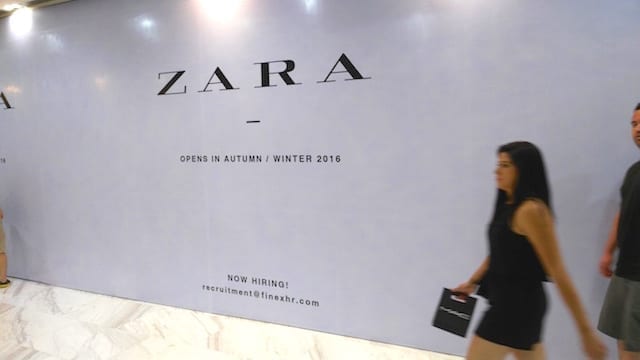
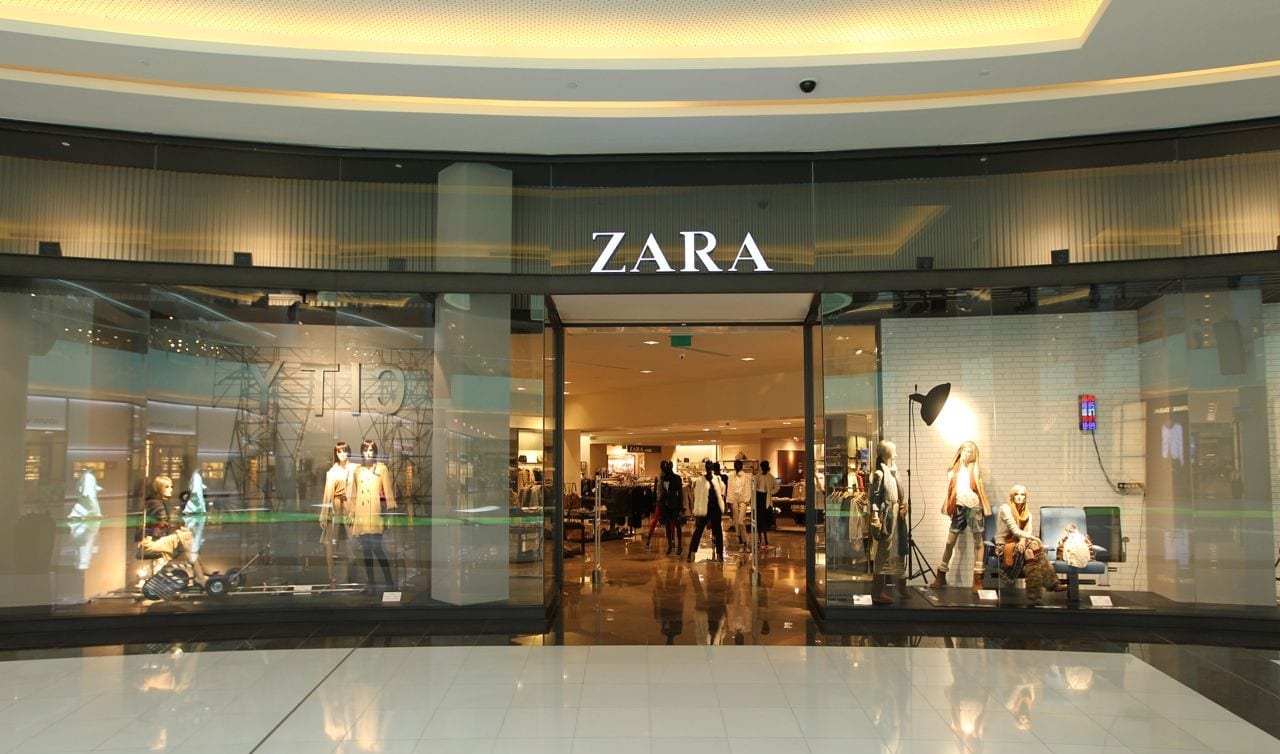
    Zara Vietnam’s flagship store is taking shape at Vincom shopping mall in Ho Chi Minh City, and is expected to open soon.

    The Spanish fast-fashion brand announced in May that it would expand to Vietnam this summer, setting its debut store’s opening date for this month. However, posters in the city say the store opening is next month. It is expected the store will have two storeys.

    Zara-Vietnam

    Fast-fashion brands are popular in Vietnam, and Zara has a huge customer base there. After ordering online and having items brought in from overseas, Vietnamese customers have been eagerly anticipating the arrival of its stores.

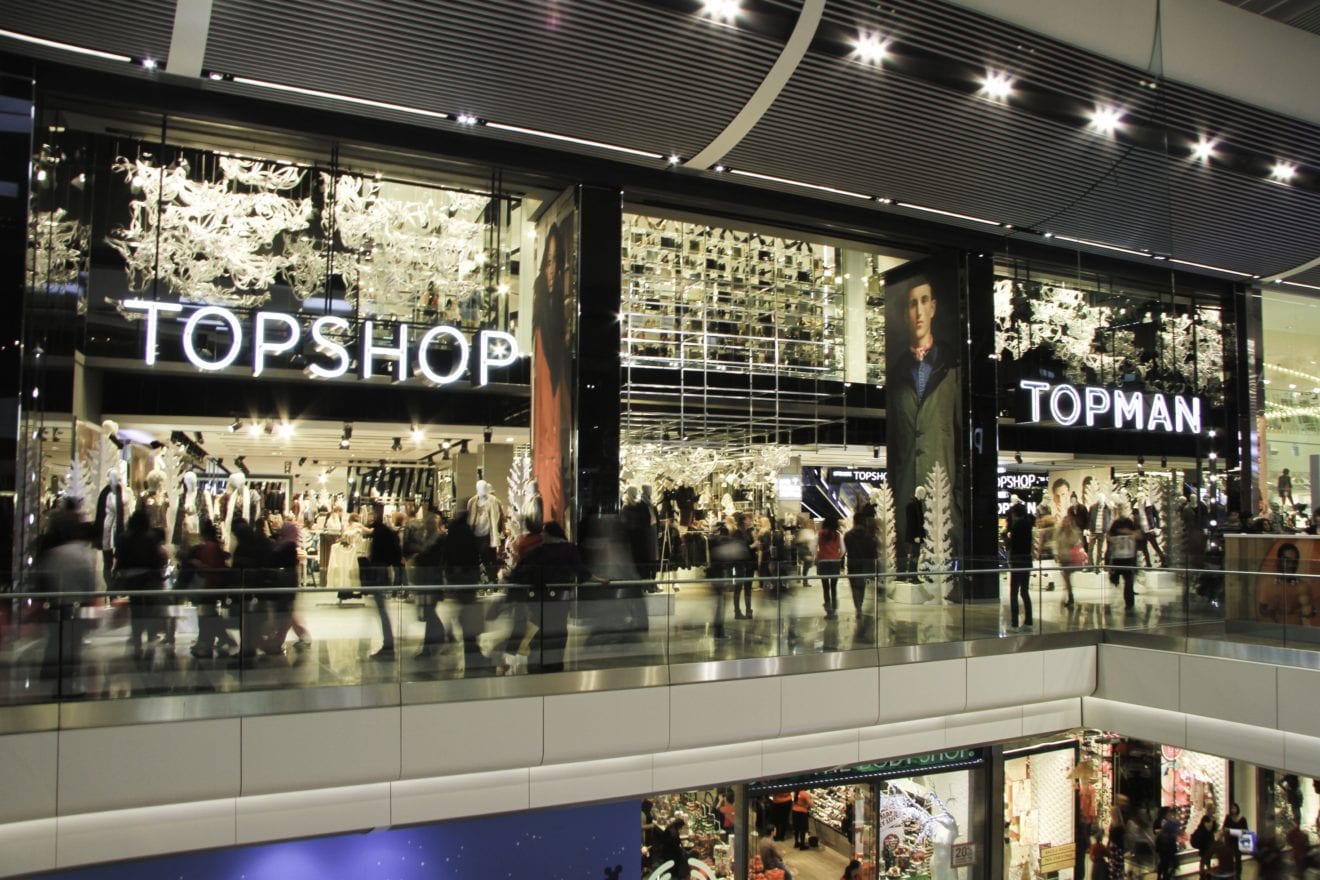
    However, the brand would need to look at its pricing. Vietnamese consumers have found that while some brands are considered economical in the West, once they enter Vietnam their prices double or even triple, with Mango and Topshop typical examples.

    Mango Mega store VN

    Zara is aiming to open up to 360 stores globally this year, and in Vietnam is sharing the market with other international fashion like Gap, Nine West and Ralph Lauren.

    Meanwhile, Mango is planning to open a men’s store in Vietnam, and H&M is said to be considering expansion in Vietnam.

  • Zara Vietnam to launch in July

    Zara Vietnam to launch in July

    Zara Vietnam says it will open its first store in July, just as Euromonitor International reveals the Vietnamese branded goods market may reach $2.7 billion in value by next year.

    As more than more people can afford branded goods, international fashion brands such as Gap, Mango, Nine West, Ralph Lauren and Topshop have become the choice of many young Vietnamese, especially office workers, says Euromonitor.

    Zara is owned by Inditex, which at the end of its latest fiscal year on January 31 had 7013 shops in 88 markets, including 2000 Zara outlets. If the Spanish fast fashion giant follows its normal international expansion course, it will likely roll out some of its other brands in the market, including Bershka, Pull & Bear, Massimo Dutti, Stradivarius and Zara Home.

    There is already a Vietnamese website selling Zara items, with a showroom in Ho Chi Minh City, but the shop sells alternatively-sourced and end-of-season lines.

    Mango, which targets customers between 18 and 40 years old, has been in Vietnam since 2004 through a franchise contract signed with Maison JSC. It also has other franchise partners, including DAFC, a subsidiary of IPP, and BFF, belonging to Vingroup.

    In 107 markets internationally, Mango had $2.6 billion in revenue last year.

    A survey by Nielsen on Vietnamese consumer confidence has shown that Vietnamese are willing to spend money on holidays, tourism, fashion and high-technology products.

    Meanwhile, Mango and Zara are among brands that have garment factories in Vietnam.

  • Retail closures add to Wing Tai woes

    Retail closures add to Wing Tai woes

    Costs related to the closure of retail stores were among the factors contributing to reduced second-quarter earnings for Singapore’s Wing Tai Holdings.

    Store closures caused a 12 per cent rise to S$23.8 million in administrative and other expenses quarter-on-quarter, according to a stock exchange filing by the company.

    Lower rental income and depreciation from its Singapore retail outlets also resulted in a 20 per cent fall in distribution expenses to S$22.2 million from S$27.7 million. No dividend was declared for the quarter.

    Wing Tai’s retail division represents the brands Adidas, Fox Kids and Baby, Topshop, BCBGMaxazria, G2000, Topman, Burton Menswear London, I.T., Uniqlo, Dorothy Perkins, Karen Millen, Warehouse, Etam, Pumpkin Patch and Yoshinoya. The company also has hospitality, residential and commercial property interests.

    Also contributing to the second-quarter net profit fall of 85 per cent year-on-year to S$1.08 million were lower contributions from the property development segment and a higher tax rate. These were partially offset by a stronger share of profits from associates/JVs, and lower distribution expenses.

    Overall, the group said earnings had come in below expectations as its operating and sales environment had proved tougher than anticipated. However, it is confident it is well-positioned to ride out the current down-cycle with its portfolio of prime residential and investment assets.

    Cooling measures will continue to weigh on market sentiment in Singapore this year, the group expects, while economic conditions in Malaysia will probably keep sales soft.

  • China’s Top Boutique Openings in 2015

    China’s Top Boutique Openings in 2015

    IMG_2022

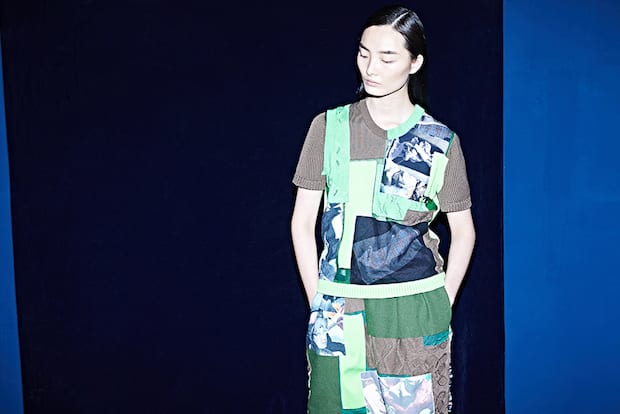
    Last year is yet another in a line of several that proved tough for the luxury retail industry in China. The anti-graft campaign has continued in full force, causing some shoppers to steer clear of flashy, high-cost purchases, while online shopping has driven many malls around the country to close. Still, 2015 was a big year for several international high-end labels, independent boutiques, and department stores that entered China for the first time or were revamped to give consumers an updated look. Here are six brands that made headlines in the style sector this year.

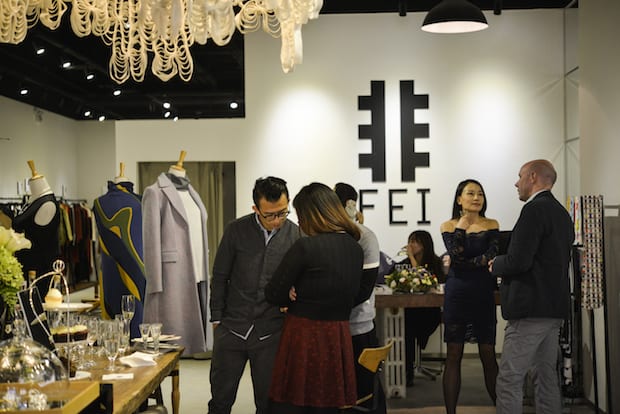
    Fei Space

    _DSC0251

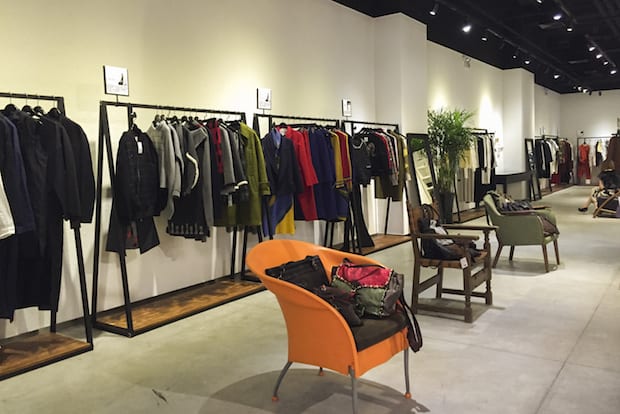
    Formerly located in 798 Art District, Fei Space is a culmination of local designers and stylish brands from around the world. Shoppers may also recognize the boutique for its pop-up store in Beijing’s U-Town mall that featured past-season collections from Topshop and Topman. Now that the official Topshop has opened in Galeries Lafayette (see below), the new Fei Space now is primarily focused on Chinese independent designers and some casualwear, such as Beijing-based American workwear brand Taciturnli and Shenzhen designer VMajor. It’s located in the Grand Summit mall, an evolving shopping center in the capital’s embassy district that includes a multitude of high-end Chinese boutiques and local health food chains aimed at the discerning shopper.

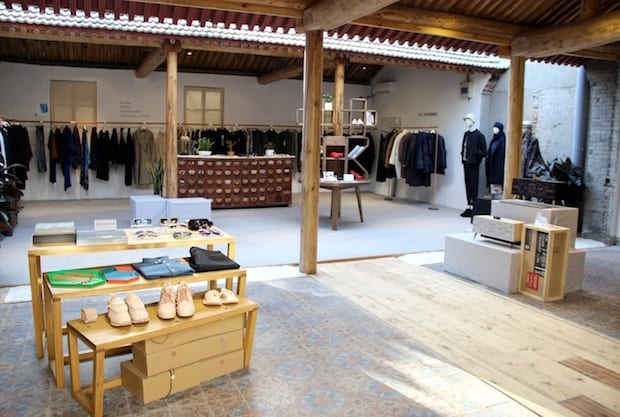
    Triple Major Beijing

    triple_major

    The year was off to a good start as far as openings go—Triple Major wowed media with its expansive new store in Beijing’s developing Dashilar district, which was designed in part to reflect the building’s former use: a Chinese pharmacy. Owner Ritchie Chan moved the concept store featuring both international and local brands from its home in Beijing’s central hutongs to an area that’s quickly transforming into a hub for young creatives with no shortage of locally-owned third-wave coffee shops, art galleries, and small, artisan boutiques.

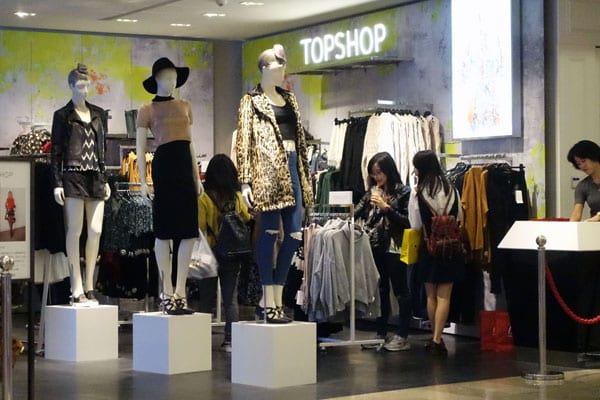
    Topshop at Galeries Lafayette

    The new Topshop location at Galeries Lafayette in Beijing. (China Daily)

    The new Topshop location at Galeries Lafayette in Beijing. (China Daily)

    Topshop has been open in Hong Kong for a few years, but only this year has the brand decided to put roots in the mainland, namely in the French department store Galeries Lafayette, a mall that has been struggling to attract shoppers in Beijing’s Xidan area. This version is tiny compared to its flagship and blends in on a floor mainly reserved for Asian independent labels.

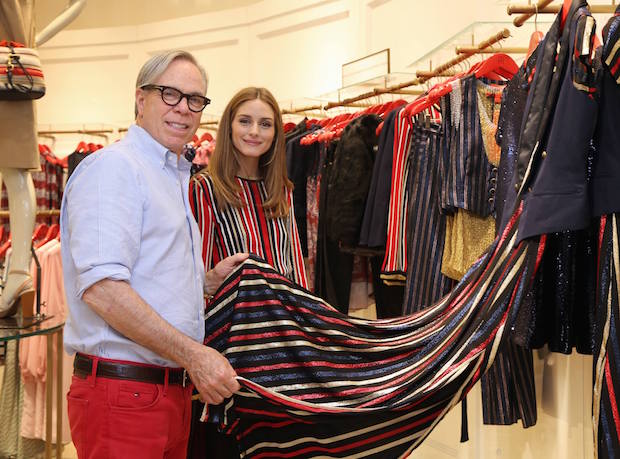
    Tommy Hilfiger

    Tommy Hilfiger (L) with socialite Olivia Palermo (R) at the brand's new store opening in Beijing. (Tommy Hilfiger/Facebook)

    Tommy Hilfiger (L) with socialite Olivia Palermo (R) at the brand’s new store opening in Beijing. (Tommy Hilfiger/Facebook)

    Tommy Hilfiger kicked off opening its largest store in Beijing’s In88 shopping center with a football-themed runway show in the spring, hoping to gain Chinese fans by pushing an all-American aesthetic.

    JNBY Concept Store

    A look from JNBY's latest collection. (Courtesy Photo)

    A look from JNBY’s latest collection. (Courtesy Photo)

    The JNBY Concept Store is nothing new outside of China, but Beijing gained its first in the new Grand Summit mall this year along with an art exhibit in cooperation with Beijing’s UCCA to kick things off. Fans of the international, Hangzhou-born brand that’s known for supporting independent Chinese designers with high-end clothing for adults and children also get a selection of contemporary jewelry and handbags and artisan chocolate.

    Macy’s (Tmall)

    Macys

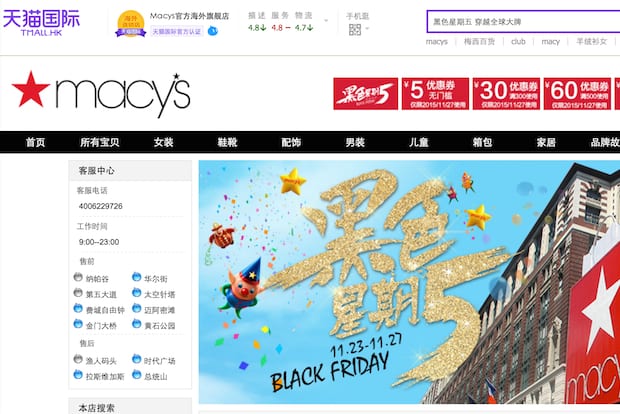
    Macy’s entered China this year on more official terms when it opened its shop on Alibaba Group’s Tmall, becoming the first U.S. department store to do so. It steered away from opening a brick-and-mortar shop, unlike its competitors who have done so and struggled, like the UK brand Marks & Spencer. M&S closed a chunk of its stores in Shanghai and instead opened a brand new space in Beijing’s business district shopping center, The Place.

    Michael Kors

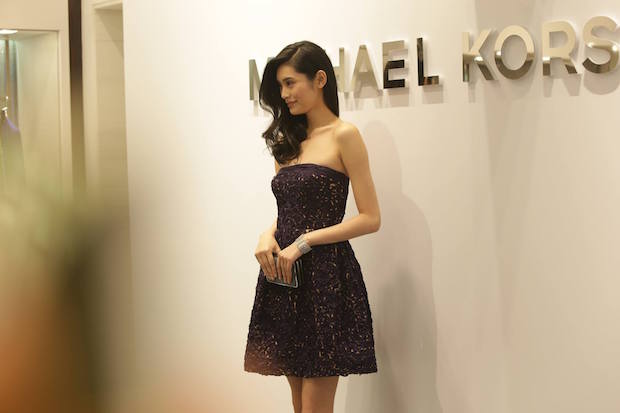
    Model Ming Xi makes an appearance at the Michael Kors opening in Beijing. (Michael Kors/Facebook)

    Model Ming Xi makes an appearance at the Michael Kors opening in Beijing. (Michael Kors/Facebook)

    Huamao Shopping Center in Beijing acquired a 9,000-square-foot Michael Kors flagship store last month, which was celebrated with a photo exhibition done in collaboration with Vogue China. The new shop is now the largest in Asia, followed by the Shanghai flagship that opened last year alongside a high-profile campaign to attract jet-set Chinese consumers.

  • British brands invading Philippines

    British brands invading Philippines

    Asif Ahmad, the UK ambassador to the Philippines, is one of the busiest diplomats in the country, as he leads, almost on a weekly basis, the opening of new outlets put up by dozens of British companies which are taking advantage of the rapidly growing consumer market and improved purchasing power of Filipinos.

    Ahmad, the 59-year-old diplomat who has been assigned in the Philippines since July 2013, says while several British companies have established their presence in the country for several decades now, more are expected to land in the Philippines soon.

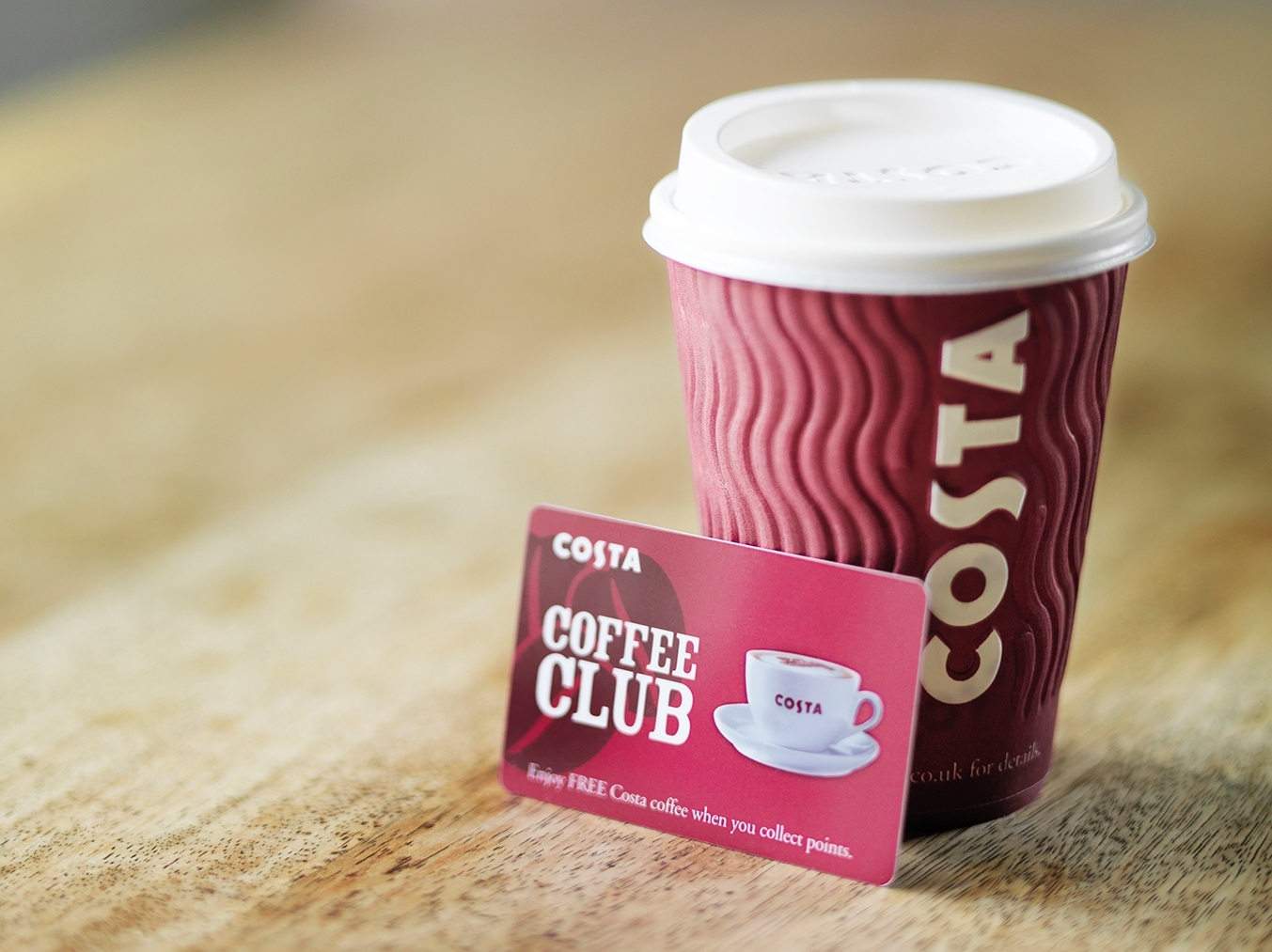
    “We have done it in fashion.  We have done it in cars. We have done it in films and music.  The next story is eating and drinking,” says Ahmad, during the opening of the second outlet of Costa Coffee in the Philippines at Robinsons Place in Ermita, Manila.

    Costa Coffee, the leading coffee chain in the United Kingdom, is the latest British brand setting its sights on the Philippine market, which Ahmad says offers a lot of opportunities for foreign companies.

    The ambassador says the expansion of British firms in the country is a part of a deliberate effort of the London government to triple its exports to the world to 1 trillion pounds by 2020.

    Unilever, an Anglo-Dutch company, is one of the biggest distributors of consumer products in the Philippines while Royal Dutch Shell Plc. is one of the three largest petroleum players in the country.

    The last couple of years saw dozens of UK firms opening outlets or expanding their presence in the Philippines.  In November 2013, London opened its airspace to Philippine Airlines via Heathrow Airport, with the help of Ahmad.  This has triggered a faster movement of people, including investors and tourists, between the two countries.

    British financial giants HSBC, Standard & Chartered, Barclays and Pru Life UK have strong presence in the Philippines while UK companies that are expanding in the country include Pearson Plc., Ashmore Group, British American Tobacco, British Petroleum, ECR Minerals Plc., CRH Plc., Arup, Nectar Group Ltd., MacKay Green Energy Inc., Forum Energy, Pitkin Petroleum Plc., Eaton Corp. Plc. and Weir Engineering Services Ltd.

    Top British brands opening or adding outlets in the Philippines include Rolls Royce, Range Rover, Jaguar, Mini Cooper, Morgan Motors, Tesco, The Body Shop, Fitness First, Toni & Guy, Remington UK, Marks & Spencer, Debenhams, Lee Cooper, F&F, John Lewis, Burton, Reiss, Speedo, Hamleys, Burberry, Topshop, Topman, Dorothy Perkins, Mitre Sports, Berghaus, Kangaroos, Superdry, Warehouse, Clarks Shoes, Paul Smith, Mothercare, Hackett London, Lush, TM Lewin, River Island, Cath Kidston, Pepe Jeans London, Savile Row, Lyle & Scott,  Whyte & Mackay, Twinings, Diageo, Union Jack Tavern, Wolf & Fox, Chuck’s Grub, Waitrose and Yummy Organics.

    Ahmad says more brands will expand in the Philippines soon. “We have a strong presence of British brands that is gonna grow.  My government, the UK, has said that we must triple exports to 1 trillion [pounds]. My mission here is to grow three times more than before.  That is a very strong target to have,” he says.

    The UK is already the largest investor among European countries in the Philippines.  “The easy target that we have met is being the number one investor in the Philippines from the European Union. We have achieved that already,” he says.

    “In terms of trade, we have a long way to go.  If we added it both ways, it [bilateral trade] adds up to $2 billion.  We have to make it $6 billion,” says Ahmad.

    He says the UK embassy is working with the British Chamber of Commerce to help more companies navigate the Philippine market.  British investors are looking at infrastructure, public-private partnership projects, water, healthcare, education, information technology and defense sectors, he says.

    The British Chamber of Commerce is arranging more trade missions to bring more British brands in the Philippines this year to look at opportunities, given the country’s improving economy.

    “What we are seeing is that the government has more money.  The infrastructure projects are now speeding up, after a difficult start.  We are seeing people consuming more, spending money more, not just in houses and cars, but also in their lifestyle,” Ahmad says.

    Ahmad says Filipinos can afford to buy British brands.  “It [local market] has been ready for quite some time.  That’s why we have been very successful here.  If you go back, they [British companies] have been here for a long time and they are expanding still.  New ones are coming onboard.  What Costa Coffee does is something different.  It is in food and beverage segment, which has much more to offer,” he says.

    Costa Coffee opened its first outlet at Eastwood Citywalk 1 in Libis, Quezon City in June and plans to open three more branches this year at Tera Towers in Fort Bonifacio, E. Rodriguez Jr. Ave. in Quezon City and Robinsons Antipolo in Rizal.

    “We plan to open 70 Costa Coffee branches in the Philippines over the next five years,” says Costa Coffee Philippines general manager Corinne Milagan, who heads a new unit of Robinsons Retail Holdings Inc. to guide the expansion of the Costa brand in the country.

    Among those who attended the opening of the Costa Coffee branch at Robinsons Place Manila are Ahmad, Milagan, Robinsons Retail Holdings president and chief operating officer Robina Gokongwei-Pe, Costa Coffee International managing director Chris Rogers, Robinsons Land Corp. president and chief operating officer Frederick Go and Costa Coffee franchise manager for Southeast Asia and India Matt Kenley.

    RRHI formed a new company called Robinsons Gourmet Food and Beverage Inc. to operate the Costa Coffee chain in the country. Robinsons Gourmet teamed up with Whitbread Plc. of the United Kingdom to bring the British coffee brand to the Philippines.

    “The Philippines has fantastic opportunity for the Costa brand.  It brings something different to the market. A different coffee, a different environment and a great people.  And it brings a little taste of London to the Philippines,” says Rogers.

    “We have been looking forward to the next 20 to 30 years. The Philippines is an exciting place to be, because of the potential growth.  The economy is growing strongly. The consumer population is growing. There are good dynamics,” says Rogers, who joined Whitbread eight years ago.

    Rogers has been leading the international expansion of the Costa Coffee brand since July 2012.

    Robinsons Retail plans to open 70 Costa Coffee stores in the Philippines over the next five years, with an average cost of P10 million per outlet.

    Rogers says Costa Coffee has found its niche in the competitive coffee market.  “Our difference is our coffee.  We have the Mocha Italian blend.  We are very particular with the beans we choose–high-quality beans with a particular taste. The environment is also very different,” he says.

    Milagan says the Philippine coffee market is now prepared for a British brand.  She says coffee lovers, including British expatriates, were lining up hours prior to the opening of the Costa Coffee branch at Robinsons Place Manila on July 31.

    “The [coffee] market is not yet saturated. The Philippine market has matured in terms of  food and drinking preference. We are graduating now from instant coffee and we are now shifting to coffee made in a hand crafted way,” says Milagan.

    Milagan says “the Filipino taste has become discriminating, as they travel abroad.”

    Costa Coffee was founded by Italian immigrants Sergio and Bruno Costa in 1971 in Lambeth, London. The Costa brothers were known for creating their unique blend of coffee, a combination of Arabica and Robusta beans. They called it Mocha Italia, a blend that is a closely guarded secret to this day.

    The brand was acquired by Whitbread Plc. in 1995.  The UK firm continues to serve the original Mocha Italia recipe, which is slowly roasted in the Old Paradise Street Roastery in London.

    Milagan says Costa coffees are all handcrafted and espresso-based.

    Costa Coffee now has 3,000 stores in more than 30 countries. Costa employs Master Genarro Peliccia as the official coffee master who ensures that the taste remains consistent to the original blend.

    Gokongwei-Pe says Costa Coffee is the second British brand brought to the Philippines by Robinsons Retail, the first being the fashion brand Topshop.  She says her company will bring more foreign brands, depending on the performance of Costa Coffee.

    “We have to make sure this works first,” she says, adding that the outlook for the Costa brand in the Philippines is promising.

    “I believe in good luck.  I believe in good vibrations,” she says.
     

  • Arcadia Malaysia partner rules out expansion

    Arcadia Malaysia partner rules out expansion

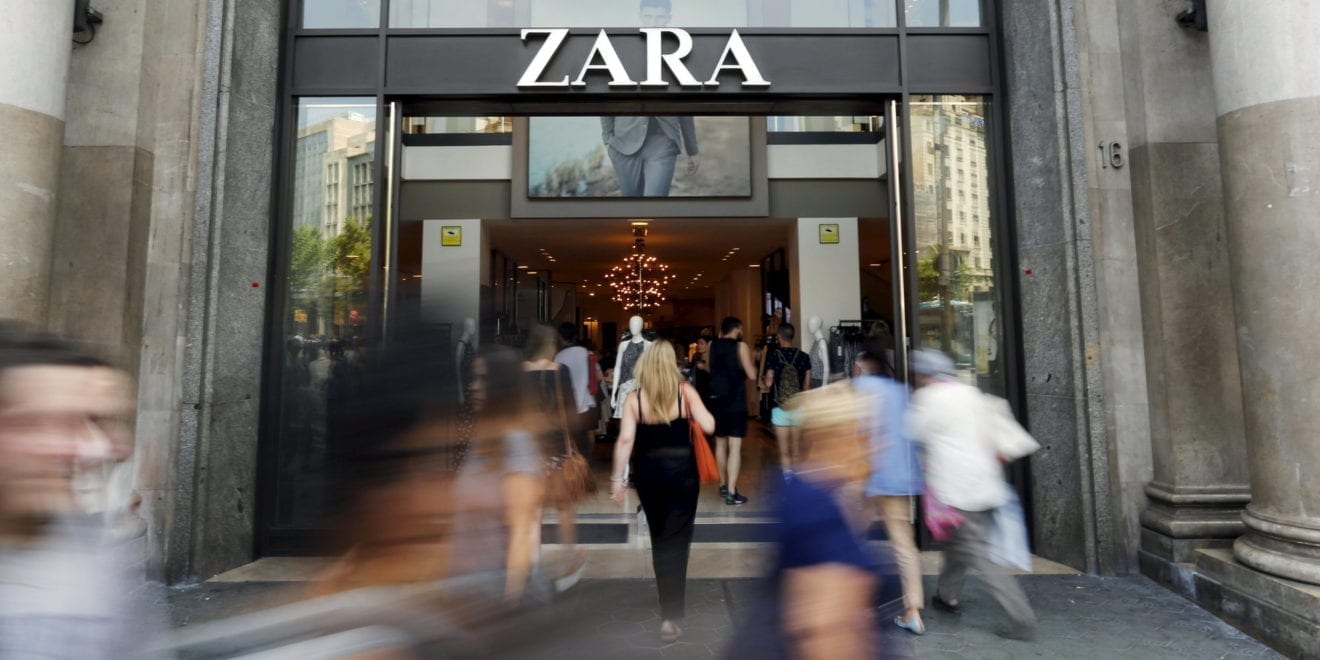
    Wing Tai, the corporate retailer which partners with Uniqlo and a raft of other brands, including the Arcadia Malaysia stores, says it is streamlining its retail business.

    The listed company has 85 retail stores in Malaysia’s major cities under 12 international brands – Topshop, Topman, Dorothy Perkins, Miss Selfridge, Warehouse, Karen Millen, Pumpkin Patch, Wallies, BCBG, Ben Sherman, Burton and Furla. It also has a 45 per cent stake in the joint venture with Japan’s Fast Retailing, operating 25 Uniqlo stores.

    Wing Tai GM of finance Lee Kong Beng says while the Uniqlo store network, targeting the value driven fast fashion customers, will expand into suburban markets, the Arcadia brands like Topshop and Topman have reached their limits in Malaysia.

    “We will not expand (the Arcadia brands),” he told a press briefing this week.

    He said while there were no current plans to close Arcadia stores, if any store failed to generate positive cashflow or profit it would be cut.

    “For retail, we’d just consolidate because it’s challenging. So no point being a hero, where you open outlets and the sale is not there.”

    Lee said the company was finding the current retail market in Malaysia challenging following the introduction of GST on April 1, which consumers are slowly adjusting to.

    An influx of tourists was bolstering the group’s earnings, with spending holding up in stores in high profile shopping malls.

    “We expect retail sales to pick up because of the weakening of the ringgit, so it’s cheaper to shop in Malaysia rather than in Singapore. It’s a matter of time people get used to GST. We see that (retail sales) are more stabilised now,” Lee said.

  • Topshop in Japan shock

    Topshop in Japan shock

    UK-based fashion group Topshop has shuttered its stores in Japan.

    No explanation has been given for the closure – but it appears Topshop’s parent Arcadia Group is in some form of dispute with its Japanese partners.

    In a statement issued overnight in response to media enquiries Topshop confirmed the stores were operated by a franchise partner.

    “The Japanese market is an important part of Topshop’s business and there are no plans to pull out of this key international territory,” the company said in a statement to Fashionista.

    “We are working hard, and exploring all avenues, to ensure that the brand maintains its presence in Japan.​”

    Topshop launched in Japan in 2006 and later partnered with Mori Building System, a retail real estate specialist which has also worked with Louis Vuitton subsidiaries. However it is not clear who the partner was at the time the stores closed as the association with Mori is reported to have ended last May.

    The Nikkei Asian Review has reported that the Topshop Shinjuku flagship appeared to be fully stocked, but city’s other flagship, in the trendy Harajuku district, had been cleared out.

    Phone calls to all five stores went unanswered.

    The company last posted on its Facebook page on January 7 and its website still lists store locations.