Retail News CRM

Tag: Toyota

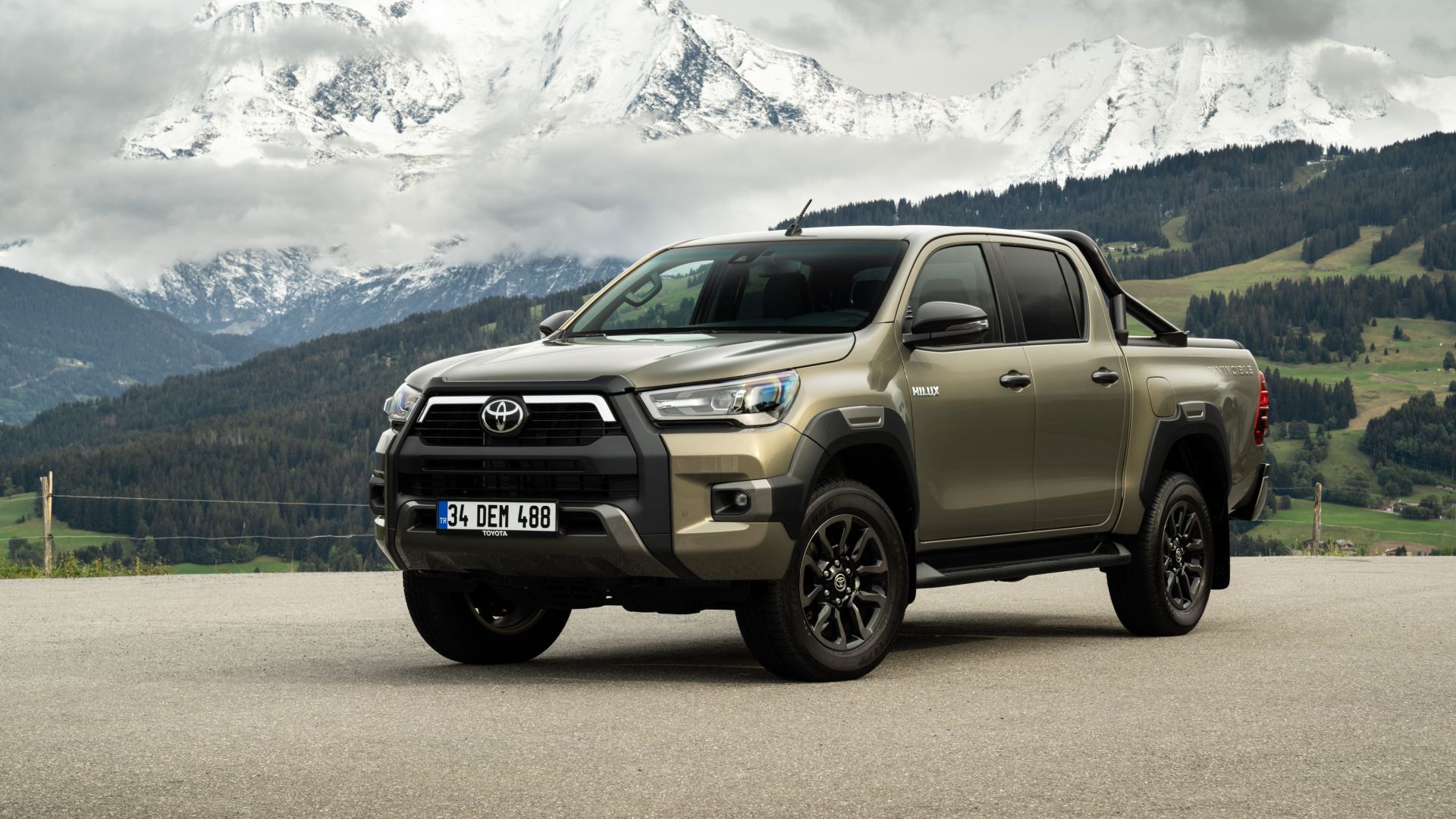
  • Toyota recalls Hilux trucks for brake problem

    Toyota recalls Hilux trucks for brake problem

    Toyota will recall 1,935 imported Hilux trucks due to a safety issue related to their brake system.

    The batch was produced in Thailand between June and December 2018 and imported by Toyota Vietnam.

    The company said the problem has occurred due to a degrading of the resin piston within the brake booster due to improper molding.

    “If this were to occur, repeated operation of the brake pedal may cause the piston to break, potentially causing loss of braking assist and therefore increasing the vehicle stopping distance,” it said in a statement.

    Toyota will coordinate with its dealers to recall, inspect and replace the brake booster free of charge. The replacement will take between half an hour and four and a half hours.

    According to Toyota Vietnam, the recall will begin on March 5 and last three years.

    In the case of Hilux not imported by the company, it will obtain approval from its parent in Japan before carrying out the replacement.

  • Japan’s Toyota, Honda Can Likely Cope With Global Chip Shortage

    Japan’s Toyota, Honda Can Likely Cope With Global Chip Shortage

    The global semiconductor chip shortage is not likely to significantly affect the financial profiles of Japan’s Toyota Motor Corp or Honda Motor Co, ratings agency Fitch said in a statement on Wednesday. The automakers have enough financial flexibility to absorb more costs and maintain significant rating headroom, even if the shortage persists till the second half of 2021, according to the statement. 

    The automobile industry has been grappling with a shortfall in chip supply since the end of last year, driven by coronavirus lockdowns in Southeast Asia and bulk-buying by U.S. sanctions-hit Chinese tech giant Huawei Technologies, among other reasons.

    The shortage prompted top U.S. automaker General Motor to extend production cuts at three North American plants last week, while Honda Motor and Nissan Motor were set to sell a combined 250,000 fewer cars in the current financial year.

    Toyota and Honda have enough financial flexibility to absorb more costs and maintain significant rating headroom

    Meanwhile, Toyota shrugged off the issue in its quarterly report last week and said it has up to a four-month stockpile of chips, with no immediate hit to production expected.

    “We believe the shortage should ease or even be resolved in the second half of 2021 as suppliers boost production for automotive clients,” Fitch said.

    Top economic and national security officials in the White House have launched a new effort to help the U.S. auto industry fight the chip shortage, a White House official said on Thursday.

    The issue could impact nearly 1 million units of global light vehicle production in the first quarter, according to data firm IHS Markit.

  • Toyota’s e-Palette Autonomous Vehicle To Be Put To The Test In The Real World

    Toyota’s e-Palette Autonomous Vehicle To Be Put To The Test In The Real World

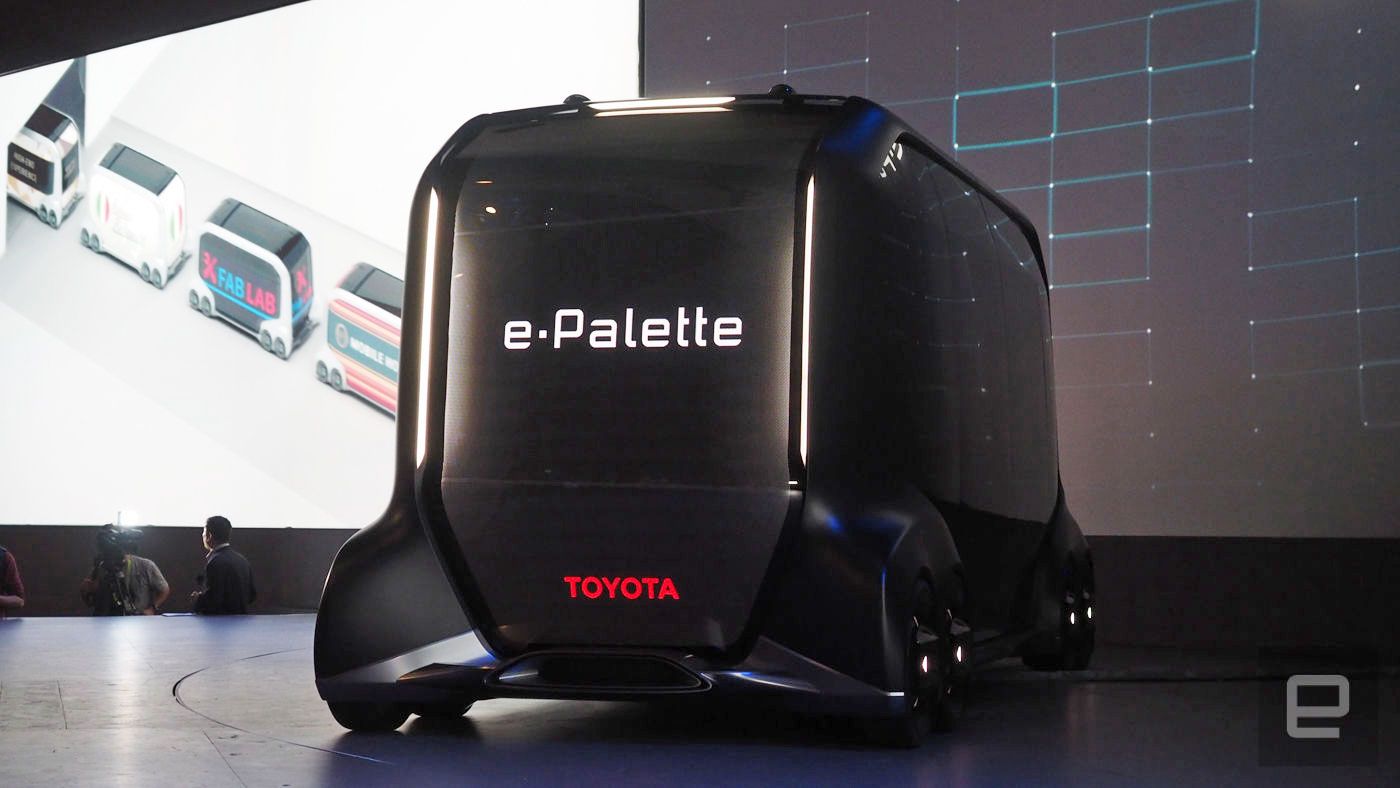
    Toyota Motor announced an operations management system to support the providing of services that will enable practical use of the e-Palette, a battery-electric vehicle for autonomous mobility. In collaboration with a range of partners, it is also planning to operate the vehicles in Woven City, a fully connected prototype city, while targeting commercial use in multiple areas and regions in the early 2020s.

    Toyota has developed an operations management system for e-Palette vehicles based on the Toyota Production System (TPS) ideology.

    When announcing his goal to transition Toyota to a mobility company at the January 2018 CES, President Akio Toyoda also announced the e-Palette as a symbol of mobility that goes beyond cars to provide customers services and new value. The e-Palette, with automated driving functions, had its debut at last year’s Tokyo Motor Show. It will provide a loop-line bus transportation service for athletes and related staff in the Olympic and Paralympic villages at the Olympic and Paralympic Games Tokyo 2020 that were postponed until July this year.

    Toyota has developed an operations management system for e-Palette vehicles based on the Toyota Production System (TPS) ideology. This operations management system will be provided as new functions on Toyota’s Mobility Services Platform (MSPF)*2 and will consist of the Autonomous Mobility Management System (AMMS), for connecting to vehicles and the e-Palette Task Assignment Platform (e-TAP) for connecting to people. The system will reduce customer waiting times and alleviate congestion to ensures services provide safety, peace of mind and comfort.

    With the aim of achieving the ultimate TPS-based just-in-time mobility service, AMMS is able to dispatch e-Palette vehicles when needed, where needed, and in the amount needed. Operation schedules can be changed flexibly, with vehicles automatically dispatched and returned, according to real-time mobility needs. When additional vehicles are introduced into service, the intervals between vehicles are adjusted to ensure even spacing of services. Vehicle abnormalities are also automatically detected and, if that happens, the vehicles are automatically returned to the depot and replacement vehicles are immediately dispatched on the route to ensure the stability of operation. In an emergency, the vehicles can be stopped and returned to service remotely, with an extra level of safety management, to provide passengers with peace of mind.

    Keiji Yamamoto, President of Toyota’s Connected Company, commented, “As per the Toyota Philosophy that President Akio Toyoda introduced at our recent financial results announcement, we see our vision as “Creating Mobility for All” and believe that every person working at Toyota should take action that delivers happiness to mankind in line with our mission of Producing Happiness for All. One of the platforms for executing these actions is the e-Palette. With the addition of an operations management system, the evolved e-Palette will be refined and will grow with the never-finished, ever-growing Woven City.”

    Human-centric, Woven City is a prototype city for testing and developing technologies such as automated driving, MaaS, personal mobility, robotics, smart homes and artificial intelligence, with e-Palette vehicles planned for operation there. Operating within a real-world environment where people live will provide a range of lessons through which the platform will continually evolve to enable services that provide customers with safety, peace of mind and comfort. Going forward, Toyota aims to work with partners to commercialize the e-Palette vehicles in multiple areas and regions in the early 2020s.
  • Toyota Working On New Electric SUV

    Toyota Working On New Electric SUV

    Toyota has revealed that it will debut a new full-electric SUV in 2021. The details about the new EV are scant but it will be built on the company’s new e-TNGA platform. In terms of size, it will be similar to the current RAV4. Toyota aims to focus on the European market with the new electric SUV which is yet to be named. Toyota believes that a compact SUV can accommodate the needs of most regions in which the company operates and there are more volumes in that segment. The new battery-electric SUV will be one of the first of six EVs to be coming from the e-TNGA platform.

    Koji Toyoshima, Deputy Chief Officer, ZEV Factory, Toyota Motor Corporation, said, “Toyota will shortly take the next step in the rollout of its forthcoming battery-electric portfolio by first previewing an all-new mid-sized SUV in the coming months. The versatility and flexibility of e-TNGA technology allows us to design and create vehicles that are not just battery-electric, but also exciting to drive and beautiful to look at.”

    The new platform gets a clever design and Toyota says it is both highly versatile and easily adaptable for a range of product types. The basic architecture principle is that a number of key elements remain fixed whilst others vary. This allows the company to bring in variance in different parameters such as vehicle width, length, wheelbase and height. The e-TNGA platform can accommodate front, rear or four-wheel drive layouts. With a wide-range of battery and electric motor capacities that can be adapted to suit various vehicle types and usage profiles, Toyota is likely to use this platform increasingly in the near future. The development time of different model variants can be reduced and individual models can be developed in parallel to each other.

  • Toyota, Mazda Joint Venture Alabama Plant Will Now Cost $2.3 Billion

    Toyota, Mazda Joint Venture Alabama Plant Will Now Cost $2.3 Billion

    Toyota Motor and Mazda Motor Corp said on Thursday they will invest $2.3 billion (1.76 billion pounds) in a new joint venture factory in Alabama, $830 million more than announced in their original plan in 2018. Production is expected to start next year building up to 150,000 future Mazda crossover vehicles and 150,000 Toyota sport utility vehicles annually. The Japanese automakers are expected to receive $97 million in additional tax incentives for the added investment, a person briefed on the matter said.

    The automakers have faced challenges as they continued construction work during the coronavirus pandemic on the plant, which will now cost about 50% more than first estimated. The companies said the higher investment “accommodates production line enhancements made to improve manufacturing processes.”

    The plant continues to target up to 4,000 new jobs and has hired approximately 600 employees to date. “Mazda and Toyota’s increased commitment to the development of this manufacturing plant reiterates their belief in the future of manufacturing in America and the potential for the state of Alabama to be an economic leader in the wake of unprecedented economic change,” Alabama Governor Kay Ivey said in a statement. The companies said the plant’s roofing, siding, floor slabs, ductwork, fire protection, and electrical work is 75% to 100% complete.

    State and local governments in Alabama previously provided more than $700 million in tax incentives. In September, President Donald Trump and Japanese Prime Minister Shinzo Abe signed a limited trade deal that cuts tariffs on U.S. farm goods, Japanese machine tools and other products but delayed the question of auto imports for future talks. Trump threatened hikes but did not raise current auto tariffs of 2.5% on passenger vehicles and 25% on pickup trucks.

    Japan exported 1.7 million vehicles last year to the United States, making up about 10% of U.S. vehicle sales.

  • Toyota Vietnam recalls 2,700 cars over faulty airbags

    Toyota Vietnam recalls 2,700 cars over faulty airbags

    Toyota Vietnam is recalling over 2,700 Vios and Corolla sedans for airbag faults that can cause severe damage to users in the event of a crash.

    The recall covers 2,568 Toyota Vios cars assembled in Vietnam between September 2007 and December 2008, and 145 imported Toyota Corolla cars produced between January 2004 and April 2005, according to a statement submitted by the automaker to the Vietnam Register.

    The inflator canister in these vehicles can be penetrated by humidity. In some crashes, the activation of the airbag can break the inflator into pieces. These pieces can be pushed through the inflated airbag, causing serious damage to users, Toyota Vietnam said.

    Customers can bring their vehicles for a free replacement of the faulty parts at Toyota dealers. The replacement should take up to 1.5 hours. The recall will run until August 2022.

    In 2018, Toyota Vietnam recalled more than 11,300 cars with similar airbag faults.

  • Toyota recalls cars over loose bolts

    Toyota recalls cars over loose bolts

    Toyota Vietnam has called back 721 vehicles to fix a bolt issue that could stall operation. The recall, starting Monday, involves 183 Innovas and 538 Fortuners, manufactured between January 21 and May 11.

    The affected vehicles were equipped with automatic transmissions, in which the steering wheel is connected to the torque converter by six bolts. Automaker Toyota Vietnam said due to errors in the assembly process, these bolts may not be tightened as usual and might come loose when the vehicle is operating.

    Loose bolts create abnormal noise in the engine compartment when the driver applies the brake pedal, or when shifting gears. In special cases, the vehicle cannot move.

    Car owners can take their vehicles to a Toyota dealership for tightening the bolts which would take between 20-30 minutes.

    Last year, Toyota was the best-selling car brand in Vietnam with 78,795 units sold, followed by TC Motor with 69,916 Hyundai cars.

  • Toyota Sees Further Recovery In Global Car Production In August

    Toyota Sees Further Recovery In Global Car Production In August

    Toyota Motor will make 2% fewer vehicles globally in August than originally planned, the Japanese automaker said on Tuesday, as output recovers gradually from a steep drop because of the coronavirus pandemic.

    The company said it aimed to make 15,000 fewer vehicles than its initial plan, which was around 750,000, according to Reuters’ calculations. August’s reduction is smaller than the cut of 10% seen in July, and June’s 40% reduction.

    As Japan fears a second wave of infections spreading from the capital, one Toyota employee working at its headquarters has tested positive for coronavirus since developing symptoms earlier this month, the company said on Tuesday. Toyota added it disinfected the affected work sites on July 17 and restarted operation shortly afterward.

    Toyota Motor, Japan’s biggest automaker, said on Tuesday it expects its lowest annual operating profit in nine years, down over 4 billion US dollars, or 80%, from the previous year.

    In the midst of the pandemic, the company also plans to skip media briefings for its fiscal first and third quarterly results, but only release filings, a company spokeswoman told Reuters.

    Global automakers are slowly getting vehicle production back on track after the closure this year of many plants to curb the spread of the virus, although many still anticipate that output and sales will be lower than last year.

    The updated production plan represents an output cut of 9% from a year ago.

    Toyota said it would produce 6,000 fewer vehicles at home, and 9,000 less overseas.

  • Toyota To Resume Production At Its Bidadi Plant From July 20

    Toyota To Resume Production At Its Bidadi Plant From July 20

    Toyota Kirloskar Motor (TKM) has announced that it will resume vehicle production at its Bidadi plant, in Karnataka, from July 20. Following a directive issued by the Government of Karnataka, earlier this month, the company had announced that it will stop production at its plant from July 14 (second shift) to July 22nd (first shift). The directive was issued as part of the State Government’s efforts to fight the spread of the coronavirus, and the rising Covid-19 positive cases in Karnataka.

    However, under a revised directive from the Karnataka Government, Toyota can now officially resume production earlier, on July 20 itself. While many employees had left for their hometowns following the announcement of lockdown, Toyota says that at any given point, only 40 to 45 percent of the production workforce has been attending work to maintain all forms of social distancing.

    Additionally, Toyota has undertaken several measures to maintain safety and hygiene at the workplace, and it has already announced guidelines for both its factory employees and its dealer partners. All employees must also self-declare their health condition on a daily basis. If there is a situation where an employee tests Covid-19 positive, the company also takes adequate measures to quarantine those employees who might have come in contact with the infected employee through appropriate contact tracing.

    Toyota was one of the first carmakers to halt production in March, even before the Government of India issues the lockdown. The company officially resumed production around mid of May after a hiatus of over 6-weeks. In April, the company for the first time, like most OEMs, saw zero sales in India. In May, after the lockdown was relaxed, the company sold 1639 units in India, which more than doubled in June 2020, with the company selling 3866 units vehicles in India.

  • Honda most searched vehicle brand in Vietnam

    Honda most searched vehicle brand in Vietnam

    Honda, Toyota, BMW, Mitsubishi, and Suzuki are the five most googled car brands in Vietnam, market research firm iPrice said.

    The Malaysia-based meta-search website, which operates in Vietnam and six other countries across Southeast Asia, said it considered 22 car brands googled between March 1 and May 31 this year to find the most searched brands.

    Honda topped the list since it produces both motorbikes and cars, and has an 80 percent share of the motorbike market.

    It was also the most googled brand in Thailand and Indonesia. In the Philippines, it was Toyota.

    In Singapore and Hong Kong, which prioritize green transportation, American electric vehicle brand Tesla was in first place.

    Across the seven markets, Honda was the most googled brand with 550,000 searches, followed by Toyota (368,000) and BMW (301,000). Tesla and Mitsubishi tied with 246,000 to round off the top five.

    The study also found that SUVs were the most searched cars in all seven markets, followed by sedans, MPV/WGNs, hatchbacks, and coupes.

    According to data from Vietnamese manufacturer Thanh Cong Motor and the Vietnam Automobile Manufacturers Association (VAMA), Toyota Vios was the most sold model in the first half of this year with 11,244 units.

    Sales of VAMA members, who account for more than 95 percent of the market, were down 30 percent year-on-year to 102,720 vehicles.

  • Toyota Holds $293 Million Stake In Uber

    Toyota Holds $293 Million Stake In Uber

    Toyota Motor holds a $293 million stake in Uber Technologies, as it partners with the ride-hailing company to further expand into new mobility services, Toyota’s latest corporate governance report released on Wednesday showed.

    The Japanese automaker has also unloaded shares in some of its suppliers, adjusting its portfolio to reflect partnerships with rival automakers and technology firms as it transforms into a mobility services company, the report showed.

    Reporting the total size of its stake in Uber, which became a listed company last year, Toyota said it held 10.25 million shares valued at 31.15 billion yen ($292.46 million) as of March 30. That is around 0.6% of Uber’s outstanding shares, according to a Reuters calculation.

    Toyota, one of the world’s biggest automakers, said it had reduced its shareholdings in 24 companies and increased them in 10, including two listed companies. Lufthansa shares down as investor battles bailout

    Lufthansa shares slumped Monday morning after CEO Carsten Spohr said the company would seek to avoid a grounding and insolvency in a battle with the airline’s biggest shareholder over the terms of a 9-billion-euro bailout. Ciara Lee reports

    In the past year, it took a stake in rival Suzuki Motor Corp as the pair deepen cooperation around the development of lower-emission vehicles.

    Toyota sold its stakes in cutting tool manufacturer OSG Corporation, Nippon Steel Corporation, automotive lights and interior mirrors maker Ichikoh Industries, and transmission belt maker Mitsuboshi Belting.

    “If Toyota determines a shareholding is no longer meaningful or the meaning of a shareholding has been diluted due to changes in a business environment or other reasons, (it) will proceed with the sale of such shares,” the automaker said in the report.

    Toyota currently has an interest in 174 firms, including 65 listed companies, compared with 200 firms in 2015, of which 80 were listed companies.

    Toyota’s biggest shareholders remained the same, although investors including Nippon Life Insurance Co, JPMorgan Chase Bank N.A. and State Street Bank and Trust Company slightly increased their stakes, the latter two through proxy Mizuho Bank.

  • Toyota Sees July Global Output Down 10% On Initial Plan

    Toyota Sees July Global Output Down 10% On Initial Plan

    Toyota Motor Corp said on Monday it would make 10% fewer vehicles next month than originally planned, as it gradually resumes output following factory closures earlier this year due to the coronavirus pandemic.

    The Japanese automaker said it planned to make 71,000 fewer vehicles globally in July than its original goal of about 700,000. While production has yet to return to normal, the July reduction is smaller than the 20% output cut for June.

    “We expect the recovery trend to continue in August,” a spokesman said.

    Global automakers are trying to get their plants back up and running after many were closed earlier this year to curb the spread of the virus.

    Toyota Motor, Japan’s biggest automaker, said on Tuesday it expects its lowest annual operating profit in nine years, down over 4 billion US dollars, or 80%, from the previous year.

    For the April-July period, Toyota anticipates a global production drop of 30% from its initial plans, made before the virus outbreak and a plunge in demand for vehicles.

    The automaker produced nearly 3.7 million vehicles during the same period last year.

    At home, Toyota plans to make 39,000 fewer vehicles in July, or 10% less than initially planned.

    It will stop making its Coaster minibus model for six days, while lines producing the Land Cruiser and Prado SUV models, and the Porte subcompact, will stop for two days. These adjustments will affect six production lines at three of the automaker’s plants.

    Second shifts at some of these plants will remain canceled, potentially until September. In total, Toyota operates 28 production lines at 15 vehicle factories in Japan.

    Toyota will also cancel some Saturday shifts next month on four lines that produce models including its popular RAV4 SUV crossover model and the Prius gasoline hybrid, many of which are exported overseas.

  • Toyota India Partially Resumes Retail And After-Sales Operations

    Toyota India Partially Resumes Retail And After-Sales Operations

    Toyota Kirloskar Motor today announced that it has partially resumed retail and service operations in India. It was towards the end of March 2020 that the company announced suspending production and retail activities, in accordance with the nationwide lockdown to curb the spread of the coronavirus. Now, adhering to the advisory issued by the Central and State Governments, the company has re-opened 171 dealership outlets and 146 service outlets, across India. Toyota says that as per the government protocols, all dealerships will function with the prescribed percentage of the workforce, and they will practice stringent social distancing, ensuring the health and safety of all their staff.

    Commenting on the development, Masakazu Yoshimura, Managing Director, Toyota Kirloskar Motor said, “While the lockdown was a necessary step to counter the virus spread and curb the consequences triggered by the pandemic, it is paramount to reignite confidence among customers, and stakeholders and boost their morale, during these difficult times. As we gradually recommence operations, we are ensuring the safety and wellbeing of all our stakeholders while simultaneously safeguarding business continuity.” Toyota will continue to closely review the developments in each region and will take the necessary steps based on the situation.

    Last month, the company had also released a dealer restart manual as a guide for industries to follow post the lockdown withdrawal, Toyota Kirloskar Motor has come out with a similar measure for its dealerships. As per the guidelines, dealerships will maintain hygiene at all customer touchpoints, do regular sanitization and ensure minimized usage of air conditioners. The staff must always wear face masks and all visitors and employees must go through thermal checking before entering the facility. For sales operations product demonstration will see a change new disinfection process will be implemented before every demo, to assure customer safety. Masks and gloves will be provided during test drives and the company representative will be directed to sit in the rear seat while the customer drives, adhering to the rule of social distancing.

    The company understands that close to 75 percent of its suppliers have received a nod from the Government to recommence operations, while the remainders are expected to receive the necessary permission soon. Also, as of May 5, 2020, Toyota has begun preparatory operations at the plant to provide the workforce with an adequately safe environment to work in, duly prioritizing domains like spare parts supply. The operations at the TKM plant too will resume in a phased manner, keeping in mind the need for social distancing and thorough sanitization.

  • Toyota Plans Limited Operations In France

    Toyota Plans Limited Operations In France

    Toyota Motor  on Monday said it plans to restart limited production at vehicle plants in France and Poland from April 22 after closing them due to the

    Automakers make a push to reopen plants. Global automakers reeling from the COVID-19 pandemic are accelerating efforts to restart factories from Wuhan to Maranello to Michigan, using safety protocols developed for China and U.S. ventilator production operations launched in recent weeks. Cia

    Most other plants in Europe, North America, Latin America, and Asia will remain closed for now, it said in a news release

  • Toyota Extends North American Plant Shutdown

    Toyota Extends North American Plant Shutdown

    Toyota Motor said Wednesday it plans to reopen its North American auto plants on May 4, extending its current shutdown by two additional weeks.

    The Japanese automaker cited the ongoing COVID-19 pandemic and decline in vehicle demand to extend the halt of production at all of its automobile and components plants in Canada, Mexico and the United States.

    Toyota will not furlough its direct employees but has asked its hourly plant employees to take two days out of the 10-day extension as paid time off or they can go without pay if they don’t have accrued leave.

    The Toyota Vellfire is a luxurious MPV and is the perfect vehicle for celebrities, movie stars and the likes. It is full-sized panel van and it is loaded with all sorts of creature comforts. We spent a scant amount of time with the new Vellfire an…

    For Toyota’s 5,000 workers provided by outside agencies, Toyota is releasing those workers back to their agencies. Toyota will continue to pay the benefits of those workers for the time being, and they may be eligible for unemployment.

    On Tuesday, Honda Motor Co and Nissan Motor Co on Tuesday said they had furloughed thousands of workers at their U.S. operations as the coronavirus pandemic slashes demand for cars in the country.

    A spokesman for Honda, which employs about 18,400 workers at plants in Alabama, Indiana and Ohio, said the Japanese automaker would guarantee salaries through Sunday, has suspended operations on March 23. The plants will be closed through May 1.

    Nissan said it was temporarily laying off about 10,000 U.S. hourly workers effective April 6. It has suspended operations at its U.S. manufacturing facilities through late April due to the impact of the outbreak.

    Automakers are facing a dramatic drop in sales in the United States, the world’s second-largest car market after some states barred dealers from selling new cars while “stay-at-home” orders are in place. Fiat Chrysler Automobiles NV on Monday extended its shutdown of U.S. and Canadian plants until May 4.