Tag: Toyota

  • Toyota says production of C-HR model begins in Turkey

    Toyota says production of C-HR model begins in Turkey

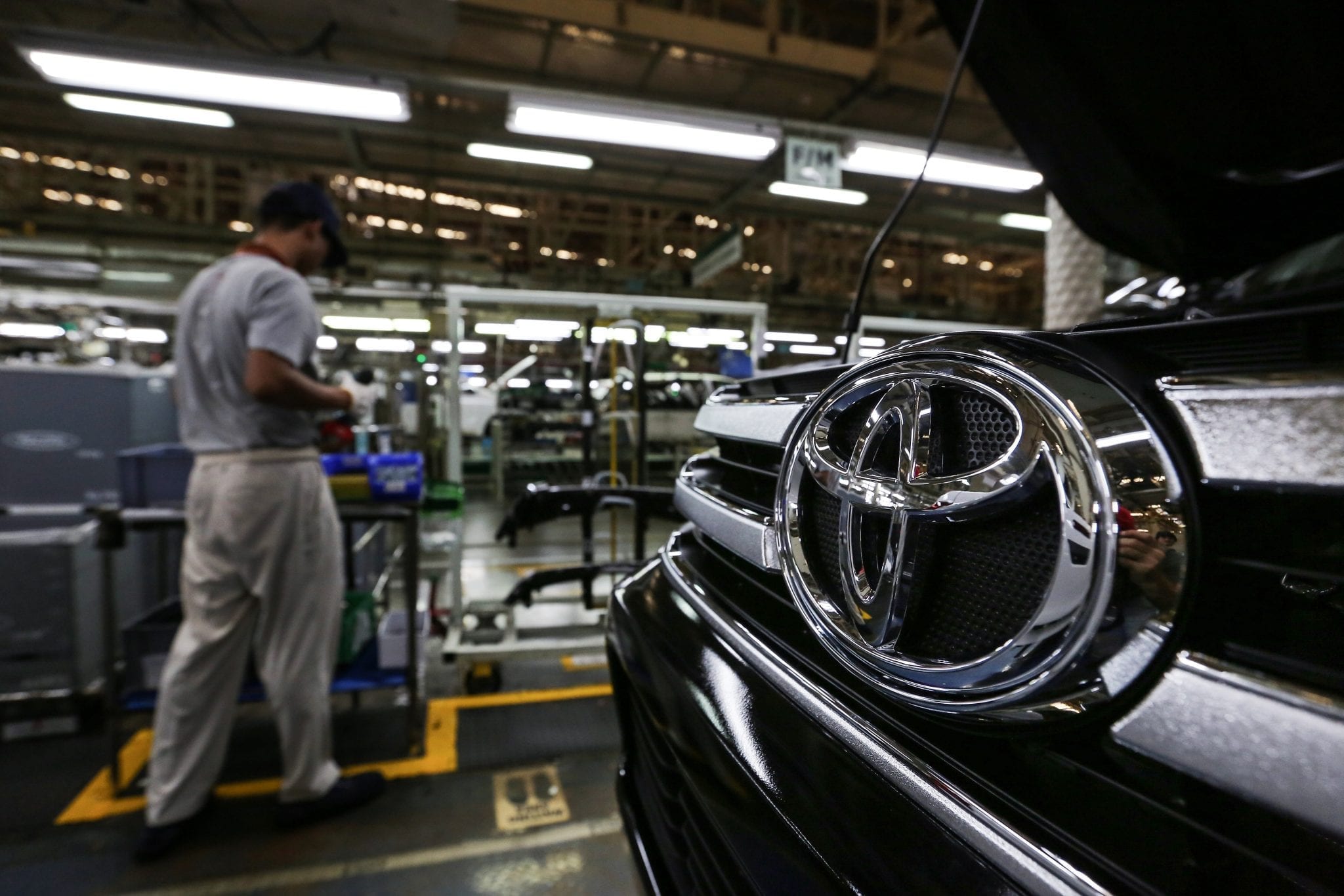
    Toyota Motor Corp launched production in Turkey on Wednesday of its C-HR compact SUV crossover and said the model would be exported to all global markets including North America.

    In a statement, Toyota said production was beginning with an initial investment in Turkey of 350 million euros ($390 mln).

  • Toyota to recall 5.8 million cars in Japan, China, Europe over Takata airbags

    Toyota to recall 5.8 million cars in Japan, China, Europe over Takata airbags

    Japan’s Toyota Motor Corp on Wednesday said it was recalling a total of about 5.8 million cars at home and abroad over potentially faulty air bag inflators made by Takata Corp.

    The recall, which includes the Corolla and the Vitz subcompact hatchback model which is marketed overseas as the Yaris, covers models produced between May 2000 and November 2001, and April 2006 and December 2014, the company said in an email.

    It affects about 1.16 million vehicles sold in Japan, and also includes about 820,000 cars sold in China and around 1.47 million cars in the European market.

  • KDDI, Toyota develop app to reduce road accidents

    KDDI, Toyota develop app to reduce road accidents

    Toyota Motor, Komeda and KDDI in September have jointly developed a smartphone application called Driving Barista, aimed at reducing the number of traffic accidents in Aichi Prefecture caused by drivers using their smartphones while driving.

    This is the first traffic safety initiative in Japan involving a smartphone application, which is to be carried out and jointly promoted by an automobile company, a communication company, and a food and beverage company.

    For thirteen consecutive years, Aichi Prefecture has had the highest rate of traffic fatalities in Japan. Furthermore, there were also 50,101 arrests involving the use of smartphones while driving, and the increase in violations of this nature has also intensified the problem.

    Toyota, Komeda, and KDDI will promote traffic safety in Aichi Prefecture through an educational initiative where participation is accessible for all, and can lead to a reduction in traffic accidents.

    The Driving Barista application can only be used within Aichi Prefecture. By using the gyro sensor to sense the tilt of the smartphone body, and the GPS to determine the distance driven, this application measures the distance the driver has driven while leaving the smartphone face down. When the cumulative distance reaches 100 km, the driver can receive a coupon for a cup of blended or iced coffee at a Komeda Coffee Shop.

    According to one survey, approximately 60% of respondents said they use their smartphones while driving, with approximately half of these respondents keeping only one hand on the steering wheel. Therefore, the companies hope that the new application will raise drivers’ awareness about not using smartphones while driving.

    “We have already been carrying out educational activities to prevent the use of smartphones while driving, and we hope that this initiative between the three companies will help solve the problem facing Aichi prefecture,” said Akira Dobashi, director in charge of CSR and environment at KDDI.

    “We developed the Driving Barista smartphone application as a fun way to help prevent traffic accidents,” said Dobashi. “We hope to contribute to accident prevention by providing a new experience for drivers.”

  • Toyota recalls 340,000 Priuses globally to fix parking brake issue

    Toyota recalls 340,000 Priuses globally to fix parking brake issue

    Toyota Motor Corp said on Wednesday it was recalling around 340,000 of its latest Prius gasoline hybrid model in Japan and overseas to fix a parking brake issue.

    The recall covers models produced between October 2015 and October 2016, and affects around 210,000 vehicles in Japan and 92,000 in North America, Toyota said, adding that the balance would be recalled in Europe, Australia and other regions.

    No accidents have been reported in Japan in connection with the issue, a Toyota spokeswoman said, while declining to comment on whether any accidents had occurred overseas.

  • Toyota with Daihatsu gets ready to enter small-car market

    Toyota with Daihatsu gets ready to enter small-car market

    The world’s largest carmaker, Toyota Motor, is finally getting ready to enter the Indian small-car market and challenge the dominance of Maruti Suzuki and Hyundai Motor in their bread-and-butter segment. The Japanese automaker and its unit specialising in small cars, Daihatsu Motor, are expected to drive in a new range of vehicles to India starting 2020-2021.

    A few days ago, Toyota and its fully owned Daihatsu unit announced plans to establish an internal company that will be responsible for compact vehicles for emerging markets, from product planning to production preparation. India is an integral part of this move. The structure of this new internal company is likely to be formed by January, 2017.

    The groundwork has already been done through various studies commissioned over the years, said people in the know of the plans. The Toyota-Daihatsu combine will target the A and B segments, where vehicles are typically priced below Rs 10 lakh. This segment, where Toyota currently has only a limited presence here with the Etios range, is the mainstay for Maruti and Hyundai Motor India.

    The branding for the products is yet to be defined. The new cars under the venture may be branded Toyota or Daihatsu, or it could be an all-new brand in line with how Toyota introduced a ‘Scion’ brand in North America in 2003 — the brand was discontinued this year.

    Through the proposed internal organisation, the objective is to develop and launch competitive compact vehicles in emerging markets based on Daihatsu’s approach to manufacturing affordable, high-quality products. While the small car champion will take the lead responsibility in this new initiative, in India, it will seek to gain from the parent’s understanding of the market.

    Vikram Kirloskar, vice chairman of Toyota Kirloskar, the Indian unit of Toyota, told ET that the initial target of the new company would be Asian countries and that joint decisions would be made to enable the effective use of both companies’ existing bases of operation.

    “We are happy to note that India is among the countries being considered as the responsibility of Daihatsu as the Indian market has strong need for compact vehicles in the B Segment and A Segment which is Daihatsu’s strong point. The priority would be to strengthen operations in each country by first enhancing the collective capabilities of the Toyota Group,” he said.

    More details on the initiative will be known by January of 2017, when the formal structure will be defined, Kirloskar said, while declining to comment on products or timelines.

    A person in the know of the plans said the vehicles would come around 2020 and conform to the BS-VI emission guidelines that would come into effect that year.

    It makes sense for Toyota to launch compact cars in India around 2020, by when the market would grow more than 70% from now and the buying power of the middle class would be much higher, said Gaurav Vangaal, senior analyst for forecasting at IHS Markit Automotive. “But then, countering the already strengthening Maruti and Hyundai won’t be an easy task, though the cars will be from Toyota,” he added.

    Daihatsu will be responsible for the development, procurement and production preparation for compact vehicles for emerging markets based on “DNGA”, a Daihatsu vehicle architecture now being defined, and Toyota will support these efforts by providing knowledge and resources. The business plans will be formulated jointly and, in India, the Toyota-Daihatsu combine is likely to use Toyota’s existing facility on the outskirts of Bengaluru. It factory has an annual capacity to produce 3.1 lakh vehicles and is being underutilised.

    Kirloskar said Toyota is learning about Daihatsu’s strengths, such as its work processes and approach to manufacturing at both its production and development workplaces. Daihatsu, on the other hand, is receiving various kinds of support related to the evolution of automobile manufacturing, such as information related to advanced technologies, starting with hybrids.

    “We are hopeful that by sharing and unifying strategies for the future, mutual synergies will be steadily achieved and result would be seen in India as well,” he added.

    Daihatsu has twice in the past attempted to enter the Indian market — first in late 2000 and then a few years later.

    According a person in the know of Toyota’s plans, the sourcing executives of Daihatsu have already met vendors to discuss a few projects.

    Another said future growth for the company would likely come from Asia. “The needs of these markets are different from the developed world; they can be catered only through Daihatsu’s small car,” he added.

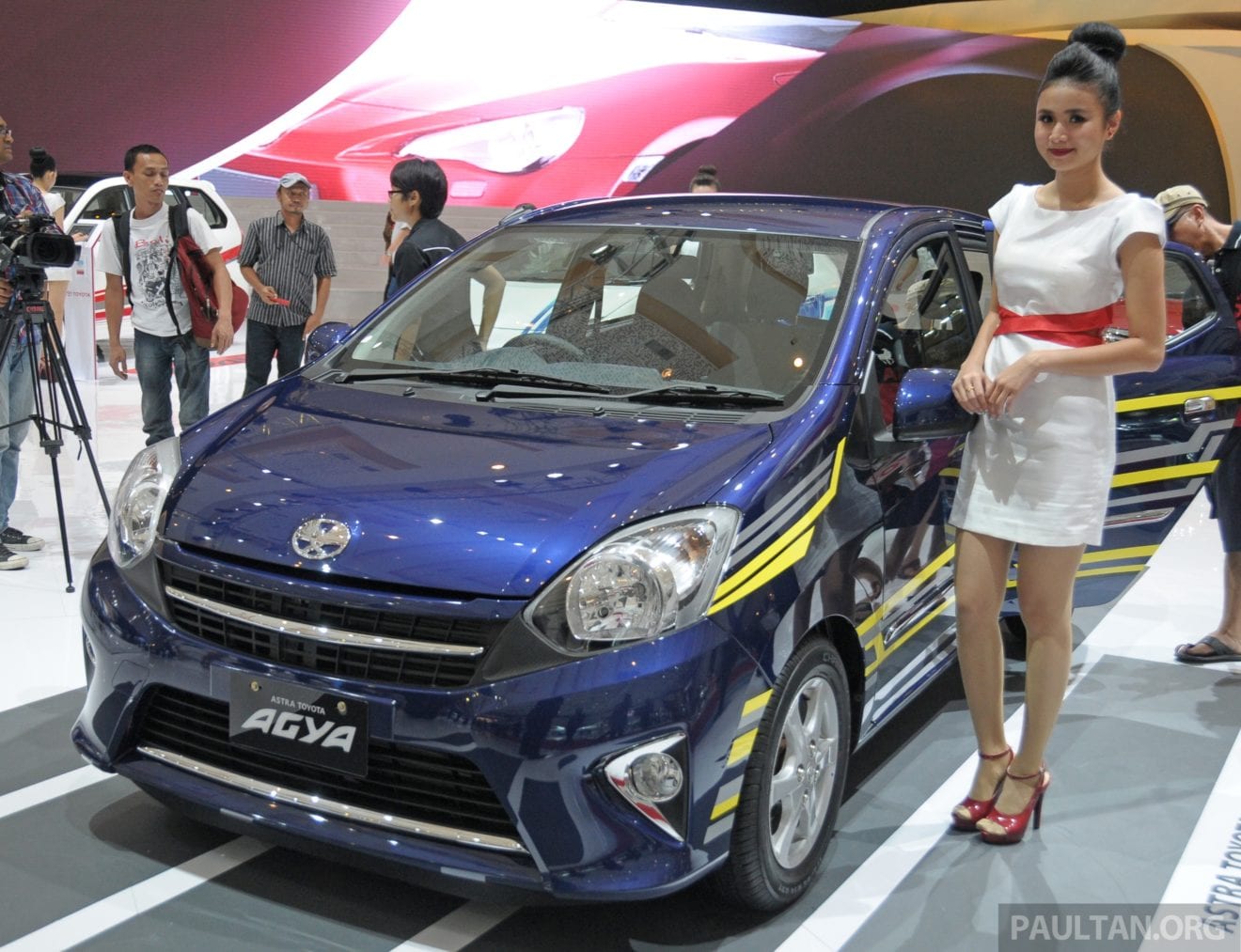
    Daihatsu will launch a new generation Agya or Ayla — a small car sold in Indonesia — by 2019 and it is the same car which is being explored for the Indian market, said year another person. “The company has also studied the possibility of launching the B segment SUV for India.”

  • Toyota, Daihatsu to set up joint emerging markets company

    Toyota, Daihatsu to set up joint emerging markets company

    Toyota Motor Corp on Tuesday said it will set up a joint internal company with subsidiary Daihatsu to develop and market compact vehicles in emerging markets, as Toyota aims to expand market share in other Asian markets.

    The Japanese automaker plans to establish the new unit in January, it said in a statement, adding that its operations would be led by compact carmaker Daihatsu, a Toyota group company which was absorbed by the automaker earlier this year.

    Daihatsu will be responsible for development, procurement and production preparations for compact cars while the two companies will use existing production sites to manufacture the compact vehicles.

    Toyota said the companies were considering possible markets including Vietnam, India and Pakistan.

    “With the establishment of the internal company, Toyota intends to learn the very fundamentals of Daihatsu’s competitiveness and change the way we work,” Toyota Executive Vice President Shigeki Terashi said in a statement.

    The companies intend to develop Daihatsu into a global brand as they focus on growing markets for entry-level compact cars, which are becoming smaller and energy efficient due to environmental and traffic concerns.

    Daihatsu holds around a 16 percent market share of the passenger car market in Indonesia, where it manufactures the Ayla and other vehicles in a joint venture with Astra International. In Malaysia, it operates a joint venture which has a market share of around 32.5 percent.

  • Thai auto sales pose dilemma for Vietnam

    Thai auto sales pose dilemma for Vietnam

    Statistics from the General Department of Vietnam Customs show that the foreign sector controls roughly 80% of the local car and automobile (excluding motorbike) retail market with a sales volume eclipsing all of Southeast Asia.

    thai auto sales pose dilemma for vietnam hinh 0

    Auto distributors and original equipment manufacturers (OEMs) based out of Thailand hold the largest share of the retail market followed by the Republic of Korea (RoK) and China in descending order of magnitude.

    Compared to Vietnam, Thailand’s success at attracting top brands the likes of Ford, Toyota, Honda and Nissan, is in large part attributable to the countries more favourable tax structure.

    Taxes and fees account for up to 50% of the final sales price of a vehicle manufactured in Vietnam, a figure that is more than 20% higher than the comparable taxes and fees charged in Thailand.

    Prior to the emergence of the ASEAN Economic community (AEC) the Vietnam government was able to regulate the local auto industry via the imposition of import tariffs and local taxes as appropriate.

    However, with the arrival of the AEC at the beginning of 2016 and the elimination of import tariffs pursuant to the ASEAN Trade in Goods Agreement, Thai auto sales in Vietnam have shot up rapidly.

    Under the agreement, the import tax on automobiles from Thailand and other ASEAN members – Myanmar, the Philippines, Malaysia, Singapore, Laos, Indonesia, Cambodia, Brunei and Vietnam – have dropped by 40-50% in 2016.

    They will continue to fall by another 30% in 2017 and be eliminated entirely by the end of 2018.

    Meanwhile, the Vietnam government has not concurrently reduced the taxes and fees on local manufacturing of autos and this explains, in large part, why vehicles produced in Thailand are less expensive.

    Notably, Thailand also has more than 2,000 OEMs, which has aided the country’s rise to become the biggest hub for auto and part exports not only to Vietnam but the entire Southeast Asian region.

    Without a doubt, say many leading experts, after 2018, the complete roll back of the import duty will put ownership of an automobile within reach of the majority of Vietnamese citizens.

    This, they say, could lead to explosive sales growth and a myriad of adverse consequences for the nation.

    It’s problematic because its puts excessive pressure on the public transport infrastructure, overburdens traffic systems and potentially threatens traffic congestion that would choke off commerce.

    Not to mention the threat to public health brought about by pollution and auto accidents, they say, noting the elevated need for the government to advocate strongly for effective policies that reduce auto use throughout the nation.


  • Toyota to introduce new safety features in future vehicles

    Toyota to introduce new safety features in future vehicles

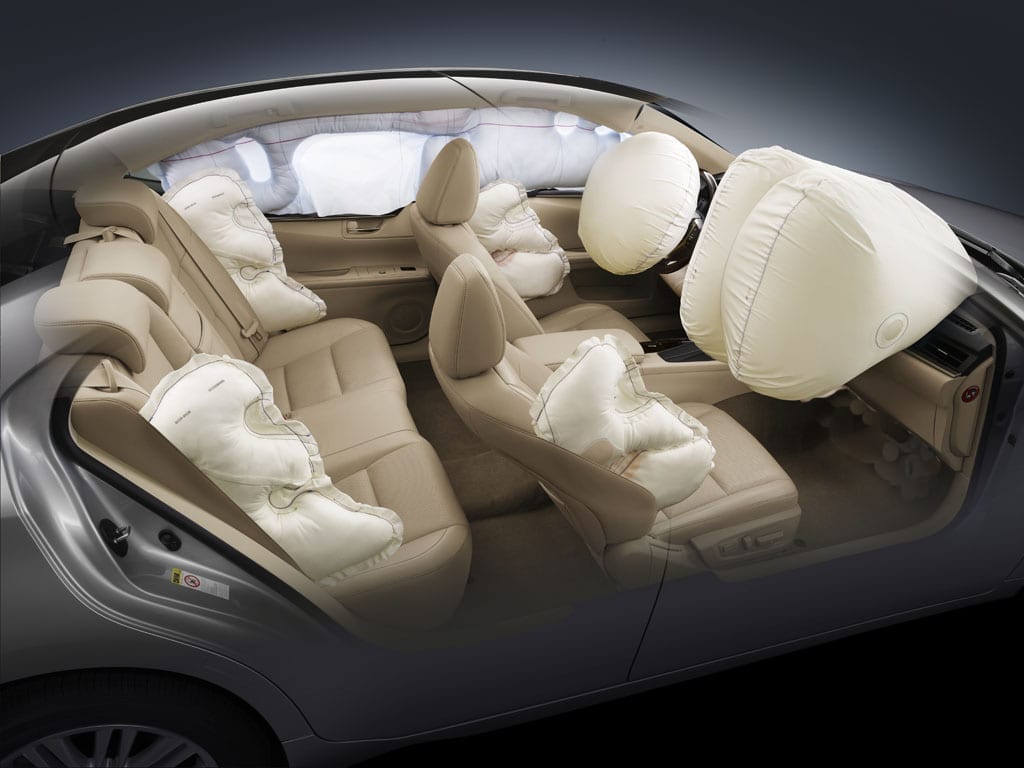
    Japanese auto major Toyota plans to introduce its new global architecture and latest safety technologies in future vehicles as it seeks to play a major role in bringing down fatalities in road accidents.

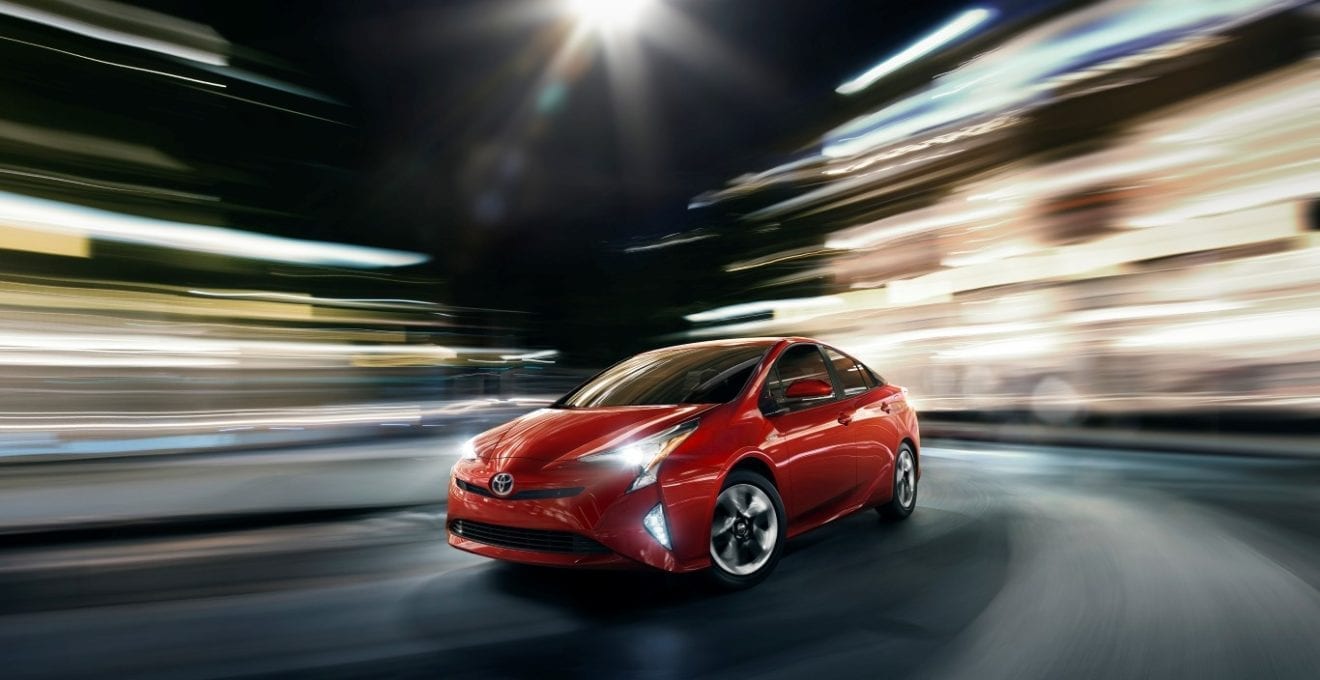
    The company, which has introduced its Toyota New Global Architecture (TNGA) in its 4th generation hybrid car Prius, plans to introduce it in its future models as well.

    Besides, it is also looking to introduce pre-collision system (PCS) in vehicles from next year in Japan, Europe and the US.

    “We have introduced the TNGA in the market with our 4th generation Prius. We will introduce it in vehicles following the Prius and eventually introduce it to all our products when there is a model change,” Toyota Motor Corporation Assistant Chief Safety Technology Officer Seigo Kuzumaki said here.

    Stating that TNGA has resulted in new collision safety body structure, he said in oblique frontal crash test, the new Prius has about 55 per cent decline in cabin deformation percentage compared to the previous 3rd generation.

    The test was conducted at a speed of 90 kmph as compared to 64 kmph done in the previous generation, he added.

    According to Toyota, TNGA incorporates wide reaching structural innovations that promises substantially improved basic performance and product appeal.

    Commenting on the PCS, Kuzumaki said: “The plan is to introduce this technology to our vehicles in Japan, Europe and the US in 2017. Later on, it will be rolled out country wise depending on suitability.”

    The PCS is a feature that helps prevent collisions using a camera and millimetre wave radar and engaging brake assistance system after warning when a driver fails to use brake.

    Although the company hasn’t specified a timeline for these technologies to be brought to India, it assumes significance as Indian roads account for registering the highest number of road fatalities in the world.

    Deaths due to road accidents in the country increased by around 5 per cent to 1,46,000 in 2015 from the previous year.

    As per WHO, fatalities due to road accidents globally were at 1.42 million people and is projected to increase to 1.85 million by 2030.

  • Toyota to Continue to Invest Big in Indonesia

    Toyota to Continue to Invest Big in Indonesia

    Toyota will continue its major investment plan in Indonesia, particularly in manufacturing, up to Rp20 trillion by 2020.

    PT Toyota Motors Manufacturing Indonesia (TMMIN) deputy president director Warih Andang Tjahjono in Tokyo, Japan, said Sunday, August 28, 2016, that Toyota has made Rp10 trillion investment of its planned investment in Indonesia, as promised by Toyota Motor Corp (TMC) president director Akio Toyota.

    “Major projects have been realized, the third plant has been completed,” he said.

    Since 2013, he went on, Toyota’s production capacity in Indonesia continues to increase, from 110,000 units to currently 25,000 units per day.

    According to Warih, the total TMC investment in the past few years have reached roughly Rp10 trillion, in which the biggest investment had been made to develop the production capacity of Kijang Innova and Fortuner at approximately Rp5 trillion, followed by the production of Sienta at around Rp2.5 trillion, and NR engine production with an investment value of roughly Rp2.3 trillion.

    “Investment will continue, although it would not be as big as the current investment,” Warih said.

  • Uber Japan about to launch UberEats

    Uber Japan about to launch UberEats

    Uber Japan is about to launch UberEats, with advertisements for bicycle and motorcycle delivery positions appearing on its Japan Facebook page last week, as well as a related video.

    An UberEats Japan website is already up, but only with a link for Tokyo restaurants to register.
    Launched in March, UberEats is available in 28 cities internationally.

    Generally, Uber has struggled in Japan, reports Tech in Asia. As regulations prevent drivers from accepting money from passengers in a private vehicle, Uber works more like a taxi. Its trial program in Fukuoka last year was shut down for paying drivers, and protests from taxi companies have prevented similar trials in other regions. There was also backlash from the taxi industry when Toyota invested in Uber this year.

    However, non-professional drivers can accept payments in areas where public transport is not available. Uber took advantage of this by launching a service with a non-profit organisation in Kyotango city.

  • Toyota, Daihatsu jointly debut new ‘green’ cars in Indonesia

    Toyota, Daihatsu jointly debut new ‘green’ cars in Indonesia

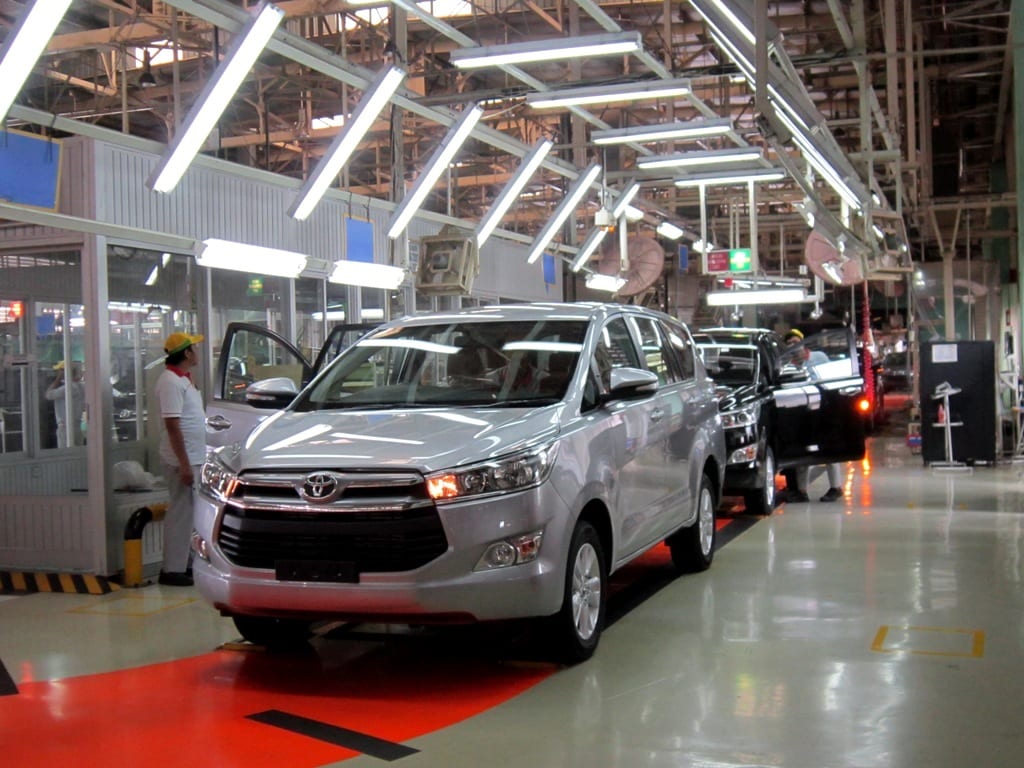
    Toyota Motor Corp. and Daihatsu Motor Co. jointly launched two different cars in Indonesia on Tuesday, a day after Toyota acquired all of Daihatsu’s shares.

    “It is a new relationship between Daihatsu and Toyota,” Daihatsu President Masanori Mitsui said during the launch in the industrial town of Karawang in West Java Province, where the cars are manufactured.

    Toyota launched the Calya, which means “perfect” in Sanskrit and will be sold at between $9,973 and $11,538, while Daihatsu launched the Sigra, which means “fast response” in the same language and will sell at between $8,153 and $11,461.

    The two companies earlier collaborated in producing the Avanza and Xenia in 2003, the Rush and Terios in 2006, and the Agya and Ayla in 2013.

    According to Mitsui, they have reached a huge achievement in production resulting from their cooperation.

    Toyota Managing Director Hiroyuki Fukui shared that view and said the collaboration will improve the companies’ performance amid tough global competition.

    The Calya and Sigra are multipurpose vehicles, which each can carry seven passengers. They are categorized into low-cost green car, a type of car highly encouraged by the Indonesian government.

    “Those kinds of cars in great demand, so we’re hoping for a positive response (from the market),” said Sudirman Maman Rusdi, president of PT Astra Daihatsu Motor, an Indonesian subsidiary of Toyota.

    According to him, his company has invested about 1.1 trillion rupiah (about $84.61 million) for the two cars’ production.

  • Toyota plans to cut 800 jobs in Thailand

    Toyota plans to cut 800 jobs in Thailand

    Toyota Motor Corp’s Thai unit has launched a voluntary redundancy program aimed at cutting around 800 subcontractors in Thailand due to economic problems in the southeast Asian country and abroad.

    Thailand’s economic slowdown, along with uncertainty over the global economy, have affected both the domestic automotive industry and exports since the beginning of the year, it said in a statement.

    That has caused a reduction in production volume, overtime hours and monthly income offered to employees, it said.

    The company has offered the redundancy package to around 800 subcontractors but more workers have applied for the scheme, Phuphal Samata, the president of Toyota Thailand Worker’s Union, told Reuters.

    “There isn’t overtime payment anymore, so many subcontractors may want to find other work and take this compensation package,” he said.

    Toyota commands about a third of the local auto market and has 18,000 workers in Thailand, 40 percent of whom are subcontractors, he said.

    Thailand is a regional production and export hub for the world’s top carmakers. The sector accounts for around 10 percent of the country’s gross domestic product.

    Domestic auto sales have declined almost every month on a yearly basis since May 2013 following the ending of a government car subsidy scheme in 2012.

    In January, Toyota forecast Thailand’s total domestic car sales would fall 10 percent in 2016 from a year ago to 720,000 units. It sees its own annual auto sales falling 9.8 percent from last year.

    Job cuts at Toyota are unlikely to spread to other automakers as the firm has hired many workers since the car subsidy scheme, said Surapong Paisitpattanapong, spokesman for the Federation of Thai Industries’ Auto Industry.

    “I don’t think others will immediately follow suit because May’s auto production, exports and domestic auto sales are growing. There’s still hope,” he said.

  • Toyota resumes production in all Japan plants after quakes

    Toyota resumes production in all Japan plants after quakes

    Japanese carmaker Toyota Motors on Friday resumed production at all assembly lines in the country after operations were halted at most facilities due to powerful quakes that struck the nation in April.

    A company spokesperson told EFE news that the last five production lines that had remained closed due to the quakes were back online.

    The carmaker was forced to halt production in 26 of its 30 plants in Japan due to shortages of components manufactured by suppliers near the Kumamoto and Oita prefectures, which were the worst affected in the quakes.

    The temporary halt in operations in those assembly lines had affected the production of around 80,000 units, according to Japanese daily Nikkei.

    Transport and communications in several parts of Kumamoto and Oita are still experiencing disruption after the tremors, the worst since the March 2011 earthquake that caused a devastating tsunami.

    The recent quakes have also led to the temporary closure of factories owned by Japanese and foreign firms.

    Automotive manufacturers Mitsubishi and Honda Motors, and electronics giant Sony, also halted production at their Japan factories.

    The first 6.5-magnitude earthquake hit the area on April 14, followed on April 16 by a powerful 7.3-magnitude earthquake that caused building collapses and landslides.

  • Astra car sales down 2.7 percent to 208,804 units in Q1

    Astra car sales down 2.7 percent to 208,804 units in Q1

    The countrys largest automotive company PT Astra International recorded a 2.7 percent decline year-on-year in car sales to 208,804 units in the first four months of the year.

    Based on data at the Indonesian Association of Motor Vehicle Industries (Gaikindo), Low Cost Green Cars (LCGC) contributed 34,209 units to the total sales by Astra Group.

    The sales in the first four month, however, was on the rise from 47,159 units in January to 49,933 units in February, to 54,508 units in March and to 57,204 units in April.

    The Astra group produces and sells Toyota, Daihatsu, Isuzu, Peugeot cars and UD Trucks. Sales have continued to be dominated by Toyota with sales reaching 111,710 units in the January-April period.

    Peugeot sales were the lowest in number reaching only 14 units. Sales of Daihatsu cars totaled 56,854 units, Isuzu 5,490 units, and UD Trucks 527 units.

    Sales of motorcycles produced by PT Astra Honda Motor (AHM) reached 1,439,241 units, down 13.5 percent from 1,664,395 units in the same period last year.

    Sales of non Astra cars in the first four months of the year totaled 177,316 units down 1.67 percent from 180,340 units in the same period last year.

    Sales of non Astra motorcycles totaled 543,263 units.

  • Toyota starts production of new engine at its Indonesia plant

    Toyota starts production of new engine at its Indonesia plant

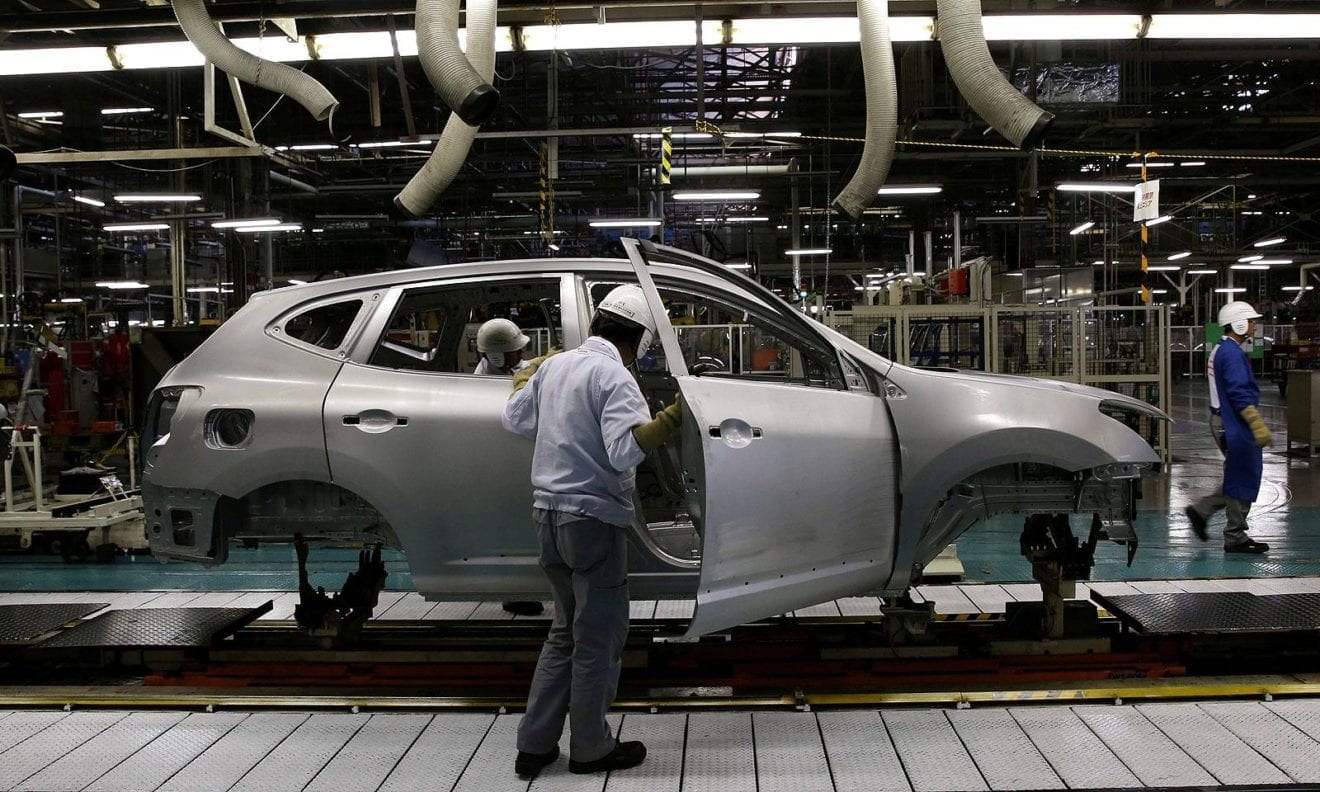
    Toyota Motor Manufacturing Indonesia has commenced production of engines at Karawang plant in West Java.

    Karawang plant has been built at a cost 2.3 trillion Indonesian Rupiah ($172m).

    The plant is expected to produce at least 216,000 engines per year by employing about 400 employees.

    The plant will produce 1.3 and 1.5 liter Toyota NR engines, which the company claims to be fuel efficient.

    According to the company, some of these engines are for export.

    Toyota already has four more plants in Indonesia, with two plants in Sunter and two more plants in Karawang. This is the third plant in Karawang.

    Speaking at the plant’s opening ceremony, Toyota’s senior managing officer Koei Saga said: “Toyota sees TMMIN as one of our core hubs for the production and supply of both vehicles and engines.”

    “Through our operations here, we hope to maintain and strengthen our position as part of the local community here in Indonesia.”

    The Japanese car manufacturer said that it wants to achieve a sustainable growth which is a significant shift from its previous strategy of high-volume production.

    It says that it wants to build plants which are safer and more environmentally friendly where innovative production techniques could be introduced.

    At this plant, Toyota is introducing two major production technologies including on-site melting, which it is deploying for the first time outside Japan.

    The company is introducing a smaller furnace which reduces the risks associated with transporting the molten alloy and improves safety.

    By using smaller furnaces, Toyota has also been able to keep the cost at minimum.

    Toyota is also introducing inorganic sand cores which will be placed inside casting molds to create cavities for final cast components.

    Earlier organic materials were being used which produce tar particles and strong odors. To remove these impurities, large dust collectors and deodorizers are required.

    By introducing inorganic materials, Toyota hopes to reduce the use of these dust collectors and deodorizers.