Tag: Toyota

  • Toyota Invests $1.33 Billion To Upgrade Georgetown, Kentucky Plant

    Toyota Invests $1.33 Billion To Upgrade Georgetown, Kentucky Plant

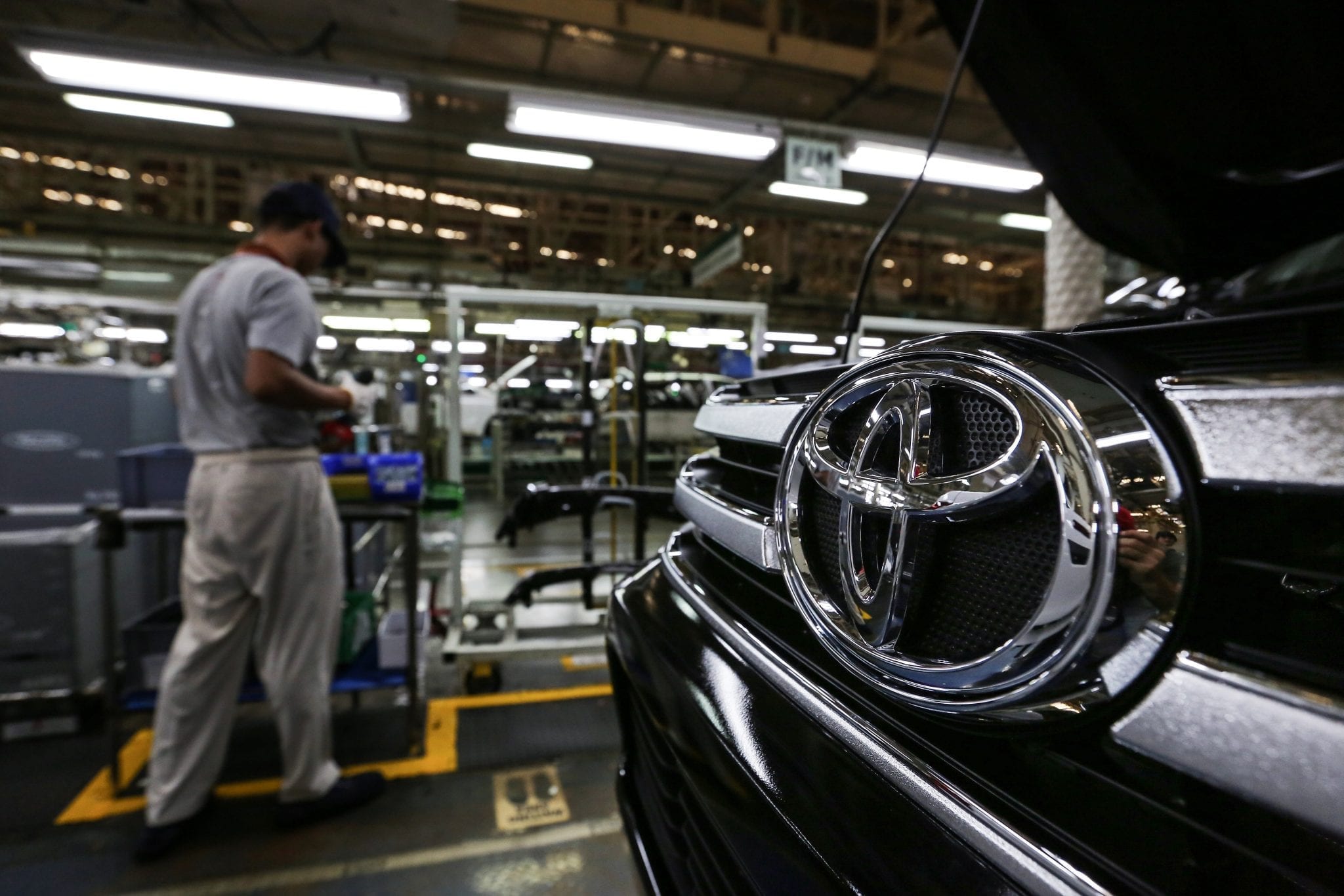
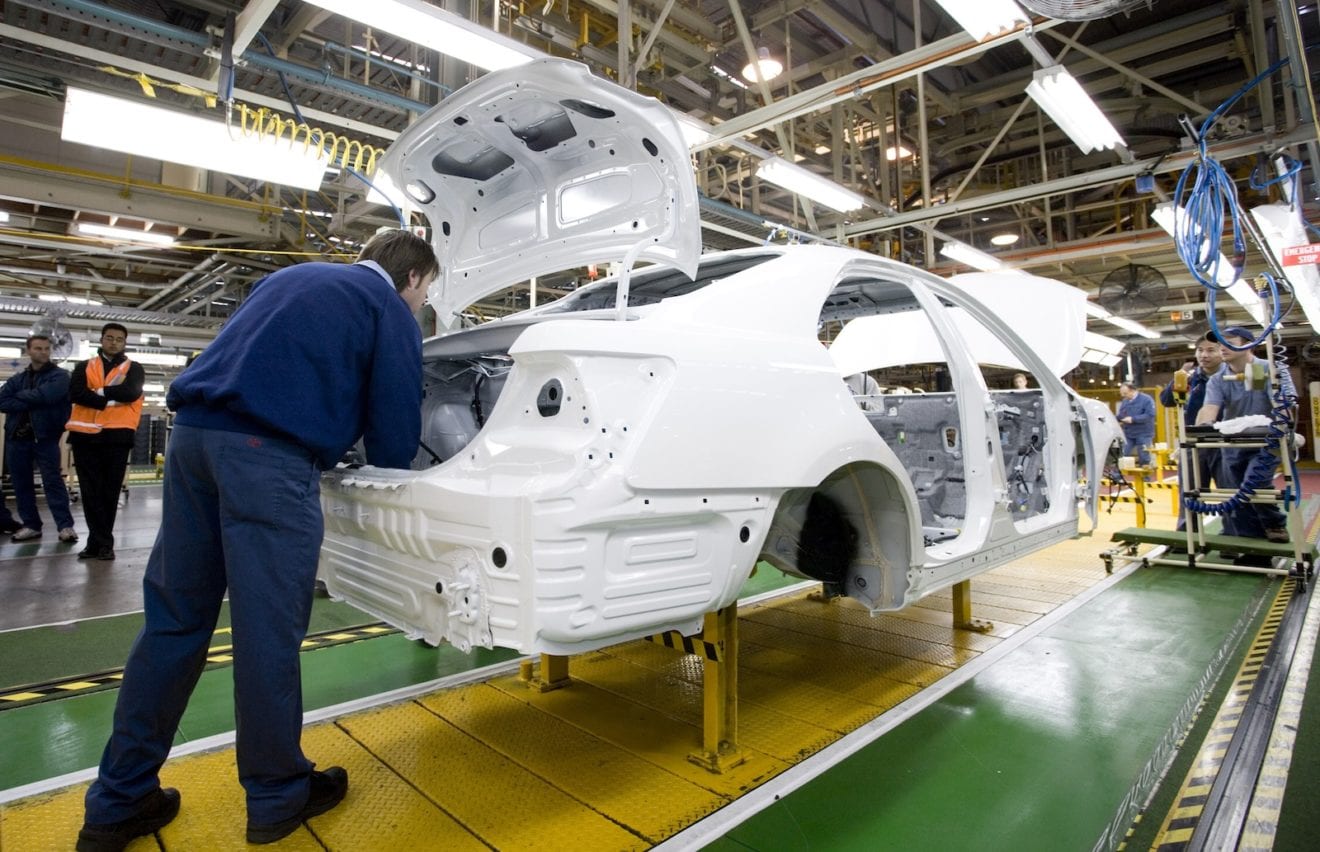
    A $1.33 billion investment will make Toyota Motor Manufacturing, Kentucky, Inc. the first plant in North America to begin producing vehicles using Toyota New Global Architecture.

    Toyota’s Kentucky assembly plant located in Georgetown, 13 miles north of Lexington and 71 miles east of Louisville, is the automaker’s largest in the world employing 8,200 team members. This represents an all-time high after recently adding over 700 people to support the upcoming launch of the 2018 Camry.

    Last year, TMMK produced nearly a quarter of the total number of Toyota vehicles produced in North America, over 500,000. In total, the plant has produced more than one-third, 11 million, of all Toyota vehicles manufactured in North America since 1986.

    Today’s announcement adds to the $530 million investment the plant committed to in 2013, in part to support Lexus production, the carmaker said. This brings Toyota Kentucky’s investment in the last four years to approximately $1.86 billion.

    “This $1.33 billion investment is part of Toyota’s plan to invest $10 billion dollars in the U.S. over the next five years, on top of the nearly $22 billion Toyota has invested in the U.S. over the past 60 years,” said Jim Lentz, CEO of Toyota Motor North America.

    “Toyota New Global Architecture is about exciting, ever-better vehicles for our customers as it will improve performance of all models, including increased fuel efficiency, more responsive handling, and a more stable, comfortable feel while driving,” he added.

    “This is the largest investment in our plant’s history and it speaks directly to the quality of our people and our products, as well as the partnerships we’ve forged in the local community and across the state,” said Wil James, president, Toyota Motor Manufacturing, Kentucky, Inc. (TMMK). “This major overhaul will enable the plant to stay flexible and competitive, further cementing our presence in Kentucky.”

    “Toyota is a global icon. This $1.33 billion investment is further proof of their commitment to producing American-made cars that are among the finest quality found anywhere in the world,” said Governor Matt Bevin. “It also serves as a testament to the hard work and dedication of the plant’s current employees, and reaffirms Toyota’s confidence in the advantages of manufacturing in Kentucky. We are grateful that this significant investment further validates the fact that Kentucky is the engineering and manufacturing hub of excellence in America.”

    “This major investment further solidifies Toyota’s long-term commitment to its Kentucky plant,” said Secretary Terry Gill of the Kentucky Cabinet for Economic Development. “Its ripple effects will add to Toyota’s three decades of transformative impact on our communities and for our residents across the Commonwealth. Additionally, this strengthens Kentucky’s status as a top state for auto manufacturing.”
  • Toyota aims to boost Brazil exports with locally made engines

    Toyota aims to boost Brazil exports with locally made engines

    Toyota Motor will soon begin selling Brazilian-made Corollas in Peru, executives said on Thursday, and is in advanced studies to export from Brazil to Chile and Colombia in a push to make its South American plants more competitive.

    Steve St. Angelo, Toyota’s most senior executive in the region, said the exports to Peru were part of a long-term plan to integrate Brazilian operations with the rest of Latin America, which has long imported Corollas from the United States.

    Toyota’s Brazilian factories, which exported only to Argentina when St. Angelo arrived in 2013, also send the mid-sized Corolla sedan and smaller Etios to Uruguay and Paraguay now.

    Toyota has invested in a new engine plant and engineering facilities in Brazil, which St. Angelo said would be key to lifting the domestic content of the Corolla and Etios from about 60 percent currently. As Brazilian plants import fewer parts, they should be able to export more competitively to new markets, he said.

    Rafael Chang, the company’s new chief executive in Brazil, said he hoped to have news “soon” on exports to Chile and Colombia.

    Toyota’s exports from Brazil rose nearly 10 percent in 2016 to about 43,000 cars, of some 176,000 vehicles produced in the country last year.

    “We’re trying to diversify our Brazilian operations, so we’re not so dependent on this one economy,” St. Angelo told journalists at a launch event for the new Corolla in Brazil.

    Brazil’s worst recession in more than a century has nearly halved auto sales since 2012, battering automakers’ profitability and leading them to cut some 35,000 workers.

    Auto factories in Brazil are still using less than half of installed capacity, as high unemployment and tight credit pinch demand. St. Angelo acknowledged that Toyota had struggled to turn a profit in the country during the recession.

    “We’re not going to break even this year,” he said of the Brazilian business, adding that Toyota had not finalized its projections for the fiscal year. “We’ve been doing an unbelievable amount of cost cutting. Everyone is sacrificing.”

    St. Angelo said an overhaul of Argentine operations had also diversified exports from that country beyond just Brazil to include Honduras, Guatemala, Peru, Chile and Colombia.

  • Japan’s Toyota to look at Saudi production as the countries seek closer ties

    Japan’s Toyota to look at Saudi production as the countries seek closer ties

    Toyota Motor signed a memorandum of understanding (MOU) on Tuesday with a Saudi Arabian government agency to conduct a feasibility study into producing vehicles and parts in the Middle Eastern nation.

    The move, if firmed up, would be a big step for the Saudi economy as the government tries to diversify beyond oil exports and create jobs as part of the kingdom’s 2030 Vision.

    So far, Saudi Arabia and other Gulf oil exporters have failed to significantly develop industries such as automaking because they lack broad industrial bases and a skilled local workforce.

    “The study would take into account the evaluation of development of a local supply base using materials produced by major Saudi companies like Sabic, Maaden, Petro Rabigh, and other major industrial companies in the kingdom,” the official Saudi state news agency reported.

    The MOU is with Saudi Arabia’s National Industrial Clusters Development Program (NICDP).

    Meanwhile, state-run Saudi Aramco has signed MOUs with five Japanese entities during a business forum that both nations hosted on Tuesday, coinciding with a visit by Saudi Arabia’s King Salman this week.

    Saudi Aramco and Japan’s biggest oil refiner JX Nippon Oil & Energy (5020.T) agreed to consider a refinery joint venture in a third country and cooperation in trading and technology of oil and petrochemical products.

    Aramco also agreed to consider a possible future cooperation in crude oil supply and downstream business with Idemitsu Kosan Co (5019.T).

    In addition, Aramco and state-run Japan Oil, Gas and Metals National Corp (JOGMEC) formally agreed to expand crude storage capacity in Japan by 300,000 kilolitres (about 1.9 million barrels) from the current 6.3 million barrels from April 1.

    Japan treats crude oil stored by Aramco as quasi-government oil reserves, counting half of the barrels stored by Aramco as national crude reserves.

    Companies and government organizations in both nations signed a total of 20 MOUs on Tuesday, including cooperation between the Saudi Arabian General Investment Authority (SAGIA) and Japan’s three megabanks – Mitsubishi UFJ Financial Group (8306.T), Sumitomo Mitsui Financial Group (8316.T) and Mizuho Financial Group (8411.T) – on increasing investments in the kingdom.

    The MOUs also included cooperation in seawater desalination.

  • President Jokowi receives Toyota Motor executives

    President Jokowi receives Toyota Motor executives

    President Joko Widodo (Jokowi) received Toyota Motor Corporation executives led by the companys president, Akio Toyoda, at Merdeka State Palace here on Monday.

    “In 2015, Jokowi visited Toyota in Japan, and today we have presented a report on the several commitments of Toyota in Indonesia,” PT Toyota Motor Manufacturing Indonesias (TMMIN) deputy president director Warih Andang Tjahjono said after the meeting.

    He stated that Toyota has expressed its commitment to continue to participate and contribute to the development of automotive industry in Indonesia through investment, exports, manpower, and human resource development.

    Tjahjono was introduced to the president as the new president director of TMMIN. He would replace Masahiro Nonami starting from April 1, 2017.

    Warih would be the first local person to be in the top position of the affiliation company of Toyota Manufacturing in the Asia-Pacific region.

    Nonami, who had held the post as TMMIN president director since 2010, would take over a new position in TMMIN.

    The meeting between the president and Toyota Motor Corporation executives lasted around 30 minutes from 9.35am to 10.15am

  • Toyota sees Europe sales up 5 pct this year as hybrids push pays off

    Toyota sees Europe sales up 5 pct this year as hybrids push pays off

    Toyota Motor expects to increase its European sales by 5 percent this year to 975,000 vehicles and maintain its market share of around 5 percent, buoyed by the popularity of hybrids, its regional head said on Monday.

    Speaking ahead of the Geneva auto show, Johan van Zyl said sales of hybrid vehicles in Europe rose 40 percent last year and made up 32 percent of all sales in the region. For Toyota, Europe counts 56 countries, including Israel, Russia and Turkey.

    “We are on our way of achieving our target of having 50 percent of our mix in hybrids by 2020,” he told journalists.

    The executive said the outlook for Europe was clouded by upcoming elections, Britain’s pending exit from the European Union and persistent difficulties in the Russian and Turkish markets.

    He expects industry-wide sales in Europe to rise 1 percent this year. He said any increase in the western part of the region would likely be absorbed by some weakness in Britain, and expects some recovery in Russia.

    Van Zyl said PSA’s announcement on Monday that it would buy Opel from General Motors Co, creating Europe’s second biggest carmaker after Volkswagen AG, would not affect its own strategy.

    “We have no intention at the moment to alter any of our plans with regards to how we’re going to compete in the industry, we’ve got a very clear strategy,” he said, adding that Toyota would keep focusing on the A, B and C segments, keeping hybrids as its differentiator.

    “We are not a volume chaser, we want to create a sustainable, growing business in Europe,” he added.

    Van Zyl said Toyota was fully committed to its operations in the UK regardless of how the negotiations around Brexit pan out, but added that the carmaker was seeking to make the business more efficient.

    “The prudent approach is always to prepare yourself for the worst-case scenario. If we prepare for that and it’s better, then we are OK,” he said.

    He declined to comment on future production plans there other than saying Toyota “will produce vehicles in the UK”.

    Didier Leroy, Toyota’s executive vice president, added that a next-generation fuel cell car the group is developing with BMW will be ready in three to five years, while a separate project to develop a sports car with the German carmaker was ongoing.

    “The project has been globally approved, that means clearly that we will do it,” he said, but declined to give a timeline for when it would be produced.

  • Toyota sees plug-in hybrids catching on faster than conventional hybrids

    Toyota sees plug-in hybrids catching on faster than conventional hybrids

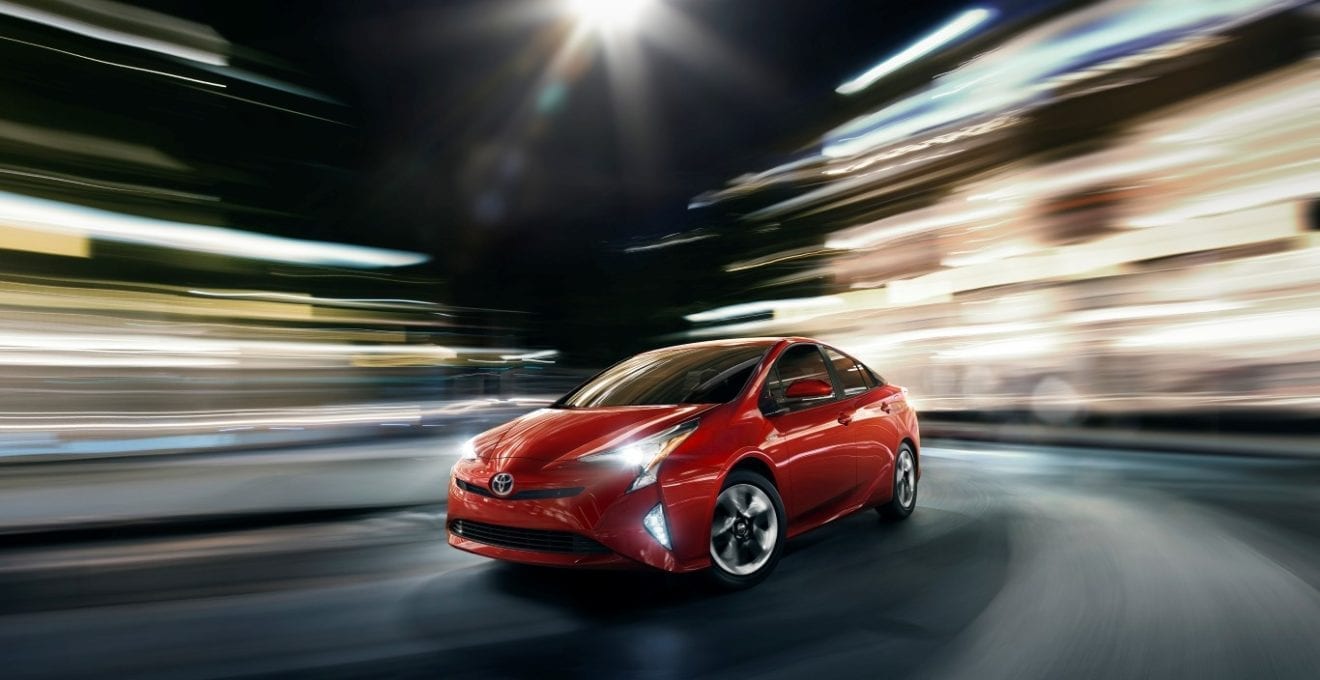
    Toyota Motor’s chairman, who led the development of the Toyota Prius, expects the latest plug-in hybrid vehicles will catch on with consumers far more rapidly than the original Prius did.

    Known as the “father of the Prius” for his role in popularizing the world’s best-selling hybrid car, Takeshi Uchiyamada said he expected to sell 1 million plug-in hybrids in less than 10 years, the time it took for sales of its conventional hybrid vehicles to hit that mark.

    “Environmental awareness has become a bigger issue today than it was 20 years ago, and demand for environmentally conscious products has increased,” Uchiyamada told reporters at an event to launch the latest plug-in version of the Prius in Japan.

    While the technology for plug-ins has developed rapidly, lowering costs, Uchiyamada said he had “no idea” exactly when plug-in sales would hit the 1 million mark. Since launching the original Prius, in 1997, Toyota has developed hybrid versions for around 40 of its models, and has sold a total of 10 million hybrid vehicles globally.

    Launching the second generation of the Prius PHV in Japan on Wednesday, Toyota said it expects to sell up to 60,000 worldwide a year, with more than half of the sales coming from Japan.

    Toyota set a similar target for the first generation of its plug-in Prius, of which only around 75,000 have been sold since its launch in 2012, largely due to its limited electric range of 26.4 kilometres.

    The latest version has a range of 42 miles according to Japanese standards. Due to a different methodology in measuring a car’s electric mode range, the vehicles’ range is listed in the United States as around 25 miles.

    Launched as the Prius Prime in North America late last year, the plug-in Prius will be introduced in Europe from March. Uchiyamada declined to comment on plans to offer plug-in versions of other models.

    The latest plug-in Prius sees Toyota widely endorsing lithium ion batteries, marking a turning point for the company which for years had resisted the technology commonly used in all-battery electric vehicles, due to concerns over their cost, size and safety.

    While rivals including Nissan Motor Co. and Tesla Inc. have marketed electric cars for nearly a decade, Toyota has promoted fuel cell-powered vehicles as the most sensible next-generation option to hybrids, although a lack of hydrogen fueling stations remains a major hurdle for mass consumption.

    But as more automakers develop electric cars in response to tightening global emissions regulations, Toyota late last year set up a new division to speed up development of long-range electric cars.

  • Toyota Philippines To Increase Production Despite Looming Excise Tax

    Toyota Philippines To Increase Production Despite Looming Excise Tax

    Toyota Motors Philippines (TMP) has made it clear that it is still looking at increasing its production in 2017. This is despite a looming excise tax that may soon be imposed in the industry and bring vehicle retail prices significantly up.

    Modest production target to begin with

    “We’re projecting a minimum 10 percent growth. So this year we started conservatively. Of course, the looming excise tax is an issue that we have to be aware of,” Business World Online quoted TMP Vice-Chairman Alfred Ty as saying. The company has long been committed to increasing its production as part of its involvement in the Comprehensive Resurgence Strategy (CARS) Program that had been established during the Aquino administration. Aside from TMP, Mitsubishi Motors Philippines Corporation has also agreed to participate in the CARS program.

    The goal had been to produce at least 200,000 vehicles in a span of six years, averaging at 33,333 vehicles each year. In 2016, TMP managed to produce as much as 55,028 units, with its top-selling Vios and Innova vehicles assembled in its facility in Laguna.

    Tax will hurt luxury vehicles the most

    Ty has also said that since the looming excise tax will impact the luxury market more, he believes the impact may be small. “We understand where we’re coming from but we also have to be careful not to kill the market because again the luxury cars from this country do not even comprise 1 percent of the total cars,” he explained. This would readily affect Toyota’s Camry and Fortuner models.

    According to a report from Business Mirror, a vehicle selling from P600,000 to P1.1 million will be subject to an excise tax of P24,000 plus 40 percent of the value in excess of P600,000. Meanwhile, higher priced vehicles will be subject to significantly higher tax. For instance, vehicles with a retail price of P2.1 million may face a tax amounting to P1.22 million. Vehicle buyers would also have to pay 200 percent of the value exceeding P2.1 million in additional tax.


  • Toyota adds 400 jobs to boost Princeton SUV capacity

    Toyota adds 400 jobs to boost Princeton SUV capacity

    Toyota said on Tuesday it would add 400 jobs at its Princeton, Indiana, vehicle assembly plant as part of a US$600m spend to meet “strong and growing demand” for the Highlander midsize SUV and modernise the entire factory.

    Funding will be used for retooling, new equipment and technology to make the plant more competitive.  The project is scheduled to begin in autumn 2019 and will add capacity for 40,000 extra vehicles annually.

    “This expansion project is part of Toyota’s localisation strategy to build vehicles where they are sold,” the automaker – recently criticised by President Trump for its new NAFTA Corolla plant under construction in Mexico – said in a statement.

    Toyota reiterated CEO Jim Lentz’s recent Detroit show announcement Toyota Motor North America would “invest an additional $10bn in the US over the next five years. This investment will be used to make the existing plants even more competitive”.

    Toyota responded earlier to Trump’s pre-inauguration criticism by emphasising its contribution to the US economy. “With more than $21.9bn direct investment in the US, 10 manufacturing facilities, 1,500 dealerships and 136,000 employees, Toyota looks forward to collaborating with the Trump administration to serve in the best interests of consumers and the automotive industry,” the company said previously.

    Toyota said its Tuesday announcement showed its commitment to continued US investment. The 20 year old Princeton plant produced a record 400,000-plus vehicles last year.

  • Toyota to invest $10 billion over the next five years

    Toyota to invest $10 billion over the next five years

    Toyota Motor will invest $10 billion in the United States over the next five years, the same as in the previous five years, North America Chief Executive Jim Lentz said on Monday, to meet demand and upgrade plants to build more fuel-efficient models.

    The Japanese automaker has come under fire by President-elect Donald Trump for its plans, announced in 2015, to shift production of its Corolla to Mexico from Canada.

    Lentz said in an interview at the Detroit auto show the decision was not in response to Trump’s remarks made in a recent tweet, but was part of Toyota’s business strategy to invest in the United States, where it has 10 plants in eight states.

    Planning for the new Mexico plant began about two years before it was announced in 2015, said Lentz, describing such decisions as long-term ones.

    Lentz said he had not spoken with Trump.

    The $10 billion includes Toyota’s new North American headquarters in Texas that is under construction and major improvements to its plants.

    Toyota plans to expand some of its U.S. plants over the next five years, said Lentz, declining to say if that effort would boost jobs. Toyota, which employs 40,000 in the United States, added more than 5,000 U.S. jobs over the last five years, he said.

    Toyota President Akio Toyoda appeared at the show later on Monday to tout the company’s investment plans and its updated flagship Toyota Camry that is built in Kentucky.

    “We are deeply grateful to the millions of customers who have made Camry the number one selling car in America for the last 15 years,” Toyoda said.

    Lentz said “everyone” agrees with Trump’s goals of boosting manufacturing and U.S. employment, in part because “it helps us sell more cars.”

    “We have to run our business as a global business,” he said. “I have to make sure that we are competitive.”

    The company is focused on reminding policymakers in Washington about its extensive U.S. manufacturing operations, Lentz said.

    Lentz said Vice President-elect Mike Pence, who was Indiana governor, knew Toyota well because of its manufacturing operations in the state.

    He warned that a “border adjustability tax,” like the one proposed by Trump if the carmaker builds the Corolla in Mexico instead of the United States, could hike the price of cars and hurt auto employment.

    Such a tax could add $1,000 to cost of a Kentucky-built Camry because of some foreign-made parts.

    After the critical tweet from Trump, “you have to respectfully state your position and then move on,” he said.

  • Toyota recalls 18,757 Lexus cars

    Toyota recalls 18,757 Lexus cars

    Russian standards agency Rosstandart said on Monday it had been informed about a voluntary recall by Toyota of 18,757 Lexus NX 200, NX 200t and NX 300h cars which had a fault in their braking systems.

    The recall affected cars sold after Sept. 11 2014, the agency said in a statement.

  • Toyota Indonesia to see exports down by 5 percent this year

    Toyota Indonesia to see exports down by 5 percent this year

    Car manufacturer PT Toyota Motor Manufacturing Indonesia (TMMIN) expects to see its exports fall by 5 percent this year mainly due to low demand in the Middle East.

    TMMIN vice president director Warih Andang Tjahjono said, a protracted security crisis in the Middle East and global oil price decline had impacted car demand in the region. Thus, the company will see its car exports down to 165,000 units this year from 176,000 units last year.

    Car exports to Saudi Arabia, which makes up 50 percent of the company’s exports to the Middle East, saw a 30 percent decline this year, the biggest in the region. The Middle East and Asia are the biggest markets for Toyota cars, contributing more than 50 percent to the company’s exports, Warih said.

    While demand in the export market declined, domestic demand for Toyota cars has grown above the industry’s average.
    As of November, Toyota car sales had risen by 19 percent year-on-year compared to the corresponding period last year, Toyota Astra Motor vice president director Henry Tanoto said.
    “We predict our domestic car sales will reach between 375,000 and 380,000 units by year-end,” he said

  • Toyota recalls 66,830 imported Lexus cars in China

    Toyota recalls 66,830 imported Lexus cars in China

    The Chinese unit of Toyota Motor Corp will recall 66,830 imported Lexus brand vehicles in the country over potential safety issues, China’s quality watchdog said on Friday.

    Some Lexus models, made between June 2014 and December 2016, have problems with their braking software, China’s General Administration of Quality Supervision, Inspection and Quarantine said on its website.

    In October, Toyota issued a recall for about 5.8 million cars in Japan, Europe and China over potentially faulty airbag inflators made by Takata Corp. In June

    The notice urged consumers to immediately contact dealers for inspection and said current stock vehicles will be sold in the absence of defects.

  • Toyota chief shifts gear, to boost electric vehicle division

    Toyota chief shifts gear, to boost electric vehicle division

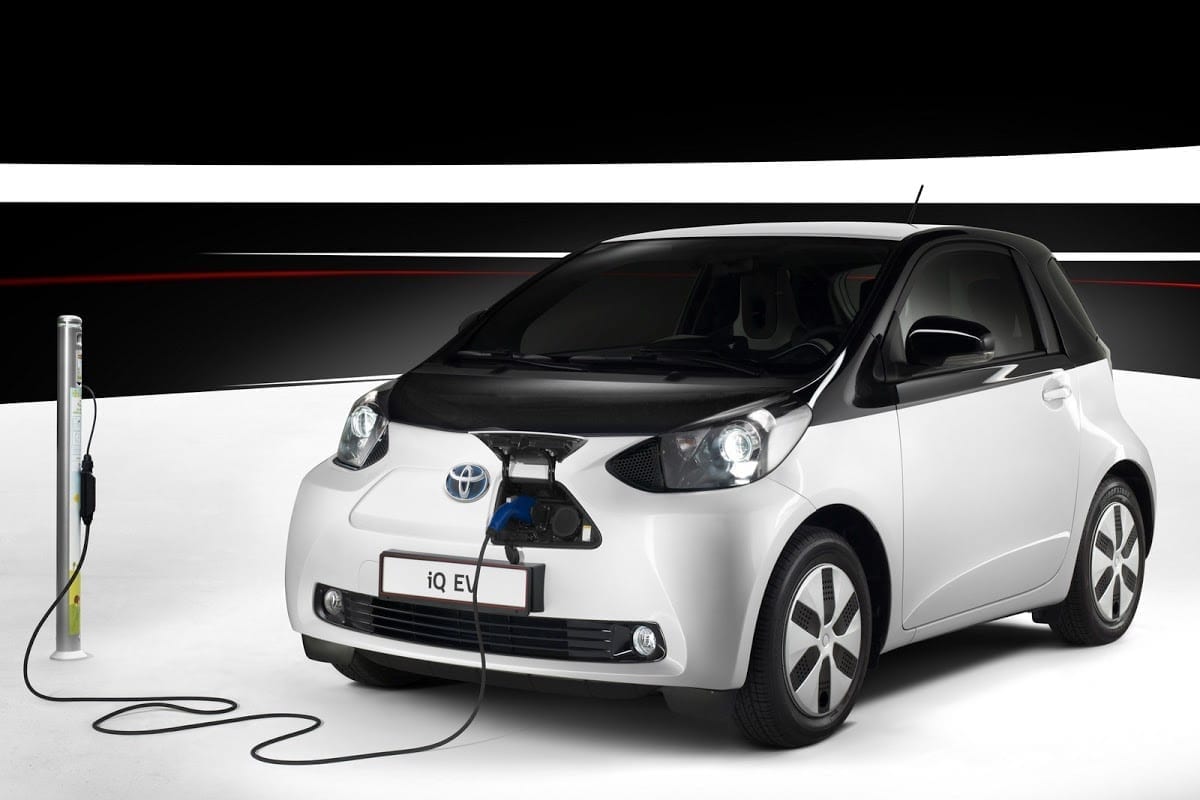
    Toyota Motor Corp on Wednesday appointed its president to lead their newly formed electric car division, flagging its commitment to develop a technology that the automaker has been slow to embrace.

    The change comes as the United States, China and European countries are encouraging automakers to make more all-electric battery cars as they push alternative energy strategies.

    Akio Toyoda, grandson of the company’s founder Kiichiro Toyoda, has been at the helm of the world’s largest automaker since 2009. He will head the company’s electric vehicle (EV) planning department along with Executive Vice Presidents Mitsuhisa Kato and Shigeki Terashi.

    “By putting the president and vice presidents in charge of the department, we plan to speed up development of electric cars,” said Toyota spokeswoman Kayo Doi, following a personnel change announcement by the company.

    “The president will directly oversee the department’s operations to enable decisions to be made quickly and nimbly.”

    The department comprises a new in-house unit to plan Toyota’s strategy to develop and market electric cars as part of the company’s efforts to keep pace with the tightening global emissions regulations.

    Toyota is also shifting the chief engineer of its Prius petrol-hybrid to its EV efforts, appointing Koji Toyoshima to head the division’s engineering team. Toyoshima will also join the four-member EV strategy unit, which will include representatives from group suppliers – Denso Corp, Aisin Seiki Co, and Toyota Industries Corporation.

    Rivals such as Nissan Motor, Volkswagen and Tesla Motors have touted pure electric cars as the most viable zero-emission vehicles.

    However, Toyota until recently said it favored EVs for short-distance commuting given their limited driving range and lengthy charging time. It has been investing heavily in hydrogen fuel-cell vehicles (FCVs), which the company considers as the ultimate “green” car.

    Earlier this month, Toyota said it will develop cars with up to 15 percent greater range and battery life in the next few years.

  • Toyota recalls 838,000 Sienna minivans to fix sliding door issue

    Toyota recalls 838,000 Sienna minivans to fix sliding door issue

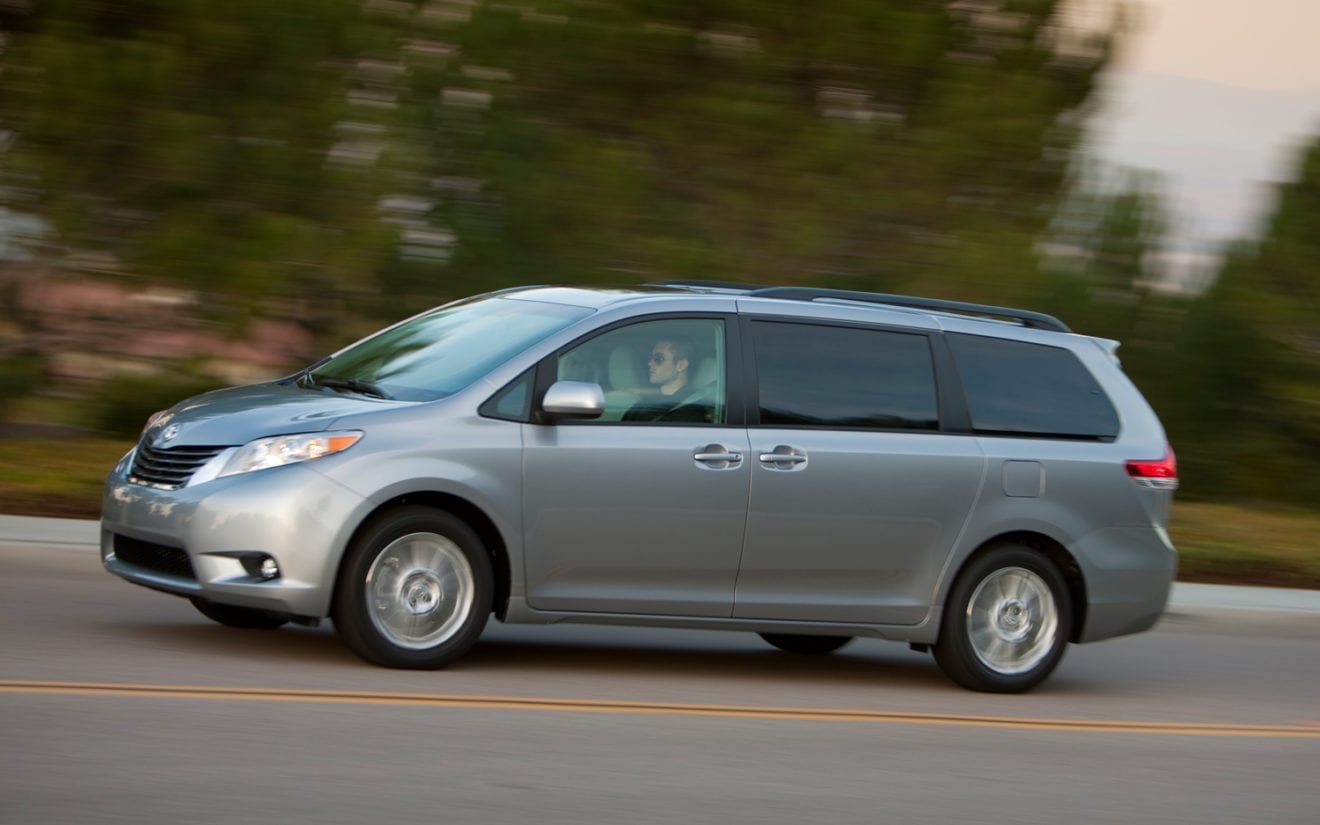
    Toyota Motor Corp said it was recalling about 838,000 Sienna minivans to fix an issue that may arise while operating sliding doors of the vehicles.

    The recall affects about 744,000 vehicles in the United States and nearly 4,000 vehicles in South Korea and Taiwan, a Toyota spokesman said on Tuesday.

    “Toyota would like to refrain from commenting whether there were any injuries or crashes as a result of the safety flaw,” the spokesman said.

  • Toyota says aims to develop advanced electric-car battery in a few years

    Toyota says aims to develop advanced electric-car battery in a few years

    Toyota Motor Corp said it aims to develop a new, more advanced electric-car battery “in a few years” that will allow the Japanese automaker to come up with an electrified vehicle with driving range and battery life enhanced by up to 15 percent.

    Such performance-enhanced lithium-ion battery technology will likely enable all its electrified vehicles to be improved, Toyota said.

    “Lithium-ion battery is a key technology for electrifying cars, and there is a clear need, going forward, for improving this technology and its performance even more,” Hisao Yamashige, a battery technology researcher at Toyota, told a media briefing in Tokyo on Thursday.

    Improving the performance of lithium-ion battery technology is a pressing issue for traditional automakers such as Toyota and new entrants such as Tesla Motors Inc because of its limiting characteristics.

    Producers of all-electric battery cars, plug-in electric hybrids, as well as conventional gas-electric hybrids are all striving to source or develop more advanced battery technologies to give their electrified cars a better driving range, battery life, and safety.

    Toyota, Japan’s biggest automaker by volume, has pioneered gasoline-electric hybrids technology and is gearing up to launch a new, near-all-electric plug-in hybrid car called the Prius Prime. It also has recently said it is aiming to come up with an all-electric battery car by 2020.