Tag: Toyota

  • Vietnam’s 2018 monthly car sales highest in October

    Vietnam’s 2018 monthly car sales highest in October

    October sales of 28,899 cars made it the best month of the year so far, according to Vietnam Automobile Manufacturers’ Association (VAMA). This was 3,811 cars more than the 25,088 sold in September or a 15 percent rise, a VAMA report says.

    October sales of passenger cars by VAMA members climbed 25 percent month-on-month to 21,288.

    During the same period, sales of commercial vehicles dropped 7 percent to 7,096 and that of special-purpose vehicles were up 31 percent to 515, the report says.

    While 17,599 domestically assembled cars were sold in October, up 2 percent, the number of imported completely built units (CBUs) sold was 11,300, up 46 percent over September.

    Toyota remained the leading brand last month, with sales rising 30 percent over the previous month to 8,426 units.

    Truong Hai (Thaco) group, local assembler and distributor of brands such as Kia, Mazda, Peugeot and Hyundai, and a significant player in the commercial vehicle segment, reported a 29.2 percent rise over September in group sales to 8,175 units.

    Compared to September, Ford’s sales were 9.2 percent higher at 2,574 units; while Honda sales rose 12.4 percent to 3,475 units.

    In the first 10 months of the year, VAMA members sold a total of 223,326 vehicles, up one percent over the same period last year.

  • JD and Toyota partner to expand auto services business

    JD and Toyota partner to expand auto services business

    FAW Toyota, a joint venture between Toyota Motor Company and First Automobile Works, has launched a flagship store on JD.com, China’s largest retailer, allowing customers in China to purchase and schedule maintenance services online and then bring their vehicles to FAW Toyota’s offline service centers at their convenience.

    In addition to auto services, customers can easily purchase a variety of automobile parts and related products.

    After making their online purchases, customers will receive a verification code on their phones, which they can use at FAW Toyota’s offline ‘4S’ stores to redeem their parts, supplies, installation or repair services.

    Auto parts and supplies can also be delivered directly to customers’ homes.

    The partnership was concluded to improve customers’ level of convenience while FAW Toyota will gain insights from the various data it will collect from the platform such as age, gender, and purchasing behavior of shoppers.

    As one of the latest applications of its “Boundaryless Retail” strategy, last month JD launched a new offline automotive initiative called JD Auto Service, known in Chinese as Jingdong Jingche Hui.

    The initiative already includes nearly 200 third-party offline car repair stores.

    Through JD Auto Service, customers can buy auto parts or maintenance services on JD.com, and then go to a JD Auto Service location for installation.

    To ensure high-quality service, each of the offline stores is screened to meet JD’s strict standards before joining the network.

    JD has been leveraging its advanced e-commerce capabilities and offline resources to expand into China’s booming automotive aftermarket business.

    The company’s omnichannel model now covers the entire purchasing process for car parts and services.

    JD currently has partnerships with over 30,000 authorized offline auto stores for complementary service.

    Chinese car owners have so far responded enthusiastically to JD’s omnichannel network.

  • Softbank, Toyota form JV for mobility services in Japan

    Softbank, Toyota form JV for mobility services in Japan

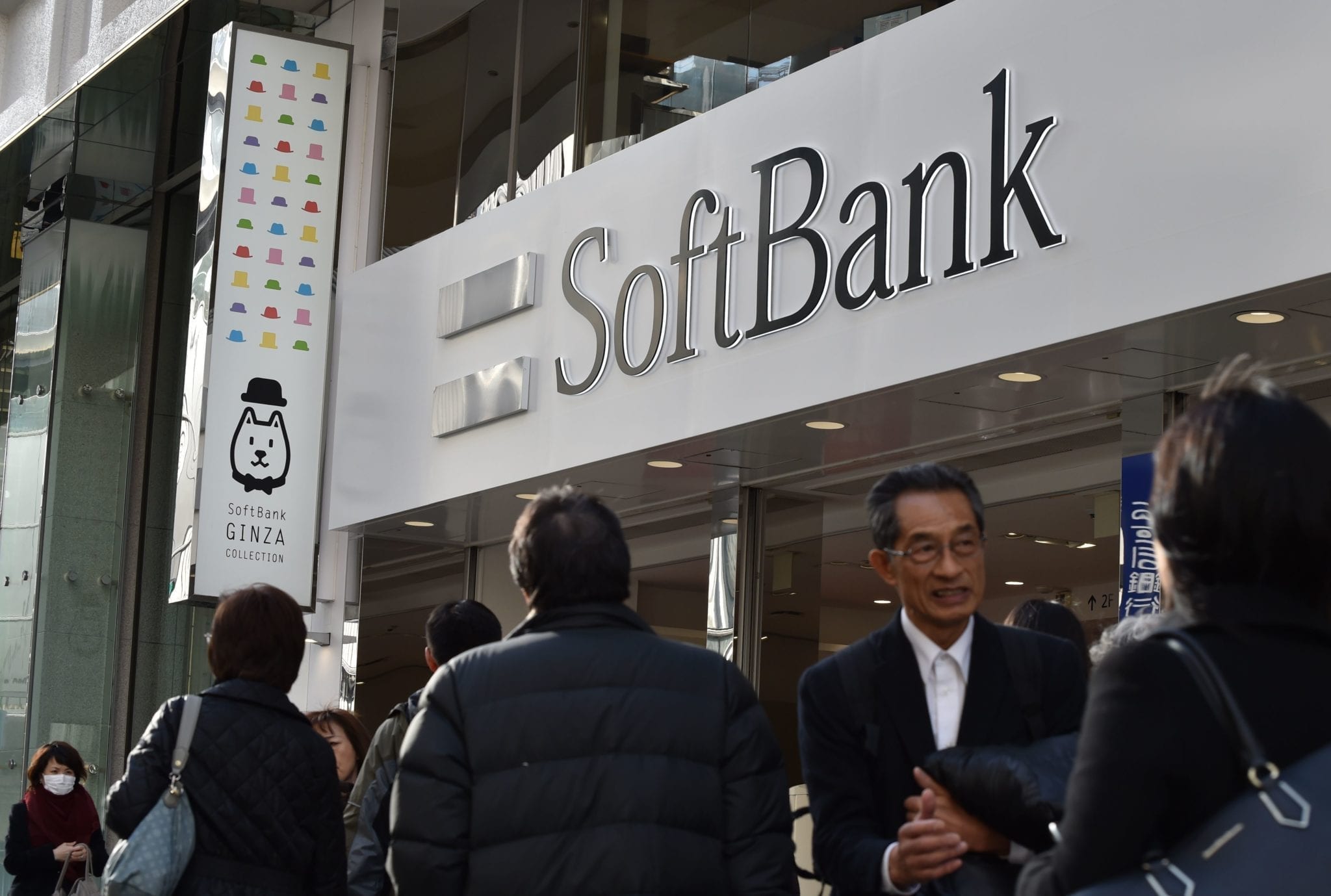
    Japan’s Softbank and automaker Toyota announced plans to form a joint venture by April 2019 to provide launch Mobility-as-a-Service (MaaS) in the country. The company, called Monet Technologies, will combine Toyota’s mobility services platform and information infrastructure for connected vehicles with Softbank’s Internet of Things platform, the companies said in a joint statement.

    Initially, Monet plans to roll out just-in-time vehicle dispatch services for Japanese public agencies and private companies to meet user demand. Those services include on-demand transportation service and corporate shuttles.

    By the second half of the 2020s, Monet intends to launch an autono-MaaS (autonomous mobility as a service) businesses, using Toyota’s e-Palette battery electric vehicles.

    These vehicles will deliver meals with food prepared in the vehicles, provide hospital shuttles where onboard medical examinations can be carried out onboard.  These vehicles can also serve as mobile offices, Softbank said.

    Softbank said Monet will roll out its mobility services in Japan before focusing on future expansion to the global market.

    The joint venture will have initial capital of 2 billion yen ($17.49 million), and this will be increased to 10 billion yen in future.

    Softbank will own 50.25% of the JV and Toyota take the remaining 49.75%.

    SoftBank Corp representative director and CTO Junichi Miyakawa will be president and CEO of the new joint venture.

  • Toyota Vietnam recalls 11,300 plus cars with airbag faults

    Toyota Vietnam recalls 11,300 plus cars with airbag faults

    Toyota Vietnam has announced the recall of more than 11,300 cars of three models with faulty airbags.

    The inflator canister of over 5,600 Corolla Altis cars manufactured in 2013 can be penetrated by humidity, the Japanese company said in a statement.

    Thus, it can happen that in some crashes, the activation of the airbag can break the inflator into pieces. These pieces can be pushed through the inflated airbag, causing serious damage to users.

    The same fault is likely in 5,100 Vios cars and 550 Yaris cars manufactured at the same year, which are also being recalled.

    Another 372 Corolla Altis cars manufactured between December 16, 2015 to February 15, 2016 are being recalled for airbag crash sensor faults.

    The electrical insulator of the airbag electronic controller unit can fall off after a period of car operation, turning on the warning airbag symbol on the driver’s control board.

    In the event of a crash, the airbag may not be activated because of this fault.

    Toyota said it has not been aware of any accidents involving these faults so far.

    Customers can bring their vehicles for a free replacement of the faulty parts at Toyota garages, which should take three hours.

    This is not the first time Toyota Vietnam is recalling cars with airbag faults. The most recent one was in March this year and August last year, with over 20,000 vehicles in each occasion.

  • Toyota Eyes 53 New Export Destinations for Indonesia-Made SUV

    Toyota Eyes 53 New Export Destinations for Indonesia-Made SUV

    Toyota Motor Manufacturing Indonesia, the local unit of the Japanese automotive giant, aims to expand its export market by shipping its all-new Rush sport utility vehicle to 53 countries in Asia and Africa this year.

    Toyota currently only exports vehicles to the Philippines, but it believes the model, updated early this year, would appeal to a broader market.

    “The Toyota Rush is indeed one product aimed at export. Where previously we only exported it to one other country, this new model will be delivered to 53 countries,” Henry Tanoto, deputy director of Toyota Astra Motor, a joint venture between Toyota Motor Manufacturing Indonesia and the country’s largest car distributor, Astra International, said on Tuesday (24/07).

    The Toyota Rush still leads in Indonesia’s so-called low SUV market segment, with data compiled by the Association of Indonesian Automobile Industries (Gaikindo) showing that 19,508 units were sold in the first semester of 2018, up 69 percent from the same period a year ago.

    Japanese manufacturers have long sought to establish Indonesia as an export hub in the Asia-Pacific region.

    Toyota has pledged $1.9 billion to expand its manufacturing capacity in Indonesia between 2015 and 2019.

    Exports of Indonesian-made completely built-up cars has risen more than 14 percent over the past three years to 231,000 last year. The country exported 110,135 completely built-up cars between January and June, according to Gaikindo data.

  • Volkswagen, Toyota lead a surge in imports

    Volkswagen, Toyota lead a surge in imports

    Audi and Volkswagen have roared back to the Korean imported car market after a two-year absence.

    After launching in May, Volkswagen’s flagship midsize Tiguan SUV became the best-selling imported car model in Korea in June.

    The Tiguan 2.0 TDI sold 1,076 units in June, according to the Korea Automobile Importers & Distributors Association on Thursday. It was the only imported model that sold over 1,000 units last month.

    In its launch month, Volkswagen Korea sold 1,561 Tiguans.

    “Although Volkswagen’s brand image was dented due to the emissions scandal, the Tiguan SUV is widely known to be well-made and it seems like Korean consumers have been waiting specifically for the model,” said Kim Pil-soo, an automotive engineering professor at Daelim University.

    “At the moment, there are no substitutes for the Tiguan SUV that satisfy those who want to buy an imported car in a medium price range. Due to its relatively low price, Tiguan is able to appeal to consumers who were thinking about buying domestic brands.”

    On the back of those strong sales, Volkswagen Korea was ranked third in sales of imported cars in June with only two models on offer, the Tiguan and the Passat sedan.

    As for specific imported models, BMW’s 5-series sedan 520d came in second in June sales with 963 units, followed by Audi’s A6 35 TDI with 891 units.

    Korea’s imported car sales continued to grow in the first half of this year.

    According to KAIDA statistics, a total of 140,109 imports were sold between January and June, which was an 18.6 percent year-on-year jump.

    Mercedes-Benz Korea managed to maintain its top spot for six consecutive months. It sold 41,069 units in the Jan.-June period, an 8.9 percent year-on-year increase. BMW Korea followed, selling 34,568 units, a 19.2 percent year-on-year jump.

    Japanese brands are expanding their presence in Korea. In the past, Japanese brands were largely neglected here because they were considered overly expensive.

    Toyota Korea came in third spot in the Jan.-June period. It sold 8,350 units, recording a whopping 60.8 percent year-on-year increase. A hybrid version of its new Camry sold 3,051 units in the first half, followed by the gasoline-powered Camry, which sold 2,104 units.

    Toyota’s luxury arm Lexus tumbled two steps from last year’s third spot to fifth, but its sales still recorded solid growth. It sold 6,276 units in the first half, a 7.2 percent year-on-year jump.

    “With the rising interest in imported cars, people who would have bought domestic brands are now turning to import brands. Japanese brands are benefiting from that shift in consumption patterns,” Kim added.

  • Toyota Pumps $1b in Grab in Auto Industry’s Biggest Ride-Hailing Bet

    Toyota Pumps $1b in Grab in Auto Industry’s Biggest Ride-Hailing Bet

    Toyota Motor has agreed to buy a $1 billion stake in Grab in the biggest investment by a carmaker into a ride-hailing firm, at a time when traditional automakers are racing to team up with disruptive tech companies.

    The value of six-year-old Grab will be just over $10 billion after the investment, said a person familiar with the matter.

    The deal comes as the auto industry faces a spike in the need for technological prowess with the advent of features such as autonomous driving, while app makers offer passengers the option to forgo car purchases by connecting them with drivers.

    Some automakers have responded by partnering with makers of ride-hailing apps, which dominate the fast-growing field of mobility services, in anticipation of a future of reduced car ownership.

    General Motors has invested in US ride services firm Lyft, whose rival Uber Technologies is also backed by Toyota. Meanwhile Japan’s SoftBank Group – also an investor in Grab and Uber – last month said it would invest $2.25 billion in GM’s autonomous vehicle unit Cruise.

    Toyota’s trading arm invested an undisclosed sum in Grab last year. This time, the automaker is lead investor in a financing round launched after Grab acquired Uber’s operations in Southeast Asia, a region of 640 million people.

    Grab called it the largest-ever investment globally by an automotive manufacturer in the ride-hailing sector.

    The Singapore-headquartered firm did not disclose how much fresh capital it aims to raise. It raised $2.5 billion in its last round in July, resulting in a reported value of $6 billion.

    Grab said it logs six million rides a day via apps downloaded onto over 100 million mobile devices. The firm also offers online to offline services, such as food delivery and digital payments, which it aims to expand deeper into the region using funds from its latest financing round.

    “We will work with partners like Toyota to continue to transform transportation in Southeast Asia,” Grab said in an email. “We want to be the one-stop mobility platform for users.”

    It also said Toyota will appoint an executive to Grab’s board of directors while a dedicated Toyota team member will be seconded to Grab as an executive officer.

    Toyota said it aimed to offer financing, insurance and maintenance services to drivers based on data collected through recorder devices already installed in some Grab vehicles.

    “Going forward, together with Grab, we will develop services that are more attractive, safe and secure for our customers in Southeast Asia,” Toyota executive Shigeki Tomoyama said in a statement.

    The data could also help Toyota develop its own next-generation mobility services, including a self-driving electric vehicle aimed at companies for use in tasks such as ride hailing, package delivery and mobile shops.

    Other Grab investors include Japan’s Honda Motor, South Korea’s Hyundai Motor and Chinese ride-hailing firm Didi Chuxing. Uber acquired 27.5 percent of Grab in exchange for the US firm’s Southeast Asian business earlier this year.

    Grab’s main rival is now Indonesia’s Go-Jek, which last month said it would invest $500 million to begin expanding abroad.

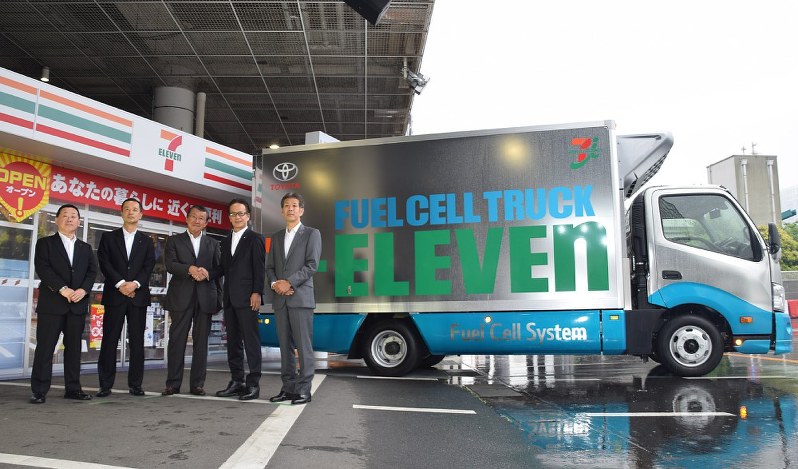
  • Seven-Eleven to use Toyota fuel cell trucks for deliveries next year

    Seven-Eleven to use Toyota fuel cell trucks for deliveries next year

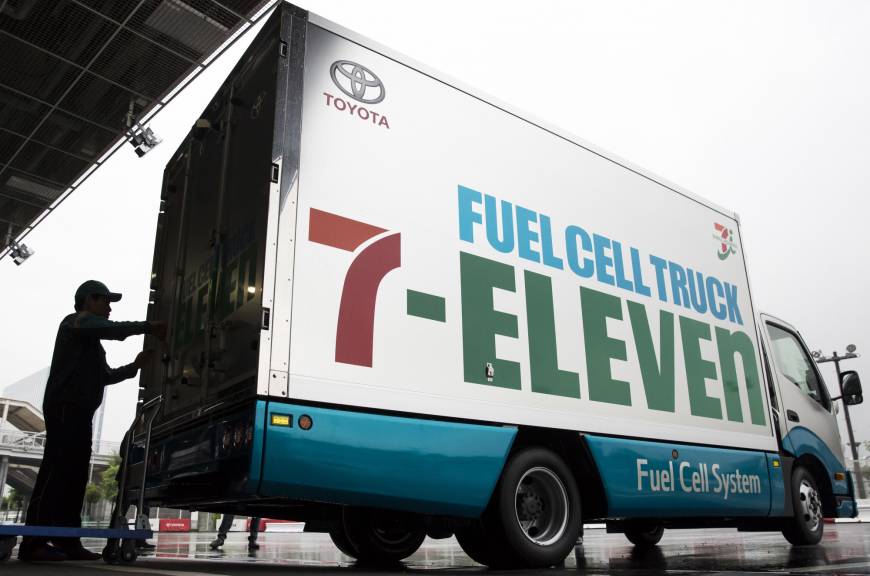
    7-Eleven Japan and Toyota Motor Corporation have agreed on a joint project to reduce CO2 emissions.

    The idea is to conserve energy and reduce carbon dioxide emissions in the store’s distribution and business activities.

    Toyota has been investigating the use of newly developed fuel-cell trucks and fuel-cell generators, and the project will be implemented in stages starting next year. It aims to introduce technologies and systems developed by Toyota for 7-Eleven store activities. Stationary fuel-cell generators (FC generators) and rechargeable batteries will be introduced at stores, managed centrally by building energy-management systems (BEMS), raising the proportion of renewable energy and electric power derived from hydrogen used. A newly developed small-fuel-cell truck will join the distribution process, aiming to achieve zero emissions of substances of concern, including CO2.

    The Seven & I Group is addressing five key issues: Regarding non-wasteful use of products, ingredients and energy, the group seeks to expand renewable energy use in line with the objectives of the Sustainable Development Goals (SDGs) adopted by the UN in 2015. Specifically, the group plans to increase renewable energy use in stores to 20 per cent and reduce CO2 emissions by 27 per cent. 7-Eleven is taking measures to reduce CO2 emissions throughout its entire supply chain to meet its goals, focusing on renewable energy.

    In December, 7-Eleven opened the environmentally, user-friendly 7-Eleven Chiyoda Nibancho store as a flagship of these initiatives. The second such store, the 7-Eleven Sagamihara Hashimotodai Itchome, opened last month with renewable energy accounting for 46 per cent of its electric power use.

    Toyota technologies and systems that use hydrogen will be introduced in stores and distribution sites, with next-generation stores further using renewable energy. Two small-fuel-cell trucks are intended to be introduced in Tokyo next year.

  • Kobe Steel, Toyota hit with U.S. lawsuit over vehicle metal quality

    Kobe Steel, Toyota hit with U.S. lawsuit over vehicle metal quality

    U.S. consumers have filed a lawsuit against Kobe Steel Ltd (5406.T) and Toyota Motor Corp (7203.T) accusing the companies of violating consumer protection laws and engaging in fraud by concealing the use of substandard metal components in vehicles.

    The proposed class-action lawsuit represents the first U.S. consumer complaint filed against Kobe Steel over data fraud, and highlights the legal risks the company faces even after Chief Executive Officer Hiroya Kawasaki announced on Tuesday he would quit to draw a line under the scandal.

    The 112-year-old company, which supplies steel and aluminum parts to manufacturers of cars, planes and trains around the world, admitted last year to supplying products with falsified specifications to around 500 customers, throwing global supply chains into turmoil.

    Kobe, Japan’s third-largest steelmaker, said on Tuesday that the data fraud had gone on for nearly five decades, and that it found new cases of impropriety, widening the number of affected clients to 605, including 222 overseas. The company said Kawasaki would quit on April 1.

    The U.S. lawsuit, filed on Monday in federal court in San Francisco, was brought by two California residents who seek to represent a nationwide class of consumers who bought allegedly defective Toyota vehicles.

    According to the complaint, Toyota’s Prius, Camry, Land Cruiser and Lexus vehicles have all been manufactured with “sub-standard” steel, aluminum and copper.

    The plaintiffs allege that Toyota and Kobe Steel both violated federal and state consumer protection laws by claiming that the vehicles complied with U.S. quality standards.

    “We have not grasped the whole content of the case and we are now looking into the matter,” a Kobe Steel spokesman said on Wednesday.

    Toyota declined to comment on the lawsuit.

    In a special order in November, the U.S. National Highway Traffic Safety Administration asked 29 automakers, including Toyota, to disclose any safety issues for any of their vehicles or engines containing products supplied by Kobe Steel.

    The regulator did not immediately respond to a request for comment on what data it had received in response and whether there was any evidence of faulty materials in Toyota cars.

    Monday’s 40-page lawsuit outlines the ways in which the companies allegedly concealed poor metal quality. It demands compensatory and punitive damages of an unspecified amount.

    According to the complaint, at least six Toyota car models sold or leased to U.S. consumers were manufactured with substandard metal from Kobe Steel. Plaintiffs said the metal could impact vehicle safety and performance.

    Toyota had the duty to disclose any defective vehicle components because it has consistently marketed its automobiles as safe, functional and reliable, the lawsuit says.

    Kobe and Toyota had superior knowledge and access to the facts, the lawsuit alleged, giving rise to fraud by concealment claims.

    Four individuals in Canada who bought cars that use Kobe’s products have already brought class-action lawsuits seeking unspecified damages against Kobe and it subsidiaries.

    Kobe is also undergoing a separate U.S. Justice Department probe.

    A company executive said on Tuesday that it is fully cooperating with the U.S. probe, but it was hard to predict how it would develop.

  • Toyota sets tough China sales goal of 1.4 million vehicles for 2018

    Toyota sets tough China sales goal of 1.4 million vehicles for 2018

    Toyota Motor Corp (7203.T) aims to sell 1.4 million vehicles in China in 2018, nearly 9 percent more than it sold last year, but two insiders at the Japanese automaker said production constraints and other hurdles make it a tough target to meet.

    The sales goal announced by Japan’s biggest automaker on Friday comes at a time when the world’s biggest auto market is experiencing a slowdown in overall vehicle sales growth.

    The two people said the target is more a “stretch goal.” It is a target that is not the baseline sales forecast and one that executives acknowledge will be difficult to achieve, they said.

    A big factor that makes selling 1.4 million vehicles this year more of a challenge is Toyota’s manufacturing capacity which the two individuals said remains strained.

    “If we could resolve this capacity issue, it would be easy to make the 1.4 million target. With sufficient capacity, we can possibly sell 1.5 million vehicles,” one of the two people said.

    Toyota’s forecast for 2018 is relatively more upbeat than the previous few years in part because it expects to launch a couple of potentially high-volume subcompact sport-utility vehicles (SUVs) later this year, the people said.

    They said Toyota plans to launch two China-market versions of the subcompact Toyota CH-R crossover SUV in a June-July time frame. The CH-R hit showrooms in the United States in April last year.

    Those two CH-R variants are smallish crossover SUVs that others, most notably Japan’s Honda Motor Co (7267.T), have leveraged to grow sales significantly in China.

    A Toyota spokesman said that though the 2018 sales target was not one that can be easily achieved due to the highly competitive market environment, the recent launch of a redesigned Camry sedan and the planned introduction of two subcompact SUVs later this year would enable Toyota to challenge the previous year’s numbers.

    China’s overall vehicle market growth was the weakest last year in at least two decades, increasing just 3 percent year-on-year to 28.88 million vehicles, pegged back chiefly by a phasing out of tax breaks on smaller-engine cars that begun in 2017.

    According to data from the China Association of Automobile Manufacturers (CAAM), 2018 will another weak year. It predicts the country’s vehicle market will grow 3.5 percent in 2018.

    On Friday, Toyota said its sales in China in January rose 24.5 percent from a year earlier to 127,500 vehicles. Smaller rival Honda’s sales in China, meanwhile, rose 10.9 percent in January to 126,174 vehicles.

    Honda, which last year sold a total of 1.44 million vehicles in China, did not provide a forecast for volumes for this year.

  • Toyota, Mazda to build $1.6 billion plant in Alabama

    Toyota, Mazda to build $1.6 billion plant in Alabama

    Alabama will be the site of a new $1.6 billion Toyota Motor Corp and Mazda Motor Corp auto plant, a victory for President Donald Trump who had prodded manufacturers to build new U.S. facilities and threatened tariffs on foreign production, sources said on Tuesday.

    The plant, which will employ up to 4,000 people and produce about 300,000 vehicles a year, will be located in Huntsville, Alabama, and is a boon for the state, where Toyota has a large engine plant and an existing network of automotive suppliers.

    A formal announcement by company and state officials is expected on Wednesday in Montgomery, sources briefed on the matter said.

    The new plant –in a state Trump won by 28 points in 2016 — could be a political boost to the Republican president, who has urged automakers to build plants in the United States and add jobs. The companies said they expect the plant to open in 2021.

    Trump tweeted in March he wanted “new plants to be built here for cars sold here.” The White House did not immediately comment on Tuesday.

    The announcement also comes at a time of declining U.S. auto industry sales, so it could exacerbate overcapacity and add pressure to cut prices. U.S. new vehicle sales fell 2 percent in 2017, after hitting an all-time record high in 2016, and are expected to fall further in 2018.

    Details of an anticipated tax and incentive package for the investment were not yet known. It has been reported the companies sought at least $1 billion in incentives.

    A Toyota spokesman declined to comment, except to say an announcement was expected soon. A Mazda spokeswoman also declined to comment.

    In recent months, the companies had narrowed their choices down to sites in Alabama and North Carolina.

    Local media last month said the leading site under consideration was in northern Alabama’s Limestone County, near Toyota’s large engine plant in Huntsville. In September Toyota announced a $106 million technology upgrade for the Huntsville plant.

    A Chamber of Commerce of Huntsville website for the “Huntsville Mega Site” touts the fact it has been “certified as development-ready.” The commerce chamber, local and state officials declined to comment on Tuesday on plans for the plant.

    A year ago, President-elect Trump criticized Toyota and threatened hefty tariffs against the Japanese automaker if it built its Corolla sedan for the U.S. market in Mexico.

    “Toyota Motor said will build a new plant in Baja, Mexico, to build Corolla cars for U.S. NO WAY! Build plant in U.S. or pay big border tax,” Trump posted on Twitter in early 2017.

    Toyota and Mazda announced plans for a new plant in August. Toyota said it would shift production of Corollas from Canada to the new venture rather than in Guanajuato, and would build Tacoma pickups in Mexico instead. Mazda plans to build new crossover SUVs at the plant.

    Trump praised the joint venture announcement, saying in August on Twitter: “Toyota & Mazda to build a new $1.6B plant here in the U.S.A. and create 4K new American jobs. A great investment in American manufacturing!”

    In October, Toyota said it would scale back investment in a planned plant in Mexico by 30 percent to $700 million and cut planned annual capacity in half to 100,000 vehicles as it shuffles its production plans to meet market demands.

    Toyota has 10 U.S. plants in eight states in an arc running from West Virginia through Kentucky, Indiana, Alabama, Mississippi and Texas.Toyota and Mazda announced a capital alliance in August and are exploring joint development of technologies for the basic structure of competitive electric vehicles.

    Over the last 30 years Toyota, along with German and Asian automakers, has built a second auto industry in the United States, rivaling the operations of the Detroit Three automakers in size and employment, but with newer, and fewer unionized, plants.

    States covet auto assembly plants because they typically pay above-average wages and spin off jobs at suppliers and service companies. Southern U.S. states have the advantage of good transportation infrastructure, business-friendly regulators and generally anti-union politicians.

    The Alabama Department of Commerce shows 150 of the large automotive suppliers operate in the state, providing the logistical strength that Kristin Dziczek, a researcher at the Center for Automotive Research in Michigan, said helped land the plant.

    Dziczek said that Alabama in 2017 was tied for fifth among U.S. states in auto production, at 9 percent with Tennessee. It was behind Michigan at 19 percent; Indiana at 12 percent, Kentucky at 11 percent; and Ohio at 10 percent.

    “The impact of an auto assembly plant extends beyond its immediate economic impact, and that’s why states offer robust incentives,” said Dennis Cuneo, a site-selection consultant and former Toyota executive. “It creates a halo effect that in turn helps attract other projects.”

    Alabama spent an estimated $250 million to woo Daimler AG’s Mercedes-Benz to put an auto plant in Tuscaloosa two decades ago.
  • Toyota expects total sales to rise to record high in 2018

    Toyota expects total sales to rise to record high in 2018

    Japan’s Toyota Motor expects its total vehicle sales to exceed this year’s record by a percent to hit 10.50 million units in 2018, as strong overseas business helps offset weak demand at home.

    For 2017, it expects to sell 10.35 million units worldwide across its Toyota, Lexus, Daihatsu and Hino brands, up 2 percent from a year ago when increased domestic sales helped it post the second-highest sales among global automakers.

    Volkswagen AG, the world’s top automaker, has posted group sales of 9.38 million units for the eleven months to November, up 3.9 percent on the year.

    Toyota, however, expects a 1 percent slide in global production to 10.40 million units next year, compared with 10.52 million this year, as it adjusts existing inventories.

    While Toyota expects overseas sales to boost its global tally, it forecast a 5 percent slide in sales to 1.55 million units at home, where demand has been waning for more than two decades as the population rapidly ages and young people lose interest in car ownership.

    Toyota aims to halve the number of car models it sells in Japan by 2025, although it has pledged to maintain sales of at least 1.5 million passenger cars annually in the country.

  • Toyota’s November China vehicle sales dip 1.3 pct

    Toyota’s November China vehicle sales dip 1.3 pct

    Toyota Motor’s sales in China fell 1.3 percent in November from a year earlier to 109,600 vehicles, following a 13.5 percent gain in October, the company said on Tuesday.

    The Japanese automaker’s sales during the first 11 months of the year totaled 1.18 million vehicles, up 7.5 percent from the same period a year ago.

  • Internal combustion engine to be dead by 2050, says Toyota R&D boss

    Internal combustion engine to be dead by 2050, says Toyota R&D boss

    When it comes to the future of the internal combustion engine, Toyota has long been on the cutting edge. Consider how the company went out early and successfully with the Prius hybrid line of vehicles and how it has come to define the category with the largest market share by far of any hybrid model.

    Now, Seigo Kuzumaki, Toyota’s head of advanced R&D and engineering, is forecasting that the internal combustion engine will be dead as the principal form of vehicle power by 2050 and will power only about 10% of new vehicles as part of a hybrid system.

    The impact on the environment will be profound. Kuzumaki says the reduction in emissions, compared with cars in 2010, will be 90%. Toyota’s technology plan coincides with growing policy making by governments. Last July, for example, United Kingdom Environmental Secretary Michael Gove sad that the sale of new 100% internal-combustion vehicles will be banned in his country by 2040.

    That position differs dramatically from the espoused position of the current U.S. administration, which, in keeping with the Republican political party, continues to deny the impact of human-generated carbon emissions on climate change. The chief reason for that recalcitrance is the fear of carbon taxes on businesses, and the lack of cooperation on extensive environmental standards by other big industrial countries like China and India.

    In the current tax legislation being drafted in the U.S. House of Representatives, there is a call, for example, to end tax incentives for EVs. “[This bill] would fully end the tax incentives for electric vehicles at the end of this year. That’s a shortsighted policy that will increase pollution and undermine an important and growing industry,” according to the Union of Concerned Scientists (UCS).

     But important states in the U.S. like California and New York are proceeding on their own with carbon reducing policies and EV tax credits, without the cooperation or consent of the federal government.

    Toyota is off to a huge start in the production of electric vehicles, producing some 43% of all electric vehicles globally. It has sold more than 11 million Prius brand hybrid and EV vehicles worldwide thus far.

    By 2020, Toyota plans to introduce a new family of EVs, which are expected to have a range of around 300 miles—the gold standard for consumer acceptance of EV vehicles.

    Toyota is far from the only company making heavy investments in EVs. GM, Ford, Nissan, Volkswagen, Honda and luxury makes like Mercedes, BMW and Audi are all making heavy investments. What remains to be seen is how changing governments will set new standards, and at what pace. In the U.S., the Trump administration, for example, is trying to roll back standards set by the Obama administration that proceeded it.

    And consumer tastes and preferences are an issue. Toyota and the other companies can bring out all the EVs they want. But it will take consistency of government policy to allow industry to make the appropriate investments required to meet the level of sales being predicted in the next few decades.

    “The progress of our growing electric vehicle market [can’t be allowed to] stall, because America will fall behind other countries that recognize how critical this technology is to the future of transportation,” says Don Anair, deputy director of the Clean Vehicles program at the UCS.


  • Toyota facelifts Hilux Revo pickup for 2018

    Toyota facelifts Hilux Revo pickup for 2018

    Brand’s bread-winning workhorse gets a more aggressive-looking face and a new style-led model called Rocco to rival the Ford Ranger Wildtrak and Isuzu D-Max X-Series.

    Toyota Motor Thailand has released the first pictures and details of the facelifted Hilux Revo ahead of its public debut at the year-ending 2017 Motor Expo.

    Featuring in the single- and double-cab models is a new face with a prominent grille to bring the Hilux Revo in line with the US-only Tacoma pickup. The meek looks of the pre-facelift Hilux Revo is alleged to have received a tepid reception from the pickup market.

    And for the first time, Toyota has introduced a new style-led range-topper called Rocco to rival the Ford Ranger Wildtrak and Isuzu D-Max X-Series.

    Available for both single- and double-cab variants, the Rocco features an even sportier grille with plenty of black accents around the vehicle. Other key exterior features are 18-inch alloys shod with 265/60 R18 all-terrain tyres and a sports bar in the cargo bed. The interior also gets the black colour treatment along with leather appointments here and there.

    The 150hp 2.4-litre and 177hp 2.8-litre diesel-turbo engines, plus 166hp 2.7-litre petrol unit, remain unchanged. The same goes for the six-speed manual and automatic transmission.

    As for the Rocco, only the 2.8-litre diesel is available either with manual or automatic and 2WD or 4WD. Depending on body style and transmission, the Rocco is priced between 1.129-1.199 million baht. While the regular single-cab sees prices starting from 572,000 baht, the double-cab kicks out at 672,000 baht.