Tag: Toyota

  • Toyota’s Domestic Sales Down By 7% In May

    Toyota’s Domestic Sales Down By 7% In May

    The downward trend in the automotive industry continues in May 2019 as well. Toyota Kirloskar Motor announced its sales figure for the month of May and it has sold a total of 12,138 units in the domestic market, which was a de-growth of 7 per cent as compared to the same period last year. The company exported 928 units of the Etios series this month thus bringing the company’s total sales to 13,066 units. In comparison, Toyota Kirloskar Motor sold a total of 13,940 units in May 2018 thus registering a decline in sales of 6 per cent.

    N. Raja, Deputy Managing Director, Toyota Kirloskar Motor said, “The customer demand had witnessed a continued slowdown before the election results. Customers have been cautiously spending which has led to sluggishness in the domestic auto sales. Added factors like liquidity tightening, high insurance costs, increase in fuel costs have also weakened the retails.”

    However, he says that there is an increase in customer walk-ins post the election results announcement which would brighten the sales in upcoming months.The company is all set to launch the Glanza in India on June 6, 2019 and this would mark the company’s entry into the premium hatchback segment. The company thinks that the slowdown will soon be gone and things will look bright for the automotive industry.

  • Toyota To Build New Plant In Myanmar

    Toyota To Build New Plant In Myanmar

    Toyota Motor Corporation will be building its first vehicle production company in Myanmar where it will locally produce the Hilux from February 2021. The announcement comes after other carmakers like Suzuki, Nissan and Ford established factories in the country. The automotive market in Myanmar has soared in accordance with the growth of the economy.

    The demand for new vehicles has soared in recent years (2018 market: approx. 18,000 units) more than twice the size compared to the previous year. The government introduced auto import restrictions in 2017, and a fall in prices has seen the auto market grow, with many new vehicles built locally. Toyota currently sells the Hilux, Vios, Rush, and other vehicles in Myanmar by relying on imports.

    Toyota plans to construct the new plant in the Thilawa Special Economic Zone, situated in the southern suburbs of Yangon city. The company is expected to investment approximately $52.6 million. Toyota plans to hire 130 new employees, and intends to build 2,500 Hilux vehicles per year using the SKD (semi knock-down) method when operations begin in 2021. The brand is already popular in the country, though most of its cars on the road are second-hand models.

  • Toyota, Panasonic To Set Up Firm To Connect Cars

    Toyota, Panasonic To Set Up Firm To Connect Cars

    Japan’s Toyota Motor and Panasonic Corp said they plan to establish a joint company to develop “connected” services to be used in homes and urban development. The tie-up deepens the partnership between the companies, which in January announced a joint venture to build electric-vehicle (EV) batteries, pooling the R&D and manufacturing strengths of one of the world’s largest automakers and battery makers to compete in the fast-growing EV market.

    In their latest venture, Toyota and Panasonic said they will set up a new company early next year to focus on technology that could be used to offer personalized services in the home. The pair plan to be 50-50 partners in the new firm and will increase cooperation at their respective housing operations in Japan.

    “We will put our respective strengths together to offer new value in everyday life,” Panasonic President Kazuhiro Tsuga said in a joint statement on Thursday.

    The move comes at a time when lower-emissions vehicles and ride-sharing services have opened up the auto industry to new competitors, leaving traditional car makers and their suppliers scrambling to find alternate revenue streams.

    Toyota has been developing connected cars that can share information on usage – data that could be leveraged for on-demand ride-sharing, insurance, and maintenance.

    The automaker has said it will tap into its partner network and its operations which range from building and selling cars, homes and companion robots to expand into new transportation and home energy services.

    “If we are able to use this network going forward not only to manufacture and sell vehicles but to also provide new services, our future possibilities will greatly expand,” President Akio Toyota told reporters on Wednesday.

    “In addition to cars, I think that having our own housing business and connected business will be a big advantage for us.”

  • Toyota Sees Smaller-Than-Expected Profit Rise This Year

    Toyota Sees Smaller-Than-Expected Profit Rise This Year

    Toyota Motor forecast on Wednesday a 3.3 percent rise in operating profit for the current year due to cost reduction measures and changes to its depreciation methods.

    Japan’s largest automaker expects profit to rise to 2.55 trillion yen ($23.20 billion) in the year to March 2020, slightly lower than the 2.61 trillion yen average of 23 analyst estimates compiled by Refinitiv.

    Operating profit was 2.47 trillion yen for the year ended March, below the average 2.51 trillion yen estimate of analysts.

    The automaker also forecasts global group retail sales of 10.74 million vehicles for the current year, compared with 10.6 million in the previous year.

    Toyota’s profit forecast is based on the assumption that the yen will trade around 110 to the U.S. dollar in the current financial year, compared with 111 yen in the year just ended.

  • Toyota Domestic Sales Down By 22%

    Toyota Domestic Sales Down By 22%

    Toyota Kirloskar Motor sold a total of 10,112 units in the domestic market. The domestic sales saw a drop of 22 per cent which is a big drop compared to March 2019 which showed a growth of 7 per cent. The company exported 1301 units of the Etios series this month thus clocking a total of 11,413 units. Toyota Kirloskar Motor sold a total of 13037 units in the domestic market this month of April 2018. The company exported 834 units of the Etios series this month thus clocking a total of 13871 units.

    Toyota had even in March talked about the slow pace of the market and also the soaring prices of input costs and even the high insurance costs. Commenting on the sales performance, Mr. N. Raja, Deputy Managing Director, Toyota Kirloskar Motor said, “The industry is currently experiencing a slowdown due to uncertainty of upcoming general elections that looms over the market and this slow pace is expected to continue until the new government is formed. Consumer sentiments has currently dampened due to several factors like tight liquidity, high insurance, high costs.We hope the sales growth momentum to pick up in the upcoming months post election results are out.”

    Things are about to change though as the company is all set to launch the new Glanza Hatchback as also the rebadged version of the Vitara Brezza which will mark the company’s entry into the subcompact SUV segment. The company does say that the sales are likely to pick up post election results

  • Toyota Glanza Spotted For The First Time

    Toyota Glanza Spotted For The First Time

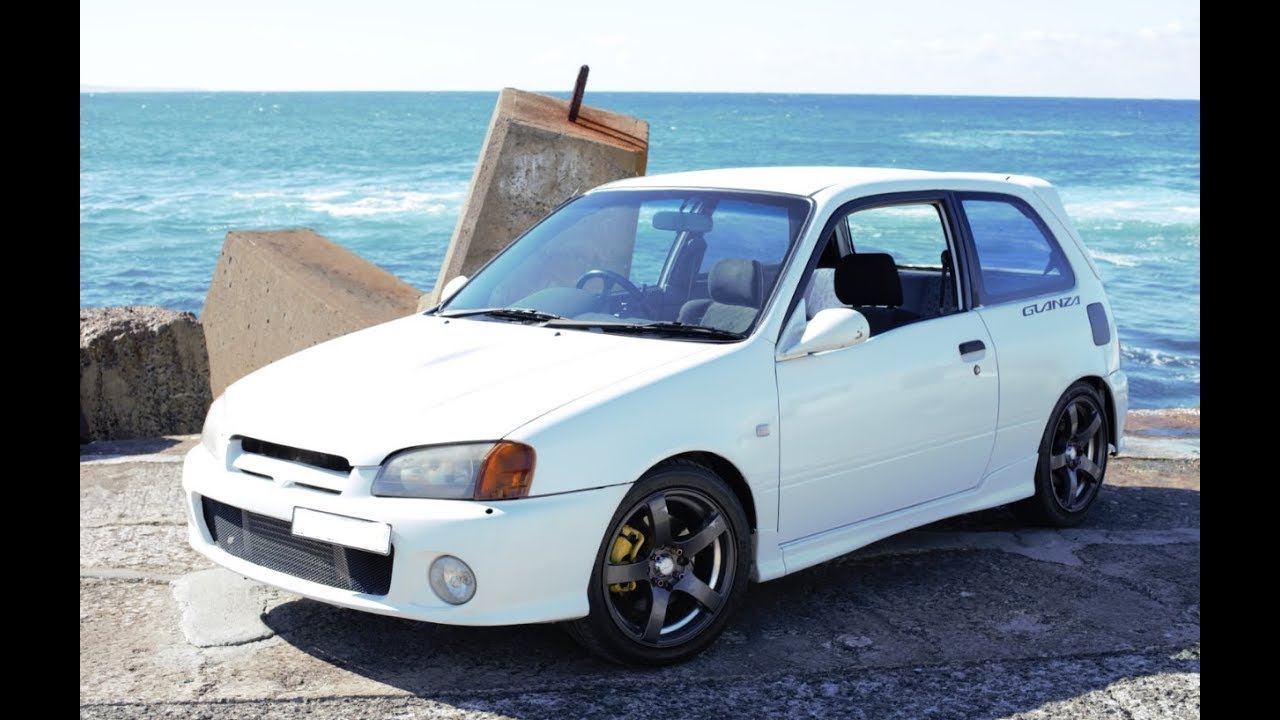
    Toyota is all set to bring in the Glanza hatchback to India. Essentially a Toyota-badged version of the Maruti Suzuki Baleno, the new Toyota Glanza is the first model to come out as part of the Toyota – Suzuki alliance which was announced in 2017. While a teaser has already been released, the Glanza has not been seen in the flesh in its entirety, well until now.

    The Glanza hatchback was spotted in a car park and yes, this is the first time you get to see what it really looks like, up front and the rear. Up front, you see it get a a new grille and slightly tweaked face, in order to differentiate it from the Baleno. So, we can see the two chrome slates which gets the Toyota badge right in the centre of the car. Much of the rest of the details on the car remain the same as on the Baleno. So the chrome strip, the headlamps, the fog lamps and even the lower air dam, remains identical to the Baleno.

    The similarity continues at the rear as there are no changes apart from the variant and brand badging. The Toyota Glanza will compete with the likes of the Maruti Suzuki Baleno, Hyundai i20, Honda Jazz. Considering that Maruti Suzuki has had great success with the Baleno and manages to sell close to 18,000 units a month on an average, it will be interesting to see how Toyota manages to boost its sales figures with this car.

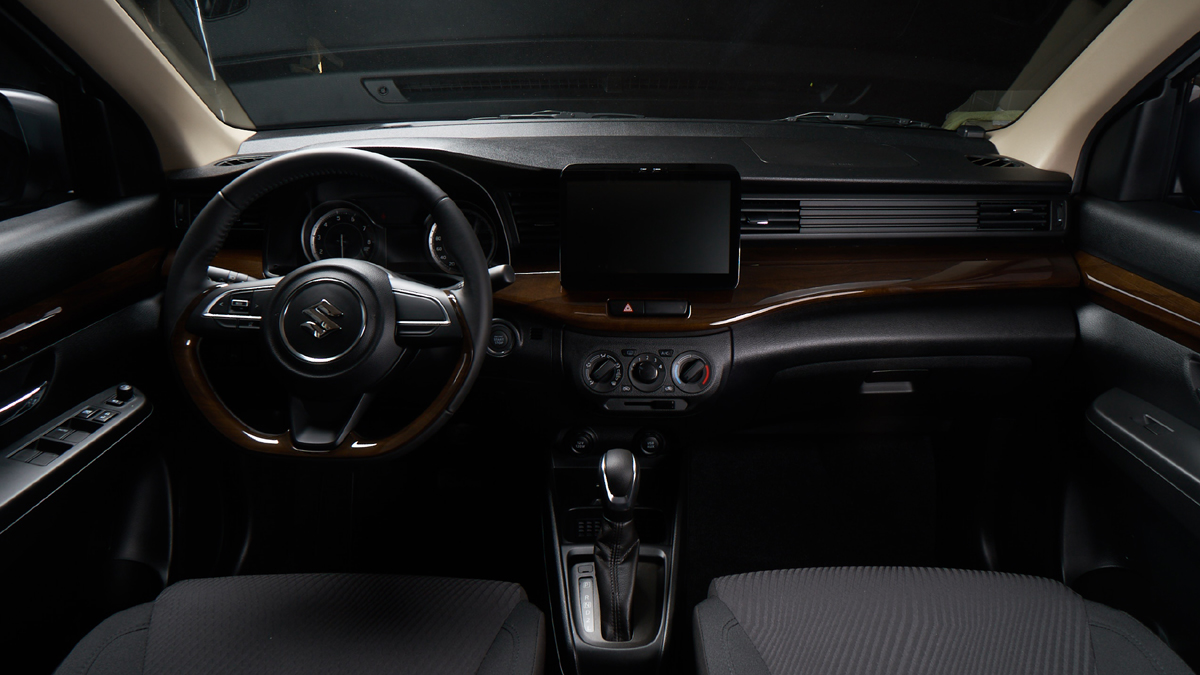
    While the cabin of the car too is likely to remain unchanged, there will be a few tweaks made to make it feel more like a Toyota. As far as engine options go, the Toyota Glanza is expected to be launched in two petrol options, which will include Maruti Suzuki’s 1.2-litre, four-cylinder K12 petrol engine which powers the Baleno. The other one could be Toyota’s 1.2-litre four-cylinder petrol engine that is tuned to make 79 bhp and 104 Nm torque.

    The Toyota and Suzuki partnership extends not only to sharing vehicles but also technological development, vehicles production and market development. An MoU signed in November 2017 further expanded the partnership to consider a cooperative structure for introducing battery-powered electric vehicles.

  • Toyota Establishes Research Institute In China To Study Hydrogen

    Toyota Establishes Research Institute In China To Study Hydrogen

    Japan’s Toyota Motor said on Sunday it was setting up a research institute in Beijing in partnership with Tsinghua University to study car technology using hydrogen power and other green technologies that could ease environmental problems in China. The initiative, outlined by Toyota’s President and Chief Executive Akio Toyoda in a speech at Tsinghua University, is part of the Japanese carmaker’s efforts to share more technology with China as it seeks to expand its business in the country by beefing up manufacturing capacity and distribution channels, a source close to Toyota said.

    The Tsinghua-Toyota Joint Research Institute will conduct research into cars and new technology to solve environmental problems in China, including reducing traffic accidents, Toyota said in a statement.The institute will “cooperate in research not only related to cars for Chinese consumers, but also in research related to active utilization of hydrogen energy that can help solve China’s energy problems,” the company said.

    The move dovetails with Toyota’s announcement this month that it would offer carmakers and suppliers around the world free access to nearly 24,000 patents for electric vehicle technologies.

    Executive Vice President Shigeki Terashi told Reuters earlier this month that the automaker intended to become a tier 2 supplier of hybrid systems and that it had already received enquiries from more than 50 companies.

    Later on Monday, Toyota said that it had started to supply fuel cell vehicle parts to Chinese commercial vehicle maker Foton and SinoHytec, without giving financial details of the deal. The company said in a statement that it hopes to cooperate with more companies in China to promote fuel cell vehicle penetration in China.

  • Toyota Sells Electric Vehicle Technology To Chinese Startup Singulato

    Toyota Sells Electric Vehicle Technology To Chinese Startup Singulato

    Toyota Motor Corp has agreed to sell electric car technology to Singulato, its first deal with a Chinese electric vehicle startup, allowing the fledgling firm to speed up development of a planned mini EV.

    In return, Toyota will have preferential rights to purchase green-car credits that Singulato will generate under China’s new quota system for all-electric and plug-in hybrid vehicles.

    It will also gain a bird’s-eye view into how Chinese EV startups operate and the strategies they pursue in a fast-changing marketplace, said Singulato Chief Executive Shen Haiyin and two sources at the Japanese automaker.

    “With electrification, autonomous driving and car-sharing shaking up the industry, old ways need to be re-examined,” one of the Toyota sources said, declining to be identified as he was not authorized to speak on the matter.

    “We have a century’s lead in automotive technology, but we also need to be humble enough to learn from newcomers.”

    Singulato will acquire a license to use the design of Toyota’s eQ – a battery electric microcar. The deal is due to be announced on Tuesday at the Shanghai auto show, where Singulato will unveil a concept car based on the eQ.

    Singulato plans to redesign the car, tailoring it to local tastes to come up with a model by early 2021 that is more affordable and offers a longer driving range.

    “This deal gives us a way to save on time and costs to develop a reliable car and focus on what we excel in,” Shen told Reuters.

    Financial terms are not expected to be disclosed. A Singulato source said the startup agreed to pay “several tens of millions of dollars” for eQ’s design.

    Toyota said it was taking various measures to accelerate its business in China, a key market, but it would not comment on specific steps.

    The agreement is a vote of confidence by Toyota in Singulato’s prospects, said Shen. Founded in 2014 and backed by Intel Corp and Japanese trading house Itochu Corp, Singulato is one of at least 50 Chinese EV startups seeking to survive in a competitive market.

    It plans to sell its first self-developed battery electric car called the iS6 this year, competing with models from rival startups like Nio and WM Motor as well as those from global automakers.

    Singulato’s version of the eQ will be a so-called connected car offering young buyers a host of entertainment, safety and navigation features. The car, which will be called the iC3, will also feature some self-driving technology.

    Toyota sold about 100 eQ cars in 2012 and then discontinued it due to concerns over the limits of EVs, including their high price tags, short driving range and long charge time. But Singulato believes technological advances, especially in batteries, have made the car much more marketable.

    Shen said the iC3 should be able to go as far as 250-300 km (160-190 miles) on a single full charge and will be priced around 100,000 yuan ($15,000). Singulato aims to sell 200,000 units over five years.

    According to the two Toyota sources, the deal is part of efforts to share more technology with China as the Japanese automaker seeks more growth in the world’s largest auto market by beefing up manufacturing capacity and distribution channels.

    The green-car credits will also come in handy.

    Keen to combat smog, jump-start its own auto industry and lower reliance on imported oil, China is aggressively pursuing the adoption of electric cars. Under a production quota system taking effect this year, automakers are required to produce and sell a certain number of new-energy vehicles in proportion to their overall sales volume.

    A carmaker that fails to achieve its quotas will have to acquire NEV points from an automaker with surplus credits or face penalties.

    Toyota has said that initially it won’t be able to meet its quotas without buying credits from others. It has also agreed to produce and help sell a car for GAC Motor, a joint venture partner, to generate credits.

    According to the Toyota sources, the deal with Singulato has already yielded intriguing glimpses into the thinking of Chinese EV startups and their non-traditional approach to engineering.

    One such example was Singulato’s idea to look at linking headlights with satellite, cellular network location data and the driver’s planned trip. That could help turn the headlights along the driver’s route for enhanced visibility and driving safety.

    It might not something Toyota would consider but as an idea, “it was eye-opening,” one of the sources said.
  • Toyota Fortuner Diesel Launched In India

    Toyota Fortuner Diesel Launched In India

    Toyota has launched an updated version of its bestselling SUV in India. The Toyota Fortuner range now starts at ₹ 27.83 lakh for the base 4×2 diesel variant and go all the way up to ₹ 33.60 lakh for the top-end 4×4 diesel automatic variant, all prices ex-showroom, India. Toyota has only updated the diesel variants of the Fortuner while the Petrol 2.7 remains unchanged. The updates on the 2019 Fortuner, however, are limited to interiors and it remains identical to its predecessor in terms of looks and mechanically.

    The 2019 Toyota Fortuner now gets chamois interior upholstery which will be standard on the diesel variants. The seats are now draped in perforated leather and have the ‘Fortuner’ badging embossed on them. The glass on the new Toyota Fortuner can resist the heat even better which will give it an edge in some of the markets, especially in the northern, west-north and eastern parts of the country where the temperature gets extreme.

    The 2019 Toyota Fortuner Diesel mechanically remains identical to its predecessor. It is powered by a 2.8-litre, four-cylinder diesel motor which produces 175 bhp at 3400 rpm and 420 Nm of peak torque at 1400 – 2600 rpm when the engine is mated to a manual transmission. The same engine is tuned to produce 30 Nm of peak torque more at 450 Nm between 1600 rpm and 2400 rpm when the engine is mated to the automatic transmission. The Toyota Fortuner also rules the segment commanding a market share of 70 per cent.

  • Toyota Innova Crysta Diesel Launched In India

    Toyota Innova Crysta Diesel Launched In India

    Toyota India has updated its bestseller in India- the Innova Crysta. The Innova Crysta range now starts at ₹ 14.93 Lakh and goes up to ₹ 22.43 Lakh while the Innova Touring Sport range starts at ₹ 18.92 Lakh and go all the way up to ₹ 23.47 lakh. The Innova Crysta is the market leader in its segment and its diesel variants are now updated with more features and upmarket interiors in a bid to tackle the competition better and stick to its segment-leader position.

    The Toyota Innova Crysta now gets ivory leather upholstery added as an option over the standard black and tan treatment. The seats are now draped in perforated leather and have the ‘Crysta’ badging embossed on them. The glass on the new Innova Crysta can resist the heat even better which will give it an edge in some of the markets, especially in the northern, west-north and eastern parts of the country where the temperature gets extreme. Moreover, Toyota has also added fast charging enabled USB ports in the Innova Crysta which is a big requirement in today’s fast-moving world. The latter two features have also made way in the Innova Touring Sport, though, it continues to come with all-black interiors with red accents.

    Mechanically, the 2019 Innova Crysta will remain identical to its predecessor. The Innova Crysta and Touring Sport source its power from the 2.4-litre and 2.8-litre four-cylinder motors. The 2.4-litre engine makes 144 bhp at 5200 rpm and 245 Nm of peak torque at 4000 rpm while the more powerful 2.8-litre unit churns out 171 bhp at 3400 rpm and 360 Nm of peak torque between 1200 rpm and 3400 rpm. Toyota has sold 225,000 units of the Innova Crysta in India since its launch in 2016 and at present, it commands a market share of 40 per cent in the segment.

  • Toyota To Give Royalty-Free Access To Hybrid Vehicle Patents

    Toyota To Give Royalty-Free Access To Hybrid Vehicle Patents

    Toyota Motor plans to offer royalty-free access to its hybrid-vehicle technology patents as early as this year. Toyota, which holds roughly 20,000 active patents in the field, is expected to make accessible most of the latest ones covering motors, power converters and batteries, according to the report.

    The change of heart was driven by a fear of hybrids losing relevance as the broader industry moves toward pure electric vehicles.

  • Toyota And Mahindra Register Growth, Maruti Suzuki Car Sales Drop

    Toyota And Mahindra Register Growth, Maruti Suzuki Car Sales Drop

    Carmakers in India have officially started to come out with their sales numbers for the month of March 2019. The Financial Year 2018-19 has been quite an eventful year for the Indian auto industry with the year ending in a positive note. As for the sales performances in March 2019, the results were quite mixed. In fact, the country’s largest carmaker, Maruti Suzuki India, continued to see a decline in sales in March 2019, while other manufacturers like Toyota Kirloskar Motors and Mahindra and Mahindra registered marginal growth.

    Toyota India

    In March 2019, Toyota Kirloskar Motor sold 13,662 units in India, registering a growth of 0.9 per cent, compared to the 13,537 units during the same month last year. As for the company’s domestic sales, Toyota’s wholesales numbers went up to 12,818 units last month, compared to the 12539 vehicles sold in March 2018, registering a growth of 2 per cent. Exports, on the other hand, saw a decline of 15.4 per cent during the month of March 2019 with 844 units, against the 998 vehicles that were exported during the same month last year. However, as for the company total sales during FY 2018-19, Toyota Kirloskar Motor recorded a sales growth of 7 per cent in the domestic market with 150,525 units, compared to the 140,645 units being sold during FY 2017-18.

    Commenting on the sales performance, N. Raja, Deputy Managing Director, Toyota Kirloskar Motor said, “We are happy to have clocked a growth of 7 per cent in domestic sales in FY 18-19 as compared to FY 17-18. Innova Crysta and Fortuner have been maintaining the growth trajectory and continue to be leaders in the segment.” He also added that “All New Camry Hybrid Electric Vehicle or self-charging electric vehicle has already crossed 500 bookings since its launch in Jan 2019. Additionally, Etios Liva has also contributed to the positive sales momentum in FY 18-19 with a growth of 13% as compared to FY 17-18.”

    Maruti Suzuki India

    Maruti Suzuki India has registered a decline of 1.6 per cent in the last month of the Financial Year 2019. Last month the company sold 158,076 vehicles, including domestic sales and export, compared to the 160,598 units that were sold in March 2018. The company’s total sales in India alone reached 147,613 units in March 2019, registering a marginal de-growth of 0.7 per cent, against the 148,582 vehicles sold during the same month last year. Exports, on the other hand, took a massive hit with a decline of almost 13 per cent with 10,463 units, compared to the 12,016 units exported in March 2018.

    Maruti Suzuki has registered the highest ever total sales in FY 2018-19 at 1,862,449 units, a growth of 4.7 per cent, compared to the 1,779,574 units sold in 2017-18. The company’s domestic sales for FY 2018-19 reached 1,753,700 units, also the highest ever, compared to the 1,653,500 units sold in 2017-18. In fact, this is the 7th straight year of growth in domestic sales for Maruti Suzuki India.

    Mahindra and Mahindra

    Mahindra and Mahindra has registered a marginal growth of 1 per cent in total sales for the month of March 2019 with 62952 units. In comparison, the company sold 62076 units in March 2018. Mahindra’s domestic sales touched 59,012 vehicles during March 2019, as against 58,652 vehicles in March 2018, registering a similar growth of 1 per cent. The Passenger Vehicles segment (which includes UVs, Cars and Vans) sold 27,646 vehicles in March 2019, registering a growth of 4 per cent. The company’s exports, on the other hand, saw substantial growth of 15 per cent with 3940 units, against the 3424 exported in March 2018.

    On the other hand, the company’s sales performance for the financial year that ended on March 31, 2019, stood at 6,08,596 vehicles, compared to 5,49,153 vehicles during FY-18, registering a growth of 11 per cent.

    Commenting on the performance, Rajan Wadhera, President, Automotive Sector, Mahindra and Mahindra said, “We have closed FY-19 with robust double-digit growth of 11 per cent at an overall level, despite strong headwinds faced by the Indian automotive industry this year. This growth has been supported by our three new product launches, which have been well received in the market. The commercial vehicles segment and exports have also posted strong growth rates of 15% and 37% respectively.”

  • Toyota To Use Maruti Suzuki’s Platforms To Develop New Models

    Toyota To Use Maruti Suzuki’s Platforms To Develop New Models

    Toyota Motor Corporation and Suzuki Motor Corporation have announced their agreement to begin considering concrete collaboration in new fields. The two Japanese companies have been considering the details of the collaboration since they signed an MOU for business partnership in February 2017. The companies have spelt out the broad areas of collaboration keeping different markets in mind. It was already known that the Maruti Suzuki Vitara Brezza and Baleno will be cross-badged and Toyota will retail them through their network after making minor design changes and in return, Maruti Suzuki will do the same with the Suzuki badged Corolla. The company has shared that Maruti Suzuki will also supply two compact vehicles which will be developed on Suzuki’s Global C and Heartec platforms which spawn the Ciaz and Ertiga, respectively.

    Though Toyota will be outsourcing the Ciaz and Ertiga along with the Vitara Brezza and Baleno for the African market, the company will be using Suzuki’s expertise and platforms to develop a similar but new C-segment MPV for the Indian market. This means that Toyota’s version of the Ertiga and Ciaz for our market won’t be limited to cross-badging, but could see some substantial modifications as well. Toyota will also start the production of its version of the Vitara Brezza in 2022 at its Karnataka plant while the Toyota badged Baleno will go on sale in 2019 itself.

    The Toyota-Suzuki pact, however, will go beyond sharing of vehicles and platforms. The company will supply hybrid electric vehicle (HEV) technologies to Maruti Suzuki through local procurement of HEV systems, engines and batteries. Toyota’s hybrid technology will hence be a replacement for the mild hybrid or SHVS technology which Maruti Suzuki has been using so far in the Ciaz and Ertiga along with introducing some plug-in hybrid models. Globally, Toyota will also supply Suzuki hybrid systems which will make way in its models worldwide.

  • Toyota To Increase Prices Of Its Cars From April

    Toyota To Increase Prices Of Its Cars From April

    Toyota Kirloskar Motors today announced that it will be hiking the prices of some of its models from April 1, 2019. The company said that till now it had been absorbing the additional costs through refinement in its production process, but the increase in the price of raw materials and the sky rocketing input costs has made it difficult for the company to contain the costs of its vehicles.

    N. Raja, Deputy Managing Director, Toyota Kirloskar Motor, said “Toyota Kirloskar Motor will increase the prices of some of its products effective 1st April 2019. We have been absorbing additional costs through a bouquet of cost reduction measures including refinement in production process. However, considering the trend of continuous increase, we are constrained to pass on a small portion to the customers. The company will continue its efforts to contain costs and offer the best value to our loyal customers.”

    The company has, however, not indicated the quantum hike of the increase in the costs of its cars and neither has it indicated on the models which are covered under this price hike.

  • Toyota fined W817 million for false advertising

    Toyota fined W817 million for false advertising

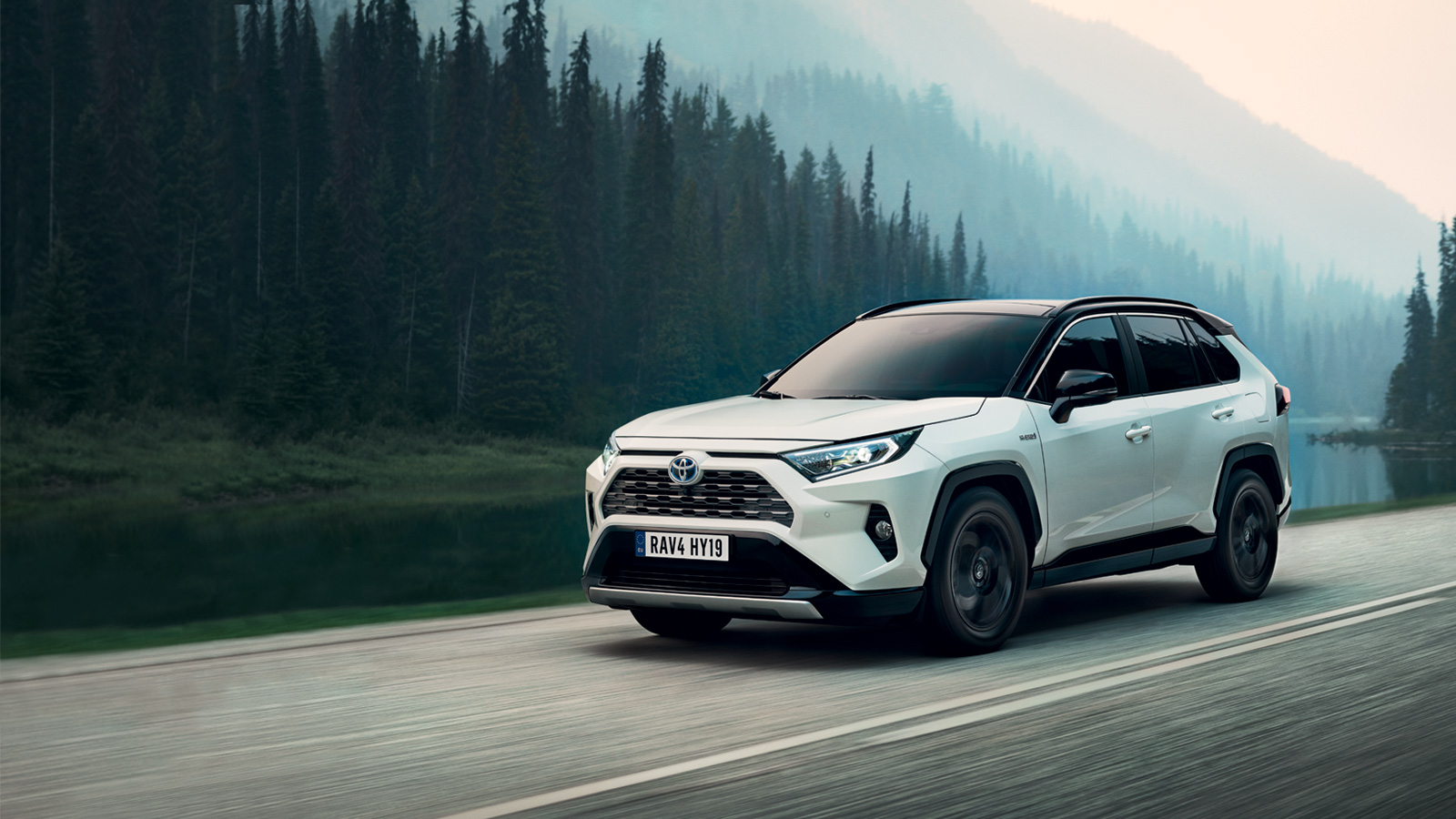
    Korea’s antitrust watchdog said Tuesday that it has fined Toyota Motor Korea 817 million won ($729,000) for deceptive advertising of its RAV4 sport utility vehicle (SUV). Toyota Motor Korea advertised that its RAV4 obtained a top safety pick in five test categories, including the driver’s side small overlap front and roof strength, from the U.S. Insurance Institute for Highway Safety (IIHS) in 2015.

    In 2016, the RAV4 earned the Top Safety Pick Plus rating from the independent nonprofit organization that aims to reduce deaths, injuries and property damage from motor vehicle crashes, according to the Fair Trade Commission.

    The commission said that RAV4 models sold in the United States in 2015 and 2016 were equipped with a bracket, or shock absorber, that allowed it to get the top rating.

    The same SUV model sold in Korea during the same period was not equipped with the bracket, but Toyota Motor Korea advertised the RAV4’s earning the Top Safety Pick rating from the IIHS.

    “Toyota Motor Korea concealed and omitted that there was a difference between RAV4 models sold in the United States and Korea,” the commission said.

    It said the advertisement could mislead Korean consumers into believing that RAV4 models sold in Korea had all the safety features covered by the Top Safety Pick rating.

    Toyota Motor Korea said it cannot give an immediate comment on the issue and that it is reviewing the commission’s decision.

    Toyota is the second foreign automaker to be fined this year. BMW Korea was fined 14.5 billion won last week for manipulating documents on emissions.