Tag: Toyota

  • Toyota forecasts tough outlook for U.S. sales, yen boost to overall profit

    Toyota forecasts tough outlook for U.S. sales, yen boost to overall profit

    Toyota Motor Corp upgraded its full-year operating profit forecast by 8 percent on expectations of a weaker yen but flagged a dour outlook for North America, its biggest market, where quarterly sales fell to the lowest in nearly three years.

    Japan’s largest automaker is struggling to sell more cars in North America, where automakers are battling for customers with aggressive discounts, particularly on sedans as driver preferences shift to bigger SUVs and pick-up trucks. This has raised marketing costs for Toyota and other automakers.

    Profitable growth in North America is important to Toyota to help it sustain big investments it is planning to make in fast-growing new technologies such as automated driving functions and artificial intelligence.

    Toyota said on Tuesday it now expects full-year operating profit to come in at 2.0 trillion yen ($17.54 billion), up from a previous forecast of 1.85 trillion yen, based on a revised assumption that the yen will trade around 111 yen JPY= to the U.S. dollar, from 110 yen.

    The updated profit forecast number is more or less similar to last year’s operating profit of 1.99 trillion yen and in line with forecasts of a profit of 2.04 trillion from analysts polled by Thomson Reuters I/B/E/S.

    Toyota Executive Vice President Osamu Nagata said that the improved forecast was largely due to a positive currency impact, adding that marketing activities, including financial incentives in the United States, would cut into overall profitability this year.

    “Weakening profitability in our U.S. operations is still having a negative impact,” Nagata told reporters at an earnings conference, adding that the shift in demand from sedans to SUVs and falling residual values of leased vehicles would continue to weigh on the company.

    “We still have a lot of work to do there.”

    In July-September, the maker of the Prius gasoline hybrid and the RAV4 SUV crossover sold around 672,000 vehicles in North America, down from around 684,000 a year ago. It was Toyota’s lowest quarterly sales there since the January-March 2015 quarter.

    The automaker anticipates lower annual retail sales in the region for the year to March. At home, sales fell 4.2 percent during the quarter to 543,000 units.

    QUARTERLY RESULTS, SHARE BUYBACK

    Honda Motor Co Ltd (7267.T), Japan’s third-biggest automaker, and smaller Subaru Corp (7270.T) both reported earlier this month that they sold fewer vehicles in North America during July-September and spent more on incentives to whittle down inventories.

    Nissan Motor (7201.T), the nation’s second-biggest vehicle maker, will report its results on Wednesday.

    Toyota is fighting to stay competitive in the U.S. market, which is coming off a strong run that culminated in record sales of 17.55 million vehicles industry-wide in 2016. For the past year or so, Toyota has been raising the production of its Tacoma and Tundra pick-up trucks and its RAV4 SUV crossover, to capitalize on strong demand for larger models.

    But improving sales in other markets have been offsetting weakness in the United States. Quarterly vehicle sales rose 8.0 percent in Europe, and 0.3 percent in Asia. In growing markets, which include central and South America, sales rose 0.6 percent.

    “Even if sales in the U.S. have flattened out, they’re seeing growth in a lot of other markets, like ASEAN, Brazil and Russia, which were considered weak spots not so long ago,” CLSA managing director Chris Richter said.

    Toyota posted a 10 percent rise in operating profit for the second quarter, exceeding analysts’ forecasts for 515.3 billion yen. It also announced a share buyback worth 250 billion yen, the latest in a series of buybacks it has been making over the past few years.
  • Toyota seeks more investments in Israeli auto tech, robotics

    Toyota seeks more investments in Israeli auto tech, robotics

    Japan’s Toyota Motor is seeking more investments in Israeli robotics and vehicle technologies after its venture arm led a $14 million investment in Intuition Robotics in July.

    The startup, which makes robots for the elderly, was the first Israeli investment for Toyota AI Ventures, a new $100 million fund investing in artificial intelligence, robotics, autonomous mobility and data and cloud computing.

    “We will see more involvement of Toyota in the Israeli market in the future,” said Jim Adler, managing director of California-based Toyota AI Ventures, which is part of the $1 billion Toyota Research Institute.

    “There’s more in the pipeline,” he told Reuters during a visit to Israel, adding that technologies dealing with perception and prediction and planning were of particular interest to Toyota.

    Perception technology enables a self-driving vehicle to understand the world around it while prediction and planning can help a car interpret situations such as whether a child at an intersection might try to cross at a red light.

    “There’s a tremendous amount of innovation happening in Israel as cars become more produced by data,” said Adler, who is in the country meeting companies whose technologies interest Toyota.

    Israel is a growing center for automotive technology. Earlier this year Intel Corp bought autonomous vehicle firm Mobileye – one of Israel’s biggest tech companies – for $15.3 billion.

    On Friday Germany’s Continental AG said it was buying Israel’s Argus Cyber Security, whose technology guards connected cars against hacking.

    Toyota AI Ventures has made five investments and expects to invest in at least 20 companies worldwide.

    Regarding its investment in Intuition Robotics – which plans to begin trials of its robots with older adults in their homes early next year – Adler said there were many common features between robotics and autonomous vehicles, which he referred to as “big robots with wheels”.

    Japan’s population is aging, with 40 percent expected to be over 65 in 20 years, he said, and there will be demand for technologies that help the elderly stay in their homes, rather than have to move to assisted-living facilities.

    “We think Toyota will have a role there,” he said.

  • Toyota China sales likely to grow steadily but lag Japan rivals

    Toyota China sales likely to grow steadily but lag Japan rivals

    Toyota Motor, Japan’s biggest automaker by volume, has fallen to the No. 3 spot among Japanese automakers in China, due to lack of presence in a key segment – a situation experts say will likely prevail well past the middle of 2018.

    Through October, Honda and Nissan Motor both outsold Toyota in China, the world’s biggest car market.

    Toyota’s sales in the first 10 months of this year totaled 1.07 million vehicles, compared with 1.16 million vehicles Honda sold during the same period. Nissan’s volume through October amounted to 1.17 million vehicles.

    China-market experts believe the main cause for Toyota’s relative weakness lies in the lack of smallish crossover sport-utility vehicles (SUVs) that others, most notably Honda in recent months, have leveraged to accelerate growth.

    Honda’s sales have started to grow relatively rapidly and more consistently since 2015, after two key subcompact crossover SUVs hit the market in late 2014.

    Though volume growth from these two models – the XR-V and the Vezel – have decelerated more recently, the gap was filled by the redesigned Civic car, among other models. The Civic hit the Chinese market in April last year.

    However, Yale Zhang, head of Shanghai-based consultancy Automotive Foresight, isn’t all that pessimistic about Toyota’s sales outlook.

    “Toyota’s compact sedans, especially (gasoline-electric) hybrid versions of the Corolla and the Levin, are doing well,” Zhang said. “That would give Toyota moderate growth in 2017 and next year, but the issue is the lack of presence” in one of the hottest segment in the Chinese auto market, he said.

    If Toyota had subcompact crossover SUVs like Honda’s Vezel and XR-V, “the company can generate an extra volume of 150,000 units a year at the least, which would be a pure incremental volume for Toyota since they don’t offer any product in this segment today,” Zhang said.

    Toyota marketing and advertising officials said that gap in the company’s product offerings will not be addressed by the middle of 2018.

    China-market versions of the subcompact Toyota CH-R crossover SUV will likely hit showrooms in China in a June-July time frame, they said on condition of anonymity as they are not authorized to speak with reporters. The CH-R hit showrooms in the United States in April this year.

    Toyota had no immediate and particular response to who is up and who is down in sales rankings within China. “We would like to continue to grow steadily in the Chinese market,” a Beijing-based spokesman said.

  • Toyota scrambles to ready ‘game-changer’ EV battery for mass market

    Toyota scrambles to ready ‘game-changer’ EV battery for mass market

    Toyota is scrambling to solve outstanding issues as it races to commercialize a battery breakthrough during the first half of the 2020s with the potential to cut the cost of making electric cars.

    All solid-state battery technology is a next-generation, high-capacity energy storage device that improves on today’s lithium-ion batteries, replacing the liquid or gel-form electrolyte with a solid, conductive material.

    Among other benefits, the new technology offers more capacity and better safety.

    “There are a few next-generation battery technologies we’re looking at, and the most promising is an all solid-state battery,” Toyota Chairman Takeshi Uchiyamada said in an interview ahead of the Tokyo Motor Show, which opened to the public on Friday.

    “We’re scrambling to finish developing this technology, but a few issues still remain as we try to mass produce this.”

    Battery life is the biggest of those issues, Uchiyamada said, adding Toyota has developed the know-how to produce all solid-state batteries in such a way as to hit all the technology’s performance potential.

    But it hasn’t yet mastered how to mass produce them to last as intended for a mainstream car that some buyers could expect to drive for 200,000 kms (124,274 miles) or more.

    Uchiyamada would not say how long an electric-vehicle (EV) battery should last before it needs replacing, but he dismissed a lifespan of three years. “Nobody would buy a car like that, if you had to replace the battery after just three years,” he said.

    Toyota, though, appears confident it can complete the commercialization process for the new battery technology.

    “We believe our solid-state battery technology can be a game changer, with the potential to dramatically improve driving range,” Executive Vice President Didier Leroy told reporters on Wednesday.

    While Toyota is still pushing its alternative hydrogen fuel-cell vehicle technology, derided by Tesla CEO Elon Musk, Uchiyamada insisted the Japanese firm is not “anti-EV”, and is spending heavily in EV technologies such as the solid-state battery.

    Dubbed the “Father of the Prius,” Uchiyamada, 71, helped set the global auto industry on its path to electrification two decades ago, and believes both electric-battery cars and those with hydrogen fuel-cell technologies will be needed to ultimately replace gasoline cars.

    BIGGER CAPACITY, BETTER SAFETY

    Toyota believes solid-state battery technology can double the capacity of today’s lithium-ion battery technology, and help EVs travel further on a full charge.

    The significance of the battery’s higher capacity, or energy density, is the potential for Toyota to reduce manufacturing costs for an EV’s battery propulsion system. High battery capacity means the technology needs less lithium, cobalt, manganese, nickel or aluminum, allowing automakers to reduce the overall size of an EV propulsion system.

    “In automotive manufacturing, smaller and lighter generally means cheaper to produce,” another Toyota official said.

    Successfully commercializing solid-state battery technology could be key to making electric battery cars as affordable as today’s gasoline cars. Experts say this means the cost of producing a kilowatt hour of electricity needs to fall to around $100 from a little under $200/kWh today.

    Global automakers are racing to lower battery manufacturing costs to pad out today’s thin margins on battery cars.

    “We see this tipping point around 2025,” says Nissan Motor Co 7210.T Executive Vice President Daniele Schillaci.

    “By then, for the customer, it will be practically the same cost to buy petrol or EV. If you have the same price for EVs and petrol, why would you buy traditional technology?”

    All solid-state battery technology should also be safer – as conventional lithium-ion batteries with liquid or a gel-like electrolyte have been known to leak or can ignite when they short-circuit and overheat. These risks are reduced in solid-state batteries, says Uchiyamada.

    And, unlike today’s lithium-ion batteries, solid-state battery cells don’t need to be layered closely together and linked by electric connectors, giving car designers more flexibility to create more space for passengers or storage.

    “I’d say that’s fairly revolutionary, and I‘m sure others are looking at solid-state lithium-ion battery technology to break out of the pack and come up with a safer and more potent energy storage technology,” Uchiyamada said.

  • Toyota plans to halve Japan car models by 2025

    Toyota plans to halve Japan car models by 2025

    Toyota is planning to halve the number of car models it sells in Japan to about 30 by 2025 to focus on more popular models in a shrinking market, a person briefed on the matter told Reuters on Thursday.

    The automaker currently offers about 62 car models in Japan, including the Prius gasoline hybrid and the Aqua compact hatchback, along with less popular ones including the Premio sedan.

    Auto sales in Japan have been falling as the population rapidly ages, while young people are losing interest in car ownership.

    The plans will allow Toyota to make better use of its resources, the person said, who was not authorized to comment on the matter and declined to be identified.

    Toyota spokeswoman Akiko Kita said the company was pursuing a number of strategies to maintain sales at least 1.5 million vehicles annually in a shrinking market. It currently sells around 1.6 million a year.

    Toyota and other global carmakers are concentrating their efforts on developing lower emissions vehicles, including electric cars while also focusing on expanding market share in emerging markets.

  • Toyota Plans Major Expansion at Five U.S. Manufacturing Hubs

    Toyota Plans Major Expansion at Five U.S. Manufacturing Hubs

    Toyota plans a $373.8 million investment in five U.S. manufacturing plants that will support production of its first American-made hybrid powertrain and to implement its New Global Architecture at its plant in Alabama.

    The investments will include adding new production of hybrid transaxles (hybrid vehicle transmissions) at the Buffalo, West Virginia, manufacturing facility for $115,300,000; expanding 2.5-liter engine capacity at the Georgetown, Kentucky plant amounting to $120,960,000; increasing production of 2.5-liter cylinder heads at Bodine Aluminum’s Troy, Missouri plant for $17,050,000; and modifying the Bodine Jackson, Tennessee plant to accommodate production of hybrid transaxle cases and housings and 2.5-liter engine blocks for $14,500,000. The Huntsville, Alabama, plant will undergo a comprehensive upgrade to enable it to build engines that complement TNGA amounting to $106,000,000.

    Each of the projects is scheduled to begin this year and all should be operational by 2020.

    “This investment is part of our long-term commitment to build more vehicles and components in the markets in which we sell them,” said Jim Lentz, CEO, Toyota Motor North America. “This strategy is designed to better serve our customers and dealers, and positions our manufacturing operations to fulfill their needs well into the future.”

    The 2.5-liter engines manufactured in Kentucky and transaxles made in West Virginia will be used in hybrid vehicles built in North America such as the Highlander Hybrid manufactured in Princeton, Indiana.

    According to company officials, fifty new jobs will be created because of the investment at the Alabama plant. There will be no net gain of jobs at the Kentucky, West Virginia, or Bodine Aluminum facilities, but these investments will help to ensure the stability of the plants’ employment levels in the future.

    “This investment across five American plants expands capacity for our latest TNGA engines, and localizes production of hybrid powertrains, a core Toyota technology,” said Jeff Moore, Senior Vice President for Manufacturing. “It underscores Toyota’s confidence in the capability and global competitiveness of our North American manufacturing.”

    These projects, and others previously announced, move Toyota nearly halfway ($4.1 billion) toward its commitment to invest $10 billion in the U.S. as announced by CEO Akio Toyoda in January 2017.

  • Toyota recalls 20,000 cars in Vietnam due to faulty airbags

    Toyota recalls 20,000 cars in Vietnam due to faulty airbags

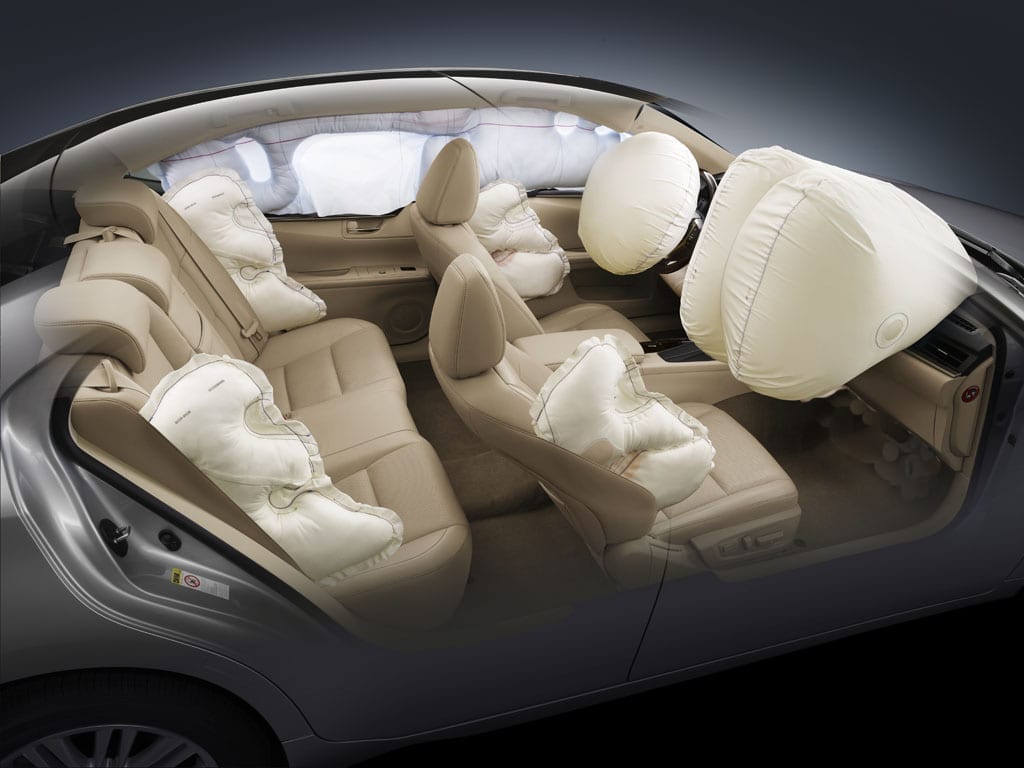
    The airbags produced by Japanese manufacturer Takata have been linked to 17 deaths worldwide.

    Toyota Vietnam announced the recall of 20,000 cars this week to replace airbags produced by Japanese firm Takata.

    The Japanese auto maker will recall 18,138 of its Vios models assembled in Vietnam between 2009 and 2012, and 1,877 Yaris units imported into the country during the same period.

    The move is part of a worldwide recall of Takata products.

    Airbag-manufacturer Takata has suffered massive losses due to faulty airbags that have been linked to at least 17 deaths worldwide.

    The airbags’ inflators can explode with excessive force and blow a metal canister apart, sending shrapnel into the car.

    Toyota Vietnam said it will replace the airbags free of charge.

    No accidents related to the airbags have been recorded in Vietnam.

  • Sales at Toyota’s Lexus brand slide in first-half as sedans suffer

    Sales at Toyota’s Lexus brand slide in first-half as sedans suffer

    Toyota Motor on Friday said its luxury Lexus brand suffered its first fall in half-year global sales in six years as demand for its sedans tumbled in the United States, its biggest market.

    Sedans, traditionally a mainstay for automakers including Toyota and Honda Motor, have fallen out of favor in their key U.S. market in past years, sending many carmakers scrambling to manufacture more larger vehicles including SUVs and trucks.

    Toyota said it sold 305,169 Lexus vehicles worldwide in the six months to June, down 4.4 percent from 319,275 vehicles a year earlier. Sales slumped 10 percent in the United States, which comprises nearly half of Lexus’s global sales, and 23 percent in Japan, while jumping 30 percent in China.

    “The U.S. passenger car market has been very challenging, and this has affected sales,” Toyota spokesman Maki Niimi said.

    He added that the automaker expects annual sales to slide about 4.0 percent this year to around 650,000 units, as the recently launched LC sports coupe model and a revamped version of its marquee LS sedan model later this year lift sales slightly in the coming months.

    While Lexus continues to enjoy solid U.S. sales of its NX SUV crossover model, analysts said that the brand overall had fallen behind rival luxury brands with newer sedan offerings including Daimler AG’s Mercedes, which recently launched its E-Class range, and BMW’s 5-series.

    “It’s a model cycle issue,” said Janet Lewis, head of Asia transportation research at Macquarie Securities. “You have two core competing products recently launched (by Mercedes and BMW), while the LS is pretty long in the tooth.”

    Lexus sold just 1,855 units of its LS 460 model in the United States in January-June, down 35.2 percent from a year earlier.

    Overall, Toyota, the world’s second-biggest automaker, expects to sell 10.25 million vehicles globally this year, down a touch from last year.

  • Toyota takes stake in Mazda, links up for $1.6 billion U.S. plant

    Toyota takes stake in Mazda, links up for $1.6 billion U.S. plant

    Toyota  said on Friday it planned to take a 5 percent share of smaller Japanese rival Mazda Motor Corp, as part of an alliance that will see the two build a $1.6 billion U.S. assembly plant and work together on electric vehicles.

    The plant was a surprise for investors at a time of cooling U.S. sales, but marked good news for U.S. President Donald Trump who came to office on the back of promises to bring back manufacturing and jobs for U.S. workers. He commented on Twitter that it was a “great investment in American manufacturing”.

    The plant, whose location is not yet public, will be able to produce 300,000 vehicles a year, with production divided between the two automakers, and employ about 4,000 people. It will start operating in 2021.

    Analysts said the plan was more than a political ploy. The alliance is also an attempt to catch up with rivals in the race for electric car technology, as tighter global emissions rules loom, along with the entry of new players into the market.

    “There will be new rivals appearing – Apple, Google – these are IT companies, we also need to compete with them, too,” Toyota President Akio Toyoda, grandson of the company’s founder, told a news conference in Tokyo.

    He was appointed last year to lead Toyota’s newly formed electric car division, flagging the group’s commitment to a technology it has been slow to embrace.

    “What’s different from the past is that there are no nautical charts for us to follow. It’s without precedent,” he said of the push into alternatives to the internal combustion engine.

    Other traditional automakers such as Daimler and BMW are also weighing how best to work on new, disruptive technology, from electric vehicles to autonomous driving, that require hefty investment and have turned firms like Google and Tesla into rivals.

    Toyota has set a goal for all of its vehicles to be zero emission by 2050. But until recently, it has said it favoured EVs for short-distance commuting, given their limited driving range and lengthy charging time.

    It has been investing heavily in hydrogen fuel-cell vehicles (FCVs), while rivals such as Nissan Motor Co, Volkswagen AG and Tesla have touted pure electric cars as the most viable zero-emission vehicles.

    As part of the agreement, as well as electric car technology, Toyota and Mazda will work together to develop in-car information technologies and automated driving functions.

    Toyota, Japan’s biggest auto company, has been forging alliances with smaller rivals for several years, effectively engineering a loose network at the heart of the Japanese auto sector. It already owns a 16.5 percent stake in sixth-ranked Subaru Corp with which it also has a development partnership.

    Toyota is also courting compact car maker Suzuki Motor Corp to cooperate on R&D and parts supply, as Toyota seeks to tap its smaller rival’s expertise in emerging Asian markets.

    As part of Friday’s plan, Toyota, the world’s second-largest automaker by vehicle sales last year, will take a 5 percent share of Mazda, and Mazda will take a 0.25 percent share of Toyota.

    Mazda said it could even expand the alliance, as long as it could stay in control of its own management. “We will study the possibility of expanding the capital alliance, but the basic premise is that autonomy is assured,” said Mazda Executive Vice President Akira Marumoto.

    A stake in Mazda may also prevent future incursions by tech companies, one analyst said.

    “For a technology company which lacks the expertise in making cars, Mazda could look like a very interesting acquisition. They’re very good, they’re not too expensive. Maybe Toyota realises this,” CLSA managing director Chris Richter said.

    “By buying a 5 percent stake, Toyota takes Mazda off the table rather than having it sit out there like a free agent which could someday be used against them.”

    Mazda, for its part, stands to gain from a deal that gives the small automaker a production foothold in the United States. At the moment, it ships all vehicles sold in the country, its biggest market, from its plants in Japan and Mexico.

    With an R&D budget of around 140 billion yen ($1.27 billion) this year, a fraction of Toyota’s 1 trillion yen, Mazda lacks the funds to develop electric cars on its own, a predicament shared by Subaru and Suzuki.

    “Mazda needs electrification technology. In the past, they’ve pooh-poohed EVs, they’ve felt they can make internal combustion engines more efficient, but the bottom line is that globally you need to have this technology,” said Janet Lewis, head of Asia transportation research at Macquarie Securities.

    The automakers plan to produce Toyota Corollas and a new Mazda SUV crossover at the new plant, and the companies said they could eventually build other cars including electric vehicles.

    Toyota initially had been planning to produce Corollas at its new $1 billion plant being built in Mexico, prompting Trump to threaten punitive tariffs.

    The company has since said it will instead produce its Tacoma truck model in Mexico.

  • Toyota set to sell long-range, fast-charging electric cars in 2022

    Toyota set to sell long-range, fast-charging electric cars in 2022

    Toyota Motor is working on an electric car powered by a new type of battery that significantly increases driving range and reduces charging time, aiming to begin sales in 2022, the Chunichi Shimbun daily reported on Tuesday.

    Toyota’s new electric car, to be built on an all-new platform, will use all-solid-state batteries, allowing it to be recharged in just a few minutes, the newspaper said, without citing sources.

    By contrast, current electric vehicles (EVs), which use lithium-ion batteries, need 20-30 minutes to recharge even with fast chargers and typically have a range of just 300-400 kilometers (185-250 miles).

    Toyota has decided to sell the new model in Japan as early as 2022, the paper said.

    Toyota spokeswoman Kayo Doi said the company would not comment on specific product plans but added that it aimed to commercialize all-solid-state batteries by the early 2020s.

    Japan’s biggest automaker is looking to close the gap with EV leaders such as Nissan Motor Co and Tesla Inc as battery-powered cars gain traction around the globe as a viable emission-free alternative to conventional cars.

    Whether Toyota will be able to leapfrog its rivals remains to be seen, however, as mass production requires a far more stringent level of quality control and reliability.

    “There’s a pretty long distance between the lab bench and manufacturing,” said CLSA auto analyst Christopher Richter. “2022 is ages away, and a lot can change in the meantime.” How quickly the new EVs will catch on would also depend largely on battery costs.

    Having long touted hydrogen fuel-cell vehicles and plug-in hybrids as the most sensible technology to make cars greener, Toyota last year said it wanted to add long-range EVs to its line-up, and set up a new in-house unit, headed by President Akio Toyoda, to develop and market EVs.

    Toyota is reportedly planning to begin mass-producing EVs in China, the world’s biggest auto market, as early as in 2019, although that model would be based on the existing C-HR sport utility vehicle and use lithium-ion batteries.

    Other automakers such as BMW are also working on developing all-solid-state batteries, eyeing mass production in the next 10 years.

    Solid-state batteries use solid electrolytes rather than liquid ones, making them safer than lithium-ion batteries currently on the market.

  • Toyota working on ‘flying car’, Lexus luxury ‘yacht’

    Toyota working on ‘flying car’, Lexus luxury ‘yacht’

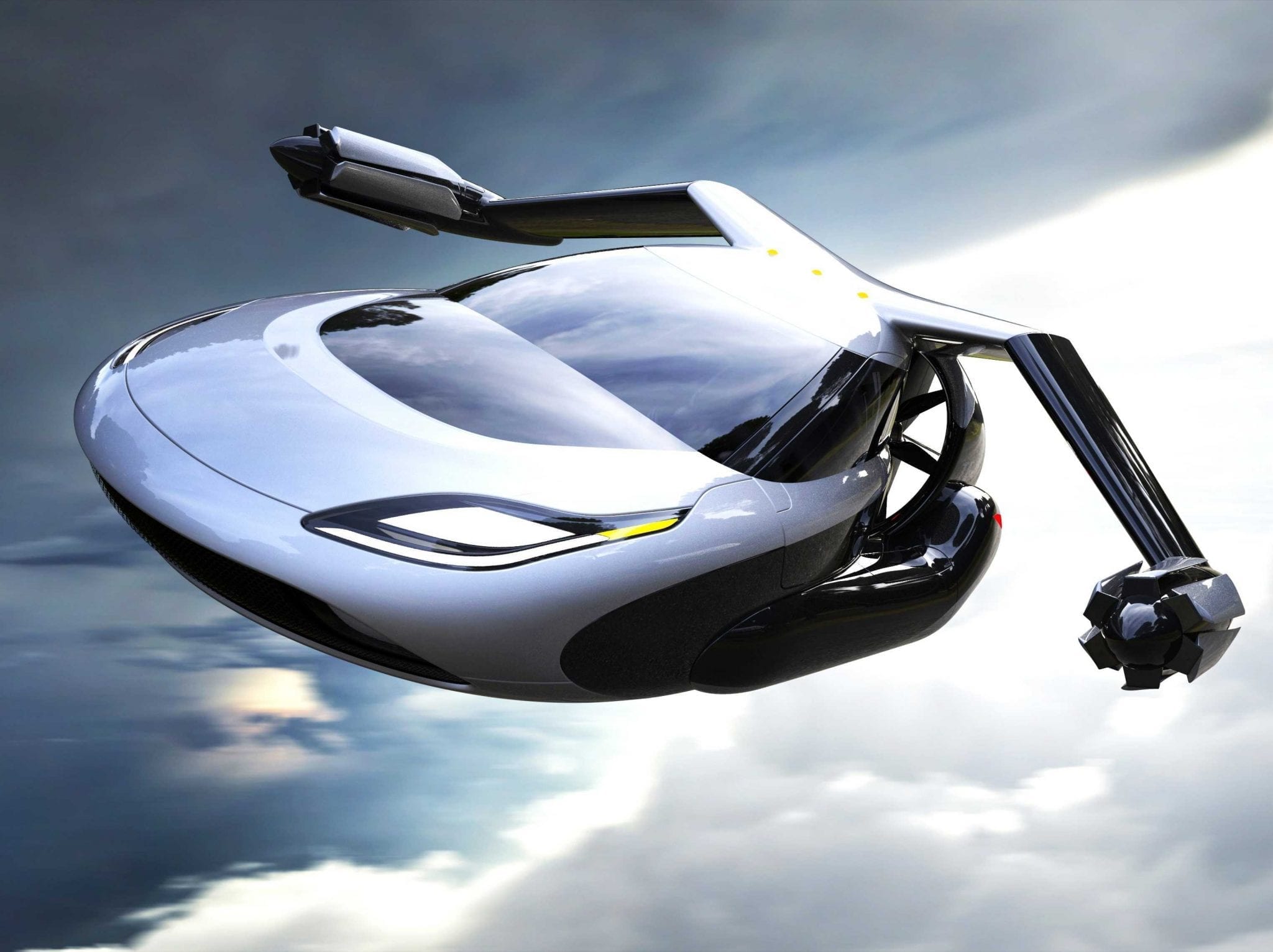
    A startup backed by the Japanese automaker has developed a test model that engineers hope will eventually develop into a tiny car with a driver who’ll be able to light the Olympic torch in the 2020 Tokyo games. For now, however, the project is a concoction of aluminum framing and eight propellers that barely gets off the ground and crashes after several seconds.

    Toyota has invested 42.5 million yen ($386,000) in startup Cartivator Resource Management to work on ” Sky Drive .” At a test flight Saturday in the city where the automaker is based, the gadgetry, about the size of a car and loaded with batteries and sensors, blew up a lot of sand and made a lot of noise.

    It managed to get up as high as eye level for several seconds before tilting and falling to the ground. Basketballs attached to its bottom served as cushions. After several attempts, the endeavor had to be canceled after one of the covers got detached from the frame and broke, damaging the propellers.

    The goal of Cartivator’s is to deliver a seamless transition from driving to flight, like the world of “Back to the Future,” said the project’s leader Tsubasa Nakamura.

    “I always loved planes and cars. And my longtime dream was to have a personal vehicle that can fly and go many places,” he told.

    The group is now working on a better design with the money from Toyota with the plan to have the first manned flight in 2019. No one has ridden on Sky Drive yet, or any drone, as that would be too dangerous.

    Still, dabbling in businesses other than cars is Toyota’s trademark. In recent years, it has been aggressively venturing into robotics and artificial intelligence, investing a billion dollars in a research and development company in Silicon Valley. It’s also working in Japan on using robotics to help the sick walk. It also just announced a five-year $35 million investment in its research center in Ann Arbor, Michigan, for autonomous and connected vehicle technologies.

    The idea that each generation must take up challenges is part of Toyota’s roots, said auto analyst Takaki Nakanishi.

    President Akio Toyoda’s great-grandfather Sakichi Toyoda started out developing the loom and then its automated improvements from the 1890s, before the company became an automaker. More recently, Toyota sees software and services as central to the auto industry, as cars become connected, start driving themselves and turn into lifestyle digital tools, Nakanishi said.

    As Toyota gets into the business of ecological vehicles, such as hybrids, electric cars and fuel cells, it’s turning into an energy company as well.

    “Toyota’s business is centered on mobility, anything that moves, including people, things, money, information, energy,” said Nakanishi.

    Toyota is traveling not only in the skies but also to the waters, although that still remains a tiny part of its sprawling empire.

    Toyota’s boat operations began in 1997. Toyota now offers four models and has sold a cumulative 845 boats. In contrast, Toyota sells about 10 million vehicles a year around the world.

    Reporters recently got a ride in Tokyo Bay of a Lexus luxury concept “yacht,” which runs on two gas engines. With a streamlined curvaceous design, inspired by a dolphin and evocative of a Lexus car, it’s being promised as a commercial product in the next few years.

    Designed for executives zipping through resort waters, it comes with fantasy-evoking features, like an anchor pulled in by a chain into a tiny door in the bow, which opens then closes mechanically.

    The engine, shiny like a chrome sculpture, is visible beneath the sheer floor surface. Shigeki Tomoyama, the executive in charge, said the boat was going for “a liberating effect.” A price was not given. Many Americans have already expressed interest, according to Toyota.

    The project started about two years ago under direct orders from Toyoda, who has with Tomoyama spearheaded Toyota’s Gazoo internet business, another non-auto business for Toyota.

    “He asked us to create a space that can work as a secret hiding place in the middle of the ocean,” Tomoyama said. “We went for the wow factor, which requires no words.”

  • Toyota sells all shares in Tesla as their tie-up ends

    Toyota sells all shares in Tesla as their tie-up ends

    Toyota Motor Corp said on Saturday it had sold all shares in Tesla Inc by the end of 2016, having canceled its tie-up with the U.S. luxury automaker to jointly develop electric vehicles.

    Japan’s biggest automaker had bought around a 3 percent stake in the Palo Alto-based automaker for $50 million.

    Toyota spokesman Ryo Sakai said the company had sold all of its shares in Tesla as of the end of 2016, part of a regular, periodic review of its investments, after it had initially sold down a portion in 2014.

    “Our development partnership with Tesla ended a while ago, and since there has not been any new developments on that front, we decided it was time to sell the remaining stake,” he said.

    In November, the Japanese automaker appointed its president to lead their newly-formed electric car division, flagging its commitment to develop a technology that it has been slow to embrace.

    The department comprises a new in-house unit to plan Toyota’s strategy to develop and market electric cars as part of the company’s efforts to keep pace with tightening global emissions regulations.

  • Daicel, Toyota affiliate plan capital tie-up to expand air bag businesses

    Daicel, Toyota affiliate plan capital tie-up to expand air bag businesses

    Japanese chemicals maker Daicel and auto parts maker Toyoda Gosei Co said on Friday they will invest 1 billion yen ($8.98 million) in each other’s equity, deepening ties as both companies expand their global air bag businesses.

    Daicel, which produces inflators used in air bags, along with polymer and plastic products, and Toyoda Gosei, which makes air bag modules, steering wheels and other auto components, have been growing their air bag-related businesses since a global recall of inflators made by Takata Corp has snowballed since 2013.

    The companies would take a stake of about 0.3 percent in each other and discuss research and development opportunities that would enable them to further expand globally.

    Headquartered in Japan’s automaking heartland of Aichi Prefecture, Toyoda Gosei is a group company of Toyota Motor Corp , which owns a 43 percent stake in the firm. Toyota also owns a 4.3 percent stake in Daicel.

    Osaka-based Daicel supplies inflators to Takata, which has become its biggest customer as the embattled Japanese air bag maker struggles to produce enough replacement inflators in the global auto industry’s biggest ever recall.

    Daicel also sells inflators to Key Safety Systems, the Chinese-owned, U.S.-based components maker which is in talks with Takata about a financial rescue.

    Air bags and other safety-related products accounted for 28 percent of Toyoda Gosei’s annual revenue last year, up from 27 percent the previous year.

    It has been increasing air bag sales to Toyota, Honda Motor Co and other automakers in the last few years, as an increasing number of automakers shift away from Takata.

  • Nvidia says Toyota will use its AI technology for self-driving cars

    Nvidia says Toyota will use its AI technology for self-driving cars

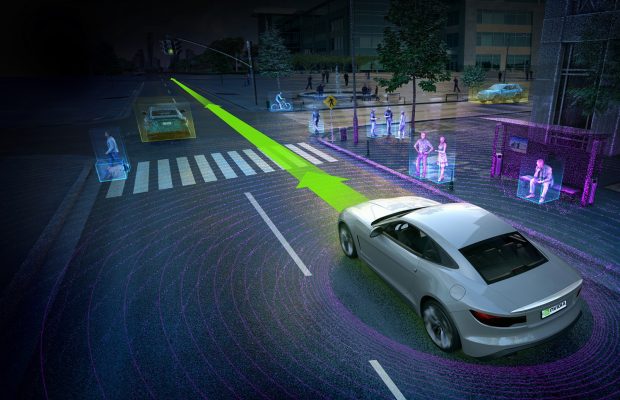
    Nvidia announced a partnership with Toyota Motor Corp on Wednesday, saying the Japanese car maker would use Nvidia’s artificial intelligence technology to develop self-driving vehicle systems planned for the next few years.

    Toyota will use Nvidia’s Drive PX artificial intelligence platform for its autonomous vehicles planned for market introduction, Nvidia Chief Executive Jensen Huang said in his opening keynote at the company’s GPU Technology Conference in San Jose.

    Nvidia came to prominence in the gaming industry for designing graphics processing chips, but in recent years has been a key player in the automotive sector for providing the so-called “brain” of the autonomous vehicle.

    Nvidia, which also has partnerships with Audi and Mercedes, is among the more popular technology partners in the self-driving car race. Its partnership with Toyota is the latest in a string of alliances between tech companies, automakers and suppliers in the fast-growing sector.

    Nvidia’s Drive PX supercomputer fuses incoming data from the car’s hardware such as cameras and radar and uses artificial intelligence to help the car understand and react to its environment.

    “We’re talking about not just development now but the introduction of vehicles into the market,” said Danny Shapiro, Nvidia’s senior director of automotive. “Now we have the biggest (automaker) in Japan using our Drive PX platform.”

    In January, Nvidia and Audi (VOWG_p.DE) said the German automaker would use the Drive PX to help it put autonomous vehicle on the road starting in 2020. Nvidia is also co-developing with Mercedes a project to come to market within the next 12 months, both companies said in January.

    Toyota, which last year set up a U.S.-based Toyota Research Institute (TRI) to focus on AI and robotics, envisions a dual-track development of autonomous technology. It is simultaneously developing full self-driving cars while also working on what it calls “guardian angel” partially autonomous technology that may still require involvement from drivers.

  • Toyota’s new SUV C-HR becomes best-selling model in Japan

    Toyota’s new SUV C-HR becomes best-selling model in Japan

    Toyota Motor’s newly launched C-HR crossover sports utility vehicle grabbed the top spot in monthly domestic sales in April, becoming the first SUV to top the list in Japan since at least 2007, data from industry bodies showed on Tuesday.

    The country’s largest carmaker by volume sold 13,168 units of the C-HR subcompact crossover in the reporting month. The Japan Automobile Dealers Association and the Japan Light Motor Vehicle and Motorcycle Association said the model rolled out last December is the first SUV to become the best-selling model since they began compiling data in 1968 and 2007 respectively.

    The C-HR, which uses the same platform as its popular gasoline-electric hybrid car Prius, attracts fuel-cost sensitive customers with its fuel-efficiency. Its hybrid model runs 30.2 kilometres per liter of gasoline, among the best in the segment. Toyota plans to market the model in over 100 countries on the back of growing demand for compact SUVs worldwide.

    Honda Motor’s minicar N-Box came in second with 12,265, up 4.9% from the same month last year, ceding the crown to the C-HR after maintaining the No. l position for four consecutive months through March. The Move minicar of Daihatsu Motor  — Toyota’s subsidiary — was third, as sales of the minicar model more than doubled to 12,004 units in the month.

    Five minivehicle models with engines no larger than 660 cc made it into the top 10 ranking, according to the two associations, as they continue to entice customers with a relatively low tax levied on them and their fuel-economy.

    Daihatsu’s Tanto minivehicle ranked fourth with 11,926 units, up 8.5%, followed by Toyota’s Prius hybrid, the best seller in 2016, with 9,920 units, down 52.2%.