Retail News CRM

Tag: trade war

  • US-China trade war boon for Malaysian exporters

    US-China trade war boon for Malaysian exporters

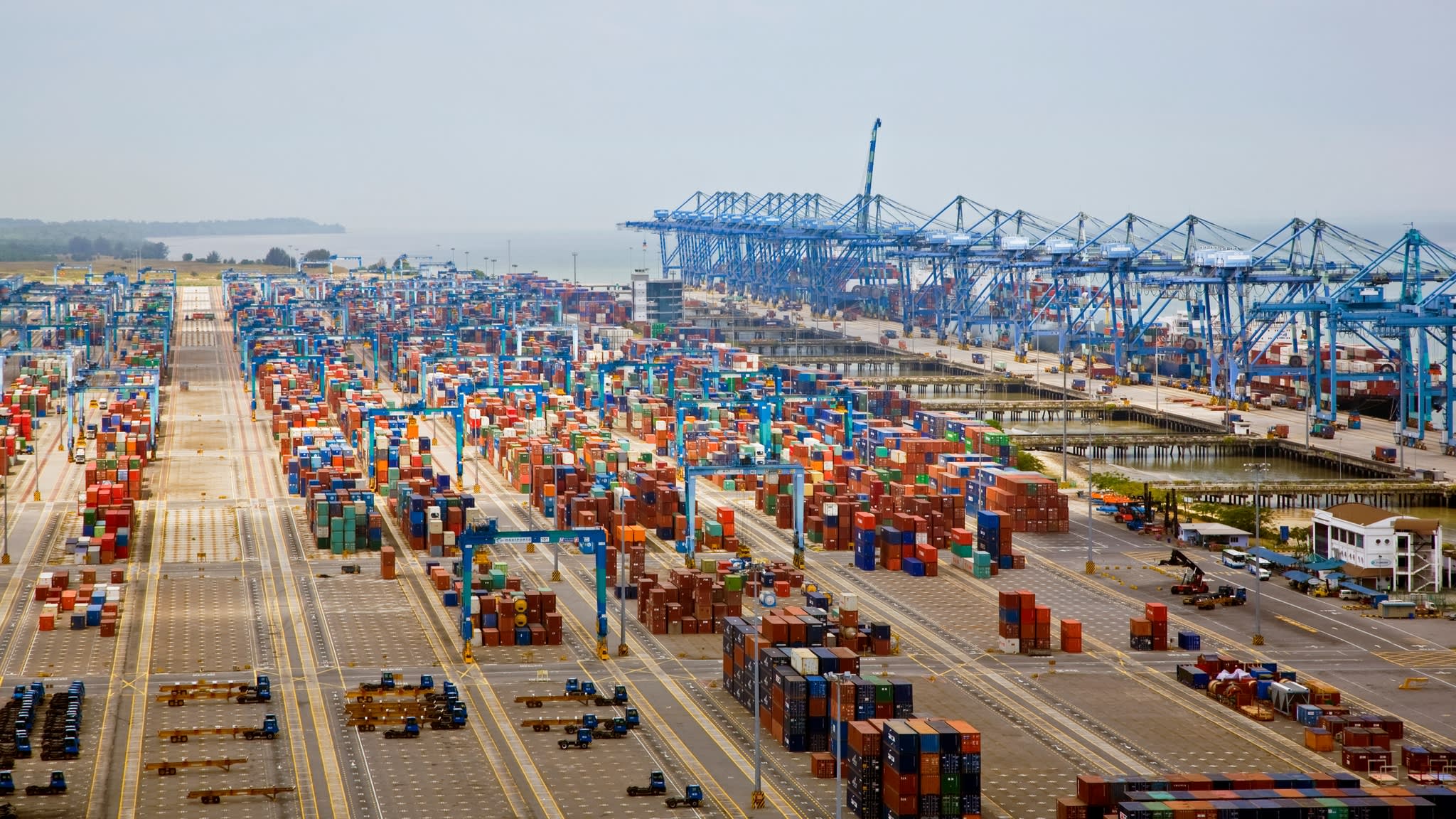
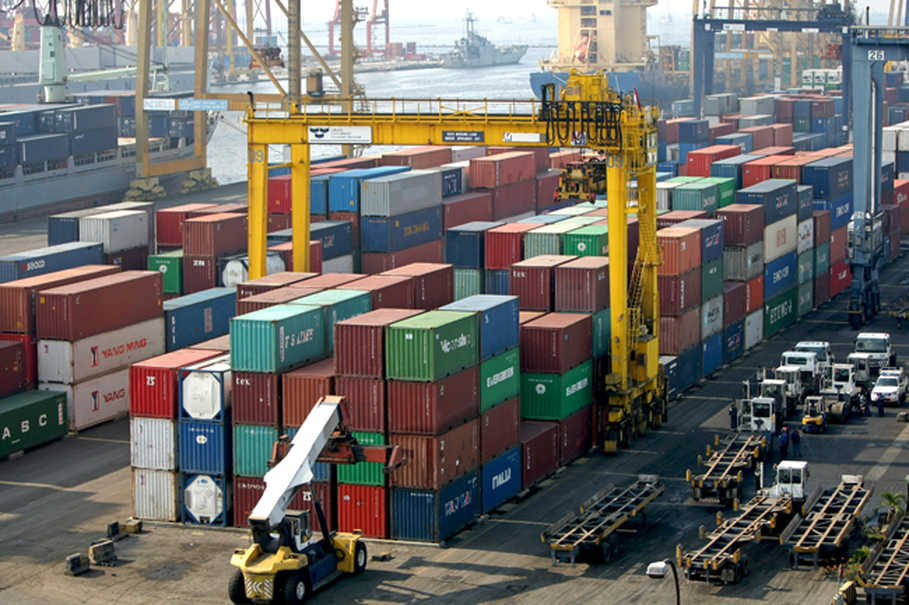
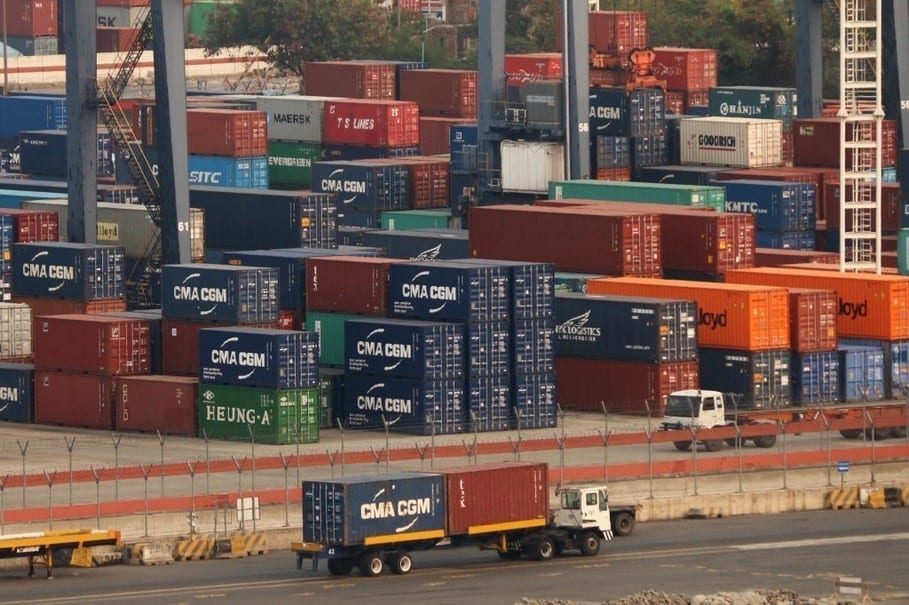
    As US is imposing new tariffs on US$200 billion (RM828 billion) worth of Chinese goods, local exporters are expected to see some increase in orders from the affected players in the two big economies over the next few months.

    It is understood that the US tariffs will take effect on almost 6,000 goods from Sept 24, starting at 10% and increasing to 25% from the start of 2019. Items taxed include everyday items such as suitcases, handbags, toilet paper and wool; and food items from frozen cuts of meat, to almost all types of fish, soybeans, various types of fruit and cereal and rice.

    Sunway Business School Economics Professor Dr Yeah Kim Leng said that he believes the affected firms in both respected countries will be looking at sourcing for other countries and relocate part of their production plants to other countries including Malaysia.

    “Of course they will be exploring and we (Malaysia) already seeing some inquiries. Based on their feedbacks, they are seeking on how they can divert some of their orders to Malaysian companies.

    “Now that the lists of goods are much more wider, they (local firms) are likely to see greater inquiries and look into securing some of the production contracts,” Yeah said, as affected companies are looking to reduce their costs due to the additional tariffs.

    He opined that while the 10% tax is less damaging, the 25% tax will add to the cost pressures for both consumers and businesses in the respective industries.

    Yeah however believes that the slowdown in global growth may deter the affected players from expanding their capacities or relocating their plants to other countries, and instead have them look at existing companies to supply their orders for those affected goods.

    “In the short term, Malaysia may also not be able to capitalise on that given our full capacity constraints.

    “There might be a capacity constraint for Malaysian companies to ramp up production but those with spare capacities will stand to benefit to complete some of the orders,” he added.

    Meanwhile, FXTM global head of currency strategy & market research Jameel Ahmad said that the US’ new tariffs has encouraged further risk aversion across the markets as expected.

    Jameel opined that this move will make investors more sensitive to the ongoing uncertain external environment and expects those currencies belong to markets with weaker external positions to be hit hardest in the aftermath of this decision.

    “The US dollar has once again strengthened on increased trade tensions, while a wide basket of different emerging market currencies is once again on the back foot due to a lack of risk appetite for emerging market assets.This probably means another blow for the likes of the Indian rupee, Indonesian rupiah and South African rand.

    “The outcome is negative for the Chinese yuan, however it has been priced in throughout recent weeks and the reaction in the yuan has not been as negative as would have been first feared. The yuan is down just over 0.10% at time of writing.
    “The ringgit and rupiah are example of two Asian currencies that are trading more negatively than the Yuan, in reaction to this news,” Jameel added.

    The local note was down to 4.146 to the dollar. The FBM KLCI was down about 10 points to 1,792.94 points.

    On another matter, Yeah said the escalating trade war will likely give greater impetus for both China and US to pursue on their respective regional trade agreements and divert them from each other economies.
  • Vietnam relatively safer than ASEAN peers in trade war storm

    Vietnam relatively safer than ASEAN peers in trade war storm

    Unlike most other ASEAN countries, who have been buffeted by the China-U.S. trade war, Vietnam could actually benefit from it.

    The threat of an escalating global trade conflict is weighing on prospects for export-dependent economies like Singapore and Malaysia, while Indonesia and the Philippines face challenges funding their high levels of external debt as their currencies come under pressure from a rising U.S. dollar.

    On the contrary, Vietnam’s geographical proximity to China and economic links with Beijing are paying dividends.

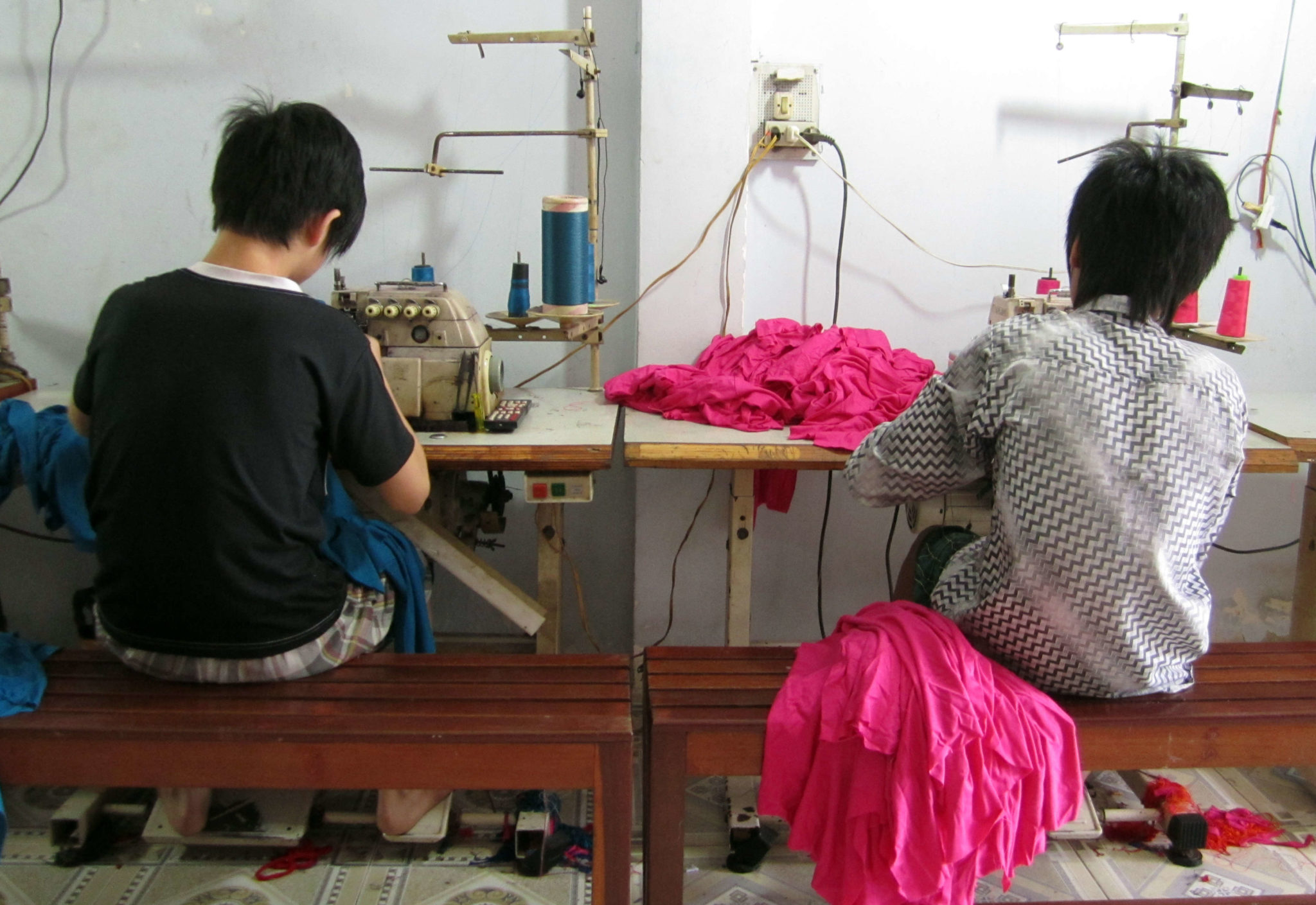
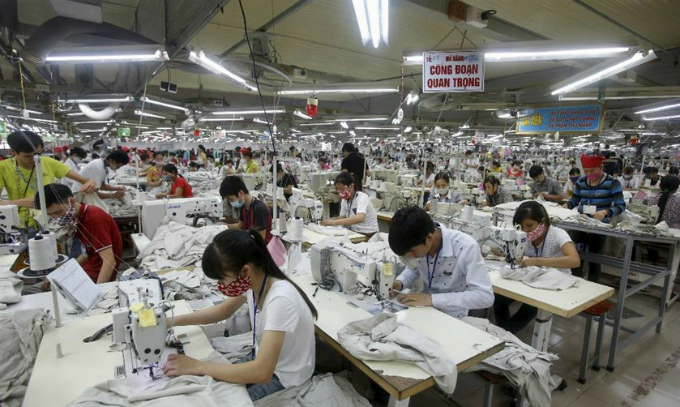
    Facing cost pressures created by U.S. trade tariffs, Chinese manufacturers are starting to shift production away from the mainland into cheaper Asian locations such as Vietnam and Bangladesh.

    “A lot of companies are relocating,” said Robert Subbaraman, head of emerging markets economics at Nomura.

    Angelo Cheung, a Hong Kong-based executive for Aoyagi, a Japanese electronics group that manufactures in China said that some orders from the U.S. had already been halted because of the increasing uncertainty. Cheung said his company is considering various options including moving part of its supply chain to Vietnam.

    The Southeast Asian nation could be a “winner” if a lot of foreign direct investment shifts into Vietnam due to rising cost pressures from the U.S.-China tariffs, Bill Stoops, the chief investment officer of Dragon Capital, said.

    Now with tariffs on made-in-China products set to rise, nations like Cambodia and Vietnam turn out to be more attractive than ever for U.S.-based consumer-goods makers that have factories in China. Some of the names on the list are now Steven Madden Ltd., Tapestry Inc.’s Coach and Vera Bradley.

    The U.S. and China have imposed tariffs on $50 billion of each other’s goods since July as trade frictions between the world’s two biggest economies worsened, despite several rounds of negotiations.

    President Donald Trump has criticized China’s record trade surplus with the U.S. and has demanded that Beijing cut it immediately, threatening further tariffs on an additional $200 billion worth of goods – and possibly more.

  • How ASEAN could benefit from the US-China trade war?

    How ASEAN could benefit from the US-China trade war?

    ASEAN has been urged to find ways for its member states to join hands together to cushion any possible fallout from the trade war between the United States and China.

    Against the backdrop of an escalating trade war between the US and China, Deputy Minister of International Trade and Industry Dr Ong Kian Ming is advocating greater cooperation between ASEAN countries to package the region to foreign investors instead of focusing on country specific promotion.

    He said Malaysia and it’s Asean counterparts should look at ways as a comprehensive unit to take advantage of this situation as investors might be interested in relocating and investing more in Malaysia as a result of this trade war.

    Drawing reference to the strong two way cross border trade linkage in terms of investment and expertise exchange between Johor and Singapore, Ong said Malaysia should replicate this with other countries.

    He also noted that interest from Chinese companies to invest in Malaysia, coming through the Malaysian Investment Development Authority, has risen since last year.

    Instead of setting hub in Malaysia, Ong added that Chinese companies could use Malaysia as a connecting point to tap into the Asean market.

    He opined that the trade war between US and China is less than likely to find a resolution in the short term and Malaysia, being an open economy will be affected by the trade duel.

    In that light, Malaysia should be open to investments and ratify trade agreements such as RCEP and CPTPP, which are yet to be signed in order to strengthen its stance on remaining open to trade.

    “As tariffs have gone down, the non-tariff measures has also gone down. That is why we need to have a greater push among the governments in Asean with the help of the business sector to come in and advice the government on the challenges they face so that we can remove or reduce some of the regulatory red tape with regards to the non-tariff measures,” he said referring to non-tariff barriers.

    Ong said in that regard, ASEAN is working together to compile a database of non-tariff measures so that the trade bloc could gather some of the regulatory and bureaucratic issues faced by companies when setting shop in another ASEAN state.

    International Trade and Industry Minister Darell Leiking urged all the relevant agencies in Malaysia to strive to reduce bureaucracy so as to facilitate more investments into the country.

    He also asked for all chambers of commerce within ASEAN to stand together and start trading with each other during a meeting with members of the Malaysia-Thailand Chamber of Commerce (MTCC) earlier last week.

    Retailers across the region do not see any immediate impact on their business; however, it is worth monitoring exchange rates, as RMB value might represent a variable to consider while working on price architecture.

  • ‘US-China trade war will calm down’

    ‘US-China trade war will calm down’

    The burgeoning US-China trade tensions will calm down sooner or later, despite the additional tariffs counterattack between the world’s two largest economies, according to the US leading strategic consultant David Morey.

    “I think the trade war is going to calm down, but as to when it will happen, it is hard to tell as our President (Donald Trump) is rather unpredictable,” Morey said at a press conference in conjunction with the Malaysia Retail Chain Association’s (MRCA) CEO Night recently.

    “But my guess is that we are going to have some change, because the US-China relationship is too important (for them) to be yelling at each other,” he added.

    Morey also opined that the North Korea’s nuclear weaponry issue would have not been solved if not because of the cooperation between the two big economies.

    “And it better calm down because we need to get to more serious trade issues,” Morey said.

    Meanwhile, commenting on the challenges faced by the local companies to reach to the giant companies level, Morey said these companies need to deal with the anti-corruption, bureaucratic, as well as the status quo issues, which takes every government or organisations around the world.

    “Bureaucracy has no political label, it seems to enjoy every political system and you gotta fight that. You gotta fight people that are looking out for their own interest versus the people.

    “But I sort of look at the glass half full when it comes to Malaysia. Sure you have a lot of challenges ahead, but you have made a lot of progress along with Singapore and Korea.

    “I’m not saying everything is perfect in Malaysia, but there is a hunger that the Malaysians have. We can’t give people that hunger but you have it as a nation. People want to get better, they want to learn, they value education for their kids, and not all countries have that same hunger that you have,” Morey said.

    Asked on the challenges faced by the new Malaysian government, Morey said he opined that the challenge for Prime Minister Tun Dr Mahathir Mohamad is the obstacle that every change leader faces in staying relevant.

    “He won by being a change candidate, now can he continue to be the change leader as he was for so many years and decades? That’s the question.

    “And there’s the difference between campaigning and governing. Governing is a lot harder today but I wish him luck. I think he’s doing a lot of right things and we’re all worried about the geopolitical change that’s happening. We are in a dangerous complicated world so we need great leadership,” he added.

  • US, China dig in as Trump prepares to impose fresh tariffs

    US, China dig in as Trump prepares to impose fresh tariffs

    With US President Donald Trump gearing up to impose tariffs on US$200 billion (RM828 billion) on Chinese goods and Beijing certain to retaliate against any measures, the world’s two biggest economies are locked in an escalating trade war, with no resolution in sight.

    The United States is negotiating with Canada this week to try and finalise a deal to modernise the North American Free Trade Agreement (Nafta), an outcome some in the White House say will allow Washington to turn up the heat on Beijing.

    “The hope is that this (Nafta) puts a lot of pressure on the Chinas of the world to help us negotiate better reciprocal trade deals,” Kevin Hassett, chair of the White House Council of Economic Advisers said.

    The world’s two largest economies have already applied tariffs to US$50 billion of each other’s goods. Talks aimed at easing tensions ended last month without major breakthroughs, and Washington appears emboldened by a sell-off in Chinese markets and a weakening economy.

    China is planning two choreographed celebrations of free trade – a major import fair in November and the 40th anniversary in late December of its move towards market reforms. However, Chinese government advisers are tamping down expectations either occasion will yield measures that could defuse tensions.

    “China seems unable or unwilling to announce major liberalisations that could be termed ‘confidence building
    measures’ or ‘down payments’ on expected near-term reforms,” Craig Allen, president of the Washington-based US-China Business Council, said in a letter to members over the weekend.

    “We know that the President has received reports that the Chinese economy is struggling – reports that we believe are overstated – and thus he may believe that additional pressure might be effective in the short-term,” Allen said.

    Washington is demanding Beijing improve market access and intellectual property protections for US companies, cut industrial subsidies and slash a US$375 billion trade gap.

    The Trump administration is ready to move ahead with a next round of tariffs after a public comment period ends at midnight in Washington on Thursday (Friday afternoon Malaysian time), but the timing is uncertain, people familiar with the administration’s plans said.

    The new duties will start to hit consumer products directly, including furniture, lighting products, tyres, bicycles and car seats for babies.

    Trump said he was not prepared to make a deal with China “that they’d like to make”.

    “We’ll continue to talk to China,” he said at the White House on Wednesday. “But right now we just can’t make that deal. In the meantime, we’re taking in billions of dollars of taxes coming in from China, with the potential of billions and billions of dollars more taxes coming in.”

    Given the smaller amount of goods China imports from the US on which it could slap duties, Beijing has vowed to hit back with unspecified “qualitative” and “quantitative” measures, actions perceived within the US business community as likely to be increased customs and regulatory scrutiny.

    Beijing appears to be bracing for a long fight.

    Official Chinese media is asserting that Trump’s trade war is aimed at containing China’s rise, a perception solidifying Beijing’s resolve not to buckle under US demands.

    In light of such a US agenda, China should “maintain strategic determination” and “take care of our own matters”,
    Long Guoqiang, vice-president of the State Council’s Development Research Centre said.

    “The Soviet Union was pulled into an arms race in the Cold War. Japan’s economy became a bubble in a trade war. These profound lessons are close at hand,” Long said.

    While US businesses in China do not yet appear to face widespread retaliation, some company officials have said they are bracing for blowback. Some are shifting supply chains to avoid tariffs.

  • US-China trade war can benefit Asean

    US-China trade war can benefit Asean

    Against the backdrop of an escalating trade war between the US and China, Deputy Minister of International Trade and Industry Dr Ong Kian Ming is advocating greater cooperation between Asean countries to package the region to foreign investors instead of focusing on country specific promotion.

    “Is there a possibility whereby countries in Asean can work together to deliver a package, an attractive package to foreign direct investors who want to relocate and invest more in Malaysia as a result of this trade war?” he said while delivering his keynote address at the Selangor International Business Summit 2018 (SIBS).

    “So far I have not seen such a concerted effort but I think this is where opportunity lies,” Ong added.

    He said Malaysia and it’s Asean counterparts should look at ways as a comprehensive unit to take advantage of this situation.

    Drawing reference to the strong two way cross border trade linkage in terms of investment and expertise exchange between Johor and Singapore, Ong said Malaysia should replicate this with other countries.

    He also noted that interest from Chinese companies to invest in Malaysia, coming through the Malaysian Investment Development Authority, has risen since last year.

    Instead of setting hub in Malaysia, Ong added that Chinese companies could use Malaysia as a connecting point to tap into the Asean market.

    He opined that the trade war between US and China is less than likely to find a resolution in the short term and Malaysia, being an open economy will be affected by the trade duel.

    In that light, Malaysia should be open to investments and ratify trade agreements such as RCEP and CPTPP, which are yet to be signed in order to strengthen its stance on remaining open to trade.

    “As tariffs have gone down, the non-tariff measures has also gone down. That is why we need to have a greater push among the governments in Asean with the help of the business sector to come in and advice the government on the challenges they face so that we can remove or reduce some of the regulatory red tape with regards to the non-tariff measures,” he said referring to non-tariff barriers.

    Ong said in that regard, Asean is working together to compile a database of non-tariff measures so that the trade bloc could gather some of the regulatory and bureaucratic issues faced by companies when setting shop in another Asean state.

  • US-China trade war escalates as new tariffs kick in

    US-China trade war escalates as new tariffs kick in

    The United States and China escalated their acrimonious trade war today, implementing punitive 25% tariffs on US$16 billion (RM65.6 billion) worth of each other’s goods, even as mid-level officials from both sides resumed talks in Washington.

    The world’s two largest economies have now slapped tit-for-tat tariffs on a combined US$100 billion of products since early July, with more in the pipeline, adding to risks to global economic growth.

    China’s Commerce Ministry said Washington was “remaining obstinate” by implementing the latest tariffs, which kicked in on both sides as scheduled at 12.01pm in Beijing (11.01pm Malaysian time).

    “China resolutely opposes this, and will continue to take necessary countermeasures,” it said in a brief statement, adding that Beijing will file a complaint over the latest tariffs with the World Trade Organisation.

    US President Donald Trump has threatened to put duties on almost all of the more than US$500 billion of Chinese goods exported to the US annually unless Beijing agrees to sweeping changes to its intellectual property practices, industrial subsidy programmes and tariff structures, and buys more US goods.

    That figure would be far more than China imports from the US, raising concerns that Beijing could consider other forms of retaliation, such as making life more difficult for American firms in China or allowing its yuan currency to weaken further to support its exporters.

    Economists reckon that every US$100 billion of imports hit by tariffs would reduce global trade by around 0.5%.

    The tariffs took effect amid two days of talks in Washington between mid-level officials from both sides.

    Washington’s latest tariffs apply to 279 product categories including semiconductors, plastics, chemicals and railway equipment that the Office of the US Trade Representative has said benefit from Beijing’s “Made in China 2025” industrial plan to make China competitive in high-tech industries.

    China’s list of 333 US product categories hit with duties includes coal, copper scrap, fuel, steel products, buses and medical equipment.

  • U.S.-China trade war doesn’t rattle Korea yet

    U.S.-China trade war doesn’t rattle Korea yet

    The United States on Wednesday levied 25 percent tariffs on $16 billion worth of Chinese imports. China immediately retaliated by putting the same level of tariffs on $16 billion of American goods.

    Since July 6, each country levied 25 percent tariffs on $34 billion worth of goods, bringing the total of exports slapped with new tariffs to $50 billion on each side.

    And although low level talks are going on between the two countries, the U.S. government is looking into levying 25 percent tariffs on $200 billion worth of Chinese goods. Beijing has warned that it will levy 5 to 25 percent tariffs on $60 billion worth of American goods if the Trump administration actually goes through with its threat.

    While the escalating trade conflict between the world’s two largest economies has cause global concern, the Korean stock market wasn’t heavily affected, closing 0.41 percent or 9.27 points higher on Thursday than the previous day.

    One major reason is that the new tariffs were telegraphed in advance and some analysts believe the two sides will eventually reached an agreement. If they do, that could help the Kospi rise around the third quarter.

    At the beginning of the year, the Kospi enjoyed a bullish rally that even pushed it to beyond 2,600 in inter-day trading. But lately, it has been hovering around the 2,200 mark.

    The trade war between the United States and China is considered one of the biggest factors keeping the Kospi down, along with the recent fear of an emerging markets crisis after Turkey’s currency and debt woes.

    However, there is growing speculation that the Chinese government is under pressure to strike a deal with the United States as its economic indicators have been sagging lately.

    China’s 6.7 percent economic growth in the second quarter was 0.2 percentage points lower than in the first three months of the year. There’s already consensus that, in the second half, China’s growth will slow to 6.5 percent.

    The Chinese stock market has been bearish. Last week alone the index fell every day, closing the week at its weakest level since January 2016. The close on Aug. 17 was a 25 percent drop compared to Jan. 29, when it hit a high for the year of 3,587.03.

    Market analysts are projecting that once the trade conflict is resolved, the Kospi could rise to around 2,580 and 2,650 within this year. Korea Investment & Securities is even more optimistic as it projected the Kospi to reach as high as 2,800.

    “While the conflict between the United States and China is getting worse, it seems the United States has no intention or reason to expand the situation to the point of driving the global economy into the ground,” said Shin Dong-suk, head of Samsung Securities’ research center. “In reality, Donald Trump, who is facing a mid-term election in November, will look for ways to resolve the situation and make the Chinese yield.”

    He said Korea’s stock market will likely see a mild recovery in the third quarter.

    Yoon Hee-do, head of Korea Investment & Securities’ research center, said while the conflict between the United States and China is still worrying, the depreciation of the Korean won against the U.S. greenback will likely improve the performances of listed companies in the third quarter by raising the price competitiveness of their exported goods.

    But some believe the Kospi might not see a significant increase.

    “It’s likely that the market could be moving within a limited range,” said Lee Kyung-soo, head of Meritz Securities’ research center.

    Some raised concerns about Korea’s semiconductor companies, with demand for mobile DRAM chips reaching saturation and Chinese memory chip manufacturers overproducing.

    But Lee Chang-mok, head of the NH Investment & Securities Research Center, said there are still hopes for favorable news such as improvement in South and North Korea relations.

  • Malaysian economy could shrink if US-China trade war escalates

    Malaysian economy could shrink if US-China trade war escalates

    Malaysia’s gross domestic product (GDP) could contract by 1.3% in two years should the trade war between the United States and China intensify.

    CIMB Group chief economist Dr Donald Hanna said Malaysia’s economic growth could shrink in the event of continuous escalation in tariff imposition and a confidence shock in the financial market, which could result from, say, China offloading its substantial holdings of US debt.

    That will not only result in a reduction of global trade but will also affect Malaysia, which is an open economy – and trigger interest rate increases in the US.

    However, at current levels, Hanna noted that the impact of the trade duel between the two economic giants on Malaysia is small.

    He projected GDP growth to decelerate to around 5.1% in the second quarter (Q2) of 2018 from the 5.8% recorded in Q2 2017 – taking the cue from the slower growth in the Industrial Production Index for June, which rose only 1.1%.

    Full-year GDP growth is expected to be around 5.1-5.2%. This will be due to the natural moderation in GDP growth which started slowing down after a robust expansion in the second half of last year and not due to the US-China tensions.

    Hanna said the trade war appears to be one of US President Donald Trump’s policies that could see some longevity, compared to others on issues such as immigration and abortion.

    He noted that if Trump’s objective of waging a trade dispute is to shrink the US trade deficit, it is not likely to be achieved because of other macroeconomic policies that the US administration has in place.

    Hanna, who was speaking at the 13th CIMB Asean Research Institute’s Asean Roundtable Series: Trade War and Its Impact on Asean, also said Malaysia could be a preferred location for US and Chinese companies to relocate their investments – in the face of tariff slapping.

    Echoing that sentiment, European Union-Malaysia Chamber of Commerce and Industry CEO Roberto Benetello said China is likely to rethink its trade alliances in the region and get closer to partners in Asean.

    This could be a call to accelerate the Regional Comprehensive Economic Partnership (RCEP), which could see a slowdown in the ratification process, thanks to the ongoing spat.

    American Malaysian Chamber of Commerce executive director Siobhan M Das said that without the US market, Asean could become a dumping ground for China’s excesses.

    Malaysia Productivity Corp board member and former ambassador of Malaysia to the World Trade Organisation (WTO) Datuk Muhamad Noor Yacob said the focus should be on the WTO’s Dispute Settlement Body.

    Although observers have voiced their concerns over the possibility of Trump pulling the US out of the WTO, the country has been one of its active users, accounting for more than 100 of the 500 disputes attended to by the body since 1995. It has also been an active respondent to many disputes.

    The roundtable also saw speakers stressing on the importance of the RCEP and free trade agreements between the regional trading bloc and potential trading partners.

  • Vietnam most vulnerable in ASEAN to US-China trade war

    Vietnam most vulnerable in ASEAN to US-China trade war

    Vietnam will be the most vulnerable country in Southeast Asia should the U.S.-China trade war persist, according to recent research.

    This is because Vietnam is the most export-dependent of the ASEAN big five, which also includes Indonesia, Malaysia, the Philippines, and Thailand, quoted from Financial Times Confidential Research report.

    Vietnam’s exports were worth $214 billion last year, 21 percent up from 2016, according to Vietnam’s Customs. The U.S. was the largest importer of Vietnamese goods last year, buying goods worth over $41.6 billion.

    “Vietnam’s exports to the U.S. rank first among the ASEAN five, making the country sensitive to softening U.S. consumer demand,” the report said.

    Another reason that Vietnam and other ASEAN member countries would be impacted by the escalating trade tension is the strengthening of the U.S. dollar, it said.

    The dong has been devalued by 1.5 percent this year, and the government could take more aggressive action if exports slow significantly, it said.

    But Vietnam, Thailand and Malaysia might still benefit from the currency weakness “if foreign direct investment shifts away from China as more companies hedge against the risk of trade action,” it added.

    Trade tension between the U.S. and China continues to escalate. A Reuters report cited Beijing as saying last week that it would slap additional tariffs of 25 percent on $16 billion worth of U.S. imports.

    The announcement came after Washington said it would impose 25 percent tariffs on another $16 billion in Chinese goods after imposing tariffs on $34 billion last month.

    So far, China has now either imposed or proposed tariffs on $110 billion of U.S. goods, representing the vast majority of its annual imports of American products.

    Vietnamese experts too have cautioned that the country would suffer collateral damage because of this trade war.

    A report released last week by the Ministry of Planning and Investment’s National Centre for Socio-Economic Information and Forecast said Vietnam’s GDP growth would take a hit from the trade tension.

    The report predicts a drop of 0.03 percent this year, 0.09 percent next year and 0.12 percent in 2020 and 2021.

    In money terms, it translates into VND8 trillion ($344 million) in 2021.

  • Trade wars to hit Malaysian steel sector

    Trade wars to hit Malaysian steel sector

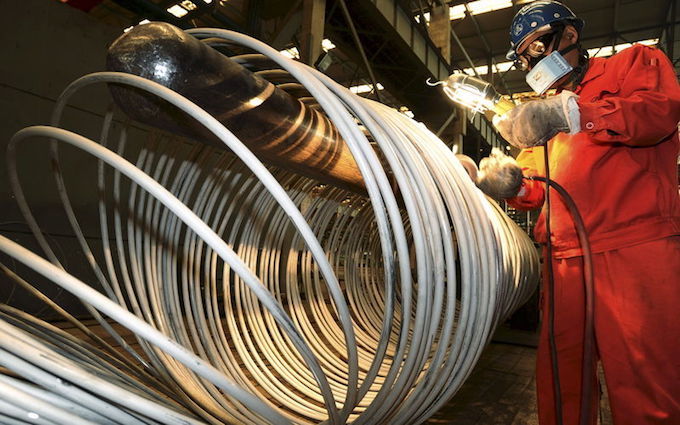
    The Malaysian steel sector will be affected negatively in 2018 and 2019 due to the trade wars on the external front, said MIDF Research.

    “Changes in global trade policies, tepid global demand as well as the local steel mill cost structure will continue to impede any positive demand for the companies under our observation,” it said in a report.

    It expects the steel sector to experience more headwinds from the trade wars as China’s demand for steel is shaky, coupled with the slump in its construction industry.

    “The demand from China’s manufacturing sector takes up to 360 million metric tons annually, close to 60% of its annual consumption. But, the demand is expected to shudder further due to China’s environmental health and occupational safety policies,” MIDF Research said.

    It noted that steel players such as Ann Joo Resources, Lysaght Galvanised Steel, Southern Steel, SC Steel, Mycron Steel and Choo Bee Metal have reacted negatively to the announcements and influx of news on trade and tariff wars.

    It expects the trend to persist because globally, steel demand is projected to grow to 1,616.1 million metric tons this year and tepid growth will be plagued by low demand for 2019, growing to 1,626.7 million metric tons.

    “This means less demand for export for the local steel mill. Most of the local companies are affected by unwavering overhead costs and operational expenditure, making the sector unattractive,” said MIDF Research.

    Meanwhile, the government has announced the exclusion of sales and services tax for building materials and construction services, which would be a breather for the construction sector from the grim outlook of project cuts, it added.

  • Indonesia to Seek Clarity From WTO on US Trade Dispute

    Indonesia to Seek Clarity From WTO on US Trade Dispute

    Indonesia will clarify its position with the World Trade Organization after the United States asked the multilateral body to allow it to impose sanctions on Southeast Asia’s biggest economy after winning a trade dispute that it claims had cost US business up to $350 million in 2017.

    Indonesia lost its appeal against a WTO ruling in favor of the United States and New Zealand last year over its trade policies that limit imports of food, plants and animal products, including apples, grapes, potatoes, onions, flowers, juice, dried fruit, cattle, chicken and beef.

    The United States claims that Indonesia has yet to abide by the ruling.

    “In accordance with the agreement between Indonesia, the United States and New Zealand, we agreed that a reasonable period to revise our import regulations and policies was eight months from the date of approval of the appellate body, which was on Nov. 22, 2017,” Hasan Kleib, Indonesia’s ambassador to Geneva and the country’s permanent representative to the United Nations, WTO and other international organizations, said in a statement on Wednesday (08/08).

    “Indonesia will certainly explain the changes that have been made since the final ruling of the WTO panel and the appellate body,” he said.

    According to the ruling, Indonesia was required to make the first phase of adjustments by July 22 this year at the latest, and the second phase before June 2 next year. Although Indonesia has taken steps to adjust its import regulations after consulting with the relevant parties in Geneva on July 27, the United States said this had not done enough.

    This assessment is based on information the US representative to the WTO received, showing that US producers still face obstacles when exporting horticultural products to Indonesia.

    “In the letter released yesterday, they [the United States] said they were not satisfied [with the rule changes]. But in Washington, their ambassador was already quite satisfied,” Coordinating Economic Affairs Minister Darmin Nasution said on Wednesday.

    Trade Ministry officials visited Washington last week as part of an Indonesian delegation consisting of business lobby groups and representatives of fiscal and banking authorities to seek alternatives that would avoid a full-blown trade war between the two countries.

    Indonesia fell out of President Donald Trump’s favor over a surplus it has been enjoying in bilateral trade between the two countries since 2013. The United States also threatened to revoke its trade incentive, known as the Generalized System of Preferences, which has benefited Indonesia for more than three decades.

    The latest rift with the United States stems from Indonesia’s old policies on agricultural imports. One of the policies only allows US producers to export apples to Indonesia outside the apple harvesting season in the archipelago.

    “We have already changed the rules at the Ministry of Agriculture and the Ministry of Trade, which they objected to … but they say the changes are not in accordance with their wishes,” Darmin said.

    He said the delegation that visited Washington has asked for time until the end of next year or 2020 to change the applicable laws and government regulations, to which they agreed, as “they know it will take time.”

    Darmin added that the government will send a team to the United States to discuss these objections.

  • China says US disappoints the world by upping the ante in trade war

    China says US disappoints the world by upping the ante in trade war

    China warned the United States today that upping the ante in a tit-for-tat trade war will “only serve to disappoint” the world as Washington threatened to raise the tariff rate on the next US$200 billion (RM814 billion) of Chinese imports.

    Beijing said it would be forced to take countermeasures to defend Chinese interests, free trade and the international order.

    “The US has no regard for the world … playing both soft and hard ball with China will not have any effect, and only serve to disappoint the countries and territories opposed to a trade war,” China’s Ministry of Commerce said in a statement, adding that it still hopes to turn the situation around.

    Foreign ministry spokesman Geng Shuang called Washington’s actions “blackmail” and urged the US “to return to rationality and not act on impulse. It will only hurt themselves.”

    President Donald Trump asked the US Trade Representative to consider increasing the proposed tariffs to 25% from the planned 10%, USTR Robert Lighthizer said on Wednesday.

    “We have been very clear about the specific changes China should undertake. Regrettably, instead of changing its harmful behaviour, China has illegally retaliated against US workers, farmers, ranchers and businesses,” Lighthizer said in a statement.

    Officials, however, downplayed suggestions the move was intended to compensate for the recent decline in the value of the Chinese currency, which has threatened to take much of the sting out of Trump’s tariffs by making imports cheaper.

    The US dollar has been strengthening since April as the central bank has been raising lending rates, which draws investors looking for higher returns.

    “It’s important that countries refrain from devaluing currencies for competitive purposes,” a senior administration official said. “But I wouldn’t draw the conclusion that the announcement we’re making today is directly linked to any one practice.”

    Washington and Beijing are locked in battle over American accusations that China’s export economy benefits from unfair policies and subsidies, as well as theft of American technological know-how.

    Trump has threatened to slap tariffs on virtually all of China’s exports to the US.

    Officials said they remained in regular contact with their Chinese counterparts but could announce no new meeting.

    The US already imposed 25% tariffs on US$34 billion in Chinese goods, with another US$16 billion to be targeted in coming weeks.

    On July 10, Washington unveiled a list of another US$200 billion in Chinese goods, from areas as varied as electrical machinery, leather goods and seafood, that would be hit with 10% import duties.

    Increasing the rates to 25% could make them significantly more painful.

    The comment period on the proposed penalties, which includes public hearings where business can ask for exemptions, due to take place later this month, would be extended into September, the officials said.

    Much of American industry and many members of Trump’s own Republican Party have expressed outrage but have so far been unable to thwart Trump’s trade policies.

    The US Senate last week passed legislation which if enacted would lower trade barriers on hundreds of Chinese imports.

    Jake Colvin, vice-president of the National Foreign Trade Council, said the Trump administration could be boxing itself into a corner.

    “It’s hard to see how this action lends itself towards a resolution to what is increasingly a trade crisis,” he told AFP.

    Trump and senior administration officials believe the volume of US imports and vigorous health of the American economy give Washington an advantage in the current confrontation.

    But Fred Bergsten, founding director of the Peterson Institute for International Economics, told CNBC that China would be able to absorb blows more easily than Washington.

    “They can expand their stimulus, fiscal spending, bank lending,” he said.

    “They can compensate much better than we can. They come from a much higher base.”

    And Bergsten warned that the US economy is likely to slow and a trade war only makes that expected decline worse.

  • Indonesia Scrambles to Mitigate Trade War With US

    Indonesia Scrambles to Mitigate Trade War With US

    While bracing for the fallout from a trade war between China and the United States, Indonesia is doing its best to avoid sparking a trade war of its own with the world’s largest economy.

    Indonesia found itself on the wrong end of a trade imbalance with the United States, amid President Donald Trump’s apparent dislike of trade deficits.

    Now the United States is planning to a revoke duty-free incentive for Indonesian goods under the Generalized System of Preferences (GSP), imposed in 1976 to increase poor and developing countries’ competitiveness in global trade. This could affect some $2 billion in Indonesian exports to the United States.

    If the plan passes, it could have serious repercussions for Indonesia’s manufacturing and agricultural sectors – key industries that provide most of the jobs in the archipelago.

    “I think the problem is the United States’ attitude towards trade and specifically towards surpluses and deficits. It’s a fundamental misunderstanding of the way trade works… It’s unfortunate that Indonesia has been singled out, simply for having a trade surplus,” Chris Clague, managing editor of the Economist Intelligence Unit’s thought leadership division in Asia said.

    Indonesia ranked in 16th place among countries with trade surpluses with the United States at $9.7 billion last year – nearly three times higher than in 2013.

    The United States has been demanding greater access for its goods, services and investments in Indonesia, in addition to several other issues, such as stronger intellectual property rights protection. But Indonesia does not have a comprehensive bilateral free-trade agreement with the United States and efforts to bring the countries in under multilateral deals such as the Regional Comprehensive Economic Partnership (RCEP) and Trans-Pacific Partnership (TPP) also fell through, leaving limited avenues for the United States to get what it wants.

    “[The GSP] is a unilateral agreement, so if [the United States] wants to evaluate it, we have no right to protest. We can only serve what they want,” Coordinating Economic Affairs Minister Darmin Nasution told reporters last week.

    “Because the government has an interest in maintaining the facility… we will do everything we can to keep it,” he said.

    Trade Minister Enggartiasto Lukita will lead a team to the United States on July 21-28 to try and persuade that country to keep its special tariff treatment for some Indonesian products, the ministry said in a statement.

    This will be the first official meeting between the Ministry of Trade and its US counterpart under Trump’s presidency.

    “Indonesia is ready to partner with the United States and address the issue of a trade deficit because the two countries have products and services that are not competing but complementary,” Enggartiasto said in the statement.

    While the United States is also evaluating special tariffs for India and Kazakhstan, Indonesia is the only country that has been given a chance to discuss the matter with the United States.

    “We can lobby the United States because we have a big market, an investment destination, a strategic region and good economic potential in the region. So our bargaining position is very strong to negotiate with the United States,” Indonesian Textile Association (API) chairman Ade Sudrajat said on Tuesday.

    He said Indonesia should establish a free-trade arrangement with the United States to ensure that country cannot withdraw its trade facilities as it wishes. That way, Indonesian exports can also easily enter the United States and be more competitive as it will not be subject to tariffs, he said.

    According to the Trade Ministry, there are plans to finalize six free-trade agreements or comprehensive economic partnership agreements this year. They include the RCEP, Indonesia-Australia Comprehensive Economic Partnership Agreement, Indonesia-European Free-Trade Association, Indonesia-EU Comprehensive Economic Partnership Agreement, Indonesia-Iran Preferential Trade Agreement and Indonesia-Malaysia Border-Trade Agreement.

    Steel Spillover

    The world’s two largest economies kicked off a trade war two weeks ago with the United States imposing punitive tariffs of 25 percent on $34 billion worth of Chinese imports, which prompted the latter to immediately retaliate. The United States wants to reduce its trade deficit with China after it hit a record high of $275.81 billion in 2017.

    The United States imposed import tariffs on several Chinese products, including steel and aluminum, which could spill over to other countries, such as Indonesia. The archipelago forms part of a free-trade arrangement between the Association of Southeast Asian Nations (Asean) and China, which commenced in 2010.

    Indonesian steel imports rose 33 percent to $4.7 billion in the first half of this year, compared with the same period a year ago.

    But Hidayat Triseputro, executive director of the Indonesian Iron and Steel Industry Association (IISIA), said between 25 percent and 30 percent of the steel imports are the result of dumping, making it very difficult for local producers to compete.

    Indonesia produced 4.8 million metric tons of the alloy last year, according to World Steel Association data. This is a tiny amount compared with the 831.7 million tons by China, the world’s largest steel producer.

    Still, domestic production should be enough to cover 90 percent of Indonesian steel demand.

    “Imports dominate up to 40 percent of our market… That’s why we want to tighten imports; there must be detailed data to screen them,” Hidayat said.

    However, what happens with the steel industry could soon befall other industries. The International Monetary Fund has warned that a trade war between the United States and other countries could cost the global economy $430 billion and risk lowering global growth by 0.5 percent by 2020.

    “This is potentially very, very bad, if not bordering on something catastrophic. The world economy has finally recovered from the impact of the 2008-09 global financial crisis … and now we’re running into a situation that could have a potentially devastating and deadening effect on global trade,” said Clague of the Economist Intelligence Unit.

  • China’s E-Commerce Giants Aren’t Worried About Trade War

    China’s E-Commerce Giants Aren’t Worried About Trade War

    How does the CEO of China’s second largest e-commerce company feel about the escalating U.S.-China trade war?

    Richard Liu, founder and CEO of JD.com–an online retailer with 300 million annual active customers, $56 billion in revenues in 2017, and investors including Tencent, , and –doesn’t like it. But he’s not worried either.

    “I can tell you it’s okay, ” Liu said on Monday. If his customers think the price of American goods has become too high, JD.com can find products, whether it be meat, apparel, or some other item, from Europe or Japan or Korea (among other places) to sell to them instead. “We can find another choice,” he said, adding that he didn’t think the trade war would benefit either party.

    Whatever the case, Liu noted that consumer experience–which comes down to quality, price, and service–remains JD.com’s top priority. It’s that focus that motivated his company’s early and significant investment in drone delivery; it currently uses a daily fleet of 500 drones that has over 100,00 hours of flying time.

    Whatever the product (so long as it costs at least roughly $10) and wherever the customer, JD.com delivers it for free and in less than 24 hours. Competing in Chinese retail–and against its chief rival Alibaba–without that sort of service, said Liu, would be a “disaster.” Liu hinted that may be struggling to achieve that speed in China.

    JD.com, which thrives partly because of “shopping circles”–social media-enhanced shopping–on China’s leading social platform WeChat, plans to enter the American retail market soon.