Retail News CRM

Tag: trade war

  • Vietnam stands to lose from trade war between big powers

    Vietnam stands to lose from trade war between big powers

    The Vietnam Institute for Economic and Policy Research (VEPR) has cautioned that the ongoing trade war between the U.S and China is changing the dynamics of trading in the world, and would eventurally hit Vietnam more than in its exports sector.

    Pham Sy Thanh, head of VEPR’s Chinese Economic Studies Program, said: “When a large economy decides to protect itself, other economies will start to imitate.”

    Global trade growth last year reached 4.7 percent, but this year’s estimate of 3.1 to 5.3 percent shows that even top economists are uncertain about how the trading picture will turn out after this trade war, he said.

    If this continues, multilateral relationships will be replaced by bilateral ones, which will be a disadvantage for a developing country like Vietnam, because stronger countries will have more resources and power to negotiate, he said.

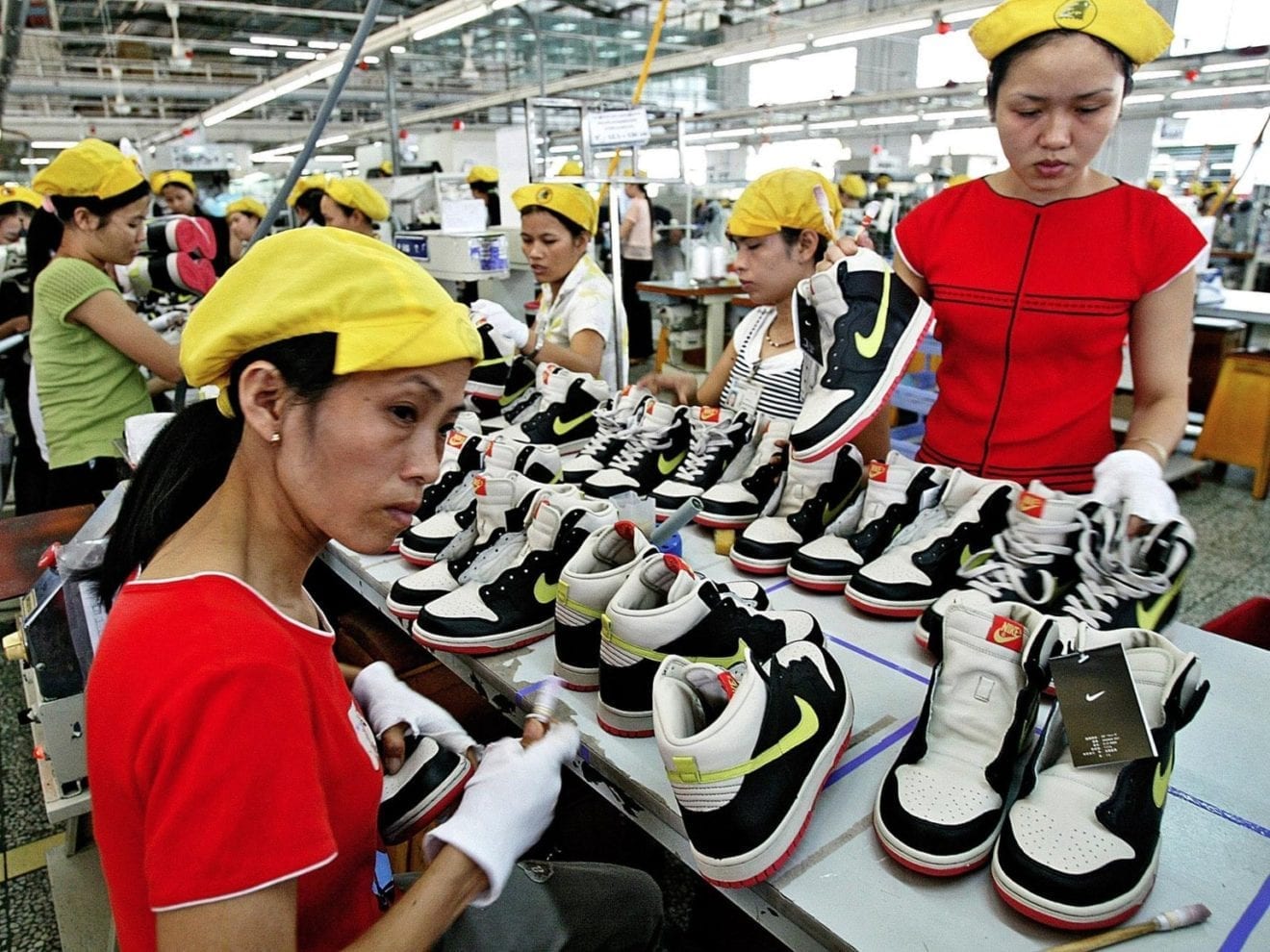
    Another consequence of the trade war on Vietnam is that it will be profoundly affected as global production chains shift.

    As the lack of workforce is no longer a big problem thanks to the fourth industrial revolution, “smaller countries will lose their advantage in just a few years,” he said, adding that technology giants, such as Foxconn, are now investing more in manufacturing in its own country, the U.S.

    When large corporations no longer see the attractiveness of developing countries, their capital will flow back to the big countries, and the abundance of labor will no longer be perks for developing countries such as Vietnam, Thanh said.

    The U.S. has announced that it would slap a 10 percent tariff on $200 billion worth of Chinese export goods as soon as September. This announcement came after it slapped a 25 percent duty on about $34 billion worth of Chinese goods earlier this month.

    China had retaliated “immediately” with a similar action, the country’s foreign ministry had said in response to the first move by the U.S.

  • US-China Trade War Will Affect Indonesia Regional Economies

    US-China Trade War Will Affect Indonesia Regional Economies

    Regional economies in Indonesia will be affected if the United States suspends its special tariffs for some of the country’s exports, a minister said on Tuesday (10/07).

    The US is currently reviewing Indonesian products on its Generalized System of Preferences (GSP) list — a trade incentive that gives duty-free entry to 129 poor and developing countries and territories.

    Last year, Indonesia ran a $9.7 billion trade surplus out of its total $17 billion exports to the US.

    It is the fourth biggest GSP beneficiary, after India, Thailand and Brazil.

    “If the exports of [the listed] products or commodities are disrupted, we are worried that our regional economies, where the goods come from, will also be affected,” National Development Planning Minister Bambang Brodjonegoro said on Tuesday.

    Indonesia’s exports, not only to the US, come mostly from the manufacturing sector, especially in Java.

    Last year, they made up 76 percent of the country’s total exports and were worth $125 billion, nearly $15 billion more than in the previous year.

    West Java and East Java together were the main contributors ($44 billion) to the country’s total experts, followed by East Kalimantan, Riau, Riau Islands and North Sumatra.

    “We can divert our exports to other countries and this should not be a problem. But we need to prepare ourselves,” Bambang said.

    Indonesia has been trying to enter markets in Africa and South America to lessen dependence on its traditional importers such as China, the US and Japan.

    However, exports to Africa (mainly South Africa and Egypt) amounted to only $264.7 million last year, Ministry of Trade data show.

    A team consisting of Ministry of Trade, Ministry of Foreign Affairs and Ministry of Agriculture officials is set to visit the US at the end of July, with a lobby mission to keep the special tariffs for Indonesia unchanged.

  • Vietnam to suffer collateral damage in China-US trade war

    Vietnam to suffer collateral damage in China-US trade war

    The first salvo in the latest trade war between the U.S. and China was fired by the former last Friday, when it slapped a 25 percent duty on about $34 billion worth of Chinese goods.

    China retaliated “immediately” with a similar action, the country’s foreign ministry said.

    However, the tariffs that the U.S. has slapped on China will likely see Chinese products “flood into Vietnam,” including textiles, garments and wood products, said Tran Tuan Anh, Minister of Industry and Trade.

    This is not only a trade war but also “a war on power, technology and currency policy between the world’s two largest economies,” Anh said at a recent government meeting.

    Cheaper yuan

    The trade war will have negative impacts on Vietnam’s economy as China will take the opportunity to export in large quantities to Vietnam, according to local economists.

    The Chinese yuan has lost 4.18 percent against the U.S. dollar over the last two weeks, while the Vietnamese dong has only lost a little above one percent, so Chinese goods will be 3 percent cheaper than before when exported to Vietnam. This will increase Chinese exports and gradually take away jobs and manufacturing facilities in Vietnam, they said.

    Another worrying aspect of the situation is that low quality products from China, which are labeled as residual inventory of exports to the U.S., will rush into Vietnam and be bought by Vietnamese consumers, said Robert Tran, CEO of global business advisory firm RBNC.

    Some experts also fear that Vietnam might be one of the next targets of the U.S.

    When the world’s two largest economies slap tariffs on each other, other countries will be affected in trade, said Dr. Pham Sy Thanh of the Chinese Economic Studies department under the Vietnam Institute for Economic and Policy Research.

    “When Vietnamese exports to the U.S. originate from China, the U.S. can also impose the same tariffs on Vietnam,” Thanh said.

    This will be a big challenge for Vietnam as the U.S. is one of Vietnam’s top export markets, he added.

    Industry leaders in Vietnam have also expressed similar concerns. Many Chinese clothes, shoes or bags are entering Vietnam illegally to be exported to the U.S., said Pham Xuan Hong, chairman of HCMC Association of Garment, Textile, Embroidery and Knitting (AGTEK).

    “Local firms should not buy these items for short-term benefits as the reputation of Vietnam’s textile industry will be affected,” Hong said.

    The Vietnamese government should get involved in preventing local firms from importing Chinese products to export to the U.S., he added.

    The bright side

    Beyond the potential threats, Vietnamese business leaders also see great opportunities in the trade war.

    AGTEK chairman Hong noted that Chinese textile is one of the items affected by the U.S. tariffs, so there are chances that foreign investors will transfer orders to Vietnamese firms.

    The animal husbandry sector is also looking at the bright side of the trade war.

    With China saying it will impose an additional 25 percent tariff, on U.S. pork, the total tariff will rise to 71 percent, exclusive of VAT, said Doan Xuan Truc, vice chairman of the Animal Husbandry Association of Vietnam (AHAV).

    “This will definitely be a great opportunity for Vietnam, as China has huge demand for pork,” Truc said, adding that it imports over 2 million tons of pork each year.

    Exports to the U.S. reached $41.6 billion last year, accounting for 20 percent of Vietnam’s total exports, according to Vietnam Customs.

    Meanwhile, it exported $35.4 billion worth of goods to China, a growth of 61.5 percent from 2016.

  • Xiaomi shares fall in Hong Kong trading debut as US-China trade war deter equity investors

    Xiaomi shares fall in Hong Kong trading debut as US-China trade war deter equity investors

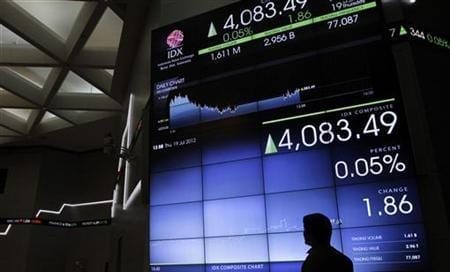
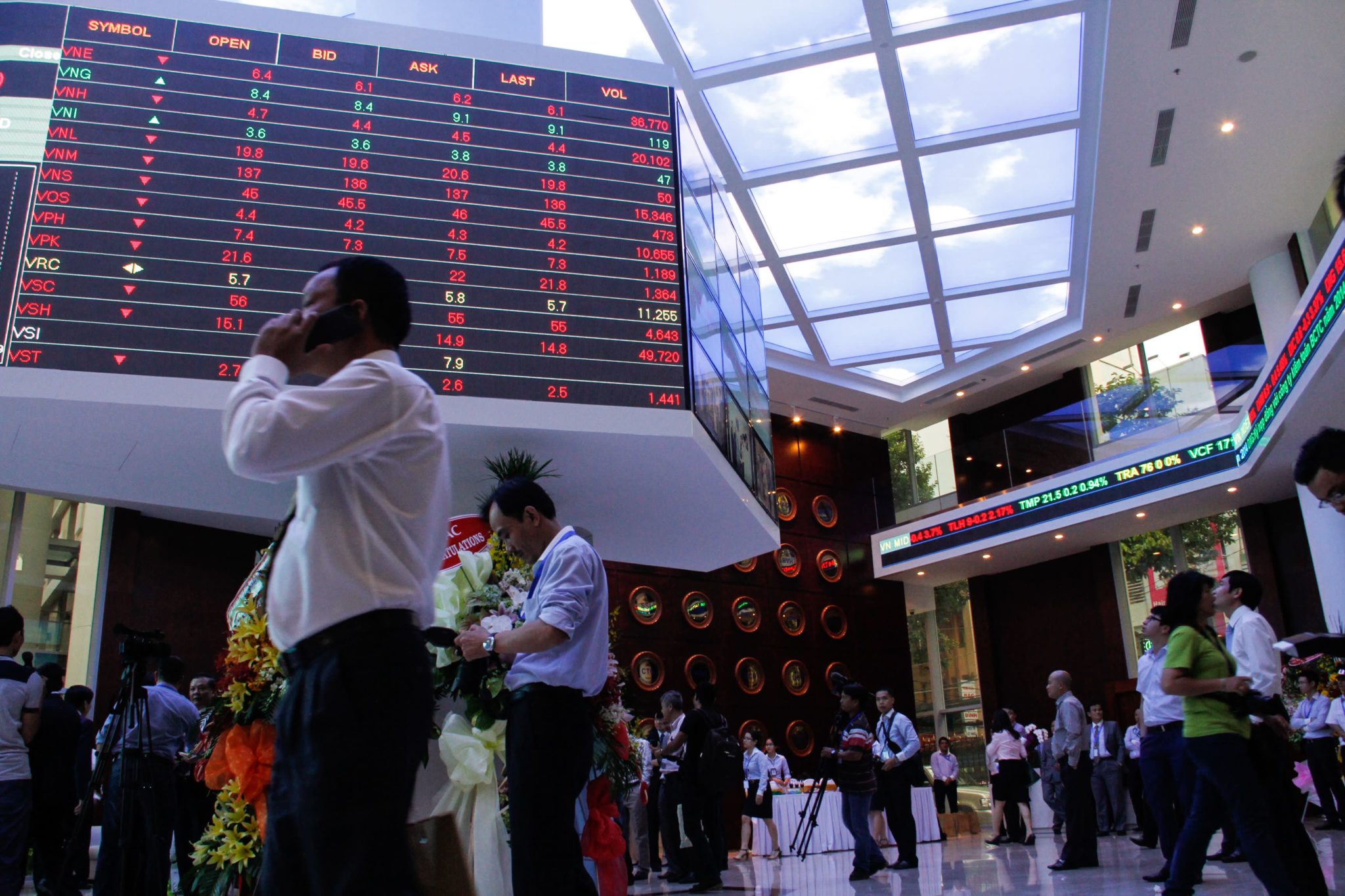
    Xiaomi, the first company to raise capital under Hong Kong’s overhauled listing rules for pre-revenue start-ups or companies with multiple classes of stock, sputtered during its trading debut on the city’s exchange when investors spooked by the US-China trade war refrained from buying its shares.

    Shares of the Beijing-based company, offered a week ago at HK$17 each in what was once billed as the world’s biggest initial public offer, fell by as much as 5.9 per cent in an advancing market to HK$16, before recovering to end their first trading day at HK$16.80.

    “Investors are no longer that crazy about so-called new economy IPOs, as many of them have quickly fallen below their offer prices,” said Edmond Hui, chief executive for Bright Smart Securities.

    “It’s no longer a guarantee of making money.”

    The lacklustre debut was a blow for the world’s fourth-largest smartphone maker, which had taken a mere seven years to grow from a start-up to surpass 100 billion yuan (US$15 billion) in sales. Founded by serial entrepreneur Lei Jun in 2010, Xiaomi was the first blockbuster IPO under the new listing rules that Hong Kong’s securities regulator and stock market operator pushed through last year.

    “Xiaomi’s listing signals the Hong Kong market has entered a new phase,” said the city’s Financial Secretary Paul Chan Mo-po, speaking in Cantonese during a ceremony marking Xiaomi’s trading debut. “I believe [Hong Kong’s listing reform] will prompt more innovative technology companies to raise funds in Hong Kong, so our market can better serve the real economy.”

    The size of Xiaomi’s fundraising – originally aimed at US$10 billion – was trimmed by bad timing, coming after the US and Chinese governments fired the first salvoes of their trade war.

    Net proceeds from the IPO were HK$23.98 billion (US$3.1 billion), after deducting underwriting fees and other relevant expenses, Xiaomi said. The company priced its stock at the low end of a price range of between HK$17 and HK$22 each.

    That values the company, whose name is the Chinese phrase for millet, at US$54.3 billion, about half of the US$100 billion it had originally sought, which would’ve made Xiaomi the world’s largest IPO this year. Instead, that honour has gone to Siemens Healthineers, which raised US$5.17 billion in Frankfurt in March.

    “Although the macroeconomic conditions are far from ideal, we believe a great company can still rise to the challenge and distinguish itself,” Xiaomi’s founder and chief executive Lei Jun said in a brief speech at the start of trading. “From day one, innovation has been an integral part of Xiaomi’s DNA,” he said, adding that the listing would be “a brand new start for Xiaomi.”

    It plans to use 30 per cent of the proceeds for research and development, 30 per cent to expand and strengthen its capability into the internet of things business, 30 per cent for global expansion, and the remainder for working capital and other corporate purposes.

    Four of the five biggest tech IPOs in Hong Kong since September are now trading below their offer prices.

    Lei, who founded Xiaomi in 2010 and currently holds nearly one third of the company’s stock, has been presenting Xiaomi as an internet company rather than a hardware maker, saying it should be valued as hybrid of Apple and Tencent because it is “driven by innovation”.

    Companies billed as manufacturers, like tech giant Apple, tend to achieve much lower valuations than those categorised as internet firms, for example China’s Tencent.

    Investors were not the first to question Lei’s categorisation. In mid June, the company shelved a plan to issue Chinese depositary receipts (CDRs) in Shanghai after the market regulator demanded answers to 84 questions, including why Xiaomi positioned itself as an internet firm.

    The smartphone maker has tapped several Hong Kong and Chinese tycoons as investors, including Li Ka-shing of CK Hutchison, Pony Ma Huateng of Tencent and Jack Ma Yun, founder of Alibaba Group Holdings and owner of this newspaper.

    Xiaomi’s seven cornerstone investors have agreed to acquire US$548 million worth of shares with a six-month lock-up period, according to the prospectus.

    US chip maker Qualcomm has committed US$100 million, the only foreign company among the cornerstone investors. China Mobile, the country’s biggest telecom operator, will also invest US$100 million, while CICFH Entertainment, a state-backed industrial fund, will be the biggest cornerstone investor with a US$192 million stake.
  • US says trade war with China ‘on hold’

    US says trade war with China ‘on hold’

    The US trade war with China is “on hold” after the world’s largest economies agreed to drop their tariff threats while they work on a wider trade agreement, US Treasury Secretary Steven Mnuchin said today.

    Mnuchin and US President Donald Trump’s top economic adviser, Larry Kudlow, said the agreement reached by Chinese and American negotiators on Saturday set up a framework for addressing trade imbalances in the future.

    “We are putting the trade war on hold. Right now, we have agreed to put the tariffs on hold while we try to execute the framework,” Mnuchin said in a television interview.

    On Saturday, Beijing and Washington said they would keep talking about measures under which China would import more energy and agricultural commodities from the US to close the US$335 billion (RM1.33 trillion) annual US goods and services trade deficit with China.

    During an initial round of talks earlier this month in Beijing, Washington demanded that China reduce its trade surplus by US$200 billion. No dollar figure was cited in the countries’ joint statement on Saturday.

    Commerce Secretary Wilbur Ross planned to go to China, Mnuchin and Kudlow said.

    “He’s going to be looking into a number of areas where we’re going to have greatly significant increases,” including energy, liquefied natural gas, agriculture and manufacturing, Kudlow said in an interview with ABC’s “This Week.”

    Mnuchin said the US expects to see a big increase of between 35% and 40% in agricultural exports to China and a doubling of energy purchases over the next three to five years. “We have specific targets. I am not going to publicly disclose what they are. They go industry by industry.”

  • Stocks slump on trade-war worries

    Stocks slump on trade-war worries

    Asian stocks followed their US counterparts lower after President Donald Trump’s decision to slap tariffs on China heightened concern a trade war could hurt global growth. The yen climbed to its strongest in more than a year.

    Equity indexes from Tokyo to Shanghai tumbled well over 3 percent. US stock futures also declined, signaling a further retreat for the S&P 500 Index after it tumbled 2.5 percent, the most in six weeks. As investors dumped stocks, they rushed to the safety of Treasuries, where yields dipped below 2.8 percent, and the yen, which jumped past 105 per dollar for the first time since November 2016. Follow live coverage of reaction here.

    The sell-off began after Trump instructed US Trade Representative Robert Lighthizer to levy tariffs on at least US$50 billion in Chinese imports. Subsequently, China announced plans for reciprocal tariffs on $3 billion of imports from the US, including products from steel to pork. News that the US is shielding some countries from steel and aluminum tariffs did nothing to lift investor gloom.

    “The window from coming back from an all-out trade war is still open, but closing fast, and obviously leaves a lot of uncertainty over the next two to three weeks,” said Kay Van-Petersen, a Singapore-based global macro strategist with Saxo Capital Markets. It is “classic risk-off for equities today and potentially over the next few days,” Van-Petersen said. Eventually it “could open up some interesting opportunities, especially in the credit space and in the consumption-driven sectors,” he said.

    Adding to the image of the ascendance of the “America first” faction, Trump said he is replacing White House National Security Adviser H.R. McMaster with John Bolton, a controversial foreign-affairs specialist whom the U.S. Senate declined to confirm as President George W. Bush’s ambassador to the United Nations.

    Oil prices climbed amid worries that Bolton would pursue a hard-line stance against Iran.

    Investor fears of escalating trade tensions are being realized as the U.S. tariffs quickly sparked a reciprocal response from China. Traders had already been bracing for the possibility of slowing growth as the Federal Reserve reiterated its commitment to further interest-rate increases after Wednesday’s hike.

  • Indonesia Will Call Trump’s Trade War Bluff

    Indonesia Will Call Trump’s Trade War Bluff

    Indonesia will not back away from a potential trade war with the United States, should US President Donald Trump decide to carry out his plan to increase tariffs on some imported commodities, Vice President Jusuf Kalla said on Thursday (08/03).

    Trump announced last week that his administration plans to impose a 25 percent tariff on imported steel and a 10 percent tariff on imported aluminum, on the grounds that imports endanger American national security by harming domestic production.

    The plan unsettled even the United States’ close allies, fearing a full-blown global trade war that could derail delicate global economic growth.

    “If Trump’s trade war eventually escalates, it can drag agricultural countries in. If the US blocks our palm oil, we will block their soybean exports to Indonesia; we can be self-sufficient,” Kalla said in a speech at the fourth Jakarta Food Security Summit.

    Eleven percent of Indonesia’s total exports, or $17 billion, were destined for the United States last year. This makes it Indonesia’s second-largest export destination.

    Southeast Asia’s largest economy also enjoyed a $9.3 billion trade surplus with the United States last year.

    Indonesia’s palm oil exports to the United States amounted to $939 million last year, which represents around 5 percent of its total exports of the tropical oil, Central Statistics Agency (BPS) data showed.

    According to the US Department of Commerce’s International Trade Administration, the United States exported 2.6 million metric tons of soybean last year, worth $994 million.

    Indirect Blow

    Only 1 percent of Indonesia’s steel exports go to the United States, so Trump’s proposed steel and aluminum import tariffs would not inflict a direct blow to local steel producers, said Hidayat Triseputro, executive director of the Indonesian Iron and Steel Association.

    But he warned of the possibility that Chinese steel exports destined for the US market may flood the Indonesian market.

    Indonesia is a member of a free trade arrangement between the Association of Southeast Asian Nations (Asean) and China that came into effect in 2010. The agreement resulted in Chinese exports to Indonesia spiking to $30.5 billion in 2014 from only $3.4 billion in 2004.

    According to World Steel Association data, China was the world’s largest steel producer in 2017, at 831.7 million metric tons, while Indonesia produced only 4.8 million tons of the alloy.

    “The government should secure the domestic market with strict regulation and take sides with local products … as it can make investors lose interest in the Indonesian market due to the policy being not affirmative to the domestic market,” Hidayat said.