Retail News CRM

Tag: travel

  • Disney’s Inaugural Asia Cruise from Singapore Postponed by Three Months: What to Know!

    Disney’s Inaugural Asia Cruise from Singapore Postponed by Three Months: What to Know!

    In a significant adjustment for eager travelers, Disney has relocated the inaugural sailing of its new cruise ship, the Disney Adventure, from December 15 to March 10 of next year. The shift comes in light of unexpected delays in the shipbuilding process, a decision Disney Signature Experiences President Joe Schott addressed during inquiries from Mothership. “To ensure the experience we deliver reflects our commitment to excellence, we’ve made the decision to adjust our timeline,” he stated, acknowledging the potential disappointment for guests.

    For those affected by the change, Disney is actively providing flexible rebooking options to maintain consumer trust. Guests originally booked for the December voyage will automatically be transferred to the new March sailing, and in a move that mirrors the magic of Disney, they will also receive a 50% refund for the inconvenience, as reported by The Straits Times.

    A Dedicated Home Port in Singapore

    The majestic Disney Adventure, which recently began sea trials to test its systems, will be stationed in Singapore for a minimum of five years. Those unable to join the March 10 voyage can opt for a full refund or rebook any future sailing at half price, available for cruises departing on or before March 31, 2027.

    A Floating Theme Park Awaits

    Originally marketed as a floating theme park for travelers from Southeast Asia and India, the Disney Adventure promises seven themed zones, including the standout feature—a 250-meter Iron Man rollercoaster on the upper deck. This thrilling ride is branded as the longest rollercoaster at sea and the first of its kind on a Disney cruise, guaranteeing a memorable adventure for all guests.

    Impact on Bookings and Capacity

    While the exact number of affected guests remains undisclosed, industry analysts from Bloomberg report that around 25 sailings will experience this rescheduling. With a capacity for up to 6,700 passengers, the Disney Adventure generated considerable buzz when tickets for its maiden voyage sold out on the first day of general sales last December. Pricing for three- and four-night cruises in 2026 starts at $1,060 and $1,412 per person, respectively, according to the cruise’s booking website.

    Delays in maiden voyages are not an uncommon occurrence within the cruise industry. The launch of Disney’s Florida-based ship, Disney Wish, faced similar challenges in 2022, while competitors like Princess Cruises and Royal Caribbean International have also postponed inaugural sailings due to ship completion issues. Notably, the Disney Adventure stands apart from the rest of Disney’s lineup, having been acquired partially built from Genting Hong Kong in 2022.

    Strategic Growth Plans

    Looking ahead, Disney has laid out an ambitious strategy, announcing plans to double its investment in the cruise and parks business to $60 billion by 2033. Alongside this financial commitment, Disney aims to expand its fleet from the current six ships to a total of 13 by 2031, fueling excitement for the future of its cruise offerings.

    Questions & Answers

    How has Disney addressed the change in the Disney Adventure’s maiden voyage schedule?
    Disney has automatically transferred guests to the new March 10 sailing and is offering a 50% refund to those impacted by the delay.

    What unique features will the Disney Adventure offer its guests?
    The ship will showcase seven themed zones, including the first-ever Iron Man rollercoaster at sea, the longest rollercoaster on a Disney cruise, making it a standout in the experience it offers.

    What are Disney’s future plans for its cruise business?
    Disney aims to double its investment in cruise and parks to $60 billion by 2033 and to expand its fleet from six to 13 ships by 2031, indicating significant growth in its cruise operations.

  • South Korean Retailers Innovate To Welcome Returning Chinese Tour Groups Amid Changing Consumer Trends

    South Korean Retailers Innovate To Welcome Returning Chinese Tour Groups Amid Changing Consumer Trends

    As South Korea prepares for the much-anticipated return of Chinese tour groups from September 29, retailers are taking proactive measures to welcome them. To cater to these visitors, who will be allowed visa-free entry, a wave of new promotions is on the horizon, and retailers are expanding their product ranges. Instead of focusing solely on luxury cosmetics, retailers are branching out to incorporate fashion, lifestyle, and even convenience store exclusive items.

    Change in Chinese Tourists’ Preferences

    In the mid-2010s, Chinese travelers, often referred to as “Youke,” were known for their bulk purchases of high-end skincare products. However, recent industry data indicates a significant shift in their preferences. Currently, eyewear brands such as Gentle Monster, K-fashion labels, health foods, and lifestyle goods are gaining popularity among these travelers.

    Retailers’ Innovative Strategies

    In response to these changing demands, Lotte Department Store has launched curated boutiques as part of the “Kinetic Ground” platform. These boutiques will feature trendy domestic brands. In addition, the department store’s duty-free branch has plans to inaugurate a new “K-Beauty Hall” in Myeongdong, accompanied by an expansion of local specialty food offerings.

    Shinsegae Department Store is orchestrating a “Global Shopping Festa” around the Chuseok holiday, with a focus on categories popular with foreign shoppers. Convenience chains are also making preparations. GS25 is advertising Greek yogurt, highballs, and K-pop albums as emerging favorites. They have even released a “K-Convenience Store Guidebook,” presenting product rankings and celebrity snack choices. Additionally, 7-Eleven is promoting souvenir items that represent Korean symbols like the national flag and old currency.

    Duty-Free Shops Gear Up

    Duty-free shops, known to benefit most from group tourism, are also gearing up. Lotte Duty Free is bolstering relationships with agents in second- and third-tier Chinese cities such as Chongqing and Qingdao, while Shilla is setting its sights on corporate travel groups. Shinsegae Duty Free is honing in on smaller groups that tend to spend more. Retailers are further enhancing the shopping experience by introducing experiential attractions like revamped “Star Avenues” and Artificial Intelligence (AI)-aided translation services to facilitate shopping for international visitors.

    Challenges Ahead

    Despite these proactive measures, retailers face several challenges. One critical issue is the shift in travel patterns towards individual tourism, making it uncertain whether duty-free operators will regain their past dominance. Another concern is the increase in hotel costs since the pandemic, which could potentially impact package competitiveness.

    A duty-free executive expressed optimism, stating that visa-free entry for Chinese group tourists might signal a turning point for Korea’s tourism recovery. However, the real litmus test lies in whether spending bounces back. The industry is eagerly waiting for the APEC summit in late October, hosted by Seoul, as it could provide more clarity on the situation. The event is also likely to attract China’s President Xi Jinping.

    Questions & Answers

    What changes are South Korean retailers making to accommodate the return of Chinese tour groups?
    Retailers in South Korea are launching new promotions and expanding their product offerings. They are diversifying their product lineups to include not just luxury cosmetics, but also fashion items, lifestyle goods, and exclusive convenience store products.

    How are duty-free shops preparing for the return of Chinese tour groups?
    Duty-free shops are looking to strengthen ties with agents in Chinese cities, targeting corporate travel groups, and focusing on smaller, high-spending groups. They also aim to improve the shopping experience by introducing experiential attractions and AI-powered translation services.

    What challenges do retailers face with the return of Chinese tour groups?
    Retailers are facing challenges such as the shift in travel patterns towards individual tourism, which raises questions about the future dominance of duty-free operators. Additionally, rising hotel costs since the pandemic could impact package competitiveness.

  • Manila’s Hotel Scene Set to Expand with 3,000 New Rooms Coming in Late 2025

    Manila’s Hotel Scene Set to Expand with 3,000 New Rooms Coming in Late 2025

    The hospitality landscape in Metro Manila is brimming with potential as the market anticipates the addition of approximately 3,000 new hotel rooms by the end of 2025. According to a recent report from JLL, hotel occupancy rates are currently strong, yet this incoming wave of accommodations may briefly impact occupancy levels.

    Sturdy Foundations in Metro Manila’s Hotel Sector

    Despite the expected influx of new inventory, Metro Manila’s hotel market shows remarkable resilience, with RevPAR reflecting a positive year-over-year trend. This statistic is a clear signal of robust demand and an upsurge in traveler confidence, suggesting that visitors are keen on experiencing the vibrant hospitality options the area offers.

    In the second quarter of 2025, hotel occupancy hit 78.3%, marking an impressive year-over-year increase of 143.4 basis points. The luxury and upscale segments are leading the charge, demonstrating their enduring allure. What’s more, average room rates have edged up just slightly, from PHP 7,916 in Q2 2024 to PHP 7,917 in Q2 2025—a testament to the market’s stability amid expansion.

    Preparing for Growth Amid New Challenges

    As the holiday season draws near, optimism fills the air in the Philippine tourism sector. The VAT refund program is gaining traction, and combined with strategic tourism marketing efforts, authorities are aiming to reach an annual target of 7.7 million visitors. Even with the new hotel openings, which may disrupt occupancy rates in the short term, the solid fundamentals of tourism and increasing international interest are expected to bolster demand for hotel stays.

    With Manila positioning itself as a compelling destination, it seems the real excitement lies not just in the influx of these new hotel rooms—but also in how they will redefine the competitive landscape for hospitality in the region. After all, having options is never a bad thing, right?

    Questions & Answers

    What is the expected impact of the new hotel inventory on occupancy rates?
    While the addition of approximately 3,000 new hotel rooms could create temporary pressure on occupancy rates, the stable demand driven by tourism fundamentals and market interest is expected to alleviate this shortly.

    How is the hotel market currently performing in Metro Manila?
    The hotel market is performing well, with an occupancy rate of 78.3% in Q2 2025, reflecting a significant year-over-year growth and positive trends in RevPAR, indicating strong demand and visitor confidence.

    What initiatives are anticipated to support tourism growth in Metro Manila?
    Key initiatives include the VAT refund program and targeted tourism marketing efforts, which aim to boost visitor arrivals and help meet the annual target of 7.7 million tourists.

  • Vietjet Offers Up to 99% Off Singapore–Vietnam Flights This 9/9, Plus Free 20kg Baggage

    Vietjet Offers Up to 99% Off Singapore–Vietnam Flights This 9/9, Plus Free 20kg Baggage

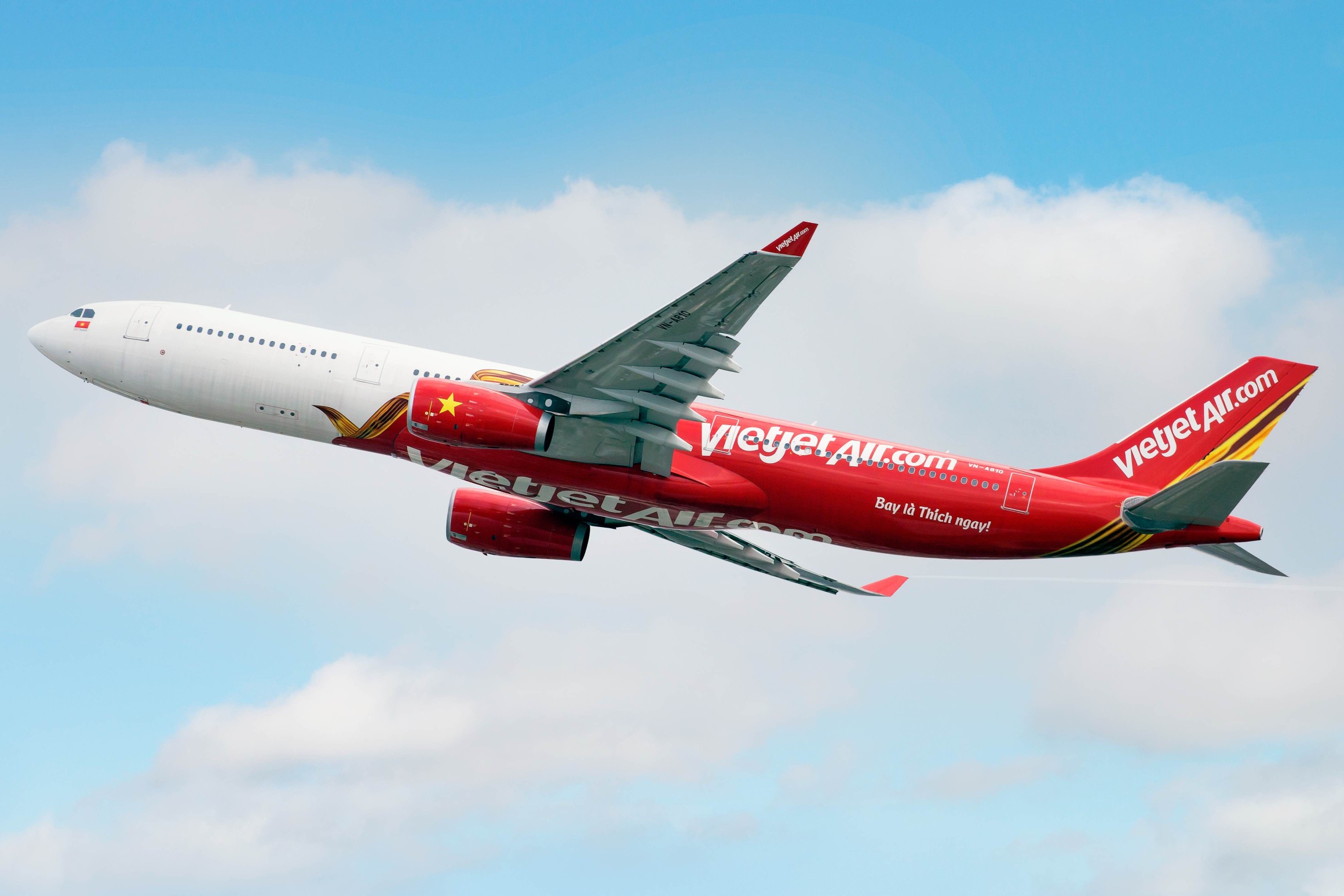
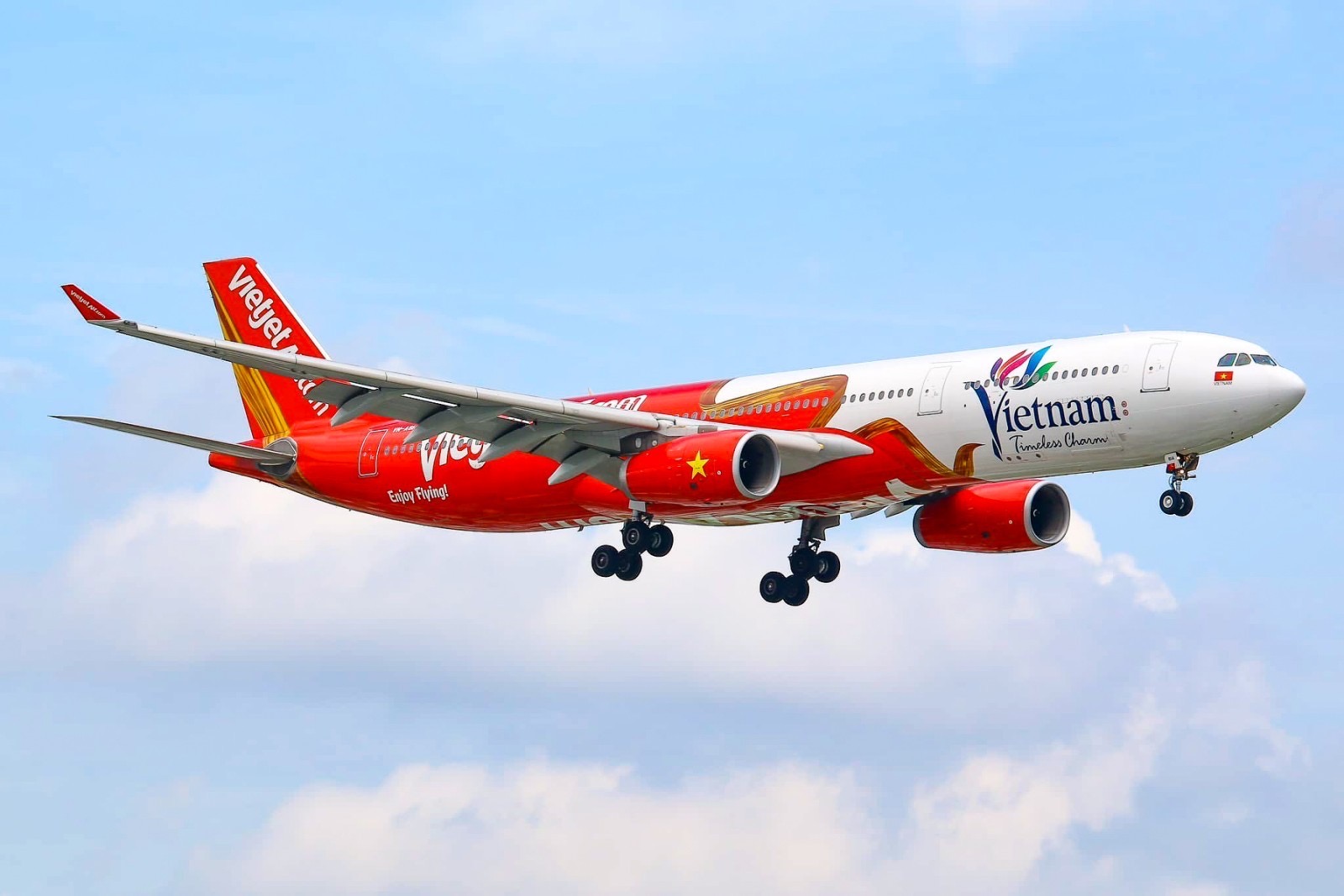
    Celebrate Double Day 9/9 with Vietjet’s special promotion, offering Singapore travellers direct flights to Phu Quoc, Da Nang, Hanoi, and Ho Chi Minh City. Passengers can book thousands of tickets at up to 99% off base fares and enjoy 20kg of complimentary checked baggage on all international direct flights.

    From 01:00 to end of the day on 9 September 2025 (GMT+8), travellers can enter the promo code SUPERSALE99 when booking to secure Eco tickets at discounts of up to 99% (excluding taxes and fees).

    The promotion applies across Vietjet’s entire network of international and Vietnam domestic flights for travel between 1 October 2025 and 27 May 2026 (Specific travel periods may apply depending on routes. Blackout dates may apply).


    Between 10 September and 23 September 2025, passengers booking Eco tickets on international routes will also receive 20kg of free checked baggage. Simply select the 20kg option at no extra cost during booking and enjoy worry-free travel throughout the festive season. For Singapore-based travellers, the special fares are available for travel between 1 October 2025 and 31 October 2025 on all Singapore–Vietnam routes, which include flights from Singapore to Ho Chi Minh City, Hanoi, Da Nang and Phu Quo.

    Vietjet will increase the frequency for Singapore–Da Nang route to twice daily round-trip flights from 21 November 2025 and Singapore–Phu Quoc route to one daily round-trip flight from 23 December 2025. The promotion gives a perfect chance for travellers from Singapore to immerse themselves in Vietnam’s dazzling festivals and cultural celebrations. From the enchanting Mid-Autumn Festival, where streets glow with colourful lanterns and families share mooncakes, to the lively year-end festivities, Vietnam promises unforgettable experiences.

    On board, passengers can look forward to Vietjet’s special Mid-Autumn flights on selected dates, featuring festive lanterns, in-flight performances, and thoughtful gifts to share with loved ones—bringing Vietnam’s traditions to the skies.

  • AirAsia kicks off Cebu Hub Launch

    AirAsia kicks off Cebu Hub Launch

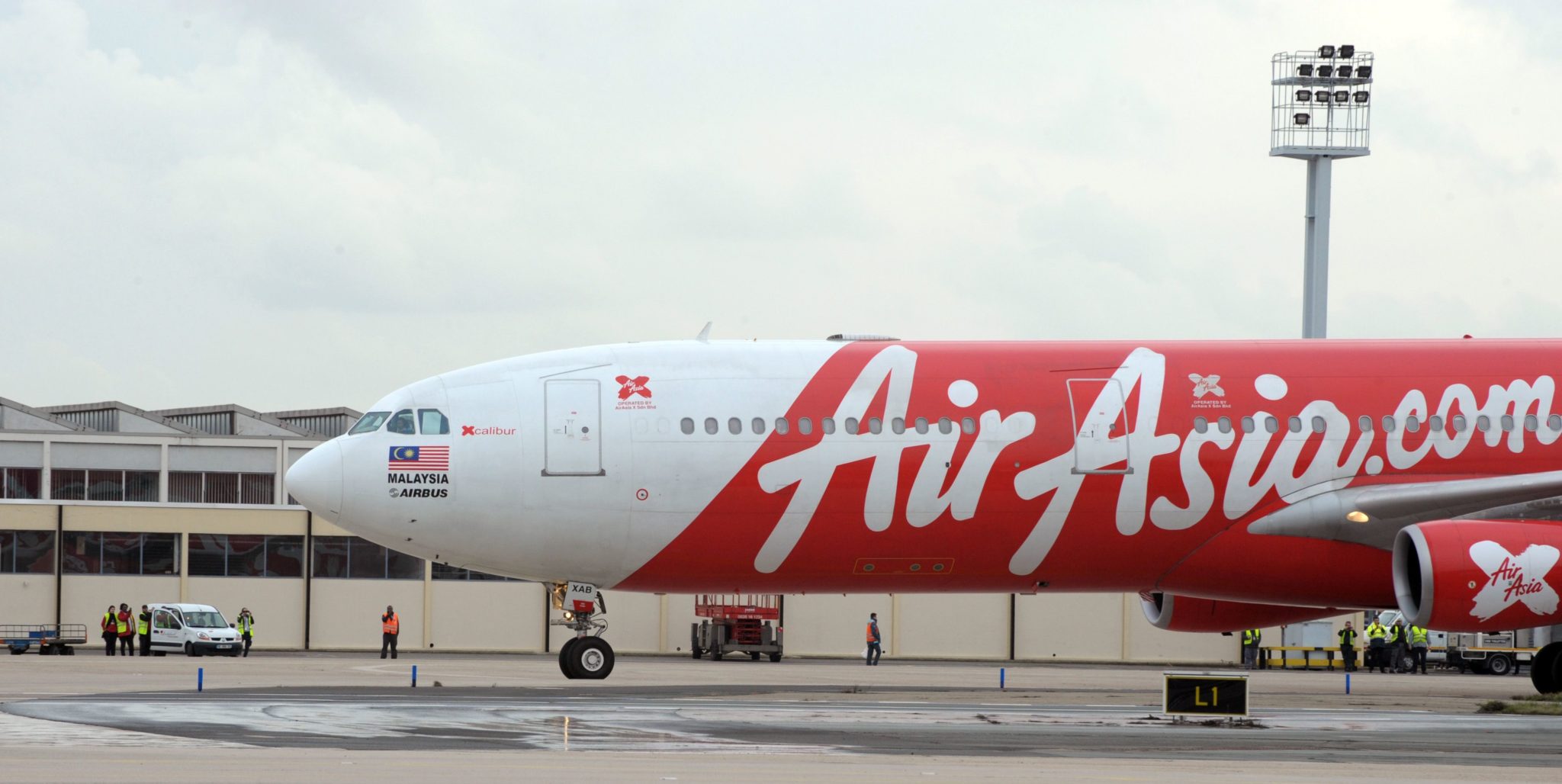
    AirAsia announces the much anticipated reopening of its Cebu hub, widening domestic and international connectivity from the Queen City of the South.

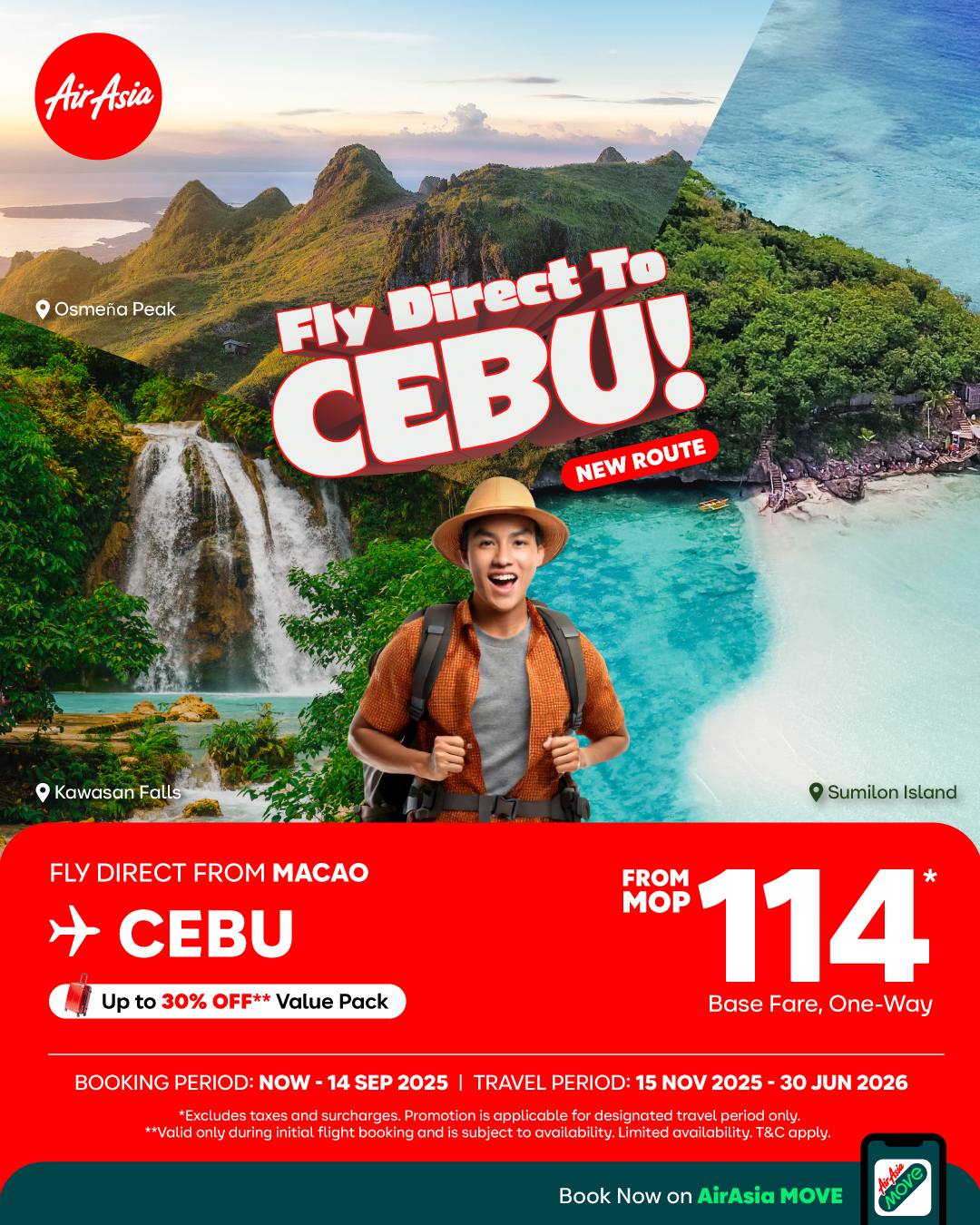
    The new direct service between Macao and Cebu, opening up affordable and convenient access to the stunning beaches and islands of the Philippines for residents of Macao, Hong Kong, and the Greater Bay Area.

    The new route, set to officially take off on 15 November 2025, will operate three times weekly between Macao and Cebu, connecting directly to AirAsia’s extensive domestic network from its reopened Cebu hub to destinations like Davao, Caticlan (Boracay), and Iloilo.

    From 3 to 14 September 2025, guests flying to and from Cebu and Macao can book through MOVE app from as low as MOP114* one-way base fare exclusive of fees and surcharges for travels between 15 November 2025 and 30 June 2026. Additionally, guests can enjoy a 30% discount on the Value Pack of the Essentials Add-on bundle.

    AirAsia Aviation Group Chief Commercial Officer Amanda Woo said, “The reopening of Cebu hub signals AirAsia Group’s strong commitment to the Philippines, exploring new gateways that will drive great economic opportunities. ”

    This Macao – Cebu new route offers a fantastic, affordable gateway for travelers from Macao and the Greater Bay Area to discover the pristine beaches and rich culture of Cebu and the wider Philippines, while also providing our Filipino guests with a convenient and budget-friendly link to explore Macao and Hong Kong. “ she added.

  • Vietjet Reports Strong H1 2025 Performance and Launches New Ho Chi Minh City–Manila Route

    Vietjet Reports Strong H1 2025 Performance and Launches New Ho Chi Minh City–Manila Route

    Vietjet Aviation Joint Stock Company has released its audited financial report for the first half of 2025, reporting strong growth and reinforcing its position as a rising global carrier. Vietjet now operates four direct services linking Singapore with Hanoi, Ho Chi Minh City, Phu Quoc and Da Nang and is boosting its services to Da Nang and Phu Quoc with 49 round-trip flights weekly between Singapore and Vietnam by the end of this year.

    The airline’s performance reflects Vietnam’s emergence as a key aviation hub in Asia and worldwide, while expanding its international network with a new direct route to Manila, Philippines.

    Robust Financial Growth

    In the first six months of 2025, Vietjet achieved air transport revenue of VND35.601 trillion (approx. SGD1.73 billion), with a pre-tax profit of nearly VND1.6 trillion (approx. SGD77.80 million), marking a 37% Year-on-Year (YoY) increase. Consolidated revenue was VND35.837 trillion (approx. SGD1.74 billion), with a pre-tax profit surpassing VND1.651 trillion (approx. SGD80.26 million), reflecting a staggering 65% YoY growth.

    During this period, Vietjet operated 79,000 flights, transporting 14.4 million passengers and contributing over VND4.528 trillion (approx. SGD219.83 million) in taxes and fees. The company’s financial indicators remain strong, with excellent liquidity and consolidated assets exceeding VND112 trillion (approx. SGD5.44 billion).

    Fleet Expansion and Strategic Investments

    Vietjet continued its fleet expansion, ordering 20 A330neo aircraft with Airbus, raising its total order for A330neo to 40, making it the airline with the largest A330neo order in the world.

    At the 2025 Paris Air Show, Vietjet secured a historic order for 100 A321neo aircraft, along with 50 purchase options—the largest deal in the industry—positioning Vietjet among the top 10 airlines globally in terms of aircraft orders.

    Additionally, Vietjet and Rolls-Royce have signed an agreement for 40 Trent 7000 engines to power 20 wide-body Airbus A330neo aircraft, bringing the total number of Trent 7000 engines ordered by the airline to 80.

    Vietjet has broken ground on its Aircraft Maintenance Technical Center at the under-construction Long Thanh International Airport, featuring Hangars 3 and 4 capable of servicing 10 aircraft simultaneously. Additionally, self-service ground operations have been rolled out at major airports to optimise operations and enhance the passenger experience.

    International Expansion: Ho Chi Minh City–Manila Route

    Vietjet will launch a new direct service linking Ho Chi Minh City with Manila, beginning 22 November 2025, with five weekly round-trip flights. This route marks the airline’s first direct connection between Vietnam and the Philippines. Together with flight increases between Vietnam and Singapore, this connectivity will support seamless travel, trade, and cultural exchange in Southeast Asia.

    Travellers can now book their seats at attractive introductory fares.    

    Recognised Excellence and Strategic Vision

    Vietjet has been recognised by AirlineRatings as the “World’s Best Ultra Low-Cost Carrier” and ranked among the Top 5 revenue-generating enterprises by Forbes Vietnam for 2024. The airline continues to expand its footprint, having launched new routes to Singapore, China, India, and Japan in 1H2025, with more international services planned.

    With a modern, fuel-efficient fleet, professional cabin crew, and innovative service offerings, Vietjet remains committed to delivering exceptional value and comfort while driving sustainable growth and global expansion.     


  • Vietjet Expands Singapore–Vietnam Services with More Daily Flights and All-Inclusive Fares from Just SGD86

    Vietjet Expands Singapore–Vietnam Services with More Daily Flights and All-Inclusive Fares from Just SGD86

    Vietjet is expanding its Vietnam services from Singapore with increased flight frequencies to both Phu Quoc and Da Nang, offering Singapore-based travellers more convenient options to explore Vietnam’s top destinations. 

    Starting 23 December 2025, the Singapore–Phu Quoc service will increase to seven round trips per week, while the Singapore–Da Nang service will rise to two daily return flights from 21 November 2025. This expansion brings the airline’s total number of weekly flights connecting Singapore and Vietnam’s Hanoi, Ho Chi Minh City, Da Nang and Phu Quoc to 49 round trips, offering greater flexibility and convenience for both leisure and business travellers during the busy year-end and new year holiday season.

    To celebrate, Vietjet is rolling out a special promotion for Singapore-based travellers from 28 August to 24:00 on 30 August 2025 (GMT+8). Tickets on all Singapore–Vietnam routes are available from just SGD86/one-way at www.vietjetair.com or the Vietjet Air mobile app, for travel between 1 October 2025 and 27 May 2026 (except peak periods).  

    Travellers from Singapore can now enjoy easier access to two of Vietnam’s most popular tourism destinations, including Phu Quoc, which was named by CNA as one of Southeast Asia’s must-visit destinations in 2025. Key attractions include its idyllic beaches Bai Sao, Bai Truong, and Bai Khem, as well as the island’s national park, vibrant fishing villages, and world-class resorts.

    Meanwhile, Da Nang – Vietnam’s most livable city – offers long sandy beaches, vibrant nightlife, and easy access to UNESCO World Heritage sites such as Hoi An Ancient Town, My Son Sanctuary, and the Imperial City of Hue. With attractions ranging from the iconic Golden Bridge at Ba Na Hills to its thriving culinary scene, Da Nang is an ideal destination for both leisure and business travellers.

    Vietjet remains committed to providing safe, affordable, and enjoyable flights, with modern aircraft, friendly service from professional crews, fresh hot meals, and a vibrant onboard atmosphere that includes cultural and artistic performances on special occasions celebrating Vietnam’s heritage. The airline also offers exclusive rewards from the Vietjet SkyJoy loyalty program.

    Flight Schedules

    (All times are in local time, 24-hour format) 

    Singapore (SIN) – Phu Quoc (PQC) route 

    Sector  Flight 

    number

    Departure – Arrival times  Frequency
    Singapore – Phu Quoc  VJ984  13:05 – 13:45  Current: 4 round trips per week

    (7 round trips per week from 23 December 2025)

    Phu Quoc – Singapore  VJ983  15:45 – 18:30 


    Singapore (SIN) – Da Nang (DAD) route 

    Sector  Flight 

    number

    Departure – Arrival times  Frequency
    Singapore – Da Nang VJ970

    VJ890

    11:15 – 13:10 

    19:55 – 21:45

    Current: 1 daily  round trips 

    (2 daily round trips from 21 November 2025)

    Da Nang – Singapore  VJ973 

    VJ889

    13:10 – 16:55 

    15:00 – 18:55


  • Tokyo Welcomes Three Sophisticated Luxury Hotels Set to Launch in Late 2025

    Tokyo Welcomes Three Sophisticated Luxury Hotels Set to Launch in Late 2025

    Tokyo’s hospitality landscape is in for a makeover, with an exciting lineup of luxury hotels poised to make their debut. A recent report by JLL reveals that while there were no new international hotel openings in the Japanese capital during the second quarter of 2025, the second half promises to be bustling with activity as major brands prepare to enter the market.

    A Luxury Surge on the Horizon

    Notable names like Fairmont, JW Marriott, 1 Hotel, and Caption by Hyatt are gearing up for launches, indicating strong confidence among international brands to tap into Tokyo’s upscale travel market. This comes on the heels of a recovery in the city’s hotel sector, which has shown remarkable growth across all segments. The surge in inbound visitors has led to a steady rise in average daily rates (ADR), while hotel occupancy continues to rebound steadily.

    Positive Trends and Room for Growth

    According to the JLL report, Tokyo’s luxury and upper upscale segments witnessed notable improvements compared to the previous year. Year-to-date figures through June show that both ADR and occupancy have increased year-on-year, contributing to a substantial rise in revenue per available room (RevPAR). However, the city’s occupancy rates still trail behind levels seen in the vibrant Q2 of 2019.

    Staying Vigilant Amid Global Uncertainty

    Looking ahead, the buoyant trends observed in the first half of 2025 may face some turbulence due to rising geopolitical risks and global instability. JLL cautions that these factors could significantly influence hotel performance in the latter half of the year. While exchange rate fluctuations haven’t yet affected hotel metrics, a continuous decline in department store revenues, which fell year-on-year for five consecutive months starting February, suggests a shift in consumer spending habits among international visitors to Japan. It appears that tourists may be opting for memorable dining experiences and local attractions over traditional shopping sprees.

    In an industry where maintaining a balance between luxury and experiential offerings is crucial, Tokyo is set to redefine its hospitality narrative in the coming months—making it an exciting moment for both investors and travelers.

    Questions & Answers

    What luxury hotel brands are planning to open in Tokyo by late 2025?
    Fairmont, JW Marriott, 1 Hotel, and Caption by Hyatt are among the international brands set to debut in Tokyo during the second half of the year.

    How has Tokyo’s hotel sector performed in 2025 so far?
    The sector has seen continued growth across all segments, with improvements in average daily rates and occupancy rates compared to the previous year, though overall occupancy is still below pre-pandemic levels.

    What challenges could impact Tokyo’s hotel performance in the latter half of 2025?
    Rising geopolitical risks and global instability could create uncertainty, potentially affecting hotel performance as both exchange rates and consumer spending change.

  • Global eSIM Growth Soars, Fueled by Travel, Business, and IoT Innovations

    Global eSIM Growth Soars, Fueled by Travel, Business, and IoT Innovations

    Global eSIM adoption is witnessing a significant surge, propelled by the rising demand for travel services, innovative enterprise solutions, and the expansion of the Internet of Things (IoT), as highlighted in GSMA Intelligence’s latest report. This development paints a dynamic picture of how technology is reshaping our connectivity landscape.

    Travel Demand Fuels eSIM Growth

    Pablo Iacopino, Head of Research and Commercial Content at GSMA Intelligence, emphasized the momentum building among mobile network operators (MNOs). They are not only enhancing global travel services but also bolstering fixed wireless access (FWA) and strengthening wearable ecosystems while seamlessly integrating eSIM technology with 5G to meet the needs of business customers. In fact, travel eSIMs are currently the most significant catalyst for adoption, with many users in 11 major markets opting to activate the service while abroad. This shift is prompting a greater number of operators to roll out global offerings, a disruptive move that challenges traditional roaming revenue models.

    Beyond Travel: eSIM Expands Its Footprint

    But the story doesn’t end there; the adoption of eSIM technology is rapidly extending into connected devices and broadband services. By mid-2025, 161 operators across 78 countries are predicted to debut their 5G FWA services, a potentially game-changing development that could see household penetration levels exceeding 10% by 2030 in advanced markets like Australia, Germany, Japan, Saudi Arabia, the UK, and the US. Temporary connectivity is also gaining traction, providing agile solutions for events, broadcasting needs, and unexpected network outages — not unlike how a superhero swoops in to save the day.

    Smartphone Market: A Slow but Steady Rise

    On the smartphone front, the journey has been less straightforward. Despite remaining below earlier expectations, the growth of eSIM usage among smartphones is on the rise. As of 2024, only about 3% of global smartphone connections were utilizing eSIMs, far below the anticipated 15% made six years ago. Interestingly, nearly half of all eSIM users are in the United States, largely aided by Apple’s strategic shift to eSIM-only iPhones.

    Investment Surge Points to Bright Future

    The investment landscape surrounding eSIM technology is also flourishing, with 2025 poised to break records. According to GSMA, just over USD 300 million in funding was raised in the first half of 2025, identifying travel, enterprise, and IoT as the main drivers of this growth. As these sectors expand, the usage of eSIMs is expected to become increasingly mainstream, fundamentally transforming global mobile connectivity in the years to come.

    Questions & Answers

    What is currently driving eSIM adoption worldwide?
    The primary driver of eSIM adoption is the demand for travel services, with many users activating eSIMs while abroad, prompting mobile operators to innovate and launch global offerings.

    How are connected devices and broadband services contributing to eSIM expansion?
    eSIM technology is rapidly expanding into connected devices and broadband services, with projections suggesting significant adoption of 5G FWA services across multiple countries by 2025.

    What does the investment landscape look like for eSIM technology?
    Investment in eSIM technology is growing robustly, with over USD 300 million raised in the first half of 2025, indicating strong interest in travel, enterprise, and IoT as key sectors.

  • Vietjet Named One of Asia’s Best Workplaces for Fifth Straight Year by HR Asia Awards

    Vietjet Named One of Asia’s Best Workplaces for Fifth Straight Year by HR Asia Awards

    Vietjet has won the “Best Workplace in Asia” award at the HR Asia Awards 2025, marking its fifth consecutive year of recognition. The accolade honours organisations that foster outstanding workplace environments across 16 countries and territories.

    Home to over 9,000 professionals from more than 60 nationalities, Vietjet operates dynamically in Vietnam and across multiple international markets. Driven by its vision to become a global aviation group, the airline continues to expand its flight network, attract top-tier talent, and leverage advanced technology to deliver high-quality services.

    Recognising its workforce as the foundation of its continued growth and success, Vietjet offers comprehensive healthcare, continuous professional development, and a robust system of welfare policies. The airline also extends support to employees’ families by recognising and rewarding the academic achievements of their children. These initiatives help Vietjet attract thousands of job applicants annually, all aspiring to grow with the airline and pursue their aviation dreams.

    Vietjet offices worldwide are designed to foster creativity, collaboration, and well-being. At its Ho Chi Minh City headquarters, employees enjoy access to facilities including dining areas, shopping outlets, a cinema, and a gym, all of which enhance their daily lives and workplace experience.

    The Vietjet Aviation Academy (VJAA) plays a central role in developing the airline’s talent. Offering international-standard training programs and regular workshops with global industry experts, VJAA ensures employees are equipped with up-to-date knowledge and skills for personal and professional growth. 

    Vietjet also promotes team spirit and well-being through annual sports festivals featuring soccer, pickleball, badminton, and other activities, fostering energy, camaraderie, and a positive company culture.

    With its progressive HR policies, inspiring workplace culture, and strong commitment to employee development, Vietjet continues to attract and retain top talent, contributing to its sustainable growth and the advancement of Vietnam’s aviation industry globally.

  • Vietnam’s Sky Wars Heat Up as New Airline Takes Flight

    Vietnam’s Sky Wars Heat Up as New Airline Takes Flight

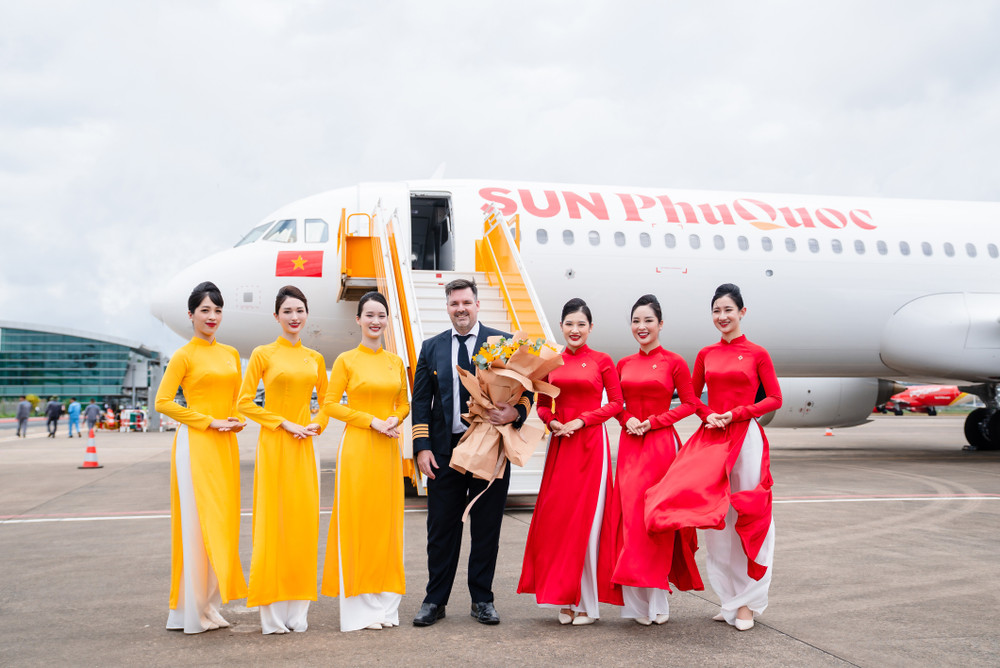
    The first Airbus A321 for Sun PhuQuoc Airways has officially landed in Vietnam, marking a significant leap forward for the airline just weeks after receiving its operating license. The initiative from the Sun Group, a major player in tourism, aims to launch ticket sales by October and commence flights in December, adhering to an ambitious timeline that reflects its commitment to growth.

    Setting the Bar High in Vietnamese Aviation

    With aspirations as lofty as the planes it operates, Sun PhuQuoc Airways plans to have eight A321 aircraft at its disposal by the end of the year. The airline is ramping up its recruitment efforts, securing pilots and cabin crew while lining up a credit facility with Vietcombank for the purchase of up to ten aircraft. Sun Group’s vision for the airline goes beyond mere transportation; it seeks to offer premium tourism experiences, with future destinations planned for China, Japan, and South Korea.

    Vietravel Airlines Springs Back to Life

    Adding to the excitement in Vietnam’s aviation landscape is the resurgence of Vietravel Airlines. After grappling with aircraft shortages and financial hurdles, the company has received a shot in the arm from T&T Group’s backing. Since late June, it has welcomed two new aircraft into its fleet and is on track to acquire more, aiming for a total of at least ten by year-end. This move aligns with a strategic pivot towards ownership rather than leasing. On top of this, Vietravel Airlines is also setting its sights on launching a dedicated cargo fleet as it ramps up its domestic services, contributing to a rejuvenated tourism and aviation market in the post-Covid era.

    The Roaring Comeback of Tourism

    Vietnam’s tourism scene is on fire, with international arrivals surpassing 12.2 million in just the first seven months of 2025—a remarkable 23% increase year-on-year and a staggering 25% above pre-pandemic levels in 2019. This growth is bolstered by the government’s recent decision to waive visas for visitors from 12 European countries, an invite that has opened the gates of opportunity.

    Major upgrades in aviation infrastructure, including the construction of the Long Thanh International Airport and the expansion of Phu Quoc International Airport, only add to the momentum. These developments are creating a fertile environment for new carriers while benefiting established ones.

    Established Airlines are Thriving, Too

    The resurgence isn’t just limited to newcomers. Vietnam Airlines reported record profits exceeding VND6.68 trillion (US$254 million) for the first half of 2025, more than doubling its annual figures from the last three years prior to the pandemic. Budget airline Vietjet also soared, achieving a 65% profit increase to VND1.6 trillion—the highest since the pandemic began. Meanwhile, Bamboo Airways, which began operating in 2019, has wrestled with post-restructuring challenges but has made notable strides to curb losses, although it now finds itself on a leaner footing with fewer aircraft and reduced routes.

    In a surprising twist of fate, rapidly evolving competition in the domestic market is forcing Bamboo Airways to rethink its strategies as new entrants like Sun PhuQuoc Airways and Vietravel Airlines loom over its previous market share.

    Challenges and Future Outlook

    Despite these promising developments, challenges persist. Nguyen Trung Khanh, director general of the Vietnam National Tourism Administration, highlighted the pressing issue of rising airfares, which have surged by 45% on many routes during peak travel seasons. The Bamboo Airways management is acutely aware of the risks posed by resurgent competitors and is calling for measures to enhance service quality and flight safety, all while focusing on financial health and investor attraction.

    Amidst the competitive landscape, Vietnam Airlines remains optimistic. Chairman Dang Ngoc Hoa acknowledged the inevitability of competition in an increasingly integrated market, viewing the influx of new airlines as an opportunity to innovate and solidify its status as the national carrier. Plans for investments in technology, personnel, and international partnerships are on the horizon to better meet the evolving expectations of travelers.

    Questions & Answers

    What is the main goal of Sun PhuQuoc Airways?
    The airline, operated by Sun Group, aims to launch ticket sales by October 2025 and begin flights in December, focusing on premium tourism experiences and expanding to markets in China, Japan, and South Korea.

    How is Vietravel Airlines attempting to recover from its challenges?
    Vietravel Airlines is bouncing back with support from T&T Group, targeting a fleet of at least ten aircraft by year-end and diversifying its offerings to include a dedicated cargo service.

    What are the current challenges facing the Vietnamese tourism and aviation sectors?
    Despite the impressive recovery in tourist arrivals, high airfares, especially during peak seasons, continue to pose a challenge, drawing attention from industry leaders who are advocating for strategies to enhance competitiveness.

  • Samsonite’s First-half Revenue Declines Amid Reduced Travel Demand In Key Markets

    Samsonite’s First-half Revenue Declines Amid Reduced Travel Demand In Key Markets

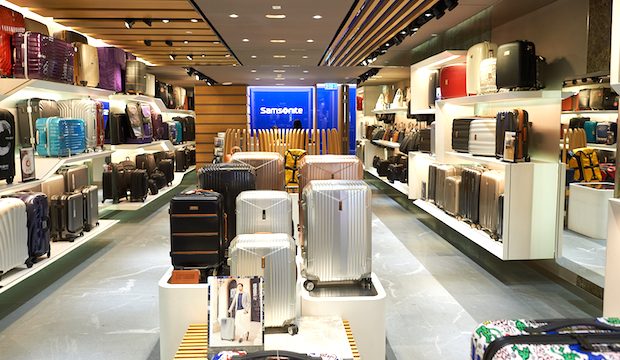
    In the first half of the fiscal year 2025, the globally renowned luggage behemoth, Samsonite Group, saw a decrease in net sales and profits. This decline was attributed to a reduced demand for travel within their most significant markets.

    Financial Details

    The firm announced an adjusted net income of US$123.4 million, reflecting a drop of 29.1 per cent from the corresponding period the previous year. Net sales for the period ending 30th June saw a decrease of 6 per cent year-over-year, amounting to US$1.66 billion on a constant currency basis. The decrease was most prominent in the Asian and North American markets.

    The CEO of Samsonite Group, Kyle Gendreau, commented on the situation. He expressed the belief that while consumers continue to value travel and experiences, there was a noticeable drop in travel demand in the first half of 2025. Gendreau attributed this to factors such as macroeconomic uncertainties, changing trade policies, and weakening consumer sentiment. He also forecasted that these trends would likely persist in the second half of the year, negatively impacting the short-term demand. Despite this, he maintained confidence in the long-term demand for travel aiding the business.

    Performance by Region and Brand

    The company’s flagship brand, Samsonite, saw a sales drop of 4.7 per cent. Even though there was robust growth in Europe (+0.6 per cent) and Latin America (+0.2 per cent), there was a visible weakness in Asia (-8.8 per cent) and North America (-5.7 per cent).

    In contrast, the Group’s premium brand, Tumi, demonstrated resilience with a minor sales decrease of 2.5 per cent overall. This was propelled by strong double-digit growth in Latin America (+18.6 per cent) and Europe (+6.2 per cent). However, it also witnessed sales decline in North America (-4.7 per cent) and Asia (-2.5 per cent).

    The value-oriented American Tourister brand encountered a sharper sales decline of 12.7 per cent, especially in North America and Asia. This happened despite a moderate increase in Europe.

    Non-Travel Category and Market Expansion

    Even with the downward trend, the company noted a steady performance in non-travel categories such as backpacks and accessories, which experienced a modest growth of 0.1 per cent. These sectors made up 36.2 per cent of total sales, led by a significant 14.7 per cent increase in Gregory.

    In a bid for market expansion, Samsonite opened 21 new company-operated retail stores in the first half of the year, and continued to invest in product innovation.

    In conclusion, Samsonite Group continues to concentrate on brand elevation and geographical growth, while also considering a potential US listing, dependent on market conditions.

    Questions & Answers

    What are the main factors contributing to Samsonite Group’s sales decline?
    The primary factors are macroeconomic uncertainties, shifting trade policies, and weakening consumer sentiment.

    How has their premium brand, Tumi, performed in comparison to the flagship Samsonite brand?
    Tumi has shown resilience with a smaller overall sales decline, driven by strong growth in Latin America and Europe.

    How have non-travel categories performed?
    Non-travel categories such as backpacks and accessories have shown steady performance, with a slight growth of 0.1 per cent, accounting for 36.2 per cent of total sales.

  • Bamboo Airways Welcomes Back Former Chairman and Appoints Dynamic New CEO to Lead Future Growth

    Bamboo Airways Welcomes Back Former Chairman and Appoints Dynamic New CEO to Lead Future Growth

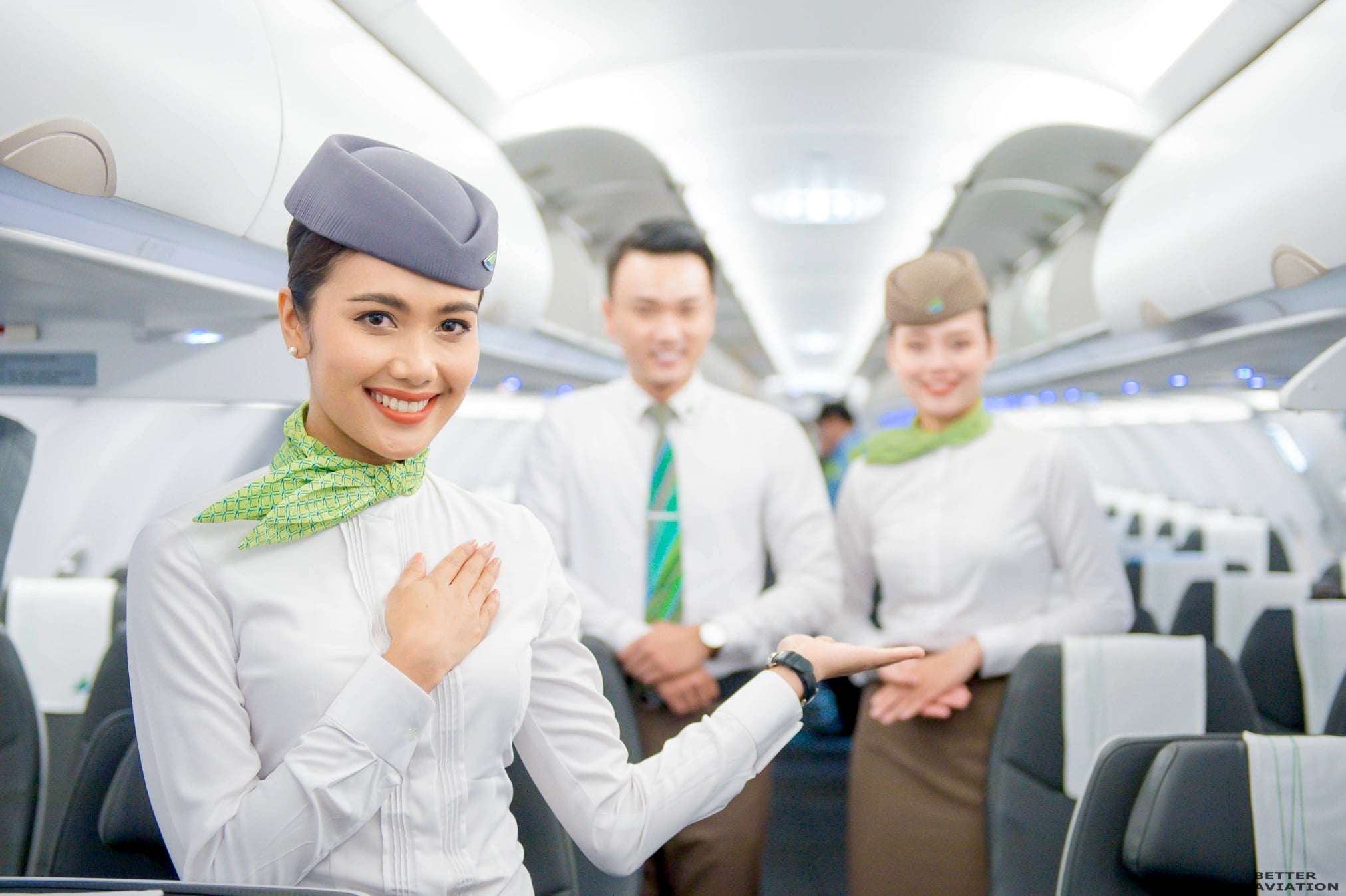
    Bamboo Airways is making significant leadership changes as it continues to reshape its operational strategy. In a bold move, Bamboo Airways has announced the return of Le Thai Sam as chairman, taking the reins from Luong Hoai Nam, who stepped down for personal reasons. The decision was revealed on Wednesday, marking a notable chapter in the airline’s restructuring process.

    Le Thai Sam, who emerged as the largest shareholder of Bamboo Airways in 2022, previously served in the chairman role from July 2023 until February 2024. Since then, he has held the position of deputy chairman, actively participating in the airline’s management during its tumultuous transition after being sold by property developer FLC.

    The reshuffle also brings Truong Phuong Thanh, a seasoned professional with three decades in the aviation sector, to the forefront as the new CEO, stepping in for Luong Hoai Nam. Thanh’s background includes various leadership roles within major aviation enterprises, playing a crucial part in operational oversight.

    Having previously served as deputy CEO of Bamboo Airways from 2019 to 2024, Thanh oversaw key areas such as ground operations, which are vital for customer satisfaction and the airline’s overall punctuality. Though he briefly left the airline, his recent return in June signals his commitment to steering Bamboo Airways toward a more stable future.

    As Bamboo Airways navigates these changes, industry watchers will be keenly observing how these leadership shifts impact the airline’s trajectory amidst an ever-evolving aviation landscape. Who knows? Perhaps this is the beginning of a new era characterized by soaring heights.

    Questions & Answers

    What prompted the leadership changes at Bamboo Airways?
    The changes were driven by the resignation of Luong Hoai Nam, who stepped down for personal reasons, leading to the appointment of Le Thai Sam as chairman and Truong Phuong Thanh as the new CEO.

    What is Truong Phuong Thanh’s background in aviation?
    Truong Phuong Thanh brings a wealth of experience with 30 years in the industry. He previously served as deputy CEO at Bamboo Airways, overseeing critical operations and ensuring customer satisfaction.

    How might these leadership changes affect Bamboo Airways?
    These leadership shifts are expected to play a significant role in the airline’s ongoing restructuring efforts, impacting operational efficiency and potentially enhancing customer experience as the airline moves forward.

  • Iconic Jewellery Brand Fabergé Sold For $50m: Gemfields Shifts Focus Back To Core Mining Operations

    Iconic Jewellery Brand Fabergé Sold For $50m: Gemfields Shifts Focus Back To Core Mining Operations

    Gemfields, the mining group, has disclosed the sale of its entire ownership in the esteemed jewellery brand Fabergé. The purchaser, U.S.-based SMG Capital, procured the brand for a sum of US$50 million – a cost that many in the industry have described as unusually low for a brand with such a rich history.

    Financial Breakdown

    As of December, Fabergé had net assets amounting to $50.35 million. Nevertheless, the brand had experienced operating and net losses totaling $5.7 million and $11.3 million, respectively. These financial results likely influenced the final sale price.

    Fabergé, renowned for its extravagant creations, boasts the Third Imperial Easter Egg amongst its portfolio. Created in 1887, this masterpiece, featuring a solid gold case adorned with sapphires and diamonds, and containing a women’s watch with diamond-set gold hands, was once valued at $33 million. The egg remains in the hands of an unidentified private collector.

    Deal Details

    Gemfields is set to receive $45 million upon the deal’s closure, which is anticipated by the end of August. The remaining $5 million will be dispersed in the form of quarterly royalties, equivalent to 8% of Fabergé’s revenue. Notably, the deal does not necessitate any regulatory approvals or additional authorizations.

    The sale enables Gemfields to concentrate its efforts on its fundamental operations in coloured gemstone mining. These activities encompass the launch of a new ruby processing facility in Mozambique and the growth of emerald mining in Zambia.

    End of an Era for Gemfields

    Sean Gilbertson, CEO of Gemfields Group, referred to the sale as signifying the conclusion of an era. He stated, “Brands as iconic and beautiful as Fabergé do not change hands very often. We wish the team and Mr. Mosunov every success.”

    SMG Capital, under the proprietorship of tech entrepreneur and venture capitalist Sergei Mosunov, plans to maintain Fabergé’s focus on jewellery, accessories, and timepieces. Mosunov also expressed his eagerness to offer exceptional service to existing customers while attracting new brand enthusiasts.

    A Historical Overview of Fabergé

    Established in 1842 in St Petersburg, Russia, Fabergé is famed for its intricate, gem-encrusted eggs, which were originally manufactured for the Russian imperial family during the late 19th and early 20th centuries.

    Questions & Answers

    What is the essence of the deal between Gemfields and SMG Capital?
    The deal entails the sale of Gemfields’ entire stake in Fabergé to SMG Capital for US$50 million.

    What are the future plans for Gemfields following the sale of Fabergé?
    Gemfields plans to focus on its core operations in coloured gemstone mining, including the launch of a new ruby processing plant in Mozambique and the expansion of emerald mining in Zambia.

    What will be the future focus of Fabergé under the new ownership of SMG Capital?
    Under the ownership of SMG Capital, Fabergé will continue to concentrate on its jewellery, accessories, and timepieces.

  • AirAsia X soars into its next chapter of growth with Istanbul

    AirAsia X soars into its next chapter of growth with Istanbul

    AirAsia X (AAX) is soaring into its next chapter of growth with the announcement of a long-awaited route to Istanbul, Türkiye, a city where East meets West. Travellers from Hong Kong and Macao can now access the heart of Türkiye with smooth Fly-Thru connectivity via Kuala Lumpur.

    The new direct service between Kuala Lumpur and Istanbul will commence on 14 November 2025 with four weekly flights, strengthening AAX’s global footprint and offering more affordable travel options to one of the world’s most iconic destinations.

    This strategic launch marks AAX’s long-anticipated entry into Europe, opening a vital gateway linking Southeast Asia to Europe via one of the world’s most historically rich and geographically unique destinations. Straddling two continents across the Bosphorus Strait, Istanbul offers travellers the rare opportunity to experience the best of both worlds.

    The airline will operate from Istanbul Sabiha Gökçen International Airport (SAW), a major hub with connections to over 117 international and 40 domestic destinations. This provides guests from Southeast Asia even greater onward travel options, while giving travellers from Istanbul and beyond seamless access to AirAsia’s network of 130 destinations at unbeatable value.

    Benyamin Ismail, CEO of AirAsia X said: “Istanbul has always been a dream destination for many of our guests, and its launch marks another proud moment in our journey to rebuild stronger than ever. Hot on the heels of our recent expansion into Central Asia, this long-awaited route takes us one step closer to delivering longer connectivity across continents. As the only city in the world built on two continents, Istanbul perfectly captures our vision to bridge Asia and beyond through affordable, medium-haul travel. This is a strategic decision that strengthens our network, creates more pathways for business collaboration, and enhances access to new experiences for travellers around the world.

    With our seamless Fly-Thru services via Kuala Lumpur, travellers from Hong Kong and Macao can now also enjoy convenient one-stop access to Istanbul without the hassle of baggage recheck. Likewise, travellers from Europe and beyond can now access the wonders of Southeast Asia and beyond with ease through our extensive network.”

    In celebration of this milestone, AAX is offering introductory first-come first-served promotional fares from HKD1,023 / MOP1,207 all-in one way for the Fly-thru service in Hong Kong and Macao. Flights are available for booking starting today until 20 August 2025 for the travel period between 14 November 2025 and 14 September 2026, on airasia.com and the AirAsia MOVE app.

    As Türkiye’s largest city and economic powerhouse, Istanbul is a captivating destination that offers opportunities to travellers from all walks of life. From iconic landmarks like the Blue Mosque, Hagia Sophia and Topkapi Palace, to the lively Grand Bazaar and Spice Market, the city is a treasure trove of history and vibrant local life.